In 1979, Stephen King introduced the world to Castle Rock, a picturesque Maine town that hides evil within. But while plenty of King’s stories in the years since have returned to Castle Rock, none have ever recaptured the experience of that very first trip.
The Dead Zone feels different from King’s body of work. Part crime thriller with psychological and political elements, the book was adapted into a celebrated 1983 film by David Cronenberg, who shapes an already promising tale into one that is taut, insightful, and brilliant.
While Cronenberg’s interpretation of The Dead Zone is worthwhile, King’s story was also adapted into a science fiction television series by Michael and Shawn Piller, a father-son duo best known for their work in the Star Trek universe. That series ran for six seasons on the USA Network before it was canceled due to low ratings, with its final season ending on a major cliffhanger.
Even so, The Dead Zone attracted a sizable audience during its lengthy run, using a case-of-the-week framework to tell an exciting story. For anyone fond of King’s novel and interested in a competent procedural show based on his work, The Dead Zone is currently waiting to be rediscovered on YouTube, where you can watch it for free.
What is The Dead Zone series about?

King’s novel opens with a child named Johnny Smith falling unconscious after an ice-skating accident in 1953. Although Johnny remains unscathed, he delivers a prophetic warning to someone who later undergoes an accident. Much later, once Johnny is an adult, he falls into a coma after being involved in a car crash.
Upon waking up, Johnny learns that a part of his brain has been gravely injured — creating a “dead zone” — which is why the rest of his brain is working overtime to overcompensate. The consequences are surreal in nature: Johnny begins seeing visions of the future upon touching people and objects.
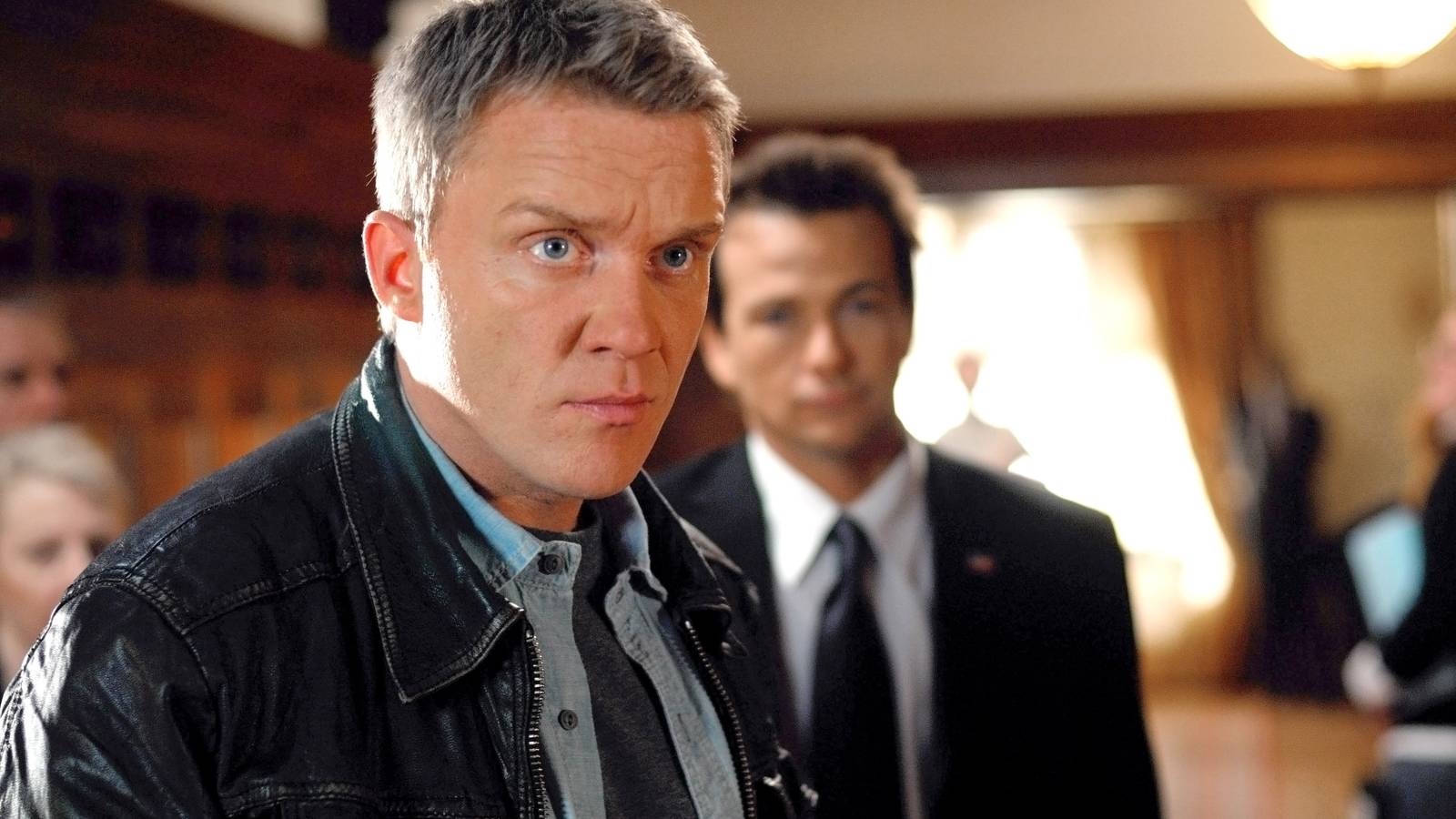
The Dead Zone series retains this core premise. Johnny (Anthony Michael Hall) is a small-town teacher who begins experiencing visions after waking up from a coma that lasts six years. Although much has changed, Johnny uses his newfound abilities to help solve crimes. While he does his utmost to use his gifts for good, he is plagued with apocalyptic visions about a certain Greg Stillson (Sean Patrick Flanery), a congressional candidate who is too unstable to hold office.
The Dead Zone takes creative liberties to expand Stephen King’s world

Although the series takes liberties to expand upon the source material, the instinct to turn King’s thriller into a tense procedural isn’t misplaced. Parts of the original story unfold like a gritty crime novel, which uses police evidence and newspaper clippings to fill in the blanks. Johnny’s arc is similar to that of a detective story and culminates once he meets Stillson, who symbolizes ultimate evil in a story about loss and trauma.
Any attempts to change the trajectory of the future come with ethical dilemmas, but Johnny has to stop Stillson, as his mere presence dooms the world. The series juggles Johnny’s smaller victories with the shadow of Stillson looming at all times, which creates an intriguing tension over the course of six seasons. Flanery’s Stillson is shrewd enough to figure out Johnny’s gifts, which adds a cat-and-mouse dynamic that the source material doesn’t feature. Although this primary rivalry feels drawn out a bit too much at first, The Dead Zone subverts expectations by having Johnny second-guess his gifts down the line.

Sheriff Bannerman (Chris Bruno), who calls for Johnny’s help in the book, is an integral part of the show, too. An amalgamation of two characters from the book, this version of Bannerman develops a more interesting dynamic with Johnny. There’s initial resentment that melts into begrudging camaraderie, which works in favor of a more slow-burn series. There’s also the addition of Bruce Lewis (John L. Adams), Johnny’s therapist friend and voice of reason who acts as a grounded foil to our clairvoyant lead.
The Dead Zone is a competent King adaptation and an intriguing procedural at the same time. It stays true to the book in its early seasons (often right down to quoting King’s dialogue) but gradually branches out into a more robust universe that puts Johnny in a staunchly grey area.
In spite of these differences, The Dead Zone successfully captures the essence of a politically charged tale about free will versus determinism. Just when you expect tired television tropes from its procedural format, The Dead Zone pleasantly surprises with its commitment to pushing the envelope.