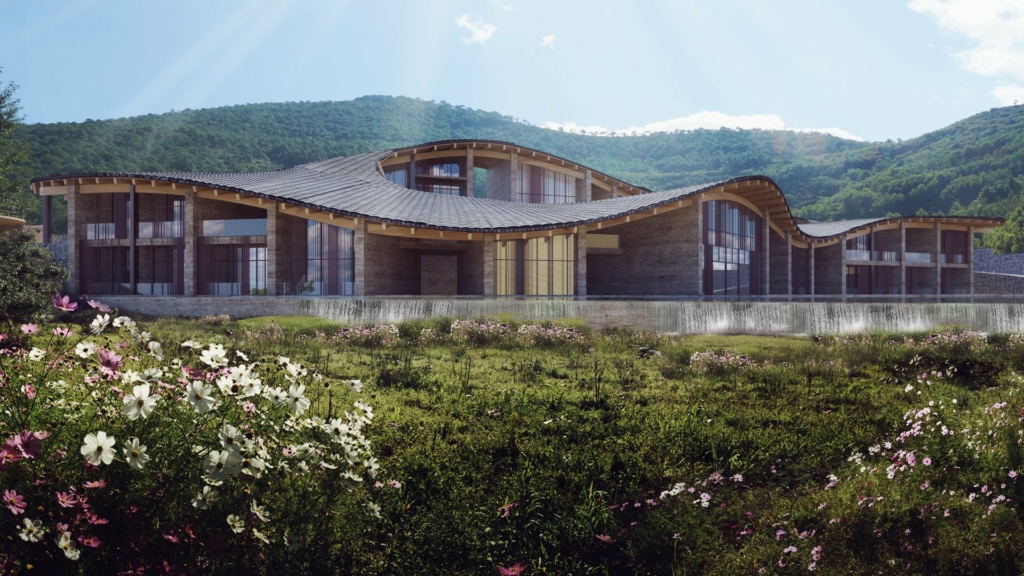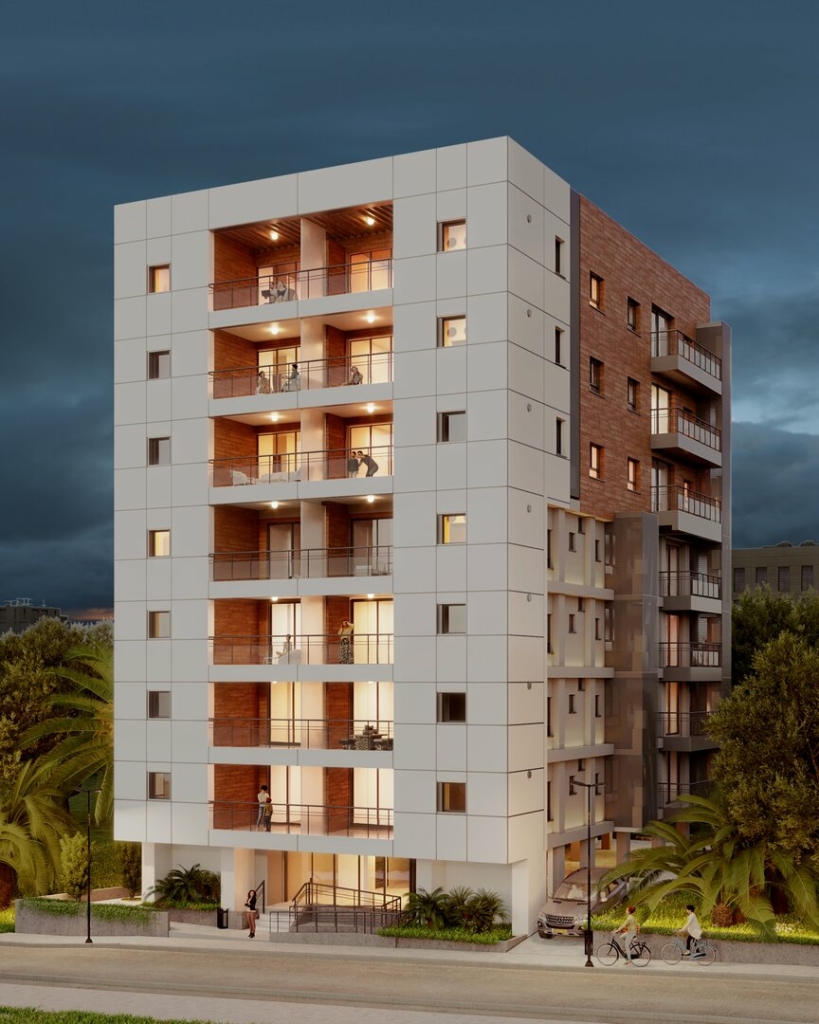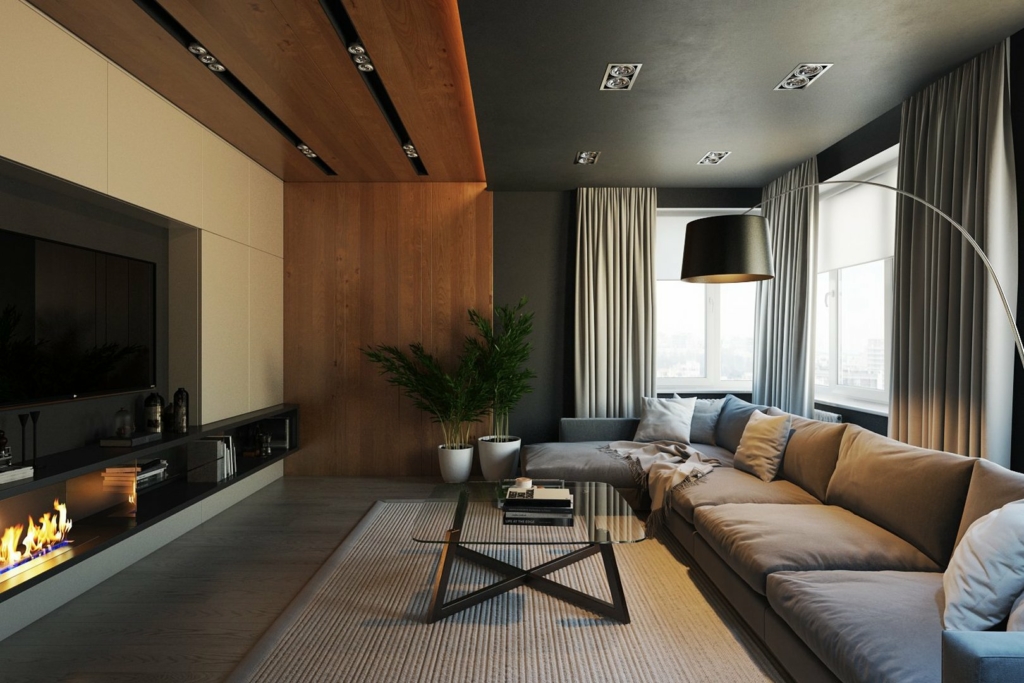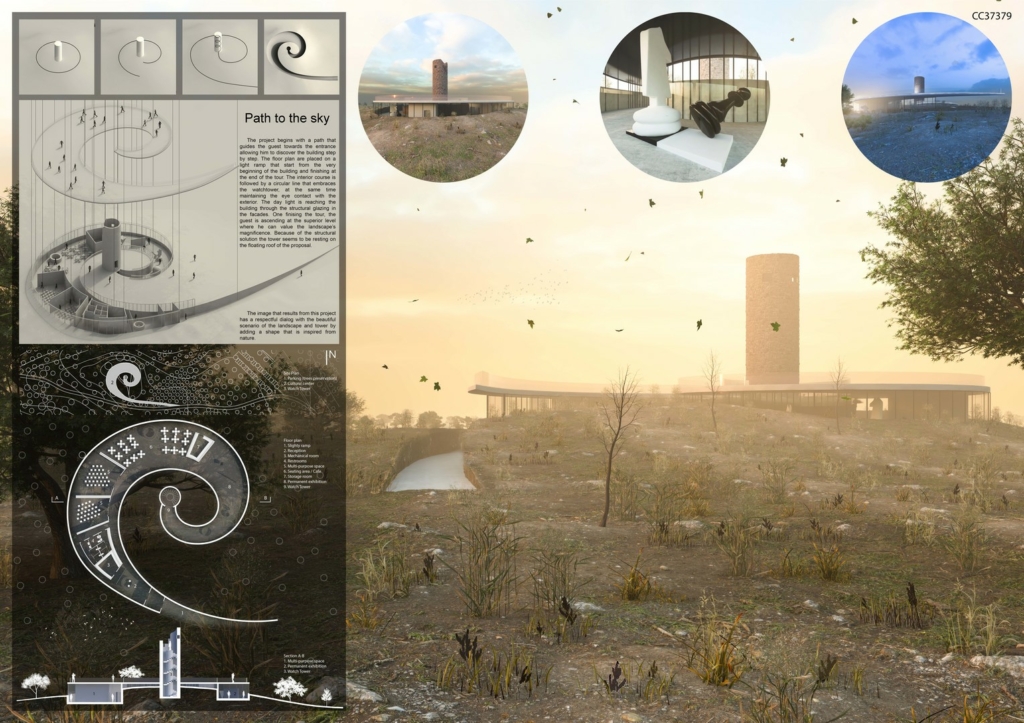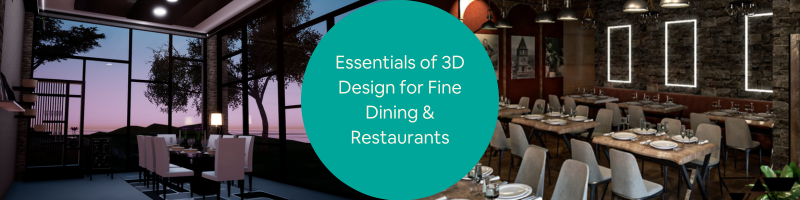
Essentials of 3D Design for Fine Dining & Restaurants: What Makes a Restaurant Truly Stand Out


As people in the restaurant industry nowadays are in a tough competition, gone are the days when it is just about good food or wonderful service. As times progress with social media and with the rise of ever-changing dining trends, the ambiance of a restaurant along with its aesthetics is as essential to the dining experience as the meal itself.

Probably the most effective tool to deliver such an authentic and exciting experience is nothing short of 3D design. Technology lets restaurant owners, designers, and architects to see every miniscule element in the three dimensions and modify or enhance a concept long before a building structure even hits the ground and helps result in an even more nuanced and delightful setting that could easily transform a culinary experience.

This article will discuss the fundamental principles of 3D design services when applied to fine dining and restaurants and explore where it helps in developing the ultimate unforgettable experience. At the same time, it looks into what makes a restaurant truly distinctive among many others.


🚀 Table of contents


Role of 3D design in restaurant

Visualize the concept

3D design can take any abstract idea to the physical dimension by visualizing. It is essential to come up with an exact vision of how the place would work or look. 3D design tools for restaurant owners or designers allow this to be accomplished by bringing this vision to reality using photorealistic renderings of the space.

These visualizations help ensure that the restaurant design is in line with the brand identity and concept. For example, a fine-dining French bistro and a trendy, casual sushi restaurant would have different design requirements. Using 3D architectural visualization services, designers can try out concepts for lighting, layout, furniture, and color schemes before expensive decisions are made.

RELATED: Creating exterior renderings using 3D exterior rendering services for architects

Space planning and optimization

Effective space planning is a very essential aspect of restaurant design. The restaurant has to balance comfort, aesthetics, and functionality so that the customers are able to dine in a pleasing atmosphere while servers are able to easily navigate the area. With 3D design, both front and back-of-the-house space can be accurately planned so potential problems are known before the actual construction process.

For example, 3D modeling allows there to be ample space between tables so that the guests do not feel crowded. This also gives the designers a chance to look at the flow of traffic so that the servers can easily move in and out of the kitchen to the dining area. In addition, 3D tools will optimize the kitchen space so that the staff will have enough space to work without overcrowding.

Accurate lighting and ambiance projections

Lighting determines the ambiance of a restaurant. While an upscale fine dining restaurant would want soft, warm lighting, a trendy bistro might want bright, modern lighting. Using 3D design software, designers can create the idea of how light will work in one area versus another to ensure that the lighting dictates the intended atmosphere in the restaurant.

Other than the visualization of the lighting effect, 3D modeling firms will also consider other practical lighting concerns that involve energy efficiency and placement with a view of avoiding glare or shadow. It is the accuracy of lighting projection that gives this space an aesthetic appeal and functionality.
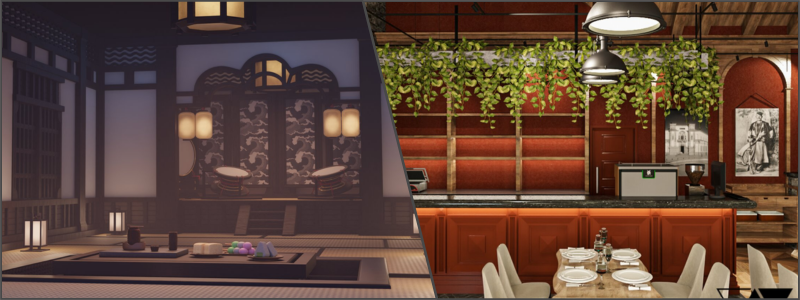
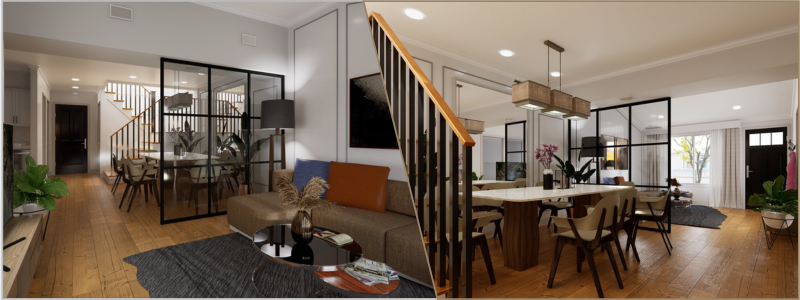
3d rendering fine dining restaurant

RELATED: How has architectural visualization changed the way companies present projects

Exploring materials and finishes

The materials and finishes in a restaurant often play a great role in determining the overall design and feel of the space. Be it luxurious marble for a fine dining experience or reclaimed wood for a rustic bistro, 3D design allows for testing various materials and finishes without costly prototypes or physical samples.

This part of 3D architectural design services is also where testing of the texture and colors would come in, from the floor coverings to furniture, everything being in perfect coordination with the ambiance of the restaurant. By having a 3D model and simulating many materials, one can immediately view how these are going to function with light and space as well as other components of design.

Branding and identity

A restaurant’s style should resonate in its branding so that there would be consistency as guests walk out of it. Whether a sophisticated, simple setup or something edgier with more eccentricness and vibrant tone, 3D design tools come in handy for correlating the place with the restaurants’ conceptualizing brand identity in general.

These can all be put into the 3D model in terms of logos, color schemes, and signage, making visual identity coherent in all the spaces: exterior façade and details of the interior like menus, wall art, even uniforms of the staff.

What makes a restaurant stand out?

Though 3D design is very valuable for a restaurant’s visually appealing and functional nature, there are many other elements that contribute to making a restaurant truly stand out. All these factors together make the dining experience unforgettable, keeping customers coming back for more.

Unique concept and ambience

A very good concept from a restaurant should be one of its prime distinctions. Between themes and approaches in restaurants, it is hard to distinguish which make them distinctive. It is either the farm-to-table concept or an immersive experience, or anything multi-sensory restaurant-a clear and distinctive concept sets restaurants apart from the rest.

Ambience is integrated into this concept. Ambiance should supplement the kind of dining experience being offered by the restaurant. Whether minimal décor is going to create the elegant atmosphere of the restaurant or it’s going to be bold with vibrant colors creating an energetic feeling in a more casual environment, the interior must reflect and strengthen the overall idea. 3D design could help explore what style, what color, or what material, to achieve the ultimate ambiance.

Exceptional customer service

Customer service is what often makes a good restaurant great. Great service will make guests feel valued and ensures that their dining experience is smooth and enjoyable. In the context of design, this means creating an environment where service staff can easily attend to customers, anticipate their needs, and respond quickly.

3D architectural design and drafting services would contribute some values in the optimizing the lay out and flow within the restaurant on how to ensure efficient service is carried out. For example, where the serving stations are put up, positioning of tables and positioning of areas with kitchen installations make all the difference in whether staff will successfully connect with customers for good service delivery.

RELATED: Leading home design & modeling 3D technology for builders, companies, and firms
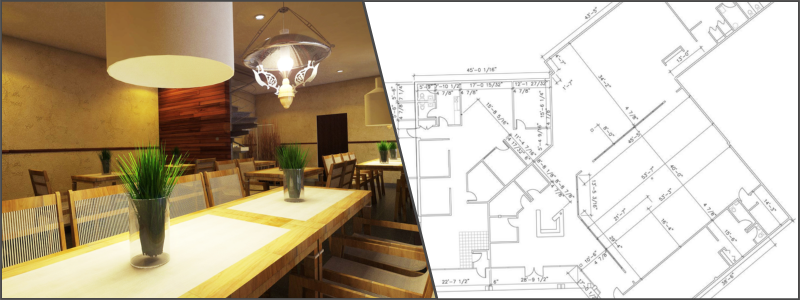
3d restaurant example with floor plan

Culinary competency and innovations

At the end of it all, food is what differentiates any restaurant. Such restaurants need to provide dishes that are unique, high quality, and meet the concept. The restaurants specializing in fine dining rely on menus with creative approaches to serving and exceptional ingredients for their food to leave an indelible memory for customers.

3D design can also support culinary creativity by helping to visualize plating presentations and layout. For example, fine dining restaurants can use 3D modeling to test how plates, cutlery, and glassware complement the dish’s presentation and design the optimal space for plating in the kitchen.

Technology integration

In today’s world, technology has a very major impact on customer experience in business. The adoption of ordering systems via tablet, digital menus, and even reservation platforms gives tech-savvy restaurants a chance to innovate and become more convenient. Integrating these technologies into the restaurant’s design means that when the customer arrives at the restaurant, they can have an excellent experience.

This would be possible with 3D architectural planning services in how technology will fit into the restaurant’s layout, be it an in-wall speaker, a point-of-sale system, or a digital menu board. In this way, technology does not disrupt the flow of the space but enhances the overall experience.

Sustainability and eco-friendliness

For restaurants, sustainability has become a big concern in this modern world because of the rising awareness of the public about the environmental issues that have been created. Sustainable design helps a restaurant be different while it attracts environmentally conscious customers by the use of eco-friendly materials during construction and designing, energy-efficient systems, and waste reduction practices.

3D design allows for sustainable design elements to be explored such as energy-efficient lighting and low-impact materials. It can help in planning areas for waste management and optimizing airflow and lighting for energy consumption reduction.

RELATED: Why as-built drawings services are important for architects and designers

Conclusion

Fine dining and restaurants are worlds where competition is so high; thus, what will make a place stand out from the rest is as vital as the food quality and the services provided. With 3D design, the owners and designers can visualize the perfect space with perfection, guaranteeing that atmosphere, functionality, and aesthetic appeal of the space correspond to the concept and brand of the restaurant.

All these integral factors together with a unique concept, exceptional customer service, great food, technology, and sustainability can make a restaurant pretty special with 3D design.

How Cad Crowd can help

Through the integration of all essentials within the thought process and harnessing the power of 3D design, restaurant owners can build and craft the spaces that attract customers yet show minimal details that leave their taste buds in absolute amazement. Cad Crowd will be right there by your side every step of the way. Let us help you turn your restaurant and fine dining venues into three-dimensional visions with the help of experts in 3D design. Request a quote today!

author avatar

MacKenzie Brown is the founder and CEO of Cad Crowd. With over 18 years of experience in launching and scaling platforms specializing in CAD services, product design, manufacturing, hardware, and software development, MacKenzie is a recognized authority in the engineering industry. Under his leadership, Cad Crowd serves esteemed clients like NASA, JPL, the U.S. Navy, and Fortune 500 companies, empowering innovators with access to high-quality design and engineering talent.

Connect with me: LinkedInXCad Crowd

3D Real Estate Rendering Services: What is the Primary Purpose of 3D Real Estate Virtual Tours?


3D real estate virtual tours use advanced cutting-edge 3D photography and editing to give you a lifelike, online property experience. Real estate pros know how these tours are the main contributors to boosting sales, often at higher prices, while creating a better experience for buyers and more satisfied sellers.

Cad Crowd has extensive experience finding the best 3D rendering freelancers for architectural firms looking to spice up their marketing and offer a unique look into their spaces. We’ve taken all that we’ve learned to provide you with the best insight into 3D real estate tours and how its interactivity can turn into more sales and a memorable customer experience.

Here’s why 3D rendering services for virtual tours are a must-have in today’s market.


:rocket: Table of contents


Make the listing unforgettable for buyers

Visual information is hard to forget. The experience of going on virtual tours can help buyers remember every detail of the listing. Just so you know, most people tend to recall visual details for a maximum of three days compared to spoken or written content. Prospective buyers can also more easily refer to 3D visual staging if they ever need assistance to recall the details about the property later on. When a buyer knows and remembers more information, there is a higher chance of them deciding faster, resulting in faster efforts.

RELATED: How to create a virtual tour of homes with 3D rendering services

Buyers choose what to see on virtual tours

Buyers get to decide what they like to see during 3D real estate virtual tours by controlling the direction and pace of the tour. When buyers are in control of these tours, they offer several benefits, such as:

  • Buyers get to choose to spend more time checking the features they find interesting.
  • Buyers can just change the direction if they ever miss an amenity or feature of a space or room.
  • Buyers can go back to spaces and rooms they like to see again.
  • Potential buyers can direct their virtual tour, decide where they wish to go and set their own pace during 3D real estate virtual tours.

Allow more time for buyers to connect emotionally

A home purchase is both a financial decision and an emotional decision at the same time. Experienced real estate agents know buyers require more time to form an emotional connection with a property. 3D real estate rendering firms creating 3D virtual tours give buyers more time to evaluate listings and determine whether they have an emotional bond with the property. Letting buyers spend more time with a listing improves their chances of forging an emotional bond with the property.

RELATED: Virtual tours vs. static renders: which to use for your real estate marketing

Increased social media visibility

Eye-catching 3D real estate virtual tours have more chances of going viral on social media. More people will likely share these virtual tours on their social media pages and tell their networks about it. 3D real estate virtual tours can be easily shared on social media, increasing your visibility in search results and driving more traffic.

Major search engines rank listings based on social media signals. Once website content goes viral on a social media platform, this will positively impact the overall rankings of the listing. A listing with more exposure ensures a higher chance of making a faster sale at great prices.

3d real estate virtual tours

RELATED: Selling homes remotely using VR architectural services to create virtual tours

Boost site traffic

3D virtual reality & VR/AR rendering services are breakthrough technologies that can drive more traffic to real estate websites, attracting more prospective clients. Increased site traffic offers several benefits. Listings that 3D real estate virtual tours tend to get more clients than those that only use images or photos. Your real estate website will have a higher search result ranking if you get more clicks. More online visitors will mean more showings and more offers as a result. Buyers love 3D real estate virtual tours and using them as part of marketing campaigns will attract more people to the listing.

Offer spatial context

Adding photos to listings is important in selling real estate properties. These images, after all, often capture the interest and attention of buyers before anything else. However, even the most captivating property images will never completely convey the spatial context, flow, and layout of the area. This is where 3D architectural visualization companies come in handy.

RELATED: All you need to know about 3D visualization for architectural design and CGI projects

Here are some of the most common limitations of using photos alone for real estate listings:

  • Photos alone can never go into extensive details about the amenities and features of a property.
  • It’s difficult to determine if a piece of furniture will fit into space by looking at still images alone.
  • You can’t present a room’s perspectives and angles in photos.
  • Photos can never completely convey the flow and layout of a property from one room to another.

3D real estate virtual tours help buyers feel like they are within the property. They will be able to control the virtual tour to explore size, spatial context, and flow. These virtual tours, combined with well-done floor plans from floor plan designers, can give sellers the details they need to reach an educated decision.

Reach more buyers

3D real estate virtual tours can augment the number of buyers your ads can reach. Various marketing methods appeal to different audiences. Here are the ways that these tours can expand the reach of your marketing efforts:

RELATED: Learn about the types of architectural rendering services available for your company

  • Buyers with hectic work schedules usually find it difficult to include showings in their routine. A virtual 3D real estate tour will let them see and explore the property whenever they want.
  • 3D real estate virtual tours will let you show the house to buyers no matter where they are.
  • With a 3D real estate virtual tour, buyers with mobility and health concerns can easily see the whole property.
  • Showings can happen regardless of the weather with 3D real estate virtual tours.
  • All real estate professionals know that a bigger pool of buyers will boost market exposure, which means more offers at much better prices.

More cost-effective to produce

A lot of real estate professionals often have the misconception that 3D photorealistic rendering design experts or 3D real estate virtual tours are costly and take a long time to make. However, these are nothing but industry myths. The truth is that these tours are not only easy to use but are also extremely affordable. Creating 3D virtual tours doesn’t need tons of expertise or money to produce. As long as the 360 images are ready, it only takes a few clicks to transform them into engaging and meaningful virtual tours.

Cut down on unnecessary showings

Most buyers often schedule showings for a property they are not yet sure of, assuming that there’s nothing wrong with it. However, you can reduce unproductive showings if you give buyers the option to go on a thorough virtual walkthrough of the property instead.

RELATED: How 3D virtual reality is changing the real estate industry

There are a few scenarios where virtual tours can come in handy:

  • A couple searching for their first house wants to know if their king-size bed will fit into the master bedroom.
  • An interested buyer wants to get a better feel of the overall flow of the property that listing photos can’t provide.
  • A family is unsure if they can all fit comfortably in the living room.
  • A buyer wishes to know if the size of the kitchen can accommodate the needs of a bigger family.

Before a 3D real estate virtual tour, these people would have already scheduled a personal showing to get the details they need. But with the help of 3D visualization professionals and virtual tours, they can quickly get the information online to save them and the real estate professional from the need to spend time on an in-person showing.

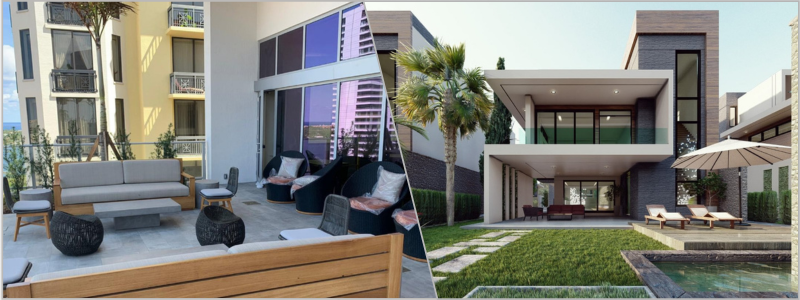
3d exterior rendering

RELATED: Why freelance 3D real estate rendering services are becoming more popular for companies

Save buyers from pressure

Over the past several years, almost all real estate markets have experienced rapid sales growth and buyer demand. Many homes receive multiple offers and sell in hours. 

Here are some realities during the house-buying process:

  • Agents of buyers usually push for a faster decision about the property.
  • A lot of potential buyers often feel pressured by fellow buyers waiting next in line to view the property.
  • Many showings last for half an hour but it can be difficult to schedule follow-up showings.
  • Rushed decisions in real estate often lead to sales falling apart down the line.
  • 3D real estate virtual yours can save buyers from the pressure to give them more space and time to make serious and informed offers.

Stand out with modern technology

Real estate experts constantly search for ways to set themselves apart from their competition. Using technology as part of your marketing campaigns will help you stand out in several ways:

  • 3D real estate virtual tours often receive more attention and interest online which is good for a real estate business.
  • Sellers and buyers alike will find these marketing efforts impressive to help you attract more clients.
  • 3D virtual tours can be customized to your brand to make it easier to promote all your services.

RELATED: How 3D virtual reality services can improve your real estate business

There is no drawback when it comes to using 3D real estate virtual tours, from showcasing your skills in marketing to boosting your visibility and impressing clients. You see, 3D real estate virtual tours can make your listing stay in the minds of buyers for a long time and make it stand out from the rest.

How Cad Crowd can help

Cad Crowd can help you connect with the most trusted 3D real estate rendering services to help you experience the benefits of 3D real estate virtual tours.

Contact Cad Crowd today for a free quote.

author avatar

MacKenzie Brown is the founder and CEO of Cad Crowd. With over 18 years of experience in launching and scaling platforms specializing in CAD services, product design, manufacturing, hardware, and software development, MacKenzie is a recognized authority in the engineering industry. Under his leadership, Cad Crowd serves esteemed clients like NASA, JPL, the U.S. Navy, and Fortune 500 companies, empowering innovators with access to high-quality design and engineering talent.

Connect with me: LinkedInXCad Crowd

Outsourcing Architectural 3D Rendering Services: When It’s a Game-Changer for Teams


Outsourcing for your architectural 3D rendering services needs is definitely something you would want to try. It is something that can absolutely change the course for your team. Times are changing, and architectural companies are seeing a steady growth in the demand for top-of-the-line visualizations. This is why in-house teams might be lacking in this area despite being the best in what they do. Experts focusing solely on these services are considered as pro-players in this field.

There is a thin line between being overwhelmed and being busy with what they’re most capable of doing. There are also situations when the scales may start to tip over, and these tasks drastically turn into being outright overwhelming for your team. During cases like this, your best and most strategic move is to outsource your architectural 3D rendering needs.

Cad Crowd and its vetted network of professionals create opportunities for architectural firms and designers to access a wider field of talent without breaking the bank—no more worries about finding the best professionals who are also available to work on your projects.

Doing so ensures that your 3D team will keep up with their tasks without experiencing burnout and still have the expected output delivered on time. Here are the most common instances when it makes perfect sense to entrust your archviz needs to reliable and trusted services:


:rocket: Table of contents

RELATED: The benefits of 3D architectural rendering for companies in real estate

When architectural 3D rendering is a game-changer for teams

Temporary unavailability of in-house team members 

Sick and vacation leaves are unavoidable, and if one or more of your 3D artists are sick or on their much-needed break, it can easily compromise your capacity and expected delivery timeline. Outsourcing can give you a better and more seamless plan for continuity to ensure that your projects will proceed without hiccups. 

However, it doesn’t mean you should turn to freelancers whenever it happens. A long-term and solid partnership with a professional architectural 3D rendering service provider is a wise solution. You can count on them to step in even at short notice to ensure that you will meet the timelines of your project with the same level of commitment to quality, just like your in-house team. 

RELATED: Top 3D architectural rendering books, magazines, and blogs for companies to follow

Large urgent orders

Now and then, an order may come in with a tight deadline and large scope. Orders of this kind can test the limits of the capacities of your in-house team. Outsourcing your architectural 3D rendering needs, in this case is critical to handle such orders. It will be a good temporary support for your production team to help you meet the urgent demands of the project. The flexibility will also ensure that you can accept more projects coming your way without burdening your CG artists beyond necessary. 

Requirements for Innovative Presentations 

To stay competitive in the industry, you also need to push boundaries during your design presentations. If your in-house expert 3D artists aren’t equipped with the required skills to produce immersive experiences, virtual tours, or animations, you can also outsource the service so you can give your clients more solutions to choose from. Working with a dedicated studio will help you impress even the most discerning clients with your breakthrough presentations. There’s also the bonus of improving your team’s learning curve by exposing them to new approaches and techniques. 

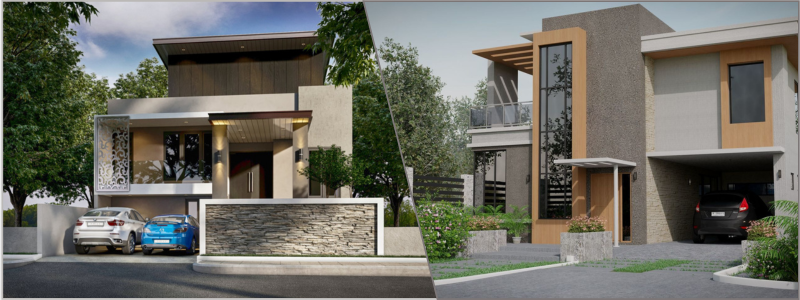
3d exterior rendering services

Seasonal workload demands 

The demands for architectural design services ebb and flow in areas with different seasons, typically enjoying peaks during warmer months. This means that the summer and spring months are the busiest times of the year. This has led to more projects, which has also increased the need for architectural 3D rendering services. Seasonal peaks can stretch your in-house designers thin, so you can cover their tracks with outsourcing. 

RELATED: Premier architectural rendering blogs to elevate your firm’s visual design expertise 

Outsourcing architectural 3D rendering can also be extra helpful for interior decorators and residential designers. Most of the time, major holidays give them more projects. It’s the time of the year when homeowners redecorate or renovate to welcome families and friends. As a result, you can plan your outsourcing needs ahead of time. It will lessen the pressure on your part so that you can handle more projects without neglecting timelines or work quality. 

Limitations in technical resources 

The world of architectural 3D visualization firms is enjoying rapid advancements. It now sees a higher demand for animations and other similar technologies, such as immersive experiences and virtual tours. Not all members of the in-house team have the necessary software and hardware knowledge to produce intricate CGIs. 

Outsourcing to a trusted service provider with the required tech infrastructure, such as rendering farms, will help eliminate this gap. This way, you can take advantage of revolutionary solutions that save you from the need to invest in expensive technologies. These solutions might not even be useful for you everyday or you may not have enough budget for them right now. 

RELATED: What is architectural visualization and why architectural rendering services use it

Reasons to outsource your architectural 3D rendering needs

Now that you know the specific instances when it can be a true game-changer to outsource your architectural 3D rendering needs, here are more reasons to convince you to do so sooner rather than later:

1. Access to tested and proven expertise 

Outsourcing will give you access to an international pool of talented professionals specializing in 3D architectural rendering. They are 3D rendering experts who keep up with the newest trends and technologies. You can ensure that their outputs adhere to the highest innovative and quality standards. You might find it challenging to maintain this level of expertise without your team without making some significant investments. 

2. Budget-friendliness

Another good reason to outsource 3D rendering services for your architectural projects is the fact that it offers significant savings in terms of expenses. Architectural companies can save themselves from the high costs associated with having an in-house team. These may include salaries, technological upgrades, software licenses, and training. Outsourcing allows firms to pay only for the required services so they can easily control overhead costs and improve their bottom line as a result. 

RELATED: How to enhance your company’s 3D architectural rendering with advanced techniques

3. Improved innovation 

Every time you outsource 3D visualization services, you can also tap into advanced 3D rendering software and techniques that might not be available in your company just yet. Trusted service providers invest substantially in state-of-the-art technologies to remain competitive. It means that their clients can take advantage of the newest innovations available in the world of commercial rendering and archviz as a whole. 

4. Speedy time-to-market

Companies can speed up the design process with the assistance of dedicated architectural 3D rendering experts to allow speedy revisions and faster approvals. This level of efficiency can cut down project timelines so that companies can finish more projects and meet market demands quickly and easily. 

5. Better focus on core competencies 

Outsourcing non-core activities such as 3D rendering will allow companies to pay more attention to their key expertise areas like project management and design. The strategic focus will lead to heightened productivity levels and better results for every project entrusted to them. It’s because their core team isn’t stretched too thinly because of multiple responsibilities. 

3d interior rendering experts 2

RELATED: The best architectural rendering companies and 3D rendering services

6. Monetary savings 

Outsourcing architectural 3D rendering designers can help companies enjoy significant cost reductions and savings. Working with external professionals for outsourced projects eliminates the need to buy expensive hardware and software or the need to spend money on the in-house staff’s regular training. The cost-effective solution will also help with more efficient allocation of design budgets to help you use your investment to the fullest. Outsourcing also lets you enjoy more savings without jeopardizing the quality of the results. 

7. Reduced risk

Companies can also mitigate the different risks related to the execution of projects if they outsource their architectural 3D rendering needs. Expert rendering services follow high standards of quality control and project management to minimize erroneous mistakes. Outsourcing service providers also adhere to global standards to help companies guarantee that their projects keep up with the necessary laws and regulations. 

8. Flexibility and scalability 

Architectural projects have different complexities and sizes. This means that they need different levels of resource allocation. Outsourcing 3D architecture designers will allow you to scale your operations either up or down according to the current demands of the project without the need to lay off or hire more staff members. The flexibility also helps companies manage their project loads more efficiently while keeping up with market changes. 

RELATED: 3D architectural rendering options: in-house, self-learning, or outsourcing services? 

9. High-quality results

Outsourcing gives you access to a large pool of highly skilled talents who have mastered the art and science of architectural 3D rendering. They have significant experience and are armed with the latest technologies and tools that help them provide unparalleled results. These experts are up to date with the different techniques and trends in the industry to ensure that they produce high-quality renderings. This expertise level isn’t always easy to maintain within your in-house team. Outsourcing is the better choice because it will give you access to photorealistic images and high-quality results. 

10. Secured data

Reliable 3D photorealistic rendering service providers prioritize the confidentiality and security of the data entrusted to their hands. They have stringent security measures in place to keep your sensitive information protected. These include strict access controls, secure servers, and data encryption. These services also comply with global standards on data protection, so you can be at peace knowing that the safety of your intellectual property is guaranteed. 

11. Time-savings 

You can significantly reduce the turnaround times of your projects if you outsource them to the right experts. External 3D visualization companies have dedicated teams exclusively focused on architectural rendering tasks. It allows them to finish projects faster with improved efficiency compared to in-house team members who are tasked with multiple responsibilities. 

RELATED: Choosing optimal hardware and software for your company’s 3D architectural renderings

Thanks to this efficiency, you can also speed up project timelines and meet tight deadlines so you can remain more competitive in the industry. Work can also continue round the clock to further speed up project completion. 

How Cad Crowd can help

Making it this far means that you likely need help with your architectural rendering. Cad Crowd has proven experience with an inexhaustible number of designs and themes across many industries in architecture, product design, and engineering.

Don’t waste time, and contact Cad Crowd today to help you find the most skilled freelancers who can do the job for you! 

Contact us for a free quote today.

author avatar

MacKenzie Brown is the founder and CEO of Cad Crowd. With over 18 years of experience in launching and scaling platforms specializing in CAD services, product design, manufacturing, hardware, and software development, MacKenzie is a recognized authority in the engineering industry. Under his leadership, Cad Crowd serves esteemed clients like NASA, JPL, the U.S. Navy, and Fortune 500 companies, empowering innovators with access to high-quality design and engineering talent.

Connect with me: LinkedInXCad Crowd

How Architects and Companies Leverage 3D CAD Technology to Develop Architectural Models


If someone told you 30 years ago that you can walk through your future house even before breaking ground, do you think you will believe them? Well, chances are you won’t. Back then, this would be considered as an out-of-your-mind, overreaching ambition. However, in this modern digital world where 3D modeling is everywhere, this is now at hands reach for you and your company. Constructors and architects can enjoy new opportunities that were mere dreams three decades ago and allow a whole new experience for your target customers.

Today, architectural visualization no longer requires physical models or blueprints to portray future projects. Architectural modeling services are made even more effective with the help of 3D because it relays and displays the concept in a better way. This leads to more engaging, more informative, and more realistic models for your consumers to interact with.


:rocket: Table of contents


RELATED: The power of architectural CAD services

3D architectural modeling at a first glance 

3D architectural modeling refers to the creation of a three-dimensional mathematical representation such as interior designs, exterior details, and building specifics such as visualization, construction, and its final rendering. Using 3D CAD technology for the development of architectural models allows designers to materialize projects regardless of material, scale, type, or complexity. It allows a lifelike output that you and your customers can explore before anything is spent on the materials and construction costs.

The biggest advantage of 3D architectural models is that they can accommodate both the exterior and interior of your projects. These models also make it easier to align or update some design elements or features before the start of the process. 

Benefits of 3D CAD technology for developing architectural models

Traditionally, creating designs and building plans can eat up too much of your resources, time-wise and money-wise. On top of that, the changes and updates required throughout the building process consume even more of your precious resources. This is where 3D CAD technology and CAD drafting experts swoops in and saves you a couple of thousands of bucks when developing architectural models with a considerable model with more potential and overall benefit for everyone involved.

RELATED: How the construction industry benefits from architectural visualization services

Accuracy 

3D CAD technology allows designers to achieve exact measurements of the smallest and most specific design details of the building with minimal to zero errors.

Animation

3D CAD technology gives you access to a more engaging and interesting marketing products to entice your customers with. It is used to create virtual buildings such as house tours and walkthroughs to give your clients a little glimpse into their future projects. 

Meticulous elaboration 

Using 3D technology gives you the leverage to greatly elaborate from the grand level design to the tiniest little curves and engravings that can make your project stand out.

RELATED: 5 Types of 3D visualization used by architectural design firms for CGI projects

Efficiency

3D CAD technology helps architects identify potential flaws, gain insights regarding surface patterns, and create customized interior renders. 

interior visualization services

Speed 

3D CAD technology significantly reduces the drafting and modeling time, making the 3D designers’ work more effective than ever. 

Reasons why 3D CAD technology is important for architectural model development

Here are the main reasons why 3D CAD technology is an essential tool to help architects develop architectural models. 

RELATED: How architectural design services are creating sustainable architecture

3D CAD ensures precise estimates

Measurements are inputted into the computer, and from there, the computer will perform the necessary creations and calculations for you. It helps identify any discrepancies in the measurement early on. More precision will ultimately lead to more precise initial estimates. This also cuts down the risks of making a mistake throughout the construction stage. 

The accurate estimation can also extend to quantity takeoffs. For example, when comparing two different materials, the structural integrity and price can have dramatic differences. The ability to render models with realistic representations of the strength, aesthetics, center of mass, and cost of materials helps clients reach informed decisions regarding the materials right from the start. This is where 3D architectural rendering firms proof to be invaluable.

3D CAD offers better visualization of projects

Money is always on the line in any architectural project. Executives should be won over, and investors require some impressing. 2D designs can only leave so much to the imagination that everyone might have a hard time visualizing the final result. As you try to win projects, start construction, or complete jobs, you will be in for some serious headaches in the near future if your clients can’t even visualize your design. Studies revealed that the spatial thinking skills of most untrained individuals cannot create precise 3D representations of traditional 2D sketches. 

RELATED: Why hire an architectural design service? The unmistakable benefits

3D models give everyone the chance to view the project’s full scope. 3D CAD technology can be used to create walkthroughs and pinpoint issues early on. The technology also offers excellent spatial awareness. Aside from this, CAD technology also helps you develop more than a building’s blueprints. You can also add desks, couches, chairs with 3D furniture rendering services, and other design elements that can show the future look of a finished project. 

3D CAD helps save time 

Making adjustments and changes to the design are also faster with 3D models compared to their physical counterparts. If you ever need to tweak any design element or you wish to stick to a budget, this can also be done easily. It won’t take much for you to create several versions of a single design or make adjustments accordingly. 

Types of 3D CAD technologies used to develop architectural models

There is no such thing as a single universal way of going with any kind of 3D visualization. There are several ways of covering different project times, budgets, and applications. The following are the most popular types of 3D CAD technologies used for architectural models that you should master and use for your future architectural modeling projects:

RELATED: What is architectural visualization and why architectural rendering services use it

3d interior rendering experts

3D CAD modeling 

3D designers, architects, and companies alike use 3D CAD modeling to develop 3D blueprints for just about anything, including simple houses and skyscrapers. CAD or computer-aided design uses an intricate algorithm that transforms 2D drawings into 3D designs. The mathematical precision of CAD models makes them ideal for exterior visualization. It allows designers to easily change colors, add other design elements, and implement materials. This is why CAD models are often used in different exterior rendering services. 

3D interior modeling 

Designers use 3D interior modeling to highlight the best selling points of a design and pitch their projects to investors. There are no technicalities involved as it is only about developing a gorgeous overall look of the design. This also includes creating furniture pieces, adjusting colors and lights, and placing contextual décor. With interior design being the main selling point that offers the most value, this is something worthy of being covered separately. It’s also the reason why interior rendering services are seeing a high demand right now. This also goes for exterior rendering services. 

BIM modeling 

BIM, or building information model, is the oldest form of 3D modeling. This is also among the most complex and intelligent types that let architects, constructors, and engineers work together on the same project. Using BIM modeling professionals are extremely popular in architectural modeling because it helps designers produce and edit the functional and physical features of a project. 

RELATED: Do you know the BIM best practices for architectural design firms?

Unlike other forms of architectural CGI, BIM also lets them work on the entire building as well as the interior, which includes lighting, infrastructure, spatial relations, and others. This makes BIM universal in terms of all the steps in construction and planning. 

CGI exterior modeling 

While exterior and interior designs in architectural modeling share the same principle, it is never enough that they only look gorgeous to attract more investors. The imagery shouldn’t only appear impeccable because it also needs to cover the infrastructure, optimization, and eco-friendliness aspects. 

With exterior design, convincing investors to buy the property is never enough. It is also important to make sure that the house or building is practical. Exterior 3D rendering designers should then optimize the intricate plumbing and electrical systems while visualizing the quality of materials used for them. The primary idea here is to make sure that the CGI visuals are convincing. 

RELATED: How to choose the best freelance architecture visualization services and designers

Wireframe 

If you need an effective and simple tool to make a simple design presentation, the wireframe is the best tool to use. Wireframe is generally the same as edge modeling. It involves outlining 3D objects and filling that space between the wires or lines with polygons. This is the fastest and simplest way to visualize projects in 3D. However, this can be challenging to use in high-scale and complex projects as it may become inaccurate and time-consuming. 

3D CAD technology is a certified must-have tool for architects and companies 

Now is the perfect time to jump on the 3D CAD technology bandwagon if you haven’t yet. Although 2D drawings and physical models have their merit, 3D computer-animated designs are no doubt the future. They are cheaper and more efficient. But more than this, nothing can match the capabilities of project visualization. 

RELATED: How parametric design in CAD is transforming architectural modeling design practices

You can give your clients the chance to go on virtual walkthroughs way before the start of construction. It saves you from the need to spend long hours to painstakingly measure drawings. If the client requires changes, the fix is also simple instead of several frustrating hours of reworking physical models or 2D plans. 3D CAD technology lets you meet design and cost preferences and effectively turn projects into reality.

How Cad Crowd can help

Cad Crowd is here to help you experience for yourself all the benefits of 3D CAD technology for developing architectural models so that you can get the best results as soon as possible without any time, money, and resources wasted for nothing.

Get a free quote today!

author avatar

MacKenzie Brown is the founder and CEO of Cad Crowd. With over 18 years of experience in launching and scaling platforms specializing in CAD services, product design, manufacturing, hardware, and software development, MacKenzie is a recognized authority in the engineering industry. Under his leadership, Cad Crowd serves esteemed clients like NASA, JPL, the U.S. Navy, and Fortune 500 companies, empowering innovators with access to high-quality design and engineering talent.

Connect with me: LinkedInXCad Crowd

The Role and Benefits of CGI Rendering in Architecture: Why Service Providers and Freelancers Rely on It


Architectural CGI rendering services involve converting 3D CAD models of buildings, bridges, monuments, or structures of any sort into photorealistic images or animations. The rendering might include the exterior, the interior, the landscape, or the aerial view of the structure. Unlike traditional photography that necessitates a physical object to be captured on camera in the first place, a render artist can create lifelike visualizations of an architectural object long before construction even begins. And if you need a rendering of an existing building, you can tap into the power of 3D scanners.

The technology enables architects and engineers to create an accurate representation of a future project, helping stakeholders and clients envision the final product. Some designs and ideas can be far too complex for the average person to understand just by looking at the blueprints. This is not to say that blueprints are a bad idea; it’s just that the two-dimensional drawings are pretty technical and created mainly for general contractors and builders alike. For the vast majority of clients, on the other hand, CGI rendering is easily the most accessible way to see inside the architect’s mind. In general, photorealistic rendering is like a bridge that connects the gap between concept and reality.


🚀 Table of contents
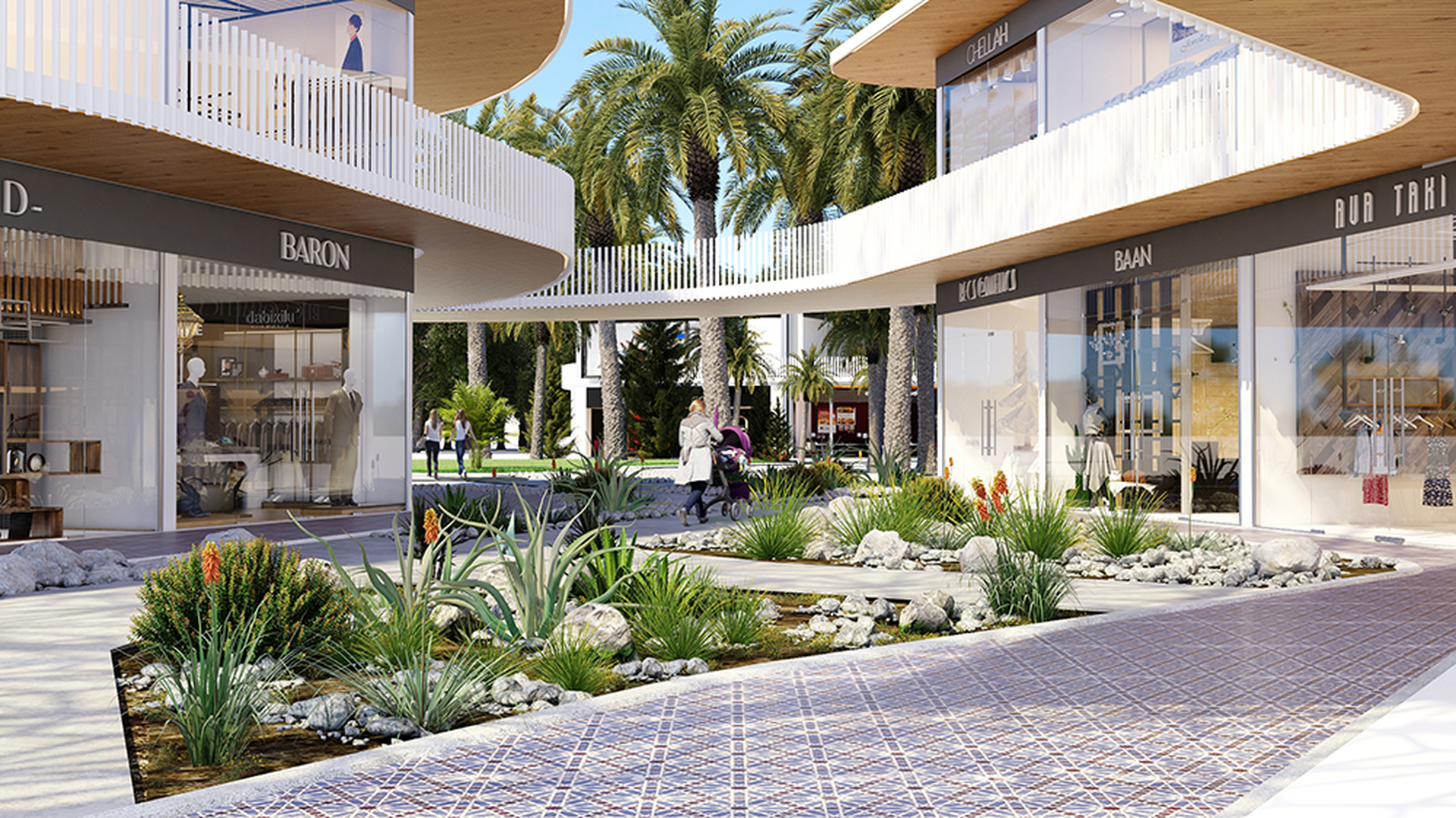

Old vs. new methods

Before CGI technology – and therefore photorealistic rendering – existed, architects relied on manual methods to visualize their projects. Among the most commonly used manual tools included hand-drawn sketches and oil painting. Certain projects required scale models made of easily sourced materials, such as paper, wood, cardboard, glass, and metal. They took a significant amount of time to produce and were very limited in terms of details. Since they must be done manually by hand, you had to deal with the likelihood of inaccuracies in various intricate spots. The old methods are still used now, but mainly for their artistic appeal.

RELATED: Creating exterior renderings using 3D exterior rendering services for architects

3D rendering is all about automation, but certain steps require manual work, especially during the early modeling process (remember that 3D rendering doesn’t happen without 3D modeling first). The good thing is that 3D modeling is also done on a computer using CAD software, so there are still some extensive automations involved. You need an experienced modeling service to create an accurate representation of an architectural object, as it’s much more of a technical work rather than an artistic one. In other words, you don’t have to be a talented artist to build a digital 3D model, but it’s not exactly a walk in the park either. While user input plays a major factor to determine quality, the computer/software helps a lot to avoid incorrect geometries.

The same thing applies to the rendering process, although this is admittedly a little bit more artistic than modeling. The rendering alone is all automatic, but you have to configure various settings, such as lighting intensity, camera position/viewing angle, textures, etc. Post-processing is also necessary to apply colors and repair minor imperfections, like brightness and contrast.

Architectural visualization accuracy and quality are greatly improved with modern CGI technology. Architects can experiment with various designs, materials, and textures during the modeling work. They have the freedom to explore different concepts without much to lose during the process. Because everything is done on screen, they can quickly change something and see the result almost in an instant. Mind you that all the modifications must be done during the modeling. Once the model is rendered, it doesn’t offer as much flexibility because it’s an already done image. In case something doesn’t look right and just be changed, such as when the windows are too large or the flooring material is wrong, you have to modify the model first and then re-render it.

Despite the seemingly complicated workflow, expert CGI rendering is still miles better than sketches and even scale models. Apart from the clearly better-quality result, the process is more practical and flexible.

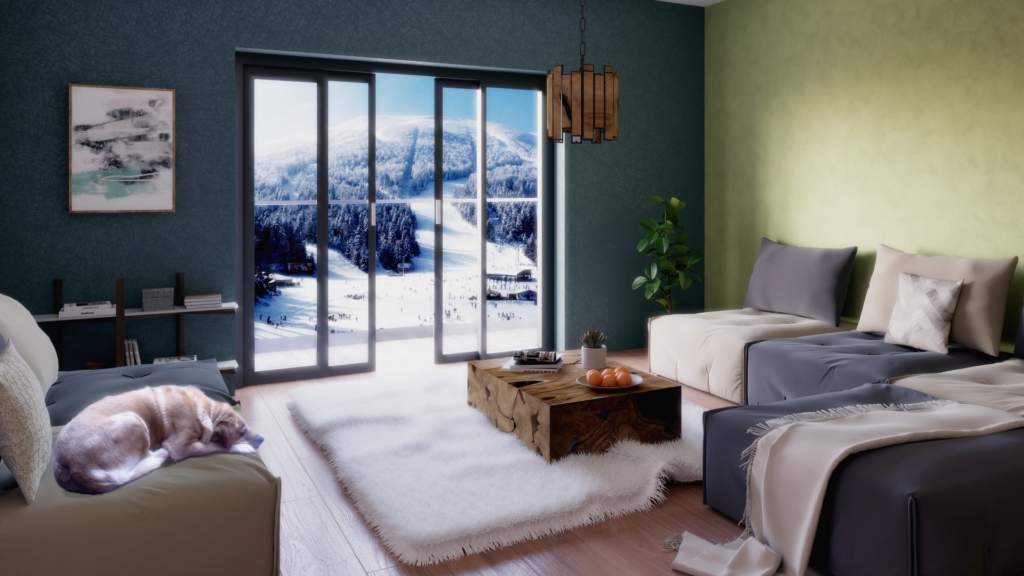
CGI winter home

RELATED: How 3D rendering enhances great architectural design presentations for companies

Why 3D rendering

Even if you took architectural CGI rendering at face value, at the very least you’d still get photorealistic imagery of a planned construction that accurately depicts the otherwise abstract concept and ideas. It’s an imagery to showcase an architect’s visions – how it should look in the real world when it’s done and what it represents. The project could be a statement of the client’s achievements, creative mind, minimalist lifestyle, taste for luxury, or everything else in between. Once the client and stakeholder see the architect’s take on the idea thanks to the realistic visualization, they’re expected to have a better collaboration in the decision-making processes.

Communication tool

With that in mind, you start to realize that architectural rendering services actually functions as an excellent communication tool. A clear, realistic, detailed visualization makes sure that the architect and the client are on the same page right from the beginning of the project. And since the rendering is supposed to be easy to understand, the client feels encouraged to provide feedback. While the architect is basically given free rein (with budget constraint, of course) over the project, the client remains the final decision maker. Any kind of constructive criticism is welcome; if some things have to be altered or modified in any form or shape, all the changes might as well happen now when the construction hasn’t even started yet. The visualization makes it easier to identify problems during the early design process.

Iterative design

As mentioned before, architectural rendering brings about design flexibility. An architectural project of any sort, even a small one, likely costs a sizable amount of money. So long as your project necessitates the involvement of an architect or general contractor, chances are the scope of work calls for a pretty big budget, like a major renovation, design overhaul, or brand-new construction rather than the likes of plumbing repair or installing a garage door. Because the project will result in permanent structural changes, you want to get the most for your money.

RELATED: Architectural illustrations vs. architectural visualization services

One way to achieve that is by implementing an iterative design approach. The process will involve some trials-and-errors, but everything happens on screen with 3D modeling and renderings. Such a flexibility opens the door to an iterative design process, where both the architect and the client combine their ideas and come up with solutions to solve both functionality and aesthetic problems. Think of it as a “measure twice and cut once” method implemented to a larger architectural scale. Taking more time in the design process to minimize risk of mistakes is better than rushing it and repairing problems later.

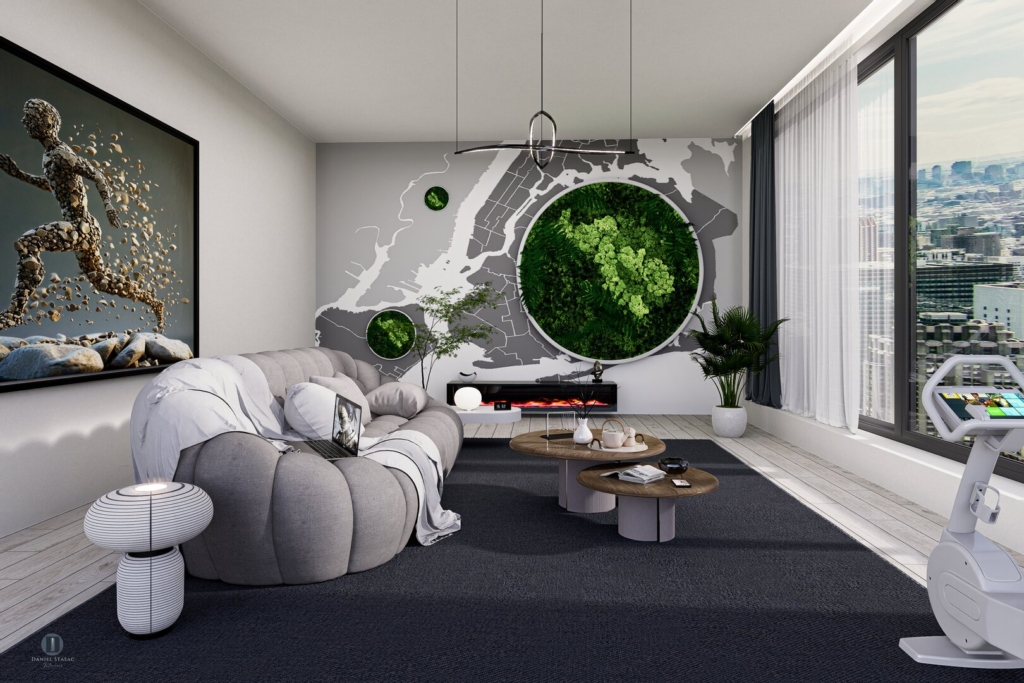
modern biophilic cgi

Roles in architectural project

Collaboration is a crucial element of any architectural project. Proper collaboration can only happen when all parties involved in the project, including architects, clients, and all stakeholders, have a clear understanding of the proposed design. Clarity in both design approach and architectural style is easily achievable with photorealistic rendering. You can’t expect everybody to actively collaborate with each other if they don’t have a good grasp of the design to begin with. And when all discussions and feedback revolve around the same straightforward visualization, you also reduce the risk of miscommunication.

Involvement in design process

A lot of people seem to think that a CGI rendering is always a visualization of the final product. While this is true in many cases, a rendering might actually serve as a starting point of a design process. You can treat it merely as a concept, and proceed to have a brainstorming session with clients, architects, and all stakeholders to materialize and improve the design. The clients feel at ease proposing ideas, requesting changes, and articulating their perspectives because they have the visualization to facilitate communication. If you manage to have the clients involved in the design process, you can run the project with much better confidence.

Streamlined workflow

With architectural visualization services as a communication tool, the project workflow becomes much more streamlined as well. You don’t have to spend too much time on asking for revisions and approval with every subsequent change in design. The visualization can cover every single aspect of the project, from the overall exterior to tiny little components in HVAC and solar panels. If the early discussion is executed properly, it’s not impossible to get an agreement on all design elements – along with the approvals – before the construction. This kind of efficiency keeps the project on schedule and within budget.

RELATED: Best practices for architecture firms: residential and commercial architectural site planning

What it does to freelancers and service providers

Freelancing is on the rise all across the United States. Over the last decade or so, the number of workers who freelance (either full-time or part-time) has grown from around 53 million in 2014 to 64 million in 2023, representing 38% of the entire American workforce, according to a Freelance Forward Research Report (published in December 2023) by Upwork. The COVID-19 pandemic did have something to do with that growth; in fact, there was a 22% increase in the United States in 2019 alone. Half of those freelancers consider the work style a long-term career path, not a temporary choice.

The numbers represent all freelancers of all industries, not only those who work in the architectural sector. But there’s no doubt that architects (or the architectural sector at large) have embraced freelancers to a degree. On some of the most popular freelancing sites, there are hundreds of professionals offering all kinds of architectural services, including but not limited to interior designs, floor plan drafting, 3D modeling, and of course, rendering.

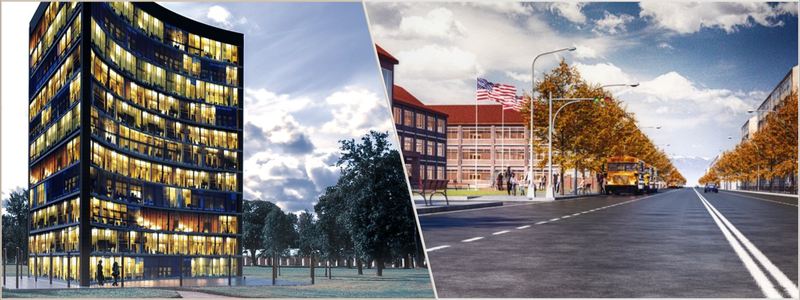
building and school road cgi

Based on a Firm Survey Report (2020) by AIA (American Institute of Architects), over 25% of approximately 19,000 member-owned architecture firms were sole practitioners, meaning they’re effectively running a freelance business model. Not every freelancer is an independent/individual professional, as many services are actually procured by architectural firms big and small. Among the most common types of services provided by those firms are architectural illustration, 3D modeling, and 3D rendering – this makes sense because modeling and rendering can be pretty resource-demanding in terms of computational power.

With all the benefits of 3D rendering, however, architectural service providers and freelancers will always use CGI visualization to assist with whatever projects they do. As a matter of fact, they rely on 3D rendering to propel efficiency, especially if they have to work off-site (remotely), during the early phase of the project. The good-old familiar adage “a picture is worth a thousand words” is played to its full potential here. Freelancers, whether architects or designers, are able to communicate their ideas, no matter how complex, in the most efficient manner possible using visualizations.

How Cad Crowd can help

The future of 3D rendering is bright. Here at Cad Crowd, we have thousands of talented freelance 3D modelers and render artists to help you create the most convincingly realistic architectural visualizations, either static or animated, using the latest CGI technologies, including Augmented Reality (AR) and Virtual Reality (VR).

Give Cad Crowd a call today to get your free quote.

author avatar

MacKenzie Brown is the founder and CEO of Cad Crowd. With over 18 years of experience in launching and scaling platforms specializing in CAD services, product design, manufacturing, hardware, and software development, MacKenzie is a recognized authority in the engineering industry. Under his leadership, Cad Crowd serves esteemed clients like NASA, JPL, the U.S. Navy, and Fortune 500 companies, empowering innovators with access to high-quality design and engineering talent.

Connect with me: LinkedInXCad Crowd

3D Pool Rendering: Creative 3D Swimming Pool Design Ideas from a Leading Company


The best thing about 3D rendering services is that you get to see how the swimming pool should look, even before construction begins. Modern CAD technology allows you to design everything in a virtual space where you can build, make changes, and basically fine tune the plan on a computer screen. Rendering does cost money, but it helps you avoid potential costly mistakes during the construction. You can consider it a three-dimensional photorealistic blueprint but without all the confusing technical construction annotations.


🚀 Table of contents
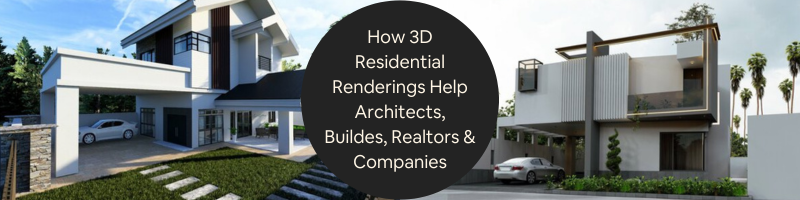

Swimming pool 3D rendering

Photorealistic rendering is a WYSIWYG (What You See Is What You Get) construction document digitally drawn to scale, so you get a clear idea of what the final outcome will be early on in the project. To make the rendering as accurate as possible, it has to go through several steps:

1. Concept: the process starts with some simple sketches on paper to determine basic specifications such as shape, dimensions, materials, and location relative to the house or main building. If there needs to be structures around the swimming pool, like glass enclosure, deck, furniture, and decorative elements, they should be included and detailed in the sketch as well. The sketch will have to go through one or two refinements before everything is ready for digital drawing.

2. Modeling: the render artist begins creating 3D models of all objects in the pool and the surrounding landscape. If the pool is close enough to the main building, a small part of it might be included in the modeling to put everything to scale.

3. Detailing: once the modeling is done, it’s time to put more details into each object. The process may involve adding colors, textures, lighting, and shadows.

4. Water simulation: one of the most challenging parts of 3D rendering is creating photorealistic water. Most render artists use specific drafting services to generate depth, transparency, reflection, and the illusion of motion on the surface.

5. Lights and shadows: the viewing angle along with light direction determines the shadow. Since the rendering also involves water, there should be some refractions as well. Shadows on the water surface should be different from those on hard surfaces, too.

6. Rendering: the actual rendering task is done by the computer, but the artist still needs to configure a few settings like the resolution and output format.

7. Post-processing: once the rendering is done, post-processing helps improve fine details such as brightness, saturation, contrast, and specific effects.

Swimming pool 3D rendering costs between $500 to $1500. Keep in mind that the rendering fee has nothing to do with how much the actual swimming pool will cost you.

RELATED: Creating exterior renderings using 3D exterior rendering services for architects

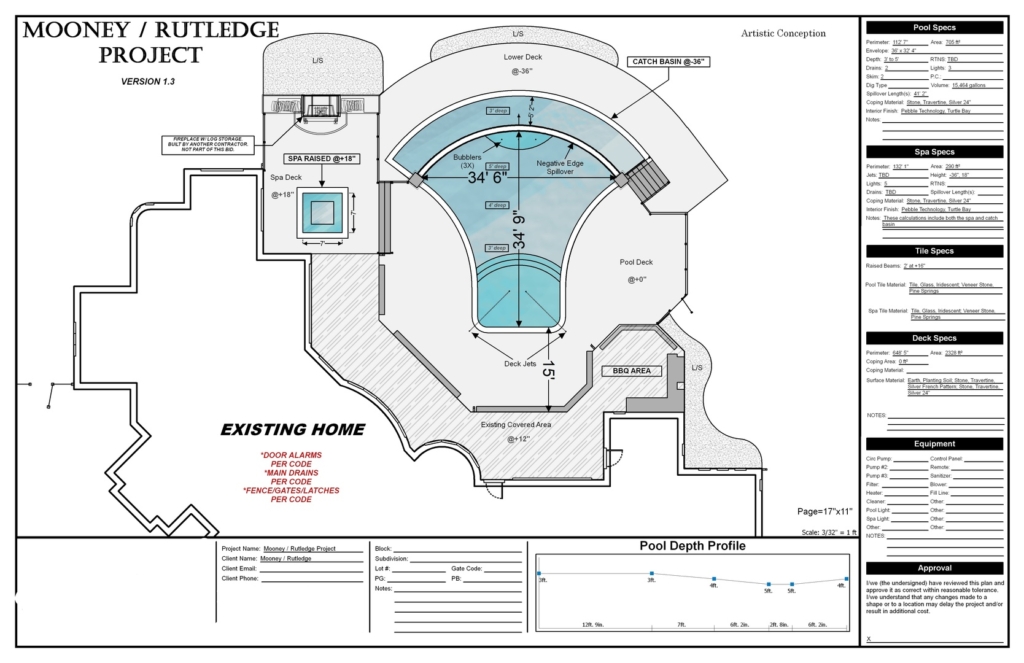
architectural plan for a pool design for an existing home

Types of swimming pool

A swimming pool is a striking home improvement element. It comes in plenty of different sizes, shapes, and styles, but sometimes more options make it even harder to make the right choice. You have many things to consider, from functions and maintenance to design and complexity. But one thing is certain: a swimming pool is not cheap. Pool design services don’t have to be expensive, however.

In-ground

A multi-use recreational swimming pool is often a standard feature in a luxury house. In some real estate markets, such as the Sun Belt region in the US (stretching from Virginia and Florida in the southeast through Nevada and southern California in the southwest), an in-ground pool – or any type of swimming pool, for that matter – is pretty commonplace in middle-class neighborhoods as well. Even if you’re not overly keen to swim, the feature will come out as an excellent investment that brings a significant addition to the property’s long-term value. And if you do find swimming enjoyable, an in-ground swimming pool requires regular maintenance, at least several hours a week for cleaning.

Above ground

Soft-sided and hard-sided options are available for above-ground swimming pools. And if you add a frame around the outside walls or elevated deck, the final outcome is barely distinguishable from the in-ground type. Pool designers use the soft-sided option allows you to disassemble the entire structure in case you need the extra space or during cold winter. Reassembly is relatively easy for DIYers, but then again, you may come across some difficulties when the structure is poorly built in the first place due to clumsy planning. Compared to the in-ground type, an above-ground swimming pool is a much more affordable investment and easier to maintain.

RELATED: Architectural illustrations vs. architectural visualization services

Lap pool

Most lap pools are built as an in-ground type, but there are also above-ground variants installed as either permanent or non-permanent structures. The ideal size for a lap pool is anywhere from 45 ft. to 75 ft. long; the standard Olympic-sized length is 164 ft. As for the depth, it usually has three levels: 3 ft. at the shallow end (for entrance), 4 ft. in the middle, and 5 ft. at the other end. While the entrance seems suitable for children, a lap pool is intended only for workout use without additional elements like water slides or diving boards. A lap pool is long, narrow, and shallow. It’s constructed in a rectangular shape, making it an ideal option for a small backyard area because it doesn’t take up too much space. The installation of an in-ground lap pool with the aforementioned size costs around $45,000. But if you’re looking for a store-bought above-ground type, expect to pay around $10,000, including labor.

Indoor pool

If budget is not a concern, an indoor pool is a no-brainer. As the name suggests, the swimming pool is located inside – therefore not exposed to the outside environment – and under a roof for better privacy and cleanliness. An indoor pool is usually in-ground and built for swimming exercises throughout the year rather than being part of a playground. Think of it as a fancier and larger version of a lap pool kept safe from the elements. When installed outside the main building (such as in a backyard), freelance pool designers will often cover it with a glass enclosure; if you have enough space, you can even have the pool and enclosure constructed as a detached structure. Whether the shape is rectangular, circular, oval, semi-circle, or any other geometry you find pleasing and complementing the architectural style, an indoor pool is a true statement of taste and style.

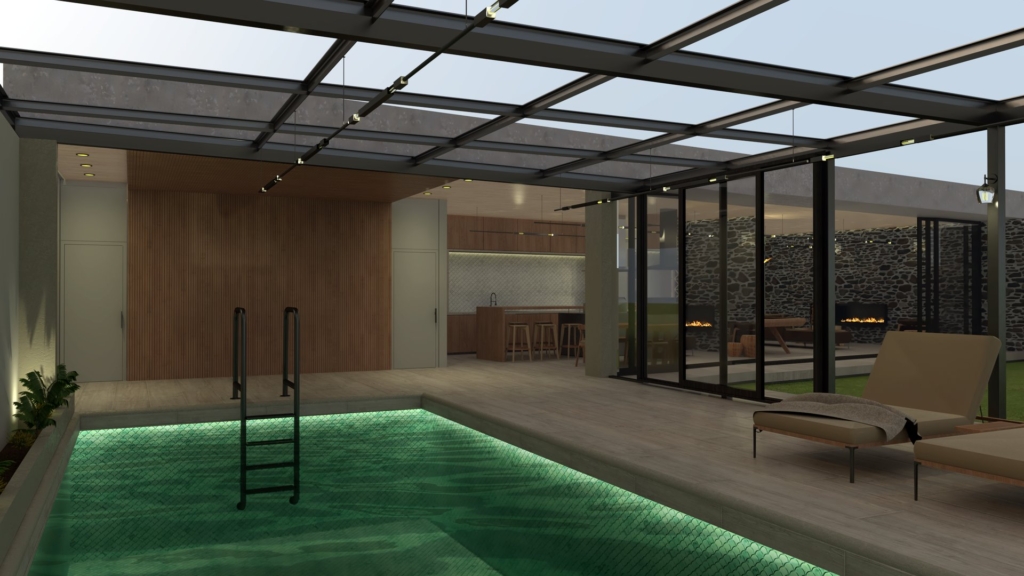
indoor pool example

RELATED: Best practices for architecture firms: Residential and commercial architectural site planning

Infinity edge pool

At least one side of an infinity pool is set below the water level with an out-of-sight skimmer tray. The edge is designed in such a way that it looks as if the pool blends seamlessly with the surrounding landscape. Done right, the water at the edge of the pool gives the illusion that it falls over the wall, just like a small waterfall, although you don’t exactly hear the sound of rumbling water. Infinity pool is a common feature in luxury homes located on hilltops or near the ocean. It’s always custom-built as part of the house blueprint and intended to highlight the view.

Spool

A blend of spa and pool, a spool is larger than a spa yet smaller compared to a typical pool. You can’t swim in it, although some spools have directional jets with adjustable power for the purpose. But most spools are built for relaxation – a place where you can soak comfortably with friends after a hectic day. Spools are usually an in-ground affair constructed from poured concrete, but there are also ready-made models installed with elevated decks. You can almost say that spools are oversized hot tubs. Some of the fancier models feature full temperature control, insulated cover, LED lighting, and a filtration system.

Note: if your spool turns out to be quite large, it may fall under the full-size swimming category according to the local building code. You may need to install protective fencing to meet the code requirements.

Plunge pool

Often an addition to an already existing in-ground swimming pool instead of a stand-alone feature, a plunge pool is not designed for swimming. It’s relatively small (about 10 x 15 ft.) and shallow at around 6 ft. Although it looks like an ordinary spa, the water inside the pool is intentionally kept cold to help you cool down and relax after an intense exercise. But just because plunge pools are small and shallow, it doesn’t mean they’re cheap. Installation may cost between $15,000 and upward of $20,000.

Natural pool

No, this is not a pool that naturally takes shape on your property, but an artificial pool designed to appear as if it has already been there for many years. It’s built as part of the landscaping and therefore equipped with a regeneration zone for an organic cleaning system. Since this is intended to serve as landscape appeal, the pool is not used for swimming. Even if you want to swim in it, you probably won’t have an enjoyable experience due to the shallow depth. Depending on the size, a plain natural pool is likely more affordable than an in-ground swimming pool, although you might spend more on styling elements such as small streams/waterfalls, boulders, and aquatic plant life.

RELATED: Architectural design services costs: All you need to know

Architectural pool

The name says it all: an architectural pool is built to complement the design of the main building. The structure, materials, colors, and shape must be carefully selected to create a cohesive look. It might be an addition to an existing structure, but most are built as part of the house plan and designed by an architect. While it’s always a stand-out feature, an architectural pool should create the impression that it blends seamlessly with the main building as if each is an inseparable part of the other. If you’re building an architectural pool as part of a renovation, the cost can be more expensive than the house itself. Maintenance is just about the same as a regular in-ground type.

How Cad Crowd can help

A swimming pool is not a small investment, but proper planning and detailed 3D rendering can help you make sure that it is worth every penny you spend. Cad Crowd is home to professional render artists offering flexible solutions and customizations to meet even your most diverse requirements. Get in touch with Cad Crowd to get your free quote, and you can expect nothing but the best working with the best in the industry.

author avatar

MacKenzie Brown is the founder and CEO of Cad Crowd. With over 18 years of experience in launching and scaling platforms specializing in CAD services, product design, manufacturing, hardware, and software development, MacKenzie is a recognized authority in the engineering industry. Under his leadership, Cad Crowd serves esteemed clients like NASA, JPL, the U.S. Navy, and Fortune 500 companies, empowering innovators with access to high-quality design and engineering talent.

Connect with me: LinkedInXCad Crowd

Marketing Real Estate: Top Real Estate 3D Rendering Trends for Companies and Firms


Do you feel like you’re doing everything to pre-sell more properties but that you can still do better? Don’t worry because you’re not alone.

A lot of realtors and developers today use the most state-of-the-art sales tactics only to be disappointed with the slow flow of deals. Is there something you can do to maintain a steady stream of prospects that also brings more sales fast? It is where real estate 3D rendering services can help convince more clients to sign the dotted line.

Thanks to real estate 3D rendering, real estate or development businesses can get and use photorealistic visuals that they can use for promoting properties, including those that are still under construction or aren’t even built yet.

Real estate CGI is made not only with still images but also with interactive 3D panoramas, digital videos, and virtual reality experiences. When used smartly and correctly, these types of content can be elevated to the next level by your promotional strategies: they have the potential to improve effectiveness.


:rocket: Table of contents
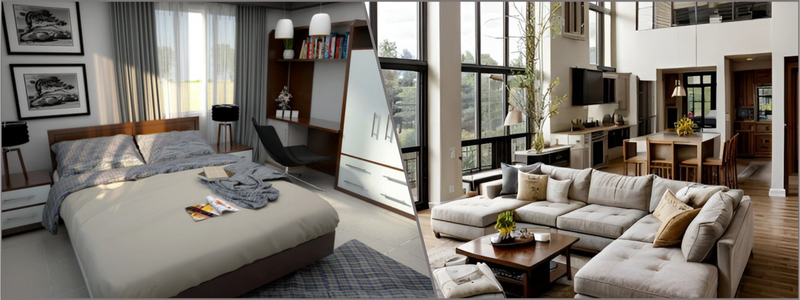

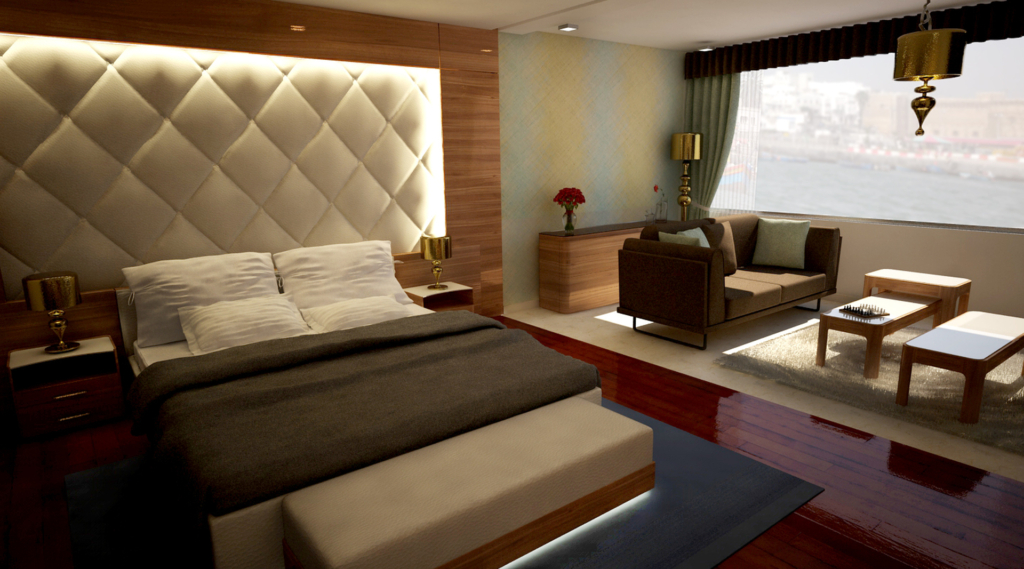
3d bedroom for real estate

Artistic and cinematic rendering

Real estate renderings are no longer limited to just technical representations because they have evolved into more enticing cinematic experiences and artistic experiences.

Expert 3D visualization artists and real estate professionals are using new original approaches that blend mood, atmosphere, and storytelling in their renders.

Presentations appeal to the public and clients because they are visually stunning and emotionally engaging.

Setting up the movement and camera position allows real-time exploration and navigation of the 3D model. Companies can manually control the camera and define its paths to show different angles and perspectives of the design.

Movements of the camera can be fluid and smooth to give stakeholders and clients a more immersive experience.

Cloud rendering

Cloud rendering is another trend in real estate 3D rendering. It is an excellent technological solution that helps 3D visualization service providers use the power or remote computer cluster for rendering CG imagery.

Since cloud rendering is a type of on-demand service, it gives access to an almost endless resource of many GPUs and CPUs to work on their files. This only happens while it renders visuals and takes time. It increases computer power allocation—speeding up the whole rendering process.

Most specialists in the CGI production industry have stated that the use of cloud rendering helps them get 3D renders in just a matter of minutes. Using in-house render farms, on the other hand, would have taken hours to do the same thing.

Through this reduced time, 3D artists can simultaneously work on multiple projects. It means a lot to real estate professionals as they can significantly improve their communication with project stakeholders through faster design updates and iterations.

Cloud rendering services are also anticipated to see a significant growth rate in the coming years. Thus, it is safe to say that the surge of ultra-fast visualization will happen and might even become the new norm sooner rather than later.

Emphasis on materials and detailing

The rise of 3D rendering technology resulted in the growing emphasis on accurate and detailed representations of finishes, textures, and materials. Real estate companies can now present intricate details with incredible realism and precision, including meticulous patterns, ornate facades, and interior elements. This trend allows stakeholders and clients to better envision the quality and aesthetics of the design.

It is vital to apply the correct textures and materials to the 3D model to achieve more realistic renderings. Modern real-time rendering supports different material properties, including transparency, roughness, bump maps, and reflections. The textures and materials must be chosen with great care and applied correctly to the model’s different elements for the accurate representation of their counterparts in the real world.

3d real estate exterior luxury hotel

Environmental sustainability

With sustainability becoming one of the primary considerations in real estate, it is only expected for it to be one of the trends in 3D rendering. Real estate companies and firms are using different rendering techniques more and more to analyze and simulate the environmental performance and structure of buildings. These include thermal performance, daylighting, and energy consumption. It lets them optimize designs for sustainability and energy efficiency to create more environmentally friendly buildings.

Vertical gardens are perfect examples of environmentally friendly architectural services. It involves the application of different shapes, textures, and levels of vegetation to create visually dynamic and stunning green walls. 3D vertical gardens use a combination of plants with varying growth patterns, foliage colors, and heights to add dimension and depth to the space. This can also transform flat surfaces into living and vibrant works of art.

This strategic three-dimensional plant arrangement creates an ever-changing and immersive experience wherein the interplay of shadow and light further highlights the complexity and beauty of vertical gardens.

Automation and AI integration

Automation and artificial intelligence, or AI, have now found their way into many industries, including real estate rendering. AI-powered tools and algorithms can help automate repetitive tasks, allow efficient generation of more realistic scenes, and streamline the entire rendering process. The integration of automation and AI can reduce costs, enhance productivity, and give designers more time to focus on design refinement and creativity.

AI techniques, including GANs or generative adversarial networks and procedural generation, can come in handy for generating realistic and complex environments. AI algorithms can also produce realistic 3D assets, including landscapes, buildings, and expert furniture design, according to design constraints and the given parameters.

This trend in real estate rendering makes way for the rapid production of scenes on a larger scale and improves the level of realism and detail in renderings.

Photorealistic rendering

There is an increasing demand and clamor for photorealistic rendering in real estate, and this is no surprise. Clients, after all, expect highly realistic and detailed renderings with close resemblance to the final product. The availability of high-quality materials and textures, enhanced hardware capabilities, and advancements in rendering software all made it possible for 3D renderings to achieve excellent levels of realism.

Photorealistic renderings offer potential investors and buyers a lifelike glimpse of the property before its construction or renovation with the help of elements like specialized landscaping, textures, materials, and lighting.

This trend in real estate marketing is an essential tool for marketing as it helps convey the unique features, aesthetic appeal, and ambiance of a property. It helps clients make better decisions and imagine themselves being in and using the space.

Real estate companies and firms can also use photorealistic rendering to present their designs in such a way that is more enticing while helping them with their pre-selling and marketing efforts.

3d apartment for real estate

Real-time rendering

Another significant trend that has been enjoying a surge in popularity for the past few years is real-time rendering. With the rise of real-time visualization software and powerful GPUs, real estate companies can now engage in real-time creation and manipulation of 3D models to make the design process more efficient and interactive. Real-time rendering allows faster decision-making, instant feedback, and quick design iterations.

A specialized rendering software or engine is also used to make real-time rendering possible. These engines use state-of-the-art optimization algorithms and rendering techniques to produce interactive frame rates for high-quality renderings. It is how realistic walkthrough experiences, virtual reality tours, and 3D animation are made.

Storytelling

Storytelling is one of the key trends in real estate rendering. Technically, this is not a new trend, but it’s poised to continue in the years to come without any signs of going anywhere at all.

The use of storytelling puts more aesthetic and thought into images to the point that you will still find yourself mesmerized even after looking at them several times.

If you wish for your real estate ads or project presentations to appeal to the emotions of prospects and clients, tapping into storytelling’s undeniable power is something you shouldn’t miss out on.

AR and VR

Augmented and virtual reality technology firms have been making dramatically immense advancements, which are extensively utilized by real estate. With VR, users can have a more realistic and immersive experience through virtual walkthroughs of a space or a building.

On the other hand, AR overlays the virtual elements into the real world to allow real estate companies to envision their designs in the existing environment. AR and VR make it easier for clients to understand the design and bolster communication among all the involved parties.

A 3D real-time architectural walkthrough is an excellent example of a VR experience. Virtual real-time walkthroughs offer the ability to interact with objects, move freely in a virtual space, and make on-the-spot design modifications. It allows viewers to fully understand and experience the materials, spatial qualities, and design intent of the project in general before its physical construction.

This experience driven by technology improves communication, allows better decision-making, and facilitates visualization of designs in ways that weren’t imaginable in the past.

How Cad Crowd can help

Real estate marketing has never been easier with today’s innovative trends. Reach out to Cad Crowd, and we’ll connect you with top-notch professionals to deliver outstanding results tailored to your needs.

Get a free quote today!

author avatar

MacKenzie Brown is the founder and CEO of Cad Crowd. With over 18 years of experience in launching and scaling platforms specializing in CAD services, product design, manufacturing, hardware, and software development, MacKenzie is a recognized authority in the engineering industry. Under his leadership, Cad Crowd serves esteemed clients like NASA, JPL, the U.S. Navy, and Fortune 500 companies, empowering innovators with access to high-quality design and engineering talent.

Connect with me: LinkedInXCad Crowd

How to Integrate Virtual Reality (VR) in Your Real Estate Firm’s 3D Virtual Staging Services to Drive Growth


Perhaps real estate is one of the fields that have always been adopters of new technologies to serve their clients and market better. With this improvement in the evolving digital landscape, sophistication tools will become even more prevalent, and nowadays, many relevant tools emerged in Virtual Reality (VR) and 3D virtual staging. These technologies open a real opportunity for real estate firms to provide more engagement, realism, and convincing property experience for prospects, so subsequently, generate growth and business success.

The article explains exactly how incorporating VR into your company’s 3D virtual staging services can enhance the buying experience, improve customer engagement, and contribute to long-term growth. Whether you’re a small real estate agency or a large firm, adopting VR can put you ahead of others in the industry and attract more buyers to your listings.


:rocket: Table of contents
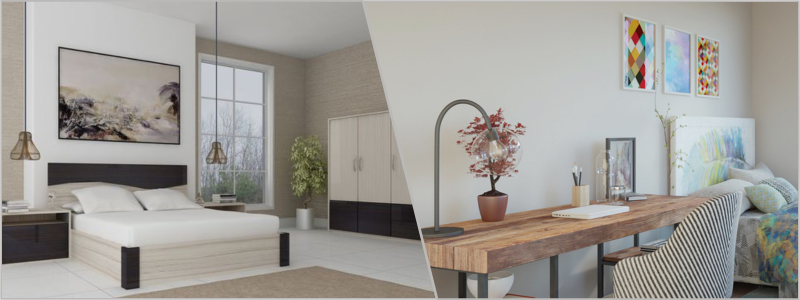

What is 3D virtual staging?

The term virtual staging refers to the process of virtually furnishing and decorating an empty or sparsely furnished property so buyers can envision how much space is available for them. Virtual furniture, decoration, and accessories are used in property photos with the help of 3D software to create a realistic and attractive image of the home. It is an increasingly popular alternative tool in real estate marketing, especially virtual staging since it has proved to be inexpensive, flexible, and visually attractive compared to other traditional staging methods.

3D virtual staging services allow real estate agents to present beautifully crafted and customized visuals of their listing without the pains and associated expensive logistics of physical staging. In what ways, though, might Virtual Reality further improve this process and potentially fuel growth for real estate companies?

RELATED: Virtual room design services and 3D room design tips for companies and firms: Complete breakdown

3d studio apartment living room

How VR enhances 3D virtual staging in real estate

VR integration is a game changer with 3D virtual staging services. Traditionally, 3D virtual staging allows potential buyers to stroll through an interactive, lifelike 3D environment, making it from static images to an exciting experience. From being passive to active viewers, this would bring a flood of advantages for real estate firms to enhance engagement and conversion rates.

Competitive advantage

As real estate competes in the field of technology, much better positioning against such rival firms is always ideal. Of course, VR-based virtual staging will give your real estate firm an edge over your competitors, especially from the traditional staging and 2D imagery approach. This means standing out through immersive VR experiences, showing your business at the forefront of real estate marketing technology. This not only attracts more buyers but also increases your market visibility and enhances your brand reputation.

Global reach

One of the most significant advantages of applying VR to your real estate business is that it will help you extend it to very long distances for buyers. The real estate market is, by and large, global, and nearly all buyers wish to have an overseas investment in a property. With the help of VR-enabled virtual staging and tours, you’ll be reaching a much larger audience-people all across the globe.

This becomes especially crucial in the post-pandemic world today; international travel remains limited, or a buyer is too busy to make a trip for viewings. With VR, potential buyers can look around from anywhere, at any time, and are more likely to attract high-quality leads.

Immersive buyer experience

Prospective buyers will experience a virtual world that emulates a very close feel of visiting the property. One can go through every room, rotate details, and zoom in on areas. Buyers can even change the perspective or even the layout of a given space. Such immersion cannot be seen in traditional 3D virtual staging.

What with the ability to “walk through” a property virtually, that which gives buyers a much more intimate understanding of the layout, size, and flow of a given space, it really creates more of an emotional connection to the property-more and more now the main factor in driving purchasing decisions.

RELATED: How 3D virtual reality services can improve your real estate business

3D VR Visualization

Better marketing and sales tools

VR is the perfect tool to create more compelling marketing materials beyond the traditional listings: high-quality virtual tours, VR-enabled advertisements, and much more interactive property showcases. You will engage prospective buyers in ways that are just impossible with traditional photos and videos. VR is a great tool for differentiating property listings, driving more attention to your offerings, and adding that storytelling dimension to your marketing.

Additionally, VR allows for tracking user interactions, which can provide valuable insights into buyer behavior. By analyzing how buyers interact with virtual properties—such as the areas they focus on or how long they spend in certain rooms—you can tailor your marketing strategy to better align with their interests and needs. This data-driven approach can lead to more efficient marketing efforts and higher conversion rates.

Increased buyer confidence

Homebuyers aiming to acquire their dream home want to be assured that they are making a good choice. They are concerned with knowing everything there is to know about a property before actually spending their money. Virtual tours, fueled by VR, allow for 360 degree view of a house, thus affording potential buyers to see every part of the house without having to physically be there. And then this experience helps build trust, giving them a clear, complete picture of the property.

Therefore, virtual reality can boost buyer confidence through the engagement and involvement the process of inspecting houses presents. It is possible to see a number of properties during one sitting, make direct comparison of layout and design, as well as pay attention to specific details such as room dimensions, lighting, or finishes. The more knowledgeable and confident a buyer is, the more likely they will be to take the next step in the purchasing process.

RELATED: Architectural VR/AR 3D rendering costs, rates & 3D modeling pricing for design firms

Personalization and customization

With one of the strengths of VR integration when it comes to virtual staging, one could definitely personalize for the individual buyer. Since every buyer is unique with different tastes, preferences, or even lifestyle needs, they can visualize how the property could fit their unique style by allowing them to interact with space in VR. They may alter the colors of the walls, change some furniture pieces, or even simply change some decorative elements to see how well it fits in that area.

This is a level of personalization more likely to elicit an emotional connection on the part of the buyer. They’re no longer looking at some generic, staged home; instead, they can imagine living in that space and how it reflects their personal vision. The more personalized the experience, the more a buyer will be driven to make a decision about moving forward with a purchase.

Time and cost efficiency

Integrating VR into your virtual staging solutions is the most cost-effective way of delivering an elevating experience without the high costs of physical staging. Staging, in its conventional form, may require renting furniture, hiring decorators, and even hiring professional photography-all very expensive operations. Virtual reality, on the other hand, enables you to stage properties digitally and offer clients infinite opportunities for virtual tours at a fraction of the price.

There is also time saving. Using VR, you don’t have to schedule multiple in-person showings nor wait for furniture to arrive. You can make adjustments to the virtual staging almost on the spot. Flexibility makes your business much more efficient than before, but it also improves the experience for clients who prefer convenience and flexibility more and more.

RELATED: When do companies use freelance 3D virtual staging services vs. traditional staging? Full breakdown

How to integrate VR in your real estate firm’s services

Of course, integrating VR into your 3D virtual staging services requires the right strategy and the right technology; here’s where to start:

1. Choose an appropriate VR technology: Choose a suitable VR software or platform that easily fits your available tools. As it is widely understood, most VR solutions are created to integrate well with 3D modeling software from where virtual staging designs may be imported into VR environments. Consider a platform that is easy to use, of quality visuals, and allows for an interactive experience of users.

2. Invest in VR headsets: Investment in VR headsets will largely depend on your business model. Some cases require you to buy headsets for showing to clients, or you can prepare web-based virtual reality tours accessible from the client’s smartphone or computer.

3. Train your team properly: Train your team on how to use VR tools and virtual staging software. These professionals must be fast and agile in creating and modifying virtual tours, adjusting the experience as clients desire, and guiding clients to expert recommendation.

4. Market VR services: After integrating VR to your virtual staging services, make sure to market it properly. Emphasize in marketing literature, web site and social media campaigns how this is actually an immersive experience, made much more convenient, and allows greater personalization.

5. Seek client feedback: Ask your clients for their feedback if they have experienced your VR services. This will give you the ability to get improvements in your offerings and fix issues and ensure your services are fulfilling their needs.

RELATED: Expert 3D store rendering and floor plan design services: attracting retail customers

Wrap up

The adoption of VR by 3D virtual staging services is one of the high-power moves to make growth look out for in the real estate industry. It can give an immersive, cost-effective, and personalized experience that can better boost engagement, increase confidence, and expand the market.

In this recent era of total competitiveness, the use of VR technology will make your business company become highly competitive in comparison and attract more buyers, which will make it separate from the competition pool.

Investment in VR and virtual staging services fits into the nowadays rising trend of technology innovations in real estate; it future-proofs the business in the ever-changing marketplace.

How Cad Crowd can help

The key to growth lies in staying ahead of trends, and VR offers an exciting opportunity for transformative change in how your firm approaches marketing and selling properties. Cad Crowd will make sure you’ll stay on top of this trend. Request a quote today.

author avatar

MacKenzie Brown is the founder and CEO of Cad Crowd. With over 18 years of experience in launching and scaling platforms specializing in CAD services, product design, manufacturing, hardware, and software development, MacKenzie is a recognized authority in the engineering industry. Under his leadership, Cad Crowd serves esteemed clients like NASA, JPL, the U.S. Navy, and Fortune 500 companies, empowering innovators with access to high-quality design and engineering talent.

Connect with me: LinkedInXCad Crowd

How 3D Rendering Enhances Great Architectural Design Presentations for Companies


3D rendering services allow architects to present design ideas and visualize complex plans in an understandable, highly intuitive manner. The dynamic view offered by 3D rendering allows architects and designers to tangibly communicate their ideas and enhance their decision-making while enabling them to identify design flaws early in the process.

Using a variety of software programs, including 3dS Max, Revit, AutoCAD, Sketchup, or a combination of these, 3D renders enable next-level visualization of architectural and design projects: from 3D interiors to landscape design, it is now paramount that companies and architectural firms include 3D renders in their portfolio – and for soon-to-be home and business owners to take advantage of its benefits.


:rocket: Table of contents
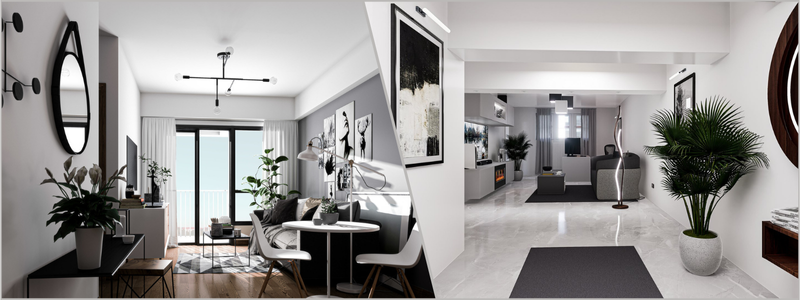

The importance of 3D rendering in architectural design

Having the avenue to explore ideas even before construction begins is a great modern boon that makes it possible to cut costs while providing clarity and precision in the architectural workflow. It also provides an easy platform to facilitate collaboration between architects and stakeholders and allows them to speak on the same level amidst all the complex technical details.

What’s more, 3D rendering can accommodate many different styles and aesthetics. Even bespoke pieces of furniture can be modeled and planned for, and architects and designers can test out varying types of materials, weather conditions, lighting, and other effects that enhance the final render.

Additionally, while 3D rendering provides a platform for collaboration and testing ideas, it is also the perfect way to communicate these ideas to potential clients or customers for marketing and salespeople.

RELATED: Why 3D architectural renders resonate better with modern consumers

3d render of a living room interior

Presentation of the concept

In the world of architecture and interior design, first impressions are paramount. Any space that you’d like customers to consider should not only look good but ideally fit their narrative, preferences, and expectations.

As such, a good way to think about 3D architectural rendering is that the render itself is the main communicative material – with a presenter ready to answer questions and explain certain choices or background information regarding the render.

Let’s take a look at some of the specific ways 3D rendering can achieve that:

The proper use of light turns any scene into something true to life

Without proper lighting, the depth of objects and other elements inside an image may look flat and lifeless. To add to that, lighting itself sets the mood for a particular scene. It also goes without saying that the weather and natural lighting for the render should match the physical location’s patterns.

This type of accuracy when it comes to lighting is hard to achieve through traditional means and can quickly rack up costs, time, and resources making revisions to get it right.

Great 3D renderings clearly define space

3D renderings not only show the objects and furniture that may fill a space. Renderings should have a sense of space that can offer a sense of harmony, functionality, and dimensionality. In fact, any good designer will tell you that space (& negative space) affects the mood and overall effectiveness of certain spaces and will look to bake this philosophy into the design as a foundation.

RELATED: 3D architectural rendering: how your company shapes weather, mood, and season

3D renderings show realistic materials

Materials are important parts of the aesthetic, style, and ethos behind the planning and use of a space. Unlike mood boards, 3D interiors can showcase these materials realistically and depict many different kinds of objects in varying lighting conditions.

This makes it easier to make decisions about the finishes and help communicate the mood of the space better. For instance, glossy surfaces make for a more modern look. This also makes it easier to make changes and to adjust the design anytime.

3D rendering Tunisian conference room

3D renderings depict the room’s features

3D renderings (and by extension, more advanced AR/VR stagings) are built not just to show how a room or space might look. It also gives an ardent showing of the features and functions built into that space such as dressers, convertible furniture, and even whimsical hidden rooms. Features include walkways, the ambiance, and even negative space.

The benefits of 3D rendering for architectural design presentations

3D renderings use lifelike imagery to help communicate complex architectural design concepts and make sure that the client and every stakeholder are on the same page regarding the design. It’s way easier to judge spatial relationships, design intent, and overall aesthetic when everything can be visually confirmed and adjusted with precision.

Making edits and changes with the client

Imagine having to discuss changes to design while trying to decipher a 2D drawing or mood-boards. Needless to say, it’s an uphill battle to coordinate very specific intentions and complex decisions without a visual aid.

Clients and architects can work together on the render almost in real-time, and make immediate changes when necessary – eliminating cost and time constraints. They can even be a bit more bold and experimental with their choices as they explore design options.

Improved Client Engagement

Clients are way happier and engaged when they can see their space unfolding and coming to life – even as a render. This gets them invested into the project way more. Especially for marketers and salespeople, 3D renders may be the kicker that makes a client decide to go for a purchase.

Early Error Detection and Design Optimization

It’s one thing for architects to make mistakes while planning and designing, but oftentimes mistakes and errors can come in many forms. Say a client mentioned a specific material to use for certain objects or furniture – many would be hard-pressed to find such analogs just to use for modeling. Plus, for simple audition purposes, such a method isn’t very cost-effective.

As such, 3D renders are an obvious advantage that allows architects to optimize the design according to a client’s specifications.

RELATED: Better 3D rendering and retail store design services for commercial spaces

How architectural design presentations are leveraged in other industries

Beyond architectural design, 3D renderings provide benefits to a number of other industries in similar ways. In fact, these renders are now so crucial that industries who have adopted its use have found themselves redefining their methods and practices.

3D mall exterior

Real Estate and Construction: Real estate developers use 3D presentations to bolster their efforts in marketing and construction. Apart from being able to present to its potential clients and buyers, 3D renderings allow the industry to use its advantages to plan and optimize their designs.

Interior Design: 3D renderings allow interior designers to easily play around and manipulate design and element choices without breaking the wallet. They can switch up furniture, lighting, arrangement, and even change up materials easily or present different options for the client.

Product Design and Manufacturing: With 3D rendering, manufacturers can create virtual prototypes and iterate on it without having to do physical mock-ups. They can also visualize their products in bespoke environments and situations, allowing them to look beyond the manufacturing phase and make better decisions to refine their designs and streamline manufacturing methods.

Marketing and Advertising: Marketing campaigns and advertisements use 3D rendering, and its offshoot, 3D animation to create enticing marketing campaigns and draw consumers into the space or world they’ve created.

RELATED: All you need to know about interior and exterior 3D commercial rendering services

The possibilities for the future of 3D renderings

With the advent of VR/AR technologies, it’s not far off to see an enhanced version of 3D renderings where the tangible and intangible meet. Clients would be able to peruse each of the elements of a space while wandering its corners and spaces, interacting with each object as if it were in front of them.

This immersion is already well underway and while for right now, the full potential use of augmented and virtual realities is currently costly, the advent of games utilizing the technology is a great indicator of where its heading and the benefits it can bring to the industry.

It’s even possible to take this a step further by allowing the designers and architects themselves to reap the benefits of 3D renderings made alive through AR/VR, allowing them to make changes and make better decisions.

Choose Cad Crowd to elevate your beloved spaces

3D rendering undoubtedly can get you a step closer to your dream spaces. It enhances visualization and communication and allows you to move forward with your plans knowing that no stone was left unturned. To take advantage of the benefits of this, it’s essential to find the best designers and architects who are experts and can get behind your vision.

Cad Crowd’s years of experience working with the best architects, designers, and engineers give us deep insight into how to deliver projects in a timely, cost-effective manner. Get started today with a free quote.

author avatar

MacKenzie Brown is the founder and CEO of Cad Crowd. With over 18 years of experience in launching and scaling platforms specializing in CAD services, product design, manufacturing, hardware, and software development, MacKenzie is a recognized authority in the engineering industry. Under his leadership, Cad Crowd serves esteemed clients like NASA, JPL, the U.S. Navy, and Fortune 500 companies, empowering innovators with access to high-quality design and engineering talent.

Connect with me: LinkedInXCad Crowd

How Better 3D Residential Renderings Help Architects, Builders, Realtors, and Companies


3D residential renderings are now an integral element in the workflow of designers and builders. And it doesn’t come as a surprise, considering that it is among the best ways to put your projects in the spotlight and attract more clients in the long run. Don’t be left behind just yet! This article talks about how 3D residential renderings help architects, builders, realtors, and companies:


:rocket: Table of Contents 


What is 3D residential rendering? 

A 3D residential rendering is a type of computer-generated 3D image showcasing the final look of a project. These 3D residential renderings can be used to show the exterior, interior layout, and landscape design of a residential home. This is why these tools are very popular among residential home builders, interior designers, remodeling contractors, and real estate agents. 

RELATED: Best practices for architecture firms: residential and commercial architectural site planning

Back in the day, CAD expertise and complex 3D modeling software programs are required to come up with lifelike 3D renderings. These renderings also required a very long time to produce. There are even instances when a single view alone takes several days to complete. The good news is that there are now 3D residential rendering services that help designers and builders create photorealistic renderings for residential projects in a matter of hours. 

Popular types of 3D residential renderings 

You can use any of the following different types of 3D residential renderings or even a combination of these to fully represent your ideas depending on the specific project you are working on. 

Aerial residential renderings

Aerial renderings from 3D aerial rendering professionals show or present the property from above. An aerial view can help clients understand how the house fits into its surrounding area. A 3D aerial floor plan is also a great way to show the overall layout of the house with more details compared to its 2D blueprint counterpart. 

RELATED: How can 3D architectural aerial renderings benefit your company?

Exterior residential renderings

An exterior rendering shows the property from the outside. It is ideal for showing clients how the property will look from every angle, from the driveway, the backyard, the street, or the neighbor’s house. 

Interior residential renderings

Interior renderings are extremely critical because they help clients get a better understanding of the space and its overall flow. These are perfect for showcasing different color schemes and furniture layouts. 3D residential rendering services can control the natural lighting to give clients a more realistic glimpse of how the property looks at various times of the day. 

3d interior rendering company

Landscape residential renderings

A landscape rendering showcases the area around the property. The 3D landscape rendering artist should include different elements in the renderings such as hardscapes, greenery, decks, and pools. These renderings are also useful tools for residential remodelers and builders. A builder, for instance, can use these landscape residential renderings to show the effect of a new addition to the overall design of the landscape. 

RELATED: Why landscape rendering and visualization is important for company landscaping projects 

Real estate residential renderings

Real estate residential rendering is a powerful and effective sales tool for real estate agents. 3D floor plan renderings from 2D drawings and floor plan design professionals have more significant effects on prospective buyers compared to 2D blueprints. Real estate agents who need to sell an empty piece of land can use 3D real estate rendering to help prospective buyers imagine its possibilities. 

Benefits of 3D residential renderings

You’re missing out on so many things if you’re still using the imagination of your clients, your hand-drawn sketches, and 2D blueprints. Here are some of the reasons why 3D residential renderings deserve a spot in your project workflow:

1. Increase sales 

You can boost sales if you give your clients a realistic and interactive environment as part of your listing. This experience helps them have a better appreciation of the space while also forming a memorable and emotional connection. By helping them envision what it would feel like to live in a particular property, clients will be able to see and understand what you have to offer. 

RELATED: The benefits of 3D architectural rendering for companies in the real estate industry

2. Boost sales prices

If a client doesn’t have a full understanding of your proposal, it will be difficult for them to justify why they should put their money on the project in the first place. However, if you use 3D architectural rendering services to help them envision what they can look forward to, including the materials, the details, and the beauty of how everything comes together, it gives them a better understanding of why you charge them that price. It also makes it easier to work for higher-end residential projects that come with bigger profit margins. 

3. Enable feedback and collaboration 

An accurate visualization of your proposed project can make way for productive collaboration and feedback. This is because clients will only be able to express their opinions about the project if they completely understand it. Using traditional methods such as hand-drawn sketches and 2D plans in the past, designers and builders usually begin with lots of feedback and tweak their requests just when the project is nearing completion.

The finished project then ends up being different from the client’s expectations.  This can be avoided by using 3D visualization artists to help your project come to life. You can save yourself more money and time if you show your clients 3D residential renderings of the completed project that will help you gather feedback and then collaborate on the requested adjustments before you even start working. 

RELATED: What is architectural visualization and why architectural rendering services use it

4. Envision the completed project 

It’s easy to visualize all your big ideas for your upcoming residential project. However, did you consider how your clients can also envision your ideas? It will be next to impossible for almost all clients to get a clearer image of your proposal if you’re only using verbal explanations, sketches, and 2D plans. This can result in disappointed clients, misunderstandings, and even lost contracts. 

3D residential renderings eliminate the guesswork as they effectively give clients a glimpse of the completed project. While a 2D plan can show the spaciousness of the living room and may also include furniture symbols, 3D furniture rendering experts will show the appearance of the living room at various times of the day with lifelike furniture, realistic colors, and accurate lighting. 

3D furniture rendering services

5. Create better presentations and marketing materials 

Customer experience can make or break any business, to put it lightly. People always trust reviews, which means that if the experience of your clients working with you is unsatisfactory, you can never expect them to recommend your services to other people. They might even leave negative reviews on industry websites. Quality 3D residential renderings can help prevent this nasty possibility. 

RELATED: 5 Types of 3D visualization used by architectural design firms for CGI projects

3D residential renderings take out the guesswork from the equation as they make it easier for clients to get a better understanding of your ideas and visions, even if they are clueless about reading a blueprint. You will receive valuable feedback whether they like your design or not. You can then use this for fine-tuning your property while also improving customer satisfaction. 3D real estate renderings can help you exceed the expectations of clients, including the most demanding ones.

You can also impress customers even more if you commission walkthroughs and animated renders to offer them a more immersive experience. Using renderings as one of your marketing materials can help you establish yourself as a professional who invests both in their business and their clients. Visuals can also create a powerful connection that taps into emotions. Adding photorealistic 3D residential renderings to residential project presentations increases your chances of winning more contracts. 

6. Identify problems early on

3D residential renderings allow relevant professionals to review your projects, including home builders, decorators, interior designers, and the like, before breaking ground. Any potential issues in the aesthetics, stability, and structural integrity can be identified and rectified before the start of the construction. Due diligence gets rid of the need to make adjustments and tweaks just when the workers are already busy on the field. It helps you save money and time while preventing customer dissatisfaction. 

RELATED: The best architectural rendering companies and 3D rendering services

7. Make real-time changes

After rendering the design, some changes may be necessary, whether it is in furniture placement, layout, roofing, lighting, or color scheme. It can cost you more money if you’re using a 2D blueprint because it would require sketching the design all over again just to meet the requirements of the client. This will never be an issue with 3D photorealistic rendering services.

These renderings help you easily implement new ideas so that you can see the finished product with the requested iterations. If you do opt to go with the initial concept, it’s easy to just backtrack and go back to the original idea. It makes 3D residential renderings more cost-effective and convenient for everyone involved. 

3d architectural rendering professionals

8. Improve close rates

Combine all of the benefits above and you will get higher conversion rates. Designers and builders can spend lots of time pitching clients and working up bids, all of which can take so much effort and time. By adding 3D residential renderings as part of your proposals, you can look forward to skyrocketing close rates and a speedier sales cycle. 

RELATED: Real estate marketing: advantages of 3D architectural rendering services & animation

How Cad Crowd can help

Cad Crowd offers top-of-the-line 3D residential renderings for architects, builders, realtors, and companies. Contact us today and let us help you with your next residential projects to help you win more attracts and attract more sales! 

author avatar

MacKenzie Brown is the founder and CEO of Cad Crowd. With over 18 years of experience in launching and scaling platforms specializing in CAD services, product design, manufacturing, hardware, and software development, MacKenzie is a recognized authority in the engineering industry. Under his leadership, Cad Crowd serves esteemed clients like NASA, JPL, the U.S. Navy, and Fortune 500 companies, empowering innovators with access to high-quality design and engineering talent.

Connect with me: LinkedInXCad Crowd