3D Floor Plan Costs: Everything You Need To Know for Companies and Services


3D floor plans are essential for architectural design to enable the stakeholders (which includes you!) to view, dissect, and update floor plans with depth and vivid imagery.  Sure, two-dimensional floor plans can help you visualize the layout of your dream home or physical store – but 3D is the name of the game and takes the cake when it comes to precision and experience. 

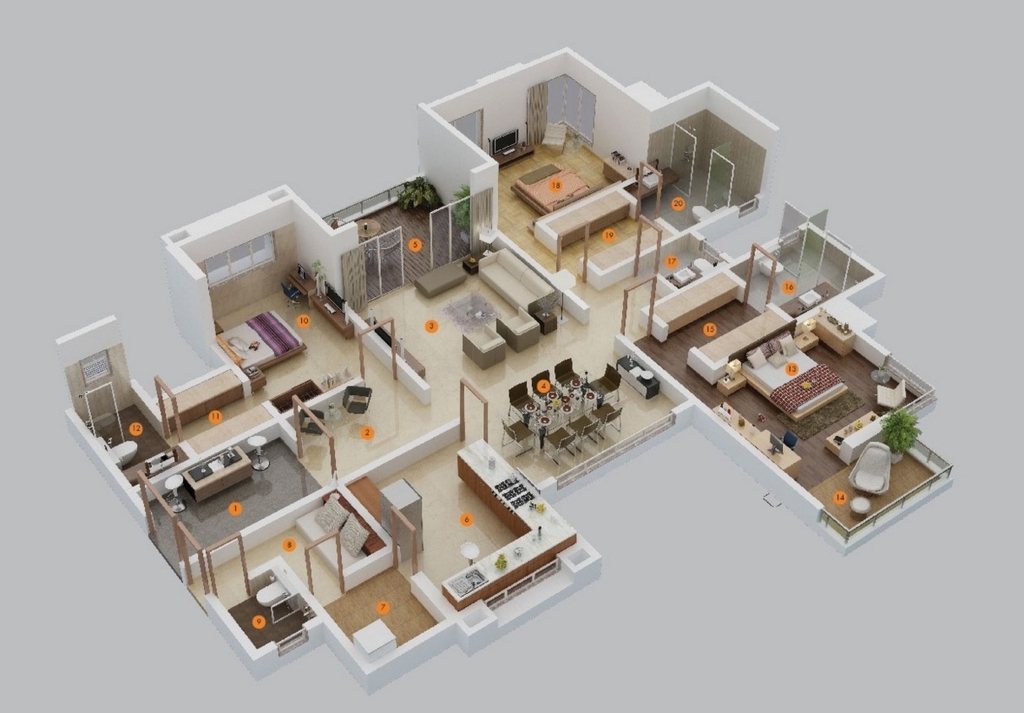
3D floor plans are photorealistic, bird’s-eye view of a particular floor’s layout. It includes realistic details regarding furnishings, flooring, walls, doors, appliances and, even carpetry. Similar to dollhouses (or the perspective in the popular game Sims), 3D floor plans aim to completely decorate and fill the spaces of each room according to your specifications and aesthetic sensibilities.

These three-dimensional floor plans will give you and any stakeholders the complete picture of the layout and interior design choices without the need to interpret architectural symbols, making them vastly superior to two-dimensional floor plans. 

It’s an immersive and exciting way to plan out any architectural design.


:rocket: Table of Contents 


3d floor plan example for a large home

Costs of 3D floor plan rendering

As a prerequisite, 3D rendering services are based on having a 2D blueprint or sketch. It doesn’t necessarily have to be a floor plan, but as these come hand-in-hand, it is prudent that you also have a 2D floor plan to serve as the foundation for your design.

Another thing to note is that like most creative services, costs for 3D floor plan renderings are dependent on the complexity of the design. Additionally, 2D and 3D floor plans are best handled by professionals such as architects, adding on to the cost. 

RELATED: How architectural companies design 3D floor plans for residential home design

Cost of 3D floor plan rendering services
Service Provider Cost Range Additional Notes
Architectural Firms $200 – $700 per floor Cost varies based on project complexity and size
Freelancers $100 – $450 (average cost per project) An affordable option with reasonable quality
Premade 3D Floor Plan Affordable (instant buy-and-use) Limited customization and potential reuse by the seller
Custom 3D Floor Plan Higher cost (offers total freedom and personalization) Consultation with an architect recommended

Still, while there is no standard pricing, you can expect to shell out $100 up to $1,000, depending on which of the two options you choose to work with below:

Costs of freelancers

For most architectural projects, such as for homes or small stores, freelancers are the go-to choice. In fact, it shouldn’t surprise you to learn that small-to-medium architectural firms commonly hire freelancers themselves, as these types of designers are typically specialized or have great expertise and experience.

Due to the nature of their specialty, freelancers commonly have their own collection or repository of 3D models that they can immediately use for your project. 

Freelance 3D floor plan designers represent the sweet spot, as these architectural rendering professionals are willing to complete conversion tasks for reasonable rates. 

As such, you get a balance of quality and affordability.

Again, there is no standard pricing, but most freelancers would charge by the project – with costs averaging between $100 and $600.

Cad Crowd is a marketplace that vets 3D architects and designers that specialize in this field. We make sure to get the most bang for your buck and help guide you towards finding the best freelancer that can translate your sensibilities in the most accurate way possible.

Costs of architecture firms

Obviously, when you hire an architectural firm, they are able to offer you the support of a team of 3D designers, including modelers and render artists. These professionals work together and collaborate on your project, allowing the process to run quickly. Also, firms with in-house designers are able to handle bigger, multifaceted projects.

You should expect to shell out anything from between $300 – $900 per floor, maybe more, depending on the firm. This can quickly escalate to thousands of dollars for a multi-story large home, as each and every floor should be represented by its own bespoke floor plans.

Should you lean towards customization?

For the most part, especially for less ambitious designs, 3D floor plans are only meant to help visualize the space and isn’t focused on truly capturing the final product. Of course, the closer you can get to your vision, the better, but if you want to stay within reasonable budget constraints, premade floor plans or – at the the very least – using stock 3D models in place of the objects can help you visualize without breaking the bank.

As a starting point, nothing beats a premade 3D floor plan. You can get them almost instantly, and to be honest, who’s checking if you actually use identical decorations in the first place? 

At the same time, maximizing your 3D floor plans is essential for more bespoke design approaches. Imagine you’re in a restaurant: tables and chairs are placed haphazardly. There’s no space for the staff to maneuver freely. The drapery and lighting is dull. It doesn’t sound like an enjoyable place.

It’s a bit of a stretch as an analogy, but you can see how you can create a more optimized, efficient and inviting space wherein food actually looks and feels delicious (apart from taste).
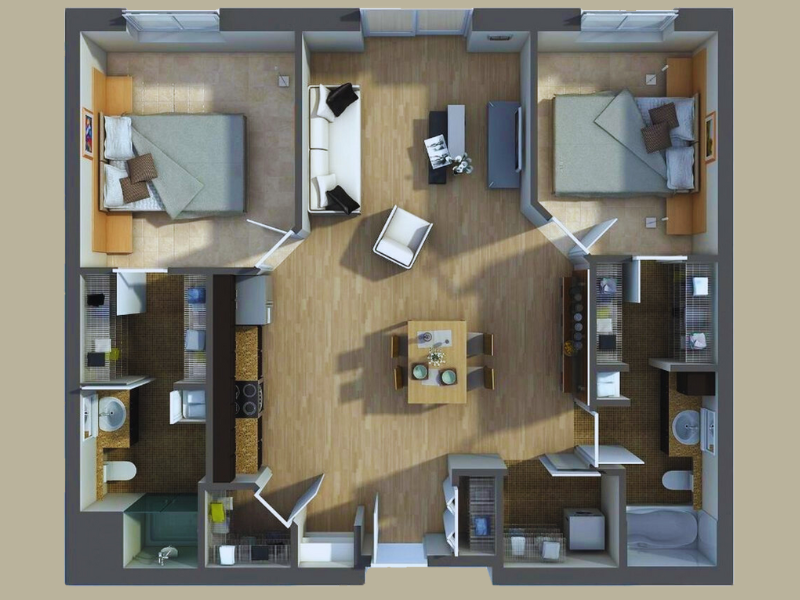
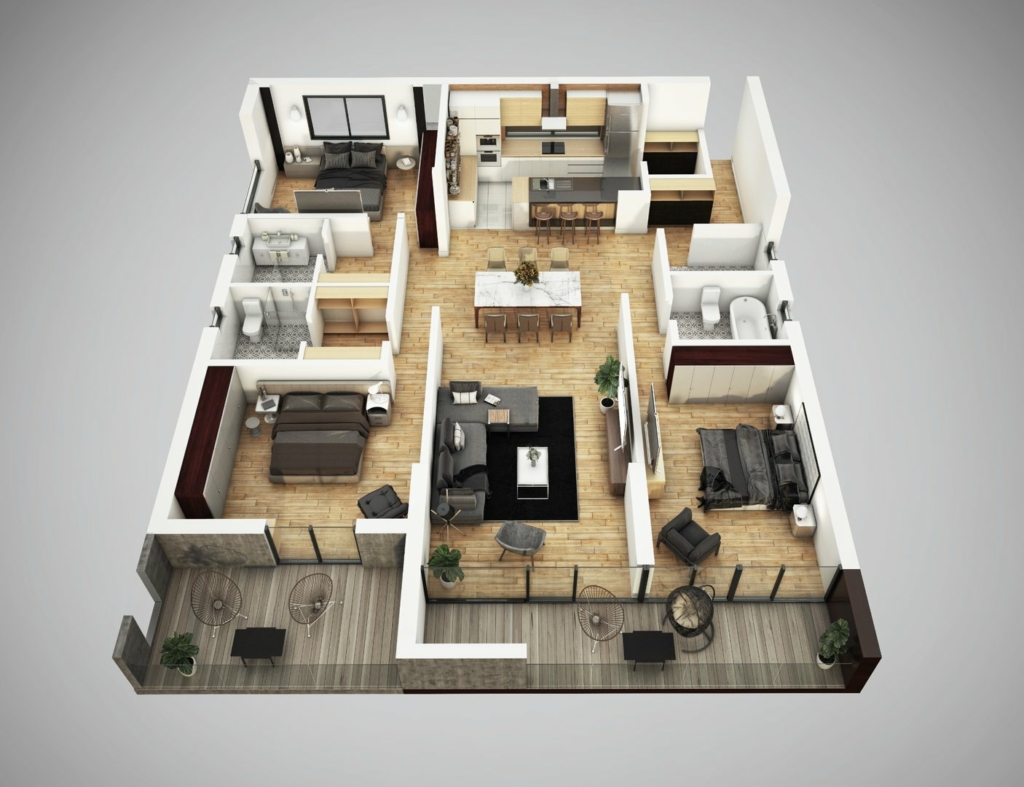
3d floor plan example for a medium-sized home

Other cost factors

Size

The overall dimensions of your floor plan will affect the final cost. As a guide, our research shows that a 1,600 square foot home is the median for a single family home. You should expect to pay at least a bit lower than average when hiring a freelancer, and significantly higher when you hire an architectural firm.

Details

You need to be clear about how much and how detailed the assets and objects you would like to utilize for your designs, as these may factor into the cost just as much as sizing. Some objects that you are adamant about will need a custom 3D render artist to work on the model, which can cost anywhere from $40 to $200 per design.

Timeframe

When it comes to freelancers, you have the flexibility to hire a person who either charges per hour or per project. Depending on what you want to achieve with your floor plan, you may want to opt for them to work on it per hour if you expect this to be cheaper for you.

If you need dedication and a bit more room for negotiation, you may choose to hire someone on a per project basis. Whatever you choose, Cad Crowd is the ultimate marketplace for vetted professionals. We’ll hold your hand through the whole process, and make sure you get the best out of your budget.

Why use a 3D floor plan instead of a 2D floor plan?

The best thing that 3D floor plans provide is plain and simple clarity. It provides a birds-eye perspective with visible spatial dimensions of the interior design, making it easier for anyone to comprehend small details like floor coverings, wall colors, and furniture placement. Moreover, it showcases the correlation or traffic flow between the rooms. Architects, engineers, and homeowners can benefit from realistic design visualization and architectural visualization.

Apart from understanding design ideas, 3D floor plans allow architects, designers and the construction team to communicate ideas and tasks effectively, allowing them to view the floor plan as a guidepost and to bridge the gap between technical understanding. Real estate developers may use 3D floor plans as marketing to showcase their designs as well.

Advantages of 3D Floor Plans:

  • Enhanced understandability and visualization compared to 2D floor plans
  • Explicit representation of room layouts, interior designs, and spatial flow
  • Practical communication tools between homeowners and professionals
  • The marketing potential for architects and real estate agents

In conclusion

In terms of specialization, value over price, and accessibility, freelancers have a significant advantage over architectural firms for most small-to-medium projects. If you have a more elaborate vision, then maybe shelling out more by hiring architectural firms to work on your project top-down would be the more cost-effective option.

For the most of us looking to build our own homes or stores however, freelancers are no doubt the best bang for your buck.

How Cad Crowd can assist

From detailed interior layouts to realistic textures and lighting, our expert team delivers exceptional quality; our professional 3D floor plan rendering services are poised to bring your architectural designs to life. Let us transform your vision into an immersive 3D experience that captivates your audience and sets your company apart. Visualize your dream spaces with a free quote today.


About the author

All you need to know about freelance architectural design services costs and prices


Architectural design services are essential whether you’re a soon-to-be-homeowner aiming to turn your dreams into reality, or a business looking to get established in the market with a physical store to offer your services from. Still, while the idea of hiring great talent may be simple, the most important consideration you would have to make has to do with budgets and costs.

So how much do freelance architectural services cost anyway?

By the end of this article, you’ll have a better gauge about how much money you should really put into a cost-effective architectural plan (and other related services) and understand why some options may be better for you.


What factors affect the costs for architectural services?

Depending on the size and, dare we say, ambition behind your vision, there are corresponding factors that will affect the final budget:

  • The software required to accomplish your project.
  • The complexity of your design choices
  • Skills and credentials possessed by the freelancer
  • Timetables.
  • The type of service that you’d like to avail.

Not all architectural services mean the same thing. You could want a 2D floor plan, a 3D render, a simple concept sketch, and many more. Since this is the case, before talking about costs, it would alleviate a lot of stress if you have clarity on the types of services you may need to accomplish your design goals.

Let’s break them down even further.

Breaking down the costs

As a guideline, here’s a simple table outlining architectural design services cost per hour, based on the experience of the freelancer:

Experience Level Approximate Cost
Freelance Student $18 – $30 p/hour
Freelance Professional $40 – $60 p/hour
Architectural Design Consulting Firm $150 up to $450 p/hour

As you can see, the hourly rate really can vary. 

Fortunately, the level of experience you need from a particular professional depends on what you need. If you require a simple 2D colored floor plan, then a freelance student is able to tackle it. However, the more complex the project, such as those involving BIM or a fully-fledged 3D rendering, requires additional expenses and a professional architect licensed in your state.

Here at Cad Crowd, we have pre-vetted professional architects offering various architectural design services that can work on your project from the bottom up, from the 2D floor plans to 3D renderings of your space. But if you find yourself having to need a specific service, then don’t fret, as we have the breakdown (and significance) of these services below.

RELATED: Architectural plans, CAD drawing costs & architect service pricing

3d floor plan architectural design

2D Drawings and Floor Plan Design Services

2D drawings and floor plans are essential elements of the architectural design process. Sure, 3D renderings sound flashy and are great tools to better inform you of how the final design will turn out, but it all starts with the basics.

In particular, 2D floor plans and blueprints are expected, especially in larger projects. They will inform not only the full design process but also enable efficient construction.

Even outside the design and construction process, 2D-floor plans are used to showcase to potential clients and as posterity for years to come.

Service Approximate cost
2D Floor Plan B&W $30
2D Floor Plan – 1000 sq ft $99 
2D Floor Plan – 2500 – 3000 sq ft $219.00
2D Floor Plan – 4000 – 4500 sq ft $309.00
2D Concept Designs $150.00

Architectural 3D Modeling

3D modeling is a widely used service and tool in the architectural design process. This covers a variety of individual services: from 3D exteriors to 360-degree models. Depending on your needs, you may even want several iterations, versions, or types to accurately depict your vision.

The prices for 3D architectural modeling services depends on how much detail you want, the software requirements, and as with any, adding more sophistication and elements will factor into the final costs. Here are some examples of 3D models you might want to utilize:

  • 360-degree models
  • Bird’s Eye view plans
  • 3D floor plans
  • 3D exteriors
Service Approximate Cost
3D Exteriors Residential $200-700
3D Exteriors Commercial $350-700
3D Interiors Residential $200-550
3D Interiors Commercial $275-1000
3D Floor Plans $100.00+ (per plan)
Multi-Drawing Package $500.00

These prices would usually include a single image, include a couple of edits, and comprise several different types of 3D renders. For multi-drawing packages, this would include different 3D models for specific purposes. For instance, you could ask to include interior and exterior shots and a 3D floor plan that accompanies it.

Software used for 3D architectural modeling are SolidWorks, CATIA, SketchUp, and many more.

Architectural BIM Services

Building Information Modelling is becoming an essential part of architectural design due to how effective it is in helping manage huge projects and its overall utility in the architectural and construction industries. BIM provides an accurate visual representation of construction tasks, going over the more minute details that would not be possible with traditional plans and drawings.

BIM also makes it easier for teams working on a project to collaborate across departments.

The pricing for BIM projects is heavily dependent on the complexity of the project. These projects are usually long-term and facilitate coordination between multiple teams. It can cost you hundreds of thousands of dollars for a single project requiring BIM services. It would be in your best interest to explore your options and ask for quotations before going all in.

However, most construction projects won’t need BIM for most of us, such as budding homeowners or small businesses.

Architectural Site Plans

While individual floor plans and 3D drawings are important, for more massive projects, whole architectural site plan designers are in demand. Site plans detail the whole layout of a construction site. For example, housing development projects inevitably have a large site that shows plotting, dimensions, landscaping, roadwork, and even landmarks. 

Architectural site plans are typically done in 2D and may include 3D elements few and far in between. However, they include details like scale, a key, and plot dimensions. The following are example costs of site plans:

Service Approximate Cost
Single site plan (i.e. 1 building etc.) $300.00+
Whole project site plan (i.e. a housing development) $1000.00+

3D AR/VR Architectural Services

Businesses now utilize 3D AR/VR architectural services today for architectural services. It definitely boosts customer immersion and allows any stakeholder to take a view of the project on a more tangible form. Real estate agents or property developers may hold virtual reality tours of their properties, for example.

As for the costs for 3D AR services  and 3D VR services cost, the following factors will affect your final budget:

  • Video output/resolution
  • Length of content
  • Recording quality

If you wished to have a 30-second 4K UHD virtual reality tour, the price would obviously be considerably costlier than a 30-second VR tour at 1080p. Here is a breakdown of the costs for 3D AR and 3D VR services:

Service Approximate Cost
Walkthrough animation $20.00 p/second
Walkthrough animation (1080p HD) $25.00+ p/second
3D VR Panorama $150.00+

Construction Drawings

Contractors, ground-workers, and other companies involved directly with the building of projects utilize construction drawings to inform and align them throughout the process. For example, ground-workers would use construction drawings to lay the foundations for buildings— such as the positioning of ground beams and concrete locations.

Construction drawings are usually drawn in black and white and contains measurements, and any other pertinent detail essential to construction such as the layouts of reinforcement bars.  Freelance construction designers usually offer these type of services. Oftentimes, freelancers do specialize in construction and offer services related specifically to the building phase, as opposed to design.

RELATED: CAD construction drawings: Modernizing your company’s 2D & 3D drafting process

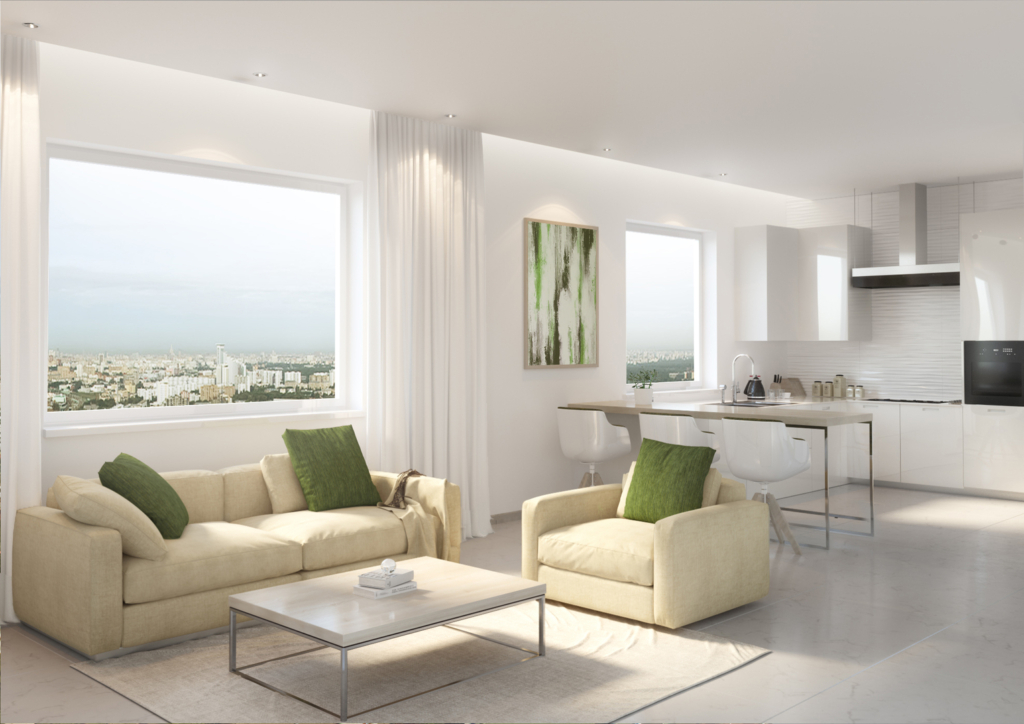
A 3D interior architectural design featuring soft greens and a skyline view.

Interior Design

Service Approximate Cost
Interior Design – Residential Properties $300-750
Interior Design – Commercial Properties $400-1500

Interior design provides realism and context to architectural plans through furnishings, decorations, lighting, and the use of space. Through creating photorealistic renders, architects and interior design services are able to flesh-out drawings and other design aspects that affect living spaces.

For example, 3D renders of a bedroom would include models of a bed, paintings, a dressing table, plus other accessories like curtains and light shades.

It’s best to coordinate with the interior designer for the best approach to your 3D renders. In many cases, you’ll want to start from scratch and it’d be helpful to have a catalog of furnishings, flooring, accessories, and even appliances. Most of the time, however, leaving it to the interior designer to flesh out your vision works best.

Landscape Design

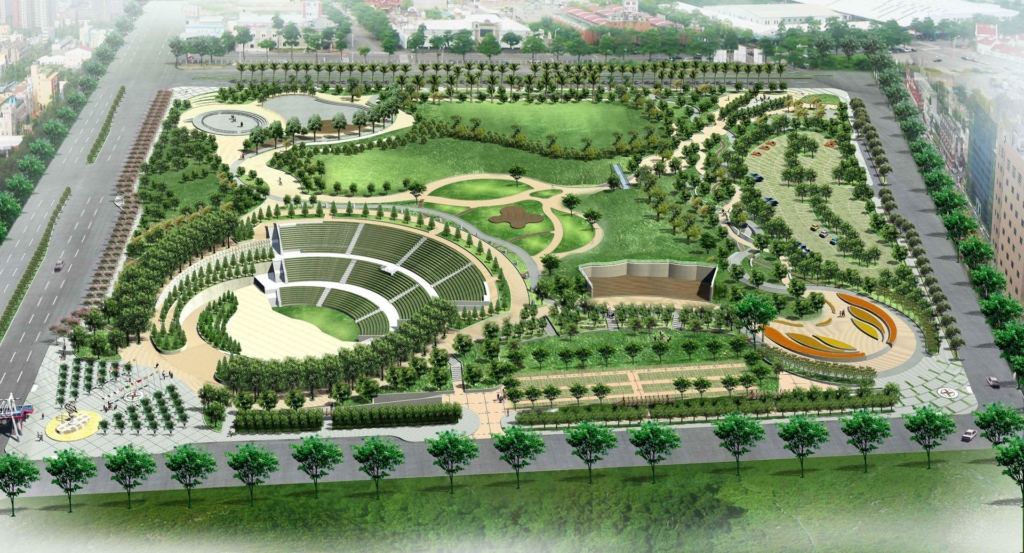
Architectural design isn’t just concerned with buildings and properties. For ambitious projects or those who appreciate luscious greeneries and – they would want to consider landscaping (i.e. gardens and communal areas in large developments). Using 3D rendering software, designers can create realistic landscapes complete with weather effects, shadows, and lighting.

Apart from enhancing and previewing the appearance of a garden or similar landscapes, 3D landscaping will allow you to work with precision so that it does not look out of place. Landscape design is often included in 3D exterior design packages, but we have listed some examples costs below:

Service Approximate Cost
Landscaping Residential $300-750
Landscaping Commercial $500-1000
3d landscape architectural design featuring an amphitheater.

Benefits of Using Architectural Design Services

In modern business, the most effective and standard for most small-to-medium projects is to simply hire a freelancer who can finish the work without missing a beat and with a more forgiving price unless you were an architectural design firm. 

First of all, most projects work are ill-fated without a professional architect who worked and signed off on the designs. It’s not exactly a process you can simply skip (with a few exceptions) if you want to make your home or business location the best it can be.

Second, hiring a design freelancer simply costs less. Using our platform here at Cad Crowd, you can quickly receive a quote for your dream home and we hire an architectural designer for you right away. 

Third, it’s easier to find specialized freelancers tailored to your exact needs – as most professionals would have a particular field of expertise, this actually works in your favor. You’ll get the most out of the service while enjoying quality, professionalism and a personalized rapport and service.

RELATED: Why hire an architectural design service?

Get in touch with us and enjoy quality architectural design services

There really is no need to overthink as the type of service that’s relevant to you can be pretty clear-cut from the get-go as long as you understand what you want to achieve, and we here at Cad Crowd would love to help you figure out how to make the best use of your resources to bring your ideas to life.

It also helps to have as much detail provided as possible and be explicit about any considerations, the aesthetic you’re aiming for, or any suppliers or catalog that you may already have available to get the most accurate pricing.

At Cad Crowd, we can facilitate architectural design services. We work with a vetted professional architectural design firms and freelancers who provide the services you need within a respectable timeline. We invite you to get a free quote now or read more about how it works.

3D Architectural Rendering: How Your Company Shapes Mood, Weather, and Season


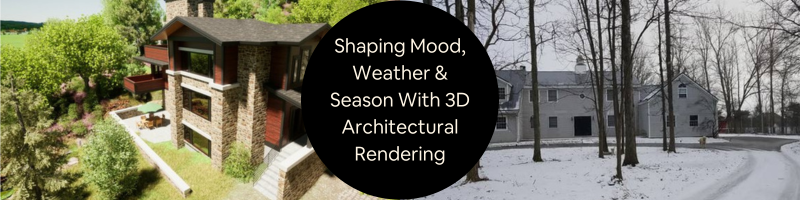
3D architectural rendering is a critical tool that generates visual representations of different designs. Thanks to this technology, designers can breathe life into their ideas and present them in a way closest to reality. Setting the right mood is one of the most important aspects of 3D architectural rendering services, which involves the use of the right weather and season.

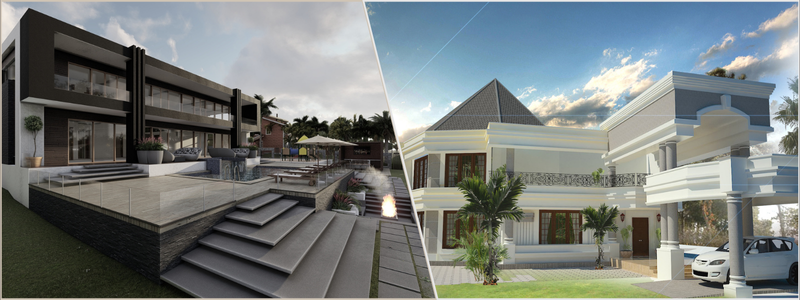
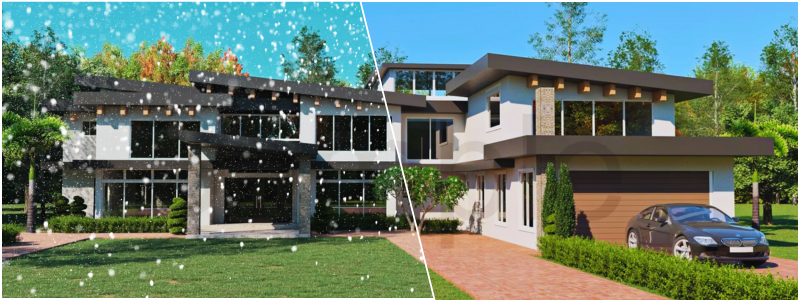
These factors do significantly affect the overall feel and look of 3D architectural renders. These evoke emotions, propose a unique story, and set the overall mood. For instance, a blue-skied sunny day and lush green grass can create an inviting and cheerful ambiance. On the other hand, dark clouds on a stormy day can depict a sense of despair and gloom. The weather and season also play a critical role in establishing the specific time of day and substantially impact the shadows and lighting in the scene.

Weather and season can also be used to improve the scene’s design features. For instance, if the architectural design showcases a modern house with huge windows and clean lines, a clear sunny day will highlight these features by forming an airy and bright atmosphere. Meanwhile, if the design features a lovely rustic cabin in the middle of the woods, the warm and cozy atmosphere of the area is better emphasized during a snowy winter day.

RELATED: The benefits of 3D architectural rendering for companies in the real estate industry

How to choose the right weather and season for 3D architectural renders

Several factors must be considered when the architectural 3D architectural visualization expert determines the right weather and season for your 3D architectural renders. Would you like to produce an inviting and cheerful atmosphere or evoke a sense of intrigue and mystery instead? Different types of weather and seasons can help you create various moods. If you will be joining a competition for architectural design, for example, the top secret for persuading the jury is to use a sunny daytime view.

Think of the design features

The scene’s design features are vital in choosing the appropriate weather and season for your 3D architectural render. If a beach house with an outdoor patio and floor-to-ceiling windows is featured in the scene, blue skies during a sunny day and waves lapping on the shore can stimulate a welcoming and relaxing ambiance. If a Gothic castle featuring dark stone walls and towering spires is showcased in the scene, a stormy night with lightning in the background can portray danger and foreboding. However, remember that mood may vary in several situations, so be sure to keep it in mind.

RELATED: What is architectural visualization and why architectural rendering services use it

Consider the story

The message or story the scene wishes to convey is another essential factor to consider when deciding on the weather and season the 3D rendering designer will use for your 3D architectural render. For instance, if your scene shows a futuristic city that uses advanced technology and sleek, towering skyscrapers, the easiest way to emphasize the optimistic and bright future represented by the city is to use a sunny day with cloudless blue skies.

But if the scene presents a complete wasteland after the apocalypse with desolate landscapes and remnants of buildings, for example, a stormy day with the skies covered with dark clouds and strong winds might accentuate the dangerous and bleak setting.

3d-architectural-modeling-services

Different types of weather for 3D architectural renders

Since you now have an idea about the importance of weather and season in 3D architectural renders, it’s time to learn more about the different types of weather a 3D rendering company can use in your 3D architectural renders:

RELATED: How to enhance your company’s 3D architectural rendering with advanced techniques

1.  Cloudy

A cloud day features subdued shadows and diffused light to create an even and soft environment. This particular type of weather is recommended for interior architectural renderings since it will cut back the harsh shadows and improve the details. It also represents a contemplative and peaceful mood perfect for wellness or healthcare projects. On the other hand, most exterior architectural views feature a cloudy mood as this helps convey the supremacy of infusing feelings of the object’s power, as in the case of high-rise buildings.

2.  Foggy

The 3D visualization service can also use fog to set the atmosphere and mood of 3D architectural renders. Misty landscapes, diffused and soft light, and muted colors represent foggy weather best. The use of cool blue tones combined with a sense of distance helps stimulate a sense of intrigue and mystery. Fog is also one of the ideal options for scenes that highlight enchantment, fantasy, and magic.

RELATED: Exploring Pricing Models for Delivering 3D Architectural Rendering Services to Firms 

3.  Rainy

You can use rainy weather to create a sense of atmosphere and mood in 3D architectural rendering projects. Wet surfaces, puddles, and dark, stormy skies are common features that represent rain. The use of moody and dramatic lighting helps produce a sense of suspense and tension. The use of rain is ideal for scenes emphasizing drama, intrigue, and mystery.

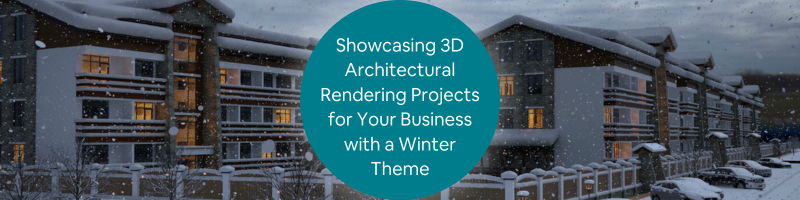
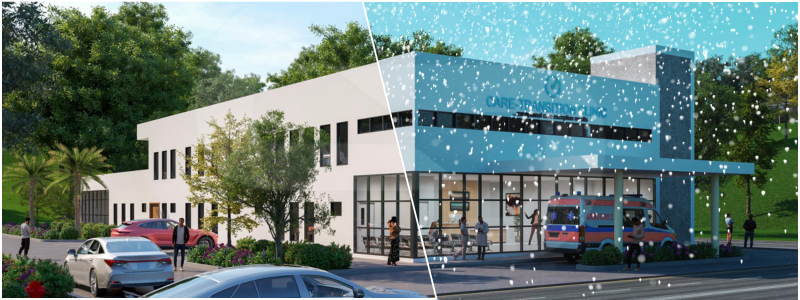
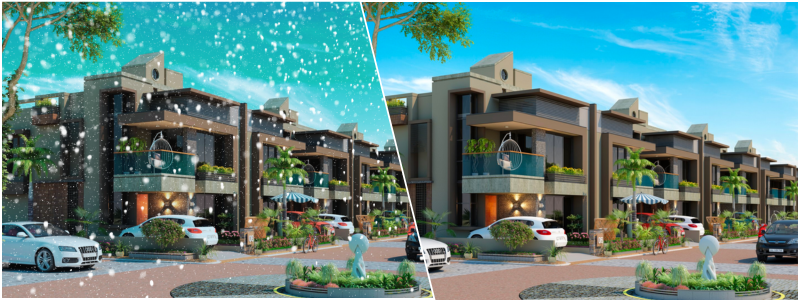
4.  Snowy

3D architectural renders use a snowy day for holiday or winter-themed scenes. This particular weather features snow-covered surfaces, snowfall, and icicles that create a pristine yet cold atmosphere. Snowy weather also lends a layer of visual interest to the outdoor scenes that highlight the design’s details and create a sense of contrast and depth.

5.  Sunny

A sunny day is undoubtedly one of the most common weather conditions used by 3D architectural design experts. A sunny day with bright sunlight and clear blue skies produces a radiant atmosphere. This particular weather is perfect for outdoor architectural renderings that showcase the design’s details in full light. It also produces an optimistic and cheerful mood ideal for promoting your real estate listings and projects.

RELATED: Learn about the types of architectural rendering services available for your company

Different seasons for 3D architectural renders

3d-architectural-visualization-services-3

Aside from the different types of weather, seasons used for 3D architectural rendering projects also vary. These include the following:

1.  Fall

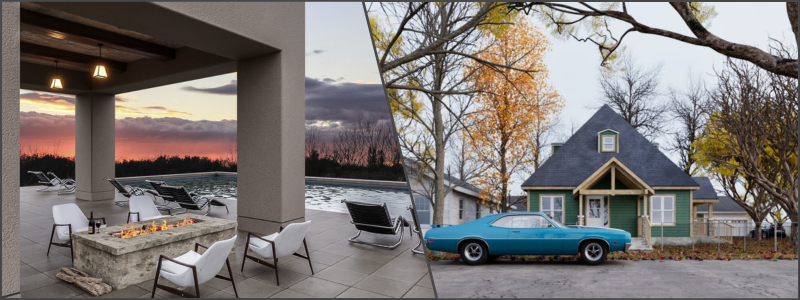
The fall season is a time of nostalgia, transformation, and change, making it an excellent option for scenes focusing on sentimentality, transition, and reflection. It is best represented in 3D architectural renders using leaves with changing colors, cool and crisp air, and misty mornings. The 3D architectural modeling professional uses deep, rich colors and warm golden light to help evoke a sense of comfort and coziness. Fall is also the best season to choose if indoor spaces such as kitchens, living rooms, and fireplaces are being showcased.

RELATED: What are the benefits of Vray technology for 3D architectural rendering companies?

2.  Spring

Being a season of growth and renewal, spring is a great choice for those scenes that focus on new beginnings, optimism, and freshness. Warm and soft light, greenery, and blooming flowers represent the spring season in 3D architectural rendering projects. Using a hazy and soft atmosphere combined with pastel colors can help produce a sense of peacefulness and serenity. Spring is also the best season to highlight outdoor areas like outdoor cafes, parks, and gardens.

3.  Summer

Summer is the season of vibrant colors, energy, and warmth, making it the most recommended pick for scenes that accentuate fun, joy, and excitement. Verdant green landscapes, blue waters, and bright sunny skies represent summer in 3D architectural renders. The 3D architectural rendering designer uses warm golden light to evoke a sense of enthusiasm and energy. Summer is also the ideal season to highlight outdoor spaces like backyard barbecues, pools, and beaches.

RELATED: 3D architectural rendering options: in-house, self-learning, or outsourcing services? 

4.  Winter

Winter is the season of contemplation, reflection, and stillness, making it a favorite choice for those scenes emphasizing quietness, solitude, and introspection. Using cool, muted hues, frosty, snowy landscapes, neutral tones, and diffused soft light can help induce a sense of stillness and calmness. Winter is also the best season for showcasing indoor spaces such as cozy cabins, bedrooms, and libraries.

The Bottom Line

At the end of the day, the specific type of weather and season the architectural visualization expert choose for the 3D architectural renders will always depend on your project and its specific needs, as well as the tone or mood you wish to convey. Ensure that the season and time, the overall context of your design, and the overall aesthetic you wish to achieve are considered before you make your final decision. As long as you choose the appropriate weather and season, designers can come up with 3D architectural renders that are not only visually appealing but are also emotionally impactful and engaging.

How Cad Crowd can help

Do you have a specific mood you want to use for your 3D architectural renders? Do you need clarification on choosing the right weather and season for your project? Don’t hesitate to reach out to the professionals at Cad Crowd, who are certified experts in using the right mood, weather, and season for 3D architectural rendering projects.

With their help, you can look forward to getting the most compelling and realistic 3D architectural renderings that will perfectly embody your projects.

Hiring freelance woodworking drafting and design services: all you need to know


Are you looking to spice up your design by hiring the best woodworking drafting and design services for your project? While Cad Crowd boasts many highly skilled woodworking freelancers, picking and finding the right one for your vision can turn out to be a headache, especially when you factor in costs and other logistics.

Don’t worry; we’ll list the crucial factors you should consider when hiring the best woodworking drafting and design service for your design. Whether you’re a budding homeowner, a general contractor, or an architect working on the design, it’s paramount that you choose the best CAD drafting and design firms for your woodworking projects to take your project to the next level!

In the woodworking industry, the woodworkers’ collective knowledge, expertise, skills, and the quality of materials and finished products they offer clients are closely tied to the woodworking firm’s reputation. As such, you may find that you’d need ample research beforehand to figure out if a firm’s capabilities are aligned with your design goals.

While there are undoubtedly many viable options to choose from (especially in our marketplace of freelancers), an incompatible choice may compromise your vision. We here at Cad Crowd want you to pick the best freelancer for your project.

Here are the different factors for hiring freelance woodworking drafting and design services, which you should consider to simplify the process and guarantee that your vision comes to life.

RELATED: Millwork drafting and design drawings: rates and costs for companies and firms

Architectural woodwork defined

Architectural woodwork and architectural millwork, while often used interchangeably, are distinct.

Architectural woodwork refers to wood as a material, while architectural millwork, commonly used in commercial projects, can incorporate non-wood materials like plastic laminates.

Architectural millwork, on the other hand, comprises woodwork for aesthetic and functional use in interior architectural projects. This can be customized to suit the client’s preferences with millwork drafting services and covers the entire process from raw wood to the finished product.

Architectural millwork applications 

Most commercial buildings use architectural millwork and carpentry 3D design experts, specifically those that belong to government, healthcare, education, and huge enterprises. Architectural millwork can be used inside and outside in structural and decorative parts. The decorative items of architectural millwork draw attention to the building’s corners, walls, and borders. Meanwhile, the structural elements provide support. 

RELATED: What casework shop drawings are and why architectural design services use them

Among the elements of architectural millwork include:

  • Balusters
  • Doors
  • Mantels
  • Moldings
  • Wall panels
  • Window casings

Often, architects will work with freelance millwork drafting and design services and architectural drafting services to create detailed plans and specifications for incorporating architectural millwork into their designs. This collaboration ensures that the architectural millwork seamlessly integrates with the overall aesthetics and functionality of the building, enhancing its visual appeal and structural integrity.

woodworking-drafting-and-design-services

Reasons to outsource woodworking drafting and design services 

Woodworking is an industry that is quickly developing and changing by the day. Interior design companies, technology, and innovations are developed at lightning-fast speeds. Architectural millwork refers to designing and creating different woodwork for aesthetic and functional use in interior architectural projects.

RELATED: 7 Ways 3D interior designer services are used to maximize living and working spaces

Most business organizations and residential projects require the development of specialized interior woodwork that doesn’t permit the usual prefabricated cabinets. With the help of freelance woodworking drafting and design services, your company will find it easier to design your projects according to your requirements and specifications. This means that you will spend less on cutting-edge technologies and specialized materials. You don’t have to compromise on turnaround time or overall quality when outsourcing your woodwork needs. 

Here are other sensible reasons to outsource your woodworking drafting and design services to trusted freelancers:

Access to professional 3D modeling expertise for woodworkers

When you outsource your CAD woodworking needs, you can expect to connect with woodworking experts, including 3D CAD drafters and designers. The specialized materials used can explain the architect’s vision and offer comprehensive guidance to carpenters and woodworkers. Even existing woodwork can be remodeled from the ground up with the help of expert freelancers. 

RELATED: Discover why your business should use CAD services instead of manual drafting

Hiring a freelancer is more cost-effective

Probably the most crucial reason to hire freelance woodworking drafting and design services is that it helps cut down expenses for labor and materials. As you focus on your main plans and operational goals, the freelancer you’re working with will be responsible delivering the completed woodwork design in a timely fashion. It saves you from worries and headaches that would otherwise happen if you do everything independently. 

A personalized (and customized) service 

Woodworking drafting and design apply to almost all projects, including commercial structures, institutions, private residences, healthcare clubs, restaurants, hotels, and airports. The architectural drafting company or freelancer can provide you with the final draft and design in your preferred format, such as .pdf, .jpeg, .dwg, .dxf, and .tiff.

RELATED: Millwork drawings outsourcing by freelance contractors on Cad Crowd

Outsourcing CAD woodworking services to freelancers also gives you peace of mind, knowing that you’re working with experts with extensive skills and knowledge in various aspects of woodworking, such as furniture, casework, retail fixtures, and commercial cabinets. Freelance woodworking CAD design services are also guaranteed to be well-versed in all the woodworking and millwork drawing requirements. 

Increase efficiency and have flexibility

When you decide to outsource woodworking drafting and design services, the only thing left for you to do is submit your project’s details, and from there, they will deal with the rest on your behalf. All millwork aspects are handled by the millwork drawings experts, including template sketching, the final draft, and the other steps involved. Outsourcing these services will give you more accurate results with improved efficiency without a shorter turnaround time. 

RELATED: The benefits of using 3D interior design, CAD drafting & rendering for your company 

Increased productivity

Hiring a freelance service specializing in woodworking drafting and design will also guarantee that you will get the right outputs as soon as possible. This way, you can meet all project deadlines with fewer worries. Production and efficiency will improve even when you don’t have your in-house staff. You can also look forward to enhanced productivity when you use precise dimensional views of the elevation views, section views, detail views, and dimensional plan views to get started. 

carpentry-design-experts

What to look for in freelance woodworking drafting and design services

It’s essential to have set criteria to ensure that you receive top-of-the-line architectural woodwork that can comply with the industry’s best practices and standards. Aside from that, it’s also critical to base your selection and assessment on independent and verifiable facts instead of claims. Below are several key factors to consider when looking for a freelance woodworking service provider:

RELATED: Why you should outsource to CAD drawing and drafting services

1. Read client testimonials

Start by reading testimonials from previous clients. After reviewing testimonials, you can contact past clients and ask them for a first-hand account of their experience working with the freelance woodworking provider. Reaching out to previous clients gives you a chance to see if the freelancer met past client requirements. 

2. Review their previous projects

The reputation of the freelance woodworking service is a critical criterion that can be established based on their previous projects. You can do a background check on their website or visit their projects in person to check the quality of their work with your own eyes. 

3. Ask for product samples

You can also ask for samples of completed products of the architectural drawing services or freelance service to help you assess the quality of their work. You can even go as far as comparing samples from several prospective freelance woodworking services. It is common for woodworking services to provide samples from their product catalogs. 

RELATED: 4 Tips to improve cabinet shop drawings for manufacturing efficiency at companies

4. Visit their processing or manufacturing plant 

You may also want to consider visiting the processing or manufacturing plant of the woodworking drafting and design service to check their processes and equipment. Knowing their production capacity is also essential, particularly if you have a large project. 

Qualities to look for in freelance woodworking drafting and design services 

You should choose a freelance woodworking service based on two essential qualities: a good reputation and references. As mentioned, you can verify these by contacting the freelancer’s existing and past clients. You can also conduct background research on the freelancer you’re considering. General contractors, architects, and other contractors who worked with the freelancer in the past are excellent reference sources.

While reading client testimonials is helpful, you may gain better insights if you talk directly to the people who have worked with the freelancer you’re considering for their projects in the past. A solid reputation is something that the general public is aware of. 

RELATED: How much do CAD drawing services cost for design drafting & architectural blueprints?

What to ask a freelance woodworking service

There are two primary questions used to evaluate a freelance woodworking service initially. The first question is regarding the specific projects they work on, while the second relates to their service’s cost-effectiveness.

Asking about the particular types of projects the freelance woodworking service can offer will give you some helpful information on whether they are the right fit for your project. It will also set the benchmark for what you should and shouldn’t expect. You can better understand if they fit your project budget by asking how competitively priced or cost-effective they are. 

How Cad Crowd can help 

Cad Crowd is the best resource for finding freelance woodworking CAD designers. This is the leading platform for companies searching for freelance woodworking drafting and design services that can help bring projects to fruition. 

Fabrication shop drawing services: all you need to know


What type of services do companies rely on when picking fabrication shop drawing services?

Before any construction begins, numerous drawing sets (each bringing their significance to the project) are prepared. These drawings are then used from preconstruction to post-construction to inform the construction process and ensure accuracy. To this end, architects prepare many different types of construction drawings to represent the overall intent and function of the design.

At the same time, contractors prepare shop drawings to show actual field executables.

These 2D documents are the main deliverables in building large-scale and complex structures and are critical to executing any construction project.

What are fabrication shop drawings anyway?

You would want to use fabrication shop drawings services for technical drawings that detail comprehensive information on a structure or product’s construction, assembly, and manufacturing. If you’re still in doubt, it would be best to expel those right now: these drawing services are essential to the engineering and design processes – they serve as valuable communication tools among fabricators, designers, and engineers.

Fabrication drawings are pivotal, indispensable guides that visually articulate the components and structures slated for fabrication. These drawings serve as navigational tools for fabricators, welders, and technicians to ensure the precise execution of fabrication processes by documenting every piece of functional information. It minimizes the risks of delays or damages and guarantees a seamless construction process.

RELATED: What casework shop drawings are and why architectural design services use them

Fabrication shop drawings should comprise every detail about the materials, tolerances, dimensions, and any other specifications necessary for the fabrication or construction of a product; they’re made to make your life easier as you go through construction.

These drawings from architectural drawing professionals are instrumental in translating design concepts into tangible reality. They offer detailed visual representations encompassing components, dimensions, and specifications essential for constructing diverse structures, machinery, and products. The devil is in the details, and fabrication shop drawings act as a bridge that connects design intent with the practicalities of production, maintaining accuracy throughout the fabrication processes.

Typically, fabrication drawings are the handiwork of skilled draftsmen or CAD designers.

These 3D modeling professionals infuse the drawings with intricate information, including material specifications, welding symbols, and assembly instructions. Acting as a vital means of communication between CAD designers and fabricators, these drawings foster collaboration and streamline the manufacturing workflow. Regardless of the industry – be it construction, aerospace, or manufacturing plants – fabrication drawings are THE guardians of precision, consistency, and standards compliance throughout the entire production lifecycle.

Typically, fabrication drawings are the handiwork of skilled draftsmen or CAD designers.

These 3D modeling professionals infuse the drawings with intricate details, including material specifications, welding symbols, and assembly instructions. Acting as a vital means of communication between CAD designers and fabricators, these drawings foster collaboration and streamline the manufacturing workflow. Regardless of the industry – be it construction, aerospace, or manufacturing plants – fabrication drawings stand as guardians of precision, consistency, and standards compliance throughout the entire production lifecycle.

RELATED: What are Redline drawing costs & CAD drafting rates for construction companies?

They are the linchpin in the effective and efficient translation of innovative ideas into tangible, high-quality products. At their core, fabrication drawings are elaborate illustrations that furnish the essential information required for the manufacturing and assembly of a product. The specific type of fabrication drawing necessary is contingent upon the project’s nature and the unique demands of the manufacturer. This article will explore the primary fabrication shop drawing services used by firms and companies and their purposes and essential characteristics.

shop-drawing-firms

Assembly drawings

Assembly drawings offer a comprehensive overview of a fabricated structure or complex assembly, illustrating the interconnections between various components. These drawings, featuring exploded views and a bill of materials (BOM), guide fabricators in understanding how different parts come together. They play a crucial role in streamlining the fabrication process and ensuring accurate positioning, alignment, and connection of components.

Assembly drawing services provide foundational blueprints that unite diverse components, fostering effective collaboration between design and fabrication teams. They visually represent how individual elements fit together, providing essential information on dimensions, materials, and assembly instructions. Creating precise assembly drawings is imperative for companies providing fabrication drawing services, contributing to the overall quality and functionality of the final product.

RELATED: Hire freelance contractors on demand for affordable shop drawings

Cutting lists

In fabrication drawing services, cutting lists are instrumental in optimizing material usage and outlining dimensions and quantities for efficient fabrication. Particularly in steel fabrication drawings, cutting lists guide fabricators on minimizing waste during raw material cutting, aligning with an increasing emphasis on sustainable manufacturing practices.

Detail drawings

Detail drawings focus on individual components, highlighting dimensions, tolerances, and surface finishes. Essential for fabricators, these drawings provide specific measurements, material specifications, and additional requirements for accurate component production. Detail drawings, especially in steel fabrication, ensure precision and consistency in manufactured parts. Beyond precision, detailed drawings guide the fabrication process, ensuring components align with design specifications. In the realm of fabrication drawing services, attention to detail becomes a necessity rather than a virtue.

Piping and instrumentation diagrams (P&IDs)

P&IDs (piping and instrumentation diagrams), specialized industrial drawings in oil, gas, chemical, and process engineering, depict interconnected piping systems, equipment, and instrumentation. Using symbols and annotations, they represent components, valves, instruments, and control systems, aiding in fabricating, installing, and maintaining complex process systems. P&IDs play a crucial role in guaranteeing the precision and effectiveness of fabricated process systems.

RELATED: How much do CAD drawing services cost for design drafting & architectural blueprints?

Shop drawings

Shop drawings are detailed representations of fabricated components produced in a workshop or fabrication shop. These drawings provide precise information on dimensions, materials, tolerances, and finishes, acting as a vital link between design vision and actual production. In the context of fabrication drawing services, shop drawings from shop drawing experts offer a detailed representation of the product, aiding fabricators and manufacturers in producing accurate and consistent components. This translation of design intent into actionable instructions is vital for structural steel shop drawings, enhancing efficiency and accuracy in the manufacturing process.

Structural drawings

Structural drawings from proficient structural steel detailing professionals are essential for constructing buildings, bridges, and large-scale structures, providing comprehensive overviews of facilities, including dimensions, elevations, sections, and connections. They guide fabricators in accurately placing and aligning structural elements, ensuring stability and safety throughout fabrication and construction.

structural-steel-detailing-professionals

Welding and metal fabrication drawings

Specific to welding and metal assembly processes, these drawings offer detailed instructions for welders, showcasing weld types, sizes, positions, and required symbols. They play a crucial role in ensuring the quality and strength of fabricated metal structures, contributing to safety and compliance with industry standards. Welding fabrication drawings guide the welding process, ensuring each weld meets standards for strength and durability, preventing structural failures and accidents.

RELATED: Structural steel detailing services for companies: steel detailer costs and rates

Why work with fabrication shop drawing services?

Fabrication shop drawings play a significant role in the steel manufacturing industry, serving as crucial documents for fabricators, manufacturers, contractors, and suppliers. These drawings, derived from construction papers, are often prepared with the assistance of detailers hired by the owner to provide detailing services.

These drawings from skilled fabrication drawings experts facilitate the fabrication and erection processes for project teams by comprising sections and views with detailed dimensions, welding information, and adherence to fabrication standards. They provide a precise blueprint outlining how the plans should be executed. The accuracy of shop drawings from the fabrication shop drawing service is instrumental in obtaining architectural approvals and ensuring project profitability.

Contractors and fabricators have a vested interest in accurate fabrication shop drawings. The reliance on these drawings enables well-informed decision-making, preventing costly mistakes that could jeopardize the integrity of the building and the safety of workers. Access to high-quality fabrication drawings is invaluable for various reasons.

RELATED: Affordable shop drawings & drafting services by freelancers & contractors on Cad Crowd

1. Accuracy

Shop drawings for steel fabrication drafted by as-built drawings firms meticulously detail the most critical and complex parts of a building. These detailed drawings provide the necessary information for constructing and installing components accurately, ensuring that the buildings adhere to specified criteria.

2. Fabrication standards

Fabrication shop drawing services undergo rigorous standard tests and quality control inspections within the Architecture, Engineering, and Construction (AEC) industry. Skipping quality assurance checks can lead to prolonged construction timelines and increased material usage. Fabrication shop drawings must align with industry standards to guarantee timely delivery to the customer.

3. Foundation

Detailed blueprints in the framing plan provide essential information for determining the beams and columns required to construct the building’s steel frame. This information guides decisions about drilling, cutting angles, and other critical aspects of the construction process.

RELATED: Freelance contractors offer architectural drafting & CAD design services on CAD Crowd

4. Methods for safe drawings and continuous work

Accurate fabrication drawings are essential to avoid delays in construction due to insufficient materials. Timely ordering of supplies relies on precise shop drawings. Ensuring that shop drawings meet industry standards contributes to the safety of workers and enhances the likelihood of a building project’s long-term durability.

5. Splitting into two groups

Two distinct types of detailed drawings aid in construction: shop drawings and erection drawings. While erection drawings illustrate how a building is assembled on-site, shop drawings detail how steel parts are manufactured. In essence, fabrication shop drawings are not just documents but indispensable tools contributing to the success, safety, and longevity of construction projects in the steel manufacturing industry.

How Cad Crowd can help

Fabrication drawing services are indispensable for accuracy, precision, and efficiency in the fabrication and construction industries. Fabrication drawings serve specific purposes, providing essential information for professionals in these fields. By understanding assembly, detail, cutting lists, P&IDs, shop, structural, and welding drawings, industry professionals can enhance communication, collaboration, and overall productivity, ensuring the delivery of high-quality and reliable products and structures.

Cad Crowd can connect you with reliable fabrication shop drawing services that will help your company or firm achieve the desired results for your projects. 

Why Do Architectural 3D Renders Resonate with Modern Consumers and Companies?


How often have you regretted buying something, and that feeling is made even worse because it’s expensive? Indeed, that’s no pleasant experience. You especially wouldn’t want to experience this regret in the architecture industry as it involves considerable money, time, and effort. This is why clients should consider architectural 3D renders where they can visualize architectural projects making costly investments. Read on below to learn why architectural 3D renders resonate with modern consumers and companies:

Modern consumers respect computer and animation work for architectural 3D renders

Architectural 3D rendering services are among the best things the architectural industry has ever seen. However, only a few understand and know how much effort and work an artist must go through to create 3D architectural visualizations. The average modern consumer with computer science knowledge knows the effort that is required to develop 3D architectural renderings. These are also the same individuals who appreciate the effort and hard work exerted on these projects. 

RELATED: Why hire an architectural design service?

Creating architectural 3D renders showcases an artist’s talent because it also calls for detailed, long work hours and a high level of expertise and knowledge to complete. Talent for coming up with breakthrough 3D architectural design ideas and the ability to turn them into a reality is a true 3D artist’s virtue, and consumers respect it and realize its value for their business. 

Modern consumers don’t have to exert effort for architectural 3D renders 

Modern consumers want to save time searching for solutions and answers. They prefer to have all answers to their questions in just a few clicks. Since only a select few people understand architecture and design, many will still search for answers by relying on modern digital solutions. Architectural 3D renders and the skilled 3D architectural design experts behind them are among the most critical assets to modern consumers who wish to invest their hard-earned money into interior design or real estate.

After they have shared their visions with the 3D architectural design expert, all they have to do is sit back and savor the rewards. Since minimal effort is required to outline architectural preferences, modern consumers can spend their precious time choosing the best renders of their concepts and picking the one that will give the best value for their investment. Without the need to go through many explanations and blueprints from the engineering design firms, they will be able to see things in live 3D tours instead without worrying a lot. 

RELATED: Best practices for architecture firms: residential and commercial architectural site planning

If this topic had been discussed three decades ago, many people would have thought of the idea as nonsense. But architectural 3D rendering technology has already shaped the world people live in today, with younger generations growing up in a society filled with unimaginable possibilities. 

Modern consumers are not required to understand architectural projects

Modern consumers don’t have to be architecture gurus because they will be more attracted to and invested in sensible ideas. Many investors these days search for and prefer dazzling projects despite not understanding the concepts and ideas behind them. If they can make money, many consumers will be more than willing to make a sizeable investment to make things a reality. 

Once they see potential profits behind a particular idea, many will be happy to accept an architectural 3D rendering designer’s vision and readily accept a proposal. Many will also set aside their inadequate industry knowledge and only think of the prospective profits that can add to their riches. 

RELATED: What is architectural visualization and why architectural rendering services use it

3d-rendering-company

Modern consumers see that they get the newest possible services 

Despite knowing the benefits that the virtual world offers, people are still surprised by the evolution of technology and its different options for architectural projects. Aside from the technical aspects, technology offers some of the finest entertainment ever, allowing consumers to sit back and make the most out of the thrilling ride. People who lack complex computer skills consider new technologies attractive, and informing them of their options during project presentations often results in realizing some of the finest projects ever imagined. 

If entrepreneurship is not your strength, consumers can connect the dots and determine the best method to monetize your vision. Most modern consumers need to understand architectural 3D renders and the potential they offer because they might have yet to learn how it will help their business. The newest architectural 3D visualization technology services shape many branches of the industry, and it’s up to intelligent entrepreneurs to know their options. 

RELATED: How to enhance your company’s 3D architectural rendering with advanced techniques

Modern consumers prefer visual representations and architectural presentation services

Projects without proper 3D visualization never stand the chance of finding modern consumers who will buy ideas and services. Suppose you want to succeed in today’s cut-throat architectural 3D rendering services market. In that case, you must identify the best means of presenting your talents to attract more clients and establish your name in the industry. This is where a professional business portfolio can help. Detailed and comprehensive portfolios will allow prospective clients to gain insight into an architectural design expert’s work and let them understand the different services offered.

After the initial step, 3D architectural presentation firms might also want to create a visual presentation of their past projects and achievements to help potential clients decide if they’re the right person for the project. Don’t forget that with the tough competition out there, architectural 3D rendering artists need to find a way to stand out from their competitors and highlight their strengths in the best way possible. They may offer architectural presentation services as a part of a 3D architectural rendering package.

RELATED: Why are 3D flythrough and 3D walkthrough services popular for real estate marketing?

Modern consumers love hyper-realistic architectural 3D renders

Now more than ever, people find it hard to tell real from fake online every time they browse simple sites searching for interior design or architectural solutions. Even people who have a trained eye will need help separating facts from fiction. The latest architectural 3D rendering technology allows animations and hyper-realistic images that helped shape the architectural industry and reinvent it for the modern day. 

Architectural 3D rendering technology has helped numerous skilled artists turn their visions to life, and it’s also expected to shape how people understand and perceive modern-day architecture. Aside from changing architecture for life, it also shaped how different industries, such as movie production, made fiction look and feel more natural for viewers. 

Modern consumers want to be involved in every stage of the project 

Thanks to architectural 3D rendering companies, investors can be there and take part right from the start of the project up to its completion. Even before the beginning of the projects, investors can already visualize the future construction, allowing them to make updates or propose tweaks they deem essential. Architectural 3D renders also allow modern consumers and companies to envision their future joy and pride and draw conclusions before it gets too late, and they must scrap the project and start all over again from the bottom.

RELATED: What are architectural animation costs, rates, & 3D design pricing for companies?

Consumers can also see and check different options before deciding on the one that best resonates with their visions. Architectural design experts need to meet the expectations of their clients every time they design projects, and ensuring they are on board right from day one will allow a less stressful execution. With the help of architectural 3D rendering software, the architectural designer can make small changes before the project is handed over to the experts, who will turn it into a tangible reality. Aside from cutting down the time, consumers can save more money in the long run. 

3d-architectural-visualization-company

Modern consumers can understand a project’s expected appearance

Modern consumers will never understand a project without seeing sketches and blueprints from architectural detailing professionals. You need to present something vivid and tangible for them to realize what they will be getting in the first place. Architectural 3D renders eliminate the guessing game because they can immediately view a simulation of a completed project. 

RELATED: 7 Types of architectural plans for your next design

Modern consumers love technology

It’s no surprise that modern consumers and companies love and live with technology everywhere they go. If you can create something cool and unique in the virtual world, everyday consumers will immediately notice you. Architectural 3D renders are among the hottest trends that have been catching the interest of today’s consumers. 

3D architectural rendering has already found its way to architecture. Based on the latest trends, it’s safe to assume that technology’s continuous development will further boost the popularity of architectural 3D renders and present them as one of the best methods to plan and execute even the most complex projects.

RELATED: Types of 3D visualization for architectural design and CGI projects

How Cad Crowd can help

Modern consumers and companies deserve the best. Cad Crowd is here to help you find the best architectural design artists specializing in architectural 3D renders that resonate with today’s younger crowd. They can also provide architectural presentation services that help clients envision architectural projects before completion.

Architectural Communication: The Advantage of 3D Renders for Firms and Clients


Ask any architect, and they will surely agree with the adage that a thousand words can describe a single picture. When it comes to vivid descriptions and clear architectural communication, nothing can beat the advantage of 3D renders for firms and clients alike in the said field. A 3D render representing an architectural project can be an effective tool that benefits designers and clients. Top-of-the-line 3D architectural renderings allow architects to communicate their design concepts to investors and clients in the most striking and captivating visual format.

They also help them save money and time while exploring other possibilities of potential projects. The unique setting and environment of 3D renders are the closest experience clients can get for residential and commercial spaces. Photorealistic renders make interpreting aspects including colour, texture, scale, massing, and site relation easier.

RELATED: What is architectural visualization and why architectural rendering services use it

With their ability to evoke favorable emotions from clients, 3D architectural rendering services can confidently pitch the vision of a designer with higher chances of approval compared to scale models. To make things better, 3D renders ensure minimal use of resources. Here are some of the most notable benefits of 3D renders for architectural companies and clients alike:

The Advantage of 3D Renders for Firms and Clients 

Breathe life into architectural designs

One of the most significant advantages of 3D renders is their ability to breathe life into architectural designs. Clients can have this vivid sense of materials, textures, lighting, and spaces. 3D architectural rendering makes it easier for them to imagine what the result will look and feel like. 

Save on costs with architectural 3D modeling

With 3D renders and architectural 3D modeling design experts, the need for rework and miscommunication is reduced, and projects can be executed with lower cost overruns. Clients can also have a good idea of the related costs early on in the project. 

RELATED: The benefits of 3D architectural rendering for companies in the real estate industry

Make your firm stand out from the rest

High-quality 3D renders are an excellent way to show clients you’re using cutting-edge design technology. You can make 3D architectural visualization one of the key strengths that will set your projects apart from your old-school and traditional competitors. 

Receive feedback early on

3D renders clearly show what and how the architectural designs will look upon completion so clients can give feedback earlier in the design process. It makes it possible to perform the necessary changes, tweaks, and adjustments before committing to major resources. 

Simplified collaboration 

3D renders also help 3D architectural visualization professionals, constructors, stockholders, and clients collaborate and work together even if they are not physically present during project meetings. Three-dimensional drawings also provide more comprehensive data while giving a glimpse of the proposed project. 

3d-architectural-visualization-firm

3D renders for architecture make everything clearer 

Subtle concepts and details of designs can be communicated more easily with the help of architectural 3D renders than their traditional counterparts. Thanks to this improved level of clarity, clients can make informed decisions faster and easier. 

RELATED: How to enhance your company’s 3D architectural rendering with advanced techniques

3D renders enhanced architectural visualization 

3D renders are more immersive and engaging for clients. Panoramic drawings, 3D flythroughs, and walkthrough architectural presentation services that show various views and angles of the project tend to create more impact than 2D drawings. It helps clients understand the technical aspects of buildings because they can get an instant impression or feeling of the architectural design against the surrounding natural environment. 

Grow clientele 

A portfolio consisting of stunning 3D renders can attract more new clients by presenting your company’s capabilities and visualizing their vision. It allows them to tap into new markets and grow their client base. 

Speedy processing and correction of designs 

Since errors can be identified during the earliest phase of the design process, it’s possible to make the necessary corrections without needing to go through all the drawings from scratch again. Presets from the CAD software can also reduce the time that would have been otherwise spent on improving 3D renders with the help of 3D architectural communication. 

RELATED: Learn about the types of architectural rendering services available for your company

Cultivate interest and foster trust among clients 

When the client understands the design language and impactful imagery of the project, they will feel more comfortable investing their resources into the proposal. A commercial or residential project rendered to create artistic or photorealistic imagery often has a more appealing quality while showcasing how the structure will look once it is built. 

It’s more than the façade 

3D rendering companies make it easier to analyze the base architectural 3D model to assess the influences and constraints in the design, including energy efficiency, structural analysis, material usage, and environmental impact. 3D architectural renders can also simulate environments that can help  3D architectural rendering designers maximize and explore faster and cheaper strategies. 

Better communication with clients

3D renders allow clients to comprehend proportions, scale, and spatial relationships easily. This improved 3D architectural visualization guarantees that clients and architects will always be on the same page. It also eliminates the need to conduct several revisions. These 3D renders also offer a visual representation of the project that clients can understand right away while still being comprehensive enough that architects and other professionals can use to study the project. 

RELATED: 3D architectural rendering options: in-house, self-learning, or outsourcing services? 

3D architectural modeling designers can also simulate the actual appearance of a building’s interior and exterior. For example, the layered textures are strikingly accurate with a photorealistic look. It makes it easier to scrutinize and make the necessary changes when and as needed. 

Effective tool for architectural presentations and marketing campaigns

3D renders for marketing can also offer firms and clients a significant competitive edge with the help of 3D rendered scenes. With the help of architectural presentation services, cinematic visuals can shed the best possible light on designs and evoke a sense of excitement. 3D renders reproduced on social media, websites, and brochures can also attract more prospective buyers.

The 3D models can also serve as an effective portfolio for construction or design companies that potential clients can easily and quickly access online. 3D architectural visualization and virtual staging for architecture services also allow real estate and architectural design companies to provide interactive and virtual tours to their clients. 

3d-exterior-rendering-services-2

Guaranteed project approvals 

Realistic 3D renders can help firms secure buy-in and approvals for projects faster. These visuals make stakeholders feel more confident, knowing that the final results will meet or even exceed expectations. 

RELATED: The ultimate guide to virtual staging for real estate and architecture companies

Save more money and time with professional outputs 

Architectural firms can outsource 3D renders for their projects to 3D architectural visualization companies that can develop professional renderings. The 3D architectural rendering designers can also look for background images and 3D models to incorporate into their 3D modeling projects. 

Faster sharing and distribution of drawings 

3D architectural renders allow 3D visualization designers to distribute and share drawings faster and more economically because the electronic file can be used to reprint renderings or share them online. 

Significant reduction and elimination of errors 

Errors in construction and design can be seen even during the earliest planning stages. 3D renders can help reduce construction costs, and the money saved can be set aside for contingency funds. 

Input real-time and accurate information 

Compatible or built-in third-party software like Solar Charts or Google Earth can help designers come up with feasible designs that can work on the actual site of the project. 

RELATED: Why are companies and firms moving from 2D to 3D CAD architectural renderings and models?

More winning bids

Architects who make the most of 3D renders can create more persuasive project bid proposals. Photorealistic 3D rendering services can set them apart from their competition and secure more project wins. 

Competitive edge over competition

The ability to adapt to today’s digital era gives construction companies and designers an edge over their competition. Using available technology can prepare architects and other professionals for the up-and-coming use of artificial intelligence technologies. 

Leverage the power of 3D renders for firms and clients 

The advantages above show the immense value that 3D renders can deliver for commercial, industrial, and residential projects. To begin reaping these benefits, look for 3D architectural rendering providers based on their expertise, quality, timeliness, and pricing. Ensure you also reach out with initial details of the projects to assess capabilities and obtain quotes. The initial upfront investment in top-of-the-line 3D renders can quickly offer huge dividends.

RELATED: How do 3D architectural modeling services perfect the art of atmospheric renderings?

Firms can breathe life into their architectural designs and watch their client marketing, engagement, and approvals go to the next level by making the most of these indispensable services. While traditional 2D drawing and floor plan design firms have long been used in the industry, they are no longer as effective as they once were. Because of the latest technological advancements, things have started to change and improve. 3D renders have taken 3D architectural visualization to the next level with their proven and tested effectiveness and efficiency. 

How Cad Crowd can help 

3D renders are undoubtedly an invaluable architectural communication tool that firms and clients should use. Cad Crowd is the best place to search for experienced architectural rendering designers who understand your unique needs and can deliver photorealistic visuals that meet and exceed expectations. Contact us now!

Comparing Freelance 3D Rendering Options and Photography for Architectural Projects


Your visual approach can easily make or break any architectural project. If you want your project to get off the ground, other people should be able to understand your vision.

Your ideas will become more effective if you showcase them clearly and interactively. This is where photography and 3D rendering options come in handy.

But is photography or 3D rendering a better option? Which should you use for your upcoming architectural projects?

Differences between freelance 3D rendering options and photography 

Many brands are investing in eye-catching and stunning project images, project videos, collateral, and brand visuals. Once again, however, the main question remains: what makes freelance 3D rendering service options different from photography? Here are a few fundamental differences you should know:

RELATED: What is architectural visualization and why architectural rendering services use it

Eliminate limitations on creativity 

Marketers now have freedom in terms of creativity when promoting their projects. They can utilize their aesthetics to develop photorealistic and detailed image renders using advanced 3D rendering software.

Efficiently do adjustments and edits

3D rendering options are easy and quick to adjust without significant construction costs. You can tweak the views or angles as often as you need at any given point without the need to do everything from the ground up.

3D rendering technology allows for easy adjustments to a designer’s rendered images. The 3D architectural rendering designer can even add various backgrounds or completely redecorate the ambiance after completing the renders.

With traditional photography, customizing is more time-consuming and challenging. Even though you can find several tools for photo editing online, retouching and editing require expertise and precision. If there is a need to make any changes during the development stage, it requires doing the photo shoot all over again with extra costs incurred with the final version.

RELATED: The benefits of 3D architectural rendering for companies in the real estate industry

Develop better marketing graphics 

When project photos are rendered in 3D, marketers can promote and showcase their projects when they are still in development, even before manufacturing. It is an excellent choice for architectural projects and brand owners, such as apparel designers, luxury car makers, fashion designers, etc. These 3D renders can be used to communicate ideas, create hype, and gain the project interest of the target audience.

Showcase project details and features 

Highly detailed rendered images developed by 3D experts can give 360-degree and multi-angle views of the project. They can also generate virtual walkthroughs or tours for architectural projects to help potential buyers make more educated buying decisions. For this reason, 3D rendering options can boost listings significantly thanks to the accurate details of the displayed images. Traditional 2D photographs can’t capture a project’s accurate details, such as measurements, proportions, alignments, etc.

Enables faster production

One of the most significant advantages of freelance 3D rendering over traditional photography is the shorter time needed to complete 3D renders. Marketers often feel a sense of urgency when launching their projects, which can tighten production deadlines. Hiring freelance 3D rendering artists is the best idea because they can quickly produce digital models and render them quickly to save time.

Traditional photography is time-consuming and can get quite pricey in comparison. 

3d-architectural-visualization-firm

RELATED: How to enhance your company’s 3D architectural rendering with advanced techniques

Showcase projects with conceptual and lifestyle backgrounds

Another practical part where 3D rendering options win the game is the conceptual presentations and unlimited lifestyle shots. Professional 3D designers are also experts in producing 3D lifestyle renders that can showcase projects complete with lifestyle scenes. These professionals are also skilled in creating white background renderings that most platforms favor.

CGI images can effectively display every angle of the project, depict what they would look like compared to the real-life surroundings of the potential buyers, and increase the chances of project approvals. Trying to achieve the same thing with conventional photography may incur more expenses and require more resources and workforce but with a limited scope of additional customizations.

RELATED: Learn about the types of architectural rendering services available for your company

Benefits of freelance 3D rendering options and photography

Now that you know the differences of these two, take a look at the specific benefits they can offer:

Freelance 3D rendering options:

1. Improve marketing efforts

Since you can start showcasing images earlier in the process, 3D renders allow you to communicate your concepts and ideas and spark interest in your architectural project. The project can also be marketed even while it is still in the development phase. 

RELATED: The best architectural rendering companies and 3D rendering services

2. Allows easier revisions

The 3D rendering technology allows the 3D architectural visualization professional to adjust lighting, make quick changes, meet deadlines, or completely revamp your decoration options. You have complete control over the rendering and easily pivot when necessary. 

3. There are no limits to the designs

Lighting, geography, and construction shouldn’t hinder you from creating gorgeous professional images to impress team members and clients. With the right software and vision, you can make 3D renders immediately.  

Photography:

1. Authentic 

Even though 3D rendering images often have the same quality as professional photos, some viewers might feel more inclined to choose photographs instead of digitally rendered images. 

2. Excellent finishing touches 

After the project is completed, professional photography is an outstanding final step for capturing the architecture and all its best angles. 

RELATED: Real estate marketing: advantages of 3D architectural rendering services & animation

3. Provide different looks 

Your new project might look different during sunset and in the middle of the day. The view from one part of the room may also evoke a different mood than other angles. Photography offers flexibility as you can play around with different times of the day and various angles to showcase the entire space in its glory. 

How to choose between freelance 3D rendering options and photography for your architectural projects 

If you’re still unsure of what to choose between photography and freelance 3D photorealistic rendering options, there are several factors you should know and remember.

Authenticity

If your topmost priority is real-life appearance, photographs can capture reality in ways that many 3D rendering options cannot. However, even though 3D rendering options can’t take a snapshot of real-world environments, they can still present impeccably realistic images. Even the most trained eyes won’t be able to distinguish between 3D renderings and real photos. 

3d-exterior-rendering-experts

RELATED: How to render architecture: tips from an architectural rendering company, Los Angeles 

Flexibility

Freelance 2D rendering options let you make adjustments, change angles, or retouch your building at any given point during the process. On the other hand, photography offers a very limited scope for playing around with. If you expect to make changes during the entire process, 3D rendering options can provide more options for customization. 

Time

Do you still have a lot of time before your project presentation? If not, you can always turn to 3D rendering. Architects and architectural design experts can use advanced technology to produce renderings quickly and allow faster production time compared to photography shoots and edits. Freelance 3D rendering options also let you present stunning images early in the process. Different from photography, where you need to complete the interior design and building processes, 3D renders allow you to showcase your vision before you’ve completed your finishing touches. 

RELATED: Why are companies and firms moving from 2D to 3D CAD architectural renderings and models?

When to use freelance 3D rendering options, photography, or both

Below are several best practices on how to incorporate freelance 3D rendering options and photography in your next architectural projects in the future:

Pre-construction:

  • Create several renderings that emphasize different details
  • Confirm a set of approved renderings that will serve as a guide during construction
  • Refine the designs according to feedback from stakeholders
  • Use quality 3D rendering software exclusively throughout the initial design stages

During and after construction:

  • Capture more wide images that showcase the entire architecture  
  • Capture photos of completed project interiors and exteriors 
  • Take photos of the render angles once again to present the design implementation
  • Capture more detailed close-up photos of unique components, finishes, and fixtures

For promotion and marketing:

  • Take advantage of professional photography to draw attention to the success of the project
  • Use renderings to convey the story behind the design 
  • Feature side-by-side comparisons of photos and matching 3D renderings 

The strategic combination of quality freelance 3D rendering options and photography can give you the best of both worlds when it comes to 3D architectural visualization services.

How Cad Crowd can help

Cad Crowd can link you up with the best freelance 3D architectural rendering designers who can help you showcase the full potential of your next architectural projects. Contact us today!

3D Modeling: Why do Companies and Firms Utilize it for Constructing Architectural Projects?


In the construction sector, it’s paramount for projects to maintain precision, adhere to timelines, and prioritize safety. Although these principles are fundamental across various industries, the construction process is intricate, marked by numerous interdependent components. This complexity is precisely why the advantages of integrating 3D modeling into construction practices are so profound. Cutting-edge technologies, such as 3D modeling derived from drone surveys, are revolutionizing the construction landscape.

Throughout every project’s life cycle, from initiation to construction and beyond, 3D modeling software proves instrumental in keeping construction endeavors aligned with schedules and budgets. The foundation for reaping these benefits lies in creating accurate 3D models. The good news is that achieving accuracy is not a formidable challenge once you grasp the fundamentals. This article will look into how companies and firms utilize 3D modeling design services in constructing architectural projects. 

RELATED: What are the main types of 3D modeling, and how do companies use them?

A quick history of 3D modeling

The history of 3D modeling is a captivating journey that traces its roots to the early 1960s. The pioneering era saw the emergence of computer graphics and the development of wireframe models, laying the foundation for three-dimensional digital representation. The 1970s witnessed significant strides with advancements in rendering techniques, giving rise to the first 3D modeling software. However, it was in the 1980s that the field truly blossomed, marked by the introduction of powerful workstations and the widespread adoption of 3D computer-aided design (CAD) systems in industries like aerospace and automotive. 

The 1990s brought democratization with accessible software like Autodesk 3ds Max and Blender, enabling a broader spectrum of users to engage and utilize 3D architectural modeling firms in various aspects, such as architectural projects. The new millennium ushered in photorealistic rendering, intricate simulations, and the integration of 3D modeling across diverse sectors, from entertainment and gaming to architecture and healthcare. Today, 3D modeling is an integral part of digital innovation, continually evolving with cutting-edge technologies like virtual reality and artificial intelligence shaping its ever-expanding landscape.

Understanding various 3d modeling types

Before the advent of 3D modeling, the world of design, architecture, and visualization existed in a fundamentally different landscape. Creativity and planning were guided by traditional methods, offering a glimpse into a simpler yet more challenging era for those involved in various industries. 

RELATED: 3D modeling: an overview of history & industry applications

Within the modern realm of 3D modeling, several types have gained popularity, including simple polygons, 3D primitives (basic polygon-based shapes like spheres, pyramids, cylinders, cones, and cubes), spline curves, and NURBS (non-uniform rational B-spline) – intricate shapes defined by bezier curves. Despite their high computational complexity, these models play a crucial role in constructing a comprehensive 3D representation.

Before construction

In the project’s early stages, 3D modeling empowers teams to simulate potential designs, estimate costs, and identify flaws within architectural models. Accurate 3D models of the surrounding landscape aid in:

  • Calculating costs related to ground leveling, foundation pouring, and preparation work.
  • Simulating weather effects, such as the potential for flooding.
  • Estimating a project’s impact on the surrounding neighborhood and terrain.

RELATED: How do 3D architectural modeling services perfect the art of atmospheric renderings?

Commencing with the terrain, an exemplary 3D model combines real-world images and computerized simulations, evolving into a near-perfect match of the proposed project. This model serves as a collaborative platform for principal stakeholders, facilitating the review of potential changes and ensuring alignment. Unlike conventional methods, 3D modeling permits design engineering professionals, survey managers, and project managers to navigate a virtual project model before physical construction begins.

Aside from visualizing aesthetics, accurate 3D modeling helps forecast project costs and provides precise measurements for materials and labor. The ability to iterate on materials and engineering solutions during the planning phase reduces project costs without compromising safety or stability. Enhanced accuracy in the initial stages minimizes the likelihood of costly rework caused by errors in the initial data. As 3D modeling advances and data collection becomes more extensive, the incidence of construction project rework diminishes significantly.

RELATED: Best practices for architecture firms: residential and commercial architectural site planning

3d-site-plan-rendering-company

During construction

Throughout the construction phase, 3D models ensure projects remain on track and adhere to timelines. Comparisons between the current worksite state, pre-work surveys, and overlaying linework to verify site surface alignment with projections become seamless processes. Drones, employed for surveying, can complete detailed site scans swiftly using lidar or photogrammetry. These scans, coupled with GPS location data, enable the digital recreation of a site surface with an accuracy of up to 1/10 foot.

The advantages of aerial surveys over on-foot assessments are evident – drones cover expansive construction sites rapidly, report data promptly, and don’t disrupt ongoing work. They are particularly suited for safety checks on active construction sites, providing non-invasive aerial views that ensure worker safety. The accessibility and comprehensibility of 3D architectural site plan rendering services facilitate seamless data sharing. 3D modeling aids in generating reports for external stakeholders, such as clients or subcontractors, demonstrating progress towards deadlines and offering an in-depth view of the worksite without necessitating physical visits.

Possessing a highly accurate 3D simulation of the site enhances the project’s ability to meet deadlines. Early detection and resolution of potential issues contribute to a smoother construction process, minimizing the risk of delays. In essence, 3D modeling, particularly when integrated with drone technology, emerges as a transformative force in the construction industry, offering a multifaceted approach to project management, cost estimation, and safety oversight.

RELATED: Features and benefits of BIM services for architectural design companies

Post-construction benefits

Once a construction project wraps up, the 3D models of the site from 3D modeling experts become valuable assets for future endeavors. These models can be archived and ready for use whenever modifications, retrofits, updates, or extensions are in the cards. Leveraging cloud-based data services ensures this repository remains easily accessible from any corner of the world without cluttering local servers. Inserting new additions directly into the 3D models offers a virtual test run before any physical changes are initiated.

This foresight saves valuable time and translates into substantial cost savings, potentially amounting to thousands of dollars. Accurate 3D modeling preserves data for posterity, allowing architects, engineers, and subcontractors to explore various scenarios related to potential changes in the project. This accessibility extends to information about the surrounding terrain and improvements, fostering informed decision-making even after the project’s completion.

RELATED: Is 3D modeling and rendering the future for architectural design firms?

Other noteworthy benefits

In addition to specific benefits of 3D modeling before, during, and after the construction process, it also offers other advantages that are worth mentioning:

Accelerating innovation

As technology advances, every facet of our lives witnesses improvements, and the construction sector is no exception. Whether through Building Information Modeling services (BIM) or 3D modeling, technology empowers the construction industry to achieve more in less time and at a reduced cost. The evolution of architectural plans, thanks to 3D modeling, encourages architects and designers to unleash their creativity and experiment with novel ideas.

Better understanding

Realistic lighting and the inclusion of suitable furniture and décor options allow for a more vivid depiction of spaces such as kitchens or dining areas. This nuanced approach enhances comprehension and provides a comprehensive view of the envisioned design.

RELATED: 5 Types of 3D visualization used by architectural design firms for CGI projects

Easy visualization

The simplicity offered by 3D modeling in comprehending a structure in its surroundings is unparalleled. Architects and designers can virtually surround a building with a lush landscape, transforming it into a dream house. Compared to conventional 2D photographs, architectural 3D modeling firms introduce a higher level of realism, enabling visualization of textures and details like the tile used for a room’s floor.

Enhanced Collaboration between Teams

Incorporating 3D modeling in construction fosters superior design and material utilization. The ability to rotate 3D models for diverse views and angles promotes meticulous examination, aiding in identifying drawing flaws and understanding surface patterns. Additional perks include virtual walkthroughs with 3D virtual reality rendering services, personalized interior renderings, cost-effectiveness, and improved collaboration among construction teams.

3d-modeling-firm

Preventing problems before they arise

Integrating 3D modeling in the building industry offers numerous advantages, including an expedited design process and the ability to identify potential design challenges before they manifest. By assembling all elements cohesively, 3D modeling provides a realistic preview of the completed project, bringing it to life without any physical alterations.

RELATED: How the construction industry benefits from architectural visualization services

Technological advancement

The shift from the physical distribution of building plans to a digital landscape is indicative of the technological strides in the construction industry. The services rendered by 3D construction rendering professionals have become integral, transforming the construction process into a predominantly digital endeavor. Presentations for architecture have transitioned from traditional draft tables to the convenience of PCs and tablets.

Wrapping it up

The widespread adoption of 3D modeling in construction has ushered in transformative benefits. Accurate 3D modeling facilitates a retrospective and prospective view of a project, allowing stakeholders to assess its progress, compare the current state with the plan, and project its completion timeline. The integration of drone technology further enhances these outcomes, contributing to lower costs, improved lead times, and heightened safety and stability throughout the construction process. Drones, with their capability for high-resolution scans, empower ongoing projects, reducing costs and enhancing consistency for construction professionals.

How Cad Crowd can help

Cad Crowd serves as a platform where you can tap into a pool of talents who specialize in 3D modeling. You can search for qualified freelancers who can help you bring your architectural projects to life and ensure a seamless and smooth construction process from start to finish. Contact us at cadcrowd.com to discuss how Cad Crowd can tailor 3D modeling solutions to meet your unique architectural needs. 

Showcasing 3D Architectural Rendering Projects for Your Business with a Winter Theme


The frosty weather conditions during winter months exude a unique mood paired with a sense of magical wonder. The sparkling snow, the chilly breeze, and the glistening scenery create an enticing and gorgeous atmosphere. Showcasing 3D architectural rendering projects for your business with a winter theme lets you capture the mysticism of winter to elevate your design and offer your audience an immersive and visually stunning experience.

Art of texturing for snowy landscapes

One of the most critical aspects of coming up with an inspiring and authentic winter rendering is none other than the art of texturing snowy landscapes. The layered approach is the most popular choice, featuring footprints in the snow, tire tracks, and plants covered with snow growing from the clay-rendered ground plane. The method allows the 3D visualization firm to create other environments aside from winter landscapes, including fall, summer, and spring.

Blending mode techniques are used when texturing snowy landscapes to produce the preferred aesthetic for textures. This allows better control in creating 3D renders that depict various weather, environments, and seasons, such as winter. For example, you can include realistic details such as tire tracks or footprints in the snowy landscape to create a more engaging and immersive scene that draws your audience into the heart of your winter rendering.

RELATED: What are Architectural Rendering Costs, Rates, and Pricing for Companies?

Play of light in 3D winter scenery

Light has a critical role to play when it comes to defining the mood and atmosphere of winter scenes. Attractive angles, cooler color temperatures, and soft shadows characterize winter light that all contribute to achieving a pristine albeit cold atmosphere. The sun’s lower position in the sky during winter further enhances the effects, casting dramatic patterns of light and long shadows. All of these can make 3D architectural rendering projects more engaging and visually appealing to show the intent of your design during project presentations and for posts on your social media accounts.

Light in winter renderings can also be manipulated to replicate the atmospheric effects of winter by adjusting its elements during various times of the day. 3D rendering designers can showcase the exciting interplay of artificial and natural light. This creates a sense of reflection and stillness, emphasizing introspection and solitude. Techniques like flexible and variable lighting systems help achieve the desired winter mood in 3D architectural renderings that can bring contrast and depth to the project.

winter1

Spruce up 3D rendering with winter vegetation

Winter vegetation builds 3D renderings, adding a particular visual interest and mood to the landscape. Add broadleaf plants, shrubs, evergreen trees, and deciduous trees into your 3D renderings to achieve the desired mood in various environments. You should focus on capturing the elaborate details of frosts on plants to accurately depict frosty or frozen plants in winter rendering, such as the leaves covered with frost or the tantalizing ice crystals. You can also experiment with manipulating shadows and lighting to create a refreshing winter weather and atmosphere. Careful selection and adding freezing season vegetation into the background of your rendering’s initial planning can create an immersive and visually stunning winter landscape guaranteed to capture the audience.

Choice of textures and colors

The choice of textures and colors in winter renderings also significantly impacts your design’s overall atmosphere and mood. A winter palette is essential to achieve a visually realistic and appealing scene. With 3D virtual reality rendering services, it helps convey the rigidity of ice, the fragile condition of barren branches, and the delicate nature of snowflakes as they fall from the sky. Choosing suitable materials and color schemes for the winter palette can create engaging and captivating winter scenery depicting the magical season.

RELATED: 3D Rendering Costs & 3D Visualization Prices for Firms

Choices of materials for warmth

Choosing materials that emphasize comfort and warmth in winter settings is vital for the 3D architectural visualization designer to give your design an inviting and cozy atmosphere. Materials like soft textiles, stone, and wood can provide a relaxing comfort in winter scenes, making the space more tranquil and inviting. The addition of wood can give winter scenes a cozy and warm atmosphere. Meanwhile, adding stone elements offers a sense of stability and solidity. Soft textiles like curtains, cushions, and plush blankets can exude a feeling of peaceful comfort to create a sense of intimacy and coziness that entices the audience to envision themselves in the space. Choosing suitable materials for the frosty season can produce a rendering that evokes a sense of tranquility and comfort to make your design stand out.

winter2

Clever use of exciting colors

Variations of subtle colors in winter scenes are important to produce interest and depth while ensuring your design is balanced. Shades of warm white, grey, lavender, and blue can add more depth to your winter renderings. Composition with objects at various distances can also enhance depth perception further. Achieving the perfect balance between delicate and vibrant hues can help amplify the winter theme while ensuring that it doesn’t detract from the tranquil ambiance often linked with the cold season.

Seasonal props to set the right mood

Seasonal props are crucial in enhancing winter renders’ overall atmosphere and mood. These create a more engaging and immersive experience through different environments and seasons. 3D architectural rendering services can assist you in incorporating holiday decorations, animals, vehicles, and people into your projects. With these props, you can breathe life into your winter scenes, adding a sense of movement and activity to captivate your viewers.

RELATED: What are Architectural 3D Visualization Costs, Service Fees & Rates for Companies?

Add festive features

Adding holiday elements and decorations in winter renders can exude a cozy and festive atmosphere that creates a pleasant and cheerful holiday vibe, making designs more inviting and appealing. You can build a unique, warm mood with the help of different context elements such as festive outdoor decors, flocked foliage, tree figures, and twinkling glass lights. For instance, a house in the heart of the countryside, nature, or a city landscape can be depicted on architectural renders to achieve a visually enticing winter scene that captures the season’s spirit.

The 3D architectural modeling professional can showcase them during weather conditions, such as a pleasant and bright sunny day or a dark and rainy environment. Furthermore, depending on the specific features of the project, elements and weather conditions in specific surrounding environments and geographical locations can all be selected and adapted in 3D models accordingly. The artful selection and integration of thematic décor, like Christmas décor, into architectural renders can also establish the desired mood and give your architectural project that unique winter charm. This will enhance your design’s visual appeal and let your audience form a sense of connection with your project.

winter3

Life in winter wonderland

Adding a sense of life to your winter renders can be easily achieved by carefully placing vehicles, animals, and people. Incorporating such elements into your 3D renders helps you achieve a sense of motion and activity that makes the winter scene more engaging and relatable for the audience. You can also use props to convey different moods or tell a unique story, such as a deserted, snow-covered building or a cozy cabin with a warm fireplace.

Carefully choosing and placing props in winter scenes can help you produce a visually immersive and enticing environment that will draw in more audiences and capture their imaginations. It doesn’t matter if you’re trying to depict serene residences in the countryside or the bustling streets of the metro; the correct props can breathe life into your winter renders to create a sense of movement and activity that will mesmerize viewers.

Achieve emotional impact with weather effects

Weather effects are essential in stirring up certain moods and improving winter 3D renders and their overall atmosphere. The weather emotionally affects house, office, or city designs in renders. For example, the gentle snowfall can create a sense of tranquility, while the rain and howling wind can evoke feelings of desolation and isolation. Meanwhile, cheery sunny days with contrasting solid colors emphasize bright feelings, while dark background scenery can create overwhelming feelings. The mood in rainy environments can change to contemplation and introspection, demonstrating the weather’s power to shape emotions.

RELATED: The Benefits of 3D Architectural Rendering for Companies in the Real Estate Industry

Varied moods of snow

Snow creates a variety of moods in winter renders, from the melancholy and isolation of heavy snowfall to the pleasant tranquility of light flurries. Your choice of colors and lighting can influence the winter atmosphere and the specific depicted snow and weather conditions. For example, an untouched and fresh frosty scene during a bright sunny day exudes a magical sense that can transport the audience to a winter wonderland.

How Cad Crowd can help

Are you ready to use the winter theme to showcase your business’s 3D architectural rendering projects? Cad Crowd can connect you with experts adept at using different themes that will make your projects stand out from the competition.