Fundamentals of BIM & Modeling Design Services at Building Information Modeling Companies


Let’s own up to it: the construction and architecture business was once a sort of sloppy beast. Piles of blueprints, miscommunication, revisions ad infinitum—playing a game of never-ending telephone, except with steel, concrete, and multi-million-dollar contracts. Along came BIM—short for Building Information Modeling services—a name that sounds ominously like something your IT guys might grumble about, but actually changed the entire AEC (Architecture, Engineering, Construction) business.

BIM isn’t software. It’s not simply a 3D model. And it’s certainly not some new acronym to bandy about during client presentations to appear clever. Consider BIM like the digital DNA of a building—an intelligent system that allows your building to come to life before a single brick is placed. But let’s not jump ahead of ourselves. To comprehend the basics of BIM and exactly what Cad Crowd’s model design services at BIM firms really do, let’s first take a look under the digital hood.


🚀 Table of contents


What exactly is BIM?

Ask ten people to explain BIM, and you’ll likely hear everything from tech buzzwords to puzzled guesses. But here’s the clear truth: Building Information Modeling (BIM) is not just fancy software or 3D design—it’s a smart, collaborative process that spans the entire life of a building. From that first doodle on a café napkin to the day the wrecking ball swings, BIM helps manage it all.

So, how is BIM different from conventional design software? It’s much more than simply drawing lines and shapes. Imagine designing a skyscraper. Rather than merely writing static blueprints, you’re creating a dynamic, digital model that holds actual information. That model is aware of the wall thickness, the type of material the insulation is composed of, the weight of the steel beams, the flow of the HVAC system, and even the duration of the construction.

Every component in that model, every beam, light fixture, and duct, contains embedded information. This is where it gets truly powerful: everything is interconnected. Changing the window size or altering materials updates the entire system. Floor plans, elevations, cost estimates, and material lists are all updated automatically.

That’s the real benefit of BIM: coordination in real time, better decisions, fewer errors, and improved communication among architects, engineering firms, contractors, and owners. It makes buildings smart systems before they are constructed—and that is not only smart, it’s revolutionary.

RELATED: All things to consider when hiring a design-build firm & services company
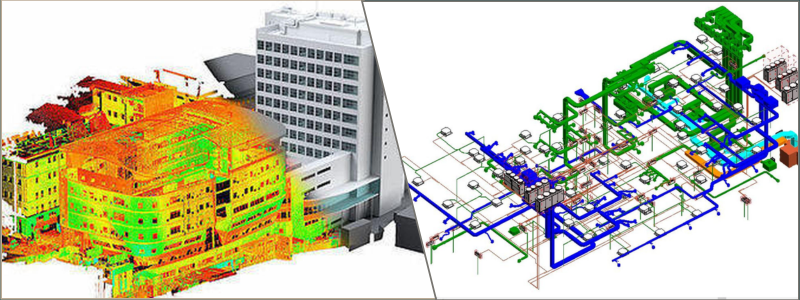
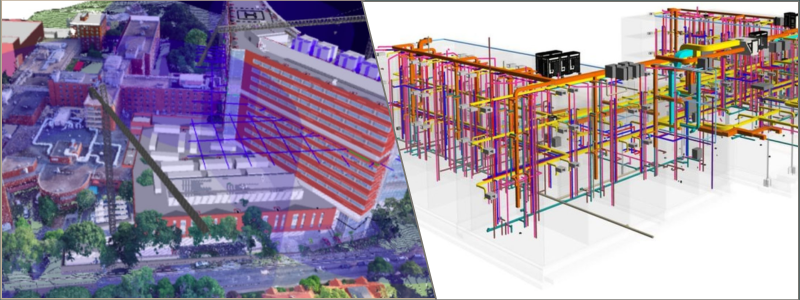
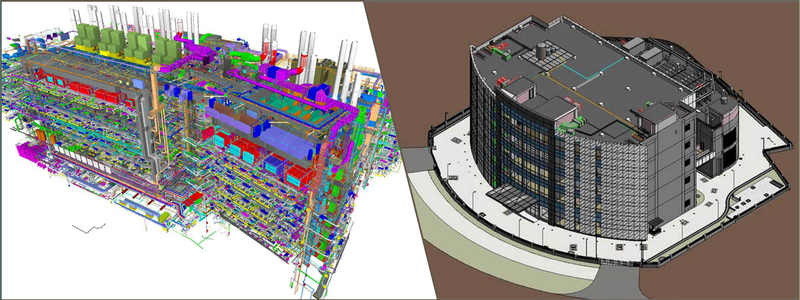
BIM modeling of a hospital and MEP and HVAC modeling by Cad Crowd design experts

BIM modeling design services: What do these companies actually do?

Picture yourself stepping onto a construction site—except that instead of concrete and steel, it’s constructed of blocks and Legos. It’s more data, more precision, and a detailed virtual model that’s aware of everything in the building, from the last bolt to the last duct. That’s the environment in which Building Information Modeling (BIM) design service providers work. They’re essentially a combination of virtual architects, engineers, and project managers, with high-powered modeling software that allows them to model every aspect of a building prior to the laying of a single brick.

At the center of it all is the model itself—a highly detailed, multi-faceted digital twin of the future building. Rather than using two-dimensional blueprints, stakeholders can navigate an intelligent, dynamic model that recounts the entire narrative: how everything is connected, how much it will cost, when it will be constructed, and how it will perform in the long term.

They begin by creating precise 3D models that encompass architectural, structural, and MEP (mechanical, electrical, plumbing) systems. They then perform clash detection—pinpointing any clashes or overlaps before they turn into costly on-site problems. That model also does math, generating correct quantity takeoffs and estimates so budgets remain on target.

Then comes construction sequencing, where timelines are visualized in 4D, allowing teams to plan who does what, when, and how. Tack on 5D cost modeling and even 6D facility management integration, and you’re looking at a full lifecycle digital roadmap—from the initial design concept to long-term building maintenance for architectural design firms.

So, what exactly do BIM companies do? They add clarity to complexity. They transform static plans into smart models. And perhaps most importantly, they enable everyone from architects to building owners to make smarter, faster decisions every step along the way.

3D modeling: Drawing with brains

2D CAD drawings were all the rage, but using them now is like having a flip phone when everyone else has smartphones. That’s where 3D modeling comes in—not merely an aesthetic boost, but an intelligent design revolution. With Building Information Modeling (BIM) software such as Revit, ArchiCAD, and Navisworks, projects aren’t simply drawn; they’re built digitally with intelligence.

These 3D models are more than nice pictures. They’re high-information environments where each piece of information knows who it is, what it does, and how it relates to the larger system. A wall isn’t a wall—it knows its material make-up, thickness, price, and even how much paint it will take. HVAC systems know their air flow requirements. Structural members report their load capacity and cost per square meter.

The great news? Everything is linked. Alter one component—a wall extension, for example—and everybody’s information updates instantly. Architects, engineers, interior design experts, and quantity surveyors are in sync without a problem. No yucky back-and-forth, no mistakes from miscommunication. Just smooth collaboration fueled by intelligent modeling.

It’s not sorcery. It’s BIM at its finest—transferring conventional drafting to a dynamic, smart process that thinks as intently as it draws.

Clash detection: The digital bouncer

Envision your HVAC duct run right through a structural beam. In conventional construction, this type of clash would not reveal itself until tradespeople were already onsite, leading to eleventh-hour redesigns, growing frustration, and colorful outbursts. Better times are quickly disappearing thanks to Building Information Modeling (BIM).

BIM brings a proactive solution with a process known as clash detection. BIM coordination software blends architectural, structural, and MEP models into one digital space. They then behave like a hyper-vigilant referee, flagging items immediately that are on a crash course, long before materials are ordered or boots touch the ground.

This isn’t merely a matter of catching errors; it’s optimizing workflows. By pinpointing and fixing problems early on, clash detection eliminates the expensive delays and rework. The payoff? Smoother schedules, lower stress, and way happier clients.

Consider clash detection the virtual bouncer at the front door of your construction site—preventing conflict before it even enters. For BIM modeling firms, it’s one of their strongest value-adds, converting what used to be a building nightmare into a clever, effective collaboration. And the beauty of being able to do all this is that none of it takes place until after the first wall has been constructed.

4D BIM: Construction sequencing for control freaks (In a good way)

If you’ve ever witnessed a building site go from nothing to utter chaos in seven days, you’ll know why timetabling is crucial. 4D BIM brings time into the model. This enables teams to model the build process step by step, day by day, demonstrating precisely how the building will be constructed—foundations first, followed by the steel frame, then glass curtain walls, then interior glitz.

This isn’t for entertainment purposes only, although seeing it happen is strangely pleasing. It enables project managers to identify inefficiencies, schedule deliveries, steer clear of scheduling conflicts, and facilitate trades with a level of precision that would make a Swiss watch blush.

5D BIM: The dollar signs

You know that moment when someone asks, “What’s this going to cost?” and the room falls silent? Not anymore. With 5D BIM, cost is no longer an afterthought. Every component in the model is tied to a cost item, meaning your beautiful 3D model is also a walking, talking, budget-tracking machine.

Curious about the cost-effectiveness of going from conventional glazing to high-performance glass? BIM informs you. Curious about aluminum panels vs. concrete cladding? BIM compares the numbers from 3D modeling design services and beyond. It turns guesswork into confidence. And that’s priceless—literally.

RELATED: Top design & drafting tasks to outsource for architects and architectural services firms
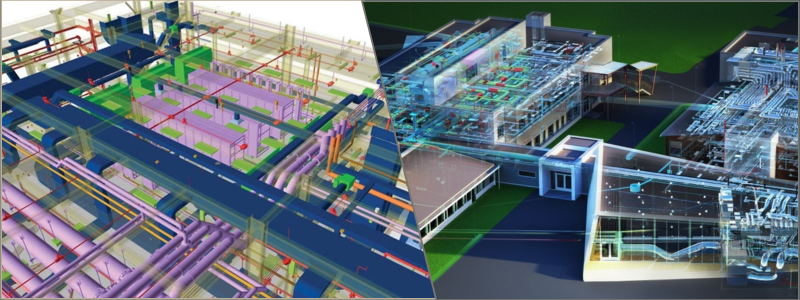
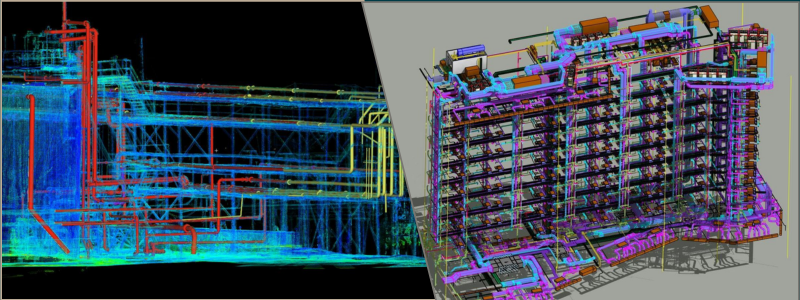
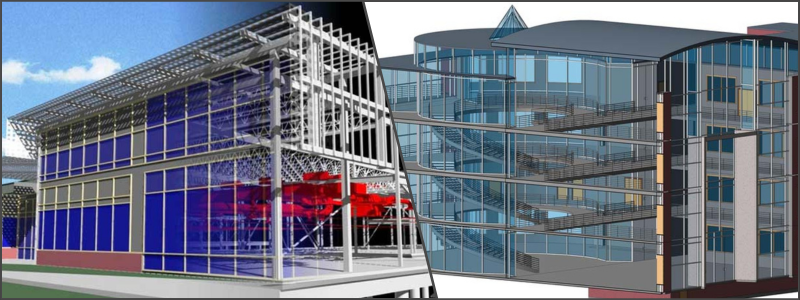
BIM examples of a multicomplex building design by Cad Crowd architectural designers

6D and 7D BIM: Long-term thinking

Designing and constructing is only the start. What about sustaining the building during the subsequent 30 years? BIM doesn’t end when the ribbon is cut. 6D BIM incorporates facility management information—such as warranties, maintenance schedules, and asset information—directly into the model. The structure is now a digital twin: an active representation of the actual building that grows with it over time.

7D, depending on your source, tends to mean sustainability analysis. How does the building handle various weather conditions? What’s the carbon footprint of your selected materials? You can test energy usage and environmental performance with BIM services and create green without guessing.

Collaboration: The BIM buzzword that actually means something

One of BIM’s not-so-hidden superpowers is its power to bring everyone together at the table. No more isolated workflows. No more he-said-she-said between architectural design experts and subcontractors. BIM firms tend to use Common Data Environments (CDEs)—single digital hubs where all project data is shared, updated, and followed.

Tools like Autodesk BIM 360 and Revizto make this collaboration seamless. Everyone sees the latest model. Everyone can comment, annotate, and assign tasks. It’s like Google Docs for buildings—except instead of writing essays, you’re building hospitals.

The tech behind the magic: A peek into the toolbox

Let’s discuss software. BIM design services rely heavily on a set of digital software to make all of the above work. Revit is frequently the king of the castle, with full modeling functionality in architecture, structure, and MEP. Navisworks is one of the favorites for clash detection and construction simulation. ArchiCAD has stylish software tools. Then there are specialist platforms such as Tekla (excellent for structural steel), Synchro (superb for 4D sequencing), and the constantly changing world of cloud platforms.

And yes, automation and AI are already creeping in. Few BIM companies employ scripts and plug-ins to automate tasks such as room tagging, element renumbering, or even model checking. The payoff? Quicker delivery, reduced errors, and more time for the team to engage in actual design thinking rather than copy-pasting.

What makes a great BIM company?

When you’re searching for a good BIM (Building Information Modeling) firm, glossy 3D rendering services don’t cut it. Sure, it’s great when the renderings are crisp, but an outstanding BIM firm contributes much more to the table than mere looks.

Excellent BIM firms have a larger picture in mind. They consider themselves strategically, as opposed to spatially. It’s not a matter of creating a model—it’s about assisting in creating the whole project more intelligently, from initial planning through final handoff. That involves knowing construction sequencing inside and out. They understand when things must take place, how one action impacts the next, and how to keep moving forward in an efficient manner.

Effective communication is another defining feature. These teams understand how to communicate effectively with architects, interior design services, contractors, and clients to keep everyone on the same page. They proactively alert others to potential issues before they develop into expensive headaches. Permits? Building codes? They’ve got those covered—and then some.

What actually distinguishes the top BIM companies is the extent to which they listen. No two projects are the same, and being able to listen to what the client requires—and respond in kind—is crucial. They use the BIM model as a living, changing resource, not merely something to deliver.

At the end of the day, BIM is driven by people. Behind every finished model is a group of thoughtful, informed decisions being made. It’s not about clicking on buttons in software—it’s about solving and creating value together, within a shared digital space.

So when you’re evaluating BIM services, don’t just look at the output. Look at the process, the people, and the principles driving the work. That’s where you’ll find the real difference.

RELATED: Keys to successful structural design & construction projects with architectural services firms

Who uses BIM modeling services?

When most people hear “BIM modeling,” they envision sleek high-rises or billion-dollar transportation projects. But that’s hardly the tip of the iceberg. Building Information Modeling, or BIM, has far outgrown its initial high-profile beginnings. It now impacts everything from small suburban housing developments to state-of-the-art hospitals, sprawling university campuses, and sports stadiums done by architectural site plan companies.

So, who’s really using BIM? The answer ranges across almost every aspect of the construction and design business. Real estate developers, contractors, architects, and engineers were some of the first. However, they no longer dominate the field. Interior designers, facility managers, and even furniture manufacturers are incorporating BIM into their routine operations. This shift occurs because BIM goes beyond 3D models; it employs an intelligent, data-rich approach for planning, visualizing, and coordinating every phase of a building’s lifecycle.

Think of a builder designing a green eco-hotel. Rather than cobbling things together in conventional CAD tools, they hire a BIM modeling firm to produce one coherent digital model. This isn’t a model that indicates merely where walls and windows go. It contains extensive information about MEP systems, energy efficiency requirements, material choices, and schedule timetables.

With BIM, the green hotel can be built to exacting green building standards, conserve energy, and minimize waste on site. Subcontractors can be coordinated during construction using the model, so expensive mistakes are avoided and the project remains on track. No more conflicting pipes and ducts realigned at the last minute.

And when the building finally opens its doors? The advantages continue. Facility managers can count on the BIM model for correct, current information concerning each system in the hotel. Need to switch out the HVAC units a decade later? There’s no uncertainty—they’ll know precisely where all of it is and how it fits together, not unlike architectural MEP services.

In brief, BIM is no longer the sole preserve of megaprojects. It’s a technology that’s being embraced by industries for its precision, adaptability, and potential to future-proof buildings. Whether you’re building a contemporary art museum or a prefab tiny house, there’s a high likelihood that BIM can make the process more intelligent, seamless, and environmentally friendly.
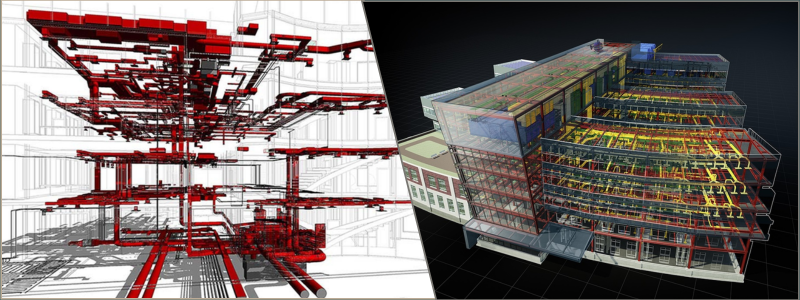
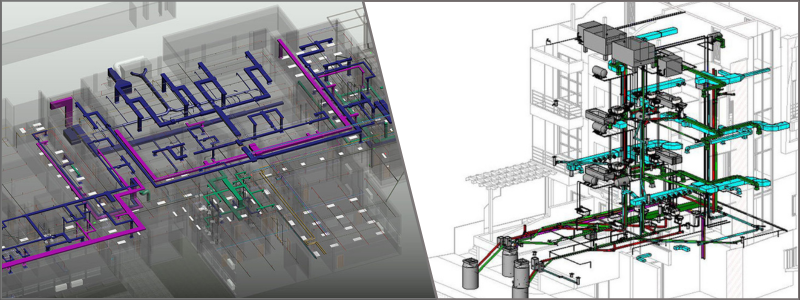
MEP and structural BIM design examples by Cad Crowd BIM modeling experts

The road ahead: BIM’s evolving role

So, is this the end of the line for BIM? Not at all. The next wave is already upon us. Consider digital twins that interface with IoT sensors for real-time monitoring. Consider mixed reality overlays on construction sites. Consider AI programs that provide predictive maintenance and design optimization recommendations in real-time, leveraging the expertise of engineering design experts.

BIM is increasingly a “way we think” rather than a “thing we do.” With building complexity increasing, sustainability targets narrowing, and client expectations becoming more sophisticated, the modeling services provided by BIM firms are evolving into long-term digital relationships.

Those days of the drawing set presented at project delivery are over. The BIM model is the ongoing gift, previously, in real time, and far beyond the end of construction.

RELATED: How architects embrace innovation for modern home design services with companies

Final thoughts: Why BIM matters more than ever

BIM is not all about technology. It’s about trust. It’s about smarter building, not merely faster building. It’s about viewing a building not just as steel and glass, but as an evolving, living being. And for BIM design firms, it’s about enabling teams to transition from confusion to clarity, from guesswork to accuracy, and from chaos to coordination for architectural design and CAD experts.

If you’re setting up a project, regardless of its size, hiring a building information modeling company isn’t a nice-to-have—it’s a competitive edge. They won’t simply give you a model. They’ll give you a roadmap, a control panel, and peace of mind in one.

Cad Crowd is here to help!

Looking to transform your next construction project from chaotic guesswork into streamlined precision? Don’t let outdated methods drain your budget with costly surprises and delays. Partner with Cad Crowd, the leader in providing professional freelance services for architectural, engineering, and design firms.

We’ll help you connect with experts proficient in BIM modeling. It’s your project’s insurance policy against miscommunication, rework, and budget overruns. Ready to build smarter, not harder? Get your free BIM consultation today and discover how intelligent modeling can save you time, money, and countless headaches from day one. Request a quote here.

author avatar

MacKenzie Brown is the founder and CEO of Cad Crowd. With over 18 years of experience in launching and scaling platforms specializing in CAD services, product design, manufacturing, hardware, and software development, MacKenzie is a recognized authority in the engineering industry. Under his leadership, Cad Crowd serves esteemed clients like NASA, JPL, the U.S. Navy, and Fortune 500 companies, empowering innovators with access to high-quality design and engineering talent.

Connect with me: LinkedInXCad Crowd

Scan To BIM: Advice for Working with an Architectural Design Services Firms


Building Information Modeling, or BIM, revolutionized the construction and building industry by enhancing the design process as well as better management of the projects. Scan to BIM, a specific application of architectural BIM services, takes the process one notch higher by integrating 3D laser scanning and building information models to provide accurate digital models of existing facilities.

This solution is most useful to architects, engineers, and builders involved in renovation or retrofitting work because it will enable correct as-built models and improve project delivery. For architectural design service companies from Cad Crowd’s leading industry platform, adding a scan to BIM to their workflow can be useful, but it comes with its own set of issues. Here is a step-by-step guide on how to work efficiently with architectural design services companies utilizing Scan to BIM technology.


🚀 Table of contents


Understanding the scan to BIM technology

Scan to BIM (Building Information Modeling) represents a revolutionary process that seamlessly bridges the gap between physical structures and digital design workflows. The technology begins with advanced 3D laser scanning, which captures high-resolution, millimeter-accurate scans of existing buildings or construction sites. This comprehensive scanning process collects millions of precise data points, creating what professionals call a “point cloud”—an incredibly detailed digital representation of the physical space.

These point clouds serve as the foundation for generating accurate 3D modeling design services that integrate directly into BIM platforms used by architects, engineers, and construction professionals. The result is a data-rich digital twin that reflects real-world conditions with unprecedented precision.

Primary applications and advantages: Scan to BIM proves especially valuable for retrofit, renovation, and restoration projects where existing building conditions must be captured with absolute accuracy. Traditional measurement methods often prove slow, inaccurate, and labor-intensive, particularly in complex or inaccessible areas. Scan to BIM technology eliminates measurement guesswork by generating highly detailed models that precisely mirror actual site conditions.

Strategic benefits for design practices: Architectural firms adopting this approach experience significant operational improvements:

  • Dramatic reduction in documentation errors and measurement inaccuracies
  • Enhanced project planning capabilities and streamlined decision-making processes
  • Substantial cost savings through the elimination of expensive rework scenarios
  • Improved collaboration across disciplines and construction phases

Whether working with historic structures, large commercial complexes, or constrained urban environments, Scan to BIM ensures all design decisions are grounded in reliable, data-driven models that reflect true building conditions.

RELATED: 3 steps to hiring a reliable architecture firm & freelance services architects

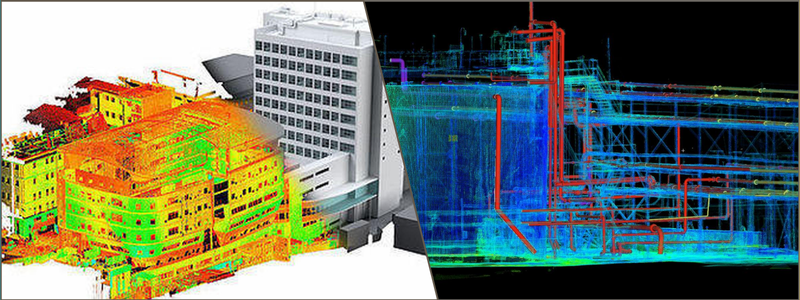
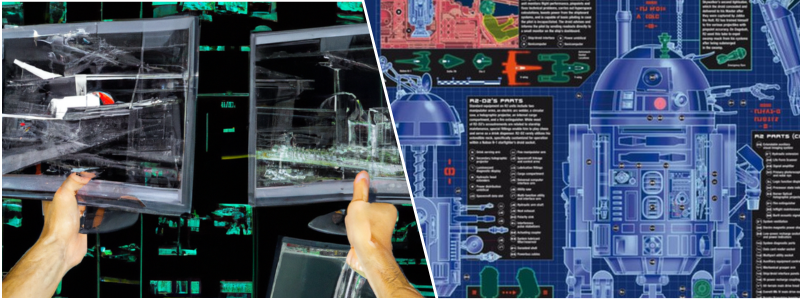
Scan to BIM examples with clash detection by Cad Crowd architectural BIM experts

Why architectural firms should embrace scan to BIM

Architecture firms embracing Scan to BIM technology unlock transformative advantages that fundamentally enhance design accuracy and operational efficiency. This innovative approach enables architects to work from highly detailed, data-rich 3D models generated through precise laser scanning of existing structures, eliminating traditional measurement guesswork and dramatically reducing errors from outdated building documentation for architectural design firms.

Enhanced accuracy and efficiency: Scan to BIM virtually eliminates costly on-site rework by providing architects with precise as-built conditions from the project’s inception. Traditional site surveys—historically time-consuming and labor-intensive processes—are replaced by rapid laser scanning technology that captures comprehensive building data in hours rather than days. This efficiency gain liberates architects to focus on creative problem-solving and strategic design development rather than tedious measurement tasks.

Seamless collaboration: The technology’s collaborative impact proves equally significant through real-time accessible BIM models that create a unified information platform. Engineers, contractors, and stakeholders work from identical, continuously updated data, eliminating communication gaps and reducing coordination conflicts. This shared digital foundation ensures all project participants operate with consistent, accurate information throughout the entire project lifecycle.

Superior project outcomes: The result is seamless project delivery characterized by enhanced interdisciplinary communication, reduced design conflicts, and accelerated construction timelines. Scan to BIM transforms complex renovation and retrofit projects from error-prone endeavors into precision-driven, collaborative processes that consistently deliver superior outcomes while maximizing both time and cost efficiency.

Key considerations when working with architectural firms using scan to BIM

When you hire an architectural design and drafting firm for a project involving Scan to BIM, there are a few key things that you need to take into account. No, you don’t simply go out and hope to find the best firm you ought to be dealing with. You don’t want to just take anyone, either. You do need to make sure that the firm has experience with Scan to BIM technology and that they can efficiently incorporate it into their design workflow. But apart from technical knowledge, there are a couple of other things to bear in mind.

Assess the firm’s technical capability

It is not possible for all architecture companies to be efficient when it comes to utilizing Scan to BIM technology. While certain companies are able to perform this process for a very long duration, there are companies that are working towards activating it. Prior to recruiting an architectural firm to handle a Scan to BIM job, make it a point to consider their technical capability. Inquire about their experience using 3D laser scanning, BIM software, and whether they have worked with bringing Scan to BIM into their operation.

Also, it’s important to assess the software and machines the company uses for Scan to BIM. Different companies may utilize different BIM platforms (e.g., Revit, ArchiCAD), and they may not necessarily be all compatible with your needs. Make sure the company is utilizing the latest technology and software releases, as this will ensure that the models generated by them are accurate, up to date, and compatible with other tools used on the project.

Understand their approach to handling data

Scan to BIM involves the acquisition of huge amounts of data, and handling the data in an effective way is a crucial part of the process. The architectural design expert you hire should have a clear approach to handling the point cloud data, converting it into a usable BIM model, and providing the final product that best meets your project requirements.

Ask the company how they treat point cloud data. For example, do they use automated programs to automate, or do they use manual methodologies to clean? How do they ensure the correctness of the output BIM model? Understanding their data management procedure can help you decide whether or not they have the ability to handle the complexity of your job.

Communication and collaboration

Communication is essential in any architectural project, but particularly so when using Scan to BIM technology. Because there are several stages to the process, from gathering data to creating the model to implementing the design, strong lines of communication must exist among the architectural firm, contractors, and other stakeholders.

Make sure that the architectural firm you employ is committed to open communication and problem-solving as a team. Do they hold regular meetings to keep all staff members informed about project progress? Are they open to suggestion and ready to change if something needs to be adjusted? Communication is the key to preventing misunderstandings and keeping the project on track.

RELATED: How much blueprints cost for CAD floor plans, and 2D drawings rates at drafting firms?

Ensure compatibility with your goals

Before hiring an architecture practice on a Scan to BIM project, ensure that you confirm they receive what you are looking for. Do you need the BIM modeling services for energy analysis, fit-out, or future expansion if the need arises? The quality of data and amount of detail required will rely on the nature of the work.

Describe your aims to the company and make them aware of how Scan to BIM can help you achieve them. For example, if you are carrying out a full transformation, it is necessary to have a correct as-built model that can assist during the design. The architectural firm should be in a position to generate a detailed and accurate model that indicates the building as it is at the moment, including structural features, HVAC systems, and other major components.

Manage the project timeline

Scan to BIM projects can be complex and time-consuming, so it’s essential to work with a firm that understands the importance of managing the project timeline effectively. Request the company to provide a clear timetable that describes the different phases of the Scan to BIM process, from data capturing to point cloud processing, and finally, the creation of the BIM model. They should be able to provide you with realistic time schedules for each phase in the project and notify you of any delay or problem that arises.

It’s also important to know how long it will take to complete the BIM model and when you’ll be able to begin the design phase. Slowness in the Scan to BIM procedure will slow down the entire project timeline, so it’s necessary that the firm is efficient enough to meet your deadline on time.

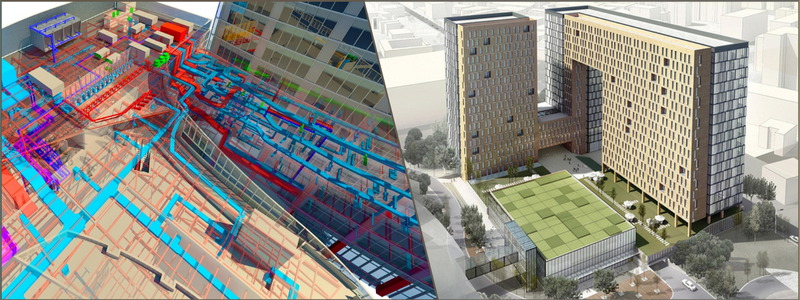
Scan to BIM and Mechanical scan to BIM design examples by architectural design experts from Cad Crowd

Budget and cost estimates

Scan to BIM technology can be costly, particularly if you must acquire special hardware and software to gather the data and create the model. When hiring an architectural planning and design firm, ensure you understand the expenses of the Scan to BIM process beforehand. Ask for in-depth cost estimates with itemizations for the various expenditures, including data gathering, software licensing, model creation, and any additional expenditures.

While Scan to BIM may reap rewards in the long run by reducing errors and making projects more efficient, ensure that the cost is within your project budget. Demand that the company be transparent with you regarding their charges and how changes to the scope of the project may influence the overall cost.

RELATED: Photorealistic rendering services: Complete price, cost, rates and fees for companies and firms

Transforming architectural design through precision technology

Scan to BIM technology represents a transformative shift in architectural design and 3D architectural visualization services, bridging the gap between physical reality and digital precision. By integrating 3D laser scanning with Building Information Modeling, architectural firms can deliver unprecedented accuracy in renovation and retrofit projects while eliminating costly measurement errors. Success depends on partnering with experienced firms that demonstrate technical expertise, clear data management processes, and collaborative communication approaches.

When properly implemented, Scan to BIM streamlines project timelines, enhances cross-disciplinary coordination, and provides the data-rich foundation necessary for informed design decisions. This technology isn’t just an advantage—it’s becoming essential for competitive architectural practice in today’s market.

Take action: Partner with scan to BIM experts today

Don’t let outdated measurement methods compromise your next renovation or retrofit project. Partner with experienced architectural firms who have proven expertise in Scan to BIM technology and can deliver accurate, data-driven results. Evaluate potential firms based on their technical capabilities, communication processes, and project management track record before making your selection. Cad Crowd is a leading company that provides impeccable BIM scanning, architectural design, and engineering services to top AEC companies.

Contact qualified scan-to-BIM specialists today to transform your project accuracy and streamline your design process from day one. Request a quote today.

author avatar

MacKenzie Brown is the founder and CEO of Cad Crowd. With over 18 years of experience in launching and scaling platforms specializing in CAD services, product design, manufacturing, hardware, and software development, MacKenzie is a recognized authority in the engineering industry. Under his leadership, Cad Crowd serves esteemed clients like NASA, JPL, the U.S. Navy, and Fortune 500 companies, empowering innovators with access to high-quality design and engineering talent.

Connect with me: LinkedInXCad Crowd

How to Choose the Right BIM Services Provider For Your Architectural Firm


Let’s be real—when you’re knee-deep in the design stage of a project, managing client needs, zoning issues, and impending deadlines, the last thing you want is a BIM partner who won’t get it done. Hiring the right Building Information Modeling (BIM) services firm from the industry giant, Cad Crowd, has the potential to eliminate the madness or contribute to it. That choice? That’s not something to be taken lightly.

BIM is no longer a buzzword; it’s baked into every stage of architectural practice, ranging from initial conceptualization to facility management. Whether you’re a small firm new to 3D modeling or a large practice looking to expand cost-effectively, securing a BIM partner who shares your ethos, workflow, and ambitions is paramount.

What are BIM services?

BIM modeling conversion and scan examples

RELATED: Why architects outsource 3D modeling services and the benefits for your design company

BIM (Building Information Modeling) services consist of the creation and maintenance of digital models representing physical and functional building characteristics. BIM services facilitate the planning, design, construction, and operation of buildings in 3D models with embedded data.

BIM allows architects, engineers, contractors, and stakeholders to coordinate better, eliminate errors, and enhance efficiency in the project’s life cycle. Services can encompass 3D modeling design services, clash detection, quantity takeoffs, cost estimation, and facility management.

By offering a common knowledge base, BIM services simplify workflows, improve visualization, and enable improved decision-making in construction and infrastructure development on residential, commercial, and industrial projects.

Now, you’ve learn what BIM services are all about. So, how do you actually go about selecting the right one, then?

This manual takes you through the actual questions to ask, red flags to look out for, and clever methods to make your architecture firm receive the BIM services it actually requires.

Define your requirements before you begin searching

Even before you call on prospective BIM providers, you have some research to conduct.

  • What stage of your project(s) will require BIM integration?
  • Do you need full BIM coordination or merely model development?
  • Do you require clash detection, quantity take-offs, 4D scheduling, or 5D cost estimation?
  • What software do you presently use—Revit, ArchiCAD, Navisworks—and will the vendor have to integrate into your environment?

Getting these questions in sequence is like drafting a good project brief. It provides direction, clarity, and expectations for architectural design firms. Having a clearly defined scope also keeps you from paying too much for services you don’t require—or worse, being stuck with a provider who can’t provide what you do.

Here’s the way to think about it: you wouldn’t start building without blueprints. The same rule applies here.

Review their portfolio, but read between the lines

A glitzy portfolio is good. It demonstrates capability, scope, and design potential. But don’t get impressed by nice renderings and shiny case studies alone.

Here’s what to look for instead:

  • Project similarity: Have they done buildings similar to yours—educational campuses, hospitals, commercial towers, or heritage projects?
  • Complexity level: Can they deal with irregular geometries, sustainability modeling, or high-end parametric elements?
  • Team integration: Did they work as silent team players or take charge of BIM coordination among various disciplines?

Request to view the real BIM outputs, not glossy renders. Ask about the model LOD (Level of Development), documentation quality, and if they used open standards such as IFC (Industry Foundation Classes).

🚀 Pro tip: If they’ve worked with MEP services or structural consultants you know and trust, that’s a good indicator of collaborative compatibility.

Verify technical competency, not software know-how

Anyone can say they “use Revit.” That’s not sufficient. You must know how well they do it—and if they do it smartly.

Some questions to consider:

  • What BIM standards or naming conventions do they use?
  • Are they able to design custom parametric families for specialty items?
  • Do they provide Revit API scripting or Dynamo automations for efficiencies?
  • How do they handle version control and data interoperability with other tools?

Dig into their workflow. A good BIM provider will be eager—even proud—to share their process and how they approach data-rich modeling. Look for evidence that they don’t just draw in BIM—they think in BIM.

RELATED: How structural engineers improve custom home design when you hire architects & design firms

BIM modeling with an MEP and conversion

Ask about communication and coordination skills

Here’s a universal truth: technical brilliance means nothing if it doesn’t come with communication.

Your architectural BIM partner will become an extension of your team, so whether or not they can handle expectations, report back to you, and communicate in your language is important—a big deal.

Assess the following:

  • How do they process feedback loops?
  • Will they attend coordination meetings with contractors and consultants?
  • Do they offer model sharing through cloud platforms such as BIM 360 or Trimble Connect?
  • What’s their response time when it’s the critical design phases?

Certain companies even appoint a BIM Manager who speaks directly to your team. That single point of contact can be worth its weight in gold when working through model conflicts or reconciling new scope demands.

A willing partner who knows architectural schedules (and the actual pressures behind them) can make all the difference.

Check references—then dig a bit deeper

Don’t miss this step.

A call to a previous client will show you something that no portfolio or presentation ever will. Were deadlines met? Were revisions executed smoothly? Did the models perform in clash detection meetings?

Some questions to ask references wisely:

  • What was the most difficult aspect of the project, and how did the BIM provider react?
  • Would you hire them again?
  • How did they manage change requests?
  • Were their deliverables consistent with your BIM execution plan?

If possible, connect with others who aren’t on the reference sheet—like someone you happen to know at LinkedIn who’s worked with them in the past. That uncensored feedback might be pure gold for any architectural planning and design firm.

BIM modeling service examples including for an MEP plan

RELATED: How 3D rendering helps collaboration between clients and design services companies

Evaluate scalability and long-term fit

Suppose your company is expanding, or expanding to tackle bigger, more challenging projects next year. Will this BIM supplier scale with your business?

Investigate the following:

  • Number of people in their team, as well as their capacity
  • The capacity to integrate rapidly for dynamic projects
  • BIM Level 2 or Level 3 maturity model support
  • ISO 19650 certification or knowledge

Also, ask if they can provide assistance throughout a project’s lifecycle—through design development, construction administration, and even into facilities management.

A partner that grows with you saves you the inconvenience of re-hiring or retraining in the future.

Know their pricing model

No one likes budget surprises.

Get straight about how they bill:

  • Is it by the hour, per model, or per square foot of project area?
  • Are revisions, coordination meetings, or rendering extras included in the separate costs?
  • Do they have fixed-price packages for schematic, design development, and construction documentation stages?

Clear-cut pricing is a mark of professionalism. It also allows you to judge cost-to-value for 3D modeling experts accurately.

Bonus tip: Don’t always go for the lowest bid. You’re not just paying for models—you’re investing in accuracy, collaboration, and project flow.

Ensure data security and legal clarity

As BIM becomes more integrated with cloud platforms and IoT devices, data privacy and IP ownership can get murky.

Make sure you:

  • Sign NDAs and IP agreements
  • Clarify who owns the model and data at project completion
  • Understand where your files will reside—on local servers, private cloud, or third-party sites
  • Define data backup and versioning policies

You don’t want your models (or client information) to be appearing in another project. A reputable BIM provider will have security and IP rights in mind.

Pilot project testing

Not convinced yet? Run a low-risk pilot. For example, through a simple 3D visualization service, you can help yourself get ahead of any issues that you may face with the project.

Assign them a small part of your next project—a lobby model, a bathroom block, or a parking garage layout. See how they deliver under your timeline, feedback structure, and coordination expectations.

This trial-by-fire can reveal a lot:

  • Are they proactive or reactive?
  • Do they anticipate issues or just follow instructions?
  • Can they troubleshoot missing or unclear design intents?

It’s like dating before marriage—better to find out early if the fit isn’t there.

Trust your instincts and culture fit

This may sound fluffy, but it’s essential.

Your perfect BIM partner won’t merely check the boxes on tech and cost. They must resonate with your firm’s design ethos, culture, and workflow approach.

  • Do they prioritize design integrity over speed?
  • Are they adaptable enough to work with changing sketches and ideas?
  • Do they honor the role of architecture, or are they all about the tech?

When a BIM provider is not only aware of your files but also of your why, they can become a long-term creative partner—not merely a subcontractor.

RELATED: Benefits of outsourcing architectural CGI services for real estate marketing agencies

Final thoughts: Opting for impact, not only output

Your ideal BIM services provider is not a vendor—they’re an ally in your architectural journey. They can assist you in solving constructability challenges before they come up, impress stakeholders with pristine visuals, and maintain your project documentation bulletproof.

Yes, the process of selection may be time-consuming. It should be. But the reward? It’s smoother workflows, reduced errors, improved collaboration, and ultimately—better architecture.

So the next time you’re up to your neck in a concept sketch, just keep this in mind: your BIM partner at Cad Crowd should make your vision easier to build—not harder to describe. Get a quote today and get it for free!

author avatar

MacKenzie Brown is the founder and CEO of Cad Crowd. With over 18 years of experience in launching and scaling platforms specializing in CAD services, product design, manufacturing, hardware, and software development, MacKenzie is a recognized authority in the engineering industry. Under his leadership, Cad Crowd serves esteemed clients like NASA, JPL, the U.S. Navy, and Fortune 500 companies, empowering innovators with access to high-quality design and engineering talent.

Connect with me: LinkedInXCad Crowd

Integrating BIM Objects For The Best 3D Interior Design Services


Let’s face it: the reason why you look for the best architectural and design services is to make sure that the space you’re designing for is well-designed, functional, while keeping to your aesthetics and sense of style.

Interior design and architecture projects are based on filling a space with matching elements and features in well-planned proportions. No matter what type of BIM object an architect or designer uses (i.e., the roof, furniture, door, or even plumbing), every item should be a perfect fit and high quality. After all, a stunning professional presentation will not just help earn the client’s approval but also showcase the company in a positive light that attracts more clients in the future. 

You can’t start interior design projects without long hours of careful planning, unconventional creativity, and exceptional organization – with the rise of BIM, or Building Information Modeling technology, 3D interior design services can envision their designs with greater detail and accuracy. This article delves into the impact and integration of BIM objects for firms with 3D interior design services. 

RELATED: Features and benefits of BIM services for architectural design companies

BIM objects WILL improve your 3D interior design

When you’re able to see your designs and make changes to address any challenge that comes up before getting into the meat of things, it practically guarantees efficiency and clarity. Developing three-dimensional models of your space makes it much easier to envision how the design will come together and pinpoint potential issues even before they appear.

However, BIM objects are helpful beyond the design phase. They are often used in project management to offer a concise and clear view of the project’s budget and timeline. After the project is finished, BIM objects from BIM modeling firms can also be used to develop as-built models, which can then be used for renovation jobs or future reference. BIM objects are powerful tools that can help you save money and time while achieving better designs. If a 3D interior design service hasn’t taken advantage of BIM objects, now is the perfect time to start. 

BIM elements

BIM, or Building Information Modeling, is a process that involves using 3D modeling to create virtual representations of buildings. The critical elements of BIM are geographic information, geometry, the properties of building components, and spatial relationships. BIM objects can be used for various 3D interior design projects, which include the following:

RELATED: Differences between 3D modeling, CAD, and BIM explained

Selections of finishes 

BIM objects can be beneficial when it comes to the selection of finishes to be used for the interior design project. These objects can be used to view and check how various finishes will look in space and ensure they will go well together. 

Selection of furniture 

BIM objects created by 3D furniture modeling professionals can also be used to choose furniture for the interior design project, find furniture that suits the space’s dimensions, and envision how it will blend with the rest of the room.

3d-furniture-modeling-services

Lighting design 

With the help of BIM objects, it’s possible to develop a suitable lighting design for the project. The objects can be used to identify the proper position of lights and check how they will impact the space’s ambiance and overall appearance. 

RELATED: 7 Ways 3D interior designer services are used to maximize living and working spaces

Space planning 

BIM objects are also helpful in creating 3D models of the interior space being worked on. It helps interior designers plan out their designs and envision the space. 

Importance of high-quality BIM objects

The internet has thousands of 3D models of all shapes, sizes, and designs. Unfortunately, most of them are low quality. The sad part is that many BIM objects that you see online aren’t made or developed by 3D modeling experts and professionals in the first place. A lot of these came from amateurs, specifically free 3D items. It is also challenging and tricky to use these models. They can be adjusted when a 3D object or model is lackluster. But if it is primarily a mess, it must be completely redesigned to look decent enough once used in a project. 

Working with a BIM modeling expert is best to ensure you get quality BIM objects. These professionals know that creating BIM objects comprises several stages: getting a brief, developing a model, and making the necessary adjustments. Throughout the process, the client keeps in touch with the team to make suggestions or changes to the BIM objects. Now that you know how vital BIM objects are, here’s how 3D interior design services can use them to their firm’s advantage. 

RELATED: 5 Tips to get the most out of your interior design service

3D visualization made better 

One of the leading benefits of using BIM objects as part of 3D design services is their ability to enhance 3D visualization and take it to the next level. Static drawings and traditional 2D designs often fall short when it comes to capturing the actual character of a room or space. For BIM objects, designers can generate immersive and realistic 3D models that give clients a vivid representation of the product. It helps stakeholders visualize the intent of the design, reach educated decisions, and prevent costly design revisions during the building process. 

Better communication and collaboration 

BIM allows seamless collaboration among the stakeholders involved in the 3D interior design services. Clients, 3D modeling designers, engineers, contractors, and architects may collaborate on just one BIM model that minimizes the need for numerous revisions and reduces the risk of miscommunication and misinterpretation. Also, BIM objects ensure that all stakeholders are on the same page with centralized project data and real-time collaboration, resulting in fewer errors and improved productivity. 

RELATED: 5 Interior design CAD models that’ll rock your world

Efficient coordination and design

BIM objects allow interior designers to develop highly coordinated, accurate, and detailer models of interior spaces. Elements, including fixtures, furniture, and equipment, could be placed in precise locations, inspected for functionality, and tweaked as required with the help of intelligent components and parametric objects. High attention to detail helps identify conflicts or clashes early, allowing faster resolution and avoiding expensive rework throughout construction. 

interior-design-services

Increased sustainability 

The inclusion of ideas of sustainability by 3D interior rendering firms is becoming increasingly important for many reasons. BIM objects help achieve this goal by offering material lifetime analyses, allowing daylight simulations, and providing energy analysis tools. 3D interior designers can test different scenarios and evaluate how their design decisions can impact the environment. This kind of approach, which is driven by data, allows decision-making that aligns with sustainability goals and results in interior settings that are greener and more environmentally friendly. 

RELATED: 3D Interior design costs, modeling pricing, and rendering rates for buildings

How to use BIM objects for 3D interior design services

Using BIM objects for 3D interior design services can pave the way to jaw-dropping results. Below are some helpful tips on how to use BIM for future interior design projects:

  • BIM objects can generate accurate 3D models of the proposed design. It lets you envision the space and double-check that things will fit perfectly.
  • BIM can also be used to come up with a schedule of finishes. It will help 3D interior designers coordinate different finishes and materials to ensure everything will be installed properly.
  • 3D interior design services can use BIM objects to develop detailed elevations and floor plans. It will help ensure more efficient space planning and prevent potential issues during construction. 
  • BIM can be used to create realistic 3D renderings of interior designs. This helps interior designers communicate their vision to investors or clients. 
  • BIM can be used to track progress and identify possible problems early on. It helps save money and time by ensuring that issues don’t get out of hand. 

The future of BIM objects and interior design 

The use of BIM objects in 3D interior visualization services is promising, thanks to the continuous advancements in workflows and technology. Some developments and trends to look for include machine learning and artificial intelligence, IoT or Internet of Things integration, generative algorithms, parametric design, augmented reality, and virtual reality. 

RELATED: Leading home design & modeling 3D technology for builders, companies, and firms

With such a promising future, it’s expected that the integration of BIM objects in interior design will continue to improve and evolve to offer exciting opportunities for collaboration, sustainability, and innovation. By harnessing the power of BIM objects, 3D interior design services can produce incredible spaces that can take human experience to a whole new level. 

How Cad Crowd can help

Cad Crowd is the leading platform where you can find BIM Modeling Services to integrate BIM objects into 3D interior design services to produce stunning results you’ll love. Contact us today!

How BIM Objects Play a Crucial Role in Construction Companies and Project Lifecycle


The term BIM, or building information modeling, crept into the construction world in the 1970s when CAD systems were developed. Initially, BIM was meant to serve as a library of 3D symbols, with BIM objects being the digital modeling of concrete blocks, windows, or air conditioning units. Data entered the picture instantaneously, making BIM a catalyst of property and information revolutionizing the modern construction industry. 

Implementing BIM (building information modeling) offers many benefits to construction companies. However, it’s critical to use functional and quality BIM objects and employ architectural BIM modeling services for experts in the field. Construction companies, design offices, and architects have much to gain from these tools. 

RELATED: Should your company invest in architectural BIM modeling services for construction? 

Bridge the gap between key players with quality BIM objects 

BIM holds one promise: to facilitate cooperation among the players involved in a construction project in a more centralized way. Therefore, the first quality of BIM objects is to use a common language between the different participants of the project, specifically building engineers, builders, architects, and engineers. 

Quality BIM objects also allow improved collaboration between various project participants. By accessing updated and accurate information, all parties in the joint project can work and function more efficiently. BIM object properties should be standardized based on formats compatible with each participant’s software to ensure that everyone can read them. This is the key challenge for the manufacturing companies and the condition for objects to be qualitative. 

Defining BIM objects 

Building information modeling, or BIM, is considered the future of the construction industry. BIM breaks down the silos that prevent collaborative engagement to enable a seamless flow of information among various construction stakeholders. The main goal of BIM is to make data accessible immediately to all stakeholders. BIM’s nature is similar to social media, where everyone can provide input, access data, and eliminate possible conflicts. 

RELATED: Industry rates for BIM services & building information modeling costs

Building a construction-ready and information-rich BIM is more challenging than building a design model that looks pretty for client presentations. The adage GIGO or Garbage In, Garbage Out explains the philosophy of BIM quite well. It’s important to feed in precise data from various stakeholders to establish a useful model that depicts the actual conditions of the site. Thus, developing a BIM model using 3D modeling design services is an iterative and painstaking process. 

As the building blocks of BIM models, BIM objects are intelligent and data-rich with geometry. BIM and the resulting BIM objects offer benefits in three key areas: planning, construction, and facility management. Aside from the product and visual data, BIM objects can also store functional data. It allows BIM objects to imitate the actual performance of the product. If any of the construction project stakeholders make changes to the BIM object, the change will reflect across the board right away. 

RELATED: Do you know the BIM best practices for architectural design firms?

architectural-bim-professionals

The role of BIM objects in the planning process 

The planning stage can benefit from BIM objects in several ways, including the following:

Detect and resolve clashes

Detecting clashes and their ensuing resolution will become easier when the subcontractors can envision details in lifelike models. For instance, in which locations do electrical fittings clash with plumbing fittings? Will the planned foundation clash with the current underground facilities? Having these actionable insights ahead of time will prevent the need to change designs much later. The quality of data also increases significantly when BIM objects are used. 

Optimization and simulation 

BIM objects help mimic real-life conditions in the model. For example, do you plan to design an energy-efficient building? Does the building insulation perform based on the requirements of the design? Are there any areas where energy loss may occur? Readily available BIM objects make it easier to test various products to identify the best one. 

Visual communication 

Better visual communication is no doubt the most obvious advantage of making use of BIM modeling experts. Construction managers can share BIM models with the stakeholders and the owners alike. Virtual mock-ups or lifelike visualization give clients and stakeholders better insights into proposed sequencing. The ability to easily convey data makes BIM superior to 2D blueprints and plans. Complex constructions and slopes that are difficult to visualize in 2D alone can be easily understood and visualized in 3D BIM models. In addition, when powerful and emerging technologies such as drone mapping are used in conjunction with BIM, the result is an accurate and lifelike model. 

RELATED: BIM consulting & drafting services by Cad Crowd freelancers

The role of BIM objects in actual construction

Implementing well-thought-out processes and systems is critical to building accurate BIM models. Without these systems, correct simulation of the site’s conditions is impossible. For example, bar codes should be attached to construction and equipment components for tracking and cataloging. The site manager should scan equipment once it arrives and during its installation. 

After the tracking system is in place, other details, such as the date of shipping and operation manuals, can also be entered into the database. Building accurate BIM models also calls for continuous and intensive subcontractor training. The project manager should set uniform standards across the board. For example, one common problem on construction sites is that several subcontractors might use different points of reference. This kind of discrepancy can be avoided right from the beginning with the help of BIM and 3D architectural visualization services.

Coordination during construction

Tying the construction schedule to the model has several benefits, such as allowing the creation of 4D movie-like simulations. A visual view of the sequencing allows subcontractors to understand how their work will fit into the construction schedule. For example, if you need to explain the scope of construction and work sequencing to the glazing subcontractor, BIM allows you to easily create movie-like simulations where different colors depict different sub-phases of the glazing job. 

RELATED: Affordable building information modeling from CAD Crowd freelance contractors

Construction detailing and design 

Suppose you’re modeling a building’s structural details. After these details are modeled, you may be given details of the overlaying elements, such as connectors and gasket plates, from the fabricator. Once these are built into the BIM model, the contractor will better understand what goes where. With the help of BIM objects specified by the manufacturer, the 3D product modeling designers can acquire helpful inputs from the manufacturer to ensure a more collaborative design phase. 

Prefabrication

The use of BIM models improves safety in construction sites. Construction managers can accurately estimate dimensions and quantities and can turn to prefabrication to a greater extent. Since more work is done in controlled and safe confines of warehouses, only a limited number of people are required on-site, resulting in safer operations. The use of manufacturer-specific BIM objects gives the assurance that the prefab structure will have a perfect fit. 

RELATED: 3D modeling for the construction industry: how 3D models help construction companies 

building-information-modeling-experts

Quantity takeoffs

Construction managers can save more time if BIM models are used to carry out their quantity takeoffs. If the 3D architectural modeling professionals utilize BIM, it results in more accurate estimates. For example, constructing a building with different elevations requires hundreds of distinct columns with varied dimensions—the usual, although inaccurate, practice is to average out the columns’ areas. But thanks to BIM, it’s possible to estimate the quantity of every column and reach a total. It would lead to a more accurate estimate of the cost and quantity. 

The role of BIM objects in facility management 

Aside from the planning stage and actual construction phase, BIM also drives cost savings and efficiencies in facilities management. The initial end-use of BIM models is in terms of maintenance, emergency, and preventative. BIM allows linking resources such as operating manuals, project images, and training videos to every component. If the facilities manager encounters a breakdown, it only takes a click of ginger to access the necessary data. Better control over renovations and retrofits is another great reason to incorporate BIM into the construction workflow.

RELATED: A guide to 3D modeling and 3D models for your company in the construction industry

For example, if a chemical plant wants to upgrade the boiler capacity from 25T to 5T, it must strengthen the foundation and raise the elevation. The execution of the project would be more straightforward if BIM were used to build the chemical plant. Estimating quantities and assigning a timeline and costs to the whole project is also easier with the help of BIM objects. Using functional and quality BIM objects gives construction companies and project lifecycles the chance to improve the efficiency, profitability, and quality of their construction projects by making the most out of the benefits and power of these unique digital tools.

How Cad Crowd can help

Cad Crowd is more than happy to assist you in finding the best BIM modeling services and BIM modeling experts who can help your company transform construction projects and take them to a whole new level!

The Future of the AEC Industry: Exploring BIM Modeling Trends for Companies


Building Information Modeling (BIM) is now an indispensable tool for more and more building projects in today’s quickly evolving architecture, engineering, and construction (AEC) industry. However, what does the future hold for this field? What trends should you watch out for?

BIM modeling services are changing the AEC industry in ways you may not know. From enhanced efficiency to improved collaboration, there’s no denying how beneficial BIM is. This article explores the emerging BIM modeling trends for companies.

BIM modeling adoption

What’s the effect of BIM modeling adoption on manufacturers? BIM is critical as more and more companies, governmental entities, and private clients recognize its value. Architects, engineers, and interior designers have started to adapt their practices to integrate BIM technology into their work.

The professionals turn to BIM objects that manufacturers, EPDs, and LCAs provide for accurately assessing their designs and environmental impact. BIM adoption is vital for manufacturers to stay competitive and adhere to the increasing demand for BIM objects in construction projects.

Artificial Intelligence (AI)

Integrating AI with all its promising benefits is starting to change the construction industry. Manufacturers are among the main stakeholders that this trend will affect sooner or later. With the help of AI algorithms, it will be easier for manufacturers to analyze all project data, acquire insights into their products’ performance, and reach data-driven decisions for their improvement.

AEC1

When used in the construction industry, AI can help monitor performance and detect problems before they occur. This also improves quality control and can come in handy for analyzing vast quantities of data and determining patterns that will further optimize the design and construction process.

For example, artificial intelligence can be used to examine data that can help predict possible delays in the schedules of construction projects. Tools powered by AI, like chatbots, can also be a great help for customers as well as other stakeholders. These tools can answer questions that can improve the overall satisfaction of customers and reduce the workload on the part of the customer support teams. If you still find these lacking, AI is also great at analyzing data on building components and materials to pinpoint areas with room for sustainability, efficiency, and cost improvement.

Automation

Automation is also an emerging trend expected to transform the BIM world. Construction automation uses applications, robots, and digital processes to achieve and complete tasks with the least human input. Automation has numerous perks, including being more cost-effective and reducing safety hazards.

Automating the BIM model production process allows manufacturers to collaborate more effectively with engineers, architects, and other stakeholders involved in the construction process. The use of automation in BIM helps the manufacturing process as well. Automation technologies like sensors, AI, and robotics enable manufacturers to improve the quality of their products and streamline the production process. These can lead to better adaptability and flexibility in changing the requirements for production. It allows manufacturers to better cater to the demands of the construction professionals who use BIM.

RELATED: Industry Rates for BIM Services & Building Information Modeling Costs

BIM mandates

It’s a big no-no for manufacturers to fail to adhere to BIM mandates now more than ever. BIM mandates are a requirement instead of a mere option in the construction industry because of their numerous benefits, including increased efficiency and better project outcomes. Technological advancements aren’t the only ones that drive the trend; even politicians strive to improve a country’s competitiveness, productivity, and environmental and social welfare.

Manufacturers can enjoy a strategic edge by adhering to BIM mandates and coming up with BIM content to enhance their product offers and better meet the needs of their customers. Manufacturers must keep up with the newest BIM requirements to stay competitive.

Cloud-based technology

Numerous benefits are associated with cloud-based BIM, such as real-time updates, accessibility, and improved collaboration. Information management is a vital benefit where BIM objects play a significant role. Thanks to this technology, building project stakeholders can update and access BIM models worldwide to collaborate on projects.

AEC2 (1)

Manufacturers can make the most of this trend by ensuring their products are accessible on cloud-based BIM platforms. As a result, it will be easier for stakeholders to have their products integrated into BIM models. Real-time updates are also available on cloud-based BIM to help teams keep up with progress and project changes. 

On the other hand, using onsite premises may require stakeholders to work with obsolete information or wait for updates, leading to errors and delays. With cloud-based BIM, stakeholders can access the most updated information about the project and engage in real-time collaboration. This trend will likely continue as cloud-based technology infiltrates other industries. As an increasing number of stakeholders welcome the idea of using cloud-based BIM, it’s expected that accessibility and collaboration will further improve, thus transforming the construction industry as a whole.

Prefabrication

Prefabrication is an up-and-coming trend that might already be familiar among manufacturers. Prefabrication and BIM are similar to two peas in a single pod. The prefabrication process involves the offsite creation of building components and assembling them on the site.

During prefabrication, BIM has a critical role to play as it lets manufacturers develop digital models of the components that allow easy integration into the building model. Manufacturers can enjoy numerous benefits from using BIM during prefabrication. These include accuracy, increased efficiency, and better collaboration with the rest of the stakeholders.

All of these allow quicker and more efficient onsite assembly of the components. Combining BIM with prefabrication will enable manufacturers to seamlessly develop components fitting into the building model.

Internet of Things (IoT)

Greener, faster, and better building processes are what BIM is all about. Stakeholders can take advantage of sensors and IoT to gain insight into the operation of their building projects. The construction industry can use IoT to control and monitor building systems and automate repair and maintenance tasks for improved safety at work.

Integrating IoT data with BIM software can give construction professionals more detailed and accurate information on the building systems’ performance, including lighting, product design, and other equipment. Manufacturing services can also use IoT to understand the needs of end-users and construction professionals to develop improved products that cater to their customers’ competitive needs.

Digital twins

AEC3

As digital twins continue rising in popularity, the construction industry is also set to enter a new dimension of simulation and design. Digital twins can be likened to replicas of physical assets like machinery or buildings, which help stakeholders view and assess the performance of their structures in various scenarios. Digital twins can provide real-time data that optimize performance, improve decision-making, and anticipate maintenance needs before they happen.

Digital twins can accurately predict and simulate the behavior and operation of a product according to conditions in the real world. It allows manufacturers to come up with educated decisions regarding support and maintenance needs that optimize the performance of a product. This reduces rework and waste, hastens the design process, and enhances the product’s overall quality. The identification of possible bottlenecks before they happen is among its significant benefits.

RELATED: Building Information Modeling (BIM) Freelance Contractors on Cad Crowd

Virtual Augmented Reality

The rise of augmented reality technologies significantly impacts BIM processes. These are starting to be further integrated into the construction industry to provide various means of interacting and visualizing BIM data. The technologies allow picturing and simulating construction projects so stakeholders can understand them before construction.

Virtual augmented reality is a technology that will enable easier and faster inspection of large-scale 3D models to offer stakeholders a clear and comprehensive image of the development and design process. The technology is also expected to improve the BIM modeling process in the future by providing a comprehensive look at the different stages of the design process.

It’s an impressive way of presenting designs and products to customers to give them a chance to understand better what they will get before deciding to buy. Virtual augmented reality also allows visualization of product designs and improved collaboration among project teams. This cuts down errors and enhances the overall quality of the project through the identification and resolution of problems before the start of construction.

How Cad Crowd can help

Possibilities are almost infinite as far as the future of BIM modeling for AEC companies is concerned. Cad Crowd operates as a platform where you can find BIM modeling & design services and architectural BIM modeling experts who can help your company keep up with the changes taking place in the industry.

How do Architectural BIM Services for Companies Complement the MEP/FP Design Process?


There’s no question about the significant growth in popularity that BIM or Building Information Modeling has been getting these past few years. On the off chance that it’s your first time learning about BIM, it’s often described as a new way of going about the documentation and design of construction projects.

BIM comprises the virtual representations of actual pieces and parts used to construct a building. These BIM elements have the logical and physical characteristics of their counterparts in the real world. Simply put, BIM elements are digital prototypes of the physical elements of a building. With the help of BIM, you can build something virtually before you build it physically.

Users of BIM list several benefits it offers at different phases of the construction project, including estimation, scheduling, risk analysis, more effective management of facilities, and developing a more collaborative process among all stakeholders. However, BIM can offer more in other specific aspects and areas. One particular case is how it provides substantial advantages to contractors who work on mechanical, electrical, plumbing, and fire protection or MEP/FP design and construction. Using BIM in MEP/FP modeling streamlines projects improves collaboration, and reduces waste and risk.

BIM proves beneficial in MEP/FP through its application in 3D modeling design services, shop drawing services, fabrication drawing services, builder’s working drawings, comprehensive section reviews, collision detection, bill of materials, scheduling, and more. These benefits are equally applicable to both electrical and mechanical fields.

RELATED: Industry Rates for BIM Services & Building Information Modeling Costs

Benefits of integration of architectural BIM services in the MEP/FP design process

Complete BIM integration has been proven to be greatly beneficial. If you’re still unsure as to how architectural BIM services can complement the MEP/FP design process, here are a few points to convince you further:

The 3D advantage

The first is the most basic BIM modeling service benefit. However, 3D designs of ductwork and piping can help MEP/FP contractors save more effort and time. Thanks to these designs, they can better visualize and understand their clearances and know how to add equipment or make adjustments before its final implementation in the field.

They can also view the model from all possible angles, for example, which include the interface of the processes. It can also be used for redesigning the model and making further enhancements along the way.

BIM1

Interference prevention

How often have you heard horror stories about electrical trays and plumbing being installed haphazardly? This clash, mainly when several players are involved in the project’s different facets, is typical in construction projects.

The bright side is that it is possible to detect these clashes with the help of BIM during the design stage to solve them immediately. Clash detection includes but is not limited to Hard Clash, Soft Clearance Clash, 4D/Workflow Clash, and the like. You can imagine how much money and time you can save if delays are prevented before they happen.

RELATED: Building Information Modeling (BIM) Freelance Contractors on Cad Crowd

Improved estimation of costs

BIM software consists of tools for budget management and cost estimation. It simplifies estimating their work’s cost more simplified for MEP/FP engineers to ensure that they stick to their budget. With the help of BIM, MEP/FP engineers can also pinpoint areas where they can further lower costs and enhance their systems’ efficiency in general.

Improved visualization

BIM offers a building representation in 3D that allows MEP/FP engineers to visualize how the finished product will look. It makes it possible for MEP engineers to detect potential problems early on in the process and make the necessary adjustments before the start of construction. BIM also offers MEP/FP engineers an enhanced understanding of how their systems and the rest of the building will interact to improve the overall quality of their work.

Gain total control

MEP/FP contractors can also use BIM to get a bird’s eye view of different components, including ceiling elevations, the plumbing layout, the walls with electrical wires, and the rest. They only need to use a single platform to access these details.

The common platform also serves as the single version of truth for every stakeholder involved in the project. It gives them total control over the project’s scope of work and saves them from more agony since flaws can be detected early on. All of these mean that there will no longer be unwanted wastage of resources because of errors.

Enhanced collaboration

BIM modeling & design services allow MEP/FP engineers to work hand in hand in real-time with contractors, architects, and the rest of the stakeholders. It enhances their communication lines and ensures everyone stays on the same page from construction to completion. BIM also allows MEP engineers to corroborate their work with other trades and pinpoint possible conflicts early on to reduce the risk of delays and rework.

BIM2

Better management of the project

BIM modeling & design offers a centralized single platform for managing each aspect of a building project, from design to construction. MEP/FP engineers can then use it to efficiently manage resources, track progress, and coordinate with the rest of the stakeholders.

Architectural BIM services can also help MEP/FP engineers meet their deadlines, project requirements, and budgets to improve their work’s overall efficiency.

Higher safety levels

BIM also comes in handy in simulating various construction scenarios, such as possible safety hazards. It lets MEP/FP engineers determine and address risks before the start of construction to improve worksite safety for all workers. MEP/FP engineers can also use architectural BIM modeling services to ensure the correct installation of their systems and compliance with all relevant standards for safety.

Augmented accuracy

BIM software allows MEP/FP engineers to develop accurate models and visualize their systems, including plumbing and electrical systems. It helps ensure the correct installation of the systems and lowers the risk of rework and errors. BIM also makes it easier for the MEP/FP engineers to confirm that their systems adhere to all relevant standards and codes to help improve their work and its overall quality.

Procurement and logistical planning

It’s no secret that MEP/FP work is rather complex. Several large and small components like pipes and wires occupy space, financial resources, and planning bandwidth. To prevent chaos, BIM can help streamline different activities, including material procurement and procurement planning. It helps ensure that elements made offsite will fit perfectly in their respective spots.

It also helps MEP/FP contractors order and deliver only the required materials on-site. It results in better estimates to help you save money by eliminating over-ordering. In addition, it also gets rid of the hassles of offsite or on-site bulk storage of materials.

BIM3

Prototypes made faster

In the ever-evolving field of construction, integrating 3D printing services and rapid prototyping services is a game-changer. Since the first 3D-printed house milestone in 2017, MEP/FP contractors have been blending 3D printing with BIM for groundbreaking results. This fusion enables the creation of rapid prototypes, providing stakeholders with a tangible, detailed representation of complex designs and enhancing communication and project clarity. This innovative approach streamlines the construction process and offers cost-effective, efficient solutions, revolutionizing building and design.

Address challenges

There are instances when smaller components can become significant challenges for MEP/FP contractors. It’s easier for them to model the bigger components to their precise measurements instead of handling the smaller ones. BIM modeling can solve this challenge for contractors by allowing them to design, model, and eventually develop the smaller parts quickly in the most detailed way possible.

Streamlined processes for design and construction

Architectural BIM services allow MEP/FP engineers to create accurate and detailed models of their systems that reduce the need for site visits and manual calculations. MEP/FP engineers can also use BIM to harmonize their work with the rest of the trades and manage the construction process to cut down on the possibilities of rework and delays.

Sustainable benefits

MEP/FP contractors who wish to go green can also use BIM modeling services and make the most of their sustainable benefits. Since the BIM model offers a common platform where stakeholders can collaborate, they can easily use it to consider the energy properties and materials throughout the design stage. This is where the inputs of MEP/FP design can substantially impact. Better integrated BIM designs can help in the construction of more energy-efficient buildings.

RELATED: Affordable Building Information Modeling from CAD Crowd Freelance Contractors

Welcoming BIM innovations in the MEP/FP design process

BIM has a significant potential to become the most powerful partner for MEP/FP contractors. It offers a long list of benefits. However, the exciting technology’s improved collaboration and planning capacities can drive better control of resources, early detection and solving of problem areas, and more integrated efforts.

How Cad Crowd can help

Cad Crowd can link you with the best and top-of-the-line architectural BIM services to complement your company’s MEP/FP design process to generate better results.