CAD Outsourcing: Architecture & BIM Drafting Strategies for Architectural Design Firms


The AEC industry is no stranger to outsourcing. Back in the day, architectural design firms probably saw outsourcing as a quick alternative to full-time hiring in times when the workload was too much to handle by the in-house team. They may hire smaller firms or freelancers to do the drafting or basic quantity takeoffs on smaller projects, just to keep the workflow running while the internal team is preoccupied with higher-stakes tasks. Things have changed quite a bit since then, most likely as soon as 3D modeling turned mainstream and BIM entered the scene afterward.

With the possible exception of real-time rendering in architectural visualization, BIM is arguably the biggest thing to have ever happened to the industry in a long time. It has introduced a new paradigm in design workflow by putting everything into a data-rich digital simulation where structural designs, materials, scheduling, cost estimation, clash detection, and energy performance are laid bare. The interactive nature of the BIM file makes the architectural design process an immersive experience and is loaded with all the data you need to formulate an informed design decision each time. The problem is that BIM professionals are few and far between, at least for now.

Outsourcing, which started as an “option” in the old days, has now become a necessity if an architectural firm wishes to take full advantage of everything BIM has to offer. And as an AEC-focused freelancing platform, Cad Crowd has the resources and the network to connect you with some of the most talented BIM specialists from all over the world.


🚀 Table of contents


BIM outsourcing strategies

With the lack of BIM experts in the industry, outsourcing is no longer a simple cost-saving measure for architectural firms, but a strategic move to gain a true competitive advantage. There are more than a few ways to make sure you get the best out of your money by hiring external BIM experts; some are listed below.

Pilot project

As a general rule, it’s a bad idea to fall into the trap of hiring a BIM partner solely based on what you see on their portfolio and other clients’ reviews. While both are pretty good indicators of quality of services, you can certainly use a little bit more concrete evidence of their capabilities. BIM is as sophisticated as architectural drafting services get at this point, and most likely used for a reasonably large project that involves complex technical calculations of geometry, bill of materials, prefabricated components, etc. And just because a potential partner, whether a firm or an individual freelancer, says they can do the job well, you are under no obligation to take them at their word. Instead, use the “pilot project” strategy.

The idea behind a pilot project is to gauge the partner’s technical proficiency and see if they have the expertise to handle a small-scale BIM task. In addition, you also get the chance to establish an efficient communication protocol without any big investment. Since the primary objective is to make sure that the partner can work at the pace you desire, hire them to do a BIM project that’s somehow representative of your typical workflow. The project must be small enough that you don’t have to spend too much money on it, yet sufficiently challenging because it needs to be a test at the same time.

Another benefit is that you have the chance to establish a BIM Execution Plan (BEP) early on, in case you actually end up collaborating with the partner for future and larger projects. BEP may contain guides to procedures like file naming conventions, software to use, file formats, data sharing, and so forth (you know a project is complex enough if you have to use an elaborate execution plan). Assuming the pilot project is successful with the partner delivering exactly what’s promised, you gain the confidence to bring the collaboration further. If not, move on to the next candidate. Either way, the time and effort you spend running the pilot project are resources well spent.

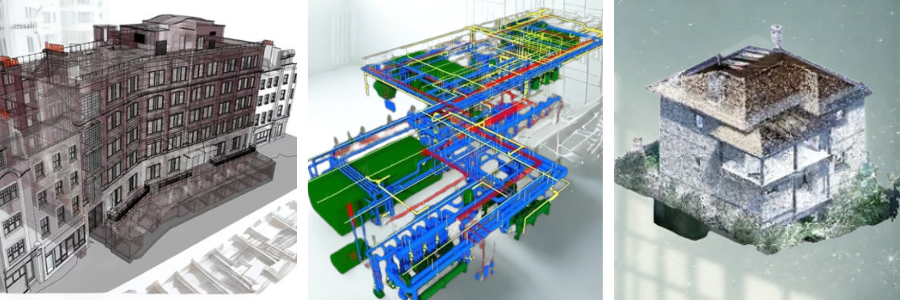
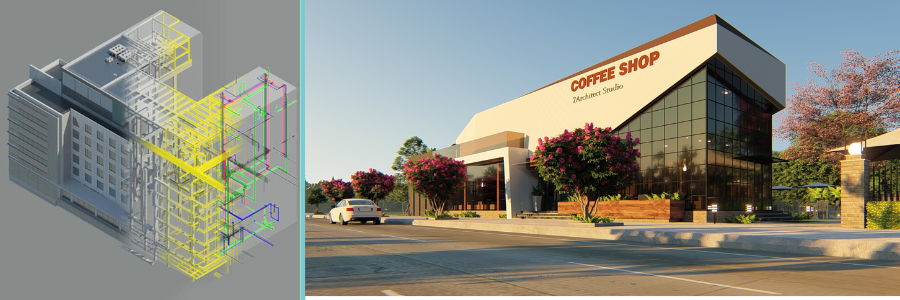
BIM rendering and design examples by Cad Crowd architectural experts

RELATED: 5 ways 3D architectural visualization can revolutionize your design process

Layered review

Outsourcing makes little sense if the deliverables fail to meet your expectations. In an ideal world, you should only outsource a BIM project to a partner proficient enough to create models that exceed (or at least match) the in-house quality standards. Otherwise, you might as well just rely on the team you already have.

It’s only natural that most freelancers and BIM service providers claim to have their own internal quality assurance professionals whose primary role is to ensure that all files are checked for errors and analyzed for inconsistencies before delivery to clients. All this sounds very reassuring, up until the point you remember that true professionals run their work through a third-party evaluation service. There’s no need to hire any independent analyst here; if the partner does use such a service, it’s a big plus all to your advantage, but you still need to practice due diligence anyway. An effective analysis happens in a layered review process to make sure that the audit is dependably objective:

  • 1st Layer: an automated review process in the form of clash detection by software. Solibri, Navisworks Manage, Revizto, ClashMEP, Autodesk Construction Cloud, BIM Track, and Bentley Navigator are among the most widely used options.
  • 2nd Layer: Make it clear in the project brief that the deliverable must be reviewed by at least one senior member of the outsourced team. Provide a list of the quality standards used by your firm and have the partner compare it against the deliverables.
  • 3rd Layer: your in-house team reviews the work, both automatically and manually, to ensure everything is in order. This means the outsourced team has to send a copy of the file ahead of schedule to compensate for the audit process and the possibility of a revision or two.

Please note that revisions are nothing but normal in any kind of outsourced task. The lack of direct supervision and management means you can’t control everything that happens during the workflow. Just because the deliverable isn’t 100% correct doesn’t mean the outsourced team is doing a bad job. In some cases, multiple rounds of revisions are still acceptable so long as the mistakes are within the margin of error. 

BIM component outsourcing

Considering how popular BIM is in today’s architectural landscape, there’s a good chance that your architectural planning and design firm will gradually (if not already) implement the technology in current and future projects. In the grand scheme of things, however, adoption is slow. Even for firms that have used BIM for a little while at this point, they still occasionally suffer from what’s typically referred to as BIM Bloat.

One thing that separates BIM files from other architectural visualizations is the amount of information contained directly in the models. BIM is supposed to be data-rich, filled with just about every single detail you can muster about structural elements, materials, plumbing configuration, HVAC installations, construction schedules, cost estimation, timeline projections, and more. With that in mind, there’s actually such a thing as too much data. Information overload happens when a BIM file is embedded with an excessive amount of non-critical data, leading to performance issues and unreliable error identification.

In a specialized component outsourcing scenario, you’re not hiring a partner to build an entire 3D building model from scratch. The main focus of the collaboration is to create efficient content libraries (such as Revit Families) to ensure standardized high-performance BIM components. For example, you can ask the partner to parametric components like cabinetry, doors, appliances, roofing, flooring, piping, or basically any architectural element with only the necessary metadata, such as manufacturer links, fire ratings, U-Values, etc. This project serves two major purposes: achieving a leaner component library and preparing an in-house team to create better BIM files.

Specialized BIM partner

It’s not uncommon for an architect or a small architectural firm to outsource or subcontract a certain portion of a project. A licensed architect is a qualified expert in building design, code compliance, project management, and cost estimation, but they might not be as adept at trade-specific tasks like HVAC duct routing, electrical wiring, or plumbing pipe installation. A typical strategy to solve the problem is to outsource the jobs to a BIM partner that specializes in MEP (mechanical, electrical, plumbing) and MEP drafting services.

This allows the architect to maintain control over design intent while ensuring that the actual construction/fabrication of MEP components has no negative impact on the building’s aesthetic and structural integrity. Because the MEP services will be integral parts of the building, the outsourced partner will need access to the architectural draft so they can configure a proper integration between the services and the structure itself. An MEP specialist often works directly with fabricators to locate the clearance zones (based on the provided draft) for installation and determine the right tolerances for maintenance. Once the plan is ready, the partner integrates the diagram with the architect’s BIM file for clash detection.

A big architectural firm probably employs an MEP professional to handle the task, but an architect running a small firm or a one-person business probably cannot justify hiring a full-time salaried expert for the job. Outsourcing to a specialized BIM partner enables the architect to focus on the design and management side of the project rather than getting bogged down with the particulars of non-structural building components.

RELATED: Why is 2D drafting still relevant for different types of architectural drawings?

Building energy modeling

Not every architectural project needs a Building Energy Modeling (or BEM), which is a subset of BIM that specifically concerns indoor air quality, energy consumption, and acoustics. But thanks to growing awareness of the importance of eco-friendly architecture and sustainability, every architectural firm must take these issues more seriously. 

In short, BEM uses a digital model of a structure to evaluate energy performance under various conditions. Take, for example, an architectural model to simulate and analyze the energy-saving potential of different HVAC configurations; even seemingly simple things like insulation materials can affect the overall effectiveness of the entire service installation over a long period of use. Hiring a BEM freelancer should count as specialized CAD outsourcing, too.

Instead of hiring a sustainability consultant full-time or purchasing an expensive simulation tool that you use probably no more than half a dozen times a year, outsourcing the task to a specialized professional is the more sensible choice. Because you have to send the BIM file of the structural design to ensure accurate evaluation, such a project may involve an NDA, so make sure to prepare the form and that the outsourced partner is willing to agree to your IP protection term.

BEM should provide not just a report of the energy performance, but also simulation-based suggestions on various elements like the size of the HVAC system, ventilation, window-to-wall ratio, design of shading device, roof insulation, and more. BEM outsourcing is a popular strategy often used by small to mid-sized architectural firms to compete with their bigger counterparts. In the event a client asks about why a certain design approach is taken while the alternative is discarded, the firm can easily explain that everything is based on a valid simulation technology by a professional partner. This is how the small firms increase their credibility without allocating big financial resources – resources they can otherwise spend on the core design and construction services.

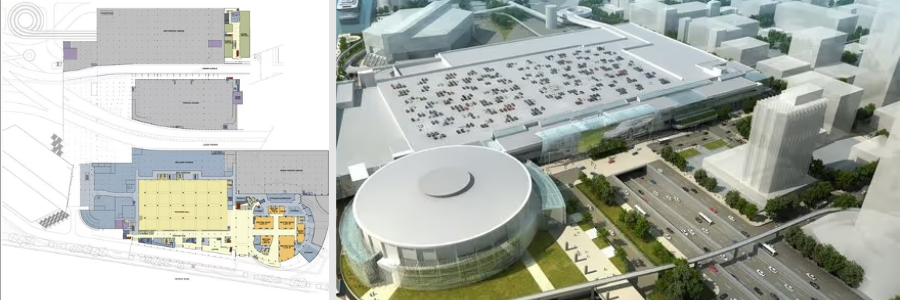
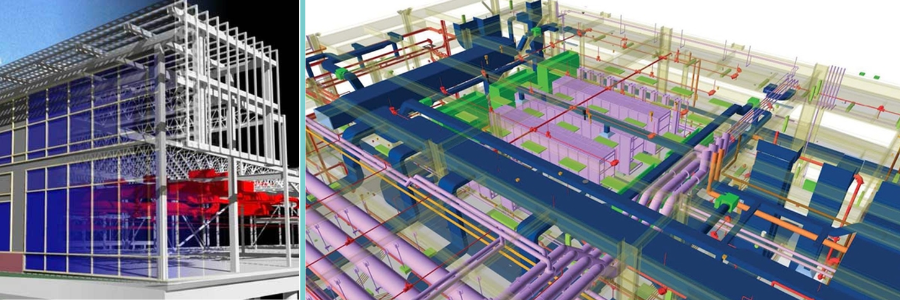
3D BIM designs by Cad Crowd architectural design freelancers

RELATED: Top 31 3D architectural rendering platforms for freelance Maya 3D modelers & artists

Augmentation model

Hiring freelancers as external non-payrolled professionals makes things practical and straightforward. You pay someone from outside the company to handle tasks that would be too time-consuming or resource-demanding for the in-house team to do. Think of it as bringing in a reinforcement without all the overheads typically associated with full-time salaried employees, like benefits and insurance. In many freelance engagements, the work is performed off-site, and this is especially true for architectural drafting projects. The freelancer does much of the drafting work without direct contact/supervision from the employer. For example, a freelancer based in Canada might be hired by an architectural firm located in the United States. Sometimes, the employer and the employee are on different continents entirely. 

But CAD outsourcing is also possibly done in a “staff augmentation model” method, where the employers bring in additional workforce to reinforce the in-house team. The external employees are hired on either a contractual or per-project basis, but they may work alongside the internal ones under the same roof, at least temporarily. These CAD design services serve as an extension of your firm for the duration of the contract.

A staff augmentation model makes good financial sense if the external team only consists of a small group of people, or perhaps an expert BIM consultant, and they’re locally-based. Otherwise, you may have to compensate for the travel and accommodation expenses, which can pile up to a huge bill very quickly. This is not to say that overseas staff augmentation always amounts to an expensive venture, because it all depends on how the reinforcement can improve your team and project.

Knowledge transfer

Considering how the AEC industry is in a transitory period from 2D drafting to BIM implementation, chances are you’ll see a lot of staff augmentation in the coming years in an attempt to expedite adoption. Many firms will hire BIM experts and consultants to help prepare their internal teams for the changes and to ensure a smooth transition.

One of the primary objectives of staff augmentation is to facilitate knowledge transfer. At this point, the AEC industry has to admit that trained BIM professionals are still relatively scarce. For some reason, the industry appears to be hesitant to make the move toward full adoption, despite the perceived maturity of the BIM technology itself. Many new architects on their way to licensure aren’t necessarily adept at BIM, either. In fact, many architectural schools and instructors don’t require the students to use it in the first place.

Hiring BIM experts, especially with the staff augmentation model, opens the doors to an effective hands-on knowledge transfer. BIM remains a highly specialized field in the architectural discipline. While the benefits are enormous, jumping into BIM all at once can be pretty intimidating to seasoned architects, let alone the junior ones. By including “knowledge transfer” as a job specification in staff augmentation, the freelancer understands that part of the role is to provide guidance on BIM implementation, rather than taking over the task. Guidance can be as simple as a walkthrough of a model, an hour of presentation into the BIM software at the beginning of a shift, a crash course, or anything else your firm may see fit.

The FTS workflow method

Say the in-house team is already familiar with using BIM for architectural drafting, but a project has a tight deadline that makes everyone feel rushed. A reinforcement may help reduce the workload for the team, but on the other hand, it just isn’t the right time to hire new employees. Let’s not forget that the project must be completed as quickly as possible, that even with the addition of new employees, everyone still has to work overtime almost every day just to meet the deadline.

What you need in this situation is an FTS-based outsourcing. FTS, short for “Follow-the-Sun” model, is a strategic outsourcing method that leverages the global time zones to increase productivity. The idea is to keep the project running even when the traditional work hours are already over in your local time. 

Let’s say your firm is located in New York, USA, where the typical work hours last between 9 AM and 5 PM local time. Because the construction is already scheduled to begin within the next few weeks, you need to get the BIM file done in record time, as it needs to be reviewed and evaluated by the architectural design expert first. And it’s always important to take into account the likelihood of having to revise the file, too.

Outsourcing with an FTS model means hiring freelancers located in different time zones, so that the work on the BIM file is running around the clock. In this case, you need someone to pick up exactly where you left off at 5 PM. A freelancer located in Australia or Japan would make for a good candidate, because it’s still morning in those two countries while your in-house employees have already signed off. To keep the project running 24/7, you may want to consider bringing in another freelance drafter (from yet another timezone, preferably in the UK or Europe) to fill in the void between the end of the second shift and the start of the first one. The cycle continues until the BIM file is ready just in time.

Cloud-based collaboration

A prerequisite for BIM outsourcing is a cloud-based collaboration tool, and even more so if you’re using the “follow-the-sun” model. Some portions of an architectural project workflow might still rely on the tried-and-true FTP or email, but it won’t be sufficient for BIM, as it takes real-time collaboration. Among the most popular of such platforms are Autodesk BIM Collaborate Pro, Trimble Connect, BIMcollab, Graphisoft BIMcloud, Newforma Konekt, and Bentley ProjectWise.

The idea behind cloud collaboration is to allow everyone (architects, engineering design experts, designers, clients, or any authorized stakeholder) to access the BIM file simultaneously. It enables co-authoring and instant feedback because everyone is viewing, editing, and working on a single centralized dataset. Most, if not all, cloud-based platforms automatically record version history, making it easier to revert to the previous configuration in case one of the outsourced partners makes a mistake or some disproved modifications. Because changes happen in real-time, there’s minimal coordination gap. 

Cloud collaboration also opens the door to effective issue tracking. Multiple teams located in different time zones might be assigned to handle specific tasks to avoid overlapping designs. If the team in the US takes care of the structural design, the freelancer in Japan can do the HVAC and MEP layout, whereas the European partner handles the issue tracking. The final design decision is ultimately at your firm’s (or the client’s) discretion, but cloud collaboration is always helpful to improve transparency. Even if you can’t provide direct supervision to overseas outsourced partners at all times, the real-time coordination keeps the workflow in control with clear deliverables, as observed in the centralized BIM file. 

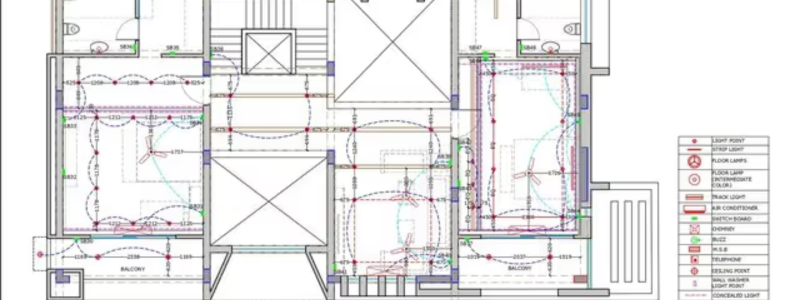
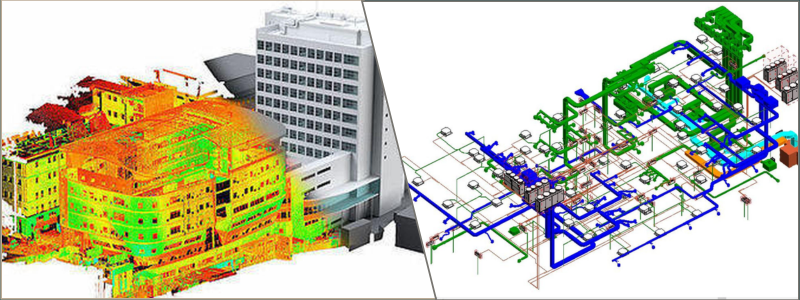
architectural BIM examples by Cad Crowd professional freelancers

RELATED: Transforming institutional spaces: The power of interior design and 3D rendering services

About risk management

Every task outsourced to an external partner comes with a risk of issues concerning intellectual property and data security. And when it comes to CAD outsourcing, especially for any project that has anything to do with a BIM file, you just can’t be too careful about confidentiality. To minimize the risk, the collaboration needs to be carried out under the umbrella of compliance with ISO 19650 (the international standard for BIM information management) and Common Data Environment or CDE, to restrict file access (in practice, the outsourced partners need only to have access to the data relevant to specific tasks assigned to them).

At the very least, enforce an NDA (Non-Disclosure Agreement) as the legal framework to protect your firm against unauthorized data access/sharing of any sort.

Takeaway

There’s no denying that BIM has introduced some major improvements to the AEC industry almost in its entirety, from design and sustainability planning to construction management and cost estimation. Despite its proven usefulness, maintaining an in-house team of BIM professionals remains quite a challenge for small to mid-sized architectural firms. While software and hardware are getting more affordable every year, the relative scarcity of trained BIM specialists is a challenge too difficult to overcome at this point. It does seem that the vast majority of the available BIM workforce choose to offer their services as independent contractors instead of full-time salaried employees. And it’s no coincidence that most of those independent talents find home in Cad Crowd, a freelancing platform specializing in the Architectural, Engineering, and Construction industry. Request a quote today.

author avatar

MacKenzie Brown is the founder and CEO of Cad Crowd. With over 18 years of experience in launching and scaling platforms specializing in CAD services, product design, manufacturing, hardware, and software development, MacKenzie is a recognized authority in the engineering industry. Under his leadership, Cad Crowd serves esteemed clients like NASA, JPL, the U.S. Navy, and Fortune 500 companies, empowering innovators with access to high-quality design and engineering talent.

Connect with me: LinkedInXCad Crowd

Fundamentals of BIM & Modeling Design Services at Building Information Modeling Companies


Let’s own up to it: the construction and architecture business was once a sort of sloppy beast. Piles of blueprints, miscommunication, revisions ad infinitum—playing a game of never-ending telephone, except with steel, concrete, and multi-million-dollar contracts. Along came BIM—short for Building Information Modeling services—a name that sounds ominously like something your IT guys might grumble about, but actually changed the entire AEC (Architecture, Engineering, Construction) business.

BIM isn’t software. It’s not simply a 3D model. And it’s certainly not some new acronym to bandy about during client presentations to appear clever. Consider BIM like the digital DNA of a building—an intelligent system that allows your building to come to life before a single brick is placed. But let’s not jump ahead of ourselves. To comprehend the basics of BIM and exactly what Cad Crowd’s model design services at BIM firms really do, let’s first take a look under the digital hood.


🚀 Table of contents


What exactly is BIM?

Ask ten people to explain BIM, and you’ll likely hear everything from tech buzzwords to puzzled guesses. But here’s the clear truth: Building Information Modeling (BIM) is not just fancy software or 3D design—it’s a smart, collaborative process that spans the entire life of a building. From that first doodle on a café napkin to the day the wrecking ball swings, BIM helps manage it all.

So, how is BIM different from conventional design software? It’s much more than simply drawing lines and shapes. Imagine designing a skyscraper. Rather than merely writing static blueprints, you’re creating a dynamic, digital model that holds actual information. That model is aware of the wall thickness, the type of material the insulation is composed of, the weight of the steel beams, the flow of the HVAC system, and even the duration of the construction.

Every component in that model, every beam, light fixture, and duct, contains embedded information. This is where it gets truly powerful: everything is interconnected. Changing the window size or altering materials updates the entire system. Floor plans, elevations, cost estimates, and material lists are all updated automatically.

That’s the real benefit of BIM: coordination in real time, better decisions, fewer errors, and improved communication among architects, engineering firms, contractors, and owners. It makes buildings smart systems before they are constructed—and that is not only smart, it’s revolutionary.

RELATED: All things to consider when hiring a design-build firm & services company

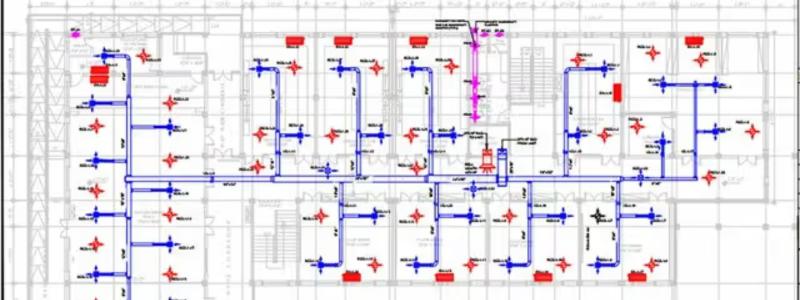
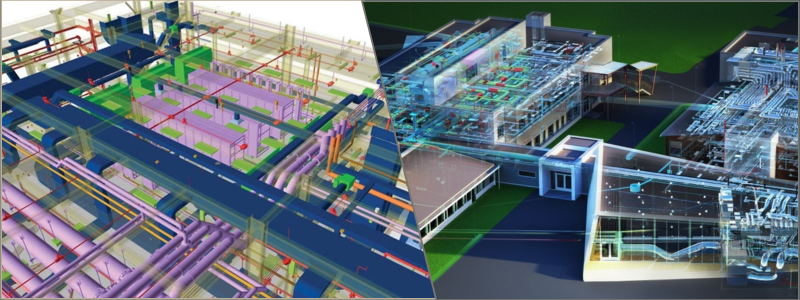
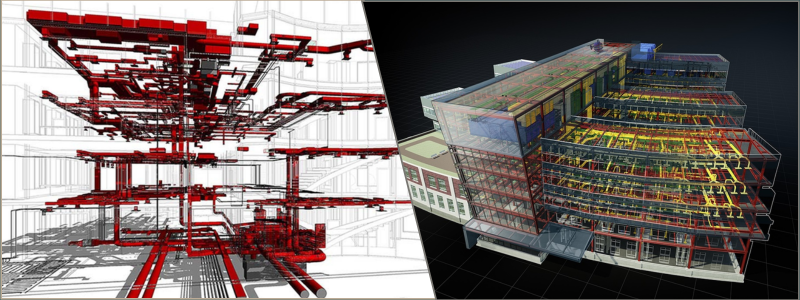
BIM modeling of a hospital and MEP and HVAC modeling by Cad Crowd design experts

BIM modeling design services: What do these companies actually do?

Picture yourself stepping onto a construction site—except that instead of concrete and steel, it’s constructed of blocks and Legos. It’s more data, more precision, and a detailed virtual model that’s aware of everything in the building, from the last bolt to the last duct. That’s the environment in which Building Information Modeling (BIM) design service providers work. They’re essentially a combination of virtual architects, engineers, and project managers, with high-powered modeling software that allows them to model every aspect of a building prior to the laying of a single brick.

At the center of it all is the model itself—a highly detailed, multi-faceted digital twin of the future building. Rather than using two-dimensional blueprints, stakeholders can navigate an intelligent, dynamic model that recounts the entire narrative: how everything is connected, how much it will cost, when it will be constructed, and how it will perform in the long term.

They begin by creating precise 3D models that encompass architectural, structural, and MEP (mechanical, electrical, plumbing) systems. They then perform clash detection—pinpointing any clashes or overlaps before they turn into costly on-site problems. That model also does math, generating correct quantity takeoffs and estimates so budgets remain on target.

Then comes construction sequencing, where timelines are visualized in 4D, allowing teams to plan who does what, when, and how. Tack on 5D cost modeling and even 6D facility management integration, and you’re looking at a full lifecycle digital roadmap—from the initial design concept to long-term building maintenance for architectural design firms.

So, what exactly do BIM companies do? They add clarity to complexity. They transform static plans into smart models. And perhaps most importantly, they enable everyone from architects to building owners to make smarter, faster decisions every step along the way.

3D modeling: Drawing with brains

2D CAD drawings were all the rage, but using them now is like having a flip phone when everyone else has smartphones. That’s where 3D modeling comes in—not merely an aesthetic boost, but an intelligent design revolution. With Building Information Modeling (BIM) software such as Revit, ArchiCAD, and Navisworks, projects aren’t simply drawn; they’re built digitally with intelligence.

These 3D models are more than nice pictures. They’re high-information environments where each piece of information knows who it is, what it does, and how it relates to the larger system. A wall isn’t a wall—it knows its material make-up, thickness, price, and even how much paint it will take. HVAC systems know their air flow requirements. Structural members report their load capacity and cost per square meter.

The great news? Everything is linked. Alter one component—a wall extension, for example—and everybody’s information updates instantly. Architects, engineers, interior design experts, and quantity surveyors are in sync without a problem. No yucky back-and-forth, no mistakes from miscommunication. Just smooth collaboration fueled by intelligent modeling.

It’s not sorcery. It’s BIM at its finest—transferring conventional drafting to a dynamic, smart process that thinks as intently as it draws.

Clash detection: The digital bouncer

Envision your HVAC duct run right through a structural beam. In conventional construction, this type of clash would not reveal itself until tradespeople were already onsite, leading to eleventh-hour redesigns, growing frustration, and colorful outbursts. Better times are quickly disappearing thanks to Building Information Modeling (BIM).

BIM brings a proactive solution with a process known as clash detection. BIM coordination software blends architectural, structural, and MEP models into one digital space. They then behave like a hyper-vigilant referee, flagging items immediately that are on a crash course, long before materials are ordered or boots touch the ground.

This isn’t merely a matter of catching errors; it’s optimizing workflows. By pinpointing and fixing problems early on, clash detection eliminates the expensive delays and rework. The payoff? Smoother schedules, lower stress, and way happier clients.

Consider clash detection the virtual bouncer at the front door of your construction site—preventing conflict before it even enters. For BIM modeling firms, it’s one of their strongest value-adds, converting what used to be a building nightmare into a clever, effective collaboration. And the beauty of being able to do all this is that none of it takes place until after the first wall has been constructed.

4D BIM: Construction sequencing for control freaks (In a good way)

If you’ve ever witnessed a building site go from nothing to utter chaos in seven days, you’ll know why timetabling is crucial. 4D BIM brings time into the model. This enables teams to model the build process step by step, day by day, demonstrating precisely how the building will be constructed—foundations first, followed by the steel frame, then glass curtain walls, then interior glitz.

This isn’t for entertainment purposes only, although seeing it happen is strangely pleasing. It enables project managers to identify inefficiencies, schedule deliveries, steer clear of scheduling conflicts, and facilitate trades with a level of precision that would make a Swiss watch blush.

5D BIM: The dollar signs

You know that moment when someone asks, “What’s this going to cost?” and the room falls silent? Not anymore. With 5D BIM, cost is no longer an afterthought. Every component in the model is tied to a cost item, meaning your beautiful 3D model is also a walking, talking, budget-tracking machine.

Curious about the cost-effectiveness of going from conventional glazing to high-performance glass? BIM informs you. Curious about aluminum panels vs. concrete cladding? BIM compares the numbers from 3D modeling design services and beyond. It turns guesswork into confidence. And that’s priceless—literally.

RELATED: Top design & drafting tasks to outsource for architects and architectural services firms

BIM examples of a multicomplex building design by Cad Crowd architectural designers

6D and 7D BIM: Long-term thinking

Designing and constructing is only the start. What about sustaining the building during the subsequent 30 years? BIM doesn’t end when the ribbon is cut. 6D BIM incorporates facility management information—such as warranties, maintenance schedules, and asset information—directly into the model. The structure is now a digital twin: an active representation of the actual building that grows with it over time.

7D, depending on your source, tends to mean sustainability analysis. How does the building handle various weather conditions? What’s the carbon footprint of your selected materials? You can test energy usage and environmental performance with BIM services and create green without guessing.

Collaboration: The BIM buzzword that actually means something

One of BIM’s not-so-hidden superpowers is its power to bring everyone together at the table. No more isolated workflows. No more he-said-she-said between architectural design experts and subcontractors. BIM firms tend to use Common Data Environments (CDEs)—single digital hubs where all project data is shared, updated, and followed.

Tools like Autodesk BIM 360 and Revizto make this collaboration seamless. Everyone sees the latest model. Everyone can comment, annotate, and assign tasks. It’s like Google Docs for buildings—except instead of writing essays, you’re building hospitals.

The tech behind the magic: A peek into the toolbox

Let’s discuss software. BIM design services rely heavily on a set of digital software to make all of the above work. Revit is frequently the king of the castle, with full modeling functionality in architecture, structure, and MEP. Navisworks is one of the favorites for clash detection and construction simulation. ArchiCAD has stylish software tools. Then there are specialist platforms such as Tekla (excellent for structural steel), Synchro (superb for 4D sequencing), and the constantly changing world of cloud platforms.

And yes, automation and AI are already creeping in. Few BIM companies employ scripts and plug-ins to automate tasks such as room tagging, element renumbering, or even model checking. The payoff? Quicker delivery, reduced errors, and more time for the team to engage in actual design thinking rather than copy-pasting.

What makes a great BIM company?

When you’re searching for a good BIM (Building Information Modeling) firm, glossy 3D rendering services don’t cut it. Sure, it’s great when the renderings are crisp, but an outstanding BIM firm contributes much more to the table than mere looks.

Excellent BIM firms have a larger picture in mind. They consider themselves strategically, as opposed to spatially. It’s not a matter of creating a model—it’s about assisting in creating the whole project more intelligently, from initial planning through final handoff. That involves knowing construction sequencing inside and out. They understand when things must take place, how one action impacts the next, and how to keep moving forward in an efficient manner.

Effective communication is another defining feature. These teams understand how to communicate effectively with architects, interior design services, contractors, and clients to keep everyone on the same page. They proactively alert others to potential issues before they develop into expensive headaches. Permits? Building codes? They’ve got those covered—and then some.

What actually distinguishes the top BIM companies is the extent to which they listen. No two projects are the same, and being able to listen to what the client requires—and respond in kind—is crucial. They use the BIM model as a living, changing resource, not merely something to deliver.

At the end of the day, BIM is driven by people. Behind every finished model is a group of thoughtful, informed decisions being made. It’s not about clicking on buttons in software—it’s about solving and creating value together, within a shared digital space.

So when you’re evaluating BIM services, don’t just look at the output. Look at the process, the people, and the principles driving the work. That’s where you’ll find the real difference.

RELATED: Keys to successful structural design & construction projects with architectural services firms

Who uses BIM modeling services?

When most people hear “BIM modeling,” they envision sleek high-rises or billion-dollar transportation projects. But that’s hardly the tip of the iceberg. Building Information Modeling, or BIM, has far outgrown its initial high-profile beginnings. It now impacts everything from small suburban housing developments to state-of-the-art hospitals, sprawling university campuses, and sports stadiums done by architectural site plan companies.

So, who’s really using BIM? The answer ranges across almost every aspect of the construction and design business. Real estate developers, contractors, architects, and engineers were some of the first. However, they no longer dominate the field. Interior designers, facility managers, and even furniture manufacturers are incorporating BIM into their routine operations. This shift occurs because BIM goes beyond 3D models; it employs an intelligent, data-rich approach for planning, visualizing, and coordinating every phase of a building’s lifecycle.

Think of a builder designing a green eco-hotel. Rather than cobbling things together in conventional CAD tools, they hire a BIM modeling firm to produce one coherent digital model. This isn’t a model that indicates merely where walls and windows go. It contains extensive information about MEP systems, energy efficiency requirements, material choices, and schedule timetables.

With BIM, the green hotel can be built to exacting green building standards, conserve energy, and minimize waste on site. Subcontractors can be coordinated during construction using the model, so expensive mistakes are avoided and the project remains on track. No more conflicting pipes and ducts realigned at the last minute.

And when the building finally opens its doors? The advantages continue. Facility managers can count on the BIM model for correct, current information concerning each system in the hotel. Need to switch out the HVAC units a decade later? There’s no uncertainty—they’ll know precisely where all of it is and how it fits together, not unlike architectural MEP services.

In brief, BIM is no longer the sole preserve of megaprojects. It’s a technology that’s being embraced by industries for its precision, adaptability, and potential to future-proof buildings. Whether you’re building a contemporary art museum or a prefab tiny house, there’s a high likelihood that BIM can make the process more intelligent, seamless, and environmentally friendly.

MEP and structural BIM design examples by Cad Crowd BIM modeling experts

The road ahead: BIM’s evolving role

So, is this the end of the line for BIM? Not at all. The next wave is already upon us. Consider digital twins that interface with IoT sensors for real-time monitoring. Consider mixed reality overlays on construction sites. Consider AI programs that provide predictive maintenance and design optimization recommendations in real-time, leveraging the expertise of engineering design experts.

BIM is increasingly a “way we think” rather than a “thing we do.” With building complexity increasing, sustainability targets narrowing, and client expectations becoming more sophisticated, the modeling services provided by BIM firms are evolving into long-term digital relationships.

Those days of the drawing set presented at project delivery are over. The BIM model is the ongoing gift, previously, in real time, and far beyond the end of construction.

RELATED: How architects embrace innovation for modern home design services with companies

Final thoughts: Why BIM matters more than ever

BIM is not all about technology. It’s about trust. It’s about smarter building, not merely faster building. It’s about viewing a building not just as steel and glass, but as an evolving, living being. And for BIM design firms, it’s about enabling teams to transition from confusion to clarity, from guesswork to accuracy, and from chaos to coordination for architectural design and CAD experts.

If you’re setting up a project, regardless of its size, hiring a building information modeling company isn’t a nice-to-have—it’s a competitive edge. They won’t simply give you a model. They’ll give you a roadmap, a control panel, and peace of mind in one.

Cad Crowd is here to help!

Looking to transform your next construction project from chaotic guesswork into streamlined precision? Don’t let outdated methods drain your budget with costly surprises and delays. Partner with Cad Crowd, the leader in providing professional freelance services for architectural, engineering, and design firms.

We’ll help you connect with experts proficient in BIM modeling. It’s your project’s insurance policy against miscommunication, rework, and budget overruns. Ready to build smarter, not harder? Get your free BIM consultation today and discover how intelligent modeling can save you time, money, and countless headaches from day one. Request a quote here.

author avatar

MacKenzie Brown is the founder and CEO of Cad Crowd. With over 18 years of experience in launching and scaling platforms specializing in CAD services, product design, manufacturing, hardware, and software development, MacKenzie is a recognized authority in the engineering industry. Under his leadership, Cad Crowd serves esteemed clients like NASA, JPL, the U.S. Navy, and Fortune 500 companies, empowering innovators with access to high-quality design and engineering talent.

Connect with me: LinkedInXCad Crowd

BIM and GIS Integration: Introduction and Importance AEC Services Companies


The architecture, engineering, and construction (AEC) sector is experiencing a technological revolution, and this is quite clearly reflected in the increasing number of AEC service firms on top platforms such as Cad Crowd. With AEC companies struggling to design, plan, and deliver intricate projects, the convergence of building information modeling (BIM) services and Geographic Information Systems (GIS) has become a game-changer.

Blending the benefits of both systems introduces the possibility of more precise, streamlined, and coordinated project delivery. For AEC services firms, knowing how BIM and GIS integration works—and how it affects their business—is fundamental to competitiveness in a progressively data-centric industry.


🚀 Table of contents


BIM and GIS: A quick overview

Before delving into the influence of BIM and GIS integration on the AEC industry, it’s imperative to identify what each system does and how they work as stand-alone entities.

  • Building Information Modeling (BIM): Building information modeling (BIM) is a digital representation of a building’s design, construction, and operational details. This is more than just a 3D model; it includes helpful information about the design’s materials, structural qualities, budget, and schedule. Preliminary design optimization, collaboration, and simulation can take place thanks to this tool, which is useful for architects, engineers, and contractors.
  • Geographic Information Systems (GIS): GIS is an application that captures, stores, manipulates, analyzes, manages, and displays geographic or spatial data. GIS allows experts to map and analyze terrain, land use, zoning regulations, weather, and other location-relevant factors, frequently essential when handling large-scale infrastructure or urban planning projects.

When integrated, GIS and BIM enable AEC firms to control both the micro-level specifics of building construction (via BIM) and the macro-level issues of geography and environmental conditions (via GIS). The combination of these systems provides an extensive toolset for planning and implementing projects in ways otherwise hard or impossible to achieve for architectural design firms.

RELATED: Architects vs. designers: What’s the difference and which should you hire for design services?

3D site plan and topographic site plan through BIM and GIS services

The Role of BIM and GIS Integration in AEC Services

BIM and GIS integration are revolutionizing the way Architecture, Engineering, and Construction (AEC) services plan and execute projects. BIM centers on precise details of a building’s design, construction, and lifecycle, including structural and material information. GIS provides a wider geographic and environmental picture—charting terrain, infrastructure, climate, and so on.

Together, BIM and GIS present a complete picture that improves each phase of a project, from initial planning to upkeep. This combination allows AEC professionals to compare spatial and structural information at the same time, making optimal site selection, sustainability, and urban planning decisions. It leads to better collaboration between stakeholders, faster delivery schedules through data-driven processes, and less risk through early identification of problems.

Finally, BIM-GIS convergence enables companies to design more intelligently, build quicker, and operate more cost-effectively, producing projects that are not just technically excellent but also socially and environmentally responsible.

Here’s a look at how this integration enhances AEC services:

Better planning and site selection

When starting any new building project, location and site conditions take precedence. GIS facilitates AEC companies in determining the readiness of a site by offering information regarding land characteristics, environmental factors, zoning regulations, and existing infrastructure in the area. For instance, GIS may be applied to examine soil quality, flood exposure, traffic flow, or distance from utility networks. This information is critical in the determination of the most suitable location for a building or infrastructure development.

Through the integration of BIM, architects and engineering design firms are able to simulate how a proposed design would interact with the site’s geographic conditions. For example, a BIM model can simulate how a building’s foundation would perform under various soil conditions determined by GIS data. This type of simulation minimizes the chances of expensive surprises during construction and provides a more sustainable, site-suited design.

Better decision-making through visualization

The combination of BIM and GIS provides a versatile decision-making visual tool. GIS provides a topographic, spatially correct map of the project location, with BIM contributing precise 3D models of the building or structure. Merging these models, AEC firms can visualize how the building will interlink with its physical and environmental context.

For instance, architects can apply the combined models to model the effect of natural light on the building façade during the year. They can also model the air circulation or water runoff relative to the local topography. Having both building and geographic data in one place assists teams in making improved design decisions that lower energy usage, enhance user experience, and enhance the building’s resilience to environmental conditions.

RELATED: Do you know the BIM best practices for architectural design firms?

Improved interdisciplinarity collaboration

Collaboration is the lifeblood of the AEC industry. In conventional workflows, architects, engineers, and contractors tend to work in separate silos and use different systems that may or may not speak to each other. This has the potential for misunderstandings, mistakes, and delays. Introducing BIM and GIS eliminates these communication problems.

When GIS data and BIM models are combined, all stakeholders—from construction workers to civil engineers—can view and update the same real-time information. For instance, an engineer can update a BIM model according to new GIS data on local zoning laws, while an architectural design expert can make adjustments to the building design to accommodate the environmental context. The outcome is a more coordinated and integrated workflow that results in fewer changes and delays later on.

Efficient resource management

Successful resource management is key to finishing any project on schedule and within budget. Using BIM’s accurate data and GIS’s spatial context, AEC firms can enhance the management of resources, including materials, labor, and equipment, throughout the project’s life cycle.

With the help of GIS, project managers can analyze the materials’ location compared to the site location, guaranteeing that logistics are optimized. BIM, however, ensures accurate quantities and material specifications, guaranteeing correct material delivery at the correct time. This coordination eliminates waste, reduces transportation expenditure, and guarantees that construction activities operate smoothly.

Increased sustainability and environmental impact analysis

Sustainability is a key focus in contemporary architecture and construction. AEC firms are being called upon more and more to adhere to environmental standards, conserve energy, and reduce their carbon footprint. Combining GIS and BIM enables companies to address sustainability in a more comprehensive manner.

Unlike BIM, which allows for comprehensive energy modeling and simulation, GIS provides a wealth of data pertaining to environmental factors, such as climatic trends, water consumption, and energy consumption. By combining the two programs, architectural planning and design companies can simulate the possible influence of different design elements on sustainability, water usage, and energy efficiency, allowing for more comprehensive evaluations of a building’s carbon footprint. Such research can make a huge difference to the efficiency and sustainability of a building over time.

RELATED: Embracing BIM: The future of building information modeling for construction companies

Real-time monitoring and maintenance

The benefit of combining BIM and GIS doesn’t end when the construction process is finished. Once a building or infrastructure project is completed, these systems are still useful in the operation and maintenance phases. BIM can be utilized to monitor the status of building components over time, while GIS can track the environmental conditions that impact the building.

A facility management team, for instance, can keep track of when critical systems are due for repair or replacement with the help of an integrated GIS/BIM system. Building operations can be tracked in relation to external factors like weather and traffic patterns. By using this data, proactive maintenance can be implemented, resulting in cost savings and an extended building life.

Site plan and construction and BIM clash detection through GIS and BIM services in Cad Crowd

The most common challenges of BIM and GIS integration

Though there are numerous advantages of the integration of BIM modeling services and GIS, there exist some challenges AEC companies need to address. The complexity involved in integrating two dissimilar systems with different data structures and formats is one of the major barriers. BIM and GIS solutions tend to be built by dissimilar software companies, and as such, compatibility issues may occur.

The other challenge is the accuracy and consistency of the data. GIS depends a great deal on geospatial data that is available in real time, which is prone to inaccuracies or obsolescence. Likewise, the BIM models will need to be constantly updated to accurately portray the state of the construction project as it is now. It will take great diligence to have both systems harmonized and updated.

Moreover, there is a need for training and expertise. AEC practitioners must be familiar with both BIM and GIS technologies to be able to take advantage of their full potential. This will involve investment in training courses and perhaps the recruitment of specialists to oversee the integration process.

Conclusion

The convergence of BIM and GIS is transforming the way AEC services firms tackle design, planning, and execution of projects. By merging the precise, model-based methodology of BIM with the spatial, context-aware insights of GIS, companies can make more informed decisions, enhance collaboration, increase sustainability, and streamline resource management. The potential for greater efficiency, cost reduction, and risk mitigation is vast, but achieving these benefits involves surmounting technical and organizational hurdles.

RELATED: Impacts of BIM design on reducing carbon footprint for architectural firms & CAD companies

Cad Crowd is here to help

For AEC companies wanting to remain competitive in today’s cutthroat world, BIM and GIS integration investment is not merely about being up to speed with industry developments; it’s an essential tactic for producing superior projects in fewer resources, achieving client expectations, and helping build a more sustainable built environment. If you think you’re ready to take this trend, Cad Crowd is where you should start looking for specialists in BIM and GIS. Get a free quote today!

author avatar

MacKenzie Brown is the founder and CEO of Cad Crowd. With over 18 years of experience in launching and scaling platforms specializing in CAD services, product design, manufacturing, hardware, and software development, MacKenzie is a recognized authority in the engineering industry. Under his leadership, Cad Crowd serves esteemed clients like NASA, JPL, the U.S. Navy, and Fortune 500 companies, empowering innovators with access to high-quality design and engineering talent.

Connect with me: LinkedInXCad Crowd