New Google Photos RAW backup workflow looks ready to go


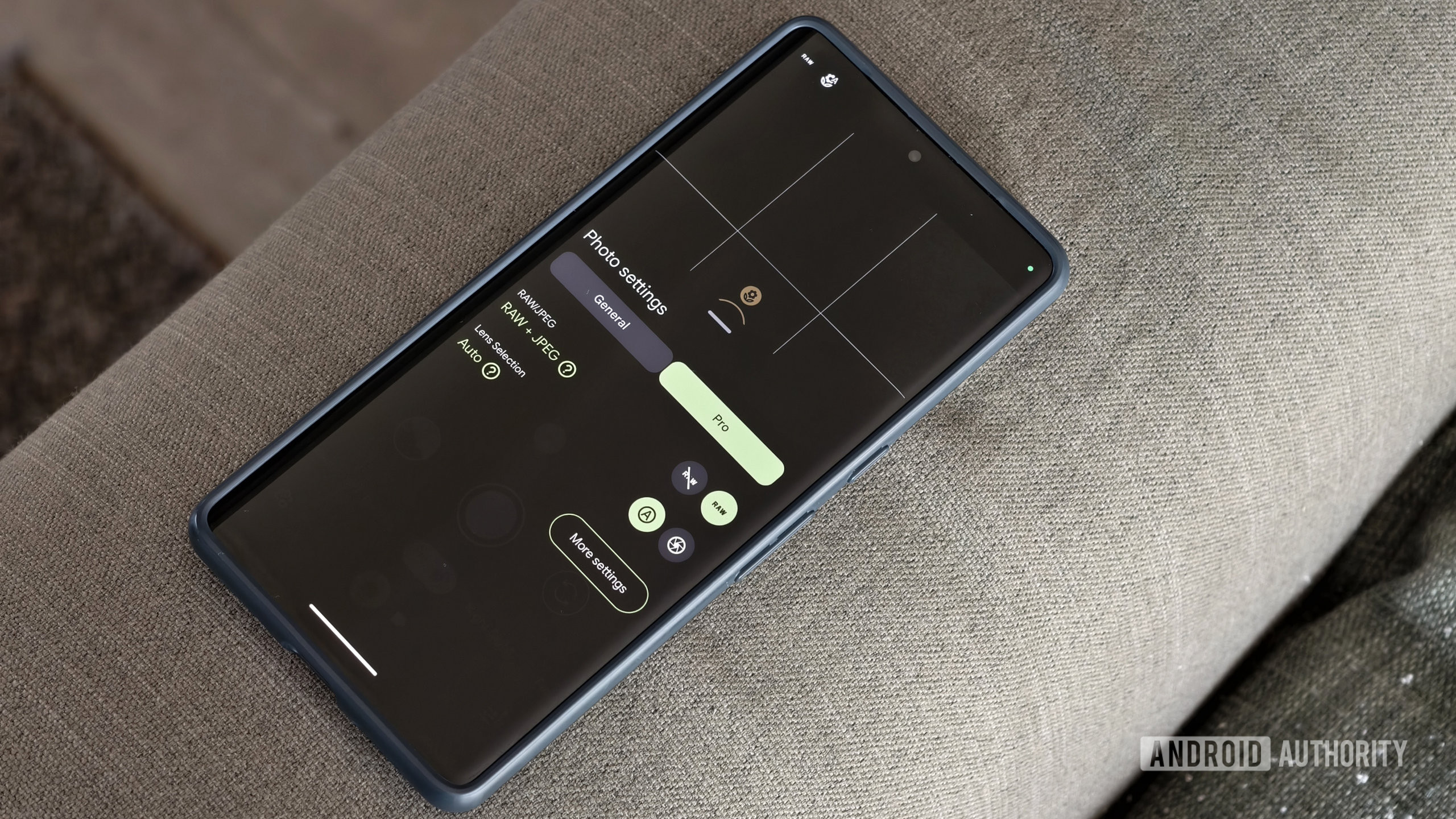
Google Pixel RAW and JPEG capture option

Hadlee Simons / Android Authority

TL;DR

  • Google Photos backs up RAW images alongside JPGs, which takes a lot of cloud storage.
  • Earlier this year we found evidence for a new system that would store RAW images separately and not back them up.
  • We’re now finally able to see this in action, and there’s even a toggle to opt in to backing up RAWs if you’ve got the space.

If you care even a little about photography, you probably know all about RAW images. While JPGs are convenient to post and share due to their relatively small file sizes, RAW files don’t just capture an image without lots of lossy compression, but they store camera sensor data before things like white balance are corrected, giving you tons of power to control what your final output will look like, even with the photo already taken. Despite all that potential, though, they’re not without their problems, and we’ve been keeping an eye on one in particular concerning how Android handles them.

One of the biggest consequences of storing RAW photos is their large file size, and that was a problem if you were shooting in both RAW + JPG and wanted to back up your pics in the cloud — Photos would try to store the huge RAW files alongside your JPGs, eating up tons of storage space. Back in March, though, we uncovered evidence that Google was finally working to change how RAW backups worked, possibly storing RAW images in a separate folder and no longer backing them up by default.

Don’t want to miss the best from Android Authority?

google preferred source badge light@2xgoogle preferred source badge dark@2x

That certainly sounded good… we just never saw it actually happen. But now, months and months later, we’re finally starting to see some more progress.

None of this is still publicly available, but with version 7.52.0.825653635 of Google Photos for Android, we’re now able to get the app to support RAW photos in a different directory. Once this is working for everyone, your JPGs will continue to show up in the same /DCIM/Camera directory where they’ve always been saved. But with this enabled, RAW pics are saved in /Pictures/Raw instead.

You won’t see those at all when normally browsing your photos, and to specifically look at your RAW pics you’ll have to navigate over to the Collection that includes them. When you do, you’ll find a special option for letting you still choose to back these up (if you’ve got space to spare):

photos raw backup

AssembleDebug / Android Authority

That all makes us think that we could finally be getting close to the point where Google flips the switch and makes this functionality available to everyone. Certainly, the major pieces appear to now be in place, and it’s really up to Google to push “go” on this long-overdue feature.

That’s the big progress we’ve spotted in this update, but we’ve also identified a small UI tweak that Google appears to be working on for Photos:

Rather than these big animated pics showing off all the Create tools, we’ve been able to call up a much more compact UI that replaces those with some more low-key iconography. Like the new RAW changes, it’s anyone’s guess when Google might push this one live, too.

⚠️ An APK teardown helps predict features that may arrive on a service in the future based on work-in-progress code. However, it is possible that such predicted features may not make it to a public release.

Thank you for being part of our community. Read our Comment Policy before posting.
Google Photos celebrates 10 years of wins and fails today


Google Photos logo on smartphone next to other devices and picture frame Stock photo 5

Edgar Cervantes / Android Authority

Do you remember when you first realized what a great app Google Photos is? My moment was a few years ago. I needed my driver’s license details, but didn’t have the card on me. I had a vague recollection that I might have taken a photo of it years earlier, but I wasn’t even sure if that was the case, much less where I could find it.

Until then, I’d mostly thought of Google Photos as just a chronological dump of snapshots. After a bit of tapping about, I hit the Collections tab and noticed the Documents folder. I opened it, and had the image I needed a few seconds later. As nerdy as it sounds, that moment was an eye-opener for me, and I’ve relied on the app’s features ever since.

Google Photos turns 10 years old today, so we’ll mark the milestone with a quick look at its successes, setbacks, and how it went from newcomer to default photo app for almost every Android phone.

After 10 years of Google Photos, what’s your verdict?

14 votes

A fresh take on photo storage

Pixel 9 Pro XL selfie

Ryan Haines / Android Authority

When Google Photos launched at I/O 2015, it felt like someone had finally figured out how people actually wanted to manage their photos. Most of us were juggling a mix of gallery apps, cloud backups that we sometimes forgot to turn on, and SD cards that we then misplaced in a drawer somewhere.

Google’s pitch was simple but a winner: unlimited free storage, automatic backups, and a smart, searchable interface that worked across Android, iOS, and the web. The app was fast, clean, and refreshingly free of bloat.

The storage was the instant hook for many, but Google Photos also sorted your shots into categories. Screenshots, videos, and the like were grouped into albums, and the app even created things like animations, collages, and stylized photos automatically. It felt like a gallery app that actually helped you enjoy your photos, not just hoard them.

Smartening up

Google Photos logo on smartphone next to imaging accessories stock photo 1

Edgar Cervantes / Android Authority

If 2015 was about solving the basics, the next couple of years were about showing off. Google Photos leaned hard into machine learning, adding genuinely impressive features that made other gallery apps feel outdated almost overnight.

You could search for “dog,” “beach,” or “birthday” and instantly see relevant photos, even if they weren’t tagged. It also recognized faces, letting you group photos by person even if their name was never mentioned. That sounds routine now, but it felt like magic back then.

Around the same time, Google added shared albums to which multiple people could contribute. This was as obvious as it was game-changing for me. I would often go on short breaks with friends, and after, you’d all just dump your photos into the group WhatsApp chat. I’m reasonably sure most of those snaps were lost in subsequent phone switches.

Refining the formula

Photo stack edited

Hadlee Simons / Android Authority

By the late 2010s, Google Photos had hit its stride. The app became even more polished, with a slicker interface and smoother device syncing. Google even added the option to order printed photo books, which were softcover or hardcover albums you could design in-app and have delivered to your door.

Some UI tweaks raised eyebrows as tabs and settings seemed to shift around every few months, but the core experience stayed strong.

I was looking at pictures that I might not have ever looked up again.

You might also remember getting Memories in 2019. I distinctly recall being annoyed that yet another app on my phone was sending me unsolicited notifications, and I must have swiped them away for months. Then I clicked on one at some point, and I loved it. I was looking at pictures from years earlier that I might not have ever looked up again if it weren’t for the happy little curation.

Some signs of change began to creep in around the turn of the decade. Auto-sync for folders like WhatsApp or Downloads became opt-in instead of automatic. Storage management tips and Google One prompts started showing up more frequently. It still felt like the best photo app, but you could tell the free ride might not last.

Google giveth and Google taketh away

Google Photos backup

Damien Wilde / Android Authority

Like all good money-spinner apps, Google Photos reeled us in, then the other shoe came flying out of the sky.

June 2021 marked the end of one of Google Photos’ most beloved features: unlimited free storage for “high quality” uploads. These were the lightly compressed photos and videos that didn’t count against your storage quota. From that point on, everything you uploaded started eating into your free 15GB limit, unless you paid for a Google One plan. It felt a bit like a bait-and-switch, but only because we’d gotten used to the generous free tier.

There were other subtle signs that the free ride was winding down. Folder backups for things like WhatsApp or Screenshots, which used to happen automatically, now needed to be manually toggled on. And one particularly handy feature disappeared altogether: the ability to guess a photo’s location using your Maps Timeline data. The feature was likely dropped for privacy reasons, but for those of us who were happy for Google to track our lives in the spirit of convenience, it was a shame to see it go.

New tools, such as improved editing features, more AI suggestions, and slicker Memories, were still being added, but many of the best ones were increasingly locked behind the Google One paywall. The app was still a mainstay for most of us, but the sheen was coming off.

The new normal

Close-up of the Google Photos app, showing the app logo.

Joe Maring / Android Authority

Google Photos doesn’t make headlines as often these days, but it’s still quietly running the show. It comes preinstalled on pretty much every Android phone — even ones that also include their own gallery apps — and for most users, it’s still the easiest and smartest way to manage photos.

There have been a few notable updates lately, like a Quick Edit feature for sharing-ready touchups and the ability to convert standard photos to Ultra HDR for brighter screens. While these additions are technically impressive, other apps have long since caught up in most respects, so Google Photos doesn’t quite have the same charm.

That said, Memories remain a highlight for me — a rare example of a push notification that I actually enjoy getting. Google Photos is still remarkably good at surfacing the photos I care about when I want them. Whether the next 10 years bring more magic or monetization remains to be seen.

Google Photos now has a 2024 recap feature


Google Photos just unveiled a yearly recap feature, which is a play on stuff like Spotify Wrapped and PlayStation Wrap-Up. This is a highlight reel of notable photos culled from the entire year, along with “fun graphics and cinematic effects.” I can’t wait to see snazzed-up photos of my cats.

In addition to random graphics and effects, the system will also generate captions to help denote two important events from the year for each user. These captions will be generated by Gemini, though users have to opt in. Google gave us examples of attending a wedding and taking a trip to Seoul.

Yearly recap tool.Yearly recap tool.

Google

The Recap feature will even provide “insights” in the form of tidbits about a particular user’s photo-taking habits. This could detail anything from a favorite color to the person a user smiles the most with. Google also promises that Recap will detail a user’s “2024 vibes.” The vibes of 2024? Yikes.

Just like rival yearly recap tools, folks can easily share everything to social media platforms. There’s also a little bit of a competitive element here, as each link will include data as to a particular user’s longest photo streak. Nothing creates more bragging rights than saying “you only took 560 photos this year, whereas I took 570.”

Year in review image.Year in review image.

Google

This feature is rolling out right now to all users. Just look for a notification from Google Photos that says it’s ready to view. The app also recently added a tool to detect images that have been manipulated by AI and, uh, other tools to manipulate photos by using AI.

Google Photos expands automatic backups to another platform


Google Photos logo on smartphone Stock photo

Edgar Cervantes / Android Authority

TL;DR

  • Google Photos on the web now lets you automatically backup images from your computer.
  • It lets you select folders to back up and automatically uploads images from the folders when you visit the webpage.
  • You can set up automatic backups using the new Back up folders option in the Uploads menu.

Google is streamlining image backups from the web version of Google Photos by adding support for automatic folder backups. The service previously required users to manually select and upload images from their computer to Google Photos on the web, but the new functionality will allow users to automate the process.

You can set up automatic folder backups by heading to photos.google.com and selecting the new “Back up folders” option in the Upload menu (via 9to5Google). Google Photos will then prompt you to choose a folder and provide the required permissions to view files in the selected folder every time you visit the page.

Once set up, Google Photos will show the selected folder in the Folder backup pop-up with the backup size and the number of files uploaded. You can remove the selected folder by clicking the three-dot menu button next to it or add another folder by selecting the Add folder option.

The automatic folder backup feature will require you to periodically visit the web version of Google Photos to back up selected folders. While it’s not as convenient as background uploads in the Google Drive app for desktop, it’s much better than manually uploading images from your computer.

Got a tip? Talk to us! Email our staff at news@androidauthority.com. You can stay anonymous or get credit for the info, it’s your choice.