Stanford’s 2024 AI Index Report, News on AI Agents at Microsoft, OpenAI, and Google, and the Rise of AI Job Titles


In a special bonus episode this week, hosts Paul Roetzer and Mike Kaput jump into a range of quick-fire subjects. We start the episode by highlighting Dario Amodei, CEO of Anthropic AI, featured on the Ezra Klein Show, discussing the exponential growth curve of AI, and the societal adjustments required for AI integration. Additional rapid fire topics include Stanford’s 2024 AI Index Report, tech giants’ pursuit of AI Agents, AI mind-reading, and more. Continue reading “Stanford’s 2024 AI Index Report, News on AI Agents at Microsoft, OpenAI, and Google, and the Rise of AI Job Titles”

JTB World Blog: JTB FlexReport 2022.4.0 released


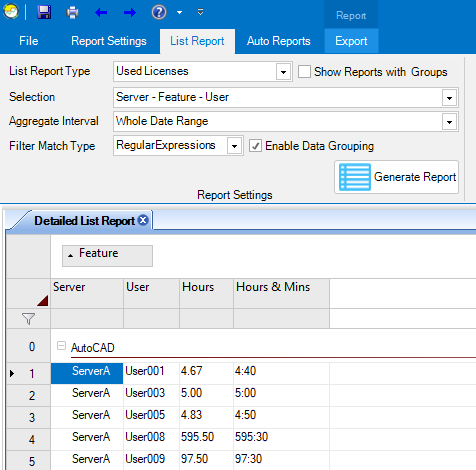
JTB FlexReport 2022.4.0 is now ready.

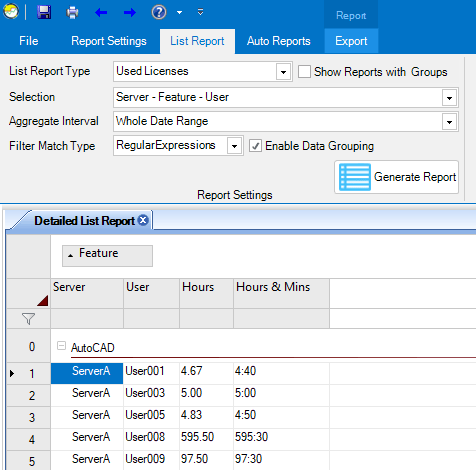
Try filter and data grouping in the list reports.

See the version history for all details.

Trial is available if you want to give it a try.

If your maintenance has expired you can try the new version for a few weeks, if you want to keep using it contact us to renew the maintenance. The upgrade is free of charge for customers with active maintenance.

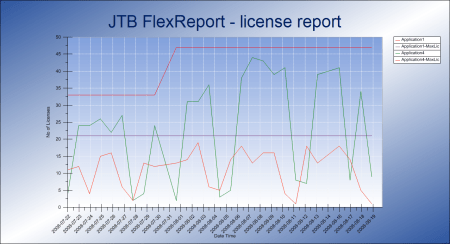
What is JTB FlexReport? JTB FlexReport is a license usage report tool for applications licensed using network license systems like FlexNet (FlexNet), IBM LUM, DSLS, SPLM, Sentinel, LM-X, RLM, EPLAN (ELM), HASP, DPT, Tebis, CodeMeter among others. Track usage over time, hours used and much more. With JTB Process Monitor much more can be monitored like Bentley MicroStation, Autodesk Named User licenses and Autodesk Flex.

If you have FlexNet licenses check out our JTB FlexReport LT freeware. App for AutoCAD available.

Autodesk user? See these posts:

You may still find use for JTB FlexReport together with JTB Process Monitor. We can help analyze your historic usage so you can prepare for the switch.


Real-Time Big Data Analytics: A Comprehensive Guide


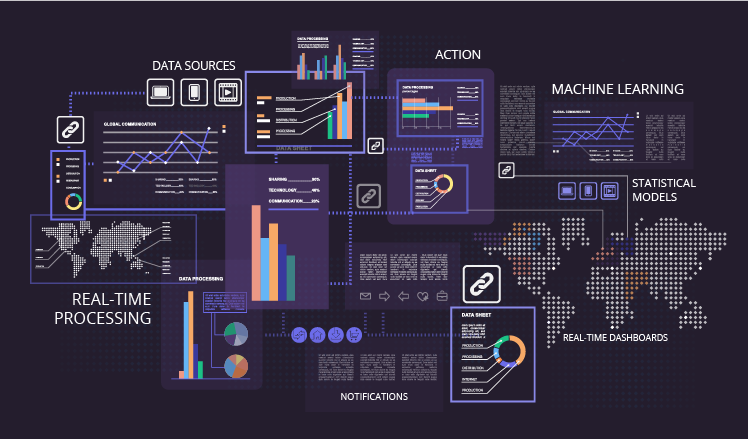
While real-time analytics and big data are both trending, it seems that real-time big data analytics, which is their combination, should be a very promising initiative, and many businesses should be desirous of it. Let’s find out if this is really so.

You will find this article richly supplied with the examples of real-time customer big data analytics. We’ve done so for the reasons of ease and consistency. Though there are more areas where real-time data analytics can be applied.
Real-time big data analytics

Let’s start from defining the term

If you are going to skip this section because you think there can’t be two definitions of real-time, please don’t be surprised – there are. In fact, the definition of real-time is extremely vague, and it differs a lot from company to company or, to be more exact, from business task to business task.

Our big data consulting team has come up with the following definition:

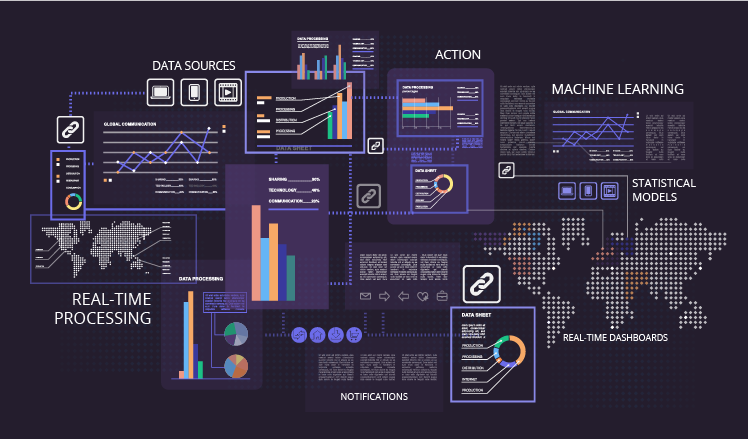
Real-time big data analytics means that big data is processed as it arrives and either a business user gets consumable insights without exceeding a time period allocated for decision-making or an analytical system triggers an action or a notification.

As real-time is often confused with instantaneous, let’s clarify the time frames for data input and response. As far as data input is concerned, the real-time processing engine can be designed to either push or pull data. The most widespread example is a push option with an incessantly flowing high-volume data (also known as streaming). However, the real-time processing engine is not always capable of ingesting streaming data. Alternatively, it can be designed to pull data by asking if any new data has arrived. The time between such queries depends on business needs and can vary from milliseconds to hours.

Correspondingly, the response time also varies. For instance, a self-driving car requires a very fast response time – just several milliseconds. If we deal with sensors installed, say, on a wind turbine, and they communicate a slowly growing gearbox oil temperature, which is still below the critical level but higher than normal, we need one-minute response time to change blade pitch, thus offloading the turbine and preventing machine breakdown or even fire. However, a bank’s analytical system would allow several minutes to assess the creditworthiness of an applicant; and a retailer’s dynamic pricing can take up to an hour to update. Still, all these examples are considered real-time.

Real-time big data analytics as a competitive advantage

Although in general organizations value managing data in real time, not all the companies go for real-time big data analytics. The reasons could be different: the lack of expertise or insufficient funds, the fear of the associated challenges or overall management team’s reluctance. However, those companies who implement real-time analytics can gain a competitive advantage.
Real-time big data analytics as a competitive advantage: use case

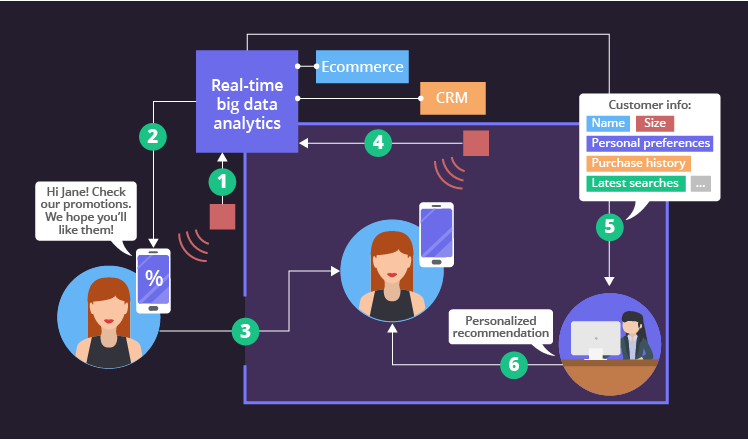
Let’s say you are a fashion retailer who would like to take the advantage by delivering a top-notch customer service. Analyzing big data in real time can help bring this great initiative into life. For example, once a customer is passing by a retailer’s store, they get a push notification on their smartphones that serves to incentivize them to enter. Usually, it’s a personalized promo offer that is based on the customer’s purchasing or even surfing history on the website. Once a customer is in the store, the staff gets a notification in their mobile apps. This makes them aware of the customer’s latest purchases, overall style preferences, interest in promotions, a typical spend, etc. It looks like a win-win situation for both customers and retailers, doesn’t it?

An ecommerce retailer can also achieve better performance by analyzing big data in real time. For instance, they can reduce the number of abandoned carts.  Say, a customer has gone that far, but for some reason, they’ve decided not to finalize their purchase. Still, there are good chances to incentivize them to change their mind. The system is turning to the customer’s profile data, as well as the purchasing and surfing history to compare the customer’s behavior with the conduct of other customers from the same segment and their response to different actions in a similar situation. Based on the analysis results, the system chooses the most suitable of all the possible actions – for example, offers a discount.

A typical architecture for real-time big data analytics

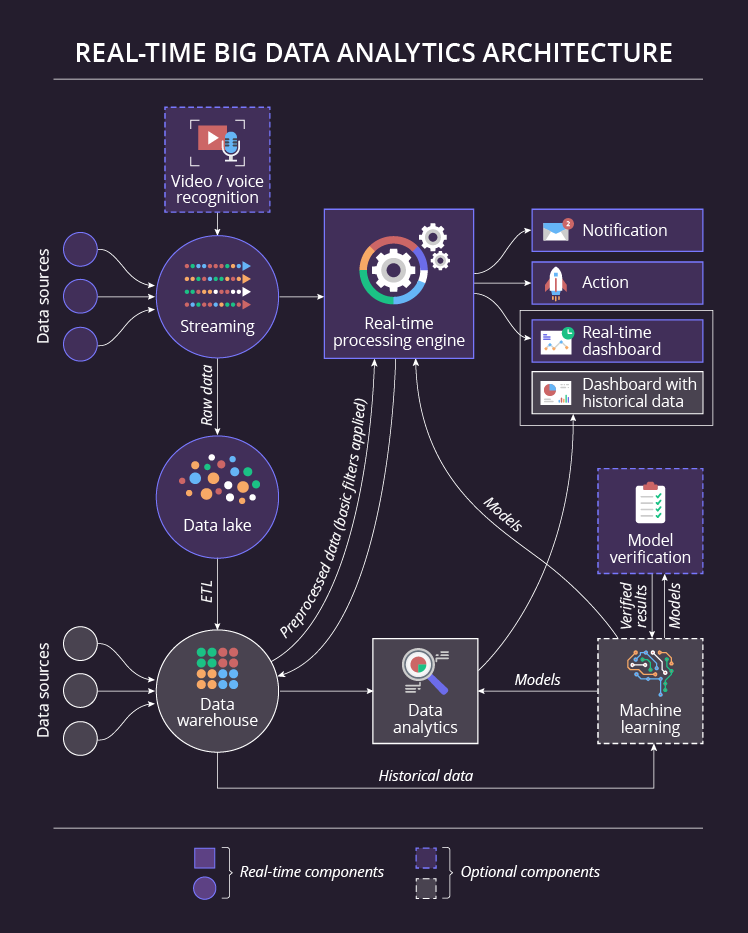
Let’s have a look at how a typical real-time big data analytics solution works. To make the explanation more vivid, we will accompany it with an example that is illustrative for everybody, as, now and again, we all assume the role of a customer.
Real-time big data analytics architecture

Imagine a retailer that is aiming to deliver a personalized customer experience. The first step on this long road is to recognize a customer, once they are in the store. A retailer can achieve this in multiple ways, for example, by implementing face recognition.

With this only data source, the retailer can do a simple analysis, like calculate how many male and female customers are currently in the store. However, the retailer will not satisfy themselves with one data source only. Even to know how many of the customers have come for the first time and how many are regulars, another data source is needed, for example, CRM. The general context will also be helpful, for instance, the information about the store’s opening hours.

After processing, real-time data finds its way to a real-time dashboard or turns into either a notification or a system’s action. We’ve already provided the example for the first case, when the retailer can understand how many customers are in the store at the moment. Let’s look at another option in detail. Say, a customer has formed a shopping list in the mobile app and is moving around the store. Based on the customer’s current location data (gathered by beacons and processed by the same real-time analytics), the app can prompt the most optimal way along the sales floor so that they can grab everything that is on their list.

Let’s continue with the above mentioned example to explain the contribution of machine learning. By the way, machine learning itself does not happen in real time. It’s an elaborate process, and the system requires significant time to analyze an enormous volume of data, which usually covers the period of 1+ year, from different angles to come up with valuable models and patterns. These models help the system to make real-time decisions. Now, to the example: the system has already analyzed customer profiles and segments they belong to, their behavior model, the purchasing history, the response to marketing campaigns, etc. and built a model that enables personalized recommendations. And while the customer is walking in the aisles, the system can notify them about promo offers or related products that the customer will find interesting.

The concept of machine learning also requires model verification applications, as they enable a constant improvement of the models’ accuracy. Additionally, they improve the quality of the input data by allowing a basic filtering from erroneous or noisy data.

Now let’s turn our eyes to data storage. It consists of two components: a data lake and a data warehouse. The former is the place to store all the raw data or the data that has undergone a very simple processing. A data warehouse allows making big data 2-10 times smaller by extracting, transforming and loading only some data from the data lake.

In a word, a retailer cannot live by real-time analytics alone. You can see some other important components of the scheme that fall out of real-time. Still, they are critical if the retailer wants to get valuable and deep insights. For example, a data analytics module, which we haven’t mentioned yet, is responsible for running complex analysis by applying elaborate algorithms and statistical models driven by data analysts. Indeed, this process can take hours or more, but the results are worth waiting. Correspondingly, the retailer’s analytical dashboards will always contain not only real-time but also historical data.

To sum it up

If thoroughly planned and properly implemented, real-time big data analytics definitely can become a competitive advantage. Taking into account how different the interpretations of real-time can be, it’s important to have a clear understanding of the company’s requirements to the analytical system.

In the article, we’ve described a typical architecture for real-time data analytics solution. Before taking it as an example, check whether it will cover your short-term and long-term business needs. If for some reasons, it does not, you may always turn for professional advice on how to tailor it.


Big data is another step to your business success. We will help you to adopt an advanced approach to big data to unleash its full potential.

AI Drives Future of Transportation at Asia’s Largest Automotive Show


The latest trends and technologies in the automotive industry are in the spotlight at the Beijing International Automotive Exhibition, aka Auto China, which opens to the public on Saturday, April 27.

An array of NVIDIA auto partners is embracing this year’s theme, “New Era, New Cars,” by making announcements and showcasing their latest offerings powered by NVIDIA DRIVE, the platform for AI-defined vehicles.

NVIDIA Auto Partners Announce New Vehicles and Technologies

Image courtesy of JIYUE.

Electric vehicle (EV) makers Chery (booth E107) and JIYUE (booth W206), a joint venture between Baidu and Geely (booth W204), announced they have adopted the next-generation NVIDIA DRIVE Thor centralized car computer.

DRIVE Thor will integrate the new NVIDIA Blackwell GPU architecture, designed for transformer, large language model and generative AI workloads.

In addition, a number of automakers are building next-gen vehicles on NVIDIA DRIVE Orin, including:

smart, a joint venture between Mercedes-Benz and Geely, previewed its largest and most spacious model to date, an electric SUV called #5. It will be built on its Pilot Assist 3.0 intelligent driving-assistance platform, powered by NVIDIA DRIVE Orin, which supports point-to-point automatic urban navigation. smart #5 will be available for purchase in the second half of this year. smart will be at booth E408.

NIO, a pioneer in the premium smart EV market, unveiled its updated ET7 sedan, featuring upgraded cabin intelligence and smart-driving capabilities. NIO also showcased its 2024 ET5 and ES7. All 2024 models are equipped with four NVIDIA DRIVE Orin systems-on-a-chip (SoCs). Intelligent-driving capabilities in urban areas will fully launch soon. NIO will be at booth E207.

Image courtesy of GWM.

GWM revealed the WEY Blue Mountain (Lanshan) Intelligent Driving Edition, its luxury, high-end SUV. This upgraded vehicle is built on GWM’s Coffee Pilot Ultra intelligent-driving system, powered by NVIDIA DRIVE Orin, and can support features such as urban navigate-on-autopilot (NOA) and cross-floor memory parking. GWM will be at booth E303.

XPENG, a designer and manufacturer of intelligent EVs, announced that it is streamlining the design workflow of its flagship XPENG X9 using the NVIDIA Omniverse platform. In March, XPENG announced it will adopt NVIDIA DRIVE Thor for its next-generation EV fleets. XPENG will be at booth W402.

Innovation on Display

On the exhibition floor, NVIDIA partners are showcasing their NVIDIA DRIVE-powered vehicles:

Image courtesy of BYD.

BYD, DENZA and YANGWANG are featuring their latest vehicles built on NVIDIA DRIVE Orin. The largest EV maker in the world, BYD is building both its Ocean and Dynasty series on NVIDIA DRIVE Orin. In addition, BYDE, a subsidiary of BYD, will tap into the NVIDIA Isaac and NVIDIA Omniverse platforms to develop tools and applications for virtual factory planning and retail configurators. BYD will be at booth W106, DENZA at W408 and YANGWANG at W105.

DeepRoute.ai is showcasing its new intelligent driving-platform, DeepRoute IO, and highlighting its end-to-end model. Powered by NVIDIA DRIVE Orin, the first mass-produced car built on DeepRoute IO will focus on assisted driving and parking. DeepRoute.ai will be at booth W4-W07.

Hyper, a luxury brand owned by GAC AION, is displaying its latest Hyper GT and Hyper HT models, powered by NVIDIA DRIVE Orin. These vehicles feature advanced level 2+ driving capabilities in high-speed environments. Hyper recently announced it selected DRIVE Thor for its next-generation EVs with level 4 driving capabilities. Hyper will be at booth W310.

IM Motors is exhibiting the recently launched L6 Super Intelligent Vehicle. The entire lineup of the IM L6 is equipped with NVIDIA DRIVE Orin to power intelligent driving abilities, including urban NOA features. IM Motors will be at booth W205.

Li Auto is showcasing its recently released L6 model, as well as L7, L8, L9 and MEGA. Models equipped with Li Auto’s AD Max system are powered by dual NVIDIA DRIVE Orin SoCs, which help bring ever-upgrading intelligent functionality to Li Auto’s NOA feature. Li Auto will be at booth E405.

Image courtesy of Lotus.

Lotus is featuring a full range of vehicles, including the Emeya electric hyper-GT powered by NVIDIA DRIVE Orin. Lotus will be at booth E403.

Mercedes-Benz is exhibiting its Concept CLA Class, the first car to be developed on the all-new Mercedes-Benz Modular Architecture. The Concept CLA Class fully runs on MB.OS, which handles infotainment, automated driving, comfort and charging. Mercedes-Benz will be at booth E404.

Momenta is rolling out a new NVIDIA DRIVE Orin solution to accelerate commercialization of urban NOA capabilities at scale.

Image courtesy of Polestar.

Polestar is featuring the Polestar 3, the Swedish car manufacturer’s battery electric mid-size luxury crossover SUV powered by DRIVE Orin. Polestar will be at booth E205.

SAIC R Motors is showcasing the Rising Auto R7 and F7 powered by NVIDIA DRIVE Orin at booth W406.

WeRide is exhibiting Chery’s Exeed Sterra ET SUV and ES sedan, both powered by NVIDIA DRIVE Orin. The vehicles demonstrate progress made by Bosch and WeRide on level 2 to level 3 autonomous-driving technology. WeRide will be at booth E1-W04.

Xiaomi is displaying its NVIDIA DRIVE Orin-powered SU7 and “Human x Car x Home” smart ecosystem, designed to seamlessly connect people, cars and homes, at booth W203.

ZEEKR unveiled its SEA-M architecture and is showcasing the ZEEKR 007 powered by NVIDIA DRIVE Orin at booth E101.

Auto China runs through Saturday, May 4, at the China International Exhibition Center in Beijing.

Learn more about the industry-leading designs and technologies NVIDIA is developing with its automotive partners.

Featured image courtesy of JIYUE.

NETGEAR M4350 ST2110 Lineup at NAB 2024


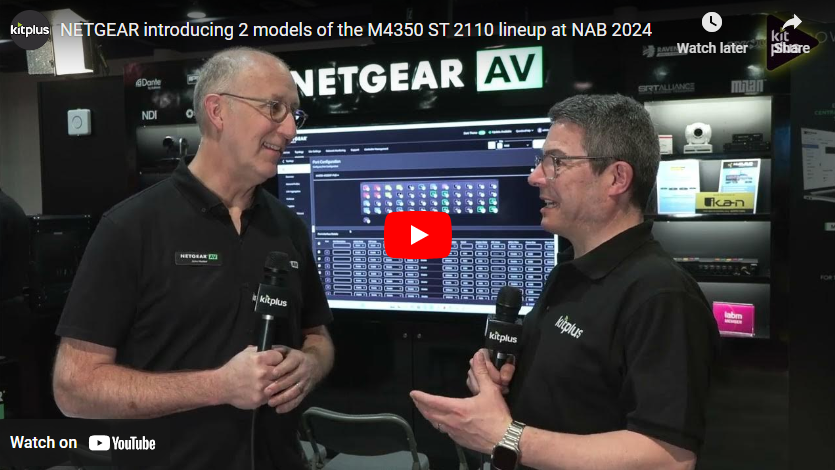
Discover the latest innovations from NETGEAR AV as John H.K. introduces the M4350 series switches supporting SMPTE 2110 protocol. Learn why AV-specific switches are essential for precise time protocols and multicast control, and explore features like IGMP filtering and AV interface profiles for optimal AV over IP applications.

NETGEAR AV takes center stage at NAB 2024 with the introduction of two groundbreaking models in their M4350 series switches. John H.K. from NETGEAR AV sheds light on the game-changing capabilities of these switches, emphasizing their support for the SMPTE 2110 protocol and the significance of AV-specific switches in modern AV over IP workflows.

Watch the full video from KITPLUS below:


See more from NETGEAR below:

c# – How to crop in image in windows form?


When i click ok, the bounding box which i have defined should correctly crop the picture. But without changing the dimension of the crop box, and clicking OK, the image is getting cropped wrongly. I dont know why. I am providing the code.

private void CropForm_Load(object sender, EventArgs e)

{

float scaleX = (float)pictureBox1.Image.Width / pictureBox1.ClientSize.Width;

float scaleY = (float)pictureBox1.Image.Height / pictureBox1.ClientSize.Height;

float scaleFactor = Math.Max(scaleX, scaleY);

var imageSize = new Size((int)(pictureBox1.Image.Width / scaleFactor), (int)(pictureBox1.Image.Height / scaleFactor));

int rectWidth = imageSize.Width;

int rectHeight = imageSize.Height;

// Calculate the new position of the bounding rectangle (top left anchor)

int rectX = (pictureBox1.Width - imageSize.Width) / 2;

int rectY = (pictureBox1.Height - imageSize.Height) / 2;

boundingRect = new Rectangle(rectX, rectY, rectWidth, rectHeight);

imageSizeDimension = new Rectangle(rectX, rectY, imageSize.Width, imageSize.Height);

originalImage = pictureBox1.Image;

pictureBox1.MouseDown += pictureBox1_MouseDown;

pictureBox1.MouseMove += pictureBox1_MouseMove;

pictureBox1.MouseUp += pictureBox1_MouseUp;

pictureBox1.MouseLeave += pictureBox1_MouseLeave;

pictureBox1.Invalidate();

}

public Image CropImage(Image originalImage, Rectangle cropRectangle)

{

Console.WriteLine(boundingRect);

Console.WriteLine(imageSizeDimension);

Console.WriteLine(pictureBox1.ClientSize);

// Create a new bitmap with the dimensions of the crop rectangle

Bitmap croppedImage = new Bitmap(cropRectangle.Width, cropRectangle.Height);

// Create a graphics object from the cropped image

using (Graphics g = Graphics.FromImage(croppedImage))

{

// Draw the portion of the original image that falls within the crop rectangle onto the cropped image

g.DrawImage(originalImage, new Rectangle(0, 0, croppedImage.Width, croppedImage.Height),

cropRectangle, GraphicsUnit.Pixel);

}

return croppedImage;

}

private void OkBtn_Click(object sender, EventArgs e)

{

pictureBox1.Image = CropImage(pictureBox1.Image, boundingRect);

float scaleX = (float)pictureBox1.Image.Width / pictureBox1.ClientSize.Width;

float scaleY = (float)pictureBox1.Image.Height / pictureBox1.ClientSize.Height;

float scaleFactor = Math.Max(scaleX, scaleY);

var imageSize = new Size((int)(pictureBox1.Image.Width / scaleFactor), (int)(pictureBox1.Image.Height / scaleFactor));

int rectWidth = imageSize.Width;

int rectHeight = imageSize.Height;

// Calculate the new position of the bounding rectangle (top left anchor)

int rectX = (pictureBox1.Width - imageSize.Width) / 2;

int rectY = (pictureBox1.Height - imageSize.Height) / 2;

boundingRect = new Rectangle(rectX, rectY, rectWidth, rectHeight);

imageSizeDimension = new Rectangle(rectX, rectY, imageSize.Width, imageSize.Height);

pictureBox1.Invalidate();

}

If i click the OK button without changing the bounding rectangle dimension, it the picture should not be cropped. However this is what is happening. Clicking crop multiple times results in this (attached image)

14 Morning Jobs You Can Do From Home


Embracing the flexibility of remote work, you have the opportunity to create a schedule that fits your lifestyle, including finding positions that cater to early risers. With a wide variety of early morning jobs available, you can start your day with productivity, working from the comfort of your home.

Companies recognize the value of offering flexible schedules and are actively seeking individuals who are ready to take on morning roles, from customer service to creative work. Whether you’re looking to augment your income or seeking a full-time position, you’ll find a range of companies hiring for roles that can complement your morning routine.

What is a Morning Job?

A morning job typically refers to employment that is conducted during the early hours of the day, starting from dawn or early morning and often finishing before the afternoon. Such positions are ideal for individuals seeking to capitalize on the quiet of the morning to boost their productivity, whether because they are naturally early risers or they desire to free up the rest of their day for other activities.

Morning jobs cover various industries and roles, encompassing everything from part-time to full-time remote options. For instance, virtual assistants and customer service representatives provide administrative and support services directly from their homes. Similarly, bookkeeping and data entry jobs are valuable remote roles that often offer flexible early hours.

In the realm of creativity and communication, early birds might find a match in writing jobs, freelance editing, or working as a social media specialist, where the quiet morning hours can enhance focus and creativity. Those with a knack for visuals may opt for graphic design, taking advantage of the uninterrupted time to craft compelling visuals for their clients.

Technical support and coding jobs are also a fit for morning schedules, allowing for uninterrupted blocks of time to solve complex problems or write code. Meanwhile, marketing roles thrive on being able to connect with customers and strategize ahead of the business day.

Whether you’re a consultant, a freelance writer, or searching for editing jobs, morning employment offers a valuable option to structure your workday optimally, often resulting in high levels of satisfaction and work-life balance.

Exploring Morning Work-From-Home Opportunities

In the digital age, finding a remote job that aligns with your morning routine is more achievable than ever. From customer service roles that start early to creative jobs like graphic design, a plethora of companies are seeking to fill morning work-from-home positions catering to diverse skills.

1. Customer Service Roles

Customer service jobs often provide flexible hours that can accommodate your morning availability. Companies often look for remote customer service representatives to handle inquiries and provide support.

2. Cybersecurity Jobs

Morning shifts in cybersecurity allow you to protect systems before the business day begins. Your diligence ensures business continuity, and part-time opportunities allow for productivity on your own schedule.

3. Data Entry Jobs

Data entry is an ideal morning job with part-time flexibility. Accuracy and speed are key as you enter information into a company’s system. Look into firms offering remote data entry positions from the comfort of your home.

4. Translation Jobs

Your language skills can open doors to morning translation work. Help businesses cross language barriers from your home office.

5. Call Center Jobs

Early risers are perfect for call center positions, as some companies provide services across various time zones. Remote call center roles could see you providing essential customer support.

6. Transcription Jobs

As a transcriptionist, your morning hours can be spent converting audio recordings into written documents. Accuracy and a good ear can make this the right job for your skillset.

7. Graphic Design Jobs

Take advantage of the quiet morning hours to unleash your creativity in graphic design. Whether for an employer or as a freelancer, use those hours to create visual content that resonates.

8. Consulting Jobs

If you have expertise in a particular field, morning consultancy work lets you advise clients when it suits you. Leverage your knowledge to provide high-quality guidance as a consultant.

9. Editing Jobs

Editors can find their rhythm in the morning, working through manuscripts or articles when the house is still. Peruse remote job boards for editing jobs that complement your early start such as DailyRemote.

10. Social Media Jobs

Engage with an audience when they’re most likely to be online. Social media specialists can schedule content and interact with users, keeping the brand active in the AM hours.

11. Web Design Jobs

Develop and design websites during the morning. Your coding and aesthetic skills come to the forefront as you work on creating functional and attractive digital spaces.

12. Medical Jobs

Remote medical jobs, like medical coding, can often be done in the morning. Health institutions frequently seek part-time workers to manage patient data securely and confidentially.

13. Writing Jobs

The calm of the morning can inspire writers. Freelance writer roles offer the freedom to produce content across various topics, providing a flexible schedule that fits your lifestyle.

14. Tutor jobs

Impart your knowledge to others with online tutoring. Catering to students in different time zones means morning sessions could work perfectly for both you and your pupils.

Top 5 Companies Offering Morning Remote Jobs You Can Do From Home

1. BELAY

BELAY is your go-to firm for virtual solutions with a wide array of remote jobs in the morning. If your strength is organization and multitasking, their need for virtual assistants might be a perfect match for you. With BELAY, you can start your day contributing to a team without having to leave your home.

2. UnitedHealth Group

UnitedHealth Group often has openings in areas like customer service and medical transcription. Known for valuing flexibility, they provide an excellent opportunity for those with a background in healthcare to find engaging morning work from home.

3. Robert Half International

Tech-savvy job seekers can look forward to positions at Robert Half International, which places professionals in fields like finance and IT. Embrace the chance to work with a leading staffing agency and apply your skills in a remote setting during the morning hours.

4. Working Solutions

Working Solutions is ideal for those interested in insurance or travel agent roles. They offer a variety of customer service positions with the flexibility of choosing your schedule, perfect for early risers looking to work before the rest of the house wakes up.

5. TranscribeMe

Lastly, TranscribeMe caters to transcriptionists and is continuously seeking individuals for legal and medical transcription jobs. Their flexible scheduling means you can make the most of the morning hours by transcribing from the comfort of your home.

How to Find Morning Jobs From Home?

Finding a morning job that you can do from home involves several steps. Here’s a guide to help you in your search:

  1. Assess Your Skills and Interests: Before starting your job search, take some time to consider what skills you have and what type of work you are interested in. This will help you narrow down your search to jobs that are a good fit for you.
  2. Update Your Resume and Online Profiles: Make sure your resume is up-to-date and highlights any skills or experiences that are relevant to the type of work you’re looking for. Also, update your LinkedIn profile and other professional social media to reflect your job interests.
  3. Search Job Boards: Use job search websites like Indeed, Glassdoor, DailyRemote and LinkedIn to find work-from-home jobs. You can use filters to find jobs that are specifically labeled as “remote” or “work from home” and set the time of day you are available to work.
  4. Visit Company Websites: If there are specific companies you’re interested in working for, visit their websites and go to their careers page to see if they have remote morning job openings, just keep in mind to avoid remote job scams.
  5. Use Keywords: When searching, use keywords such as “remote”, “telecommute”, “work from home”, “part-time”, “freelance”, “flexible hours”, “early morning”, “morning shift”, and any other terms that are relevant to your search.
  6. Networking: Reach out to your network of friends, family, and professional contacts to let them know you’re looking for a morning job that can be done from home. They might know of opportunities or can refer you to someone who does.
  7. Freelancing and Contract Work: Consider looking for freelance sidework or contract work that allows you to set your own hours. Websites like Upwork, Freelancer, and Fiverr offer a platform to find freelance work in a variety of fields.
  8. Social Media: Follow companies you’re interested in on social media as they often post job openings on their feeds. Also, join groups or forums related to remote work to learn about opportunities.
  9. Set Up Job Alerts: Most job boards allow you to set up email alerts for new job postings that match your criteria. This can save you time and help you apply to jobs quickly.
  10. Prepare for Remote Work: If you’re new to working from home, ensure you have a suitable workspace and the necessary technology and software to perform the job effectively.
  11. Apply Early and Follow Up: For morning jobs, it’s important to apply as soon as the job is posted since the schedules might fill up quickly. After applying, if you don’t hear back within a week or two, it’s acceptable to send a polite follow-up email to inquire about the status of your application.

Remember, when searching for work-from-home jobs, be cautious of scams. Do not provide personal information or pay any fees upfront unless you are sure the opportunity is legitimate. Always research the company and read reviews from other employees if possible.

To find your next morning job opportunity from home, visit platforms like DailyRemote. They provide comprehensive job listings that can connect you with companies like the ones mentioned above and more.

So, what are you waiting for? Get started today and sign up for our premium access. Working remotely is the need of the hour. And now that you know how to find the remote job of your dreams, so follow these tips and start applying today. Join like-minded people in our


The Google Pixel Buds Pro are back on sale for $135


Google’s Pixel Buds Pro remain one of our favorite pairs of true wireless earbuds, offering robust active noise cancellation (ANC), punchy bass, reliable touch controls and a host of convenient features for Android users in particular. That said, given how competitive the wireless market is these days, they aren’t the greatest value at their standard list price of $200.

Today, though, Wellbots is running a sale that brings the pair down to a more palatable $135 with the checkout code ENGPIX65. This isn’t an all-time low — the buds fell as low as $117 in a similar deal last October and went for $119 for much of the holiday season — but it’s the best price we’ve tracked in 2024. For reference, the device dropped to $139 last month. This offer applies to each of the set’s colorways.

Photo by Billy Steele / Engadget

This is the lowest price we’ve seen this year for Google’s highest-end wireless earbuds.

Save $65 with code

$135 at Wellbots

Engadget’s audio expert Billy Steele gave the Pixel Buds Pro a review score of 87 back in 2022. By default, they have a sculpted, hyped-up sound with thumpy bass and elevated treble. It’s the kind of signature that won’t suit audio purists but should work well with modern pop music. As with many pairs, though, you can tweak the sound with a graphic EQ. The earbuds themselves have an IPX4 water-resistance rating, so they should be able to withstand typical workouts. Battery life is solid at roughly seven hours with ANC on or 11 hours with it off, while the case supports wireless charging. You can connect to two devices at once, and the pair supports in-ear detection, so it’ll automatically pause when you remove an earbud.

Maybe the biggest reason to consider the Pixel Buds Pro is how tightly they integrate with Android. It’s somewhat similar to how Apple’s AirPods work with iOS: You can call on the Google Assistant hands-free, quickly swap between paired devices, utilize adaptive and spatial audio modes, ring the earbuds remotely and access Google Translate, among other OS-specific features. Last fall, Google also added a “conversation detection” mode that automatically pauses your music and turns off ANC when you start talking to someone. All of this functionality is natively available on Google’s Pixel phones; with other Android devices, you can access most of the same tricks through a separate Pixel Buds app.

There are still issues to note. While we didn’t have any comfort issues in testing, the fit may be tricky for those with smaller ears. Call quality isn’t great, nor is the included transparency mode. For more discerning listeners, there’s no support for higher-quality Bluetooth codecs like aptX or LDAC. And again, this is a busy market: Other pairs like the Sony WF-1000XM5, Sennheiser Momentum True Wireless 4 or Anker Soundcore Space A40 can provide better noise isolation, sound quality or overall value in a vacuum. It wouldn’t be a huge shock if we saw a new model at Google’s I/O conference next month, either. Still, the current model remains a well-rounded choice for Android fans today, and this discount brings them down to a more appropriate price.

Follow @EngadgetDeals on Twitter and subscribe to the Engadget Deals newsletter for the latest tech deals and buying advice.


The Dos and Don’ts of Data Recovery


Data loss can be a heart-stopping experience. Important documents, cherished photos, irreplaceable work files – all seemingly vanished into the digital ether. But before you resign yourself to the worst, there are steps you can take to recover your lost data. Here at PC Geeks, we understand the importance of your digital life, and we want to equip you with the knowledge to tackle data recovery head-on. In this guide, we’ll explore the dos and don’ts of data recovery, and help you decide when it’s time to call in a professional.

The Dos and Don'ts of Data Recovery

The Dos of Data Recovery

Stop Using the Affected Device: This is the golden rule of data recovery. Once you realize you’ve lost data, shut down the device immediately. Continued use can overwrite the very information you’re trying to recover.

Assess the Situation: Take a deep breath and try to recall what might have caused the data loss. Was it a accidental deletion, a formatting error, or something more serious?  Understanding the cause can help determine the best course of action.

Check for Backups: This is where having a regular backup routine saves the day. If you have a recent backup, restoring your data from there is the simplest solution.

Consider Data Recovery Software: If you don’t have backups, there are reputable data recovery software programs available. These programs can sometimes scan your storage device and recover deleted files. Important Note: Only download data recovery software from trusted sources to avoid malware. When using the software, recover data to a separate drive to avoid overwriting the lost files.

Seek Professional Help: If the DIY methods fail, or if your data loss involves physical damage to the storage device, it’s time to call in the professionals. Data recovery companies have specialized tools and expertise to recover data from even severely damaged devices.

The Don’ts of Data Recovery

Panicking: We get it, data loss is stressful. But staying calm will help you make clear decisions and avoid further mistakes.

Continuing to Use the Device: As mentioned earlier, using the device after data loss can overwrite the recoverable data. Shut it down and proceed with caution.

Trying to Fix Hardware Issues Yourself: If your data loss seems to be caused by physical damage to the storage device, attempting to fix it yourself can cause further harm. Leave this to the professionals.

Using Unreliable Data Recovery Software: Free data recovery software might seem tempting, but it can be ineffective or even harmful. Stick to reputable brands with a good track record.

Overwriting the Lost Data: When attempting data recovery with software, never recover files back to the original location. This can overwrite the data you’re trying to save. Use a separate drive for recovered files.

When to Call PC Geeks for Data Recovery

Extensive Data Loss: If you’ve lost a significant amount of critical data, attempting DIY recovery might be risky. Our team has the expertise and tools to handle large-scale data recovery projects.

Physical Damage: If your storage device has suffered physical damage, such as a fall or water exposure, don’t attempt to use it. We have specialized equipment to recover data from damaged devices.

Complex Scenarios: Data loss due to complex issues like RAID failure or formatted partitions requires specialized knowledge. Our data recovery specialists can tackle these challenges.

Time Sensitive Recovery: If you need your data recovered urgently, professional help is your best bet. We offer expedited services to get your data back as quickly as possible.

Here at PC Geeks, we understand the importance of your data. Our team of data recovery specialists is experienced in handling a wide range of data loss scenarios. If you’ve suffered data loss and are unsure how to proceed, contact PC Geeks today for a free consultation.
In addition to our data recovery services, PC Geeks offers a variety of IT solutions to keep your data safe. We recommend implementing a regular backup routine to prevent future data loss disasters. Contact us today to learn more about our data backup and recovery solutions!

Preparing Future Innovators: Cultivating Ethical AI Understanding in Students


The presence of artificial intelligence (AI) has become deeply ingrained in our everyday routines, leading to a significant transformation across diverse sectors and reshaping our interactions with technology. As AI continues to advance at an unprecedented pace, it is crucial to instill ethical AI awareness in students, particularly in the educational environment. It is vital to explore the application of ethical AI in classrooms, highlighting the importance of ethics in AI and discussing how educators can foster ethical AI awareness among students to prepare them for the future.


Advances in artificial intelligence and its application in education

  • In recent years, the advances in artificial intelligence have paved the way for its integration into education, offering exciting opportunities for both students and educators. 
  • AI-powered tools and applications can enhance personalized learning experiences, provide real-time feedback, and support administrative tasks, among other benefits. 
  • However, as the application of AI in education becomes more prevalent, it is essential to consider the ethical implications and ensure that students understand the ethical principles associated with its use.


AI is susceptible to human fallibility

  • It is crucial for every child to understand that AI technology, despite its advancements, is ultimately shaped and designed by humans, with human-centered objectives in mind. 
  • They should recognize that Alexa, Google Home, and similar devices are not mere robots, but rather the result of the expertise and knowledge of computer engineers who have crafted their intelligent voices. 
  • Consequently, since AI systems are programmed by humans, they inherit the potential for errors and biases that we, as individuals, possess.
  • This realization brings us to the realm of ethics in AI, an important field of study and consideration.


Ethics in AI: The need for awareness

  • Ethical considerations play a pivotal role in the development and application of AI in education. 
  • As AI technologies become more complex and autonomous, ethical issues such as bias, privacy, and accountability arise. 
  • Students must be equipped with the knowledge and critical thinking skills necessary to understand these ethical challenges and make informed decisions regarding AI usage.


Fostering ethical AI awareness in students

Ethical considerations play a pivotal role in the development and implementation of AI systems. As AI technologies become more complex and autonomous, ethical issues such as bias, privacy, and accountability arise. Students must be equipped with the knowledge and critical thinking skills necessary to understand the ethical challenges and make informed decisions regarding AI usage.

Nurturing ethical AI awareness in students is an important task in today’s rapidly advancing technological landscape. It is crucial to equip students with the knowledge and skills to understand the ethical implications of AI systems and make informed decisions about their development and use. 


Here are some strategies to nurture ethical AI awareness in students:

Integrating ethical AI in education

  • Schools should incorporate ethical AI education into their curricula, emphasizing the importance of responsible AI use. 
  • This can be achieved by offering dedicated courses or integrating ethical AI topics into existing subjects such as computer science or social studies.
  • Cover subjects such as bias, transparency, privacy, and accountability in AI systems.
  • Encourage discussions, debates, and critical thinking about the ethical dilemmas surrounding AI.

Promoting critical thinking

  • Promote students’ critical thinking skills in examining the ethical implications of AI.
  • Engage them in discussions and debates on topics like AI bias, privacy concerns, and the impact of AI on employment. 
  • This helps develop their analytical skills and encourages them to question and evaluate the ethical dimensions of AI technologies.

Ethical design thinking

Teach students about ethical design principles and the concept of human-centered AI.  By emphasizing the importance of considering diverse perspectives and avoiding bias in AI algorithms, students can learn to create AI systems that promote fairness and inclusivity.

Hands-on AI projects

  • Engage students in hands-on AI projects that involve designing and developing AI systems. 
  • Encourage them to reflect on the ethical implications of their projects and make conscious choices that align with ethical principles. 
  • This practical approach allows students to gain a deeper understanding of the real-world challenges associated with AI development and usage.

Collaboration and communication

  • Foster collaboration and open communication among students when working with AI technologies. 
  • Encourage them to share ideas, concerns, and solutions regarding the ethical use of AI. 
  • This promotes a supportive and inclusive environment where students can learn from each other and develop a collective ethical awareness.

Foster interdisciplinary learning

  • AI ethics is not confined to computer science alone. 
  • Encourage students to explore interdisciplinary perspectives by engaging with subjects like philosophy, sociology, psychology, law, and ethics. 
  • This interdisciplinary approach will provide a broader understanding of the ethical implications of AI.

Promote responsible data usage

  • Discuss the significance of data collection, storage, and usage in AI systems. 
  • Help students understand the ethical issues surrounding data privacy, consent, and the potential for discrimination or profiling. 
  • Encourage responsible data practices and emphasize the need to protect individuals’ privacy rights.

Embracing the most advanced AI with ethical consciousness

  • As AI continues to advance rapidly, it is crucial to emphasize the integration of ethical principles alongside technological progress. 
  • By nurturing ethical AI awareness in students, we can ensure that they are prepared to navigate the complex ethical landscape of the future. 
  • With a strong foundation in ethical AI, students can become responsible AI users, developers, and decision-makers, contributing to a society that harnesses the power of AI for the greater good.

It is essential to prioritize the inclusion of ethical AI education in schools as a means of equipping students to navigate the ever-changing technological landscape effectively. By integrating ethical AI principles into the curriculum and fostering critical thinking, ethical design, practical projects, and collaborative discussions, educators can cultivate a deep understanding of ethics of AI among students. This approach empowers them to make well-informed decisions and mitigate possible risks. By nurturing ethical AI awareness in students, we can shape a future generation of technologists who prioritize the responsible development and ethical application of AI in education, thereby fostering positive social impact and ethical decision-making.