According to MacRumors, the next big software update for iPhones will have a new feature in the Photos app that will let you recover lost or damaged photos and videos that may not properly appear in your other albums like they should. You can find these photos by opening the Photos app, going to Albums, and scrolling down until you see Utilities.
Of course, that feature won’t work for anyone who is not currently using the iOS 18 public beta, so don’t bother trying if you’re working with iOS 17 or older. You’ll also need to actually have some damaged photos or videos lying around on your device, otherwise the options to recover (or destroy) them won’t show up at all.
Mashable Light Speed
These kinds of images or videos can be lost or damaged for many reasons. As MacRumors pointed out, some third-party apps don’t save things to the photo library properly — or databases get corrupted. In these instances, if iOS 18 can intelligently identify photos with problems (and give users a way to restore or destroy them), it could arguably be one of the most impactful features for the Photos app in quite some time.
Prime Day deals you can shop right now
Products available for purchase here through affiliate links are selected by our merchandising team. If you buy something through links on our site, Mashable may earn an affiliate commission.
We’ll find out together later this year when iOS 18 drops.
Artificial Intelligence in Human Resource Management
The success of a company always depends on two things including a skilled workforce and efficient business strategies. Without a proper vision, you can’t achieve business targets, and of course without a dedicated workforce also a business can’t progress well in the market. Am I right?
This was the reason why most of the companies both SMEs and organizations, or MNCs are always looking to hire the right talent to meet their objectives or project goals.
In this ever-changing world, human resources (HR) have been facing various challenges in hiring the right candidate to fulfill the skill gap. Now, it is the Artificial intelligence (AI) world. Organizations are implementing AI strategies to manage their HR-related tasks more efficiently than before.
AI experts believe that proper employee engagement is the best way to retain the workforce and thus increase productivity and the revenue of the company by nearly 26%. From the number, we can understand how AI solutions for HR management are important to strengthen the whole team and able to get long-term advantages.
AI technologies in the HR industry have reached a new level and giving unbelievable benefits to the business. Artificial intelligence provides unlimited opportunities to advance HR functions like selecting, recruiting, hiring, reporting, payroll, etc.
The executives of human resources believe that the integration of Artificial Intelligence and HR administration will provide improved candidate experience.
In this blog, we have explained top 5 ways to utilize Artificial Intelligence in HR management. Let’s Start!
The role of AI In HR Management is incredible. AI apps are assisting the HR team to handle their tasks more efficiently and improving their performance level ever like before. Here are a few significant applications of AI in Human Resources.
Significant Applications Of Artificial Intelligence (AI) In HR
AI in Human Resources has the tremendous potential to make all your HR functions automate and seamless. The use of AI in Human Resources (AI in the recruitment process) automates the recruitment workflow and saves a lot of time. Here are the possible applications of AI in HR. Let’s see how AI in HR offers miracles for HR management.
How AI Is Transforming HR Management?
How is AI Used in Human Resources?
You might have this question in your mind if you are ahead to hire the best mobile app development company USA, India, UAE for AI-powered HR management solution development.
#1. Talent Acquisition
The impact of Artificial Intelligence on HR practices will be flourishing and it is the best business case for AI in the HR industry. The role of AI in HR management for finding and shortlisting candidate profiles is one of the best possible applications of AI in HR.
HR managers can reduce or eliminate time spent on performing repetitive tasks with the help of AI technology. AI-enabled talent acquisition apps or software can read, scan, select candidate profiles, and eradicate 75% of the burden in the process of manual searching for recruitment.
Furthermore, the role of AI in HR in 2022 also allows recruiters to analyze and evaluate the performance of the candidates deeply. In such situations, HR teams can enhance the quality of the hiring decision tremendously. Hence, the organizations can save a lot of time as well as costs spent on acquiring talent.
If you ask me how is Artificial Intelligence used in Human Resources, then quick onboarding at the right time is my answer.
Onboarding employees that you hired at the right time as scheduled is one of the difficult challenges for the HR people. Because there are N number of situations where the employees you hired and released offer letter will reject to join as you scheduled.
But, the implementation of AI in Human Resources makes systems more efficient and intelligent to streamline the onboard process. AI in HR is widely used for being in connection with the resources digitally and optimizes the onboarding process.
#3 Flexible Personalized Training
The impact of AI in Human Resources is far away from what we are expecting. Driven by the advancements in mobile app development technologies, organizations are beneficial to get more interactive and intelligent applications.
AI technology helps the HR team to analyze the technical capabilities of employees and helps them to update with the current skill gap in the team. AI in HR offers personalized training recommendations to employees and makes them ready to use and get expertise in the technology.
#4 Performance Analysis
With the help of AI tools, it is easy to manage the behavior and analyze the performances of each employee. HR managers utilize AI tools and set strong goals and track the performance of teams and individuals. This would be helpful for HRs for appraisals. The use of AI in Human Resources Management in this type of work results in better productivity and overall results.
#5 Employee Retention
The role of AI in HR Management has a great impact on improving employee retention. Yes, it is very tough to hire a perfect candidate, but it is tougher to keep them in a team for a long period. That’s why nearly 60% of organizations think that employee retention is one of the biggest challenges. But, Artificial intelligence can address employee issues and let them retain for the long run.
These are a few important and possible applications of AI in HR. Besides of above-discussed applications, AI is used in so many ways in modernizing the HR functions.
Why Human Resource Still requires People Despite These AI Strengths?
From the above discussions, we come to know that Artificial intelligence is excellent and AI tools can complete all the tasks faster and efficiently than human beings. To automate different tasks of HR, artificial intelligence is the best and valuable technology.
However, human intelligence will also be required to make final decisions to find innovative ways that keep the employees engaged in work. AI tools cannot engage employees as the HR team does. Artificial intelligence is an advanced tool that can give HR team members more time to know their staff needs, the culture of the company and solve the crucial issues.
Overall, we can say that artificial intelligence helps the HR team to make the workplace more efficient and productive.
Conclusion
Finally, AI in HR or Artificial Intelligence in HR is a boom in the market. Since the role of AI in HR Management is going to occupy a complete space in the HR management industry, AI apps development for HR management has a bright scope in the future.
USM, a top #mobile app development company, has approximately 20+ years of experience in offering results-rich AI-based staff augmentation solutions for businesses across diversified verticals. We are specialized in providing RPO services, contingent workforce services, and full-time or permanent staffing services. Believe us, our AI-powered hiring solutions let your HR teamwork more productively.
Are you looking to develop a dedicated HRMS solution to streamline your HR functions?
Like many other sports gamers, I have been eagerly awaiting the release of EA Sports College Football 25for what feels like decades. Now it’s finally here in early access, and I’m overjoyed. I’ve been loving my time with the game, in both Ultimate Team and Dynasty modes, but there’s one particular bone I have to pick with the option system that’s holding me back from being fully enamored with the new entry.
Option offenses are crucial to any good football video game, but especially at the collegiate level, where many teams run option-based offenses. For years, EA’s preferred controller input for a read option — where the quarterback makes a read on the defense to determine whether to hold on to the ball or hand it off — has been the same: Tap X (or A on Xbox) to hand it off, or do nothing to keep it.
For some reason, EA Sports College Football 25 has inverted this long-standing tradition. Instead, you tap X/A for the quarterback to pull the ball back and keep it, or press nothing to hand it off. I’m starting to get used to it, but this involves overcoming years of muscle memory in both this franchise and the Madden games. I’ve made dozens of mistakes in the option game already — keeping it when I meant to hand it off, or vice versa — and I would conservatively estimate that it’s cost me 45 yards, two touchdowns, and probably two gray hairs in an otherwise fantastic gameplay experience.
For me, it just makes more sense to press a button to give the ball rather than press a button to keep it. I can understand that, in theory, the action of pulling the ball back is more significant for the quarterback than giving it away. But in these games, you aren’t just playing the quarterback; you’re controlling the offense. And handing off the ball seems more like an action than not handing it off, making that the more fitting place for a button press. And at the end of the day, years of muscle memory will triumph, especially with a blitzing linebacker in your face.
College Football 25 has plenty of control optimization options already. You can change the new passing or kicking systems back to the old controls. Why not add a toggle to change the option controls? The game has lots of quality-of-life upgrades, like running out the clock instantly on quarterback kneels, when applicable. Let’s add one more and bring back the old option controls.
On todays episode of Videoguys Live, James goes over some of the new and exciting features and add-ons to the YoloBox family of products. This includes new updates such as NDI coming to the YoloBox Pro, and new add-ons such as the YoloDeck. Plus we will be doing our show from a YoloBox Ultra!
Watch the full show below:
Save $100 on YoloBox Ultra
Encoder, Monitor, Switcher & Recorder
Widescreen & Vertical Orientations
Stream to Facebook, YouTube, RTMPs, & more for widescreen
Stream to Instagram & TikTok vertical
4 HDMI Inputs
4K Streaming
ISO Recording
8″ Display
NDI 3 Sources + 1 Output (additional $99 fee from YoloLiv)
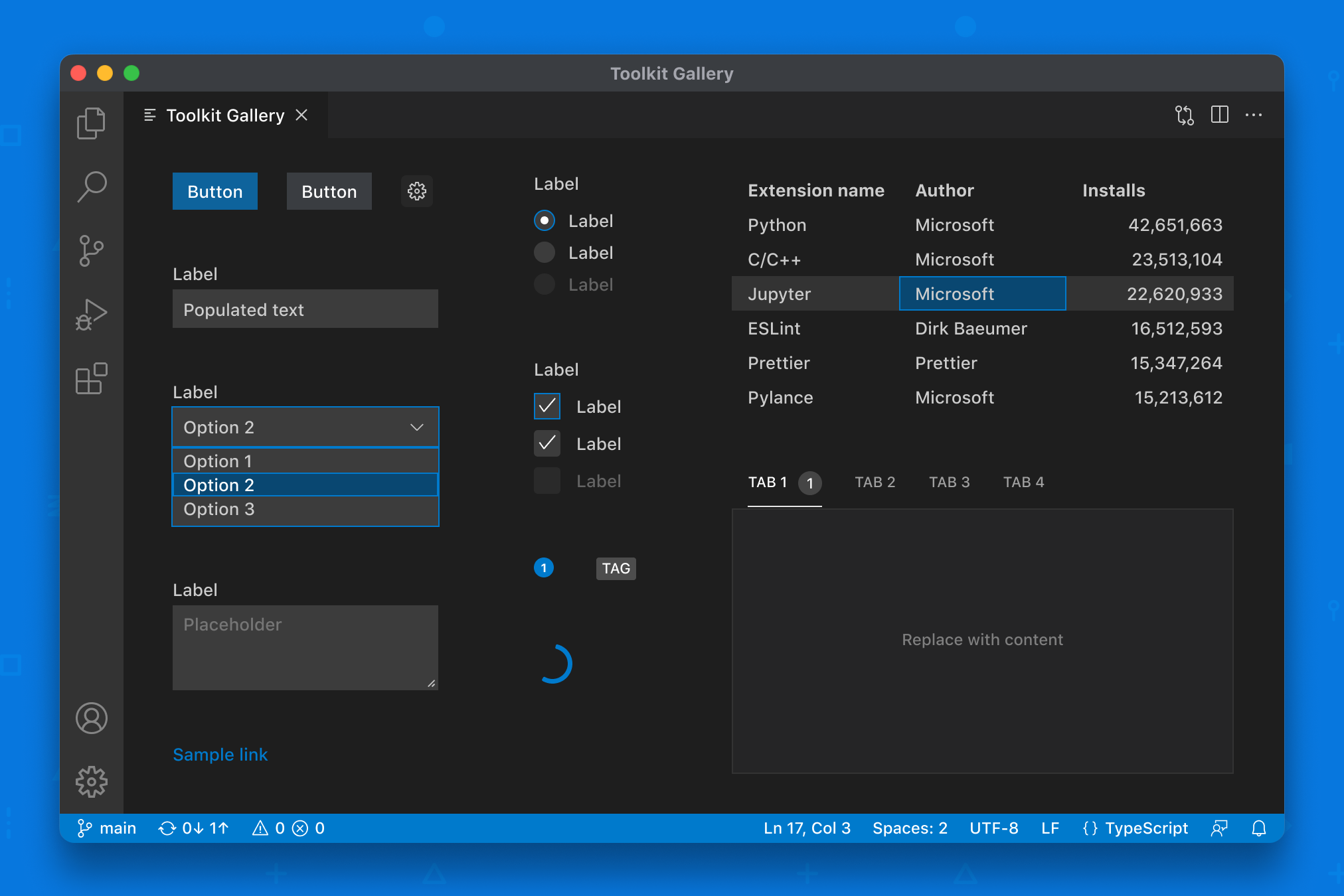
We’re so excited to announce the public preview of the Webview UI Toolkit for Visual Studio Code. With this toolkit, extensions developers can quickly and easily create webview-based extensions in Visual Studio Code that look, feel, and act like the editor itself.
At its core, the toolkit is a library of components that developers can use to build user interfaces inside extension webviews. Note that this doesn’t change our recommendation to avoid the use of webviews in extensions unless you absolutely need them.
Features of the library include:
Implements the Visual Studio Code design language: Create extensions that have a consistent look and feel with the rest of the editor.
Automatic support for color themes: All components are designed with theming in mind and will automatically display the current editor theme.
Use any tech stack: The library ships as a set of web components, meaning developers can use the toolkit no matter what tech stack (React, Vue, Svelte, etc.) their extension is built with.
Accessible out of the box: All components ship with web standard compliant ARIA labels and keyboard navigation.
Why did we build it?
We wanted to ensure that extensions that use webviews are predictable, consistent, and accessible for their users.
Any time an extension uses the Webview API, the responsibility of creating UI that adheres to the webview guidelines lies with the extension author. As a result, webviews run the risk of appearing and behaving differently than the rest of Visual Studio Code. In the worst cases, users must navigate inaccessible extension UIs that look nothing like the rest of the editor.
With the Webview UI Toolkit, we now share some of that responsibility with extension authors. We get to worry about the nitty gritty details of theming, accessibility, and behavioral/styling implementation of core UI components so you don’t have to. It means improved ease of development, improved developer velocity, and ultimately more time to work on the parts of your extension that make it unique!
We need your feedback!
We can’t wait for you to give the Webview UI Toolkit a try! Let us know how we can improve the experience for creating webview-based extensions as we move towards a 1.0 release.
If you’d like to learn more, you can refer to the Webview UI Toolkit for Visual Studio Code documentation. Additionally, if you have any questions, encounter any issues, or have feature requests, please don’t hesitate to reach out.
This week, the house across the street sold. I happened to be up early one morning and saw the truck take one of their moving pods. I have to gush….it was one of the coolest things I’ve ever seen. There’s a semi-truck, flatbed. And a metal contraption, like a skinny railed metal framed box.
The metal frame comes off the truck and the guy rolls it around the pod, cradling the pod.
Now, these pods are stinkin’ heavy. They have to weigh a gazillion tons. And the metal frame thing fits around it, and then hooks to the bottom of the pod with chains. The metal frame is mechanical, so it goes up and down and side to side to open and close and fit perfectly around that pod.
As I’m looking at the metal rail frame, knowing he’s going to try to lift that pod using only that metal frame, I laugh with doubt. Ain’t NO WAY that skinny railed little thing is going to lift that monstrosity of a pod…ESPECIALLY, while it’s FULL! It’s just not going to happen.
But it did!
It lifted the pod right into the air, so that the pod was literally suspended in air, swaying back and forth in the wind (I just knew it would crash into the whole house!) while the semi-truck drove his flatbed underneath the pod, lowered the pod onto the truck, strapped it down, and drove off. No crashing involved.
The guy was an expert…he knew EXACTLY what he was doing. It took absolute PRECISION at every step, to be able to accomplish all that.
I don’t think I’ll EVER forget that. What I saw was incredible.
It makes me think of our lives as Christians and how the man represents God, the expert, absolute precision at every step with us. Every turn, every day, He’s precisely leading us where HE wants us to go to accomplish His will.
And how we are the rails…the skinny rails that everyone underestimates (LINK TO POST WHEN LIVE). I admit, I did NOT think those rails were STRONG ENOUGH to do that! But they were. Those skinny little rails lifted that entire thing and put it where it needed to go. We are like that too. We LOOK LIKE we can’t do something, but the power that God places inside us as Christians is something that can move a mountain.
It’s only through His strength inside us that can move a mountain. But He uses skinny little underestimated rails like us to accomplish HUGE things, in order that HE get the glory.
If you feel like you’re underestimated in your life…GOOD. You’re in the perfect position to be used by God and used by God you will be.
Just as those skinny rails were CREATED to move mountains, you and I, friends, were created to do the same!
When others laugh at you, let them, just know in your heart, that you were made for SO…MUCH…MORE!
Want to encourage your heart every single day? Grab my 31 day devotional, the Hope Binder here!
I have a perhaps inappropriate, anthropomorphic relationship with whatever robot vacuum is running in my house. No matter how much trouble they cause me—if they get trapped in the ledge by the fireplace or lost under the couch—I never forget that it’s here to help me battle the chaotic mess that my two kids and two dogs perpetrate upon me daily. (I have similar anthropomorphic feelings about my dishwasher and washing machine.)
Have I convinced you that you need one, too? You’re in luck because the Amazon Prime Day vacuum deals lineup includes five of my top picks. Whether you need an all-in-one cleaning station, a simple picker-upper after dinner, or one with an air freshener, we have you covered. Read our ultimate Amazon Prime Day deals list for more discounts.
WIRED Featured Deals
If you buy something using links in our stories, we may earn a commission. This helps support our journalism. Learn more.
The Best Vacuum Deals
Of all the Dysons in our guide to the Best Dyson Vacuums, this is my favorite. For one low price, you get not one, but two cleaning functions—that of the regular Dyson V15s and then with a wet head, or Submarine, attachment. This wet head is possibly the best thing that’s ever happened to me, and it’s even quicker and easier than using an automated robot mop. Just fill the small reservoir with clean water, screw it back in, and hold the trigger the way you would vacuum with a normal vacuum. The head rotates and scrubs the floors quickly and easily.
I have used it to clean my children’s truly epic messes, such as one day when I used the vacuum head to vacuum an entire bag of spilled dry tapioca, then swapped it out for the wet head to mop up the spilled flour on the floor (we were “making” cherry pies). There are several points here, which may be considered drawbacks: First, you can’t just buy the wet head attachment and add it to other Dyson vacuums. Second, the 8-ounce reservoir is a little small, although I have found it to be perfectly adequate for cleaning about 200 square feet of hardwood floors. Finally, you have to rinse the mopping head and tray manually, which is always the worst part of mopping. Still, this tool is almost miraculous in how easily it helps me keep the kitchen from turning into a disaster. Dyson even unveiled a recent update that I’m not excited about, because there’s just no way it could be better.
My family got a new puppy several weeks ago. She’s adorable and I wouldn’t trade her for the world, etc. Also, she pees everywhere (it’s OK, she’s just a baby). In my pre-baby and pre-puppy life, these were items that I rented from Home Depot once every six months, and I’ve never been more grateful to own a portable one myself. Hashtag CleanTok certainly thinks so; this is part of our guide to Viral TikTok Gifts.
Reviewer Brenda Stolyar remarks that this isn’t the miracle it appears to be in a 20-second video clip. You do have to put in some elbow grease to get real stains out, as she discovered when she tried it on her living room rug and stained upholstery. However, the proof is in the pudding, or rather, the dirty water tank, which is fully grungy by the time she finishes and empties it out. Do you need something a little more heavy-duty? Check out our guide to the Best Carpet Cleaners.
The Best Robot Vacuum Deals
Although I have yet to include it in our roundup, this is one of the best and most effective robot vacuums, for the best price, that I have tried recently. The Yeedi M12 Pro+ is the high end of Yeedi’s product line. Like with Roborock before it, I have been shocked by the improvement in Yeedi’s software and hardware over the past few years.
The cleaning station has a new sleek look and is remarkably compact, considering it comes with a self-emptying dust bin and two huge, 4-liter water tanks—one for clean water and one for dirty. The helpful, but somehow still creepy, extendable arm reaches into every nook and cranny to mop, and the dock now has a hot air dryer so the mop pads don’t get moldy. After several weeks, I even sniffed them to see, and they still smelled clean (the things we do for testing). You can even start a cleaning session by tapping the bumper with your foot, although with a new puppy in the house this is not as convenient a feature as you might think. It is regrettable that getting a premium robot vacuum mop for under $800 is a steal in this economy. However, if you’re in the tax bracket that is considering hiring a house cleaner, this is a purchase that will help you put off that decision for a little longer.
Did I mention we recently got a puppy? And she’s only a baby, and I love her? Still, despite my best efforts and despite confining her to the living room most of the time, there is a very, very faint smell of pee. My 9-year-old daughter has started stealing my perfume, but she wouldn’t have to if we were still running the Ecovacs Deebot T9+ (8/10, WIRED Recommends). I thought the air freshener function would be a gimmick, or at least sickly and horrible, but I was surprised at myself that I enjoyed popping the little cartridge in and having my house freshened up before people came over.
Eight hundred dollars is about what I’d expect to spend on a new mop-vac combo, but at $400 this is positively reasonable, especially with this fun extra gimmick. The Deebot T9+ also doesn’t use cameras to navigate, so you won’t find pictures of yourself ending up on Reddit. The only major downside is that unlike more expensive mop-vac combos, you will need to replace the disposable mop pad pretty frequently, but that’s easy enough to do and I like being able to take off the wet pad if I want to vacuum immediately after mopping.
But perhaps you are not impressed by the foofaraws and the frippery and you haven’t been saving up an extra mortgage payment just for something to help you clean your house. In that case, you want an affordable robot vacuum that will work, and just won’t break. Of those, the classic, reliable Roomba is the least likely to fail you. Even the cheapest iRobot vacuums have features like Dirt Detect, where it spot-cleans specific areas.
The app is simple and easy to use, the vacuum is quiet and powerful, and it has stellar navigation capabilities. There are some minor differences in Roomba’s older offerings—for example, the 694 has a roller brush, while the slightly more expensive E5 has iRobot’s signature brushless roller. Different vacuums may have different button styles, but for the most part, if you can find a Roomba for $300 or less, it’s a great buy.
As a looter shooter addict, I’d be lying if I said I wasn’t interested in The First Descendant from the first time Nexon showcased it to the world a few years back. While the genre has never been exactly niche since it was popularized by Borderlands and Destiny, I can’t really remember the last time a new title managed to actually break into my “must play” list and tear me off Destiny 2 or Warframe for real. So if you show me a shiny new Unreal Engine 5 powered looter shooter and promise to deliver bombastic boss fights, engaging gameplay and a comprehensive endgame, I’ll obviously be interested, if only to see whether those boasts have any truth to them.
My first impressions with the game were fairly mixed, as gorgeous graphics and beautiful character models can only do so much when the story is clearly an afterthought, and server issues abound. The first week of play was punctuated by repeated network errors, with the occasional shader compilation stutter rearing its ugly head every time I unlocked a new area. This improved over time and now the game runs fairly well overall (though I presume once new graphics drivers are released and I update to them, I’ll have to experience those stutters all over again if I am still playing the game, but that seems to be an Unreal Engine 5 “feature” sadly). The server issues are mostly gone as well. Sadly, the story was what it seemed to be from the start and it never went anywhere interesting. There’s some really well done boss fights (that are also part of the endgame once you get far enough, unlocking harder difficulty versions of them) but if I had been offered the option to skip the story, I’d have done so in a heartbeat.
Gameplay-wise, The First Descendant can sometimes seem like two completely different titles at the same time. The gunplay, skill usage and movement are all extremely competently done and very fun. Shooting bad guys feels very responsive, abilities do what they are supposed to do in spectacular fashion and movement is always very responsive, though my initial impressions of the grappling hook were fairly disappointing (this ended up improving over time thankfully). Sadly, the other portion of the game (loot acquisition and weapon/descendant modding) is a mix of some of the worst parts of the Warframe grind, often without that game’s redeeming features.
Aside from my misgivings about the amount of things Nexon has taken from other games, another thing that disappointed me greatly when making my way through The First Descendant‘s story campaign was how generic most of the enemies we fight look, and how basic their AI really is. There’s no cohesive theme for the enemy types we meet, they are all variations of cybernetically enhanced monsters, or generic looking bioweapons with claws and weird protuberances. As the story progresses we get to meet some new baddies, but overall it’s hard to not feel let down by how soulless these foes look, and it’s even sadder that their AI mostly consists of literally spawning in predetermined areas out of thin air and rushing the player, or staying away and sniping, with no in-between. For all the complaints I have about Destiny 2, if there’s something Bungie have done well historically, it’s giving their AI combatants personality and cohesive unit tactics. Almost none of that can be found here, with the only exception being the Colossi bosses we get to fight at specific parts of the story, or during the endgame.
The basic framework of the modding system is directly lifted from Digital Extremes‘ long running looter shooter (guns and Descendants have limited “mod slots” that have specific polarities and they can fit a certain amount of mods, with polarities affecting how much space a specific type of mod takes, and mods affecting the equipment’s performance to a fairly important degree), and even more advanced mechanics are also essentially renamed copies of the Forma and Orokin Catalyst/Reactor systems (for those who aren’t used to Warframe terminology, Forma enables us to “polarize” mod slots so specific mods can take up less mod space, and the Catalysts/Reactors are ways to double mod space on weapons/warframes). Now, I’ve seen a fair amount of misinformation stating that the equivalents to these tools in The First Descendant are cash-only items and that’s very much untrue (they do require a fair amount of grinding, but that’s a given in a game of this sort). It is still a pretty annoying system, considering that you will need to work on a good number of weapons and Descendants if you intend to progress in the late game/endgame, but it’s not necessarily “pay to win”
Yet another thing that was mostly directly lifted from Warframe includes crafting timers for weapons and Descendants, which can range from a few hours to an entire day, and can obviously be “rushed” if the player chooses to spend premium microtransaction money on it. This means that you might spend an entire day’s worth of time grinding to get that hot new Ultimate gun, and then find out that you have to wait even more time to be able to use it (and level it up and mod it to be actually good, if you are at the point where basic guns don’t cut it anymore). It’s a system that preys on those of us who are impatient, while giving them nothing in return. In Warframe I can sometimes excuse it due to the existence of player-to-player trading, which allows you to get Platinum (that game’s premium currency) with items you got from farming, but don’t need (or need less than the new shiny weapon or frame). In The First Descendant there’s no equivalent system, which means your only source of premium currency is whipping out your credit card.
This is arguably one of the biggest issues I have with how brazenly Nexon has copied Digital Extremes‘ homework. They got a system that worked for a different game, and implemented its basic framework really well, which isn’t necessarily a bad thing (why reinvent the wheel if it works, right?). But while doing so, they seemingly forgot certain aspects that, while apparently not being super relevant under a surface level inspection, end up making the whole thing a lot smoother for many players. And I get that all the gameplay portions of TFD can be experienced entirely for free, with only cosmetics being gated behind real money purchases. This is a fairly generous monetization system, right? Or rather, it would be a fairly generous system if we didn’t suddenly find out that a lot of those things are extremely limited for no actual reason. Want to get a paintjob so your Descendant’s new skin doesn’t look the same as everyone else who got that Ultimate Bunny? You can do so, but once you’ve used that paint, it’s locked to that character and that character only. If you then want to paint a different Descendant and wanted to use that exact same paint you’ll have to repurchase it. The equivalent system in Warframe lets you acquire entire palettes with a selection of paints that can be used to color any Warframe or weapon you own, with no limits. Why not copy that too?
Now, so far I’ve been fairly negative about a number of aspects in this game, which may lead readers to believe I hated my time with it. This couldn’t be further from the truth, no matter how much I despised the story or the crafting timers, or way the microtransactions work. The First Descendant is a pretty fun game, especially now that the servers aren’t dying every fifteen minutes or so. Would I recommend it to someone who has already spent a few thousand hours in Warframe? Not really. Anything you’d see in Nexon’s new looter, mechanics-wise is something you already know and might even be bored of. For Destiny 2 players things are a little bit different. While The First Descendant shares a lot with Bungie‘s long-running shooter (and I’m not just talking about the Ikelos looking sniper or the ability/mod icons) it’s at the same time quite distinct in many other ways and possibly a good way to experience some looter shooter action without doing the exact same things everyone’s doing right now (which mostly includes running around the Pale Heart opening chests to get new rolls of the exotic class items, a fairly mind numbing process, as I’m sure you all know)
As someone who’s played both Warframe and Destiny 2 for way too much time, I can’t really find anything The First Descendant does better that makes me want to switch to it. To me, this an extremely derivative game whose main attraction is its beautiful graphics and the novelty of not being made by either Bungie or Digital Extremes. Now, to someone new to the genre, or who hasn’t played Warframe to exhaustion? I can see them sinking at least a few hundred hours into TFD, and I wouldn’t consider that time to be badly spent.
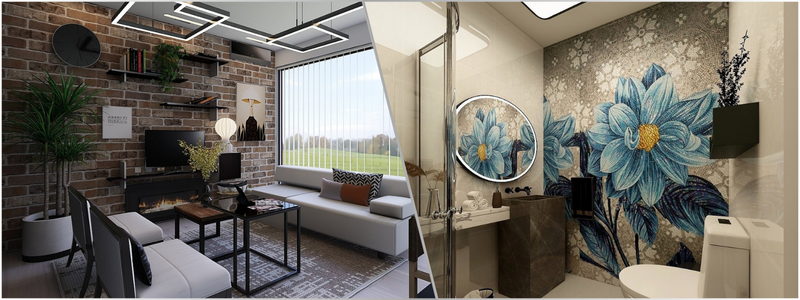
Urban wellness is today’s newest up-and-coming trend. As far as the modern era of urban development is concerned, the seamless blend of nature and technology is starting to become the fundamental strategy for creating aesthetically pleasing, healthy, and sustainable urban spaces. The progressive urban planning approach known as biophilic urbanism promotes incorporating natural elements into built settings. Taking advantage of 3D rendering services and 3D designers in this particular approach is changing how companies visualize and construct urban landscapes. Thanks to these services, the fusion of nature and technology is not only possible but also becomes visually compelling and tangible at the same time.
The birth of biophilic urbanism
The principle of biophilia is the basis of biophilic urbanism. Biologist Edward O. Wilson popularized the term biophilia, which pertains to humans’ natural tendency to look for connections with nature. The urban design approach integrates natural elements such as natural light, water bodies, plants, and other living systems into urban spaces. The main objective is to create functionally efficient environments while promoting the residents’ health and well-being through nurturing deeper connections with nature.
As a contemporary design philosophy, the main concept behind biophilic design is that humankind has an intimate connection to nature. 3D architectural rendering firms often integrates natural elements into interior design and architecture that positively affect people’s mental and physical well-being. Natural light, water features, plants, and natural materials like stone and wood are among the elements that are often used in biophilic design.
The ultimate aim of biophilic design is to create functional spaces that evoke a sense of tranquillity and peace by using natural elements. The most commonly used materials in biophilic design are plants, light, water, wood, concrete, and stone. But there is more to biophilic design than just using these natural materials or adding a few plants here and there. Instead, it is more of a holistic design approach that considers how the built environment can promote sustainability and support the well-being of humans.
Biophilic design has been gaining fame for the past several years, with more and more people recognizing the perks of forming a connection with nature not only for personal health but also for the health of a planet as a whole. The following are some of the fundamental principles of modern biophilic design:
Biomimicry involves taking inspiration from the processes and systems of nature to inform architectural design, including emulating ecosystem efficiency and using natural ventilation methods.
Natural patterns and forms
This involves the 3D rendering artist integrating organic textures, patterns, and shapes found in nature into décor, furnishings, and architectural elements.
Natural views and light
It maximizes daylight access and provides views of natural elements like water bodies, landscapes, and trees.
Nature in the space
This is about the introduction of indoor gardens, green walls, or living plants in the hopes of bringing nature indoors.
Sensory experience
This engages different senses using natural materials, sounds of nature, scents, and feelings of gentle breeze.
The integration of elements of biophilic design into spaces offers a lot of exciting benefits. For instance, research has revealed that exposure to natural light helps regulate circadian rhythms and improves people’s sleep quality. It has also been shown that being surrounded by plants can help lower anxiety and stress levels, improve mood, and boost productivity. Using natural materials in design and 3D construction rendering services is also more eco-friendly and sustainable as it helps lower the buildings’ environmental impact.
Aside from these environmental and health benefits, biophilic design creates a more engaging and enjoyable experience for everyone within the space. Biophilic design creates a more relaxing and calming ambiance by incorporating natural elements into built environments. It also fosters a sense of engagement and connection with the nearby environment.
Breathe life to biophilic design visions with 3D rendering services
As one of today’s most powerful tools 3D architectural visualization firms utilize, 3D rendering services have become invaluable in modern urban planning. Thanks to this, planners and architects alike can develop realistic and detailed animations and images of proposed urban projects.
Regarding biophilic urbanism, today’s 3D rendering services are an integral partner as they help breathe life into the designs and concepts of urban spaces infused with the beauty and serenity of nature. These services also offer a glimpse of cities in the future, showcasing their transformation when natural elements are added.
An innovative modern catalyst
Taking advantage of 3D rendering services for designing biophilic urban spaces catalyzes innovative urban design. This opens new possibilities for unconventional and creative solutions in incorporating nature into urban spaces. 3D rendering services help push the boundaries of conventional urban design, from nature-infused public plazas to green bridges and verdant rooftop gardens.
When visualized with the help of 3D architectural modeling professionals, biophilic urbanism can help address numerous social and environmental concerns that many modern cities often deal with. When urban designs are infused with natural elements, these contemporary projects can significantly reduce the effects of urban heat islands while enhancing air quality and promoting biodiversity. Aside from these, they also provide social benefits by creating healthy and serene areas for residents that can help their health and well-being in general.
Design and planning made better
3D rendering services can also help your company as they improve urban planning and design phases. These unique services enable a more detailed and comprehensive exploration and discovery of the best way to incorporate natural elements into different urban settings. These 3D visualization services also give way to experimenting with various layouts, evaluating the effect of natural light, and investigating how to integrate green spaces into dense urban areas. Such an impressive level of detail guarantees that adding natural elements will not only be pleasing to the eyes it is viable in terms of function at the same time.
Effective communication is and will always be the key when it comes to any size and shape of urban development project. Biophilic designs developed by 3D rendering services allow better engagement and more transparent communication with all the stakeholders involved, including investors, city officials, and the community. The 3D renderings can help solidify support and consensus for modern biophilic initiatives by offering a more realistic glimpse of the proposed project.
Rise above difficulties in urban design
Urban design is often embroiled with navigating different challenges and difficulties. These may include limitations in budget, regulatory requirements, and spatial constraints. 3D rendering services can help rise above these challenges. These services allow 3D architectural designers to explore numerous elements of biophilic design and their specific configurations in complicated concept of urban spaces. They also help pinpoint potential problems early on in the design process, which thereby helps save resources and time down the road.
Working with 3D rendering service providers specializing in biophilic urbanism is an integral step to achieving sustainable development of urban spaces. This can aid in the design of urban areas that are beneficial to the environment and have the level of resilience required to withstand the threats of climate change. With the ability to visualize the effective and efficient use of green spaces, energy-efficient designs, and water management systems, 3D rendering services can help create more sustainable models for urban developments in the near future.
Visualize the future of green urban spaces
Through the help of 3D architectural animation companies, architects and urban planners can better envision the best ways to incorporate green spaces in the urban fabric in a more comprehensive and detailed manner. It includes the design of green corridors, urban parks, vertical gardens, and green roofs. This kind of 3D visualization inspires and helps convince both the public and the stakeholders better regarding the perks and feasibility of infusing nature into modern urban settings.
With the continuous and seemingly unstoppable growth of populations in urban areas, the need for liable, healthy, and sustainable cities becomes increasingly pressing. 3D rendering services for designing urban wellness and biophilic urbanism are promising approaches to developing functional urban environments that advocate for people to form a deeper connection with nature. Through the use of 3D rendering services to visualize biophilic designs, it is now possible to create and develop a better future not only for humankind but also for the beloved planet.
How Cad Crowd can help
Cad Crowd is your leading resource for the best and most trusted 3D rendering professionals who can turn your envisioned biophilic oasis into reality. Contact us today and let us know how we can help you with your next project!
We do love a good diegetic interface here at the treehouse, whether that’s the analogue radar twisties of HighFleet, or the myriad hefty flickables of PVKK (Planetenverteidigungskanonenkommandant. Duh.) The fifth mech jam is currently happening over at Itch.io, and the clear standout for me thus far is Armored Shell Nightjar. It’s a first person pilot-em-up that puts you in the cockpit of a grasshoppery rust-bucket carrying out a critical mission on an industrial desert planet. The more the intro text stresses the importance of this mission, the more guiltily useless I feel, because I cannot get this beautifully run-down mech to do anything of note, unless you count violently hopping into walls to be notable.
Image credit: Warkus/Modus Interactive
Peek the interface above. The pull-a-magig in the top right lets you hover for a few seconds. The big shiny button makes you hop, and as far as I can tell, the dial on the far right tunes the speed and height of these hops, but also makes you reverse sometimes? The screen on the far left lets you tune your hover, but maybe also your jump? The second-to-far left widget that looks like a coffee grinder moves your horizontal view, and the arrows to the right of the screen tweaks your vertical. Unless my useless brain deceives me, there aren’t any shortcut keys, so you’re doing all this twisting and clicking manually.
I am left both utterly smitten and deeply unsure of how to make any progress up the winding set of steps that appear to be my only means of progress. Oh, clunky boy. Please, reveal to me your inner workings.
I should make clear than none of this is a criticism. I love how esoteric this all is, the place where medieval obtuseness meets futuristic technology being the mech experience. Also, if my application for King Of Games is successful, every videogame will be legally required to use cutscenes that look like this. I think I’d most readily class Armored Shell Nightjar as a puzzle game, then. There’s very little story, but even beyond the diegetic interface, there’s a plucky kind of mechanical poetry to the way this mech operates, clearly not meant for frontline warfare. It feels like a relic even within its own time. Perhaps cobbled together by some desperate resistance from parts of much sleeker and more powerful mechs from ages long past?
Or perhaps the mech actually houses an extremely advanced autopilot that makes all the interface wrangling unnecessary, and it’s having a grand old time trolling me. Either way, I’m a fan. This is one sided relationship, sure, but I’ll endure it.
Armored Shell Nightjar is made by Warkus and Modus Interactive, both of whose catalogues I’m keen to dive into. Warkus especially has a tasty selection of vibrant retro oddities, like this creature collectingRPG inspired by Dragon Quest and Monster Rancher, my beloved.