Nine Sols: How We Brought a Taopunk World to Life


The same went for audio design. We wanted the soundscape to stand out, so we fused traditional Eastern sounds with modern instruments to create something truly distinct. This combination gave Nine Sols an identity that sets it apart from other games, making the atmosphere feel both grounded in ancient roots and futuristic at the same time.

As we pieced everything together, the overall narrative also began to amplify. Themes like nature vs. technology and the meaning of life and death naturally found their way into the story. Strangely enough, it felt like Nine Sols was carving out its own path, and we were merely guiding it as it found its voice. Ultimately, we created a storytelling experience that stands out in the genre, exploring deep philosophical themes through the lens of myth and technology.

A Journey We Can’t Wait to Share

Looking back, creating Nine Sols has been an incredible journey. Now, we’re excited to share this world with you. Whether it’s the deflection-heavy combat, the cyberpunk-inspired art, or the philosophical themes woven into the narrative, we believe there’s something in Nine Sols that will intrigue you.

What is a nebula? Come for the science, stay for the beauty.


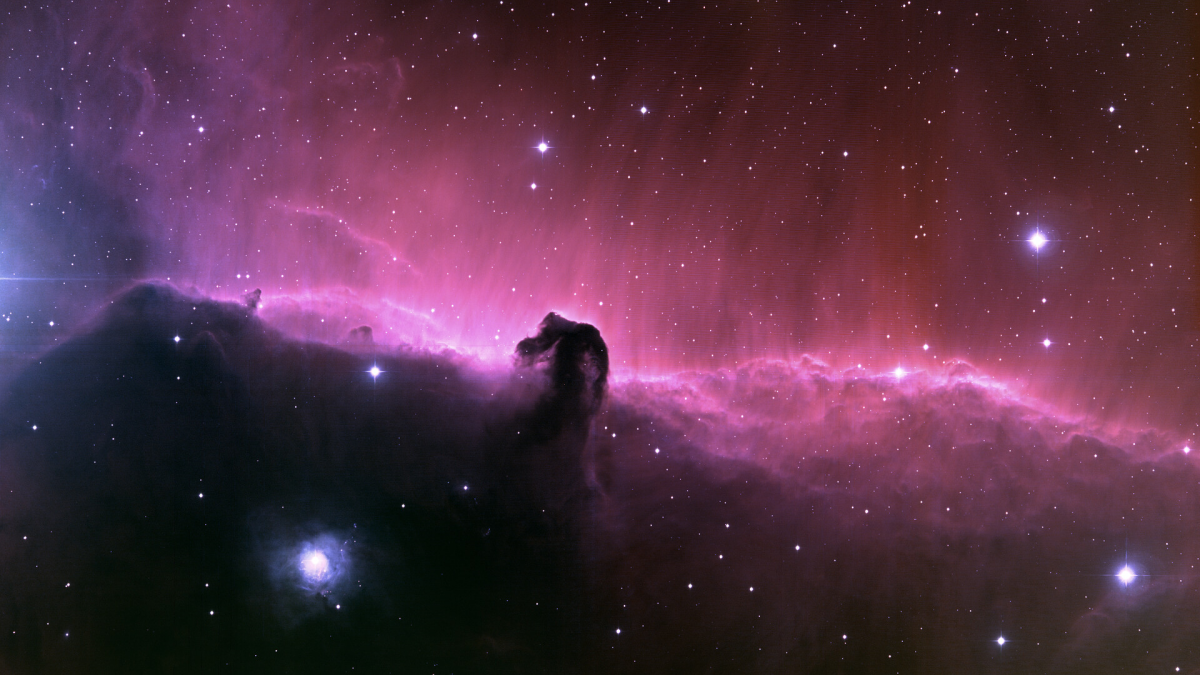
Hubble Telescope image of the Horsehead Nebula.
Credit: T.A.Rector (NOIRLab/NSF/AURA) & Hubble Heritage Team (STScI/AURA/NASA)

Nebulae are all but impossible to spot in the night sky, but you’d never know it. Through a telescope, they make the most jaw-dropping beauty shots. But what is a nebula in the first place? Have you ever wondered where nebulae come from, or what they’re made of? If so, you’re in good company, and we’ve got a gorgeous gallery of nebulae from the world’s great observatories to prove it.

First, the basics: A nebula is a giant cosmic cloud of gas and dust. The word ‘nebula’ comes from Latin, meaning “little mist.” Before telescopes existed, astronomers considered all such faint deep-sky objects to be nebulae. With the advantage of modern telescopes, though, we can see that some of those colorful points of light are “true” nebular clouds, some are star clusters, and some are entire galaxies.

Astronomers have known about nebulae for at least a thousand years. The first attested mention of a nebula comes from the Persian astronomer Abd al-Rahman al-Sufi, who wrote in 964 about a “little cloud” we know today as the Andromeda Galaxy. Less than a hundred years later, Arabic and Chinese astronomers marveled at a supernova that created the Crab Nebula. Since then, thousands more have been identified and described in surveys like the Abell Catalog of Planetary Nebulae and the Messier catalogue.

Nebulae are mostly found within galaxies—specifically, in interstellar space. There’s often at least one star at the core of a nebula, whether new or recently deceased, but sometimes a giant molecular cloud turns up starless but sporting its own subtle glow. Astronomers estimate that there are about twenty thousand nebulae in the Milky Way alone, but only about 3,500 have been confirmed because of the obscuring cloud of gas and dust hovering around the center of the galaxy. The closest nebula to Earth is the Helix Nebula, which is about 700 light years away from Earth.

Space telescopes are invaluable for studying nebulae, which are often faint and dim. Earth’s atmosphere is like an Achilles heel for telescopes. Light pollution and moonlight are enough to drown out a nebula altogether; worse, some frequencies of light can only be observed from space. Nevertheless, astronomers can and do perform in-depth studies in the visible spectrum, using terrestrial telescopes like the 90-cm NSF telescope on Kitt Peak or the European Southern Observatory’s Very Large Telescope (VLT) in the Chilean Andes. Compared or composited, when taken together they can tell scientists much more than they reveal on their own.

This image shows two different views of the Horsehead Nebula.

Two different views of the Horsehead Nebula. On the right is a view of the nebula in visible light, taken using the European Southern Observatory’s Very Large Telescope in Chile (eso0202a). The new image on the left shows the nebula in the infrared, using observations from Hubble’s high-resolution Wide Field Camera 3.
Credit: NASA, ESA, and the Hubble Heritage Team (AURA/STScI); ESO

Astronomers name nebulae for what they look like through a telescope (examples include nebulae named for dumbbells, horseheads, tarantulas and crabs), or where they appear in the sky (for example, the Orion Nebula). With the aid of high-powered telescopes, it’s now known that many different types of nebula exist, but they tend to fall into just a few main classes.

Supernova Remnants

Many nebulae are formed by a supernova: the violent explosion of a dying star. When stars explode, they cast off their outermost mantles of gas and plasma, creating clouds, rings, and plumes. New stars rise like a phoenix from the ashes of the star that came before.

Blue represents neutral oxygen, green is singly-ionized sulfur, and red indicates doubly-ionized oxygen.

The Crab Nebula, a supernova remnant nebula. Blue in the filaments in the outer part of the nebula represents neutral oxygen, green is singly-ionized sulfur, and red indicates doubly-ionized oxygen.
Credit: NASA, ESA, J. Hester and A. Loll (Arizona State University)

One of the most striking examples of a supernova remnant is the Crab Nebula, found in the constellation of Taurus. Sometime between April and June of 1054, a so-called “guest star” flared into being, visible to the naked eye where no star had been discernible before. Two years later, it had faded from its peak brightness, leaving behind it a smudge of diffuse color. Today, it’s comparable in brightness to Titan, one of the moons of Saturn. (Neither Titan nor the Crab Nebula are visible to the unaided eye, but with a dark sky and cooperative weather, you can find them with binoculars.) The explosion stripped off the star’s outer layers, and the stellar core—now a neutron star—lies in the center of the nebula.

In the 1920s, astronomers like Edwin Hubble noticed that the Crab Nebula was getting bigger in photos of the night sky. Hubble did the math and realized that the universe was expanding at a meaningful fraction of the speed of light.

Planetary Nebulae

An explosive fate awaits stars of less than about eight solar masses. Planetary nebulae are a type of supernova remnant formed when Sun-like stars first swell up to enormous sizes and then explode. When it happens to the Sun, its mantle will be flung outward to form a planetary nebula, while its core will linger on as a white dwarf.

Named because their color and size made them resemble planets through early telescopes, planetary nebulae also tend to be round or oval in shape. However, because these stars go through a phase of repeated explosions at the end of their lives, they often have a subtle structure of nesting layers. Often, these fine features are only visible through larger telescopes.

These concentric shells make a layered, onion-skin structure around the dying star. The view from Earth is like seeing an onion cut in half, where each skin layer is discernible.

The Cat’s Eye Nebula, a planetary nebula formally known as NGC 6543. According to NASA, “Observations suggest the star ejected its mass in a series of pulses at 1,500-year intervals. These convulsions created dust shells, each of which contain as much mass as all of the planets in our solar system combined (still only one percent of the Sun’s mass).”
Credit: NASA, ESA, HEIC, and The Hubble Heritage Team (STScI/AURA)

Space telescopes like Webb, Hubble, and the Chandra X-ray Observatory are valuable tools in the investigation of planetary nebulae. Their abilities go far beyond the simple observation of stars and nebulae themselves. For example, Chandra can pick up X-rays emitted by the shock wave after a supernova.

Stellar Nurseries

When stars are born, they collapse from massive clouds of dust and gas. Sometimes, the very same clouds that form a supernova-remnant nebula serve as ready material for the formation of new stars. (That’s how our own Solar System formed: out of the ashes of a predecessor star, our presolar nebula was shocked into collapsing by another neighboring star that exploded in a supernova.)

Star clusters enveloped in a shroud of cold dust and gas can light it from within, like car headlight beams visible through a cloud of fog. This type of nebula is called a reflection nebula, because its internal light is scattered or reflected.

The reflection nebula surrounding the Pleiades is difficult to see, but even without the nebula, the Pleiades are worth the effort.


Credit: Davide De Martin/ESA/ESO/NASA. Image Processing: Photoshop FITS Liberator

Sharp-eyed stargazers may be able to make out the Pleiades, a brilliant cluster of young blue-white stars in the constellation of Taurus. Harder to discern without a telescope is the reflection nebula surrounding the cluster.

Emission Nebulae

Many nebulae have high-energy stars inside, or a massive explosion in their past. However, not all nebulae have such a violent origin story. The soft light from a nebula may also come from the ambient radiation released by the nebular cloud itself. This type of cosmic cloud is known as an emission nebula. One of the most famous is the Eagle Nebula, which contains the Pillars of Creation. (More on the Eagle Nebula below.)

Where reflection nebulae are cooler clouds illuminated by stars, emission nebulae are their own light source: radiation from the nebular cloud’s ionized gas.

Dark Nebulae

On the other end of the spectrum, there are nebulae that barely shine at all. Dark nebulae are cool, dense clouds of matter that partially obscure brighter areas behind them. Often it’s atomic helium, molecular hydrogen, and grains of dust and ice. Many such clouds are at just a few degrees Kelvin shy of absolute zero. Even through the JWST, whose active cooling lets it see things below 40 Kelvin, dark nebulae are difficult to find. In the visible spectrum, they mostly just look like silhouettes. Paradoxically, some dark nebulae like the Coalsack Nebula are visible to the unaided eye, because they’re just huge clouds of cold dust blotting out regions of the Milky Way.

Most nebulae are found within galaxies, including dark nebulae, but there are exceptions. Some molecular clouds float at the outer edge of a galaxy’s gravitational influence. One type, the integrated flux nebula, is lit only by the distant light of stars in a galaxy such as the Milky Way. Faint and cool, they may take hours of exposure time to get a good image.

Hybrid Theory

Often, on closer inspection, nebulae turn out to be much more than meets the eye. These smudges of color become troves of scientific data. Take for example the Orion Nebula. Forming the middle “star” in Orion’s sword, the Orion Nebula is the only nebula visible to the naked eye. By the time of Galileo, astronomers had made sketches indicating a cloud illuminated from within by a cluster of stars. Spectroscopic observations from the 1920s showed that it had features of an emission nebula, giving off its own glow separate from that of the stars in the cluster. Space telescopes completed the hat trick, uncovering evidence of dark nebula features.

The Orion Nebula in false color.

The Orion Nebula.
Credit: NASA, ESA, M. Robberto (Space Telescope Science Institute/ESA) and the Hubble Space Telescope Orion Treasury Project Team

In one of the most detailed astronomical images ever produced, NASA/ESA’s Hubble Space Telescope captured the above image of the Orion Nebula. According to the Hubble telescope team, “This extensive study took 105 Hubble orbits to complete. All imaging instruments aboard the telescope were used simultaneously to study Orion. The Advanced Camera mosaic covers approximately the apparent angular size of the full moon.”

One enduring scientific puzzle: the nebula’s color palette, a variety of colors from deep red to green and blue-violet. The red hue is evidence of ionized hydrogen, which gives off visible light at a wavelength of 656.3 nm. Likewise, the green is from a rare “forbidden” behavior of electrons in doubly ionized oxygen. Shades of blue and purple come from the massive O-class stars embedded in the cloud.

True Colors

Finding a nebula in the sky is relatively easy, but sometimes what’s visible through binoculars or an optical telescope can be underwhelming. So why are all those press-release images so pretty? It may come as a surprise to hear that many of the classic telescope images of nebulae are colorized, but there’s much more going on than simple artistic license.

According to NASA, scientists will choose to colorize a telescope image in a couple of ways. One workhorse transform commonly used with beauty shots from the Webb telescope is a simple frequency shift. The JWST makes its most important observations in the infrared, which human eyes can’t see. Researchers take wavelengths of light that are invisible to our eyes and transpose them onto the visible spectrum (wavelengths between 400-700 nm), with longer wavelengths represented as redder colors and shorter wavelengths toward the blue end of the visible spectrum.

Different wavelengths of light correspond to different chemical elements in this composite image of the Swan Nebula.

Different wavelengths correspond to different chemical elements in this deconstructed composite image, taken from observations made with the Hubble Telescope.
Credit: Dean Salman & the ESA/ESO/NASA Photoshop FITS Liberator

In addition to colorizing images by wavelength, some telescope images are color-coded by chemical composition. A wash of fuzzy pastel clouds can become a detailed portrait of a nebula’s chemistry, using spectrographic analysis. Image processors assign each spectral band a color, usually red, green, or blue, depending on the closest color to the band. With computer processing, scientists can integrate and compare multiple telescope images of the same target, from the infrared band to ultraviolet light and X-rays. The resulting composite image is both beautiful and useful.

We Promised: The Eagle Nebula

What better way to end than with some examples of said beauty and utility? After all that reading, we’ll leave you with a few glamour shots of our favorite nebula: Messier 16, better known as the Eagle Nebula. For example, this gorgeous 2014 Hubble composite of the Pillars of Creation, a star-forming region within the Eagle Nebula.

Taken in 2014, this composite is itself an update of Hubble's prior observations of the region.


Credit: NASA, ESA, and the Hubble Heritage Team (STScI/AURA)

Compare that to a 2022 survey of the same area, captured with the JWST’s infrared instruments:

The Pillars of Creation is a small region within the vast Eagle Nebula, which lies 6,500 light-years away.


Credit: SCIENCE: NASA, ESA, CSA, STScI. IMAGE PROCESSING: Joseph DePasquale (STScI), Anton M. Koekemoer (STScI), Alyssa Pagan (STScI)

Where the Hubble image is in visible light, showing more of the gas and dust, the JWST’s near infrared camera brings out the innumerable stars. More than eight thousand are inside the cluster alone, mostly concentrated in a lumen inside the nebula’s molecular cloud.

Found in the constellation Serpens, the Eagle Nebula is about 6,500 light years away. In its wider dimension, the nebula is about seventy light years from edge to edge. Astronomers currently estimate that the nebula is less than two million years old.

This landscape of “mountains” and “valleys” speckled with glittering stars is actually the edge of a nearby, young, star-forming region called NGC 3324 in the Carina Nebula.

If the word “nebula” still has any meaning to you, you’re doing better than us.
Credit: NASA, ESA, CSA, and STScI

This image of the “Cosmic Cliffs,” a different region in the Eagle Nebula, was captured by the JWST’s NIRCam. For a sense of scale, the orange “peaks” are about seven light years tall.

So, what’s your favorite nebula? Did we miss a really good one? We’d hate to sleep on these cosmic jewels, so let us know in the comments.

Planning An Office Building For Your Startup: 5 Key Considerations


Home Business Magazine Online

As you set up your business, it helps to remember that your employees will probably be spending 40 or more hours a week at the office. Their time at your business premises can be rewarding or frustrating depending on how good your office spaces are. Your office’s aesthetics and functionality also considerably influence the experience clients have with your brand. With this in mind, consider the following office planning tips for your startup.

1. Location

Your first port of call in office space planning is choosing a suitable location for your business. Your clients shouldn’t struggle finding the place. So, an office building in a well-known street that’s easily accessible would be ideal. But don’t stop at accessibility alone: it also helps if the surroundings are attractive. Your team members and clients will remember your premises for the right reasons. And they’ll always long to be back there if the place pleases them.

Moreover, ensure that the place is easy to commute to. People love jobs that are close to their homes. Check whether there’s a residential neighborhood near your proposed office building. Otherwise, you may experience a high turnover rate as the majority of your employees seek out jobs closer to home.

The location will also determine how easy or challenging building the office block will be. For areas with unstable and expansive clayey soils, you’ll need effective soil solutions for paving to permanently alter the physical and chemical properties of the soil to improve its load-bearing capacity and stability. A strong foundation for your building ensures it stands the test of time, serving you for many years.

2. Size

Your office must be comfortable for employees and clients, but still save money on monthly rent. The recommended size is at least 150 square feet per employee. However, there’s no one-size-fits-all solution. The required space and office layout varies depending on your industry. For instance, the legal, biotech and science, and insurance industries often require larger spaces while social services and technology require the least amount of space per person.

It also helps to account for future growth in your office space layout. The common practice is including 10 to 20% extra office space in your calculations. Alternatively, plan such that the occupancy will get to about ⅔ or ¾ of the total space during your lease term. This will help you accommodate potential growth without hitches while still leaving extra space for emerging needs.

3. Company Culture

The culture you desire for your startup will greatly influence your office space design. Suppose you want to foster a collaborative culture. In this case, an open plan office with large communal tables, breakout spaces, meeting rooms, and lounge areas would be ideal. Open plan offices encourage interaction.

On the other hand, for a results-oriented culture, your modern office space should be structured to support focus and productivity. This means private offices or quiet zones for optimum concentration while working. And for a hierarchical culture, you’d want closed, cubicle-based offices that reflect this structured approach. Thoughtful office space planning goes a long way to fostering a positive culture in your company.


Courtesy of Adobe Stock Images

4. Safety

The safety of your personnel and clients is a priority in effective office space planning. At least, your new office space must have security guards at the entry and exit points.

Next, the materials used on the doors and windows should be burglar-proof. For the doors, materials like steel, solid core wood, fiberglass, and laminated glass are excellent. As for the windows, go for reinforced glass, impact-resistant glass, or steel grills. Ensure the doors and windows have premium grade locks that can’t be easily breached.

And besides the security measures on the building itself, the neighborhood should be safe. Avoid streets known for high crime rates. Clients and employees might be too afraid to needs of employees come to your premises for fear of being waylaid. And that will considerably hurt your business.

5. Inclusivity

Inclusive office design prioritizes the multifarious so that all can thrive no matter their physical abilities, gender, age, or cultural background. Here are some key elements of inclusive office design:

  • Universal accessibility: Ensure those individuals with mobility impairments can move around your office. You can achieve this through ramps, wide doorways, and adjustable desks.
  • Sensory inclusion: This is caring for those sensitive to lighting, noise, and other environmental factors. Use adjustable lighting, noise-canceling materials, and designated quiet zones in your office interiors to make your premises more accommodating.
  • Flexible workspace: Your office space should have different types of workstations to cater to the different work styles. For instance, you could have a mix of private rooms, open spaces, and collaborative areas. Employees can choose the space that best suits their preference and tasks.
  • Cultural sensitivity: Create a work environment that respects and celebrates cultural diversity. For instance, you could incorporate prayer rooms, diverse food options, and multicultural art to ensure employees from different backgrounds feel respected and valued.

Inclusive office design ensures a healthy work environment for everyone, leading to higher employee satisfaction, retention, and productivity.

Conclusion

Planning a new office building for your startup shouldn’t feel insurmountable. Knowing the key factors to consider in the office space planning process, as outlined herein, sets you up to a good start. You may want to consult professionals for tailored insight into how best to set up a decent office for the specific needs of your business. They can even propose different floor plans that you can follow when building your new office buildings.

The post Planning An Office Building For Your Startup: 5 Key Considerations appeared first on Home Business Magazine.

Best Treadmills for Home of 2024


If you’re new to the treadmill and are looking for guidance on the proper way to use one, our experts shared the best practices you should be following.

Warm-up: As with any workout, you shouldn’t neglect the warm-up. At an easy walking pace warm up for five to 10 minutes.

Don’t hold onto the handrails: If you’re running on a treadmill at a pace that’s slightly too fast for you, it’s tempting to hold onto the console or the handrails. “This risks injury and it isn’t proper treadmill form,” warns Wilpers. If you find the speed too fast, reduce it until it feels comfortable enough to keep your elbows by your sides.

Don’t go out too fast: One common mistake some people make is cranking up the speed too soon. Wilpers says, “Make sure you do an easy warm-up or jog before transitioning into an actual run”.

Use your arms: It’s easy to forget about your arms if you’re jogging or running on a treadmill, but using your arms by swinging them as you run makes you a more efficient runner. “Make sure to keep them bent at around 90 degrees and by your sides and not swinging across the body because that is a sign that your torso is rotating too much,” advises Wilpers.

Run tall, run light, run relaxed: If you’re running on the treadmill, you want the movement to feel as natural as possible. Wilpers says, “Throughout runs, perform mental body scans to assess how you are doing from head to toe, including breathing.” When thinking about your form, running tall means you are maintaining an upright posture with a forward lean from the ankles, whereas running light refers to light quick feet, and running relaxed is relaxing everything else that isn’t driving the movement.

Who should avoid treadmills: It’s important to avoid hopping on a treadmill if you are currently injured, have an illness, recently had surgery or are recently postpartum. “I would not recommend a tread workout at the moment, but once given clearance by your doctor the tread can likely be a good training tool to get you back in good condition,” says Kennedy. If you have heart conditions, vertigo, arthritis or disc issues, it’s best to consult with your doctor first.


An Everyday Story Free Download


An Everyday Story Free Download By Worldofpcgames

An Everyday Story Direct Download:

An Everyday Story is a story-driven puzzle platformer with a heartfelt twist. A man holds dear three little trinkets, each representing his bond with a loved one… play as a Tin Soldier, a Bat Origami and a Wooden Boat through an adventure to regain lost memories. Experience the melancholy of life, needings and wishes, forgiveness, memories, nostalgia, and unravel the backstory of the main protagonist’s family. As humans travel throughout their lives, so do their trinkets! Explore multiple locations scattered across the globe, each filled by platforming action. Resolve environmental puzzles and use your strengths to overcome everyday obstacles, or ram through them, you have the power… Dawn Of Insolence

… but be careful! Being tiny is a double-edged sword: you can slip through narrow passages and avoid most dangers… but you are also very delicate, and anything can stomp you at any time! Are you ready to delve into your deepest nightmares? Sometimes, memories and fears can manifest in, let’s say, very colourful and dangerous ways. An Everyday Story was born with a simple idea: create a simple platform where the main protagonists were made of different materials like glass, wood or metal and have to face challenges tied to their fragility. It didn’t have a story at the beginning! Then we started building up the studio, worked hard on alpha and got out there doing our best to create a simple yet functional game fueled by our passion and love for the medium.

Features and System Requirements:

  • The game features a combination of platforming and puzzles, where players must solve challenges related to the character’s life experiences.
  • Each puzzle represents a metaphor for a personal struggle or achievement, requiring both critical thinking and reflexes.
  • The game’s progression is tied to the storyline, with each new chapter marking a significant milestone in the protagonist’s life.
  • Players unlock new memories and insights as they navigate through different life events.

Screenshots

System Requirements

Recommended
OS: Windows 10
Processor: Intel Core i5 or equivalent
Memory: 8 GB RAM
Graphics: GeForce GTX 1660
DirectX: Version 11
Storage: 5 GB available space
Support the game developers by purchasing the game on Steam

Installation Guide

Turn Off Your Antivirus Before Installing Any Game

1 :: Download Game
2 :: Extract Game
3 :: Launch The Game
4 :: Have Fun 🙂

Debugging MAUI app on iPhone from Visual Studio ARM inside Parrallel Virtual Machine for Mac


I use Parrallels Desktop 20 (55653) for Mac (mine is Macbook Air M3 16GB 512 installed Sonoma).
I installed Visual Studio ARM (64bit 17.11.3 and ITunes 12.13.3.2) on Virtual Win 11 and when plugged in my iPhone for debugging VS just not recognize the device.
I already choose ‘Connected to Win (instead of Mac)’ and iPhone got recognized by ITune, Explorer, Windows Device Manager Driver as well (i can see the driver Apple mobile device usb composite device & Apple mobile device usb device are there) on this Virtual Machine.
But whenever I try to deploy from Visual Studio as Local Device (it’s .NET MAUI iOS project), a pop up “Setup Hot Restart” appear and when clicking Next it just hangs there forever “Waiting for a device to be connected” …!
Any advice?

Try to connect the phone into Mac mode (do not connect to Win) and then debug using Remote Device debugging … but the build is super slow & hangs at the Xamarin.iOS.Common.After.targets(321,3): An exception occurred in the task “FindILLink”, right after the code signing and provisioning profile done

OpenAI reportedly plans to increase ChatGPT’s price to $44 within five years


OpenAI is reportedly telling investors that it plans on charging $22 a month to use ChatGPT by the end of the year. The company also plans to aggressively increase the monthly price over the next five years up to $44.

The documents obtained by shows that OpenAI took in $300 million in revenue this August, and expects to make $3.7 billion in sales by the end of the year. Various expenses such as salaries, rent and operational costs will cause the company to lose $5 billion this year.

OpenAI is reportedly circulating the documents the NYT reported on as part of a drive to find new investors to prevent or lessen its financial shortfall. Fortunately, OpenAI is raising money on a $150 billion valuation, and a new round of investments could bring in as much as $7 billion.

OpenAI is also reportedly in the midst of switching from . The business model allows for the removal of any caps on investor returns so they’ll have more room to negotiate for new investors at possibly higher rates.

Wordle today: Answer and hint #1197 for September 28


Whether you want a little help with your weekend Wordle or you’re eager to take everything you can get, you’ll find everything you need right here. Learn how to make the most of every row with our tips, find focus with our hint for the September 28 (1197) game, or guarantee a win with today’s answer. You need help? We can help. You don’t need help? We can still help make your daily Wordle go just a little bit smoother than it did yesterday.

Is there anything better than kicking off the weekend with a good old-fashioned panic? The worry that comes from almost finding the answer to today’s Wordle, only to realise that I had more valid words to sift through than there were rows left on the board? Yes, yes there is. Please use today’s clue to save yourself from suffering the same fate.

Today’s Wordle hint

(Image credit: Josh Wardle)

Wordle today: A hint for Saturday, September 28

NIO Unveils ONVO L60 Smart Electric SUV, Built on DRIVE Orin


NIO’s smart EV brand, ONVO, has unveiled the L60 flagship mid-size family SUV, built on the NVIDIA DRIVE Orin system-on-a-chip.

Earlier this year, the automaker introduced the ONVO brand — which stands for On Voyage — to reinforce its commitment to bringing safer, smarter, and more enjoyable and affordable mobility solutions for the mainstream family market.

NVIDIA DRIVE Orin serves as the AI brain of ONVO’s smart-driving system — known as OSD — and delivers up to 254 trillion operations per second of high-performance compute. This allows for diverse and redundant processing of sensor data from the L60’s vision-based sensor suite of high-definition cameras (with maximum forward detection of 687 meters) and 4D radar (with maximum detection range of 370 meters).

The automotive-grade NVIDIA DRIVE Orin runs NVIDIA DriveOS, an operating system for safe, AI-defined vehicles, and is widely used by leading global automakers, including in NIO’s ET7 sedan and its ET5 and ES7 models.

NVIDIA DRIVE Orin enables highly automated driver assistance and autonomous driving systems, along with other features that can be updated via over-the-air software updates.

Bold Design Built to Go the Distance

The ONVO L60 embodies NIO’s commitment to innovative design and user-centric features, blending sleek style with cutting-edge technology.

The L60 was developed to elevate driving experiences by incorporating six critical features: comprehensive safety, spacious comfort, smart cabins with immersive digital experiences, impressive mileage range with convenient recharging, superior ride and handling, and advanced assisted driving capabilities.

The L60 base model (which costs approximately ¥149, 900 yuan, equivalent to $21,000) comes without a battery, allowing users to opt for NIO’s battery-as-a-service option, which is used by 70% of NIO customers. ONVO vehicles are compatible with NIO’s battery swap network, which includes more than 2,500 Power Swap Stations and is expected to continue expanding throughout China.

The launch of the ONVO L60 marks the latest in NIO and NVIDIA’s decade of collaboration. With the integration of NVIDIA DRIVE, the ONVO L60 is poised to deliver an advanced driving experience at an affordable price.