The card can be added to the Wallet app via the latest version of the My Number Portal app, and it can be presented in person or in apps, where accepted digitally.
Starting today, Apple said the My Number Card on the iPhone can be used to print official documents at convenience stores in Japan, and to access the My Number Portal to receive online government services. In the future, users will also be able to present a My Number Card on the iPhone at hospitals and pharmacies in Japan.
Japan is the first country to support the Wallet app’s ID feature outside of the United States.
Apple says approximately 100 million people in Japan have a My Number Card.
The iPhone 17 Pro and iPhone 17 Pro Max are around three months away, and there are plenty of rumors about the devices from credible sources.
Below, we recap key changes rumored for the iPhone 17 Pro models as of June 2025:Aluminum frame: iPhone 17 Pro models are rumored to have an aluminum frame, whereas the iPhone 15 Pro and iPhone 16 Pro models have a titanium frame, and the iPhone X…
Last week, we reported that iOS 26 introduces an opt-in Adaptive Power Mode on the iPhone, alongside the existing Low Power Mode.
Apple says that Adaptive Power Mode can make “small performance adjustments” when necessary to extend an iPhone’s battery life, including slightly lowering the display brightness or allowing some activities to “take a little longer.”
The full description of…
Apple has long been working towards an iPhone with an all-screen design, and it might finally achieve the feat in a few more years from now.
In his Power On newsletter today, Bloomberg’s Mark Gurman said that Apple will shrink the size of the Dynamic Island on new iPhone models released next year. A year after that, he expects Apple to release a redesigned 20th-anniversary iPhone model….
Apple’s upcoming iPhone 17 Pro and iPhone 17 Pro Max models are rumored to be equipped with a vapor chamber cooling system, and a leaker known as Majin Bu today shared a photo of an alleged copper thermal plate for the system.
Many high-end Android smartphones like Samsung’s Galaxy S25 Ultra are equipped with a vapor chamber cooling system, which can manage heat dissipation inside the…
iOS 26 is gaining two new Wi-Fi features, including Captive Assist and Wi-Fi Aware.
MacRumors contributor Aaron Perris discovered a reference to Captive Assist within the code for the first iOS 26 developer beta, but Apple has yet to enable the feature. It should be available by the time the software update is released later this year.
In his Power On newsletter last month, Bloomberg’s…
With the second beta of iOS 26 that Apple provided to developers today, Apple addressed one of the major complaints that people have had with Liquid Glass.
iOS 26 beta 1 on left, iOS 26 beta 2 on right
The Control Center buttons are now slightly more opaque, making it easier to see the different control options even on a multicolored background. The new, more opaque look is apparent with the …
While the dust is beginning to settle on the first iOS 26 beta, we continue to take a closer look at new features coming with the update.
Below, we recap five smaller changes that you might have missed.
Emoji Game
Apple News+ subscribers in the U.S. and Canada can play a new Emoji Game, which tasks players with completing words and phrases with emoji.
This is the fifth game that is…
Apple is running a new promotion that offers free AirPods to qualifying customers.
Now through September 30, college and university students in the U.S., Canada, Mexico, and Singapore can receive free AirPods 4 when they purchase an eligible new Mac or iPad from Apple. AirPods Pro 2 are also available at a discount.
If you do not want AirPods, the promotion also offers various other…
The iPhone 17 Pro and iPhone 17 Pro Max are three months away, and there are plenty of rumors about the devices.
Below, we recap key changes rumored for the iPhone 17 Pro models as of June 2025:Aluminum frame: iPhone 17 Pro models are rumored to have an aluminum frame, whereas the iPhone 15 Pro and iPhone 16 Pro models have a titanium frame, and the iPhone X through iPhone 14 Pro have a…
o3 Pro is here. Sam Altman thinks the singularity might be too.
This week, Paul and Mike dive into OpenAI’s o3-Pro reasoning model and what makes it fundamentally different. They explore Sam Altman’s bold claim that the singularity has begun, Meta’s superintelligence ambitions, and Disney’s high-stakes lawsuit against Midjourney.
They also break down search traffic freefalls, mechanized job automation, and whether GPTs or projects are better for scaling AI workflows, among other topics, in our rapid-fire section.
Listen or watch below—and see below for show notes and the transcript.
Listen Now
Watch the Video
Timestamps
00:00:00 — Intro
00:04:54 — o3 Pro
00:18:33 — Disney Sues Midjourney
00:28:53 — The Singularity Is Nearer
The Gentle Singularity – Sam Altman Blog
Meta, Scale AI, and Superintelligence
Timelines
00:50:14 — AI and Jobs: Saying the Quiet Part Out Loud
00:56:27 — OpenAI and Google Deal
00:58:46 — AI and Google Search
01:02:38 — Ohio State’s New AI Fluency Initiative
01:06:08 — xAI Data Center Environmental Scandal
01:10:58 — Kalshi’s AI-Generated NBA Finals Ad
01:15:18 — What Happens When AI Goes Down?
01:19:19 — Meta Crackdown on “Nudify” Apps
01:21:59 — Updates to GPTs, Using Projects vs. GPTs
Summary:
o3-Pro
OpenAI has launched o3-Pro, a new AI reasoning model that marks a significant leap in capability.
o3-Pro builds on the earlier o3 model, which was designed not just to chat but to think. These models don’t just generate answers. They solve problems step by step. That makes them
especially strong in domains like coding, science, and math.
What sets o3-Pro apart is its depth. It’s slower, pricier, and much more compute-heavy. But it’s also more precise. In benchmark tests, it outperformed top rivals like Claude 4 Opus and Gemini 2.5 Pro, especially in high-level science and math reasoning.
Early users say o3-Pro isn’t just better. It’s fundamentally different. It needs rich context to shine, but when fed the right inputs, it doesn’t just help you think. It helps you plan, prioritize, and execute with uncanny clarity. Think less chat assistant, more strategic co-pilot.
It also shows big gains in tool use, or knowing not just how to use external tools, but when to call on them.
The trade-off? It’s not for quick questions. This is an AI designed for deep work, and it seems like it demands thoughtful prompting to unlock its full potential.
Disney Sues Midjourney
Disney and NBCUniversal have filed a joint lawsuit against AI image generation company Midjourney, accusing the company of mass copyright infringement.
It’s the first time Hollywood’s biggest studios have taken direct legal action against a generative AI company. The studios claim Midjourney used their characters—like Elsa, Darth Vader, and the Minions—to train its model and create lookalike images, all without permission.
The lawsuit includes striking examples of generated content nearly identical to iconic movie scenes. Disney and NBCU say they reached out to Midjourney to resolve the issue privately, but the company allegedly ignored them and continued to release even more “infringing” versions of its tool.
The complaint calls Midjourney a “bottomless pit of plagiarism” and says its actions threaten the foundations of U.S. copyright law.
The fact that the famously litigious Disney is involved is significant. As one expert put it to the publication New Scientist: “It’s Disney, so Midjourney are f****d, pardon my French.”
The Singularity Is Nearer
We got a couple indications this past week that AI insiders aren’t just building artificial general intelligence, but possibly artificial superintelligence.
First, Sam Altman published an essay titled The Gentle Singularity, where he argues the singularity—a hypothetical point where artificial intelligence surpasses human intelligence—has quietly begun.
In the essay, he argues that humanity has crossed the event horizon toward digital superintelligence, and that it’s a bit quieter than anyone expected.
He outlines a near future where scientific breakthroughs arrive faster than we can imagine—thanks to AI that not only assists, but helps design the next generation of AI. By 2027, he predicts robots will be handling real-world tasks. And by 2030, productivity could be an order of magnitude higher than it was in 2020.
Altman calls this a “gentle” singularity because each wonder quickly becomes mundane. We get used to all the progress, and it becomes normal.
Second, at the same time, Meta is making a bold new bet on superintelligence.
Mark Zuckerberg has launched a secretive new AI division aimed squarely at building superintelligence. To kickstart it, he’s personally recruiting dozens of top AI researchers from rivals like Google and OpenAI—and placing Alexandr Wang, founder of Scale AI, at the helm.
He’s able to do that because Meta is acquiring a 49% stake in Scale, which is best known for labeling the data that trains AI systems. (The deal values Scale AI at $28 billion.)
Meta is hoping that Wang’s team and infrastructure can help fix what Zuckerberg sees as a performance lag in Meta’s Llama models.
The lab’s mandate? Beat the competition to AGI—and embed it across Meta’s ecosystem, from chatbots to smart glasses.
This week’s episode is brought to you by MAICON, our 6th annual Marketing AI Conference, happening in Cleveland, Oct. 14-16. The code POD100 saves $100 on all pass types.
REPO’s first big update will add a huge new Museum map with loads of vertical exploration as well as security lasers you’ll have to dodge like Tom Cruise in Mission: Impossible, says developer semiwork.
We learned a few new things about the new REPO update in a new Steam Q&A (thanks, PC Gamer). One question asked the dev team if the new Museum map will have laser alarms, which is something you’d expect to find in a place full of expensive things that people are constantly trying to steal, and thankfully yes, the new map will have those.
“Yep—get ready to Mission: Impossible your way past laser security modules,” semiwork replied.
I don’t know about you, but I’m psyched for laser alarms. I love how all of the clutter and obstacles layered into REPO’s maps make handling precious cargo that much more hazardous and chaotic, and laser alarms should play into that perfectly.
Semiwork also confirmed the new Museum map will have “tons” of verticality, adding, “it’s a weird modern museum full of platforming and height changes.” Bring on the weirdness. Bring on the chaos.
Although they won’t be available in Update 1, Semiwork is also “experimenting” with co-op puzzles and challenge rooms, which again, I’m hopeful will add some additional complexity and challenge into a gameplay loop that admittedly I only find engaging for a couple of rounds at a time.
It’s ridiculous that sometimes I cannot build some open source projects by myself. Here for SkiaSharp.Desktop (a binding project in the big solution SkiaSharp). I download the source by clicking on Download ZIP (under Clone or Download dropdown button). Almost the source code can be downloaded OK but somehow the dll file libSkiaSharp.dll is missing (also could not be found on the project’s GitHub page). Not even a note mentioned about this in the README doc. I could not easily download those dlls (for 3 versions: win-x86, win-x64 and nano-server-x64) somewhere else.
Here are the error messages after trying rebuilding the whole solution:
Could not copy the file "….\output\native\windows\x64\libSkiaSharp.dll" because it was not found. SkiaSharp.Desktop D:\Libraries\SkiaSharp-master\source\SkiaSharp.Build.targets
Could not copy the file "….\output\native\nanoserver\x64\libSkiaSharp.dll" because it was not found. SkiaSharp.Desktop D:\Libraries\SkiaSharp-master\source\SkiaSharp.Build.targets
Could not copy the file "….\output\native\windows\x86\libSkiaSharp.dll" because it was not found. SkiaSharp.Desktop D:\Libraries\SkiaSharp-master\source\SkiaSharp.Build.targets
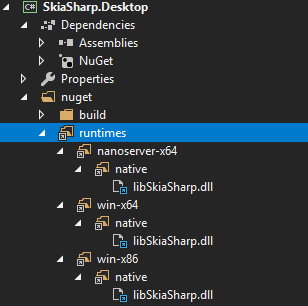
The output folder does not even exist in the original project directories on the GitHub page. In the project tree for SkiaSharp.Desktop, I can see a folder named runtimes looking like this:
All the folders from runtimes down the directories tree do not exist, nor do the dll files. I understand that they may be solution folders (which are virtual and just like some kind of categories) but the files should exist.
How can I build the SkiaSharp projects successfully (in my case just the SkiaSharp.Desktop)? I could not understand why downloading the source and building it by ourselves is not very easy as it should be. At least all the important things (to help build the source code successfully) need to be included in some noting files like README.
Leaked code suggests xAI is developing an advanced file editor for Grok with spreadsheet support, signaling the company’s push to compete with OpenAI, Google, and Microsoft by embedding AI copilots into productivity tools.
“You can talk to Grok and ask it to assist you at the same time you’re editing the files!” writes reverse engineer Nima Owji, who leaked the finding.
BREAKING: xAI is working on an advanced FILE EDITOR for GROK!
It even supports SPREADSHEETS!
You can talk to Grok and ask it to assist you at the same time you’re editing the files! pic.twitter.com/9vIKRZj6Wn
TechCrunch has reached out to xAI to confirm the findings and learn more.
xAI hasn’t explicitly detailed its strategy for pursuing interactive, multimodal AI workspaces, but it has dropped a series of announcements that point to how the company is thinking about these tools. In April 2025, xAI launched Grok Studio, a split-screen workspace that lets users collaborate with Grok on generating documents, code, reports, and browser games. It also launched the ability to create Workspaces that let you organize files and conversations in a single place.
While OpenAI and Microsoft have similar tools, Google’s Gemini Workspace for Sheets, Docs, and Gmail appears to be the most similar to what xAI is reportedly building. Google’s tools can edit Docs and Sheets and allow you to chat with Gemini while looking at or editing documents. The difference is that Gemini Workspace only works within Google’s own ecosystem.
It’s not clear what types of files xAI’s editor might support aside from spreadsheets, or whether xAI plans to build a full productivity suite that could compete with Google Workspace or Microsoft 365.
If Owji’s findings are true, the advanced editor would be a step towards Elon Musk’s ambitions to turn X into an “everything app” that includes docs, chat, payments, and social media.
Want to develop blog monetization strategies to turn your blog into an additional income stream? You’re not alone.
Many bloggers find creative ways to turn blog posts into profit and make money writing, whether it’s through running a niche site, monetizing with an ad network, developing brand partnerships or building a loyal buying audience.
Ready to earn from your blog? This guide covers smart, sustainable methods to generate income and drive blog traffic. Keep reading to explore proven ways to monetize a blog and build momentum with high-impact content.
15 proven blog monetization strategies and tactics
After starting your blog, you don’t need to hustle nonstop to make it profitable. Despite what countless blogs and videos suggest, smart blog monetization doesn’t mean working 24/7.
With the right mix of monetization tactics, your blog can start earning money within a few weeks.
The key? Choose ways to monetize a blog that fit your specific interests and help you deliver content your audience values. Here are 15 tactics to consider.
1. Add display ads for passive income
Most bloggers start here because this is the classic “make money while you sleep” method. Once your blog has steady traffic, display ads can generate income in the background with minimal effort.
Google AdSense is a popular starting point for most bloggers, but higher-traffic blogs can join networks such as Mediavine or AdThrive for better rates.
If you’re in a niche market, you might also sell ad space directly to relevant businesses. This won’t be your highest-earning method early on, but it’s low-effort and keeps adding up over time.
2. Earn by becoming an affiliate marketer
One of the easiest ways to monetize your blog when you’re just starting out is to link out to affiliates within your regular blog posts.
The concept is simple: publish articles that recommend a product or service and if someone purchases through your custom link, you earn a commission.
This strategy is powerful because it’s scalable. The more traffic your website receives to monetized blog posts, the more potential income you can earn. Thanks to tactics like affiliate marketing, you can generate passive income from content that continues attracting visitors long after it’s published.
To get started, check out existing affiliate networks:
There is an application process and if you’re approved, then you’ll find the most success by focusing on writing content that genuinely helps readers and suggests affiliate resources as a solution to a problem they’re facing.
Think tutorials, comparisons or personal experiences that naturally include the affiliate product. These types of posts tend to convert far better than simply inserting links into unrelated topics.
If you want to go a step further, create a “Favorites” or “Recommended Tools” page that curates all your top affiliate picks in one place. Just be sure you’re only promoting tools or products you’ve actually used—authenticity leads to better trust and higher conversions.
3. Publish paid posts for brands
Publishing paid posts can be a lucrative way to earn from your blog. These typically come in the form of sponsored posts, where a company pays you to write a dedicated article featuring their product, service or tool. If you have a lot of traffic or a niche, loyal audience, brands could be willing to pay hundreds or even thousands for a single post. It all depends how you’re positioned.
To get started, showcase brands organically by using affiliate links and writing content that highlights their value. Once you’ve got some engagement data—clicks, conversions or positive reader feedback—you can approach the brand with a pitch. Be sure to share your audience demographics, blog stats and any results from your affiliate activity to build credibility.
Sometimes brands will approach you directly, especially if your blog is on their radar, but don’t be afraid to make the first move. When you pitch, make sure it’s aligned with both their goals and your audience’s interests.
4. Form strategic brand partnerships
Think of this as next-level collaboration. When you form strategic partnerships with others in your niche, you’re not just co-creating—you’re co-marketing.
Maybe you host a joint webinar, launch a course together or co-author a guide. You both benefit from being in front of the other’s audiences, which can lead to a spike in traffic, sales and email subscribers.
Brand deals don’t have to be huge to be effective. You can start by reaching out to like-minded creators or small businesses with a similar target audience.
One piece of advice: make sure your agreement outlines ownership, revenue sharing and promotion responsibilities. It’s a professional relationship so treat it like one.
Once your blog is established, it can become a valuable space for long-term sponsorships. These contracts will often pay more than display ads or one-off affiliate commissions (and will be less intrusive for your readers as well).
Think of this as exclusive advertising: a company pays to be the only brand mentioned in your sidebar, newsletter, podcast, or on specific high-performing blog posts.
You don’t have to wait for brands to find you. Create a media kit with your audience stats and pitch your website as a sponsorship opportunity. Reach out directly to companies aligned with your niche and values, especially their marketing departments or partnership managers.
Some sponsors may also want to be featured in a branded content series, event or course. If you host webinars or online summits, sponsorship packages can include logo placement, product mentions or co-promotion rights.
This type of blog monetization strategy rewards creators with niche authority and a loyal readership. It works best when there’s trust, both with your readers and the brand.
6. Turn your expertise into a book
Developing digital products, such as ebooks and audio books, is one of the easiest paths to monetizing a blog.
If you’re a professional freelance writer, you already have high-quality writing skills so putting together an ebook is an obvious next step. Having products gives you a huge edge over people who stop at selling writing services.
Your blog posts, especially when written around a topic, often outline a comprehensive book outline without you realizing it.
If you aren’t sure if your blog has the right content to develop into a book, or you want some extra guidance, hiring a book writing coach can help you in this process. Book coaches guide you through shaping your ideas into something you can be proud of publishing and selling.
Here’s how to earn from a blog-based book:
Self-publishing on Amazon expands your reach to readers outside your regular blog audience. You’ll need to format your manuscript, create a standout cover, research keyword-rich categories and promote the book using search engine results or social media marketing.
In order to stand out on Amazon, you may find investing in Amazon ads for authors is the best way to promote your work on this platform. The upside? If you get your ad targeting right, you’ll grow your blog’s reach, establish credibility and build a direct line to new readers.
7. Create and sell digital products
Selling other digital creations is another excellent way to diversify your blog income.
Selling directly from your website gives you full control. Checkout software such as WooCommerce, ThriveCart or SamCart allow you to accept payments and deliver digital files instantly. Best of all, cart checkout software is built to securely handle financial transactions legally and safely.
If you’re looking for more than a cart checkout, then consider options such as Gumroad, SendOwl or Shopify.
You can productize your teaching with courses or programs using tools such as Teachable, Kajabi or Podia.
You can also consider physical products if they make sense, but for simplicity and lower overhead, many bloggers start with digital offers or drop shipping.
If you’re interesting in drop shipping, then check out services such as Printful or Spocket. These websites allow you to design and list items on your website and once an order is placed, they handle production and fulfillment.
Unlike affiliate marketing, where you earn a commission for recommending a product, you receive the bulk of the revenue when you sell digital products on your site.
8. Add a Services page to your website
Once your blog showcases your expertise, offering paid services becomes a natural extension. Add a Services or a “Work With Me” page. This is your invitation for potential clients to hire you for freelance writing jobs, consulting or creative services.
List what you offer clearly, showcase testimonials or results, and include a way to get in touch. Your blog posts themselves serve as proof that you can write, engage readers and understand how to write for an online audience.
Bonus points if you’ve got strong SEO, a niche focus, and a solid social presence—it all helps clients see the value you bring.
In short: write every post like it’s a $1,000 assignment. Because it just might land you one.
9. Recruit affiliates to sell your products
If you’re already selling digital products, courses or other downloads, why not let others help you make the sale? Instead of promoting someone else’s affiliate link, flip the script: create your own affiliate program and let other bloggers or creators earn a commission by selling your products.
Platforms like ClickBank, Gumroad and Podia allow you to manage affiliates easily. We recommend offering a generous commission—40–50%—to attract motivated partners. Just be sure to enforce a no-discount rule to protect your pricing. Running an affiliate program is a fantastic way to monetize your audience indirectly, gaining reach you couldn’t have on your own.
10. Accept reader donations to support your work
While not a guaranteed income stream, accepting donations can play a meaningful role in your monetization mix, especially if your content provides deep value, shares personal stories or fills a niche underserved by traditional media.
Think of it as a reader-supported blog model, similar to what many indie journalists and creators use today.
Tools like Buy Me a Coffee, Ko-fi and PayPal donations make it simple to add this to your site. Platforms like Substack and Ghost also integrate tipping features directly into email content.
While you shouldn’t rely on donations as your main source of revenue, this can help you gauge how much your audience values your work and build goodwill that supports future product or subscription launches.
11. Offer premium content for paid subscribers
If you’re looking for a more predictable, month-to-month income, consider subscriptions and memberships. For a small fee—for example, $5 to $15 per month—your audience can access exclusive content not available anywhere else.
While affiliate links and sponsored posts generate income per sale, a subscription model creates ongoing value. You can offer members-only blog posts, downloadable resources, videos, Q&As or a private community.
Platforms like Patreon make this easy, but you can also use WordPress plugins (like WishList Member) to build your own setup. With consistent value, small recurring payments add up quickly.
12. Create a money-making email list
If you haven’t started growing your email list yet, you’re missing one of the highest-converting ways to generate income from your blog. Your list is built from individuals who trust you and want to hear more from you by email.
To get started:
Choose a reliable email marketing service (some examples are ConvertKit, Flodesk and Mailerlite)
Offer gated content, such as a guide, checklist or email series, in exchange for list sign-ups
Add opt-in forms across your mobile-friendly site
Deliver your content in a consistent, value-packed flow
Once you build your list, you unlock multiple blog monetization strategies. Promote your products, share affiliate products, or send sponsored posts. Email keeps your blog top of mind and builds a steady stream of income.
Once you have a healthy email list in place, you can land sponsored content deals through email alone. Brands will often pay to be featured directly in your newsletter, especially if your list is niche and engaged.
You can monetize your emails in two main ways:
Dedicated email blasts: One brand, one email. These command higher rates and may include product tutorials or service spotlights
Featured placements: Include two or three sponsored items in a round-up or newsletter. The payout is smaller, but it adds up across multiple deals
A tip for new bloggers and email marketers: For long-term success, only work with companies you’ve vetted. Promoting low-quality products or services can reduce trust and tank your engagement. Keep your quality content and reader trust front and center—and you’ll continue to earn money through email long after the post is published.
14. Get paid to speak about what you know
Booking paid speaking at events happens because of your blog (not on it), but it can be a powerful revenue stream all the same. Once you’ve built up content expertise and industry credibility, speaking at related events, conferences or workshops can become a natural next step. And it can pay well once you’re established.
If you’ve published a book, this can significantly boost your chances of being seen as an authority worth booking to speak. Event organizers are always looking for knowledgeable speakers who have something interesting to say.
Start by reaching out to events in your niche, offering a sample talk if possible, and highlighting your existing platform and experience.
15. Sell your blog as a digital asset
Here’s a powerful exit strategy few creators consider: sell your blog.
If your site has built up consistent traffic, engaged email subscribers and some passive income streams (ads, affiliates, digital products, etc.), it becomes a sellable asset.
Marketplaces like Flippa, Empire Flippers and Motion Invest specialize in buying and selling online businesses, including blogs. To increase your valuation, focus on building recurring revenue (like subscriptions or affiliate commissions), growing your traffic and maintaining clean site architecture.
Yes, some bloggers build with this goal in mind: launch, grow, exit. Even if you never sell, thinking this way helps you build a stronger, more valuable site from day one.
How to market your blog successfully and make money blogging
Imagine you walk into a hardware store and buy a hammer. You don’t expect it to automatically hammer nails for you, it’s a tool you need to pick up and use. Your blog works the same way.
Each blog post you publish is a tool, but it won’t generate traffic or earn money on its own. Individual posts on your own blog aren’t enough. You need to actively market your blog to build an established audience, increase your blog’s reach, and drive visitors from search engines, social media, and other channels to your site.
Once you have more traffic, you can implement a strong strategy to make money through multiple income streams, such as selling your products, placing ad space, offering exclusive content or creating sponsored posts.
However, none of this happens by accident. Marketing your blog can take your site from a hobby that doesn’t make much money to a source of income or a way to sell other services.
Creating high-quality content and quality backlinks is only the first step. Here are a few tips for driving traffic, building your own blog’s audience and maximizing profits.
Build relationships with celebrity bloggers and influencers
Networking with other bloggers and niche influencers can rapidly increase your blog’s visibility. By being active on social media platforms, you can attract new readers.
Genuine interaction—sharing their posts, commenting on their content or collaborating—helps build relationships that lead to links and shares. This boosts your visibility and helps to grow your blog’s reach organically.
Choose the right blogging platform for your blog
The platform you choose for your website influences your ability to integrate ad networks, Google AdSense or sell your own products and services. A free WordPress site offers limited flexibility for ad placements or creating content behind paywalls.
Opting for self-hosted WordPress gives you full control to customize your blog, add banner ads, implement push notifications and manage email marketing lists (even from mobile devices). Owning your blog domain also builds credibility with your target audience.
Build and engage your email subscribers
Your email list is a powerful direct line to your audience and an essential part of your monetization strategy. Offer a free guide or free information, such as a detailed product review, how-to or checklist, in exchange for an email subscription.
Use professional tools to manage subscribers and send out newsletters. Regular emails announcing new blog posts, exclusive gated content or upcoming online courses keep your community engaged and encourage them to become paying members or customers of your consulting services.
Publish a regular newsletter
If you’re also a newsletter writer, publish one consistently. A well-crafted newsletter strengthens your connection with your established audience by delivering valuable blog content directly to their inbox. Your newsletter could include highlights of recent posts, exclusive affiliate product deals and updates on your products or services.
Newsletters also allow you to promote recurring fee offerings like memberships or premium content. This steady engagement is key to building a steady stream of revenue.
Comment on and link to other blogs
Active participation in your niche through blog comments can attract attention to your blog. When you leave thoughtful comments on other blogs, you build relationships with other freelance writers and bloggers, increasing chances for collaborations or a potential product review down the road.
Linking to other sites also signals to search engines that you’re a valuable part of the blogging ecosystem, improving your search engine results.
Join blogging communities and forums
Joining writing communities (like Freelance Writers Den) or blogging forums (like Reddit blogging subreddits) or niche-specific communities helps you stay updated on best practices for monetization and SEO.
Sharing your blog content here allows you to attract targeted readers interested in your specific interests. These communities often offer opportunities for collaboration, sponsored post partnerships, and advice on how to monetize your blog more effectively and make money online.
Write guest posts on other sites
Guest post writing is a win-win. This provides valuable content to other blogs while exposing your brand to new readers. Most bloggers use guest posting as a key strategy to drive traffic back to their blogs and gain quality backlinks. Even if you’re not paid immediately, guest posts can lead to paid opportunities such as sponsored posts or consultations down the road.
Invite guest bloggers to your blog
Featuring guest writers on your blog adds fresh perspectives and attracts their audience to your site. Guest bloggers bring new readers who might subscribe to your newsletter or purchase your affiliate products, or your own products. It also allows you to focus on creating high-quality content by sharing the workload.
Create high-quality content that resonates
Creating great content or online courses tailored to your target audience’s needs and interests is the cornerstone of a successful blog. Valuable, in-depth posts solve problems, answer questions and engage readers, increasing shares and repeat visits.
Content that resonates improves your chances of being featured in search engine results, getting linked by other websites and being approved. This attracts organic traffic, essential for being approved by ad networks and other monetization strategies.
Optimize for search engines (SEO)
Use keyword research tools to find topics your audience is searching for and naturally include these keywords in your own blogs. Optimize titles, headings, meta descriptions, and images to improve rankings on search engines.
Try various SEO writing strategies because higher rankings mean more organic blog traffic, which is critical for getting paid based on ad networks, affiliate products or your offerings.
Tip: If you don’t have SEO skills, educate yourself on how to optimize your content online and explore SEO websites that can help you become better at SEO writing.
Craft strong headlines
There’s no second chance to make a first impression, so write headlines to impress. Remember that headlines that promise value or address a pain point increase clicks and shares. Strong headlines attract more visitors who may stay longer, subscribe, and help you monetize a blog by increasing overall traffic and engagement.
Leverage social media marketing
Use social media platforms to share your articles, engage with followers, and join conversations related to your niche. Paid ads can promote special offers like online courses, consulting services or exclusive content to help you make money.
Social media also drives referral traffic and helps build a loyal audience that supports your monetization efforts. Additionally, consider using social media management tools to ease your workload.
Design product landing pages that convert
If you sell products, online courses or consulting services, create dedicated advice blogs, landing pages or sales pages that communicate their benefits and features. Use testimonials, clear calls to action and pricing details to convert casual readers into paying customers. Well-designed pages help maximize profits from your blog’s reach.
Attend events and network in person when possible
Blogging conferences and niche meetups provide opportunities to connect with influencers, sponsors and fellow bloggers.
Face-to-face networking can lead to lucrative deals like sponsored posts, partnerships or advertising network collaborations. Events also offer chances to learn the latest strategies for monetizing your blog.
Say “yes” to public speaking opportunities
Speaking at industry events or on webinars builds your authority and blog’s reach. It can lead to paid work, consulting contracts and increased readership on your blog. Public speaking expands your professional network and creates new opportunities to promote your products or sell services.
Sell ad space and sponsored content
Once you have consistent blog traffic, monetize by selling ad placements or banner ads directly or through advertising networks like Google AdSense. You can also create sponsored posts with brands aligned to your niche.
These revenue streams can become a significant part of your monetization strategy, helping you build a steady stream of income.
Final tips on making money blogging
Now that you know how to monetize a blog and tap into the many blogging income streams available, it’s just as important to know what to avoid. Not every method is worth your time or will retain your audience’s trust. If your goal is to create a blog that earns long-term and builds trust with readers, steer clear of these common pitfalls.
Overloading your blog with ads
Sure, placing ads can technically help you make much money blogging. You’ll earn a little per impression or click, but it often comes at a cost. Too many ads can clutter your site, slow down load times and frustrate your visitors.
If someone clicks away from your content because a video auto-played or a pop-up blocked the screen, that’s blogging revenue lost.
Ads might be one of the oldest ways to earn money online, but for many bloggers, they’re also the least effective. Focus instead on monetization methods that keep readers engaged, not annoyed.
Selling low-quality products
Merchandise can be a smart online side hustle, especially if your brand has a loyal audience. But slapping your logo on a flimsy T-shirt just to make a quick buck? That’s a fast way to lose trust and tarnish your reputation.
Always test your products before selling them. Many drop shipping services let you order samples, so take advantage of that option. Remember, every product your reader receives is a reflection of your standards. Write great content, sell great merch—it all adds up to a trustworthy brand that can generate income.
It can be tempting to accept every paid offer you get—after all, this is part of how to earn money from blogging. But pushing unrelated products just to make money can alienate your core audience. If you blog about wellness, promoting fast fashion or crypto deals won’t resonate.
The best sponsors are those aligned with your content and your readers’ interests. Stay selective. As your authority grows, better partnership opportunities will come your way, and your blogging revenue will be more sustainable in the long run.
Focus on creating high-quality, relevant content
Grow your audience organically to make money blogging
Stick to blog monetization strategies that reflect your values
When you create a blog that earns trust first, the money follows naturally. Whether you’re in it for a creative outlet or a serious online side hustle, staying true to your audience is the most profitable move you can make.
Large-scale attacks designed to bring down Internet services by sending them more traffic than they can process keep getting bigger, with the largest one yet, measured at 7.3 terabits per second, being reported Friday by Internet security and performance provider Cloudflare.
The 7.3Tbps attack amounted to 37.4 terabytes of junk traffic that hit the target in just 45 seconds. That’s an almost incomprehensible amount of data, equivalent to more than 9,300 full-length HD movies or 7,500 hours of HD streaming content in well under a minute.
Indiscriminate target bombing
Cloudflare said the attackers “carpet bombed” an average of nearly 22,000 destination ports of a single IP address belonging to the target, identified only as a Cloudflare customer. A total of 34,500 ports were targeted, indicating the thoroughness and well-engineered nature of the attack.
The vast majority of the attack was delivered in the form of User Datagram Protocol packets. Legitimate UDP-based transmissions are used in especially time-sensitive communications, such as those for video playback, gaming applications, and DNS lookups. It speeds up communications by not formally establishing a connection before data is transferred. Unlike the more common Transmission Control Protocol, UDP doesn’t wait for a connection between two computers to be established through a handshake and doesn’t check whether data is properly received by the other party. Instead, it immediately sends data from one machine to another.
UDP flood attacks send extremely high volumes of packets to random or specific ports on the target IP. Such floods can saturate the target’s Internet link or overwhelm internal resources with more packets than they can handle.
Since UDP doesn’t require a handshake, attackers can use it to flood a targeted server with torrents of traffic without first obtaining the server’s permission to begin the transmission. UDP floods typically send large numbers of datagrams to multiple ports on the target system. The target system, in turn, must send an equal number of data packets back to indicate the ports aren’t reachable. Eventually, the target system buckles under the strain, resulting in legitimate traffic being denied.
Experience a fresh take on this action adventure of “Spirit X Strike,” featuring three intertwined combat systems: Instant Counter, Super Strike, and Spirit Mimicry. Players can swiftly switch between defense and attack, and experience an adrenaline-pumping combat. Unique Action storing and release system to break the limits of COMBO potential! Chain together action sequences using the game’s distinctive Spirit Mimicry. This system allows you to freely assemble moves and unleash them at the moment you desire. Even newcomers can easily execute stunning combos and air-juggle confirms. Break your opponents’ defense with well-timed counters and quick pressure, then execute them with the finishing “Super Strike”. There are a lot of different “Super Strike” finishers for different situations waiting for you to try out! THE KING OF FIGHTERS XV
Play as Carter, the inheritor of the Spirit Fist, and face off against top warriors in the Wasteland. Unearth your limitless potential and “Strike” your way through! This game is, in the most endearing way, a PS2 quality product. What I mean by that is that it’s just a fun game distilled down to what matters; graphics with enough fidelity to see what’s going on and gameplay that’s fast, addictive and hard to master. Video games have become obsessed with length over substance, and this game is a good reminder that games don’t need to be 80 hours long to be fun.
Features and System Requirements:
Three combat systems—Instant Counter, Super Strike, and Spirit Mimicry—that you can swap on the fly for dynamic and strategic battles.
Spirit Mimicry lets you store a sequence of actions and unleash them in one brutal combo at your command.
Super Strike finishers break enemy defenses and refill your health—lots of style, lots of payoff.
The Early Access build includes six chapters, six boss fights, and four difficulty levels, with the toughest mode unlocked after completing the game.
Screenshots
System Requirements
Recommended
Requires a 64-bit processor and operating system
OS: Windows 10 64-bit
Processor: Intel Core i7-9700 / AMD Ryzen 5 5500
Memory: 16 GB RAM
Graphics: NVIDIA GeForce RTX 3070 or higher
DirectX: Version 12
Storage: 12 GB available space
Sound Card: Windows compatible audio device
Support the game developers by purchasing the game on Steam
Installation Guide
Turn Off Your Antivirus Before Installing Any Game
1 :: Download Game 2 :: Extract Game 3 :: Launch The Game 4 :: Have Fun 🙂
Companies providing architectural design services in California face unique challenges due to the state’s varied topography, climate, and ever-changing building codes. Coastal areas of the state are known for their Mediterranean-style homes, while urban areas, like Los Angeles and San Francisco, are known for their modern, minimalist designs.
Still, there are challenges inherent in all this variety. The architectural firms and architects at Cad Crowd have a double whammy: California’s stringent building codes and environmental laws, and the specific needs of a market that wants innovative solutions that are also sustainable. Cad Crowd is a freelancing platform with over 94,000 designers available for hire. If you need more information and help with your project, please contact us.
This article takes a look at the difficulties and special requirements that architectural service providers in California encounter when planning projects for the Golden State’s varied landscape.
Sailing through California’s complicated building codes
Learning and adhering to California’s intricate system of building codes and regulations is a major obstacle for architects working in the Golden State. Environmental sustainability, seismic design, and energy efficiency are some of the new issues that California’s construction codes are trying to tackle. Long and detailed, Title 24 of the California Building Standards Code specifies criteria for homes, businesses, and factories.
Due to the state’s proximity to important fault lines, such as the San Andreas Fault, seismic design requirements in California are among the most rigorous in the US. Earthquake resistance in building design calls for in-depth knowledge of structural engineering services and materials science on the part of architects. Methods that allow buildings to bend and absorb earthquake energy are commonly employed, along with the use of specialized materials and strengthened foundation systems.
On top of that, architects in California are frequently asked to design buildings with high energy-saving standards, since the state is known for its sustainability. Title 24, Part 6 of the California Energy Code mandates energy-saving features, such as efficient HVAC systems and high-tech lighting. Obtaining permits and satisfying customers becomes more important with additional green building certifications like LEED and CalGreen, especially as environmental issues escalate. This means that architecture service providers must keep up with the latest sustainable practices and technology, which may require them to invest in more resources and undergo continuous training.
The climate of California varies greatly across the state, from the arid south to the mild north, where you’ll find cool forests. Architects face unique challenges in each region when they plan and execute building projects, and they must take local environmental factors into account at every stage. For example, in the coastal areas of Southern California, architects often aim to make the most of natural light, make good use of open areas, and use materials that evoke the laid-back, beachy vibe of the region. Building materials may not last as long in coastal areas due to issues like high humidity and saltwater corrosion. To create buildings that can endure these severe weather conditions, architects must use weather-resistant materials and consider using specialized finishes.
On the other hand, Northern California, with its cooler climate and more wooded terrain, requires designs that maximize natural light and provide sufficient insulation for winter. Wildfires in the state are also becoming a growing concern, and architectural design experts are increasingly compelled to incorporate fire-resistant materials, defensible space, and fire breaks into their designs. In certain regions, there are even regulations on the types of landscaping that may be used to reduce the risk of fire.
In the Central Valley of California, where summer temperatures exceed 100°F, structures must be built with sophisticated cooling and shading systems. Passive design methods, such as strategically locating windows to enhance natural ventilation, are especially critical in these areas to conserve energy.
Architecture firms operating in California must excel in adapting their designs to the specific requirements of each climate zone, necessitating close collaboration with environmental engineers, landscape architects, and other specialists.
Sustainability and energy efficiency
California is at the forefront of environmental sustainability, with the most advanced building codes and green legislation in the country. Architects in the state are often asked to design buildings that not only conserve energy but also utilize sustainable building materials and green energy solutions.
The California Green Building Standards Code (CalGreen) outlines requirements for reducing environmental impact, including water conservation, waste management, and the use of sustainable materials, even for engineering services. Most clients today expect architects to incorporate green technologies, including photovoltaic solar panels, green roofs, and water harvesting systems, into their projects. This emphasis on sustainability is particularly noticeable in urban environments like San Francisco and Los Angeles, where density and environmental footprint are primary issues.
Passive house design principles are increasingly common in California, especially in residential and multi-family dwelling projects. These houses are designed to require minimal energy for heating and cooling, thanks to careful construction and high-performance windows and insulation that maintain comfortable interior temperatures. Architects creating these residences need to have a solid understanding of passive building techniques and sophisticated energy modeling to ensure designs meet the stringent energy efficiency guidelines outlined by initiatives like the Passive House Institute.
As energy efficiency remains a primary concern, California architects must also remain aware of state regulations regarding net-zero energy buildings. The California Public Utilities Commission has established a target for all new residential construction to be net-zero energy by 2020, and commercial construction is to follow soon after. Architects will need to collaborate with engineers to design energy-efficient heating, ventilation, and air conditioning (HVAC) systems, as well as renewable energy systems such as solar panels, to help achieve these ambitious targets.
With the population of California still on the rise, city centers such as Los Angeles, San Francisco, and San Diego are under increasing pressure to expand rather than outgrow. High-density living and mixed-use projects pose a singular challenge to architecture planning and design firms.
Architects must be highly creative in their approach to designing multifamily homes, office complexes, and shopping developments in tight urban spaces, balancing available space with comfort and usability. Architects need to incorporate multiple uses within a single development and comply with zoning regulations, which often vary from city to city and can be challenging to navigate. Space is at a premium in dense urban settings, and architects must design flexible, space-efficient floor plans that utilize every square foot to its fullest potential.
The requirement for integrated transportation solutions is also a major factor in urban planning. Most cities in California are investing in public transportation infrastructure, which requires the incorporation of transit-oriented development (TOD) principles. Architects need to consider how buildings can be integrated with transportation nodes, such as bus stops and train stations, ensuring that these developments are sustainable and minimize traffic congestion.
Additionally, urban community design involves the creation of spaces that foster social interaction, accessibility, and inclusivity. Planners and architects have to ensure that public spaces, including parks, plazas, and walkways, are accessible to individuals of all ages and abilities. This typically requires careful consideration of universal design principles and coordination with community stakeholders to ensure that the development meets the needs of the local community.
Regional aesthetics and cultural sensitivity
The cultural diversity of California is evident in its architectural environment, and architectural site plan companies should be sensitive to regional aesthetics while designing buildings. From Southern California’s Spanish Colonial Revival style to Palm Springs’ Mid-Century Modern architecture, the state boasts a diverse array of architectural traditions that reflect its rich history and varied cultural influences.
Clients often have a strong affinity for a particular architectural style or prefer to incorporate elements of their cultural heritage into the design. Architects must strike a balance between respecting these traditions and incorporating contemporary design elements that enhance functionality and sustainability. This typically involves close collaboration with clients to understand their vision and ensure that the final product meets their expectations while adhering to building codes and environmental standards.
In addition, where there is a rich history, such as in Old Town San Diego or downtown Los Angeles, architects are subject to regulations that prohibit modifying the exterior of a building or developing new buildings that do not conform to the neighboring historical environment. In such situations, architects must carefully balance preservation laws with local historical regulations’ constraints.
Successful communication and interaction with clients and stakeholders are indispensable to the prosperity of architectural undertakings in California. With high property values, construction drawing design companies often have extremely distinctive ideas for their properties, and meeting these requirements demands a comprehensive understanding of design and construction methods.
Architectural firms must have the ability to handle client expectations, resolve budget and scheduling issues, and balance aesthetics with functionality. Frequently, the clients will be working with other consultants, including engineers, landscape architects, and interior designers. Architects must serve as project coordinators, ensuring that all stakeholders collaborate effectively to produce a unified design.
In addition, California is renowned for its vibrant and active communities, and architects may need to engage with the local residents during the planning and design phases. Public participation is crucial in certain areas, particularly for government or mixed-use projects. Architects must be prepared to engage in community outreach and attend public hearings to receive comments and address questions.
Conclusion
Architecture design and drafting firms designing buildings in California face an unprecedented set of challenges that require innovation, flexibility, and a deep understanding of the state’s intricate regulations and climate conditions. With seismic safety through to sustainability, architects need to stay ahead of the curve in terms of current codes and trends, designing with regard to California’s varied climates and cultural contexts.
How Cad Crowd can help?
As urban populations grow and technology advances, architectural firms will increasingly shape California’s built environment. Top designers on platforms like Cad Crowd focus not just on aesthetics, but also on functionality, sustainability, and resilience in California’s dynamic landscape. Contact us today for your FREE quote!
MacKenzie Brown is the founder and CEO of Cad Crowd. With over 18 years of experience in launching and scaling platforms specializing in CAD services, product design, manufacturing, hardware, and software development, MacKenzie is a recognized authority in the engineering industry. Under his leadership, Cad Crowd serves esteemed clients like NASA, JPL, the U.S. Navy, and Fortune 500 companies, empowering innovators with access to high-quality design and engineering talent.
Noise-cancelling headphones are a must-have for anyone who travels often and wants to drown out airplane noise, commuters who want some peace and quiet amongst the crowds and anyone else looking to dull the daily chaos of life. Sony’s 1000X line has had our favorite noise-cancelling headphones for a long time, and it remains the same now with the latest edition to that family. Sony released the WH-1000XM6 edition of its wireless noise canceling headphones in May, and really the only downside about them is their new, higher price tag.
But if you’re on the market for a new pair of cans right now, Amazon will throw you a bone if you opt for the XM6. Right now, you can get the Sony WH-1000XM6 headphones plus a free $30 Amazon gift card for $448. While you’re not saving much on the price of the headphones (a whopping $2), you’re getting a $30 gift card for free on top of it, which you can use towards anything else you want to buy on Amazon.
Sony
The gift card is basically for free with your headphone purchase.
Sony released the WH-1000XM6 headphones three years after their predecessor, but the new model quickly proved to be worth the wait. We gave the M6s a 94 in our review thanks to features like improved sound and better active noise cancelation. One of the best things about this model compared to the M5s is the return to a folding design — I love my M5s but it’s very annoying that they don’t shrink at all. The M6s are also very comfy and have a wider headband for easy wear.