I am trying to get Visual Studio set up on my computer and I want to use Git through Visual Studio. I have Visual Studio working with Git fine on my laptop for whatever reason, on my desktop it just doesn’t work.
I am never getting past this point:
I changed the option for “Add and authenticate accounts using:” to system web browser from embedded web browser. I really dont know what else to check or what to fix. On my laptop all I had to do was click the re-enter credentials and it would log me in.
It is especially confusing because when I click re-enter credentials. Github opens and I am able to confirm my account with 2FA and then it says: “Your authorization was successful. You can now return to Visual Studio”. But when I return… it still says “re-enter credentials”. This is becoming very frustrating and Im considering not using Visual Studio and returning to VSCode. Any help is appreciated.
If your SAP ECC has heavy customization or runs on old technology, Brownfield conversion feels safer. But you’ll spend months remediating legacy code while carrying forward the technical debt that constrains you for the next two decades.
The strategic question: Why invest millions to recreate the limitations that hold you back today?
Ready to begin?
This roadmap reveals exactly how leading organizations execute successful greenfield transformations:
The 6-phase implementation journey (18-24 months detailed)
Clean core principles that enable continuous innovation
Decision criteria: When Greenfield is the right choice
Critics question why basic flaws like buffer overflows, command injections, and SQL injections are “being exploited remain prevalent in mission-critical codebases maintained by companies whose core business is cybersecurity,” writes CSO Online. Benjamin Harris, CEO of cybersecurity/penetration testing firm watchTowr tells them that “these are vulnerability classes from the 1990s, and security controls to prevent or identify them have existed for a long time. There is really no excuse.”
Enterprises have long relied on firewalls, routers, VPN servers, and email gateways to protect their networks from attacks. Increasingly, however, these network edge devices are becoming security liabilities themselves… Google’s Threat Intelligence Group tracked 75 exploited zero-day vulnerabilities in 2024. Nearly one in three targeted network and security appliances, a strikingly high rate given the range of IT systems attackers could choose to exploit. That trend has continued this year, with similar numbers in the first 10 months of 2025, targeting vendors such as Citrix NetScaler, Ivanti, Fortinet, Palo Alto Networks, Cisco, SonicWall, and Juniper. Network edge devices are attractive targets because they are remotely accessible, fall outside endpoint protection monitoring, contain privileged credentials for lateral movement, and are not integrated into centralized logging solutions…
[R]esearchers have reported vulnerabilities in these systems for over a decade with little attacker interest beyond isolated incidents. That shifted over the past few years with a rapid surge in attacks, making compromised network edge devices one of the top initial access vectors into enterprise networks for state-affiliated cyberespionage groups and ransomware gangs. The COVID-19 pandemic contributed to this shift, as organizations rapidly expanded remote access capabilities by deploying more VPN gateways, firewalls, and secure web and email gateways to accommodate work-from-home mandates. The declining success rate of phishing is another factor… “It is now easier to find a 1990s-tier vulnerability in a border device where Endpoint Detection and Response typically isn’t deployed, exploit that, and then pivot from there” [says watchTowr CEL Harris]…
Harris of watchTowr doesn’t want to minimize the engineering effort it takes to build a secure system. But he feels many of the vulnerabilities discovered in the past two years should have been caught with automatic code analysis tools or code reviews, given how basic they have been. Some VPN flaws were “trivial to the point of embarrassing for the vendor,” he says, while even the complex ones should have been caught by any organization seriously investing in product security… Another problem? These appliances have a lot of legacy code, some that is 10 years or older.
Attackers may need to chain together multiple hard-to-find vulnerabilities across multiple components, the article acknowleges. And “It’s also possible that attack campaigns against network-edge devices are becoming more visible to security teams because they are looking into what’s happening on these appliances more than they did in the past… “
The article ends with reactions from several vendors of network edge security devices.
Thanks to Slashdot reader snydeq for sharing the article.
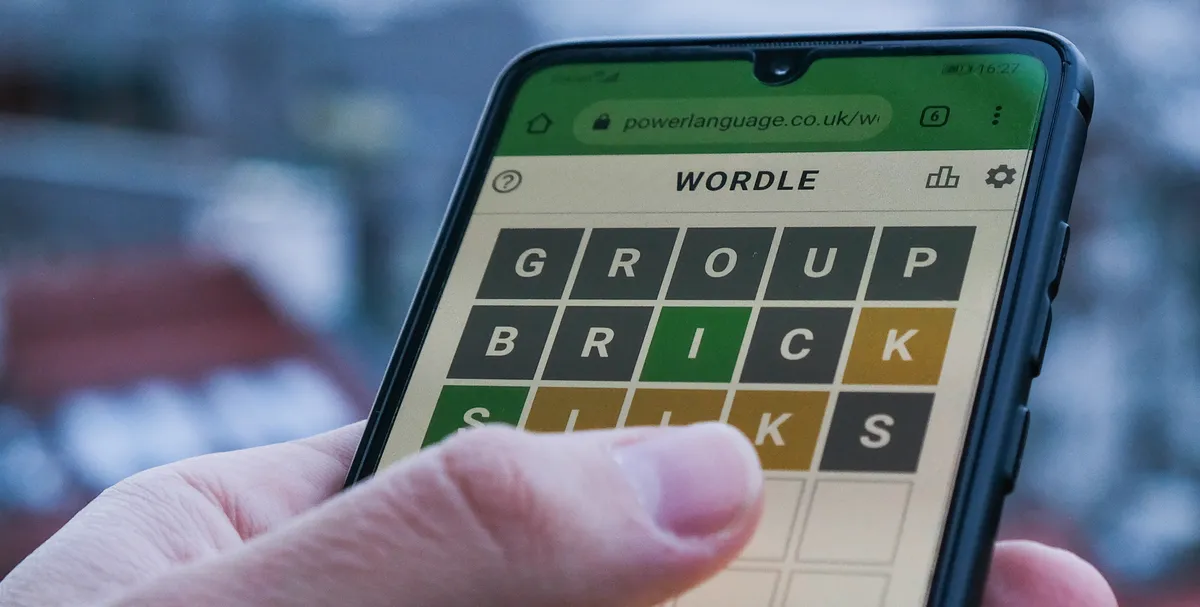
We’ve cooked up a fresh batch of hints for today’s Wordle if you need them, as well as a clue that can either help you get started, or save the day when you’re wondering what the heck to do with a few yellow letters that don’t seem to fit in anywhere. Try them out and see how you get on, after all, the October 26 (1590) answer is waiting at the bottom of the page if you need it.
A clue for today’s Wordle
Stuck on today’s Wordle? Here’s a clue that pertains to the meaning of the word.
If you’re still just as stuck after our clue, scroll down for further hints.
Hints for the October 26 (#1590) Wordle
Our Wordle hints will start vague so as to just give you a bit of a nudge in the right direction at first.
As you scroll down, they’ll offer more and more help towards figuring out today’s word without fully giving it away.
Are there any repeated letters in today’s Wordle?
You only need to find four unique letters today.
How many vowels are in today’s Wordle?
A single vowel’s hiding in today’s Wordle.
Keep up to date with the most important stories and the best deals, as picked by the PC Gamer team.
What letter does today’s Wordle begin with?
If you’re going to win, you’ll need to open with a “P”.
Ugh, some days those green letters just seem to hide away.
Past Wordle answers can give you some excellent ideas for fun starting words that keep your daily puzzle-solving fresh. They are also a good way to eliminate guesses for today’s Wordle, as the answer is unlikely to be repeated.
Here are the last 10 Wordle answers:
October 16: CATTY
October 17: GROSS
October 18: HAVEN
October 19: IDEAL
October 20: LIMBO
October 21: DETOX
October 22: STUNT
October 23: DRILL
October 24: TUBER
October 25: GAUGE
Learn more about Wordle
(Image credit: Future)
How to play Wordle
Wordle’s a daily guessing game, where the goal is to correctly uncover today’s five letter word in six goes or less. An incorrect letter shows up as a grey box. A correct letter in the wrong space turns up yellow. And the correct letter in the right place shows up as green. There’s no time limit to worry about, and don’t forget that some letters might be used more than once.
What’s the best Wordle starting word?
Generally you want to pick something with a good mix of common consonants and vowels in it as your Wordle opener, as this is most likely to return some early green and yellow letters. Words like SLATE, CHIME, and REACT all work, but feel free to find your own favourite.
Is Wordle getting harder?
(Image credit: Valve)
Wordle is not getting harder!
There will always be the occasional day where the answer is the name of a body part, has a sneaky double vowel, or a word obscure enough to send everyone rushing off to a dictionary. But the daily answers, edited by Tracy Bennett, are still a good mix of common terms and tougher challenges.
Remember that if you’re craving more of a challenge, you can enable Hard Mode under the ⚙️ options menu. This option doesn’t make the words themselves harder, but it requires that “any revealed hints must be used in subsequent guesses.”
How did Wordle begin?
Wordle is the creation of Josh Wardle, and began life as a small personal project before its public release in 2021. From there it’s gone on to become a global phenomenon, attracting a dedicated daily audience, billions of plays, a whole host of competitors, and even a seven-figure sale to the New York Times where it’s become a mainstay of daily games alongside the crosswords and Connections.
LM Studio makes it incredibly easy to run and experiment with open-source large language models (LLMs) entirely on your local machine, with no internet connection or cloud dependency required. You can download a model, start chatting, and explore responses while maintaining full control over your data.
But what if you want to go beyond the local interface?
Let’s say your LM Studio model is up and running locally, and now you want to call it from another app, integrate it into production, share it securely with your team, or connect it to tools built around the OpenAI API.
That’s where things get tricky. LM Studio runs models locally, but it doesn’t natively expose them through a secure, authenticated API. Setting that up manually would mean handling tunneling, routing, and API management on your own.
That’s where Clarifai Local Runners come in. Local Runners let you serve AI models, MCP servers, or agents directly from your laptop, workstation, or internal server, securely and seamlessly via a public API. You do not need to upload your model or manage any infrastructure. Run it locally, and Clarifai handles the API, routing, and integration.
Once running, the Local Runner establishes a secure connection to Clarifai’s control plane. Any API request sent to your model is routed to your machine, processed locally, and returned to the client. From the outside, it behaves like a Clarifai-hosted model, while all computation happens on your local hardware.
With Local Runners, you can:
Run models on your own hardware Use laptops, workstations, or on-prem servers with full access to local GPUs and system tools.
Keep data and compute private Avoid uploading anything. This is useful for regulated environments and sensitive projects.
Skip infrastructure setup No need to build and host your own API. Clarifai provides the endpoint, routing, and authentication.
Prototype and iterate quickly Test models in real pipelines without deployment delays. Inspect requests and outputs live.
Connect to local files and private APIs Let models access your file system, internal databases, or OS resources without exposing your environment.
Now that the benefits are clear, let’s see how to run LM Studio models locally and expose them securely via an API.
Running LM Studio Models Locally
The LM Studio Toolkit in the Clarifai CLI enables you to initialize, configure, and run LM Studio models locally while exposing them through a secure public API. You can test, integrate, and iterate directly from your machine without standing up infrastructure.
Note: Download and keep LM Studio open when running the Local Runner. The runner launches and communicates with LM Studio through its local port to load, serve, and run model inferences.
Step 1: Prerequisites
Install the Clarifai package and CLI
Log in to Clarifai
Follow the prompts to enter your User ID and Personal Access Token (PAT). If you need help obtaining these, refer to the documentation.
Step 2: Initialize a Model
Use the Clarifai CLI to initialize and configure an LM Studio model locally. Only models available in the LM Studio Model Catalog and in GGUF format are supported.
Initialize the default example model
By default, this creates a project for the LiquidAI/LFM2-1.2B LM Studio model in your current directory.
If you want to work with a specific model rather than the default LiquidAI/LFM2-1.2B, you can use the --model-name flag to specify the full model name. See the full list of all models here.
Note: Some models are large and require significant memory. Ensure your machine meets the model’s requirements before initializing.
Now, once you run the above command, the CLI will scaffold the project for you. The generated directory structure will look like this:
model.py contains the logic that calls LM Studio’s local runtime for predictions.
config.yaml defines metadata, compute characteristics, and toolkit settings.
requirements.txt lists Python dependencies.
Step 3: Customize model.py
The scaffold includes an LMstudioModelClass that extends OpenAIModelClass. It defines how your Local Runner interacts with LM Studio’s local runtime.
Key methods:
load_model() – Launches LM Studio’s local runtime, loads the selected model, and connects to the server port using the OpenAI-compatible API interface.
predict() – Handles single-prompt inference with optional parameters such as max_tokens, temperature, and top_p. Returns the complete model response.
generate() – Streams generated tokens in real time for interactive or incremental outputs.
You can use these implementations as-is or modify them to align with your preferred request and response structures.
Step 4: Configure config.yaml
The config.yaml file defines model identity, runtime, and compute metadata for your LM Studio Local Runner:
model – Includes id, user_id, app_id, and model_type_id (for example, text-to-text).
toolkit – Specifies lmstudio as the provider. Key fields include:
model – The LM Studio model to use (e.g., LiquidAI/LFM2-1.2B).
port – The local port the LM Studio server listens on.
context_length – Maximum context length for the model.
inference_compute_info – For Local Runners, this is mostly optional, because the model runs entirely on your local machine and uses your local CPU/GPU resources. You can leave defaults as-is. If you plan to deploy the model onClarifai’s dedicated compute, you can specify CPU/memory limits, number of accelerators, and GPU type to match your model requirements.
build_info – Specifies the Python version used for the runtime (e.g., 3.12).
Finally, the requirements.txt file lists Python dependencies your model needs. Add any extra packages required by your logic.
Step 5: Start the Local Runner
Start a Local Runner that connects to LM Studio’s runtime:
If contexts or defaults are missing, the CLI will prompt you to create them. This ensures compute contexts, nodepools, and deployments are set in your configuration.
After startup, you will receive a public Clarifai URL for your local model. Requests sent to this endpoint route securely to your machine, run through LM Studio, then return to the client.
Run Inference with Local Runner
Once your LM Studio model is running locally and exposed via the Clarifai Local Runner, you can send inference requests from anywhere using the OpenAI-compatible API or the Clarifai SDK.
OpenAI-Compatible API
Clarifai Python SDK
You can also experiment with generate() method for real-time streaming.
Conclusion
Local Runners give you full control over where your models execute without sacrificing integration, security, or flexibility. You can prototype, test, and serve real workloads on your own hardware, while Clarifai handles routing, authentication, and the public endpoint.
You can try Local Runners for free with the Free Tier, or upgrade to the Developer Plan at $1 per month for the first year to connect up to 5 Local Runners with unlimited hours.
If you’re searching for the perfect Siemens NX freelancer to supercharge your product development, CAD 3d modeling service, or advanced engineering workflows, you’re in the right place. Whether you’re in aerospace, automotive, consumer electronics, or manufacturing, Siemens NX is one of the most powerful tools in the digital design and engineering arsenal. But where do you find the pros who really know how to wield it?
This guide features 37 of the best websites to hire Siemens NX freelancers – each one vetted for reliability, niche focus, or regional access. From platforms dedicated entirely to CAD and CAM, to global talent marketplaces and engineering-specific hubs, we break them down by category so you can quickly find the talent that fits your needs, budget, and project complexity. Cad Crowd has access to the best freelancers that AEC companies can take advantage of today.
Whether you’re looking for a simulation expert, a CNC programmer, or a product designer with NX know-how, you’re about to meet your next freelance partner.
Category 1: General freelance platforms
Cad Crowd
Cad Crowd earns its place at the top by focusing entirely on what matters most to engineers and designers – CAD expertise. This isn’t a general freelance marketplace; it’s a hub built specifically for professionals working in fields like product development, mechanical design engineering, and manufacturing design services. Clients looking to hire Siemens NX experts will find more than just résumés – they’ll find vetted, trusted talent with real-world experience on high-stakes projects.
What sets Cad Crowd apart is its commitment to quality and confidentiality. Every freelancer goes through a thorough screening process, and projects are handled with discretion, making it a top choice for clients who value security – especially those in aerospace or high-end manufacturing. It’s no surprise that brands like NASA and Tiffany & Co. have turned to Cad Crowd for specialized CAD work.
Whether you’re developing a new prototype or fine-tuning CNC machining paths, Cad Crowd has the freelancers to match your needs. The platform adapts to your scope – small tweaks or end-to-end engineering solutions – without compromising precision. For mission-critical Siemens NX projects, this is the go-to destination where high-performance design meets exceptional freelance talent.
Truelancer is gaining traction as a professional platform for freelancers across tech, design, and engineering. With a focus on verified talent and AI-backed matchmaking, Truelancer helps connect clients with Siemens NX professionals for both short-term gigs and long-term collaborations. You’ll find experts offering CAD design, mechanical analysis, and 3D modeling – often at competitive rates. The platform offers milestone-based payments and a secure workspace to manage files and deadlines. Particularly popular in Asia and the Middle East, Truelancer is ideal for mid-sized engineering firms or startups looking for affordable Siemens NX expertise with built-in project management tools.
Geared toward quick-turnaround freelance jobs, PeoplePerHour has a solid pool of Siemens NX professionals who excel in CAD modeling, design for assembly services, and technical drawing. The platform emphasizes “hourlies” – fixed-price services delivered fast – which is great for businesses needing minor adjustments or rapid prototyping. Its algorithm matches clients to freelancers based on project details and skills, and you can browse portfolios, ratings, and delivery times. With a reputation for flexible hiring and short-term results, PeoplePerHour is a dependable platform when you want Siemens NX expertise without committing to long timelines or complicated contracts.
Guru is a smart pick if you’re looking for structure and versatility when hiring Siemens NX freelancers. From CAD modeling and CAM programming to FEA simulation, the platform connects you with skilled professionals backed by industry-specific filters, location targeting, and client reviews. What sets Guru apart is its focus on milestone-based collaboration and crystal-clear contracts through dedicated workrooms. Payments are protected with the SafePay system, giving both clients and freelancers peace of mind. Whether you’re sourcing talent locally or tapping into the global market, Guru offers a transparent, reliable way to manage complex Siemens NX projects from start to finish.
Freelancer.com is one of the oldest names in the game, with a wide pool of Siemens NX freelancers from around the globe. The bidding system allows you to post a project and receive multiple proposals, making it easy to compare pricing and expertise. Whether you’re looking for mechanical drafting, FEA services, or CAM support, there’s a good chance you’ll find cost-effective help here. While the platform is more open than others, top-rated freelancers usually come with verified credentials and strong client reviews. For tight budgets or international outsourcing, Freelancer.com is a solid entry point for Siemens NX projects.
Toptal is all about elite talent – the top 2% of freelance professionals worldwide. If you’re seeking seasoned Siemens NX designers or engineers with deep experience in high-stakes projects, this platform delivers. Each freelancer undergoes a rigorous screening process, and the platform matches you with talent based on your project scope and technical needs. While rates are higher than average, you’re paying for reliability, proven expertise, and enterprise-level results. Ideal for aerospace, automotive, and med-tech projects, Toptal removes the guesswork from hiring, making it a no-brainer when only the best Siemens NX professionals will do.
Fiverr brings a gig-based twist to Siemens NX freelancing. Here, you can browse pre-packaged offers from designers who specialize in CAD, CAM, and CNC programming using Siemens NX. You’ll find services such as 3D modeling, reverse engineering, and product simulation with clear timelines and pricing. It’s a great platform for fast, low-risk prototyping tasks or minor edits. Sellers are rated by past clients, and Fiverr Pro offers higher-end vetted talent for complex projects. Whether you’re a solo inventor or a manufacturing startup, Fiverr makes it simple to get Siemens NX deliverables without the commitment of long-term hiring.
As a global freelance behemoth, Upwork offers a massive variety and depth when it comes to Siemens NX freelancers. Whether you’re searching for an experienced mechanical engineering expert, a CAM programmer, or a CAD specialist who can simulate real-world performance, you’ll find someone here. Freelancers on Upwork provide detailed bios, portfolios, hourly rates, and ratings, which help you compare and select talent with ease. You can post a Siemens NX project or invite specific candidates to bid. Ideal for flexible budgets and project timelines, Upwork’s intuitive interface and payment protection make it a go-to for both small startups and major firms.
CADCafé is a growing niche marketplace tailored for CAD design professionals and engineering freelancers. While smaller in scale, it specializes in connecting companies with experts in platforms like Siemens NX, SolidWorks, CATIA, and Fusion 360. Freelancers can showcase portfolios, certifications, and industry-specific experience, helping clients find precise matches for modeling, drafting, or CAM projects. CADCafé also includes community Q&A sections, making it a knowledge-sharing space as much as a hiring hub. If you’re after fresh talent in a focused environment without getting lost in bloated platforms, CADCafé is a boutique-style gem for Siemens NX hiring.
Paperub
Paperub may be a lesser-known platform, but it’s quickly gaining traction in niche technical freelancing circles. It offers focused hiring for Siemens NX design, CAD drafting, and 3D modeling, perfect for clients who need quick design turnaround without sifting through non-specialist profiles. This smaller, more curated marketplace is ideal for one-off projects, such as converting hand sketches into Siemens NX models or tweaking STL files. With simple navigation and service filters, Paperub offers a quiet but powerful way to connect with engineers who understand your tools and timelines. It’s one to watch for boutique CAD tasks.
Originally launched as a community for engineers to share models and collaborate, GrabCAD now includes job boards and collaboration tools perfect for Siemens NX professionals. You can post freelance opportunities, browse public portfolios, or even tap into crowdsourced design contests. GrabCAD’s massive library of CAD files and tutorials also makes it a favorite for knowledge sharing and technical support. It’s particularly good for projects that involve community feedback or iterative design. If you’re looking to build a network of Siemens NX engineers or collaborate on open-source style CAD challenges, GrabCAD is the place.
Mechanical-engineering.com (formerly EngineeringClicks) started as a forum for mechanical engineers and evolved into a hub for CAD, CAE, and design-related job listings. Its freelance job board occasionally features Siemens NX projects, usually in mechanical design, FEA, or automotive component development. What sets it apart is its engaged community – most job listings spark conversations in the forums, allowing freelancers to ask questions, get clarifications, or share leads. The informal yet professional environment is perfect for niche technical tasks, collaborative referrals, and remote freelance gigs. It’s great for those who like to interact with a tight-knit engineering crowd.
Arc.dev stands out by catering to developers and engineers with high-level software integration skills – including Siemens NX Open API specialists. If your project involves automating tasks in NX, customizing features, or building integrated workflows, this is your go-to platform. All freelancers are rigorously vetted and matched based on technical expertise, with an emphasis on senior-level talent. Arc.dev excels at pairing companies with developers who understand both the CAD side and the coding side of Siemens NX. It’s more expensive, but for long-term, high-impact development work, it offers incredible return on investment.
Catalant isn’t your average gig platform – it’s a consulting powerhouse built for enterprises needing strategic freelance talent. If your company is looking to hire Siemens NX experts to contribute to major R&D, new product development, or digital transformation in design engineering services, this is the place. Catalant connects clients with seasoned professionals who’ve led engineering teams, automated workflows, or implemented Siemens NX at scale. These freelancers don’t just design parts – they help optimize operations. With pricing geared toward corporations, Catalant excels at short-term contracts or interim project-based roles requiring Siemens NX fluency and business acumen.
Upstack is a remote-first engineering platform designed to match companies with top-tier freelance developers and engineers. Their talent pool includes CAD and CAE specialists with Siemens NX capabilities, often with multi-disciplinary skills in software development, automation, or hardware integration. Upstack’s strength lies in its vetting process and ability to build scalable freelance teams. If you’re developing an engineering solution that combines Siemens NX modeling with API integration or simulation workflows, this is your source for tech-savvy professionals. It’s premium, global, and extremely selective – making it ideal for companies solving complex design engineering problems.
EngineerBabu is an India-based freelance platform known for its strong clusters of engineering and product design talent. Siemens NX professionals on this site include mechanical engineers, industrial design experts, and manufacturing consultants offering services in CAD, CAM, and FEA. The platform supports both hourly and fixed projects, and many freelancers here come with hands-on experience in automotive, aerospace, or tooling industries. EngineerBabu is cost-effective and highly flexible – great for startups or companies outsourcing engineering tasks to qualified talent abroad. The platform also offers project management support and technical team-building services for more robust collaborations.
LinkedIn Profinder connects businesses with freelance professionals from within their own industry networks. Searching for Siemens NX experts here means browsing verified profiles, checking endorsements, and viewing detailed work histories – often with mutual connections or recommendations. You can post freelance opportunities or message candidates directly. LinkedIn’s massive professional network makes it especially strong for finding niche talent, like Siemens NX contractors with aerospace, automotive, or tooling backgrounds. Best of all, you get insight into a candidate’s full work ecosystem, not just a gig-based portfolio. For engineering managers and hiring leads, LinkedIn Profinder offers professional-grade matchmaking with social trust.
Don’t underestimate X (formerly Twitter) when it comes to technical hiring. Many Siemens NX freelancers – especially independent consultants and niche CAD specialists – use the platform to announce availability, share portfolio work, or interact with industry peers. By following hashtags like #CADfreelancer, #NXDesign, or #engineeringjobs, you can stumble upon qualified professionals actively seeking freelance contracts. Direct messaging allows for fast, informal outreach, while retweets from mutual connections often accelerate trust. It’s unconventional, sure – but in the CAD world, a quick tweet might land you a talented Siemens NX pro faster than any traditional platform.
Reddit communities such as r/engineeringforum and r/MechanicalEngineeringJobs offer a surprisingly effective way to connect with Siemens NX freelancers. These informal forums are packed with job listings, project advice, and “freelancer for hire” threads that feel more like real conversations than sales pitches. You can post your project or sift through replies from skilled new product engineers showcasing their expertise. What makes Reddit stand out is its unfiltered peer feedback and organic reputation-building – no flashy profiles, just authentic engagement. It’s ideal for startups, students, or tech leads looking to assess talent and enthusiasm before diving into formal contracts or long-term collaborations.
GitHub is not just for coders – it’s home to developers and automation engineers who work with the Siemens NX Open API and custom CAD tools. Explore GitHub Discussions or repositories tagged with NX, where freelancers showcase scripts and workflow enhancements. Meanwhile, the Siemens Community Forums host active conversations around modeling, simulations, and automation. Freelancers often offer help, plug their services, or share contact info within discussion threads. These platforms are goldmines for finding Siemens NX power users who can automate processes, develop NX plugins, or offer deep-dive technical consultation for enterprise systems.
SimScale is widely known for cloud-based simulation software, but it also features a lesser-known freelance board where companies can connect with simulation experts. Many of the freelancers here are well-versed in Siemens NX for CAD modeling and pre-processing, especially when dealing with structural engineering services, thermal loads, or fluid dynamics. If your project involves simulation-ready models or preparing geometry for CAE tasks, this is a great spot to find Siemens NX-trained professionals who also understand boundary conditions and solver workflows. It’s perfect for engineering teams looking to streamline their simulation pipeline with ready-to-analyze NX models.
FEMhub is a dedicated community of finite element method (FEM) experts offering freelance services across FEA, thermal analysis, vibration studies, and more. Siemens NX users on this platform often combine high-level mechanical design with built-in Simcenter tools, making them ideal for complex product testing and virtual prototyping. Whether you’re stress-testing a bracket, simulating flow through a cooling system, or optimizing a composite structure, FEMhub provides access to specialists who understand both the CAD and the simulation side. The site’s niche focus ensures technical alignment and deep expertise, making it a great choice for high-performance engineering projects.
CFD Online may look like a simple forum, but it’s a goldmine for simulation and CAD talent. Many freelancers frequent the job boards and discussion threads, offering services ranging from Siemens NX geometry preparation to advanced CFD analysis using NX Simcenter or integration with third-party solvers. You can post specific freelance jobs or directly message participants whose posts showcase relevant expertise. It’s a great option for teams that need help converting Siemens NX models into CFD-ready geometry or optimizing parts for thermal/fluid flow simulations. Freelancers here are often deeply technical and industry-experienced.
Eng-Tips.com is a long-standing technical Q&A site for engineers, and it includes a freelance marketplace where companies can post jobs or browse Siemens NX-qualified freelancers. Its active community includes mechanical engineers, design analysts, and freelance simulation designers, offering services such as FEA, motion analysis, and CAD detailing using Siemens NX. What makes it stand out is the depth of discussion and peer-reviewed credibility – you’ll often find freelancers who’ve demonstrated their knowledge across years of posts and troubleshooting advice. It’s great for clients who want more than just a portfolio – they want to see real-world technical insight before hiring.
Hubs may be best known for its on-demand manufacturing, but there’s more beneath the surface. It also links clients with skilled design and engineering professionals – many of whom are Siemens NX experts. These freelancers handle everything from precise part modeling and tolerance specs to CAM toolpath generation, ensuring that your design is ready for CNC machining, 3D printing, or injection molding. Before anything gets built, clients can tap into their know-how to optimize designs and workflows. This seamless blend of CAD expertise and production services makes Hubs a powerful one-stop solution for companies that want NX talent and fabrication in one place.
Xometry is another manufacturing juggernaut that offers more than just instant quotes and machining capabilities – it also hosts a network of design professionals who provide CAD services. Siemens NX-trained freelancers here support tasks such as file conversion, DFM review, fixture design, and custom modeling for CNC projects. If your design isn’t quite production-ready, Xometry can match you with experienced NX specialists who’ll prepare your files before they hit the shop floor. The platform bridges the gap between design and manufacturing, making it ideal for mechanical engineers, industrial designers, or product developers who need seamless CAD-to-CAM transitions.
CNCZone is one of the oldest and most respected online communities for machinists, CNC programming services, and manufacturing engineers. Its freelance job board and forums often feature professionals offering Siemens NX CAM programming, post-processor customization, and toolpath optimization. If your work involves milling, turning, or 5-axis machining, this is a great place to hire someone who knows NX not just as a design tool, but as a full-fledged manufacturing solution. You can post gigs, request quotes, or engage directly in threads where freelancers demonstrate their technical chops. It’s ideal for hands-on, workshop-level talent.
Workana has carved out a solid niche in Latin America as a go-to platform for engineering and technical projects. It’s a multilingual freelance marketplace where international clients can easily find Siemens NX professionals for CAD modeling, simulation, and full-cycle product development. Many freelancers bring design-to-manufacture experience, which adds extra value to each project. The platform’s intuitive dashboard, escrow system, and milestone tracking keep things smooth and secure from proposal to delivery. Plus, its bilingual interface breaks down language barriers, making cross-continental teamwork surprisingly seamless. For companies aiming to tap into Latin American engineering talent, Workana is an efficient and reliable choice.
Technojobs stands out as one of the UK’s top platforms for finding technical talent, especially for freelance and contract roles in CAD design and engineering. It’s a goldmine for Siemens NX freelancers, with frequent listings across defense, automotive design services, and advanced manufacturing. Whether you’re a boutique consultancy or a major firm, this site connects you with professionals who understand UK and EU design standards. Many candidates already hold local credentials, cutting down on red tape. One major plus? Job postings often include clear, detailed scopes – saving everyone from unnecessary emails and confusion. It’s a smart, efficient way to source high-quality engineering talent.
From community-driven forums to elite engineering networks, the world of Siemens NX freelancers is broader and more specialized than ever. Whether you’re a startup founder building your first prototype, a seasoned manufacturer seeking CAM support, or an enterprise developing digital twin simulations, there’s a perfect-fit platform for you on this list.
Cad Crowd leads the way as the best platform with its deep pool of vetted CAD talent, while specialized platforms like FEMhub, Kolabtree, and GrabCAD offer targeted access to simulation experts, consultants, and community collaborators. And let’s not forget the hidden gems – regional hubs like Engineers.ph or -ttalent – bringing localized expertise to global projects.
In a digital world where engineering agility is everything, choosing the right freelancer is just as critical as choosing the right software. With these 33 sites, you have the keys to unlock incredible Siemens NX talent – and take your product or project to the next level. Get a free quote today.
MacKenzie Brown is the founder and CEO of Cad Crowd. With over 18 years of experience in launching and scaling platforms specializing in CAD services, product design, manufacturing, hardware, and software development, MacKenzie is a recognized authority in the engineering industry. Under his leadership, Cad Crowd serves esteemed clients like NASA, JPL, the U.S. Navy, and Fortune 500 companies, empowering innovators with access to high-quality design and engineering talent.
00:00 – Mishaal Rahman: We may have finally figured out why the Pixel 10 has bad battery life, at least for some users.
00:04 – C. Scott Brown: And we finally have an Android alternative to the Apple Vision Pro.
00:08 – Mishaal Rahman: I’m Mishaal Rahman.
00:10 – C. Scott Brown: And I’m C. Scott Brown and this is the Authority Insights Podcast where we break down the latest news and leaks surrounding the Android operating system.
00:18 – Mishaal Rahman: Google announced Android XR, its XR focused operating system way back in December of last year and they promised at the time that we would get some real hardware from Samsung by the end of this year.
And finally, after many months of waiting, we finally have the official launch of the Project Moohan headset now known as Galaxy XR from Samsung. And you can now finally buy it. You can literally walk into a Samsung store or order it online from Samsung. But should you buy it?
00:46 – C. Scott Brown: And should you buy the Pixel 10 given the battery problems that some people are having?
We have seen some erratic reports of battery life as far as the Pixel 10 goes, but we finally got some data from testing that we did here at Android Authority and found out that the battery issues that people are facing might be hardware related, which of course is not great because that means you’re not going to see it get better and better as software goes or software updates come in.
01:13 – C. Scott Brown: But to Google’s credit, their hardware decisions have proven advantageous in other areas. Besides all the unique AI features that you only find on Pixel phones, it turns out that Pixels are actually the best phones for running desktop Linux apps.
01:29 – Mishaal Rahman: That’s pretty exciting, but we’re still years away from actually realizing those efforts of running desktop Linux apps on Android phones in an actually performant way and actually turning our Android phones into proper PCs.
But today right now, we are also seeing the promise of XR coming to Android devices become a reality. Google finally and Samsung and Qualcomm, they all came together, made this big splash last year, but now they have finally unveiled the feature, the hardware they’ve been teasing for many months now, the Project Moohan, Samsung Galaxy XR device.
02:05 – Mishaal Rahman: And Scott, you got to use it for a more than extended period of time two weeks ago at the time of this recording, but it was a week before the launch. I only briefly got it for about five minutes at Google IO, so I did not get the full experience of what you can do with the Samsung Galaxy XR.
I want to ask you, what are your initial thoughts on it? Starting with the comfort aspect. How did it feel to actually wear the Moohan?
02:31 – C. Scott Brown: It was very comfortable, much more comfortable than other XR headsets that I’ve worn in the past. A big part of that is because of probably one of the more controversial aspects of it, which is that the battery pack is attached to a cable, which is then you can just hold the battery pack. Like the Vision Pro from Apple, you can put the battery pack in your pocket, you can rest it on the chair next to you while you’re using the headset, but the battery pack being separate from the headset reduces the weight considerably.
02:59 – C. Scott Brown: The weight on my head was much more comfortable than other headsets that I’ve used including the Meta Quest, which the battery pack is built into the headset itself.
03:10 – Mishaal Rahman: Do you think that’s still the right trade-off? Cause it is 150 grams lighter than the Apple Vision Pro. Do you think they could have gotten away with stuffing a battery onto the headset itself or do you think this is an acceptable trade-off?
03:23 – C. Scott Brown: I think it’s an acceptable trade-off. The one thing that’s weird to me is that since the battery pack is separate from the headset, the battery pack could be literally any capacity that they want. Within limits, you wouldn’t want it to be this massive boulder in your house, but the battery pack is basically the size of a smartphone. It’s about that big and maybe that thick, but they could have made it that thick and that big, and then made it so the battery lasted longer.
As of right now, according to what Samsung is telling us, you can get about two hours of use out of one single charge. And they’re positioning this as being a device that you can use to consume immersive content which would include feature length films. I don’t know if you’ve been to the movies recently, but there are lots of movies out there that are much longer than two hours.
It being separate from the headset doesn’t weird me out at all. The fact that the battery pack is as small as it is, that’s what weirds me out because you could have made this any size you wanted. And there’s no ability to buy extra battery packs, at least nothing that we’ve seen yet. That might be something that comes down the road, but you get the one battery pack in the headset box and then that’s it. So you’re in the middle of your movie, getting towards the end of the third act, battery runs out, you got to pause and charge it up and then finish your movie and that just makes no sense to me. Even three hours, very few movies break the three-hour mark by this point. If they pushed it just a little bit to get you those three hours, I feel it would have been much better, but I don’t know.
05:01 – Mishaal Rahman: If they could push it to three hours, that would be nice. But what will you actually be doing for those three hours, besides watching movies? Watching movies is a great use case, but I don’t think anyone wants to spend $1800 for the Galaxy XR or $3500 for an Apple Vision Pro just to watch movies on it. I think they want to do a lot more than that.
So what are some of the killer features that you’ve seen personally while you were using the headset?
05:21 – C. Scott Brown: The coolest feature, the feature that made me be, whoa, is Google Maps. Most people listening to this know about Street View. You can navigate through a city or pretty much any location from a street level view. And you can walk around, quote-unquote, walk around with the headset on in Street View. It’s like using Street View on your phone except that it’s immersive. It’s all around you. So you really feel you are in whatever location that you’ve gone to.
At the same time, you can pull back and you can see the city or the town or wherever you are from a bird’s eye view and soar over it like a superhero, getting a real lay of the land. It would be really beneficial, I think for people who are traveling to a place and want to see what does this city layout look like and they can just see it. All around you, you just turn your head and you’re just, oh yeah, there’s this and there’s that. But then you can get even further in and you can actually explore the interiors of locations.
And the way Google does this is it uses AI to stitch together various bits of media that’s created by the public and then uploaded to Google Maps. For example, you can take a picture in a restaurant and then they’ll take that photo and then hundreds or possibly even thousands of other photos for those locations and stitch together a 3D model of what it would look like to actually be in that restaurant. So there are thousands of places around the world that support this already and a thousand of them are already in New York. You could just go and check out a restaurant. It could be beneficial in a lot of ways. You could go inside a restaurant, quote-unquote and see that there’s only 10 tables in this restaurant. I better make a reservation here because those 10 tables are probably going to fill up fast. Or they have this really beautiful outdoor patio space. When I make my reservation, I want to make sure I get one of those seats. I’m going to ask for those specifically. Lots of cool things that you could do that would be you could do in Google Maps on the web or on your phone or whatever, but it’s just going to be so much easier and more immersive to do it on the headset.
That was the one feature that I walked away from being, this is really cool. This is something that’s very different, something that I’ve never seen before on a headset. Everything else though was pretty much stuff that I had already done on a headset.
07:50 – Mishaal Rahman: One thing that Google says differentiates Galaxy XR and the underlying XR platform from other platforms we’ve seen before is that they say that Android XR is the first version of Android that was built from the ground up with generative AI in the fold. They included Gemini throughout the operating system.
So did you actually get that feeling when you were using it? Did you feel this is really they’re actually making full use of Gemini. It’s not just a tacked on chatbot, but it’s actually integrated throughout and there’s actually some unique things you can do with it. What are some of the things you can do that you can’t do without XR plus Gemini?
08:26 – C. Scott Brown: The one thing that they showed us that showed that Gemini was actually integrated into the operating system was organizing your windows. If you have your Chrome browser and your Instagram feed or whatever, a bunch of windows open in your virtual environment and it’s all messy, you can just ask Gemini to organize them for you and all of a sudden it’ll just flip all the, it’ll grid it all and make it all look all organized. This is something that’s operating system level. This is not something that you can do in Android. You couldn’t ask Gemini to rearrange the icons on your home screen. It won’t do that.
Everything else I saw though were things that you can pretty much do with your phone or tablet such as tell me about what I’m looking at using what would be Gemini Live. You’d be sharing your screen with Gemini and you’d be looking at a YouTube video or whatever and Gemini would be able to tell you, you’re looking at such and such a thing. Those were all things that I’ve done before. But it did prove, Google did prove that it is baked into the operating system itself.
How much more you can do besides just organizing windows, I don’t know. I only had 20 to 30 minutes with the device. I wasn’t able to do all the testing that I’d want to do, but it is baked into the operating system deeper than it is on a phone, but how far that goes, I won’t know until we actually get a review unit and I get to spend multiple hours with it.
09:55 – Mishaal Rahman: Hopefully Android Authority will be getting a review unit. I don’t know if that’s been confirmed yet, but at the moment, would you consider paying $1800 for this headset? Has it been something that has crossed your mind at the moment?
10:12 – C. Scott Brown: I don’t think so. And the core reason why is because the controllers don’t come with it. It’s $250 more to get the controllers. So you break the $2,000 mark by including the controllers with it. And that’s just a lot of money for that particular device. And the reason why I would want the controllers is because I would want a do-it-all headset. I would want the headset that I use to play my VR games that I already own through Steam or wherever. And I want to use it for the games that would be better suited to having controllers within the VR world, such as if I decide I want to play a 2D game, a game that was designed for the 2D world, but in my VR headset blown up to epic proportions, that 2D game is going to rely on a controller.
Yes, I could connect my existing controllers. I could grab an Xbox controller or a DualSense controller and hook it up that way, but the VR experience, you want the VR controllers. The fact that it doesn’t come with those means that this is not out of the box a do-it-all device. You have to buy those controllers if you want to play all the games that already exist. And there wasn’t enough shown to me that made me think that $1800 for not playing all the VR games would be enough.
Now, granted, once again, I had let’s say 30 minutes with this device. Maybe there’s killer features in there. Maybe there’s really cool things coming down the pipeline that are going to make it so that $1800 would be worth it. But right now, having used it as much as I have, having seen it and worn it, no, I would not spend $1800 on it.
11:55 – Mishaal Rahman: Me personally, there was a brief moment the night it came out where I was tempted to actually pull the plug and buy it because one of my friends, he’s a big VR guy. He immediately bought it. He buys all the VR stuff. He still has the Apple Vision Pro. I don’t think he uses it that often, but he has it. He has the Meta Quest. He has the Ray-Bans, he has everything. But I was considering buying it, but then I stopped to think, what made me pull the plug on that idea was initially when I went to go buy prescription inserts, I kept getting an error with the checkout.
First of all, I couldn’t even find the link to buy the prescription inserts from Samsung’s website. They just told you to go to this third-party website and then buy from there, but it was nowhere on the website. But eventually someone found a direct link to the product listing. I tried to check it out, but it kept telling me my prescription was invalid. To keep re-entering it. So then I just gave up from there.
And then, I later spent some time thinking about it some more and then I thought, what is the thing I would use this the most for? And I would say probably working in a virtual space, productivity purposes, working with an infinite canvas. But the thing is, I do most of my work on a Windows PC. Android is still not where I think it should be when it comes to actually doing proper desktop-like computing.
You do have a bigger canvas, of course with this XR device. You can run Chrome in a desktop-like interface, but it’s not the desktop version of Chrome with extensions and all the desktop kind of behaviors that you come to expect. I would bet our CMS, our content management system at Android Authority just would not work very well just it didn’t really work very well the last time I tried it on Android tablet, so I wouldn’t expect it to work well on this blown up version of Chrome on an XR device. When I was looking at the list of apps that are available for Android XR, the one I was most excited by was Virtual Desktop. And the reason being because I can use my Windows PC. I can extend my Windows computer to my XR headset. And that made me stop to think why am I getting this thing? If I’m just going to use it as an extension for my Windows PC, what is the point of that?
14:03 – C. Scott Brown: And remember, you only have two hours because you got one battery pack, you have two hours. That’s not a full work day. That’s a quarter of a work day. Or for you, that’s probably an eighth of a work day. For everyone listening, Mishaal is a very hard worker. He works a lot.
14:24 – Mishaal Rahman: I don’t game. I haven’t really played games as often as I used to. I mostly play on the Switch. So I don’t really have any VR I don’t have a catalog of VR games to try. I would love to try some VR games. I know there’s I’ve seen a lot of good demos of Horizon for the PS5. Resident Evil 7 and 8. Those looked amazing. I tried them at my friend’s place. I would love to play Half-Life: Alyx, but how many of these games there’s already so few VR games that are available. There’s not that many VR games that you can actually play. How many of them are even available of that limited set would work on the Android XR headset and that is another concern that I had.
15:05 – C. Scott Brown: You can connect your Steam, you can connect Steam to the headset. So anything that’s on Steam will work. But you’re going to face other things. You mentioned the Horizon game. I’m a huge Horizon fan. Horizon’s probably my favorite video game franchise. You cannot play that without the PS headset. That’s an exclusive to the PlayStation headset. And then, you mentioned Resident Evil. There’s a Resident Evil 4 remake, the original Resident Evil 4 that was remade for VR environments and that’s exclusive to Meta Quest. There’s a lot of exclusives out there that you’re still not going to be able to play without owning the specific headsets.
It’s just like the console wars. If you decide you want to go with a PlayStation instead of a PC, you’re going to miss out on a lot of stuff. And if you decide to go to a PC without a PlayStation, you’re going to miss out on a lot of stuff there. The idea of having to own two headsets or technically three headsets to play all the games that you just talked about is nuts.
I think that the headset has a promising future. The real question is, and this is something that we’ve talked about quite a few times already, is will Google stick with this? The Apple Vision Pro without a doubt is a sales dud. Apple couldn’t sell a million of them. And this is Apple we’re talking about. Apple’s bread and butter is coming into existing markets, disrupting it, and claiming that they invented it. It’s a meme at this point that’s what Apple does. Apple’s claiming, we invented VR.
That’s a joke that we’ve said a million times over the past 20 years. And even Apple couldn’t do that with the VR or XR, let’s call it XR space. Google and Samsung are now trying coming in second fiddle to Apple. Is it going to work? And if it doesn’t work, what’s Google going to do? Is it going to pull a Stadia and just say, see you guys, we’re done or is it going to stick with it? I don’t know.
17:15 – Mishaal Rahman: I think there’s a lot of disadvantages that Google is playing on the back foot as you mentioned, Meta and Apple especially have had a head start compared to Google. But I think one key difference between Meta Horizon and Apple Vision Pro and Android XR is that Android is starting out as a platform, not an ecosystem. Sure, it’s a platform and an ecosystem, but Meta’s Quest was just an ecosystem, not a platform. It later evolved to become a platform with Meta opening up Horizon the Horizon operating system to other manufacturers, but it didn’t start out that way.
And the same thing with Apple Vision Pro. Apple is not giving away Vision OS to other manufacturers, right? It’s just the Apple ecosystem. But Google is coming out the gate offering Android XR as a platform that other companies can build off of, right? It’s not just Samsung that is making XR products. We’ve already heard Xreal, for example, is one big name that’s said that they confirmed they’re working on devices. Albeit they’re working on glasses, not actual full on VR headsets.
But it’s a platform, which means potentially imagine in the future if Nintendo decided to make a dedicated VR, just imagine. It’s not going to happen, but just imagine if they did. And imagine if they put the amount of production value that the folks at the people that the team behind that new Digimon game put into their new Pokemon game. And imagine if they released that new VR Pokemon game for a Nintendo Android XR powered headset. Just imagine. That thing will fly off the shelves. I would buy one in a heartbeat. What about you?
18:49 – C. Scott Brown: So the headline of my hands-on is just the opening act, a Galaxy XR just the opening act. And the reason that I said that is that they Samsung and Google and Qualcomm partnered together on this, but they didn’t want to talk about this. The keynote made it clear that they are not as excited about the Galaxy XR as they are about what comes after the Galaxy XR. They were already hyping that they have partnerships with Warby Parker and Gentle Monster to make smart glasses. They were already hyping the demos that they’ve done for smart glasses in general based on the Android XR operating system. They know that the Apple Vision Pro was a sales failure. They know that the Meta Ray-Bans are getting more successful every year. Google can see the writing on the wall and know that the success of the Android XR platform is not going to be based around headsets, but it’s going to be based around smart glasses.
The whole launch was just so weird feeling because it was the only launch I think I’ve ever been to where the companies on stage were, this is just the beginning. This is only going to get better with the next products that we’re coming down with. It’s just so weird. It’s even they didn’t want to say, you should buy this. They were basically, you should wait until the next cool thing comes along. It was a very strange, very strange experience, but I think that we’re just going to have to wait and see how this all plays out. I hope you’re right and I hope that Google sticks with this because this could be the next future. Everybody’s saying that wearables are going to be the next big smartphone, the best next big smartphone replacement. Maybe not replacement, but augmentation.
And if Google can make it so that it’s at the forefront of that, that would be awesome, but Google also has a really short attention span, if things don’t immediately work, it just moves on to the next thing. So, let’s see how this goes.
21:03 – Mishaal Rahman: One thing I would like to point out is you actually wrote an article titled “Samsung’s new XR headset is secretly a Pixel” because as you pointed out, it doesn’t even say Samsung anywhere on the headset itself. When I read this I thought –
21:18 – C. Scott Brown: It says it on the battery pack. That’s the only place you can see Samsung.
21:21 – Mishaal Rahman: It says it on the battery pack. So there is Samsung somewhere on it. But when I was reading this article that you wrote, I was thinking the Galaxy XR sounds like it’s a Nexus device. It has Google everything, Google software, Google applications, basically the stock version of Android XR, but it’s made by Samsung, manufactured by Samsung, designed by them.
That was exactly basically what the Nexus program was. You had a whole bunch of Nexus devices. None of them were designed or manufactured by Google, but Google made the software for them. And it sounds like what this device is to me. If this particular device doesn’t succeed, maybe some other manufacturer down the line will release a $500 Meta Quest killer that runs Android XR, maybe that one will succeed. Hopefully Google hasn’t invested too much on the success of this particular device and if a future Android XR device happens to kick off, then that’ll actually kick start the excitement around Android XR.
22:16 – C. Scott Brown: That would be exciting to me. I would be very into that, but I don’t even know… but Google, but history. I just don’t know what’s going to happen. I don’t see this being a success. I do not see the Galaxy XR as being successful. I see it as being something like the Vision Pro. People are going to buy it, they’re going to be super excited about it for a week or two, and then they’re going to return it in droves or it’s going to go into a drawer and collect dust. That’s what I see happening here. And I just hope that that sudden drop in excitement and interest doesn’t kill Google’s momentum. Hopefully the smart glasses are going to be enough to keep Google riding that wave, but I just don’t know. I don’t know.
23:12 – Mishaal Rahman: Hopefully they stick to it long enough to see the long-term benefits of it because the same thing, a lot was said, a lot of similar things to when Google switched to its own custom designed Tensor chipsets in its Pixel phone. For a long time they were using Qualcomm Snapdragon chips and then with the Pixel 6, they switched to its own custom silicon, the Tensor G1 chipset. And at the time, there was a lot said about it, long-term, this is going to be good for Google. It’s going to be good for Google Pixel smartphones.
But in the short term, people were complaining about the modem not being very good, performance not being very good. And we still have those complaints, but I think have died down recently. They’re not as bad, things are not as bad as they used to be in terms of performance and connectivity.
23:52 – C. Scott Brown: Not on my channel.
23:56 – Mishaal Rahman: There are still people complaining about these issues on Pixel smartphones and with the Pixel 10 in particular, we’ve heard a lot of complaints about battery life on the Pixel 10 series.
24:06 – Mishaal Rahman: Our Rob Triggs, he’s one of our smartest analysts. He did a deep dive into trying to understand why the Pixel 10 seems to have bad battery life in particular. And you actually recently published a video that basically recapped it. So why don’t I just ask you what exactly did Rob find in his research?
24:26 – C. Scott Brown: Rob found that he compared the Pixel 9 Pro XL, the Pixel 10 Pro XL, and the Galaxy S25 Ultra and he did it across a variety of testing, including low performance tasks, mid-performance tasks, and heavy tasks.
And for the low tasks, he noticed that the three phones were pretty much the same. If you just have your phone idling with the screen on or screen off and you have it connected to Wi-Fi or connected to cellular, they all pretty much performed the same as far as the power consumption of the phones in that state.
When he upped it to mid-level tasks such as web browsing or being on a zoom call, he did notice that the Pixels both consumed more power than the Galaxy, but the difference between how much they consumed on Wi-Fi and how much they consumed on cellular were pretty comparable. Even though the Pixels were higher, the difference between those two scenarios was the same across all three phones.
But when he did high level tasks such as downloading a huge file or buffering a 1080p YouTube video, that’s when he noticed that Tensor did really poorly. Not only did Tensor do really poorly, but there were huge differences when on Wi-Fi and when on cellular.
The most confusing thing was that the Pixel 10 did worse than the Pixel 9 in those scenarios. It’s a multi-front problem. You have a huge disparity between the amount of power draw a Pixel uses when it’s on Wi-Fi compared to when it’s on cellular. The heavier the task, the worse it gets and the Pixel 10 is actually worse than the Pixel 9. Google has a real problem here as far as making sure battery life really doesn’t become a huge problem on the Pixel 10 series.
26:32 – Mishaal Rahman: It feels like we’ve been hearing again and again about a variety of battery problems on Pixel phones. We’ve had the unfortunate battery swelling issues on the 6A, the 7A and I think the 4A also it seems an A series specific problem where you have these batteries having issues keeping their health long-term. They start to swell up and become spicy pillows.
And now we have these battery draining problems on Tensor Pixels. And mostly not due to the batteries themselves, but just because of the inefficiency of the chipset itself. I’m surprised to see that the Pixel 10 is performing worse than the Pixel 9 from what I can tell, the modem didn’t really change, right? Doesn’t it have the same modem?
27:14 – C. Scott Brown: It has the exact same modem. So, it comes down to the efficiency of the chipset or possibly software, but the software should be pretty much the same across the devices, so I really don’t understand why the Pixel 10 would be worse than the Pixel 9 when it comes to the battery life efficiency of the modem.
27:33 – C. Scott Brown: And to be clear, we reached out to Google with this data. Rob reached out and said, here’s all this data. He emailed them, he showed them the data and said, what do you have to say about this? And we waited a few days, we got zero response. So we don’t really know. We have no real idea why this is happening. We know what is happening and we know directly when it happens poorly and when it doesn’t.
The low-level tasks are pretty much fine, but it’s only when you start doing that high-level stuff that things start being problematic. But it is good to know because if you do own a Pixel device, whether that’s a Pixel 9 or a Pixel 10, if you’re concerned about conserving your battery life, try to prevent doing high-level tasks on a cellular connection while you’re on battery. If you have a big file to download, try and wait until you get to Wi-Fi to do it and you’re going to make your battery last longer than it would if you download that over cellular.
28:42 – C. Scott Brown: I know that’s not ideal. Most people would just ask, why do I have to do that? And also to be clear, this problem happens on the Galaxy S25 Ultra as well. It’s just not as bad. So if you have a Galaxy S25 Ultra and you start watching YouTube or start downloading a big file, you’re going to see a much bigger battery drain than you would if you did it on Wi-Fi. This is not something that’s just a Pixel problem. It’s just that it’s worse on Pixels and it’s worse on the Pixel 10 than it was on the Pixel 9. So I just want to make sure that’s clear for anybody listening.
29:12 – Mishaal Rahman: If it’s true that it is worse on Tensor-powered Pixel phones, why should Pixel fans put up with it? Why should Pixel fans continue to use Pixel devices when they have worse processors? And this is the frustration we’re seeing from Pixel fans who are asking, is it worth getting Google’s software and in exchange having to deal with the inefficiencies and the poor performance and poor emulation performance, poor Windows gaming performance, just poor gaming performance in general compared to Snapdragon-powered devices, is it worth having those trade-offs?
And we see a lot of people very vocal about it saying, no, it’s not worth a tradeoff. I think Google should switch back to Snapdragon products for the future devices. But you argue that actually Google shouldn’t, they should continue to use their own custom Tensor chipsets and want to ask you, you wrote this article last month and it got a lot of engagement, a lot of people were upset with your take on this. So I want you to defend why you think Google should continue going the path they’re going right now with the Tensor chipset?
30:20 – C. Scott Brown: I’ll address that question, but I want to point something out, which is that the article on Android Authority got 130 comments or something like that. And almost all of them were profoundly negative. Some of them were actually attacks. They were, you’re an idiot.
On my channel, on my YouTube channel, I published the video which makes the same argument and in the same way and gives the same defenses, and I got a lot of positive comments. A lot of people saying benchmarks don’t matter. I have no need for a Snapdragon processor in my Pixel. I’m totally happy with my Pixel as it is, etc. So always remember that the Android Authority audience is very, very passionate about these specific things. And the general user isn’t.
And that’s the core idea of why I think Tensor should stick around. Why I think Google should stick with Tensor is because it presents a different choice that most people will be fine with. Even going back to the data we were just talking about with the Pixel 10 series, most people are not downloading a gigabyte file on cellular. My dad has never done that before in his life because there’s no reason for him to do that. That’s just not something he does.
You mentioned emulation. 90% of people who own smartphones have never emulated a game ever. We tend to think that the Android Authority audience is the world, but it’s not, it’s the niche. And I think that’s the core argument that I tried to make in the video and in the article is that for most people and when I say most, I mean 90% of smartphone users, Tensor is great. It does everything they need it to do. The battery life is good, the amount of cool features that you can do on Tensor that you can’t do on other phones makes it a worthwhile expenditure for most people.
It’s the Android Authority audience that forgets that they are the niche. And I think that that’s number one, the ability to do these things and that makes it good for just your regular average smartphone user. And the second thing that I really think is important for Google to stick with Tensor is because it presents a choice, it presents competition. Think about it right now, of all the phones that come out in the United States, how many of them are running a Qualcomm Snapdragon processor of some kind. I have no idea what the number is, but it wouldn’t surprise me if it’s 95% of Android smartphones. That’s not good.
That gives Qualcomm tons of power over the market. The Snapdragon 8 Elite Gen 5, I have no idea how much it costs for a company to use it, but I do know for a fact that it is the most expensive mobile processor that you can buy to put into your phone.
That’s a ton of power in Qualcomm’s hands over the smartphone prices that you are going to pay for your phone. Not having competition, not having Tensor, not having MediaTek, not having phones that don’t use the Snapdragon 8 Elite Gen 5, makes that worse.
I think Tensor should stick around. Yes, it’s not as good as the Snapdragon 8 Elite Gen 5. You will hear no argument from me saying that it is better. By all metrics, it is worse, by all, battery life, power, everything.
33:59 – Mishaal Rahman: Not all metrics because this is a perfect segue to our next story because there is one particular area right now where Qualcomm Snapdragon chipsets completely fail at and that’s Linux emulation because as I’ve talked about before on the show, Google’s been working on this new Linux Terminal feature that allows you to basically run full desktop Linux apps on your Android phone. And we’ve shown you can run apps GIMP, LibreOffice and other and even the desktop version of Chromium in a virtual machine on your Android phone.
But I say Android phone, but in reality, I mean specifically Android phones that support the Android Virtualization Framework for one and support unprotected virtual machines, which is a requirement to use the Linux Terminal feature.
And unfortunately, there’s not a single Qualcomm Snapdragon chip that supports this feature. Every Snapdragon chip including the new 8 Elite Gen 5 does not support the Linux Terminal because they do not support the unprotected or the non-protected virtual machine feature, which is a requirement.
And when I verified this and I reached out to Qualcomm, they said their “priority is to deliver technology that meets the evolving needs of our OEM partners and their end consumers, and as the Android ecosystem continues to expand its virtualization use cases we remain poised to support emerging requirements including non-secure use cases like the Linux Terminal, should market demand arise.”
35:18 – Mishaal Rahman: Basically they’re saying that they think this feature is not important enough right now to support when every other chipset manufacturer supports it. You have Tensor supports it, MediaTek supports it, Samsung Exynos supports it. It’s only Qualcomm that doesn’t support it. And it is a niche feature right now. It’s true that there’s really not much you can do with the Linux Terminal right now. But will that be the case five, six years from now when Android on PCs has hopefully long been launched by then and you have powerful Android PCs with next-generation chipsets capable of running full-fledged Linux apps in a virtual machine.
I’m guessing the Linux virtualization will be significantly more advanced by then and you’ll be able to run apps with near native if not entirely native levels of performance. And at that point, there’ll be a lot of things you can do with a non-Snapdragon chipset that you can’t do with a Snapdragon chipset and it’s because of this decision not to support the Linux terminal feature.
And I see this is disappointing because sure, something is niche right now. It’s not very good right now, but many manufacturers are selling phones with promises of supporting devices for seven years now, right? If you don’t support display output, for example, on a smartphone, it’s not a big deal right now because Android desktop mode sucks right now. It’s still a work in progress. But six years from now, will it still be as bad as it is right now? I don’t think so, especially because Google’s putting so much effort into building up its desktop experience.
I think this is a disappointment and I think this is one of the rare cases where the Tensor chipset actually has a dub over Snapdragon chipsets and take that in stride Pixel fans. You’ve got a W right there.
37:01 – C. Scott Brown: I have a question for you. Is this something that could be fixed? Is this something that Qualcomm could just give a software patch to OEMs and those OEMs can push out that software patch that would enable this feature or is this hardware locked?
37:15 – Mishaal Rahman: They could fix it because Qualcomm chips do support the Android Virtualization Framework and they do support protected virtual machines.
They just don’t support the non-protected version of it, which if you support virtualization in general, you support all the requirements to support AVF and you support protected VMs, I don’t see any reason why Qualcomm couldn’t push out a firmware update to add support for the non-protected version of it.
It would just be something that they would have to work with OEMs to actually get the update out to users. I don’t know how long it would take for them to push out an update and how long it would take for that update to actually arrive on consumer devices, but it should be possible for them to do.
37:56 – C. Scott Brown: I agree that it’s weird that they didn’t just include this because you said, all their competitors do. I’m assuming it’s a security thing. Qualcomm probably is, well, there’s no need for this to be available and it could potentially present a security risk at some point. So we’re just going to shut it down.
And then, you said, if a need arises and they decide there is a very good reason now and there’s a public demand for this feature, we’ll figure out a way to issue it later on. I could see where Qualcomm’s coming from there, but I also see that it seems like an excessive amount of restrictiveness for no real reason.
38:42 – Mishaal Rahman: I think it is a little short sighted considering Google is placing such importance on this feature. They think this is one of the features, this is one of the most important features for the Android on PC transition because right now, if you have a Chromebook, if you want to, for example, run Android Studio on it, you want to develop Android apps on it as a developer, you want to access a lot of development tools.
They’re not natively available for Chrome OS, but they are available for a variety of Linux distributions. So on Chrome OS, you can just boot up a Linux virtual machine and then install whatever application you want from there, including Android Studio, which is how Google officially offers its development environment to Chromebook users.
And Steam, for example, that’s also another big feature that’s enabled through the Linux virtualization environment on Chromebooks. If you want to play Steam games, you have to install Linux and that’s only made possible because Chrome OS has this Linux environment. But right now there’s no such capability on the Android side of things to run Steam games, but who’s to say that won’t be a possibility down the line?
Google even did hint that they want to work with partners to enable gaming through the Linux VM on Android devices. And that would be I think a big deal, if they’re able to bring, for example, work with Valve on bringing Proton, which is a compatibility layer that the Steam Deck uses because the Steam deck is also Linux based. It doesn’t run Windows. But it does have the advantage that it has an x86 processor, not an ARM processor. So there’s less work involved in getting a lot of those games to run.
But if Valve, for example, wants to switch to a future Steam Deck with an arm chip, then maybe they might improve compatibility for that translation layer with ARM processors, which in turn would theoretically benefit Android devices in the future because Google is working on improving Linux compatibility. And then if you are able to port that Proton to the Linux VM, then Android games, Android phones in the future could theoretically run Steam games, which I think would be a big deal.
And that’s why I see Qualcomm’s decision is disappointing because this feature is basically just future proofing devices. Right now, there’s not many phones you could take, hook up to a PC and actually use it as a proper PC. But five years down the line with Android on PCs becoming a much more mature platform and the Linux feature becoming much more powerful, I could see that happening.
41:01 – C. Scott Brown: And it’s also a little incongruous because at Snapdragon Summit this year, Rick Osterloh came out on stage with with Cristiano Amon and they talked directly about the future of Android on PCs and Cristiano said something along the lines of, I’ve seen it and it’s amazing, get excited or something like that.
And for the company then to launch their chip without the ability to do these things, it does seem a little incongruous, but I don’t know. Qualcomm also named its processor the Snapdragon 8 Elite Gen 5. So, sometimes they just make silly decisions.
41:42 – Mishaal Rahman: And that’s everything we’ve got for you this week. You can find links to all the stories mentioned in this episode down in the show notes and you can find more amazing stories to read over on androidauthority.com.
41:52 – C. Scott Brown: Thanks for listening to the Authority Insights Podcast. We publish every week on YouTube, Spotify, and other podcast platforms. You can follow us everywhere on social media @AndroidAuthority and you can follow me personally on Instagram, Bluesky and at my own YouTube channel @CScottBrown.
42:08 – Mishaal Rahman: As for me, I’m on most social media platforms posting day in and day out about Android. If you want to keep up with the latest news on Android, follow me on X, Threads, Mastodon or Telegram @MishaalRahman.
Before that, the pregame show kicks off at 8:30 a.m. ET with Brad Gerstner, Patrick Moorhead and Kristina Partsinevelos offering sharp takes on what’s coming.
I’ve already installed Visual Studio on Windows 11 twice. First, I install VS2019 Pro, then VS2022 Pro. And in both cases (2 machines, 4 VS installs) files that are usually associated with VS are not looking as usual (the icons). And I mean, usually it loos like this
That is from Win 10 machine with same setup – VS19/22. And nothing was done to have these icons assigned to these files.
Now back to the Win 11 machines, and files like .json and .pdb (and most others) had just a white rectangle icon.
So, I went to Settings > Apps > Default Apps > Visual Studio 2022 and assigned VS2022 to most files in there. BTW, 90% files usually associated with Visual Studio, did not have association there. But .pdb wasn’t listed. The only way to go is to assign default app to it (to the extension) but what it does, it just assigns an icon from the app itself.
How do I assign correct icon to the .pdb file and is there a reason why this happens on Win 11? Maybe VS has some Tools-Options, like “file association”, but I have not found it (I know, some apps have it).