Today’s Wordle clues, hints and answer for October 27 #1591


Woo. Yay. Monday. We can’t help with the rest of your day, but we can at least offer you as much Wordle help as you could ever wish for. Better than nothing, right? Warm yourself up with our clue for the October 27 (1591) Wordle, and feel free to take a look at our hints or even skip straight to the answer to today’ game if you need a bit of a boost.

A clue for today’s Wordle

Run vLLM Models Locally with a Secure Public API


Blog thumbnail - Run vLLM 
Models Locally.png.png

Introduction

vLLM is a high-throughput, open-source inference and serving engine for large language models (LLMs). It provides fast, memory-efficient inference using GPU optimizations such as PagedAttention and continuous batching, making it suitable for GPU-based workloads.

In this tutorial, we will show how to run LLMs with vLLM entirely on your local machine and expose them through a secure public API. This approach lets you run models with GPU acceleration, maintain local execution speed, and keep full control over your environment without relying on cloud services or an internet connection.

Clarifai Local Runners make this process simple. You can serve AI models or agents directly from your laptop, workstation, or internal server through a secure public API. You do not need to upload your model or manage infrastructure. The Local Runner routes API requests to your machine, executes them locally, and returns the results to the client, while all computation stays on your hardware.

Let’s see how to set that up.

Running Models via vLLM Locally

The vLLM Toolkit in the Clarifai CLI lets you initialize, configure, and run models via vLLM locally while exposing them through a secure public API. You can test, integrate, and iterate directly from your machine without standing up any infrastructure.

Step 1: Prerequisites

Install the Clarifai CLI

vLLM supports models from the Hugging Face Hub. If you’re using private repositories, you’ll need a Hugging Face access token.

Step 2: Initialize a Model

Use the Clarifai CLI to scaffold a vLLM-based model directory. This will prepare all required files for local execution and integration with Clarifai.

If you want to work with a specific model, use the --model-name flag:

Note: Some models are large and require significant memory. Ensure your machine meets the model’s requirements.

After initialization, the generated folder structure looks like this:

  • model.py – Contains logic that runs the vLLM server locally and handles inference.

  • config.yaml – Defines metadata, runtime, checkpoints, and compute settings.

  • requirements.txt – Lists Python dependencies.

Step 3: Customize model.py

The scaffold includes a VLLMModel class extending OpenAIModelClass. It defines how your Local Runner interacts with vLLM’s OpenAI-compatible server.

Key methods:

  • load_model() – Launches vLLM’s local runtime, loads checkpoints, and connects to the OpenAI-compatible API endpoint.

  • predict() – Handles single-prompt inference with optional parameters like max_tokens, temperature, and top_p. Returns the complete response.

  • generate() – Streams generated tokens in real time for interactive outputs.

You can use these implementations as-is or customize them to fit your preferred request/response structures. 

Step 4: Configure config.yaml

The config.yaml file defines the model identity, runtime, checkpoints, and compute metadata:

Note: For local execution, inference_compute_info is optional — the model runs entirely on your machine using local CPU/GPU resources. If deploying on Clarifai’s dedicated compute, you can specify accelerators and resource limits.

Step 5: Start the Local Runner

Start a Local Runner that connects to the vLLM runtime:

If any configuration is missing, the CLI will prompt you to define it. After startup, you will receive a public Clarifai URL for your model. Requests sent to this endpoint route securely to your machine, run through vLLM, and return to the client.

Step 6: Run Inference with Local Runner

Once your model is running locally and exposed via the Clarifai Local Runner, you can send inference requests using the OpenAI-compatible API or the Clarifai SDK.

OpenAI-Compatible API

Clarifai Python SDK

You can also experiment with generate() method for real-time streaming.

Conclusion

Local Runners give you full control over where your models execute without sacrificing integration, security, or flexibility. You can prototype, test, and serve real workloads on your own hardware, while Clarifai handles routing, authentication, and the public endpoint.

You can try Local Runners for free with the Free Tier, or upgrade to the Developer Plan at $1 per month for the first year to connect up to 5 Local Runners with unlimited hours.


Prototyping Techniques Utilized for Complex Products at New Product Design Companies


Prototyping is a crucial step in fast-changing product designs, especially in industries using advanced engineering and innovation. Prototypes are the conceptual and digital realization of new products that designers, engineers, and manufacturers use in exploring, testing, and adjusting ideas before high-volume production takes place. 

Indeed, prototyping is even more important to complex products because they may employ intricate components and multi-disciplinary collaboration or rely on leading-edge technology. New product design companies, especially in the high-tech, consumer electronics, medical devices, automotive, or industrial products categories, use several prototyping techniques. These often go hand-in-hand with product design services to ensure that each stage of development is optimized for functionality, feasibility, and manufacturability.

Prototyping is applied to help in streamlining development, reducing costs, enhancing product performance, and getting to market sooner. At Cad Crowd, many of our freelance designers and engineers rely on prototyping to quickly iterate and refine concepts. The following article will outline the most common and effective prototyping techniques applied by new product design companies in bringing complex products from concept to reality.


🚀 Table of contents


1. Rapid prototyping

Prototype design of a 110 ton transport and high-voltage rifle by Cad Crowd product engineering professionals
RELATED: Designing prototypes: 3D design services for inventors and companies

Rapid prototyping defines a range of techniques that enable designers to generate models of physical parts directly from digital data. Designers can then make rapid iterations in real time, especially in a complex product requiring components, test functionality, and make several refinements through automated processes such as additive manufacturing, otherwise known as 3D printing, or subtractive methods such as CNC machining. These techniques are frequently integrated with CNC machining services to achieve high precision and repeatability in prototype production.

Key techniques in rapid prototyping:

Additive manufacturing is also popular under a variety of technical names and terminologies, including SLA and Stereolithography, FDM (Fused Deposition Modeling), and others. Through the use of all mentioned above, it accelerates and permits rapid production of more complex shapes/ geometries on demand quickly, while it facilitates much easier replication into models carrying such complex designs, whose creation may be pricey from traditional conventional making.

Parts made of durable material with precise dimensions. CNC (computer-aided machining) is widely used since it carves or mills in a solid mass with high structural strength. If you want to test the fitting, form, and functionality in prototyping, this is the best approach for you. It is often complemented by mechanical engineering services to ensure the prototype aligns with performance and tolerance requirements.

  • Laser cutting and engraving

This is used to cut very thin sheets of material, such as metals, acrylics, and wood. Because of the laser’s precision, it is the best choice for flat and thin component prototypes and designs. 

RELATED: Complete guide to prototyping methods used in product development services for companies and firms

2. Functional prototypes

Functional Prototypes identify the underlying issue related to user interface design (UI) and system integration. For the products whose testing and validation of functionality will require to be conducted, a functional prototype is designed and built. Such a prototype emulates the true performance and utilization of the final product, and its components are close approximations to the desired end product. The built systems include such components as working electronics, hydraulics, and embedded software. These types of builds are often supported by electrical engineering services to ensure accurate integration of circuits and embedded systems.

 Applications

Functional prototypes are used to validate products like implants, diagnostic rules, and surgical instruments, which are usually safety and regulatory-compliant. 

Prototyping allows designers an opportunity to try out user interfaces, electronics integration, and building. For example, when it comes to a smartphone or a wearable, the functional prototype would have screens, cameras, buttons, etc., all functional. These projects often rely on product development services to ensure all components work seamlessly together in the final design.

Automotive product design provides functional prototypes as opportunities to test the novel feature of new parts of an engine, suspension system, or any mechanism for safety under real-life conditions. Functional prototypes are usually tested in controlled environments, simulating real conditions, so the designer can judge user feedback and performance before producing the final product.

RELATED: The product invention process: 6 types of new product prototyping used by businesses

3. Visual prototypes

Sometimes, it is necessary to prototype complex products mainly for the look and feel, whether to present to a client, as marketing material, or to evaluate their aesthetic. These prototypes may not function the same way that the final product will, but they do well in gaining early-stage feedback, making design decisions, and verifying design intent without the cost and time associated with full functional prototypes. This approach is commonly supported by industrial design services to refine the visual and ergonomic aspects of the product.

Visual prototyping techniques

one of the most commonly applied techniques, specifically in the fields of automotive and consumer goods. The designer can model physical products of detailed complexity by applying sculpting clay. The shape and the surface finish change within a few minutes using this technique. For the general form and flow of the outer shell of the vehicle, automotive companies use this technique.

This method is used to check the ergonomics of complex products such as furniture, appliances, and industrial equipment. The foam prototype is lightweight and easy to modify; thus, it is helpful for testing physical interaction or scale. This technique is frequently utilized in conjunction with furniture design services to visualize form and structure before committing to final materials.

  • 3D renderings and visual mockups

This refers to digital renderings or mockups done through software such as Autodesk Maya or Blender. This is not a prototype in the sense that it’s not a physical representation, but very realistic and thus can give the designer and the stakeholders a proper view of proportions, materials, textures, and finishes before producing the actual physical product. Visual prototypes are essential in understanding the aesthetic appeal of complex products, especially where the final product’s look is a critical factor for consumer acceptance.

4.  Iterative prototyping

Iterative prototyping is a process of making a prototype and testing it several times, hence the term cyclic repetition. During the process, it can prove very useful with complex products, since designers go through the phase of building to the incorporation of user or stakeholder feedback in the final product. The closer the product is to being complete, the more every cycle is spent filling in design flaws, and any errors in functionality occur. This approach is often enhanced through design for manufacturing services to ensure that each iteration moves closer to a version optimized for production.

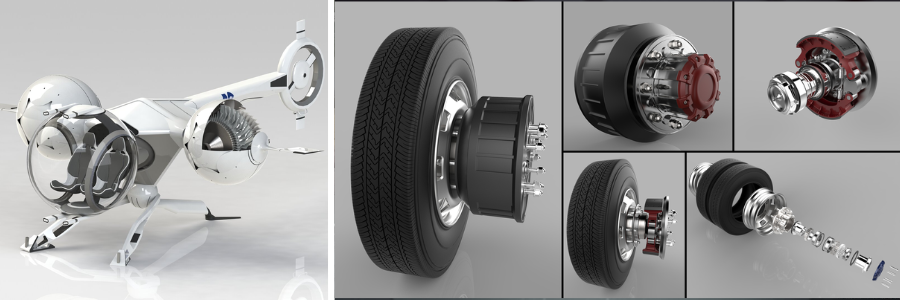
Prototype of a bubble drone and wheel system by Cad Crowd product engineers

RELATED: Top tips to create impactful prototype designs for company products

Advantages of iterative prototyping:

Designers can improve and adapt according to user feedback and functional testing. It helps in detecting potential problems early on, hence reducing the chance of major failure later on.

In the iterative prototyping process, consumers can participate during the design stage so that the final product will be intuitive, user-friendly, and in line with the market needs. This is most applicable to consumer-facing products, such as electronics, automotive, or medical devices, as it boosts customer satisfaction. This approach is often integrated with consumer product design services to ensure the final product meets both user expectations and market demands. Iterative prototyping may significantly reduce the time cycle during development for complicated products, leading to the delivery of better quality and more functional products to the market.

5. UX prototyping

Prototyping is the integration of a stage in the creation of products with interactivity and digitization attached to it. Prototyping for UX basically works toward ensuring usability, thereby dealing with things like navigation, ease of use, responsiveness, as well as satisfactory levels. In this regard, complex products must have specific methods of prototyping when they involve inbuilt software products, mobiles, or other such digital interfaces. This process is often supported by CAD design services to bring digital interfaces and physical components together in a cohesive prototype.

Techniques on UX prototyping:

Designers usually create wireframes, which are basic, skeletal layouts of a product’s interface, before they start to go into the full visual design. These wireframes focus on the overall structure and function, ensuring a smooth flow before adding complex features.

  • High-fidelity interactive prototypes

This is more complex and has an interaction of a user and the behaviors they would make in the real version. Using tools like Sketch, Figma, or Adobe XD, designers can create interactive clickable prototypes that reflect the real version of the final product. They help in determining pain points during navigation or usability before creating the full software. This stage is often developed with the support of web design professionals to ensure a seamless transition from prototype to a fully functional digital product.

  • Heuristic evaluation and A/B Testing

For UX-intensive products, designers might carry out heuristic evaluations or A/B tests on prototypes to compare various design options or find usability issues based on expert suggestions and user feedback. This ensures that the final product is not only functional but also user-friendly, which is important in complex products such as mobile apps, smart devices, and automotive control systems.

RELATED: How cutting-edge medical prototyping design services help your firm design new products 

6. Environmental and functional testing prototypes

In some industries, especially for high-performance products, such as military, aerospace, or industrial equipment, prototypes may need to pass environmental testing to simulate realistic conditions. In this regard, the prototypes are designed not only to test the functionality but also to check on the performance of the product under different environmental scenarios, such as extreme temperatures, humidity, vibrations, or dust and water exposure. These types of prototypes are often developed with the assistance of aerospace engineering services to ensure they meet stringent industry and environmental standards.

Key Testing Scenarios

Prototypes are tested for very high or low temperatures that do not cause products like electronics, medical devices, or automotive parts to fail.

Especially for those automotive or aerospace products where a product has to perform under continuous vibrations. This kind of testing is frequently supported by automotive design services to ensure components are optimized for durability and performance in high-vibration environments.

To test prototypes under extreme weather conditions, such that weaknesses can be identified beforehand in the product’s durability and material integrity when mass production comes. These prototypes provide essential information about the product’s life and reliability, which will ensure that the final product is of high standards of performance and safety.

How Cad Crowd can help

Prototyping is the most critical part of the process of new product development, especially if the product has a multi-disciplinary expertise with advanced materials and intricate designs. New product design companies rely on a very wide variety of prototyping techniques: from rapid prototyping and functional prototyping, to visual and iterative models of user experience to validate ideas and test functionality or refine designs. These are often developed in tandem with invention design services to help bring innovative product concepts from idea to a fully realized prototype.

Cad Crowd will connect you with the experts who can work on advanced prototyping techniques in the design of complex products. Whatever your requirement of rapid prototyping, 3D printing, or CNC machining, Cad Crowd will ensure the task is done precisely, innovatively, and efficiently. Ease the process of developing a new product by having freelance designers at Cad Crowd offer solutions according to your requirements. Get a free quote today.
author avatar

MacKenzie Brown is the founder and CEO of Cad Crowd. With over 18 years of experience in launching and scaling platforms specializing in CAD services, product design, manufacturing, hardware, and software development, MacKenzie is a recognized authority in the engineering industry. Under his leadership, Cad Crowd serves esteemed clients like NASA, JPL, the U.S. Navy, and Fortune 500 companies, empowering innovators with access to high-quality design and engineering talent.

Connect with me: LinkedInXCad Crowd

Metal Gear Solid Delta Tactical Edition Gets First Price Cut For PS5 And Xbox


Metal Gear Solid Delta: Snaker Eater’s Tactical Edition just received its first notable discount at major retailers. The PlayStation 5 and Xbox Series X physical edition is on sale for $59.88 at Amazon and Walmart. Along with the $10 discount, you’ll find a voucher inside the box with codes for the Sneaking DLC Pack and White Tuxedo. The Sneaking DLC Pack comes with 10 cosmetic items, including suits that pay homage to Metal Gear Solid: Peace Walker, two “naked” uniforms, and even a suit that turns Snake into a crocodile.

Metal Gear Solid Delta: Snake Eater Tactical Edition — $59.88 ($70)

  • Buy for PS5 at:
  • Buy for Xbox at:

PC players can also get the Sneaking DLC Pack by purchasing the Digital Deluxe Edition. The Digital Deluxe retails for $80, but you can snag a Steam key for the same price as the Tactical Edition from Fanatical. It’s also worth noting the PS5 Collector’s Edition is still in stock at Amazon and Walmart as of October 26. Unfortunately, it’s selling for full price again after being discounted to $168.65 earlier this month.

Metal Gear Solid Delta: Collector’s Edition Stock Tracker:

As mentioned, the Collector’s Edition is still in stock at multiple retailers. Take a closer look at the contents of the Collector’s Edition below.

Metal Gear Solid Delta: Snake Eater Collector's Edition
Metal Gear Solid Delta: Snake Eater Collector’s Edition

For more Metal Gear collectibles, take a look at GameStop’s exclusive merch collection and the collection of silly rubber duck vinyl figures by Tubbz. And if you want to read more about the remake before you order a copy, check out our Metal Gear Solid Delta: Snake Eater review. We awarded the remake a 9/10. Solid Snake’s return is extremely solid.

.net core – dotnet –version “could not be loaded”, but the SDK is installed by Visual Studio


As it turns out, I had two dotnet directories in C:\Program Files and C:\Program Files (x86) in the PATH environment variable. The SDK was in Program Files, but the Program Files (x86) one had only the runtime – so, when I ran dotnet, it actually executed the one in Program Files (x86).

The fix is simple. Go to Windows Search, then Edit the system environment variables. In the following image, click Environment variables....

enter image description here

In the following image, select Path and click Edit, in the System variables section.

enter image description here

In the following image, select the C:\Program Files (x86)\dotnet directory and click Delete. (I’ve already removed it earlier, so it doesn’t appear in the following image, but you should be able to find it.)
enter image description here

Click OK on all 3 windows or close them.

Lessons from the Financial Crisis: Navigating Economic Resilience


Lessons from the Financial Crisis
Freepik

Key Takeaways:

  • Understanding the causes and impacts of the 2008 financial crisis.
  • Exploring the role of government interventions in economic recovery.
  • Identifying strategies to mitigate future financial downturns.

Introduction

The 2008 financial crisis marked a watershed moment in modern economic history, sending shockwaves through financial systems worldwide. For policymakers, economists, and the public, understanding the critical events leading up to the crash offers important lessons for safeguarding our future. Closely examining in-depth interviews and analyses, such as those of Peter Orszag, can provide unique insights into the complexities of crisis management and economic recovery during turbulent times.

Global markets faltered as institutions failed, prompting governments and central banks to spark unprecedented rescue efforts. The ripple effects revealed vulnerabilities in even the most robust economies, underscoring the necessity for rigorous regulatory frameworks, risk management, and international cooperation.

Causes of the Financial Crisis

The underlying causes of the 2008 financial crisis were deeply intertwined, stemming from both macroeconomic trends and the decisions of individuals and institutions. Central to the meltdown was the proliferation of subprime mortgages—loans extended to borrowers with lower creditworthiness during a period of rapidly rising property values. As more Americans sought homeownership, banks and financial intermediaries began to bundle these risky mortgages into complex financial instruments called mortgage-backed securities (MBS) and collateralized debt obligations (CDOs).

Financial institutions underestimated the risks embedded in these securities, influenced by the belief that housing prices would continue to rise. Regulatory oversight lagged behind market innovation: gaps in the regulatory framework allowed excessive leverage and risky practices to go unchecked. The eventual bursting of the housing bubble triggered defaults, eroding investor confidence and leading to the collapse of key institutions like Lehman Brothers, freezing credit markets globally.

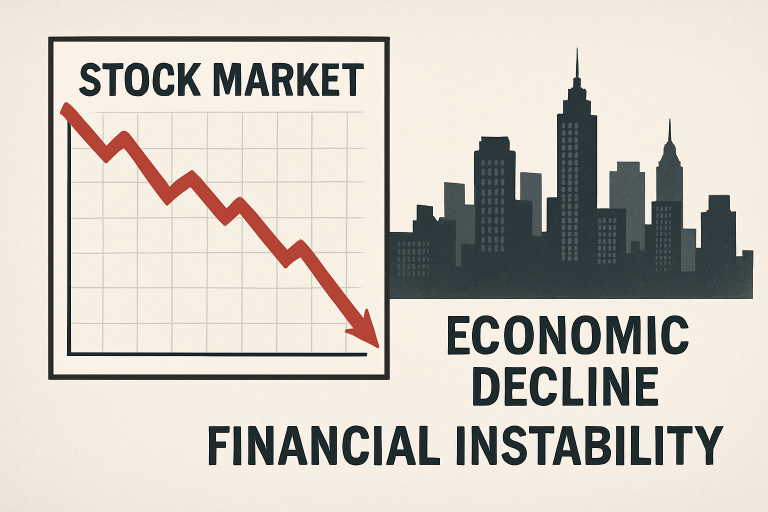
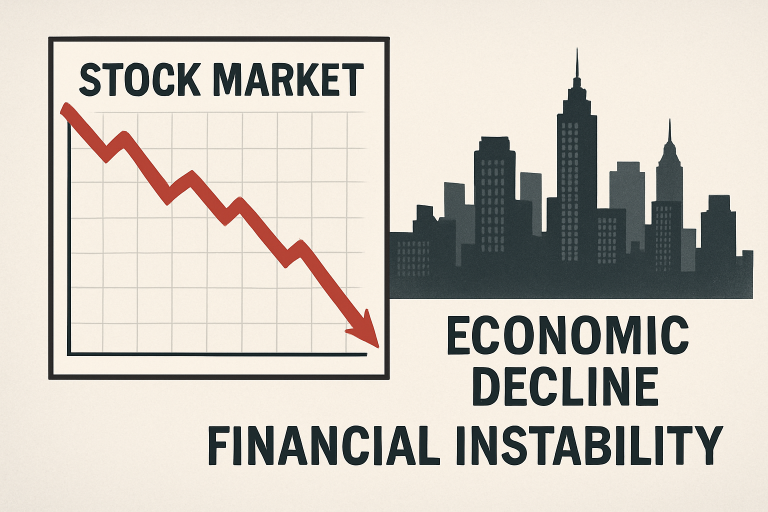
Financial InstabilityFinancial Instability
Vazoo.com

Impact on the Global Economy

The financial crisis quickly transcended national borders, pushing the world economy into the deepest recession since the Great Depression. Global GDP contracted sharply, accompanied by double-digit unemployment rates in many countries. Plummeting asset values wiped out trillions in household and pension wealth, while confidence in the stability of banks eroded rapidly. Emerging economies, which relied heavily on exports and foreign investment, suffered severe economic shocks as global demand collapsed. Social systems faced mounting pressure as layoffs and foreclosures soared, emphasizing the human costs of financial instability.

The sudden halt in credit availability had profound ripple effects on sectors beyond finance, stalling growth in manufacturing, retail, and other major industries. These impacts were felt unevenly, but the crisis ultimately demonstrated how interconnected and fragile the global financial architecture had become. The International Monetary Fund (IMF) has published extensive research on how different countries were affected, further highlighting the crisis’s global reach.

Government Interventions

In response to the unfolding disaster, governments and central banks launched dramatic interventions to prevent total collapse. The United States, for instance, passed the Emergency Economic Stabilization Act, creating the Troubled Asset Relief Program (TARP) to inject capital into failing banks. The Federal Reserve slashed interest rates to near zero and implemented quantitative easing to promote liquidity and restore confidence in the markets.

Other advanced economies followed suit, designing stimulus packages and bank bailouts tailored to their specific circumstances. These efforts, while controversial, were credited with stopping the panic and averting an even more significant collapse. International bodies like the Group of Twenty (G20) gathered for rapid coordination to ensure a unified response, reflecting how global cooperation proved essential to stabilizing financial systems. To understand the scale and implications of these interventions, The Guardian details the policy measures and their impacts in their policy overview on the financial crisis.

Lessons Learned

Importance of Effective Regulation

The crisis revealed that unchecked financial innovation and insufficient supervision can sow seeds of systemic risk. Stricter lending standards, greater transparency in financial markets, and rigorous capital requirements have since become central to new regulatory regimes, including the Dodd-Frank Wall Street Reform and Consumer Protection Act in the U.S.

Dangers of Excessive Leverage

Financial institutions and households alike learned the perils of borrowing beyond their means. The collapse of overleveraged banks underscored the necessity of prudent balance sheet management at every level of the economy.

Global Interconnectedness

The speed and severity of contagion highlighted that risks in one country can quickly spill over to others. Governments and regulators now better appreciate the importance of cross-border financial oversight and crisis management protocols.

Strategies for Future Prevention

As economic actors and regulators reflect on the crisis, a number of strategies for mitigating future downturns have emerged. Chief among them is the continuous strengthening of national and international regulatory architecture to prevent the buildup of systemic risks. Enhancing risk management and stress testing within institutions helps identify vulnerabilities early. At the same time, comprehensive consumer protection laws ensure that households are not exposed to predatory lending or financial products they don’t fully understand.

Financial literacy must be promoted widely, empowering individuals to make sound decisions about borrowing, investing, and saving. At the governmental level, policies encouraging transparency—both in markets and in the structure of financial products—can further shield economies from the worst effects of inevitable downturns. As demonstrated in global summits and collaborative research from organizations such as the IMF, international cooperation remains essential in today’s interconnected world.

Conclusion

The 2008 financial crisis stands as a stark example of the complexities and vulnerabilities embedded in the modern global financial system. It serves as a reminder of the crucial importance of learning from past mistakes and implementing robust strategies to fortify economic structures against future shocks. By fostering an environment of transparency, responsible risk-taking, and international cooperation, we can lay the groundwork for lasting resilience and prosperity.

Find a Home-Based Business to Start-Up >>> Hundreds of Business Listings.

A single point of failure triggered the Amazon outage affecting millions


In turn, the delay in network state propagations spilled over to a network load balancer that AWS services rely on for stability. As a result, AWS customers experienced connection errors from the US-East-1 region. AWS network functions affected included the creating and modifying Redshift clusters, Lambda invocations, and Fargate task launches such as Managed Workflows for Apache Airflow, Outposts lifecycle operations, and the AWS Support Center.

For the time being, Amazon has disabled the DynamoDB DNS Planner and the DNS Enactor automation worldwide while it works to fix the race condition and add protections to prevent the application of incorrect DNS plans. Engineers are also making changes to EC2 and its network load balancer.

A cautionary tale

Ookla outlined a contributing factor not mentioned by Amazon: a concentration of customers who route their connectivity through the US-East-1 endpoint and an inability to route around the region. Ookla explained:

The affected US‑EAST‑1 is AWS’s oldest and most heavily used hub. Regional concentration means even global apps often anchor identity, state or metadata flows there. When a regional dependency fails as was the case in this event, impacts propagate worldwide because many “global” stacks route through Virginia at some point.

Modern apps chain together managed services like storage, queues, and serverless functions. If DNS cannot reliably resolve a critical endpoint (for example, the DynamoDB API involved here), errors cascade through upstream APIs and cause visible failures in apps users do not associate with AWS. That is precisely what Downdetector recorded across Snapchat, Roblox, Signal, Ring, HMRC, and others.

The event serves as a cautionary tale for all cloud services: More important than preventing race conditions and similar bugs is eliminating single points of failure in network design.

“The way forward,” Ookla said, “is not zero failure but contained failure, achieved through multi-region designs, dependency diversity, and disciplined incident readiness, with regulatory oversight that moves toward treating the cloud as systemic components of national and economic resilience.”

Trails of Cold Steel uses ultimate skills as character arcs


The Trails of Cold Steel series of role-playing games — released by Nihon Falcom across the 2010s — was an ambitious project, considering the number of characters and events involved. It took the developer five games to develop these characters. Emma Millstein’s story arc is developed in parallel with Cold Steel’s main story, but it’s through the subtle change in her skill set that we fully understand the depth of her inner growth.

[Warning: This article contains minor spoilers for the main storyline of the Trails of Cold Steel series.]

A Trails of Cold Steel screenshot showing Emma Millstein in her first year wearing the summer uniform of Thors Image: Nihon Falcom/NIS America via Polygon

In Legend of Heroes: Trails of Cold Steel, Emma is a regular teenager, like the other members of Thors Military Academy’s Class VII. As the class president, she’s friendly to everyone and works to avoid any conflicts between her classmates. While Emma takes her student life really seriously, she lives a double life. She’s actually a witch, a member of the Hexen Clan. Enrolling in Thors is part of her true goal of guiding Rean Schwarzer, the leader figure of Class VII, who is destined to awaken a Divine Knight.

In every Trails game, most characters have at least one S-Craft, a special attack that requires you to have a minimum amount of Craft Points to use. These ultimate abilities are meant to be your ace in every encounter. S-Crafts abilities are also a way for the game to narrate the changes characters are undergoing. They can represent the development of a character’s technique, like Rean Schwarzer’s S-Craft Breaking Dawn in Cold Steel 4, which he unlocks after reaching the title of Divine Blade. In other cases, like Emma’s, Nihon Falcom uses S-Crafts to communicate the internal transformations a character goes through.

When the war in Erebonia starts in Cold Steel, Emma’s response to the situation is the naive but reasonable idea that fighting means attacking. The conflict extends to the second game in the series, where the two S-Crafts she has are Lord Albireon and Zodiac Rain. Both are offensive techniques that indiscriminately hit all enemies on the field.

Once we have the chance to meet Emma again in Cold Steel 3, we see a different girl. She has graduated from Thors, and after training with her clan, Emma seems to have understood an important truth about herself. Although she becomes a formidable magic user, Emma comprehends that, above all else, she’s a protector. She’s willing to sacrifice herself to keep everyone — but especially Rean — safe. Her desire to occupy this role is subtly indicated by her ultimate skill, which in Cold Steel 3 becomes Palace of Eregion.

A Trails of Cold Steel 3 screenshot showing Emma Millstein holding Rean's hand. She has her eyes closed and wears glasses and a hat. Image: Nihon Falcom/NIS America via Polygon

When you use the S-Craft Palace of Eregion, Emma summons four translucent magical towers, and magical walls appear connecting them and surrounding the battlefield. The characters affected by this skill receive one or two stacks of Absolute Reflect, a status that prevents damage of any kind. Emma had never been a belligerent person, so she shifts to a supportive approach, reflecting the caring look she had always extended to her friends.

It’s fascinating to see how Nihon Falcom uses a character’s skill set to complement the game’s narrative. RPGs often use written text or visuals to tell us what a character is feeling or thinking. But Emma Millstein proves that even a spell can add another layer of meaning.

Amazon Luna Lets Prime Members Play Games Together on Their Phones


Amazon Luna has undergone a complete transformation designed to make gaming easier for users of all ages and backgrounds. Starting this week, the service lets anyone play high-quality games directly on devices they already own, including Fire tablets, Fire TV, smartphones, and certain LG and Samsung televisions. Prime members automatically get access to more than 50 games at no extra cost, including GameNight, an expanding collection of over 25 local multiplayer games made for living room fun with friends and family.

The earlier Luna required separate paid subscriptions. The original Luna+ channel cost $5.99 per month during early access (later increased to $9.99), and the Ubisoft+ channel cost $14.99 per month (later $17.99). Prime members only received access to a handful of rotating games each month as a small bonus. Another major change is GameNight, which did not exist in the earlier version. The original Luna focused primarily on traditional console-style games that required controllers.

But now Prime members will find titles like Angry Birds Flock Party, Draw & Guess, and Jackbox Party Pack 9, as well as board games like Ticket to Ride, Exploding Kittens 2, and Clue. All these games are made for easy play with friends at home, using a smartphone as a controller with quick setup through a QR code scan for responsive touch controls.

Prime members also get access to releases like Hogwarts Legacy, Indiana Jones and the Great Circle, Kingdom Come: Deliverance II, and TopSpin 2K25. Games outside GameNight on Luna need a controller or keyboard and mouse. Luna Premium, priced at $9.99 a month, adds even more games, like EA SPORTS FC 25, Star Wars Jedi: Survivor, and Batman: Arkham Knight, replacing the previous Luna+ membership.

Halo: Campaign Evolved – Answering the Big Questions About This Ambitious Remake


Summary

  • Halo: Campaign Evolved is a full remake of the Halo: Combat Evolved campaign, coming in 2026 to Xbox Series X|S, Xbox on PC, Steam, PlayStation 5, supports Xbox Cloud Gaming and Xbox Play Anywhere and arrives day one with Game Pass Ultimate and PC Game Pass.
  • This fully-rebuilt campaign will introduce remastered 4K visuals, beloved Halo weapons and vehicles, plus brand-new story content.
  • We spoke to key leads at Halo Studios about how the team is utilizing 25 years of community feedback and technology to build on what makes Halo timeless.

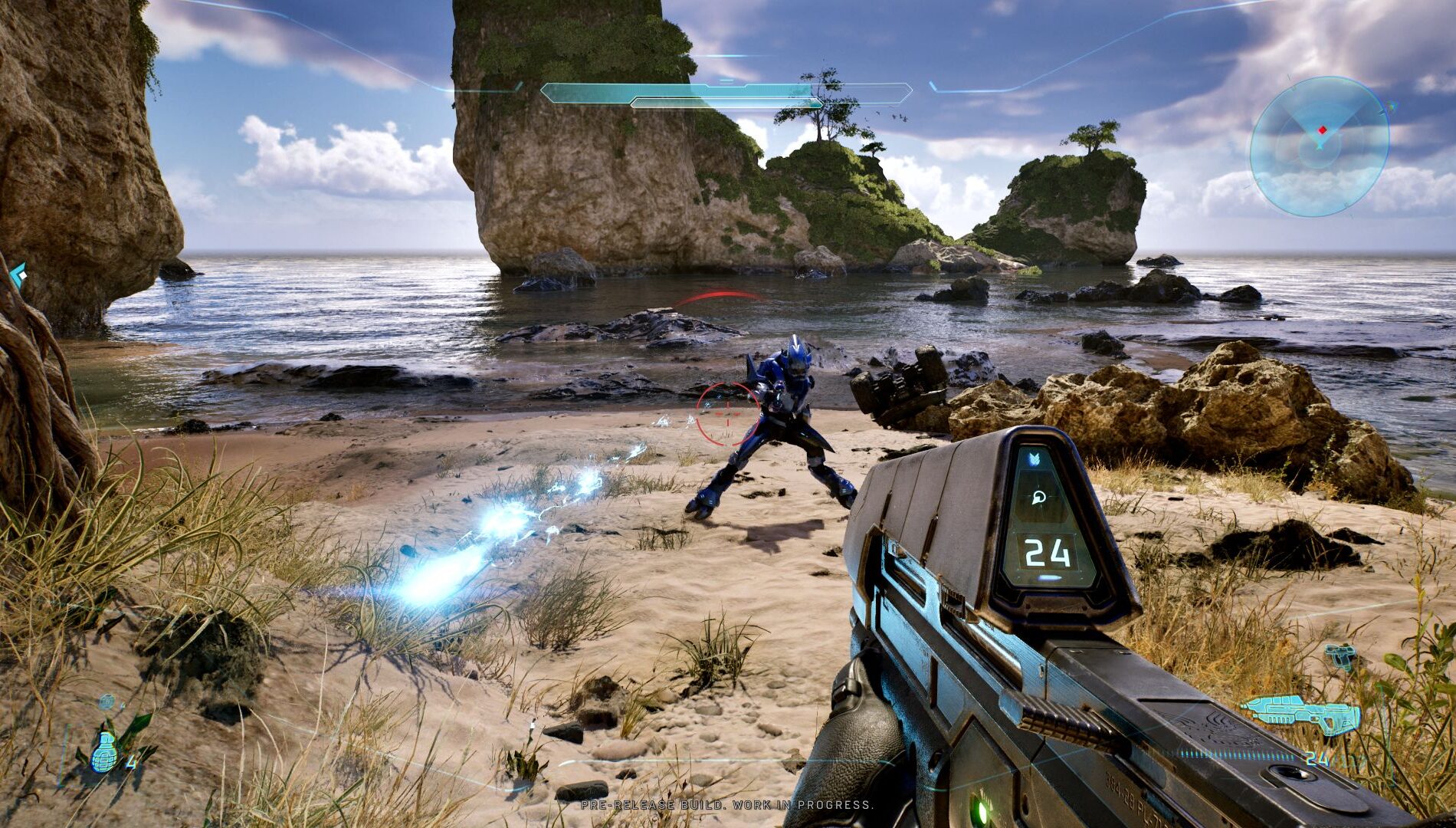
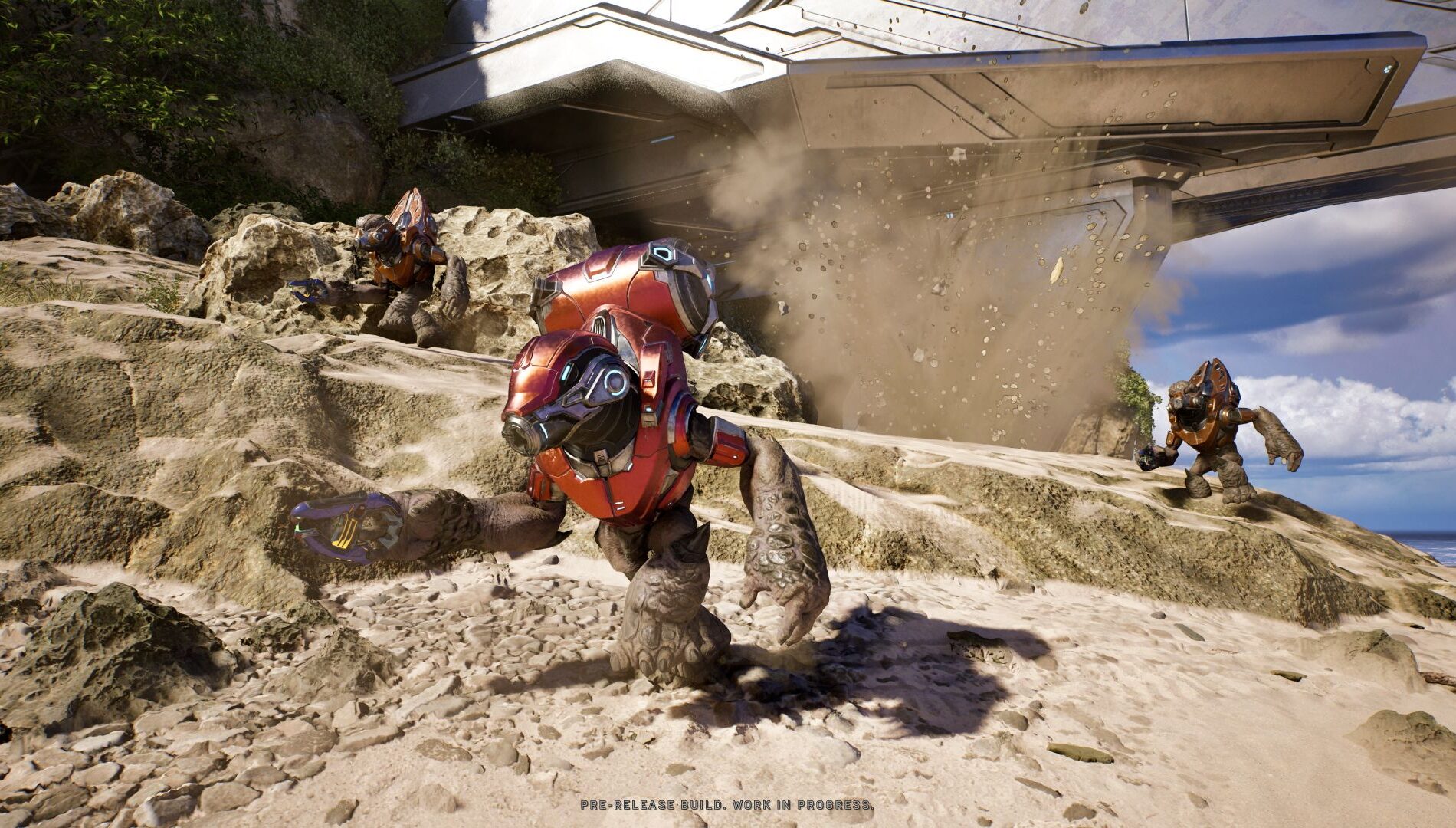
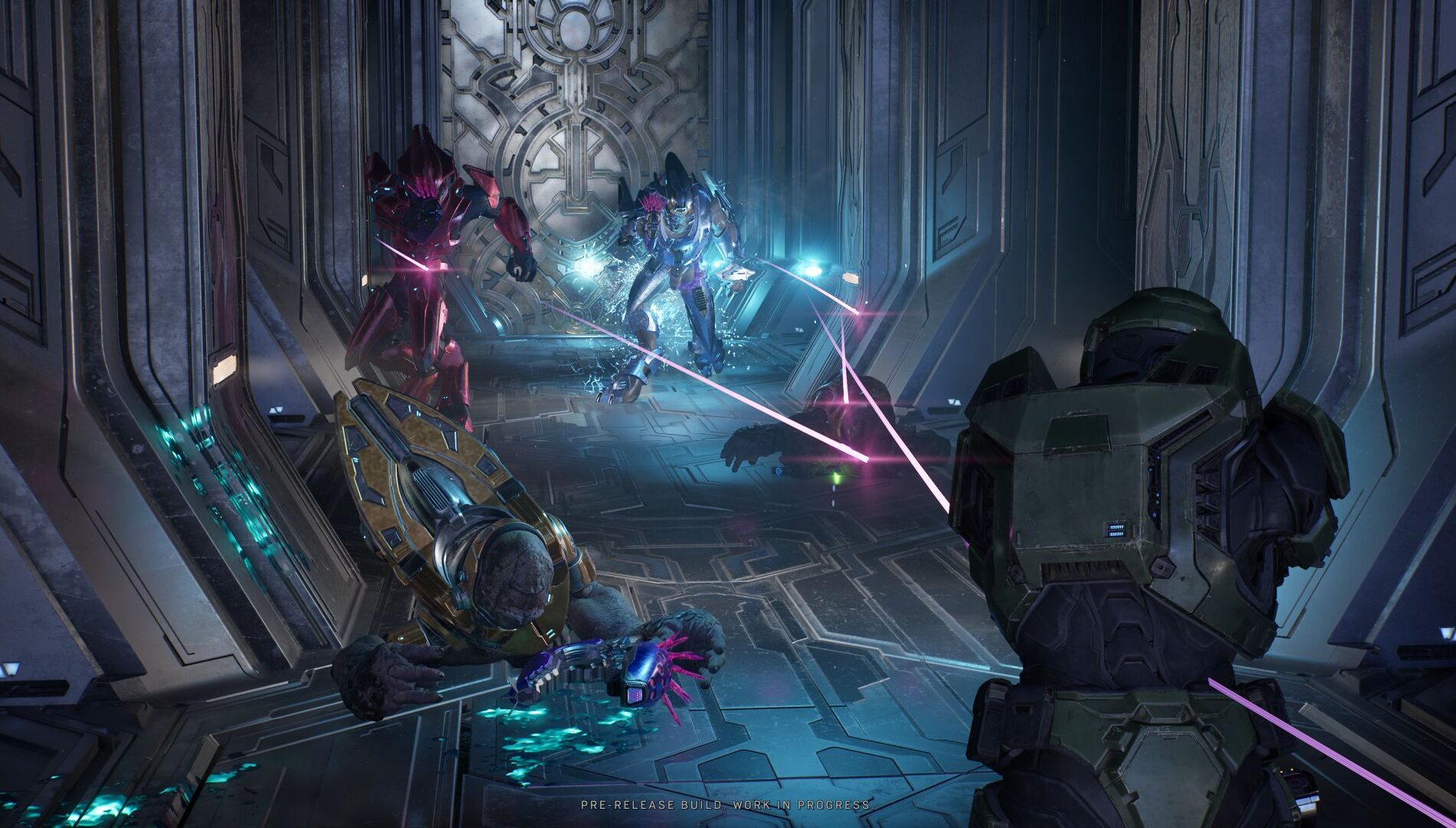
It’s official; Halo marks the next chapter for the franchise with Halo: Campaign Evolved, a complete Unreal Engine 5 remake of the original campaign from Halo: Combat Evolved, including some brand-new surprises.

The original Halo: Combat Evolved is a stalwart of gaming history, a cultural icon that helped define the first-person shooter experience. For Halo Studios, bottling the impact of that original campaign and all of its special moments is the ultimate goal – for new players and long-time fans alike.

Halo: Campaign Evolved is a modern evolution of that iconic story, thoughtfully brought to life in Unreal Engine 5 with stunning new 4K visuals, updated animations, remastered music, and re-recorded voice lines. Halo Studios is also bringing in a roster of beloved weapons and vehicles from later Halo titles, and adding three new bonus campaign missions, all designed to expand and celebrate  the adventure that started it all.

Halo’s legacy of cooperative play continues here, supporting the original two-player local split screen experience on console, and, for the first time, up to four players in online co-op across Xbox, PC, and PlayStation 5.

Ahead of announce, I was able to speak to several key leads at Halo Studios, and gathered up some unique insight on how the team seeks to capture the tone and feel of the original game for a new generation, all the new lore and gameplay additions, and ultimately, while staying true to what has always made Halo special at its core.

Back to Where It All Began

Halo: Combat Evolved is where it all began, and for the team at Halo Studios – who have gone through an evolution of their own – there was no better place to start building this new generation of Halo. As Executive Producer Damon Conn puts it, remaking the very first campaign from the ground up was a perfect opportunity to craft an ideal entry point for new players and modernize areas that could better match today’s expectations for pacing and clarity (yes, we mean The Library, and we’ll get to that shortly).

“We wanted to start where it all began, with the original campaign that defined Halo,” Conn explains. “Starting here means people that have never played the game before will be able to understand the story from the very beginning, and that can help us chart a course forward with new Halo stories.”

“Focusing on the campaign experience means we can concentrate fully on really capturing the atmosphere, tone – the emotional impact of what made the first campaign so special and iconic.”

How Will Campaign Evolved Preserve the ‘Halo Spirit’?

Keeping that classic Halo “feel” is of course of prime importance, and capturing that took the team all the way back to the source material – the original Combat Evolved campaign as it was first presented in 2001. TThe goal was to understand how modern updates to systems and environments could complement, not replace, the essence of the original experience – to make it feel just as players remember, only smoother and more seamless than ever before.

 “The campaign has been rebuilt to feel handcrafted and immersive, true to what players remember, not just visually, but emotionally,” adds Conn.

How Will Campaign Evolved Update Existing Missions?

Preserving the Halo spirit means the team has taken great care to not modernize for the sake of modernization. It’s not about rebuilding Halo: Combat Evolved’s story and spaces to ‘fit in’ with a roster of today’s games, but to ensure that its original feel has evolved to suit modern players. Every change has been shaped by the same question: Does this still feel like Halo?

“Because this is a remake, we’ve been able to carefully rebuild almost every level and every encounter with more fidelity,” says Max Szlagor, Creative Director. “As we’re building the technology for this game, we’ve had to do it piece by piece, which included reevaluating all of the individual elements as we’re revisiting them in the original game.”

“And now the campaign supports up to four-player co-op, we had to think about how all of the original encounters and spaces can scale to accommodate that many players.”

The Library is a perfect example to demonstrate how the team is thoughtfully enhancing existing spaces in an authentic way. Halo: Combat Evolved’s seventh campaign mission is a key example of where it felt right to make tweaks to several areas to create a new experience that balances nostalgia with the expectations of today’s gamers.

“We learned from Halo: Combat Evolved Anniversary that there was still an appetite for things like better wayfinding, navigation, and diversity in enemy encounters,” Szlagor says. “In The Library specifically, which features several Flood encounters, we wanted to reevaluate the pacing and enhance the environmental storytelling. We’ve added new lines to Guilty Spark, which guide players through the level, and there’s new dialogue that gives more insight into the narrative as it plays out.”

 “We’re not changing the stories, it’s about refining and adding context to this moment, and other levels like it, so players can stay on track.”

What New Elements are Halo Studios Adding to the Original?

In Halo: Campaign Evolved, you’ll be able to wield nine additional iconic weapons from across the Halo series inside the Halo: Combat Evolved campaign, including the Energy Sword, Battle Rifle and Needle Rifle, giving you more ways to approach every encounter.

“Some of the weapons we’re bringing in could be used against you in Halo: Combat Evolved by the enemy, but you weren’t able to pick them up yourself.” Szlagor says. “Now, you can, and it feels natural because of how you can do that in other Halo games, it reflects the evolution of the series.”

Players can also look forward to two firsts for the campaign — you can now hijack vehicles and even pilot the Covenant Wraith tank for the first time in Halo: Combat Evolved.

For challenge seekers, Halo Studios is also featuring the most Skulls ever in a Halo campaign, for even more ways to modify the campaign experience.

And perhaps most exciting, the team has added three brand-new prequel missions set before the events of the Halo: Combat Evolved campaign, which introduce entirely new environments, characters and enemies, which we’ll find out more about very soon.

Oh – and you can sprint now, if you’d like, or disable it if you don’t.

How Are Halo Studios Using Unreal Engine 5?

The Halo spirit is not just about the debut’s impact – the studio is effectively incorporating 25 years of player feedback and technological advancement into Halo: Campaign Evolved. The latter is supported by the team’s pivot to Unreal Engine 5, which, with the foundation of Halo’s legacy code, will support the game’s development. It’s not an entirely new ecosystem for Halo Studios – they’ve dabbled quietly with Unreal projects in the past – and that has only reinforced that the tools on offer, combined with original resources, are what Halo needs to futureproof itself for the generations to come.

“Given that Halo: Campaign Evolved is a remake, it is critical that we deliver gameplay that is 100% authentically Halo at its core, ” says Greg Hermann, Game Director on Halo: Campaign Evolved.

All of the new content created in Unreal Engine 5 is layered on top of code and systems carried directly over from the original games. That legacy code is instrumental in maintaining that authentic “Halo feel” within gameplay. It means that Halo Studios can achieve the desired visual goal with Unreal’s photorealistic rendering capabilities, with the simulation systems of Halo living and breathing beneath it, Hermann adds.

“For future titles, we will continue to push the boundaries of technology while ensuring the core Halo gameplay for that game can be seen, felt, heard, and evolved where needed.”

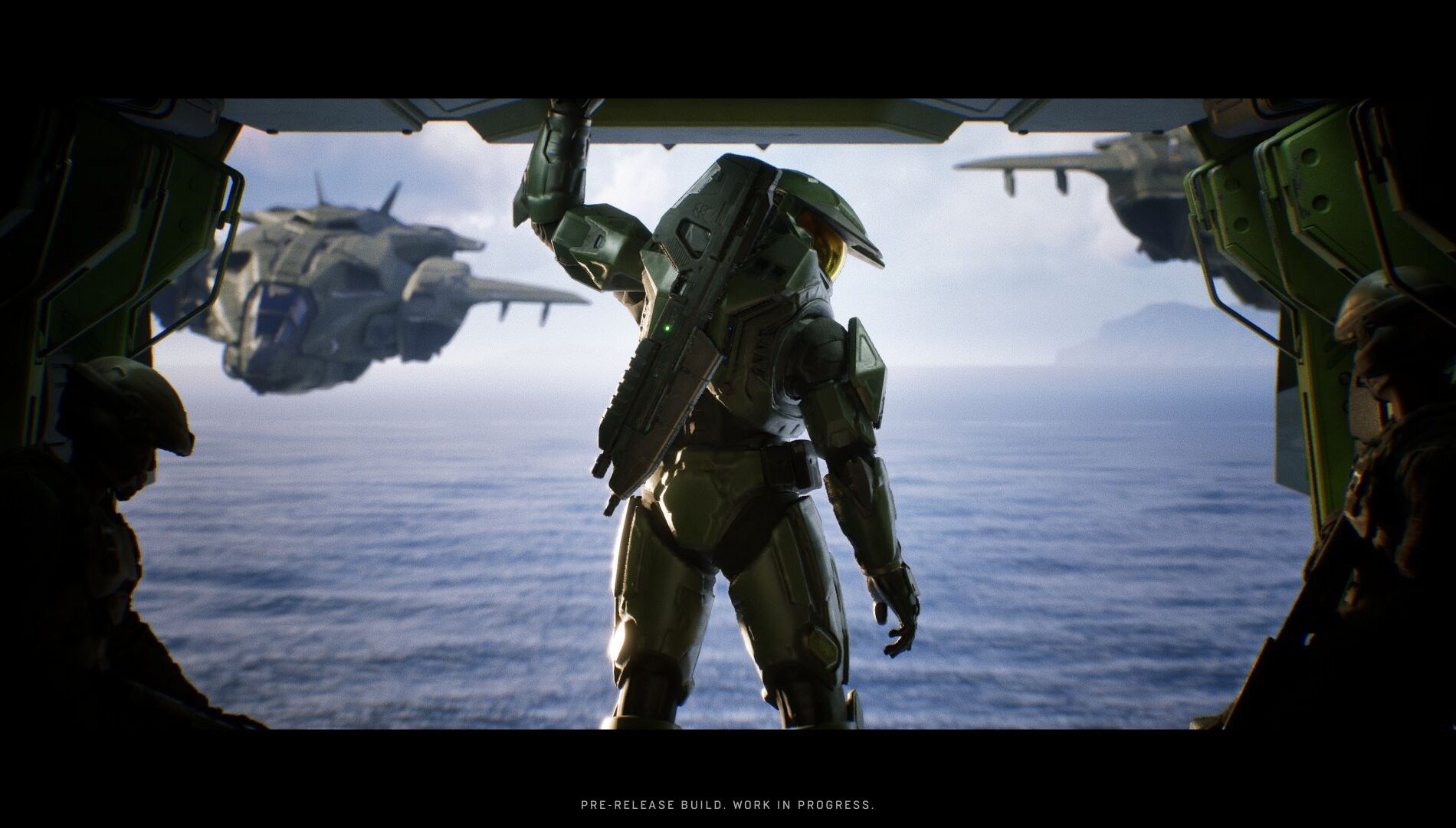
Halo: Campaign Evolved AssetHalo: Campaign Evolved Asset

How are Halo Studios Balancing Serving New and Core Players?

While the team knows its tools best, it’s the Halo community that plays a fundamental role in how Halo Studios moves forward.

“Our player-first approach has informed so many decisions for the better,” Szlagor adds. “When we introduce new features or make creative choices, we’re constantly checking in with players through our user research studies and our Halo Insider program. Their feedback helps us stay grounded in what feels authentic to Halo.

That commitment to player input also extends beyond the studio walls. Halo: Campaign Evolved will be playable for the first time at the Halo World Championships, giving our players an early hands-on look at how the game is coming along. Halo: Campaign Evolved doesn’t seek to replace the original game, but instead, offer a modern experience that can stand proudly beside it. When new players launch the game for the first time, it must recapture the indescribable feel of picking up Halo for the first time 25 years ago on the original Xbox. That’s the moment we all remember so fondly, a moment that the Halo team recalls as “transformative”, that it wants to share with as many players as possible.

“We’re so excited about bringing Halo to those who may not have had chance to play it in the past,” Conn adds. “At its heart, Halo is about connection, we’re thrilled to meet a new generation of players on their platforms of choice to fall in love with Halo the same way we did. We’re not trying to rewrite Halo’s legacy – we’re trying to immerse you in it like never before.”

“This is Halo for everyone.”

Halo: Campaign Evolved is coming in 2026 to Xbox Series X|S, Xbox on PC, Steam, PlayStation 5, supports Xbox Cloud Gaming and Xbox Play Anywhere and arrives day one with Game Pass Ultimate and PC Game Pass.


Xbox Play Anywhere

Halo: Campaign Evolved

Xbox Game Studios


Experience Where the Legend Begins

Halo: Campaign Evolved is a faithful yet modernized remake of Halo: Combat Evolved’s campaign. Experience the original story rebuilt with high-definition visuals, updated cinematics, and refined controls, plus three brand-new prequel missions featuring the Master Chief and Sgt. Johnson. A broader arsenal of weapons, vehicles, enemies, and gameplay-modifying “Skulls” – optional modifiers that change combat in fun and challenging ways – add fresh tactics and endless replayability.

Play it your way: solo, in 2-player split-screen co-op (console only), or up to 4-player online co-op with full crossplay and cross-progression support. Whether you’re discovering Halo for the first time or returning to the ring after 25 years, Halo: Campaign Evolved delivers an adventure that feels both timeless and brand new.

Discover the Ringworld

After crash landing on a mysterious ringworld known as Halo, the Master Chief is tasked with helping the remaining humans survive against overwhelming Covenant forces. Alongside his AI companion Cortana, he uncovers Halo’s dark secrets and fights to avert the annihilation of all life in the galaxy.

Key Features

The Complete Campaign, Rebuilt
Battle through the original missions, newly rebuilt with enhanced level design, updated cinematics, and improved wayfinding, refined to keep the pace moving without losing the wonder, tension, or heroism of the original.

Cinematics and Audio Overhauled
Iconic vistas, alien architecture, and sci-fi wonders are reborn with all-new visuals, cinematics, and animations. The soundtrack has been remastered, the sound design updated for greater immersion, and new voice performances recorded with the primary cast.

Combat and Weapons Expanded
Classic Halo combat feels instantly familiar yet sharper than ever. Sprint, aim, and engage with refined precision. For the first time in Halo: CE, you can wield 9 additional iconic weapons from across the series, including the Energy Sword, Battle Rifle, and Needle Rifle, giving you more ways to approach every fight.

Three New Prequel Missions
Join the Master Chief and Sgt. Johnson in a brand-new arc set before the events of Halo: Combat Evolved, featuring new environments, gameplay, characters, and enemies.

Play Solo or with Friends
Experience the full campaign in 2-player split-screen co-op (console only) or 4-player online co-op, complete with crossplay and shared progression across console and PC.

Drive, Hijack, Wreak Havoc
Whether you’re racing across the map in a Warthog or flipping it over with friends, vehicles have always been at the heart of Halo’s fun. Now they go even further: for the first time in Halo: CE, you can hijack enemy rides and pilot a fully drivable Wraith, creating unforgettable chaos.

Remix Your Campaign for Endless Replayability
Use the campaign remix feature to return to any mission and remix the experience with the most gameplay-modifying “Skulls” ever in a Halo campaign. These optional modifiers add challenge and variety with randomized weapons, enemies, and environments.