Prototyping Techniques Utilized for Complex Products at New Product Design Companies


Prototyping is a crucial step in fast-changing product designs, especially in industries using advanced engineering and innovation. Prototypes are the conceptual and digital realization of new products that designers, engineers, and manufacturers use in exploring, testing, and adjusting ideas before high-volume production takes place. 

Indeed, prototyping is even more important to complex products because they may employ intricate components and multi-disciplinary collaboration or rely on leading-edge technology. New product design companies, especially in the high-tech, consumer electronics, medical devices, automotive, or industrial products categories, use several prototyping techniques. These often go hand-in-hand with product design services to ensure that each stage of development is optimized for functionality, feasibility, and manufacturability.

Prototyping is applied to help in streamlining development, reducing costs, enhancing product performance, and getting to market sooner. At Cad Crowd, many of our freelance designers and engineers rely on prototyping to quickly iterate and refine concepts. The following article will outline the most common and effective prototyping techniques applied by new product design companies in bringing complex products from concept to reality.


🚀 Table of contents


1. Rapid prototyping
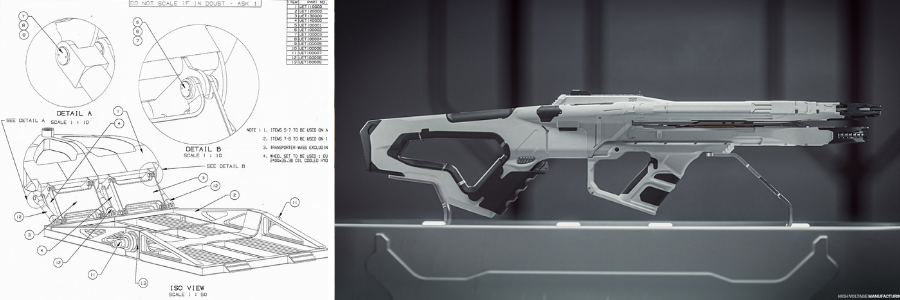
Prototype design of a 110 ton transport and high-voltage rifle by Cad Crowd product engineering professionals

RELATED: Designing prototypes: 3D design services for inventors and companies

Rapid prototyping defines a range of techniques that enable designers to generate models of physical parts directly from digital data. Designers can then make rapid iterations in real time, especially in a complex product requiring components, test functionality, and make several refinements through automated processes such as additive manufacturing, otherwise known as 3D printing, or subtractive methods such as CNC machining. These techniques are frequently integrated with CNC machining services to achieve high precision and repeatability in prototype production.

Key techniques in rapid prototyping:

Additive manufacturing is also popular under a variety of technical names and terminologies, including SLA and Stereolithography, FDM (Fused Deposition Modeling), and others. Through the use of all mentioned above, it accelerates and permits rapid production of more complex shapes/ geometries on demand quickly, while it facilitates much easier replication into models carrying such complex designs, whose creation may be pricey from traditional conventional making.

Parts made of durable material with precise dimensions. CNC (computer-aided machining) is widely used since it carves or mills in a solid mass with high structural strength. If you want to test the fitting, form, and functionality in prototyping, this is the best approach for you. It is often complemented by mechanical engineering services to ensure the prototype aligns with performance and tolerance requirements.

  • Laser cutting and engraving

This is used to cut very thin sheets of material, such as metals, acrylics, and wood. Because of the laser’s precision, it is the best choice for flat and thin component prototypes and designs. 

RELATED: Complete guide to prototyping methods used in product development services for companies and firms

2. Functional prototypes

Functional Prototypes identify the underlying issue related to user interface design (UI) and system integration. For the products whose testing and validation of functionality will require to be conducted, a functional prototype is designed and built. Such a prototype emulates the true performance and utilization of the final product, and its components are close approximations to the desired end product. The built systems include such components as working electronics, hydraulics, and embedded software. These types of builds are often supported by electrical engineering services to ensure accurate integration of circuits and embedded systems.

 Applications

Functional prototypes are used to validate products like implants, diagnostic rules, and surgical instruments, which are usually safety and regulatory-compliant. 

Prototyping allows designers an opportunity to try out user interfaces, electronics integration, and building. For example, when it comes to a smartphone or a wearable, the functional prototype would have screens, cameras, buttons, etc., all functional. These projects often rely on product development services to ensure all components work seamlessly together in the final design.

Automotive product design provides functional prototypes as opportunities to test the novel feature of new parts of an engine, suspension system, or any mechanism for safety under real-life conditions. Functional prototypes are usually tested in controlled environments, simulating real conditions, so the designer can judge user feedback and performance before producing the final product.

RELATED: The product invention process: 6 types of new product prototyping used by businesses

3. Visual prototypes

Sometimes, it is necessary to prototype complex products mainly for the look and feel, whether to present to a client, as marketing material, or to evaluate their aesthetic. These prototypes may not function the same way that the final product will, but they do well in gaining early-stage feedback, making design decisions, and verifying design intent without the cost and time associated with full functional prototypes. This approach is commonly supported by industrial design services to refine the visual and ergonomic aspects of the product.

Visual prototyping techniques

one of the most commonly applied techniques, specifically in the fields of automotive and consumer goods. The designer can model physical products of detailed complexity by applying sculpting clay. The shape and the surface finish change within a few minutes using this technique. For the general form and flow of the outer shell of the vehicle, automotive companies use this technique.

This method is used to check the ergonomics of complex products such as furniture, appliances, and industrial equipment. The foam prototype is lightweight and easy to modify; thus, it is helpful for testing physical interaction or scale. This technique is frequently utilized in conjunction with furniture design services to visualize form and structure before committing to final materials.

  • 3D renderings and visual mockups

This refers to digital renderings or mockups done through software such as Autodesk Maya or Blender. This is not a prototype in the sense that it’s not a physical representation, but very realistic and thus can give the designer and the stakeholders a proper view of proportions, materials, textures, and finishes before producing the actual physical product. Visual prototypes are essential in understanding the aesthetic appeal of complex products, especially where the final product’s look is a critical factor for consumer acceptance.

4.  Iterative prototyping

Iterative prototyping is a process of making a prototype and testing it several times, hence the term cyclic repetition. During the process, it can prove very useful with complex products, since designers go through the phase of building to the incorporation of user or stakeholder feedback in the final product. The closer the product is to being complete, the more every cycle is spent filling in design flaws, and any errors in functionality occur. This approach is often enhanced through design for manufacturing services to ensure that each iteration moves closer to a version optimized for production.
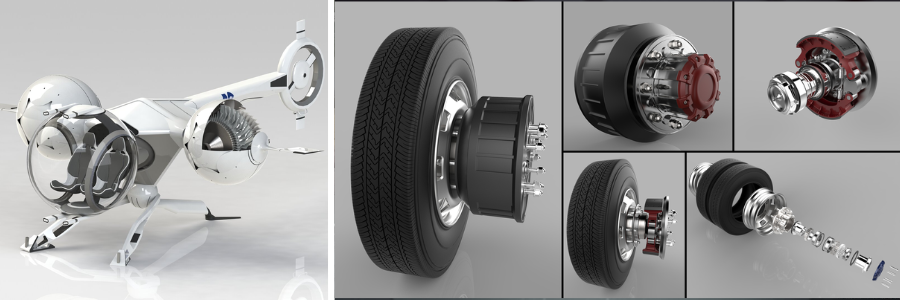
Prototype of a bubble drone and wheel system by Cad Crowd product engineers

RELATED: Top tips to create impactful prototype designs for company products

Advantages of iterative prototyping:

Designers can improve and adapt according to user feedback and functional testing. It helps in detecting potential problems early on, hence reducing the chance of major failure later on.

In the iterative prototyping process, consumers can participate during the design stage so that the final product will be intuitive, user-friendly, and in line with the market needs. This is most applicable to consumer-facing products, such as electronics, automotive, or medical devices, as it boosts customer satisfaction. This approach is often integrated with consumer product design services to ensure the final product meets both user expectations and market demands. Iterative prototyping may significantly reduce the time cycle during development for complicated products, leading to the delivery of better quality and more functional products to the market.

5. UX prototyping

Prototyping is the integration of a stage in the creation of products with interactivity and digitization attached to it. Prototyping for UX basically works toward ensuring usability, thereby dealing with things like navigation, ease of use, responsiveness, as well as satisfactory levels. In this regard, complex products must have specific methods of prototyping when they involve inbuilt software products, mobiles, or other such digital interfaces. This process is often supported by CAD design services to bring digital interfaces and physical components together in a cohesive prototype.

Techniques on UX prototyping:

Designers usually create wireframes, which are basic, skeletal layouts of a product’s interface, before they start to go into the full visual design. These wireframes focus on the overall structure and function, ensuring a smooth flow before adding complex features.

  • High-fidelity interactive prototypes

This is more complex and has an interaction of a user and the behaviors they would make in the real version. Using tools like Sketch, Figma, or Adobe XD, designers can create interactive clickable prototypes that reflect the real version of the final product. They help in determining pain points during navigation or usability before creating the full software. This stage is often developed with the support of web design professionals to ensure a seamless transition from prototype to a fully functional digital product.

  • Heuristic evaluation and A/B Testing

For UX-intensive products, designers might carry out heuristic evaluations or A/B tests on prototypes to compare various design options or find usability issues based on expert suggestions and user feedback. This ensures that the final product is not only functional but also user-friendly, which is important in complex products such as mobile apps, smart devices, and automotive control systems.

RELATED: How cutting-edge medical prototyping design services help your firm design new products 

6. Environmental and functional testing prototypes

In some industries, especially for high-performance products, such as military, aerospace, or industrial equipment, prototypes may need to pass environmental testing to simulate realistic conditions. In this regard, the prototypes are designed not only to test the functionality but also to check on the performance of the product under different environmental scenarios, such as extreme temperatures, humidity, vibrations, or dust and water exposure. These types of prototypes are often developed with the assistance of aerospace engineering services to ensure they meet stringent industry and environmental standards.

Key Testing Scenarios

Prototypes are tested for very high or low temperatures that do not cause products like electronics, medical devices, or automotive parts to fail.

Especially for those automotive or aerospace products where a product has to perform under continuous vibrations. This kind of testing is frequently supported by automotive design services to ensure components are optimized for durability and performance in high-vibration environments.

To test prototypes under extreme weather conditions, such that weaknesses can be identified beforehand in the product’s durability and material integrity when mass production comes. These prototypes provide essential information about the product’s life and reliability, which will ensure that the final product is of high standards of performance and safety.

How Cad Crowd can help

Prototyping is the most critical part of the process of new product development, especially if the product has a multi-disciplinary expertise with advanced materials and intricate designs. New product design companies rely on a very wide variety of prototyping techniques: from rapid prototyping and functional prototyping, to visual and iterative models of user experience to validate ideas and test functionality or refine designs. These are often developed in tandem with invention design services to help bring innovative product concepts from idea to a fully realized prototype.

Cad Crowd will connect you with the experts who can work on advanced prototyping techniques in the design of complex products. Whatever your requirement of rapid prototyping, 3D printing, or CNC machining, Cad Crowd will ensure the task is done precisely, innovatively, and efficiently. Ease the process of developing a new product by having freelance designers at Cad Crowd offer solutions according to your requirements. Get a free quote today.

author avatar

MacKenzie Brown is the founder and CEO of Cad Crowd. With over 18 years of experience in launching and scaling platforms specializing in CAD services, product design, manufacturing, hardware, and software development, MacKenzie is a recognized authority in the engineering industry. Under his leadership, Cad Crowd serves esteemed clients like NASA, JPL, the U.S. Navy, and Fortune 500 companies, empowering innovators with access to high-quality design and engineering talent.

Connect with me: LinkedInXCad Crowd

What are the Costs for New Hardware Product Design, PCB Prototyping Rates, and Company Services Pricing?


It is a broad question with no single correct answer. Combining a functional PCB with a hardware product design is practically building an electronic product. And just like the question in the beginning, it is a broad category of products, from a simple everyday device like a USB drive to a state-of-the-art avalanche probe.

Developing a USB thumb drive design takes little more than purchasing ready-made flash drive boards and connectors. Then, you can get creative with the enclosure design using CAD software and a consumer-grade 3D printer. Since you don’t need to hire an experienced mechanical engineer to lead the project and partner with a custom prototype maker, the overall development cost for the new enclosure will not exceed several hundred dollars.

The latter is at an entirely different level of sophistication. Take the AvaTech SP1 Smartprobe as an example; the GPS-enabled device connects to a user’s smartphone via Bluetooth and is equipped with an accelerometer and an inclinometer as well as a ranger finder – all in addition to a whole bunch of optical depth sensors and a custom digital force sensor. It collects data from the surrounding environment and sends them to the smartphone to help the user avoid triggering an avalanche when skiing. It probably took the company around a million dollars to have it developed, tested, and certified. In general, simple consumer electronic products are less expensive to build and bring to market than complex, specialized, high-tech solutions.

Hardware Design Cost and PCB Prototyping Rates

2-1

The scope of the term “hardware product design” must be clearly defined as well. Building an electronic product with a 3D printer and a prototype platform, such as an actuator kit, should not require more than $50,000 upfront investment. However, you may need anywhere between $200,000 and $300,000 to make the product at least presentable to potential buyers. The development requires a thorough product design process and plenty of engineering input, so much money goes to hiring mechanical and electronics engineers. If the plan is to prepare the design for mass production, you may need an even more significant investment.

Design complexity is among the most significant factors affecting development costs. While a large company can afford to have a few failures during market readiness, a small startup should focus on keeping things simple to avoid costly mistakes.

RELATED: How to Develop a New Electronic Hardware Prototype & Products for Your Company

Design studios

A complete range of product development services from a small design studio can cost up to $60,000 for concept creation, 3D modeling, physical prototyping, and testing. An electronic product with a user interface via screen or mobile app requires software development, which can easily double the investment requirement.

Freelance engineers

Hiring freelance engineers is more expensive than partnering with a design studio regarding electronic product development. To build a quality product design, you need a dedicated team of at least a mechanical, electronics, and software engineer. A project manager is also necessary to oversee the process and collaboration. A software engineer is required when the product is supposed to work with a computer or smartphone; otherwise, it is a permissible omission.

PCB prototyping requires firmware integration, a task best left to the electronics engineer. Firmware is low-level software embedded in PCB hardware components, whereas an app is high-level programming typically handled by computer scientists or software engineers. For most electronic products, app/software development is only necessary after going through PCB prototyping and firmware integration stages.

In other words, a small design team of mechanical engineers and electronics engineers alone should be enough to get the job done up until the point of PCB prototyping. Hardware/enclosure development occurs after PCB prototyping because both parts must be fitted to each other. If the PCB layout features USB ports, audio jack, buttons, and knobs, the enclosure needs to accommodate the parts. According to the BLS, the typical rates for electronics and mechanical engineers are as follows:

Hourly Rates

Occupation Lowest 10% Median Highest 10%
Mechanical Engineers $29.80 $46.30 $72.72
Electronics / Electrical Engineers $36.00 $52.00 $82.42

Since the data is based only on the pay rate of mechanical and electronics engineers in the United States, the most significant factor between the hourly rate gaps is the experience level instead of location.

The hourly rates are manageable. You must consider the expected development timeline until a functional PCB is prototyped and a hardware enclosure is built. An electronics engineer must complete a series of procedures before a layout is ready for prototyping. Such methods include producing a Bill of Materials based on preliminary evaluation, drawing schematics, and designing the PCB layout. The whole process can take several months. After the PCB prototyping, the electronics engineer performs the firmware integration; these tasks need another month to complete.

A mechanical designer begins the work by drawing a 3D model of the enclosure based on the dimensions and specifications of the PCB prototype. You will have to wait at least a month for a simple enclosure design and up to 6 months for a complex one. Access to a 3D printer can speed up the enclosure prototyping work, which should not take more than a week. Preparing the design for mass production, usually with injection molding technique, can be a tedious 4-week process.

RELATED: New Concept Design Costs, Engineering Prices & Product Development Services Rates

Professional Product Design Services

2-2

Most product development firms offer a complete range of services, including PCB prototyping, encompassing the typical step-by-step progression of a hardware design creation.

  • Concept evaluation: At the end of a concept evaluation phase, a design firm should develop several design iterations based on your original idea. The point is to revise your idea and improve a rough design into its best possible refined version. Good communication is the key to ensuring that you and the firm are on the same page so the project may progress quickly.
  • Product schematics: the design firm produces a Bill of Materials based on the product schematic drawn on a computer. BoM lists all electrical components and materials required to build the product. It is the part where you get a clear idea of how much it would cost to develop an enclosure design and build a PCB inside it.
  • PCB layout and enclosure model: an electronics engineer creates a digital PCB layout. The software will verify the design at the end of the process to see whether the configuration is correct and by the schematic. At the same time, a mechanical engineer produces 3D models of the enclosure design. Development for the enclosure goes slowly during the early stages, but it picks up the pace once the PCB prototype is ready. The 3D models function only as visualizations. You can also order a lifelike render if needed.
  • PCB prototyping: The PCB prototype takes about a week to complete. Generally, be prepared to have 3 – 5 PCB layout prototypes for the first run. You need another prototyping run after some tests, evaluations, and revisions to fix potential functionality issues. Increase the order quantity to have enough product samples for different experiments.
  • Embedded firmware: an electronics engineer starts the hardware/firmware integration to establish connection and communication among the components.
  • Enclosure prototyping: The 3D models are revised according to the PCB specification and dimensions. A mechanical engineer builds the design on CAD software and sends the file to a 3D printer. If your enclosure is supposed to have metal parts, the prototyping process needs to involve a CNC machine.
  • Certifications: The design firm can help you apply for the certification process through recognized bodies such as FCC, CSA, and UL. Most certifications are voluntary.
  • Documentation: if packaging is not needed, the design firm can go directly to the documentation work to produce various documents such as instruction manuals, warnings, and maintenance recommendations.

RELATED: Consumer Electronic Product Design Services: Costs, Rates, and Prices for Freelancers

A product design firm does not usually provide mass-production services. However, it will be willing to help you find a potential factory partner to manufacture the product in large volumes. Depending on the design, some additional work might be required before you can proceed to the manufacturing step. For example, a plastic enclosure requires an injection molding technique. The design firm will design the mold and have it fabricated.

End Note

Product development is not something to take lightly. The development cost will be your biggest obstacle, but it won’t be your only challenge. There is a long road from a design concept to a tangible product. For a small company, developing a new hardware product can be a considerable investment, especially when the product is an electronic device with embedded firmware or mobile app integration. Having an experienced design firm or a team of mechanical and electronics engineers on your side can make the difference between the efficient development of a feasible design and a significant money drain.

Inventors’ Guide to Using Physical Prototype Design Services for Product Innovation


Product innovation is far from being easy and straightforward. However, it can work wonders in getting your name out there in the business world and open the doors to endless opportunities. The first and most important step to turn your envisioned idea into an actual product is to share it with the rest of the world. For instance, can you believe that only a handful of people were willing to buy into the concept of electricity when it was first theorized?

During the late 1800s, even Thomas Edison was criticized by most of the leading scientists of his time. The same scientists claimed that electricity was nothing but a concept from a fairy tale and that harnessing it on a wide scale is far from possible. Of course, everyone now knows these claims were rubbish as people enjoy a well-lit world.

RELATED: Different kinds of prototypes and how to use them for your design project

Imagine if Edison hadn’t come up with the idea, pursued his dream, and persevered to turn it into reality. And imagine how easier things would have been if Edison had a physical prototype of his idea back then. Whether you’re a budding entrepreneur or you’ve been in the business for years, here’s a quick inventors’ guide to using physical prototype design services for product innovation.

What is a physical prototype?

A physical prototype is the first or test version of a product. You’ve likely already seen a prototype in the past. The material used or how the prototype is made depends on the specific things you would like to test. For example, if you plan to test the dimensions, you only need to test the physical space to ensure that every part isn’t too small or too big. This kind of prototype will not be functional and will just be hollow instead. 

RELATED: 21 Companies looking for your invention ideas to license new products

Different types of physical prototypes

Most prototypes are broken down into two major categories. Prototypes are used to test aesthetics or test functionality. 

Aesthetic prototype

An aesthetic prototype is precisely as its name suggests. This type of prototype tests the looks or aesthetics of the product. This includes the visual design, dimensions, and ergonomics. These prototypes come in handy for photos or presentations because they are meant to look “pretty.”

Functionality prototype

A functionality prototype tests mechanisms, material strength, reliability, and durability. These often look rougher and just like how you envision a prototype. It’s because these are only used to test functionality, which means that appearance is out of the question. 

RELATED: Elevating your company using CAD product design services during product development

new-invention-design-services

Popular methods of physical prototyping 

The following are the most popular processes and methods of creating prototypes:

3D printing

The past 20 years have seen significant breakthroughs and advancements in technology, including hiring professional 3D printing design firms. One of the most amazing inventions that the world has seen is the development of 3D printers. These machines can print full models or parts of a model with various materials. The most commonly used materials are PLA plastics, nylons, silicones, and others. It’s possible to print a prototype in just one go or print it into several parts and assemble it afterward, depending on its size. 

CNC machining

CNC (computer numerical control) machine is a maneuverable motorized tool that usually sits on a motorized platform with a computer controlling it. CNC machine is the umbrella term used to refer to different machines. These operate on various materials, such as metals or wood. CNC programming services have clear advantages over the standard NC operation, particularly when it comes to matters of parts precision.

RELATED: CNC programming c& CNC machining service rates for companies

Why do you need a physical prototype?

It doesn’t matter if you belong to a global conglomerate or you’re a start-up owner; it’s always a good idea to include a physical prototype design in your business plan for the following reasons:

Physical prototypes can spark ideas for other inventions

For example, you’re trying to make a prototype for a new remote control car, and during the testing process, you discover that a mobile app is required to control the car. Suddenly, you’re onboarding coders into your team. But what matters more here is that you’ve pinpointed another new product that needs and deserves to exist. 

Physical prototypes facilitate market research 

Every time you place a physical prototype in the hands of your potential consumer or present a visual prototype to them, their reactions can serve as your basis for gleaning more data about your target audience. 

RELATED: Key differences between prototyping and prototype engineering for companies & firms

Physical prototypes enhance your final design 

Take note that the purpose of your physical prototype is to serve as a passing stage in the production process. To get to the next level of success, it’s important to identify errors in the prototypes and work hard to fix these flaws. A new product design and product development firm can help.

Physical prototypes allow you to understand user experience 

By having a physical product available, you can better understand the design of the prototype in such a way that would otherwise be impossible if it’s only a written theoretical idea in your inventor’s journal.

3d product design & development company

How to use physical prototype design services to create physical prototypes

Whether you’re a veteran inventor or a complete newbie in the product manufacturing industry, here’s how you can take advantage of physical prototype design services to help you with your new product innovation:

RELATED: 6 Ways you can use 3D printing services to create a new prototype design

1. Craft your ideas first

One of the trickiest parts of product design is coming up with a product idea in the first place. As an inventor, your first question should be about your product’s ideal design, appearance, and how it feels. Working alongside a new invention design firm can proof to be invaluable.The answer to this question will depend on factors such as the market’s top design trends, the needs of your target customers, cost, usability, your current market position, and the scenario of your competitors. First, you can do thorough research, brainstorm with your team, and understand that your new product should solve your customers’ problems. 

2. Come up with a rough representation of your invention idea

After you’re done with extensive research and finalizing an idea, creating its simple representation is the next step. Since it won’t do any good to have the representation of your product in mind, you need to manifest it either virtually using a computer program or traditionally with a pen and paper. Today, software programs such as CAD let you come up with virtual 3D replicas of products.

RELATED: Advantages of using rapid prototyping services for your business

Aside from giving you a clear idea of the dimensions and size of your product, it will also let you observe the performance of your product in a virtual simulation. Using an early mockup also enables you to improve your product’s reputation. This is an excellent way of showing your seriousness about the design of your product and your willingness to go out of your way. After making a rough mockup of your new product idea, the most important and exciting part follows. 

3. Develop a physical prototype

This is the stage where physical prototype design services enter the picture. It’s the stage when you will finally start to develop your prototype. Take note that your physical representation must be 3D rendered correctly by an experienced 3D product rendering professional. This should be made in a way that will best represent the final product. Physical prototype design services often use two approaches to create physical product prototypes: CNC prototyping and 3D printing. 

RELATED: Why is industrial design important for new product and prototype development?

4. Polish the prototype to perfection

The last stage is the most time-consuming and painful of them all. It’s because this is the stage when your product needs to undergo a series of redesigns and tweaking to meet your expectations. Ensure you invest in rapid prototyping design services to assist you every step of the way. Below are some of the most common reasons why you might need to redesign your product:

  • The market’s product trends are changing. 
  • There are ergonomic problems with the product. 
  • You want to expand your product’s functionality.
  • Early prototypes showed functional and structural problems. 

Other essential things to remember as you work on the refinement process of your physical prototype:

  • Always be ready for changes. Understand and remember that your product needs to go through several changes so that you can effectively launch it in the market. 
  • Ensure you stay updated with the latest product design trends to maximize your profitability and appeal to your target audience better. 
  • Don’t stop updating and upgrading—the industry of product manufacturing changes day by day, which means that your product should, too. Continue to experiment with new ways and methods to enhance your product. 
  • Please note that your product will always have room for improvement, no matter how perfect you think it is. 

RELATED: Top tips to create impactful prototype designs for company products

One more tip to remember is to ensure that your product is patented within a year before you disclose your product to ensure that your idea won’t be duplicated or plagiarized. Working with a patent lawyer is also recommended to protect your ideas better. 

How Cad Crowd can help

Physical prototype design services are essential in the different stages of your product development process. Cad Crowd can help you achieve great success with your physical prototypes by helping you find the best services that will bring your new ideas to life. Contact us for a free quote.

How Digital Prototyping Influences Company Product Development and Design


If you’re a product developer, you might already know how challenging the new product development process can get, especially once you get to the point when you need to build a prototype.

Product prototypes are among the most time-consuming and expensive stages of the product development process. You need to develop a unique and new item, build it from scratch, and check to see if you missed anything so you can change it before it’s too late. However, most of these problems are now eradicated with the help of technology. This article discusses how digital prototyping influences company product development and design.

Digital prototyping defined

Digital prototyping refers to the concept of creating real-world product models. Product models allow product developers to acquire early feedback from potential product users without releasing the product to market. Here, the prototypes are produced digitally with all the necessary transitions and animations that resemble the actual product. This differs from a throwaway or paper prototype, as product details are the main focus of digital prototypes.

During digital prototyping, the product’s functioning model is made before its actual development. It is made possible with the help of different tools for digital prototyping available in the market. Being in a digital format, these digital prototypes allow developers to quickly iterate and make a few adjustments without too much hassle, according to the feedback from the users.

The following primary phases are part of the digital prototyping process:

  1. Analysis of the problem and exploration of the product and its core idea.
  2. Brainstorming on the prototype’s development in digital format.
  3. Development of a real-world model of the prototype that allows testing using a reliable tool.
  4. Presentation of the prototype model to potential users to obtain valuable insights.
  5. Adjust the prototype based on the acquired feedback and start the process again.

RELATED: How Much Does it Cost to Make A Prototype for My New Product Invention?

Principles of digital prototyping

product1

Aside from helping you create prototypes that are as realistic as possible, digital prototyping has the following broad principles:

Build enough to learn but nothing else beyond that

Digital prototypes are not fully functioning designs. Instead, these digital prototype designs function as a test to answer critical questions regarding your hypothesis. Will people buy your product online? You can’t wait to test and develop your products at this point. Digital product prototype images will help answer the question and show how to fill the orders to ensure that clients won’t be disappointed.

You can discard prototypes

The main point is that digital prototypes are meant to be produced only as part of the product to present the appearance and features of the product and not necessarily the product itself. This is when you will test the idea. It means you’ll be wasting time if you spend more extended hours than necessary on prototype development. Aside from that, working longer on something will only increase your attachment to it. Depending on customer feedback, it’s never recommended to be too attached to a prototype because of the possibility of pivoting 180 degrees.

Anything can be developed into a prototype

There’s often significant time pressure when making digital prototypes. However, you can prototype almost anything under the sun.

RELATED: Elevating Your Company Using CAD Product Design Services During Product Development

Why is digital prototyping important in product development and design?

product2-1

Digital prototyping services can help you save money and time and assist with complex conversions to create better products. Developing digital prototypes offers many benefits, and the following are the most important ones:

Accuracy

You can create modern digital prototypes with excellent tolerances that are much tighter than physical prototypes. It lets developers create an accurate model of how the product’s production version might function without the need to go through the trouble of building it.

Visual aid for meticulous feedback

If you’ve ever tried articulating a visual concept, you know how difficult it can be. Sometimes, you may use paper and pen to illustrate your product concept. Digital prototypes work to help create visual representations to allow feedback.

Attainable

There’s a reason why digital prototyping plays a critical role in companies’ product development and design processes. The expertise and software required to work it are tricky, if possible, to implement on a smaller scale. However, this is starting to change gradually with the improved accessibility of digital prototyping technology, even for more minor scales.

Validate business goals

It’s common for businesses not to understand their goals aside from lowering costs and making money. Digital prototyping will force a company to see solutions in full action and consider whether these will solve their concerns.

product3

Better collaboration

In today’s manufacturing industry, an entire product design team typically works together on just one prototype. This is why it’s invaluable to be able to work on similar data at the same time. This luxury is possible with the help of a good package for digital prototyping.

Collaboration is fundamental for the success of any project. When the product development team works with a client, they meet regularly to run through things they’re working on. Introducing digital prototyping at this stage allows clients to work with the team to troubleshoot issues that require their technical expertise and industry knowledge.

Compatibility

Pen and paper prototype designs still come in handy in various respects. However, there’s no way that you can manipulate them. Digital prototypes can be tweaked endlessly, and multiple versions can be kept in storage that can be worked on using different devices.

Efficiency

Since it’s possible to conduct digital prototyping faster, it ensures a more thorough prototyping stage as part of the production process. It results in products superior to those that undergo the creaking cumbersomeness of traditional projects.

Lower budget

The first and most important concern of most product developers and freelance product designers is the cost involved in prototyping. Digital prototyping minimizes the need to build something. As a result, it lowers the materials and labor necessary for the process.

RELATED: Guide to Prototyping Methods Used in Product Development Services for Companies and Firms

Testing

One of the most critical purposes of digital prototyping is to confirm that the product will work as it is meant to. It also ensures that any initial errors will be addressed before the actual production stage. Since creating digital prototypes is faster, more tests can be conducted before abandoning the production stage.

Large applications may also take several months to reach the point where users can offer feedback. Digital prototyping can cut down this process so that users are given the chance to test the product. Digital prototypes are also faster to build and change and come in handy for validating new ideas for the product developer.

Shared understanding

One of the almost unavoidable concerns during product development is assuming everyone is on the same page regarding the idea. While some may recognize the limitations of concepts and techniques, others may not. Some developers may also misinterpret certain features specific to the industry since they lack information regarding how things work. Digital prototyping allows all parties to reach a shared understanding since the details are fully visualized.

Singular point of reference for developers and designers

Information is acquired from various places, including project managers, client meetings, emails, use stories, and more when a project starts. Consolidating everything into a digital prototype allows developers and designers a source of truth that they can refer to so they can start with product development.

Speed up the development process

Regarding product development, building products will be faster if the details have been hashed out in full and the number of reworks is minimized. Spending time on digital prototyping can help catch some of the issues that may otherwise show up during the actual development, which may result in longer delays to the product’s release.

Time

Digital prototyping also helps shorten the production stage as much as possible. It shortens the product development cycle, allowing better agility for the manufacturer when launching the product in the market.

product4

Confirm user needs

The most severe concern about new products is when they don’t fully cater to the target users’ needs. It often happens when the product developer assumes they have a fantastic idea that people will buy without bothering to check if they will buy it. Digital prototyping offers a rudimentary means for product developers to match with users and confirm if the product will simplify their lives.

Explore challenging concepts

Several concepts are difficult to understand and may be more challenging to design. Since digital prototyping isn’t focused on the details alone, it allows for exploring concerns without being too focused on trivial details.

RELATED: 5 Ways How Rapid Product Development & Prototyping Benefits Your Company

How Cad Crowd can help

Cad Crowd will help you find skilled digital prototyping professionals for easier product development and design. Our product prototyping experts will provide top-notch services that will help you simplify and streamline your product design and development process. With Cad Crowd, you can bring your new products to life efficiently and effectively and take your product development to the next level. Get a free quote now!