The ALGS Championship’s underdog winner, Oblivion, just made esports history


When I first sat down with Bowen “Monsoon” Fuller, we were both out of breath. Moments earlier, he and his teammates on team Oblivion had just pulled off the unthinkable: winning the Apex Legends Global Series (ALGS) Year 5 Championship in Sapporo, Japan. On the fourth and final day of the competition, Fuller and his team had miraculously beat out Philip “ImperialHal” Dosen‘s Team Falcons, who were highly favored to win and had maintained their number-one spot throughout the first three days of the event, but lost to Oblivion in a shocking ninth and final match on the last day.

I realized I wanted to interview Fuller when, after Oblivion clinched the win, he reacted by putting on a Japanese maid costume.

“You’re about to see a man lift a trophy in a maid outfit,” one announcer pointed out, chuckling. “If you do not know the story of that man, Monsoon, let me tell you, it’s a tearjerker, but it’s one of hard work, it’s one of perseverance, and now is one with a conclusion that he couldn’t have dreamed of at one point, from homeless to international major champion.”

By the time I talked to him just a few moments later, Fuller had swapped out the maid outfit for the coveted ALGS Championship jacket provided to each member of the winning team. Grinning from ear to ear, his excitement was contagious.

“Insane, just crazy,” he replied when I asked him to describe how he’s feeling. “Perfect. Absolutely bonkers.”

Oblivion’s win marked the first-ever ALGS win by a female-coached team, and Fuller says coach RubyKaster was pivotal to the team’s success.

“Ruby put in a lot of great work and believed in us from the start,” Fuller said. “We’ve been free agents for the past five months, so being able to devote as much time as we all did into it really contributed [to the win.]”

Oblivion Coach RubyKaster holds up the ALGS Year 5 Championship trophy
RubyKaster is the first-ever female coach to lead a team to an ALGS Championship win, and Oblivion is the first-ever team to win the competition after making the cut via the Last-Chance Qualifiers.
Image: EA/Respawn

By “free agents,” Fuller means his squad’s status as an “orgless” team: one that isn’t backed by a major esports organization. Oblivion is also the first team to win the ALGS Championship after making the cut during the Last-Chance Qualifiers, which take place only two months before the championship and see 40 teams who haven’t yet qualified go head-to-head for a spot at the biggest competition in Apex Legends esports. Fuller says that as an unsigned team, the championship win means “everything” to Oblivion.

“It’s total validation in ourselves as a team, as individual players, making it work when obviously, nobody — or not a lot of people — really believed [in us] in the ways that we did. This is just everything to me, it just fulfilled my dreams.”

Fuller is an experienced player, and has competed in Apex Legends tournaments since the game first launched in 2019, but his life hasn’t been easy. He’s struggled with homelessness, at one point setting up his PC in restaurants like Taco Bell to take advantage of the free wi-fi.

“I was homeless growing up and never finished school,” he tells me when I ask if he has any advice for the droves of FPS players who want to go pro. “The only thing that I kept from all of my belongings when my family and I were going through that was my little computer. So ultimately, follow your heart and do what you love — which is so cliche, but it’s true. It’s one thing to know it, but it’s another thing to understand it, and you understand it when you do cool shit like this.”

Oblivion had an especially rocky year in 2025. The team signed with esports organization KOI in April, before teammates Miguel “Blinkzr” Quiles and Brandon “FunFPS” Groombridge left the organization in September and reformed Oblivion with Fuller, leaving the trio of ALGS champs just a few months to practice together as a team before Last-Chance Qualifiers in November — and no organization to back them.

“I took a little bit of a break and came back, and this was my first event back,” Fuller said.

While Oblivion’s win came as a shock to most attendees, Fuller knew as soon as he woke up that morning that his team would win.

“I looked Fun in his eyes, and I was like, “You know we’re winning this shit, 100%,” Fuller said of a conversation he’d had with teammate Brandon Groombridge that morning. “So [I had] full faith. And if you don’t, then you’re probably not going to win, to be honest.”

Fuller told me he’s played plenty of FPS games in his life, but Apex‘s complexity is what keeps him coming back.

Team Oblivion holds up the ALGS Championship trophy as pyrotechnic sparks fly behind them.
Team Oblivion, from left to right: Coach RubyKaster, Bowen “Monsoon” Fuller, Miguel “Blinkzr” Quiles, and Brandon “FunFPS” Groombridge
Image: EA/Respawn

“There are so many dynamics in the game, and there are so many things you have to think about, so many variables that go into success or failure,” he explained. “It just keeps you really on your toes, it keeps your brain going. When you hit those peaks, it’s hard to find those peaks again, but Apex does it for me.”

The recently crowned champ definitely hit one of those peaks with this ALGS win, which sent the crowd of nearly 15,000 attendees into a deafening frenzy that could be heard from outside the Sapporo Dome where the event was being held. With regard to his future plans, Fuller told me a celebration was first on the list.

“I’ll be celebrating with a lot of alcohol, most likely,” he said, running his fingers through his hair and still trying to catch his breath. “I’m going to get fucked up. I was going to get fucked up regardless, but I might have a couple extra drinks now, maybe die, I don’t know.”

After all the bottles have popped, team Oblivion is still looking for a new organization. With the ALGS Year 5 Championship trophy in their possession, that task just got a whole lot easier.

But winning the trophy as an unsigned squad does come with a major advantage: Unlike teams backed by esports organizations, the members of team Oblivion will be able keep every cent of their $600,000 prize to themselves, rather than splitting the winnings with the organization they represent. That means more money in Fuller’s pocket, and anyone who witnessed Oblivion’s performance at the ALGS Championship will agree those winnings were well-earned and well-deserved.

That means the hardware comes home, too. According to Fuller, the massive ALGS Championship trophy is as heavy as it looks — “probably 35, 40 pounds” — and he has the perfect spot for it: a shelf above the fireplace in the “beautiful little apartment” he now shares with his fiancée, after seven years of grinding away at competitive Apex Legends.

“I didn’t want to step away from Apex until I won something.”

Google Rolls Out Redesigned Voice Search on Android


Google has started to roll out a redesign of its voice search function on Android, retiring the four-dot waveform animation that has represented the feature for years. The new interface has a gradient Google ‘G’ logo with navigation buttons on the sides. When active listening is on, a four-color arc from AI Mode and Search Live appears, 9to5Google reports.

Google also changed its song search feature, replacing the previous globe animation with a larger “Search a song” button that can detect any tune you play, sing, or hum. The redesigned interface includes a shortcut in the top-right corner that lets users search their song-detection history.

Users can access the redesigned voice search from the microphone icon in the Google app, the search widget on home screens, or the Pixel Launcher on Pixel devices.

Ways to Fund One-Time Business Expenses for Entrepreneurs


Funding One-Time Business Expenses
ID 268921684 ©
Wichayada Suwannachun | Dreamstime.com

As a home-based entrepreneur, funding one-time business expenses can be tricky. Whether it’s upgrading your home office, investing in new equipment, or taking a course to improve your skills, these costs can add up quickly. Unlike regular expenses like subscriptions or utilities, one-time costs can be harder to predict and manage.

The good news is, there are several ways to cover these types of expenses without straining your personal finances. Let’s take a look at some options, their pros and cons, and how you can choose the best one for your situation.

1. Traditional Business Loans: When They Work, and When They Don’t

Traditional business loans are a common choice for funding larger expenses, and they can be a good option if your business is well-established with steady cash flow. With relatively low-interest rates and longer repayment terms, they can seem like an attractive choice. But qualifying for these loans can be tough for newer businesses, especially if you don’t have a solid credit history yet.

These loans often involve a lot of paperwork and a lengthy approval process, so they’re not the best option if you need quick access to funds or if your business is still in the early stages.

When to Consider a Traditional Loan:

  • Your business is established and you have solid credit
  • You need a larger sum of money (like $10,000 or more)
  • You’re prepared for a detailed application process and potential delays

2. Personal Savings: The Most Straightforward Solution

If you’ve been setting aside money for your business or have a personal emergency fund, using personal savings is one of the easiest ways to cover one-time expenses. The benefit is that you don’t have to worry about interest rates or repayment schedules, and there’s no risk of falling into debt.

However, this option may not always be available if your savings are limited, or if you need to keep that cushion for personal emergencies.

When to Consider Using Personal Savings:

  • You have enough savings to cover the expense
  • You want to avoid taking on debt or paying interest
  • The expense is smaller and you can afford to pay out of pocket

HELOC: A Flexible Option for Homeowners

For home-based entrepreneurs who own their home, a heloc loan (Home Equity Line of Credit) can be a great way to access funds when you need them. A HELOC lets you borrow against the equity you’ve built in your home. It works like a credit line—borrow what you need, pay it back, and borrow again as necessary.

One of the biggest advantages of a HELOC is its flexibility. You don’t have to take out a lump sum, and you only borrow what you need, when you need it. Additionally, interest rates are typically lower than credit cards or unsecured loans, and in some cases, the interest may even be tax-deductible if you’re using the money for business purposes.

But it’s important to remember that your home is used as collateral. So if you’re not careful about repayment, you could put your property at risk. Make sure you have a solid plan for repaying the loan on time.

When to Consider a HELOC:

  • You own your home and have enough equity built up
  • You need flexibility and don’t want to commit to a large, lump-sum loan
  • You’re comfortable with the risks of using your home as collateral

3. Business Credit Cards: Flexible, But Expensive

Business credit cards are another option for covering one-time expenses. They’re easy to use and give you quick access to funds. Plus, some cards offer perks like cashback, rewards, or points, which can add value if you’re able to pay off the balance quickly.

However, business credit cards can be expensive if you carry a balance, as interest rates are typically high. If you can’t pay off the balance in full by the end of the month, you could end up paying a lot more in interest than you originally planned.

When to Consider a Business Credit Card:

  • You need access to funds quickly for smaller expenses
  • You can pay off the balance in full before interest accrues
  • You want to earn rewards or cashback

4. Peer-to-Peer (P2P) Lending: A Non-Traditional Option

If you’re having trouble qualifying for a traditional business loan, peer-to-peer (P2P) lending might be an option to consider. P2P platforms like LendingClub or Prosper allow you to borrow money from individual investors rather than banks, often with fewer qualifications and a faster approval process.

Interest rates on P2P loans can vary depending on your creditworthiness, but they can sometimes be more affordable than high-interest credit cards or payday loans. Just be aware that, because the loan is unsecured, the interest rate can be higher than a traditional bank loan.

When to Consider P2P Lending:

  • You’ve been turned down by banks or other traditional lenders
  • You need money quickly and don’t mind paying a little more in interest
  • You prefer a less formal borrowing process

5. Crowdfunding: Fund Your Business From the Crowd

If you have a product or project that’s especially marketable, crowdfunding could be an interesting way to fund your one-time business expenses. Platforms like Kickstarter or Indiegogo allow you to raise money from a large number of people, often in exchange for early access to products or other perks.

Crowdfunding can be a great way to gauge interest in your idea and get some early feedback from potential customers. However, it’s not a guaranteed solution. Success depends on how well you market your project and how attractive your rewards or offerings are.

When to Consider Crowdfunding:

  • You have a compelling product or project to promote
  • You’re comfortable giving up some equity or offering early access in exchange for funding
  • You’re willing to put time and effort into promoting your campaign

Conclusion

Funding one-time business expenses doesn’t have to be stressful or complicated. Whether you tap into your savings, apply for a loan, or explore non-traditional options like a heloc loan, the key is to find the method that best fits your business and personal financial situation.

Each option has its pros and cons, so take the time to evaluate what works best for you. Just be sure to borrow wisely, especially if you’re using your home or personal finances to fund your business. With the right approach, you can manage one-time expenses and keep your business on track for growth.

Find a Home-Based Business to Start-Up >>> Hundreds of Business Listings.

Today’s Hurdle hints and answers for January 22, 2026


If you like playing daily word games like Wordle, then Hurdle is a great game to add to your routine.

There are five rounds to the game. The first round sees you trying to guess the word, with correct, misplaced, and incorrect letters shown in each guess. If you guess the correct answer, it’ll take you to the next hurdle, providing the answer to the last hurdle as your first guess. This can give you several clues or none, depending on the words. For the final hurdle, every correct answer from previous hurdles is shown, with correct and misplaced letters clearly shown.

An important note is that the number of times a letter is highlighted from previous guesses does necessarily indicate the number of times that letter appears in the final hurdle.

If you find yourself stuck at any step of today’s Hurdle, don’t worry! We have you covered.

Hurdle Word 1 hint

A sealant

Hurdle Word 1 answer

CAULK

Hurdle Word 2 hint

A thin, folded dessert.

Hurdle Word 2 Answer

CREPE

Hurdle Word 3 hint

May.

Hurdle Word 3 answer

WOULD

Hurdle Word 4 hint

A popular fall/winter drink.

Hurdle Word 4 answer

CIDER

Final Hurdle hint

Likeness.

Hurdle Word 5 answer

GUISE

If you’re looking for more puzzles, Mashable’s got games now! Check out our games hub for Mahjong, Sudoku, free crossword, and more.

Memories in Orbit Free Download (Vr21606) –


MIO Memories in Orbit Pre-Installed Worldofpcgames

MIO: Memories in Orbit Direct Download:

A mesmerizing, intertwined, decaying world awaits. You are MIO, a nimble robot with extraordinary abilities. You wake up in the Vessel, a space ship drifting aimlessly in space.This enormous technological ark, whose initial purpose remains unknown, lies now as a field of ruins, overgrown with lush vegetation and machines gone rogue. Nobody knows why the Pearls, The Vessel’s AI caretakers, have ceased functioning. Forgotten by all, the Vessel faces imminent shutdown. Dive into its depths to revive its lost memories, as you unravel your true past and destiny. Delve into this mesmerizing metroidvania, as you guide MIO through the vast expanse of the Vessel. You won’t be alone on your journey. Repair damaged robots and help them to unveil the Ark’s past and gain valuable bonuses. Solargene

Interact with the environment to learn more about its past and memories. Unravel the dark secrets behind its tragic blackout. And let your curiosity guide you as you discover its many secret pathways. Experience a magnificent world of breathtaking scenery and innumerable details. Inspired by comics, paintings, and anime, its universe is full of wonder and artistic curiosities. Let its unique and dynamic soundtrack, blending lo-fi beats and choral melodies, carry you through this captivating universe.

Features and System Requirements:

  • Explore a haunting, interconnected orbital world filled with mystery, abandoned technology, and forgotten memories.
  • Dash, wall-jump, and chain abilities together for smooth, responsive traversal that rewards mastery and exploration.
  • A unique art style blending futuristic machinery with surreal, dreamlike environments creates a strong emotional tone.
  • Face off against corrupted entities and powerful bosses that test timing, positioning, and adaptability.

Screenshots

System Requirements

Recommended
Requires a 64-bit processor and operating system
OS: Windows 10/11 64-bit
Processor: AMD Ryzen 3 1300X / Intel Core i3-8100
Memory: 8 GB RAM
Graphics: AMD Radeon RX 570 / Nvidia GeForce GTX 1650
DirectX: Version 12
Storage: 4 GB available space
Support the game developers by purchasing the game on Steam

Installation Guide

Turn Off Your Antivirus Before Installing Any Game

1 :: Download Game
2 :: Extract Game
3 :: Launch The Game
4 :: Have Fun 🙂

Why is 2D Drafting Still Relevant for Different Types of Architectural Drawings?


Everybody who’s been dealing in the AEC (Architecture, Engineering, and Construction) sector is talking about how 3D modeling design services have changed the face of the business, revolutionizing the way a project is done and bringing much greater design clarity for clients and stakeholders alike. Let’s also not forget about BIM (Building Information Modeling), which is touted to be the best candidate to ensure the future of architectural AEC in an increasingly digitalized industry.

Does this mean that the era of 2D CAD is coming to an end after a long supremacy? Will three-dimensional graphics soar as the new gold standard for architectural drawings? It probably will, especially considering the fact that we do have the technology and the workforce to make it happen, perhaps sooner than later. If you take a look around, new CAD drafting services are popping up everywhere in the world, highlighting 3D modeling and BIM capabilities as their primary selling points. 

No one denies the efficacy of 3D modeling as a communication tool that can easily convey spatial relationships between objects, make complex designs appear simple, and turn a sophisticated plan into a more discernible visualization. Despite the hype, however, 2D drafting still persists. And not just as remnants of the old ways, but a time-tested construction documentation format preferred by a good majority of architects, engineers, and construction professionals.

You can even say that 2D drafting still reigns supreme thanks to its practicality, efficiency, and yes, clarity. This also means that reliable CAD freelance professionals don’t just specialize in 3D modeling and visualization, but they also need to showcase mastery in conventional 2D drafting to cater to every client. For an unbeaten expertise in architectural drawings, both 2D and 3D CAD, look no further than Cad Crowd to discover and connect with the world’s most talented drafters.


🚀 Table of contents


How 2D drafting maintains relevance

In an industry where digital twins and photorealistic renders loom large, how does 2D drafting remain relevant? It turns out the answer is quite simple: while the increasingly advanced technologies are making ripples in the AEC sector, 2D drawing still serves pretty much as the foundation of it all, for good reasons.

Compliance

Some people see regulatory compliance as somewhat of a hindrance that holds back the industry from moving closer toward 3D CAD, but this is hardly true. Architectural drafts created in 2D drawings serve as the official record for ensuring compliance with building regulations and obtaining the relevant permits. Unlike 3D visualization services that mostly convey how a building or a project will look when it’s done, detailed 2D drawings are filled with detailed information about structural elements, dimensions, material specifications, and more. Even with all that data, the conventional 2D drawing is relatively small in file size compared to its 3D alternative.

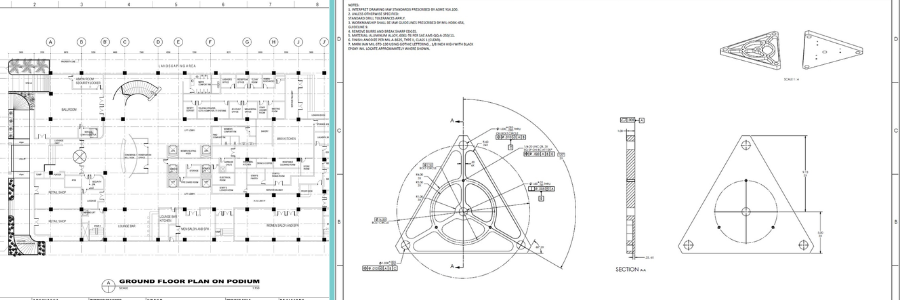
2D CAD drafting examples by Cad Crowd architectural design experts

RELATED: Top 37 companies for Lumion 3D rendering services & modeling for architectural firms

Familiarity

3D visualization does appear realistic and is easy to understand by the typical clients, but professionals have little need to hasten and replace their 2D-based tools with newer technologies if their current repository still does a perfectly good job. The works of architects, engineers, and contractors revolve around detailed two-dimensional plans; they don’t actually need photorealistic images to understand the construction process and design of a project. Industry professionals are familiar with the standard 2D format, and therefore, transitioning to a full-blown 3D-based workflow seems unnecessary at this point. 

Precision

Given the familiarity, it makes little sense for professionals to do away with the precision afforded by 2D architectural design and drafting services. Although 3D modeling offers a lifelike depiction of a design, 2D drafting provides an all-around precision that’s simply indispensable in a construction project. A two-dimensional architectural draft isn’t a lifelike imagery of a design, but it contains every little detail that engineers and contractors need to know to carry out their duties. An architectural draft, by definition, is a technical drawing of a precise plan for a construction; it’s a construction document that doubles as an instruction manual. Therefore, it must be clear without any ambiguity on how to build a structure and eventually bring a design into reality.

Accessibility

One of the main issues with 3D CAD models is accessibility. You have the option to share the CAD file with all stakeholders, but it’s only effective when everyone is using the same software package. Otherwise, the file might need to go through a translation/conversion process that comes with a real risk of missing data. Note that some of the most popular 3D CAD applications are attached with hefty license and subscription fees, and each has a relatively steep learning curve. On the other hand, you only need to save a 2D architectural draft as a PDF, and everyone can access it easily. You can also produce dozens of physical copies and distribute them. In case modifications are necessary, the architects can just mark up the drawings and give detailed annotations using nothing but a pencil directly on paper. Easy accessibility brings about effective communication and fosters collaborative workflow.

RELATED: Pricing factors for architectural visualization and hourly 3D renderings rates for your firm’s projects

2D CAD applications in modern projects

The industry must admit that 3D modeling has increasingly become the format of choice, especially when used within the BIM framework. That being said, even in today’s industry landscape, which is constantly pushed to adopt new technology, there are various instances where 2D drafting services remain the better option. 2D CAD is still prevalent, at least for the following applications.

  • Site plan: a two-dimensional representation of the project site, seen from a bird’s eye perspective. It showcases the layout of the project site, utilities related to the property, and boundaries. Think of it as a map of the project site that details how every single structure and other elements will be positioned. Site plans are indispensable for project planning, allowing architects and engineers to craft a workable roadmap that serves as a guideline for how everything should be done before, during, and after construction.
  • Floor plan: also a top-down view image, a floor plan is meant to showcase the layout of individual rooms in an interior. It helps visualize how all the rooms and areas are connected to each other. Major details include placement of doors, windows, furniture pieces, fixtures, and lighting. Like every other construction drawing, a floor plan is heavily annotated with such information as dimensions, tolerance, materials, finishes, etc.
  • Structural drawing: The main focus of structural drawings is load-bearing elements, which may include foundations, beams, columns, walls, and floors. More than just a simple visualization of a structure, these drawings outline how load-bearing elements must be constructed to ensure that the structure can withstand weight, wind, and other forces that are essential for engineering design firms to succeed.
  • MEP drawings: As the name suggests, MEP drawings convey the mechanical, electrical, and plumbing systems to be installed in a building. Mechanical drawings highlight the HVAC system, including equipment locations, ductwork layouts, and system specifications. Electrical drawings specifically focus on power distribution, wiring diagrams, switch locations, and sometimes communication systems as well. On the other hand, plumbing drawings outline the pipe layouts for water supply and drainage, fixture locations, and waste removal systems, to name a few.

Important construction documents, such as shop drawings, fire protection and safety drawings, and as-built drawings, are also most commonly presented in a two-dimensional format. 

Although 3D modeling is excellent for visualization purposes, 2D CAD drawings are still the language of choice for construction projects used by industry professionals. 2D drafting isn’t just relevant to modern architecture; it’s a critical tool to communicate designs, details, fabrication processes, and construction methods. 

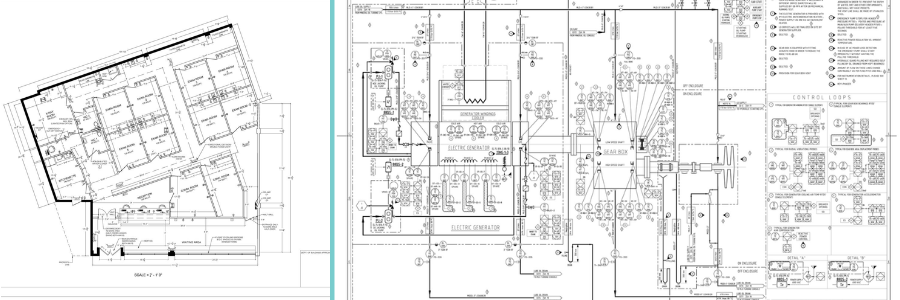
2D CAD examples of a floor plan by Cad Crowd design experts

RELATED: Why 3D modeling is used in building architectural projects with freelance designers and firms?

Takeaway

It’s simply undeniable that 3D-based architectural drawing services have delivered a major impact on the industry as a whole. But the fact of the matter is that the AEC sector is still in a transition period from the currently mainstream 2D to the new workflow that revolves around 3D visualizations. Not only does this require readiness in technical abilities, but it also requires changes in tools. You can’t get rid of the notion that 3D modeling would soon relegate its predecessor to a second-class solution, but at least for the time being and even perhaps the foreseeable future, 2D drafting is still universally approved as the standard format for the AEC industry at large. This is not because of the reluctance to welcome changes, but is driven by the need to maintain project efficiency and accuracy. 

Architects, engineers, designers, and contractors are familiar and comfortable with the technical nature of 2D drafts, whereas typical clients prefer to see complex lines, shapes, and annotations rendered into lifelike models. As far as the industry is concerned at this point, being able to easily switch between 2D and 3D should facilitate the transition at a more friendly pace. CAD software with features that enable 3D visualization while still delivering all the advantages of 2D architectural drawings will be the tool of choice during this transitory phase. This kind of flexibility allows professionals to work efficiently in their preferred fashion without undermining the importance of good communication with their clients. The workflow should treat 3D models as byproducts of 2D drafts to ensure accuracy, viewing lifelike visualization as the translated form of a technical drawing that maintains all the right details.

When flexibility and accuracy are what you’re after in architectural drafters, Cad Crowd has you covered. The AEC-focused freelancing platform is a busy hub populated by CAD professionals boasting expertise in both 2D and 3D modeling for residential, commercial, industrial, and civil projects, big and small. Get a free quote today.

author avatar

MacKenzie Brown is the founder and CEO of Cad Crowd. With over 18 years of experience in launching and scaling platforms specializing in CAD services, product design, manufacturing, hardware, and software development, MacKenzie is a recognized authority in the engineering industry. Under his leadership, Cad Crowd serves esteemed clients like NASA, JPL, the U.S. Navy, and Fortune 500 companies, empowering innovators with access to high-quality design and engineering talent.

Connect with me: LinkedInXCad Crowd

Rule your own, slightly socially awkward knights in the round table management RPG Sovereign Tower


You ever accidentally find out that you’re the sovereign of an entire nation as dictated by a prophecy even though you’re technically just random nobody, and so you wind-up being the one to have to make all the decisions about how your nation is run? No? Well, that’s fine, but if you’d like that to be you, I’ll introduce you to Sovereign Tower, a management RPG where you send off your knights of the round table to deal with all manner of quests.

From the devs behind Aetheris and Crown Gambit, Sovereign Crown is a funny little game (I’ve had a taste of it through its demo on itch.io, which you can try out for yourself). It’s not quite like Reigns, but it bears some similarities. In your throne room, you attend to the requests of your people, neighbouring nations, and prospective knights, having to make careful decisions about the quests offered by the first two. These range from a stinky jester too terrified by a goose terrorising the local baths, or a blacksmith who’s misplaced her hammer.

Watch on YouTube

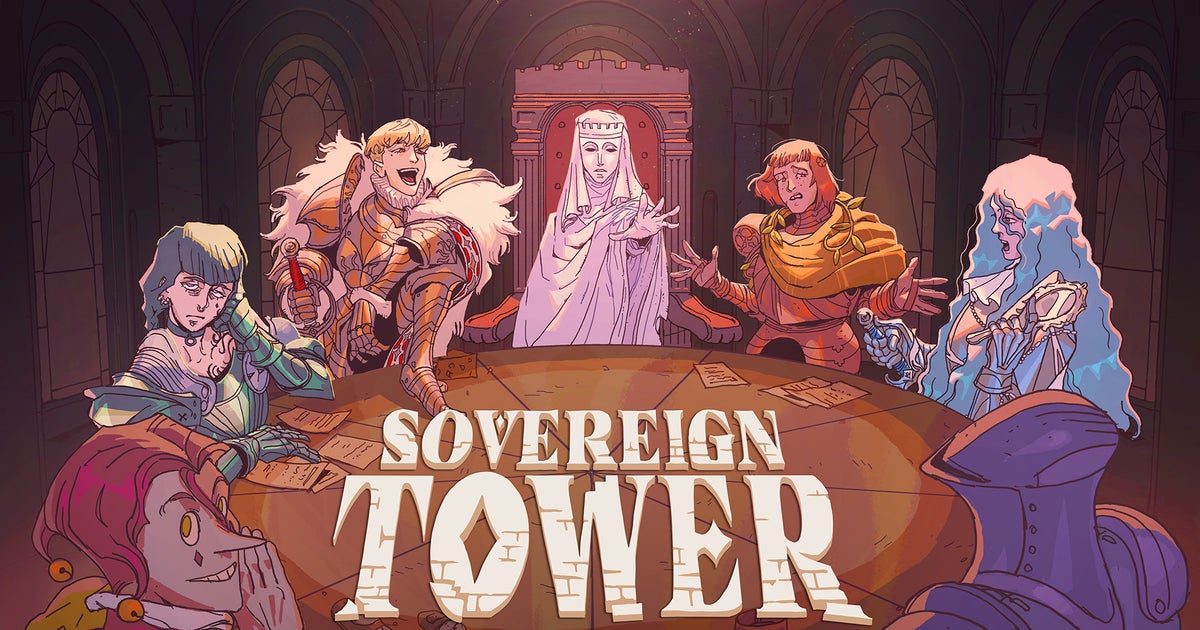
When a quest is accepted, you can then send off one of your knights to attempt to complete it, each with their own unique stats (and personalities) that may be better suited to more tasks than others. One knight is an ostentatious bellend who constantly shimmers gold, another is a nervous, accident prone woman, and the other just kind of straight up a goth, but medievally so, all of which are differently socially awkward in a charming way. There’s a lot of tongue-in-cheek, sarcastic, irreverent humour to be found here, sold all the better by an art direction that you kind easily find in some French comic book you’ve never heard of that’s just absolutely gorgeous.

You also don’t have all that long to wait for it! As it’s slated for an August release later this year, which is quite nifty. While you wait, you can also wishlist it on Steam right here.

c# – Why isn’t client updating after its turn?


So I was trying to make a multiplayer card game on unity and I added this arrow that shows the current player. Player 1 host is on the left, Player 2 client is on the right and in this example I have 2 computer players with basic card logic. As you can see in this example, when Player 1 plays, the arrow moves on both views to Player 2. Player 2 plays and only Player 1 updates to point to Player 3 then after Player 3 goes both Player 1 and Player 2 moves to Player 4. This always happens with Player 2 for some reason.

gameplay video

This gets called after I click the select button. The values of the cards are networked so this is mostly finding the corresponding card that was selected in the player’s hand and creating a game object to put in the shared dropzone, destroying the card in the hand and adding everything to the dropzone.

 public void addCardsToDropzone()
 {
   
     List<int> temp = new List<int>();
     List<GameManager.PlayedCardState> dc =  new List<GameManager.PlayedCardState>();
     for (int i = 0; i < selectedTags.Count; i++)
     {
         GameObject c = selectedCards[i];
         Debug.Log($"This is the id for {c.name}: {cardNametoId[c.name]}");
         temp = GameManager.Instance.getRandomCardData(i, selectedTags.Count);
         if(GameManager.Instance.cardRank[c.tag] == 8)
         {
             GameManager.Instance.settingEightServerRpc();
         }

         GameManager.PlayedCardState cardInfo =  new GameManager.PlayedCardState(cardNametoId[c.name], PlayerId, temp[0], temp[1], temp[2], GameManager.Instance.cardRank[c.tag]);
         dc.Add(cardInfo);
         Destroy(c);
     }
     GameManager.Instance.PlayCardServerRpc(dc.ToArray(), PlayerId, PlayerHandCount.Value);
     PlayerHandCount.Value -= selectedCards.Count;

     //callingPlayerPassClientRpc(0, PlayerHandCount.Value, PlayerId);
     callingPlayerPass(0, PlayerHandCount.Value, PlayerId);
     selectedCards.Clear();
     selectedTags.Clear();


 }

Then it calls the Gamemanager (a singleton for game logic) and adds the card then goes to endturn where it should end up at updatingNextPlayer and then the arrowscript.

  [ServerRpc(RequireOwnership = false)]
  public void PlayCardServerRpc(PlayedCardState[] dc, ulong playerId, int count)
  {

      if (!IsServer) return;
      foreach(PlayedCardState card in dc)
      {
          dropzoneCards.Add(new PlayedCardState { CardNetworkId = card.CardNetworkId, PlayerId = playerId, X = card.X, Y = card.Y, Rotate = card.Rotate, CardRank = card.CardRank });
      }

      EndTurn(count,playerId);
  }

  public void EndTurn(int handcount, ulong playerId)
  {
      broadcastedCurPlayer = false;
      Debug.Log("In end turn");
   
   /* Shouldn't go here for this example, no 8s were played the handcount isn't 0 and the passes haven't reached 3*/
      if (dropzoneCards.Count > 0 && (eightPlayed || handcount == 0 || (playerPass.Value == allPlayerId.Count - 1 )))
      {
          StartCoroutine(pauseBeforeContinue(handcount, playerId));
      }
      else
      {
          Debug.Log($"broadcast bool: {broadcastedCurPlayer}");
          int temp = (currentPlayer.Value + 1) % 4;
          broadcastingPlayerClientRpc(temp);

          Debug.Log($"Before player set");
          //setNextPlayerServerRpc(temp);
          updatingNextPlayer(temp);

          Debug.Log($"after player set");

      }
  }


 public void updatingNextPlayer(int temp)
 {
     Player player = NetworkManager.Singleton.LocalClient.PlayerObject.GetComponent<Player>();
     if (player == null) return;

     Debug.Log("Is setting new player");
     player.arrow.GetComponent<ArrowScript>().SetTurn(temp);

     setNextPlayerServerRpc(temp);
 }

Then this is the arrowscript. Epos is the position of the enemy in reference to the player. I’m not sure why Player 2 isn’t getting the update after their turn.

public void SetTurn(int temp)
{
    ulong playerId = NetworkManager.Singleton.LocalClient.ClientId;

    int index = GameManager.Instance.allPlayerId.IndexOf(playerId);
    ulong target = GameManager.Instance.allPlayerId[temp];
    int ePos = (GameManager.Instance.allPlayerId.IndexOf(target) - index + 4) % 4;

    if (index == -1)
        ePos = 0;

    Debug.Log($"Index: {index} \nTarget: {target}");
    Debug.Log($"Index of target: {GameManager.Instance.allPlayerId.IndexOf(target)}");
    Debug.Log($"epos: {ePos}");

    Debug.Log($"Player {target} position is at {ePos}");

    switch (ePos)
    {
        case 0:
            // Player(-640, -230--260) rot 180
            transform.localPosition = new Vector3(-640, -230, 180);
            transform.rotation = Quaternion.Euler(new Vector3(0, 0, 180));
            targetPos = new Vector3(-640, -245, 0);
            floatX = false;
            //floatY = true;
            break;

        case 1:
            // Right(660 - 680, -260) rot - 90
            transform.localPosition = new Vector3(660, -260, 0);
            transform.rotation = Quaternion.Euler(new Vector3(0, 0, -90));
            targetPos = new Vector3(670, -260, 0);
            floatX = true;
            break;

        case 2:
            // Up(640, 200-260/230-260) rot = 0
            transform.localPosition = new Vector3(640, 230, 0);
            transform.rotation = Quaternion.Euler(new Vector3(0, 0, 0));
            targetPos = new Vector3(640, 245, 0);
            floatX = false;
            break;

        case 3:
            // Left(-660 - -680, 260) rot 90
            transform.localPosition = new Vector3(-660, 260, 0);
            transform.rotation = Quaternion.Euler(new Vector3(0, 0, 90));
            targetPos = new Vector3(-670, 260, 0);
            floatX = true;
            break;

        default:
            Debug.Log("Arrow case went to default.");
            break;


    }

}


What Type of Mattress Is Right for You? (2026)


Fun fact: You do not need a box spring with a hybrid mattress. This is a recurring question I see, and pocketed coils in hybrids eliminate the need for one. Box springs were designed to give more support and elevate performance to traditional coil beds, which would align certain sections of coils to yield more support. Nowadays, you may actually void your warranty if you use a box spring with a hybrid mattress—be sure to check that fine print.

Our favorite hybrid we’ve tested is the Helix Midnight Luxe, which happens to be our top overall pick in our best mattresses guide. It also utilizes pressure-relieving foams and pocketed coils to provide targeted lumbar support.

Helix Sleep

Midnight Luxe with ErgoAlign

Another awesome hybrid mattress, the Nolah Evolution, seamlessly puts together some superb memory foam and pocketed coils, both of which counteract tension buildup for pressure points. I love it as an option for side sleepers for this reason, but it also works for back and stomach sleepers. The coils also make it easy to move around on, which is helpful for co-sleepers.

Innerspring

This is more of a history lesson than a type of mattress you want to shop for (unless you really love this kind of mattress; to each their own). “Traditional” innerspring mattresses are the firm-feeling beds you probably have early memories of, given that the makeup is just innerspring coils wrapped in a cover. It’s just as squeaky as you probably remember, too, as the coil type used involves connecting every coil to work as one unit.

These are Bonnell coils, and they connect both laterally and vertically. All to say, when you lie down and your weight is pressed into the mattress, all those coils act as “one for all and all for one” and simultaneously compress down. It’s not going to work wonders for pressure relief like modern hybrids will, but it is highly responsive, which means it’ll pop back into its original shape as you move around. So if you’re a sleeper who moves around between sleeping positions, coils are a good feature to have, so you’re getting near-instantaneous support.

Why aren’t traditional coils in the works with mattresses nowadays? According to Merwin, upgraded pocketed coils far outperform traditional ones. “Unlike traditional coils that are wired together and move as a unit, pocketed coils are encased individually, which allows each coil to respond independently to movement and pressure,” he said. “This design minimizes motion transfer, so when one person moves or gets out of bed, their partner feels far less disruption. It also provides more targeted support, contouring to the body in a way that improves spinal alignment and overall comfort.” While you can still find innerspring mattresses with traditional coils out there, they’re typically getting phased out in favor of hybrids. Truth be told, I’ve only tested less than a handful of them over the years. If you’re dead set on this mattress type, all power to you, and have fun on your personal mattress treasure hunt.

The Saatva Classic is one of those modern, rarer beds that rely on traditional coils in the secondary coil layer on the very bottom of the bed. This is to help with overall durability and support, which WIRED tester Nena Farrell has mentioned could be beneficial for those with back pain.

Memory Foam

We actually have NASA to thank for this one. If you google images of those early space missions, it’s no wonder that something was needed to keep astronauts from being jostled around inside rockets; hence, memory foam was born. It’s evolved quite a bit from those initial iterations, especially when Tempur-Pedic came onto the scene in the ’80s with a vision for it to become the basis of sleep products. Today, memory foam stands in a league of its own when it comes to the unique, compressive feel.

Memory foam is more of an umbrella term for all the iterations mattress brands have come up with today, but let’s refer to the mattress manufacturing expert for this one.

“Memory foam is produced by combining liquid polyurethane with various chemicals, like polyols and isocyanates, to enhance its viscosity and density,” says Merwin. Without whipping out the periodic table of elements and giving you a science lesson in the chemical components of this material, here’s the need-to-know: These compounds form a malleable foam that holds teeny-tiny bubbles within it. How it works is, as you lie on it, your body imparts heat onto the surface, flowing into these air pockets, which in turn allows it to become softer to contour around your body.

But for the science enthusiasts reading this, Merwin’s got you covered: “The key ingredient is a polymer that creates an open-cell structure, which allows the material to respond to heat and pressure. This is what gives memory foam its signature contouring or ‘hugging’ feel. During the manufacturing process, the liquid foam mixture is poured onto a moving line, where it expands and solidifies into large foam blocks, which we call ‘buns.’ At a high level, it’s a blend of chemistry and precision that transforms raw materials into a high-quality product.”

To say it’s a natural fit for those who need pressure relief from their mattress may be a bit too on the nose, but it’s arguably the most standout feature of this material. It also lessens the feeling of movement for the most restless of sleepers, which also makes it an attractive option for couples. Arguably, the biggest issue that plagues memory foam is heat retention, since once the heat has entered into these air chambers, it turns into something akin to microscopic saunas that can make the overall mattress into a nightmare for those who sleep warm. This is where the various iterations of foam come into play, as some brands infuse elements like graphite, copper, gel, or more advanced cooling technology like phase-change materials into the foams that they use.

Three layers of foam make up the Bear Original, but its certifications and cooling cover are here to help dispel any rumors that circulate about the downsides of memory foam. You won’t find any eyebrow-raising chemicals here thanks to CertiPur-US and GreenGuard Gold certifications. Plus, you can add on a Celliant cover for a cooler feel.

Bear

Original Foam Mattress

The Nectar Premier is another memory foam option we’ve tested and liked, especially for side sleepers. Its foam layers are stacked so that you feel more pressure relief on top, but get more than enough support via a firmer foam layer at the bottom.

Nectar Sleep

Nectar Premier

Latex

The same stuff that goes into tires, balloons, and sports equipment can also be used for mattresses—and it’s the good stuff, too. Latex acts similarly to memory foam when it comes to pressure relief, but is far more reactive to you moving around. Think of a rubber band snapping back into shape when released; it’s pretty dang close to that. Many brands rely on organic rubber sap to create latex as we know it, and there are two categories of latex foam you’ll usually find with mattresses: Dunlop and Talalay. These names refer to the production process and resulting product, as liquid rubber is poured into molds, torched at high temperatures (called “vulcanization” and yes, I have to resist doing Spock’s “live long and prosper” hand signal every time), and flash-frozen to retain the feel. Dunlop is a firmer latex foam, and hence, firmer feel. Talalay yields a more plush feel. Latex is generally pretty even-keeled when it comes to temperature, too, keeping heat from accumulating within your mattress to maintain a nice, room-temperature feel.

WIRED reviewer Scott Gilbertson has applauded the organic latex construction of the Birch Luxe Natural, citing great support for the lower back region and good temperature regulation.

Birch

Luxe Natural Mattress

Smart Beds

Smart mattresses offer the ability to adjust their firmness level with the press of a button. They do this via internal air chambers or sensors that adjust coil firmness. To make your bed softer or firmer, you use a remote control or the brand’s accompanying app.

That’s not what only sets this mattress type apart. Some are also outfitted with tech features, such as sleep trackers and auto-adjusting pressure relief layers, as in the case of the Sleep Number p6 smart bed. Smart beds are becoming more refined as sleep tech evolves.