Meta has a lot of work to do when it comes to limiting hate speech on its platforms. Now, its Oversight Board is looking into the company’s decision to ban an account for, among other things, posting visual violent threats and harassment against a journalist — and it wants the public’s advice.
In the year prior to the ban, Meta referred five posts due to violations of its hateful conduct, bullying and harassment, violence and incitement and adult nudity and sexual activity community standards. In addition to the posts harassing the woman journalist, the user also shared “anti-gay slurs against prominent politicians and content depicting a sex act, alleging misconduct against minorities.”
Meta’s internal review experts decided to permanently disable the account due to the consistent violations and calls for violence. This action was taken despite the number of strikes not reaching the ban threshold — Meta’s guidance states that even seven strikes only get users a one-day ban. However, its account integrity page lays out examples of when it will disable accounts, including violating its community standards through “risk of imminent harm” to an individual.
The Board is now looking for insight from the public until 11:59PM PT on Tuesday, February 3. The Board is specifically seeking comments from individuals who can “contribute valuable perspectives” on the following topics:
How best to ensure due process and fairness to people whose accounts are penalized or permanently disabled.
The effectiveness of measures used by social media platforms to protect public figures and journalists from accounts engaged in repeated abuse and threats of violence, in particular against women in the public eye.
Challenges in identifying and considering off-platform context when assessing threats against public figures and journalists.
Research into the efficacy of punitive measures to shape online behaviors, and the efficacy of alternative or complementary interventions.
Good industry practices in transparency reporting on account enforcement decisions and related appeals.
This instance marks the first time the Board has looked into Meta permanently disabling an account. It stated that this “represents a significant opportunity to provide users with greater transparency on Meta’s account enforcement policies and practices, make recommendations for improvement, and expand the types of cases the Board can review.”
When an adventurer from an alien planet crash-lands on the continent of Votland, an unexpected journey begins. Explore a vibrant pixel world filled with dungeons, puzzles, crafting, and secrets as you uncover the truth behind the Void slowly consuming the land. Step into nine large, hand-crafted dungeons—each one not only a battlefield but a maze full of secrets. Hidden chests, clever mechanisms, secret passages… only by using your wits and special abilities unlocked along the way can you solve every puzzle and uncover treasures meant only for true explorers. Every breakthrough delivers that satisfying ‘aha’ moment of discovery. The Legend of Heroes: Trails beyond the Horizon
In Philna Fantasy, combat isn’t just about swinging swords, it’s about defining your own playstyle. Choose your path: become a Berserker tearing through the battlefield, a Ranger picking off enemies from afar, a Chrono Mage controlling the flow of battle, or an Assassin striking from the shadows. Each class has a deep skill tree that lets you mix and match abilities to create your own unique playstyle. Whether you seek hardcore challenges or a laid-back adventure, the four difficulty settings will pave the way for a journey that’s both thrilling and fun.
Features and System Requirements:
Explore the mystical land of Philna, filled with ancient ruins, enchanted forests, and forgotten kingdoms brought to life through rich lore and atmospheric environments.
Experience a deep narrative shaped by prophecy, conflict, and personal choice, where your decisions influence characters, alliances, and the fate of the realm.
Engage in fast-paced, tactical battles that blend magic, melee, and strategy, rewarding skillful timing and creative ability combinations.
Screenshots
System Requirements
Recommended
OS *: Windows7/8/10/11(64)
Processor: Intel i5
Memory: 8 GB RAM
Graphics: Nvidia GTX 750 Ti
Storage: 5 GB available space
Support the game developers by purchasing the game on Steam
Installation Guide
Turn Off Your Antivirus Before Installing Any Game
1 :: Download Game 2 :: Extract Game 3 :: Launch The Game 4 :: Have Fun 🙂
The maker of the popular R.E.A.L. VR mod for Cyberpunk 2077 has accused CD Projekt of “iron-clad corpo logic” after the studio issued a DMCA demanding the mod’s removal.
“Many of you have noticed that two of my recent posts disappeared about a week ago,” mod maker Luke Ross wrote over the weekend on his Patreon. “I apologize that I could not comment personally about the fact, because there was an ongoing legal exchange.
“Now that the dust has settled, I’m even more sorry to announce that we are leaving behind an adventure that so many of you deeply loved and enjoyed. CD Projekt SA decided that they would follow in Take-Two Interactive Software’s steps and issued a DMCA notice against me for the removal of the Cyberpunk 2077 VR mod.”
Ross is the maker of R.E.A.L. VR, which is essentially a mod framework that brings VR support numerous games, including Elden Ring, Avatar: Frontiers of Pandora, Far Cry 4-6, Marvel’s Spider-Man, Star Wars Outlaws, and others. All very cool: The problem is that if you want the mod, you have to subscribe to his Patreon, and charging money for mods is something that most big publishers—including CD Projekt—take issue with. The Take-Two comparison in Ross’ message arises from that company’s DMCA claims against the R.E.A.L. VR mod for Grand Theft Auto 5, Red Dead Redemption 2, and the Mafia trilogy in 2022.
“In the end it amounted to the same iron-clad corpo logic: every little action that a company takes is in the name of money, but everything that modders do must be absolutely for free,” Ross wrote.
“As usual they stretch the concept of ‘derivative work’ until it’s paper-thin, as though a system that allows visualizing 40+ games in fully immersive 3D VR was somehow built making use of their intellectual property. And as usual they give absolutely zero f***s about how playing their game in VR made people happy, and they cannot just be grateful about the extra copies of the title they sold because of that—without ever having to pour money into producing an official conversion (no, they’re not planning to release their own VR port, in case you were wondering).”
For the record, the R.E.A.L. VR mod is popular and apparently very lucrative: A 2022 report by The Verge said Ross (not his real name) was earning more than $20,000 per month from the mod.
Keep up to date with the most important stories and the best deals, as picked by the PC Gamer team.
Some of the responses to Ross’ post on his Patreon page are critical of CD Projekt, and urge followers to write the company and ask that the takedown request be lifted. Others point out that he could simply release the Cyberpunk 2077 mod standalone, for free, with an optional button for donations.
There appears to be even stronger pushback on the Virtualreality subreddit. “This is not the first mod the modder had taken down because he tried to make a live service out of it,” Frraksurred wrote. “He knew he was outside the ToS and just chose to get away with it as long as he could. Now he’s trying to play the victim.”
Redditor ottermoment also made a not-flattering comparison between the Cyberpunk 2077 takedown and the disappearance of those VR mods for Rockstar games.
“‘By the corpos’ who created everything and they clearly say that paid mods aren’t allowed,” redditor MotherFunker1734 added. “Mods aren’t a profit machine. Not everything has to be made for profit. No, he doesn’t have to get paid 100,000 times for something he wrote once using someone else’s code.”
Taking the donation route would almost certainly be fine. CD Projekt has historically been supportive of modding, but the first “golden rule” of its fan content guidelines is “no commercial usage,” and describes almost exactly what Ross is doing with the R.E.A.L. VR mod: “We’re happy for you to accept reasonable donations in connection with your fan content, but you’re not allowed to make people pay for it or have it behind any sort of paywall (e.g. don’t make content only available to paid subscribers).”
Even so, Ross admitted to being “bitter” about the takedown, “especially when they never even knew or cared during all this time that the VR conversion was there, and are only knee-jerk reacting now because somebody reported to them that it existed and it was not free.”
Despite that obvious anger, Ross said he wanted to end his message on a positive note, which he did by announcing that R.E.A.L. VR now supports Baldur’s Gate 3. I guess we’ll see how Hasbro feels about this sort of thing soon enough.
Published Thursday, the European Space Agency’s Zero Debris Technical Booklet outlines a framework for the world’s space-faring nations to deorbit the most dangerous space junk, making low Earth orbit a safer place to transit. If followed, the ESA believes it would create a debris-neutral LEO, safeguarding access to the orbital zone and the space beyond it for decades to come.
The problem of orbital debris buildup is one that the entire space-faring world has been aware of for decades. Kessler Syndrome was proposed in 1978, and though there have been some efforts to deorbit a limited quantity of problematic space debris, the issue has only grown more acute in recent years. It was just last November that Chinese taikonauts were stranded on the Tiangong space station after debris damaged their return capsule.
The ESA’s new technical document projects the problem will only worsen, too. With over 12,000 active satellites currently in orbit, the ESA projects that number will rise to over 40,000 by the 2030s. That makes space ever more crowded, and with every launch, there is the potential for additional debris.
Credit: ESA
Even if there were no more launches, though, that wouldn’t stop debris from multiplying. It suggests there could be as many as 140 million fragments smaller than a centimeter now orbiting Earth at various orbits, and most of them will stay there for decades or even centuries. Very few of them can be tracked reliably, making LEO increasingly dangerous and unpredictable.
To deal with this issue, the ESA’s framework proposes a number of policies and agreements among space-faring nations and companies:
Mandated clean up at a satellite’s end of life.
Improved surveillance for debris and active satellites.
Developing reliable deorbit systems.
Improved, lighter shielding for spacecraft and additional redundancy to reduce fragmentation in the event of damage.
Better data sharing between countries for greater transparency on launches and debris tracking.
Ultimately, it’s about tracking the debris that we can see and shielding against what we can’t. But getting anyone, let alone everyone, to pay for this is complicated and hard to imagine. Meanwhile, the financial costs of debris will continue to rise. As of 2025, they were causing around $100 million worth of damage per year, but that will only grow, and exponentially so if there’s any form of debris cascade.
In theory, Kessler Syndrome could become a reality, making space nearly inaccessible without incredible cost.
The ESA calls on all countries to make these changes within the next 24 months, or face a very different space environment in the 2030s.
A service-based business sells expertise, judgment, and execution. Consulting, marketing services, coaching, development, and local professional services all fall into this category.
From experience, this model rewards sellers who are comfortable leading conversations. You sell before you deliver. Trust closes the deal. I built early revenue faster in services than anywhere else because I could control the outcome of every meeting.
The advantage is speed. You can monetize your skill immediately. Cash flow starts early. Feedback is direct. The downside is capacity. When you stop selling or delivering, revenue slows. Strong sellers learn to price, scope, and qualify better rather than work more hours.
WHAT PRODUCT-BASED BUSINESSES DEMAND FROM SELLERS
A product business sells consistency, not conversation. Physical products, software, and digital tools all live here. The sale happens without you present. That sounds appealing until you realize how unforgiving it can be. Weak positioning lingers. Poor messaging compounds. Early mistakes are expensive to unwind.
CONTROL VERSUS SCALE
Control is where services shine. Scale is where products tempt. In a service based business, you control pricing, delivery, and client relationships. You can adjust quickly. You can fix problems in real time. Sellers who enjoy managing relationships often thrive here.
Product businesses offer scale, but they remove control early. Manufacturing delays, platform rules, ad costs, and fulfillment issues introduce variables you cannot talk your way out of. Some sellers love that challenge. Others burn out fighting systems instead of having conversations.
At this point, many experienced sellers quietly reassess which problems they actually enjoy solving.
REVENUE PREDICTABILITY AND EFFORT
Services tie income more closely to effort. Products delay reward but can multiply it.
I have found that a service based business rewards discipline quickly. Follow up, clear proposals, and tight delivery create predictable income. Products require patience. The upside arrives later, often after lengthy testing.
Neither model is easy. They are difficult in different ways. Good sellers choose the level of difficulty they can consistently tolerate.
SKILL LEVERAGE VERSUS SYSTEM LEVERAGE
Services leverage personal skills. Products leverage systems. In a service based business, reputation compounds. Referrals stack. Pricing improves with confidence. You get better by doing the work. That feedback loop suits sellers who like constant interaction.
Products rely on systems working together. Marketing, logistics, support, and operations must align. When they do, growth accelerates. When they do not, selling harder does not help.
I have seen top closers struggle here because persuasion could not fix broken systems.
THE HYBRID PATH MANY SELLERS MISS
Many experienced sellers eventually blend both. They start with a service-based business to generate cash flow and insight. Then they productize parts of what works. Frameworks. Tools. Training. Software.
Selling services taught us what people actually pays for. Turning that into products reduced delivery load while preserving authority. This path rewards patience and observation more than ambition. If you are already selling daily, this hybrid approach often feels natural once you stop forcing scale too early.
CHOOSING BASED ON SELLING IDENTITY
The real question is not which model is better. It is the model that fits your selling approach.
If you like leading conversations, handling objections live, and adjusting on the fly, a service based business aligns well with your strengths. If you prefer building once and selling repeatedly, products may suit you better.
Strong sellers do not chase models. They choose alignment.
CLOSING PERSPECTIVE
Choosing between a service based business and a product-based business is a strategic decision, not a motivational one. Sellers who respect this choice build calmer, more controllable income over time.
At some point, comparison stops being productive. Commitment starts performance.
If you are serious about building a service based business or transitioning into products, take time to audit how you actually sell. Review where you win consistently.
Choose the model that amplifies those strengths instead of fighting them. The right decision now saves years of friction later.
Your router may have USB ports on the back, but I don’t recommend using them.
These inputs often run on outdated, vulnerable protocols that could give cybercriminals access to sensitive files and information on your network.
If you’re interested in a central storage platform, there are better options out there.
Ever wondered what the USB-A port on the back of your Wi-Fi router is for? Several things, depending on the model. For example, the port on the Asus RT-BE86U router can be used for basic file sharing across your network, charging small devices, and as a waypoint for backing up your computer to an external drive.
But here’s the truth: I don’t recommend using it. Having a USB port on the router sounds convenient, but there are a few problems.
The fact is that USB ports on routers aren’t secure. Many of them operate on outdated protocols, creating vulnerabilities that can be exploited by bad actors. This doesn’t mean the entire router is compromised, but the USB port can be a weak link. Using it is not a risk worth taking, especially when safer alternatives are available.
Let’s break down the biggest reasons you should avoid using the USB port on your router and what to do instead.
1. It’s a security risk
Cliff Joseph / ZDNet
When I say “outdated protocols”, I am mostly referring to FTP or File Transfer Protocol. It’s an old protocol from the 1970s that doesn’t use any sort of encryption; even transmitting passwords in plain text. FTP has been widely replaced by the HTTPS protocol, but even recent routers, like the Asus RT-BE86U, have ports that use it.
As Progress Software points out, a bad actor could easily take those credentials with the right technical know-how, even possibly gaining access to your network.
Another one to watch out for is SMBv1 (Server Message Block version 1). It’s another file-sharing protocol that was notably exploited by the WannaCry ransomware in 2017, infecting hundreds of thousands of systems worldwide.
Microsoft has been urging companies and IT professionals to disable the legacy protocols — and their usage has indeed dropped — but they still exist on devices in people’s homes. Add the fact that malware becomes more sophisticated year after year, and it’s too risky to rely on these protocols for file transfer over a router.
2. It’s unreliable
Maria Diaz/ZDNET
This is going to sound obvious, but the primary purpose of a router is to establish and manage a wireless network. That’s what the hardware and software are optimized for. It’s when once a router deviates from its primary purpose, that the quality of the technology deteriorates.
Most consumer models don’t have the processing power to handle both their normal networking tasks and file transfers simultaneously. When the router is juggling multiple workloads, you may encounter:
Slow wireless speeds
Latency spikes
Connection drops
File transfer failures
That last entry can come in multiple forms. It’s possible that only part of the file will transfer, that it gets dropped, or worse, corrupted. To ensure that connections stay stable, avoid using the USB port, especially if you own an older router.
Articles from as far back as 2013 point out that the USB 3.0 standard interferes with 2.4 GHz Wi-Fi signals. Technology has improved dramatically since then, but it’s still something to be mindful of.
Another potential issue is overheating. The added electrical load puts extra strain on the hardware, increasing internal temperatures, which can then result in performance throttling. High heat doesn’t just affect the router in the moment; it can also shorten the device’s lifespan.
What I recommend instead
If you want reliable file sharing and media storage for your house, there are far safer and better alternatives.
Buy a NAS
Adrian Kingsley-Hughes/ZDNET
Your best option is to invest in a NAS (Network-Attached Storage), which is essentially a mini server for your home. While an external hardware drive can do something similar, a NAS provides one major advantage: strong data protection.
NAS devices commonly support AES-256 encryption to safeguard sensitive files and data. Many models also support RAID (Redundant Array of Independent Disks). This technology distributes data across multiple NAS drives, ensuring your files remain safe even if one of the drives fails unexpectedly.
If you’re interested, I highly recommend checking out ZDNET’s list of the best network-attached storage devices you can buy. The TerraMaster F8 SSD Plus currently holds the top recommendation due to its quiet operation, good performance, and compact size. It does cost over $800, though. For a more budget-friendly option, the QNAP TS-233-US 2-Bay is your best choice.
Invest in cloud storage
Proton
Another good alternative is to use cloud storage rather than relying on local drives. These platforms securely store files, photos, and videos online, making them accessible on just about any device with an internet connection. Even better: most providers have free storage plans.
Google has one of the best, giving users 15GB at no cost, while Apple’s iCloud and Microsoft’s OneDrive each provide 5GB of space. As great as these plans are, they fill up quickly. All three offer paid subscriptions that expand your available space.
I also want to give a word of warning, here. You may come across less-known cloud storage providers advertising an unusually large amount of free space, up to 1TB. While many of these services deliver the storage they promise, they raise a lot of red flags. You’ll find many forum posts questioning the legitimacy and safety of these services, so I urge caution.
How to use the the USB port safely
If you insist on using your router’s USB port, there are two important precautions to follow. First, only use it for non-critical files. Don’t share or transfer anything sensitive through the port. Stick to low-risk content, such as movies you want to share with others in your household.
Secondly, install firmware updates as soon as they become available to patch up any security issues and maintain stability. That’s assuming your router is still receiving updates. Router manufacturers will drop support for older models. If your device is no longer supported, check out my list of the five products I recommend to improve your Wi-Fi.
I’ve spent nearly a decade reviewing hardware, software, and various types of consumer tech — including Wi-Fi routers. As part of my work, I push routers to their limits in an effort to see if they’re worth recommending. I pay attention to any changes in speed that may occur, as well as learn what they can or can’t handle. Sometimes a feature, such as a USB port, may seem like it’ll come in handy, but in practice, it isn’t worth using due to key flaws.
I then share those findings so you can avoid the pitfalls that I discovered or ran into. So when I say that the USB port is more trouble than it’s worth, it’s because I’ve seen the slow performance, and I’ve seen the security issues firsthand. My goal is to provide guidance rooted in real testing, so you can make smart choices for your home network. I also aim to foster the confidence to manage your network effectively. With the right information, you’ll identify problems before they arise.
Another thing: keep in mind that these aren’t rigid rules. Think of them as a foundation you can build upon based on your setup and needs.
Marathon got a release date earlier today, confirming a March 5 launch for Bungie’s extraction shooter. The studio hasn’t skimped where voice talent is concerned: actors from pretty much every successful game from the last decade are present, though it’s yet to be confirmed what roles each will play (and how big they’ll be).
Among the biggest names is Ben Starr, nowadays best known for playing Verso in Clair Obscur: Expedition 33, as well as prominent roles in Final Fantasy 16 and Hades 2. Starr has won two Golden Joystick awards and garnered several big nominations at the Game Awards.
The voice behind Karlach in Baldur’s Gate 3, Samantha Béart, is among several actors from Larian’s RPG making an appearance. Neil Newbon and Tracy Wiles, Astarion and Jaheira from Baldur’s Gate 3 respectively, will also appear.
The biggest deal though? Mr “I never asked for this” himself, Elias Toufexis of Adam Jensen in Deus Ex fame, will also appear in Marathon.
Here’s the full list:
Krizia Bajos
Samantha Béart
Beau Bridgland
Ry Chase
Roger Clark
Darin De Paul
Jennifer English
Dave Fennoy
Nika Futterman
Morla Gorrondona
Reina Guthrie
Donnla Hughes
Keston John
Sohm Kapila
Rich Keeble
Elliot Knight
Erica Lindbeck
Piotr Michael
Brent Mukai
Neil Newbon
Ariana Nicole George
Emily O’Brien
Lee Shorten
Jason Spisak
Ben Starr
JB Tadena
Fred Tatasciore
Craig Lee Thomas
Elias Toufexis
Oliver Vaquer
Scott Whyte
Tracy Wiles
Erin Yvette
The release date was announced via a fancy cinematic trailer designed to set the tone for Bungie’s new game, which is a slightly grimier take on sci-fi compared to their Star Wars-channeling Destiny and Halo games. Marathon is available to wishlist on Steam.
Keep up to date with the most important stories and the best deals, as picked by the PC Gamer team.
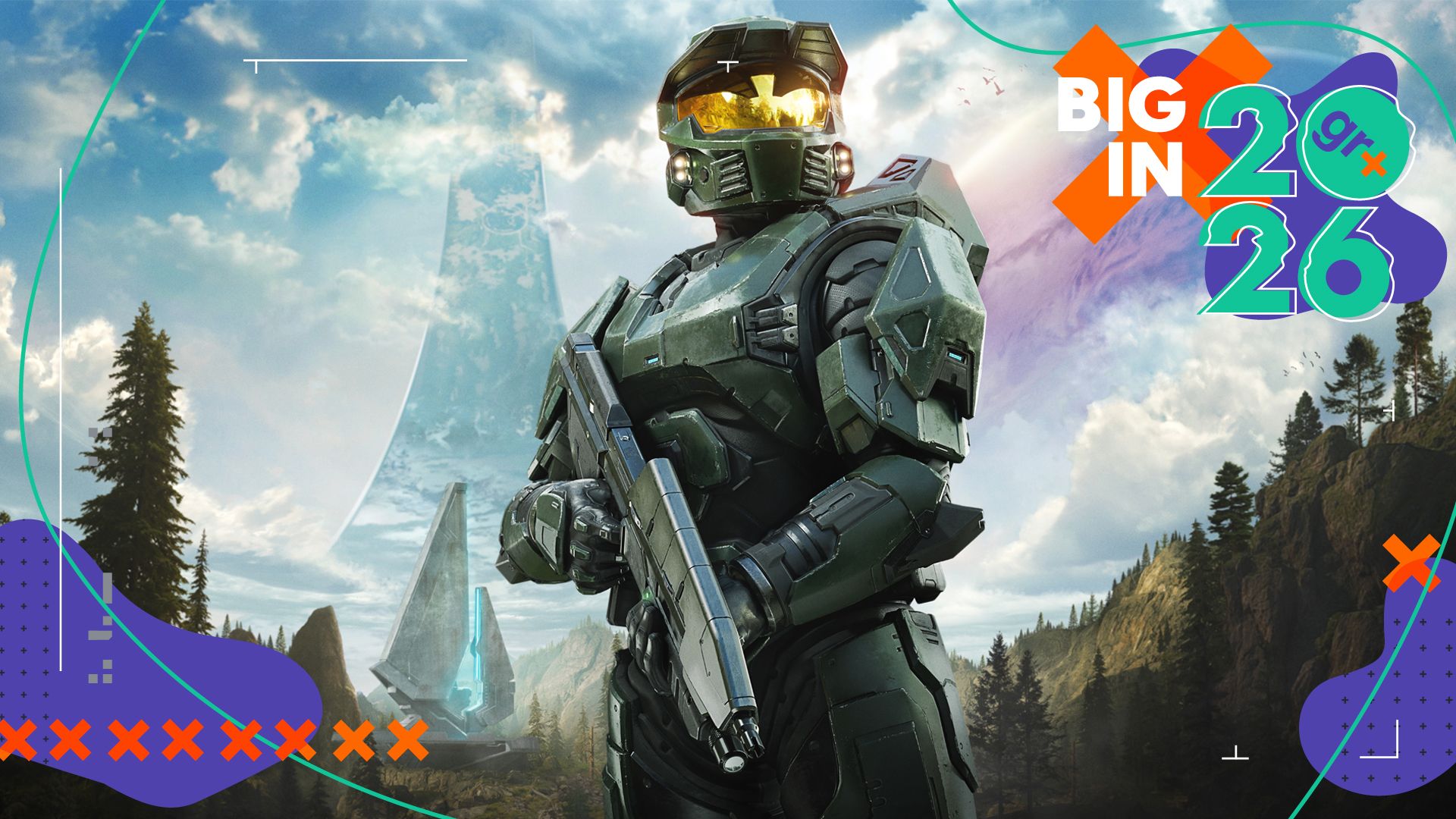
Halo: Campaign Evolved may be the most important Xbox Game Studios release of 2026. When executive producer Damon Conn says that this “is an opportunity to pave the way for the future of Halo” he isn’t being hyperbolic. “We’re building a game in Unreal Engine 5, on a platform that we’ve never supported, while offering more ways for players to play with each other than ever before. We’re excited to reignite the spark that started it all,” he says, “but we don’t take it lightly.”
Halo: Campaign Evolved is pitched as a “faithful and modernized remake” of Master Chief’s most iconic adventure, “and a celebration of Combat Evolved” ahead of its incoming 25th anniversary. Creative director Max Szlagor stresses that Halo Studios (formerly 343 Industries) “has been careful to craft the game in such a way that it stays true to the original’s tone, atmosphere, feel, and emotional impact” as it grapples with the complexities of recapturing Chief’s bounding momentum in a new game engine.
A New Dawn
(Image credit: John Strike / Future)
Big in 2026 spotlights the 50 most anticipated games of the year, with developer access that you can’t get anywhere else. Join us daily for new previews, and visit the Big in 2026 coverage hub to find every article that we’ve published so far.
Recapturing the classic Halo feel is key, because the future of the franchise is inextricably tied to UE5. The studio announced that it was hard at work on multiple projects back in October 2024, with a focus on crafting “the next generation of Halo with Unreal Engine” following the discontinuation of support for both Halo Infinite and the proprietary Slipstream engine.
I recently had the opportunity to play through a short section of the rebuilt, still iconic Silent Cartographer mission. Call it an amuse-bouche ahead of release later this year, a chance to reconnect with the floaty jumps, thunderous melee, chattering MA5B assault rifles, and bouncy Warthog rides that helped define the original adventure. Movement and momentum, combat and physics land in a way that feels as fresh as it does nostalgic. “It’s important for us to be authentic to the feel, to the things people loved,” says Szlagor.
Despite a focus on careful restoration, Halo Studios isn’t afraid of making appropriate amendments to modernize Combat Evolved. “We were able to implement some changes that just kind of make sense,” says Conn. “Like adding the ability to pick up and use the energy sword, Fuel Rod cannon, and Sentinel Beam Gun. You can also pilot the Wraith tank. These were all things you couldn’t do in Combat Evolved.”
Image 1 of 8
(Image credit: Xbox Game Studios)
(Image credit: Xbox Game Studios)
(Image credit: Xbox Game Studios)
(Image credit: Xbox Game Studios)
(Image credit: Xbox Game Studios)
(Image credit: Xbox Game Studios)
(Image credit: Xbox Game Studios)
(Image credit: Xbox Game Studios)
Szlagor says that “being authentic to the material that’s there” is a guiding principle, although Halo Studios is considering more foundational changes as it “rebuilds every mission, every encounter, and every cinematic” from scratch. “Another opportunity we have is to address player feedback, and look for ways to improve wayfinding and the diversity of encounters,” says the creative director, alluding to the idea that a new generation of players needn’t languish in The Library like so many of us had to 25 years ago.
If Halo Studios gets Campaign Evolved right, it should go some way to quelling lingering fears about whether this franchise can find a path forward on UE5. The introduction of brand new content should also demonstrate how strong a handle the studio has on the core ethos of the franchise – a key consideration as we wonder where the next mainline installment may take Chief and Cortana in the future, following the divisive response to Halo Infinite.
Weekly digests, tales from the communities you love, and more
“We are also designing three brand new story missions focused on Master Chief and Sergeant Johnson,” says Szlagor. “They take place before the events of Combat Evolved, and it’ll be the kind of mission that Chief and Johnson would have gone on during that time period – featuring new environments, enemies, characters, and weapons.” While Szlagor won’t be drawn on more details, he does confirm that this special Campaign Evolved adventure “takes place before the events of Reach.”
Whether you’re here to indulge in some nostalgia, play the first new Halo campaign missions in five years, or dive into Installation 04 for the first time, you’ll do it with a larger playerbase than ever before. Halo: Campaign Evolved marks the series debut on PlayStation, and it’s undoubtedly the biggest first-party franchise to land outside of the Xbox ecosystem so far – joining Forza Horizon 5 and Gears of War: Reloaded, which arrived on PS5 last year.
“We are also designing three brand new story missions focused on Master Chief and Sergeant Johnson”
Max Szlagor, creative director
“We hope to bring along the series veterans who have been with us for the past 25 years and have them play with an entirely new generation,” says Conn, who confirms that four-player online co-op with full crossplay is supported. “There are people who have never been exposed to Halo. Maybe they’ve always been on Sony products, switched consoles at a certain point, or just missed it at the time. We want to bring players back together.”
“Halo is best played when we have a large, healthy community,” says Szlagor. “We see this as a way to grow, expand, and reconnect the Halo community.” Conn adds: “We want to honor the Halo legacy on PlayStation, and we’re paving the way to expand our Halo universe – that’s how we see it. And it’s not a small thing. We don’t and we won’t take it lightly. We definitely feel the weight of it.”
(Image credit: Future)
With Xbox preparing for its biggest year of the console generation so far, we are exploring the publisher’s most anticipated first-party games (and some key Game Pass releases) as part of our Big in 2026 Spotlight series. Join us every day this week for exclusive interviews, new previews, and fresh insights into all of the upcoming Xbox games you need to have on your radar.
Agentic AI grows revenue and enhances customer experience for financial services
Imagine transforming your firm with agentic AI to grow new revenue streams and customer wallet share all while providing a better customer experience. This playbook provides the blueprint for