First-party Xbox Game Studios developer Double Fine, the team behind the long-running Psychonauts series, has filed a petition to unionize under the Communications Workers of America (CWA). If recognized by parent company Microsoft and if a contract is ultimately ratified, the union will include all regular part-time and full-time employees of Double Fine, totaling 42 workers.
In a statement to Aftermath, the CWA says Double Fine has entered the process of unionizing in order “to preserve and extend the studio’s commitments to creative excellence, diversity and inclusion, and worker quality of life.” The statement says Double Fine leadership is “requesting voluntary recognition from the company” and that “workers have also filed an election petition with the National Labor Relations Board (NLRB) to secure union representation,” adding, “We appreciate that Microsoft has taken a neutral approach and agreed not to interfere in any way with worker’s rights to organize unions.”
As workers unions become increasingly popular in the games industry following years of layoffs and AI concerns, the CWA has organized thousands of Xbox Game Studios employees, including teams behind tentpole franchises like Diablo, Overwatch, and The Elder Scrolls. Union contracts can’t outright deny companies like Microsoft the right to lay off workers, but they can help protect employees from poor working conditions and AI outsourcing, outline how layoffs are to be communicated to impacted employees, and ensure adequate severance pay. As the workers at Double Fine are still in the early process of being recognized, it’s not clear what demands they have, but it’s likely that some or all of the above will be included in the bargaining phase.
Latest Videos From
We’ve reached out to Double Fine and Xbox for comment and will update this article if we hear back.
Weekly digests, tales from the communities you love, and more
Discord is recovering following a brief outage that saw some users unable to use the popular chat app. At 3:08PM ET, the company said it had begun investigating an issue with its API systems. Shortly thereafter, at 3:24PM ET, Discord said it had identified the problem, but noted at the time it was still affecting users, making it difficult for them to access the service.
“We are continuing to work to remediate the issues impacting availability for some Discord users,” the company said at3:56PM ET. “This is causing impact across our service, including logging in and sending messages.” Whatever was causing the disruption, Discord appeared to solve it quickly. At 4:16PM ET, the company said it was starting to see “seeing significant recovery” across its systems. As of 4:59PM ET, the service isn’t at “fully healthy state” yet, so if you’re having trouble launching the app, it may take a bit more time before everything is up and running again. By 6:38PM ET, Discord reported that “all critical functionalities have recovered for all users.”
Update 6:4PM ET: The headline and copy of this article have been updated to reflect that Discord is back online for all users.
From Reactive to Ready: A 90-Day Healthcare AI Roadmap for Mid-Market Operations Leaders
Most healthcare AI conversations stall in the same place. The operations leader knows the problem. The case for doing something is clear. The question that does not have a clean answer is: what does the first 90 days actually look like?
This is the roadmap USM Business Systems uses with mid-market health systems, specialty pharmacy operators, and pharma and CRO organizations who are moving from interest to implementation. It is designed for organizations that do not have 18 months or a seven-figure platform budget. It is designed for teams that want to start, measure, and expand.
Before You Start: The Three Inputs That Determine Your Roadmap
A 90-day AI roadmap for healthcare operations is only as good as the three inputs that shape it. Get these clear before any build decision is made.
Input 1: The Problem with the Clearest Cost
Every mid-market healthcare operation has multiple AI opportunities. The teams that move fastest pick one. The one with the most direct and measurable cost attached.
Prior authorization backlog and approval cycle time. Pharmacy intake processing speed. Denial rate on a specific service line or payer. Pick the one where someone can tell you what a miss costs in dollars, write-offs, or delayed patient starts. That is where you start.
Input 2: Your Current Data Access Points
The roadmap is shaped by what you can connect the agent to. EHR API access. Clearinghouse transaction feeds. Payer portal data exports. Pharmacy management system integrations. You do not need all of these to start. You need the ones relevant to the problem you are solving.
A two-week scoping engagement with USM maps your data access reality and builds the agent architecture around what exists, not what would be ideal.
Input 3: The Success Metric
Before build begins, define what success looks like at 90 days. A number. Prior auth turnaround reduced from 8 days to 48 hours. Denial rate on oncology claims reduced from 14% to 6%. Pharmacy intake processing recovered from next-day manual review to same-hour automated triage.
That metric drives scope. It also drives the conversation about whether to expand.
Days 1–14: Scoping and Architecture
This is a working session, not a sales process.
Data environment mapping: what systems exist, what APIs are accessible, what exports are available, what HIPAA-compliant data pathways need to be established
Problem prioritization: identify the one or two problems with the clearest ROI and the fastest measurement cycle
Agent architecture design: what the agent will connect to, what it will monitor, what it will surface
Success metric definition: specific, measurable, and agreed upon before build begins
At the end of day 14, you have an architecture document, a build scope, a timeline, a compliance review, and a defined metric.
Days 15–60: Build and Integration
The build phase runs in two tracks simultaneously.
Track one is data integration. The agent connects to your existing systems and begins ingesting live data through HIPAA-compliant pathways. This phase surfaces the data quality issues that need to be addressed before the agent can produce reliable outputs. Those issues are resolved here, not discovered after go-live.
Track two is agent logic development. The monitoring rules, the exception thresholds, the scenario modeling logic, and the reporting templates are built and tested against real data from your operation.
By day 45, a test version of the agent is running against your data. The clinical operations team begins evaluating outputs. Feedback shapes the final configuration before go-live.
Days 61–90: Go-Live and Measurement
Go-live is a transition, not a launch event. The agent moves from test to production. The team begins using it as the primary source for the problem it was built to solve.
The measurement cycle starts at day one of production. The success metric defined in scoping is tracked weekly. By the end of day 90, you have six weeks of live data showing the impact on authorization turnaround, denial rates, intake processing speed, or whatever metric was set.
That six weeks of measurement data is what drives the conversation about what to build next.
The Expansion Path
The teams that get the most out of healthcare AI deploy on one problem, measure it, and expand. The common expansion paths after a successful first deployment:
Adding payer-specific denial pattern analysis to a prior authorization agent
Expanding from intake automation to clinical trial eligibility screening across the patient population
Connecting drug procurement signals into the pharmacy intake workflow for specialty therapy coordination
Integrating revenue cycle performance data into the clinical operations dashboard for unified visibility
Each expansion is scoped and built with the same 8–12 week discipline. The architecture from the first deployment is designed to support expansion from the start.
The healthcare operations leaders who move fastest on AI pick one problem, run a contained build, and measure it. That is the entire edge.
USM’s POC Commitment
For qualified healthcare operations engagements, USM fronts the proof-of-concept cost. You identify the problem. We scope and build the initial deployment. You measure the output before making a larger commitment.
The engagement starts with a scoping conversation. If the architecture is sound and the ROI case is clear, we move to build within two weeks.
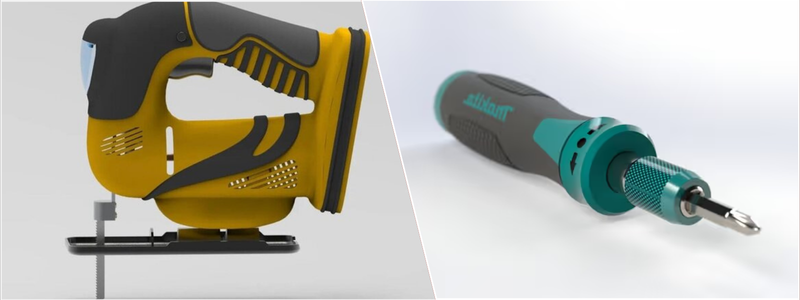
Why is 3D lifestyle rendering important for driving your company’s sales? First, some ground rules. We’re not here to bash silo (white background) rendering in any way, shape, or form. The fact that anybody can produce 3D modeling of a product and render it into high-quality imagery, albeit against the backdrop of absolutely nothing at all, is commendable in and of itself. Creating a 3D model from scratch is hard, and that’s why many people choose to buy ready-made assets. But buying isn’t always a feasible option, especially if your product comes with a lot of new features and has a peculiar enough shape that you can’t find anything even remotely close to it in the marketplace.
So you spend hours and days clicking every little icon in the CAD software to build the model. After a lot of complaining and likely some procrastinating now and then, the model is finally ready, and you generate a silo rendering of it to see the product in all its digital beauty. As promised, we won’t say silo rendering is bad. Silo rendering has its place in marketing, such as for straightforward diagrams, simple cutaway views, feature callouts, and the like. And then you realize that you can also do all of that, and then some, with lifestyle 3D rendering services. Instead of just putting the product in the image, you use complementary objects to fill the space.
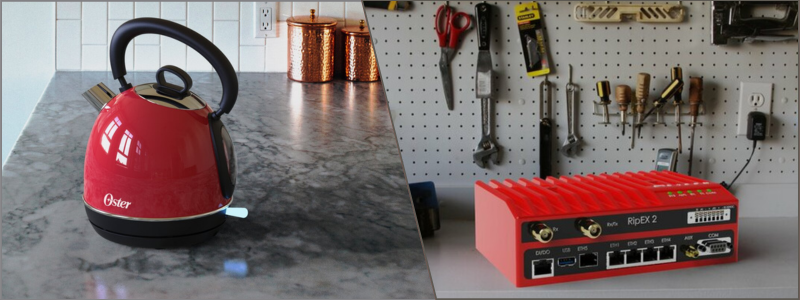
The idea is to place the product (the main object) within a curated yet realistic scene where it naturally belongs. For example, if your product is a claw hammer, the lifestyle rendering may also include other hand tools neatly arranged on a workbench. In general, lifestyle rendering aims to simulate an environment that both the product and the user may find agreeable. It doesn’t make much sense to depict a claw hammer being inside a fish tank or sitting on a nightstand, does it? Unless, of course, you’re recreating a scene from CSI.
Mind you that because you may have anywhere from two to dozens of objects in the scene, the lighting work of a lifestyle rendering tends to be much more tedious than what you’d typically see in the silo kind. But will it be worth the extra effort? We’d argue yes, it very much will be, considering the sheer number of potential benefits you get from it. And even more so if you manage to hire an experienced 3D artist for the job at an affordable rate. You’d think that a specialist charging a wallet-friendly fee is hard to come by these days, in which case you’re only “mostly” correct.
If affordability is a must but you also need it done right the first time, a freelancing platform is a safe bet to strike a good balance between affordability, speed, and quality. Still, like everything else in the world, not every platform is created equal. And when it comes to 3D modeling, high fidelity rendering, and product visualization in general, nothing comes close to Cad Crowd. Positioning itself as a niche freelancing platform focused on product design and development, it has become home to thousands of talented 3D modelers and render artists with impressive portfolios. No matter the product, there’s always an experienced professional ready to take on even the most complex lifestyle rendering project any day of the week.
What you can get from a 3D lifestyle rendering
Give or take, with very few exceptions noted by the police, you can buy just about every kind of product online. This means relying solely on product pictures on the webpage to at least get an idea of what you’re buying. Some sellers use actual product photographs, which they take using the cameras built into the back of their fancy phones, while the smart ones let 3D lifestyle rendering do all the persuasion. Admittedly, a rendering is quite a lot more expensive than taking a simple snapshot, but it’s also quite a lot more versatile, so you can frame the final image any way you want.
Because a rendering doesn’t need a physical object at all, it’s almost wizardry to know that you can come up with a perfectly good imagery of a product, along with all other stuff around it, without staging a cumbersome photo op. There’s no camera involved, or unwieldy lighting umbrellas, chaotic cables on the floor, and props. All you need is a laptop to render a product. Sometimes, and we do have to whisper it, you can render a product even when it’s not yet produced or prototyped as a form of early marketing. Had somebody produced a rendering of an intricate clock 500 years ago, he would’ve been called Da Vinci.
But you don’t have to go back centuries in time and change your name to Leonardo to make a rendering of a product or perhaps just a concept of it. Product design companies today use lifestyle renderings as product images on online marketplaces, for social media campaigns, and, maybe, in brochures if there’s still such a thing. While many people assume, correctly, that the main purpose of computer-generated imagery is to make a product look better than it really is, marketing departments everywhere use lifestyle rendering for some other very good reasons as well.
Visualization with a context
Let’s refer back to our previous example of a claw hammer. When you see a visualization of a claw hammer on a webpage, there’s little question about what the product is for. It’s a hammer. You hit a nail squarely on the head with it, and sometimes pull a nail out with the claw. But then comes a question about how big it is, or whether the handle’s color looks fashionable as it hangs from the hammer loop of carpenter jeans. The easiest way to do this is to annotate the image with dimension callouts, including text that explains the product’s size and weight.
Although this makes the visualization informative indeed, it’s also not very interesting to look at. We don’t say that you shouldn’t add annotations; it’s just that there might be a better approach to achieve the same result. A lifestyle rendering places the claw hammer, amongst other products, in the same product category: workshop tools. The claw hammer is the main object, the focal point of the 3D visualization. Still, you can also see some complementary objects all around it, such as a bench vice, a monkey wrench, a power drill, a tape measure, a pair of pliers, screwdrivers, a handsaw, some chisels, spanners, and probably some more hammers.
What makes the visualization even more convincing is that everything appears to have been thrown carelessly on a workbench in the corner of a garage. This gives the image a context and easy reference points for product dimensions. Lifestyle rendering doesn’t just present the product; it also conveys the product’s value. It shows you that the product looks good sitting in its intended environment.
Storytelling without words
Not every picture is worth a thousand words, but in the case of a product lifestyle rendering from a professional rendering artist, you can really tell a story without saying much at all. Imagine a picture of a claw hammer with its filthy rubber handle lying on the floor next to a half-done coffee table in a basement. There are some bar clamps and a few bottles of wood glue in the background, where you also see a jumble of 2x4s in varying lengths next to the stairs. So, what does such an image tell you? Everybody has a subjective opinion, and so what comes to your mind when you see the image might be completely different from what the next person thinks.
But one thing is certain: the hammer has been busy at work, perhaps in the hands of an enthusiastic DIYer who’s not exactly good at carpentry. Still, the claw hammer puts up with all the mistakes and soldier on despite incorrect measurements and user frustrations. This DIY person blames the tools all the time, but the hammer is such a good product that it withstands every single random blow to the head in good spirits. Although the user is an amateur, your claw hammer is a true professional. The claw hammer understands nobody wants to admit that they’re a terrible carpenter, so it just tries to do what it does best: hammer everything in sight.
The point is that a lifestyle rendering lets you craft an “imagined” situation where everyone can connect on an emotional level. As a 3D visualization designer, you’re in complete control of this digital environment. You get to decide what objects are visible on the frame and where they’re positioned in the scene. Selling a hammer is pretty difficult. Everyone already has one, and there’s only so much redesign you can do to make it functionally better than it already is.
And this is true for many other products, like paperclips, teapots, barbed wire, bubble wrap, spoons, and a whole range of hand tools. However, 3D lifestyle rendering opens the door to aspirational marketing, in which you sell not just a hammer, but the idea of using it and the excitement of working on a weekend carpentry project that never gets done.
If you’re selling a claw hammer, chances are you also sell other tools, from cutters and circular saws to butt chisels and electric hand planers. You might even sell rubber mallets and dead blow hammers, too. The good thing about lifestyle rendering is that the product rendering artist can place multiple products in the same scene without them stealing each other’s spotlight. It only makes perfect sense if a claw hammer is displayed on a pegboard alongside pliers, screwdrivers, a power drill, and a level.
Despite being full of product placements, the visualization doesn’t seem peculiar, as it is a common sight in a typical workshop. It appears so organic and realistic that it offers an excellent opportunity for an obvious yet stealthy bulk marketing. Rather than saying “Every customer who purchased a claw hammer also ordered some spanners and a toolbox to keep them” on an annoying pop-up on the webpage, the lifestyle rendering carries a set of “frequently bought together” items in a much more visually pleasing format.
Showcasing a collection of products from the same lineup in a cohesive aesthetic might encourage customers to spend more per transaction, boosting AOV (Average Order Value). Even if they don’t buy multiple products right away, with a lifestyle rendering the rendering 3D designer can at least give them an idea of how good their pegboards would look with a whole set of tools from the same brand. When all the tools have the same design language, colors, and logos, they can then tell every visiting neighbor that they’re card-carrying members of your company’s fan club. It might even persuade the neighbor to jump on the bandwagon.
Any season except the snowy winter is perfect for outdoor activities, including perhaps light woodworking in the backyard. Regardless of the season, however, the only thing on your mind is to sell some more hammers and spanners. Being an experienced seller, you understand that people love to see a marketing effort that’s relevant to current events. For example, a lifestyle rendering of tools on a backyard bench looks good on a warm summer evening in July, but not on a snowy winter day before Christmas. Thankfully, a rendering doesn’t really care what season it is today, tomorrow, or next month.
You can have the product visualized to match any season, any day of the week. Seasonal product image is a nightmare in the world of traditional photography. Of course, a photographer can use fake snow for a Christmas marketing campaign or maybe a camera lens filter to mimic the orange sunset for an autumn sale. It’s at least a cumbersome job that involves a lot of props and studio equipment, not to mention being expensive. Photorealistic rendering services don’t need any of that. A professional render artist can generate any product image of any visual style to match any seasonal marketing campaign without even touching a camera or a prop of any sort.
It doesn’t really matter if you want to depict the hammer and spanner in a pouring rain near a fence of a cabin in the middle of a jungle, next to a frozen hose bib in the winter, inside a cozy garage full of Christmas decoration, in a toolbox at a construction site, underwater at SpongeBob’s house, hanging from Batman’s belt, or used by an astronaut fixing the Hubble telescope.
Nothing is impossible with lifestyle rendering. People are more likely to purchase a product when the imagery feels enticing, imaginative, and sometimes excessively exaggerated. With a creative product rendering designer on your side, you can help customers remember your product and give them a reason to keep coming back for more, to see if you have something new in store.
We don’t know for sure if the average person today has a shorter attention span than a goldfish, but it’s probably safe to say they do. This assumption has everything to do with people’s tendency to give themselves a constant bombardment of short, endless, unimportant information from social media through their smartphones. People just keep scrolling through images and videos, they know they will forget within the next 10 seconds or so. That said, social media marketing is essential for establishing an online presence, launching targeted marketing campaigns, and gaining new customers.
A standard product photo shot in a small box with overly bright lighting would just be another drop of water in an ocean of ads on Facebook, YouTube, X, and whatever other platforms you use. A properly done lifestyle rendering, meaning one that’s made by a real 3D design professional rather than a sloppy AI, stands a good chance of being a scroll-stopper for one good reason: it looks more like real content rather than a typical ad. Two points need to be made here. First, everyone hates ads and is more likely to skip them as soon as they appear in a social media feed. It’s actually quite impressive how people can recognize an ad almost instantly each time they see one.
Second, we’re living in an attention economy where “human attention to product marketing” is a scarce commodity. In other words, if you want to drive sales, the right thing to do is to make people pay more attention to what you’re selling. Quality rendering appears on screen like high-end photography. It looks so realistic, with its precise geometry and lighting, that people think your hammer is the right tool to fix a space telescope. One thing to remember is that even if the storytelling is way over the top, the product imagery itself has to remain accurate in all its aspects, including materials, colors, dimensions, textures, etc.
When people stop scrolling to take a closer look at the rendering, they reward your effort with those invaluable seconds of attention, leading to increased engagement (comments, shares, or likes). This will then tell the algorithm that your content is worth greater exposure on the platform. Although it doesn’t immediately mean a boost in sales numbers, the additional exposure opens the door to better brand recognition.
Say you’re selling the hammer not only in the United States, but also in other countries as well. In every country where the product is available, it has a distinctive mark that depicts a national flag. For instance, the hammer sold in the US has the Star-Spangled Banner laser-etched on the head, the UK version features the Union Jack, the Japan model comes with the Flag of the Sun, and so forth. You have two typical options here: hire a photographer to shoot every version, or have everything rendered by a 3D product designer. The former might seem like the obvious, easy choice, but the latter certainly is the smarter thing to do.
The problem is that you don’t want just a product image with only a hammer on it. What you need is true, localized imagery, with cultural touches that match each country. For the visualization aimed at American buyers, you might want the imagery to depict a bald eagle carrying a hammer in its massive talons while eating an apple pie. At the same time, the lifestyle rendering for Japanese customers includes a bladesmith forging a katana using your hammer while cooking ramen. In any case, the hammer looks crisp with a clear view of a national flag on it. Are those images realistic?
Probably not in the strictest sense of the word, but the hallmark of a good rendering is “photorealistic,” meaning it needs to look as if it is a photograph. The scenario depicted in the lifestyle rendering doesn’t have to be plausible. It just has to look like a photograph. And not just location-based visualization. The specific target demographic also matters. A hammer isn’t a tool exclusive to carpentry. A wide variety of trades need a claw hammer on the job, such as blacksmiths, bricklayers, roofers, electricians, and even auto mechanics, especially the less skilled ones.
Digital visualization makes it easy to do lifestyle rendering for every target demographic. A photorealistic render artist can put the hammer together with the most common tools of a specific trade to appeal to a certain target consumer. The problem is not that photography cannot achieve the same result. It’s just that lifestyle rendering makes the process much more practical.
Making the switch from traditional photography and white background visualization to 3D lifestyle rendering isn’t merely about following a marketing trend. Creative lifestyle rendering has become a fundamental necessity today to differentiate your product from competitors and create a memorable campaign in a world where customers are quick to forget. Professional photography is expensive and impractical, whereas silo rendering can appear too generic to most people. Lifestyle rendering, on the other hand, helps you produce high-fidelity photography-like imagery without the limitation of props and equipment. You can create any atmosphere you want and deliver storytelling most imaginatively, while keeping costs down.
How Cad Crowd can help
The only real challenge with lifestyle rendering is finding the right person to do it in the first place. At Cad Crowd, we have thousands and thousands of the world’s most talented render artists who offer their services at competitive rates. The vast majority of the freelancers on the platform have quite the experience working with clients, big and small, from all over the world, on a broad range of product visualization projects, from simple all-mechanical toys and household appliances to complex electronics and sophisticated engineering marvels. Contact us for a free quote!
MacKenzie Brown is the founder and CEO of Cad Crowd. With over 18 years of experience in launching and scaling platforms specializing in CAD services, product design, manufacturing, hardware, and software development, MacKenzie is a recognized authority in the engineering industry. Under his leadership, Cad Crowd serves esteemed clients like NASA, JPL, the U.S. Navy, and Fortune 500 companies, empowering innovators with access to high-quality design and engineering talent.
If the co-op alien-blasting action of 2021’sAliens: Fireteam Elite was your cup of tea, we have good news: A sequel is on the way. The second installment will expand the cap to four players while adding new classes and weapons.
Aliens: Fireteam Elite 2 doesn’t appear to reinvent the wheel from its arcade-like predecessor. “Xenomorphs stalk the corridors, ambush from the shadows, and swarm in overwhelming numbers,” the shooter’s announcement reads. If that isn’t (also) a description of the first game, I don’t know what is.
Of course, there are upgrades, and not only its sharper-looking graphics. You can play with a larger squad: Four players can take aim at alien scum, up from three in the original. Pathogens and Weyland-Yutani combat synthetics will pose new obstacles. There’s even a new build-your-own Specialist class that should add more versatility. Developer Cold Iron Studios also promises deeper squad mechanics and a wider selection of weapons to use across classes.
The title will take you through “immersive new environments across the Aliens universe” as we approach the 40th anniversary(!!) of James Cameron’s 1986 blockbuster this July. That upcoming milestone may also contributed to the recent release of the first Alien: Isolation sequel teaser.
Aliens: Fireteam Elite 2 is scheduled to arrive “this summer.” It will be available on PS5, Xbox Series X/S, and PC (Steam and Epic).
Make Eyes Pop on Camera with This Simple Lighting Trick
One tiny little detail that is often missed on lighting tutorials is the idea of positioning one of your lights to cause a little reflection in the subject’s eye.
One of the most obvious examples of this is when beauty vloggers use a ring light situated directly in front of them.
The reflection of that ring light in their eyes creates a very desirable effect adding beauty to those eyes.
In a three point lighting setup you can usually get that light right by positioning the key light then checking the image to see if it is there.
That effect by the way, is called a catch light or an eye light and is anotehr of those little touches that can really elevate the look of your subject.
Transform Your Simple Room Into an Interview-Style Set
This is another great video from Gabriel VIP this time looking at setting up an area to look professional given that the space you have is limited.
Very often you will see tutorials on the subject of setting up for an interview style video that on the surface looks great but when you try to apply in, it all falls to pieces.
The reason for that is that many of us do not have the luxury of being able to spread everything out in a large dedicated space.
In the end, by the time you have crammed everything in, you can barely fit yourself!
So here’s a more realistic look at the subject.
How to break clips into scenes in PowerDirector with Scene Detection
These days most of us have access to a bunch of storage space on our phones and cameras for shooting videos.
That wasn’t so much the case “back in the day” so we all had to consider to at least some degree, whether or not what we were going to shoot was something we would actually use.
Nowadays it’s a matter of shoot first regardless and we’ll sort it all out in our editing software later.
Personally I think that’s a good thing because it allows (forces?) the newcomer to review what was shot from an editing point of view rather than the original shooting point of view.
On the downside though this can become a rather tedious task involving scrubbing through seemingly endless footage most of which may end up being discarded.
Fortunately within PowerDirector at least there are a couple of tools available to the budding creator to assist in this task.
Those tools are the “Scene Detection” and “Precut” modules demonstrated in the video below.
How to Make Youtube Thumbnails with AI (In Depth Guide)
Now this is a use of A.I. I can really get onboard with because it treats the A.I aspect of the process as a tool and not the process itself.
One of the keys to success on YouTube, and there are sooo many, is the creation of compelling thumbnails.
If your thumbnails suck you will never get that click through which means your video will go nowhere.
If you talk to any successful YouTuber you will soon learn that behind the design of their thumbnails lies a whole bunch of research into many, many things.
Stuff like the expected audience, data on what that audience is responding to currently, possible audiences that they may not be aware of and on and on.
That kind of market research takes access to big data from the platform itself and a lot of work or… you could tap into A.I. to do it!
That’s very much what this tutorial is about plus a proven strategy for directing A.I. to make those thumbs for you.
The Real Reason Your Videos Don’t Get Views
This is another video for this week covering the importance of thumbnails as well as titles for YouTube videos.
It doesn’t really matter how many times YouTube serves up your content to users they think will be interested.
If the title isn’t appealing and the thumbnail isn’t attractive to them you will not get that click to start them watching.
You could have the most awesome video on YouTube but it will amount to nothing if no-one clicks to play.
Can This YouTube Channel Really Make $100,000 a Month?
Of course if you have spent any time at all trying to create and run a successful YouTube channel then you would have come across a bunch of people claiming outrageous earnings.
Some of them may be telling the truth, some of them… maybe not!
What I do know is that I have been watching this space for a long time now and there are certain individuals that have been around for a long time who are still being successful.
Those people are the ones that will openly acknowledge that although those big numbers can be real, there is work to be done before that can happen.
Derral Eves is one of those people and someone who I know for certain has the knowledge and experience to make those results happen.
In the (long!) video below he takes an existing channel and live, goes through what the owners would need to do to take them to that level.
Well worth watching if this is what you are wanting to achieve.
DaVinci Resolve 21 Quick Tip: Remove Silence FAST
Now that my wife is basically editing her own videos these days I have been reduced to the “color and audio processing” guy for her.
Trust me, I am not complaining!
The workflow is that I take the raw footage, normalize the audio, color correct then fine tune the audio all in DaVinci Resolve.
The only real problem at that point is that because that footage was recorded in 4K at 100mbps the files are still pretty big.
Eventually those files have to make it on to my wife’s computer and whilst not trying to be mean here, that thing is a cluttered mess!
For her, space is at a premium so I have to try to keep those files as small as I can.
One way I do that is by removing all the silences in the original file using that feature in Resolve.
Like most things in Resolve it is very controllable but you have to know what the settings are actually going to do.
Here’s a run through of the tool.
Free Animated Circles & Arrows – Daniel Batal
Recently Daniel Batal posted a #Short on YouTube showing how to use some inbuilt features in DaVinci Resolve to create animated circles and arrows.
While he was recording the #Short he of course created a few animated circles, arrows etc. cos’ that’s what he was doing!
Anyhoo a few of his followers asked is he could provide them with those assets he had created.
The link to the file is here: https://drive.google.com/file/d/1tOIrGJGNH8zgC3gJkvsk_ytyfgy89WXG/view?usp=sharing
Instructions for how to get them into Resolve are in the video.
Because it is Resolve you can save stuff like that for future use so he has posted them for anyone to download.
Key Takeaways
Use a light positioned to create a catch light in the eyes for better camera appeal.
Transform a limited space into a professional-looking interview set with effective positioning.
Leverage PowerDirector’s Scene Detection and Precut tools to streamline video editing.
Utilize AI to create compelling YouTube thumbnails that attract clicks and improve video visibility.
Download free animated circles and arrows for DaVinci Resolve to enhance your video projects.
Google announced two updates for Gmail’s AI “Help me write,” which help quicken the work process, while also increasing its capabilities.
Now, the company says the AI can mimic how you speak by looking at your writing style and tone from previous emails.
“Help me write” can now access your other Workspace apps to add relevant information to its draft without your manual input.
More people can get in on this feature, so long as you have Google AI Plus, Pro, and Ultra, alongside the usual Workspace accounts.
Gemini‘s involvement in Gmail can be quite the helping hand, and now Google states it’s trying to take that up a level (or two).
Announced this week, Google states in a Workspace post that “Help me write,” Gemini’s email drafting assistant, is receiving two important personalization updates. The first (and, quite honestly, most intriguing) update this week is “tone and style personalization” for Gemini’s help. Google says that when this is active, the AI can draft emails for you “that match the tone and style of your previously written emails.”
Essentially, it’s like if you were writing it, but not really. The company provides a quick before-and-after view of this, showing how the AI (today) is a little “stiff,” you could say. With this personalization upgrade, it’ll take a look at how you’ve written things before and try to parrot that. What’s more, the AI’s going to start doing more when drafting emails for you.
Latest Videos From
“Topic contextualization” is Google’s official term for the AI’s understanding of when to leverage your connected Workspace apps to pull information. After your query, the AI will use “context” from apps like Drive (and details shared in past emails) to fill out the rest of the message. Google intends for this to be helpful, as users won’t have to switch between apps as often.
Google foresees this as being useful for users drafting emails about project introductions, potential partnerships, and more.
Advanced Aid
(Image credit: Google)
These updates for “Help me write” in Gmail are rolling out for Business, Enterprise, Consumer (Google AI Plus, Pro, and Ultra), and Education (add-on) customers. Google says it may take up to 15 days before users on Rapid and Scheduled Release domains see it.
Swooping in to help users draft emails is what “Help me write” is all about. Mobile users got this feature before web folks. Once the latter did get it, the feature was pretty much identical to the Android experience. After delivering a prompt, the AI would begin drafting an email you might be satisfied with. However, this computer introduction came with a new function: “polish.”
Get the latest news from Android Central, your trusted companion in the world of Android
This option replaced the old “refine my draft” button. For drafts over 12 words, the AI would go in and clean up the language and improve its clarity. Gmail got another AI-forward feature earlier this year with its AI Inbox. Gemini will scan your emails to generate quick summaries based on what it’s seen. It’s like giving you all the key points (hopefully) of your most recent emails, so you can respond to what’s important when it matters.
Android Central’s Take
You know, if you typically use this sort of feature, then that’s good. If you don’t, then it’s also good. All I can really say is that if you’re the former, make sure everything’s the way it should be. This is Gen AI, after all. Mistakes can slip in. Word usage might get a little wonky, and you might not want to sound too informal with certain people.
Many students are unable to access the popular educational portal.
Instructure says data was stolen; what Canvas users should do next.
Canvas is at the center of an ongoing cyberattack and data extortion attempt by a well-known cybercriminal group that claims to have stolen student records. If you are a Canvas user, you can take defensive measures now.
Canvas is a Learning Management System (LMS) from Instructure, a Salt Lake City-based educational technology company founded in 2008.
Designed for remote learning, Canvas has been adopted by thousands of schools for course creation and management, grading, feedback, and coursework submission. Instructure says the LMS now supports tens of millions of users — students and parents — and has recorded 27 million mobile app downloads. Canvas is available in over 100 countries.
What happened?
While Canvas boasts a 100% uptime notice on its website, Instructure CISO Steve Proud said last week that the LMS had “recently experienced a cybersecurity incident perpetrated by a criminal threat actor.”
The company began investigating. On May 6, Proud said the company believed the incident had been “contained,” but some data may have been exposed — and it didn’t take long for students to begin reporting login issues.
On Thursday, May 7, Canvas login interfaces were defaced, with ransom notes reportedly posted by the ShinyHunters group as it moved from data theft to public extortion. Students who tried to log in were unable to access their course materials, likely a deliberate attempt by the cyberattackers to put pressure on Instructure to pay up, with finals just around the corner.
In response, Canvas displayed a maintenance mode page, an action that had drawn criticism.
The hackers’ ransom note, which has since circulated online, demands that Instructure contact the group by May 12.
“ShinyHunters has breached Instructure (again),” the note reads. “Instead of contacting us to resolve it, they ignored us and did some ‘security patches.'”
While access has reportedly been restored for most users, with the deadline approaching, this may not be the end of the story.
What is ShinyHunters?
ShinyHunters is a collective of cybercriminals that extorts companies for payment. Since making headlines in 2020 with a swathe of company breaches, ShinyHunter’s modus operandi is to quietly infiltrate a target business, steal information, and then publicly pressure the victim into paying a “settlement.”
Often associated with large-scale breaches, ShinyHunters, like many other cybercriminal groups, operates a “leak site.” Leak sites are public-facing websites that list alleged victims and the items stolen, and often include a demand for payment.
If a victim fails to comply, the information stolen from them may be published. Having the victim’s name removed from the leak site may also be part of negotiations.
What information was stolen?
ShinyHunters has threatened to leak data on approximately 275 million students from 8,800 academic institutions if its demands are not met.
According to Instructure, exposed data may include:
Names
Email addresses
Student ID numbers
Messages between users
“At this time, we have found no evidence that passwords, dates of birth, government identifiers, or financial information were involved,” Instructure said. “If that changes, we will notify any impacted institutions.”
Instructure’s response
It is not known whether Instructure has communicated with ShinyHunters. Instructure said it is currently “not seeing any ongoing unauthorized activity.”
The company has revoked privileged credentials and access tokens associated with affected systems, deployed security patches — although no associated vulnerability disclosures have been made yet — and rotated security keys. Instructure said it has also ramped up monitoring across its platforms.
“As a precaution, we recommend customers follow security best practices, including enforcing MFA on privileged accounts, reviewing admin access, and rotating API tokens or keys where applicable,” the company added.
6 steps to take immediately
School updates: As this security incident appears to affect thousands of schools and academic institutions, reach out to your institution or visit its website and communication channels for updates.
Passwords: Whenever you suspect you have been involved in a data breach, the first thing you should do is to change the password you use to access your account. If you are using the same password to access other online services, change those passwords as well. If the ransomware group releases stolen data and manages to grab credentials, those credentials may be made public. You should consider using a password manager to create complex passwords and to receive leak alerts.
Have I Been Pwned: It’s too early for this data breach and any subsequent data leak to be recorded on Have I Been Pwned, but we recommend visiting this website frequently to check whether you have been involved in any online data breaches. It’s free, and all you need to do is search with your email address.
Keep an eye on your email: If Canvas follows appropriate procedures, it should inform users if their information has been exposed — keep an eye out for any updates.
Watch out for phishing: However, if stolen email addresses or contact details are leaked online, they may be used in targeted phishing campaigns, so be careful if you receive correspondence that appears to be from your school or Canvas itself. If there are any indications of a phishing attempt — such as strange grammar, spoofed email addresses, or requests to click unofficial links or open attachments — verify it by phone or another means first.
In this fourth session of the Let’s Talk Knowledge Engineering series, Ben Taylor, Rainbird CTO and co-founder, is joined by members of the Rainbird Knowledge Engineering team, including Lewis Leeds, Lucie Hunt, and Ellie Young, for a live panel discussion focused on the realities of the role in practice.
Together, they share first-hand perspectives on how knowledge engineering projects run day to day, how teams work with subject matter experts to capture and structure expertise, and what surprised them when they first entered the field. The session offers an open and practical view of the discipline, covering everything from elicitation and modelling to testing, maintenance, and the evolving role of Knowledge Engineers alongside modern AI approaches.
You can register for the remaining session in the series here or watch past episodes here.
What you’ll learn
How knowledge engineering work is carried out in practice, from initial discovery through to building and maintaining models.
How teams collaborate with subject matter experts to surface reasoning and turn it into structured, usable knowledge.
What skills and mindsets are most valuable when entering the field, and how different backgrounds translate into the role.
Common challenges Knowledge Engineers face, including handling edge cases, testing complex logic, and managing change over time.
How knowledge engineering fits into the broader AI landscape, and why structured knowledge remains critical alongside LLMs.
Resources shared in the webinar
Rainbird Studio Community Edition: Experiment, model, and bring decisions to life, visit app.rainbird.ai
Rainbird Academy: Learn the foundations of explainable decision intelligence, visit academy.rainbird.ai
Rainbird Forum: Ask, discuss, and shape the conversation, visit forum.rainbird.ai
Mere months after launch, Resident Evil Requiem has shadow-dropped a new mode that focuses purely on the best part of the game: Leon S. Kennedy’s talent for taking care of bioweapons that have run amok. Titled “Leon Must Die Forever,” the minigame adds a roguelike element to Leon’s survival-action gameplay while taking players through familiar levels and boss fights from the Requiem campaign.
It was originally thought that Requiem would get a form of the popular Mercenaries mode that has been present in several Resident Evil games over the years, but this minigame sees the franchise explore new gameplay territory. You can check out the trailer through this link, and screenshots of it below.