A Critical Step for Workstation Thermal Management


Airflow: A Critical Step for Workstation Thermal Management

When evaluating a high-performance workstation, most buyers focus on the specifications: processor, graphics card, memory, and storage. While these components define the system’s capabilities, one often-overlooked factor has an equally important impact on long-term performance—airflow.

Effective airflow is what allows powerful hardware to perform at its full potential. Without it, even the fastest CPU or GPU can become limited by heat. Whether you’re rendering complex 3D scenes, compiling software, processing AI workloads, or running engineering simulations, proper thermal management is essential for maintaining peak performance.


Thermals Icon

Heat Is the Enemy of Performance

Today’s professional workstations can consume thousands of watts of power under heavy load. Modern processors and GPUs automatically increase their clock speeds whenever thermal headroom is available. Conversely, when temperatures climb too high, they reduce clock speeds to protect the hardware.

This process, known as thermal throttling, can quietly rob users of valuable performance. A workstation that starts a render at full speed may gradually slow as temperatures increase, extending completion times and reducing productivity.

Good airflow helps prevent this by continuously supplying cool air to heat-generating components while efficiently exhausting hot air from the chassis.


Airflow throughout PC case icon

Airflow Is About More Than Adding Fans

Many people assume better cooling simply means installing more fans. In reality, this strategy only serves to increase noise. Proper airflow is about direction and balance.

A well-designed workstation creates a controlled path for air to travel through the chassis. Cool air enters from intake fans, passes directly over the CPU, GPU, memory, and storage devices, and exits through strategically placed exhaust fans. Every component benefits from a steady stream of fresh air.

For workstations, this directional flow is typically front to back, but in reality should depend on the other factors. Cable routing, component placement, radiator positioning, and even case design all influence how effectively this airflow path functions as well as optimal directional path. A premium chassis with poor airflow planning can perform worse than a thoughtfully engineered design using fewer fans.


Longevity of Components icon

Cooler Components Last Longer

Thermal management isn’t just about achieving benchmark numbers, it also contributes to system longevity.

Lower operating temperatures reduce stress on electronic components, power delivery circuitry, storage devices, and cooling fans. Systems that consistently run cooler often experience greater long-term stability, especially in environments where workstations remain under load for hours or even days at a time.

For professionals whose livelihood depends on uninterrupted productivity, stable thermals translate directly into greater reliability.


Velocity Micro Airflow icon

Why Velocity Micro Prioritizes Thermal Management

Thermal management has been part of Velocity Micro’s DNA since the company’s earliest days and has always been a major focus for the custom PC builder. Long before today’s workstation processors routinely consumed hundreds of watts, Velocity Micro was designing and building high-performance gaming systems where every degree of temperature mattered.

That experience proved invaluable as professional workstations evolved to include increasingly powerful multicore CPUs, workstation-class graphics cards, and AI accelerators. The same engineering principles that allowed gaming systems to sustain high frame rates now help professional workstations maintain maximum performance during demanding workloads.

Every Velocity Micro system is designed with airflow as a core engineering consideration rather than an afterthought. Components are selected for compatibility, cooling solutions are matched to system power requirements, cables are carefully routed to eliminate airflow obstructions, and every chassis is configured to create efficient airflow to that specific build.

The result is more than lower temperatures. Better thermal management allows processors and graphics cards to sustain higher boost clocks for longer periods, reduces unnecessary fan noise, minimizes thermal throttling, and delivers consistent performance throughout extended workloads.

It’s one of the reasons Velocity Micro systems have earned a reputation for reliability over nearly three decades. By combining experience gained from building enthusiast gaming PCs with the demands of professional workstations, Velocity Micro creates systems that aren’t just fast on day one—they’re designed to remain fast, stable, and dependable for years to come.

The following two tabs change content below.

This content was written by the expert Velocity Micro staff.


How Marketers Can Use AI to Run a Competitive Analysis in Under a Minute


Not long ago, the work of creating a competitive analysis took weeks of research, strategic frameworks and review. This service could cost $10,000 or more for the analysis plus strategy recommendations. Today with AI, the time (and cost) has shrunk to almost nothing.
Continue reading “How Marketers Can Use AI to Run a Competitive Analysis in Under a Minute”

An Apple Arcade Version Of Madden NFL 27 Will Arrive On August 7


EA’s football sim series is making its debut on Apple Arcade.

The World Cup is, unfortunately, drawing to a close. However, the NFL season is fast approaching, so who’s ready for some football of the non-round variety? A return to the gridiron also means the latest edition of EA Sports’ Madden NFL series is set to arrive soon. Things are a little different this year, as the franchise is making its debut on Apple Arcade. Subscribers will be able to play Madden NFL 27 Arcade Edition on iPhone, iPad, Mac and Apple TV starting on August 7, six days before the PC and console versions drop.

The Apple Arcade edition has controller support as well as touch controls, and player ratings that change based on the performances of their real-life equivalents. Along with Quick Play, you can dive into the Franchise mode to take on the role of a team’s general manager and try to secure a Super Bowl victory or three. The announcement doesn’t mention an Ultimate Team mode, but given that games on Apple Arcade don’t include in-app purchases (or ads), that couldn’t really work in the same way it does on other platforms.

Madden NFL 27 Arcade Edition marks the series’ return to Mac after a 19-year absence, as Apple Insider noted. The last game in the franchise that was available for Mac was NFL Madden 08, which was released in 2007.

The new game will be joining Apple Arcade alongside other well-known sports titles, such as NBA 2K26 Arcade Edition and Football Manager 26 Touch. There’s another football game of the oval-shaped persuasion coming to Apple Arcade soon too. Retro Bowl College+ will hit the service on August 6. That’s a spinoff of Retro Bowl, an 8-bit game that debuted on iOS and Android back in 2020.

Massive Pixel 11 leak just revealed almost everything about Google’s next phones


What you need to know

  • Google accidentally listed the entire Pixel 11 series on Amazon a month early, revealing pricing, specs, and colors.
  • Prices are rising by $100 across the board, with the base Pixel 11 now starting at $899 with 256GB of storage.
  • Google is hit by the memory crisis, with base Pro and Pro XL variants dropping to 12GB of RAM instead of 16GB.
  • The Pixel 11 Pro Fold starts at $1,899 but drops to a smaller 4,750mAh battery, down from last year’s 5,000mAh.

Ahead of the Google Pixel 11 series launch next month, a massive leak on Amazon has revealed almost everything you might want to know about the upcoming Pixel phones.

Google has officially confirmed that it’s launching “next generation of Pixel devices,” Which is expected to be the Pixel 11 series, on August 12 at 6:00 PM ET in New York. Surprisingly, there haven’t been many leaks about the lineup so far. Sure, we’ve seen renders and a few smaller leaks here and there, but not much concrete information. Well, that was the case until now.

A new leak from Android Authority has revealed pretty much everything about the Pixel 11 series, including US pricing, storage options, specifications, and more.

Lead Pixel 11 series specifications, USA price on Amazon listing.

(Image credit: Android Authority / Amazon)

According to the publication, the Pixel 11 series will once again consist of four models: the base Pixel 11, Pixel 11 Pro, Pixel 11 Pro XL, and the Pixel 11 Pro Fold. The listings were accidentally published by Google on Amazon, though the company has since taken them down.

In the official listing, you can see the new colors of the Pixel phones as well as the suggested pricing. It appears the Pixel 11 series will now start at $899 for the base variant with 256GB of storage. There seems to be no 128GB model this year, meaning Google is bumping the base storage to 256GB, though the starting price is also rising by $100.

Pixel 11 series leaked colors

(Image credit: 9to5Google)

According to the listing, the Pixel 11 will be available in four colors: Frost, Pistachio, Hibiscus, and Obsidian. There may also be a 512GB variant priced at $1,019 (via Droid-Life). Other specs for the base Pixel 11 include a 6.3-inch OLED display with up to 120Hz refresh rate, a sub-5,000mAh battery, and a 13-MP front camera.

Moving on to the Pixel 11 Pro, it also looks set to rise by $100. That means the Pixel 11 Pro will start at $1,099 for the base 256GB variant in the U.S. The 512GB variant may come in at around $1,219, while the 1TB variant will reportedly cost $1,449.

Lead Pixel 11 series specifications, USA price on Amazon listing.

(Image credit: Android Authority / Amazon)

Similar to the base Pixel 11, the Pixel 11 Pro is expected to come with a 6.3-inch display and up to 120Hz refresh rate. The battery will be slightly smaller than the base variant at 4,850mAh, though it will reportedly offer up to 120x digital zoom.

Plex Keeps Getting Worse. Is Jellyfin a Decent Replacement?


I use Plex every day. Lately, I’ve been wondering if I should stop.

The software, which lets you turn your personal collection of TV shows and movies into a Netflix-style streaming service, is extremely convenient. But Plex is offered by a company that, as of late, seems more focused on adding features than improving the cluttered user interface. Recently, it added a social platform and user reviews, two features I quickly disabled. I want to watch stuff—not talk about it with strangers (I have friends for that). The company keeps making design choices that push its ad-supported streaming choices over the personal media collection and DVR functionality I use the service to enjoy.

This might make sense from a business perspective. But it doesn’t make sense for my personal use of Plex, which is watching live TV and the TV shows I’ve recorded and stored on my own computer. I pay an annual subscription fee of $ 70 for this. I could avoid the annual subscription by buying a lifetime pass, but Plex just raised the price from $250 to $750. That’s more than a decade of annual passes, assuming Plex lasts the next decade.

All of which is to say there are reasons to be frustrated with Plex. And that’s enough to look into Jellyfin, a free and open source application that offers many of the features that make Plex so compelling. Is Jellyfin a good alternative? It depends.

Solid Basics, Rocky Remote Access

If the main thing you want is to watch your digital collection of TV shows and movies in your home, I have good news for you: Jellyfin works great. You can download the server, point it toward your media, and access that media on other devices on your network, all in a couple of minutes.

The scanning works well. In my case, a few things were labeled incorrectly, but I dealt with similar issues setting up Plex and know I can fix it without too much bother—it’s a matter of naming the files correctly.

You can access your server on the local network by typing the local IP into your address bar, which is handy. And there are Jellyfin clients for every major desktop, mobile, and smart TV platform you can think of. Put simply, you can get local media streaming working very quickly. If that’s your main use and you’re tired of Plex, I can confidently say Jellyfin is ready for you without fuss.

But sometimes you’re not home. Surprising, I know. One of the nice things about Plex is relatively simple remote access, which allows you to watch your media outside of your home network. With most modern routers, you won’t need to do much—the networking is taken care of. This is possible because Plex, the company, operates infrastructure that points other devices toward your home server.

Jellyfin has no such infrastructure. If you want to access your Jellyfin server when you’re away from home, you need to set up the networking infrastructure yourself. This could mean paying for a domain name and redirecting it to your server; it could mean setting up a VPN, or it could mean messing around with port forwarding. There are instructions, but they’re very clearly intended for power users.

Basically, you’re going to have to tinker. Now, the kind of person who runs their own Plex server can probably navigate all of this. But if you share access to your Plex server with others, Jellyfin will be harder for them to set up and use.

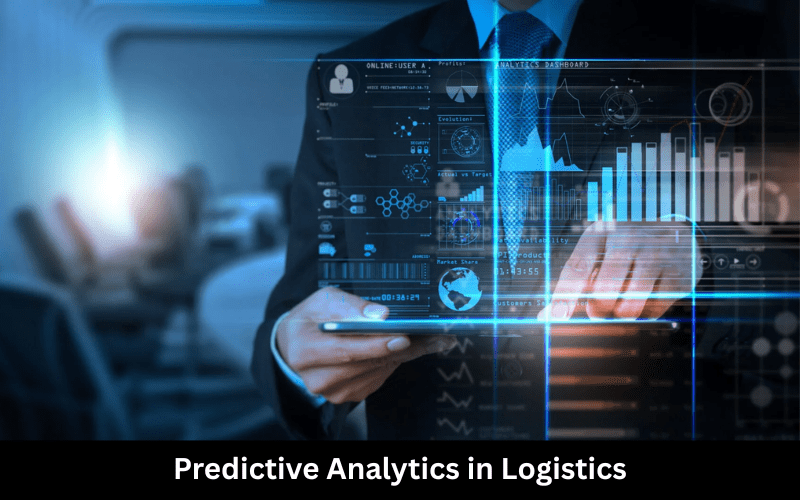
Predictive Analytics In Logistics: Applications & Use Cases


Predictive Analytics in Logistics: Applications & Use Cases

Predictive Analytics in Supply Chain Explained for Logistics Decision Makers

The cost-cutting logistics model worked in the past, but in today’s uncertain business world, it’s no longer enough. Higher operational costs, worldwide supply chain disruption, and customers’ demand for faster delivery are convincing logistics decision-makers to look for advanced alternatives.

This is where supply chain predictive analytics optimizes the way. Data, Machine Learning (ML), and Artificial Intelligence (AI) come together to provide decision-makers with a sense of what’s going to occur in the future, transforming the way they can make informed, competitive decisions. Let us look at what predictive analytics actually do for supply chain and logistics operations.

What Predictive Analytics Really Means for Supply Chain Operations?

Predictive analytics supply chain informs companies about the outcome of tomorrow. Leveraging the past history, customer preferences, market trends, and even external determinants like fuel prices or weather conditions, predictive solutions can foresee the peak demands, slowdowns, or market risks.

To decision-makers in logistics, it means breaking free of reaction firefighting and forward-looking planning. Rather than holding back until something fails, leaders can get ahead of it and take ownership of what tomorrow will look like. 

Why Predictive Analytics Matters for Logistics Decision Makers?

In logistics, one disruption can cascade through the supply chain and increase costs and destroy customer relationships. Predictive analytics indicates that leaders improve demand forecasting, inventory, and exposures by supplier performance. It also enables better transportation planning with the capacity to forecast fuel changes and traffic congestion in the future.

Research indicates that the companies adopting predictive analytics for logistics realize fifteen percent lower inventory cost and 20% lower delivery time. Predictive analytics not only saves organizations costs; it’s driving business performance. 

Top Use Cases of Predictive Analytics in Supply Chain Management

  • Demand Forecasting: Anticipating Customer Needs

At the heart of predictive analytics lies demand forecasting, the ability to anticipate what customers will want, when they will want it, and in what quantity. Based on past sales, seasonality, and market trends, supply chain companies can schedule manufacture, procurement, and shipping to actual demand using predictive analytics solutions.

This reduces both overstock and shortages, creating a leaner, more responsive supply chain. This ensures that the decision-makers are no longer to rely on guesswork, but rather they can operate with accuracy and confidence. When you can predict demand, you can predict growth.

  • Route Optimization: Delivering Smarter and Faster

Transportation is perhaps the most significant cost factor in logistics and is made even trickier with uncertainty added to the mix. By analyzing real-time traffic, weather, and fuel costs data, predictive analytics solutions turn the process and suggest the best routes of delivery.

This will have products moving at maximum efficiency and lower cost, improving consumers’ experiences while cutting costs. Predictive route optimization managing leaders do not only imagine costs going down but also imagine higher reliability. 

Recommended To Read: How is AI Revolutionizing Supply Chain and Logistics? 

  • Supplier Risk Management: Strengthening the Weakest Link

A supply chain is only as strong as its weakest supplier, and disruptions can cause massive setbacks. Predictive analytics gives logistics leaders the ability to examine supplier performance, financial health, and even geopolitical risk in hopes of discovering weaknesses before they damage their business.

By anticipating this beforehand, planners can select standby suppliers, reschedule contracts, or design standby plans beforehand. Instead of being reactive to bad failures, supply chain managers are able to provide uninterrupted service.

  • Inventory Optimization: Balancing Cost and Availability

Managing inventory is one of the toughest challenges in logistics. Excess inventory ties up capital and raises storage costs, while insufficient inventory risks customer dissatisfaction and lost revenue.

Predictive analytics avoids the dilemma by anticipating product movement and stocking in advance. It keeps bestsellers in stock and flops not worth stocking. It means better margins and healthier balance sheets for decision-makers. The wisest supply chains are lean, agile, and analytics-based.

  • Customer Insights: Staying Ahead of Expectations

Logistics is no longer just about moving goods; it’s about understanding customers. Predictive analytics gives companies precise information regarding preference, buying habits, and seasonality so that companies can even make an educated estimation of their needs before the customers themselves can articulate such needs.

This kind of personalization creates greater loyalty and makes companies more prominent in a noisy marketplace. Companies can develop customer-centric programs that gain long-term success. Therefore, with AI and predictive analytics in place, organizations can better understand their customers and their preferences. 

Recommended To Read: AI in Supply Chain: Top Use Cases of AI in Supply Chain Management

The Future of Predictive Analytics in Logistics

The future is for those who prepare and jump into predictive analytics already. More than half of all supply chains globally will utilize advanced analytics by 2027, according to a Gartner estimate. Also, according to Statista, the predictive analytics software market is anticipated to grow to more than $41 billion by 2028.

Predictive analytics isn’t going away for supply chain decision-makers, it’s the key to victory. The first movers are the ones with the velocity, flexibility, and customer loyalty to capture market share, and followers will be in their dust. The future has arrived, and predictive analytics are at its forefront.

The Cost of Supply Chain Management App with Predictive Analytics

Building a predictive insight supply chain management application would be as much a growth initiative as it would be an information technology undertaking. Costs of AI mobile app development will depend on how sophisticated the application is, the feature set, integrations, AI/ML features, and the size of your logistics company.

Companies would expect to pay $60,000 to $150,000 for a tailored AI solution.

A basic predictive app with features like order tracking, inventory management, and real-time dashboards will fall on the lower end of the spectrum. However, when predictive analytics is added, covering demand forecasting, route optimization, supplier risk modeling, and advanced data visualization, the investment rises but delivers significantly higher ROI.

In fact, companies leveraging AI-enabled supply chain software have a maximum of 30% lower operation expense and 20% to 25% improved delivery performance. However, it’s not about how much it costs to build a predictive analytics app, it’s about how much it can save your business.


Recommended To Read: How Much does Logistics App Development Cost? 

USM’s Success Story

A Texas manufacturing firm contracted USM to develop a next-generation and intelligent solution for logistics and supply chain management that utilizes the supply chain operation efficiencies and workload of the supply chain operations to their utmost.

Key Challenges in Building the Predictive Supply Chain App

The two were real-time warehouse monitoring and error-free warehouses. The other was end-to-end supply chain visibility, inclusive of error-free delivery network integration, warehouses, and logistics.

Delivery and shipping notices to the precise location needed streamlined coordination of fleet data and customer dashboards. With all this in the background, we had to develop a secured login portal for customers with new order support as well as pipeline improvement sales.

Our Solution: Turning Vision into Reality

After a detailed analysis of client requirements, our talented mobile app developers crafted a custom supply chain and logistics app for business needs. From development to deployment, each part of the app was honed to perfection to enable it to be scalable, precise, and real-time driven.

We employed the most recent frameworks, AI-driven tracking, and deep integration to link fleets, warehouses, and delivery networks to one another. We drove intelligence to action by embedding abilities that not only notify but also predict demand and make decisions with little human intervention.

The result? Our AI-driven supply chain platform simplified and surprised the user with real-time tracking, optimized deliveries, and many more incredible benefits. Click here to know more about the AI solution we delivered.

Conclusion

Predictive supply chain analytics is not data, it’s empowering logistics decision-makers to move forward in forecasting, planning, and succeeding. From accurate demand forecasting to smarter routing optimization, it converts uncertainty into opportunity. The future of logistics is in the hands of early adopters who are leveraging predictive analytics.

Contact us to know more about Predictive analytics in supply chain? Book Executive AI Briefing →


Are you ready to lead the way? Let’s talk with our AI experts, today!

LA Noire Could Have Featured A Different, Very Famous, And More Expensive Lead Actor


The 2011 detective game LA Noire, which was published by GTA company Rockstar Games, starred Mad Men actor Aaron Staton as the lead character, Cole Phelps. A writer on the game has now revealed that a different Mad Men actor, Jon Hamm, was considered for the role as well. Staton portrayed Ken Cosgrove on Mad Men, with Hamm playing the show’s leading role, Don Draper.

Daniel McMahon told IGN that Mad Men and LA Noire had the same casting director, and that Hamm was “discussed as a possibility for the role of Cole Phelps.”

“It was never said at the time, but now, I understand the vision which was Jon Hamm is a wonderful actor, but he’s not Cole Phelps,” McMahon said.

Aaron Staton as Cole Phelps in LA Noire.

McMahon went on to say that Staton was “much better at portraying Cole’s fragility.”

“He’s very smart, but he’s also young, not very experienced, and he’s just trying his best. So, I think Jon Hamm would’ve been incredible, but expensive, and probably, in the end, not as good casting for that character as Aaron Staton was,” he explained.

LA Noire was developed by Team Bondi, and it never got a sequel. Earlier this year, Take-Two boss Strauss Zelnick said the company is considering future projects for all of its franchises, and that includes LA Noire.

LA Noire was developed by Team Bondi and released in 2011 for PS3, Xbox 360, and PC, with Rockstar publishing it. The game takes place in 1947 Los Angeles, with players taking on the role of the detective Cole Phelps, who is played by Mad Men’s Aaron Staton. The game came to Switch, PS4, and Xbox One in 2017. A VR edition called The Case Files came out in 2019.

For his part, Staton said in 2021 that he had “never heard a word” about a sequel to LA Noire, despite the game selling millions of copies.

Back in 2012, Rockstar said a sequel to LA Noire was a “possibility.” At the time, the developer said, “We don’t always rush to make sequels, but that does not mean we won’t get to them eventually. We have so many games we want to make and the issue is always one of bandwidth and timing.”

If a sequel comes to market, it wouldn’t be from Team Bondi, as the studio shut down amid a flurry of controversy, after accusations of hostile working conditions prompted the International Game Developers Association to launch an investigation into the developer. Additionally, when the developer shut down, it reportedly was $1.4 million in debt. The studio’s assets, including its next project, Whore of the Orient, were acquired by film production company Kennedy Miller Mitchell.

The Visual Studio Dev/Test Benefit: Freedom to Build, Test, and Experiment in Azure


DevTest blog tile 800x200 v2 image

One of the best parts of a Visual Studio Subscription is discovering benefits that can make your day-to-day development work easier and more cost effective. One benefit that deserves more attention is Azure Dev/Test pricing. In fact, it’s one of the most valuable benefits included with a Visual Studio Subscription. 

If you’re building cloud applications, testing new ideas, or maintaining multiple development environments, cloud costs can sometimes influence how often you experiment or how closely your development environment matches production. Azure Dev/Test pricing helps remove that barrier by giving eligible Visual Studio subscribers access to discounted Azure pricing for non-production workloads. 

Whether you’re an individual developer exploring a new idea or part of a team building complex cloud applications, this benefit gives you the flexibility to experiment, validate, and iterate without letting cloud costs slow you down. 

Why developers should care 

Developers thrive when they have the freedom to experiment. 

Whether you’re evaluating a new architecture, validating performance, testing deployment pipelines, or exploring AI and cloud services, you shouldn’t have to second guess spinning up the resources you need. Azure Dev/Test pricing makes it easier to create, test, and tear down environments without worrying about unnecessary development costs. 

Imagine your team is preparing a major feature release. Instead of sharing a single test environment or delaying validation because of cloud costs, developers can quickly provision a dedicated Azure environment, run performance and integration tests, gather feedback, and remove the resources when testing is complete. That faster feedback cycle helps teams identify issues earlier and move confidently toward production. 

This flexibility helps teams iterate faster, shorten feedback loops, and support agile DevOps practices while keeping non-production environments cost effective. 

Build and test with production-like Azure services 

One of the biggest advantages of Azure Dev/Test pricing is that you’re working with the same Azure services you’ll use in production, rather than a limited sandbox environment. 

That means you can: 

  • Test application performance and behavior in environments that closely resemble production. 
  • Create temporary environments for feature development, testing, and validation. 
  • Shut down idle resources when they’re no longer needed and avoid overprovisioning. 
  • Experiment with new Azure capabilities without unnecessary cost concerns. 
  • Support continuous integration and delivery workflows with realistic testing environments. 

This is where the benefit really stands out. You’re not just reducing costs. You’re giving your team the flexibility to learn, experiment, and build with greater confidence before deploying to production. 

It’s important to note that Azure Dev/Test pricing is designed specifically for development and testing workloads, not production environments. Using separate environments both helps organizations take advantage of Dev/Test pricing and supports sound engineering practices for more predictable deployments. 

Choose the Dev/Test option that’s right for your organization    

Visual Studio subscribers can take advantage of Azure Dev/Test pricing through three purchasing options, depending on how their organization purchases Azure. 

Enterprise Dev/Test 

Designed for organizations using an Enterprise Agreement (EA), this option provides centralized billing and comprehensive management capabilities for teams running multiple non-production environments. 

Azure Plan for Dev/Test 

Available for organizations using a Microsoft Customer Agreement (MCA), Azure Plan for Dev/Test offers modern billing flexibility as customers transition from legacy purchasing agreements. 

Pay-As-You-Go Dev/Test 

Ideal for individual developers and smaller teams with Visual Studio Professional or Enterprise Subscriptions who are not covered by an Enterprise Agreement, this option provides an easy way to access Dev/Test pricing while maintaining billing flexibility. 

Start using Azure Dev/Test pricing today 

If you’re a Visual Studio Professional or Enterprise subscriber, sign in to my.visualstudio.com to learn more about Azure Dev/Test pricing and choose the option that best fits your organization. 

It’s an easy way to reduce development cost friction, accelerate your projects, and get even more value from your Visual Studio Subscription. 

Learn More

Female Consumers In Luxury Entertainment Loyalty Networks


Female Consumers On Luxury Entertainment Loyalty Networks
Pexels.com

A huge demographic change is occurring in the segments of premium hospitality and entertainment. Up until recently, the concept of premium loyalty programs was developed based on traditionally male preferences for golf and cigars. Today, wealthy and independent women represent one of the forces behind such changes, forcing organizations to reconsider and adapt their products to meet the new requirements of female consumers in luxury entertainment.

A Shifting Demographic in Premium Gaming

Shifting Demographic in Premium GamingShifting Demographic in Premium Gaming
Pexels.com

Traditionally, when it comes to the marketing of luxury resorts and gambling venues, the primary target audience would be male-oriented with privileges such as golf packages, luxury cigars, and exclusive steakhouse dining dominating the scene. Modern times have changed everything dramatically since corporate data proves the fact that women are currently among the most engaged in loyalty programs and are the ones who participate in them most actively. This new segment of the audience is represented by wealthy independent clients who require leisure differently which means that the whole strategy has to be reconsidered and redesigned.

One of the best examples of rethinking of the reward strategy lies in virtual gaming platforms providing access to luxury benefits. Corporate data proves the fact that the active use of various lifestyle rewards and conversion of virtual achievements on the premier Borgata Online Casino app which guarantees privacy and safe payment process takes place among female players. Developers create an app which works smoothly together with built-in iOS security measures.

Required Control Features

Control FeaturesControl Features
Pexels.com

A good mobile game should be enjoyable in any condition. It is necessary for developers to create simple and minimalistic interfaces that will work correctly even on a small screen. An interface overloaded with various buttons and menus is not comfortable to use on a phone. Now, the minimalist approach dominates; developers leave only necessary data and nothing more to make sure that your view is free and you see all the beauty of the visual art and gameplay itself without any distracting elements occupying space on your screen.

Another thing that developers need to consider is the support of one-handed gameplay. Nowadays people are playing mobile games while performing various actions. For example, when commuting by train, you might need to hold a handrail and you still want to spend your time enjoying your favorite mobile game and that’s why games that can be played comfortably in portrait mode using just one hand are very popular among gamers.

Centralized Self-Exclusion and Support

Given the fast pace of mobile games, there will be no patience for waiting for anything. Loading screens and slow menu systems will result in the player quickly giving up on the game. It is necessary to develop modern mobile games in such a way that they will start immediately after tapping the icon. In order to do that, it is necessary to have good coding and an excellent backend system that will be able to send information instantly.

This is particularly important when it comes to multiplayer games. Having a solid connection with low latency is needed in order to create a fair environment for the competition. The player expects his action to be performed precisely at the moment he taps. Even a small delay will spoil the whole experience. By emphasizing performance and instant play features, developers can provide players with smooth gameplay without any delays. This is what makes professional software stand out from the amateurs’.

Local Protection vs Offshore Risk

Female economic strength serves as one of the main factors in the development of the luxury hospitality industry. Nowadays, women own a substantial part of the private wealth and make a lot of independent purchases. In the case of the leisure travel segment, females are often the main decision-makers responsible for selecting destinations and hotels as well as spending the budget for the vacations. Thus, the economic strength of the target audience has made companies take women as one of the core customers whose needs must be considered at all levels.

Due to such economic importance of the targeted segment, female loyalty becomes an important issue for luxury brands. Companies that are unable to adjust their reward programs to cater to the needs of such customers have a huge risk of losing a considerable market share. At the same time, those who can create flexible, wellness-oriented reward networks demonstrate impressive financial results.

Final Thoughts

The rising impact of the economic power of Female consumers on the luxury entertainment industry is transforming this sector. As they shift away from male-centered benefits and adopt wellness and curation along with seamless virtual and physical integration, today’s networks manage to capture this segment efficiently. Brands that learn to appreciate and reward entertainment expenditure by providing a complete luxurious experience to women will rule the hospitality industry in the coming years.

Find a Home-Based Business to Start-Up >>> Hundreds of Business Listings.

Anthropic Says Claude’s Values Are Different Depending on Which Language You’re Using


If you’ve ever tried chatbots in multiple languages, you already know the languages have slightly different personalities. As part of a new report on behavior inconsistencies published on Monday, Anthropic researchers acknowledged this quirk.

Rather unsettlingly, they note that due to differences in the attributes of texts the models are trained on, the differences might run deeper than just tone, and might actually change the model’s priorities. These “imbalances in quantity and composition could lead Claude to express different values in different languages,” Anthropic’s researchers write.

But if you’re looking for any specific examples of the models showing, say, inconsistent moral reasoning across languages, nothing of the sort is in this paper. That might involve scrutinizing direct quotes from potentially unsuspecting people.

Instead, Anthropic analyzed 309,815 chatbot conversations with the Sonnet 4.6, Opus 4.6, and Opus 4.7 models. These involved “subjective” tasks, meaning less “What’s the capital of France?” and more “How can I tell if my cat hates me?” These were anonymized, in theory, using Anthropic’s “privacy-preserving analysis tool,” and then processed (in part using Claude itself) to rate responses on a “values axis.”

There are actually four such axes, and they mostly relate to what’s commonly known as sycophancy:

  • Deference or Caution: In other words whether it will value obedience over pushing back to prevent possible harm.
  • Warmth or Rigor: Should the chatbot be concerned about your feelings, or should it be exact?
  • Depth or Brevity: This one is self-explanatory.
  • Candor or Execution: The choice between casting doubt about its own reliability, or just plowing ahead.

It makes for a somewhat limited exploration of the model’s values. Nonetheless, here are the language-based differences in values Anthropic says it found in Claude:

  • In Arabic it was the most deferential.
  • In English it was the most cautious.
  • It was warmest in Hindi and Arabic, “characterized by polite language, humor and playfulness, and affirmations of a person’s ideas and work.”
  • In English and Russian it was more rigorous and truth seeking at the cost of warmth.
  • It errs on the side of “depth” (or perhaps just long-windedness?) in English.
  • It’s briefer in Arabic.
  • It’s candid about its flaws in Dutch.
  • In Indonesian it’s less candid, and instead just plows ahead trying to execute whatever was asked for.

Obviously linguistic customs are all different, so the researchers say they “aren’t yet sure how much of this variation is desirable.”

This should also be food for thought for anyone who read Anthropic’s recent paper on global workspace theory, which left lots of room for the supposed possibility that Claude is sentient. If there’s a consciousness in that black box thinking and experiencing things, it seems to be a consciousness whose “values” are still pretty easily swayed by the patterns in its training data.