Despite its ferocious popularity, people still tend to swear off anime entirely. These are usually the people whose reference of the medium pertains to a certain stereotype or to the few seconds of anime they once saw on a computer somewhere in the early 2000s.
But Japan has been producing some of the most emotionally resonant and visually audacious storytelling in contemporary media for half a century, and a great deal of it looks nothing at all like the stereotype it holds.
So here’s a case for the uninitiated. Start with self-contained films you can knock out in a single evening before graduating to series worth committing wholly to. The common thread, if you’re keeping score, is that not one of these requires you to know anything about anime, or Japan for that matter, going in.
Note that many of these picks are available in both the original Japanese audio with subtitles or as “dubs” with dialog dubbed by English voice actors. Dive in however you’d like.
Solo Leveling
If you want something fast, slick and unapologetically addictive, start here. Adapted from a South Korean web novel and webtoon by the Japanese animation studio A-1 Pictures, Solo Leveling follows Sung Jinwoo, an E-rank hunter regarded as the weakest of his profession. After being slaughtered during a dungeon expedition, he awakens with access to a mysterious system that only he can see–and which allows him to become stronger in a world where everyone else’s abilities are effectively fixed. Watching him transform from expendable underdog into an overwhelmingly powerful fighter is pure wish fulfillment, driven by propulsive pacing and enormous battles.
The Girl Who Leapt Through Time
This 2006 film is one of the softest possible landings into anime, with a concept that is simple to follow. Makoto is an ordinary teenager who unexpectedly discovers that she can leap backward through time. She initially uses the ability to redo poor test results, avoid awkward confessions, and correct everyday embarrassments. But manipulating time has consequences for the people around her, forcing Makoto to confront a future she may not be able to reverse.
Frieren: Beyond Journey’s End
Most fantasy stories end when the heroes defeat the great evil. Frieren begins there. After completing a decade-long quest, the elven mage takes off on a solitary journey, returning after 50 years to find that her human companions have aged while she has remained unchanged. Regret at missing out on reconnecting earlier and the pain of witnessing the death of one of her friends sets her on a journey of self-discovery. The result is a quiet, beautifully animated meditation on memory, mortality, and the meaning we find in seemingly fleeting relationships.
Nausicaä of the Valley of the Wind
Take a trip back to the anime of the ’80s, when writer-director Hayao Miyazaki was helping redefine what Japanese animation could accomplish—even before he cofounded Studio Ghibli. Set in a world poisoned by ecological catastrophe, the film follows Princess Nausicaä as she tries to prevent a war between human kingdoms while understanding the enormous toxic forest spreading across the planet. It is a postapocalyptic adventure but also a remarkably prescient story about environmental destruction and humanity’s impulse to conquer what it fears.
Death Note
For viewers who think anime means sprawling fights and exaggerated superpowers, Death Note offers a psychological thriller instead. High school student Light Yagami discovers a supernatural notebook that allows him to kill anyone whose name he writes inside it, provided he knows their face. With this discovery, he launches a crusade to eliminate criminals. What follows is a compulsive, morally murky battle of wits about justice, power, and how quickly idealism can become tyranny.
The Colors Within
Totsuko is a Catholic girls’ school student with an ability to see people’s emotions as colors. She joins a band with two people whose auras she’s drawn to, and so unfolds a musical odyssey of emotion and connection, tuned to classic anime characteristics. This 2024 Japanese drama film is a great watch if you’re after something with a bit more depth.
Jujutsu Kaisen
For anyone who wants supernatural horror with spectacular action, Jujutsu Kaisen is an easy gateway. High school student Yuji Itadori swallows a cursed finger to save a classmate and becomes the vessel of Ryomen Sukuna, a reincarnated sorcerer known as the King of Curses. Yuji is brought into the secretive world of jujutsu sorcerers, who fight supernatural beings created from humanity’s negative emotions. The series becomes considerably darker as it progresses, but its humor, memorable characters, and inventive battles make the commitment worthwhile.
The Tale of the Princess Kaguya
Japan’s most famous folklore reimagined in a hand-drawn masterpiece by Isao Takahata took eight years to make. As if sketched in real time, the story unfolds with a bamboo cutter who discovers a tiny girl inside a stalk. He raises her and watches her transform into a woman of impossible beauty. But the girl is slowly suffocated by everyone else’s plans for her, including five noble suitors competing for her hand.
Kiki’s Delivery Service
Even if you have never explored anime, you have probably encountered this one. Hayao Miyazaki’s 1989 fantasy follows Kiki, a 13-year-old witch who leaves home as part of her training and settles in a seaside city with her talking cat, Jiji. She begins supporting herself by running an airborne delivery service, only to find her confidence—and her ability to fly—beginning to disappear. Ostensibly a children’s film, it is also an unusually perceptive story about independence, loneliness, and creative burnout.
Spirited Away
Hayao Miyazaki’s 2001 masterpiece remains one of the strongest arguments for animation as serious cinema. Ten-year-old Chihiro unknowingly enters a mysterious spirit world where her parents eat food at an abandoned amusement park and are transformed into pigs. She then finds work in a magical bathhouse as she searches for a way to save them.
Spotify, it’s fair to say, has made some weird user-experience choices.
There are a number of panels in the app, and the layout is confusing. The service constantly tracks your activity. The app also seems to have an odd hostility to playing actual albums. This all works to create a general feeling that Spotify’s designers are trying to push you into using the service in a particular way.
It’s understandable, then, that some people are annoyed with the way music videos have been added to the platform. For the most part, they would start to play by default, in the background, whenever an artist had uploaded a video for the song. Some music videos have very different audio from the original tracks, particularly if they include sketches or sound effects, which can prove distracting if you prefer the album version of the song. And even if you enjoy music videos (which I do), the decision to have videos play by default—using up bandwidth and battery power—upset a lot of people.
There are a few other quirks. On Spotify’s desktop app, the videos are barely visible; they stay contained in the tiny album art panel until you manage to find the hidden, extremely small Now playing button that enlarges them. Also, the selection of videos that are on the platform, and the ones that are mysteriously absent, seems totally random. Because of this, I check YouTube first when I really want to watch a music video.
The most annoying thing, though, had been a lack of any obvious way to disable all videos. That changed recently—there’s now a toggle in the settings to disable music videos in Spotify entirely, alongside controls that disable the Canvas feature (animated album art) and video podcasts.
On mobile you can do this by tapping your user profile icon in the top-left to bring up the side panel. Then tap Settings and privacy, followed by Content and display.
Photograph: Justin Pot
In the Videos and Canvas section you will see three toggles: one for music videos, one for Canvas, and one for all other videos. This last toggle disables video podcasts, meaning you’ll get the audio-only version of podcasts instead. Turn all these off, and Spotify will use a lot less bandwidth.
On the desktop app, it’s a little different. Click your user profile icon in the top-right corner, then click Settings. Scroll down to the Videos and Canvas section to find the options to disable music videos and Canvas.
I tested this and it worked. The music video icon in playlists and albums disappeared, as did the collection of music videos on Artist pages. The only remnant of the disabled feature is a Switch to video button in the Now Playing sidebar, which appears below the album art. Click it and you’ll be told the video can’t play unless you turn videos back on in the settings. Odd, for sure, but for the most part turning this off means you don’t have to think about music videos in Spotify anymore.
I sincerely wish that Spotify would roll out music videos with more care. Sometimes I really do want to see a video—just not every time I play a track. Playlists of music videos might be welcome if they ran separately from the audio-only playlists. I just don’t want to get a music video when I’m looking for the album version of a song, and I don’t think I’m alone in that. I can only hope that Spotify’s future interface design choices will keep things more clearly separated.
I use Plex every day. Lately, I’ve been wondering if I should stop.
The software, which lets you turn your personal collection of TV shows and movies into a Netflix-style streaming service, is extremely convenient. But Plex is offered by a company that, as of late, seems more focused on adding features than improving the cluttered user interface. Recently, it added a social platform and user reviews, two features I quickly disabled. I want to watch stuff—not talk about it with strangers (I have friends for that). The company keeps making design choices that push its ad-supported streaming choices over the personal media collection and DVR functionality I use the service to enjoy.
This might make sense from a business perspective. But it doesn’t make sense for my personal use of Plex, which is watching live TV and the TV shows I’ve recorded and stored on my own computer. I pay an annual subscription fee of $ 70 for this. I could avoid the annual subscription by buying a lifetime pass, but Plex just raised the price from $250 to $750. That’s more than a decade of annual passes, assuming Plex lasts the next decade.
All of which is to say there are reasons to be frustrated with Plex. And that’s enough to look into Jellyfin, a free and open source application that offers many of the features that make Plex so compelling. Is Jellyfin a good alternative? It depends.
Solid Basics, Rocky Remote Access
If the main thing you want is to watch your digital collection of TV shows and movies in your home, I have good news for you: Jellyfin works great. You can download the server, point it toward your media, and access that media on other devices on your network, all in a couple of minutes.
The scanning works well. In my case, a few things were labeled incorrectly, but I dealt with similar issues setting up Plex and know I can fix it without too much bother—it’s a matter of naming the files correctly.
You can access your server on the local network by typing the local IP into your address bar, which is handy. And there are Jellyfin clients for every major desktop, mobile, and smart TV platform you can think of. Put simply, you can get local media streaming working very quickly. If that’s your main use and you’re tired of Plex, I can confidently say Jellyfin is ready for you without fuss.
But sometimes you’re not home. Surprising, I know. One of the nice things about Plex is relatively simple remote access, which allows you to watch your media outside of your home network. With most modern routers, you won’t need to do much—the networking is taken care of. This is possible because Plex, the company, operates infrastructure that points other devices toward your home server.
Jellyfin has no such infrastructure. If you want to access your Jellyfin server when you’re away from home, you need to set up the networking infrastructure yourself. This could mean paying for a domain name and redirecting it to your server; it could mean setting up a VPN, or it could mean messing around with port forwarding. There are instructions, but they’re very clearly intended for power users.
Basically, you’re going to have to tinker. Now, the kind of person who runs their own Plex server can probably navigate all of this. But if you share access to your Plex server with others, Jellyfin will be harder for them to set up and use.
Streaming ads might be getting a lot quieter this week.
A California law banning streaming services from showing ads “louder than the video content” that they accompany is set to take effect on Wednesday, July 1. (Existing legislation already imposes similar volume restrictions on broadcast and cable TV commercials.)
Ars Technica notes that streaming services have not shared additional details about how they plan to comply with the law. While the volume limitations only apply to California for now, it seems likely that any relevant changes would be deployed more broadly, especially with a similar bill set to take effect in Illinois next year.
When the law was passed in 2025, its sponsor, State Senator Thomas Umberg, said it was inspired by “every exhausted parent who’s finally gotten a baby to sleep, only to have a blaring streaming ad undo all that hard work.”
Industry groups including the Motion Picture Association of America and the Streaming Innovation Alliance opposed the bill, claiming streamers were already working to address the issue, and noting that they have to deal with a variety of output devices, including TVs, tablets, and phones.
Spotify is launching Audiobook Charts for the U.S. and U.K., the company announced on Friday. Similar to the streaming giant’s Music and Podcast Charts, the Audiobook Charts will be updated weekly and highlight the top audiobooks overall and by genre. These rankings are based on listening behavior and engagement on the streaming service, the company says.
The new charts are accessible to both free and paying users within the audiobooks hub. You can find them by tapping the search button in the app and selecting the “Audiobooks” tile to enter the hub. Then, you need to scroll down to the “Dive deeper” section to find the charts.
The move marks Spotify’s latest investment in the audiobooks space, following its official support of the format in 2022.
Since then, Spotify has continued investing in audiobooks with additional features like the recently-launched “Page Match” tool, which lets users scan a page from a physical book to instantly transition to that spot in the audiobook, and “Audiobook Recaps,” which are short audio summaries to catch you up on what you’ve already read so far.
Spotify says the new Audiobook Charts will benefit both readers and authors by giving listeners a trusted way to discover popular titles, while also creating new opportunities for authors and the publishing industry to reach wider audiences.
“As we’ve proven with Music and Podcasts Charts, when content is easier to access, discover, and enjoy, the demand grows,” said Duncan Bruce, Spotify’s Director of Audiobook Partnerships and Licensing, in a blog post. “We are delighted to now bring that to audiobooks, to help provide even more ways for users, publishers, and authors to discover what’s trending on Spotify, and make books more connected with culture in real time.”
It’s worth noting that Spotify isn’t only interested in audiobooks, as the streaming giant also recently ventured into physical book sales. Spotify announced earlier this month that users in the U.S. and the U.K. will soon be able to purchase physical copies of books directly within the app through a partnership with Bookshop.org.
The “game” in season 1 was an emotionally charged structure that made you want to take sides between the opposing political forces. In season 2, Marks says, the game shifts to “unpredictable surprises.”
An important piece in making this change happen is the presence of Ochiba no Kata, played by Fumi Nikaido. “In season 1, the role of the ballerina (Anna Sawai) played an important role and functioned as part of the English-language side of the story. In part 2, Ochiba’s character is placed at the center of the story,” Condou says.
Her role in the story, which is based on Yodo-kun, the wife of Toyotomi Hideyoshi, goes beyond the confines of recreating history. This allows the political dynamics of the women to emerge as the main focus of the story, enhancing the scale of the political drama.
Shogun’s writers and producers also have to deal with issues unique to historical dramas. History buffs, and Japanese viewers in particular, are already familiar with the outcome of the battle of Sekigahara, and any deviation from this point would cause some raised eyebrows.
Still, Marks is confident about the production’s philosophy, which is to treat culture, history, and language as “structure” rather than “material.”
“We welcome fans and history buffs who are familiar with Japanese history. We are telling a fictional story based on real history. You will be amazed at how fact and fiction blend together.”
The preferred approach to making a modern historical drama is the re-editing of history as a story, rather than as a succession of “known facts.” The Shogun production process—where Sanada and other Japanese crew members are intricately involved—ensures the cultural and historical consistency necessary to make that approach work. “Mutual respect between cultures is more important than ever,” Marks says.
At the Disney Plus Original Preview 2025 held in Hong Kong in November, Marks, Condou, and star and producer Hiroyuki Sanada held a talk session.
Streaming services are known for having award-worthy series but also plenty of duds. Our guide to the best TV shows on Netflix is updated weekly to help you know which series you should move to the top of your queue. They aren’t all surefire winners—we love a good less-than-obvious gem—but they’re all worth your time, trust us.
Feel like you’ve already watched everything on this list that you want to see? Try our guide to the best movies on Netflix for more options. And if you’ve already completed Netflix and are in need of a new challenge, check out our picks for the best shows on Hulu and the best shows on Disney+. Don’t like our picks or want to offer suggestions of your own? Head to the comments below.
If you buy something using links in our stories, we may earn a commission. This helps support our journalism.Learn more.
The Witcher
Almost everything is different in The Witcher’s fourth season. Gone is former leading man Henry Cavill, with Liam Hemsworth donning the gray wig as monster-slaying Geralt of Rivia in his place. It’s been a controversial switch, but Hemsworth holds his own well enough, despite being perhaps a bit too cautious in his portrayal. However, this latest chapter in the fantasy epic, based on the novels of Andrzej Sapkowski, really belongs to sorceress Yennefer (the returning Anya Chalotra), gathering forces against the dark mage Vilgefortz (Mahesh Jadu), and trainee Witcher Ciri (Freya Allen), seeking a new life for herself with a group of thieves called the Rats. While the core trio’s tales barely intersect this season, the distance allows each to stand on their own strengths. It also sets the stage for greater things to come in the fifth and final season. This Cavill-less Witcher might take some getting used to, but if you’ve been watching since the beginning, it’s definitely worth sticking around.
Boots
Adapted from Greg Cope White’s memoir The Pink Marine, this eight-episode series follows closeted teen Cameron Cope (Miles Heizer) as he follows his friend Ray (Liam Oh) into the US Marine Corps—even as his mother Barbara (Vera Farmiga) barely notices him leaving. Picking up in 1990—before “Don’t Ask, Don’t Tell”—Boots walks the fine line between drama and comedy as it charts Cameron’s fish-out-of-water travails through basic training. While it could all have easily devolved into a collection of tropes, the series instead serves up a smart exploration of masculinity and camaraderie that can feel surprisingly tender at times, while never pulling its punches when it comes to the conditions recruits can face.
Wayward
Wayward was created by comedian Mae Martin, but don’t expect a laugh riot in this dark and distressing thriller. The series focuses on the secretive Tall Pines Academy in Vermont, a boarding school for troubled teens, ruled with an iron fist by self-styled savior Evelyn Wade (a chillingly commanding Toni Collette). Except, to the outside world, Wade is a caring pillar of the community, helping desperate youths—a dichotomy that the school’s latest residents, Abbie (Sydney Topliffe) and Leila (Alyvia Alyn Lind), are about to brutally experience firsthand. Their only hope may be Alex (Martin), a newly transferred cop who grows suspicious of the hold Wade has over both the town and Laura (Sarah Gadon), Alex’s wife who is herself a graduate of Tall Pines. Despite having the vibe of a docudrama, Wayward is entirely fictional—but its exploration of control, coercion, and the power of charismatic figures feels all too real.
House of Guinness
If you’re a fan of a pint of the black stuff—that’s famed Irish stout beer Guinness for the nondrinkers out there—this historical drama based on the family behind its creation will go down smooth. When patriarch Sir Benjamin Lee Guinness dies, he leaves behind one of the largest and most powerful businesses in Ireland, setting the stage for a war of succession between his four children. With control left to eldest sons Arthur (Anthony Boyle) and Edward (Louis Partridge), but nothing for daughter Anne (Emily Fairn), and only a token trust fund for Benjamin Jr. (Fionn O’Shea), the wealthiest family in Ireland is about to go to war—right as the company is trying to expand into New York. Is it 100 percent authentic to the period or settings? About as accurate as creator Steven Knight’s Peaky Blinders was to early 20th century Birmingham, England—which is to say, not exactly, but the mix of drama, betrayal, and politics is a hell of a lot of fun all the same. Sláinte!
Haunted Hotel
When Katherine inherited the dilapidated Undervale Hotel from her late brother Nathan, she didn’t expect he’d still be ra esident there—but anyone who dies at the Undervale never checks out, so he’s hanging around as a ghost. Now Katherine is stuck trying to manage a failing business, keep a few centuries’ worth of squabbling specters happy, and stop her kids Ben and Esther from dabbling in the dark arts—all while Abaddon, a demon trapped in a pilgrim child’s body, keeps trying to get his infernal powers back. Created by Rick and Morty writer Matt Roller, Haunted Hotel starts off as a seemingly familiar addition to Netflix’s roster of original adult animated series but manages to interrupt its spooky hijinks with some unexpectedly profound and emotionally resonant moments. With a voice cast boasting comedy greats Will Forte and Eliza Coupe, Haunted Hotel is worth digging up this Halloween.
Alice in Borderland
When slacker Ryohei Arisu (Kento Yamazaki) was mysteriously transported to a deserted Tokyo, his keen gaming skills turned out to be an edge in navigating a series of lethal games that tested intellect as much as physical prowess. Yet after finally escaping and starting a new life with Usagi (Tao Tsuchiya), the newly arrived third and final season finds Arisu drawn back into the Borderland for one final round of brutal games—with the lives of everyone he cares about on the line. Going beyond the material laid down in Haro Aso’s original manga was a risky decision, but it pays off in this last batch of six episodes, serving up some of the most inventive and thrilling challenges in the series’ history while tying up some long-running character arcs.
Black Rabbit
The Black Rabbit is on its way to being New York’s hottest restaurant, an ultra-cool eatery that’s one glowing New York Times review away from blowing up. Proprietor Jake Friedken (Jude Law) has poured everything into it—so it’s the absolute worst time for his screw-up brother Vince (Jason Bateman) to crawl back into his life. On the run from a hit-and-run in Reno, and with long-standing debts to the mob hanging over him, Vince’s reappearance threatens to drag Jake down, and pushes brotherly love to lethal limits. Created by writers Zach Baylin and Kate Susman, this eight-episode limited series blends The Bear and Breaking Bad into a deliciously tense thriller that leaves you wanting a second course.
Wolf King
Based on the Wereworld books by Curtis Jobling, this animated fantasy adventure follows young farmer Drew (Cel Spellman), whose life is thrown into chaos when he learns he’s actually the hidden son of the lost Wolf King. Being the Wolf King’s hidden son means he’s also the last threat to the rule of King Leopold, the werelion who has stolen the throne. Joined by reluctant allies Whitley (Nina Barker Francis) and Hector (Chris Lew Kum Hoi), Drew is thrust into a quest to master his lupine powers and claim the crown he’s destined for—if they can evade Leopold’s forces. While the animation style won’t be for everyone—a pseudo-stop-motion approach—Wolf King will capture fans of Avatar: The Last Airbender and The Dragon Prince, and its balance of swords and sorcery and savage werebeasts gives it just enough bite for parents and older viewers.
Long Story Short
Adult animation is awash with family sitcoms—The Simpsons, Family Guy, Bob’s Burgers, on and on—but they’re all stuck in the perma-present, mixing outlandish events with a never-changing status quo. Not so for Long Story Short, the latest series from BoJack Horseman creator Raphael Bob-Waksberg. The show follows the thoroughly pedestrian antics of the Schwoopers, jumping between the 1950s and 2020s as it does so. As it ricochets through the lives of parents Naomi and Elliot, and their children Avi, Shira, and Yoshi, it proves itself as a series that balances finding comedy in the mundane—from chaotic bar mitzvahs to anniversaries-turned-interventions—with Waksberg’s penchant for the poignant woven throughout, all brought to life by a fantastic voice cast including Ben Feldman, Abbi Jacobson, and Nicole Byer. Already renewed for a second season, this is one story Netflix hasn’t cut short.
Hostage
With the UK in the midst of a health crisis, prime minister Abigail Dalton (Suranne Jones) is keen to strike a deal for medicine from French president Vivienne Toussaint (Julie Delpy)—standard politics, until Dalton’s husband Alex (Ashley Thomas), a doctor working with Medicins san Frontieres, is kidnapped in French Guiana. With the kidnappers demanding the PM’s resignation, the professional and the personal dangerously blur, while a conspiracy threatens Toussaint’s own position. Tense and masterfully paced, and with striking performances from Jones and Delpy, this five-episode limited series is an excellent political thriller to binge.
Wednesday
After spending the summer honing her psychic powers by tracking down serial killers, Wednesday Addams (Jenna Ortega) returns to Nevermore Academy—but this school year is more of an Addams Family reunion. With her mother, Morticia (Catherine Zeta-Jones), drawn into an onsite committee role by suspicious new principal Barry Dort (Steve Buscemi), brother Pugsley (Isaac Ordonez) joining the school after developing electric powers, and eccentric Grandmama (Joanna Lumley) turning up, Wednesday barely has a chance to investigate a new string of murders or a conspiracy surrounding a shady psychiatric hospital. The perils of the show’s protracted three-year gap between seasons is hard to overlook in places—Pugsley now towers over Wednesday, explained as a growth spurt, and you’ll almost certainly need to rewatch the first season to remember what’s going on—but this is a welcome return for Netflix’s spooky, ooky teen drama.
Love, Death + Robots
Developed by Deadpool director Tim Miller, Love, Death + Robots is one of Netflix’s most exciting animated offerings—an anthology series where the only common thread is each episode’s unique interpretation of that eponymous trio of themes. Now in its fourth season, viewers are treated to wild concepts that include psychic street gangs in a postapocalyptic future (400 Boys), a re-creation of the Red Hot Chili Peppers’ Live at Slane Castle performance of “Can’t Stop” in marionette form (directed by David Fincher, no less), and, in a rare hybrid of live action and CGI, a priest (played by Rhys Darby) meeting an alien envoy that thinks God has been reborn as an Earth dolphin. Wildly experimental, Love, Death + Robots constantly juggles animation styles and genres and practically vibrates off the screen with sheer visual energy. You never know what you’re going to get with this show—and that’s half the fun.
Sneaky Pete
Just released from prison, Marius (Giovanni Ribisi) steals the identity of former cellmate Pete Murphy in order to hide from the dangers of his old life. On the run from a vicious gangster played by Bryan Cranston (who also jointly created the show), Marius nestles in with Pete’s motley crew of estranged family. They’re delighted to be reunited with their long-lost relative, but he finds taking over another man’s life might be even more dangerous than the past he’s running from. Originally an Amazon Prime series, this three-season drama can now be binged in its entirety on Netflix.
Grace and Frankie
The brainchild of Friends cocreator Marta Kauffman, this sharp sitcom sees Jane Fonda and Lily Tomlin as the titular Grace and Frankie, longtime acquaintances forced into living together after their husbands leave them late in life—for each other. The show follows this contemporary odd couple as they deal with their ex-husbands’ coming out, their adult children’s drama, and each other’s maddening personalities, all while building a genuine friendship and trying to prove to themselves and the world that age is just a number. Taking cues from Arrested Development, Grace and Frankie‘s chief comedic currency is awkwardness, as their two extended families—the rich, business-minded Hansons and the borderline hippy Bergsteins—bring their neuroses and baggage to bear while navigating adult familial relationships. Think of it as a modern-day Golden Girls—just with more swearing and drug use.
Sakamoto Days
Taro Sakamoto used to be the worst of the worst, a hitman par excellence, his lethal skills making him a legendary figure in the criminal underworld. Then he fell in love, got married, and retired to run a convenience store with his wife Aoi and their daughter Hana. Unfortunately, he didn’t exactly leave his old job on the best of terms, and now a cadre of killers are out for the billion yen bounty on his head. Luckily, Sakamoto’s lost none of his skills—even though he’s let himself go in other areas—but can he protect his family without breaking Aoi’s strict “no killing” rule? Based on the manga by Yuto Suzuki, this comedy action anime is a blast. Now into its second season, with new episodes dropping each Monday, it’s appointment viewing you won’t want to miss.
Squid Game
The Korean sensation that became a global phenomenon, Squid Game’s blend of Hunger Games’ shocking elimination battles and Parasite’s condemnation of exploitative capitalism turned it into one of Netflix’s biggest-ever hits. It started off simply enough—hundreds of desperate people recruited to compete in a series of playground games with a deadly twist, the survivor winning a ₩45.6 billion ($35.8 million) jackpot. But now, with its third and final season, the stakes are higher than ever, and even perennial survivor Seong Gi-hun (Lee Jung-jae) might not be able to win this round. Intense, brutal, and frequently graphic, Squid Game remains gripping to the very end.
Trainwreck
Little else is as fascinating as a real-life disaster born of sheer hubris. The strange mix of “saw that one coming” and “get the popcorn,” as you watch events unfold makes for captivating viewing. That’s the special sauce for Trainwreck, Netflix’s series of documentaries exploring some of the biggest, well, train wrecks of recent history. From the crack-cocaine-fueled tenure of Toronto’s disgraced mayor Rob Ford to the avoidable errors that saw a luxury cruise liner turned into an infamous “poop cruise,” each installment is a fascinating exploration of how badly things can go wrong when the wrong people are in charge. Netflix oddly categorizes each Trainwreck as its own movie, but it’s really a loosely connected anthology, and while some cases require their own multi-episode arcs to excavate the wreckage (shoutout to Woodstock ’99), there’s no particular starting point—simply pick your favorite screw-up and just try to look away.
The Survivors
Years ago, Kieran Elliott (Charlie Vickers) survived a storm that trapped him in a sea cave, but his brother Finn and friend Toby died in the rescue attempt. Fifteen years later, he returns to his hometown with his partner Mia (Yerin Ha) and their baby Audrey for a memorial, finding that everyone from neighbors to his own mother still blame him for the tragedy. While those deaths still haunt the small town community, they may also have obscured another tragedy—teenager Gabby Birch went missing the same night. Now, out-of-town investigator Bronte (Shannon Berry), the only person who still cared about the long-cold case, has wound up dead herself, and everyone in Kieran’s life seems to be connected. Adapted from the novel by Jane Harper, this Australian murder mystery from Glitch creator Tony Ayres is a darkly compelling miniseries.
Dept. Q
Edinburgh police detective Carl Morck (The Crown‘s Matthew Goode) used to be one of the best—until his arrogance got his partner paralyzed and a uniformed officer killed, and saw him narrowly survive a bullet through his own neck. After returning to work following a lengthy period of mandatory leave, Morck finds himself heading up the new Department Q—an underfunded, under-staffed operation in the precinct’s dank basement, dedicated to solving the iciest of cold cases. Gathering a team of misfits, including Rose (Leah Byrne), eager to please but recovering from a breakdown, Akram (Alexej Manvelov), a Syrian refugee, and Morck’s still-bedbound partner James (Jamie Sives), the department has a lot to prove—but solving the disappearance of Merritt Linguard (Chloe Pirrie) might be a good start. Based on the novels by Danish author Jussi Adler-Olsen, Dept. Q is a brilliant blend of Scandi noir and gritty British crime drama.
Sirens
First The White Lotus, then The Perfect Couple, and now Sirens—Meghann Fahy is making a career out of starring in shows where we get to see awfully rich people doing awfully bad things to each other. Here, she plays down-on-her-luck Devon, drawn into the luxurious world her sister Simone (Milly Alcock, imminently Supergirl) inhabits by proxy, working as an assistant to billionaire’s wife Michaela (Julianne Moore). It’s never clear how willingly Simone got involved with the charismatic Michaela, who may be a mentor or cult leader or something else entirely, nor how overprotective or paranoid Devon is, but the hook of this glossy, dark comedy is in finding out.
Blood of Zeus
This adult animated take on Greek mythology returns for its third and final season, bringing the odyssey of demigod Heron—son of Zeus and mortal woman Electra—to a brutal conclusion. After years of manipulation, power plays, and betrayals, the season picks up with the Olympian gods and their Titan predecessors lined up against each other, the fate of the world hanging on the outcome of the ultimate family feud. Heron and his estranged brother Seraphim may be the only ones able to bring peace—so it’s rather inconvenient that Heron is dead. From start to finish, Blood of Zeus has impressed with smart writing that offers compelling twists on the classic myths, all brought to life with top-tier animation and phenomenal voice acting, and it doesn’t disappoint as it reaches its finale. One of Netflix’s best animated series.
You
Based on the novels of Caroline Kepnes, You is an often deeply disturbing series. During the first season, bookstore manager Joe Goldberg (Penn Badgley) falls in deranged-love-at-first-sight with aspiring author Guinevere Beck (Elizabeth Lail). In subsequent ones, he relocates to Los Angeles, where heiress Love Quinn (Victoria Pedretti) became the focus of his attention, and then to London, where he poses as an unassuming university professor before meeting his match in Kate Galvin (Charlotte Ritchie). At each turn, the globe-hopping saga of murderous obsession has become more and more unsettling. In the fifth and final season, Joe returns to New York with his new wife, Kate, but the darkness and brutality that’s followed him around the world is never far behind. Often shocking, You is a gripping thriller that hits the same sinister sweet spot as early (read: good) seasons of Dexter.
Black Mirror
Black Mirror returns with six new episodes that continue to explore humanity’s complicated relationship with technology. Although the new, seventh season includes a couple of rare sequels to previous Black Mirror episodes, the anthology format means every episode remains accessible. That means you can jump right in with the heartbreaking “Eulogy,” where Paul Giamatti’s Phillip dives through his own fractured memories of a lost lover. Or you can start with the sinister “Plaything,” in which a gaming journalist gets murderously obsessed with a strange life-sim game, partly inspired by series creator Charlie Brooker’s own background. (In a very meta twist, you can play the game for real.) Whether you’re a longtime fan or this is your first encounter with poignant tech dystopias, all of Black Mirror awaits your viewing.
North of North
Young Inuk woman Siaja (Anna Lambe, True Detective: Night Country) married straight out of high school, then spent years trapped in the shadow of her shallow, selfish husband, Ting—the golden boy of their small town of Ice Cove, nestled far in the Arctic Circle. A brush with death—and possibly the goddess Nuliajuk—gives her the push to make a fresh start, but an explosive breakup in a community of only 2,000 people means Siaja’s personal life is now everyone’s business. Netflix’s first Canadian original series, this sharp sitcom is packed with warmth and humor, while its on-location shooting in Iqaluit (the real-life capital of the Arctic Canadian territory of Nunavut) delivers breathtaking natural beauty along with the laughs.
Devil May Cry
Building on the success of Castlevania, Netflix’s take on Capcom’s Devil May Cry series continues the streamer’s strong track record of animated video game adaptations. For those who’ve never picked up a controller, the series follows half-demon devil hunter Dante, a stylish slayer with a penchant for slicing up hell’s worst offenders. This eight-episode spectacular sees Dante (voiced by Johnny Yong Bosch) clashing with the horrific White Rabbit (Hoon Lee), a twisted monster aiming to tear down the barrier between Earth and hell. Animation fans will also appreciate one of the final performances from the venerable, sadly-passed Kevin Conroy as the villainous US Vice President Baines. Devil May Cry may be unashamedly in love with its own early 2000s origins—as evidenced by a soundtrack filled with songs from the likes of Limp Bizkit and Papa Roach—but this slickly animated action masterpiece is a hellishly good time.
Adolescence
A quiet English town. 6 am. Police raid the house of Jamie Miller on suspicion of murdering an innocent girl. Jamie is 13 years old. A shocking mini-series, this isn’t a whodunit, but a whydunit. Its four episodes—each masterfully shot in a single real-time take—explore how boys are radicalized online to hate women, and the horrifying effects it has. The powerhouse cast includes cocreator and writer Stephen Graham (Bodies, A Thousand Blows) as Jamie’s father Eddie, Ashley Walters (Bulletproof) as Detective Boscombe, the arresting officer and investigator of Jamie’s crime, and Erin Doherty (The Crown) as the psychologist evaluating Jamie. Each brings this incredibly difficult material to life, but it’s newcomer Owen Cooper as Jamie who most astounds, turning from petrified to cheeky to vitriolic in a terrifying heartbeat. Adolescence is harrowing but important viewing.
Pantheon
Originally an AMC+ show, both seasons of Pantheon are now available on Netflix. Good timing too, since its nightmarish scenario of digitally uploaded human consciousnesses and exploration of the impact such technology would have on society feels worryingly prescient. With plot threads weaving between isolated Maddie Kim, whose dead father may have been reborn as an “Uploaded Intelligence,” Caspian Keyes, a genius teenager whose entire life is a Truman Show–style lie, and Vinod Chanda, an engineer investigating UI, this hard sci-fi outing—based on the short fiction of Ken Liu—offers a dark examination of virtual immortality. A uniquely brilliant adult animated series.
Zero Day
Cards on the table: A significant part of the appeal here is seeing the iconic Robert De Niro in his first major English-language TV role (he previously appeared in the Argentinian Nada, aka Nothing). He doesn’t disappoint with his performance as former US president George Mullen—pulled out of retirement to oversee a commission investigating a colossal cyberattack that left thousands of Americans dead and the terrifying warning that “this will happen again”—commanding the screen with his trademark gravitas. Director Lesli Linka Glatter wrings great drama from the whodunit of it all (Russians? hackers? hedge fund bros?), but with Mullen handed unprecedented powers to track down the culprits, the real nail-biting moments come from its suddenly timely explorations of abuses of power. With a powerhouse cast that includes Angela Bassett, Lizzy Caplan, and Jesse Plemons, Zero Day is an engaging political thriller, and at six episodes it makes for a great binge-watch.
The Night Agent
Special agent Peter Sutherland (Gabriel Basso) is back, and the stakes have never been higher. While the first season of The Night Agent wove a compelling spy drama out of the idea of a mole at the heart of America’s intelligence services, the newly arrived second season takes a more global approach—Sutherland hunts down a stolen chemical weapon project, drawing him back into the orbit of tech savant and sometime love interest Rose Larkin (Luciane Buchanan), while Iranian diplomatic aide Noor Taheri (Arienne Mandi) offers secrets to the CIA in return for asylum, and a deposed Eastern European dictator aims to manipulate everything from behind bars. Sure, the show’s mix of politics and spook work won’t surprise genre diehards, but it weaves together its many influences—and many more plot threads—into a supremely entertaining thriller.
Asura
The four Takezawa sisters are close but have little in common. Eldest Tsunako (Rie Miyazawa) is already a widow; repressed Takiko (Yû Aoi) and rebellious Sakiko (Suzu Hirose) are always at each other’s throats; and second-born Makiko (Machiko Ono) tries to balance keeping the peace with being a housewife and mother to her own two children. Yet when Takiko learns that their father Kotaro (Jun Kunimura) may have a second, secret, family, the sisters’ bonds are put to the test as they struggle to uncover the truth. Asura is far more than a turgid family drama—it’s equal parts heartwarming and hilarious, capturing the complexities of the relationships between its quartet of protagonists. Keeping the 1970s setting of Kuniko Mukōda’s original novel allows Palme d’Or– winning director Hirokazu Kore-eda (Shoplifters) to craft a gorgeously shot period piece that still feels incredibly timely and modern.
Jentry Chau vs the Underworld
You know the drill—everyday teenager learns she has superpowers and is destined to fight the forces of darkness. Except Jentry Chau (voiced by Ali Wong) is not like any other teenage girl—she’s known about the supernatural her whole life (her uncontrollable fire powers were a giveaway) and spent a lifetime avoiding it. Sent to study in Korea for her own safety, Jentry is drawn back into the mystic world after being attacked in Seoul by a jiangshi named Ed (Bowen Yang). Brought back to her home in Texas by her great-aunt, Jentry has to survive not only the formidable mogui Mr. Cheng, who intends to drain her soul and powers, but the horrors of high school, culture shock, and the pain of her own past. Taking the “high school is hell” metaphor of Buffy the Vampire Slayer, adding a dash of Gravity Falls’ mystery, and rooting it all in Asian mythology, Jentry Chau vs the Underworld is one of Netflix’s freshest animated shows in years.
A Man on the Inside
The latest show from comedy mastermind Michael Schur (The Good Place, Parks and Recreation, Brooklyn Nine-Nine), A Man on the Inside features Ted Danson as Charles Nieuwendyk, a retired engineering professor who’s lost all direction since his wife passed. But when private investigator Julie Kovalenko (Lilah Richcreek Estrada) needs a man of his demographic to go undercover in a retirement community to investigate allegations of resident abuse, Charles may find an unlikely new lease on life—if he can figure out how to use his smartphone, that is. Reflecting on end-of-life realities as much as it plays up Charles’ fish-out-of-water situation, it’s a show that’s equal parts poignant, melancholic, and achingly funny—and it’s based on a true story, to boot.
Black Doves
Helen Webb (Keira Knightley) is wife to the UK defense secretary, mother to two children, and bored with her picture-perfect life. Spectacular cover then, since she’s actually a spy for the mercenary organization Black Doves, selling state secrets to the highest bidder. But when her real love Jason (Andrew Koji) is killed, Helen is determined to find out who killed him and why—and her pursuit of the truth threatens both her public and private lives. Paired with assassin and old friend Sam (Ben Whishaw, in a very different spy role to his turn in the James Bond films) at the behest of stern operator Mrs. Reed (Sarah Lancashire), Helen’s obsession could have led to a dour, gritty thriller, but Black Doves bucks the grim-dark trend to serve up a pulpy, colorful outing with enough heart to balance its violence. At only six episodes (with a second season already confirmed), it’s a brisk watch too.
Arcane
Animated series based on video games can run the gamut from cheap cash-ins to half-decent if forgettable tie-ins, inaccessible to anyone but hardcore devotees. Yet Arcane stood out by making its connections to Riot Games’ League of Legends almost optional. While its central figures, orphaned sisters Vi and Jinx, are playable characters in the game, this steampunk saga of class war, civil uprising, and the people caught in between is entirely accessible. The second and final season, released in a trio of movie-length blocks of three episodes apiece, escalates the conflict between the warring factions but never loses its central focus on the fractured relationship between sisters. With a gorgeous painterly art style, strong characters, and frequently shocking story beats, Arcane is one of the best animated series in years—and it has racked up plenty of awards, including a Primetime Emmy for Outstanding Animated Program, to prove it.
Heartstopper
One of the most joyful shows on Netflix returns for another school year of teen drama and heartfelt queer romance. In the long-awaited third season, things heat up between the central couple, with Charlie (Joe Locke) preparing to say three little words to Nick (Kit Connor) for the first time, while Elle (Yasmin Finney) and Tao (William Gao) try to have the perfect romantic summer before Elle starts art college. Heartstopper‘s return also sheds some of its earlier cloying tendencies, growing up alongside its talented young cast and giving them more serious material to work with, tackling more mature themes of sex, eating disorders, and gender dysphoria—all without losing the warmth and charm that made audiences fall in love with the show in the first place. The show younger LGBTQ+ viewers need now, older ones needed years ago, and one that everyone needs to watch, whatever their sexuality.
The Boyfriend
“Anyone can fall in love with anyone” is the opening narration to The Boyfriend, Japan’s first same-sex dating show—a bold and progressive statement that reflects the shifting tide of opinion in the country. Throwing nine single men together in an idyllic beach house for a summer and charging them with running a coffee truck, the over-arching concept is to see who’ll pair up, but the series is as interested in exploring the friendships that emerge between the cast as it is the romantic relationships. Unlike Western dating shows, there are no scandals, no dramatic twists, no betrayals, and the “challenges” are adorably focused on confessing feelings. The gentleness of it all adds an almost relaxing quality, with the men discussing their emotions—and the nature of being queer in Japan—earnestly. An absolutely joyful example of reality TV.
Kleo
If you’re pining for more Killing Eve, then this German thriller may be the next best thing. Set in the late 1980s and early 1990s, the series follows the eponymous Kleo (Jella Haase), a Stasi assassin imprisoned by her agency on false treason charges. Released after the fall of the Berlin Wall, she seeks revenge on her former handlers—but West German detective Sven (Dimitrij Schaad), the only witness to her last kill, may have something to say about that. As dark and violent as you’d expect given the period and the themes of betrayal and vengeance, Kleo is lightened by its oft-deranged sense of humor and a charismatic lead duo who brilliantly bounce off one another—chemistry that’s only heightened in the second season as Kleo’s pursuit of her old allies intensifies, attracting attention from international spy agencies in the aftermath of the Cold War.
Supacell
One by one, five Black Londoners awaken to strange superpowers. Struggling father Andre (Eric Kofi-Abrefa) develops superstrength, nurse Sabrina (Nadine Mills) unleashes phenomenal telekinetic might, drug dealer Rodney (Calvin Demba) races at superspeed, and wannabe gang leader Tazer (Josh Tedeku) turns invisible. But it’s Michael (Tosin Cole, Doctor Who) who may be the most pivotal, realizing he can leap through time and space and learning he only has three months to save his fiancée’s life. Created by Andrew “Rapman” Onwubolu, Supacell is a show about superpowers, but not necessarily superheroes, with its fantastic cast offering up a far more realistic and human exploration of now-familiar ideas than anything you’ll find in the Marvel Cinematic Universe. And the mystery of why—and how—only Black people seem to be gaining powers builds up to a more powerful punch than an Asgardian god of thunder. A smart, modern, and refreshing take on the genre.
3 Body Problem
In 1960s China, at the height of the Cultural Revolution, gifted scholar Wenjie Ye witnesses her physicist father being beaten to death for his research, only for her to be recruited to a secret project relying on that same knowledge. Fast-forward to the present day, and physics is broken: Particle accelerators around the world are delivering impossible data, while scientists are being plagued by countdowns only they can see. Meanwhile, strange VR headsets appear to be transporting players to an entirely different world—and humanity’s continued existence may rely on there being no “game over.” Game of Thrones’ creators D. B. Weiss and David Benioff and True Blood executive producer Alexander Woo reimagine Chinese author Cixin Liu’s acclaimed hard sci-fi trilogy of first contact and looming interplanetary conflict as a more global affair. Wildly ambitious, and boasting an international cast featuring the likes of Benedict Wong, Rosalind Chao, Eiza González, and GOT alum John Bradley, Netflix’s 3 Body Problem serves up the opening salvo in a richly detailed and staggeringly complex saga.
Ripley
Perhaps best known nowadays from 1999’s The Talented Mr. Ripley starring Matt Damon, novelist Patricia Highsmith’s inveterate criminal Tom Ripley has a longer, darker legacy in print and on the screen. For this limited series, creator Steven Zaillian goes back to Highsmith’s original text, presenting Ridley (a never-more-sinister Andrew Scott of All of Us Strangers) as a down-on-his-luck con man in 1950s New York who is recruited by a wealthy shipbuilder to travel to Italy and persuade the businessman’s spoiled son Dickie Greenleaf (Johnny Flynn) to return home. But once in Italy, Ripley finds himself enamored with Dickie’s lavish lifestyle—and will do anything to take it for himself. Shot in black and white to really sell its noir credentials, this is an instant contender for the finest interpretation of Highsmith’s works to date.
Blue Eye Samurai
In the 17th Century, Japan enforced its “sakoku” isolationist foreign policy, effectively closing itself off from the world. Foreigners were few and far between—so when Mizu (voiced by Maya Erskine) is born with blue eyes, nine months after her mother was assaulted by one of the four white men in the country, it marks her as an outsider, regarded as less than human. Years later, after being trained by a blind sword master and now masquerading as a man, Mizu hunts down those four men, knowing that killing them all is the only way to guarantee her vengeance. Exquisitely animated—which makes its unabashed violence all the more graphic—and with a phenomenal voice cast bolstered by the likes of George Takei, Brenda Song, Cary-Hiroyuki Tagawa, and Kenneth Branagh, Blue Eye Samurai is one of the best adults-only animated series on Netflix.
One Piece
Mark one up for persistence: After numerous anime adaptations ranging from “awful” to “not too bad,” Netflix finally strikes gold with its live-action take on the global phenomenon One Piece. Despite fans’ fears, this spectacularly captures the charm, optimism, and glorious weirdness of Eiichiro Oda’s beloved manga, manifesting a fantasy world where people brandish outlandish powers and hunt for a legendary treasure in an Age of Piracy almost verbatim from the page. The perfectly cast Iñaki Godoy stars as Monkey D. Luffy, would-be King of the Pirates, bringing an almost elastic innate physicality to the role that brilliantly matches the characters rubber-based stretching powers, while the crew Luffy gathers over this first season—including swordsmaster Roronoa Zoro (Mackenyu), navigator and skilled thief Nami (Emily Rudd), sharpshooter Usopp (Jacob Romero Gibson), and martial artist chef Sanji (Taz Skylar)—all brilliantly embody their characters. A lot could have gone wrong bringing One Piece to life, but this is a voyage well worth taking.
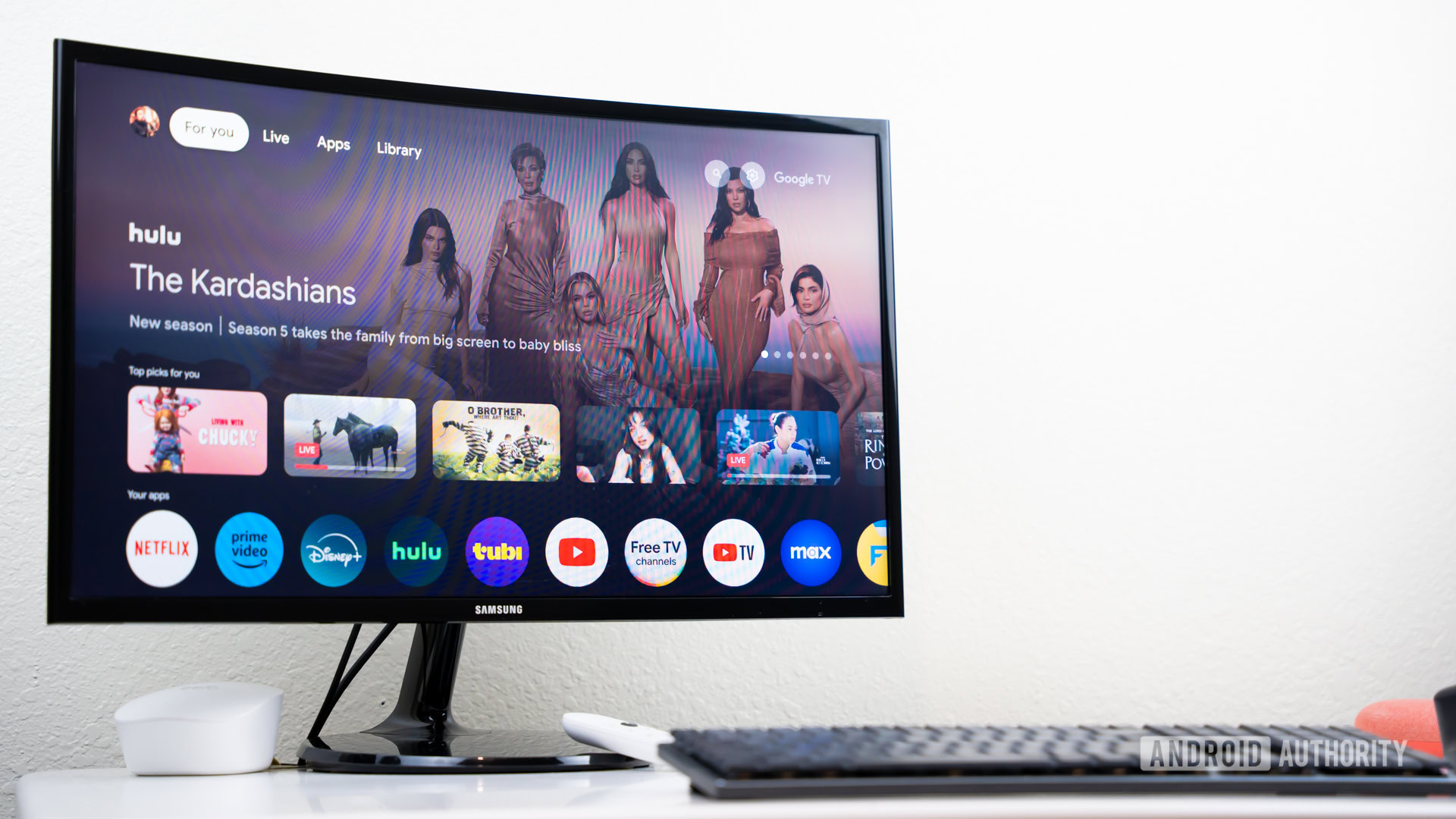
The Google TV app seems to be preparing some design tweaks and new functions.
The most noticeable update is a shift in the app’s color palette from gray to blue and darker blacks.
Search in Google TV is also possibly getting a useful update and a new content tab may be in the works.
Google appears to be working on some visual and functional updates for its Google TV app. Since there’s no public beta for the app, we dug into the code of an internal beta build of Google TV. This behind-the-scenes look has revealed several potential changes that could make their way to users in the near future.
You’re reading an Authority Insights story on Android Authority. Discover Authority Insights for more exclusive reports, app teardowns, leaks, and in-depth tech coverage you won’t find anywhere else.
An APK teardown helps predict features that may arrive on a service in the future based on work-in-progress code. However, it is possible that such predicted features may not make it to a public release.
The most noticeable update is a shift in the app’s color palette. Google seems to be replacing the existing dark gray accent with a brighter, modern-looking blue, similar to the Google Play Store’s redesign that came along a while back (see comparative images of current and new UI below).
The new blue accent also stands out against an updated, darker background, giving the Google TV app interface a cleaner and more contemporary look.
The upcoming visual tweaks don’t stop there. The Google TV app’s search page could also be usefully updated to include a list of recent searches, making it easier to revisit previous queries without starting a search from scratch.
A new way to discover fresh content
Our teardown also uncovered references to a new feature labeled the “Hot and New Tab”, with a corresponding internal flag titled “HotAndNewFeature__enable_hot_and_new_tab.” This suggests that Google may be working on adding a dedicated tab to highlight trending or newly released content.
While the feature seems to be in development, we couldn’t activate it yet, indicating Google may still be putting some finishing touches to it. It’s also possible Google is just testing the feature and is not ready to roll it out just yet.
For now, it looks like Google is continuing to refine the Google TV app’s design and features, hinting at more personalized, up-to-date content and an improved user experience. Stay tuned for more updates as these features potentially move closer to public release.
Got a tip? Talk to us! Email our staff at news@androidauthority.com. You can stay anonymous or get credit for the info, it’s your choice.
The Caesars Superdome will host Super Bowl LXI on Sunday, February 9. Here’s how to tune in to the big game! (Photo by Chris Graythen/Getty Images) (Chris Graythen via Getty Images)
Super Bowl LIX is less than a week away, and the big news for the 2025 game is that you can stream it for free. But let’s back up a bit: The NFL’s final game of the season comes together this Sunday, with the NFC champions the Philadelphia Eagles facing AFC champs — and two-time defending Super Bowl winners — the Kansas City Chiefs. If that roster sounds familiar, it’s because it’s a rematch of the 2023 Super Bowl, where the Chiefs edged out the Eagles 38-35. Will the Eagles get their revenge this year, or will the Chiefs go where no NFL team has gone before: an unprecedented three straight Super Bowl wins?
We’ll find out on Sunday, Feb. 9. The kickoff for Super Bowl LIX will be at 6:30PM ET at Caesars Superdome in New Orleans, LA — the eighth time the venue has hosted the big game. The 2025 Super Bowl Halftime Show will feature Kendrick Lamar, riding high on the five new Grammys he snagged just last Sunday, as well as SZA. Will Taylor Swift be there to cheer on beau Travis Kelce? The odds are currently yes.
The championship game will be broadcast nationally on Fox this year and will be available on platforms like DirecTV Stream and Fubo. Looking for a free way to tune in? The Super Bowl will also be livestreamed on Tubi — in 4K, no less!
Here’s everything you need to know about how to watch the Super Bowl.
When is Super Bowl LIX?
The 2025 Super Bowl will be held on Sunday, Feb. 9.
What time does the Super Bowl start?
Super Bowl LIX kicks off at 6:30 p.m. ET/3:30 p.m. PT.
How to watch the Super Bowl live
Super Bowl LIX will air nationally on Fox and stream live on Tubi.
How to stream the Super Bowl for free this year
Tubi will be livestreaming Fox’s coverage of the Super Bowl this year — the first time the free platform has done so. It will also be available in the Fox Sports app on mobile platforms. Beyond that, you can also sign up for free trials of DirecTV Stream, Fubo, YouTube TV and Hulu + Live TV, each of which carry Fox in most locations. Two important caveats: Verify that your locality includes a Fox stream by inputting your ZIP code on their respective sites. And if you don’t want to pay, make sure you cancel before the trial subscription ends — they can be as short as three days, so plan ahead.
Tubi will host a free livestream of Fox’s game day coverage of the 2025 Super Bowl. If you don’t have cable and aren’t looking to spend a dime to watch the big game, Tubi is a great free option to tune in. And with its pledge to stream the game in 4K, it could also provide the best video quality of the game — assuming your internet provider has the requisite bandwidth.
For sports fans looking to catch every moment of the game, it should be noted that this will be Tubi’s first big live event — the Fox-owned platform sees most its views from content in its on-demand library.
Beyond the Super Bowl, Tubi has a range of ad-supported on-demand content available totally free. They also have Tubi original programming including last year’s streaming standout: Sidelined: The QB and Me.
The Tubi option above is the easiest go-to starting point for free Super Bowl streaming — but no one knows how the service will hold up under what’s certain to be its most intensive influx of concurrent users. There are plenty of worthwhile backups, each of which offer more comprehensive options for cordcutters beyond the game itself — say, watching SportsCenter on ESPN before or after the game. And most of our picks for best live TV streaming services offer free trials, so you can check them out risk-free. If you time it right, your free trial can include the Super Bowl broadcast, too.
DirecTV Stream is Engadget’s pick for “best cable without a contract.” And while we haven’t yet fully tested the service’s new MySports package yet, we’re highlighting it here for obvious reasons. It gets you access to all the usual football suspects: NFL Network, ESPN, ABC, NBC, CBS and, of course, Fox. (Important: Verify your ZIP code before signing up to confirm that the local network affiliates, including Fox, are available in your area.)
Right now, you can try all this out free, and then get your first three months for just $50/month. After that, the cost of this sports streaming package rises to $70/month (still cheaper than its competitors). So if you’re interested in trying out a live TV streaming service for watching football (next season), but aren’t ready to commit or drop a ton of money, DirecTV Stream and its MySports tier is worth checking out.
You’ll also get unlimited Cloud DVR storage included in whatever DirecTV package you choose.
Prior to the debut of the MySports package, we named Fubo TV the best live TV streaming service for sports. It gives you access to ESPN, NFL Network, NBC, Fox, ABC, CBS and 100+ more live channels. (Important: Verify your ZIP code before signing up to confirm that the local network affiliates, including Fox, are available in your area.) At $80/month, the live TV streaming service is definitely a big investment for football fans. But it offers nearly every channel you’ll need to watch the NFL, and still leaves you with major savings compared to a traditional cable package. Fubo subscribers also get unlimited cloud DVR storage. You can try Fubo free right now.
YouTube TV is our top overall choice for best live TV streaming service. Most locales will have Fox to watch the Super Bowl (again, check your ZIP code). YouTube TV offers sports-friendly stats and “fantasy football” views (at least during the regular season). It also offers tight integration with NFL Sunday Ticket. Just note that service requires an additional hefty fee — and is also available as a standalone.
Hulu + Live TV offers a wide array of sports options (including Fox, in most localities, for the Super Bowl). It’s got fewer regional sports networks than some rivals, but this is the only one that bundles in on-demand services Hulu, Disney+ and ESPN+ as part of the base fee, which is why it’s number three on our list of top overall streaming TV recommendations.
The 2025 Super Bowl will be held at Caesars Superdome in New Orleans, Louisiana. The venue has been host to seven previous Super Bowl games.
Who is performing in the Super Bowl 59 halftime show?
Kendrick Lamar is headlining Super Bowl LIX, with a guest appearance by SZA.
Who is playing in the Super Bowl 2025?
AFC champions the Kansas City Chiefs will play NFC champs the Philadelphia Eagles.
More ways to watch Super Bowl LIX
Thanks to the wide array of streaming options detailed above, you’ll be able to watch the Super Bowl on nearly any current device with a screen. There are plenty of Super Bowl TV deals ahead of the game if you need to upgrade that aging 40-inch screen with the dead pixels in the corner. Live close to a broadcast tower of a Fox station? Attach a good old-fashioned over-the-air antenna (like the Channel Master linked above), and you can get the game for free.
Have a fast Internet connection but don’t have access to the latest and greatest streaming apps on your TV? For as little as $40 or less, a new Roku or Fire TV device will ensure that you have all of these apps (including Tubi). See our list of best streaming devices for the full range of options — and note that the Fire Stick HD is currently on sale for just $25.
The Caesars Superdome will host Super Bowl LXI on Sunday, February 9. Here’s how to tune in to the big game! (Photo by Chris Graythen/Getty Images) (Chris Graythen via Getty Images)
It’s been almost a full week since the Super Bowl LIX lineup was set: AFC champions the Kansas City Chiefs will face NFC champs the Philadelphia Eagles. If that roster sounds familiar, it’s because it’s a rematch of the 2023 Super Bowl, where the Chiefs edged out the Eagles 38-35. Will the Eagles get their revenge this year, or will the Chiefs go where no NFL team has gone before: an unprecedented three straight Super Bowl wins.
Super Bowl LIX will be played at Caesars Superdome in New Orleans, LA on Sunday, Feb. 9 with a 6:30 p.m. ET kickoff. The 2025 Super Bowl Halftime Show will feature Kendrick Lamar, who recently confirmed that SZA will be joining him. The championship game will be broadcast nationally on Fox this year and will be available on platforms like DirecTV and Fubo. Looking for a free way to tune in? The Super Bowl will also be livestreamed on Tubi — in 4K, no less!
Here’s everything you need to know about how to watch the Super Bowl.
When is Super Bowl LIX?
The 2025 Super Bowl will be held on Sunday, Feb. 9.
What time does the Super Bowl start?
Super Bowl LIX kicks off at 6:30 p.m. ET/3:30 p.m. PT.
How to watch the Super Bowl live
Super Bowl LIX will air nationally on Fox and stream live on Tubi.
How to stream the Super Bowl for free this year
Tubi will be livestreaming Fox’s coverage of the Super Bowl this year — the first time the free platform has done so. It will also be available in the Fox Sports app on mobile platforms. Beyond that, you can also sign up for free trials of DirecTV Stream, Fubo, YouTube TV and Hulu + Live TV, each of which carry Fox in most locations. Two important caveats: Verify that your locality includes a Fox stream by inputting your ZIP code on their respective sites. And if you don’t want to pay, make sure you cancel before the trial subscription ends — they can be as short as three days, so plan ahead.
Tubi will host a free livestream of Fox’s game day coverage of the 2025 Super Bowl. If you don’t have cable and aren’t looking to spend a dime to watch the big game, Tubi is a great free option to tune in. And with its pledge to stream the game in 4K, it could also provide the best video quality of the game — assuming your internet provider has the requisite bandwidth.
For sports fans looking to catch every moment of the game, it should be noted that this will be Tubi’s first big live event — the Fox-owned platform sees most its views from content in its on-demand library.
Beyond the Super Bowl, Tubi has a range of ad-supported on-demand content available totally free. They also have Tubi original programming including last year’s streaming standout: Sidelined: The QB and Me.
The Tubi option above is the easiest go-to starting point for free Super Bowl streaming — but no one knows how the service will hold up under what’s certain to be its most intensive influx of concurrent users. There are plenty of worthwhile backups, each of which offer more comprehensive options for cordcutters beyond the game itself — say, watching SportsCenter on ESPN before or after the game. And most of our picks for best live TV streaming services offer free trials, so you can check them out risk-free. If you time it right, your free trial can include the Super Bowl broadcast, too.
DirecTV Stream is Engadget’s pick for “best cable without a contract.” And while we haven’t yet fully tested the service’s new MySports package yet, we’re highlighting it here for obvious reasons. It gets you access to all the usual football suspects: NFL Network, ESPN, ABC, NBC, CBS and, of course, Fox. (Important: Verify your ZIP code before signing up to confirm that the local network affiliates, including Fox, are available in your area.)
Right now, you can try all this out free, and then get your first three months for just $50/month. After that, the cost of this sports streaming package rises to $70/month (still cheaper than its competitors). So if you’re interested in trying out a live TV streaming service for watching football (next season), but aren’t ready to commit or drop a ton of money, DirecTV Stream and its MySports tier is worth checking out.
You’ll also get unlimited Cloud DVR storage included in whatever DirecTV package you choose.
Prior to the debut of the MySports package, we named Fubo TV the best live TV streaming service for sports. It gives you access to ESPN, NFL Network, NBC, Fox, ABC, CBS and 100+ more live channels. (Important: Verify your ZIP code before signing up to confirm that the local network affiliates, including Fox, are available in your area.) At $80/month, the live TV streaming service is definitely a big investment for football fans. But it offers nearly every channel you’ll need to watch the NFL, and still leaves you with major savings compared to a traditional cable package. Fubo subscribers also get unlimited cloud DVR storage. You can try Fubo free right now.
YouTube TV is our top overall choice for best live TV streaming service. Most locales will have Fox to watch the Super Bowl (again, check your ZIP code). YouTube TV offers sports-friendly stats and “fantasy football” views (at least during the regular season). It also offers tight integration with NFL Sunday Ticket. Just note that service requires an additional hefty fee — and is also available as a standalone.
Hulu + Live TV offers a wide array of sports options (including Fox, in most localities, for the Super Bowl). It’s got fewer regional sports networks than some rivals, but this is the only one that bundles in on-demand services Hulu, Disney+ and ESPN+ as part of the base fee, which is why it’s number three on our list of top overall streaming TV recommendations.
The 2025 Super Bowl will be held at Caesars Superdome in New Orleans, Louisiana. The venue has been host to seven previous Super Bowl games.
Who is performing in the Super Bowl 59 halftime show?
Kendrick Lamar is headlining Super Bowl LIX, with a guest appearance by SZA.
Who is playing in the Super Bowl 2025?
AFC champions the Kansas City Chiefs will play NFC champs the Philadelphia Eagles.
More ways to watch Super Bowl LIX
Thanks to the wide array of streaming options detailed above, you’ll be able to watch the Super Bowl on nearly any current device with a screen. There are plenty of Super Bowl TV deals ahead of the game if you need to upgrade that aging 40-inch screen with the dead pixels in the corner. And for as little as $40 or less, a new Roku or Fire TV device will ensure that you have all of these apps (including Tubi) if they’re not already built-in to your screen. See our list of best streaming devices for the full range of options.




.jpg)