3D Rendering Techniques in Architecture: CGI Conundrum for Architectural Companies


3D rendering, as a breakthrough technological application in today’s architecture industry, empowers the development of photorealistic and visually appealing renderings of buildings, landscapes, and interior spaces – but it’s not just about the renders. Architects leverage 3D rendering techniques to embark on an interesting journey of exploring different scenarios of architectural visualization services so that they’re able to come up with a design that satisfies the expectations of many stakeholders. It also helps detect potential flaws in design before the design phase even begins.

3D rendering in architecture improves the effective communication and sharing of ideas to all stakeholders, clients, and the general public, most simply and easily. Using top-of-the-line CGI images allows architects to convince customers to buy their products and choose their services. Employing CGI in architecture is an enticing process that requires abundant creativity and technical expertise.


How does CGI work in the architecture industry?

Here are the steps involved in using 3D rendering in architecture:

3D CGI modeling

The first step of CGI rendering is to design the 3D model of the intended building or space. The use of specialized software for architectural rendering helps produce visually stunning design concepts. 3D rendering is critical for interior and exterior designers who want to test different design elements and correct flaws before construction starts. Such an approach saves time and improves cost-effectiveness while offering cheaper cost estimates by eliminating the need for physical prototypes.

Texture and mapping

The second step is to decide on the right materials and textures to apply to the surface of the model. Good examples of textures for CGI presentations include wood greens, brick patterns, frosted glass, rough concrete, and polished concrete, just to name a few. This process is important to create real-time, lifelike visualizations that will entice prospective clients to buy.

Scene setup

Using strategically placed virtual cameras and proper lighting to create top-of-the-line CGI interior and exterior designs would be a big help. Lighting design services are critical to generating visually enticing CGI.

It can create shadows, highlights, and reflections to enhance the dimension and visual depth of the architecture. Virtual cameras will offer a clearer view of the entire design from every angle.

CGI rendering and architectural visualization by Cad Crowd design experts

RELATED: Understanding architect fees and hiring options for your firm with Cad Crowd

Rendering

The rendering process starts after the successful setup of the scene with models, textures, lighting, and architectural animation. This rendering process involves the high-performance computations of the software that simulate the interaction between light rays, virtual objects, and materials to achieve the final visual result of the scene.

It is highly recommended that you work with the best 3D rendering studio with a team of excellent 3D rendering artists to identify the appropriate parameters and guarantee the best final design product. To speed up the CGI process in the architecture industry, projects are often divided into smaller projects and spread across numerous architectural design software programs before the final post-processing stage. 

This last step includes making the necessary adjustments or changes if there are flaws and applying enhancements, color adjustments, and compositing. The final CGI imagery is presented to the client for prospective buyers to see. Depending on the client’s preference, the output can be in various forms, including images, video files, films, video games, or architectural visualization.

Popular CGI rendering applications in architecture

3D rendering design services are important in the modern era of architecture. It allows architects and designers alike to come up with visually stunning renderings before construction begins. The construction marked a significant growth in the 3D industry as it enhanced and streamlined the process of conveying intricate design concepts to stakeholders and clients.

The following are the most popular applications of 3D rendering techniques in architecture:

Historic restoration and preservation

Designers in the architecture industry use CGI to come up with lifelike 3D models of historical buildings and monuments required to direct efforts in restoration and preservation.

Interior design

Qualified 3D rendering services are needed to create eye-catching interior spaces. These services can equip buildings with the best décor, lighting, and furniture. This benefits designers working on different commercial projects, such as hotels and resorts, by creating efficient and inviting environments for customers.

Landscape design

3D rendering is important to ensure the success of a landscape design. The use of CGI technology is exceptionally critical in the planning and development of urban spaces. It also empowers designers to come up with inviting outdoor areas.

Urban planning and development

Architectural design experts also use 3D rendering techniques to design buildings. CGI simulation is valuable for successful large-scale projects to develop a sustainable urban environment and appealing 3D homes.

3D rendering and CGI by Cad Crowd design experts and freelancers

RELATED: The power of 3D visualizations in improving construction safety and project efficiency

Benefits of CGI for architectural companies

Like other creative processes, the creator will always want to present their ideas and concepts in the best, most professional, and most appealing way possible. Unfortunately, architecture always comes with the challenge of explaining drawings to non-architectural construction teams or professionals.

The fastest way to address this problem is by using CGI to correctly convey the blueprint or sketch. The following are the top reasons why architectural companies should consider using CGI.

Visualize specific design ideas

Every time an architectural planning and design company presents a project, its designs may show the placement or how the space is arranged inside the house. However, these are illustrated using symbols that most people can’t understand.

Building concept models may also be great, but this may cost too much effort and time. Paradigms and drawings are also tricky to adjust or tweak to meet the client’s demands and make them look realistic.

Cost-effectiveness

Even though the CGI rendering process calls for an upfront investment in expertise and software, it is still more cost-effective down the line. It decreases the need for expensive prototyping and physical models and reduces the costs associated with numerous design revisions.

Efficient revisions of the design

Revisions are a critical aspect of the architectural process in terms of design. With the help of 3D rendering techniques, it becomes faster and easier to make the necessary revisions. Compared to traditional techniques, where even the slightest changes can consume too much time, CGI allows for faster modifications that help save resources and time.

Enhanced client communication

CGI rendering allows architectural design companies to convey complex concepts to their clients more efficiently. This transforms their ideas into visually appealing and understandable images that bridge the gap between clients’ perceptions and architects’ technical language. The clarity guarantees that all parties involved will be on the same page, making the design process more efficient than ever.

Contextual and environmental analysis

3D rendering can mimic various conditions and elements in the environment and place an architectural structure in its potential context in the future. Thanks to this feature, it becomes possible to analyze the interaction of the building with its surroundings, such as factors like neighboring structures, weather, and lighting.

Improved presentations and marketing efforts

CGI renders are extremely powerful marketing tools. Realistic, high-quality images are great for advertisements, presentations, and brochures, and they can attract more potential investors and buyers. The visual appeal of these renders can significantly improve architectural projects and their marketability as a whole.

Competition and innovation

CGI rendering can help foster innovation and help architectural companies stay competitive. Architects can stay on top of the game in the quickly changing industry if they use the most state-of-the-art technologies and constantly push the boundaries of architectural design and its possibilities.

BIM integration

CGI rendering experts can seamlessly integrate with BIM or building information modeling experts. Thanks to this integration, architects can create more detailed and accurate renders based on real data, improving the overall precision and quality of their visualizations.

Photorealistic visualizations

One of the biggest benefits of CGI rendering is that it allows architects to produce photorealistic images of the projects entrusted to them. The visualizations are so accurate and detailed that they usually look like actual photographs. This form of realism is important for stakeholders and clients to view the exact appearance of the finished space or building down to the tiniest detail.

Virtual representation of style and material

CGI rendering offers architects the much-needed flexibility to experiment with different finishes, styles, and materials. The material allows a more creative exploration of various design options, enabling architects to present their clients with different alternatives.

Augmented and virtual reality experiences

The progression of augmented and virtual reality technologies helped further expand the capabilities of 3D rendering. Thanks to these technologies, immersive 3D experiences can be produced that allow clients to walk through the project’s virtual model. This kind of interaction offers a deeper engagement and understanding of the design.

RELATED: Overcoming errors in architectural drafting with outsourcing design services

How Cad Crowd can help

If you’re looking for the best 3D rendering services, don’t hesitate to contact us. We can connect you with the right professionals for the job! Request a quote today.


author avatar

MacKenzie Brown is the founder and CEO of Cad Crowd. With over 18 years of experience in launching and scaling platforms specializing in CAD services, product design, manufacturing, hardware, and software development, MacKenzie is a recognized authority in the engineering industry. Under his leadership, Cad Crowd serves esteemed clients like NASA, JPL, the U.S. Navy, and Fortune 500 companies, empowering innovators with access to high-quality design and engineering talent.

Connect with me: LinkedIn ✦ X ✦ Cad Crowd

Fortnite Is Returning To The App Store Globally, A Year After Its US Comeback


Australia is the lone exception.

Fortnite is back on the App Store globally… except for Australia. (Sorry, mates.) The battle royale game has been back in the US App Store since last year, following a nearly five-year ban that stemmed from Epic’s seemingly never-ending legal battle with Apple.

Epic suggested it was confident enough in the direction of political headwinds to make the game installable again on (most of) the world’s iOS devices. The company is banking on US federal courts to force Apple to disclose the operational costs behind its App Store fees. Epic believes that “once Apple is forced to show its costs, governments around the world will not allow Apple junk fees to stand.”

However, Fortnite could also use the boost. In March, Epic announced that it would lay off around a quarter of its workforce. The company also killed off several game modes, including Fortnite Ballistic and Festival Battle Stage. Meanwhile, the game’s Rocket Racing mode will disappear in October.

Citing dwindling numbers for its flagship game, CEO Tim Sweeney alluded to its mobile player base. “We’re only in the early stages of returning to mobile and optimizing Fortnite for the world’s billions of smartphones; and in being the industry’s vanguard we have taken a lot of bullets in a battle which is only in the early days of paying off for ourselves and all developers.”

As for Australia, Epic says it’s holding out there because Apple is still enforcing terms that the Fortnite publisher believes are illegal. Epic said the Australian courts “found many of Apple’s developer terms are unlawful, and yet Apple continues to enforce those terms. Epic is now asking the Court to bring Apple’s unlawful conduct to an end and to make orders that will benefit all app developers and iOS users.”

Introducing Slack CRM for Growing Businesses


Salesforce - new logo

Introducing Slack CRM for
Growing Businesses

Powered by the all-new intelligent Slackbot.

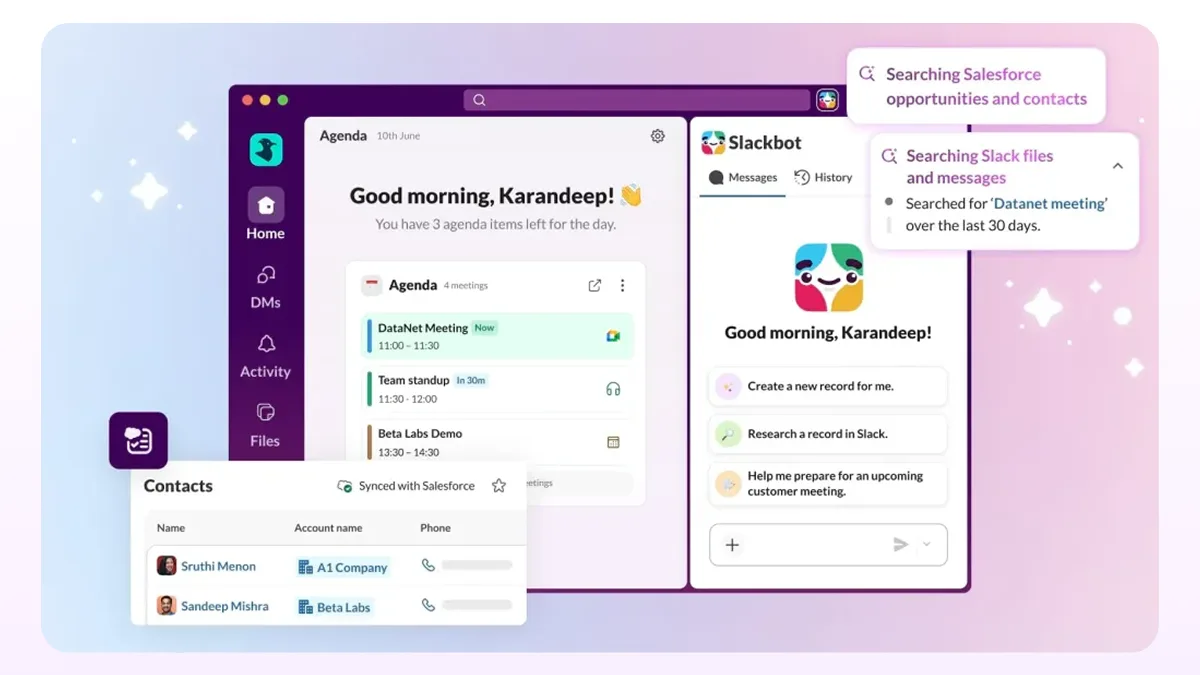
With Slack CRM, manage customers right where your team already works – no new tools, no switching between platforms. Your personal AI agent can capture contacts, track deal progress and prep what you need with a simple prompt – directly in Slack.

Here’s what Slack CRM can do for your business:

  • Capture leads instantly
  • Manage deals in conversations
  • Let AI do the busywork
  • Close deals faster

Introducing Slack CRM for Growing Businesses

Start with your first CRM – simple, fast, and cost-effective

Start with your first CRM – simple, fast, and cost-effective

Error: Contact form not found.

The post Introducing Slack CRM for Growing Businesses appeared first on Tech Research Online.

Questions to Get to Know Someone


questions-to-get-to- know
magnific

Whether you are meeting someone for the first time, building stronger friendships, networking professionally, starting a relationship, or simply trying to avoid awkward silence, asking the right questions can transform ordinary conversations into meaningful connections.

Good conversations go beyond small talk. Thoughtful questions help reveal personalities, values, experiences, dreams, and perspectives. They encourage openness and create opportunities for genuine interaction. The right question at the right moment can uncover shared interests and build trust naturally.

If you are looking for questions to get to know someone, this guide includes 100 conversation starters organized by category. From fun icebreakers and deep questions to dating prompts and workplace conversations, these ideas can help create stronger and more engaging interactions.

 Why Are Questions Important for Building Connections?

Questions create opportunities for meaningful conversations.

Asking thoughtful questions shows curiosity and interest in another person. Good questions help move discussions beyond surface-level topics and encourage authentic interaction.

People often remember how conversations made them feel more than the specific topics discussed.

Key Takeaways

  • Strong questions create stronger conversations.
  • Open-ended questions usually lead to deeper answers.
  • Different settings require different conversation styles.
  • Fun questions reduce awkwardness.
  • Personal questions should be asked respectfully.
  • Listening matters as much as asking.
  • Genuine curiosity improves social connection.
  • Meaningful conversations help build trust.

What Makes a Good “Get to Know You” Question?

Not all questions create engaging conversations.

The best questions are:

  • Open-ended rather than yes-or-no
  • Easy to answer
  • Natural and conversational
  • Appropriate for the setting
  • Capable of creating follow-up discussion

Simple questions often create the most memorable conversations.

Icebreaker Questions

These questions work well when meeting someone for the first time.

  1. What is your favorite way to spend a weekend?
  2. What is one hobby you wish you had more time for?
  3. What was your dream job as a child?
  4. Coffee or tea?
  5. What is your favorite movie of all time?
  6. If you could instantly learn a new skill, what would it be?
  7. What place do you want to visit someday?
  8. What song do you never get tired of hearing?
  9. What food could you eat every week?
  10. What is your favorite season and why?

Fun Questions to Get to Know Someone

Humor often helps conversations flow naturally.

  1. If animals could talk, which would be funniest?
  2. What fictional world would you want to live in?
  3. What strange talent do you have?
  4. What superpower would you choose?
  5. If you won a million dollars tomorrow, what would you buy first?
  6. What would your reality TV show be called?
  7. What is your guilty pleasure show?
  8. What weird food combinations do you enjoy?
  9. What celebrity would play you in a movie?
  10. What would your dream vacation look like?

Deep Questions for Meaningful Conversations

These questions help move beyond surface-level discussions.

  1. What life lesson took you the longest to learn?
  2. What motivates you most?
  3. What accomplishment are you proudest of?
  4. What does success mean to you?
  5. Who influenced your life most?
  6. What would you tell your younger self?
  7. What are you grateful for today?
  8. What challenge changed your perspective?
  9. What is something people misunderstand about you?
  10. What personal value matters most to you?

Questions for New Friendships

Making friends often starts with shared interests.

  1. What do you enjoy doing after work?
  2. What type of music do you like?
  3. What is your ideal day off?
  4. Do you enjoy traveling?
  5. What hobbies are you currently into?
  6. What TV series are you watching?
  7. Morning person or night owl?
  8. What activity always improves your mood?
  9. What would your perfect weekend include?
  10. What do you enjoy learning about?

Questions for Dating and Relationships

Conversation can build emotional connection.

  1. What qualities matter most in relationships?
  2. What makes you feel appreciated?
  3. What is your idea of a perfect date?
  4. What personality trait attracts you?
  5. What is your love language?
  6. What makes someone trustworthy?
  7. What relationship advice do you believe?
  8. What romantic gesture means the most to you?
  9. What are your long-term goals?
  10. What does happiness look like to you?

Professional Networking Questions

These questions work well in business environments.

  1. How did you get into your field?
  2. What career advice changed your perspective?
  3. What skill has helped you most professionally?
  4. What project excited you recently?
  5. What trends interest you in your industry?
  6. What do you enjoy most about your work?
  7. What professional challenge taught you something valuable?
  8. Who inspired your career path?
  9. What career goals are you pursuing?
  10. What does success look like for you professionally?

Questions About Personal Interests

  1. What book impacted you most?
  2. What podcast do you recommend?
  3. What app do you use most?
  4. What hobby surprised you?
  5. What topic could you talk about for hours?
  6. What talent would you love to develop?
  7. What is your favorite way to relax?
  8. What motivates you creatively?
  9. What new thing have you tried recently?
  10. What inspires you?

Random Questions That Spark Great Conversations

  1. If time travel existed, where would you go?
  2. What would your dream house include?
  3. What would you rename yourself?
  4. What fictional character do you relate to?
  5. What would your autobiography be called?
  6. What would you do with unlimited free time?
  7. What job would you try for one day?
  8. What talent would you borrow from someone?
  9. What invention would improve life?
  10. What would your perfect day look like?

Thought-Provoking Questions

  1. What matters more: happiness or success?
  2. Do people change significantly?
  3. What does friendship mean to you?
  4. What is one thing society values too much?
  5. What makes life meaningful?
  6. Is failure necessary for growth?
  7. What do you wish people understood better?
  8. What motivates kindness?
  9. What personal habit changed your life?
  10. What advice do people ignore too often?

Bonus Conversation Starters

  1. What food represents your personality?
  2. What habit are you trying to build?
  3. What app could you not live without?
  4. What trend do you secretly enjoy?
  5. What destination tops your travel list?
  6. What would your dream business be?
  7. What small thing makes your day better?
  8. What makes you laugh immediately?
  9. What would you master instantly?
  10. What memory always makes you smile?

Expert Tip

Conversation experts often recommend focusing less on asking many questions and more on creating meaningful follow-up discussions.

People usually appreciate curiosity that feels genuine rather than scripted. Listening carefully often matters more than having perfect questions prepared.

Common Mistakes During Conversations

Avoid these habits:

  • Asking too many questions rapidly
  • Interrupting answers
  • Turning conversations into interviews
  • Asking overly personal questions too early
  • Not actively listening
  • Dominating discussions

Balance creates more natural interactions.

Conclusion

The right questions can turn ordinary conversations into memorable experiences. Whether you are meeting a friend, coworker, date, or business contact, asking the right questions to get to know someone helps reveal personalities and strengthen connections.

Great conversations rarely happen because of perfect words. They happen because of curiosity, listening, and genuine interest.

FAQs

What are good questions to get to know someone?

Good questions explore interests, experiences, goals, values, and personality. Open-ended questions often create better conversations.

What questions should I ask on a first meeting?

Start with light topics such as hobbies, favorite activities, travel, or entertainment interests.

How do I avoid awkward conversations?

Ask open-ended questions, listen carefully, and use follow-up questions naturally.

Are deep questions good early in conversations?

Deep questions can work, but timing matters. Start with lighter topics before discussing more personal subjects.

Why do conversation questions matter?

Questions help build trust, reveal shared interests, and create stronger personal or professional relationships.

Find a Home-Based Business to Start-Up >>> Hundreds of Business Listings.

Android XR Is Finally Starting To Feel Real


Last year at Google I/O, we got a promising, if frustratingly limited, look at Android XR. At this year’s event, the company confirmed that the first glasses from Warby Parker and Gentle Monster are finally coming later this year.

Those frames are still under wraps, though we got a bit of a preview during the I/O keynote. But Google’s developer conference did, at least, give us a much clearer picture of how its smart glasses will work. Given that Meta has a years-long headstart, Google will have a lot to prove. But despite being almost embarrassingly late to the smart glasses game, Google has a few significant advantages. And, after trying out the latest Android XR glasses, I suspect at least some people will prefer these over Meta’s Ray-Ban shades.

The glasses I demoed were not the branded frames briefly shown off during the keynote. They were “reference hardware” that Google uses for its own internal development. These glasses also had a built-in display, unlike the Warby Parker and Gentle Monster specs, which will be audio-only. But they didn’t really look or feel like a prototype either. While not quite as polished as my Ray-Ban Meta frames, they weren’t overly thick or nerdy looking. And they felt much lighter than the extra chunky Meta Ray-Ban Display frames.

The display setup is similar to the prototype I saw last year, with a single window over the right lens. On the reference hardware, it had a 20-degree field of view, though Google was quick to point out that specific specs could change.

While the display was impressive — it was every bit as crisp and bright as the Meta equivalent — it was obvious that even the audio-only Android XR glasses could have a big advantage over Meta and other would-be rivals. Namely, that Google has been able to integrate its own apps and, yes, Gemini into the frames in a way that seems incredibly useful.

For example, using Google Translate was much more seamless than my experience with Meta’s glasses. I was able to move between a Google rep speaking Spanish and my colleague Igor Bonifacic speaking Serbian and the glasses kept the translation going without interruption. It also adeptly ignored the people around me speaking English, and only showed a real-time translation of what was being said in a foreign language. There probably aren’t that many real-life situations when you would need to move between multiple languages inside of the same conversation, but the fact that it was possible underscores Google’s advantage.

While I’ve generally been impressed with Meta’s AI glasses’ translation abilities, you can only do one language at a time. You also need to download the language to your phone ahead of time, which can make spur of the moment translations tricky.

The non-display glasses will also still benefit from multimodal capabilities, which rely on the onboard cameras and Gemini to surface information based on your surroundings. I was able to look at a recipe and ask Gemini to add the ingredients to my shopping list on Google Keep. Gemini actually briefly struggled with the command, but I didn’t have to stop and start over. I kept speaking and it was able to adjust on the fly.

I’ve often complained that one of the biggest drawbacks of Meta’s glasses is that they work with relatively few third-party apps. While Meta’s working on fixing that, for now they’re great if you want to read WhatsApp messages or Instagram DMs, but there aren’t as many options outside of the company’s ecosystem. Android XR may also be heavily reliant on Google’s own ecosystem, at least for now, but being able to access Maps, Gmail and Keep feels much more practical to my everyday life.

Maps in particular could be especially useful. In my latest demo, I was once again able to get walking directions in the display, alongside a little map view when looking down towards the ground. The audio-only XR glasses won’t have the benefit of a visual guide, but Google will still be able to provide walking directions via audio cues. You can also look at restaurants and businesses around you and ask Gemini for reviews and information. I’ve long thought that travel is one of the best use cases for smartglasses. The addition of Google Maps data is a real advantage, especially when you think about combining that with other features like real-time translations and navigation.

I still have some unanswered questions about how all this will work when it’s in a pair of glasses people can actually buy. And Google still hasn’t revealed specs or pricing for the consumer version of these glasses. But there’s already a lot to look forward to.

Dwarf Eats Mountain Free Download (v1.0.0.2)


Dwarf Eats Mountain Preinstalled Worldofpcgames

Dwarf Eats Mountain Direct Download:

Dwarves hunger for gold, and no mountain shall stand in their way! Mine riches, unearth artifacts, and upgrade your dwarves to devour ever-bigger peaks in this whimsical incremental game.

Dwarf Eats Mountain is a strategic incremental game about devouring mountains for gold. Hire dwarves, deploy war machines, and collect powerful artifacts to build absurd synergies and grow faster each run.

Hurting the mountain physically (and emotionally) is only half the battle—you still have to safely haul the gold home. That perilous job falls to the Runners, who weave through falling rocks, risking their beards to feed the Great Maw! But beware—the Great Mother won’t give up her treasure easily. The more damage your greedy dwarves deal to the mountain, the more calamities it unleashes upon the wobbling beards below! Pandoras Toybox

Balance mining with hauling your gold home—before the sky falls on your head.

Master the dwarven ways of treasure extraction!
This game is about making numbers go up, but the way you do that is open to your interpretation and ingenuity. At your fingertips:

  • Many buildings and dwarves, each with various strengths and weaknesses, such as dynamite throwers, ballistas, flamers, laser cannons, spelunkers, runesmiths, brewmasters, bulldozers, gyrocopters and more!
  • Acquire countless upgrades and cast active rituals to buff your dwarves and their machines
  • Collect 120+ ancient artifacts and display them in your gallery, each with build-shaping effects
  • Unlock 96+ prestige upgrades to replay, accelerate progress, and discover new synergies
  • Spend rare resources like mithril and mountain souls on tough choices

Features and System Requirements:

A Mythic Diablo 4 Discovery Just Upended Every Top Build


There is now proof that Diablo 4’s most powerful and rare items, Mythic Uniques, can appear in Charm form, and it’s sending the game’s community into a theory-crafting frenzy.

Diablo 4’s Lord of Hatred expansion released last month and completely retooled how building a character works in Blizzard’s ARPG with the introduction of the Talisman and Charms. Charms are essentially passive bonuses players can equip separate from armor and weapons, allowing for even more build customization through additional effects and even set bonuses.

It was known that every Unique item in the game could be found as a Charm (or even created using the Horadric Cube), granting access to the often build-defining affixes Uniques possess without having to sacrifice a gear slot. What wasn’t known was that there are actually Charm versions of the best items in all of Diablo 4–Mythic Uniques like Heir of Perdition.

Continue Reading at GameSpot

Google I/O 2026 live updates: Biggest news on Android, Gemini AI, XR, and more we’re seeing


By Kerry Wan, Editor in Chief / May 18

Ahead of Google I/O, the company held its annual “The Android Show” last week, announcing a slew of Android and Chrome features set to roll out later this year. 

The news included Gemini Intelligence, which refers to more advanced AI capabilities such as background task automation and enhanced context tools, more accessible voice inputs, AI-generated widgets, and general video improvements in Android 17.

Also: First look at Googlebook: A premium Chromebook alternative for Android users

Google also announced a new series of laptops called Googlebook, which is separate from Chromebook and Google Books. 

Googlebook is described as more premium, with a more natural integration with Android phones than competing systems. That includes better app mirroring, faster file transferring across different services, and intuitive Gemini tools.

That all said, if Google does announce more Android news at I/O, expect it to be less than usual.


Microsoft announces plans to give you more control over the Windows 11 taskbar and Start menu


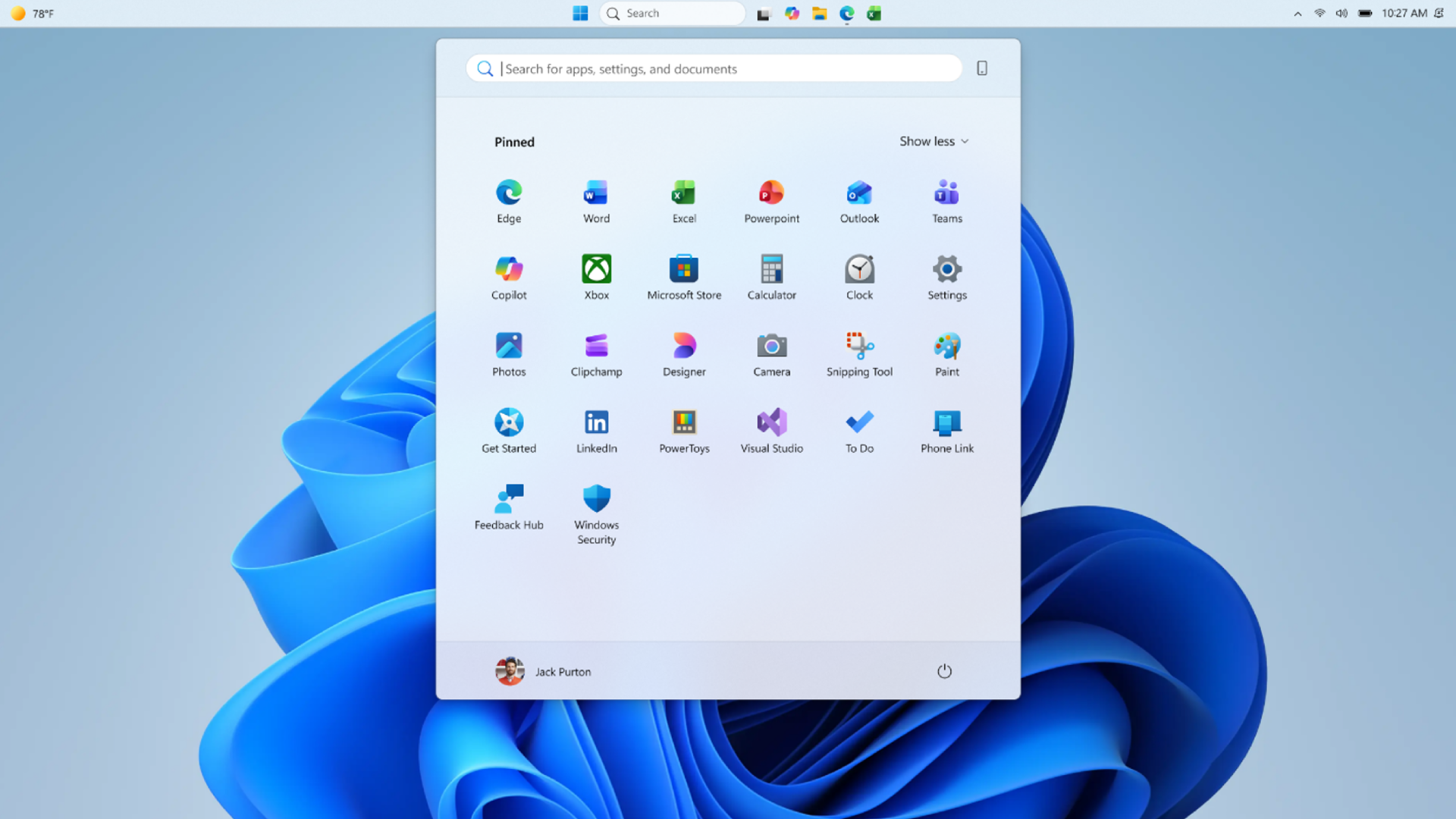
Microsoft has been leaning hard into the idea that what matters with Windows is getting the basics right, as opposed to bolting on more AI gunk. An early example of that drive is a recent announcement involving more configurability for the taskbar and Start menu in Windows 11.

In a blog post titled, “Improving Windows quality: Making Taskbar and Start more personal,” Microsoft kicks off with the taskbar, which is “where your PC experience comes to life” according to the post.

Clarifai Compute Orchestration and Reasoning Engine Joins Nebius


Social card - Clarifai Nebius
Today, we are thrilled to announce a monumental milestone in Clarifai’s journey: we have entered into an agreement for Nebius (NASDAQ: NBIS), the AI cloud company, to license our core engineering and research talent and license our AI inference and compute orchestration intellectual property.

For over a decade, we at Clarifai were obsessed with building the ultimate software layer for AI. As the industry’s fastest AI inference and reasoning platform on GPUs, we focused on system-level inference optimization, empowering developers with seamless compute orchestration to run models cost-effectively. Now, we take our technology to the biggest stage possible.

Why We Are Thrilled to Join Nebius

When looking at the future of AI, it is obvious that delivering efficient execution at scale requires a seamless marriage of model optimization, software design and compute orchestration.

Here is why our team is incredibly energized about this transition:

  • Building the 4th Hyperscaler: Nebius is on a mission to become the world’s fourth hyperscaler, aiming to offer more compute to external customers than any of the existing cloud giants. By joining forces, our team becomes a crucial ingredient in extending Nebius from the leading AI infrastructure company into a full-stack AI powerhouse.
  • Better Together: Nebius builds their own servers, allowing them to control their technical roadmap, margins, and destiny. Combining their world-class infrastructure and global capacity with our compute orchestration technology will allow us to co-create a fully optimized hardware and software stack for unmatched performance.
  • Elite Pedigree and Culture: Nebius is led by a world-class team, including CEO Arkady Volozh, who possesses a long-term vision to win in the AI space. Our team has seen firsthand that their culture is high-energy, mission-driven, and built on a “You Know Best” philosophy that empowers employees to do what is right without unnecessary red tape.
  • Keeping the Band Together: Nebius didn’t just want our IP; they explicitly asked for the people who built it. This means we get to keep our core team together and continue working on what we do best, seamlessly transitioning our momentum into this new endeavor.

Supercharging the Nebius Token Factory

Our licensing agreement is set to strengthen directly the Nebius Token Factory to create a complete, full-stack inference platform. While Nebius’s recent acquisition of Eigen AI focuses on optimizing at the model level, Clarifai optimizes the system, creating the end-to-end infrastructure required to run complex AI models reliably in production.

Our performance optimization will compete with the industry’s highest speeds, enhance compute orchestration to open the cloud to a broader customer base and push the boundaries of Nebus Token Factory.

A New Era of Frontier AI Research

As part of this transition, I am incredibly proud to share that I will be taking on the role of SVP Research at Nebius. I will be leading a dedicated new research unit focused on frontier AI innovations, including agentic reasoning, multimodal world models, token efficiency, and long-term memory.

The future of AI—from advanced agentic systems to frontier models—depends entirely on the infrastructure powering it. By bringing together our proven expertise in training state of the art AI models with Nebius’s elite team, we are uniquely positioned to become one of the strongest combined AI teams on the planet.

The scope of the agreement is limited to Clarifai’s modern AI inference and compute orchestration technology. It does not include Clarifai’s legacy computer vision models. The Clarifai brand or trademark, or any intellectual property, products, services, or commercial arrangements associated with Clarifai’s US government and defense programs.

A Sincere Thank You to Our Team and Community

As we embark on this new chapter, I want to take a moment to thank the incredible team at Clarifai. Building this platform for over a decade was an amazing journey only made possible by the dedication, brilliance, and hard work of every single person who was a part of this company. While not everyone will be transitioning with us to Nebius, I am profoundly grateful for the foundational contributions each of you has made. Your work has left an indelible mark on the AI industry.

I want to personally thank you for everything you have done to get us to this milestone.

We also want to thank our amazing community, partners, and customers who have supported Clarifai’s vision from the very beginning. We can’t wait to embark on this rocket ship and build the ultimate foundation for the next decade of AI inference.

Onward!

Matthew Zeiler, Ph.D. Founder and CEO, Clarifai