Not all TVs are created equal. If you’ve decided to go all in on a fancy TV, we’ve found a few options that will ease the blow to your bank account. That’s not to say they’re cheap — these TVs carry steep (dare I say ridiculous) price tags. But a deal is a deal, right?
Whether you’re looking for a TV you can watch outdoors, a truly massive screen, or a gorgeous display that’s great for gaming, we’ve rounded up the top three TV deals heading into this weekend. Several other sizes of each of these TVs are also on sale, so be sure to click through on the product pages for more details.
$5,430.21 at Amazon
$6,497.99 Save $1,067.78
Why we like it
A specialized TV designed for outdoor viewing, Samsung’s The Terrace is in a class of its own. Even in bright daylight, this 75-inch QLED 4K TV will look sharp and cut through the glare. So you can watch sports while tending to your garden or catch up on your favorite shows while enjoying some sunshine. It also boasts an IP56 weatherproof rating to protect it from rain and dust. It’s truly the ultimate patio upgrade. There’s only a few left in stock, so if you’re in the market and can afford it, we recommend adding it to your cart ASAP.
$3,498 at Amazon
$4,999.99 Save $1,501.99
Why we like it
Sony’s 83-inch Bravia XR A80L is an older model from 2023, but it’s still a great pick — especially since it’s currently over $1,500 off. Mashable’s UK team named it one of the best TVs for gaming, particularly for PS5. It boasts features like Auto HDR Tone Mapping, Auto Genre Picture Mode, Variable Refresh Rate, Auto Low Latency Mode, and a dedicated gaming menu for customization. It’s also selling out quick, with only a few left in stock at Amazon at the time of writing. In other words, act fast if you want to secure the deal.
Mashable Deals
By signing up, you agree to receive recurring automated SMS marketing messages from Mashable Deals at the number provided. Msg and data rates may apply. Up to 2 messages/day. Reply STOP to opt out, HELP for help. Consent is not a condition of purchase. See our Privacy Policy and Terms of Use.
$19,996.99 at Amazon
$24,996.99 Save $5,000
Why we like it
Mashable’s sister site PCMag has tested hundreds of TVs with highly specialized equipment and named the LG G5 evo “one of the most gorgeous TVs you can buy.” It’s incredibly bright, with the wide and accurate colors, and a “phenomenal picture.” It easily took home their Editors’ Choice award for the best OLED TV last year. The one downfall? It’s wildly expensive. This massive 97-inch LG G5 OLED TV is basically the price of a new car, but if you can afford it, it’s actually on sale for its best price to date (believe it or not). We don’t usually recommend buying from a third-party seller at Amazon, but it’s technically $3 cheaper than Best Buy and LG’s website, making it the best deal.
An architectural visualization, more specifically, a rendering based on a BIM file, isn’t just a pretty picture to please the eyes. In the context of a large-scale industrial project, such as the construction of a brand-new production facility or a major renovation of an old factory, a visualization is supposed to be an accurate depiction of the structure and a precise representation of all the manufacturing and utility systems in the building. The visualization also serves as the foundation for crucial decisions, such as stakeholder approvals and budget allocations.
3D rendering services and data-rich BIM files walk hand-in-hand to give a better understanding of the factory layout along with all its equipment and machinery, offering a level of insight that no conventional 2D blueprint can deliver. The ability to get a clear grasp of the spatial relationship of the entire building and an automated clash detection prior to construction improves the chances of efficient design, including for future-proofing purposes.
🚀 Table of contents
Why production facility visualization matters
High-fidelity visualization requires familiarity with the works of architectural design and a strong knack for artistic touches. Similarly, a comprehensive BIM file needs 3D modeling proficiency and industry knowledge. All those might seem hard to come by in this day and age, but not in Cad Crowd. As a freelancing platform specializing in the AEC industry, Cad Crowd acts like a massive hub that connects clients of all backgrounds with the most capable industrial project visualization services. And when the rendering and BIM file are left in the hands of the platform’s best-qualified professionals, expect nothing less than the following 10 advantages.
Early detection of errors
Let’s start with the most obvious, an advantage that photorealistic rendering services can give to architectural projects of any kind: pre-construction error detection. Construction work, whether a brand-new building or a renovation, is often an expensive undertaking, and even more so if you’re talking about such a complex structure as a factory. A manufacturing facility isn’t supposed to be luxurious or fancy, but designed to be as efficient as possible and conducive to productivity. And the truth of the matter is that ensuring efficiency often requires a pretty substantial upfront investment. Every mistake, no matter how small it may seem, can swell the budget to an unfriendly extent.
Factories are most likely dense environments. In addition to all the structural support steel, chances are you’ll also find heavy machinery, complex utility grids, overhead cranes, various office spaces, and sometimes a massive warehouse under the same roof. Everything has to coexist and fit in a relatively limited space. A traditional 2D blueprint can probably represent the entire factory, along with all the equipment and structural elements, on one big page. It’s practical, but the visualization format makes it easy to overlook a “clash,” for example, a load-bearing beam that obstructs a stretch of fire sprinkler pipe. Because you can’t clearly see the mistake on a two-dimensional blueprint, the error is only discovered during the construction phase. The next thing you know, the project is put on hold until you find a workable solution.
An architectural rendering, especially when integrated with BIM (Building Information Modeling), allows you to run an automated clash detection before construction begins. A clash can be many things, from a simple mismatch between logistics and construction schedules to poor clearances and object interference.
In a complete render, all the components of the factory are properly visualized as interconnected 3D objects to give a clear view of how they interact with each other. The result is little to no risk of a stop-work order. Any spatial conflict in the construction plan is identifiable in the BIM file when the project is still in the digital phase, and corrections are nowhere as resource-demanding as onsite modifications. Since most construction projects suffer from budget overrun due to change orders, architectural visualization services make things cost-efficient. Also, it’s possible to “virtually” install any equipment on the factory floor in the rendering, allowing you to verify that everything has enough clearance for operation and maintenance.
Still on the subject of clash detection, a high-quality factory rendering allows for a comprehensive planning of the facility as a whole rather than as separate systems combined into one. Other than that, you’ll see not only a flat image as if you’re looking at a floor plan, but the spatial relationships among all the objects. And this is particularly important in the case of MEP (Mechanical, Electrical, and Plumbing) systems.
A manufacturing facility is, in essence, one big machine housed in an extensive structure. And like every machine, they need a proper electrical system, water inlets and outlets configuration, chemical piping, specialized HVAC components installation, and compressed air circulation, among other things. Just about everything is substantially more complex than what you typically find in residential buildings. Designing all these systems in isolation increases the likelihood of clashes. You don’t want to find that the ventilation duct is planned to be installed exactly at the same coordinate as a crane rail or structural steel support, leading to an untimely delay that costs thousands of dollars. The problem is that you can’t just move the parts to another spot because it may cause another series of clashes. Chances are, you have to dismantle a lot of interconnected parts and redo the process.
One of the best ways to ensure construction efficiency is zero conflict. Once again, architectural BIM services emerge as a reliable savior, providing a sort of “X-ray” view of the factory plan. BIM may not produce a photography-like visualization, but it can give you a clear outline of the building’s internal systems, which in turn allows for an overview of how the ducts, wiring, and piping integrate with the facility itself.
Stakeholders’ investment approval
Constructing a factory is an industrial project, and that’s capital-intensive. It may take tens, if not hundreds of millions of dollars, to build a new manufacturing facility capable of high-volume mass production. Like the vast majority of big industrial projects, it takes funding and approval by multiple stakeholders, which may include individual venture capitalists, the company’s boards of directors, or perhaps government agencies.
One of the biggest challenges in securing the approvals of investors isn’t the technicalities of the construction itself, but the presentation. Not every stakeholder is trained to read a blueprint in the same way that an architect or engineer is. As a matter of fact, most people struggle to visualize a fairly simple 2D floor plan, let alone the construction plan of a gargantuan factory from a flat drawing.
You probably won’t need a sophisticated BIM file for this, as a photorealistic rendering would suffice to communicate a design for the less-technical audience. Throw in an animated walkthrough for the immersion effect, and you have a complete package of high-quality visualization to transform an otherwise complex architectural plan into an easily understandable view of a design. Add complex details when necessary, such as a showcase of the warehouse workflow or production line, for an extra touch of realism.
Investors are more likely to approve a big project when they’re confident in the design. Photorealistic rendering affords them the opportunity to take a glance at the foreseeable future when the construction reaches its final stage, and the factory building finally stands with all its industrial prowess. Visual clarity reduces the sense of risk and, therefore, speeds up the approval cycle for manufacturing design companies.
Safety compliance simulation
A factory is designed for productivity and efficiency, without sacrificing the health and safety of all the people populating the facility. Health and safety aren’t just moral obligations, but mandatory (as in, they’re required by law) and often have everything to do with financial concerns because non-compliance is a big liability. The problem is that most safety-related equipment and designs are built based on various “what if” scenarios, such as in the cases of fire, potential workplace injuries, occupational burnout, machinery-induced noise pollution, and more.
Static two-dimensional images cannot reliably visualize the hypothetical scenarios in which accidents happen. Photorealistic rendering, on the other hand, can make use of animation to showcase “imagined” incidents where individuals’ health and safety are at risk in work environments. A 3D rendering expert may frame the animation in such a way that the audience can see from the perspective of an employee or a worker on the factory floor to understand the situation better. The simulation should be helpful for sightline analysis, emergency response training, and ergonomic optimization.
Efficient logistics
Forming the foundation of productivity in a manufacturing facility is a well-planned workflow, which can only happen when backed by efficient logistics. Think of it this way: if a forklift has to travel just one meter longer than necessary for every journey back and forth, the factory loses money in fuel, tires, maintenance, and time. A crane that takes a few seconds longer to carry raw material from the warehouse to the production line may cause a chain reaction of delay across the factory floor, leading to poor productivity and a loss of potential profit.
There’s no easy way to perceive the idea of congestion with static two-dimensional blueprints, such as when movements (whether of humans or machines) are hindered by some obstacles. Blueprints can’t visualize the possibility of crowding in heavy-traffic lanes during busy hours on the factory floor.
Animated rendering removes all the guesswork. By formatting the visualization as a spaghetti model (often used to explain the flow path of storms during hurricane season), you should be able to see with clarity how all the forklifts, cranes, trucks, materials, finished products, and people move about inside the facility. This is how you identify potential “traffic jams” or bottlenecks on the factory floor and plan for buffer spaces wherever necessary.
Just about every construction project appears to always happen in a rush. Heavy construction vehicles carry raw materials to the next processing station, while workers stay busy installing all the parts and assemblies in a seemingly random fashion. They’re all over the site, working on rebars with the help of rebar design services, steel structural supports, concrete, wooden beams, nuts and bolts, roofing components, and utility systems. But what looks like chaos really is a managed project, where everyone has a well-defined job description and carries out their duties as expected.
Another thing to mention is that long before the construction happens, there is usually a long process for design proposals, reviews, verifications, bidding, and approvals. The old way of doing architectural projects is linear and often slow. In the event of misunderstanding between the architect, engineer, or contractor, the construction schedule gets pushed back, and this adds to the project completion timeline. There’s also the problem with creating pages of 2D drafts just to plan for one specific location on the site. Each draft must be properly evaluated and approved by the stakeholders before the project can move forward. So if they have to do the same process dozens of times throughout the entire project, it can take months, if not years, to get the job done.
This is not to suggest that the old way is bad in any way. After all, people have been building production facilities for centuries before the proliferation of CAD or 3D rendering. That said, modern technologies, including photorealistic visualization and BIM, can improve efficiency a great deal. In the case of BIM, for example, the entire project plan is contained within a single file stored in a centralized database accessible by all stakeholders. Architects, engineers, and designers can update the plan simultaneously, and every modification is visible to everyone who has access to the file. Design reviews and approvals have become streamlined processes that happen in real-time.
A BIM file contains not only an imagery of a structure, but detailed specifications of the materials, dimensions, geometries, tolerances, installation instructions, and manufacturer information of every component. The contractors understand the assignments well, component fabricators know exactly what to build, and the investors enjoy the comfort of knowing where the money goes. It even has scheduling information with automated clash detection to avoid conflicts with the construction timeline. Thanks to BIM, the entire project becomes predictable, more manageable, and highly efficient to expedite construction. And the sooner you get the facility up and running, the quicker you get to kick off production.
Thermal and lighting analysis
Every manufacturing facility should be well-lit in all areas. Great visibility is even more important in the actual production line. But it shouldn’t be all about installing the brightest lamps every few meters throughout the factory because they also generate heat. LEDs produce much less heat than the conventional incandescent type, so they’re a preferable choice for manufacturing design experts. If you have to use hundreds of LEDs, however, the increase in temperature would still be pretty noticeable. Let’s not forget that machinery, whether internal combustion or electric, also generates heat.
A lot of manufacturing facilities suffer from either hot zones or dark spots (sometimes both) due to poor air circulation, inefficient positioning of skylights, or improper placement of heat-generating equipment. This might not have been an issue in the old days when no better option existed, but now that architects and engineers are armed with modern rendering engines, an uncomfortable work environment and poor machine longevity because of excessive heat should be problems of the past. Advanced rendering engines offer many useful features for this purpose, such as Radiosity (which is an application of Finite Element Analysis) and Ray Tracing, to predict with great accuracy how light behaves in an environment to minimize dark spots. ThermoAnalytics can also visualize thermal data in high-fidelity graphics to help you get rid of hot zones. l
It’s worth mentioning that both Ray Tracing and Radiosity are capable of simulating natural lights as well. The visualization showcases the areas inside the facility that might be penetrated by natural light during daytime, so the engineers can then use the data to reduce/optimize the use of LEDs for energy efficiency. At the same time, the data gathered from thermal analysis reveals a clear view of how heat rises and accumulates in different spots, which offers an insight into how the HVAC system may mitigate the issue.
Environmental impact study
Anybody who’s been in the construction business, especially on industrial projects, is perhaps perfectly aware of the whole “NIMBYism” movement. It’s actually a pretty common phenomenon where residents oppose a new development in their local area, mostly out of fear that the new industrial infrastructure and industrial design services will negatively affect the surrounding environment. Sometimes, they also express concern for the possibility of noise pollution, an increase in traffic jams, or a decrease in their property value.
It can be difficult to dismiss the opposition unless you can provide an easy-to-understand visualization to inform the protesters that none of those concerns are actually true. Photorealistic renderings, both static and animated, give a clear explanation about how the factory handles its byproduct (if any), treats wastewater, implements a government-approved energy efficiency system, and manages noise. An aerial rendering of the facility should showcase the presence of green buffer zones, too. An accurate depiction of the facility and how it affects the environment fosters trust from the nearby community and helps de-escalate tensions in times of protest.
People might not be entirely interested in the actual environmental study conducted on the facility and what the data can tell them. However, you can produce some renderings based on that data to try to convince the community that everything is safe and runs in accordance with the regulations.
A good number of industrial constructions aren’t actually greenfield projects (facilities built from scratch), but brownfield (renovations, retrofitting, or expansions). When old buildings are supposed to integrate with modern equipment and utilities, many things can go wrong, from incompatibility issues that lead to performance inefficiency or even weakened structural strength. The existing pillars, low ceilings, waste treatment systems, old electrical wiring, and even the roof structure can be engineering nightmares.
Photorealistic 3D visualization services can help, for example, by converting the old blueprint into a 3D model or BIM file. However, an old building might have undergone multiple changes over the years, so the original construction documents are no longer accurate. Let’s not forget that many of the structural components suffer from degradation as well. Another option is LiDAR, which basically scans the old facility as it stands today and transforms the data into a 3D model. All of these require manual inspection, but modern visualizations are still better than relying on outdated blueprints.
Once you have the 3D models ready, planning for a brownfield project is no longer as complex as it used to be. Don’t get this wrong: Brownfield is almost always more difficult than greenfield, but at least the visualization helps you draft the project in a virtual environment, allowing for greater efficiency and accuracy. At the very least, the digital models afford the architects an opportunity to experiment with different factory floor layouts that facilitate efficient placements and installations of new production tools, heavy machinery, electrical wiring, lighting, HVAC components, and even routing for AGVs. The idea is to create a perfect fit, with zero interference, no compatibility issues, and enough spatial tolerances.
Scalable factory
Perhaps the greatest advantage of all is that photorealistic rendering opens the door to value engineering in preparation for growth. Manufacturing facilities may start with a single production line or hands-on assembly process, but they’re constantly looking to welcome emerging technologies, such as full automation and robotics. And with the current pace of development and competition, companies have no choice but to consider such growth an impending necessity, perhaps in the next 5 or 10 years.
From the perspective of infrastructure, it only makes sense to pour some additional resources upfront to make the building more scalable, or futureproof, if you please. In other words, a manufacturing facility built today must be able to adapt to the forthcoming industrial landscapes of the foreseeable future. If you build the factory by emphasizing only its usability for the current manufacturing systems and technologies, every major upgrade to the equipment and utility systems is likely cost-prohibitive.
Accurate visualization of the current structure enables the architectural design experts and engineers to plan for a flexible infrastructure designed to undergo changes and improvements without sacrificing the present-day functionality. For instance, the visualization may show a time-lapse animation that showcases how a new production line is added while keeping the current systems intact; the installation of solar panels on top of the roof structure without disrupting workflow; the integration of automated driverless robots with the crane equipment in the warehouse to achieve lean logistics, and so forth.
The advantages of visualization services for manufacturing facilities go beyond pre-construction planning and budgeting, but reach far into scalability and futureproofing the infrastructure itself. You can even say that photorealistic rendering pushes the boundary of what’s possible with architectural drafting to allow stakeholders to have a sneak peek at the future. This will then enable them to develop a comprehensive measure and devise strategies to be prepared for every new technological development in the manufacturing sector. Although it’s actually impossible to make a perfectly accurate prediction of what the future may hold, visualization services can at least give you educated assumptions and informed estimates so that what you build today helps you gain competitive advantages in the future.
Not every factory rendering is created equal, however. As much as advanced software plays a factor in determining accuracy and overall quality, the professionals tinkering with object geometry, composition, lighting, shadows, textures, patterns, and post-processing details are the real defining factors. It takes skills, experience, and artistic touches to produce a high-quality rendering of a small-scale building, let alone a gigantic production facility.
That being said, BIM professionals and render artists capable of translating the file into photorealistic imagery remain scarce at this point. Cad Crowd is your best bet to find and connect with the right talent to get the job done. The platform places heavy emphasis on the AEC industry and is largely populated by experienced professionals of related trades, including BIM and architectural visualizations. Request a quote today.
MacKenzie Brown is the founder and CEO of Cad Crowd. With over 18 years of experience in launching and scaling platforms specializing in CAD services, product design, manufacturing, hardware, and software development, MacKenzie is a recognized authority in the engineering industry. Under his leadership, Cad Crowd serves esteemed clients like NASA, JPL, the U.S. Navy, and Fortune 500 companies, empowering innovators with access to high-quality design and engineering talent.
Today, Capcom Spotlight shared exciting news and updates for Capcom’s packed line-up of games, with a little something for everyone. We’re proud to share new info ranging from returning franchises like Monster Hunter, to completely new titles like Pragmata, and more! Read on for the details.
Hack Deeper into the Mysterious World of Pragmata
Capcom Spotlight debuted a stunning new look at the long-awaited sci-fi action-adventure game, Pragmata. Additionally, we’re happy to announce the updated release date for the game, which now lands one week earlier on April 17, 2026!
Have a look at the new trailer, which includes a look at a new friend that will help guide you while you’re in the Shelter.
Pre-order Pragmata ahead of launch on Xbox Series X|S and check out the Deluxe Edition for some extra in-game costumes, rare digital artwork, and more.
If you haven’t tried the game yet, check out the Pragmata Sketchbook Demo to try out the game’s unique mix of hacking and shooting. Be sure to complete it multiple times to uncover its secrets and different endings.
PRAGMATA Sketchbook – DEMO
CAPCOM CO., LTD.
☆☆☆☆☆ 143
★★★★★
The gameplay demo, Sketchbook, lets you try out this combat system that engages both sides of your brain, while you also get to experience what it’s like to traverse the lunar research station.
*This demo supports English and Japanese voice.
*Some in-game features may differ from the full game.
*Ray tracing is not supported on Xbox Series S.
Monster Hunter Stories 3: Twisted Reflection Launches March 13!
Monster Hunter Stories 3: Twisted Reflection arrives next week, reaching new heights for this turn-based, story-rich RPG story set in the world of Monster Hunter. Have a look at the game’s launch trailer, which delves further into the deep and dramatic story that awaits.
Two countries, twin Rathalos. One Rider and their trusted Rathalos, alongside their companions, must navigate the conflict between these two Azuria and Vermeil, all while the looming disaster of the Crystal Encroachment threatens the world.
As you get ready for launch, here’s a rundown of the various bonuses you can get. Players with save data for past Monster Hunter games can get special layered armor for the protagonist.
Monster Hunter Wilds save data – Hope Layered Armor set
Monster Hunter Stories save data – Hakum Rider Outfit
Monster Hunter Stories 2: Wings of Ruin save data – Mahana Rider Outfit
Monster Hunter Rise save data – Kamura Garb
Additionally, linking your Capcom ID account will allow you to receive the adorable Catcom Works outfit for Rudy! We’re also releasing two free cosmetic DLCs at launch: the Gold Circlet accessory for the protagonist, and the Wind Wyvern’s Friend Layered Armor for Simon.
Interested in giving the game a test ride? Try out the content packed Monster Hunter Stories 3: Twisted Reflection demo now for free and transfer your save data to the full version at launch!
Monster Hunter Stories 3: Twisted Reflection Trial Version
CAPCOM Co., Ltd.
☆☆☆☆☆ 58
★★★★★
This is the trial version of Monster Hunter Stories 3: Twisted Reflection.
You can play the beginning portion of the game for free.
Save data will transfer to the full version.
The third entry in the Monster Hunter Stories RPG series is here!
Twin Rathalos, born in a twist of fate.
Monster Hunter Stories is an RPG series set in the Monster Hunter world, where you can become a Rider, raising and bonding with your favorite monsters.
The Story
Azuria and Vermeil: two countries, on a path to destruction.
When all hope seems lost, an egg is found. Inside is a Rathalos, a species thought to be extinct.
But this quavering light of hope is quickly extinguished, giving way to the darkness of despair.
Born from the egg is not a single Rathalos, but twins, bearing the Skyscale marking that hearkens back to the disastrous civil war of 200 years prior.
The natural world teeters on the verge of destruction, with countless monster species facing extinction. In the shadow of these dark times, the flames of war rekindle.
Two countries, and two Rathalos.
A Rider and their trusted Rathalos, buffeted by the winds of fate, set out on a journey for the truth.
Online Features Revealed for Mega Man Star Force Collection
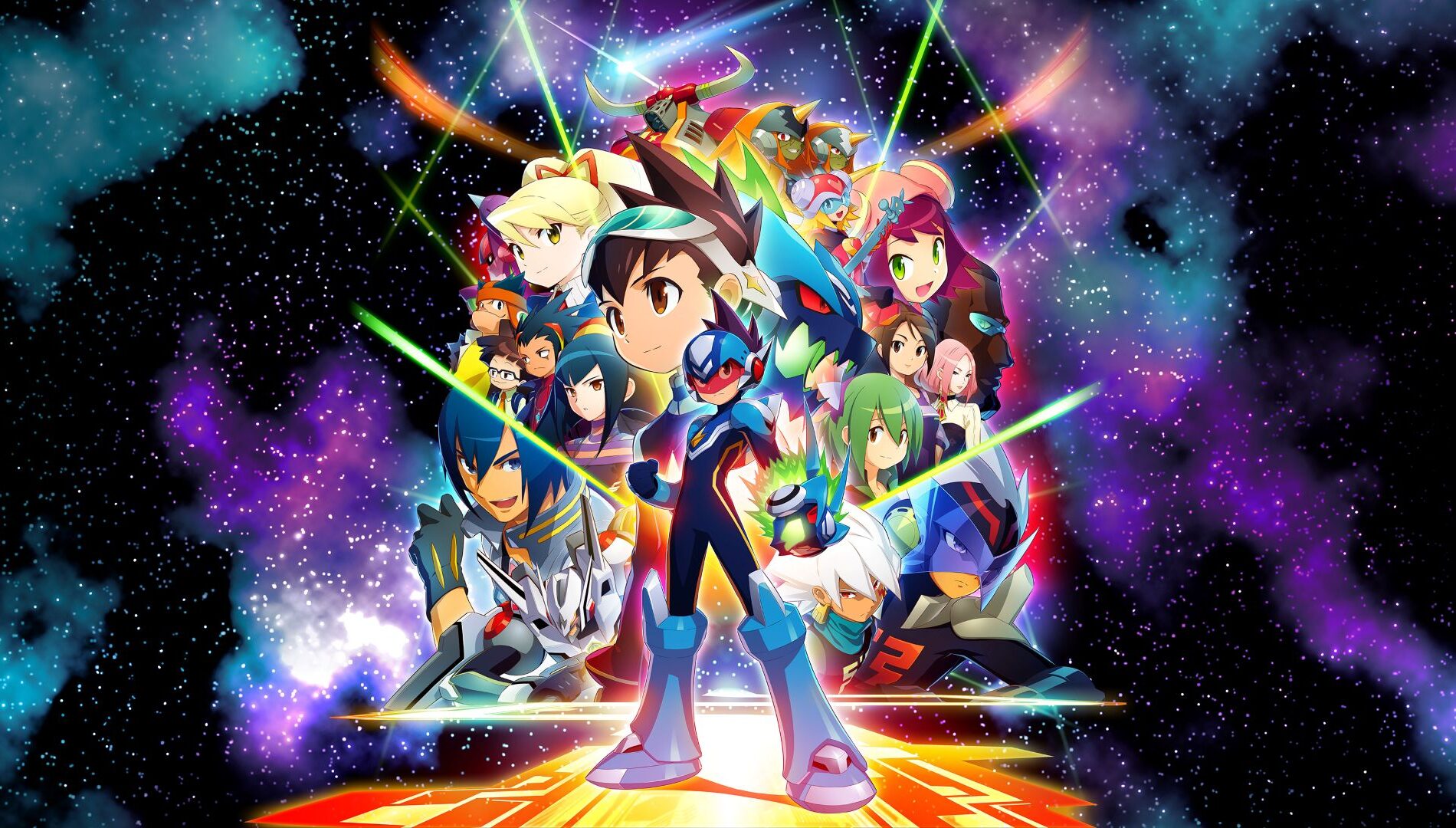
Mega Man Star Force Legacy Collection arrives on Xbox Series X|S on March 26! Capcom Spotlight showed off the collection’s new online features, including the ability to search across all three titles to find a match quickly, or choose between Friend, Casual and Ranked Match based on your preference.
Trading and the Brother List features have been improved in this collection as well. Choose a card and trade it with your partner to acquire the cards you’re looking for! With the Brother List, you can add up to one hundred Brothers per game, a big improvement over the original limit of six.
Mega Man Star Force Legacy Collection
CAPCOM CO., LTD.
☆☆☆☆☆ 7
★★★★★
$39.99
Mega Man Star Force Legacy Collection – Geo Stelar and Omega-Xis Character Model Pack Pre-order Bonus
This product includes selectable character models of Geo Stelar (casual outfit) and Omega-Xis for the Main Menu.
Special arrangements for four music tracks are also included for the Music Player.
Note: This pre-order bonus may also become available at a later date.
*This pre-order bonus is available until March 26, 2026, 23:59 (local time).
The Mega Man Star Force series, which expanded into an anime, is back in the Mega Man Star Force Legacy Collection! This collection includes seven games and additional features like a gallery of illustrations and music! Online play is also supported!
The following titles are included in the collection:
Mega Man Star Force Pegasus
Mega Man Star Force Leo
Mega Man Star Force Dragon
Mega Man Star Force 2 Zerker x Ninja
Mega Man Star Force 2 Zerker x Saurian
Mega Man Star Force 3 Black Ace
Mega Man Star Force 3 Red Joker
It is the year 220X, and the world has seen rapid advancements in Wave technology. Our protagonist, 11-year-old Geo Stelar, refuses to go to school as he mourns the disappearance of his astronaut father.
One night, Geo is at the observatory gazing at stars as he usually does. Suddenly, his Transer picks up a signal from space and he is hit with a powerful electric shock!
When he finally comes to, an alien with an electromagnetic wave body called Omega-Xis is standing over him…
Note: The toy link features found in the original versions are not supported.
Alex Makes His Entrance in Street Fighter 6 on March 17!
The dark devil himself, Alex, steps into the ring as part of Street Fighter 6 Year 3 on March 17! Alex uses pro wrestling techniques, overpowering and overwhelming opponents both in and outside of the squared circle.
Motion capture for Alex was performed by the legendary pro wrestler, Kenny Omega, adding authentic touches to his walk-out sequences, Super Arts, and more! JAM Project also contributed an original track for Alex called “Go! Alex! Hope is Born! – Alex’s Theme”! In anticipation of Alex’s release, the Alex Arrives! Fighting Pass will bring exciting content across each game mode.
Finally, the swimsuit series of outfits continue with Outfit 4 for Dee Jay and Elena, also launching alongside Alex! Even though it might not be sunny weather, these two outfits are sure to heat things up.
Street Fighter™ 6
CAPCOM CO., LTD.
☆☆☆☆☆ 1242
★★★★★
$39.99
Here comes Capcom’s newest challenger! Street Fighter™ 6 launches worldwide on June 2nd, 2023 and represents the next evolution of the series.
Powered by Capcom’s proprietary RE ENGINE, the Street Fighter 6 experience spans across three distinct game modes featuring World Tour, Fighting Ground and Battle Hub.
Diverse Roster of 18 Fighters
Play legendary masters and new fan favorites like Ryu, Chun-Li, Luke, Jamie, Kimberly and more in this latest edition with each character featuring striking new redesigns and exhilarating cinematic specials.
Dominate the Fighting Ground
Street Fighter 6 offers a highly evolved combat system with three control types – Classic, Modern and Dynamic – allowing you to quickly play to your skill level.
The new Real Time Commentary Feature adds all the hype of a competitive match as well as easy-to-understand explanations about your gameplay.
The Drive Gauge is a new system to manage your resources. Use it wisely in order to claim victory.
Explore the Streets in World Tour
Discover the meaning of strength in World Tour, an immersive, single-player story mode. Take your avatar and explore Metro City and beyond. Meet Masters who will take you under their wing and teach you their style and techniques.
Seek Rivals in the Battle Hub
The Battle Hub represents a core mode of Street Fighter 6 where players can gather and communicate, and become stronger together. Use the avatar you create in World Tour to check out cabinets on the Battle Hub floor and play against other players, or head over to the Game Center to enjoy some of Capcom’s classic arcade games.
Your path to becoming a World Warrior starts here.
Online Play
Capcom provides various online services for this game, including online-only content.
* Certain elements of this game cannot be accessed without an internet connection.
* A Capcom ID is required to use online-only content.
* For information on the services related to Capcom ID and how to use it, please visit the official Capcom ID website (https://cid.capcom.com/). Please note that there may be cases wherein use of Capcom ID is age-restricted.
* For online-only content, a separate paid membership service (Game Pass Core) is required.
* Capcom may temporarily suspend online services in the event of unforeseen circumstances.
Almost every time I add a video from Casey to the Friday Roundup, it is going to be pretty much specific to using DaVinci Resolve in some way.
More often than not it will be something to do with color correction or using Fusion.
However this week is an exception and for the average person editing their videos, I think it is a rather important exception.
A great deal of the information we receive on the subject of creating videos comes from a place of or viewpoint of marketing.
It may not seem that way on the surface but believe me, it’s there!
Most of it takes the form of presenting you and I with a technique, an effect, an editing style, a transition or any of a bunch of other things we have to be doing to be successful.
Then we are presented with software, plugins, effects packs or whatever in order to cure our terrible inadequacies!
The reality is that probably 90% of those things are simply not true and the keys to improving your videos in a real sense are already in your hands.
If you are at a point where you think that you need to learn some fancy or complicated new process in your editing to take your videos to greater heights then please, watch this video!
AI-Generated Motion Graphics – The Results Are Crazy!
So before we get into the video below I need to point out a few things about it regarding the program itself called Remotion.
First up is the fact that you need to go through some reasonably complex steps to get this thing set up and running.
I managed to do it so that tells me pretty much anyone can if you follow the steps in the video but you do have to follow the steps.
Secondly, YES! The results are very, very good but as is the case with most things A.I, it all hangs on the prompts you give it.
A key point is interacting with the A.I. part to let it help you create those good prompts.
Anyway take a look for yourself but as someone who pretty much hates creating motion graphics, this is gold!
Two Ways to Remove Backgrounds when Working with Images in PowerDirector
This is a quick demonstration of the background removal abilities that exist within the PowerDirector interface.
A couple of things to note here are the fact that the techniques and modules demonstrated are only applicable to still images and not video.
PowerDirector does a pretty decent job using either method for removing backgrounds especially if you give it images that have clearly contrasting subjects/backgrounds.
How to Start Video Editing in 2026?
For all of us there was a point before we started video editing and just after making the decision to do so… we sat staring at a computer screen wondering how to start.
For me personally I had to start providing an employer with videos of the activities I was engaging in so I just had to dive in.
I purchased a camcorder (that’s a whole story in itself!) but then had to deal with at least basic editing.
That’s when the real confusion set in because also at that time there was very little information available for beginners on the internet.
These days it is a different story so if you are thinking about dipping your toes into the editing pool, here’s a great video tutorial to get you started.
Can This YouTube Channel Hit 7 Figures? (Live Strategy Session)
So this next tutorial video is definitely not for everyone but for those that it does apply to, it is packed with all the good stuff!
Let me clarify who it is for first.
This is for anyone that wants to approach building a successful YouTube channel as an actual business goal rather than just a fun thing to do like a hobby.
It is a live strategy session, is very technical and goes way deep into the tools and especially the analytics available to all YouTube users.
Most people scan over all that stuff and don’t really know what it all means and worse still, have no idea what actions should be taken based on those stats.
So if you are looking for a free masterclass on the subject… here you go!
I Finally Proved Views Don’t Matter Here’s the Data
This is another video I came across this week that dovetails perfectly into the longer deep dive video on YouTube channels and using stats.
It makes the very good point that most people tend to get caught up in chasing the algorithm for views and subs rather than business goals or at least the goals they had in the first place.
Finding the Perfect Key Light Angle
Lighting for video is always a bit of a pain for the average creator because more often than not we are shooting in an uncontrolled environment.
By uncontrolled I mean spaces where there is existing lighting that we really don’t have the ability to totally control.
So regardless of the shooting situation the first rule we are taught is that you have to get the key light right before you do anything else.
Very often that way easier said than done especially if you are shooting on your own.
Here’s a great demo video of how to set that first key light correctly even though shooting solo.
7 Mistakes Beginner DaVinci Resolve Editors Make
I came across this tutorial video this week and although it covers material I have shown before, I think it is well worth looking at.
If you are very new to DaVinci Resolve or are thinking about using it then this is definitely for you.
Easily the biggest barrier to using Resolve is the interface of the program.
Let’s face it, the program was and is designed for professional use so the knobs and dial and buttons and settings literally go on forever!
I know from my own experience that I had the program on my computer for months before I actually started using it.
I would open it, look at that interface, click a few buttons and then quickly shut it down and walk away!
Easily the best way to start is to follow along with a video like the one below.
Best Cameras for YouTube in 2026 (Cheap to Expensive)
So this one comes with my standard disclaimer for when it comes to camera recommendations.
I do not even attempt to keep up with the camera market as it develops because I just don’t have the time and I certainly do not have the background for it.
What I can do is watch a review video and work out whether it is worth it or not!
Whilst the video below is certainly driven by a little “salesyness,” the content is solid and these are some good suggestions for video cameras if you are looking to go there.
Discover more from The DIY Video Editor
Subscribe to get the latest posts sent to your email.
Agents are taking on more complex and longer-running development tasks.
With the February 2026 release (1.110), we’re making those workflows more practical inside Visual Studio Code by giving you greater control over how agents behave, integrate into your tools, and retain project context across sessions.
From enforcing policies with hooks to guiding agents mid-response, validating UI features with integrated browser tools, and bringing structured skills directly into the editor, this release focuses on making agents reliable collaborators for real development work.
Give agents the right context
Codebases often have a complex architecture and project structure, and can consist of thousands of files. Agents might struggle to stay focused and find the right pieces of information, especially as sessions get longer.
In this release, we’re improving how agents handle large outputs efficiently, how they remember the most important parts of the task at hand, and giving you control over what information can be discarded.
Handle large outputs
Large diffs, generated files, or extensive logs can overwhelm a session if treated as an inline context.
Agents and LLMs are great at working with files. VS Code now manages large outputs by streaming them to temporary files and prioritizing the most relevant information for the model. This keeps agents focused on the right details while optimizing context usage without additional work.
From a UI perspective, large tool outputs in a chat conversation can make it difficult to follow the overall flow of what’s happening in a session. VS Code now puts terminal output in collapsible sections, giving you the details if you want them, while keeping the session uncluttered.
Share agent memory
Agents in Visual Studio Code use memory to retain relevant context. Agent memory now spans coding agents, CLI workflows, and code review interactions.
Rather than starting from scratch each session, agents recall your preferences, apply lessons from previous tasks, and build up knowledge about your codebase over time.
Architectural decisions, naming conventions, and prior refactors remain part of the conversation, so you spend less time restating intent and more time continuing the work.
Compact long sessions
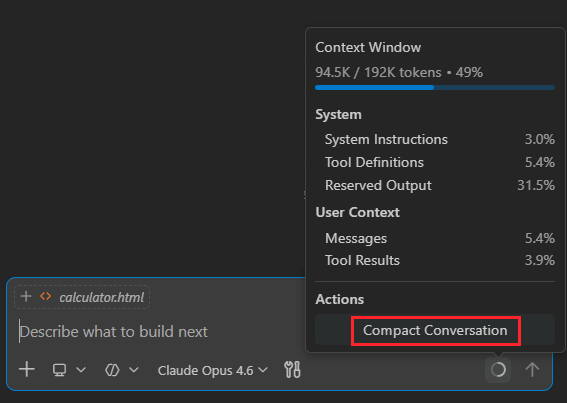
As conversations expand, VS Code automatically compacts older history. Earlier discussions are summarized, key decisions are preserved, and space is freed up for ongoing work.
Previously, you had no control over when context compaction was happening and what information was retained after compacting. Maybe you discussed several implementation variants, and only one specific one is important to remember and build upon.
Now you can manually run context compaction for a session by typing /compact. And in doing so, you can give the agent additional instructions on what information to keep or discard.
Especially when working with long-running sessions and dealing with lots of context, controlling compaction keeps the agent focused on the key information.
Agent controls
As agents take on more responsibility, the way you interact with them matters just as much as what they generate. These updates make it easier to control the conversation and guide outcomes during active work.
Guide the agent while it works
Agents sometimes head down the wrong path and it’s immediately obvious, even before it has finished the request.
Previously, you had to wait for a response to complete before you could steer it in a different direction. Now, you can intervene while the agent is generating a response, guiding the direction of the work without restarting or losing context.
And if you think of some extra tasks the agent should perform, you can now queue follow-on requests for the agent to perform once it has finished its current task. If you queue up multiple requests, you can easily change the order in which they need to be performed.
For example, you might clarify:
Only modify this component
Reuse existing utilities
Avoid changes to backend APIs
Fewer wasted edits, shorter feedback loops, and a conversation that stays on track.
In our app, when new styling guidance is introduced to enhance the hero card with a gold accent and shimmer effect, the agent revisits the existing CSS and continues the implementation without restarting the session.
Explore alternatives without losing context
There are often different ways to solve a problem or multiple design options. You could create multiple chat sessions, one for each variant, but that would mean you need to copy over the existing context and conversation history.
To make this experience easier, you can now fork a chat session. This creates a new, independent session that inherits the conversation history from the original session. The forked session is fully separate from the original, so changes in one session do not affect the other.
You can either type /fork and it will copy over the full conversation, or you can use the fork button at a specific checkpoint to fork the conversation up until that point.
In the demo below, /fork creates a parallel thread where a more minimal design direction is explored without affecting the original discussion.
Automate with hooks
Teams frequently rely on conventions, validations, or automated checks to maintain consistency.
Hooks execute deterministically at key lifecycle events, allowing teams to enforce policies and set guardrails that keep agent-driven changes aligned with project standards, rather than relying on repeated prompts.
For example, a team might automatically lint code before edits are applied, block changes to protected configuration files, or trigger a test suite whenever an agent modifies application logic.
This keeps agent-driven changes aligned with your project’s standards without requiring constant supervision.
The following demo shows a stop hook executing on session exit, detecting uncommitted changes and automatically committing and pushing them.
Agent extensibility
Agents are most useful when they integrate naturally into the tools and workflows you already rely on. These updates introduce a richer agent experience that closes the development loop, while skills provide reusable building blocks you can invoke on demand.
Run agent skills when you need them
Many development tasks repeat across sessions.
Writing tests, refactoring code, or reviewing changes often follows patterns you already understand.
Instead of rewriting instructions each time, you can invoke agent skills directly from chat using slash commands. Skills may come from built-in capabilities, extensions, or project-specific tooling.
Instead of prompting vaguely, you can intentionally invoke workflows.
For example:
/tests generates validation tests
/explain documents unfamiliar code
/fix targets a specific error
By default, available skills appear in the / menu, making them discoverable and easy to reuse across sessions.
The following video demonstrates a frontend design skill driving the workflow end to end, implementing a new UI component, integrating live data, and validating the result without leaving VS Code.
Validate changes without leaving the editor
Agents are already effective at generating and running unit tests to validate non-UI code changes.
Verifying frontend behavior, however, has often relied on manual testing or manual screenshot comparisons.
With browser agent tools, agents can now open and interact with the application directly in the integrated browser inside VS Code.
This allows the agent to implement a UI change, load the running application, inspect the result, and adjust the code if something doesn’t behave as expected.
Implementation, inspection, and validation now happen within the same workflow, helping you iterate quickly without leaving the editor.
In the example below, the integrated browser opens and follows the page navigation, so you can validate changes as you interact with the application.
Development often moves between the terminal and the editor.
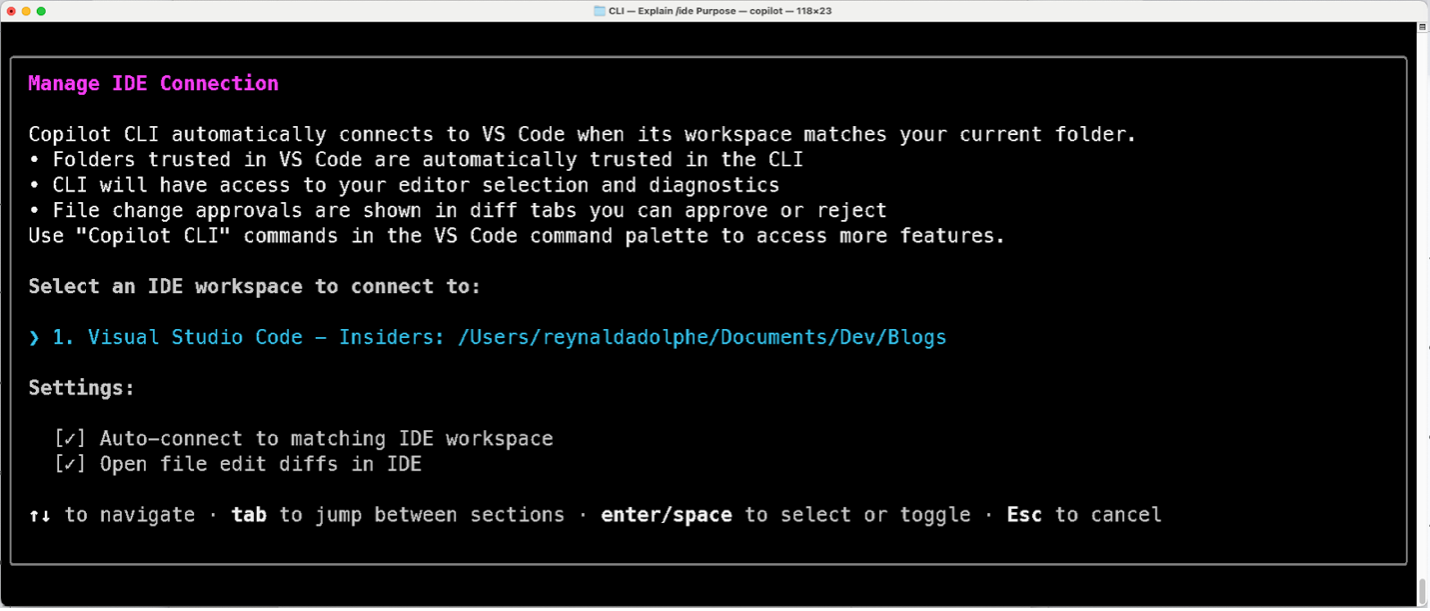
That’s why the Copilot CLI is now integrated in VS Code, with native support including diff tabs, trusted folder sync, and right-click to send code snippets. You can manage the connection by running /ide.
The CLI and editor stay aligned, sharing context as work progresses.
In practice:
A CLI process generates changes
VS Code surfaces them as diffs
You review and approve modifications directly in the editor
The next step for agents in VS Code
Agents are becoming a natural part of everyday development. You shouldn’t have to adapt your workflow around them. They should adapt to the way you build.
With the February 2026 release (1.110), VS Code gives you more control over how agents behave. They fit into your tools more naturally and carry context across sessions.
We’re building this in the open. If you have feedback, ideas, or run into issues, open a discussion or file an issue in the VS Code repo or find us on social. We’d love to hear from you.
Want to see how these features can enhance your developer workflow?
Join us for our VS Code release livestream on March 19 at 8 AM PST. Turn on notifications!
Dario Amodei said Thursday that Anthropic plans to challenge the Department of Defense’s decision to label the AI firm a supply-chain risk in court, a designation he has called “legally unsound.”
The statement comes a few hours after the DOD officially designated Anthropic a supply-chain risk following a weeks-long dispute over how much control the military should have over AI systems. A supply-chain risk designation can bar a company from working with the Pentagon and its contractors. Amodei drew a firm line that Anthropic’s AI will not be used for mass surveillance of Americans or for fully autonomous weapons, but the Pentagon believed it should have unrestricted access for “all lawful purposes.”
In his statement, Amodei said the vast majority of Anthropic’s customers are unaffected by the supply-chain risk designation.
“With respect to our customers, it plainly applies only to the use of Claude by customers as a direct part of contracts with the Department of War, not all use of Claude by customers who have such contracts,” he said.
As a preview of what Anthropic will likely argue in court, Amodei said the Department’s letter labeling the firm a supply-chain risk is narrow in scope.
“It exists to protect the government rather than to punish a supplier; in fact, the law requires the Secretary of War to use the least restrictive means necessary to accomplish the goal of protecting the supply chain,” Amodei said. “Even for Department of War contractors, the supply chain risk designation doesn’t (and can’t) limit uses of Claude or business relationships with Anthropic if those are unrelated to their specific Department of War contracts.”
Amodei reiterated that Anthropic had been having productive conversations with the DOD over the last several days, conversations that some suspect got derailed when an internal memo he sent to staff was leaked. In it, Amodei characterized rival OpenAI’s dealings with the Department of Defense as “safety theater.”
Techcrunch event
San Francisco, CA | October 13-15, 2026
OpenAI has signed a deal to work with the DOD in Anthropic’s place, a move that has sparked backlash among OpenAI staff.
Amodei apologized for the leak in his Thursday statement, claiming that the company did not intentionally share the memo or direct anyone else to do so. “It is not in our interest to escalate the situation,” he said.
Amodei said the memo was written within “a few hours” of a series of announcements, including a presidential Truth Social post saying Anthropic would be removed from federal systems, then Defense Secretary Pete Hegseth’s supply-chain risk designation, and finally the Pentagon’s deal announcement with OpenAI. He apologized for the tone, calling it “a difficult day for the company” and said the memo didn’t reflect his “careful or considered views.” Written six days ago, he added, it’s now an “out-of-date assessment.”
He finished by saying Anthropic’s top priority is to ensure American soldiers and national security experts maintain access to important tools in the middle of ongoing major combat operations. Anthropic is currently supporting some of the U.S.’s operations in Iran, and Amodei said the company would continue to provide its models to the DOD at “nominal cost” for “as long as necessary to make that transition.”
Anthropic could challenge the designation in federal court, likely in Washington, but the law behind the decision makes it harder to contest because it limits the usual ways companies can challenge government procurement decisions and gives the Pentagon broad discretion on national security matters.
Or as Dean Ball — a former Trump-era White House adviser on AI who has spoken out against Hegseth’s treatment of Anthropic — put it: “Courts are pretty reluctant to second-guess the government on what is and is not a national security issue … There’s a very high bar that one needs to clear in order to do that. But it’s not impossible.”
Chances are that when you google “mattress store near me,” one of the first results you will see is Mattress Firm. This brick and mortar titan carries both established mattress brands like Serta and Sealy, as well as many online brands, like Purple, letting you go see for yourself if it’ll be the mattress for you. And if you were looking for an excuse to hop in the car and head over, we have a Mattress Firm coupon available right now, as well as tons of Mattress Firm promo codes to save big on those big (and small) purchases. Fingers crossed that you could start sleeping better, potentially as soon as tonight.
Upgrade Your Sleep Sale: Save Up to $600 (Plus Get a Free Adjustable Base)
This year, Mattress Firm wants to make it even easier (and more affordable) to upgrade your sleep with the Upgrade Your Sleep Sale. During this sale, you can save up to $600 and get a free adjustable base included on select mattresses, through April 28. You’ll receive a free Sleepy’s Basic adjustable base (a $300 value) with select mattress purchases—this means a free queen adjustable base with a minimum $499 purchase, or free king adjustable base with minimum $599 purchase.
Get 15% Off When You Sign Up for Emails
To make sure you never miss out on Mattress Firm discount codes, you can sign up for email notifications. By doing so, you automatically get one! You can get an extra 15% off on your first order. Heads up that it can’t be combined with other coupons, nor can it be applied to specific brands and models, including Nectar, Purple, Sealy Hybrid, Tempur-Pedic, Stearns & Foster, and Serta iComfort.
Free Adjustable Base (Up to $499 Value) With Select Mattresses
First and foremost, make sure you have or are getting a mattress that’s compatible with an adjustable base. If you’re all set bed-wise, but have been looking for the right time to buy an adjustable base, consider this your sign: select mattresses come with a free adjustable base (up to $499 value). At last, you can sit up in bed or kick up your feet to your heart’s content.
Score Up to $300 in Instant Credits and Gifts
Mattress Firm’s got a gift for you, just ‘cuz. For those eyeballing Tempur-Pedic, Sealy, and Sterns & Foster in particular, it’s your lucky day, as there are Mattress Firm coupon codes for all three of these brands.
Starting with Tempur-Pedic, when you buy a qualifying Tempur-Pedic mattress, you can receive a $300 Instant Credit on these adjustable bases: Tempur-Ergo, Tempur-Ergo Smart Base, Tempur-Ergo ProSmart Base, Tempur-Ergo ProSmart Air Base, or the Sealy Ease Base. Use code TEMPURGIFT. You can also get a $300 credit toward these same adjustable bases when you purchase a qualifying Stearns & Foster mattress: use code STEARNSGIFT at checkout.
Lastly, if you wanted to pair a Sealy mattress with the Sealy Ease adjustable base (or any of the aforementioned adjustable bases), there’s a Mattress Firm coupon for that, too. Use code SEALYGIFT at checkout, and get a $200 Instant Credit on select Sealy and Tempur-Pedic adjustable bases.
Take 20% Off With Military, Medical, Student, or Teacher Discounts
Sleep is a necessity for everyone. But for those who work all day on their feet, and have to be dialed in at all times, sleep is critical. This is especially true for first responders, nurses, doctors, and medical professionals. As a way to say “thank you” for all that you do, there’s a special mattress firm discount just for you. Use the Mattress Firm first responder discount for 20% off select purchases. It’s for one-time use, but renews every 90 days when you re-verify your status.
For military members, as a way to thank you for your service, you can use the Mattress Firm military discount for 20% off select purchases as well. It’s a one-time use code, but re-verify your status every 90 days, and you can get a new one!
If you’re a teacher or student, there’s also a Mattress Firm discount for you, too. To help you bounce back after long days teaching, or late nights studying, use this Mattress Firm student discount code for 20% off select purchases. Like the first responder and military coupons, it’s a one-time usage code that can be renewed every 90 days when you re-verify your status.
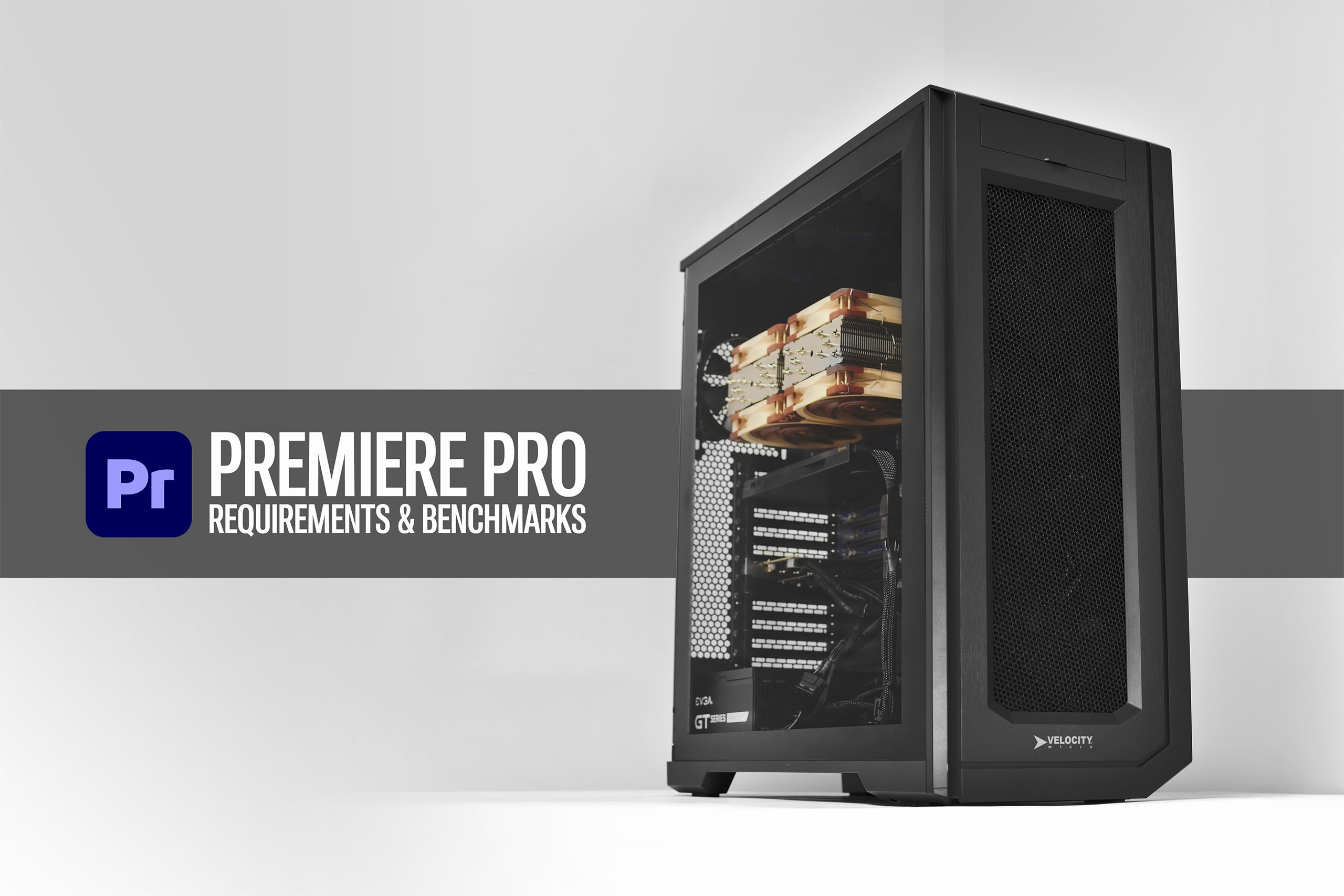
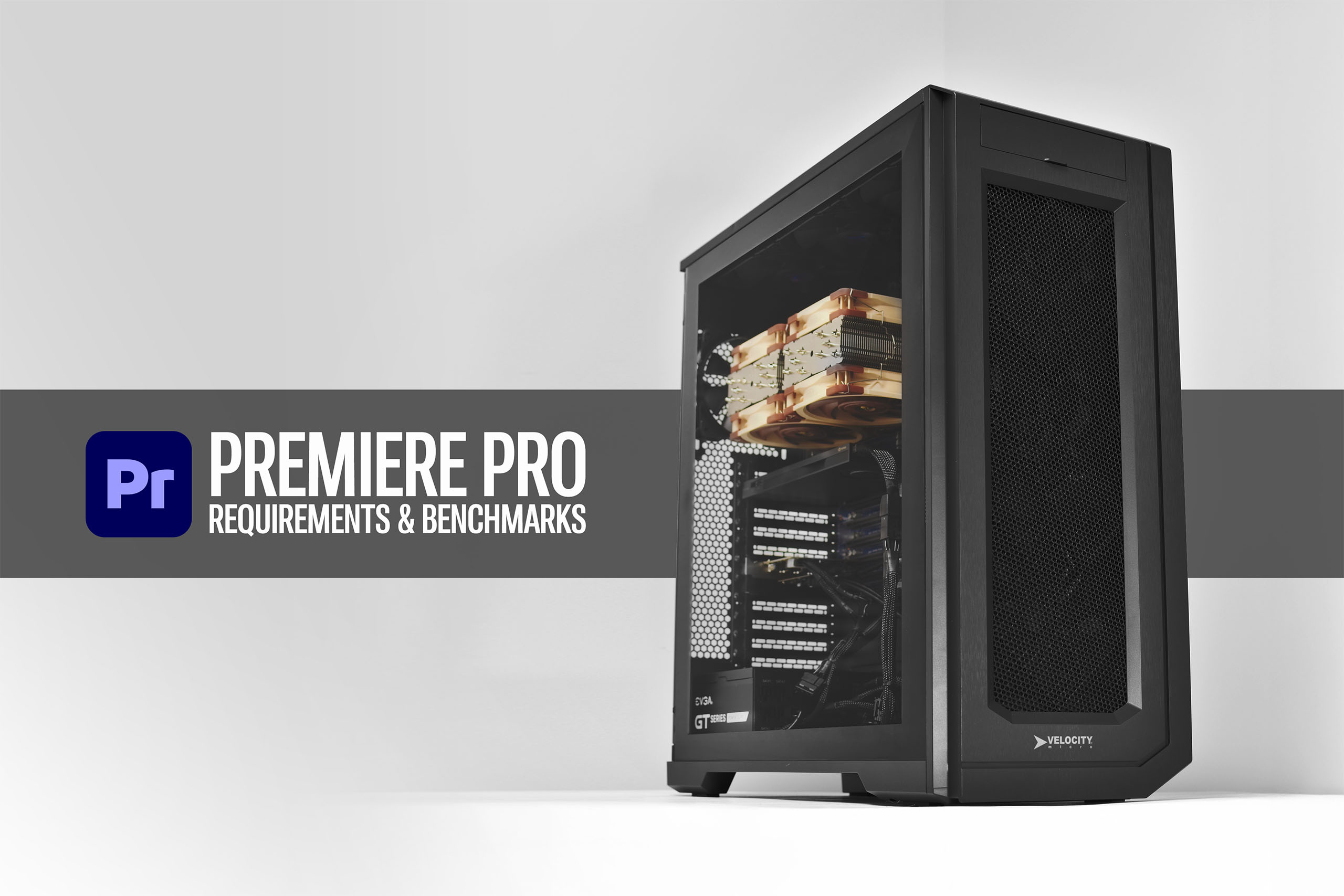
Interested in Premiere Pro System Requirements? Read on!
In the professional video production ecosystem, time is the most expensive variable. For editors and post-production houses, the “System Requirements” listed on software boxes are merely a baseline for stability, not a blueprint for productivity.
Thus, to achieve a seamless “Real-Time” editing experience—where the timeline responds instantly even with multiple Lumetri effects, Warp Stabilizers, and 4K/8K overlays—one must understand how Adobe Premiere Pro utilizes hardware. This guide provides a deep-dive analysis into component selection based on empirical benchmark data and hardware architecture.
1. The Processor (CPU): The Engine of the NLE
The CPU is the primary bottleneck for video editing. As a result, Premiere Pro’s performance is determined by a balance of high clock speeds (for UI responsiveness and standard playback) and high core counts (for rendering and encoding).
The QuickSync Advantage
For editors working with H.264 and HEVC (H.265) media—the most common codecs from mirrorless cameras and drones—Intel’s QuickSync technology remains the industry gold standard. By using the integrated GPU (iGPU) on Intel Core processors for hardware decoding/encoding, you free up the discrete GPU and CPU cores for other tasks.
CPU Benchmark Performance (Relative Score)
CPU Model
Overall Score
4K Playback
Exporting (H.264)
AMD Threadripper 9980X (64-core)
1,420
165
148
Intel Core Ultra 9 285k
1,280
158
155
AMD Ryzen 9 9950X
1,260
152
142
Intel Core Ultra 7 265k
1,140
140
138
AMD Ryzen 7 9700X
980
120
115
The Verdict: The Sweet Spot: The Intel Ultra 9 285k offers the best price-to-performance ratio for most editors due to its high burst frequency and QuickSync capabilities.
The Powerhouse: If your workflow is 8K RED RAW or heavy Multicam (6+ cameras), the AMD Threadripper 9000 Series is necessary to handle the massive computational load.
2. Graphics Card (GPU): The Accelerator
While the CPU handles the “thinking,” the GPU handles the “painting.” Premiere Pro utilizes CUDA (NVIDIA) or OpenCL (AMD) to accelerate “GPU-accelerated effects” like Lumetri Color, Gaussian Blur, and Cross Dissolves.
VRAM: The Critical Metric
When working at 4K or higher resolutions, the amount of Video RAM (VRAM) is more important than the raw speed of the chip. If you run out of VRAM, Premiere will often crash or throw “Red Frame” errors.
The Verdict: Overall, NVIDIA remains the preferred choice for Premiere Pro due to the maturity of CUDA drivers. The RTX 5070 Ti (16GB) is our primary recommendation for professional 4K editors who need high VRAM without the $2,000+ price tag of a 5090.
3. Memory (RAM): The Production Buffer
Premiere Pro is notoriously memory-hungry. RAM acts as the buffer between your storage and your CPU. If RAM is insufficient, the system swaps data to the much slower SSD, causing the “laggy timeline” syndrome when scrubbing through raw footage especially.
Capacity Recommendations
32GB: Unquestionably the absolute minimum for 1080p or simple 4K projects. We do not sell workstations with less than 32GB these days.
64GB: The professional standard for 4K workflows with After Effects dynamic linking.
128GB+: Required for 8K projects, heavy motion graphics, or working with LongGOP codecs (which require more memory to decode). Depending on speed requirements, this may mean Threadripper is a necessity.
4. Storage Architecture: Throughput & IOPS
Sequential read/write speeds (MB/s) are important for large files, but IOPS (Input/Output Operations Per Second) determine how fast Premiere can access thousands of small cache files. We recommend a Three-Drive Logic:
Drive 1 (OS/Applications): 1TB+ NVMe SSD. Keeps the OS responsive.
Drive 2 (Media/Project Files): 2TB – 8TB NVMe Gen4/Gen5 SSD. High-speed access to your raw footage, dependent upon capacity needs.
Drive 3 (Dedicated Scratch/Cache): 1TB NVMe SSD. This is critical. By isolating the Media Cache on its own drive, you prevent “bus-choking” where the OS and Media compete for bandwidth.
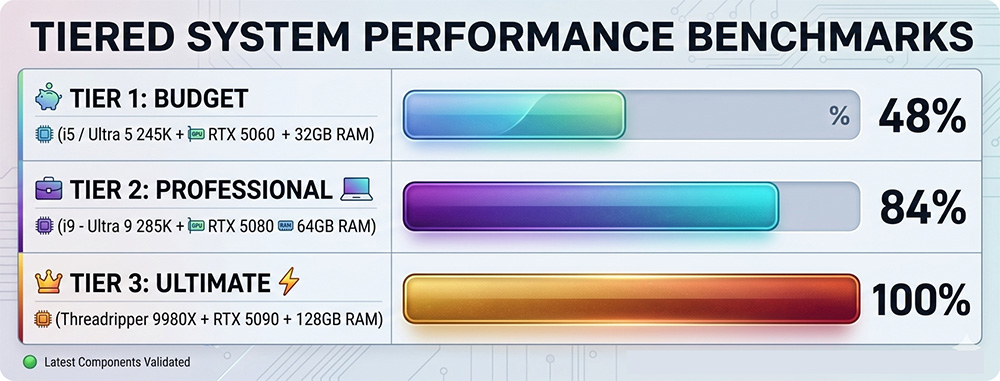
5. Visualizing Performance: Benchmark Synthesis
The following chart illustrates the performance delta across different hardware tiers when processing a 4K 60FPS HEVC sequence with multiple Lumetri layers.
Performance Index (Higher is Better)
6. Expert Recommendations: Three Configurations
The “Prosumer” Build (Budget-Friendly 4K)
Focus: Maximum value for YouTube/Social Media content.
CPU: Intel Core Ultra 7 265k
GPU: NVIDIA RTX 5070 (12GB)
RAM: 32GB DDR5-6000
Storage: 1TB Samsung 990 Pro (OS) + 2TB Samsung 9100 Pro
The “Agency Standard” (Professional 4K/60)
Focus: Stability and speed for daily professional deliverables.
Focus: No-compromise performance for feature films and high-end commercials.
CPU: AMD Ryzen Threadripper 9960X (24-Core) or higher
GPU: NVIDIA RTX 5090 (32GB) or RTX Pro 6000 Blackwell
RAM: 256GB DDR5 RDIMM
Storage: Multi-drive NVMe RAID array and/or 10GbE NAS for archival
Premiere Pro System Requirements: Conclusion
Undoubtedly, building a workstation to satisfy Premiere Pro System Requirements is an exercise in removing bottlenecks. While the CPU remains the most vital component, ignoring VRAM or drive architecture will result in a suboptimal experience regardless of how much you spend on a processor. For the modern professional, an Intel Core Ultra 9 paired with an NVIDIA RTX 50-series card (16GB+ VRAM) and a dedicated cache drive represents the pinnacle of current editing efficiency.
These release notes cover the Insiders build of VS Code and continue to evolve as new features are added. To try the latest updates, download Insiders.
To read these release notes online, go to code.visualstudio.com/updates.
These release notes were generated using GitHub Copilot and might contain inaccuracies.
Happy Coding!
March 5, 2026
VS Code now recursively searches for *.instructions.md files in subdirectories under .github/instructions/, matching the behavior of Copilot CLI and web-based GitHub Copilot agents. Previously, only files in the root .github/instructions/ directory were discovered. #295944
You can now copy the name of an item in the Source Control Repositories view by using the context menu option Copy Stash Name, Copy Branch Name, or other. #289824
Custom agent frontmatter now supports agent-scoped chat hooks. These hooks only run when the custom agent is selected or invoked via runSubagent. #299337
A new /troubleshoot slash command injects agent mode event logs into the chat context. Use it to ask the agent which customizations are loaded, how many tokens are consumed, debug instructions, and more. #299344
CLI sessions now support folder and repository isolation, in addition to worktree isolation. #299376
March 4, 2026
AI CLI terminal profiles now get a dedicated group in the terminal dropdown, making them easier to discover instead of being listed among other profiles. #293554
Add Ctrl+F5 keyboard shortcut for a page refresh in the integrated browser, instead of unexpectedly opening the browser debugger. #291219
March 2, 2026
Added OpenTelemetry instrumentation support for Copilot Chat, enabling observability and performance tracing. #298834
Chat tips now only appear when a single chat session or the welcome view is visible, avoiding tips in sessions where multiple chat editors are open. #297759
After a user acts on or dismisses a chat tip, no more tips are shown for the rest of that session. #297682
You can now Go to Definition on localization placeholder strings (for example, %config.settingName%) in package.json to jump directly to the corresponding entry in package.nls.json. #297496
Selecting an agent plugin in the Extensions view now opens a detail view with an uninstall button, rendered README, and a list of contributed features. #297246
March 1, 2026
Markdown tables in chat now render with a horizontal scrollbar and improved column widths. #265062
February 28, 2026
Full-width CJK punctuation characters now render with consistent widths. #242138
Add a new foldedLine unit to the cursorMove command, enabling vim-like cursor movement that treats each folded region as a single step. #81498
February 27, 2026
Adjusts chat accessibility announcements so the accessibility.verboseChatProgressUpdates setting is respected, reducing unintended speech output (e.g. auto-synthesized TTS) for in-progress “thinking”/progress content. #296720
The confirm button in the ask_questions tool’s multi-page UI is repositioned on the last page to prevent overlap with the next-page arrow. #292404
Theme token customization now supports relative numeric values for font sizes and weights, instead of requiring absolute numbers. #285891
We really appreciate people trying our new features as soon as they are ready, so check back here often and learn what’s new.
In his weekly column, Android Central Senior Content Producer Nick Sutrich delves into all things VR, from new hardware to new games, upcoming technologies, and so much more.
I didn’t expect it, but the Samsung Galaxy XR has become the ultimate portable gaming machine. Not only can it natively play any Android game from the Google Play Store, but one free app even lets you run Steam games with no configuration or nonsense involved. No cloud streaming, no ridiculous subscription. Just your favorite Steam games, all running natively on the Galaxy XR (and even your Android smartphone).
If you haven’t heard of GameHub yet, it’s about high time you check it out. Available for free on the Google Play Store, GameHub is a fork of the popular Winlator app that integrates several cloud gaming services and social features, plus a friendly user interface and automatic configuration for every game you download. It’s as easy to use as a Steam Deck, and the wearable hardware makes it even better.
Why choose an XR headset to play these games on instead of a phone or a portable system like a Steam Deck? Neck and arm comfort, mainly, as you don’t have to look down at a system or hold it up high for hours at a time. The screen just floats in front of your face, no matter if you’re sitting up or lying down. Really, it’s as good as a portable gaming system can get. It’s the sort of functionality you’ll get on the upcoming Steam Frame headset, except you don’t have to wait for Valve to release it.
Playing Steam games on the Galaxy XR
(Image credit: Android Central)
GameSir, makers of many of our favorite mobile controllers, debuted an app called GameHub on the Google Play Store last November. It’s a customized fork of the popular Winlator app, which people have used for years to emulate Windows on Android, but it’s more user-friendly.
In the app, you connect your Steam account, and it more or less ends up looking like SteamOS running within an app window on the Galaxy XR. Fire up the app, tap Steam, and your entire library is now fully playable on the Galaxy XR without any further configuration. I connected the 8BitDo Ultimate 2C Bluetooth controller to my Galaxy XR to play the games, but I’m sure GameSir would appreciate it if you used one of their controllers instead.
When the app debuted, it caught a lot of flak on places like Reddit for requiring too many permissions, but the latest version of the app doesn’t require any permissions to get it running. Not even notification permission, although it’ll harass you from time-to-time about enabling them. If you’re concerned about telemetry data, someone forked a version on Github with that stuff removed. Another option is GameNative.
Image 1 of 3
(Image credit: Android Central)
(Image credit: Android Central)
(Image credit: Android Central)
Once you’ve got GameHub installed, run it and sign into your GameSir account, or just use the modded GameHub Lite version linked above, which doesn’t require an account. Then, you’ll open up the menu on the left, select Steam from the list, and sign into your Steam account.
Get the latest news from Android Central, your trusted companion in the world of Android
Now, any time you launch the app, you’ll be greeted with a Steam button right on the front that takes you to your Steam library. Just like on a Steam Deck, find the game you want, hit the install button, and then you can just play it from there on out. No cloud connection needed, no subscription required. It’s all running on the Galaxy XR.
If you’re worried about compatibility or performance, you can run a check on each game before it’s installed, which gives you a decent idea of whether the game will work or not.
Image 1 of 2
(Image credit: Android Central)
(Image credit: Android Central)
You can also configure additional options if you want or need to make performance adjustments, but I found the default settings to be more than adequate for my needs. If you run into issues or just want to touch up on your GameHub knowledge, this YouTube video is an excellent resource and uses a phone that sports a processor slightly slower than what’s in the Galaxy XR, so those settings (starting at the 4:50 mark) will help you get the best out of the system.
If you want to experiment with just one feature, though, I’d recommend enabling Snapdragon Super Resolution, which is available in GameHub’s menu found when pressing the home button on your connected controller. You can also learn about it in the video linked above at the 9:18 minute mark.
I found performance to be incredibly similar to my Steam Deck, despite that this app has to translate x86 code to the headset’s ARM processor. Portal 2, for instance, ran at a locked 60fps on both my Steam Deck and the Galaxy XR, but newer games like Resident Evil Requiem are simply too taxing to run on this level of hardware. We’ll have to wait and see if the actual Steam Frame fares better with them since it has a faster processor.
Taking all the best Steam Frame features now
(Image credit: Android Central)
I recently wrote about how two of the Steam Frame’s best features already work on the Galaxy XR, and now even the emulation of Steam games is possible on Samsung’s Android XR-powered headset. That means three of the four big pillars of what’s going to make the Steam Frame great — foveated streaming, a dedicated wireless network, and native Steam game compatibility — are available on the Galaxy XR right now. The only thing missing is running PC VR games natively, something the Frame might continue to stand out for.
The only thing you’ll need for standard Steam games to work is a Bluetooth controller of some kind, like this GameSir Cyclone 2. For PC VR games, you’ll want a pair of Galaxy XR controllers and the Virtual Desktop app on the Google Play Store. Once you’ve got those (and a VR-ready PC), you’re all set.
It’s pretty wild seeing the Steam Frame’s best features already make their way to other headsets before Valve’s next-generation headset even launches, but it’s (ironically) all thanks to Valve and the work they’ve poured into Proton and FEX over the years.
The Galaxy XR is an uber-comfortable mixed reality headset that combines the best Android apps with a brilliant, bespoke XR experience.