alternative_right shares a report from ScienceAlert: If you consumed a wild mushroom and suddenly started seeing tiny people around you, you might reasonably assume it contained a familiar psychedelic. But that does not appear to be the case with Lanmaoa asiatica, known locally as jian shou qing, a mushroom species sold in markets in Yunnan, southwestern China. When eaten undercooked, the mushroom can produce vivid visions of miniature people — not unlike Gulliver on his travels to Lilliput. To try and find out the root cause, University of Utah mycologists Colin Domnauer and Bryn Dentinger sequenced the genomes of 53 mushroom samples from across the wider Lanmaoa genus. And despite the reported hallucinations, they found no close matches to genes associated with psilocybin or ibotenic acid, two well-known mushroom hallucinogens whose biosynthetic pathways were specifically examined in the study.
“Biosynthetic gene mining of the L. asiatica genome found no close hits with any genes known in the production of mushroom psychoactive compounds,” write the researchers in their published paper. “This supports our hypothesis of the presence of a novel unidentified metabolite responsible for the unique hallucinogenic properties of L. asiatica.” […] Whatever chemical pathways are causing these effects in the brain, the responsible compound appears to be something scientists have not yet identified. […] By identifying 1,515 corresponding genes across the selected specimens, the researchers obtained a clearer answer to the question of what defines a mushroom species as part of the genus Lanmaoa. There are now 17 recognized species in the genus, including four that haven’t been identified before, two of which the researchers specifically named here: Lanmaoa fallax and Lanmaoa carbonilivor. The researchers say the Lanmaoa family and evolutionary tree can now be more fully mapped out, and some existing specimens may need to be reclassified.
All images appearing on this website are copyright CyberPowerPC. Any unauthorized use of its logos and other graphics is forbidden. Prices and specifications are subject to change without notice. CYBERPOWERPC IS NOT RESPONSIBLE FOR ANY TYPO, PHOTOGRAPH, OR PROGRAM ERRORS, AND RESERVES THE RIGHT TO CANCEL ANY INCORRECT ORDERS.
Images shown and actual configured system may differ depending on selected components and accessories.
Your rate will be 0%-36% APR. For example, a $800 purchase might cost $72.21 over 12 months at 15% APR. Payment options through Affirm are subject to an eligibility check, may not be available everywhere, and are provided by these lending partners: affirm.com/lenders. Options depend on your purchase amount, and a down payment may be required. For licenses and disclosures, see affirm.com/licenses.
If you’re looking to buy a new NAS, there’s a good chance that you came across UGREEN. The brand is a relative newcomer, but a combination of great hardware and aggressive discounts made it swiftly rise up the ranks in this category.
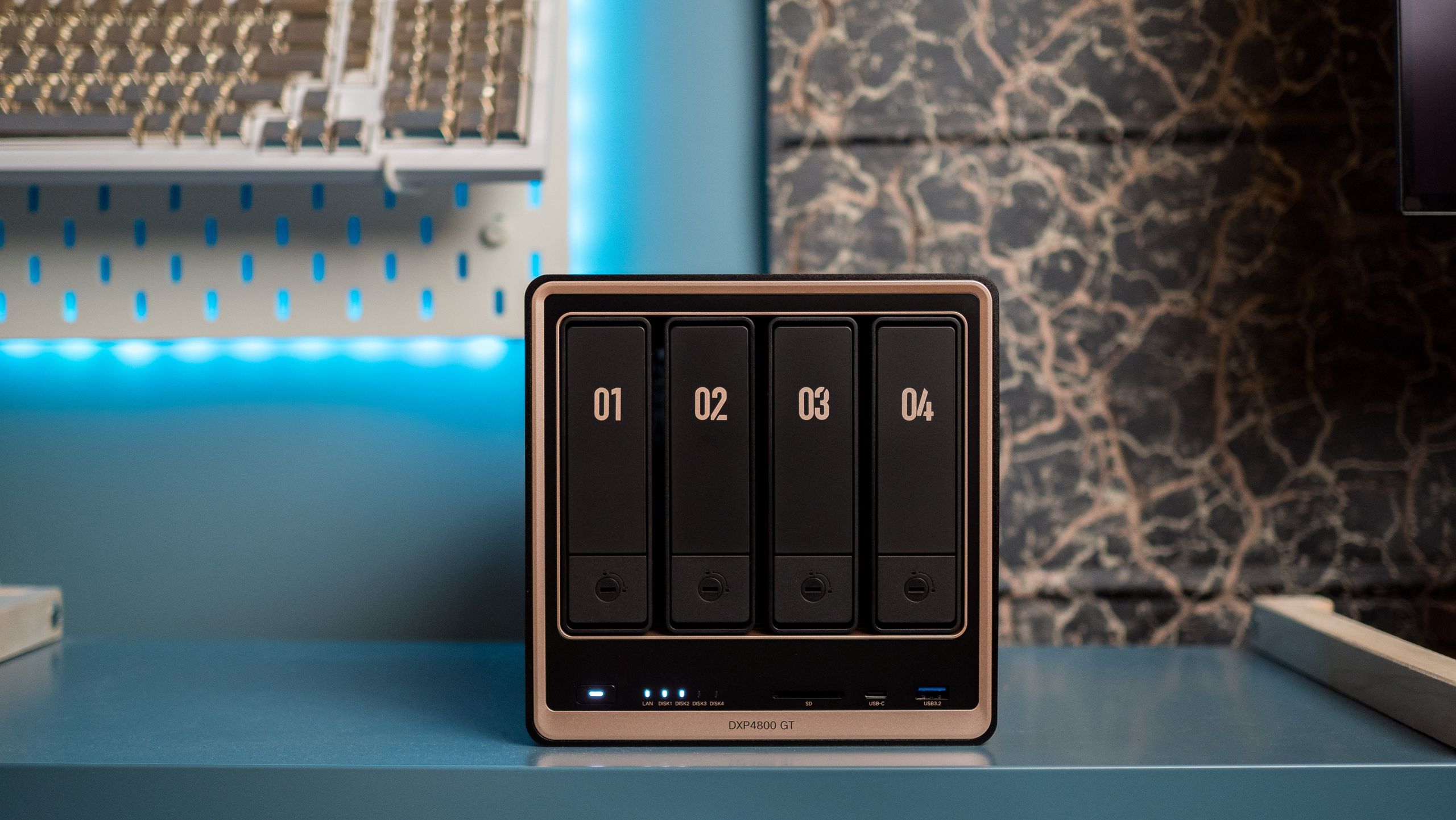
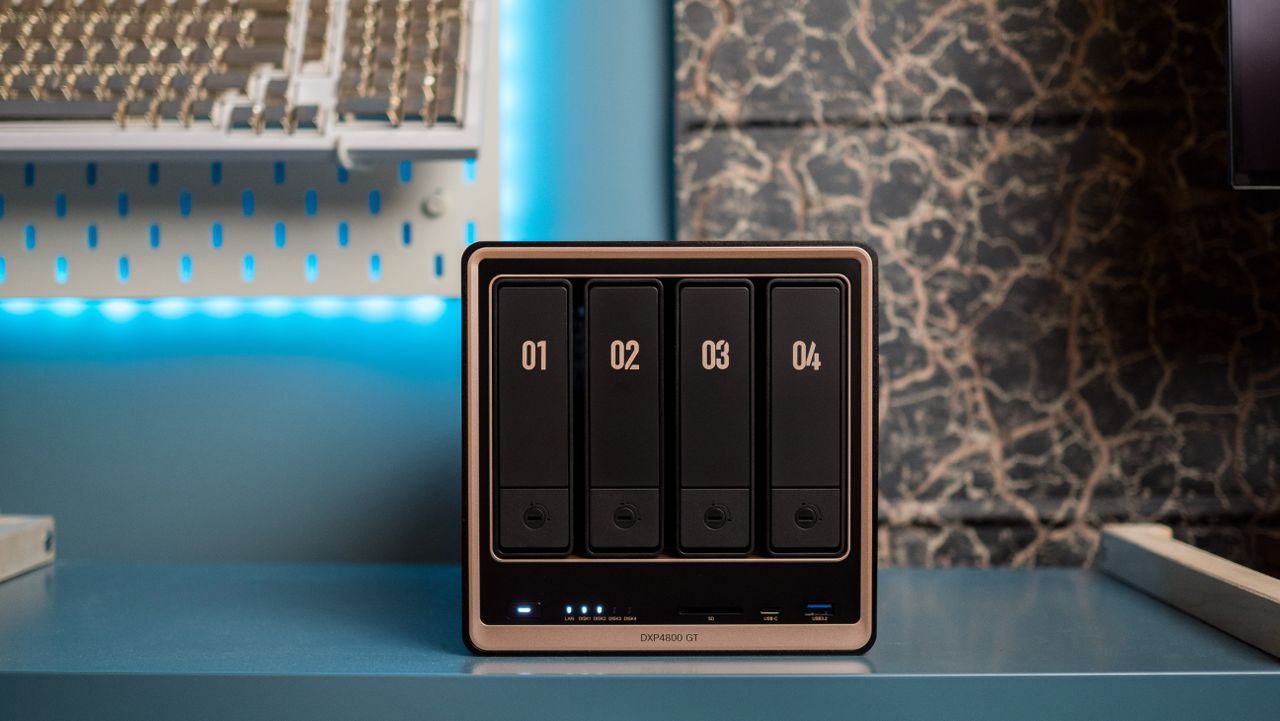
The DXP4800 GT is UGREEN’s latest NAS, and it just made its debut in June 2026. The NAS is aimed at enthusiast users and content creators, and it notably has two 10 Gigabit Ethernet ports. It launched at $659, but you can get it for $527 during Prime Day, which is a pretty good 20% discount on what is a brand-new model. While RAM and storage modules are still at an all-time high, UGREEN must not have gotten the memo, because this is a great price on an enthusiast-focused NAS.
✅Recommended if: You want ultra-fast connectivity. With powerful AMD internals, good software with container management, dual 10GbE connectivity, ECC memory, ability to slot in U.2 SSDs, and a high amount of extensibility, the DXP4800 GT is a true enthusiast NAS. The best part is that there’s hardware-assisted transcoding with the AMD Ryzen platform, and that’s just a welcome move.
❌Skip this deal if: You want Thunderbolt 4. Although the DXP4800 GT gets most right, it misses out on Thunderbolt 4 connectivity.
Now, the DXP4800 Pro is a solid NAS by itself, but the DXP4800 GT gets a few additional features. It gets ECC memory, 2.5-inch U.2 SSD integration, and two 10 Gigabit Ethernet connectors. It’s clear that the NAS is aimed at creators and enthusiasts, and even though there’s no Thunderbolt 4, it isn’t a big deal in and of itself.
Another difference is that the DXP4800 GT uses AMD hardware instead of Intel. While this has been an issue in the past, the Ryzen R2514 has hardware transcoding, so if you use Plex or Jellyfin, the DXP4800 GT is just as good as an Intel-based NAS. If anything, it’s faster; I got four 4K transcodes running in Plex at the same time without any issues, so the DXP4800 GT has power to spare.
The UGOS Pro software has plenty to like as well, and you can install just about anything you want using Docker; this is what I used to get Plex, Pi-hole, Jellyfin, Immich, and other utilities installed on the NAS.
The DXP4800 Pro is still a great NAS — particularly now that it is down to $639 — but if you need two 10GbE connectors or want to use U.2 SSDs, the DXP4800 GT is the obvious choice. And with the DXP4800 GT now selling for just $527, this may just be the best time to get it.
Two weeks following the release of Android 17 QPR1 Beta 4, today Beta 5 becomes available for testers.
While Beta 4 skipped Pixel 6 and 6 Pro support, they’re now once again included.
Google’s changelog largely consists of bugfixes.
Last week marked a major milestone for Android releases, with Android 17 finally hitting stable and starting to go out to Pixel devices everywhere. As much as we were looking forward to that release, testers are already onto the next big update beyond that one, with Google’s Android 17 QPR1 Betas giving them a taste of the changes set to land with the September Feature Drop. After QPR1 Beta 4 landed two weeks back, Google’s now ready to move on to QPR1 Beta 5.
Google’s Mishaal Rahman shares the good news over on X, confirming that build CP31.260608.007 is incoming for testers on Pixel 6 and later devices. That’s important because last time the Pixel 6 and 6 Pro were explicitly excluded — although Google promised we’d see support for those older models returning with this new release.
As you should probably expect from a Beta 5, at this point Google’s largely in cleanup mode — and that spells a whole lot of bugfixes. Here’s what Google shares to expect:
An issue in the Game Dashboard where users were unable to stop screen recordings or save video files. (Issue #296368569, Issue #328539170)
An issue where the camera app temporarily freezes or stutters shortly after being opened from an idle state. (Issue #330488811)
An issue that caused the screen to freeze with a pixelated bottom bar when waking the device from Always-On Display. (Issue #515393542, Issue #515497396)
A timeout issue where the Download Manager failed to complete downloads when excluded from an active VPN connection. (Issue #475985649)
An issue causing inconsistent charging completion time estimates to display on the lock screen versus the charging screensaver. (Issue #489503595)
An issue causing the Private Space UI to crash and locked private apps to improperly appear in launcher search results. (Issue #515631415)
A system crash and device hang that occurred when downloading games. (Issue #515364954)
An issue where a non-functional bubble option incorrectly appeared in the context menu of archived apps. (Issue #514585702)
A system-level WebView rendering regression that caused Monopoly Go to freeze and crash when attempting to open mini-games. (Issue #516576731)
One very nice change Rahman confirms is the addition of a new “don’t ask me again” toggle when turning on mobile data:
If you’re curious to try QPR1 for the first time, you can get started by registering your Pixel device in Google’s Android Beta Program.
On the flip side, if you’ve been testing the Android 17 Beta and would rather just make the move to stable without having to wipe all your device’s data, Google warns that you should not install QPR1 Beta 5, and instead proceed to opt out of the program.
Thank you for being part of our community. Read our Comment Policy before posting.
Our 2026 State of AI for Business Report surveyed more than 2,100 business professionals, including nearly a third who are marketers and 84% who work for B2B organizations.
In today’s post, we provide helpful information on how to cut prototype design costs for product design and engineering firms. Developing a new product can get expensive rapidly. And a big portion of the budget goes to the prototyping phase, which happens in an iterative fashion where you have to make a model, discover some flaws, improve them, and repeat the process over and over again until you manage to build the most refined, manufacturing-ready version. The cost of prototyping design firms probably accounts for at least a third of the entire product development budget.
Of course, there can be various factors that affect how much money goes into the prototyping phase, but in general, the more complex the product is and the more expensive the materials are, the higher the budget should be. For example, if you discover a lot of design flaws in a prototype, you need to do a lot of refinements and make it better the next time, and this process costs time and a good amount of money.
Another problem is that there’s no guarantee the new prototype won’t have any issues either, so you have to give it another go and repeat. Prototyping stands as one of the most crucial phases in product development services. It’s not like you can cut corners and cheap out on every model. At least not when you want the product to work well and look good, as intended. The good thing is, there are many things you can do to reduce the cost and make the phase as efficient as possible while still maintaining accuracy and overall quality.
Let’s not forget that there’s always Cad Crowd, a freelancing platform mostly frequented by thousands of New Product Development (NPD) professionals based in the US, the UK, Canada, and Europe. Whether you’re looking for engineers, designers, fabricators, contract manufacturers, or project managers to reinforce your team, Cad Crowd connects you with qualified specialists through flexible hiring options.
We’ve mentioned earlier that prototyping is crucial and likely expensive, but it turns out there might be a few good measures to help you run it in a much more efficient manner and hopefully reduce the cost to hire product designers.
Build your own prototype, if you can
This might’ve been a hot take in the old days, but it shouldn’t be the case anymore now that 3D printers are getting more affordable. What if you want to prototype using metal materials? Yes, you can now 3D-print metals, too. Some entry-level metal 3D printers cost around $10,000 – $20,000 these days, which isn’t exactly a bargain, but not ridiculously expensive either. Also, the idea of prototyping is to build early versions of a product’s design. You’ll be doing it in an iterative fashion until you’re satisfied with the model.
Once the design is finalized, you can always partner with a third-party fabricator to make a high-fidelity “production version” prototype to send to a contract manufacturer as a sample. Because the outsourcing part doesn’t happen until the final build, you can save a lot of money by creating every other model in-house. Metal parts like aluminum, stainless steel, titanium, or alloys can be quite a hindrance. However, it only applies to designs that require you to build prototypes from those materials. For products that are mostly or entirely made of plastic, in-house rapid prototyping with 3D printers is a no-brainer.
There are plenty of small desktop 3D printers from reputable brands available for under $1000. But just to be safe and have more options, budget anywhere between $1500 and $2000 to get a larger and more capable 3D printer. But not every company, especially startups and small design firms, can afford to purchase a complete package of 3D printing equipment. When the budget is tight and you don’t have the funds to invest in the right tools, outsourced prototyping still makes good sense.
Now, whether you outsource prototyping or do it in-house, it’s important to determine exactly what you need from the model. The prototype design expert may have to build multiple models throughout the prototyping phase, and each model serves a different purpose. The earliest version is the most basic form of the product, with some rough edges and almost no functionality. A follow-up model is slightly more refined with better aesthetics and a little bit more useful. You keep going with the gradual improvement, sometimes by focusing on one aspect at a time.
For example, a basic concept only needs to show that the idea is technically feasible. It might be crude, but so long as it delivers a solution to a problem, you can say that the model serves its purpose well. Finishes and details are not the biggest concerns at this point. In many cases, building a PoC (Proof of Concept) needs no fancy tools. You can make it using cardboard, plywood, or maybe LEGO bricks. For the electronic parts (if the product is an electronic device at all), development kits such as Arduino, Raspberry Pi, and ESP32 are the usual options. A concept isn’t simple because it shouldn’t be. You make do with off-the-shelf materials.
The time will come when you have to blend good aesthetics and functionality into a single model. Before you get to that point, however, separate the “looks-like” prototypes from the “works-like” ones.
“Looks-like” prototype focuses on the aesthetics, or the outer shell of a product. With electronics device design services, for instance, the outer shell is the hardware enclosure, the sides that people see.
“Works-like” model cares only about the functional parts, such as the inner mechanisms, the electronic components, or both. This allows the engineers to rig all the features and functionalities correctly without having to worry too much about aesthetics. Of course, there are still concerns like dimension and user interface (button placement, screen, battery compartment, etc.) because the components have to fit inside the outer shell eventually anyway.
As you progress from PoC and move closer toward the more refined models, 3D printing companies are your true saviors for efficient prototyping. That being said, not all 3D printers are created equal. For instance, FDM (fused deposition modeling) printers come with affordability and simplicity for anyone looking to get started with additive manufacturing. The big trade-off is part quality.
Say you want to build a prototype for the visual presentation. Part surfaces must be smooth with good details without sacrificing structural integrity. While you can use an FDM method for it, SLA (Stereolithography) printing is the better choice thanks to its tighter tolerance and higher accuracy. Parts made using SLS (Selective Laser Sintering) services and a 3D printer might not look as refined, yet they have excellent mechanical characteristics.
Despite being separate streams in the early prototyping phase, start merging the “looks-like” and “works-like” as soon as possible. You don’t want to keep them in siloed development environments any longer than necessary. Better still, avoid siloed development and use a cross-functional team to handle the entire project instead. This way, the designers responsible for the aesthetics and the engineers working on the inner mechanisms can do their jobs in a more collaborative fashion. Integration at a later stage is risky. If the internal and external parts don’t fit, it’s best to discover the issue sooner rather than later.
Digital twin and simulations
Without a doubt, the biggest money-saving factor of them all is the digital twin, particularly the simulation part. A product development project is riddled with errors. You build a prototype, hoping everything will be perfect, only to discover so many flaws in the model. While it’s practically impossible to build the ideal and flawless production version model on the first try, you can at least minimize the chance of mistakes using a digital twin. It’s a hard pill to swallow, but physical prototyping has always been a major hurdle in a product development cycle.
The complex fabrication, lengthy testing, and the nature of a hit-and-miss approach to engineering day in and day out can get tiresome quickly. Thanks to CAD (computer-aided design) firms and virtual prototyping, thankfully, most of those issues are completely avoidable. Digital twins and simulation become the new standards in just about every NPD project out there. CAD has come a long way since its first day in the 1960s, if not earlier. In 2026, you’re spoiled with advanced tools to build both the traditional 2D imagery and a photorealistic 3D visualization of any object.
You can think of it as creating a blueprint of a product, but instead of drawing it as a static diagram on paper, CAD generates an interactive digital twin. It doesn’t completely eliminate the need for physical prototyping, because you still need a physical model for testing and evaluation, but virtual prototyping saves you a lot of headaches and prevents wasteful use of resources. The term “virtual prototyping” is pretty much self-explanatory. 3D CAD designers have all the tools you need to build a prototype as a digital visualization on a computer screen. The product exists first as a virtual object, so no matter what you do to the object, it only happens on a computer screen.
You can remove parts, add more components, change the shape, or modify it in any way without having a physical prototype made. And more than just an image, popular CAD software like Autodesk Inventor, SOLIDWORKS, and PTC Creo are loaded with options that allow you to test the virtual prototype with simulations. Even the open-source FreeCAD has robust simulation capabilities as well.
Among the most common (and useful) tools include FEA (Finite Element Analysis) services to simulate vibration, thermal response, and structural test; CFD (Computational Fluid Dynamics) for airflow analysis, fluid behavior, and thermal distribution; Mechanism Dynamics to analyze motion, interaction, and interference between components; and Behavioral Modeling that evaluates how a design reacts to an external factor like changes in temperature or pressure, to name a few. In general, virtual prototyping and simulation open the door to a detailed analysis of how a design, product, or system behaves under different use case scenarios.
Software like Altium and KiCad can do PCB simulation with such features as signal integrity analysis, error debugging, electromagnetic interference checking, and more. The only requirement is that your model, in this case the digital twin, has to be identical to the actual product. It can be rather problematic because you’ve only been building the prototype as a digital file, so there’s nothing physical to compare the model to. You don’t have clear points of reference, but that’s exactly what virtual prototyping is all about. Advanced 3D CAD software comes equipped with tools and options to help you build a virtual object, including a product design, from scratch.
You can experiment with various materials, form factors, colors, dimensions, PCB layout design, and every single specification imaginable. All without having a physical model in hand. It’s basically a CGI (computer-generated imagery) done under the constraints of actual physics. Being able to produce a prototype in a complete virtual environment is a major relief, both technically and financially. Since you don’t have to go through a lengthy process of trial-and-error with multiple physical models and consume a whole lot of development resources on them, the entire prototyping phase runs more efficiently at very low cost, objectively much lower than the alternative.
For example, running a simulation to see the thermal distribution of a product takes several hours. You have the data ready by the end of the simulation, as it is generated almost in an instant by the computer. The more powerful the computer, the faster it goes. The same analysis done on a physical model can take days to complete. On Day 1, you use the product extensively or expose it to a high temperature to see how it reacts to heat. You also need to know at what point the product begins to fail. On Day 2, you revisit everything to analyze the failure and compile evaluation reports. On Day 3, you may want to try to reproduce the first test just to see whether there’s any inaccuracy.
And at the end of the process, the tested models are damaged beyond repair, costing you hundreds of dollars, if not more. While simulation has a big impact on cutting down the prototyping cost, it’s not the only thing that matters in new product design services. Another major advantage of digital twins is improved collaboration. Because everybody works on a single model stored in the cloud, a cross-functional team can see all the changes made to the virtual prototype in real-time. Designers and engineers use the same model to make better, more educated, and informed decisions each time, based on the latest available data.
Digital twins and simulations are great and all, but they will never completely replace physical prototyping. You still need physical models to evaluate the product’s actual real-world performance in the hands of testers. For instance, the simulation might show that the product can withstand a drop from 10ft onto a pavement or submersion in water up to 15ft deep. Sometimes, you just have to see it happening in the real world to be 100% convinced.
Does this make the simulation less useful? No, because CAD and digital twins mainly function as a guide to help you build a product that’s at least as good as what the virtual model demonstrates. You put what you see on the screen to life, and hope that the result of the product delivers the expected performance, reliability, and durability. Only with physical prototype design engineering experts can you get a taste of that coveted hand-feel experience. Is it comfortable to hold, enjoyable to use, and practical to store? No amount of simulation can answer those questions. When the time comes to build a physical prototype, mind the following:
Be prepared to iterate. Just because you’ve done all the simulations, it doesn’t mean the next physical model is going to be exactly what it’s intended to be. Most of the time, the product still needs further refinement. Products that look good on screen aren’t always that good in real life.
Only build what you need. Have a clear plan for what you want to do with the prototype once it’s built. If the prototype is meant to be a “Beta” version, perhaps you don’t have to use the most expensive materials and the highest level of detail. Remember that CAD modeling, simulations, and physical prototyping don’t all have to happen in one go. They’re all part of an iterative process.
Use additive manufacturing. As mentioned earlier, 3D printing (and CNC machining, actually) are still the most affordable methods to build prototypes. You’re not making hundreds or thousands of units at this point. The cost per unit is more expensive compared to injection molding, but for a very low production volume, additive manufacturing is the way to go.
Also, build one prototype at a time. Do not build another prototype unless you’ve fully tested the current one. You need all the data from the tests to make sure that the next iteration addresses all the issues.
Additive manufacturing has been around for quite a while now, so there is no reason for design firms not to take advantage of it now in 2026. Some would say that 3D printing is basically an extension of CAD because the printable model must be created first on a computer. Together with virtual prototyping and simulations, they’re often regarded as the best things to have ever happened to product development at large.
How Cad Crowd can help
Having said that, all those great technologies are simply tools. And no matter how sophisticated the tools are, they make little to no difference to your NPD project if you put them in the wrong hands. You need professionals to create the printable model, build a 3D digital twin, and run the simulations so that you gain nothing but accurate, relevant, and usable data from the process. Cad Crowd is home to experienced CAD technicians, 3D printing specialists, and fabricators to help you build prototypes efficiently. Get a quote today!
MacKenzie Brown is the founder and CEO of Cad Crowd. With over 18 years of experience in launching and scaling platforms specializing in CAD services, product design, manufacturing, hardware, and software development, MacKenzie is a recognized authority in the engineering industry. Under his leadership, Cad Crowd serves esteemed clients like NASA, JPL, the U.S. Navy, and Fortune 500 companies, empowering innovators with access to high-quality design and engineering talent.
Companies are asking how to build specialized AI that fits with the way their workflows actually run.
The first wave of enterprise AI was about access. Companies experimented with new frontier and open models, ran pilots and explored how AI can help.
Now, specialized agents — systems of models that can reason, use tools and take action even for the most complex workflows — put more useful AI within reach of the people who already know the work best.
Agents are already helping life sciences researchers accelerate medicine discovery, security teams investigate vulnerabilities with more context and operations teams seamlessly coordinate supply chains.
To tap into these specialized agents, businesses are using a foundation they can adapt and own: one built on models they can customize, tools that connect to systems they already use and infrastructure that lets agents operate safely at scale.
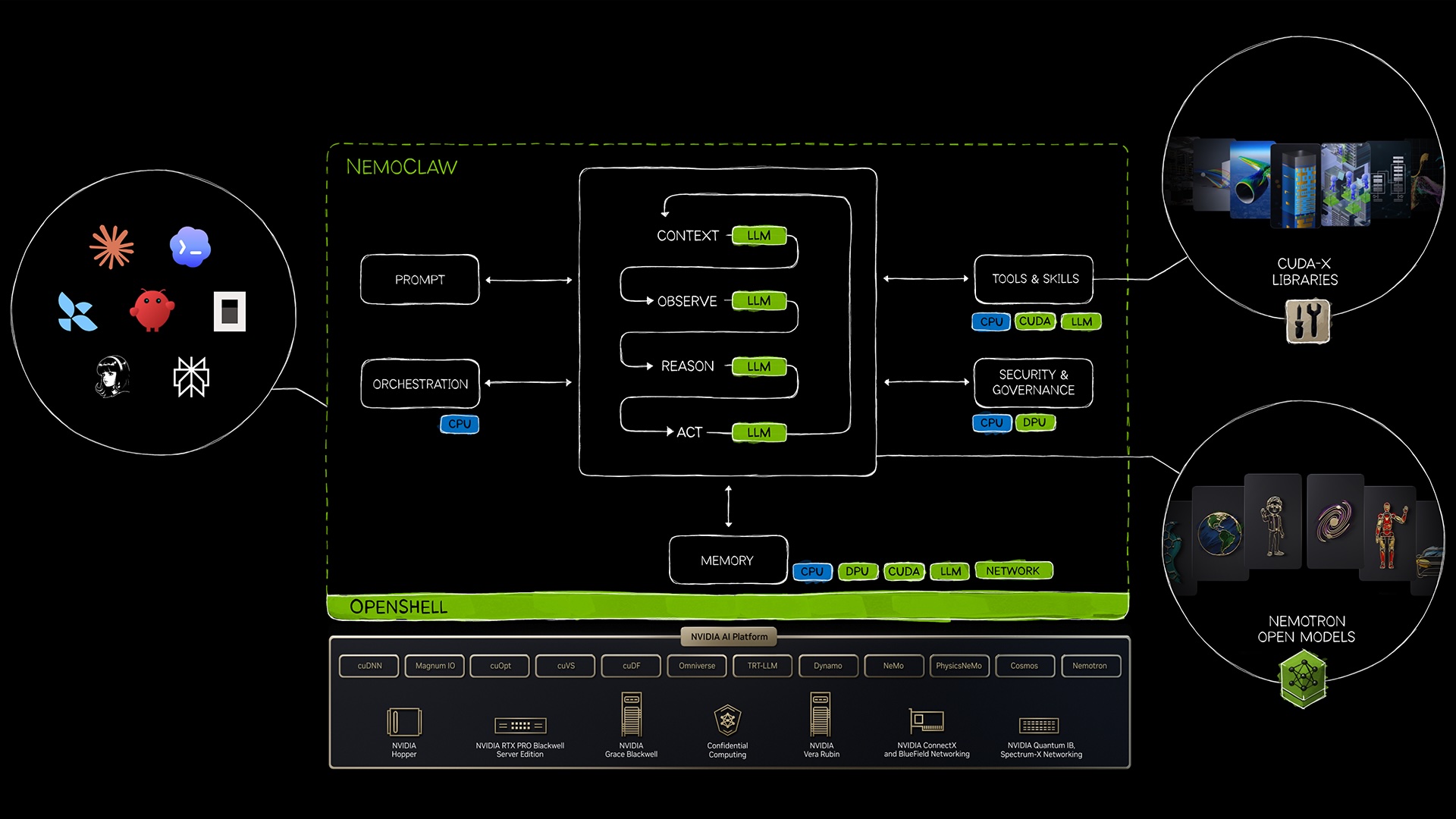
NVIDIA Agent Toolkit — comprising models, tools, skills and a secure runtime — provides an open, modular foundation for building safer, faster, lower-cost digital AI coworkers that enterprises and developers can customize, specialize, control and trust.
The Building Blocks for Specialized AI Coworkers
Enterprises and developers building secure, specialized AI agents require:
Models, which provide the reasoning foundation.
Tools and skills, which connect agents to the actions and domain expertise needed to get work done.
Runtime support, which helps agents execute workflows.
NVIDIA Agent Toolkit includes all three:
NVIDIA Nemotron open models give teams flexibility to customize, evaluate and deploy agents for their own needs.
NVIDIA NemoClaw blueprints provide patterns for safer agent behavior, delivering accurate results at lower costs, with tools and skills connecting agents to concrete actions.
The NVIDIA OpenShell runtime helps agents operate safely inside the systems where work gets done.
NVIDIA technologies accelerate all the pieces needed to turn a powerful frontier model into a fully functional digital coworker. The toolkit’s users can work with third-party agent harnesses — or agent orchestration frameworks — of their choice, including Hermes Agents and OpenClaw.
This unlocks enterprise AI momentum with control. And that matters because the most valuable agents across industries will be specialized.
Agents Take Shape Across Industries
The specialized AI foundation is already at work.
In life sciences, agents can help researchers call domain models for protein design, virtual screening, genomics analysis and biomarker discovery. The new NVIDIA BioNeMo Toolkit enables work that previously took months to be completed in days.
In healthcare, agents support clinical documentation, clinical decision support and care coordination. Plus, physical agents in robotics systems trained in digital twins of hospitals can scale surgical assistance and hospital automation to meet care demands.
In software, cybersecurity, industrial operations and customer workflows, agents can connect to the tools and data teams already use, helping people move faster through complex workflows.
It all points to the same larger shift: Agents become more useful when they can combine models, tools, skills, runtime and infrastructure in ways companies can adapt to their own workflows. NVIDIA Agent Toolkit provides an open, modular foundation that enables this combination.
Password manager maker LastPass is notifying customers that their personal information and customer support case records were stolen during a recent hack at one of its technology partners, marking the company’s latest data breach in recent years.
In an email shared with TechCrunch from an affected customer, LastPass said the breach occurred at market research firm Klue, and not its own systems. However, hackers abused their access to obtain reams of data about LastPass customers.
In a blog post that shared information about the incident, LastPass said the hackers took customers’ names, phone numbers, email addresses, physical addresses, as well as customer support case data and sales-related data.
LastPass said the company’s own infrastructure was unaffected, including customers’ password vaults.
It’s not yet known what was in the contents of customer support tickets, although they likely contain fragments of potentially private or sensitive information. Customers typically contact customer service when they are having a billing issue or need assistance in gaining access to their accounts. Past incidents involving customer support tickets have included credentials and government-issued identity documents.
Spokespeople for LastPass did not immediately respond to TechCrunch’s request for comment, or questions about the incident, including how many customers are affected by the incident.
LastPass has more than 33 million users and around 1.6 million paying customers as of 2024, according to its website.
LastPass previously experienced a data breach in 2022, in which hackers stole the company’s entire store of customer password vaults, which are used to store their sensitive credentials, such as passwords, tokens, and other personal and credit card numbers.
While the vaults were encrypted with master passwords only known to the customer, the breach allowed hackers to brute-force and crack the vaults offline with the weakest master passwords, and subsequently access the secrets inside. Several crypto thefts were later linked to the LastPass breach, after hackers were suspected of stealing the victim’s wallet keys by cracking their password vault.
Klue CEO Jason Smith said in a blog post that the company identified hackers in its systems on June 12. A hacking and extortion group called Icarus took credit for the breach, and have publicly threatened to release the stolen data if a ransom isn’t paid.
Smith has not responded to TechCrunch’s emails about the incident, including how many customers are affected or if the company has been in contact with the hackers.
When you purchase through links in our articles, we may earn a small commission. This doesn’t affect our editorial independence.
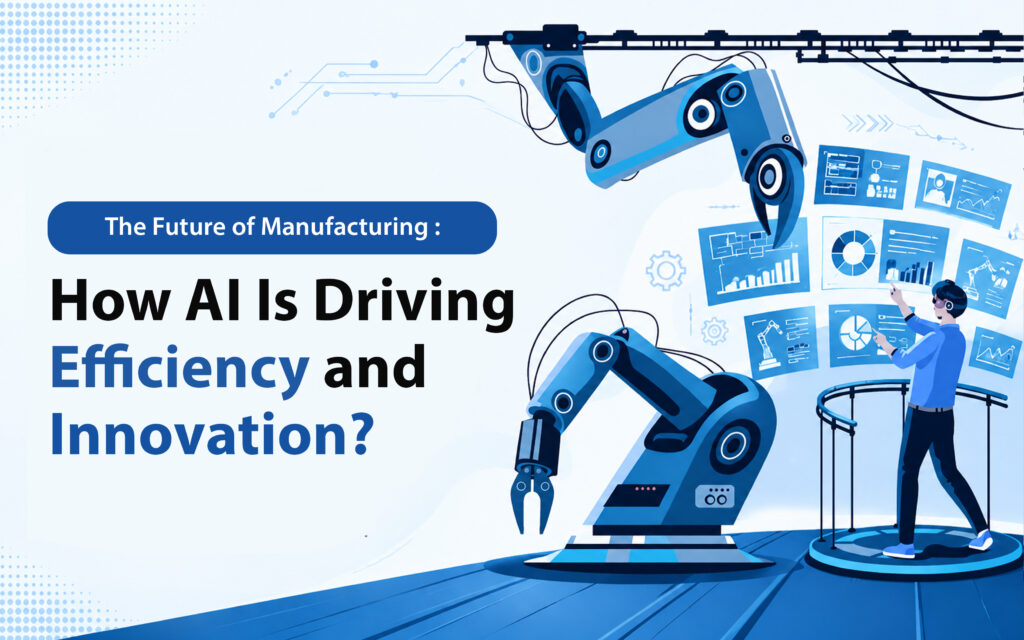
The Future of Manufacturing: How AI Is Driving Efficiency and Innovation?
Manufacturing is entering a new phase of digital transformation where Artificial Intelligence (AI) is becoming part of everyday operations. Global manufacturers are facing increasing pressure to improve productivity, reduce costs, manage supply chain disruptions, and maintain high product quality. Traditional approaches alone are no longer enough to keep pace with changing market demands.
According to Deloitte’s Smart Manufacturing Survey, manufacturers continue to increase investments in AI and smart factory technologies to improve predictive maintenance, product quality, and supply chain resilience.
AI is helping manufacturers address these challenges by turning operational data into actionable insights. AI solutions for manufacturing support predictive maintenance, quality inspection, intelligent document processing, and supply chain optimization across the manufacturing ecosystem.
Why Is AI Important in Manufacturing?
Organizations looking to accelerate digital transformation are increasingly investing in AI-powered manufacturing solutions that improve visibility across operations and support data-driven decision-making.
Modern manufacturing environments generate large volumes of data from machines, sensors, enterprise applications, maintenance records, supplier networks, and operational documents. Much of this information remains underutilized because it exists across disconnected systems.
AI helps organizations connect these data sources, identify patterns, and support faster decision-making. As a result, manufacturers can reduce downtime, improve resource utilization, and respond more effectively to operational changes.
Organizations that invest in AI are also building more resilient operations that can adapt to market fluctuations and customer expectations.
What Are the Benefits of AI in Manufacturing?
AI helps manufacturers improve productivity, reduce downtime, optimize supply chains, and automate business processes while enabling faster, data-driven decision-making.
Industry adoption continues to accelerate. According to Deloitte’s 2025 Smart Manufacturing Survey, manufacturers reported up to 20% improvement in production output, 20% improvement in employee productivity, and 15% unlocked operational capacity through smart manufacturing initiatives.
The same study found that 80% of manufacturing executives plan to invest at least 20% of their improvement budgets in smart manufacturing technologies over the next few years.
Manufacturers are using AI to:
Reduce equipment downtime
Improve product quality
Optimize inventory management
Strengthen supply chain visibility
Increase workforce productivity
Automate document-intensive processes
Lower operational costs
Support data-driven decisions
As AI adoption grows, manufacturers are moving beyond isolated pilot projects and integrating intelligent technologies across production, maintenance, supply chain, and enterprise operations. Organizations that build strong data and automation foundations today will be better positioned to compete in the future of smart manufacturing.
Unexpected equipment failures can disrupt production schedules and increase operational costs. AI models analyze machine performance data to detect early signs of wear and identify potential failures before they occur.
This allows maintenance teams to schedule repairs proactively, reduce unplanned downtime, and extend the life of critical assets.
Manual quality inspections can be time-consuming and inconsistent, particularly in high-volume production environments.
AI-powered computer vision systems can analyze products in real time, identify defects, and maintain quality standards across production lines. Faster defect detection helps reduce waste and minimize costly rework.
3. Supply Chain Optimization
Supply chain disruptions continue to challenge manufacturers across industries. AI-powered supply chain management can analyze demand patterns, supplier performance, inventory levels, and logistics data to support more accurate forecasting.
Better visibility across the supply chain helps organizations improve inventory management, reduce delays, and maintain business continuity. Many manufacturers are also adopting AI-powered supply chain solutions to improve forecasting and operational coordination.
4. Production Planning and Workforce Management
AI can evaluate multiple production variables simultaneously, including workforce availability, machine capacity, inventory levels, and customer demand.
This enables manufacturers to optimize production schedules, improve workforce allocation, and reduce operational bottlenecks.
5. Inventory and Facility Management
Manufacturers often struggle with excess inventory, stock shortages, and facility management challenges. AI can help organizations optimize inventory levels, monitor asset utilization, and improve operational planning across manufacturing facilities.
How Does AI Improve Manufacturing Documentation?
Operational efficiency depends on accurate and accessible information. Manufacturing organizations manage thousands of documents, including work orders, maintenance logs, inspection reports, compliance records, engineering drawings, supplier contracts, invoices, and standard operating procedures.
Managing these documents manually can slow down workflows and create information gaps.
At USM, we help manufacturers modernize document-intensive operations through AI-powered automation capabilities that include:
Intelligent document processing
Automated data extraction
AI-assisted document classification
Enterprise search and knowledge retrieval
Workflow automation for operational documentation
Integration with existing ERP and enterprise platforms
By reducing manual effort and improving access to information, organizations can accelerate decision-making and improve operational consistency.
How USM Supports AI-Driven Manufacturing?
USM works with manufacturing organizations to transform data-intensive and document-heavy business processes through practical AI solutions. Our expertise spans AI in Manufacturing, intelligent automation, predictive analytics, and connected factory initiatives.
Our manufacturing AI capabilities support use cases such as:
These capabilities help organizations reduce operational inefficiencies while improving visibility across business functions.
Conclusion: Building the Future of Manufacturing with AI
The future of manufacturing will be shaped by organizations that can combine operational expertise with intelligent technology.
As manufacturers continue to modernize their operations, AI will play an increasingly important role in improving productivity, reducing operational complexity, and enabling smarter business decisions.
At USM – best AI company in USA, we help manufacturers modernize document-heavy workflows, automate operational processes, and build AI-powered manufacturing ecosystems that improve visibility and reduce manual efforts. Our AI manufacturing solutions are designed to help organizations build more resilient, efficient, and future-ready operations.
AI in manufacturing is the use of artificial intelligence technologies to automate processes, analyze operational data, improve production efficiency, predict equipment failures, and support better business decisions across the manufacturing lifecycle.
How does AI improve manufacturing efficiency?
AI improves efficiency by automating repetitive processes, predicting equipment failures, optimizing production schedules, improving inventory management, and helping organizations make faster decisions using operational data.
Can AI reduce manufacturing costs?
Yes. AI can help reduce costs by minimizing downtime, improving quality control, lowering maintenance expenses, reducing waste, and streamlining document-intensive workflows.
Is AI only for large manufacturers?
No. AI solutions are increasingly scalable and can be implemented across organizations of different sizes. Many manufacturers begin with targeted use cases and expand adoption as they realize business value.
What are the top AI use cases in manufacturing?
The most common AI use cases include predictive maintenance, quality inspection, supply chain optimization, inventory management, production planning, document automation, and workforce management.
Can AI integrate with ERP systems?
Yes. Modern AI platforms can integrate with ERP, MES, CRM, and other enterprise systems to automate workflows and improve operational visibility.
How does AI support smart factories?
AI supports smart factories by connecting machines, sensors, enterprise systems, and operational documents to provide real-time insights, improve productivity, and enable data-driven decisions.
How does USM help manufacturers adopt AI?
USM helps manufacturers implement AI solutions for predictive maintenance, document automation, intelligent supply chain management, enterprise knowledge management, and workflow optimization. Our AI capabilities integrate with existing enterprise systems to improve operational efficiency and support digital transformation initiatives.
Sand: Raiders of Sophie launched into early access today after a number of last-minute delays, so I finally got the chance to try out the first-person base-building extraction shooter.
My first thought after about two hours of play? It’s like Sea of Thieves but on land, and if your vehicle gets destroyed you’ve gotta build a new one: you can’t just wait a few seconds and respawn with a pristine new ride.
Sand: Raiders of Sophie Launch Trailer | Out Now On Steam – YouTube
The walking bases, called tramplers, are the star of the game. Before you embark on a mission—you’re in outer space, orbiting a desert planet on some sort of Victorian-era gaslamp space station, by the way—you need to prep yourself and your trampler. You can build one yourself by snapping together modules (I haven’t played too much with this feature yet) or use a preexisting model.
Latest Videos From
Take a couple handheld weapons like a pistol, shotgun, or rifle, fill your pockets with ammo, then bring a crate containing heavy guns for your trampler, like 40mm and 80mm cannons.
Once you deploy to the planet, you need to run around your customizable walking base getting it ready for action: mount the guns in a few places on the exterior and load them up with ammo. Manually fire up the huge engine, then run to the steering emplacement and start throwing giant levers like you’re Kenneth Branagh driving his spider-mech in Wild Wild West. Your big, noisy, smoke-spewling behemoth will begin slowly stomping across the dunes.
(Image credit: tinyBuild)
Even the smallest mechs are big enough that getting around on them takes time, having to clamber up ladders and dash through the different compartments to reach the guns, engine, steering, and storage areas. I’ve only played Sand solo, and there’s definitely that same ultra-busy Sea of Thieves feel to it. I’ve got to pilot this huge mech, adjust how fast I’m going, and check the map, all while scanning the horizon for lootable locations and enemy tramplers (by spying ominous clouds of black smoke instead of distant sails).
I also have to leave my mobile base all the time, scurry nervously across the sand on foot when I want to do some looting, terrified the whole time that another mech is gonna stride up and start blowing mine to pieces. That’s a very Sea of Thieves-like feeling.
Keep up to date with the most important stories and the best deals, as picked by the PC Gamer team.
(Image credit: tinyBuild)
When the shit goes down, I’ve gotta leave the wheel to man the turrets, some of which are located well on the other side of the vehicle. It’s a mad rush to reload guns and aim turrets and repair damage and make sure the mech, which is still walking so it doesn’t become a stationary target, isn’t about to crash into something like a big rock or rusted ship. It’s glorious chaos, especially for one person.
The sound design in Sand is excellent, too: the trampler makes fantastic mech noises, gears groaning and cables jangling as it lurches across the landscape. The mounted guns are deafening, really making you feel like you’re firing a huge, deadly weapon. And you can hear battles taking place from well across the map, letting you know other players are somewhere in the neighborhood.
(Image credit: tinyBuild)
The PvE part comes in with ghoul-like NPCs who guard some lootable locations: I only ran into a few of them and they’re not the most dynamic enemies, basically running toward me and shooting me on sight. More devastating are the automatons who (I think) come blasting down to the planet from orbit and begin stamping around after you. I ran into a trio of them, and while they’re not as big as player-built tramplers, they still sock a punch with their artillery and take a decent amount of damage to bring down.
If you are playing Sand solo, you can join a server that is solos-only.
Like Sea of Thieves, Sand is harrowing and tense and it’s definitely not a game meant for solo players: there’s just a little too much to handle if you’re playing on your own. There’s one thoughtful feature, though: if you are playing Sand solo, you can join a server that is solos-only, so at least you won’t get mobbed by larger crews. Even Sea of Thieves doesn’t do that.
Once you’ve done some looting and stored your stuff in the cargo hold of your trampler, you can drive your trampler to an extraction point, where most of the combat takes place. You have to disembark and climb a tall tower to kick off the extraction sequence, wherein a ship takes a few minutes to come down from orbit to collect you. That’s the cue for everyone in the area to stomp your way and try to blow you to hell first.
(Image credit: tinyBuild)
I’ve done three voyages so far, though two ended early due to launch-day server issues. My second mission was a fun one: my trampler got blown up by computer-controller walkers that swarmed me, and since I didn’t die, I was able to run to an extraction point where another player was about to lift off. I stowed aboard his trampler, thinking it might let me sneakily extract along with him, but once he took off I simply died.
In my last mission, I looted some old ships I found in the desert, shot a few ghouls, bombarded a player attempting to extract (but failed to stop him), then extracted myself while a different player stomped over and took some cannon shots at me. Pretty fun, and I’m interested in crewing up with some friends and playing it more once the server issues have been resolved.