As we enter 2026, AI-powered chatbots are evolving from simple automated tools to strategic business partners. Modern organizations are increasingly leveraging AI chatbots to streamline operations, enhance customer experience, and unlock new revenue streams.
With the market expected to surpass $10 billion in value in 2026, and a majority of enterprises embedding chatbots into core operations, AI‑driven conversational platforms are rapidly moving from optional to essential technology in business strategies.
For businesses aiming to accelerate digital transformation, understanding the latest AI chatbot development trends in 2026 is essential to stay competitive, agile, and customer-focused.
In this article, we share key insights and emerging trends in AI chatbot development, providing a roadmap for organizations aiming to optimize their operations and customer engagement in the coming year.
Why AI Chatbots Are Critical in 2026?
AI chatbots aren’t just a nice‑to‑have; they are central to digital transformation strategies worldwide:
The global AI chatbot market is valued at $10–11 billion in 2026, with analysts forecasting continued rapid expansion.
91% of companies with 50+ employees use chatbots in at least part of their customer journey.
64% of small businesses plan chatbot adoption by 2026.
59% of consumers believe generative AI will change customer interaction norms.
Moreover, nearly half of all website customer interactions are managed by chatbots today, and 62% of consumers prefer chatbot support over waiting for a human agent.
The Growing Role of AI Chatbots in Modern Business
AI chatbots are no longer just customer support tools. They reduce operational costs by automating repetitive interactions, provide 24/7 support, and deliver personalized experiences that foster customer loyalty.
Beyond customer service, chatbots are now integral in:
Sales and marketing
Human resources and employee support
IT helpdesk and internal workflows
Supply chain management
Modern chatbots powered by AI and advanced Natural Language Processing (NLP) can go beyond scripted answers, making them indispensable for enterprise efficiency and scalability.
Organizations that invest in next-generation chatbot technologies position themselves to transform not just how they interact with customers, but how they operate end-to-end.
Top AI Chatbot Development Trends for 2026
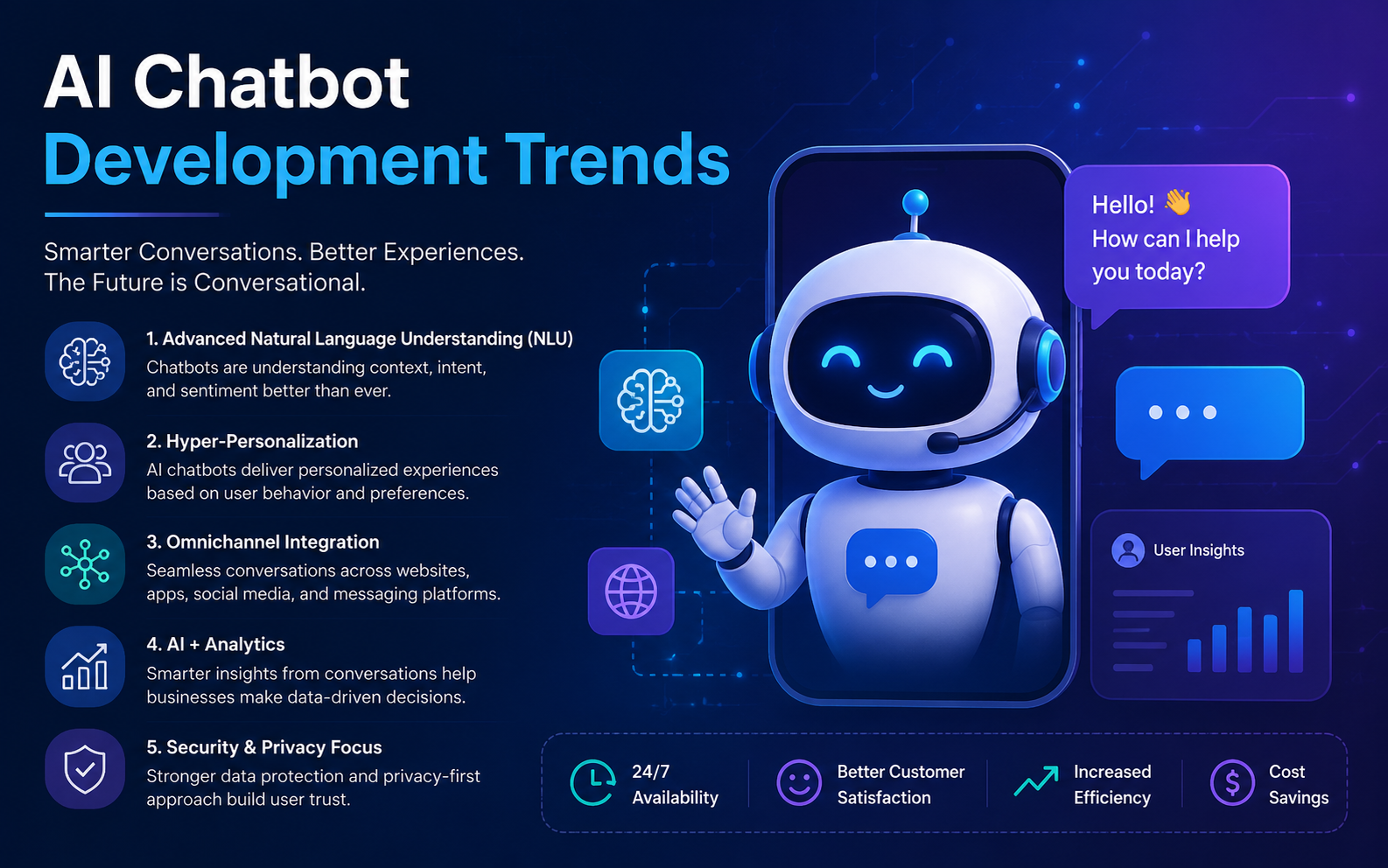
Hyper-Personalization Through Contextual Understanding
Modern chatbots leverage advanced NLP models to deliver tailored recommendations, not generic scripts. This aligns with the fact that over 60% of consumers believe AI will change how they interact with companies, a key driver of personalization efforts.
Benefits:
Personalized recommendations
Seamless multi-step troubleshooting
Enhanced sales conversions and customer satisfaction
Hyper-personalized chatbots act as trusted digital assistants, transforming both customer interactions and internal operations.
Multimodal Interactions: Voice, Text, and Beyond
The future of chatbots is multimodal. While text-based chatbots remain common, audio and visual AI interfaces are on the rise, with voice integration becoming a standard feature in nearly half of new deployments and expected to grow further.
45% of new AI chatbot deployments already include voice capabilities, and this is expected to reach 78% by 2026 as voice and multimodal interactions become baseline expectations.
Voice interfaces powered by AI speech recognition and synthesis are becoming mainstream, especially on mobile and IoT devices. Businesses can deploy chatbots that switch effortlessly between text and voice, catering to user preferences and contexts.
Enterprise-Grade Security and Privacy by Design
In 2026, privacy expectations rank among the top concerns as chatbots penetrate new business functions, even as adoption grows.
As chatbots handle sensitive customer and operational data, security and privacy become paramount. Regulations like GDPR and CCPA require strict data protection, but beyond compliance, customers expect secure interactions.
USM advises businesses to partner with AI developers who prioritize privacy engineering and adopt federated learning or on-device AI models where data never leaves the user environment, minimizing breach risks while maintaining personalization.
Seamless Integration with Business Systems and Workflows
AI chatbots will act as integrated nodes in business ecosystems. This means seamless interoperability with CRM, ERP, HR platforms, marketing automation tools, and supply chain management systems.
AI chatbots can now automate 40–60% of routine HR, IT helpdesk, and procurement tasks, cutting handling times by 70% and lowering staffing costs by up to 30%.
These integrations enable chatbots to perform sophisticated actions, from updating customer records and triggering workflows to initiating purchases or managing inventory alerts, all through conversational interfaces.
Such connectivity reduces manual work, accelerates response times, and enables proactive engagement based on live business data.
Advanced Conversational AI with Large Language Models (LLMs)
LLM‑powered chatbots such as generative AI systems will dominate ~82.7% of global chatbot usage, reflecting broad enterprise and consumer adoption.
Large Language Models (LLMs) like GPT‑class models empower chatbots to handle complex queries and natural conversation. These LLM‑enabled bots now power most leading enterprise conversions and customer interactions thanks to improved understanding and creative responses.
In 2026, chatbots powered by fine-tuned LLMs will serve as virtual advisors, knowledge bases, and even brand storytellers, delivering coherent, natural, and engaging conversations that build trust.
However, businesses must carefully manage LLM-powered chatbots’ use to avoid risks like misinformation or bias, implementing guardrails and human-in-the-loop systems for quality control.
AI-Powered Analytics and Continuous Learning
Data-driven improvement is a core chatbot trend. Advanced analytics track interaction quality, customer satisfaction, conversion metrics, and bottlenecks. Using AI and analytics dashboards, chatbots continuously learn from conversations, feedback, and business outcomes to improve their accuracy and value.
USM encourages organizations to invest in chatbot platforms with built-in analytics dashboards and automated retraining capabilities. This enables rapid iteration and alignment with evolving business goals and customer needs.
Industry-Specific, Domain-Aware Chatbots
Industries like healthcare, finance, and retail now deploy chatbots trained on domain expertise, not just basic NLP, providing relevant, compliant, and reliable support.
For example, healthcare chatbots will understand medical terminology, patient privacy laws, and clinical workflows. Financial services bots will be versed in regulatory compliance and risk assessments. These domain-aware chatbots provide more relevant, compliant, and effective support, driving deeper impact.
USM’s experience developing tailored AI solutions for diverse sectors highlights the power of domain expertise combined with cutting-edge AI.
Human-AI Collaboration for Complex Problem Solving
Despite rapid AI advances, certain tasks require human judgment and empathy. Future chatbots will seamlessly escalate conversations to human agents with context, enabling hybrid workflows that combine AI efficiency with human insight.
This collaboration enhances customer experience, reduces resolution time, and optimizes workforce allocation. In 2026, businesses will implement intelligent routing, agent assist tools, and unified communication platforms that empower human-AI teams.
Strategic Guidance for AI Deployments in 2026
For organizations across industries embarking on digital transformation, integrating advanced chatbots requires a thoughtful, phased approach:
Define Clear Business Objectives
Start by identifying the specific operational challenges and customer experience goals your chatbot must address. Whether it’s reducing call center volume, improving sales conversions, or automating internal workflows, clear KPIs guide development and measurement.
Invest in Scalable, Flexible Platforms
Choose chatbot frameworks that support multimodal interaction, LLM integration, robust analytics, and easy system integration. Cloud-native, API-first platforms enable agility and future-proofing.
Prioritize Data Quality and Privacy
Effective AI depends on clean, relevant data. Implement data governance policies and ensure privacy compliance from day one. Consider privacy-preserving AI techniques to build customer trust.
Start with Pilot Programs and Iterate Fast
Deploy chatbots in controlled environments to gather user feedback, test integrations, and tune AI models. Use analytics to refine conversation flows and improve performance rapidly.
Design for Human-AI Collaboration
Plan for seamless escalation paths and equip your workforce with AI-powered tools. Empower agents with real-time insights to deliver better service.
Commit to Continuous Learning and Improvement
Treat chatbots as evolving assets. Use conversation data and performance metrics to retrain models, update knowledge bases, and adapt to changing customer needs.
Conclusion
Integrating AI chatbots in 2026 isn’t just a tech upgrade; it’s a strategic business leap. With real business data on adoption rates, market growth, ROI, and customer preference, your article now has the credibility and relevance to rank higher, engage executives, and convert decision‑makers.
At USM, we provide tailored AI chatbot solutions that scale with your needs and deliver measurable ROI. Businesses adopting these trends can gain significant competitive advantages and lead in the next era of digital transformation. Book Executive AI Briefing
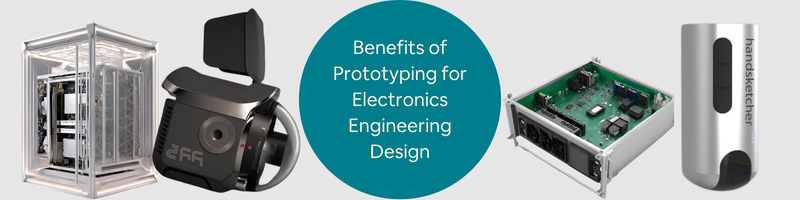
Today’s post explores the benefits of prototyping for electronics engineering design to improve new PcB hardware. In every hardware electronic development, the prototyping phase always comes early in the process because it really is that important. It doesn’t really matter if you’re planning to develop a complete device or just the PCB; you have to build a physical prototype right after finalizing the concept. The first form of physical prototype is typically known as Proof of Concept (PoC). The main purpose of a PoC, as the name suggests, is to prove that the design can indeed provide solutions to problems in the way you expect it to do.
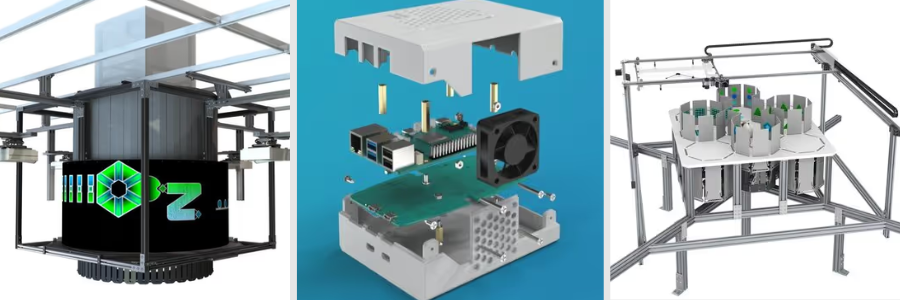
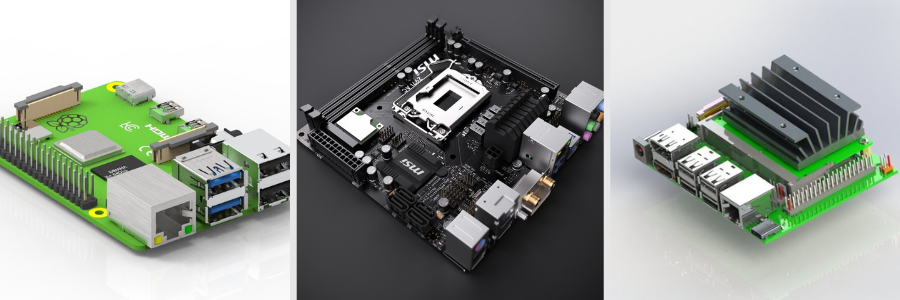
Because this is an early prototype, you’re allowed to build it using off-the-shelf parts and components. Development kits like Raspberry Pi or Arduino are more than capable of getting you through this phase. PoC prototypes, in most cases, are not meant for mass production because the cost is too high and the design is just too ugly to attract buyers. From this point on, the prototype undergoes an iterative process to improve its appearance and functionality. Easier said than done, of course.
All the work that such a project entails can easily overwhelm anybody, unless they get the right help from the right electronics design professionals, and that’s where Cad Crowd comes in. It’s a specialized freelancing platform with thousands of hardware development experts from around the world. Whether you need electrical/electronics engineers or industrial designers, Cad Crowd has the specialists to connect you for any hardware development project.
On the surface, prototyping may appear to be a simple task of creating a product sample. Dig deeper, and you’ll be glad to discover the myriad of benefits it offers for improving the PCB design.
Schematics do sometimes lie
You’ve missed dinner and worked overtime to get every line on the PCB schematic as close to perfection as possible. It eventually looks great just after midnight, and you immediately go to bed knowing that you’ve actually finished something. Specialized CAD software allows you to build a complete “virtual” PCB without even touching a single component or solder. It all happens on a computer screen, and the schematic itself does look pretty realistic. That’s why it’s commonly referred to simply as “virtual prototyping.”
The problem with virtual prototyping is that you never really know if the schematic will work as intended in the real world. What appears to be a flawless schematic from an expert schematic designer on the screen can turn into a troubleshooting nightmare once you build a physical version. Nobody expects the worst, but you should still consider that possibility. And to be frank, many things can go wrong even when the schematics look perfect. What if you’re using an incorrect pin on the USB connector? What about a mirrored footprint, incorrect voltage draw, or logic level shifter issue?
Virtual prototyping is great and all, but nothing beats having a physical PCB and testing it yourself. If nothing goes wrong, think of it as having a clear verification that the design is correct. And if things do go wrong, at least the board and the components aren’t so expensive that you lose sleep over them. Grab a multimeter and have a good hunt. The idea is to catch and fix the mistakes early on when it’s still cheap to make them. Don’t worry about botched repairs and jump connections using soldered wires and hot glue. Aesthetics is the least of your concerns at this point. You can afford some more boards and components. The important thing is you know where the mistakes are and how to do better next time.
We’re not saying the specification sheets from the manufacturers are wrong. It’s just that when the electronic components are already installed on the board, with all their connections and interactions, the numbers can be smaller or larger than what you see on the datasheets. Manufacturers and PCB design companies test their chips and sensors in a controlled facility, an ideal environment with minimum interference. Some portions of your project may take place in a lab-like room, but the final product (the finished device) is meant to be used in the real world, where very few things are close to ideal. Interferences come from every corner, and voltage fluctuations happen more often than you think.
Physical prototyping is where you put the specification sheet to the test. You’ll find out whether the microcontroller can stand its ground despite interruptions, or whether the amplifier gets along with the switching regulators. Many electronic components can go haywire under heavy load. The buck converter gets hotter than the numbers suggest, the capacitor delivers only half of what it needs to give, or the supposedly compatible chips develop weird timing issues if you look at it funny.
Testing a physical prototype helps reveal at least a majority of these unexpected problems. Because you’re still in the prototyping stage, no one will complain if you experiment with different parts and revise the list of components. You probably need half a dozen prototypes until you get every single detail right, but it’s still the best way to produce an accurate Bill of Materials later on.
You’ve heard people say how old devices are better because they were overengineered to last a lifetime. It’s always a bit annoying, as the statement basically implies that modern products can never be as good because nobody cares enough to put in any real effort. How often have you come across someone pointing out “they don’t make ‘em like they used to,” as if no ancient gadget ever broke even once? No one is against overengineering. But everyone knows it’s not a very efficient way to develop electronics, especially since design engineering services are all about efficiency. People overengineered things in the past, maybe not because they wanted to, but because they lacked the right tools to do things efficiently.
Nowadays, you have CAD software, PCB simulation tools, and 3D printers, among others, to keep the work as efficient as possible. The tendency to overengineer is still very much alive today, whether you realize it or not. When designing a new PCB, it’s only common to want to use higher-priced components. You think that a $5 resistor (instead of the $0.1 alternative) will boost your confidence and somehow lower the chances of failures. There’s probably some truth to that, although it doesn’t mean that the cheaper resistor won’t work. Physical prototyping is where you’ll figure out whether the more affordable components do their jobs just as well as the more expensive counterparts.
If your plan involves creating no more than a couple of dozen devices, sure, it’s fine to use the premium parts. However, for a product to be mass-produced (5,000 units or more), even a small price difference for a single component can amount to hundreds of thousands of dollars. Assuming the cheaper resistor works just fine, there’s no need to overengineer the board and for the new product design company to spend extra money on the more expensive option. You can only confirm this with a physical prototype. If a specialized, costly “military-grade” resistor doesn’t actually make your device run noticeably better, then the standard, cheaper option should be the one you pick.
In some cases, you can also avoid overengineering by removing excess, for example, reducing the number of capacitors, so long as it doesn’t affect performance. It’s an iterative process to reduce production cost per unit as much as possible while maintaining the board’s functions and features. Every good PCB designer needs a reasonable degree of obsession over this matter. They want to create the best design with the fewest resources, aiming to build an efficient, utterly functional design that makes good financial sense.
Do you need an enclosure?
To keep things simple, let’s assume you do. Say you’re designing a PCB hardware to build an electronic device. Like many other electronics in the market, it’s certainly not a PCB with exposed parts. The board is fitted into an enclosure to protect all working components from the elements, including occasional water splashes, drops, and general rough handling by users. More importantly, the enclosure is usually an insulator, preventing hands and fingers from coming into contact with live electrical parts. This is where electronic enclosure design services come in.
But it’s also about aesthetics. One of the main reasons big companies spend millions of dollars on their design departments is to ensure that the next products will appeal to buyers. Think about it: if you remove the back cover of two calculators from two different brands, they probably appear pretty much the same. Well, they won’t be identical, but quite similar. From the outside, however, those devices should be easily distinguishable, whether from the size and color of the buttons or the form factor. Curb appeal plays a factor in every buying decision. You want to make the enclosure as attractive as possible to draw people’s attention.
That being said, strictly from engineering viewpoints, ensuring a good fit is the priority. An enclosure doesn’t have to be fancy, but it almost definitely needs to be perfectly compatible with the PCB inside. Being “compatible” means that all the screws going through the PCB to secure it to the enclosure don’t disrupt functionality in any way, the holes line up with the hardware interfaces, and everything feels snug with zero rattling. Although the enclosure designer can, of course, design the enclosure almost entirely in CAE, the only way to be 100% sure it will fit the PCB is to physically prototype it.
Given that nowadays you can even build a highly complex plastic enclosure with a 3D printer, not much can get in the way of fabrication. In the event the printed enclosure doesn’t fit perfectly, it won’t take more than a piece of sandpaper and a file to make corrections. Perhaps a capacitor is blocking the lid mechanism, the power switch feels too stiff because the hole is misaligned, the screen slot is too wide, or the ventilation is too small to dissipate heat quickly. Remember, you’re still in an early prototyping phase at this point, so having some rough edges here and there isn’t a big deal. You can’t tinker with the digital file, print it again, and repeat until you discover zero issues.
Hot spots are not cool
When an item gets too hot, you usually pour cold water to bring the temperature down quickly. The problem with electronics and basically all things with a working PCB in them, is that they don’t like heat and hate getting drenched even more. Heat has never been on speaking terms with electronics since forever. High temperature always lurks around the corner, but electronics always try to keep it as far away as possible. Sometimes, actually more often than you think, the electronics have to succumb, accept their fate, throttle, fail, and in the worst-case scenario, literally melt.
Not every square millimeter or component on a PCB generates the same amount of heat. Physical prototype design engineering services allow you to easily identify any hot spots by putting the board under a thermal camera. This, of course, necessitates the board to fully function in the first place. Switch it on, and begin testing every single feature you have. At some point, you have to run the board at full load to see which parts generate the most heat. Just a reminder, hot spots are nothing unusual in electronic devices. If you see all your devices at home through a thermal camera, you’d be surprised to witness the presence of glowing red entities everywhere.
Heat is normal as long as the temperature remains within the device’s safe limit. For instance, a laptop’s CPU can operate happily at 90 °C during intensive tasks like 3D rendering or heavy multitasking. The good thing is that advanced devices, such as computer processors and motherboards, include safety measures to maintain a healthy operating state. Think of it as a “kill switch” of some sort. It will reduce the workload, so it won’t break itself. It’s going to run a little slow, but at least it stays cool.
Your PCB may not have a similar kill switch, but knowing where the hot spots are can at least give a clue about how to minimize the issue. Perhaps you can use a passive heat sink, a thermal pad, larger ventilation holes in the enclosure, or, in extreme cases, redesign the entire board. From a PCB designer’s perspective, a complete redesign seems daunting, though not unlikely, especially when the hot spots are all over the place, and the temperatures are so high that using the device is uncomfortable. For instance, the PCB is intended for a handheld device such as a smartphone or a satnav. Imagine having to hold a device that’s constantly burning at 50° Celsius. Gloves might help, but do you know how unpleasant it is to operate a small device with them?
Electricity is money
We won’t try to make the case for how cheap electricity can be if not for data centers, tariffs, inflation, and all that. We’re just going to admit: yes, electricity is getting more expensive. But why bring this up at all? PCB and electronics do consume electricity. You might argue that some PCBs need no electricity, such as those in computers and tablets in a car, and you’d be very wrong. They do consume electricity, produced by the fuel. Also, every modern car has a battery, and just about everything in it is an electronic device with a circuit board. Even the cars themselves are literally called electric vehicles.
Because electronic devices require electricity to operate, the PCB must manage power consumption. It regulates the input, stops recharging when the battery reaches full capacity, delivers the power to the components, and puts some functions to sleep as soon as it’s safe to do so. If the PCB is for a device with a battery, power consumption (how efficient it is) can be the feature that makes or breaks the product. Say the PCB assembly designer’s new device is a smartwatch with basic features like an always-on display, Bluetooth connectivity to a smartphone, and a vibration alarm.
This new shiny device is supposed to last five days (120 hours) on a single charge. But when a user finds out it dies after just 12 hours, that person becomes an angry customer with the power of all of Facebook and Twitter to tell everyone to stay away from your product. Virtual simulation offers a workaround for monitoring power consumption without a physical prototype. As good as simulations are, they’re not exactly the best option when you need to predict “current leakages” coming from chips or resistors that decide to just go stubborn and refuse to sleep, which they’re supposed to, as soon as they stop doing anything. To detect and see this in real time, you can connect a physical prototype to a power profiler.
This way, you’ll be able to identify instances of phantom drain or precisely how many milliamps the board is using in different scenarios. Perhaps the unnecessary drain comes from the Bluetooth radio staying on longer than it needs to, Wi-Fi keeping search for new networks after establishing a connection, GPS running in the background, etc. High temperatures also affect battery life. And voltage drop is an annoyance each time the battery almost runs out of juice. In many cases involving power draw, the underlying problem may be the firmware rather than the hardware, which is important to remember with electronics design services. Tweaking the code and better heat management can help optimize battery life. All this data is also useful to create an accurate battery indicator for end users.
Firmware trial
In an ideal PCB development process, the hardware is ready just about the same time as the firmware is. But because “ideal” almost never happens, the firmware developers often have to wait until the engineers send the board for a test run. It only makes sense to develop at least the early versions of drivers using a prototype. Instead of sitting around and endlessly browsing GitHub while waiting for the perfect board, testing the firmware on a prototype would be a better use of time. An ugly PCB prototype with janky solder joints and jumpers is more than good enough to get firmware development started.
Guaranteed, it won’t be a pleasant experience writing code for hardware that you know is still going through multiple changes in the near future. The idea here is to cover the basics first, such as power management, sensor communication, and the user interface. Developers will find bugs and issues in so many places, and that’s exactly the point. Perhaps the way the PCB is wired makes it impossible to implement energy-saving sleep mode, or certain components don’t support high-speed communication. And in every product development, discovering problems on a prototype is much less worrying than bumping into issues on the final version.
Parallel development isn’t always easy, and sometimes downright impossible without effective project management. There needs to be an intermediary (DevOps or the like) to bridge communication between hardware and firmware teams. When done properly, however, it’s a huge time-saver. Every physical prototype iteration must be tested for firmware. For every step forward in the hardware department, the firmware refinement keeps pace closely behind. As the hardware reaches the final stage, the software should be around 90% complete.
Remember about prototyping being an iterative process? As development nears the end of that process, the hardware should be functional. A functional prototype is almost like a production version, except that it has not been perfected for mass production. That being said, there won’t be any major differences between the two versions, especially if the development follows DFM (Design for Manufacturing) services. A functional prototype is the version to showcase when you’re presenting the product to investors. Will this improve the hardware?
Not in the strictest sense of the word. But you’ll get accurate feedback from all those stakeholders. Feedback, you can then analyze and implement to get the design more in line with their expectations. Because stakeholders aren’t usually professional engineers, much of the feedback will most likely concern practical matters such as aesthetics, ease of use, water resistance, durability, and so forth. Although you’ve probably already thought about all that during the development process, all kinds of feedback are always welcome.
FCC test practice run
Just about everything with a PCB inside needs to pass the FCC test before you can send it to market. FCC wants to ensure the device doesn’t emit excessive RF noise that could interfere with other communication devices. The whole procedure is expensive and potentially takes forever. Any prototype designer in their right mind will not send a product for certification testing unless they’re 100% certain it won’t fail. You can improve your chances of getting certified by first sending the device, either bare electronics or with its enclosure, to an independent lab for a preliminary test. It still costs money, but at least you don’t have to wait months for the result.
Assuming the test discovers problems, fix them and send it for a second test. Consider the prototype a practice run to prepare you for the official certification procedure. The FCC test mostly concerns the electrical components, but the certification applies to the product as a whole. In other words, you need to get the finished device (PCB and enclosure, along with accessories such as a charging adapter if you plan to include it in the box) certified. A lot of people on the internet like to talk about the importance of DFM services when developing a product, but equally crucial is to build the device with certification in mind.
It’s good to have the design made for mass production, and even better when it’s also built to pass the FCC test. Thankfully, you can do both simultaneously. The general recommendation is to apply for the certification as late as possible, maybe while setting up the manufacturing. Only certify the product when you’re sure there won’t be any further design changes.
Closing thoughts
Hardware development is difficult. It takes real engineering expertise to build a custom PCB from scratch and design a brand-new enclosure. One good programmer can probably create entirely new software, but hardware development is a different beast. Not only do you need electrical and electronic engineering skills, but also firmware know-how. Realistically, a hardware development team includes at least one of the following: an electronics engineer, an industrial designer, or a firmware programmer. Much of what they do, as mentioned earlier, is to build multiple iterations of a physical prototype based on the PoC.
How Cad Crowd can assist
At the end of the development process, you expect the prototype designer to deliver a fully functional PCB (preferably with an enclosure) ready for mass production. Finding the right professionals for some highly specific task doesn’t have to be a struggle. Cad Crowd, with more than 15 years of experience in the industry, can take you to the center of a massive engineering and design hub, where you can collaborate with some of the most qualified hardware development experts. Contact us for a quote today!
MacKenzie Brown is the founder and CEO of Cad Crowd. With over 18 years of experience in launching and scaling platforms specializing in CAD services, product design, manufacturing, hardware, and software development, MacKenzie is a recognized authority in the engineering industry. Under his leadership, Cad Crowd serves esteemed clients like NASA, JPL, the U.S. Navy, and Fortune 500 companies, empowering innovators with access to high-quality design and engineering talent.
A sealed second-production copy of Super Mario Bros. for the NES that was called “the most significant video game ever offered at auction” sold on Friday for $3 million. The game has been sitting untouched in a box with a launch edition NES Control Deck console — in the original packaging with the plastic still intact — for the last 40 years, according to Heritage Auctions. What makes this particular copy so special is that it sports an unbroken glossy sticker seal, which was introduced in 1986 for a brief time before Nintendo switched to shrink-wrapping its games.
Only three second-production copies with the gloss sticker format are known to exist, according to the auction house, and this is the best among them, graded PSA 9.6 A++. “This specific variant has never appeared in a public auction in sealed condition, underscoring just how elusive it is,” according to the Heritage Auctions listing.
Heritage Auctions
Because these games weren’t protected by plastic, finding an example in such good condition decades after its release is a rarity. The game and the console it was bundled with are from the Los Angeles test market era, in the early days of Nintendo’s expansion into the US. “In many ways,” the auction house wrote, “it represents the closest a collector can come to owning the very moment Super Mario Bros. transformed console video games from a struggling novelty into a permanent part of cultural history.”
Working from home has become a normal part of life for many employees since the pandemic, as it offers greater flexibility and control over where work gets done. However, new research suggests that this shift may also be playing a role in rising mental health challenges.
Researchers writing in the journal Science analyzed data from five large surveys covering more than 580,000 U.S. workers between 2011 and 2024. Their findings suggest that the rise of remote work has significantly increased social isolation and may account for roughly one-third of the increase in mental distress observed since the pandemic.
The study focused on occupations that can be performed remotely, such as software development and office work, and compared them with jobs that require workers to be physically present.
Remote workers are spending more time alone
According to the researchers, workers in remote-friendly occupations spent 58% more hours working alone than those in jobs that cannot be done remotely. The likelihood of spending an entire day without any in-person human contact also increased by 72%.
Nadeem Sarwar / Digital Trends
The impact was even greater among people living alone. These workers were significantly more likely to go through a full day without interacting with another person, and they experienced a much larger increase in mental distress than workers living with family members.
The findings suggest that many conversations about remote work have focused on flexibility, convenience, and productivity while overlooking a more basic question of what happens when millions of people spend much less time around other people every day?
The hidden downside of workplace flexibility
For many adults, work is one of the few places where they regularly interact with people outside their households. Casual conversations, team meetings, lunch breaks, and other everyday interactions may seem unimportant, but they can play a meaningful role in maintaining social connections.
The researchers are not arguing that companies should bring everyone back to the office full time. Instead, the findings suggest that social connection could become a bigger challenge as remote and hybrid work arrangements become more common.
As more companies embrace flexible work policies, the study raises an important question about how workers can maintain meaningful social connections when their workplace is no longer a place they regularly visit.
Few games have generated as much momentum this year as Forza Horizon 6. The latest entry in Playground Games’ acclaimed racing series has earned widespread critical praise, including a fantastic 8/10 review from GameSpot, while also setting new player engagement records across the franchise. For a series that has consistently defined the open-world racing genre, it’s another major achievement — and one that reinforces Forza Horizon 6‘s place as one of the biggest games in the industry right now.
This time, the Horizon Festival heads to Japan. Long considered one of the most requested locations in the series’ history, Japan provides the backdrop for Horizon’s most ambitious world yet. Players can explore a sprawling open world that moves between bustling city streets, mountain passes, countryside roads and coastal highways, creating a driving playground built around variety and discovery.
It’s also the most dense map the series has delivered, with greater verticality and environmental diversity helping each region feel distinct. Whether you’re chasing races, hunting collectibles or simply exploring, there’s always something waiting around the next corner.
At the heart of the experience is a garage of more than 550 cars, giving players an enormous collection of vehicles to race, customise and master. The campaign begins with players arriving as a tourist before earning their place at the Horizon Festival and working towards becoming a Horizon Legend. Along the way, a new Collection Journal encourages exploration by tracking discoveries made throughout the world.
The scale of the game is matched by its accessibility. Forza Horizon 6 is available on XBOX Series X|S, PC via the XBOX app and Steam, and through XBOX Cloud Gaming across supported mobile devices, tablets, handhelds and smart TVs. The Standard Edition is also included with XBOX Game Pass Ultimate and PC Game Pass, allowing subscribers to jump straight into one of the year’s most talked-about releases.
Beyond the main campaign, Forza Horizon 6 has been designed to evolve over time. Players who qualify for the Horizon Festival gain access to the Festival Playlist, which introduces weekly challenges and events that reward new cars, clothing items and other unlockables. Future updates are also set to introduce Evolving World content, including seasonal Car Meets and new community-focused experiences.
Multiplayer remains a key part of the package. Players can explore Japan together through Convoys, participate in Shared World Meetups, tackle Horizon Play activities or simply cruise the open roads with friends. XBOX’s Discord integration also makes it easier for players to connect with communities, organise sessions and share their in-game creations.
The success of Forza Horizon 6 is also part of a broader trend across XBOX Game Pass. As the service continues to bring together major AAA launches, breakout indie hits and community-driven favourites, it has become one of the easiest ways for players to discover what’s new and worth playing.
Alongside Forza Horizon 6, subscribers can jump into titles generating plenty of conversation across the gaming community, including Mixtape, Escape the Backrooms and the highly anticipated Subnautica 2. With major showcases continuing to reveal upcoming additions and fresh experiences on the horizon, there’s always something new to discover.
For racing fans, though, Forza Horizon 6 remains the headline act. Between its acclaimed reviews, record-breaking engagement and stunning recreation of Japan, it’s a game that continues to set the standard for open-world racing. Forza Horizon 6 is available now on XBOX Series X|S, PC and XBOX Cloud Gaming, and is included with XBOX Game Pass Ultimate and PC Game Pass.
Charlie Javice, the convicted Frank founder, is reportedly seeking a presidential pardon, with her camp quietly courting people close to the Trump administration, according to the WSJ. So far, her name hasn’t turned up on a formal clemency request list at the Justice Department, it adds.
That list is growing fast. As the administration reportedly weighs handing out roughly 250 pardons this summer to mark America’s 250th birthday, a wave of clemency requests is pouring in from white-collar defendants — including Sam Bankman-Fried.
JPMorgan can’t be pleased by any of this. Last September, Javice was found guilty of fabricating millions of customer accounts to inflate her startup’s value before selling it to the bank for $175 million. She’s now serving more than seven years and is appealing, arguing the case against her was unfair.
The bank may have extra cause for concern given its relationship with President Trump. In early 2021, it closed accounts tied to Trump and his businesses shortly after the January 6 Capitol riot, a move that Trump has since called political “debanking,” suing JPMorgan and CEO Jamie Dimon for $5 billion. (JPMorgan denies any political motive.)
Javice has powerful friends, too, including Apollo’s Marc Rowan, an early Frank investor who testified on her behalf at trial. Rowan has donated to Trump’s campaigns and, since his reelection, has given millions more to Republican congressional groups.
By 2026, Bangladesh will grow very rapidly in the manufacturing and export industries. Many factories produce textiles, tools, steel parts, shipping factors and various merchandise for the world market, which is where high-powered fiber laser cutting becomes important.
To compete with certain countries, factories need to produce espresso quickly, accurately, and cheaply. It is in this that high-current fiber laser reduction equipment makes a huge difference.
These machines help factories reduce steel faster, reduce waste and promote a satisfactory product. For this reason, Bangladeshi manufacturing is more current and extra competitive.
Many factories now use an integrated tubular plate laser reduction tool to tackle specific types of metal chipping in a single tool. This allows you to time and place the input within the build.
Material waste is a big problem in traditional cutting methods.
Old machines:
Fiber laser cutting machines reduce waste because they cut very accurately.
This helps factories:
Save raw materials
Reduce cost per product
Increase profit
Improve efficiency
In the export business, saving costs is very important to stay competitive.
Large Format Machines for Big Industries
Many factories in Bangladesh work with large metal sheets. These are used in:
Shipbuilding
Construction steel structures
Heavy machinery
Industrial equipment
For these jobs, large format fiber laser cutting technology is very important.
It allows factories to:
Cut large metal sheets in one go
Avoid joining small pieces
Save time in production
Improve accuracy in big structures
This is very helpful for large industrial projects.
Easy Automation in Modern Factories
Modern factories in Bangladesh are also becoming smarter.
Fiber laser cutting machines can connect with:
Computer software
Robots
Automatic loading systems
Smart production systems
This reduces human work and increases speed.
Automation helps factories:
Reduce labor pressure
Avoid mistakes
Improve safety
Increase production speed
Smart factories are now the future of manufacturing in Bangladesh.
Lower Cost Production
One big benefit of fiber laser cutting is cost saving.
Factories save money in many ways:
Less electricity use
Less material waste
Fewer workers needed
Lower maintenance cost
Even if machines are expensive at first, they save money in the long run.
This is very important for export companies that work on tight profit margins.
Helping Small and Large Factories
Fiber laser cutting machines are useful for both small workshops and large factories.
Small factories can:
Produce better quality products
Compete with bigger companies
Reduce manual work
Large factories can:
Handle bulk export orders
Improve production speed
Maintain consistent quality
This makes the technology useful for the whole industry.
Strong Impact on the Bangladesh Economy
As more factories use fiber laser cutting, Bangladesh becomes stronger in global trade.
Benefits include:
More export orders
Better product quality
Faster production time
More job opportunities
Higher industrial growth
This helps the national economy grow faster.
Future of Fiber Laser Cutting in Bangladesh
The future looks very bright. In the coming years:
More factories will adopt fiber laser cutting machines
Technology will become cheaper
Automation will increase
AI will improve machine control
Production will become faster
Also, Bangladesh will continue to grow as a strong manufacturing country.
Conclusion
Such as high power fiber laser cutting is transforming Bangladesh’s manufacturing industry.
It helps factories:
Work faster
Improve product quality
Reduce waste
Save money
Increase export power
With tools like an integrated tube and plate laser cutting machine and advanced large format fiber laser cutting technology, Bangladesh factories are becoming more modern and competitive.
Several players involved in the World Cup have been spotted wearing unreleased Beats over-ear headphones over the past couple of weeks, and U.S. men’s national soccer team star Antonee Robinson is the latest to be spotted with them. Robinson was captured in a photo on his Instagram account wearing a two-tone version that appears to feature a white headband and housings but with royal blue ear cups.
Previous versions of the headphones seen in photos of Yamine Lamal have featured only a single color, and it’s unclear which color options are going to be available to the public, whether ear cups will be swappable to customize your own set, or if Robinson’s set is a custom version produced only for him or a limited number of influencers.
The unreleased headphones first appeared in a U.S. Federal Communications Commission database last month, and it’s clear Beats is undertaking a influencer seeding campaign throughout the World Cup to generate anticipation ahead of a public release, but the timing of availability remains unknown. It’s also unclear whether these will be a new version of the existing Beats Studio Pro over-ear headphones or if they will be positioned as a new product.
Ahead of the upcoming World Cup, football superstar Lamine Yamal has arrived at training camp for the Spanish national team sporting what seems to be the unreleased over-ear headphones that appeared in a U.S. Federal Communications Commission database last week. As suspected, the new headphones are a Beats product rather than an Apple product.
In a post on his Instagram account, Yamal shared …
Apple today shared a new Beats Pill ad that pays tribute to the reality TV show Love Island USA, which returned for an eighth season this week.
The ad does not mention Love Island USA, but the “Pill People” are said to have “entered the villa,” which is a clear reference to the show.
”If you’re binging a full summer of island drama, you’ll need battery life that can keep up,” says Apple. …
A few days after teasing upcoming Beats over-ear headphones in pink, football superstar Lamine Yamal today shared a Story on his Instagram account revealing a second color for the unreleased headphones: an ivory or stone color.
The Instagram Story is a still photo showing Yamal greeting a fan, and he is carrying a bag with both the pink and ivory color versions of the headphones hanging…
Welcome to the harshest and most majestic place on Earth: Antarctica.Kinetype
STORY This story takes place in the distant future: AD 2900. Earth has been ravaged by a number of disasters. Lethal viruses, food shortages, extreme weather, and unending wars have all but completely decimated the population. Survivors find themselves without homes, and this once lush planet has been transformed into a desolate star. Amidst this chaos, a mysterious signal is suddenly sent out to all countries on Earth. Its source? The South Pole.
It indicates the possible existence of abundant resources. A ray of hope in dark times.
And so, the protagonist—a young child, comes to be the bearer of humanity’s last hope.
GAME SYSTEM The threats that obstruct your path. With an ancient map as your guide, traverse each area and make your way to your final destination: the South Pole. Hold your own against the harsh and unpredictable Antarctic environment. Manage your stamina, and use your wits and ingenuity to survive.
Blizzards The merciless, violent blizzards that sweep across the land will threaten your life with the hazardous materials they pick up. Use obstacles such as walls to help you endure the terrifying winds.
Sub-Zero Temperatures At times, temperatures in Antarctica can fall as far as below -30°C. Long-lasting cold will rapidly decrease your stamina, so be cautious.
Craft and Build System The key to surviving the dangers of Antarctica are the remnants of advanced technologies from before this era of ruin: “Craft” and “Build” Collect resources such as stone and wood, or even scrap parts of Lost Technology. Use these to make important items for your journey.
Screenshots
SystemRequirements
Minimum
OS: Windows 11 or later (64-Bit)
Processor: i5-8500
Memory: 8 GB RAM
Graphics: NVIDIA GeForce GTX1050 2GB
Storage: 20 GB available space
Support the game developers by purchasing the game on Steam
InstallationGuide
TurnOff Your Antivirus Before Installing Any Game
1 :: Download Game 2 :: Extract Game 3 :: Launch The Game 4 :: Have Fun 🙂
Amid all the news, trailers, and previews coming out of Summer Game Fest, New York’s annual Tribeca Festival was in full swing last week. This year’s event featured 12 independent games as official selections, chosen for their phenomenal storytelling and innovation in interactive experiences. In recent years, the event has become a launchpad for games that went on to enjoy mainstream critical acclaim, including Blue Prince, Dispatch, Despelote, and Norco. We had a chance to take this year’s honorees for a spin, and here are three of our favorites.
Virtue and a Sledgehammer
In this low-poly anxiety dream from Deconstructeam and Selkie Harbor, you play as Pratelle, a fearsome woman in red overalls wielding “20 pounds of physical media.” The gameplay is simple: You explore and smash your way through a crumbling rural village, now inhabited by the digitized versions of your former friends and neighbors. Trouble is, not all of them are happy to see you. Some will flee on sight, while others will attempt to subdue you by force. Smash certain objects — or androids — in your path, and you might be greeted with a revealing memory that hints at what happened to this place.
With its striking visuals and eerie soundscape, Virtue and a Sledgehammer oozes foreboding atmosphere. Even the barest glimpses of Pratelle’s former life with her mother and sister left me itching to see more. I sighed in frustration when the demo credits rolled. Then I played it all the way through a second time.
Truck-kun is Supporting Me from Another World?!
It took me a few minutes to figure out what the heck was going on in Truck-kun, the anime-inspired vehicular manslaughter romp from Strange Scaffold. But once I did, I was all in. This run-based driving game sees you working across two worlds at once. As Truck-kun, you’re tasked with making deliveries, plowing into objects, sideswiping cars, and even running over innocent pedestrians. Each pedestrian you hit turns into an enemy that Clarissa, your anime warrior companion shown at the bottom of the screen, can defeat to gain power and experience to complete her quest. Yes, it’s weird. It’s also a whole lotta fun.
Each run only lasts about a minute, though you can extend your time with power-ups scattered throughout the level. During a run, you’ll see a randomized set of objectives in the top-right corner: stuff like “hit 5 parked cars” or “drive through a billboard” or “drive backwards for 10 seconds.” As you complete one, another takes its place. The more of these mini objectives you complete, the more Truck-kun is able to help Clarissa. It’s always a thrill to drive with reckless abandon in a video game, and it’s even more pleasant when there’s a bunch of cute environmental and character designs to enjoy while you’re doing it.
Rockbeasts
I’m a sucker for a good management sim, but they tend not to be the most aesthetically pleasing games. Rockbeasts, developed by indie studio Lichthund and published by Team 17, is shaking up that convention. In it, you manage a midwestern ‘90s garage band in pursuit of fame and/or artistic glory. And, oh yeah, every character in the game is some kind of humanoid animal. Your band consists of four members — the jaded guitarist Paz, the introverted drummer Keith, mouthy vocalist Vern, and awkward bass player Carlton.
Even in its opening moments, Rockbeasts does an admirable job of making these characters feel like someone you know and a group that has history with each other. As the manager, one of your first tasks is to name the band. (The dialogue assumes you picked something foul-mouthed, but I actually named my crew “The Sassypants Bunch.”) From then on, you’ll need to decide how the band spends each day, whether it’s practicing, promoting shows, or eating at the diner to relax and recharge. Over time, your choices will determine whether the band becomes true grunge rock icons or mainstream sellouts.
The game isn’t all business. When a show rolls around, you’ll choose a song from your catalog and then take part in a rhythm-based minigame during your performance. Make it more complicated, and you’ll earn more experience points. Best of all? The music legitimately slaps. I barely scratched the surface in my Tribeca demo, but I’m excited to spend more time with this one, especially considering the writer previously worked on The Witcher 3 and Cyberpunk 2077.