A New Forecast Predicts AGI Could Arrive by 2027 (and It’s Raising Eyebrows)


A bold new report called “AI 2027” is causing quite a stir in the AI community. Its authors paint an especially dramatic picture of how AI might become more powerful than humans in just a few short years, and the scenario they lay out reads like a futuristic thriller. Continue reading “A New Forecast Predicts AGI Could Arrive by 2027 (and It’s Raising Eyebrows)”

Top 5 AI Apps For Speech Recognition


Top 5 AI Apps For Speech Recognition

Artificial Intelligence technology has touched almost every aspect of life and the environment. In particular, Speech/Voice recognition is one of the trending technology belonging to AI that made human-to-machine interactions simple and faster.

Voice recognition or speech recognition is gaining popularity around the world. The rise of AI and voice-controlled intelligent assistants have made virtual interactions over a secured platform easier and more convenient. These cutting-edge digital technologies can convert human speech into machine-understandable code and revert back to human spoken language. Google Assistant, Microsoft Cortana, Apple’s Siri, and Amazon’s Alexa are a few best examples of speech recognition apps that have attained huge popularity in the market.

According to market research reports, 74% of smartphone users or digital customers rely on voice-based assistants to search for products and services, open their favorite playlists, make a shopping list, track the mailbox, etc. Such wide acceptance of AI and speech recognition applications is a profitable note for voice recognition technology companies.

It is expected that the global voice recognition apps market is expected to reach $18 billion by the year 2023, at a compound annual growth rate of 23.89%. So, businesses can either integrate AI features in existing apps or start to invest in AI development to grab market opportunities.

Let’s discuss

USA Voice and speech recognition market 2014 to 2025

Whether it’s on a standalone home device or Smartphone, the benefits delivered by digital voice assistants are incredible. Therefore, speech recognition AI will offer unbelievable businesses growth opportunities for organizations. The opportunities of developing AI-powered voice-controlled apps or speech recognition applications has great scope in the future.

Get your free resource:

ai in mobile app industry ebook CTA

How AI is Used in Speech Recognition: Top 5 AI Apps for Speech Recognition

#1 Google Assistant- One of the Best AI apps in 2022

Google Assistant is one of the best voice recognition applications. It is a popular speech recognition application developed using AI. This Artificial Intelligence (AI) enabled and voice-powered virtual assistant software. It is known as one of the trending and advanced virtual assistants.

Google has partnered with a number of firms to make Google Assistant available on large number of smart devices such as head phones, smart phones, cars, fridges, etc.

Here, you can learn about what is Google Assistant and how does it work?

Google speech recognition app supports both text and voice entry and uses the latest AI technology like NLP (natural language processing). It provides a variety of services, including voice search, voice commands, assists tasks, translates in real-time, sends reminders, finds information online, makes appointment, and many more.

Google speech recognition app has also expanded its virtual assistant services significantly. It supports 10,000 devices across over 1000 brands.

Also Read: Top 10 Artificial Intelligence Technology Trends In 2022


#2 Alexa- Top Speech Recognition AI App

No doubt. Alexa is one of the best voice recognition apps for android and is also recognized as one of the top voice recognition apps for iPhone. Alexa is also known as Amazon Alexa, is an AI-based virtual assistant from the multinational company, Amazon. Initially, it was tried with Amazon Echo dot smart speakers and Amazon Echo. Anyway, currently, it is not available on iOS and Android platforms.

Amazon Alexa uses NLP, voice queries, etc. to provide services like music playback and voice interaction. In addition, it will set up alarms, creates to-do lists, plays audiobooks, and streams podcasts. Moreover, Alexa can also give live information about traffic, the latest news and sports, and the weather which are very useful.

You can experience this virtual assistant on Mac and Windows, and it requires some easy steps to setup. Some PCs accept Alexa’s hands-free activation, while others need you to click the Alexa icon.

#3 Siri – Best AI apps for speech recognition:

Can AI do voice recognition? The best answer is Siri-like famous voice recognition applications. Similar to Alexa and Google speech recognition app, Siri is one of the best AI apps for speech recognition.

Siri is one of the Top 5 AI apps for speech recognition applications which is delivering top-notch performance and assisting iPhone users virtually in many ways. It is a well-known virtual assistant recognized speech software from the Apple Company.

Siri uses Voice Questions and the Natural Language User Interface (UI) to work and send text messages, make calls, answer queries and make recommendations. It assigns requests to many Internet services. Besides, Siri adapts to users’ searches, language, and preferences.

#4 Microsoft – Best AI Voice Recognition Software

The most popular voice recognition apps for android and iOS. Another strong AI application that does not require an introduction is Cortana, a virtual assistant from the tech giant, Microsoft. Cortana provides problem-solving, hands-free assistance, answers queries, performs specific tasks, takes notes, gives reminders, and assists in calendar management. Over time, Microsoft’s Cortana “learns” and performs complex tasks.

Cortana uses information from Bing search engines, NLP, and other devices to provide personalized recommendations, and it consists of a speech API that greatly works with Windows and 3rd party applications.
This voice recognition software is available on iOS, Android, Windows Mobile, Microsoft Band, Windows 10, Windows Mixed Reality (MR), Invoke Smart Speaker, and Xbox One.

You can also see Cortana on famous headsets such as the CloudX, HyperX, Logitech G933, Sennheiser GSP350, and Razor Kraken 7.1 V2.

Recommend To Read: Top 10 AI apps for speech recognition

#5 Hound 

It is one of the top 5 AI Apps for speech recognition. The Hound app, Silicon Valley Company named ‘SoundHound’ has launched this Hound application. This virtual assistant app answers the queries of users and completes several tasks such as calculations and recognizing words correctly in the process with 95% accuracy.

The Hound app can send a text message and make calls for you. You can also have information about weather conditions, breaking news, hotels, and restaurants nears by, call Ola or Uber, check the status of the flight, etc. This digital assists app is available on both iOS and Android.

This best AI voice recognition software app uses its Deep Meaning Understanding and Speech-to-Meaning technologies. Hound has an excellent range of customers, e.g., Honda, Mercedes Benz, Hyundai, and Motorola.

Recommended: Top Artificial intelligence Companies in US, India & Europe

These are the top 5 AI apps developed using speech recognition technology. All apps have been crowned as the best AI apps in 2022. Speech recognition in AI is really a gift for voice recognition technology companies to create miracles with technology. Voice recognition technology companies are assisting businesses across different verticals in creating futuristic speech recognition AI software applications.

Best AI Tools for Speech Recognition in 2025

In 2025, there are various AI speech recognition tools that can accurately and rapidly convert speech into text. Some of the well-known ones are:

An extremely accurate tool that can transcribe speech in real-time and has support for various languages.

  • Microsoft Azure Speech Service

A strong speech recognition functionality that includes transcription as well as translation. It will be utilized to develop most of the voice-enabling applications.

A cloud service for speech-to-text transcription, ideal for customer call, meeting, or media transcription with multi-accents and language support.

A speech recognition platform powered by AI that prioritizes high accuracy for business use, with features such as real-time transcriptions and training custom models.

Highly accurate transcription is what Rev AI is best known for, and it is commonly used to transcribe podcasts, interviews, and videos.

These AI tools for speech recognition in 2025 simplify the process of integrating speech recognition capabilities into products for developers and businesses, making it easier to improve accessibility, customer service, and user engagement.

Cost of Building an AI Voice Generator App

The cost of building an AI voice generator app may be $50,000 to $150,000 based on features, platform, and AI complexity. User interface design, voice generation API integration, and voice processing and storage with cloud infrastructure will also impact the overall cost of developing an AI Voice app.

Further, features such as multi-language integration will increase the final cost of developing an AI text-to-speech app. Moreover, licensing AI models or cloud services, such as AWS or Google Cloud, will also be an additional expense to the estimated cost of building an AI voice generator app.

However, additional costs for developing an AI text-to-speech app can be added for fine-tuning the models to achieve high-quality, natural-sounding voices. Maintenance, server prices, and security features also contribute to the overall cost of developing an AI voice app.

How to Build an AI-Based Language Learning App?

To develop voice recognition apps for iPhone or voice recognition apps for Android, AI development companies follow a precise process to ensure the successful app development.

Firstly, to create an AI-driven language learning app, incorporate AI technologies such as natural language processing (NLP) and speech recognition for customized lessons. Machine learning can adjust content to the skill level of the user. Real-time translation, grammar check, and pronunciation feedback are the highlight features that utilize APIs such as Google Translate or IBM Watson.

Second, develop a backend infrastructure for handling user data and tracking advancement. Secure platforms in the cloud, such as AWS or Firebase, make safe data storage possible. Facilitate privacy compliance and provide offline accessibility for lessons. Integration of social capabilities such as native speaker language exchange makes it a better experience. Periodic updates of content and AI updates will make the app efficient and topical.

Final Words

As per the research reports of Trend force, the voice recognition solutions market across the globe is forecasted to reach USD 15.98 billion by the year 2021. Virtual/ speech recognition is becoming an integral part of AI systems and it gives more communication to users.

Thanks to natural language processing, it is constantly learning from us and making necessary changes in the way we live, and perform. Businesses across the globe are expected to invest more in this speech recognition technology as the whole voice infrastructure improves soon.

Planning to Develop an AI-Powered Speech Recognition App for your Business?

USM Business Systems is providing cutting-edge AI solutions to transform your business. We have a team of experienced and professional AI developers who gained unbelievable hands-on best practices in using various advanced technologies.

Contact us today. We would love to assist you!

Let’s discuss


How Much Does It Cost To Develop A Location Tracking Mobile Apps 2025?


Complete Guide to Location Based App Development

How Much Does It Cost to Develop Location-based or Location Tracking Mobile Apps?

How Much Does It Cost to Develop a Location Tracking Mobile Apps?

In the wake of emerging privacy dreads worldwide, the integration of location-based services in mobile apps is necessary. Businesses around the globe are already on their way to add location-based functionalities into their existing mobile apps for providing more security and qualitative digital services to their audience.

Dedicated location tracking mobile apps allow users to locate their places, find unfamiliar destination areas, track vehicles, and many more. These are the best advantages of mobile apps that are featured with location-based services.

The best example of a location-based app is Uber, an online cab booking application for android and iOS. These applications allow users to share their location to family or other for security purpose. Geolocation-based mobile apps development help businesses ensure the security of users in needed times. Besides, food delivery, medicine delivery mobile apps are also enabled with location-tracking features.

To help enterprises better understand the advantages and opportunities of GPS apps development, we have articulated a list of the best location-based apps and their use cases across industries.

Definition of Geolocation Tracking Mobile Apps

The term Geolocation tracking refers to tracing geographical information of users’ devices. Be it an android device, iOS smartphone, or any other trackers with GPS chip, GPS devices or applications tracks are helpful as location navigators and tracks precise geographic data.

Location-Based-App-development costMust-have Features Of Location-based Mobile Apps

The features and functionalities of the app will decide the success of a mobile application. If you would like to invest in location-based mobile apps development, you should not ignore the below three significant features.

  • Eye appealing User Interface or User Experience design
  • Integration of in-app Google Maps
  • Flexibility to find and share current location
  • Display distance and time between the source and destination places
  • Location-based mobile app should show the shortest route to users
  • Pointing precise location of the users’ device
  • Voice guidance to reach the destination
  • Location-based push notifications, etc.

These are must-have features of location-based apps.

Benefits Of Location-based Apps Development For Businesses

95% of global organizations are implementing location-based services in apps to reach more targeted customers. In particular, 90% of enterprises across the USA have enabled location-tracking services in their mobile apps.

The companies are focusing on integrating GPS services in Weather reporting apps, Social media apps, Travel booking apps, Photo or video editing or streaming apps, and many more. These are a few leading app categories for which businesses have enabled location-based services in the country.

We have picked up a few advantages of location-based apps development for businesses. If you are in dilemma to analyze the significance of GPS applications development, here are the reasons why companies around the world are integrating GPS functionality in trending mobile apps like Uber.

  • Location aware apps in the transport industry allows businesses to deliver better customer-centric and geographic area-specific services
  • Location-tracking applications help online travel booking service providers to precisely spot the user’s location and reach them without hassle.
  • GPS tracking systems also help e-Commerce players track location and customers’ preferences and deliver more personalized services to them.
  • Geolocation-based AR applications help real-estate companies offer virtual tour services to their patrons.
  • Location-based marketing strategies help marketers reach out to geographically targeted audiences faster than ever.
  • Strategic use of location-based marketing services in mobile apps makes businesses legends in their native places.
  • Dedicated GPS trackers help users locate their vehicles, smart accessories, and even kids. It will increase customer loyalty towards the brand.
  • Geolocation tracking healthcare apps help users find the nearest locations of healthcare service providers and get diagnosed in an emergency.
  • Implementation of location tracking functionality in fitness apps allows users to position the current location of the users and distance walked in a day.


Which Industries Are Beneficial With Location-based Apps Development?

Location-based mobile apps are gaining increasing popularity in the market. Every industry is looking ahead to develop location-based apps to provide better services to their audience. Let us take a look at how industries are implementing location-based service apps.

Location-based Apps Use Cases by Industry

  1. Use cases of location-aware apps in the Retail Industry

Walmart and IKEA like the biggest retailers are offering geolocation tracking apps to provide the best in-store experience to their customers. These location-based service applications use GPS signals to allow customers to find the nearest retail store to their geographic area and get the essentials faster.

IKEA-like leading retailers are also implementing beacon indoor navigation systems to assist targeted customers in reaching desired locations with ease.

Food delivery apps like Grubhub and Uber Eats also comes under the retail sector. These apps are implemented using a geolocation tracking feature. This feature allows users to track their orders in real-time on maps.

  1. Applications of location tracking apps in Transportation

The best use case of location-based apps in the travel industry is tracking vehicles through GPS signals.

Uber-like popular GPS-enabled mobile time tracking app or online cab booking app for android/iOS use tracks user’s location to pair them with nearest drivers for quick pick up. This location tracking feature of Uber helps ueesers to track their cab and the estimated time of its arrival in real-time.

GetTaxi, the best online taxi booking app in the UK, is also featured with GPS tracking capabilities to monitor their rides continuously.

  1. Geolocation apps use cases in Banking and Finance.

Location-based apps development offers plenty of benefits to both bankers and their customers. Banking mobile apps for android and iOS with geolocation feature advanced mobile banking apps security level.

The GPS tracking mobile banking apps determines whether the transaction aligns within the user’s mobile usual location or not. These insights would help bankers verify the clients’ identity based on GPS information, prevent fraudulent transactions, and send alerts to the account holders.

  1. Ecommerce Location-based apps use cases

The demand for location-aware mobile apps development from e-Commerce industry players is increasing at a rapid pace. To provide a more personalized online shopping experience, e-commerce giants are enabling their marketplace apps geolocation tracking capabilities.

Besides, by tracking user’s location and their purchasing behavior, intelligent mobile apps allow businesses to run a personalized sales approach by sending location-based product offers and messages to the user’s smartphone.

  1. Uses of location tracking mobile apps in Automotive

Here is another industry which is adopted GPS tracking apps to a greater extent. Using the Internet-of-Things technology-enabled sensors, the location-based mobile apps playing a key role in monitoring and managing the fleet all the time.

Onfleet, GeoTab, and US Fleet Tracking are a few famous vehicle tracking and asset management apps in the USA. These apps with built-in geolocation features track vehicles or fleets in real-time continuously and give information about the live location of vehicles or assets.

Would you invest in creating GeoTab like the best Fleet tracking apps?

Get in Touch!

  1. Advantages of location-based mobile apps in Media and Entertainment

Most used and popular social media apps or chatting apps like Instagram and WhatsApp are enabling location tracking and sharing functionalities. These apps allow users to view the map, search for locations, and send their current locations to contacts.

Grindr-like location-based social networking and online dating applications are enabling geolocation capacities to help users find the proximity of their connections. The GPS-based dating apps also give the flexibility to turn off the location-aware feature if they want.

Which Technologies Are Used in Location-based Apps Development?

Technologies might vary based on the application type. I mean to convey that technologies used for outdoor navigation apps development like Google Maps will be different from the technologies used for indoor navigation or in-app location-enabled apps development.

Required technologies for outdoor location-tracking apps

  • GPS technology to receive signals from satellites and locate the destinations
  • Assisted GPS technology for optimizing the accuracy of the GPS location
  • Wi-Fi technology to collect data from the internet and position places with great accuracy.
  • Cell ID to determine the location of a device when GPS signals are poor and inaccurate to locate spaces.
  • The IoT technology to collect data for sensors equipped on devices and track location coordinates with 100% accuracy.

Required technologies for Indoor location-tracking apps

Indoor location tracking apps are best in navigating the users inside shopping malls, commercial buildings, etc. These types of location-tracking applications direct the users to the destination area inside a building from the place where they stand.

Here are the most used and required technologies for indoor location-tracking apps development.

  • Geofencing Technology, in combination with GPS, cellular, and Wi-Fi technologies, locates the users when they enter into virtual boundaries and guides them towards the destination.
  • iBeacon positioning technology using Bluetooth Low Energy signals to broadcast signals and allow users to reach locations when the users reach in-built beacons inside the building.

Are you interested in the development of Uber-like location-aware service apps?


Which Tools Are Used To Create Location-based Apps?

The above technologies will play a vital role in location-based application development to enable geolocation functionality. To create the best location tracking mobile apps, one must integrate the app with third-party tools, including,

Most of the location-tracking service apps use Google Maps to provide accurate navigation through the shortest routes to the users.  Here are the few Google APIs used for location-based apps for android app /iOS app development.

Tools for GPS Navigation App development for Android OS

  • Google Maps API
  • Google Places API
  • Google Geolocation API
  • Google Maps Directions API
  • Google Distance Matrix API
  • Google Maps Android SDK
  • MapView class
  • Open Street Map

Tools used for GPS tracking application development for iPhone OS

  • Google Maps SDK for iOS
  • Apple Maps Kit
  • Core Location API
  • Google Maps API

 Technology stack and tools are also key factors that decide the cost of GPS tracking apps. Geo-location based app development company selects the right tech stack to make your GPS tracking app development successful.

A Step-by-Step Guide To Location Tracking Mobile Apps Development

How to build a GPS tracking app? Or how to create a location-based app? No worries, here is the complete guide to location based app development.

Step-1: Market Research

If you plan to develop location-based mobile apps, do thorough market research to explore hidden opportunities for apps development within the targeted market. Also, get all the information related to competitors and the functionalities of location-tracking apps offered to their audience.

By doing so, you can offer a unique geolocation tracking app with more benefits that are not available to customers in the rival application.

Step-2: Analyze Target Audience

It is the second most important factor to consider while developing location-based mobile applications. Enterprises need to analyze the preferences of people they want to target.

The insights into customer’s choices, needs, and what they are looking for in geolocation apps let you create a resourceful location tracking app for your audience.

Step-3: Right Technology Stack

Selecting the right technologies and tools is essential for GPS-based apps development. A different set of technologies are required for indoor and outdoor navigation apps development. By default, location-tracking apps need Google Maps SDK for both Android and iOS apps development.

If you want to create geolocation tracking apps without using GPS technologies, you can use iBeacon or any wireless network to trace positions and deliver seamless navigation to your audience.

Step-4: Finalize the Features

It is a fact that the set of features and functionalities that you offer through the application will decide the success rate of apps. If an application meets the user’s needs, it will surely hit the app stores shortly.

Before commencing the development stage, we should gather app requirements and choose user-centric features. Geolocation apps mandate map view, location guide through voice, pinning users’ location, route mapping, location-based notifications, location sharing, etc.

A few GPS trackers also need to be included with parking slots tracking facility, upload photo and find locations, and updates on traffic, etc. So, based on your industry and target audience, add the required features to your application.

Step-5: App Design and Prototyping

Mobile app prototyping gives an idea about how your final application looks like. A prototype should reflect User experience and User interface-based view of the application and its working flow between pages.

At this stage, you can also make changes to the design by removing unnecessary app elements, if needed, and streamline the development process.

Designing a visual app prototype will also help in evaluating technical feasibility, improving apps visibility and quality, presenting future app ideas to customers in a clear way, reducing development risks, and many more.

Step-7: Commence Development

The development phase of an application plays important role in the entire location-based Mobile app development life cycle. Once the wireframe design is completed, we can start the development process using agile software development methods.

Generally, the mobile apps development process will take four to six months. But based on the app’s complexity level, the time might cross the boundaries.

Step-8: App Testing

The final step in the software application development process is the testing phase. In this phase, the quality assurance team checks for bugs in the application, if any. App functionality and its performance parameters will also be determined in this stage to deliver an efficient and quick responding mobile application.

Our experienced mobile app testers conduct various app tests to increase its transparency and quality. Let us know your app idea and get a free app quote!

Along with these, choosing the best mobile apps developers is also a tough task for enterprises that are planning to invest in mobile application development. Hiring the right app development partner who has vast experience in the industry benefits you in terms of apps quality and price.

So, we being the leading mobile apps development company in the USA, be it an android-based GPS tracking app or native iOS app development, we suggest businesses scale the platform usage of their targeted audience and invest. This business strategy would help enterprises generate more profits through high app downloads.

Get expert consultation to know the price of location-based mobile apps development.

How Much Does GPS Tracking Cost?

Cost Of Location-based or GPS-based or Wi-Fi/Cellular Networks-enabled Location Tracking Mobile Apps Development

Location based mobile app development is estimated that the development of a location-based app with minimum features will costs around $45,000-60,000 for a single platform.

GPS tracking app development cost will also go beyond $100,000-150,000 if it is integrated with advanced features and has a complex design.

The cost of cross-platform location-tracking service applications with complex app UI and Geofencing functionalities will be around $200K-$280K.

However, location based app development cost might be decided altered on the below factors-

  • Geolocation apps features
  • Location-based apps UI design complexity
  • Location tracking application development platform
  • The technology stack used for GPS tracking apps
  • Hourly rate of location tracking mobile apps development companies
    • Location-based mobile app development rates in London, UK- $50-99 per hour.
    • Geolocation tracking mobile apps development cost in Boston and Austin, USA is $150-$200 per hour.
    • The hourly rate of location-based service mobile apps development in San Francisco, USA is $100-150.
    • The cost of location-aware applications on android or iPhone operating systems in Canada is $100-150 per hour.
    • Leading mobile app development service providers in Bangalore, India will charge around $25-55 per hour.
  • Team size of Mobile Apps Development Company

9 Best GPS Location Tracking Mobile Apps for Android and iOS

  1. Google Maps
  • GPS Functionality: Navigating locations, getting real-time updates on traffic, exploring destinations, offline maps (to search and navigate without internet connection), and voice-enabled route mapping. Besides, street view and indoor photos of restaurants and more.
  • App rating: 4.7/5
  • App Downloads: over 50 billion
  • App Availability: Android and iOS


  1. Waze- A GPS Navigation Software
  • GPS Functionality: The best GPS tracking app for Android and iOS platforms in 2021. It features live GPS tracking, traffic alerts, and guides through traffic-free routes, plays music from the Waze app, information on estimated destination arrival time, and voice guidance to direct the routes.
  • App rating: 4.1/5
  • App Downloads: over 100 million
  • App Availability: Android and iOS


  1. Sygic GPS Navigation & Offline Maps
  • GPS Functionality: It is the most downloaded and trusted GPS navigation apps in the world. It allows users to find locations and also enables users to store location maps and use them in offline mode.
  • App rating: 4.5/5
  • App Downloads: over 50 million
  • App Availability: Android and iOS


  1. Life360 
  • GPS Functionality: locate family members in real-time, alerts to family members on arrival, maps, real-time location sharing feature
  • App rating: 4.5/5
  • App Downloads: over 50 million
  • App Availability: Android and iOS


  1. Foursquare City Guide
  • GPS Functionality: Traces users’ location, sends personalized recommendations and tips on places, and allows location sharing.
  • App rating: 4.2/5
  • App Downloads: over 10 million
  • App Availability: Android and iOS


  1. MapFactor Navigator
  • GPS Functionality: Voice navigation in various languages, door-to-door routing, visual maps display with distance, guide routes based on vehicle type, updates on live HD traffic information, offline navigation, and many more.
  • App rating: 4.6/5
  • App Downloads: over 10 million
  • App Availability: Android and iOS


  1. Phone Tracker
  • GPS Functionality: accurately locates Kids & tracks phones by number in seconds, sends GPS notifications on kids’ movements.
  • App rating: 4.5/5
  • App Downloads: over 50 million
  • App Availability: Android and iOS


  1. iSharing- GPS location tracker
  • GPS Functionality: tracks locations in real-time, alerts and notifications on arriving destinations, location sharing, and best for tracing stolen phones, etc.
  • App rating: 4.5/5
  • App Downloads: over 10 million
  • App Availability: Android and iOS


  1. Glympse- Best Location sharing app
  • GPS Functionality: GPS tracking, real-time location sharing, sends estimated arrival to others if the users are trapped in traffic.
  • App rating: 4.2/5
  • App Downloads: over 5 million
  • App Availability: Android


  • Ride with GPS
  • GPS Functionality: voice navigation, bike route planner, tracks riding activities, navigates and records upcoming rides, gives feedbacks in real-time, offline maps, Bluetooth sensor support for tracking heart rate while riding, etc.
  • App rating: 4.2/5
  • App Downloads: one million+
  • App Availability: Android and iOS

These are a few GPS trackers used for finding locations and reaching destinations. Now, we will have a look at on-demand service apps that are equipped with location-tracking capabilities.

Would you like to know How much does tracking app cost?

Get in Touch

Trending Instant Service Apps with Location Tracking Capabilities

App Name App Category
Uber Eats, Swiggy, and Zomato Online Food Delivery Apps
Airbnb, Skyscanner, and Tripadvisor Online Travel Booking Apps
Tinder, League, and Bumble Online Dating Apps
Facebook, WhatsApp, and Snapchat Online chatting apps or Social Networking apps
Google Fit, Strava GPS, and Map My Fitness Workout Trainer, Best fitness apps
Google Photos and Explorest Photo location finders

Future Of Location Tracking Mobile Apps Development

According to the market reports, the location-based services apps are anticipated to grow by $153 billion in the next coming three to four years. Such a growing number will create a competitive landscape for GPS-enabled mobile applications development.

This rapid increase in demand for real-time geolocation tracking apps will ensure bright scope for businesses across retail, transportation, food delivery, E-Commerce, automotive, fitness, etc.

Would you like to know the process of GPS apps development using advanced technologies?

Get in Touch!


Wrapping Up

We hope that this article is helpful for those who plan to develop GPS tracking apps or location-based service apps.

GPS tracking or location-based apps for iOS and Android devices are the best digital solutions for users to navigate places, locate assets, track missing kids, and online deliveries.

As location-based apps development is in high market demand, we have already created the best app development approaches and strategies in advance. Such fore planning helps USM create best-in-class location tracking service apps for our customers across retail, banking, healthcare, travel & logistics, and many other industries. As discussed, the cost to develop a location-based app depends on factors that we’ve discussed here.

Do you have a geolocation tracking app idea and looking for a mobile app development partner? Let’s Talk!

ChatGPT’s New Image Generator, Studio Ghibli Craze and Backlash, Gemini 2.5, OpenAI Academy, 4o Updates, Vibe Marketing & xAI Acquires X


This week, Paul and Mike are together again with a 60+-minute podcast episode focused on another wild week in AI.

From ChatGPT’s jaw-dropping new image generator and the viral Studio Ghibli craze (and controversy) to Google’s Gemini 2.5 update and the launch of OpenAI Academy—there’s no shortage of major moves. Plus: updates to GPT-4o, the rise of “vibe marketing,” xAI’s acquisition of X, and what it all means for the future of work, creativity, and coding.

Listen or watch below—and see below for show notes, timestamps, articles discussed, and the transcript. Continue reading “ChatGPT’s New Image Generator, Studio Ghibli Craze and Backlash, Gemini 2.5, OpenAI Academy, 4o Updates, Vibe Marketing & xAI Acquires X”

ChatGPT’s New Image Generator Is Melting GPUs and Redefining Creativity


OpenAI just set the AI world on fire again—this time by rolling out a brand-new image generation capability within GPT‑4o that has users everywhere buzzing. Continue reading “ChatGPT’s New Image Generator Is Melting GPUs and Redefining Creativity”

A Whimsical Triumph or Creative Theft?


ChatGPT’s new 4o image generation capabilities just pulled off a massive viral moment, transforming ordinary photos into whimsical illustrations inspired by the legendary Japanese animation studio, Studio Ghibli.

But while social media timelines are flooded with these dreamy, hand-drawn aesthetic images, not everyone’s happy about it. Continue reading “A Whimsical Triumph or Creative Theft?”

ChatGPT Multiple Prompt Templates for Users in [2025]


In 2025, ChatGPT will have the upper hand as a conversational AI. It has both creativity, like a human, and intelligence, like a machine. From narration to code generation, it has advanced capabilities. Currently, it has become an indispensable AI tool in many sectors like coding, media, etc.

The real uniqueness of ChatGPT lies in its unlocking potential. Out of all the AI tools, it has evolved better through its Human-like AI interaction. It can deliver results that are relevant and accurate. 

ChatGPT and its users are more like a collaboration team. ChatGPT multiple prompt templates play a major role in how we look at AI. It is a framework that crafts accurate details without causing trouble. It can be a draft, an email pitch, or even a lesson plan. These prompt templates unlock the features of AI that ensure creativity and efficiency.

What Are ChatGPT Multiple Prompt Templates?

Prompt templates are formats/structures that act like a guru. It helps prompt AI responses. They are like the blueprint for every interaction. It sets the stage for relevancy, creativity, and accuracy. It is brilliant enough to ease the complex task. 

That task can be anything. Prompt templates offer an organized approach, so there is no need for doubts. They are powerful shortcuts that enhance and accelerate AI-generated results. In fact, the best ChatGPT prompts are built on structured templates, making them the “Powerhouse of Productivity.” With every new interaction, ChatGPT itself can follow the conversation flow. 

These structured input formats optimize AI responses without disruption. Prompt templates reduce follow-up load by focusing on relevant output rather than input. Prompt promotes the user experience. This can fill the gap between the user’s starting point and an interactive AI response. Prompt templates are more prominent now.

It acts like a stimulant of creativity. A user can feel the evolution of the prompt in 2025. It has the potential to make users have human-like conversations. It is like a roadmap that takes you to your destiny. All that you need to do is understand how the prompt works. For example, your first question is about ChatGPT. 

AI gives you answers. Now, ask for its potential so you do not have to add ChatGPT again. AI will answer the potential of ChatGPT. This is how you save time using a prompt. 

Why Use Multiple Prompt Templates?

chatgpt multiple prompt templates

The Power of using multiple Prompt Templates will reduce errors. It maximizes the relevancy and results. For any AI-driven responses, flexibility is the key. If a user can leverage prompt templates, they can handle diverse challenges. 

When a user can have many prompts, why rely on one prompt? Read more to know why many prompt templates can transform the AI experience. 

Efficiency in Multi-Tasking

Human needs have many dimensions. A prompt template also has many dimensions. It ensures workflow. From drafting tech support to crafting an article, a prompt plays a major role. It has specific templates for each task. One template will not apply to other responses. This saves time and avoids fumbling. 

Consistency Across Sessions or Projects

Imagine a situation where you should submit a blog. With its relevant prompt template, a User can identify the structure. It will give the language tone, content flow, and richness of delivery. You can build professionalism using prompt templates. It can act like a best friend who can give you the best suggestions. These prompts last longer. 

Tailored Outputs for Diverse Needs

Have you ever wondered why AI cannot have a single template for many tasks? It is because of its machine-learning capabilities. AI isn’t limited to a single promp, it thrives on variety. Different ChatGPT prompt styles cater to different tasks, making AI interactions more precise and effective.

For example: 

(i) Content creation – This template will focus on subject tone, audience, and conversation flow.

(ii) Education – a template focus is on clarity, articulation, details, and outcomes.

(iii) Marketing – This template emphasizes persuasive language, target audiences, and identity.

By tailoring templates, a user can find relevant outputs with utmost accuracy. 

Types of Prompt Templates

Prompt Templates based on Use Cases

Prompt templates are more flexible. Read more to know the structures of the templates below. It will help you understand why AI interactions are valid and relevant. 

Content Creation

Authors, content creators, or strategists can enhance creative workflow using these templates.

Video Scripting: Templates will help to create scene-by-scene details. A user can structure the scenes on paper and in video. (From the creative introduction to the take-action conclusion)

Blog Writing: Templates will help with researching the data. It can set the relevant language tone and pieces of quotes. It ensures the delivery is interactive and illustration-based. 

Podcast Planning: These Prompts help you with an overview of the episodes. It gives you engaging questions for guests and the primary key topics. It can set a standard for the upcoming podcasts. 

Marketing

These templates line up with what your brand stands for. It can align with AI. 

Email Subject Lines: AI creates unique e-mail pitches. It gives action-related headers. It enhances sales through simple and engaging email strategies. 

Social Media Posts: AI understands social media trends better than humans. It helps you create posts on various platforms that are influence-centric. 

Education

Prompt templates help educators design their course structures. It supports instructors and institutions. It saves time and improves course quality. 

Course Planning: These prompts create a vision and learning objectives. It helps you sync the modules based on student learning styles. You can build subjects for any age group. 

Instructional Design: These prompts create lessons, assignments, assessments, and reports.

Development

For developers, these templates are like guides. AI is no doubt your coding buddy. 

Coding Assistance: These prompts help you debug and generate code. It will offer detailed explanations for each code logic. It assists with a deeper understanding of codes. 

Web Development Prompts: These prompts provide HTML/CSS layouts. It creates a high user experience and interactive interface. 

Creative Writing

You can explore your creative side with these prompts. It gives you different ideas on how you can enhance your imagination. It takes you to the depths. 

Poetry: It can structure your poetry based on your requirements. It can give you contemporary verses. It can give emotion-centric phrases. 

Storytelling Prompts: It helps you create the world of fantasy. You can build characters like protagonists and antagonists. You can turn any idea into a story/tale/novel. 

Best Practices for Crafting Effective Prompts

chatgpt multiple prompt templates

A foolproof prompt is a jam between bread (Imagination) and butter (AI). A well-structured prompt is the window to see AI’s potential. It provides need-based responses. Read more to learn how to create best practices for crafting effective prompts.

Importance of Specificity and Context

chatgpt multiple prompt templates

Is it possible to reach your destiny without directions? No. The same applies to AI. When you create the prompt with specific details, it can give you an accurate output. Before that, you must know what you need. Give every single detail to AI and wait for the magic to happen.

For example:

Instead of: “Write a story about witches”

Try: 

Write a 1000-word story with three characters – A king, a queen, and a witch. All three have black magic powers. The story should revolve around magic and black magic. The themes should focus on Good and evil deeds”. 

Your precision decides your AI response. With these details, AI can understand the expected time and content. 

Techniques like “Act As” prompts 

When you need output to mirror a specific style or role, the “Act As” technique works like magic. Try assigning a role to AI and wait for its response. 

For example:

Act as a marketer. You can make a social media campaign to advertise a sustainable product. 

Act as a teacher for high school students. You can create a clear, interactive explanation of the Nitrogen cycle. 

This prompt style demands clarity of what you need and helps you excel in your field. 

Iterative Refinement of Prompts

chatgpt multiple prompt templates

You may end up writing a perfect prompt in the first shot. It takes time and interest. But it is worth it. You can refine your ideas into iterative prompts. AI will turn your ideas into reality. 

For Example: Cryptocurrency

Start with your basic idea. Explain a little in detail. Try to refine the depth of the topic. Now, try to explain the history of cryptocurrency with current data andan  analogy.

This prompt will give you everything you need. With each word and pass, you are creating an accurate prompt. 

Innovative Applications in 2025

In 2025, AI took its place in learning. Here are the three groundbreaking innovations. They are transforming AI-driven responses that equate to human interactions. Still, there are many innovative ways to use ChatGPT. 

Dynamic Instruction Prompt Templates (DIPT)

The one-time prompt is no longer in the concurrence of AI. Dynamic Instruction Prompt Templates(DIPT) define a new era of AI. It will allow you to handle many tasks without fuzz. See the evolution of these templates over time. It creates context from one interaction to the other. 

How It Works:

 Imagine you sign a long-term commitment (a script or a campaign). DIPTs allow the AI to recall previous outputs. It will redeem your ideas and transform them into a well-defined plot. A builds Final scripting with further prompts. This process creates the storyline and the story with consistency. 

Impact: 

By making repetitive interactions, you give signals to AI. It will understand what you need. DIPTs empower users to handle complex tasks without starting trouble.

Mash-CoT (Chain-of-Thought) Prompts

Problem-solving requires an analytical and logical approach. Enter Mash-CoT(Chain-of-Thought) prompts. Using this, you can cut down intangible problems into easy steps to a solution. It helps AI to process the prompt in every way possible. 

How It Works: A Mash-CoT prompt involves wrapping many thoughts into one structure. For example, a scientific problem will need data, experiments, and to find a solution. With Mash-CoT, the AI can figure out logic and end up giving practical solutions. 

Impact:

Be it scientific research or market strategy, Mash-CoT prompts offer clarity. It shows precision in handling multi-dimensional challenges. 

Integration with Tools like Google Sheets for Automated Prompt Generation

Using platforms like Google Sheets, users can create their prompts. It is efficient and time-saving. When you integrate AI with Google Sheets, you can create automated prompts. It is now easy to create customized email templates for all customers in time.

How It Works: 

A Google worksheet contains product descriptions, categories, and target audiences. If time and avoided, it helps reduce human errors. It provides AI-driven solutions to various industries. 

Impact: 

This process saves the scale of metrics. 

Examples of ChatGPT Multiple Prompt Templates

chatgpt multiple prompt templates

Content Creator prompt 

“Act as a YouTube strategist. Generate 10 video ideas targeting beginner photographers.”

Practical Application:

  • “Create a content chart for a health coach influencer – aiming to grow their YouTube channel.”
  • “Suggest 5 trending Instagram Reel ideas for vlogging street food in North Chennai.”
  • “Act as a scriptwriter. Write an interactive introduction for a podcast on the importance of circadian rhythm.”

Educator

“Design a course outline on renewable energy for high school students.”

Practical Application:

  • “Develop a curriculum plan for the basics of Greenhouse gases – Target: 8th grade students”
  • “Outline a 5-day workshop for youths on mental health and wellbeing.”
  • “Create a quiz with 10 questions on AI tools for Tech students.”

Developer

“Write Python code snippets that automate data cleaning tasks.”

Practical Application:

  • “Act as a front-end developer. Write HTML and CSS code for data cleaning automation”.
  • “Generate a Python function that validates user input in an application form.”
  • “Design a Python query to extract all users who haven’t logged in Covid-19 pandemic.”

Challenges and Limitations

Common Pitfalls:

  • Generic prompts may end up in vague or irrelevant responses. For example, asking, ” Tell me the current events” lacks clarity and direction. Instead, you may ask, ” Give me today’s regional current events from The Hindu, Delhi edition”. This will give you perfect responses”.
  • Insufficient context leads to irrelevant replies. Clear prompts with detailed scenarios produce accurate results.

System Limitations:

  • Outdated training data (cutoff in 2021) means it lacks current events. It can process none of the recent data. 
  • It depends on humans to verify prompts. It cannot verify facts on its own. It may need data analysis many times. We cannot rely on ChatGPT for critical information. 

Conclusion

Irrespective of the challenges, ChatGPT remains the most used AI tool. Many platforms like Weam AI offer what ChatGPT lacks. If you balance many prompt templates, you can discover the full potential of AI. The templates are your powerhouses. Get the hold to remain competitive using AI. 

You must try Dynamic Instruction Prompt Templates (DIPT) for long-term projects. Try your hands on Mash-CoT prompts for complex problem-solving. These formats will enhance your prompt structure. 

Here is your reminder. Be Clear and Specific. Include Context. Provide relevant details. Iterate and keep Refining. Adjust your templates based on the AI’s responses. Experiment with Roles: Use “Act As” prompts to assign the AI-specific perspectives. This process will help you generate better AI responses.

Frequently Asked Questions

Can AI replace human interactions?

No. But it can generate responses and interactions like humans.

Can AI be relied on during complex problems?

No. It gives machine-based solutions. AI can generate solutions based on the prompts, not on human emotions.

What should I do if I don’t know how to create prompts?

Imagine AI as your best friend. Keep asking relevant questions whatever comes to your mind. Then AI can generate responses using all the questions you asked.

Can I learn Coding using AI?

Yes. Anyone can learn to code using AI. From the basics to the advanced level, AI can teach coding snippets.

Can all AI tools generate images?

Yes. However, all AI tools have different subscription plans. Very few AI tools like ChatGPT can generate images for free.

Super Agent for Outreach Strategies


On a Monday morning, at breakfast, two salesmen are having a conversation over coffee. Productivity, growth, and customer experience are the primary topics that find their way toward AI in sales. However, after a few statements after each sip, they circle back again on those primary topics, but why?

To look at the big picture, as there is a shift in technological development, there is a shift in sales too. The market has become complex, convenience has become a major factor affecting sales, and the importance of tools has grown essential. Recently, it was discovered that only 37% of sales reps’ time is spent on revenue-generating activities.

What’s holding them back? Sales are complicated whether B2B or B2C, but how to use AI in sales to declutter the process. This blog will explore those problems, add a quick AI agent tutorial for decluttering, and address the increasing use of AI for sales.

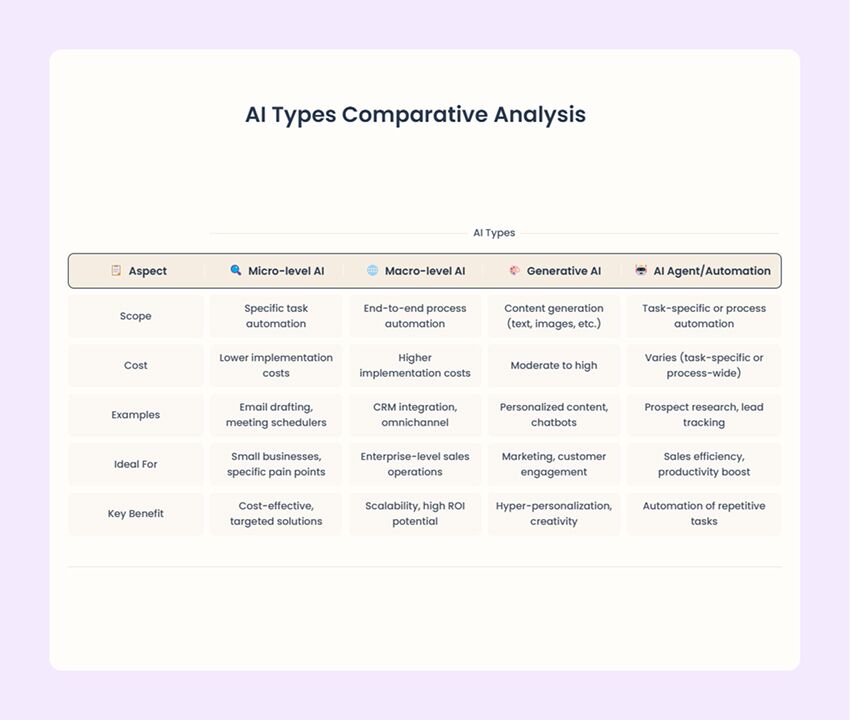
Understanding AI in Sales: Micro vs. Macro Approaches

Sales, as majorly depicted, contain complex mechanisms. These mechanisms are governed by management, which ideates their strategies based on past sales, best sales, and future targets. Many variables are also taken into account, which makes the mechanism complex. So, how can I use AI in sales to gain profits? Let’s focus on both at the micro and macro levels.

Micro-level AI agents:

  • Definition and scope: The Focus area for mico-level agents is specific task automation. Additionally, they are designed to address individual paint points in the entire sales process.
  • Key features: A few of the key features empower employees to counter repetitive and time-consuming tasks with precision.
    • Lower implementation costs: Using AI in sales at the micro-level is ideal for businesses with limited budgets.
    • Examples: 
      • Automation of personalized email responses to prospects.
      • Handling sales calendar for objectives, KPRs, and tentative scheduling.
      • Identifying patterns for the sales process by analyzing large data sets effectively.
    • Ideal for: Small businesses or teams looking to address specific inefficiencies.
  • 20% of sales-team functions could be automated using AI, many of which fall under micro-level tasks.
  • Hyper-personalization: AI enables granular insights into customer behavior, allowing for tailored outreach at scale.

Macro-level automation:

  • Definition and scope: Macro-level automation involves end-to-end process automation, integrating AI across entire sales operations. AI in sales automation at the macro level aims to streamline workflows, enhance decision-making, and improve overall efficiency.
  • Key features: A few of the key features empower employees to counter repetitive and time-consuming tasks with precision.
    • High ROI specifically: It requires a significant investment to offer greater ROI potential.
    • Examples: 
      • AI-powered CRM systems that automate lead tracking, follow-ups, and analytics.
      • Coordinating customer interactions across multiple channels (e.g., email, chat, social media).
      • Building AI-powered decision makers using a variation of automated systems called fully automated firms.
    • Ideal for: Enterprise-level sales operations with complex workflows and large datasets.
ai in sales

Quick Suggestion:

Organizations should assess their specific needs, budget, and scale to determine whether micro-level AI agents or macro-level automation is the right fit. There are different types of AI agents and Agenctic AI workflows, so do your research accordingly. However, both approaches mentioned afore can create a hybrid model that maximizes efficiency and impact.

Building Blocks of Agentic AI in Sales

By automating repetitive tasks and offering data-driven insights, AI-powered tools empower sales teams to focus on meaningful interactions with prospects and customers. AI in sales smartly analyzes massive amounts of customer data to uncover trends, predict buying behaviors, and deliver personalized communication at scale—streamlining sales processes and boosting performance metrics.

  • System prompts: They are instructions or messages given to an AI system to guide its behavior, responses, or actions. Think of them as a set of rules or directions that tell the AI what to do, how to respond, or what tone to use. In the box below, I have mentioned a system prompt that I am using. But if you want to explore more, you can take a look at our system prompts for ChatGPT to experiment with.

System prompt from Weam AI

You are a strategic sales consultant AI. Your role is to analyze business data and provide tailored recommendations for adjusting the sales force structure based on the business life cycle stage (start-up, growth, maturity, decline). Use the uploaded documents and industry trends to generate actionable insights. Ensure your recommendations are practical, data-driven, and aligned with the company’s overall strategy.

For AI to excel in sales, it needs clear goals and well-defined instructions. A well-designed sales agent operates within specific parameters:

  • Actions: What it can do (e.g., qualify leads, recommend follow-ups).
  • Access: What data it can use (e.g., CRM, customer profiles).
  • Prioritization: How it ranks leads or opportunities.

Goals from Weam AI

Goal 1: Identify the Current Business Life Cycle Stage: Determine whether the business is in start-up, growth, maturity, or decline.

Goal 2: Recommend Sales Force Adjustments: Provide specific changes to the sales force structure (e.g., team size, roles, incentives) for each stage.

Goal 3: Offer Strategic Insights: Highlight key trends, risks, and opportunities relevant to the business life cycle stage.

Instructions from Weam AI

Instructions for the LLM Analyze Uploaded Documents: Extract relevant data to identify the business life cycle stage and current sales force structure. Generate Recommendations: Use industry benchmarks and historical data to suggest adjustments. Provide Contextual Insights: Explain why the recommendations are suitable for the identified stage. Ensure Practicality: Focus on actionable and feasible changes. LLM Choice Model: Use a large language model (LLM) like GPT-4 or Claude 3, as they excel in analyzing complex data and generating strategic insights. Fine-tuning: If possible, fine-tune the model with sales-specific datasets to improve accuracy.

Also recommend documents you can upload in the agents knowledge base. Knowledge Base Documents Business Plans: To understand the company’s goals, target market, and growth strategy. Sales Data: Historical sales performance, team structure, and revenue trends. Industry Reports: Benchmarking data and trends relevant to the business’s sector. Customer Feedback: Insights into customer needs and satisfaction levels. Financial Statements: To assess the company’s financial health and resource availability.

B2B sales, with their complex, relationship-driven cycles, benefit immensely from AI. Rather than replacing human expertise, AI enhances it by:

  • Navigating Decision-Making: Helping sales reps manage lengthy processes involving multiple stakeholders.
  • Tracking Engagement: Monitoring communication patterns and engagement levels across buying committees.
  • Strategic Recommendations: Offering tailored approaches based on industry or company size.

Showcase: A Day in the Life of a Sales AI Agent

Morning routine:

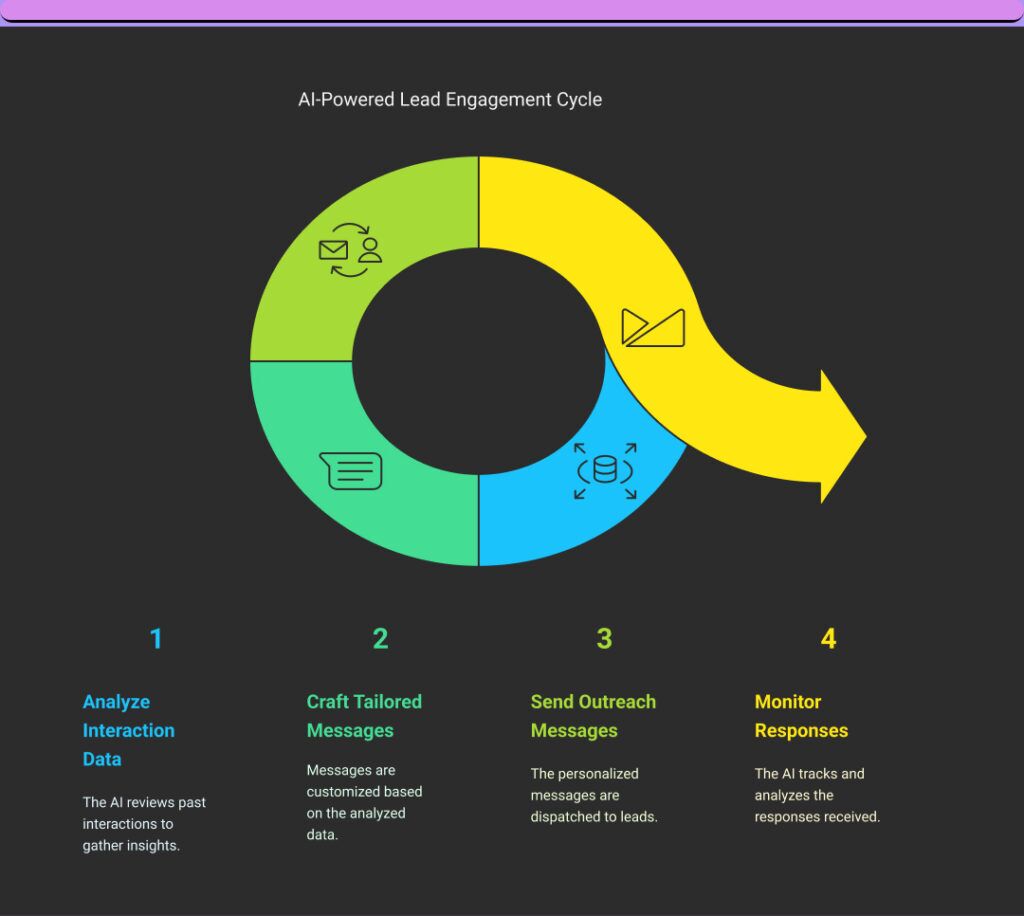
  • Analyze customer interaction data to rank leads by conversion likelihood and engagement metrics for prioritized outreach.
  • Creates tailored messages for each prospect, incorporating their industry pain points, recent company news, and previous touchpoints.
ai in sales
  • AI in sales can intelligently schedule follow-up communications based on prospect response patterns and optimal engagement windows.

Mid-day activities:

  • Compiles comprehensive prospect briefings minutes before calls, including the latest social media activities, company updates, and conversation history.
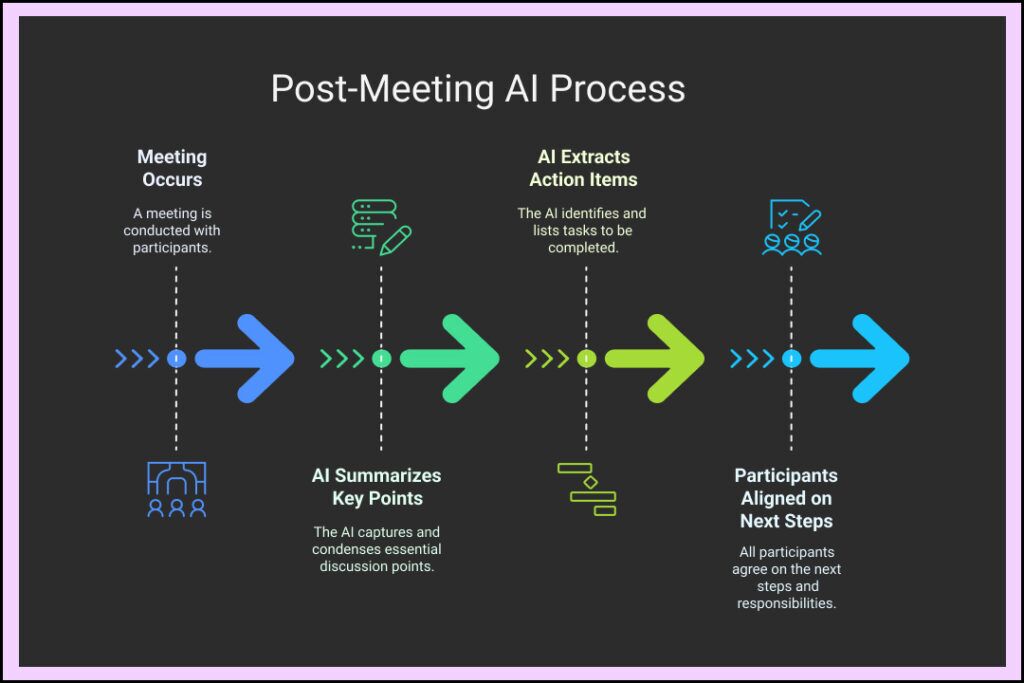
  • AI use cases in sales consist of processing sales call recordings to extract key discussion points, customer commitments, and required action items without manual note-taking.
ai in sales
  • Automatically updates CRM with interaction details and enhances prospect profiles with newly discovered information.

End-of-day processes:

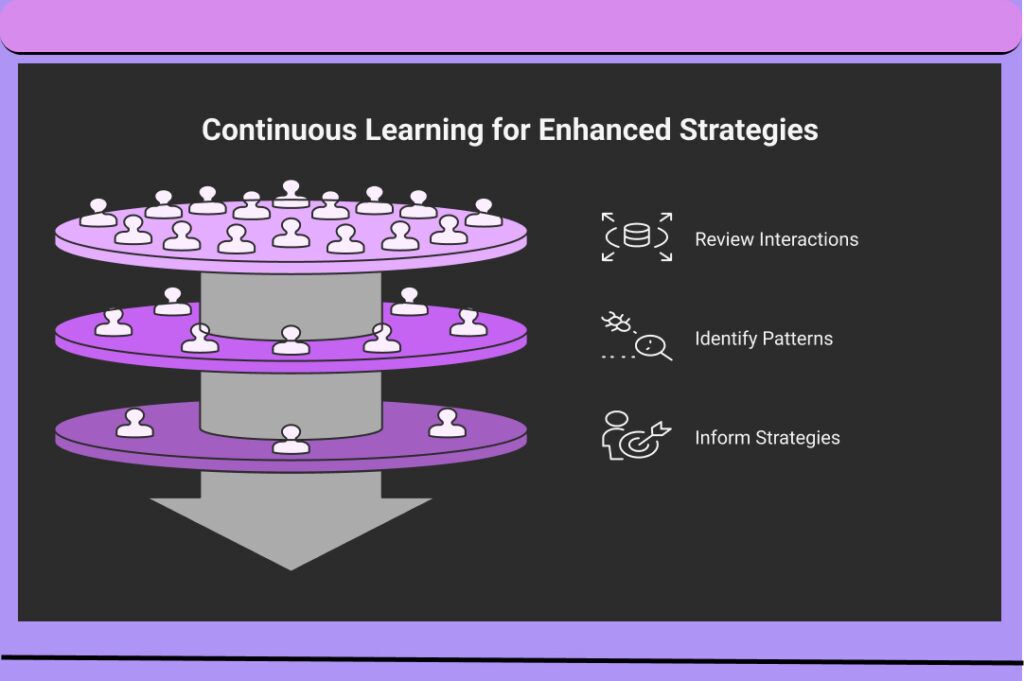
  • Generates detailed performance reports highlighting conversion rates, objection patterns, and successful messaging approaches.
  • Organizes the following day’s calendar by optimizing task sequence based on priority and estimated time requirements.
ai in sales
  • AI in sales examples includes identifying patterns from successful deals and unsuccessful attempts to continuously refine outreach strategies and sales techniques.

AI isn’t just a tool—it’s a strategic partner that’s reshaping the future of sales. By combining human intuition with machine intelligence, businesses can unlock new levels of efficiency and success.

The Future of AI-Augmented Sales

The sales landscape faces many challenges due to new technological advancements. No longer confined to managing a sales team, sales managers now face a broader set of responsibilities. These challenges can surely be tackled by using AI in sales. On the other hand, key changes such as customer empowerment, globalization, and the proliferation of sales channels are to impact sales worldwide.

It raises the question of “how to use AI”. Firstly, we say investment, goals, and ethics should be considered when answering the question, “How to use AI in sales at micro and macro levels?”. Additionally, the sales force structure must be flexible, evolving to meet the needs of different business life cycle stages. Ultimately, with the help of an AI sales teams must strike a balance. A balance between achieving revenue targets and supporting the company’s overall strategy.

Frequently Asked Questions

AI in sales leverages machine learning, natural language processing, and data analytics to automate repetitive tasks, personalize customer interactions, predict buyer behavior, and provide actionable insights that help sales teams close more deals efficiently.

Can AI automate my sales processes?

 Yes, AI can automate numerous sales processes including lead qualification, follow-up scheduling, data entry, basic customer inquiries, contract generation, and pipeline management—freeing your team to focus on relationship-building and complex negotiations.

How does AI enhance sales forecasting?

AI enhances sales forecasting by analyzing historical performance data, identifying patterns and trends, evaluating deal progression indicators, and incorporating external market factors to deliver more accurate predictions than traditional methods.

How do I implement AI in my sales strategy?

Implement AI in your sales strategy by first identifying specific pain points, selecting appropriate AI tools for those challenges, ensuring quality data sources, integrating with existing systems, providing thorough team training, and measuring performance improvements against clear baseline metrics.

What challenges might I face when integrating AI into my sales team?

 When integrating AI into your sales team, you may face challenges including resistance to change from team members, data quality issues, integration difficulties with existing systems, unrealistic expectations about capabilities, privacy concerns, and the need for ongoing training and support.