7 Best Mobile Banking Apps In The USA


7 Best Mobile Banking Apps In The USA

Mobile banking apps provide customers with 24/7 access to view their account balances and past transactions. Due to the flexibility in accessing and convenience of using mobile banking apps, they are grabbing user attention across the world. Unlike traditional bank deposits by standing in a long queue, digital banking apps are helping users to send or receive money instantly through their mobile devices.

Brand finance companies worldwide are going digital to seize market opportunities and provide more personalized banking services to their customers. In this article, we would like to discuss a list of mobile banking apps in USA. These leading banking apps in the U.S. have higher downloads and usage percentages.

Best Mobile Banking Apps in USA 2025: What’s Going?

Mobile banking apps are the fastest-growing app category in the United States. Almost 90% of banks in the USA are going digital to provide fast and contactless banking services to customers in this pandemic situation. It has become a driver for the increasing adoption and usage of mobile banking apps in the USA.

Due to COVID-19, installations and usage of banking and finance apps have been flourishing since 2019. According to market research reports, downloads and registrations of digital banking applications in the United States increased by nearly 60% during the past year. Here are the significant reasons behind the growth in banking apps downloads in the country.

mobile banking app in the United States

As depicted in the pie chart, the most common reason to install and use a mobile banking app in the United States in 2020 was to check account balances. Approximately 90% of smartphone users are downloading banking applications to check their account balances on the go.

Followed the convenience of banking apps to view transaction history, remit money, and credit bill payments, the other significant reasons for a surprising hike in app installations in the USA.

A noteworthy point is that the demand for Android or iPhone banking apps in the USA is from people between 25 to 44 years of age. The below figure depicts the growth of mobile banking applications in the USA from younger generations and millennials.

mobile banking app usage in the United States by age

Recommend To Read: Top 10 Use Cases Of AI In The Banking Sector

So, these usage trends are ensuring a profitable and appreciable way for banking app development in the USA during the coronavirus pandemic. In the context of the COVID-19 pandemic, the development of virtual or digital banking apps for Android and iOS in the USA, like those in COVID-impacted countries, will allow people to manage their finances through mobiles without visiting a physical bank branch for their needs.

If you are looking ahead to mobile app development services in the USA, get the best price from us. Contact Now!

Here is the top list of mobile banking apps in the USA, and you can confidently create a clone of any one of the below-listed mobile applications to catch up with the digital market opportunities in the country.


The Most Popular Mobile Banking Apps In The United States

If you would like to know more about the best mobile banking apps in USA 2025, we are here to help you out. Below you can find the list of best mobile banking apps for iPhone as well as the best mobile banking apps in USA for Android. Let us take a look at the best 7 out of the top 10 banking apps in USA:

#1. Chime-Most downloaded banking app in the USA

Chime is the best banking app in the USA. It has over 10 million user downloads from app stores yet. Driven by user-friendly features like Touch ID, face ID, a two-way authentication process, fee-free overdraft up to $200, early paycheck clearance, zero maintenance fees, and instant transaction alerts, this app is listed as the most trusted banking application in the USA. The app is compatible with both Android and iPhone banking apps.

#2. Bank Of America Mobile Banking- Most used banking app in the USA

The Bank of America mobile banking app is one of the best mobile banking apps in USA for Android and iOS. This top banking application in the USA has a 4.6+ app rating and 10,000,000+ installs. This digital banking app allows users to deposit cheques, view credit scores, set up custom transaction alerts, e-bill payments, set up travel notifications, and overall organize accounts and loans digitally. It is also popular with its guaranteed cashback offers with BankAmeriDeals®.

#3. Acorns- Highly downloaded banking apps in the United States 

It has acquired the top position in the list of mobile banking apps in USA. Acorns is an American leading banking and also a top FinTech services app. The significant advantages of Acorns-like popular mobile banking applications are easy to check personal and investment account details, the flexibility of direct deposit and mobile check deposit, transaction tracking and history viewing facilities, and high-level authentication processes for fraud detection and prevention.

#4. Current- A famous mobile banking app in the United States

Current is an on-demand mobile banking application in the USA. This leading banking apps in the U.S is available for both Android and iOS users. The benefits of Current-like banking app development in the USA is fee-free overdrafts up to $100, cheque deposits using a mobile camera, insights into money sending, support for Google Pay, Touch ID and Face ID security controls, and many more. Further, the app also allows users to get notifications on bill payments, instant money transfers, and content related to budget management strategies.

#5. Varo Bank- Popular banking app with a high usage rate

It is a popular iPhone banking apps for customers in the USA. Varo is a famous mobile banking app in the United States of America (USA) that runs seamlessly on Android and iPhone/iOS mobile devices. The app was popularized in responding to user queries 24/7. The users of the Varo Bank app will also get a virtual visa® debit card instantly that gives the users access to 55,000+ fee-free Allpoint® ATMs in stores like Target, CVS, and Walgreens.

This innovative mobile banking application also facilitates the users to send money across Varo and external bank accounts, get transaction alerts, and track spending on the go.

Recommend to Read: Power Of AI & ML Technologies In Banking & Finance
#6. USAA-The Best Android/iOS App for Banking, Finance, and Investment

The USAA Mobile banking app gives convenient and secure access to bank accounts from mobile devices. With its secure features and robust functionalities, it has secured a position in the list of the top 10 banking apps in USA. This app helps users manage banking, finances, investments, and insurance accounts in an encrypted manner.

Send money with Zelle (USA-based digital payments network), pay bills, make mobile cheque deposits, check loan eligibility, calculate EMI, and access e-wallets are a few of the best advantages of USAA-like popular banking apps in the USA. Currently, the app has a 4.8 out of 5 star rating and over 5 million downloads.

#7. Ally Mobile- Trending banking app in the USA for banking and investments

Ally is a leading banking and finance app available for Windows, iOS, and Android. The app was developed by Ally Financial Company, headquartered in Detroit, Michigan, USA. To provide 24/7 support to customers, the company launched Ally Mobile App in 2012.

The core features and functionalities of these trending banking applications are Ally eCheck Deposit, Check account balances and transaction history, instant money transfer, view/download account statements, Zelle® for paying US bank accounts, Ally Messenger for chatting, Ally Invest to invest in US stocks and ETFs with zero commission fees. This app also helps users to find the nearest ATMs by enabling mobile GPS.

How much does it cost to develop an on-demand android banking app like Ally Mobile Banking?

If you are looking ahead to banking app development and planning to launch it in the USA, here are the best features that must be added to a mobile banking application.

What Features Will Give Success To Your New Banking App?

The above list of mobile banking apps in the USA is popularized with the features they offer their customers. Mobile app design, features, and functionalities decide the success rate of the application. The cost to create a mobile banking app also highly depends on the features you have added.  Being one of the best Banking and FinTech mobile apps development companies in the USA, we have compiled a list of the must-have features in banking apps to ensure their success in the app stores.

  • Easy registration & login: Give flexibility to the users to access the app functionality using their mobile number or email address.
  • Account/profile management to allow users to edit profiles as per their needs.
  • Provide high security for the user’s confidential data.
  • Real-time data analytics and reports to give a clear representation of account information in charts and help them in analyze their account performance
  • Instant money remittance feature to send/receive money securely across internal and external banking accounts through secured payment gateways.
  • Instant payments anywhere at anytime.
  • Pay bills feature to pay credit bills.
  • Push notifications & updates feature to send alerts to the users about transactions and investments.
  • Give access to customer service by enabling the in-app chatbot feature.
  • Flexibility to add multiple bank accounts
  • Secure password and fingerprint authentication ways
  • Transactional and promotional alerts
  • Locating the nearest branches and ATMs
  • Enable QR code payments for fast and secure mobile payments.
  • Integrate a spending tracker for provide valuable insights into the accounts.
  • Integrate your banking app with popular e-payment or mobile wallet payment apps like Google Pay and PayPal.


How Much Does It Cost To Build Mobile Banking Apps?

Estimating the cost to create a mobile banking app is quite difficult. Mostly, the cost of developing a banking app will be around $40,000 to $250,000. However, this estimated development cost will depend on app features, app platform, app type, app design, and User Interface (UI) complexity. Further, the hourly rate of mobile app developers in the USA will differ from the mobile app development companies located in India.

Besides, the estimated cost of the banking application development (android or iOS) will also depend on the mobile app development team size and the overall time taken by the mobile Application Development Company that you hire.

Would you like to know the actual Mobile Banking App Development Cost? Get in Touch to get a free quote on Banking App Cost Estimate!

Do you have any banking app development ideas?

Let’s talk to USM Business Systems– the best mobile banking apps development company in the USA.  We develop custom mobile applications for the banking and finance industry. We help you with estimated banking app development cost so that you can align them with your budget.

We use cutting-edge Artificial Intelligence (AI) and Machine Learning (ML) capabilities to create next-generation digital banking and financial solutions that increase customer retention rates, prevent fraudulent acts, and reduce overall operating costs for banks.

Get in touch to know more about USM’s mobile banking development services!

Automate Data Labeling at Scale with Human-in-the-Loop


11.2_blog_hero

This blog post focuses on new features and improvements. For a comprehensive list, including bug fixes, please see the release notes.

Automate Data Labeling at Scale with Human-in-the-Loop

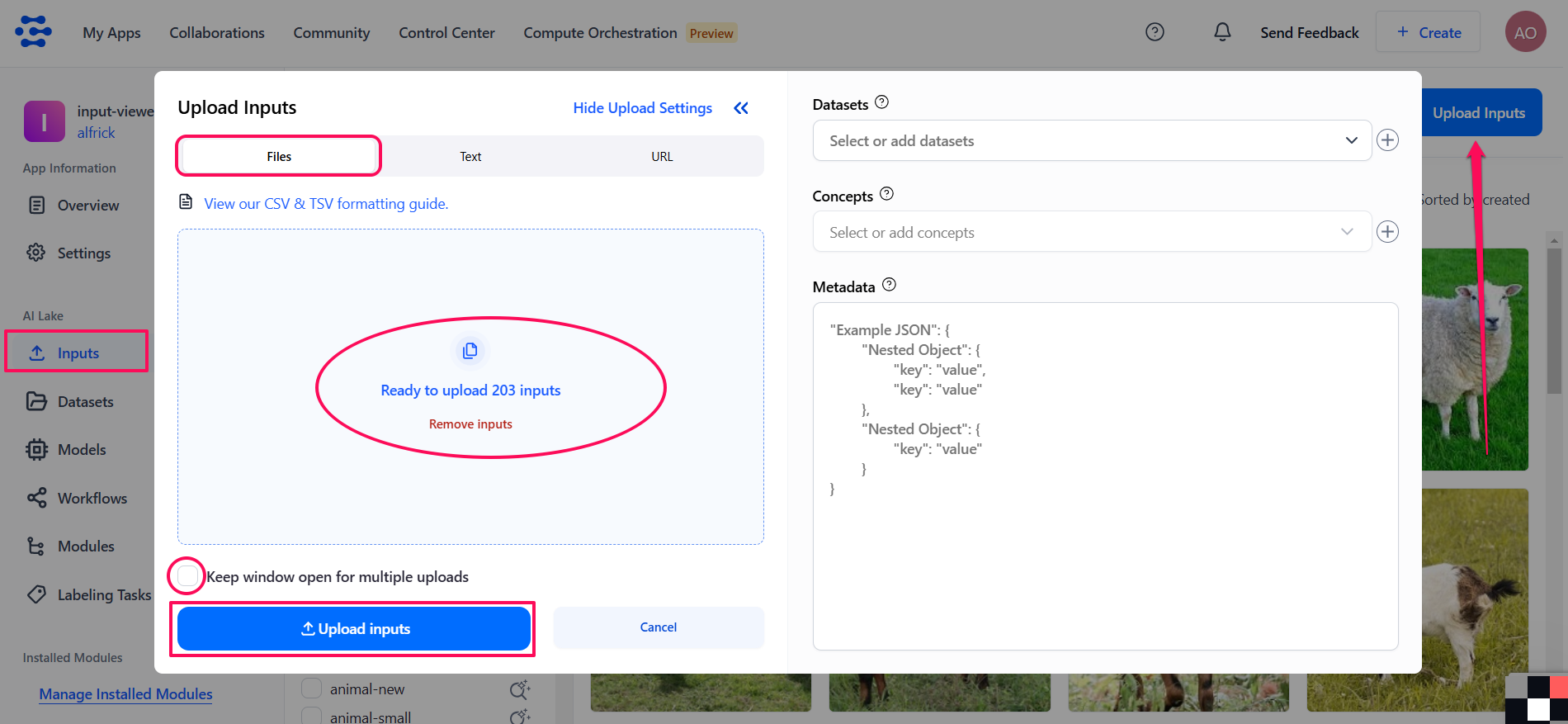
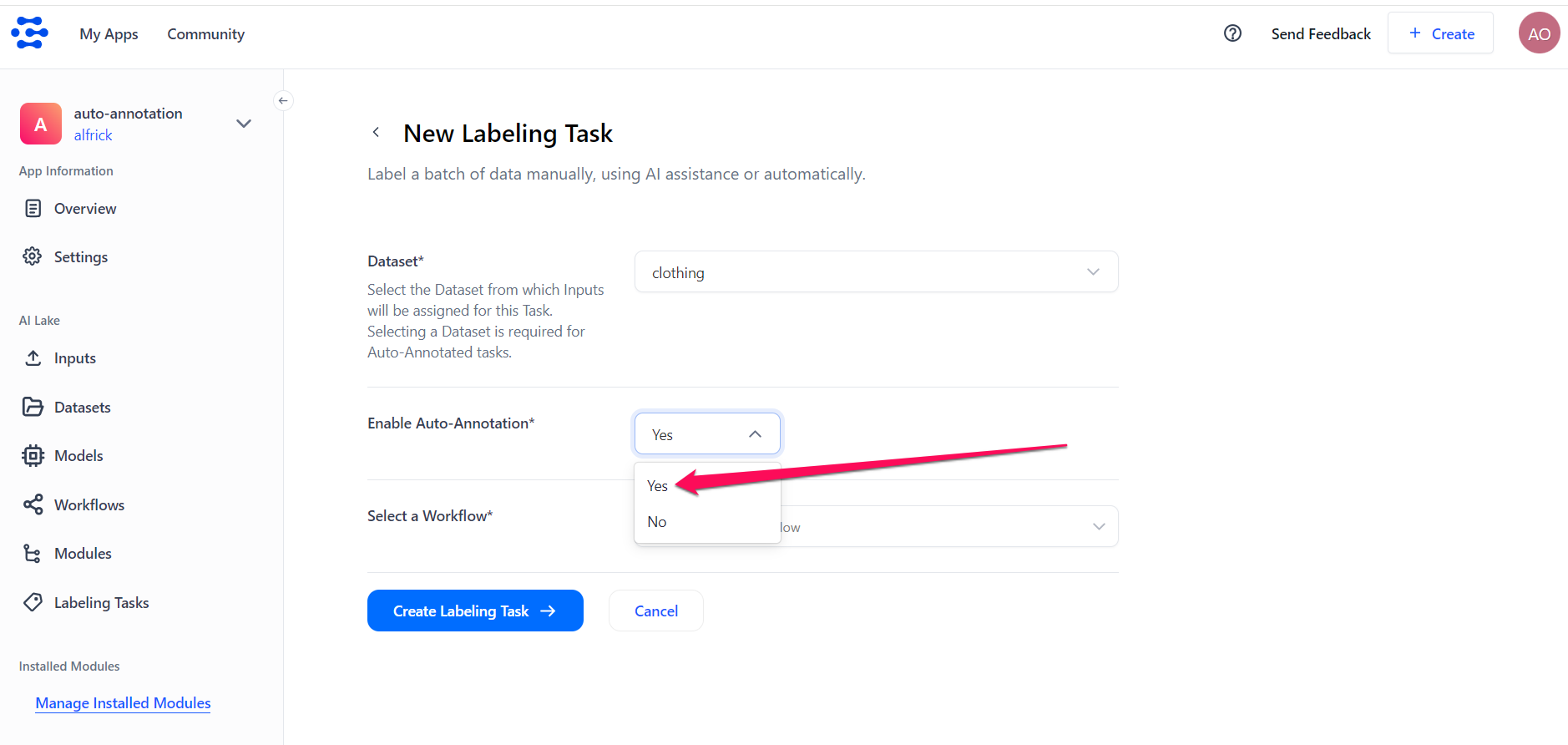
High-quality training data is the backbone of any AI model. However, labeling large datasets can be time-consuming and resource-intensive. Clarifai makes this seamless with Labeling Tasks, allowing you to automate data labeling at scale while keeping humans in the loop for accuracy and oversight.  

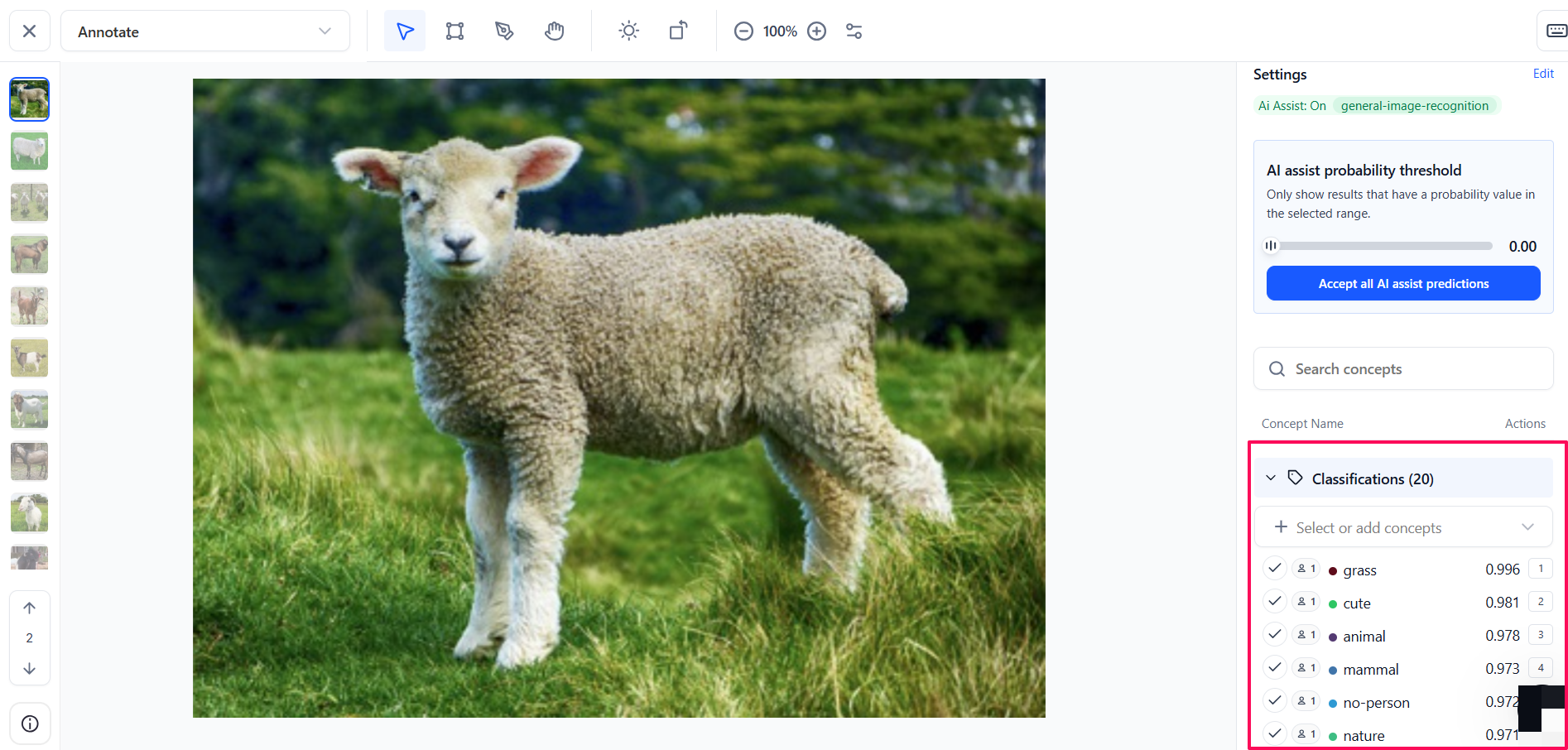
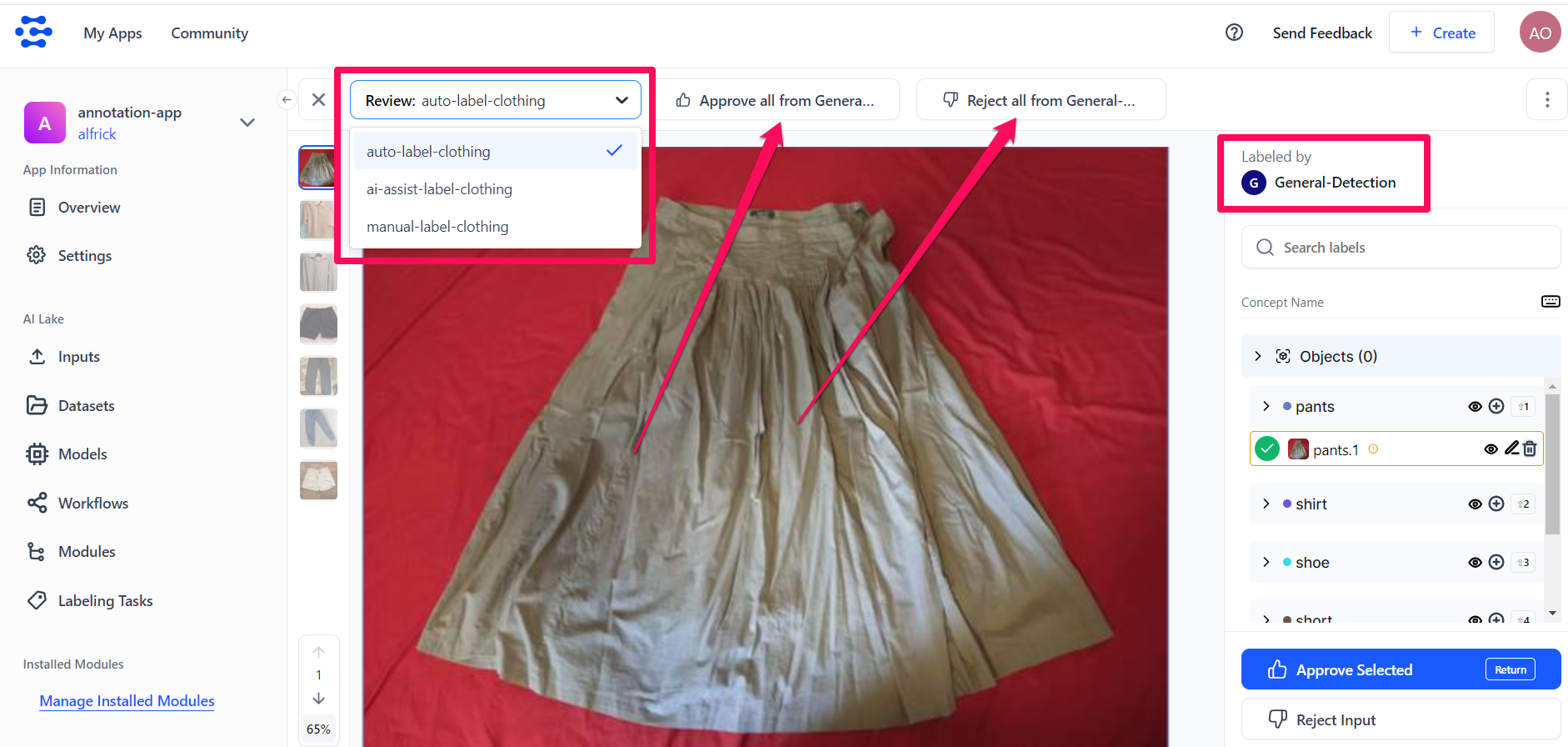
With Auto Annotation, you can instantly generate labels using AI models, significantly reducing the manual effort required. The reviewing capabilities ensure that human annotators can validate and correct AI-generated labels, improving overall dataset quality. Everything is managed within the Clarifai Platform, which offers a centralized workspace for teams to collaborate, monitor progress, and optimize workflows.

With our upgraded Labeling Tasks UI, you can create, assign, and review annotation tasks effortlessly. Whether you choose manual labeling for precision, AI-assisted labeling for efficiency, or a hybrid approach, our platform streamlines the process. Simply select a dataset, define your task, and let AI accelerate your workflow while human reviewers ensure quality.

The new UI enhances collaboration, enabling you to assign tasks to teams, integrate AI models, and monitor progress in real time. With flexible review settings and advanced prioritization, you stay in control of the entire annotation pipeline.

Start labeling smarter with Clarifai’s new and improved Labeling Tasks tool, now in Public Preview. If you are interested to explore and try out. Contact us get the access.

Screenshot 2025-03-11 at 1.19.46 PM

Control Center Updates

  • We have updated access privileges for different roles:
    • Organization Contributors can now access the Overview tab pages, Usage & Operations tab pages, and detailed report pages of their charts.
    • Organization Users can now access the Overview tab pages, Usage & Operations tab pages, and detailed report pages of their charts.
    • Financial Managers can now access the Overview tab pages, Usage & Operations tab pages, Costs & Budget tab pages, and detailed report pages of their charts.

    Screenshot 2025-03-11 at 1.28.34 PM

  • We have added an empty state for the Overview tab. If all data is hidden, empty visuals will be shown, and no charts will be displayed.
  • We now display two decimal places for financial values. For example, $20.1 is shown as $20.10.
  • We have fixed an issue with table sorting where the number 0 was not being handled correctly. Now, numerical sorting works as expected, ensuring that 0 is properly ordered along with other values.
  • We have added cross-navigation links between the detailed report charts in the Usage & Operations tab and the Costs & Budget tab. These links allow users to seamlessly access related charts. For example, the detailed report page for the Total Number of Operations chart now includes a link in the lower right corner, directing users to the Cost of Operations chart.

Improvements to the Data Utils library

We have open-sourced the Data Utils library to simplify multimedia data management and processing. In this release, we have introduced several updates:

  • Added support for DOCX and Markdown file formats
  • Enabled batch prediction for the ImageSummarizer pipeline

Screenshot 2025-03-11 at 1.23.23 PM

Python SDK Improvements

We have made several updates to the Python SDK to enhance functionality and performance.

  • Added support for local dev runners from the CLI.
  • Used the non-runtime path for tests.
  • Fixed local tests.
  • Caught additional codes that models have at startup.
  • Introduced three instances when checkpoints can be downloaded.

Find all the updates here.

Additional changes

  • Improved the navigation bar: We have made further adjustments to the navigation bar and links for improved usability and accessibility.

Ready to start building?


The Government Knows AGI Is Coming, Superintelligence Strategy, OpenAI’s $20,000 Per Month Agents & Top 100 Gen AI Apps


When a topic is making headlines from all directions, you know it’s something important—and this week, that something is AGI.

AGI remains a major focus for government officials and AI experts alike, and this week on The Artificial Intelligence Show, Mike and Paul weigh in with their insights. Our hosts break down the latest AGI news, the strategy behind superintelligence, OpenAI’s rumored $20,000-per-month AI agents, Andreessen Horowitz’s latest Top 100 Gen AI Apps, Google’s AI overviews, and more in our rapid-fire segment.

Listen or watch below—and see below for show notes and the transcript.

Listen Now

Watch the Video

Timestamps

00:04:08 —The Government Knows AGI Is Coming

00:26:08 — AGI and Jobs

00:35:28 — What to Do About AGI and Beyond

00:44:59 — This Scientist Left OpenAI Last Year. His Startup Is Already Worth $30 Billion.

00:48:48 — Ex-DeepMind Researchers’ Startup Aims for Superintelligence

00:54:35 — Human-to-Machine Scale for Writers Recap

01:00:11 — Google AI Overviews

01:03:57 — The Top 100 Gen AI Consumer Apps

01:07:21 — A Quarter of Startups in YC’s Current Cohort Have Codebases Almost Entirely AI-Generated

01:09:52 — The Humanoid 100: Mapping the Humanoid Robot Value Chain

01:13:12 — Listener Questions

Summary 

AGI is Coming

“The Government Knows AGI Is Coming.”

That is the striking warning that serves as the title of a new episode of The Ezra Klein Show, in which the journalist interviews Ben Buchanan, the former special advisor for AI in the Biden White House.

In the episode, both Klein and Buchanan agree that AGI—or systems that can do any type of cognitive task that a human can do—is likely to arrive in the next few years.

The episode opens with Klein recounting how experts from AI labs and the government have recently told him that AGI is imminent. Previously projected to be 5 to 15 years away, many now believe AGI could emerge within just two to three years, potentially during Donald Trump’s second term.

Klein and Buchanan cover a lot of ground related to what this means, including AI competition between the US and China, how the Trump administration will approach AI, and what AGI could mean for jobs, national security, and cybersecurity.

Klein strongly argues that we’re not remotely prepared as a society for what’s coming in the next few years, especially when it comes to AI’s impact on the economy. 

AGI and Jobs

According to The Information, OpenAI executives have told some investors that the company plans to sell a variety of AI agents—agents that seem pretty explicitly targeted at doing the work that knowledge workers do today.

Says The Information:

“OpenAI executives have told some investors it planned to sell low-end agents at a cost of $2,000 per month to “high-income knowledge workers”; mid-tier agents for software development costing possibly $10,000 a month; and high-end agents, acting as PhD-level research agents, which could cost $20,000 per month, according to a person who’s spoken with executives.”

At the same time, we’ve seen projects and papers come out in areas like financial services and law that strongly suggest agents and reasoning models using retrieval-augmented generation may be able to significantly transform how even the highest-paid knowledge work in fields like finance and legal is done.

One project, Endex, is an agentic AI assistant publicized by OpenAI that is built on their technology. 

Endex’s agents autonomously process financial reports, market data, and firm-specific knowledge to complete tasks, all thanks to OpenAI’s reasoning models. Using these models, they’re able to achieve the high accuracy that’s critical to complicated financial services work.

A paper that just came out also shows what’s possible. 

The paper, called “AI-Powered Lawyering: AI Reasoning Models, Retrieval Augmented Generation, and the Future of Legal Practice,” found that law students using OpenAI’s o1-preview saw work quality increase and saw time savings of 12-28%.

Thanks to retrieval augmented generation (RAG) based AI with access to legal material, hallucinations were reduced to a human level.

AGI Strategy

At the same time as the Klein interview, several major AI players have released updated thoughts on how we need to approach AGI.

OpenAI’s article, “How we think about safety and alignment,” predicts AGI’s transformative impact could begin within a few years, making the future as unrecognizable as today compared to the 1500s. Their approach prioritizes iterative deployment—gradually introducing AI advancements rather than a sudden AGI breakthrough—to manage risks and allow society to adapt safely.

Anthropic projects AGI-like systems emerging by late 2026 or early 2027 and urges the U.S. government to prepare for the economic and national security challenges AI will bring. Their six-part strategy includes rigorous security testing, tightening AI hardware export controls, accelerating AI adoption in government, and anticipating economic disruptions.

Meanwhile, a new report, “Superintelligence Strategy,” by AI experts Dan Hendrycks, Alexandr Wang, and Eric Schmidt, proposes an AI security framework modeled on Cold War nuclear deterrence. Their concept, Mutual Assured AI Malfunction (MAIM), suggests that nations attempting to dominate superintelligent AI will face inevitable sabotage by rivals to prevent a destabilizing power shift. The report calls for AI-focused espionage, cyber sabotage, and strategic transparency—potentially enforced by AI itself—to maintain global stability.

Additionally, the authors highlight the critical importance of ensuring that advanced AI chips, essential to economic and military power, are not concentrated solely in politically volatile regions like Taiwan. 


This episode is brought to you  by Goldcast.

Goldcast was the presenting sponsor of our AI for Writers Summit and is a Gold partner of the Institute. 

We use Goldcast for our virtual Summits, and one of the standout features for us is their AI-powered Content Lab. It takes event recordings and instantly turns them into ready-to-use video clips, transcripts, and social content—eliminating hours of manual work. If you’re running virtual events and want to maximize your content effortlessly, check out Goldcast. 

Visit goldcast.io to learn more.


This episode is also brought to you by our 2025 State of Marketing AI Report:

Last year, we uncovered insights from nearly 1,800 marketing and business leaders, revealing how AI is being adopted and utilized in their industries.

This year, we’re aiming even higher—and we need your input. Take a few minutes to share your perspective by completing this year’s survey at www.stateofmarketingai.com.

Read the Transcription

Disclaimer: This transcription was written by AI, thanks to Descript, and has not been edited for content. 

[00:00:00] Paul Roetzer: The VC money is funding companies that will build the equivalent of human workers and far beyond that because they don’t sleep, they don’t need benefits, they don’t need time off. They cost $20,000 a month and they do the work of 10 people that cost a half a million a year. Like, yep, it’s coming fast.

[00:00:22] Paul Roetzer: Welcome to the Artificial Intelligence Show, the podcast that helps your business grow smarter by making AI approachable and actionable. My name is Paul Roetzer. I’m the founder and CEO of Marketing AI Institute, and I’m your host. Each week I’m joined by my co-host and marketing AI Institute Chief Content Officer Mike Kaput, as we break down all the AI news that matters and give you insights and perspectives that you can use to advance your company and your career.

[00:00:51] Paul Roetzer: Join us as we accelerate AI literacy for all.

[00:00:58] Paul Roetzer: Welcome to episode [00:01:00] 139 of the Artificial Intelligence Show. I’m your host, Paul Roetzer, along with my co-host Mike Kaput. We are recording 11:00 AM March 10th, Mario Day. For all those to celebrate. I was just telling Mike, my, my family’s big into Nintendo and Mario Kart and Lego, and they just dropped like a Lego Mario Kart thing today, which is pretty exciting.

[00:01:20] Paul Roetzer: all right, so back, back to ai. this episode is brought to us by Goldcast. Goldcast was the presenting sponsor of our AI for Writer Summit that just happened last week. It was incredible. Thank you to everyone who came to the Writer Summit. We had 4,600 people from 96 countries attend the Writer’s Summit.

[00:01:40] Paul Roetzer: Pretty remarkable. It was a virtual event, so if you, if you weren’t aware, we were doing it was a, half day virtual event and it was amazing. And the Goldcast technology platform was essential that not only they presented the sponsor, they, were the platform that we use to run that conference. We do.

[00:01:57] Paul Roetzer: Three virtual events per year right now. [00:02:00] And Goldcast is the platform we use for all of them. So not only is it a great platform for those events, they have an AI powered content lab that takes all of our event, event recordings and instantly turns them into ready to use video clips, transcripts, and social content, which saves our team tons of manual work and hours.

[00:02:18] Paul Roetzer: So if you’re running virtual events and wanna maximize your content effortlessly and create a great experience for your attendees, check out Goldcast at Goldcast io. That is Goldcast io. And then, also you’ve heard me mention this a few times recently. We are, currently collecting data for our fifth annual state of marketing AI report last year.

[00:02:41] Paul Roetzer: Last year’s report, shared never before, seen data from almost 1800 marketers and business leaders on how they actually use and adopt ai. This year we’re aiming for even more respondents, and you can help out by going to state of marketing ai.com. You’ll see a link at the top to participate in the [00:03:00] 2025 survey.

[00:03:00] Paul Roetzer: You can also download the 2024 report while you are there. So again, that is state of marketing ai.com and once we publish the 2025 report, you’ll get an email with a copy to, review and download that report. Okay. So it was a, it was a huge week in a GI, artificial super intelligence news. Anybody who gets my executive AI insider newsletter on Sundays.

[00:03:26] Paul Roetzer: This was like the theme of the week for me. you know, as Mike and I were going through, it was almost like 50 topics this week that we looked at. the thing that jumped out to me, just immediately when I looked at it was a GI and AI’s impact on jobs. And so that’s where we’re going to kind of start and linger for these first three main topics is sort of this overall theme of a GI, which is artificial general intelligence, A SI, which is artificial super intelligence.

[00:03:54] Paul Roetzer: What this might mean to the near term future. ’cause it’s, there’s a lot of chatter. There’s a lot [00:04:00] of buzz And like I said in the newsletter, either they are all wrong or we should be doing more to prepare. 

[00:04:08] The Government Knows AGI is Coming

[00:04:08] Mike Kaput: Well, how about this for an opening statement and title here, Paul? The government knows AGI is coming.

[00:04:15] Mike Kaput: That is the warning that serves as the title of a new episode of the Ezra Klein Show, which is a podcast in which the journalist interviews Ben Buchanan, who is the former special advisor for AI to the Biden White House. And in this episode, both Pine and Buchanan agree that a GI or systems that can do any type of cognitive task that a human can do.

[00:04:45] Mike Kaput: Is likely to arrive in the next few years. Klein starts this episode by saying, for the last couple of months I have had this strange experience. Person after person from artificial intelligence labs from government has been coming to me [00:05:00] saying, it’s really about to happen. We’re about to get artificial general intelligence.

[00:05:06] Mike Kaput: What they mean is that they have believed for a long time that we are on a path to creating transformational artificial intelligence, capable of doing basically anything a human being could do behind a computer, but better says Kle. They thought it would take somewhere from five to 15 years to develop, but now they believe it’s coming in two to three years during Donald Trump’s second term.

[00:05:31] Mike Kaput: In this episode, Klein and Buchanan cover a lot of ground related to what this all means. They talk about AI competition between the US and China. How the Trump administration will approach AI and what a GI could mean for jobs, national security and cybersecurity. Now, this probably may be one of the more important interviews you listen to this month or maybe even this year if things play out.

[00:05:57] Mike Kaput: you know, Buchanan clearly knows this stuff, shares a [00:06:00] lot of great perspective from his time working on AI in the White House, but also this podcast leaves a lot of things unanswered. Klein strongly argues that we’re not remotely prepared as a society for what’s coming in the next few years, especially when it comes to AI’s impact on the economy.

[00:06:19] Mike Kaput: So, Paul, I’ll turn it over to you here. Why don’t you walk us through what you found most worth paying attention to in this very extensive and kind of unnerving interview. 

[00:06:30] Paul Roetzer: Yeah, it’s, it’s definitely worth listening to, and we will link to the opinion piece in New York Times that has the full transcript as well.

[00:06:36] Paul Roetzer: So if you prefer to read it’s a. Yeah, I mean there’s just a lot of noteworthy things to touch on here. So first, if people aren’t familiar with Ezra Klein, he has been writing New York Times, New York Times opinion pieces since 2021. He was the founder and editor in chief and then editor at Large of Vox, has the ever Ezra Klein show, obviously, which is number nine in terms of apple [00:07:00] Podcasts, top shows, charts.

[00:07:01] Paul Roetzer: So he is a Top 10 podcast in the world on, on Apple podcasts, I assume similar in Spotify. So he’s someone that a lot of people listen to and he, it was a very aggressive interview. you know, I think Buchanan, who I wasn’t familiar with honestly before this, I’m sure we saw his name. I don’t know that we’ve ever talked about it on the show.

[00:07:21] Paul Roetzer: Yeah, he was obviously involved in the Biden White House pretty significantly, so I did look into him a little bit because I was curious like who this guy was that played such a key role. And his background is very, very heavy national security and cybersecurity. So. He’s the former director of Cyber AI project at Georgetown Center for Security and Emerging Technology.

[00:07:44] Paul Roetzer: he is currently an assistant professor at John Hopkins, university’s director for technology and national Security for the National Security Council for one year during the Biden White House. he did his post doc at Harvard Kennedy School Belfor Center where he was working on cybersecurity [00:08:00] project.

[00:08:00] Paul Roetzer: So he is heavy, heavy And this is important context to the conversation, to know his background is actually in cybersecurity and that the Biden White House had someone with a cybersecurity background sort of leading the charge, tells you where they think the conversation needs to be at when it comes to this stuff.

[00:08:18] Paul Roetzer: So wanna start with in the opening of the opinion piece, and I think he said something similar in the podcast, Klein says, if you’ve been telling yourself this isn’t coming, I really think you, you need to question that. It’s not Web3, it’s not vaporware. A lot of what we’re talking about is already here right now.

[00:08:36] Paul Roetzer: I think we are on the cusp of an era in human history that is unlike any of the eras we have experienced before and we’re not prepared in part because it’s not clear what it would mean to prepare. I think that’s a very important point. We don’t know what this will look like, what it will feel like. We don’t know how labor markets will respond.

[00:08:54] Paul Roetzer: We don’t know which country is going to get there first. We don’t know what it will mean for war. We don’t know what it will [00:09:00] mean for peace. And while there is so much else going on in the world to cover, I do think there’s a good chance that when we look back on this era in human history, AI will have been the thing that matters.

[00:09:11] Paul Roetzer: We’re at this moment of a big transition in policy makers, and they are probably going to be in power when artificial general intelligence or something like it hits the world. So what are they going to do? What kinds of decisions are they are going to need to be made? And what kinds of thinking do we need to start do doing now to be prepared for something that virtually everybody who works in this area is trying to tell us as loudly as possible is coming.

[00:09:36] Paul Roetzer: So that to me is just kind of like encapsulates what we’ve been saying on the show, Mike, like this is, this isn’t just us. It’s not like a couple of talking heads on a podcast who’ve been following AI for a while who think it’s important. This is fundamentally like across organizations, across government, across society, the people in the know are trying very, very hard to get everyone else to pay attention.[00:10:00] 

[00:10:00] Paul Roetzer: But as, Klein illuminates right away, nobody has a plan for this. And this is what I keep preaching is like, let’s just be proactive. So Mike, you had touched on this definition, but I think it’s important that, you know, Buchanan talks about a, a canonical definition. He’d be stressed right away. It was kind of funny.

[00:10:17] Paul Roetzer: Klein called him out on this. He’s like, I don’t like a GI as as a term. And he’s like, we get it, man. Stop telling it with every time you use the term. so it’s system capable of doing almost any cognitive task a human can do. Now this is, Buchanan. I don’t know that we will quite see that in the next four years or so, but I do think we will see something like that.

[00:10:36] Paul Roetzer: Where the breadth of the system is remarkable, but also its depth, its capacity to, in some cases, exceed human capabilities regardless of the cognitive discipline. Klein then says, systems that can replace human beings in cognitively demanding jobs. And Buchanan says yes or key parts of cognitive, jobs.

[00:10:55] Paul Roetzer: So then we get into the AI and government. Now this is, actually like paused it. I was [00:11:00] listening to this in my car and I paused it after hearing this part, and I’ll explain why in a second. So, Buchanan says, what’s fascinating to me is that this is the first revolutionary technology that is not funded by the Department of Defense.

[00:11:13] Paul Roetzer: Basically, if you go back historically over the last hundred years or so, nukes space, the early days of the internet, the early days of the microprocessor, the early days of large scale aviation radar, global positioning system, the list is very, very long. All of that tech fundamentally comes from Department of Defense money.

[00:11:33] Paul Roetzer: It’s the private sector inventing it to be sure meaning ai, but the central government role gave the Department of Defense and the US government an understanding of the technology that by default it does not have an ai. It also gave the US government a capacity to shape where that technology goes. By default, we don’t have, what he’s saying is most of the innovation, especially the last 50 years, came out of DARPA Defense Advanced Research Projects Agency in the Department of Defense, [00:12:00] meaning they either invented it or they were funding the private development of these technologies, so they were on the inside as it was emerging, and they could better plan ahead.

[00:12:10] Paul Roetzer: The US government has been funding AI for, for the last 10, 20 years through darpa. They got caught off guard by generative ai and all that basically happened over the last three years. They were not prepared. they are not the ones that built it. the top language model didn’t come out of darpa. It came out of open ai, which the government had no involvement with it.

[00:12:31] Paul Roetzer: It originated out of Google’s labs, which the government didn’t have access to. So that’s a really important point that they’ve basically been playing catch up, trying to understand this technology, and it appears one of the most important people in that process is a cybersecurity guy. So it tells you, again, like the importance.

[00:12:50] Paul Roetzer: So then they get into AI in China, which they spent a good portion of the conversation on. I think the real key here is as soon as Klein brought up, China Buchanan [00:13:00] directed it to cybersecurity. So this is why his cybersecurity background is so important. So it helps illuminate how the government thinks about ai.

[00:13:07] Paul Roetzer: First and foremost, this is national security and military dominance. So jobs in the economy are secondary. It’s not that the government isn’t aware it might have this massive impact. they are just far more concerned about military dominance and national security, which is what DARPA’s existence is all about, is military dominance and protection of democracy in the us.

[00:13:28] Paul Roetzer: So in the, in the AI and China debate, Buchanan says it’s pretty out in the open that if you had a much more powerful AI capability, that would probably enable you to do better cyber operations on offense. And on defense, what is cyber operation? He asks, breaking into an adversary’s network to collect information, which, if you’re already collecting in a large enough volume, AI systems can help you analyze.

[00:13:51] Paul Roetzer: We actually did a whole big thing through darpa, which I mentioned, called the AI Cyber Challenge to test out AI’s capabilities [00:14:00] to do this. And I would not want to live in a world in which China has that capability on offense, defense, and cyber. And the United States does not. Meaning he’s seen what their capable of doing with the current ai.

[00:14:14] Paul Roetzer: . And they can project out what they’ll be able to do with more powerful ai. And they know they don’t want China getting there first. they did touch on cybersecurity in these AI labs, which Mike, you and I have talked about in these shows before. I remember specifically an instance where Dario Ade was talking about, you know, basically we spend probably billions on trying to protect our models and our weights, like within philanthropic.

[00:14:36] Paul Roetzer: Only a few people even know the weights to the system, but he said like, if a foreign government wants it, they are going to get it. Like, these people are really good at this and no matter how strong our protections are, they argoing tona get it if they want it. And so this whole idea that. These foreign actors are trying to hack in through cybersecurity or through cyber, but also at San Francisco parties where all [00:15:00] these AI researchers sort of openly talk about what they are doing and what they are working on.

[00:15:04] Paul Roetzer: So I, this was another instance where I paused and I was like, oh my God, like nationalization of these labs actually seems like something that the Biden administration very likely considered and that the current administration, I don’t think would be as likely to consider. But you start to understand why nationalization of the labs might actually be a strategy that’s explored.

[00:15:27] Paul Roetzer: Because if they become convinced that they need to get there first, and these models are going to become more and more powerful than the government wants full control of protecting those models. So that was really interesting. And then the one where my ears really perked up right, was when Klein asked about Mark Andreessen, and I don’t remember my episode.

[00:15:46] Paul Roetzer: Mike, what episode it was? 

[00:15:48] Mike Kaput: Yeah, 

[00:15:48] Paul Roetzer: it was it like January or something? We talked about that. I think it was the 

[00:15:51] Mike Kaput: beginning of the, right around the beginning of the year. I can look it up. Okay. Yeah. 

[00:15:54] Paul Roetzer: So we will put this, the link in the show notes, but if you don’t recall, mark Andreessen who, a [00:16:00] 16 Z Andreessen Horowitz, the VC firm.

[00:16:03] Paul Roetzer: He had this very interesting quote where he claimed that he was in a meeting with someone from the Biden administration, assume, in 2024, where they basically told them, don’t worry about investing in startups doing ai. There’s only going to be two or three labs that the Biden administration in the second term is going to make sure that all of this is centered on two to three companies.

[00:16:28] Paul Roetzer: Again, they didn’t say nationalization, but basically that they could then better control and protect these models. At the time we thought that’s really weird. And I would be, I would be shocked if they said it, but that was the argument Andreessen gave as to why they threw their support behind Trump and why they then pushed very heavily for Trump to get elected.

[00:16:47] Paul Roetzer: so I’ve been anxiously awaiting the other side of this story, and this is the first time I’ve heard anyone who might have been in the room. So, Klein says, were you part of the conversation that Andreessen was [00:17:00] describing? Ben said, I met him once. I don’t know exactly. he then said, Andreessen talked about concerns related to startups and competitiveness, and I think my view on this is look at our record on competitiveness, and it’s pretty clear that we wanted a dynamic ecosystem.

[00:17:16] Paul Roetzer: Now, I do think there are structural dynamics related to scaling laws and the like, that will force things toward big companies that I think in many respects we were pushing against. I think our track record on competition is pretty clear. That is a very clear non-answer. Yeah. This topic in my opinion.

[00:17:33] Paul Roetzer: Did you read it the same way, Mike? I was like, well, that didn’t answer the question. 

[00:17:36] Mike Kaput: Oh yeah. I was so excited for the next, I was reading the transcript like this morning again. I was so excited for the next paragraph and I was like, ah. Like a few words in, I was like, you’re not going to answer this, are you?

[00:17:46] Mike Kaput: Nothing? 

[00:17:47] Paul Roetzer: Yeah, no. And so he basically was like, I might’ve been in the room to the con conversation he’s referring to, but maybe that’s not exactly what was said. So then Klein says, the view that I understand Andreessen arguing with, which is a view I have heard from people in the AI safety [00:18:00] community, but is not a view I had necessarily heard from the Biden administration, was that you will need to regulate the frontier models of the biggest labs when it gets sufficiently powerful.

[00:18:10] Paul Roetzer: And in order to do that, you will need controls on those models. You just can’t have the model and everything floating around so everybody can run this on their home laptop. So. Yeah, we didn’t get the answer I was hoping for. I don’t know who else might’ve been in that room. I kind of got the impression it probably came from a meeting with Buchanan.

[00:18:29] Paul Roetzer: Yeah. But he just didn’t wanna like get into the specifics there. it was a very politician like answer for a non politician. 

[00:18:38] Paul Roetzer: It really was. The thing Mike that jumped out to me and we will time this timestamp, this is kind of like the second major topic was when Klein and Buchanan talked about the impact of AI on jobs.

[00:18:52] Paul Roetzer: So Klein says one of the other things that Vance, so this is going back to JD Vance’s AI Paris Summit, talk or [00:19:00] manifesto from a few weeks ago that we covered on the podcast and we will drop that link in the show notes as well. one of the other things, this is Klein again, one of the other things that Vance talked about and that you said you agreed with is making AI pro worker.

[00:19:14] Paul Roetzer: What does that mean? So Buchanan then said, I think we want to have AI deployed across our economy in a way that increases workers, agencies and capabilities. And I think we should be honest that there’s going to be a lot of transition in the economy as a result of AI transition is doing a lot of work in that, that sentence.

[00:19:33] Paul Roetzer: No kidding. I, he continues. I don’t know what, that will look like. You can find Nobel Prize winning economist who will say, it won’t be much. You can find other folks who will say it will be a ton. I tend to lead toward the side that says it’s going to be a lot, but I’m not a labor economist. The line that Vice President Vance used is the exact same phrase that President Biden used, which is give [00:20:00] workers a seat at the table in that transition, which I just laughed honestly when I heard that line.

[00:20:04] Paul Roetzer: That means literally nothing. Like, it’s like one of the most useless lines. so Klein then says, and this is where it got kind of, um. Chippy, I would say like Klein was going hard here And that was the note I made to myself. I was like, wow, he’s 51 minutes. He goes really hard on the end chop, right?

[00:20:22] Paul Roetzer: So Klein says, I will promise you, and this is what I have been saying, I’ll promise you the labor economist do not know what to do about ai. You were the top advisor for ai. You are at the nerve center of the government’s information about what is coming. If this is half as big as you seem to think it is, it’s going to be the single most disruptive thing to hit labor markets ever given how compressed the time period is in which it will arrive.

[00:20:49] Paul Roetzer: It took this, again, Klein continues. It took a long time to lay down electricity. It took a long time to build railroads. AI is going to come really quickly. [00:21:00] It’s going to be harder for the big firms to integrate it, but what you’re going to have is new entrants who are built from the ground up, where their organization is built around one person overseeing these like seven systems.

[00:21:12] Paul Roetzer: This is the part I just, I was like, whoa. he said, so you might just begin to see triple the unemployment among marketing graduates. . As people who run Marketing Eye Institute. That one again sort of caught my attention. he then says, there are just a lot of jobs that are doing work behind a computer And as companies absorb machines that can do work behind a computer for you, that will change everything.

[00:21:34] Paul Roetzer: And he says to Buchanan, you must have heard somebody talking about this. You guys must have talked about this. Buchanan again, kind sidesteps this, and this was became his answer basically for everything we did talk to economists and to try to texture this debate in 23, 24. The trend line is even clearer now than it was then.

[00:21:57] Paul Roetzer: We knew this was not going to be a [00:22:00] 2023, 2024 question. Frankly to do anything robust about this was going to require Congress and that just was not in the cards at all. So it was more of an intellectual exercise than it was a policy. Now, I found this fascinating, Mike because all of 2024 during election season, I kept saying, you don’t hear anything about ai.

[00:22:21] Paul Roetzer: Neither side was talking about ai. And then as soon as the administration flips it just dominates the conversation. And my belief at the time was because you couldn’t win votes talking about it. Like there was no point in talking about it. ’cause one, they didn’t have answers about what it meant. Two, the public didn’t seem to care enough to take a side in this debate.

[00:22:42] Paul Roetzer: And so what we have here is the Biden administration basically saying, we know this is going to decimate the economy and jobs, or might be great for the economy of GDP, but like jobs, it’s probably going to decimate in the near term. But it’s not going to be on our watch if we don’t, we win this election and we’re going to need [00:23:00] Congress and like, we just can’t do anything about this.

[00:23:02] Paul Roetzer: Hmm. So we explored it a little bit and then I’ll kind of like wrap up here. Mike, with Klein gave his example of using deep research, which, you know, we’ve talked about as one of those moments for us, we’re like, whoa, like this changes things for the future of work. So Klein says, I recently used Deep Research, which is a new open AI product.

[00:23:23] Paul Roetzer: It’s on their pricing tier. most people I think have not used it. He’s correct, but it can build out something that’s more like a scientific analytical brief in a matter of minutes. Klein continues, I work with producers on the show. I hire incredibly talented people to do very demanding research work.

[00:23:41] Paul Roetzer: I ask deep research to do this report on the tensions between Mandian constitutional system and the highly polarized, nationalized parties We now have. I don’t even know what that means. I need deep research to explain to me what that sentence means and what it produced in a matter of minutes was at least the [00:24:00] median of what any of the teams I’ve worked with on this could produce within days.

[00:24:05] Paul Roetzer: I’ve talked to a number of people at firms that do high amounts of coding, and they tell me that by the end of this year or next year, they expect most code will not be written by human beings. and then Mike, like this is a lot, but Klein wasn’t the only one talking about AI and jobs this week. So why don’t you kind of talk us through a couple of other things.

[00:24:27] Paul Roetzer: ’cause again, what I said in the newsletter and what I let out with this is when you zoom out, you just see the trends emerge. Yep. And like this on its own was noteworthy when in the context of the other stuff Mike’s about to walk through, all happening in a five day period, you start to realize something different is happening.

[00:24:46] Paul Roetzer: And again, either they are all wrong. We need to be doing more as a business world and as a society to pre to be prepared. 

[00:24:55] Mike Kaput: I’m going to dive into that in one second. I want to add one final note here that just made me laugh out [00:25:00] loud in disbelief is that, you know, you said Klein was really pushing him on stuff and he was like, Hey, why didn’t you think, di, why didn’t you game this out?

[00:25:06] Mike Kaput: Why didn’t you think more about this? Did you have conversations? And he even says at one point, did you drop this into like Claude and game out? What could happen? And he literally says no, because the government, like basically alluding to the government, had restrictions on using the technology. And Klein says, well that’s a bit damning in and of itself, isn’t it?

[00:25:26] Mike Kaput: And they kinda move on. So I was like, we are starting from a place that is way further behind than where I would’ve anticipated. 

[00:25:34] Paul Roetzer: Yeah, and that’s like I, again, it’s a theme of this show all the time, is I keep trying to stress to people. If you think someone else is out there doing this research, they are not like, this came up in the situational awareness episode, Mike.

[00:25:47] Paul Roetzer: . We did those two episodes back to back on Leopold Ashen, Brenner’s situational awareness. And that’s what he said. He’s like, dude, if you think someone else is figuring this out, there’s like 200 of us in Silicon Valley who are even [00:26:00] aware of what’s happening. So that’s it. Like there is not some army coming that’s going to like figure this all out for everybody.

[00:26:08] AGI and Jobs

[00:26:08] Mike Kaput: Alright, so you talked about the Klein episode and then you are talking about a GI and a SI AI and Jobs, in the Exec AI newsletter. Now tying this all together, we are seeing, like you mentioned, some of these signals that something is up because one of the things that came out recently is according to the information open, AI executives have apparently told some investors that the company plans to sell a variety of AI agents.

[00:26:38] Mike Kaput: Agents that seem pretty explicitly targeted at doing the type of knowledge work that we all do today. So this is straight from the information quote, open AI executives have told some investors they plan to sell low end agents at a cost of $2,000 per month to quote high income knowledge workers, mid-tier [00:27:00] agents for software development costing possibly $10,000 a month.

[00:27:04] Mike Kaput: And high-end agents acting as PhD level research agents, which could cost $20,000 per month according to a person who’s spoken with executives. So that in and of itself is quite big news if that ends up coming to fruition. And kind of at the same time, we’ve started to see some more of these projects and papers come out that strongly suggest agents and reasoning models.

[00:27:27] Mike Kaput: some of them using rag re, chival, augmented generation may be able to transform. How some of these really highly paid knowledge work, jobs in fields like finance and legal are done. So one quick project to note is called index. This is an Nagen AI assistant that’s been publicized by OpenAI on their website because it’s built on their technology index is agents autonomously processed financial reports, market data, and firm specific knowledge to complete tasks.

[00:27:58] Mike Kaput: All thanks to open AI’s [00:28:00] reasoning models and interestingly using reasoning models, they are able to achieve the high levels of accuracy that are critical to this type of financial services work. They basically call it an AI financial analyst. There’s also a paper that just came out that got a lot of attention called AI powered Lawyering, AI Reasoning Models, retrieval, augmented Generation, and the Future of Legal Practice.

[00:28:22] Mike Kaput: So this dived into 80 plus pages of research. That looked at what it was like when the lawyers started using some of the most advanced reasoning tools. They found, for instance, that law students using open AI’s oh one preview, saw work quality increase and saw time savings of 12 to 28%. And thanks to rag based AI with access to legal material, the hallucinations using this technology were reduced to a human level.

[00:28:49] Mike Kaput: So the whole point here is we’re starting to see these domain specific AI assistance, or may some might call them replacements to this type of [00:29:00] really sophisticated knowledge, not 

[00:29:02] Paul Roetzer: the actual companies themselves per se. They will not say that. Correct. 

[00:29:05] Mike Kaput: So to kind of wrap this all up, this is why the tech journalist, Alex Kreitz, so we talked about a bunch.

[00:29:12] Mike Kaput: He does big technology. He chose this week to write this article literally titled, okay, I’m starting to think AI can do my job after all, in which he concludes. That some work that once seemed safe, now looks like it’s directly in the path of machines. And then last but not least, and then Paul, I wanna turn this back over to you to kind of get your take on what OpenAI is doing.

[00:29:34] Mike Kaput: There was a ton of like firestorm and buzz on the internet over this AI agent out of China called Manus, M-A-N-U-S. Now, we have since found that this is probably just a wrapper around Claude that uses some agentic capabilities, but people are sharing all sorts of links and demonstrations of this thing, calling it a truly autonomous general agent that can go [00:30:00] do plenty of stuff for you without human involvement.

[00:30:03] Mike Kaput: So it doesn’t look like we’re quite there yet, or there’s a lot more to that story. But Paul kind of maybe walk us through, tie these threads together. We’ve got this big, bold statement from OpenAI that they are going to charge all this for agents, like what’s going on here? 

[00:30:19] Paul Roetzer: So the Manus thing I was watching over the weekend, ’cause it was, I mean, Friday it was like blowing up.

[00:30:23] Paul Roetzer: it was like the deep seek esque kind of like where everyone all of a sudden was the only, well that and the MCP thing that like, I we into that, but like that was crazy too. yeah. So then like yesterday I saw somebody who basically got the system to tell it that it was using like Claude 3.7, I think sonnet to do what it was doing and that it was connected to like dozens of tools regardless.

[00:30:45] Paul Roetzer: It was definitely like a more advanced computer use demo than we have seen. That I think does show the promise. I don’t think you look back and be like, oh, Manus was like this great breakthrough. Yeah. But I think it moved the [00:31:00] conversation forward about what these AI agents with computer use will be able to do And may accelerate the timeline in, in some ways.

[00:31:09] Paul Roetzer: which again, all this is inevitable. It’s just how quick it happens and how fast it diffuses throughout society and the economy. so on the opening eye pricing thing, like we’d heard the 2000 a month floated and I said at the time like, no brainer. Like it’s only $24,000 a year. Like that’s, you’re paying that like to do.

[00:31:28] Paul Roetzer: when you make the business case for it. 20,000 a month is a different story. Also, I think demand would skyrocket. Now they don’t have, so $20,000 a month, you’re talking about $240,000 a year, which means you’re now in the realm of like financial analysts, attorneys, hedge funds managers, AI researchers, computer programmers, like that’s the people making, you know, 200 to 500,000 a year.

[00:31:51] Paul Roetzer: Where, to your point Mike, if we’re talking about replacement value Yep. Now I’m like, yeah, ’cause that one $20,000 a month can do the work of five of those [00:32:00] people once they, you know, a year from now or whatever. We fast forward and the capabilities are there and reliability’s there. So while they are not saying replace your workers, if you go to the index site, which again is in the financial world, this is straight up the messaging from their homepage.

[00:32:16] Paul Roetzer: The autonomous financial analyst. it says Meet index, your next financial coworker. That’s like softening things a little bit. then they say the first AI agent for financial services. Optimize your team’s most common workflows and enhance the quality of every output. And then they have, scale your workforce, multiply your results, use index to launch multiple tasks that will continue working in the background, like having an AI workforce 24 7.

[00:32:40] Paul Roetzer: You know what’s great about an AI workforce, Mike? They don’t need benefits. They don’t need paid time off. Yep. their mood never changes. Yep. They just do what you tell ’em to do 24 7, as long as you got enough NVIDIA chips humming in the background. So again, our whole point with all of this is not that Mike and I are proposing a [00:33:00] future where digital workers take over the workforce.

[00:33:02] Paul Roetzer: All we are telling you is. The VC money is funding companies that will build the equivalent of human workers and far beyond that, because they don’t sleep, they don’t need benefits, they don’t need time off. They cost $20,000 a month and they do the work of 10 people that cost a half a million a year.

[00:33:23] Paul Roetzer: Like Yep. It’s, it’s coming fast. And I think that’s the whole point of, like, the first conversation leading off to this Klein thing is like, the government isn’t prepared for how fast the labs aren’t doing the research to tell you how fast. Like, but it’s, it’s coming And like we need to do more.

[00:33:42] Paul Roetzer: Like there’s still time to prepare, especially as like the downstream industries, like, you know, I don’t know, like manufacturing and healthcare and to a degree retail, like these industries that’re going to take a few years. It’s not like we’re going to flip a switch and by the end of 2025, it’s just everywhere.

[00:33:58] Paul Roetzer: But it’s a hundred percent going to [00:34:00] be infused into financial companies and. Hedge funds, hedge and law firms and AI research firms, like it’s, it’s going to be there, it’s going to be this year, start to have a disruptive impact. 

[00:34:11] Mike Kaput: Yeah. And the scariest thing, in a way though I give ’em a lot of credit, is Klein asked some questions in that interview that I was like, these are the most in-depth and smartest questions anyone’s been asking about this so far.

[00:34:23] Mike Kaput: Like Right. And it’s like gaming it out. 

[00:34:25] Paul Roetzer: Yeah. And now, like, I would love, well I, you know, I don’t know if JD Vance is the right guy to do this, because I don’t know that he would’ve any depth of his answers. . But I would love, like Andreessen, like they, I I honestly feel like there’s just these people who are so proac acceleration that they, they, the answer is always, we will figure it out.

[00:34:45] Paul Roetzer: It will create more jobs. Like, it’s going to, it always does. But Klein’s questions to your point, like how do you possibly answer those questions with any depth whatsoever? And. That’s my concern is like the people who are driving this [00:35:00] innovation don’t have good answers to any of the hard questions about the impact.

[00:35:06] Mike Kaput: So to kind of wrap all this up with a bow, this was not the only discussion of AGI and even super intelligence that was happening from some of these major players. Like at the same time several major AI players, coincidentally or not, depending on what you wanna think here, have released some updated thoughts on how we need to approach a GI.

[00:35:28] What to Do About AGI and Beyond

[00:35:28] Mike Kaput: So OpenAI recently published an article titled How we Think about Safety and Alignment. In it, they bluntly state quote, as AI becomes more powerful, the stakes grow higher the exact way the post a GI world will look is hard to predict. The world will likely be more different from today’s world than today’s is from the 15 hundreds.

[00:35:50] Mike Kaput: We expect the transformative impact of a GI to start within a few years. They then outline their current thinking on how to develop safe, beneficial, a GI. [00:36:00] This is a process though that they, that emphasizes the principle of iterative deployment. So basically gradually introducing increasingly capable AI into real world settings, not keeping it bottled up in a lab.

[00:36:16] Mike Kaput: They argue that by releasing systems incrementally, we can better identify and manage potential risks, and they highlight several risks they are working to mitigate, like human misuse, misalignment, and broader societal disruptions. Anthropic also released its own recommendations on how to keep what it calls powerful ai.

[00:36:38] Mike Kaput: That’s kind of their term for a GI, which they expect to emerge. In the late 2026 or early 2027, they published this guidance on how to keep it safe. Their recommendations emphasize the urgency for the US government to prepare strategically for the economic and national security challenges that powerful [00:37:00] AI will bring.

[00:37:01] Mike Kaput: They suggest a six part approach that includes things like enhancing national security testing for AI systems and tightening export controls. On top of all this, there’s a new report that came out called Super INT Intelligence Strategy. It’s making waves primarily for the people behind it. It’s co-authored by Dan Hendricks, who’s the director of the Center for AI Safety and an advisor to XAI and scale ai.

[00:37:28] Mike Kaput: Also, Alexander Wang is co-author Scale, AI’s founder and CEO, as well as Eric Schmidt, the former CEO of Google. In this report, they propose a framework that mirrors Cold War nuclear strategies. They literally defined this idea called mutual assured AI malfunction. And this is basically akin to the nuclear deterrent strategies used during the Cold War.

[00:37:55] Mike Kaput: And it suggest Mutually 

[00:37:56] Paul Roetzer: assured destruction. Mutually assured 

[00:37:57] Mike Kaput: destruction. Yes. The [00:38:00] idea that we would both annihilate each other if even some of these weapons, one, we 

[00:38:04] Paul Roetzer: shoot ’em all. That’s, that’s the idea of Yes. 

[00:38:07] Mike Kaput: And so this kind of builds on that idea saying that any country that aggressively attempts to monopolize superintelligence will inevitably face covert sabotage by rival nations seeking to prevent a destabilizing imbalance.

[00:38:22] Mike Kaput: So they basically say, look, to enforce stability. They argue for, you know, AI focused espionage sabotage, and strategic transparency, verifying rival state’s compliance without revealing sensitive information about how far along they are as we’re designing really advanced ai. So Paul, that is a lot to unpack.

[00:38:43] Mike Kaput: A lot of it is kind of terrifying. But I guess to really sum up what I’m taking away from this open AI is like, guess what? Safety equals releasing this stuff. Anthropic is providing guidance, but the train is leaving the station and we also have, you know, literally [00:39:00] treating this like nuclear weapons technology in terms of nation state competition.

[00:39:05] Mike Kaput: Do I have that right? 

[00:39:06] Paul Roetzer: Yeah. I mean, there’s no sugarcoating on this episode. Like, let’s, let’s just be straight up, this is a problem. Like, there, there is a lot of very dangerous territory ahead and anything that they are talking about already in Superintelligent strategy and anthropics powerful, it’s happening already like this.

[00:39:25] Paul Roetzer: This isn’t, this isn’t, three years from now, we should be thinking this way. This is like, there’s already leaders that are thinking this way, the. All the AI labs know foreign actors are trying to infiltrate their systems, if not already being aware that they have infiltrated their systems. So like in, in the US we know that China and Russia probably are within our electrical grids.

[00:39:48] Paul Roetzer: . they are probably within the infrastructure that powers the country. And in a similar way, we’re probably in their infrastructures. And the whole idea there is like, don’t take down our infrastructure. We don’t take down yours. That’s [00:40:00] basically what this is. Like, the labs know that the foreign actors will be trying to get access to their systems.

[00:40:07] Paul Roetzer: The government knows this is happening. So they are fully aware of the national security risks of what they are doing. the jobs and the economy thing, again, kind of bringing it back to that, like Dario and Sam are fully aware that what they are doing, the thing they are driving and not just, not just them throw Google in the mix and meta and all the others.

[00:40:27] Paul Roetzer: That they are the ones who are building the technology that’s likely going to be massively disruptive to industries and professions, but they have no idea what it looks like in this instance. Open Eye literally says quote the exact way, as you already highlighted, the exact way the post A IGI world will look is hard to predict.

[00:40:44] Paul Roetzer: The world will look likely be more different from today’s world than today is from the 15 hundreds. 

[00:40:51] Mike Kaput: That’s a crazy analogy. 

[00:40:52] Paul Roetzer: That’s like Middle Ages, right? Isn’t the It’s 14, 15 hundreds. Like the middle Ages. 13, 15, right after 

[00:40:57] Mike Kaput: it’s like, yeah, the early, I actually fun fact put [00:41:00] this into Grok and a couple others.

[00:41:01] Mike Kaput: I said, look, here’s what I am now 38-year-old man in 2025. What if I went back to the 15 hundreds? What would that look like? And it’s just wild answers like Colonial England, you know? Okay, whatever. So there was 

[00:41:13] Paul Roetzer: that. That reminds me, we will have to put the link in the show. Tim Urban wrote this great post about like ai, where it was, I forget what he called it.

[00:41:22] Paul Roetzer: It was that factor where he like. Things would be so different. You would literally just die. Yeah. He’s like, if you go back to this period, you’re like, you’re just dead because you can’t comprehend how different it’s, or like if you came forward from the past, you would get to that point and be like, oh my God, like I just died.

[00:41:36] Paul Roetzer: Like it’s just nuts. 

[00:41:37] Mike Kaput: That’s why I mentioned it, how crazy this analogy is. And Sam knows what he is doing in it, or open the eye knows what they are doing in it. 

[00:41:42] Paul Roetzer: Yeah. So that means they think that like the next five years is so different. It’s basically like taking a leap forward, like five. And the thing that’s very clear now, as I said earlier, they are not going to solve this.

[00:41:56] Paul Roetzer: they are not going to sit down and play out. What does a post a [00:42:00] GI world look like in education, in business, in your profession, your industry, they are not going to do it, which means it’s on governments, think tanks, associations, individual businesses, the consulting firms. Every research report I see outta consult consulting firms is asking people who have no idea about ai, what’s the future of your business because of ai.

[00:42:20] Paul Roetzer: So they go and like talk to a bunch of CEOs who themselves aren’t really sure about it. Certainly couldn’t like tell you what a GI and a s AI are and like the impacts of it. And yet that’s what the consulting firms are giving us is like these predictions about 2030 based on who, like people who’ve never sat down and actually thought about post a GI world.

[00:42:40] Paul Roetzer: So I don’t know Mike, like this is, I’ve mentioned this a couple times on the show, but we’re going to launch a, a road to a GI and beyond podcast series as part of the artificial intelligence show. I was looking at my schedule trying to figure out when can I actually do this. So the plan right now is to launch the first episode on March 27th.

[00:42:59] Paul Roetzer: So again, we’re going to [00:43:00] continue doing our weekly episodes. The idea with the Road to a GI series is to start with an updated AI timeline. So I did the first one back in March, 2024 on episode 87, and then I actually played that out in my road to a GI keynote at MAICON last year. And we will put the links to both of those.

[00:43:16] Paul Roetzer: You can watch the full keynote. The idea here is to try and figure out what happens next, what it means, and what we can do about it through interviews with people who are actually on the frontiers in all these key areas. So we’re going to start releasing them at the end of March as like regular episodes.

[00:43:34] Paul Roetzer: My goal is going to be like every other week. we will, we will see how the schedule, plays out. The whole idea is like what are the impacts of continued AI advancement on business, the economy, education, and society. So what I wanna do is interview experts, related to like AI literacy, AI models, cybersecurity economy, energy infrastructure, future of business, future of education, future of work, government, legal, scientific [00:44:00] breakthroughs, societal impact, supply chain.

[00:44:01] Paul Roetzer: These are just some of like the topics where I want to go and get like the top minds who are actually thinking about a GI and beyond in those areas, and like find out what is actually happening. And hopefully throughout this series start to like see around the corner a little bit. I don’t, I don’t know, like I don’t, I feel like sitting here doing, just talking about every week does nothing.

[00:44:23] Paul Roetzer: And this kind of goes back to like the AI literacy project when I launched that. It’s like, let’s just do something like, I don’t know what comes of it. I don’t know what we learn, but just highlighting the fact that it’s a problem is doing nothing. So like, let’s go try and do something about it with that series.

[00:44:37] Mike Kaput: I love that. I really look forward to it because yeah, you’re right. There’s not enough creativity and commentary around what this stuff actually looks like. Yeah. Alright, so let’s dive into rapid fire for this week. There are still a couple more A-G-I-A-S-I type topics, but we’ve also got some other things on the docket.

[00:44:56] Mike Kaput: But first it’s truly dominated the The news, 

[00:44:58] Paul Roetzer: Isaac. It’s crazy. Yeah. 

[00:44:59] This Scientist Left OpenAI Last Year. His Startup Is Already Worth $30 Billion.

[00:44:59] Mike Kaput: You gotta pay [00:45:00] attention when this many things related to it come at once. First up here, Ilya Sutskever, his startup safe Super Intelligence SSI has secured approximately 2 billion in funding at a $30 billion valuation. The startup has no product, it has just 20 employees, and its fundraising success according to a recent report in the Wall Street Journal, appears to be driven by one thing and one thing only, which is Ilya himself and his reputation in the AI research community according to this report.

[00:45:32] Mike Kaput: Top venture capital firms like Sequoia Capital, Andreesen Horowitz have poured money into SSI based largely on their faith in iass technical brilliance and vision. The good luck figuring out what they are trying to do Exactly. They operate very secretly. They have a bare bones website that is like a 200 word mission statement.

[00:45:52] Mike Kaput: Employees are apparently discouraged from mentioning that they even work at the place on their LinkedIn profiles. They have no plans to release any [00:46:00] products until they develop what the industry calls super intelligence, an AI system that can outsmart everyone in every single feel. So SR is told. Told his associates he is not developing advanced AI using the same methods that they used at OpenAI where he used to work.

[00:46:18] Mike Kaput: Instead, he has identified a different mountain to climb that is showing early signs of promise. Paul, we’ve talked plenty about Iliad, but. We have to mention this again based on everything we’ve talked about related to a GI and a SI this week, but what kind of jumps out one investor in this report called this a super high risk bet?

[00:46:37] Mike Kaput: ’cause aren’t you basically betting one person’s approach can not only solve super intelligence, but safe, super intelligence. Like how likely is that to be the case? 

[00:46:49] Paul Roetzer: Yeah, my guess is they are all going into it assuming the money’s gone. , okay. Because there’s a, there’s a reasonable chance, whatever the pursuit is, whatever they’ve [00:47:00] unlocked or think they’ve unlocked in terms of a path forward.

[00:47:02] Paul Roetzer: My guess is he’s not telling anybody that, like these VCs aren’t, you know, you’re just kind of trusting that they’ve got a different path to go. There’s no way he is disclosing to them what that path is. there’s no plan for revenue. Not only is there no product or revenue, there’s no plans for product or revenue.

[00:47:18] Paul Roetzer: There is a reasonable chance. Keep in mind, Ilya, if you haven’t been following along for a while, he’s the guy who triggered Sam Altman getting fired. He’s the co-founder of OpenAI who became so concerned with the direction of OpenAI, and it ends up the re their plans to release their reasoning model, which was strawberry at the time that Ilya led on.

[00:47:35] Paul Roetzer: that he, he led to his demise briefly at OpenAI. Yeah. And then they couldn’t work things out and he eventually, you know, leaves and does his own thing. So there’s a chance that whatever Ilya unlocks, he decides isn’t actually safe. And so, like, they don’t ever bring anything to market. So, yeah, I mean, I’m, I’m guessing that these VC firms are like, well, let’s [00:48:00] throw a billion at this and like, let’s see where it goes.

[00:48:02] Paul Roetzer: If nothing else, it gives us a front row seat to wherever may happen. Which it, by the way, is what Elon Musk did with, with DeepMind before it got acquired by Google back in the day. He made friends with Demis Asab has became so concerned with what Demis knew and where they were building with DeepMind.

[00:48:17] Paul Roetzer: Then it gets acquired by Google, which triggers Elon to build open AI with Sam Altman as a counterweight to it. So like, this is all like, in some ways, like history repeating itself. but I don’t know. I mean, if you had to stack up the most respected AI researchers in the world and maybe in history, he’s, he’s on the Mount Rushmore.

[00:48:37] Paul Roetzer: I mean, this is, this is a top three to five researcher, if not the most respected of all of them. so everyone’s going to pay attention to what he does 

[00:48:48] Ex-DeepMind Researchers’ Startup Aims for Superintelligence

[00:48:48] Mike Kaput: in some other news. A new AI startup with their own ambitious vision for super intelligence has emerged from stealth mode this week. So this is called Reflection ai, and they have raised [00:49:00] 130 million in funding at a $555 million valuation to build what they call autonomous coding agents.

[00:49:07] Mike Kaput: So they believe this represents a crucial step towards achieving super intelligence. Now, this company was founded by Misha Laskin and. Es an nlu who are two elite researchers from Google DeepMind. An NLU was a founding engineer at DeepMind who helped create Alpha Go the breakthrough AI system that defeated world champion Lee Ole at the board game go in 2016, which is the moment many people consider a watershed in AI history.

[00:49:38] Mike Kaput: Now, unlike the coding assistance tools out there that just help you write code more efficiently, reflection AI aims to create fully autonomous agents that can handle entire programming tasks from start to finish. Now they believe that by combining reinforcement learning with large language models, they can tackle the essential complexities of software [00:50:00] development.

[00:50:02] Mike Kaput: And early results suggest their models outperform traditional code generation approaches by a wide margin. Now as they develop this technology, they plan to expand the capabilities of their coding agents. The vision is that eventually developers become directors of autonomous coding agents. And in the long term, this could extend to all knowledge work, not just coding.

[00:50:28] Mike Kaput: Laskin actually said quote, our team pioneered reinforcement learning and large language models, and we decided that now is the time to bring both of these advancements together and build out a practical super intelligence that will do work on a computer. Now Paul, we’re seeing a lot of like agent startups out there, a lot of autonomous coding agents.

[00:50:50] Mike Kaput: Seems like with the background of these guys, this one might be a bit special. 

[00:50:55] Paul Roetzer: Yeah, and I, you know, I think this is a lesson we’ve mentioned many times on this show, which is you follow the [00:51:00] top researchers from the top labs. it’s you know, Noam Shazi, you know, when he launched character ai. I think we talked about that on the show.

[00:51:09] Paul Roetzer: and then he eventually goes back to Google. So no one was at Google multiple times. Goes to builds character ai. Google acquires the, technology that they didn’t buy the company. They, I don’t think they could, but they basically acquihire him and the team back for a few billion dollars. Like the top researchers, are fundamental to understanding the research direction and to following along kind of what develops in this space.

[00:51:38] Paul Roetzer: So, yeah, like will this one work out? I don’t know. Will they eventually get pulled back to DeepMind for a couple billion dollars in two years? Maybe. But it’s always noteworthy. Now the question here is why pursue autonomous coding agents? . You hear us talk about that a lot. You hear the, what, what was the thing called?

[00:51:55] Paul Roetzer: Man? Manis. Manis. Yeah. Yeah, yeah. Cursor. You hear about all these things. Here’s. [00:52:00] AI researchers. There’s tens of thousands of AI researchers. There’s probably a few hundred, maybe up to a thousand who would be like top tier AI researchers that everyone would compete for, would pay million dollar plus bonuses to get them to come to their labs.

[00:52:15] Paul Roetzer: The, I’m not an AI researcher, but my understanding of the space, one of the key values or traits of an AI researcher is their taste, their, their, their knowledge of which direction to pursue. So all of these labs are trying to get to a GI and beyond. The reason Ilya is so valued is because he has a history of very high taste, meaning he tends to know which research direction to go in that leads to the greatest valued output.

[00:52:44] Paul Roetzer: So if you’re sitting in a major lab today, you all kind of have the same idea of how these models are improving. You gotta pick where your NVIDIA chips are going to get used and which things your top researchers are going to work on. So is it multimodal? Is it improving [00:53:00] memory? Is it planning capabilities? Is it improving context window?

[00:53:03] Paul Roetzer: Is it computer use? Is it reasoning? Is it agents? Is it reinforcement learning? Is it understanding world models? You have to make bets as to where to put your energy. So what does an autonomous coding agent do? It gives you almost infinite shots on goal. You can now be running these things, pursuing all of these paths through low val, like low compute experiments that then when you hit on something, you go.

[00:53:30] Paul Roetzer: And so that’s what these labs do. They, they take all of these experiments, they fight over compute access within the companies every day. It happens at Google, it happens at meta, it happens at OpenAI. They fight over access to compute, to run their experiments, to prove their hypotheses. Once you approve a hypothesis, you go, so like reasoning models were that that’s what, that’s what Ilya did with strawberries.

[00:53:52] Paul Roetzer: He proved the test time compute scaling law was likely going to hold and that enabled open AI to, to double down on [00:54:00] reasoning. So that’s why this matters. It’s why any, it’s why we keep talking about these like coding agents. You may be like a VP of marketing or a CEO being like, what do I care about coding?

[00:54:09] Paul Roetzer: You care about coding agents. Like they drive everything once they solve how to do this 

[00:54:15] Mike Kaput: and it’s probably likely at least an element of a lot of the talk around a GI and a SI, even if this stuff feels far away, the moment you start cracking some of these autonomous coding agents, it’s the moment we have kind of a fast takeoff.

[00:54:29] Mike Kaput: Right? Where Yeah. ’cause you can 

[00:54:30] Paul Roetzer: run millions of experiments instead of dozens. Right. 

[00:54:35] Human-to-Machine Scale for Writers Recap

[00:54:35] Mike Kaput: Alright, next up. We just wrapped up last week our AI for Writers Summit, which is a half day virtual event that had 4,500 plus registrants from 90 plus countries. And this entire event was about how writers can begin to reimagine their work and careers in the age of ai.

[00:54:54] Mike Kaput: So Paul, to kick that event off, you gave a keynote on the state of AI for writers and creators, [00:55:00] which was an overview of how the latest AI models are reinventing the future of creativity. And as part of the keynote you did debuted something called the human to Machine Scale for writers, which is a framework anyone can use to better understand their way forward with ai.

[00:55:19] Mike Kaput: Could you walk us through that scale and what inspired it? 

[00:55:23] Paul Roetzer: Yeah, so we will put the link to a, a LinkedIn post that I shared at the end of last week that actually has the 12 slide excerpt from the full presentation that plays out this whole human to machine scale for writers. In essence, what I did is iterated on a framework I had developed a few years back called the Human to Machine Scale that actually looked at levels of autonomy.

[00:55:43] Paul Roetzer: Like what is the human’s role at, at a use case level when AI is applied to their job or to the tasks within their job. And so as I was trying to like answer this question, when should we use AI to write, I realized I could probably actually adapt that human to machine scale to this. [00:56:00] And so that’s basically what we did is hear from professionals all the time, specifically creative professionals who struggle with this question of like, when do I let the AI help let, what do I let it actually do the writing for me?

[00:56:13] Paul Roetzer: because I’m a writer, it’s, it’s like my art, my passion. It’s the thing that gives me fulfillment. Like pe if people aren’t familiar with me, like that’s my background. I actually came outta journalism school. I’ve authored three books. We do the podcast like I consider myself a writer and storyteller by trade.

[00:56:27] Paul Roetzer: I. For me, writing is a very important part of my process. Like it’s how I think, it’s how I learn topics, it’s how I develop an understanding. it’s, I can’t just take an article, have ai spit out a summary for me, and then talk to you all about the key points in it. It doesn’t work for me. I don’t develop a true comprehension of the topic.

[00:56:47] Paul Roetzer: And so like the litmus test I gave, I think during the talk, ’cause again, like I didn’t script the talk, so I don’t, I’m not actually sure exactly what I said, but I think I said something to the effect of, anybody can use deep [00:57:00] research or like Chad, GPT to write a summary of a topic, but to actually understand that topic in a deep way, to the point where you could be a thought leader on it.

[00:57:08] Paul Roetzer: Imagine throwing all that aside and sitting there for 30 minutes and answering questions about the topic. That’s my goal with everything we do with this show, is like, I want to be so deeply ingrained in the things we analyze, the things I read and watch and listen to. That I can throw away any script and just talk about the topic, right?

[00:57:26] Paul Roetzer: And so that’s like kind of one of the fundamental things I shared with this idea is you have like, level Zero is all human. It’s the human is the sole creator. Your voice matters tremendously. The the audience expects authenticity. They expect you to just be sharing your knowledge. so that’s all you.

[00:57:43] Paul Roetzer: Level one is mostly human. That’s where the author is still leading the human author. But you’re using AI for things like research or refining your work or brainstorming. Level two gets into half and half. It’s like a co-writer situation where the author and the AI truly start to work together. There’s an increasing [00:58:00] focus on efficiency of rewriting, but the voice and the human touch still matter.

[00:58:04] Paul Roetzer: level three gets into mostly machine. That’s where it’s largely AI driven. The AI’s probably writing the first draft. The human maybe tweaks it, refines it, approves it. So efficiency starts to take on far greater meaning. And then level four is all machine where the humans basically remove from the loop.

[00:58:20] Paul Roetzer: It’s an AI writer purely at autonomously, you know, writes the stuff with little or no human oversight. And so in the, again, I would encourage people to go download the PDF from my LinkedIn post because it goes into like examples and characteristics at each level. And then it gives some tips at the end.

[00:58:36] Paul Roetzer: Like, when does more human writing matter and when is it more okay to work with machines? But the big point I made is, it’s not a binary decision, do I or do I not use ai? It sort of like exists on this spectrum and that spectr the level zero to level four in, in the sense that is very subjective and personal.

[00:58:54] Paul Roetzer: The thing, the thing I didn’t really address during the talk that’s important is like, some people aren’t very good writers [00:59:00] And like they want to express themselves, but they don’t have the ability to, and so like. Level two in the co-writer situation may be the sweet spot for you because you’re not a writer by trade.

[00:59:10] Paul Roetzer: Whereas for me, I would say probably like 80 to 90% of mine is level zero podcast stuff. My keynotes, my LinkedIn posts, I have zero use for AI for that stuff. Like I want that to come from me. And the process is, the purpose is what I said on LinkedIn, like going through the process is why I do it. But there’s a lot more that’s become level one where it’s still mostly me, but I’m increasingly using AI on the research front, outlining, refining, brainstorming, and that’s okay as long as it’s clear with the people reading it or hearing it.

[00:59:42] Paul Roetzer: Um. So, yeah, I mean, I, there’s, thank you to everyone who’s commented on that LinkedIn post. There’s like, don’t know, maybe a hundred comments by now. and t sounds like it was helpful framework for people. So, you know, definitely go check it out. It was, honestly, it was one of those things I finished at 11:00 PM the night before the talk, so no one had seen it [01:00:00] except my daughter.

[01:00:01] Paul Roetzer: I was laying in bed with my daughter, like, I was like, can I just show you this? Because I gotta make sure this makes sense. and so she, yeah, she’s the only one I’d even seen the framework before I did the talk the next morning. 

[01:00:11] Google AI Overviews

[01:00:11] Mike Kaput: That’s awesome. So Google is doubling down on its incorporation of AI into search.

[01:00:18] Mike Kaput: The company announced last week. It’ll show AI overviews for even more queries and add Gemini 2.0 to AI overviews to make those results more useful. It’s also getting closer to debuting AI mode. AI mode is a new feature that will generate the answer to a search query based on everything in Google’s search index.

[01:00:38] Mike Kaput: Basically just like you’d expect from Perplexity or Chat GPT search. Currently, this is only available if you pay for Google one AI premium. they are like paid tier service, but it will be rolling out a bit to users in the future. Now with all these updates, the official line here is kind of that [01:01:00] more AI overviews, more AI and surge.

[01:01:03] Mike Kaput: None of this will really cannibalize people going to websites via links, which is the behavior of course, that powers today’s SEO and search ad ecosystem. Google claims that people are still clicking in and going to websites through AI overviews, and that AI overviews and AI mode will bring new people to Google for new things according to the Verge.

[01:01:26] Mike Kaput: There is some other data that seems to tell a different story. So Forbes actually reported that some new research from a content licensing platform called Tobit, which was shared exclusively with Forbes, says the AI search engine said 96% less referral traffic to new sites and blogs compared to traditional search.

[01:01:49] Mike Kaput: So the report actually analyzed 160 websites that included some new sites, consumer blogs over the last three months of 2024 to kind of understand how this was [01:02:00] all working. So Paul, like we keep hearing that SEO isn’t necessarily dead, it’s just going to change. Like do you believe that, I mean, we’re going to need to make sure, of course we show up in LLMs, but beyond that, it just seems like this whole traditional model is on its way out.

[01:02:20] Paul Roetzer: mean, all I can say is like, from my personal experience, I certainly go to fewer links. Yeah. Like, I mean, if I go to Google and I’m doing research, I’m clicking on every link and I’m curating it and you know, if I think about research for the show or research for, you know, writing a book or research for planning a trip, like if I go into Google and I type links and I get 10 links or however many it is, I’m going to click ’em.

[01:02:42] Paul Roetzer: If I go into Google and I get an AI overview that answers my question directly, even if the links are prominently shown, I generally look at the links to make sure they are pulling from legitimate sources that I would trust. And if they are, I’m kind of assuming it gave me the answer I needed. Or if I use deep [01:03:00] research, the better it gets, like the less I need to go into the citations.

[01:03:03] Paul Roetzer: I just look and make sure they are legitimate. So I’m not saying my personal use is representative of the the market, right. But those seem like really logical assumptions. Like my hypothesis would be. Sure you’d have less traffic coming from it. so regardless of what Google and others say, , I just have to believe that how people consume information and is dramatically going to change.

[01:03:31] Paul Roetzer: For sure. Yeah. so yeah. What it does to S-E-O-I-I, all I’ll say is on our intro to AI class, I teach every month we’re getting way more questions about how do I show up in learning in language, large language models, right? Like ChatGPT than I used to get. So I think people are starting to catch on to the fact that maybe that’s the new SEO is like, how do we show up in chat BT and AO reviews, is it different or the same than past search and how the algorithms work?

[01:03:57] The Top 100 Gen AI Consumer Apps

[01:03:57] Mike Kaput: Next up, Andreessen Horowitz has come out with their [01:04:00] latest top 100 gen AI consumer apps report. So this report, which comes out every six months, ranks the top 50 AI first web products by unique monthly visits per similar web. The top 50 AI first mobile apps by monthly active users per sensor tower.

[01:04:19] Mike Kaput: Some highlights from this latest report, chat GT’s explosive resurgence. We talked about how it has reached 400 million weekly active users as of last month, and the mobile story is equally impressive. Chat, GPT is consistently growing. Its active user base by five to 15% every month over the past year, and approximately 175 million of those 400 million weekly active users now access it through the mobile app.

[01:04:49] Mike Kaput: Second is the meteoric rise of deep seek. So this, they launched their public chat bot on January 20th, 2025, and they accumulated enough traffic in just 10 days to [01:05:00] rank as the second most popular AI product globally. In January, the Chinese hedge fund backed AI tool reached 1 million users in 14 days, which was slower than chat GPTs five day mark.

[01:05:12] Mike Kaput: Then surge to 10 million users in just 20 days, which according to Andreessen outpaces ChatGPT T’S 40 day timeline, by February, they had claimed the number two spot on mobile as well. Capturing 50 15% of ChatGPT T’S mobile user base with engagement levels slightly higher than competitors like Perplexity and clo.

[01:05:33] Mike Kaput: Now, in total on this list, there were 17 new companies that entered the rankings. AI video apps are on the rise. They are, quote, bringing, bringing the true, true usability with reliable outputs according to A 16 Z. There are three new entries on the list of those video apps. hi luau at number 12, Kling AI at number 17, and SOA from OpenAI at number [01:06:00] 23.

[01:06:01] Mike Kaput: AI coding tools are also really taking off. These include a agentic integrated development environments or IDs. Text to web app platforms for non-technical users. So tools here include things like Cursor, which we’ve talked about at number 41 and Bolt at number 48. So Paul, this certainly seems to be a solid barometer of some recent trends we’ve seen in ai.

[01:06:25] Mike Kaput: Largely, like did anything jump out to you here 

[01:06:28] Paul Roetzer: on top web products? I don’t see meta AI anywhere and I don’t see Gemini anywhere. That’s probably not a good sign. Yeah. Top, top gen AI mobile apps. Gemini’s coming in at 22. yeah, I mean I, the tops are interesting, but I also think the middle to back of the top 50 or non-existent on the top 50.

[01:06:49] Paul Roetzer: Yeah. 50 omissions indicative two of where the market is. So yeah, it’s, it’s fascinating. I do think the deepsea thing is just, it’s gotta just burn anthropic and meta in particular, I would [01:07:00] imagine Google to a degree too with Gemini. that they just sort of show up out nowhere and skyrocket up there with.

[01:07:07] Paul Roetzer: None of the marketing that these other ones have had. 

[01:07:10] Mike Kaput: Yeah. Well, like we talked about last week, also likely a reason Meta is spinning out its own meta AI app, right? Yep. Getting left off all these lists and all this attention. Yep. 

[01:07:21] A quarter of startups in YC’s current cohort have codebases that are almost entirely AI-generated

[01:07:21] Mike Kaput: All right. So in some other news, according to why Combinator managing partner, Jared Friedman, a quarter of startups in ycs current W 25 batch now have 95% of their code bases generated by ai.

[01:07:39] Mike Kaput: Now, what’s really interesting here is these aren’t non-technical founders building businesses. By leveraging AI as a crutch. Friedman emphasized quote, every one of these people is highly technical, completely capable of building their own products from scratch. A year ago, they would’ve built their product from scratch, but now 95% of it is built by an ai.

[01:07:59] Mike Kaput: [01:08:00] So essentially developers are starting to become directors of AI systems rather than hands-on coders describing what they want built and letting AI handle the imple implementation details, which Y Combinator says has some big implications. So for one, it dramatically accelerates development cycles. It also lowers the barrier potentially for creating software, allowing people with good ideas, but limited coding experience to bring their visions to life.

[01:08:28] Mike Kaput: However, there are some new challenges here. YC general partner, Diana, who noted during a discussion that even when relying heavily on ai, founders still need the skill to evaluate the quality of the generated code. And Y-C-C-E-O, Gary Tan emphasized the point further raising a crucial question about the long-term sustainability here of this approach.

[01:08:50] Mike Kaput: He said, quote, let’s say a startup with 95% AI generated code goes out and a year or two out, they have a hundred million users on that product. Does the [01:09:00] code fall over or not? Paul, what can we learn here about the bigger picture? This isn’t just about coding or Y Combinator, it just seems like the barriers to building are falling so fast thanks to ai.

[01:09:12] Paul Roetzer: Yeah, it’s one of my hopes actually for what I think will be significant job displacement in the coming years, is that I think we’re going to go through like a renaissance of entrepreneurship. This entirely new age of entrepreneurship where everyone can be an entrepreneur, where, you know, if you don’t have a job or you’re coming outta college or, you know, you’re looking for a transition that you, you can build something because one, two years out, you know, you’re going to be able to just use words to build apps.

[01:09:41] Paul Roetzer: You can do it now in some early demos and stuff, but I think that it’s a chance to offset the disruption is through growth of, startups. 

[01:09:52] The Humanoid 100: Mapping the Humanoid Robot Value Chain

[01:09:52] Mike Kaput: Very cool. Very exciting as well. So in some other news, Morgan Stanley has released a new research report [01:10:00] diving into the fast growing market for humanoid robots.

[01:10:03] Mike Kaput: they are calling this new frontier, the physical embodiment of ai. They have compiled what they call the humanoid 100, a select, carefully selected list of publicly traded companies that represent different parts of the humanoid robot ecosystem. So basically, it’s a guide to which companies are poised to benefit as humanoid robots go from experiments to actually moving to homes, offices, and factories.

[01:10:27] Mike Kaput: So they segment all these companies into three big categories, which include the brain, which includes foundational AI models, semiconductors, and software. The body, which represents components like sensors, actuators, and batteries, and integrators, which are companies currently building full scale humanoids or capable of doing so in the near future.

[01:10:50] Mike Kaput: Interestingly, more than half of these companies are already actively involved in humanoid robot development, and nearly half are seen as having significant potential to [01:11:00] join the market soon. It also turns out that Asia, especially China, is leading the humanoid robot race. Over half of the listed companies involved in humanoids and more than three quarters of the integrators actively developing full humanoids are based in Asia.

[01:11:17] Mike Kaput: Now, one last point here that’s really interesting is that Morgan Stanley frames the global market size the tam, the total addressable market for humanoid robots at a staggering $30 trillion, roughly equivalent to about 30% of the global economy in practical terms. By 2040, they expect 8 million humanoid robots operating in the US alone.

[01:11:41] Mike Kaput: Replacing jobs were 307 50 7 billion annually in wages. By 2050, that number could reach 63 million humanoids replacing nearly 3 trillion in annual wages. So Paul, you and I have talked a lot about this idea that the potential for an industry or area of work to be disrupted [01:12:00] will be a function of how much the reward is for disrupting it with smarter technology.

[01:12:05] Mike Kaput: And it seems like there are some particularly rich rewards for disrupting physical labor. 

[01:12:12] Paul Roetzer: Yeah. When I talk about job disruption, I’m not even talking about the physical labor, right? So this is a whole nother ball game, and do think we’re still a few years away from, you know, these things truly working.

[01:12:24] Paul Roetzer: There’s amazing demos happening. You’ll see these incredible videos from figure and other places like that. don’t think there’s a reality anytime soon, but do think by the end of this decade, this starts to come into view. And I think I talked about that on a recent episode of, of the show. yeah, I think you start to see some specific industries that get impacted in the next few years here and then eventually like into the consumer world.

[01:12:47] Paul Roetzer: the other thing I mentioned on a previous episode was like you wanna look at the next investing frontier, is find the robotics supply chain And here comes this report, which is right perfectly like frame this out for us. So [01:13:00] it’s say they probably just used open eye deep research to like do it and then like put it with cool visual.

[01:13:04] Paul Roetzer: No, I’m just kidding. Morgan Stanley, I’m sure spent tons of time on this, so thank you for doing it. Saved me from having to do it with deep research. 

[01:13:12] Listener Questions

[01:13:12] Mike Kaput: I love that. Yeah. So you’re welcome audience. Go check it out. Maybe if you want to go make some investments. Okay. All right. So to end up here this week, we are going to revisit our recurring segment here on listener questions where we are answering the questions that listeners have about ai.

[01:13:30] Mike Kaput: And we get tons of these each week. So we wanna start answering them as best we can. And this week’s question, Paul is. What is the biggest misconception about AI right now, in your opinion? 

[01:13:43] Paul Roetzer: Yeah, there are a lot. but I would let, let’s zoom this in on, on business, because I’ve, I’ve been in some meetings even in the last couple weeks where I could, I saw this playing out again as I think that AI is seen as this overwhelming and oftentimes [01:14:00] abstract thing that we have to wait until we get the data right or we have to wait until it and legal, like give us clearance to go, or we have to wait until we get licenses to something and people are just waiting for permission to move forward and oftentimes delaying adoption or piloting projects because they don’t really understand it.

[01:14:23] Paul Roetzer: And so it’s just easier they got other things to deal with. So I think the biggest misconception is that it’s hard to get started like that. You can’t just find a couple of use cases like. Use Chad GPT, build a custom GPT, run a deep research project. Like just do something that is part of your usual workflow, part of the tasks you already do, and just go find a way to use these tools that don’t need any proprietary data, don’t need it, or legal involved.

[01:14:51] Paul Roetzer: That’s just like, let me go see if I can save myself a few hours, or lemme go see if I can improve this presentation a little bit with this technology. So I think that’s the biggest [01:15:00] thing is that it’s hard to get started. And it’s not like think if you, if you just, find the right use case, you can go, and mentioned earlier, we teach this intro to AI class every, month.

[01:15:12] Paul Roetzer: think I’m on like the 45th one or something. I started doing this in November, 2021. we will put the link in. but you can sign up for free and I just go through like this 30 minute intro and then we do 30 minutes of q and a. And I promise you, like, you don’t know where to start, like you’ll know where to start after that talk.

[01:15:29] Paul Roetzer: Like it gives you enough to just go And get rolling with some pilot projects. So. That’s my biggest thing. And I guess my biggest urge to you would be like, just, just do something, you know, just get going. So, yeah, I think that’s great question. Keep ’em coming. quick programming note, Mike, and I are both out next week, so, we’re going to skip March 20, March 17th.

[01:15:52] Paul Roetzer: I feel, I actually feel like bad doing this. I’m like anticipating the, like the messages we’re going to get about this, but we’re not going to be around [01:16:00] Friday or Monday to record this thing. So we’re going to skip a weekly episode on the 17th. we will be back on the 24th with the weekly, and then that’s the week that we will also plan to do the special edition, the first episode of the Road to a GI and Beyond series.

[01:16:15] Paul Roetzer: So you’ll get a Tuesday and a Thursday that week, but nothing next week. Follow me on LinkedIn. I’ll, I’ll put the, you know, key things as they are happening. And if you don’t subscribe to the Smarter x, exec Insider newsletter. Get that, I’ll still publish that on Sunday, like I always do. we will put the link to the show notes in there, but it’s Smarter X ai and then just click on newsletter.

[01:16:37] Paul Roetzer: so publish that every week and it’s kinda like a preview too, so I’ll cover the stuff we’re not going to be getting to on the podcast next week. 

[01:16:45] Mike Kaput: Yeah. And I would also just add there, while I don’t ever wanna skip a week with our audience, I think the content of this episode is more than enough to think about for two weeks.

[01:16:54] Mike Kaput: So maybe listen to this again next week. Yeah. This is an opportunity, perhaps a sign from the [01:17:00] universe to spend a little time considering the implications. 

[01:17:03] Paul Roetzer: agree. Mike, I think you and I could probably both use the week to Yeah. Ponder some of the stuff in this. I may actually go back and listen. I’ve never listened to one of our episodes.

[01:17:12] Paul Roetzer: I may go back and listen to the first like 30 minutes of this one. think that there’s just a lot there that has much deeper, meaning and impact than. Might appear right away. And it’s, and it’s honestly, there’s a lot of the stuff we touched on there is feeding into my like version two of the AI timeline.

[01:17:29] Paul Roetzer: There’s a lot of things that kind of been trying to piece together in my head and that is part of it. 

[01:17:33] Mike Kaput: Cool. Can’t wait. 

[01:17:35] Paul Roetzer: All right. Thanks everyone for being with us. As always. We appreciate you listening and watching on YouTube. and we will be back on March 24th. Thanks for listening to the AI show.

[01:17:46] Paul Roetzer: Visit marketing ai institute.com to continue your AI learning journey and join more than 60,000 professionals and business leaders who have subscribed to the weekly newsletter, downloaded the AI blueprints, [01:18:00] attended virtual and in-person events, taken our online AI courses and engaged in the Slack community.

[01:18:07] Paul Roetzer: Until next time, stay curious and explore ai.


List Of Top 50 AI Companies In USA, India And Europe 2025


Top 50 AI Companies in USA, India & Europe

List of Best 50 artificial intelligence AI companies in USA, India & Europe

Artificial Intelligence (AI) is broadly expanding in the market. Several AI start-ups and Artificial intelligence initiatives exist in the market.

In this digital era, AI is a significant investment area. Many tech AI companies like Microsoft and Google are heavily investing in AI. It is not limited to those companies, but every business is in plans to modernize with AI.
According to a survey conducted by The New York Times, 50 AI firms are playing a vital role in shaping the future with AI. Along with AI, these companies are benefiting with machine learning, deep learning, data science, speech recognition, and other AI technologies.

Recommend: What is artificial intelligence & how it brought revolution?

USM Business Systems – Expert In Custom AI & Mobile App Development Solutions
Location: Chantilly (Headquarters), VA, United States
Founders: Madan Kalakuntla

USM is the global leading artificial intelligence company based in Chantilly, United States. With our specialization using artificial intelligence and machine learning technologies, we fuel our client business with emerging AI solutions.

Our AI experts aim to develop and deliver result oriented and customer centric AI-driven mobility solutions for various businesses across diversified industries. We primarily deliver AI services to Banking and finance, healthcare, manufacturing, retail, e-commerce, telecom, marketing and sales, and education sectors.

We captured a strong brand name as the best Artificial Intelligence (AI) Services and Solutions provider across Virginia, California, New York, Illinois, Texas, Florida, Washington, and other states of the United States. Accordingly, we also have a strong footprint in European, Middle Eastern and other global emerging markets.

Related Services:
1) AI Services and Solutions 
2) Mobile Application Development
3) Workforce Management
4) Cloud Management
5) HR Management
6) Machine Learning
7) Chatbot App development


Let’s drive in into the list top 50 Artificial Intelligence & Machine Learning companies that are a step forward in the AI industry. Want to talk to us get in touch with us for a quick 30 min demo on your AI requirements that your company was looking for.

Get your free resource here:

ai in mobile app industry ebook CTA


List of AI Companies: 50 Best Artificial intelligence Companies in US, India & Europe

Are you looking for AI consulting companies or AI development companies? Here is the list of AI companies in the USA.

#1 AEye

Location: Pleasanton, California
AEye is a leading AI app company in Pleasanton, California. Being one of the top AI development companies in the USA, it develops vision algorithms, software, and hardware to guide and control self-driving cars. It developed an efficient LiDAR technology. This technology focuses on relevant data in vehicle’s view like people, other autonomous vehicles or animals, etc. It puts less focus on buildings, sky, plants, etc.

I Conclude: Artificial Intelligence in the automobile industry has a great impact on the industry. Starting with driverless cars, taxis, buses, and trucks to robots that work on the factory floor, AI technology has transformed the automotive industry completely.

Recommend: How Automotive Industry Is Evolving With Artificial Intelligence?

#2 AIBrain

Location: Menlo Park, California
AIBrain is a leading artificial intelligence company in California. The company has been ranked as one of the top 10 AI development companies in the USA. It is engaged in developing AI solutions for applications like robotics and smartphones. The company has developed AICore (an AI agent), iRSP (robot software platform), Futurable (AI-based game). AIBrain strives to develop AI products that are autonomous and can solve complex issues and learn from experience. The company is developing Conversational Artificial Intelligence Applications for Children and Adults.

#3 AlphaSense

Location: New York, NY

AlphaSense is one of the top AI development companies for banking and finance and Fortune 500 companies. Using AI technology, AlphaSense can find data on companies, SEC filings, earnings, and recent news from millions of research documents within seconds. It can extend keyword searches to find suitable content that helps clients.

I Conclude:
The use of Artificial intelligence in banking and finance is rapidly growing. Though AI in banking has been sounding for decades, now it is spreading its arms in the industry. Artificial intelligence applications in finance and AI devices in banking are completely transforming the way of operations in the sector. From bringing automation in processes and AI Chatbot applications in banking to data analysis, risk management, and improved personalization, AI is very much useful for bankers and financial institutions.

USM offers AI-powered mobility solutions and services the for banking and finance industries. To know more out our AI-based banking use cases, just click on the below link-

Recommend: AI in Banking: Top Use Cases of Artificial Intelligence in Banking Sector

#4 Amazon

Location: Seattle, City in Washington
Amazon is one of the top 10 AI development companies. It offers various AI products for both consumers and businesses. Amazon Echo is one of its best AI applications. It is a smart speaker that connects to Alexa (An intelligent voice server). This AI device allows you to play music, set alarms and timers, answer questions, and control other smart home devices instantly.

#5 Anki

Location: San Francisco, California
Anki is an artificial intelligence startup based in California, USA. This evolving AI Company is completely focused on bringing robotics into daily life. Being one of the leading AI agencies in USA, It developed two innovative AI products including Cozmo and Anki Overdrive. Cozmo is the top robot of Anki. This product is the most matured consumer AI robots. It can give emotional responses. Overdrive is a complete car racing game with a track.

#6 Blue River Technology Inc.

Location: Sunnyvale, CA, USA
The US-based Artificial intelligence Company builds smart farm technologies by combining computer vision and Artificial intelligence. For instance, its See & Spray technology can develop smart agricultural equipment.
It can identify individual plants and apply herbicide to the weeds. This lessens the number of chemicals by near about 90% over previous traditional techniques. This will yield healthy crops and reduce the number of chemicals sprayed on crops.

I Conclude: Artificial intelligence technology is helping the agriculture sector in boosting yields. Accordingly, AI in agriculture helps to reduce environmental impacts on crops. Nowadays, approximately 40%-50% of startups in the agriculture sector are using AI solutions and methods to improve production.

The below are the top three applications of AI in agriculture industry:

Agricultural Robots: These AI-powered robots can harvest crops faster than humans can.
Weather Monitoring: AI accurately monitors weather conditions and predict future environmental impacts on crops.
Soil Monitoring: Using ML and deep learning techniques, AI-powered devices monitor soil conditions.

#7 Casetext

Location: California, United States
Founders: Jake Heller, Pablo Arredondo
Casetext is an AI-based legal search engine specialized in legal documents, with a database of over 10 million laws and regulations. This CARA A.I. legal research platform can finish the search in approximately 25% faster than other platforms. A recent study comparing legal research platforms found that attorneys using Casetext’s CARA A.I. finished their research 24.5% faster.

#8 CognitiveScale

Location: Austin, Texas, USA
Founders: Matt Sanchez
CognitiveScale is a Texas-based artificial intelligence company. It is one of the top healthcare ai companies in the USA. The company is engaged in the design and development of the best AI app applications for various industries like healthcare, banking and finance, and E-commerce. It is also popularized as one of the best healthcare AI companies in the USA.

Its innovative products are developed using its core Cortex augmented intelligence platform. It helps companies to design, develop, deliver, and manage enterprise level AI systems. It also offers an online AI-powered collaboration system for experts, data scientists, and app developers to solve their issues.

AI App or project idea

#9 Clarifai

Location: New York, NY
Founders: Matthew Zeiler
Clarifai Inc. is a New York-based Artificial Intelligence Company. It specialized in computer vision and utilizes machine learning and deep neural networks for finding and analyzing images and videos. It helps users to organize, filter, and search their required image database. Clarifai’s advanced AI-powered computer vision solutions unlock the potential of a vast database and accurately finds similarities in images.

#10 CloudMinds

Location: Santa Clara, California, USA
Founders:  Bill Huang, Robert Zhang
It is one of the largest AI firms in USA. This Artificial Intelligence Company is an expert in advancing Human Augmented Robotics Intelligence (HARI) platform. CloudMinds creates, develops, and operates Cloud Robots. It connects Cloud AI to a wide network of service robots and smart devices.

I conclude: AI in Manufacturing: Usage of smart robots in manufacturing that embedded with AI, cloud, and the IoT are improving productivity and automating entire processes. Accordingly, the adoption of artificial intelligence apps and tools in manufacturing is also growing rapidly. With a belief that AI apps bring innovation in manufacturing processes, manufacturers are heavily investing in AI technology.

Hope, this is an incredible AI companies list. AI agencies in USA are helping organizations stay ahead in the digital competition.

Want to know the AI app development cost? Get in Touch with Us

#11 DataRobot, Inc.

Location: Boston, MA
DataRobot’s innovative AI-based platform helps data scientists to develop machine learning models. It uses Machine Learning (ML) techniques, hence the users can build and run predictive approaches without any knowledge of ML and its related programming languages.

#12 DataVisor

Location: California, USA
Using ML techniques, DataVisor’s AI platform can identify fraudulent acts efficiently. It uses unsupervised ML techniques to detect malware before they damage data systems/networks. Especially, DataVisor helps banking clients to protect from various attacks such as fraud transactions, fake accounts, and many more financial attacks.
USM has a strong experience in developing Ai-powered mobile apps for banking customers. Our experts are specialized in using AI and ML techniques to detect irregular patterns of customers’ data. Thus, USM’s AI solutions for banking service providers help to identify and avoid fraudulent acts in a seamless manner.

#13 DeepMind

Location: London, United Kingdom
DeepMind is a UK-based artificial intelligence company. It was acquired by Google in 2014. The company is focused on developing innovative artificial intelligence systems that cover everything ranging from finance to healthcare. Currently, it has AI research centers in Canada, France, and the United States.

I conclude: Here, I would like to discuss artificial intelligence in the healthcare industry. Though being adopted by many sectors, AI uses in the healthcare industry are huge. Improved diagnostics and patient outcomes, minimal- invasive surgeries with AI robots, nursing assistants, remote treatments, etc are ensured using AI in the healthcare industry.

Know more about “5 Powerful Use Cases That Show The Significance Of AI In Healthcare”.

#14 Freenome

Location: South San Francisco, California, United States
Freenome utilizes AI technologies to detect the symptoms of cancer in the early stages. It helps healthcare service providers to conduct diagnostic tests that predict cancer easily. Freenome’s AI platform uses non invasive blood tests for recognizing related patterns of the disease.

I conclude: AI (in healthcare), together with machine learning is assisting physicians to predict the probability of cancer disease in the future. ML helps doctors to identify cancer disease and provide treatment at the right time.
Still, research work is ongoing to produce more efficient ML methods that diagnose various types of cancers in the early stages.

USM Business Systems with its expertise in using AI is providing the best artificial intelligence healthcare solutions to global clients. Know more about what type of AI services and solutions we provide to healthcare clients?

Recommend: Top Eight (8) Ways Machine Learning Is Redefining Healthcare

#15 Google

Location: California, United States
Google is a leader in developing Artificial Intelligence platforms. It was acquired 12 AI startups in four years. Google is investing heavily in AI to gain from the benefits of advanced AI capabilities. Instead of marketing its products, Google’s AI platform always focuses on improving its AI services. The company has two significant AI projects, including TensorFlow and Tensor AI chip.

#16 Graphcore

Location: Bristol, United Kingdom
Graphcore’s Intelligent Processing Unit (IPU) is specially designed to build AI-powered machines. The exclusive architecture of IPU allows developers to run ML models faster and improve productivity. The company is striving to accelerate ML and artificial intelligence applications to make machines intelligent.

#17 H2O.ai

H2O.ai is one of the leaders in Artificial Intelligence. The company’s powerful ML platforms and AI solutions are used by half of the Fortune 500 companies and trusted by over 18,000 organizations and thousands of data scientists worldwide. H2O.ai aimed at transforming every company as an AI company.

#18 IBM

Location: Armonk, NY, United States
IBM is the leader in developing Artificial Intelligence products and AI in solutions. Nowadays, its efforts are moving around IBM Watson. It developed an AI-based cognitive service, AI software as a Service, and scale-out systems to deliver cloud-based analytics and various AI services. IBM purchased three AI startups recently.

#19 iCarbonX

Location: Shenzhen, China
iCarbonX is a Chinese biotech startup. It uses AI technologies to offer health analyses and health index predictions. iCarbonX is an alliance formed with seven global tech companies. These companies collect vast healthcare data.
The company’s AI platform can analyze physiological, genomic, and behavioral information. Thus, this company provides customized medical and health advice.

Recommend: The Significance Of AI Technology By Industry

#20 Intel

Location: Santa Clara, CA, United States
Intel is a United States AI company focused on building Artificial Intelligence initiatives for both software and hardware purposes. Intel’s has developed two processors including Nervana processor (based on deep learning), and Movidius processor (based on neural network & visual recognition). The company also uses natural language processing technologies to introduce new and innovative AI products.

I Conclude: Many AI companies are focusing on developing Ai products using the capabilities of natural language processing techniques.

Know more about NLP : Brief of natural language processing technology
As it enables the machines to understand the human natural language, it is widely adopting by three major industries including healthcare, financial services, and legal.

  • Top NLP Use Cases in Healthcare
  • To analyze medical records and identify correlations between diagnosis, prescriptions, and treatments
  • To maintain quality care
  • To provide insights into patient data and gives predicts risks
  • Top NLP uses cases in Finance Sector
  • Credit scoring applications
  • Document search for business intelligence
  • Sentiment analysis for providing improved customer service

How Much Does it Cost to Develop AI app development? Get in Touch with Us

#21 Iris.ai

Location: Oslo, Norway
Iris.ai helps scientists to get vital data that supports their research work. Using Natural Language Processing to review huge collections of research papers, Iris.ai platform can find the right documents, extract key data.
Since its introduction, over 120,000 scientists are using Iris.ai Neural Topic Modelling solutions. Recently, the company has released Iris.ai 4.0. It helps users to refine and collect a list of research literature. Thus, this Artificial Intelligence platform reduces manual efforts and gives valuable progress.

#22 Lobster

Lobster is an AI-based platform. It aids advertisers, brands, and media to find and authorize user generated social media content. Using AI and ML Algorithms, it scans multiple social media channels and clouds to find the most relevant content. Then, accurate images or videos will be delivered to the clients.

Recommended: List of Mobile App Development Companies USA

#23 Microsoft

Location: Redmond, Washington, United States
Microsoft deals with consumer oriented and business AI projects. The Cortana is the best digital assistant designed for consumers. This AI products are available on both windows and smartphone. Through its Azure cloud service, the company is offering AI services to businesses. The company is providing bot services, Machine learning services, and cognitive services.

I Conclude: Mobile and web-based digital assistants are performing and delivering results exactly like humans. Top 16 AI-powered personal assistants that understand voice commands and respond to your queries.

  • Google Assistant
  • Siri
  • Amazon Echo
  • BlackBerry Assistant
  • Jibo
  • Google now
  • Cortana
  • Hey Athena
  • Viv
  • Mycroft
  • Cubic
  • Nina
  • Vlingo
  • Maluuba
  • Bixby
  • Hound

#24 Narrative Science

Location: Chicago, Illinois, United States
Narrative Science is the United States leading Technology Company specialized in providing artificial intelligence solutions. It builds natural language generation technology to convert data into stories. In general, the data will be collected from many silos. AI focuses only on the most interesting and relevant data to transform data into valuable reports. In addition, it also transforms statistics into stories and numbers into knowledge.

#25 Nauto

Location: Palo Alto, CA, United States
Nauto is an AI-based technology used to enhance the safety of the commercial fleet. Also, it improves the safety patterns of autonomous cars by evaluating the integration process amid drivers, vehicles, and roads. This AI platform avoids accidents and ensures safe driving.

I Conclude: AI in the travel industry: The travel industry always needs the help of advanced technology to improve safety patterns and avoid unexpected accidents. Know more about How Artificial intelligence apps transforming the travel industry.

#26 Neurala

Location: Boston, MA, United States
Neurala’s Neurala Brain makes phones, cameras, and drones smarter. This deep learning neural network software is easy to use. The Neurala Brain uses low-power video and audio inputs to convert simple devices into more intelligent ones.

#27 Next IT Corporation

Location: Spokane Valley, Washington, United States
Next IT is a part of Verint. Verint is one of the leading companies in developing AI-powered customer service chatbots. The company builds conversational AI tools that engage customers with confidence. The company’s Alme platform enables natural language business products to evaluate customer satisfaction and overall performance.

#28 Nvidia

Location: Santa Clara, CA, United States
Nvidia is a leading artificial intelligence company based in Santa Clara, California, USA. Its CUDA GPU Programming language is gaining momentum in the market. In self-driving cars, Nvidia is putting great efforts.

#29 One Model Inc.

Location: Austin, London, Brisbane
OneModel is the best AI Company that helps Human Resource (HR) teams to manage and examine all of the data in an integrated way. The company’s AI-powered HR solutions help the HR department to bring their employees like recruiting, successions, engagement, payrolls, exits, and all others in a single uniform path.

I Conclude: Artificial intelligence HR: Artificial intelligence applications are meeting the needs of various recruiting and hiring needs. AI apps are easing the jobs of human resource departments. From searching and selecting candidate profiles to scheduling interviews, screening, and hiring, every job of the HR team can be automated using AI tools and applications.

Recommend: How Artificial Intelligence Meets HR Requirements?

#30 OpenAI

Location: San Francisco, California, United States
OpenAI is the United States-based non-profit Artificial Intelligence Research Company. It allows researchers and institutions to work together, and permits scientists to enable patents and the research work open to the public.

Want to know the Cost to Develop AI app development ? Get in Touch with Us

#31 Orbital Insight

Location: Palo Alto, California
Orbital Insights is one of the best California based AI Company. It uses Artificial intelligence and satellite geospatial images to get insights that are invisible to the eye. The company uses information from IoT-based drones, satellites, and other aircraft to generate insights for agricultural and energy industries.

#32 Phrasee Ltd.

Location: San Francisco, CA, United States of America
Phrasee is specialized in using natural language generation technologies for marketing.
Phrasee is an AI-powered copywriting technology that uses email subject lines as a language laboratory. Later, verbal elements combine to discover a language model that’s tailored to the brand. Then, the AI technology will be applied to the brand unique language model across all marketing campaigns ranging from email to push, social to display, paid search to the web.

#33 Pointr

Location: London, United Kingdom
Pointr is specialized in indoor positioning and navigation enterprise with analytics features. It enables individuals to navigate busy locations such as stations and airports. Its modules comprise contextual notifications, indoor navigation, location based analytics, and location tracking. In addition, its Bluetook beacons use customer phones to help position them around the building.

#34 Salesforce

Location: San Francisco, CA, United States
Salesforce continues to expand its AI services through acquisition strategies. It has 100% ownership rights in three AI companies. Recently, the company has announced its new Salesforce Einstein AI service. This new initiative involves a group of 175 data scientists. Using ML algorithms, Salesforce helps employees to perform tasks efficiently. In addition, Salesforce Einstein is available for clients who able to build their own AI applications.

#35 SenSat

Location: London and San Francisco, United States
SenSat generates digital copies of physical environments. It applies artificial intelligence models to recognize the various parameters of that environment and give feedback. For instance, it enables infrastructure companies to analyze their environments quickly and provide statistical analysis about a road that is about to undergo repair work.

#36 Sherpa.ai

It is the best artificial intelligence company. Sherpa’s virtual personal assistant app for iOS and Android learns from the user and predicts their needs before they ask. Sherpa works with a range of consumer devices and things that are intelligent.

Recommend: Top 13 Artificial Intelligence Apps for iOS and Android

#37 Siemens

Location: Munich, Germany
Siemens mainly focuses on different sectors like digitization, automation, and energy efficient AI platforms. It is a leading company in providing smart devices and AI systems for power generation and transmission and medical diagnosis.

#38 Sift Science

Location: San Francisco, California, United States
Sift Science offers several fraud management services in a single AI platform. The company uses multiple data points from the web to train and detect fraud patterns.

#39 Tamr Inc.

Location: Cambridge, Massachusetts
Founders: Andy Palmer, Ihab Ilyas, Mike Stonebraker
Tamr is a leading data management service company that simplifies the data unification process. Its services are very scalable, low-cost, and accessible to any industry. It uses Artificial Intelligence to integrate data quickly and efficiently.

#40 Tempus

Location: Chicago, Illinois, USA
Founders: Eric Lefkofsky
Tempus is an emerging AI technology company with a focus on completely removing cancer. Using the power of artificial intelligence, it enables physicians to make real-time and data-driven decisions. Thus, its AI services ensure personalized patient care and optimized therapeutic options for patients through distinctive solution sets.
Best AI companies that work for modernizing healthcare sector.

Know More @
Recommended to read: Startups That Modernize the Healthcare Sector with AI

Want to know the Cost to Develop AI app development ? Get in Touch with Us

#41 Tencent

Location: Shenzhen, China
Founders: Ma Huateng, Zhang Zhidong, Chen Yidan, Xu Chenye, Zeng Liqing
Tencent is a China-based social media company. Recently, they started an Artificial intelligence laboratory. It develops tools to process data across its network, including natural language processing, facial recognition, and news aggregators. In addition, they also have top video streaming platforms called Tencent Music.

Recommend: The Future of Artificial Intelligence in Social Media Marketing

#42 Twilio

Location: San Francisco, CA, USA
Founders: Evan Cooke, Jeff Lawson, John Wolthuis
Twilio is a cloud-based Platform as a Service (PaaS) company. It allows developers to combine audio and video calls and messages into intelligent apps using different APIs.

#43. ViSenze

Location: United States, China, Ireland, and Singapore
Founders: Oliver Tan, Tat-Seng Chua, Roger Yuen, Li Guangda
ViSenze is the best artificial intelligence company. The company is offering artificial intelligence based visual search and image recognition solutions. These AI solutions help online retailers to efficiently engage their clients, improve conversion rates, and boost sales. Like ViSenze, USM Business Systems is also engaged in delivering Artificial Intelligence solutions and services for both online and offline retailers. Our AI-powered mobile apps help you generate more leads. Know more about Artificial Intelligence Services & Solutions

#44 X.ai

The company is develops developed a visual assistant, AMY. It helps the users to manage their scheduled meetings. For instance, in case you received a meeting request, but don’t have enough time to manage timings, copy AMY onto the email, and then she only handles everything. With the help of machine learning and natural language processing techniques, AMY schedules the best location and time for your meeting based upon your provided preferences and schedule.

#45 Zebra Medical Vision

Location: Israel
Founders: Elad Benjamin, Eyal Gura, Eyal Toledano
Zebra Medical Vision strives to transform patient care using the power of artificial intelligence. It is an Israel based company that uses deep learning for radiology. Using many medical images, Zebra Medical Systems can accurately predict diseases.

Recommended: Top 10 Retail E-commerce App Development Companies In USA

#46 H20.ai

H2O.ai is located in Moutain View, California, USA. The company is the developer of H2O, an open source platform for machine learning and data science, used by hundreds of companies around the world.
This firm supplies organizations with machine learning and predictive analytics tools from several industries that help solve complex business challenges.

#47 Vicarious

Vicarious develop Artificial General Intelligence (AGI) robots which are based on the computational concepts of the human beings brain. The organization, which ultimately has a mission to build machines that simplifies the tasks of human. Located in San Francisco, California, Vicarious has associated with the famous tech titans such as Elon Musk, Jeff Bezos, and Mark Zuckerberg.

#48 SoundHound

Soundhound Inc. is located in Santa Clara, California and is completely about audio. It offers a wide range of solutions that uses speech and voice intelligence. The firm’s namesake product will allow customers to recognize songs, plays music and amazingly, answer music-based questions.

#49 Zimmergen

California based popular AI company called ‘Zimmergen’ is using automation, genetics, and machine learning to accelerate the progress of science. The company, which spans the agriculture, chemical industries and pharmaceutical, allows microbes to proliferate through automation software and a massive inventory of digital and physical DNA data.

#50 Zoox

Zoox was established Foster City, California in July 2014. Zook is developing advanced mobility solutions to support urban areas requirements. The organization, which builds their vehicles from the ground rather than fitting technology to existing cars, currently owns self-driving cars throughout the San Francisco area.

Conclusion

These are a few of the global largest AI companies. Now, it’s your turn. Start investing in Artificial Intelligence and transform your business into this advanced technology.

At USM, with vast experience and best practices on using AI and its technologies, deliver high-level AI apps and solutions. Let us know your business need, we get back to you today. Connect now!

Get in Touch with Us

Difference Between Artificial Intelligence And Machine Learning


Difference Between Artificial Intelligence and Machine Learning

Nowadays, Artificial Intelligence (AI) and Machine learning (ML) technologies are the two most trending technologies. Many companies are investing in AI and ML applications to transform the existing business processes.
Most of the people are confused about the difference between Artificial Intelligence and Machine Learning. So, we are here to clear your confusion!

Today, in this article, we will be giving a detail about what is AI? What is ML? And what is the major difference between AI and ML technologies.

What is Artificial Intelligence (AI)?

Artificial Intelligence is defined as a smart concept that enables machines to perform various tasks done by humans. AI becomes more popular nowadays with its automation and intelligent features.
AI has been in talks since long back. Gradually, the technology is moving to the next level. The researchers continue to invent something new in AI. Artificial Intelligence machines can solve complex calculations.
AI along with ML techniques, it has been scientifically proven to reflect human decision processes and improve machine intelligence.

Get in Touch

How Does AI Works and Why Is AI So Important?

  • AI can automate the every task which is done by human previously
  • AI frequently performs high-volume machine tasks efficiently
  • Industries are improving their tasks using AI capabilities
  • AI-based apps, conversational tools, and chatbots help companies in improving digital marketing
  • AI can build fraud detection systems to identify and track illegal access to data systems or network
  • AI uses ML to predict the future outcomes
  • AI apps in healthcare used to detect diseases with high accuracy
  • AI in automobile used for developing autonomous cars

The field of Applied AI is still observing advancements. We can state that advancements in AI is welcoming more innovations in ML. As a subset of AI, machine learning program is giving more valuable insights and predictions into data. Thus, ML is supporting new research works in AI.

What is Machine Learning?

The machine learning is best defined as an important application of AI, which allows a computer or machine to learn from input data and improve the experience without the need for explicit programming. The primary aim of the advanced machine learning algorithms is to allow systems to learn automatically without one’s interaction.

Rapid Growth of Machine Learning

Driven by the advancements in AI, the demand for ML techniques is expanding rapidly. ML allows the software to predict future outcomes accurately.

In addition, a vast amount of digital data over the internet is increasing the demand for ML solutions. In particular, digital businesses are highly adopting ML, and deep learning apps to manage their customers proficiently.
The researchers thought that instead of training machines how to perform, it’s better to code them once to do repeated tasks automatically. This trend increased the demand for the development of machine learning, deep learning, data analysis, and predictive analytics.

How Does Machine Learning Works?

How does AI differ from machine learning:

  • Step 1: Learns from a trained data set
  • Step 2: Identifies dissimilar data from a group of similar data and hence measures error rate
  • Step 3: Identifies noise attributes to improve the processing capacity
  • Step 4: Data validation and testing processes to deliver accurate error measure
  • Step 5: Insights into data

Difference Between AI and Machine Learning: Artificial Intelligence Vs Machine Learning

Here are the top differences between AI and ML:

Artificial Intelligence Vs Machine Learning

The above table helps you learn how does AI differ from machine learning. Being a subset of AI, the difference between machine learning and AI is specific to learning and insights extraction.

What is Generative AI?

Generative AI is a form of artificial intelligence that produces original content, such as images, text, or music, based on learning from current data. It utilizes models such as GANs and transformers to create realistic results that mimic actual instances. The technology applies to industries such as art, entertainment, and medicine.

What Is The Difference Between Generative AI And Machine Learning

Both generative AI (GenAI) and machine learning fall under artificial intelligence but have varying uses. Machine learning aims at model training for the purpose of recognizing patterns within data and prediction or decision-making, including categorization of data, predicting trends, or the identification of outliers. Machine learning incorporates methodologies such as supervised, unsupervised, and reinforcement learning.

Generative AI, in contrast, is a niche field of machine learning whose purpose is to generate new content, images, text, or music from given prompts. The major difference between generative AI and Machine Learning is mostly about analysis and prediction.

Another difference between Gen AI and machine learning is in their model training goals. Machine learning models are trained to achieve optimal performance on tasks such as prediction by maximizing accuracy. In contrast, generative AI models are trained so that they will discover the structural and distribution information in the data to produce fresh, related data.

Is ChatGPT AI or Machine Learning

ChatGPT is powered by AI technology that uses machine learning and deep learning to better understand user prompts and create human-like responses. It’s trained on massive amounts of text data to learn about language patterns, context, and structure, enabling it to respond to questions, engage in conversation, and help with other tasks. Although ChatGPT itself uses machine learning, it is a subcategory of the larger AI genre because it demonstrates intelligent behavior such as natural language generation and understanding.

Neural Networks

The primary reason for the development of Neural Networks is to train the systems to replicate exactly like humans.

A Neural Network system can categorize the data in a manner as human brain do. These systems can recognize images and categorize them based on the elements they comprise. In the image below, the nervous system takes an input image, processes it, and finally identifies objects using previously gained experiences.

AI ML Difference blog 1 min
Based on the trained data, it can make decisions, predictions, and statements with confidence. Along with the feedback loop, it can decide the predicted decisions are wrong or right. Thus, neural network systems can modify the approach it takes in the future.

Accordingly ML apps can read and understand the input text and categorize whether that text is a complaint or greetings. In addition, ML applications can also listen to music and determines whether it makes a person happy or sad.

All these are a few applications of ML and neural network systems. The major idea behind all research works is connecting digital data and electronic devices intelligently. To reach this, AI also uses natural language processing (NLP) to efficiently understand human language.
NLP is highly dependent on ML techniques. The NLP-based apps can interpret written/spoken language and respond to the user in the same way.

Machine Learning Vs Neural Networks

Machine Learning Neural Networks
Falls under the field of artificial intelligence A sub-field of machine learning
Enables machines to automatically learn and process input data without being explicitly programmed. Also called as artificial neural network used for categorizing data/images as our bran do
Types: Supervised and unsupervised learning methods Types: Convolutional neural networks and recurrent neural networks
Mostly used in healthcare, retail, e-commerce, pricing strategies, customer retention etc. Applied in finance, healthcare, retail, stock prediction, and etc.
Google Maps, Siri, and google search are the best examples of machine learning. Image recognition, compression, and search engines are the best examples of neural networks.

Advanced Artificial Intelligence and Machine Learning Market Overview:

Increased investment in AI technologies, the growing need to process large amounts of data and the lack of experienced technicians to manage business tasks are key growth factors of the artificial intelligence market size. In between 2016-2025, the market size is expected to project $169.41 billion by 2025 from $4.06 billion in 2016.

To Conclude, Next-Level of AI and ML Offers Huge Opportunities to Businesses

Despite the difference between AI and ML technologies is being thin, we can understand that the combination of AI and machine learning models provides intelligent business processes. Different industries ranging from healthcare and banking to manufacturing and e-commerce are widening business opportunities. Thus, AI, ML, deep learning, and neural networks expand your brand awareness.

For instance, the sales and marketing teams are using ML systems to detect the behavior of its customers search. Thus, AI & ML apps for marketing and sales industry are providing growth benefits to them. Multiple developments in AI leads to the development of ML technology even more.

Connect with USM to know more the benefits of AI and ML Technologies.
Hope, this article makes you understand the basic difference between AI and ML. We would like to add more valuable information related to Artificial intelligence, reinforcement learning, computer science, data science, big data, and deep learning technologies.

Get in Touch


How Scaling to Zero Optimizes AI Infrastructure Costs


How Scaling to Zero Optimizes AI Infrastructure Costs

Why Scaling to Zero is a Game-Changer for AI Workloads

In today’s AI-driven world, businesses and developers need scalable, cost-efficient computing solutions. Scaling to zero is a critical strategy for optimizing cloud resource usage, especially for AI workloads with variable or sporadic demand. By automatically scaling down to zero when resources are idle, organizations can achieve massive cost savings without sacrificing performance or availability.  

Without scaling to zero, businesses often pay for idle compute resources, leading to unnecessary expenses. To give you an example, one of our customers unknowingly left their nodepool running without utilizing it, resulting in a $13,000 bill. Depending on the GPU instance in use, these costs could escalate even further, turning an oversight into a significant financial drain. Such scenarios highlight the importance of having an automated scaling mechanism to avoid paying for unused resources.

By dynamically adjusting resources based on workload needs, scaling to zero ensures you only pay for what you use, significantly reducing operational costs.  

However, not all scenarios benefit equally from scaling to zero. In some cases, it may even impact application performance. Let’s explore why it’s important to carefully consider when to implement this feature and how to identify the scenarios where it provides the most value.  

With Clarifai’s Compute Orchestration, you gain the flexibility to adjust the Node Autoscaling Range, allowing you to specify the minimum and maximum number of nodes that the system can scale within a nodepool. This ensures the system spins up more nodes to handle increased traffic or scales down when demand decreases, optimizing costs without compromising performance.

In this post, we’ll dive into when scaling to zero is ideal and explore how to configure the Node Auto Scaling Range to optimize costs and manage resources effectively.  

When You Need to Scale to Zero  

Here are three critical scenarios where scaling to zero can significantly optimize costs and resource utilization:

1. Sporadic Workloads and Event-Driven Tasks  

Many AI applications, such as video analysis, image recognition, and natural language processing, don’t run continuously. They process data in batches or respond to specific events. If your infrastructure runs 24/7, you’re paying for unused capacity. Scaling to zero ensures compute resources are only active when processing tasks, eliminating wasted costs.  

2. Development and Testing Environments  

Developers often need compute resources for debugging, testing, or training models. However, these environments aren’t always in use. By enabling scale-to-zero, you can automatically shut down resources when idle and bring them back up when needed, optimizing costs without disrupting workflows.  

3. Inference and Model Serving with Variable Demand  

AI inference workloads can fluctuate dramatically. Some applications experience traffic spikes at specific times, while others see minimal demand outside of peak hours. With auto-scaling and scale-to-zero, you can dynamically allocate resources based on demand, ensuring compute expenses align with actual usage.  

Compute Orchestration  

Clarifai’s Compute Orchestration provides a solution that enables you to manage any compute infrastructure with the flexibility to scale up and down dynamically. Whether you’re running workloads on shared SaaS infrastructure, a dedicated cloud, or an on-premises environment, Compute Orchestration ensures efficient resource management.  

Key Features of Compute Orchestration:  

  • Customizable Autoscaling: Define scaling policies, including scale-to-zero, for maximum cost efficiency.  
  • Multi-Environment Support: Deploy across cloud providers, on-premises infrastructure, or hybrid environments. 
  • Efficient Compute Management: Utilize Clarifai’s bin-packing and time-slicing optimizations to maximize compute utilization and reduce costs. 
  • Enhanced Security: Maintain control over deployment locations and network security configurations while leveraging isolated compute environments.  

Setting Up Auto Scaling with Compute Orchestration  

Enabling auto-scaling, particularly scaling to zero, can significantly optimize costs by ensuring no compute resources are used when they’re not needed. Here’s how to configure it using Compute Orchestration.

Step 1: Access Compute Orchestration and Create a Cluster

A Cluster is a group of compute resources that serves as the backbone of your AI infrastructure. It defines where your models will run and how resources are managed across different environments.

  1. Log in to the Clarifai platform and go to the Compute option from the top navigation bar.  
  2. Click Create Cluster and select your Cluster Type, Cloud Provider (AWS, GCP — Azure & Oracle coming soon), and the specific Region where you want to deploy your workloads
  3. Finally, Select your Clarifai Personal Access Token (PAT) which is used to verify your identity when connecting to the cluster. After defining the cluster, click Continue.

Follow the detailed cluster setup guide here.

Screenshot 2025-03-05 at 1.53.55 PM

Step 2: Set Up Nodepools with Auto Scaling  

Nodepool is a group of compute nodes within a cluster that share the same configuration, such as CPU/GPU type, auto-scaling settings, and cloud provider. It acts as a resource pool that dynamically spins up or down individual Nodes — virtual machines or containers — based on your AI workload demand. Each Node within the Nodepool processes inference requests, ensuring your models run efficiently while automatically scaling to optimize costs.

Now you can add your Node pool for the cluster. You can define your Nodepool ID, description and then setup your Node Auto Scaling Range.

The Node Auto Scaling Range allows you to set the minimum and maximum number of nodes that can automatically scale based on your workload demand. This ensures the right balance between cost-efficiency and performance.

Here’s how it works:

  • If demand increases, the system automatically spins up more nodes to handle traffic.
  • When demand decreases, the system scales down nodes — even down to zero — to avoid unnecessary costs.

Screenshot 2025-03-05 at 2.25.33 PM

Should you Scale to Zero?

Scaling to zero is a powerful cost-saving feature, but it’s not always the best fit for every use case.

  • If your application prioritizes cost savings and can tolerate cold start delays after inactivity, set the minimum node count to 0. This ensures you’re only paying for resources when they’re actively used.

  • However, if your application demands low latency and needs to respond instantly, set the minimum node count to 1. This guarantees at least one node is always running but will incur ongoing costs.

Step 3: Deploy AI Workloads  

Once you set up the Node Autoscaling Range, select the instance type where you want your workloads to run, and create the Nodepool. You can find more information about the available instance types for both AWS and GCP here.

Screenshot 2025-03-05 at 2.47.03 PM

Finally, once the Cluster and Nodepool are created, you can deploy your AI workloads to the configured cluster and nodepool. Follow the detailed guide on how to deploy your models to Dedicated compute here.

Conclusion

Scaling to zero is a game-changer for AI workloads, significantly reducing infrastructure costs while maintaining high performance. With Clarifai’s Compute Orchestration, businesses can flexibly manage compute resources, ensuring optimal efficiency. 

Looking for a step-by-step guide on deploying your own models and setting up Node Auto Scaling? Check out the full guide here.

Ready to get started? Sign up for Compute Orchestration today and join our Discord channel to connect with experts and optimize your AI infrastructure!


What is Data Labeling? The Key to Building High-Quality AI Models


What is Data Labeling_

Data is the fuel powering modern AI, but raw data alone isn’t enough. To build intelligent systems, you need high-quality labeled data—the cornerstone of machine learning success. In this guide, we’ll explore what data labeling is, why it matters, and how Clarifai’s Platform simplifies every step of the process, empowering businesses to create AI that works.

What is Data Labeling and Why is it Mission-Critical?

Data labeling is the process of tagging raw data — such as images, text, audio, or video — with meaningful labels to help AI models understand and interpret information. It serves as the backbone of machine learning, especially in supervised learning, where labeled data acts as the essential “teacher” guiding algorithms to recognize patterns and make accurate predictions.  

Think of data labeling like teaching a child to recognize objects: you show them a picture of a dog, say “dog,” and repeat the process until they learn. Similarly, by tagging data with concepts like “dog,” “apple,” or “tumor,” AI models learn to identify patterns and make decisions based on that context.  

Without high-quality labeled data, even the most advanced AI models struggle to produce reliable predictions. The accuracy, consistency, and richness of labeled data directly impact how quickly a model learns and how well it performs. Poor labels lead to poor models — making data labeling a mission-critical step in AI development.

Real-world applications of data labeling include:  

– Medical imaging models trained to identify tumors and healthy tissues in diagnostic scans.  
– Customer service chatbots that detect frustrated sentiment and prioritize urgent requests.  
– Autonomous vehicles that rely on labeled data to recognize pedestrians, traffic signs, and road lanes for safe navigation.  

No matter the industry, data labeling bridges the gap between raw data and actionable intelligence — turning information into insights that power AI-driven solutions.

How Data Labeling Works: A Step-by-Step Breakdown

The data labeling process follows a structured lifecycle to transform raw data into high-quality training datasets. Each step plays a crucial role in preparing data that enables machine learning models to learn and make accurate predictions.

Data Collection and Ingestion

The first step in the data labeling process is collecting raw data from various sources. This data can come from internal databases, APIs, IoT sensors, cameras, or third-party applications. The type of data collected depends on the specific AI project — for example, images for computer vision models, audio recordings for speech recognition, or text documents for natural language processing.

Once collected, the data is ingested into a centralized system where it can be organized and prepared for labeling. The ingestion process often involves cleaning the data, standardizing formats, and filtering out irrelevant or duplicate entries.  

Annotation and Labeling

After ingestion, the raw data is ready for annotation and labeling. This step involves assigning descriptive tags or annotations that help machine learning models understand the content of the data. The labeling method used depends on the type of data and the complexity of the task. 

Common annotation techniques include:

  • Image classification, where entire images are labeled with a single category like “cat” or “car” 
  • Bounding boxes, which outline objects of interest in an image such as pedestrians or vehicles 
  • Polygon annotations, which create more precise object boundaries for irregular shapes like tumors in medical images 
  • Semantic segmentation, where each pixel in an image is assigned to a specific category to provide detailed object-level understanding 
  • Named Entity Recognition for text, which identifies and labels key entities such as people, organizations, or locations  

The annotation process can be performed manually by human annotators or accelerated using automated tools that generate initial labels for human review.  

Validation and Quality Control

Quality control is a critical phase to ensure the accuracy and consistency of labeled data. Even small errors in labeling can significantly impact model performance. Quality control typically involves human review, where multiple annotators validate the labels assigned to data points. In some workflows, consensus-based methods are used, where a label is only accepted if several annotators agree on the outcome. Automated validation tools can also flag discrepancies and outliers for further inspection.

Establishing clear guidelines and quality metrics helps maintain labeling consistency across large datasets. Iterative feedback loops between annotators and quality reviewers further improve accuracy.

Model Training and Iteration:

Once the labeled data passes quality checks, it is used to train machine learning models. The labeled dataset serves as the foundation for supervised learning algorithms, enabling models to learn patterns and make predictions. During model training, performance metrics such as accuracy, precision, and recall are evaluated against validation data.  

If the model’s performance falls short, the labeling process may need to be refined. This iterative process involves relabeling certain data points, expanding the dataset, or adjusting labeling guidelines. Continuous iteration between data labeling and model training helps improve model accuracy over time.  

Data Labeling Methods: Choosing the Right Approach

Selecting the right data labeling method is crucial for building high-quality machine learning models. Different projects require different strategies based on factors like dataset size, complexity, and budget.

Here are the most common data labeling methods and when to use them:

  1. Manual Labeling: Ideal for small, complex datasets that need human expertise. This method is commonly used in scenarios where precision and detailed understanding are essential, such as labeling medical images or transcribing audio conversations. While manual labeling ensures high accuracy, it can be time-consuming and costly for larger datasets.
  2. Outsourced Labeling: For large-scale projects, outsourcing data labeling to external teams helps businesses scale quickly. This method is useful when companies need to annotate massive datasets but lack in-house resources. Outsourced labeling is often combined with quality assurance processes to maintain accuracy.
  3. Automated Labeling: Automated labeling uses AI models to generate labels automatically. This method significantly speeds up the annotation process by leveraging pre-trained models to detect objects or classify text. However, automated labels typically require human validation to correct errors and ensure high accuracy.

Many AI projects use a hybrid approach, combining automated labeling for speed with human review to maintain quality—striking the right balance between efficiency and accuracy. Choosing the best data labeling method depends on your project’s complexity, scale, and quality requirements.

Data Labeling with Clarifai  

Data labeling platforms are essential for building high-performing AI models by providing accurate annotations for training data. Clarifai’s data labeling platform combines automation with human review to deliver faster, more scalable, and high-quality annotations. The platform supports various data types such as images, videos, text, and audio, making it versatile for different AI use cases.

Clarifai optimizes the entire data labeling lifecycle with built-in AI assistance, collaborative workflows, and continuous feedback loops — all within a unified platform.

Key Features of Clarifai’s Data Labeling Platform  

Data Import & Organization:

Effortlessly import and organize your data on the Clarifai Platform to kickstart your AI development journey. Whether you’re working with images, videos, text, or audio, the platform provides multiple ways to upload and structure your datasets. You can upload data directly through the UI by simply dragging and dropping files, or automate the process via API integrations. For more advanced workflows, Clarifai offers SDKs in Python and Typescript to programmatically upload data from folders, URLs, or CSV files. You can also connect cloud storage platforms like AWS S3 and Google Cloud to sync your data automatically.

The platform supports various data types including images, videos, text, and audio, allowing you to work with diverse datasets in a unified environment. With batch upload capabilities, you can customize the number of files uploaded simultaneously and split large folders into smaller chunks to ensure efficient and reliable data import. The default batch size is 32, but it can be adjusted up to 128 based on your needs.

Clarifai enables you to enrich your data with annotations such as bounding boxes, masks, and text labels to provide more context for your AI models. You can also monitor the status of your uploads in real time and automatically retry failed uploads from log files to prevent data loss. Explore the full potential of data upload and annotation here.

Learn more on how you can upload data via SDK here.

AI Assist

AI Assist accelerates manual labeling tasks by using model predictions to pre-label data automatically. Users can select any pre-trained model or custom model from Clarifai’s model library to generate annotation suggestions, which can then be reviewed, corrected, and accepted.

The AI Assist workflow follows these steps:

  1. Select a model or workflow to generate predictions.
  2. Automatically generate annotation suggestions with confidence scores.
  3. Review and filter suggestions based on probability thresholds.
  4. Accept or reject predictions with a single click.

AI Assist helps reduce annotation time significantly while ensuring consistent labeling across large datasets. The probability threshold feature gives users control over the balance between automation and accuracy.

generate classification annotations

Auto Annotation

Auto Annotation enables fully automated data labeling by integrating model predictions into custom workflows. It automatically applies labels to inputs when model confidence scores meet a predefined threshold. If confidence scores fall below the threshold, the inputs are flagged for human review.

Auto Annotation workflows can be configured with:

  • Detection models (bounding boxes)
  • Classification models
  • Region filtering with confidence thresholds
  • Automated assignment of annotation status (Accepted or Pending Review)

For example, in an object detection workflow, Clarifai can automatically label detected objects with ANNOTATION_SUCCESS status if the confidence score is greater than 95%. If the score is lower, the annotation is marked as ANNOTATION_AWAITING_REVIEW for further validation.

Auto Annotation helps scale labeling projects while maintaining quality control through built-in review pipelines.

Quality Control & Review

Clarifai’s platform ensures data quality through multi-stage review pipelines that combine human validation with AI-based scoring. Users can configure custom workflows where annotations go through multiple reviewers before being finalized.

The AI will automatically compares annotations from different reviewers to detect inconsistencies and assign quality scores. If annotations don’t meet predefined quality thresholds, they are flagged for re-review.

Review pipelines can be customized to:

  • Assign tasks to specific annotators or teams
  • Set review thresholds for automated approvals
  • Flag low-confidence predictions for manual review
  • Track reviewer performance with built-in audit logs

Model Training & Feedback Loops

Once data is labeled, users can directly train models within the Clarifai platform using the annotated datasets.

The feedback loop works as follows:

  1. Train models on labeled datasets.
  2. Use models to generate new predictions on incoming data.
  3. Review and correct low-confidence predictions.
  4. Retrain models with the updated labels.

This iterative approach helps models become more accurate over time while reducing the need for manual annotation.

How Clarifai’s Data Labeling Platform Drives ROI  

  1. Faster Time-to-Market: AI-assisted labeling workflows significantly speed up the annotation process by automatically pre-labeling data. This reduces manual effort and helps teams deploy AI models faster. 
  2. Cost Savings: Automated quality checks and validation workflows minimize labeling errors, reducing the need for rework and expensive model retraining. 
  3. Higher Model Accuracy: Enriched labels with metadata, custom concepts, and relationships create high-quality datasets that improve model performance.
  4. Scalability: The platform supports petabyte-scale datasets across diverse formats, including images, video, text, and geospatial data — making it suitable for both small projects and enterprise-level needs.
  5. Data Security and Compliance: With enterprise-grade encryption, GDPR/CCPA compliance, and on-premise deployment options, data privacy and security are prioritized throughout the labeling pipeline. 

Conclusion  

Data labeling is the foundation of creating accurate and intelligent AI models. Clarifai’s platform makes the entire AI workflow seamless, from importing data to labeling, model training, and deployment. Whether you’re working with images, videos, text, or audio, Clarifai helps you transform raw data into high-quality datasets faster and more efficiently.

Sign up for free today to get started and unlock the full potential of your data with Clarifai and join our Discord channel to connect with the community, share ideas, and get your questions answered!


Introducing GPT-4.5, Claude 3.7 Sonnet, Alexa+, Deep Research Now in ChatGPT Plus & How AI Is Disrupting Writing


AI is getting smarter—and more emotionally aware. 

This week, Mike and Paul highlight the biggest AI news and releases, with a major focus on how artificial intelligence is evolving to understand emotions. They break down the latest updates on GPT-4.5 and Claude 3.7 Sonnet, Amazon’s Alexa+, the significance of OpenAI’s Deep Research becoming more widely available, and the impact of AI on writing. Plus, don’t miss our rapid-fire roundup covering even more developments in AI.

Listen or watch below—and see below for show notes and the transcript.

Listen Now

Watch the Video

Timestamps

00:04:55 — GPT-4.5

00:19:58 — Claude 3.7 Sonnet

00:28:20 — Amazon’s New Alexa

00:40:13 — Apple Siri in 2027 

00:46:02 — ChatGPT Deep Research Now Available to All Paying Users, & Voice Mode for All

00:52:22 — Agency > Intelligence

01:00:22 — Meta Plans to Release Standalone Meta AI App 

01:04:33 — Robots in the Home and Workplace

01:08:35 — Lmarena.ai Prompt-to-Leaderboard

01:11:43 — David Perell on How Writing Is Changing Thanks to AI

01:17:01 — AI’s Impact on the Future of HubSpot

01:21:15 — Listener Questions

  • How do you handle the known issues with AI hallucinations? Any practical tips?

01:23:43 — AI Text to Voice Releases

Summary 

GPT 4.5

OpenAI has just unveiled GPT-4.5, their “largest and best model for chat yet,” according to a company announcement.

OpenAI says of the model:

“Early testing shows that interacting with GPT‑4.5 feels more natural. Its broader knowledge base, improved ability to follow user intent, and greater ‘EQ’ make it useful for tasks like improving writing, programming, and solving practical problems. We also expect it to hallucinate less.”

The model demonstrates impressive factual accuracy compared to its predecessors. In internal testing on what OpenAI calls SimpleQA—a benchmark measuring factual knowledge—GPT-4.5 achieved a 62.5% accuracy rate, significantly outperforming GPT-4o’s 38.2%. Similarly, it reduced hallucination rates from 61.8% to 37.1%.

Human testers also showed a clear preference for GPT-4.5 over GPT-4o, particularly for creative tasks, professional queries, and everyday conversations. The model’s responses are notably more succinct and conversational, with an intuitive understanding of when to provide brief, empathetic answers versus detailed information.

However, Sam Altman also notes some obvious flaws with the model at the moment. It’s, in his words, a “giant, expensive model.” And it’s only available at the moment to ChatGPT Pro users, who pay $200 a month for that license. 

Claude 3.7 Sonnet

Anthropic has also released Claude 3.7 Sonnet, its most intelligent AI model to date and what they’re calling the first “hybrid reasoning model” on the market. 

What makes Claude 3.7 Sonnet unique is its dual-mode approach. Users can choose between standard mode for quick responses or an extended thinking mode where the model performs step-by-step reasoning that’s made visible to the user. 

This is a significant departure from other reasoning models in the market, as Anthropic believes that: “Just as humans use a single brain for both quick responses and deep reflection, we believe reasoning should be an integrated capability of frontier models rather than a separate model entirely.”

In early testing, Claude 3.7 Sonnet has shown particularly impressive results in coding and front-end web development. 

Along with the model release, Anthropic has also introduced Claude Code, a command-line tool for “agentic coding” available as a limited research preview. This tool enables developers to delegate substantial engineering tasks to Claude directly from their terminal. 

Claude Code can search and read code, edit files, write and run tests, commit and push code to GitHub, and use command line tools—keeping the human developer informed at each step. 

Claude 3.7 Sonnet is now available on all Claude plans—including Free, Pro, Team, and Enterprise—as well as through the Anthropic API, Amazon Bedrock, and Google Cloud’s Vertex AI. However, the extended thinking mode is only available on paid tiers. 

Amazon’s New Alexa

Amazon has just unveiled Alexa+, a complete reimagining of its voice assistant powered by generative AI technologies. 

This major overhaul transforms Alexa from the stilted, single-question interactions users are familiar with into a genuinely conversational assistant capable of understanding context, remembering preferences, and taking meaningful actions. 

Alexa+ is designed with an impressive range of capabilities that extend far beyond simple queries. Amazon says the new assistant can answer personalized questions about your life and activities drawing on information from a customer’s Amazon account.

A standout feature is Alexa’s new visual understanding capabilities. Through a device’s camera, it can process a video feed and respond to questions about what it sees. Amazon also highlighted Alexa+’s ability to understand tone and environmental context, adjusting its responses accordingly. 

Beyond basic assistance, Alexa+ introduces powerful productivity features. Users can upload files, documents, and emails that Alexa will parse and reference in future conversations. For example, a user could ask, “I forwarded a work schedule, are there any interesting events I need to be aware of?” and Alexa will highlight key items from the document. The assistant can even take actions based on this information, such as adding text from a document to a calendar or creating reminders from specific details.

The integration with Amazon’s broader ecosystem appears seamless. Alexa+ works with Echo Show smart displays to power personalized content feeds and provides a new “For You” panel with timely updates based on user interests. It can control smart home devices, play music from Amazon Music on connected speakers, and even direct Fire TV devices to skip to particular scenes in movies or shows.

Alexa+ will cost $19.99 per month but will be available free for Amazon Prime members. The rollout begins in the coming weeks with an early access period prioritizing owners of Echo Show 8, 10, 15, and 21 devices, followed by a wider release over the coming months.


This episode is brought to you by our AI for Writers Summit:

Join us and learn how to build strategies that future-proof your career or content team, transform your storytelling, and enhance productivity without sacrificing creativity.

The Summit takes place virtually from 12:00pm – 5:00pm ET on Thursday, March 6. There is a free registration option, as well as paid ticket options that also give you on-demand access after the event.

To register, go to www.aiwritersummit.com 


This episode is also brought to you by our 2025 State of Marketing AI Report:

Last year, we uncovered insights from nearly 1,800 marketing and business leaders, revealing how AI is being adopted and utilized in their industries.

This year, we’re aiming even higher—and we need your input. Take a few minutes to share your perspective by completing this year’s survey at www.stateofmarketingai.com.

Read the Transcription

Disclaimer: This transcription was written by AI, thanks to Descript, and has not been edited for content. 

[00:00:00] Paul Roetzer: These models already are superhuman at persuasion. It’s just red teamed out of them, persuasion is the ability to convince people to change their beliefs, attitudes, intentions, motivations, behaviors. It uses advanced reasoning, it uses emotional appeals, and so I think persuasion starts to become like a truly concerning area of development.

[00:00:25] Paul Roetzer: Welcome to the Artificial Intelligence Show, the podcast that helps your business grow smarter by making AI approachable and actionable. My name is Paul Roetzer. I’m the founder and CEO of Marketing AI Institute, and I’m your host. Each week I’m joined by my co-host and marketing AI Institute Chief Content Officer Mike Kaput, as we break down all the AI news that matters and give you insights and perspectives that you can use to advance your company, company, and your career.

[00:00:54] Paul Roetzer: Join us as we accelerate AI literacy for all.[00:01:00] 

[00:01:01] Paul Roetzer: Welcome to episode 1 38 of the Artificial Intelligence Show. I’m your host Paul Roetzer on with my co-host Mike Kaput. It is AI for Writers Summit Week presented by Goldcast. so Mike and I are doing this Monday, March 3rd, 11:00 AM Eastern time. We are recording. We will be live for the Writer’s Summit, on March 6th.

[00:01:24] Paul Roetzer: So that is coming up. So if you’re listening to this on March 4th, fifth, or maybe even the morning of March 6th, and you want to join us for the virtual AI for Writer Summit, you can do that still. So it is coming up from noon to five Eastern time on Thursday, March 6th. This is the third annual summit.

[00:01:41] Paul Roetzer: last year was more than 4,500 people. I think it was 90 countries. Yeah. What the number was. so you can go to ai writer summit.com. You can also find it on the Marketing AI Institute website. The event has, gosh, there’s about six sessions, so I’m gonna run through [00:02:00] real quick. So we got the state of AI for writers and creators.

[00:02:02] Paul Roetzer: That’s my opening keynote. we have a panel discussion on ai, copyright, and ip, what writers and creators need to know. That’s always. A fan favorite, and I’m very much looking forward to the updates, from Jen Leonard and Rachel Dooley on that one. That is a, I think that’s actually a fireside chat. If I remember correctly, we have Andy Cina doing mastering AI prompting, harnessing creative Potential.

[00:02:26] Paul Roetzer: We’ve got Mike Kaput doing AI powered research, research, transforming how writers, discover and create. We have a relaxation exercise with Tamara Roski, our director of Partnership’s, always, popular. We have an amazing conversation with Mitch Joel on the future of creativity, AI storytelling, and the writers evolution.

[00:02:47] Paul Roetzer: And then it wraps up with an ask us anything on navigating AI for writers and creators with myself, Mike, Rachel, and Andy. And then I’ll have some closing remarks. So it actually is gonna wrap up about four 30 Eastern time, so noon to four 30 [00:03:00] Eastern on March 6th, AI writer summit.com. Again, a big thank you to Goldcast who’s our presenting sponsor for the event.

[00:03:07] Paul Roetzer: We use Goldcast for our virtual summits. We have three annual virtual summits now, I think. one of the standout features for us is their AI powered content lab, which takes all the event recordings and instantly turns them into ready to use video clips, transcripts, and social content, which saves our team a ton of manual work and hours.

[00:03:27] Paul Roetzer: So if you’re running virtual events and wanna maximize your content in an effortless way, check out Goldcast. You can go to Goldcast io to learn more. And if you join us for the Ai Writer Summit on Thursday, you’ll get to experience Goldcast for yourself. Also just a quick note again, on the state of marketing AI report.

[00:03:46] Paul Roetzer: We are currently collecting responses for the 2025 survey and report. You can get, go to that at state of marketing ai.com. Last rate over 1800 people. Mike, I [00:04:00] think we’re probably closing on close to a thousand responses I would imagine by this point. Yeah, 

[00:04:03] Mike Kaput: we’re, we’re tracking really well so far, but yeah, awesome.

[00:04:06] Mike Kaput: Don’t, don’t hesitate to go take the survey. 

[00:04:08] Paul Roetzer: Yeah, we’d love as much feedback as possible from as diverse a group as possible. so please check that out. State of marketing ai.com. While you’re there, you can not only click the link and take the survey. You can download the 2024 report and kind of see where we are, where we were, last year.

[00:04:26] Paul Roetzer: and then when the new report’s ready, you will get an email alerting you and you’ll be able to download the new report, which will be coming out spring, summer, I think is what we said. Yep. Yeah, spring, summer. Yeah. Okay. All right. So that’s it. we had a big week last week with model news with GPT-4 0.5, Claude 3.7, some new Alexa stuff to talk about and, and not much sorry to talk about, which explain why that’s relevant in a few minutes here.

[00:04:55] GPT-4.5

[00:04:55] Paul Roetzer: All right, Mike. So GPT-4 0.5 kicks us off this week. 

[00:04:59] Mike Kaput: [00:05:00] Yes, it does. So OpenAI has unveiled it. GPT-4 0.5 is out in the wild. They say it is their quote, largest and best model for chat, yet they say of the model quote. Early testing shows that interacting with GPT-4 0.5 feels more natural. It’s broader knowledge base, improved ability to follow user intent and greater EQ make it useful for tasks like improving writing, programming, and solving practical problems.

[00:05:28] Mike Kaput: We also expect it to hallucinate less. That sentiment was echoed by Sam Altman, who also posted good news. It is the first model that feels like talking to a thoughtful person to me. I’ve had several moments where I’ve sat back in my chair and been astonished at getting actually good advice from an ai.

[00:05:47] Mike Kaput: The model demonstrates impressive factual accuracy compared to predecessors In internal testing on what OpenAI calls simple qa, which is a benchmark measuring factual knowledge, 4.5 achieved a [00:06:00] 62.5% accuracy rate, which is significantly outperforming GPT-4 OH’S 38.2%. Similarly, it reduced hallucination rates from 61.8% to 37.1%.

[00:06:15] Mike Kaput: Human testers apparently also according to OpenAI, showed a clear preference for 4.5 over 4.0, particularly for creative tasks and everyday conversations. The model’s responses are notably more succinct and conversational. It has a more intuitive understanding of when to provide brief, empathetic answers versus detailed information.

[00:06:38] Mike Kaput: Now, Altman and OpenAI also note that there are some obvious flaws and limitations with 4.5 at the moment. Altman says it is quote, a giant expensive model, and it is only available at the moment to GPT Chat, GPT Pro users. The ones who pay $200 a month for that license [00:07:00] says Altman quote. We really wanted to launch it to Plus and Pro at the same time, but we’ve been growing a lot in our out of GPUs.

[00:07:08] Mike Kaput: We will add tens of thousands of GPUs next week and roll it out to the plus tier then hundreds of thousands coming soon. And I’m pretty sure y’all will use everyone we can rack up. He also makes it very clear, this is not a reasoning model. It will not quote, crush benchmarks. He says quote, it’s a different kind of intelligence and there’s a magic to it I haven’t felt before.

[00:07:31] Mike Kaput: So Paul, this seems almost like they kind of optimized a frontier model, almost like for vibes, which is weird to say, but seems like what they were going for here. What are your initial thoughts so far on 4.5? Do any of these pros and cons of the model particularly jump out to you? 

[00:07:48] Paul Roetzer: I think it’s more a sign of what’s coming versus being some obvious leap forward in capabilities and performance.

[00:07:55] Paul Roetzer: I’ve personally been using it, I was using it this morning, [00:08:00] as I was kind of getting ready for the podcast and I was experimenting with some prompts. I think you need to have like an arsenal of specific. applications or prompts that you test these things on? Like Ethan Mollick, you know, does a great job with this.

[00:08:15] Paul Roetzer: Yeah. He’s got these, like same prompts he uses every time and it’s like, okay, yes, I can see and feel the difference. I don’t think the average user will feel the difference, or, or, you know, if you just start using it, start to see like these outputs where you’re just like, oh my gosh, this is such a massive leap over four.

[00:08:33] Paul Roetzer: And I don’t think that’s the point. so a couple of notes it, they say it does have access to updated information, including search, it supports files and image uploads. It can use Canvas, for writing and coding, but it does not support multimodal features like voice. So you can’t go into advanced voice, even if you have the pro account, you’re not gonna get to talk to 4.5 yet.

[00:08:55] Paul Roetzer: video and screen sharing, those aren’t in there yet. That’ll, you know, kind of come later on. [00:09:00] there’s a few things of, I think very noteworthy. Like as I sp started spending more time thinking about this, this morning in preparation, um. A couple of things jumped out at to me. So first, this, ongoing debate about scaling laws.

[00:09:13] Paul Roetzer: And, you know, there’s the two methods. Now there’s throw more Nvidia chips, more, you know, more compute and more data at these things. And, you know, let them learn and get smarter. And then there’s the reasoning, like the test time compute, where you give them more time to think. So this is the latter or the prior, this is the unsupervised learning.

[00:09:32] Paul Roetzer: You know, giving it more compute, giving it more data, 10 times, probably more than GPT-4 is the belief. And, and see what happens. See what kind of comes out the other side. And so what they claim is by doing this, by giving it roughly 10 x more pre-training, compute, these things start to recognize patterns better.

[00:09:53] Paul Roetzer: They draw connections, they generate more creative insights without reasoning. And then GPT five is [00:10:00] where we’ll get this merger of the models and it’ll now have the reasoning abilities as well. So the reason you may not experience some dramatic feeling, in terms of the difference of the output is because it’s sort of all just this underlying broader knowledge, deeper understanding of the world.

[00:10:16] Paul Roetzer: I thought Andres Carpathy, who we’ve talked about many, many times on this show, but he was, ad open AI for a couple of stints. He had a great tweet that sort of like gave his personal perspective and I thought I’d read that real quick, or excerpts of it. It was a pretty long tweet because I think it sort of sets the stage here.

[00:10:35] Paul Roetzer: So he said, I’ve been looking forward to this for two years, ever since GPT-4 was released. Because this release offers a qualitative measurement of the slope of improvement. You get out of scaling pre-training com compute, which means simply training a bigger model. So he’s the one that’s saying each 0.5 in a version is roughly 10 x pre-training compute.

[00:10:55] Paul Roetzer: So that’s just more Nvidia chips being applied to this stuff basically. So he [00:11:00] said for context recall, G PT one barely generates coherent text. GPT two was a confused toy. In his words, they skipped 2.5, went right to three, which was interesting. And Mike, if I’m not mistaken, GPT-3 was what was in the world when you and I wrote the marketing artificial intelligence book.

[00:11:17] Paul Roetzer: Yes. So there was a, there was a section I wrote where I said, what happens when machines can write like humans? That section was written in, I think I wrote that in early 2022. And it would’ve been projecting out like what we were seeing, seeing already happening. And we knew we were gonna enter this phase where these things could write like humans.

[00:11:39] Paul Roetzer: So this is before the chat GPT moment, but we were already seeing this enough that we wrote about it in our book as like sort of an inevitable outcome. so then Andres Carin continues, GPT-3 0.5 crossed the threshold where it was enough to actually ship as a product and sparked open AI’s chat GPT moment.

[00:11:57] Paul Roetzer: GPT-4 in turn also [00:12:00] felt better, but I’ll say it definitely felt subtle. I remember being part of a hackathon trying to find concrete prompts where GPT-4 outperformed G 3.5. So again, like this is someone who is sitting in these labs having this same debate back from 3.5, which was the first version of Chad CPT in November 22 to GPT-4, which came out in March 23.

[00:12:25] Paul Roetzer: and so they were having this same battle internally, like we’re trying to find the subtleties, trying to find, . It’s just smarter. It just feels different. It feels better, but it’s hard to like explain hard. So then he goes on to say, we do actually expect to see an improvement in tasks that are not reasoning, or this is actually going back to, um.

[00:12:42] Paul Roetzer: Yeah, yeah. This is still Andres, improvement tasks that are not reasoning heavy. And I would say those are tasks that are more EQ as opposed to IQ related. And, bottleneck by, for example, world knowledge, creativity, knowledge, ma ana, an analogy [00:13:00] making, there we go. general understanding, humor, et cetera.

[00:13:03] Paul Roetzer: So these are tests that I was most interested in doing during my vibe check. So for me, I started focusing in on this EQ versus IQ concept because I think this is very, very fundamental to understand where these things go. And that’s why I’m saying I see 4.5 more as a prelude and honestly like, I think it gives us a few months, not much more than that.

[00:13:27] Paul Roetzer: ’cause five is coming to grapple with what, what it means when these models become high in eq. So, some context here. So in the GP GT five post from. They highlight right toward the beginning, combining deep understanding of the world with improved collaborate collaboration results in a model that integrates ideas naturally in warm and intuitive conversations that are more attuned to human collaboration.

[00:13:56] Paul Roetzer: GPT-4 0.5 has a better understanding of [00:14:00] what humans need and interprets subtle clues or implicit expectations with greater nuance and eq, emotional quotient, right? That’s what EQ stands for. Emotional 

[00:14:08] Mike Kaput: quotient. Yeah. It’s like a, it’s like emotional intelligence, I guess. Yeah. And yeah, it’d be emotional intelligence quotient whenever.

[00:14:14] Mike Kaput: Yeah. 

[00:14:14] Paul Roetzer: Yeah. All right. So G PT five also shows stronger aesthetic intuition and creativity. It excels at helping with writing and design. So to me, the EQ part is what really matters here, because it moves models more into the realm of skills, traits, and even professions that we perceive to still be uniquely human or like safe.

[00:14:35] Paul Roetzer: So IQ provides the foundation for solving intellectual, technical, analytical challenges. EQ is all about navigating social complexities, communicating clearly, handle handling, emotional nuances. So when we think about what is the impact of EQ as these models, whether it’s clawed or Gemini or in this case GPT-4 0.5, as they [00:15:00] become higher emotional intelligence, it enables interactions that start to feel way more natural.

[00:15:06] Paul Roetzer: It gives the AI a feeling of empathy that it can, it can seem more empathetic and it can seem more human-like. It then becomes better at task performance because it helps to discern like the subtleties of intentions behind the user’s request. ’cause it actually sort of understands humans a little bit better.

[00:15:25] Paul Roetzer: This leads to better supporting complex tasks like writing and, customer service and things like that. It does then reduce misunderstandings and errors like hallucinations just naturally fall because it starts to understand the intent behind prompts more. . So I think that as we start to get this emotional intelligence, it starts to change the way we interact with these models.

[00:15:49] Paul Roetzer: It starts to change the use cases in a business environment for the models. And it starts to probably creep more into these professions that we [00:16:00] thought were maybe safer from ai. And so that kind of led me to think about, well, what are the ramifications of this? Like as the emotional intelligence increases, what do we now have to face both in business and society?

[00:16:15] Paul Roetzer: And so a couple of things that came to mind. one is manipulation risks. So AI could be subtly manipulating the user by appealing directly to their emotions that, enables them to start affecting decisions and behaviors. Privacy and data. So these AI systems have to analyze and understand deep emotional cues, often requiring access to sensitive data.

[00:16:38] Paul Roetzer: So this is where, you know, Sam has alluded to this, that the future of their models, and certainly we’ve heard this with other model companies, is memory and personalization are the keys. It wants to remember every interaction. It wants to personalize the experience to you. So EQ is a path to true personalization.

[00:16:56] Paul Roetzer: And if you have something that can talk in a very [00:17:00] natural way to you and be empathetic to you and truly understand your emotions and your needs, or at least perceive that it is now, you get de dealing with these emotional bonds and dependencies that people develop with their ai, which we’re already starting to see with models that don’t have high emotional intelligence.

[00:17:19] Paul Roetzer: And this leads to maybe the biggest concern of all, which is. Earlier last year on the podcast, I shared a tweet from Sam where he said he thought these machines would be superhuman at persuasion before they were super superhuman at anything else. And so in the AI exposure key that we talked about, when I was sharing the jobs GPT two stuff and that I created last year, one of the key exposures is level eight, which is persuasion abilities.

[00:17:48] Paul Roetzer: And as I’ve said before, these models already are superhuman at persuasion. It’s just red teamed out of them. . Like persuasion is the ability to [00:18:00] convince people to change their beliefs, attitudes, intentions, motivations, behaviors. And it uses advanced reasoning. It uses emotional appeals. It uses the ability to understand and influence people’s, you know, emotional intelligence.

[00:18:14] Paul Roetzer: And so I think persuasion starts to become like a truly concerning area of development. So. Again, just to recap, like are you gonna go into 4.5 if you’re paying the 200 bucks a month and like feel the difference? I don’t know, may maybe for some prompts or use cases you might. But I think the underlying thing here is OpenAI is putting this into the world three months roughly before they launch G PT five, which will not only have higher emotional intelligence because go back to Carpo tweet 10 X.

[00:18:47] Paul Roetzer: So if my math is doing this right from GPT-4 to G PT five is a hundred x increase in compute, go 10 x to 10 x. So you’re gonna not only have a much more powerful model, you’re [00:19:00] gonna have reasoning layered over that model. And you’re probably gonna see a massive leap in the emotional intelligence once you layer reasoning over a already more powerful model.

[00:19:11] Paul Roetzer: So I think it’s probably just very important that people don’t gloss over this release as like, eh, it’s the same. I don’t really see the difference. That’s not the point. I think the point is to prepare us for GPT five, which will likely be a leap of sorts over what you’re used to, and it will have the reasoning capabilities baked into it.

[00:19:31] Paul Roetzer: And I am very, very confident in saying that. Like no one is really prepared for that. Like in business. again, Mike, you and I sit in these meetings all the time. We run workshops, we do talk, you just show people like the most fundamental things like image generation. Yeah. And they’re just like, jaws on the floor blown away.

[00:19:48] Paul Roetzer: This is possible. They’re not thinking about like where these things are going and what they’re truly gonna be capable of. 

[00:19:58] Claude 3.7 Sonnet

[00:19:58] Mike Kaput: In another big topic [00:20:00] this week we have another major model release because Anthropic has also released Quad 3.7 sonnet, which is its most intelligent AI model to date. And what they’re calling the first quote hybrid reasoning model on the market.

[00:20:15] Mike Kaput: What makes this model so unique is its dual mode approach. Users can choose between a standard mode for quick responses or an extended thinking mode, where the model performs step-by-step reasoning that’s made visible to the user. So Anthropics says this is because they believe that quote, just as humans use a single brain for both quick responses and deep reflection, we believe reasoning should be an integrated capability of frontier models rather than a separate model entirely.

[00:20:47] Mike Kaput: In early testing, cloth 3.7, sonet has shown particularly impressive results in coding and web development. Some major tech companies, according to Anthropic, have already noticed [00:21:00] improvements. AI programming assistant company Cursor found Quad to be best in class for real world coding tasks. Sal highlighted its exceptional position for complex agent workflows.

[00:21:13] Mike Kaput: Repli has reportedly succeeded in using the model to build sophisticated web apps from scratch where other models stall. Now, along with this model release, anthropic also introduced Claude Code, which is a command line tool for a Gentech coating available as a limited research preview. This tool enables developers to delegate substantial engineering tasks to Claude directly from their terminal.

[00:21:40] Mike Kaput: Claude Code can search and read code, edit files, write and run tests, commit and push code to GitHub, and use command line tools, keeping the human developer informed at each step. So, Claude 3.7, if you’re trying to use 3.7 sonnet, that’s now available on all Claude plans, as [00:22:00] well as through the Anthropic API.

[00:22:02] Mike Kaput: However, the extended thinking mode is only available on the paid tiers. So Paul. You had just alluded to this, this seems like a preview of where we’re headed with GPT five models that bake thinking right into a single model. What do you think of their hybrid reasoning approach and also kind of their justification for it as the way the human brain works?

[00:22:26] Paul Roetzer: I, this reminds me so much of their fall launch of computer use where they presented it’s like this groundbreaking thing that only they had solved. and this is not a knock on anthropic, by the way. This is just how they’re doing their marketing right now and communication stuff. so they’re presenting this as like, we’ve cracked that reasoning should be part of these models.

[00:22:45] Paul Roetzer: Like everybody’s doing this like this. They’re just literally put out a 3.7 just to be first to market with some early version of an LLM plus reasoning. But it’s literally what Gemini is doing. It’s what opening AI is gonna do with ChatGPT, things like that. [00:23:00] So yeah, it all response has been really positive that I’ve seen.

[00:23:04] Paul Roetzer: I have not personally tested 3.7. But everything I’ve seen about it is that it’s a very strong model. I thought it was interesting in their, I think it was their system card where they said it that they’ve optimized less for math and computer science competition problems, which you kind of highlighted as like, where it’s actually really seems really good, like really good.

[00:23:23] Paul Roetzer: And instead they shifted their focus towards real world tasks that better reflect how businesses actually use LLMs. But I couldn’t actually find any reports of what those were. Like I, yeah, it just alluded to it, but it didn’t show those. So, It’s good. Like that’s what we were saying a couple episodes ago, like, that’s what we want.

[00:23:40] Paul Roetzer: It’s like focus on actual use cases. So that’s great. Like if they’re doing that, I would love to see that research. One thing jumped out to, to me is they shared this timeline in the post. . I dunno if this is the system card post or the original post. In this timeline, they show Claude assistance, then they [00:24:00] 2024, then they showed Claude collaborators, which is 2025, where it’s like helping you do extensive work, you know, in in much shorter time period.

[00:24:08] Paul Roetzer: So Claude does hours of independent work for you on par with experts expanding what every person or team is capable of. So that’s like 3.7. Then I assume Claude four Opus, like, ’cause again, this isn’t even their biggest model. Yeah. Like the thing with philanthropic that’s kind of odd is like Opus is their biggest model and they just keep releasing Haiku and sa.

[00:24:28] Paul Roetzer: I think haiku’s still a thing. Haiku’s like their mini, and then SA is like their medium and then Opus is the big model. . Right. And that’s the one that we’ve been sitting here waiting for, for like 12 months. So my guess is at some point we get like four Opus, or maybe it’s four sonnet. I don’t, I don’t know what they’re gonna do, but they’re obviously like 3.7 is very much this intermediary before intermediate step before the floor.

[00:24:55] Paul Roetzer: Then on their timeline, they show 2026 isn’t present. [00:25:00] They just go right to 2027. It says, Claude Pioneers, Claude finds breakthrough solutions to challenging problems that would’ve taken teams years to achieve. So they’re very much following, and the graph is representative of scaling laws. So if you look at this, and I think it is an intentionally showing what a scaling law graph might look like, and based on Dario ADE’s comments that we talked about on the podcast a couple weeks ago, they seem to very much be positioning themselves as like Claude five, I’m guessing in their world, is like a GI.

[00:25:36] Paul Roetzer: . And so this is again, a step toward it is the first one to combine reasoning and traditional LLMs. And I think it is a prelude to these much bigger things that DIO has already alluded to, which again tells me. They’re, you know, we talked about the two kind of scaling laws upfront here with GPT-4 0.5.

[00:25:58] Paul Roetzer: You have the traditional [00:26:00] unsupervised training, more compute, more data, and they just get, you know, better and smarter. And then you have the reasoning, which is the test time, which is like, give them more time to think. And when you combine those two scaling laws, the assumption from all these major labs seems to be we get a GI that we, we enter the phrase where these things are just now better than humans at basically all cognitive tasks.

[00:26:21] Paul Roetzer: And the 2027 that they marked here seems to be around where everybody is kind of centering on what we will have it by then, which isn’t very far away, Mike. 

[00:26:33] Mike Kaput: Yeah, no kidding. Right? It’s kinda snuck up on me. you know, it’s interesting too because Anthropic comes out with this model, it seems to yet pretty good press and reviews.

[00:26:45] Mike Kaput: The Wall Street Journal has just announced they’re trying to raise another 3.5 billion at. A $61.5 billion valuation. I mean, despite the competition, it still seems like Anthropic is a major player here. Obviously not as [00:27:00] well-funded or as big as some of the others, but it might not matter if they make a DGI first, I guess.

[00:27:06] Paul Roetzer: Yeah. And again, I think there’s still a chance Anthropic manages to stay independent and achieve their research and business missions and, you know, get the a GI and maybe, you know, become one of those top three model companies. Yeah. I also think there’s a probably greater probability that they get acquired or, or maybe honestly, like maybe there plays to be a wildly profitable lab and product company that just infuses their models into other people’s .

[00:27:36] Paul Roetzer: Technology and distribution channels, because like we talked about last week, they have nothing other than that. Like they. They, they maybe have great models. Well, they definitely have great models and give them that. They have an amazing research team. They have apparently, like a greater focus on safety and alignment than other people.

[00:27:50] Paul Roetzer: And they’re doing some interesting things there. They have no data, like nothing of their own. They have no products to, you know, that they would get data from. They have no distribution other than the [00:28:00] app itself. So they, they’re kind of like a little bit behind when it, you know, compared to an Amazon on Google Meta, OpenAI increasingly.

[00:28:12] Paul Roetzer: But yeah, and that’s, that’s just the challenge. They have brilliant researchers, great models, no data, no distribution. 

[00:28:20] Amazon’s New Alexa

[00:28:20] Mike Kaput: Our third big topic this week, Amazon has just unveiled Alexa Plus, which is a complete re-imagining of its voice assistant powered by generative AI at an event in New York. Amazon’s devices and services chief called it a complete re-architecture of the AI assistant.

[00:28:38] Mike Kaput: This major overhaul transforms Alexa from that kind of stilted single question interactions that users are familiar with into a genuinely conversational assistant capable of understanding context, remembering preferences, and taking meaningful actions. The company demonstrated flowing natural conversations that represent a pretty [00:29:00] significant departure from the command based interactions that have defined Alexa up until this point.

[00:29:05] Mike Kaput: So Alexa Plus has an impressive range of capabilities that go way beyond just simple queries as well. Amazon says The new assistant can answer personalized questions about your life and activities. Things like how many books have I read this year? Drawing on information from a customer’s Amazon account, it can proactively notify users when concert tickets become available, or help with complex tasks like booking dinner reservations.

[00:29:32] Mike Kaput: There’s also a standout feature in the form of Alexa’s new visual understanding capabilities through a device’s camera. It can process a video feed and respond to questions about what it sees. Now beyond basic assistant. It also has some powerful productivity features. Users can upload files, docs, and emails that Alexa will parse and reference in future conversations.

[00:29:55] Mike Kaput: Now, the integration with Amazon’s broader ecosystem appears to be a pretty [00:30:00] big advantage here. Alexa Plus works with the Echo Show, smart Displays to power personalized content feeds and provides a new for you panel with timely updates based on user interests. It can control smart home devices, play music from Amazon, music on connected speakers, and even direct fire TV devices to skip to particular scenes in movies or shows.

[00:30:23] Mike Kaput: Now, in one particularly impressive demo, Amazon showed how Alexa plus. Could summarize footage from Ring security cameras describing what’s happening in a scene and pulling up specific moments. Apparently Alexa plus will cost 1999 per month, but will be available free for Amazon prod members. Now the rollouts starting in the coming weeks with an early access period, prioritizing owners of echo show devices followed by a wider release over the coming months.

[00:30:55] Mike Kaput: So Paul, Amazon touches on so many areas of people’s [00:31:00] consumer and content consumption habits. Like how big a deal is this if it works as advertised. 

[00:31:06] Paul Roetzer: Are you an Alexa user? I do. I don’t. We have one that we barely use. I’ll be honest, I unplugged mine like seven years ago because my kids, when they were little, just kept like asking it like crazy questions and I was like, oh my gosh, this thing’s gonna drive me nuts and I don’t use it otherwise.

[00:31:20] Paul Roetzer: I have not personally used an Alexa device in, yeah, probably seven years. I don’t, I don’t even know. Um. So, yeah, I, you know, I think this is what Siri was supposed to be like, the, like, even what Google Assistant was supposed to be. So the vision here is, big, the, you know, if they execute, that’s a really big deal.

[00:31:40] Paul Roetzer: One quick note that’s really interesting is if you read the Post announcing this from Amazon, they mentioned nothing about Anthropic in it. And yet Anthropic, I’m sure with Amazon’s permission, tweeted, Claude will help power Amazon’s next generation AI assistant. Alexa, plus Amazon and Anthropic have [00:32:00] worked closely together over the past year, to help Amazon get the full benefits of Claude’s capabilities.

[00:32:06] Paul Roetzer: So, as I alluded to earlier, maybe it isn’t their own data and distribution that matters, it’s their models living within places that do have data and distribution, which Amazon qualifies for as much as anyone. And as we’ve talked about on the show before, Amazon has invested 8 billion into anthropic to date.

[00:32:24] Paul Roetzer: That is no small. Amount, if they’re gonna be valued at 61.5 billion, assuming Amazon, you know, carries forward their ownership and stake in it. I’m, I’m guessing Amazon probably owns somewhere in that 20% range of anthropic. That’s again, big deal. You know, so again, if you’re looking for suitors to potentially acquire anthropic, Amazon Sure.

[00:32:45] Paul Roetzer: fits that bill. So, couple notes here. the article where Amazon announced all this, they say they have 600 million Alexa devices. So we talk about distribution, you know, if you put that in. Now, how many of them are unplugged like [00:33:00] mine? I don’t know. but let’s assume some fair percentage of those 600 million are, are actually in use in people’s homes.

[00:33:08] Paul Roetzer: I think the, one of the things that chipped out to me is they refer to it as her, and she, like, they, they’re very much personifying this, this, these technologies, I guess. So they say she is more conversational, smarter, more personalized. I’m gonna highlight a couple of excerpts from the Post from Amazon about this.

[00:33:28] Paul Roetzer: ’cause I think there’s some very fundamental things here that are part of the bigger story. So, the first, and this is my own way of describing this, is this is the everything AI assistant, as you kind of alluded to some of these, she now quote from them, she keeps you entertained, helps you learn, keeps you organized, summarizes complex topics and can converse about virtually anything.

[00:33:49] Paul Roetzer: Alexa Plus can manage and protect your home, make reservations, help you keep track, discover and enjoy new artists. She can also help you search, find or buy virtually any item online [00:34:00] and make useful suggestions based on your interest. Alexa Plus does all this and more. All you have to do is ask. So I think it’s interesting because when they came out with what are they skills?

[00:34:10] Paul Roetzer: Is that what they Alexa? Yeah. Yeah. And the thing I always like, struggle with Alexa is like, there was like 10,000 skills and I don’t know what any of ’em are. I just know can do weather and sports scores and like beyond that, like, I don’t know. So they’re kind of, it’s like this new age of the everything, AI assistant.

[00:34:25] Paul Roetzer: But now just through conversation, like you don’t have to know the skills. You just have to talk to it and assume it can help you with anything. the next is this whole emotional intelligence thing. So they, and again, they’re, they didn’t call out. And here this is me looking at it saying like, okay, here we are.

[00:34:41] Paul Roetzer: We’re carrying on this emotional intelligence play. So what they said, quote is conversations with Alexa plus feel expansive and natural. Whether you’re speaking in half form thoughts using colloquial expressions or exploring complex ideas. Alexa Plus understands what you mean and responds like a [00:35:00] trusted assistant.

[00:35:01] Paul Roetzer: It feels less like interacting with technology and more like engaging with a thoughtful or insightful friend. So again, we’re gonna start to feel this emotional intelligence coming through in all of our devices, all of our software. Um. Then they get into agents. So, you know, can’t talk about anything with AI without getting into the agentic side.

[00:35:20] Paul Roetzer: So they say at the foundation of Alexa’s state-of-the-art architecture are powerful language models available on Amazon Bedrock, which is kind of where you go and get access to all their models. But that’s just the start. Alexa Plus is designed to take action and is able to orchestrate across tens of thousands of services and devices, which to our knowledge has never been done at this scale.

[00:35:41] Paul Roetzer: Again, this is quoting them. To achieve this, we created a concept called experts, groups of systems capabilities, APIs, and instructions that accomplish specific tasks, types of tasks for customers. They also go on to say, Alexa plus introduces a agentic capabilities, [00:36:00] which will enable Alexa to navigate the internet in a self-directed way to complete tasks on your behalf behind the scenes.

[00:36:07] Paul Roetzer: Let’s say you need to get your oven fixed. Alexa Plus will be able to navigate the web. This is a big deal. Navigate the web, use Thumbtack to discover the relevant service provider. Authenticate, arrange the repair and come back to tell you it’s done. There’s no need to supervisor intervene. I didn’t watch the announcement thing, but like this seems like it’s being underplayed if this is actually going to work like this.

[00:36:34] Paul Roetzer: Oh, right. this is the big deal stuff. another one, memory and personalization. And again, this now gets into the will you give up the data you need to get the benefit is the question here. The new Alexa is highly personalized and gives you opportunities to personalize further. She knows what you’ve bought, what you’ve listened to, the videos you’ve watched, the address you ship things to, and how you like to pay.

[00:36:59] Paul Roetzer: You [00:37:00] can also ask her to remember things that will make the experience more useful to you, to you. You can tell her things like family recipes, important dates, facts, dietary preferences and more. And she can apply that knowledge to take useful action. For example, if you are planning a dinner for your family, Alexa Plus can remember that you love pizza, your daughter is a vegetarian, and your partner is gluten-free to suggest a recipe or restaurant.

[00:37:25] Paul Roetzer: So Mike, I’ll stop there for a second because I wanna like explore this. The amount of personal data. So we are all gonna have access to the same device. If you’re prime member, you’re gonna get it baked in for 1999 a month. Imagine all of these capabilities at your fingertips in in any device. and they’re also gonna have a, a standalone Alexa Plus app that’ll function just like a ChatGPT app.

[00:37:51] Paul Roetzer: they’re gonna have a new alexa.com website where you can interact just like you would interact on ChatGPT dot com. How much knowledge, like how much are you [00:38:00] giving up, how much are you like guiding your family members to give up when you’re, you know, someone’s mom starts talking, oh, I heard Alexa Plus can do this.

[00:38:08] Paul Roetzer: I’m gonna start giving all of our family history so I can, are you there? Like I don’t know if I’m there are what? 

[00:38:14] Mike Kaput: that, you know, suspect I will be there through a slippery slope. Right. Right. Because I feel like if this works as advertised, I’m not going to be rushing to give every single thing, but I will give enough that I bet you there’ll be 2, 3, 4, like killer use cases, right?

[00:38:33] Mike Kaput: Yeah. This, I can’t live without this. And then from there I suspect you turn a little bit 

[00:38:37] Paul Roetzer: on a time. Yeah. My sh will be in the dark. This. Alright. I’ll let it have access to all my photos. 

[00:38:44] Mike Kaput: Yep, yep, yep. Yeah, it’ll be interesting to see the extent though. That’s kinda what I was thinking here because this feels like a slam dunk to me.

[00:38:51] Mike Kaput: For my commercial life, but I’m not sure it’s gonna make sense for me to be using Alexa as the overall assistant for, [00:39:00] you know, docs, photos, stuff like that. I feel like I’m already using other tools to try to process those things, but the same concern remains, so I’m not sure. 

[00:39:09] Paul Roetzer: Yeah. And if anything, this, this illuminates to me the opportunity Google has, because for me, all of this already lives in Google.

[00:39:16] Paul Roetzer: They’ve got my calendar, they’ve got my email. I don’t have my photos in Google. I’m still an Apple person when it comes to like photos and stuff, but you could imagine all the things Google has access to. Like, I’m not moving that stuff to Amazon for these experiences, I guess is what I’m saying.

[00:39:34] Paul Roetzer: Right. 

[00:39:34] Mike Kaput: That’s what I’m getting at too. Yeah. 

[00:39:36] Paul Roetzer: And so like, and openly, I can’t touch this stuff. Like, this is the thing, like anthropics not gonna build this, this is data and distribution. These are two things we keep hammering back to people. They have the data about your personal life and Amazon owns, whole Foods.

[00:39:50] Paul Roetzer: Like they, they have offline data too. Like, so you have data from all these sources. Apple’s got it too. anthropics not gonna get it. Opening [00:40:00] eyes’ not gonna get it like that. I think that that’s done like the race for ownership of our data lives within three or four major companies, basically.

[00:40:08] Paul Roetzer: . And whether they build their own models and enable it or they use somebody else’s models. 

[00:40:13] Apple Siri in 2027 

[00:40:13] Paul Roetzer: And that, that kind of leads Mike to, to my last note here and we’ll timestamp this conversation separately for people. it’s sort of like one in the same, but it continues on. There was a big article about Apple and Siri last week, and this is from Bloomberg Markman, who’s like an insider when it comes to, you know, apple information and news that we follow closely.

[00:40:36] Paul Roetzer: So he writes Amazon’s Alexa Plus, which was announced this past week, is essentially a version of chat t’s voice mode with knowledge of who you are, who the people in your life are, your interests, and the context of your home and surrounding environment. he goes on to talk about there being one area where Apple has an edge.

[00:40:55] Paul Roetzer: Amazon lacks an ecosystem of outside the home products and a native app ecosystem [00:41:00] that can make Alexa plus more powerful. It has smart speakers and other gadgets, but nothing like apple’s, billions of well integrated mobile devices, but that only makes the Apple intelligence situation even more disappointing.

[00:41:12] Paul Roetzer: And Mike, was it last week? I said like, apple intelligence still sucks. Like I, yep. I’m not being overly harsh on Apple, like they know it’s bad. And so, I’ll continue on because I think this is like really important context to what’s going on and like who the winners might end up being. He said, so Mark continues.

[00:41:27] Paul Roetzer: Apple could have melded advanced AI with its ecosystem to create something powerful and magical. He then said the next version of Siri will be a test of whether Apple can mount a comeback. The software will likely be released in May, a full 11 months after they introduced it. The current, version of 18 of Siri essentially has two brains.

[00:41:47] Paul Roetzer: One that operates traditional Siri commands. That’s stuff like, what’s the weather, what’s the sports, whatever, and where’s my stocks at? And the other that handles advanced queries, which if you’ve used it, is basically like, it’s like talking to Siri always has been, [00:42:00] it usually doesn’t have the answer.

[00:42:01] Paul Roetzer: If it requires anything to explain something to you, it now connects to ChatGPT to it. That’s basically what Siri does now, if you have any. And he says, for iOS 19, Apple’s plan is to merge those systems together. He expects they’ll introduce this as part of their world, develop worldwide developer conference in June with a launch of spring of 26.

[00:42:23] Paul Roetzer: My God. So he’s talking about like another full year before we start to get this like merge system. He said the new system dubbed LLM Siri internally was supposed to introduce more conversational approach in that same release, but that’s now running behind and might not get till June of 26. 

[00:42:43] Paul Roetzer: So 

[00:42:44] Paul Roetzer: anything people with an Apples the eye division now believe that a true modernized conversational version of Siri won’t reach consumers until iOS 20 at best in 2027 when philanthropic thinks we’re gonna have a GI.[00:43:00] 

[00:43:00] Mike Kaput: Yeah, we’re gonna get AGI before we get an upgraded SirIs what we’re saying. 

[00:43:04] Paul Roetzer: Yes. So I was just like, when I saw this, I was literally dumbfounded. I know it’s bad. We’ve commented how bad it is, but this is freaking apple. Like y you’re five years after the introduction of Chad GPT, like in, in November of 22, like five years, it’s gonna take us to get a workable version of Siri, which.

[00:43:26] Paul Roetzer: They bought Siri technology in 2011. Like they had a 10 year headstart on everybody when it came to this technology. And here they are, like just completely flailing. So the only thing Mike, I noted on this one, ’cause I, again, I’m gonna treat this more as like a rapid fire. the likelihood of them doing a massive deal with open air, Google is skyrocketing right now.

[00:43:52] Paul Roetzer: . Like they compete with Google no doubt. But they have done business with them on search. They’ve done business on maps. I, [00:44:00] man, I gotta think that the executives at Google and Apple are having deep conversations right now. I have zero knowledge of this, like no inside knowledge whatsoever. I just cannot fathom that Tim Cook is going to wait until 2027 when OpenAI Google and Anthropic all think a GI will be in the world to finally give us a working version of cert.

[00:44:19] Paul Roetzer: Like it just cannot possibly be true. 

[00:44:23] Mike Kaput: Yeah. Yeah. And it’s. Interesting because I feel like we often see, given how fast AI moves and all the hype, you know, something new will come out and people be like, open AI’s cooked or like ChatGPT d’s dead. I think you have to really accept that Apple is in trouble here based on that.

[00:44:43] Mike Kaput: Yeah. I think at this stage, 

[00:44:44] Paul Roetzer: yeah, they are just, again, like I said this on last show or two shows ago, their stock’s up 35% like this year. Like Apple as a company is fine. It just seems like they are incapable of [00:45:00] doing their own AI models to the extent they need to, to fix what should be their primary function, which is sur and voice.

[00:45:07] Paul Roetzer: That is like everything is going to personal AI assistance with deep knowledge of your actions, your interests, like Apple has all of that. Billions of devices and they can’t figure this out. You have to go do a deal like tomorrow with one of these companies that has, it’s not gonna be anthropic, they’re not gonna do that.

[00:45:27] Paul Roetzer: Deal with Amazon being already deep with Anthropic. So you’ve got, the beginnings of a deal with open ai. I don’t know, like, I don’t know. That’s it. Like I, Google is the most logical play here. It’s not gonna be Grok three. Like they’re not doing a deal with Elon. I can’t see Tim and Elon like partnering up on this.

[00:45:46] Paul Roetzer: Yeah. But man, and especially as like someone who’s been an Apple investor for my entire adult life, like I would be very, very happy if they made a deal with Google on models and just baked Gemini right into [00:46:00] this thing. 

[00:46:02] ChatGPT Deep Research Now Available to All Paying Users, & Voice Mode for All

[00:46:02] Mike Kaput: Let’s dive into some more rapid fire for this week. So another big piece of news we’re tracking is open AI has begun rolling out deep research to all ChatGPT PT plus team education and enterprise users.

[00:46:16] Mike Kaput: If you recall, deep research is this ag agentic research assistant that can think for extended periods of time. It can go research things for up to 30 minutes and use the web to gather information about topics and actually end up doing pro-level research for you online, completely autonomously. And it delivers this incredible final result in the form of a comprehensive research brief that often totals dozens of pages.

[00:46:43] Mike Kaput: So since this became available to pro users last month, it’s definitely been wowing a lot of knowledge workers for its ability to do in minutes a level of high quality, in-depth research that used to take hours or even days. I think you can consider us as [00:47:00] some of those people wowed by this because we’re using it quite often.

[00:47:03] Mike Kaput: It’s actually interesting in a publication called Understanding AI on Substack tech journalist Timothy Lee conducted, an evaluation of deep research by basically showing it to 19 different experts across different professional fields. Seven out of the 19 said that the responses already were at or near the level of an experienced professional in their fields, and a majority estimated it would take at least 10 hours of human labor to produce comparable reports.

[00:47:33] Mike Kaput: What’s more in a head-to-head comparison with Google’s deep research, same name, similar product, which was released in December 16 out of 19 of these people were preferred open AI’s responses. Now, I will say as you dive in and hopefully get excited about using open AI’s deep research in your chat, GPT account.

[00:47:55] Mike Kaput: You only get 10 queries per month to start if you do not have a pro account. [00:48:00] One other note, there are some additional, good news coming, good news items coming out for chat. GPT users. OpenAI is also rolling out Advanced Voice mode powered by GPT-4 oh many to all free chat GPT users, so you can actually start trying that out for yourself as well.

[00:48:19] Mike Kaput: Paul, I’m kind of curious to see how much this becomes kind of a mind blowing moment for knowledge workers. I feel like anytime I’ve actually seriously showed this to someone that doesn’t know what’s possible, they are pretty impressed. There’s obviously lots of issues, you still have to check everything, but it’s been literally a month and I feel like this is just incredible.

[00:48:38] Mike Kaput: We even have this capability. 

[00:48:40] Paul Roetzer: Yeah, and if you wanna know where Open Eyes GPUs are going, that they don’t have the ability to rock 4.5, this is where they’re going. Like deep research is insane. giving voice mode to like all users, like, yeah. That burns up your GPUs. I agree. Like if any, anybody who’s been listening to the show the last month, you know, how [00:49:00] we feel about these deep research products.

[00:49:01] Paul Roetzer: They are transformational. Like, I’m not over exaggerating here. Like it, I use it once or twice a day myself. I happily pay the 200 a month to have access to this technology, like unlimited. I have personally demoed this twice in real time in the last two weeks. One in a crisis communications instance where, something was occurring that I used to do as a job.

[00:49:27] Paul Roetzer: Like when we owned, you know, when I had my agency, you and I, Mike did crisis communications work. right. And I happened to be there for a different reason and something came up. And where a PR firm needed to get involved. And I’m just sitting there like in the meeting and I’m like, boom, boom, boom, boom, boom.

[00:49:43] Paul Roetzer: Like, I’m building a crisis communications plan, doing all my research in deep research as I’m sitting there, you know, and in seven minutes had a plan that I could have thrown a team of five PR people at seven years ago, and it would’ve taken them all day to come back to me with the plan. Yep. So [00:50:00] I did it there, and then I was actually on a call last week with somebody who was looking at it more like on, like fundraising, you know, just looking for some guidance on AI and fundraising.

[00:50:07] Paul Roetzer: Like, well, let me show you something real quick. And went in and built in deep research, AI for fundraising and, you know, advancement and stuff like that. And just real time as I’m talking, I’m like, here, let me build this while we’re talking. Build the plan, send it to the person. So it’s like, it is, it is truly like if you don’t know what this technology’s capable of, it can change the way you do if you, if you’re often doing like, research and strategic planning.

[00:50:34] Paul Roetzer: it’s, yeah, invaluable in my opinion. I know you use it all the time too, Mike. Like it’s, 

[00:50:39] Mike Kaput: yeah. Dan, just as another plug at Writer Summit, my talk is on how to use tools like this and how to get ahead of this disruption. So it’s really, really gonna be great to accelerate your own learning if you’re a little behind on this.

[00:50:55] Paul Roetzer: And Mike, this is one of the ones where I sit there and think, how is this only the first version? [00:51:00] 

[00:51:00] Mike Kaput: Like, oh my God, I know. Yeah. Like 

[00:51:01] Paul Roetzer: it the way it is now. Like if it never got better, it would change the way knowledge work is done. Yeah. And we know that this was just like thrown together. First version, you know, Google had a more powerful version than what we’re using with OpenAI and.

[00:51:14] Paul Roetzer: Google has the ability to make stuff really cheap or free if they want to whenever they want to, which is always, you know, one of the things that they’ve got over everybody else is the ability to probably make this stuff cheaper than everybody else. So, yeah. Yeah, 

[00:51:27] Mike Kaput: yeah. 

[00:51:27] Paul Roetzer: Yeah. I think 

[00:51:28] Mike Kaput: there’s one takeaway here.

[00:51:29] Mike Kaput: If you’re not a pro subscriber, like this should be number one on your list this week if you’re a plus, and test it if you have use cases. 

[00:51:36] Paul Roetzer: So if you, if you, yeah, if you look at this and think, ah, these guys are hyping this, they can’t possibly be this good. Pay the 200 bucks once, like, do it for, but you have to have a use case.

[00:51:45] Paul Roetzer: Don’t go spend a 200 bucks if you’re just gonna sit there, not use it all month. Yeah. But like, go to if, for the writer summit, there’s a free registration. So here’s, here’s my plug. There’s a free registration if, thanks to Goldcast. so you can [00:52:00] join for free. Just watch Mike’s session and then that’ll make the case for you.

[00:52:07] Paul Roetzer: . On to test deep research. Test it once for one month. Don’t commit to the ongoing 200. And like I promise you, if you have used like, you will find insane opportunities for this and knowledge work, like it’s, it’s crazy. 

[00:52:22] Agency > Intelligence

[00:52:22] Mike Kaput: Next up, former Tesla AI director and open AI founding member Andrej Karpathy we talked about in a previous segment, has sparked a pretty important conversation about what really matters in our AI driven future.

[00:52:35] Mike Kaput: In a recent post on X, he made a surprising claim by saying that agency is significantly more powerful and scarce now than intelligence. And he actually wrote, I had this intuitively wrong for decades, I think due to a pervasive cultural veneration of intelligence, various entertainment slash media obsession with iq, et cetera.

[00:52:57] Mike Kaput: He basically says that we all assume that [00:53:00] raw intelligence is the ultimate asset. In the age of ai that is starting to change. Now. He defines this idea of agency as the separate kind of attribute from intelligence. It’s quote, an individual’s capacity to take initiative, make decisions, and exert control over their actions and environment.

[00:53:19] Mike Kaput: This is about being proactive rather than reactive. People with high agency don’t just let life happen to them. They actively shape it. They combine self-efficacy, determination, and ownership over their path. Now, the idea here is that with ai, everyone’s going to get more of this type of agency by default.

[00:53:38] Mike Kaput: But also as AI handles increasingly complex cognitive tasks. Intelligence becomes a commodity. It’s basically on tap. So really the only true differentiator he would argue, becomes agency. As a result, we need to be prioritizing agency in everything we do. And he poses several provocative [00:54:00] questions along these lines saying, are we hiring for agency?

[00:54:04] Mike Kaput: Are we educating for agency? Are you acting as if you had 10 x agency? So Paul, I, when I read this, I thought this concept is just something really important for knowledge workers right now to take to heart. It feels, and I still have to explore it a bit more, but it feels to me like at least one directionally correct way to really give yourself the best chance of like, for lack of a better phrase, becoming like AI proof, right?

[00:54:31] Mike Kaput: And just building an incredible competitive advantage by optimizing for exhibiting as much agency as possible. Like what did you think? 

[00:54:40] Paul Roetzer: Yeah, I loved this tweet. I, you know, when I flagged it last week, I was like, man, we should probably talk about this. And I feel like I could probably spend a full main topic on this one.

[00:54:50] Paul Roetzer: Yeah. So I’ll try and be like, concise here. so I have seen this play out time and time again throughout my career. Many of the best producers I’ve [00:55:00] hired, many of the best leaders I’ve seen, certainly, most of the best entrepreneurs that I know, have all been like average students. Like they, they didn’t come from the top Ivy League schools.

[00:55:13] Paul Roetzer: They were just insanely resourceful and resilient. And they didn’t fear failure, like they just found ways through things. they viewed failure as like part of the journey. So one of the books this made me think about, I read very early in my career before I even started my own agency, was called Will and Vision.

[00:55:30] Paul Roetzer: And in that book, the authors tell us, in Golder, define Will as a, now they talk in company terms where you can apply the same thing in, in an individual. Level is an unwavering determination and commitment to achieve a specific vision, de demonstrating a strong resolve to overcome obstacles and execute a strategy even in the face of challenges.

[00:55:51] Paul Roetzer: Essentially representing a driving force behind a company’s ability to achieve leadership, market leadership despite being a late comer to the market. So theirs is all about like what [00:56:00] makes market leaders. this touches on education. So I get asked all the time, like, what should my kids major? And I think about it myself with my kids.

[00:56:08] Paul Roetzer: And the thing I’m, fairly confident in, at least in my own belief system, is that liberal, liberal arts degrees matter greatly. Yeah. I don’t know if you should go into computer science on its own. I don’t, I don’t know if programming is a thing 10 years from now, but I know it’s part of like the thing.

[00:56:28] Paul Roetzer: so I think going to a university still matters. I do think the life experience of a college experience is relevant. I don’t think it’s essential. I don’t think you have to have it in the future. But I think it matters. And if you’re going to do it, I think liberal liberal arts is a really good choice because I feel like the best talent moving forward, the people with the most agency are gonna have elements of philosophy, psychology, sociology, history, science, business, fine arts, political science, [00:57:00] computer side.

[00:57:00] Paul Roetzer: Like all of that helps, a diversity of experience and perspective. And so like, when I think about even our own hiring plans, I don’t care where people went to college, I actually don’t even care what their GPA was. I can’t, the only time I remember looking at GPAs in the early days of building my agency was my, my actual marketing agency, not d different kind of agency, is when I would see someone with like a 4.3.

[00:57:27] Paul Roetzer: I would, this is one of my favorite questions I ask, I would say, what are you going to do when you’re not the smartest person in the room anymore? . Because so often what happens with people who are just brilliant. They’ve never struggled. They’ve, they’ve never had to like really know what it’s like to fail in, in class and to like be in a room where you don’t feel like the smartest person in the room.

[00:57:50] Paul Roetzer: And when you get into the real world and real life experience starts, starts to matter, that GPA of 3.3 means nothing. Like you’re now, [00:58:00] you’re dealing with ramifications of decisions and unknowns, like in the future. You can’t go study in a book. And so, like, the way I always think about it is like IQ matters to a degree.

[00:58:09] Paul Roetzer: Like you have to be able to understand complex topics. You have to be able to learn things, you have to be able to, you know, take tests well, basically in real life. But what I’m more interested in is the emotional intelligence that we talked about. Are you a problem solver? Are you a hard worker? Are you confident but humble about your confidence?

[00:58:27] Paul Roetzer: Are you resourceful and resilient? Are you curious? Are you a fast learner? Do you have an insatiable desire to keep learning? Like, that was always one of the things I was looking for is like, do you read books outside of work? Like, are you doing things I’m not asking of you? . To become better at what you’re doing?

[00:58:41] Paul Roetzer: Which is gets down to intrinsic motivation. Are you proactive? Are you persistent? Are you passionate? Do you understand people? Do you understand machines? Like I think that all of this matters, and I think it fits into this agency umbrella that, you know, he talks about. It’s this idea that, [00:59:00] you can achieve anything.

[00:59:02] Paul Roetzer: And if I can give any advice to, to parents, to, to, to employers, like instill a belief that anything is possible, that the only limitation is what you put on yourself. Because it doesn’t matter what school you came from or what your GPA was, once you get into the real world, all that matters is that you work hard and separate yourself and you create value consistently.

[00:59:22] Paul Roetzer: Um. And honestly, it’s actually kind of easy to do. Like we were having this conversation with some family friends a couple weeks ago, and I was saying this like, how, how easy is it to like stand out when you get into the professional world? Like you don’t have to be the smartest anymore, you just gotta be all these other things like that.

[00:59:40] Paul Roetzer: You differentiate yourself fast in the real world when you can do those things. So yeah, I’m a hundred percent on this topic. I, like I said, I could talk for like 30 minutes about this topic. I think it’s very, very important though, and I think it’s actually fits in the bigger theme of like what matters in the future when we do have GPT five and GPT [01:00:00] six and yeah, they have reasoning and they have emotional intelligence.

[01:00:03] Paul Roetzer: Like what else actually is left? I think this is the answer. Like, I think these are the things that remain fundamental. and we’ll figure the rest out. Like if you have all these basic traits and skills and, emotional abilities, like you’ll solve the rest of it. But if you don’t and then you’re just book smart, not, not gonna go well.

[01:00:22] Meta Plans to Release Standalone Meta AI App

[01:00:22] Mike Kaput: Hmm. In some other news meta plans to release a standalone meta AI app in the coming months. According to some reporting from CNBC, they intend to launch a dedicated app during the second quarter of this year. This would elevate meta AI from being just a feature embedded in Facebook, Instagram, and WhatsApp to becoming a company one of the company’s major applications.

[01:00:48] Mike Kaput: So Meta aIf we recall, first launched in September, 2023 as a generative AI powered digital assistant that can provide conversational responses and [01:01:00] do things like create images. In April, the company took the step of replacing the search feature across Facebook, Instagram, WhatsApp, and Messenger with the chat bot, bringing it to the forefront of the user experiences on these platforms.

[01:01:16] Mike Kaput: Now according to Meta’s Finance, chief Meta AI currently has approximately 700 million monthly active users. Blood analysts are finding it difficult to directly compare these figures with competitors like Chat GBT. Since meta AI is not currently its own individual app, there are some estimates that suggest meta AI standalone website generates less than 10 million views per month, which is way below ChatGPT and Gemini.

[01:01:46] Mike Kaput: So now, interestingly, shortly after CNBC published this report, Sam Altman responded with a, you know, probably a bit trolling post on X stating, okay, fine. Maybe we’ll do a social app. Now, [01:02:00] Paul, we can’t count out Zuckerberg. We definitely can’t ignore his distribution. I guess my question is like. Do you even really use meta ai?

[01:02:07] Mike Kaput: Like, I don’t use it at all. This seems just like a panic response to grok. Like, I’m just deeply skeptical. I would somehow start using this, but I could be wrong. 

[01:02:17] Paul Roetzer: Yeah, I don’t see it. I think like any adoption numbers we’ve gotten are just like fake adoption numbers. Like they’re, yeah. Yeah. Just ’cause I went into meta AI in Facebook to try and find someone.

[01:02:28] Paul Roetzer: Does that mean I used meta ai? Like I was just searching for someone’s name? Like, so because like how everyone 

[01:02:34] Mike Kaput: uses threads apparently, right? Like, because they’ve infused this though into your experience, you have 

[01:02:38] Paul Roetzer: no way to not use it, like baked right into it. and I think that their strategy, you know, Zuckerberg’s been very straightforward on like, he loves AI content and like people engage with it.

[01:02:51] Paul Roetzer: And so we’re gonna like, let it, let it go and we’re gonna like flood our social platforms with all this AI generated video and image and text and I. It’s gonna be [01:03:00] great. And it’s like, no, it’s not. I’m sorry. Like that isn’t gonna end well. People are gonna get tired of all this Slop, I think is, you know what we call it, AI slop.

[01:03:08] Paul Roetzer: And so I don’t know, like when you look forward to the future of like, what is Facebook and what is Instagram when AI has just taken over, I don’t think it’s good. And I do think the deep seek moment really hurt the ego. Like the fact that they were, they were . Positioning themselves as the open source play and Llama was gonna dominate open source and then deep seek shows up and just steals all their thunder and gets to the top of the charts ahead of Instagram, ahead of Facebook and yeah.

[01:03:34] Paul Roetzer: I I gotta imagine there’s some competitive fire burning within Zuckerberg at the moment. I don’t know that they can find their way into like the top five. I mean at this point, Claude’s got a better chance I think, of getting adoption than a standalone meta app. But I don’t know, may, maybe they can change some perceptions about what they’re for or their history’s just buy it.

[01:03:55] Paul Roetzer: Like, may I, maybe they show up and buy Andout. I didn’t think about that one. That would be [01:04:00] interesting. Yeah. Zuckerberg had the history of like can’t, they don’t, they don’t innovate very well within Facebook meta, they just buy everything. Uh huh I didn’t know about that. God, that would be a weird mix of cultures and drop don’t culture.

[01:04:15] Paul Roetzer: Yeah. 

[01:04:15] Mike Kaput: The safety and alignment might not aligned. 

[01:04:18] Paul Roetzer: They’re gonna need to buy somebody. I don’t know. I think that would be the question is like, who do, who does meta buy to actually be relevant in this space? Because I don’t think they’re gonna do it on their own. 

[01:04:28] Mike Kaput: I dunno how many options they have. Yeah. I gotta think about that one now.

[01:04:33] Robots in the Home and Workplace

[01:04:33] Mike Kaput: All right, next up. Next up. Robotics startup figure we’ve talked about quite often is making waves with a couple significant announcements. So they have a breakthrough improvement to their AI system for package handling. And even more surprisingly, they plan to begin testing humanoid robots in homes much sooner than expected.

[01:04:54] Mike Kaput: CEO Brett Adcock is quite active on X revealed. That figure will start [01:05:00] alpha testing its figure O2 humanoid robot in home settings later this year, which is a timeline that’s been accelerated by approximately two years. This kind of unexpected shift is attributed to rapid advancements in the company’s recently announced Helix AI system.

[01:05:18] Mike Kaput: Their internally designed vision language action models that unifies perception, language, understanding, and learn control. We talked about this a bit last episode, so this is advancing faster than any of us anticipated said Adcox, which is accelerating our timeline into the home. Now, they had previously been focused mostly on industrial applications for the current moment.

[01:05:40] Mike Kaput: Just last year, they began piloting robots at A BMW manufacturing plant in South South Carolina. They’ve been simultaneously refining their technology both with robots in the home, but also staying focused on their commercial side, specifically commercial logistics. They also outlined this [01:06:00] week significant improvements in Helix low level control system known as System one, which handles Visio motor control and essentially governs how the robot sees and moves.

[01:06:11] Mike Kaput: So in logistics, testing, improvements to Helix have translated into really impressive results figures. Robots can now handle packages at speeds exceeding those of the human demonstrators they learn from. Paul, this timeline seems quite, quite ambitious. It sounds like they have made some type of breakthrough with Helix, but it seems real fast.

[01:06:35] Mike Kaput: I mean, it’s clear we’re making progress, but do you really expect to see humanoid robots in homes beginning this year? 

[01:06:41] Paul Roetzer: No, I. Well, I mean, maybe really, really rich people’s homes. Like, I, like I could see Kim Kardashian pulling up in her Yeah. Tesla cyber truck with her, you know, robot in the front seat and like, you know, doing some nice social posts and stuff.

[01:06:54] Paul Roetzer: But no, I don’t think this is reality. I figures seems like a super innovative company [01:07:00] making a ton of progress. They have a history of really, really impressive demonstrations and really impressive sounding tweets that don’t actually like, change anything right away. Hmm. so I do not believe that anyone needs to think they’re gonna go over a friend’s house this holiday season and like run into the robot.

[01:07:21] Paul Roetzer: I do think there’s real advancements being made on the hardware and the software side of robotics. I do believe it is a mass minute, massive investment opportunity. I think it’s going to be enormous. if you have the stomach for it, like to wait out a Tesla stock. you know, I think Optimus is gonna be like the future of that company.

[01:07:45] Paul Roetzer: I just personally think we’re three to five years away from any real, like, economic impact of these things, or like any real distribution of them in the consumer side. I just don’t see it. And that’s [01:08:00] just having studied the space for the last five years and watched closely. I just haven’t seen anything that’s like the ChatGPT moment of these things.

[01:08:09] Paul Roetzer: And again, ChatGPT took a couple years, even once it, you know, really into the world to start getting adoption. We still don’t have, you know, widespread enterprise adoption. I think you’ll have something like this, like two, three years out. You’ll have that chat should be to moment for robotics on the consumer side.

[01:08:24] Paul Roetzer: And then like three to five years later, you may actually see like this adoption. So you could easily be in the end of this decade, early next decade before it starts to really be widespread. 

[01:08:35] Lmarena.ai Prompt-to-Leaderboard

[01:08:35] Mike Kaput: Next up, there’s a new tool out there that might be helpful to you if you’re trying to evaluate how to use AI for your own use cases.

[01:08:43] Mike Kaput: So this is called Prompt to Leaderboard or P two L, and it’s a new thing that has been created and added to LM arena.ai, which is the website that runs the chatbot arena we’ve talked about quite a bit. That’s a chatbot leaderboard that tries to rank how good each [01:09:00] model is across the board. But now what P two L does is they’ve actually trained a language model to predict which AI will perform best for any specific prompt.

[01:09:10] Mike Kaput: So what that means is it can basically help identify model strengths and weaknesses across domains. And what that means for you is if you go to el marina.ai, you can click on prompt to leaderboard and literally type in any prompt, anything you can think of. P two L will then generate a leaderboard for you that tells you which model, based on all the things it knows it’s good and bad at is best for that prompt.

[01:09:37] Mike Kaput: It will rank them for you based on anything like they even offer some just very niche examples like which model is really good at translating Harry Potter into Chinese and they extrapolate from there and tell you, here’s a ranking of who does it best. So Paul, this seems like exactly the type of thing we’ve been needing in some of our previous discussions.

[01:09:59] Mike Kaput: Like a way to [01:10:00] actually evaluate AI models on the many, many valuable tasks that fall outside these traditional benchmarks and evaluations. Like, I don’t know about you, but I like looking at the benchmarks, but I’m not like doing a lot of coding or science or math. So even just being able to type into these, like writing a blog post about X is pretty helpful if we can trust it, obviously.

[01:10:24] Mike Kaput: What do you think? 

[01:10:25] Paul Roetzer: Yeah, I like the direction, the idea of it. I just tested it real quick on two quick ones. I did write a research report and transcribe an audio file, and it’s like two, three things that popped in my head. I, yeah, I think that’s the catch is like, is this really reliable? So like write a research report, oh oh one mini is number one, and then Quinn 2.5 plus, and then an early, I have no idea if that’s right or not.

[01:10:49] Paul Roetzer: and like how many examples, what’s the sample size here? Like how, how many people actually like tested this? So yeah, I don’t know. I think this is probably more of like interesting [01:11:00] directional, we’re not telling people go play with this. And it’s like, you know, fact and just use it for everything, every use case.

[01:11:06] Paul Roetzer: But I think seeing more things like this is probably a really good sign and I think we’ll continue. Like we heard that with the anthropic release that they were trying to do more business use cases. Right? I think that the labs get it. That the average users to drive adoption aren’t gonna care about all their evaluations that are, you know, is this PhD level and above.

[01:11:24] Paul Roetzer: Yeah. It’s like I just need something that does what I need it to do. 

[01:11:27] Mike Kaput: I will say that you are struggling historically with a use case. Like you’re like, wow, I’ve tried a bunch of models for this thing. This could be really helpful to get some ideas to kind of try to crack that, but yeah, totally like kind of buyer beware here of the data you’re getting.

[01:11:43] David Perell on How Writing Is Changing Thanks to AI

[01:11:43] Mike Kaput: Alright, so next up, a former writing coach named David Perel, who’s pretty popular online, very popular internet writer. I’ve followed his work for a few years. He is sparked a really interesting conversation about the future of nonfiction writing in an era of [01:12:00] ai. So in a candid social media post, he actually said he made the decision to shut down his writing education business after six years.

[01:12:10] Mike Kaput: Concluding that the skills he’s been teaching are rapidly becoming obsolete in the face of advanced language models. He writes, quote, it has only been four months since I shut down my business, but I can no longer imagine teaching writing in a way that resembles anything close to the way I taught in the past.

[01:12:27] Mike Kaput: The reason is simple. The world of nonfiction writing has fundamentally changed, and many of the skills I’ve developed and built my career on are becoming increasingly irrelevant. He gives a pretty blunt assessment here. He says, if you do a great job prompting things like open AI’s, deep research, you can now produce content superior to what he could create in a full day’s work on most topics.

[01:12:50] Mike Kaput: Now, what’s interesting is he doesn’t say that nonfiction writing is dead, but he does conclude that you have to start thinking along these lines [01:13:00] that the more a piece of writing draws from personal experience, the less likely it is to be overtaken by ai, personal narratives, memoirs, and biographies.

[01:13:10] Mike Kaput: Contain data that language models don’t have access to the lived experiences of individuals. He also says that writing that prevent presents truly unique perspectives. what Peter Thiel might call important truths. Few people agree with you on maintains its value. He basically says, the more humanity, the more personality you can put into this stuff, the better chance you’re going to have of actually standing out.

[01:13:35] Mike Kaput: Now, he says, for aspiring writers, his message is mixed. The bar is undeniably, undeniably been raised, and writers are just competing with AI at this point. But at the same time, these tools can be really powerful. AIDS operate instant feedback and helping to refine ideas. Now Paul, this is exactly the reason why we’ve hosted an AI for Writer Summit every year [01:14:00] and why we’re doing so again this week.

[01:14:01] Mike Kaput: Like AI is changing what we do as writers, but I don’t think enough people are coming together to really explore what that means. That’s why I really liked. David Per, 

[01:14:10] Paul Roetzer: yeah, there was a, there was one part in particular that I thought really was, you know, resonated. He said, there’s things to love, there’s things to hate, there are things to be excited about and things to be dejected about.

[01:14:22] Paul Roetzer: I’m neither hopeless nor Pollyannish, but my job as your teacher is to point you towards the truth of what’s happening so you can see it clearly and make a game plan no matter how un uncomfortable it makes you feel. Like, this is what I talk about all the time when I give talks. Like, I can’t make this better for people.

[01:14:40] Paul Roetzer: Like, I can’t say that the AI’s not gonna be able to do your job on par with you or better than you like that. That’s impossible to say at this point. And I think more and more people are gonna have these moments where, like we talked about with the screenwriter, you know, a few episodes ago of Taxi Cab, and I forget the guy’s name right now, [01:15:00] but that moment where you’re like, oh man, it’s, it’s better than me at the thing I do.

[01:15:05] Paul Roetzer: Yep. And. So, you know, what does that mean for writers and creators? Like, I don’t know, I got like 48 hours to figure it out because that’s my opening keynote, like the state of AI for writers and creators. And every year I try and synthesize like, where are we and what does it mean? I would put myself in that category.

[01:15:22] Paul Roetzer: I’m a writer, I’m a creator by trade. And I sometimes sit back and wonder like, you know, what is unique? What matters still? And the things I’m very bullish on are unscripted conversations and presentations. Like, I want someone just up on stage just like giving me a presentation where I know it’s just them and their perspective and their, you know, unique context and experiences that are what I’m hearing, not something chat GBT wrote for them.

[01:15:47] Paul Roetzer: Right. fireside chats, I love it for the same reason. I want an unplanned question being asked, and I wanna see that they have deep knowledge of their topic. It’s not some foe stuff you just get from LinkedIn feeds where people are just [01:16:00] like, you know, it’s not their original thoughts. Like it’s maybe sounds like them, but maybe it’s not them.

[01:16:04] Paul Roetzer: Like I don’t. I don’t want that. I don’t want like AI avatar podcasts. Like I want real people talking to each other, live and in-person events where it’s not fake, like personal stories. All of that to me, matters. ’cause moving forward, like what, what we’ve done is we’ve democratized the ability to create content and create stories.

[01:16:23] Paul Roetzer: But the way I think about is like, only the true artist experts and storytellers can really bring that stuff to life with their own experiences and knowledge and context and give those stories meaning, and make them matter to people. Because I just think it’s gonna be so easy to get lost in this AI generated content world where you don’t know what’s real.

[01:16:46] Paul Roetzer: So like, I think, mediums and events and places where, you know, it’s just real and it’s people, I think that stuff’s gonna do very well moving forward. And I would think about that from a brand perspective and a storytelling perspective. Hmm. 

[01:17:01] AI’s Impact on the Future of HubSpot

[01:17:01] Mike Kaput: Next up some news about HubSpot. So HubSpot has unveiled some ambitious projections for its partner ecosystem, and they’re forecasting a $30 billion market opportunity by 2028 with AI expected to drive a third of that growth.

[01:17:19] Mike Kaput: So this comes from a recent analyst brief by IDC. They wrote about highlighting how the conversions of AI and unified customer data is creating unprecedented opportunities for businesses building on HubSpot. So HubSpot’s ecosystem has become increasingly central to their business model. 90% of their customers use at least one app from their marketplace.

[01:17:41] Mike Kaput: More than half are using five or more. The integration is profitable for this. Integration of these apps is profitable for partners as well. HubSpot Solution Partners projecting a median revenue increase of 44% from 2024 to 2025. Now, here’s [01:18:00] where kind of AI fits in. They project that there’s a $10.2 billion opportunity specifically tied here to AI’s first solutions.

[01:18:09] Mike Kaput: They describe an emerging trend towards what they’re calling Agentic solutions, which is a convergence of services and applications where partners can build AI agents or agent components that function within HubSpot’s ecosystem. This could range from complete AI agents addressing common business needs to modular agent skills that can be combined for custom solutions.

[01:18:32] Mike Kaput: Now, at the core of all this, it’s data integration. HubSpot emphasizes that AI is only as good as the data that trains it, and they position their unified data strategy as their competitive advantage. They point out that approximately 80% of customer data is unstructured, and that’s information contained in emails, calls, support tickets, and other communications.

[01:18:57] Mike Kaput: Their strategy involves making this data [01:19:00] as actionable, as structured data, and they’ve acquired recently companies like Frame AI to accelerate this capability. Now, what is your read, Paul, on HubSpot’s AI opportunity and the opportunity that they’re kind of outlining here for the partner ecosystem?

[01:19:17] Mike Kaput: Obviously we’ve talked about a bunch of times for anyone that’s newer to the podcast, you started HubSpot’s first ever partner marketing agency. So you have potentially the top opinion here on what the past, present and future of HubSpot could look like here. 

[01:19:33] Paul Roetzer: Yeah, so I had started my agency back in 2005 and then became HubSpot’s first partner in, in fall of 2007.

[01:19:41] Paul Roetzer: So, and then I sold the agency in 2021. So yeah, I spent like better part of 14 years running a HubSpot partner agency. And then I actually had the privilege of, being on their worldwide ecosystem kickoff event last week. Nicholas Holland, the head of ai there. For, an opening keynote for that event.[01:20:00] 

[01:20:00] Paul Roetzer: And so we gotta talk about like, the implications to agencies and, you know, I think it’s big. Like the, I think the main reason I left with people on that interview was I think a lot of agencies are gonna go away. I think a lot of agencies are gonna be disrupted and struggle to evolve. And I think a bunch of other agents are gonna figure this stuff out and build amazing businesses.

[01:20:22] Paul Roetzer: They’re gonna solve the pricing model issues, they’re gonna solve new service mix. And when you look specifically at agents, like they need, the agents need humans to set the goals, plan and design them, connect them to data sources, integrate supporting applications, oversee their performance, manage the performance, iterate on ’em, like there’s a, there’s a huge role for humans in this AG agentic future.

[01:20:44] Paul Roetzer: And I think, you know, there’s gonna be a lot of these solutions partners that not only solve the service side, but. Start building AI first companies and applications that can enhance what HubSpot does with their expansive reach and customer base. And so, yeah, I [01:21:00] think it’s, exciting to be, you know, a partner, not just in the HubSpot ecosystem, Salesforce ecosystem, you know, all these other service provider systems.

[01:21:07] Paul Roetzer: if you get past the fear and anxiety and you actually are proactive about doing something about it. 

[01:21:15] Listener Questions

[01:21:15] Mike Kaput: Alright, so this week we’re going to continue a new weekly segment. We’ve been running the past few weeks called Listener Questions. We get tons of questions each and every week about AI through a bunch of different channels.

[01:21:29] Mike Kaput: So we wanted to start answering some of those to the best of our ability on the pod. Also, if you have a question for us, just reach out to Paul or myself. Go to marketing ai institute.com, click contact us. Bunch of ways to get in touch. So this week’s question, Paul, is how do you handle the known issues with AI hallucinations?

[01:21:51] Mike Kaput: Do you have any practical tips? 

[01:21:54] Paul Roetzer: Yeah, you gotta be very aware of them. You have to know that they exist. And if you’re using AI in a [01:22:00] higher risk situation where accuracy and fact matters, then there might not be the right use case for these things. Like, you know, I think that’s the biggest balance is when you’re using them for brainstorming and creative outputs and first drafts that are gonna be, you know, reviewed and edited heavily.

[01:22:18] Paul Roetzer: And someone’s gonna check names and places and data points and dollar amounts and all these things like, great. But if, if you’re thinking you’re writing a research brief it. Let, let’s go back to this last again. Let’s say you’re an agency and you’re creating a research brief for a client. . And you have deep research, write it, and you skim it and looks great and all, everything seems right, and you just turn that thing in.

[01:22:39] Paul Roetzer: It ends up it had wrong data in it that’s on you. You have the agency in this situation, you own the output. And so I think it’s just like understanding that the models do make mistakes and that’s normal. So do humans, but understanding what you’re allowing them to do without your oversight. And so as long as you understand the human in the loop importance [01:23:00] and you use them in, in use cases where it’s okay if they make some mistakes, it’s just part of the process.

[01:23:06] Paul Roetzer: Great. Yeah, just don’t think you can go in, have these things output something and you don’t have to like review or approve it or double check it for accuracy that that’s not gonna work well for you. 

[01:23:16] Mike Kaput: Yeah. I’d also emphasize there too, that while. The prompting does still matter. Like, and especially with the deep research tools, it’s, you know, every word can count.

[01:23:26] Mike Kaput: So if you’re getting these outputs that are just like horrendously wrong all the time, you may also wanna look at, you know, there’s no guaranteed way through prompting to avoid hallucinations, but you can be more specific, more detailed, more contextual, specify what sources and types of places you want to draw information from.

[01:23:43] AI Text to Voice Releases

[01:23:43] Mike Kaput: These things can also help. This is true. Yep. Good points. Alright, Paul, we’re gonna wrap up here with a bunch of different product updates related to, there’s been a ton of like ai, voice technology updates. So I’m gonna kind of run through these rapid fire, [01:24:00] obviously chime in if you are, feel particularly passionate about any of these.

[01:24:04] Mike Kaput: But otherwise just gonna kind of give people a sense of all the stuff that happened this week in voice. So one of the things getting the most buzz online at the moment is something called Sesame, which is an AI startup led by Oculus vr co-founder and former CEO Brendan Uribe. And it’s come out of stealth mode with a voice assistant that a reporter at the Verge described as the first voice assistant I’ve ever wanted to talk to more than once.

[01:24:31] Mike Kaput: Now, often, you know, experiences with Alexa, Gemini, other assistants we’ve talked about, they’re hampered by lag, misunderstandings, stilted responses. But Sesame appears to be very, very good at conversational fluidity. It’s able to handle interruptions and course corrections, made conversation. It has a bunch of natural sounding pauses that mimic human speech patterns.

[01:24:55] Mike Kaput: And what’s really cool here is they’re not just building a better voice assistant. They’re [01:25:00] developing companion AI glasses designed to be worn all day, giving you high quality audio and convenient access to your companion who can observe the world alongside you. Now, at the same time, Hagen has partnered with 11 Labs to integrate voice generation capabilities into their avatar creation platform.

[01:25:19] Mike Kaput: So this collaboration addresses what Hagen describes as one of their biggest challenges for creators using the platform, which is finding voices that match the custom avatars they generate. Now you can generate tailored voices by specifying age, gender, language, accent, and descriptive style prompts.

[01:25:38] Mike Kaput: Hume ai, which we’ve talked about in the past, has been busy with their release of Octave, which they’re calling the first LLM, really built for text to speech. Now, unlike conventional text to speech systems that convert text into spoken words. Octave Hume claims that octave represents a fundamental shift in the approach.

[01:25:59] Mike Kaput: It’s a [01:26:00] speech language model that actually understands what words mean in context, enabling it to add appropriate emotional inflection, timing, and expressiveness. It can actually interpret the meaning behind text. For instance, if you give it sarcastic dialogues, it naturally adopts a sarcastic tone. Now, using iv, you can do something called voice design, which allows users to create custom AI voices from text prompts.

[01:26:26] Mike Kaput: You can also give acting instructions, which lets you give directions to modify how the text is read. Last, but certainly not least, 11 labs itself has unveiled something called Scribe, which are positioning as the world’s most accurate speech to text model. While much of the industry focus has been on generating realistic speech, scribe tackles the reverse challenge actually transcribing spoken content into text across 99 languages.

[01:26:56] Mike Kaput: According to 11 labs, scribe consistently outperforms leading [01:27:00] models like Gemini 2.0, flash, whisper, and deep gram in benchmark tests, and it achieves particularly impressive accuracy rates in Italian and English and demonstrates par huge improvements in traditionally underserved languages, things like Serbian, Cantonese, and Millennium.

[01:27:19] Mike Kaput: Now, beyond basic transcription, scribe offers structured outputs with word level timestamps. It can identify who’s speaking and can even tag non-PE audio for events like laughter, and it’s available through their API. Alright, Paul, that’s a hugely packed week in ai. Tons of developments going on. Thanks for breaking everything down for us.

[01:27:40] Paul Roetzer: Sure. By like Wednesday last week I think I tweeted like, is it Text to Voice week? And I didn’t get the memo or something like, I assume there must be like some voice AI summit going on where all this is getting announced. Yeah, exactly. Exactly. It was wild to see it all kind of, all the voice tech coming out at the same time.

[01:27:53] Paul Roetzer: Alright , good stuff as always. Thanks Mike, and we will be back with everyone next week. [01:28:00] Thanks for listening to the AI show. Visit marketing ai institute.com to continue your AI learning journey and join more than 60,000 professionals and business leaders who have subscribed to the weekly newsletter, downloaded the AI blueprints, attended virtual and in-person events, taken our online AI courses and engaged in the Slack community.

[01:28:24] Paul Roetzer: Until next time, stay curious and explore AI.