Best drone deal: Save 21% on the DJI Flip


SAVE $90: The DJI Flip is on sale for $349 at Amazon, down from the standard price of $439. That’s a 21% discount.


$349
at Amazon

$439
Save $90


Choosing a new hobby is packed with endless options. Common options include running, reading, hiking, or cooking. You can also get obscure like synchronized swimming, growing bonsai trees, or beekeeping. But there’s also the option to capture incredible scenes with a drone. If you like the idea of becoming an expert drone pilot in your free time, there’s a great deal at Amazon that’ll get you started.

As of Aug. 20, the DJI Flip is on sale at Amazon for $349, down from the list price of $439. That’s a 21% discount, taking $90 off the drone and DJI RC.

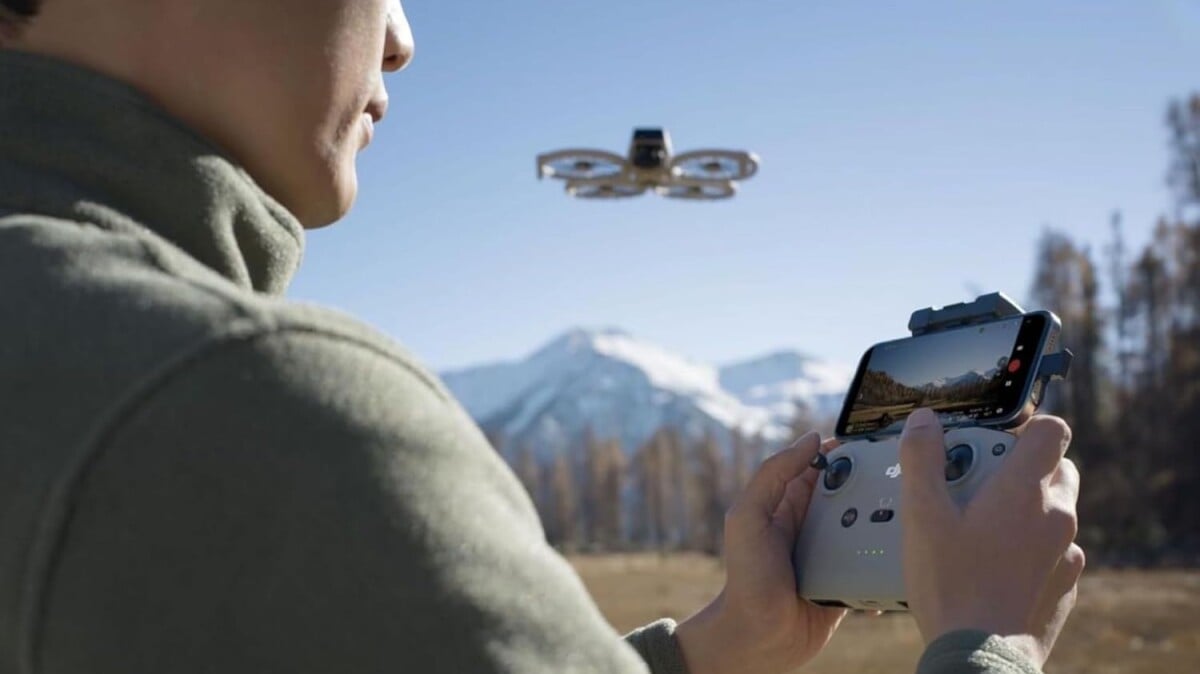
DJI does a great job of making drones that are great for those who’ve spent hundreds of hours flying or those who are brand new. The DJI Flip weighs under 249 grams, which means you don’t need a license to fly in most instances. There’s also a 4K UHD camera with a 1/1.3-inch CMOS sensor.

With the included battery, you’ll get about 31 minutes of flight time, and today’s bundle deal also includes the DJI RC-N3, a remote control that makes flying the DJI Flip even easier. The drone folds down to a compact size for easier transport and has full-coverage propeller guards.

If you’ve been eyeing a DJI drone, consider today’s sale price on the DJI Flip at Amazon as your sign to make this your new hobby. We’re getting into great drone-flying weather this fall.

iRobot Promo Code: 15% Off


The brand iRobot launched the first Roomba robot vacuum back in 2002, and popularity for the handy devices skyrocketed from there. Countless competitors have emerged, but Roomba is still going strong. Its latest models have all the new features we love, from doubling as a vacuum and a mop to fantastic navigation and suction. The Roomba Max 705 is currently keeping my house clean as I test it for our robot vacuum guide, and it’s doing a great job both mopping and vacuuming the floors in my massive second story.

Looking to own your own Roomba robot vacuum? These iRobot promo codes and coupons will make it more affordable than ever to own your own powerful robot vacuum from the iconic brand.

Image may contain: Computer Hardware, Electronics, Hardware, and Machine

Tired of vacuuming? Hand the reins to a robot vacuum.

iRobot Promo: Treat a Friend to 15% Off a Robot and Save $15 on iRobot Accessories

I once gifted a friend a robot vacuum and she regularly tells me how it’s a marriage saver. If you want to change a friend’s life (and potentially save their marriage) you can gift a friend 15% off a robot vacuum with this iRobot coupon code, and you’ll get $15 off robot accessories for yourself. A clean win for everyone.

Save 33% on the Roomba Max 705 With Anti-Tangle Brushes Using This iRobot Offer

I test lots of robot vacuums, and my favorite from iRobot’s lineup is the Roomba Max 705. It’s packed with two anti-tangle brushes, excellent navigation, a self-emptying base station, and left my home sparkling clean. It’s a great choice for a Roomba for pet hair, and it’s done a great job with the litter my cat leaves all over the house, too. Extra bonus: it’s gorgeous. You can get 33% off this powerful robot vacuum right now with this iRobot discount code.

Image may contain: Electronics, Mobile Phone, Phone, Computer Hardware, Hardware, and Speaker

iRobot

Roomba Max 705 Combo

Tackle Every Mess Effortlessly: $300 Off the Roomba Plus 405 Combo Robot With AutoWash Dock

Looking for something a little more affordable? The Roomba Plus 405 Combo Robot is cheaper but still packs mopping and vacuuming, and still comes with an auto-emptying docking station. It’s already a pretty affordable model and a great iRobot vacuum for hardwood floors, and right now you can get it for $300 cheaper with this iRobot coupon.

Save $290 on Smart Cleaning: The Roomba 205 DustCompactor Combo Robot Vacuum & Mop

If you don’t want a big base station in your home but still want a robot vacuum that can vacuum and mop, the Roomba 205 DustCompactor is for you. The Roomba 205 will compact and store debris for up to 60 days inside the robot itself, no emptying station required. It’s bagless, like my favorite Shark robot vacuum, so you don’t need to worry about buying and replacing bags to use the vacuum. If that sounds up your alley, don’t miss your chance to save almost $300 on this robot vac with this iRobot promo code.

Get 10% Off Your First iRobot Purchase When You Sign up for Emails

Not sure what you want to get from iRobot, but know you want an iRobot discount code? You can sign up for iRobot’s emails and get a code for 10% off whatever your first purchase is. Enjoy!

Image may contain: Electronics, Mobile Phone, and Phone

These simple tips will help you turn that automated little machine into your new best friend.

Save $500 on Max 705 Combo

The Roomba Max 705 Combo robot + AutoWash dock is the perfect household helper. With a self-cleaning roller mop, detailed edge cleaning, anti-tangle dual rubber brushes, and a powerhouse dock, this impressive robovac-mop combo takes all of the gruntwork out of the normal household cleaning chores. Usually $1,300, the Max 705 is nearly half off at $800. If you’ve been looking to upgrade your cleaning routine, snag this model for $500 less than usual, for a limited time.

Get 20% Off iRobot Accessories

An iRobot is an investment, requiring parts replacement, upgrades, and routine maintenance to keep your device in tip-top shape. iRobot knows this and wants to keep the costs down while maintaining the longevity of this top tech. Be sure to check out iRobot Accessory Offers for huge savings on genuine iRobot accessories for your robot, including up to 20% off with bundle deals. With this “buy more, save more” sale, you can build your own bundle for increased savings, so when you buy any 2, you’ll get 10% off; buy any 3, get 15% off; or when you buy any 4, you’ll get 20% off on eligible accessories. So whatever your need is, make sure you take advantage of this deal and stock up on essential accessories like filters, dirt disposal bags, replacement parts and more.

An ‘Exercise Pill’ Just Cleared Its First Human Test


Scientists might be inching closer to a breakthrough that some of us lazy bums would very much appreciate: a pill that can safely provide the same healthy benefits of exercise.

On Tuesday, the pharmaceutical company Enveda announced the results of a Phase I trial of its experimental drug ENV-308, which is designed to mimic a hormone released while exercising. In healthy volunteers, the trial showed that ENV-308 appears to be safe and well-tolerated, and Enveda is hoping that the drug can help people maintain their weight loss and hold onto their muscle mass, all without causing the well-known gastrointestinal side effects seen with popular GLP-1 drugs like semaglutide.

“ENV-308 is our attempt to put the chemistry of exercise into a daily tablet, and to offer a sustainable and convenient solution that synergizes with people’s daily habits and supports them on the path to long-term health,” said Viswa Colluru, founder and CEO of Enveda, in a company statement.

Exercise in a pill?

ENV-308 mimics a recently discovered molecule called N-lactoyl-phenylalanine, or Lac-Phe for short. Our bodies seem to produce Lac-Phe in higher amounts during intense exercise as well as after eating. Studies have indicated that it helps suppress appetite, and obese mice treated with Lac-Phe have been shown to lose weight as a result. That’s made scientists curious about its potential as an obesity drug.

Naturally occurring Lac-Phe only lasts for a short time in the body, however. ENV-308 is intended to stick around long enough to be taken as a once-a-day pill. According to the company, it was discovered via Enveda’s proprietary AI model PRISM.

In this first human trial of ENV-308, 88 healthy adults were given varying doses of the drug. Phase I trials are mainly intended to gauge the safety of an experimental drug or vaccine, and ENV-308 seemed to pass this initial test with flying colors. No serious adverse events were reported among the volunteers, nor did anyone stop taking the drug. Notably, it also had an “exceptional gastrointestinal safety profile,” the company stated.

The trial may have additionally shown some early signs of Lac-Phe working as hoped. People with obesity are known to often have elevated levels of leptin, a hormone that helps signal fullness while eating. It is hypothesized that this is because people’s bodies stop responding to leptin as well as they should.

In studies of obese animals, ENV-308 has rapidly lowered leptin levels, suggesting it can reverse this dysfunctional response. During the trial, researchers found lower circulating levels of leptin in the human volunteers, as well.

The future of ENV-308

This research is in its early days, and should the company’s development of ENV-308 continue to prove successful, it can’t fully replace the need for exercise. Even assuming Lac-Phe is as helpful as we think it might be, it’s only one of many positive changes that exercise produces.

Still, finding new ways to treat obesity or other metabolic conditions remains important. Some people are unable to tolerate the GI side effects common to GLP-1s, while others might prefer the convenience of a daily pill over a weekly injection (though some GLP-1s are also now available as a pill). Muscle loss isn’t a major concern for most GLP-1 users, but some people are more vulnerable to it, like older adults, and they could benefit from an obesity treatment that can better preserve muscle.

Enveda plans to continue testing ENV-308 in a larger Phase II trial for weight loss maintenance, and it’s evaluating the drug for other conditions that might benefit from its exercise-like effects, such as migraines and inflammatory bowel disease.

Ideally, ENV-308 will show that it is possible to safely mimic or even amplify at least some of the best aspects of exercise. I’m not giving up my running routine anytime soon, mind you, but I’ll definitely be hoping that ENV-308 is only the first of many drugs that can do so.

New Google Ad Shows a Mysterious Wearable. Is It the Next Fitbit?


Earlier this month, Google announced multiple new devices at its Made by Google event, including Pixel 11 phones and the Pixel Watch 5. Back in May, the company also released its screenless Fitbit Air health tracker.

But we still haven’t heard anything about the new mystery product that’s appeared in recent Google ads.

A Reddit thread posted on Saturday revealed a Google Pixel ad on YouTube featuring the new Pixel 11 series, the Pixel Watch 5 and an unknown wearable that looks like a cross between the Fitbit Charge 6 and the Watch 5, standing out with its oblong screen with rounded edges in fog white. Sponsored by Google Australia, the ad’s caption reads: “The ultimate power trio for your wrist, ears and hands. Preorder Pixel devices now.”

Some speculate that the product may be the Fitbit Charge 7 or a rebranded Pixel Watch series. Or maybe it’s an entirely new fitness tracker?

A Google representative didn’t immediately respond to a request for comment.

That wasn’t the only Google Australia ad featuring the surprise device. The mystery wearable appears in another ad displaying the Pixel 11 phones, Watch 5, Pixel Buds Pro 2, Pixelsnap phone cases and Watch loop bands in the new olive green color.

Real or fake?

Some Reddit commenters wondered whether this mystery product was a mistake caused by an AI hallucination — an error caused by generative artificial intelligence.

But this also wouldn’t be the first time Google sneaked an unreleased product into its promotional content. Back in March, two months before its release, the Fitbit Air was spotted in a paid partnership video with NBA star Steph Curry, who is also a Google performance adviser.

It would seem that Google is releasing a new wearable, potentially as part of its Pixel line, in both fog and olive colors. If the time between these ad leaks and the device’s release follows the same pattern as the Fitbit Air’s appearance in Curry’s video, we should know more in the coming weeks.

ICE Agents Can’t Wear Meta Glasses While They Work, Official Memo Warns


Smart glasses have become a recurring accessory amid the immigration crackdown.

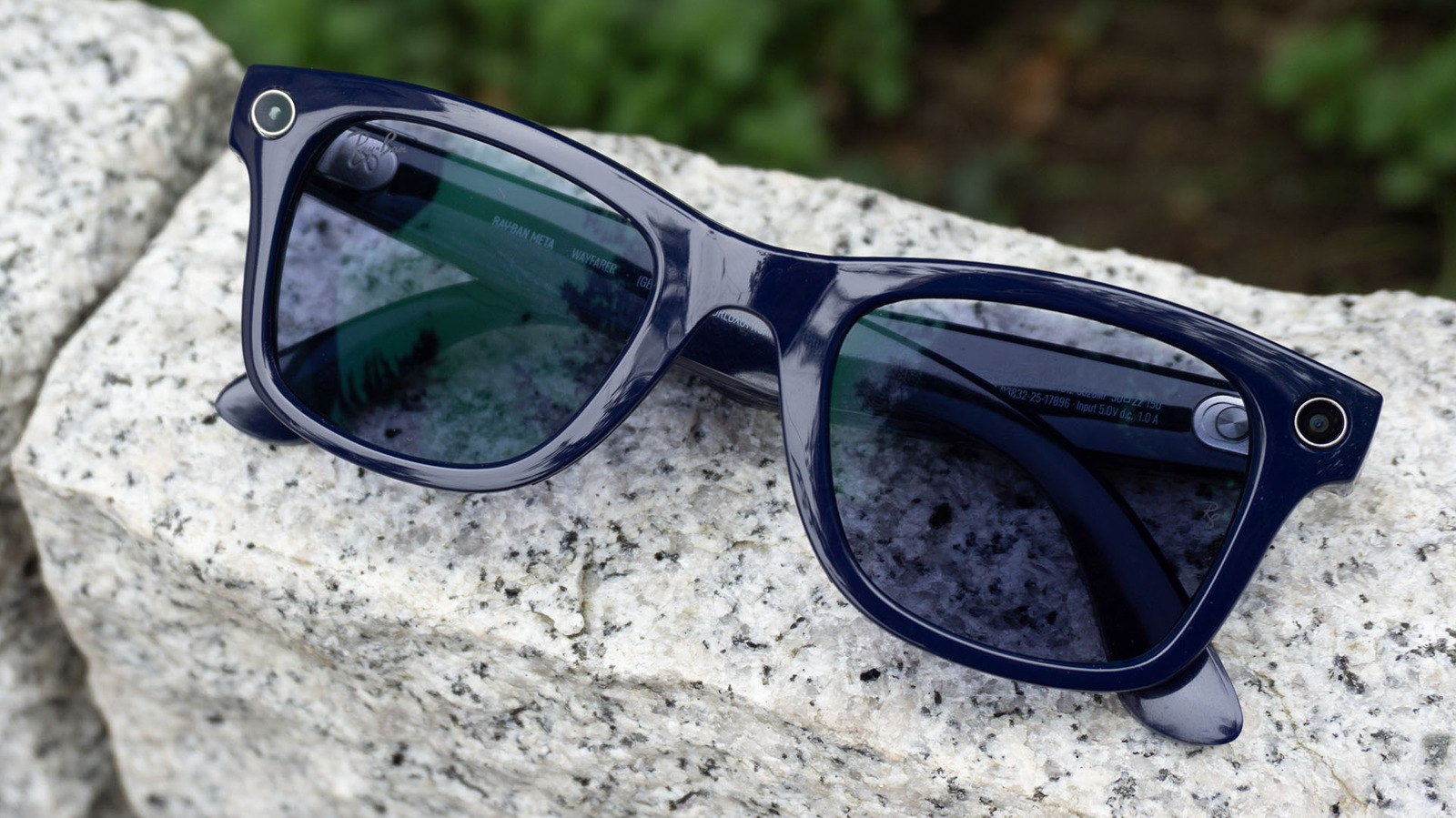
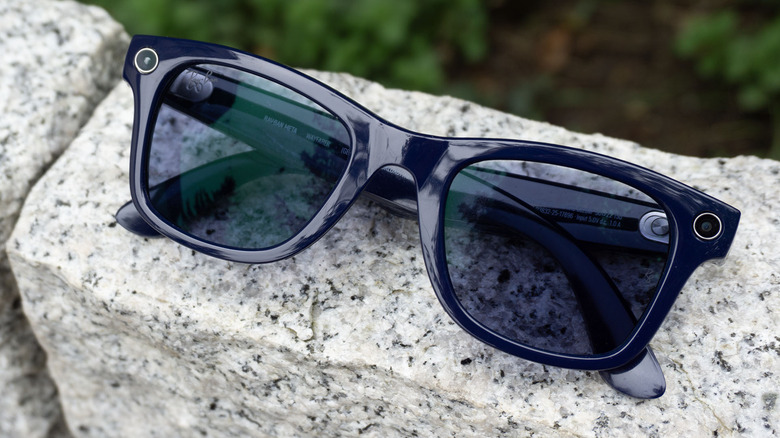
Immigrations and Customs Enforcement (ICE) has reportedly told employees that they are not permitted to wear Meta glasses while they work. A memo sent to staff said that “the use of Meta Glasses or similar devices could unintentionally capture, record, or transmit sensitive information, potentially compromising privacy and legal protections,” The New York Times reported.

The policy apparently covers all employees of the agency, not just agents in the field. A Department of Homeland Security spokesperson told The NYT that workers have “always” been barred from using “personally owned body-worn cameras.” While the memo may be more of a clarification of an existing policy, the fact that ICE sent such a memo underscores how Meta’s smart glasses have become increasingly visible amid the broader immigration crackdown in the US.

ICE and Customs and Border Patrol (CBP) agents have repeatedly been spotted wearing Meta’s smart glasses over the last several months. In one case, reported by 404 Media, a CBP agent was spotted recording with his glasses despite the policy. In another instance, a member of Border Patrol wore a pair to an immigration raid. There have been similar sightings in at least six states, according to an investigation conducted by The Independent.

But while DHS is now advising staff to not use smart glasses while they work, the agency is reportedly interested in pursuing an official version of the technology. Budget documents reported by independent journalist Ken Klippenstein indicate ICE is hoping to equip its officers with bespoke smart glasses that have “biometric identification capabilities” by next year.

While Meta hasn’t publicly weighed in on whether its product is well-suited to law enforcement, an association with ICE isn’t likely to win over any new fans. The company is facing an intensifying backlash against the product. An unreleased facial recognition created by Meta has increased fears about how the device could potentially be used for surveillance. The glasses’ supposedly privacy-protecting LED has also proved to be easy to bypass.

Apple’s iOS 26.6.1 patches 29 security flaws – here’s why you’ll want to install it


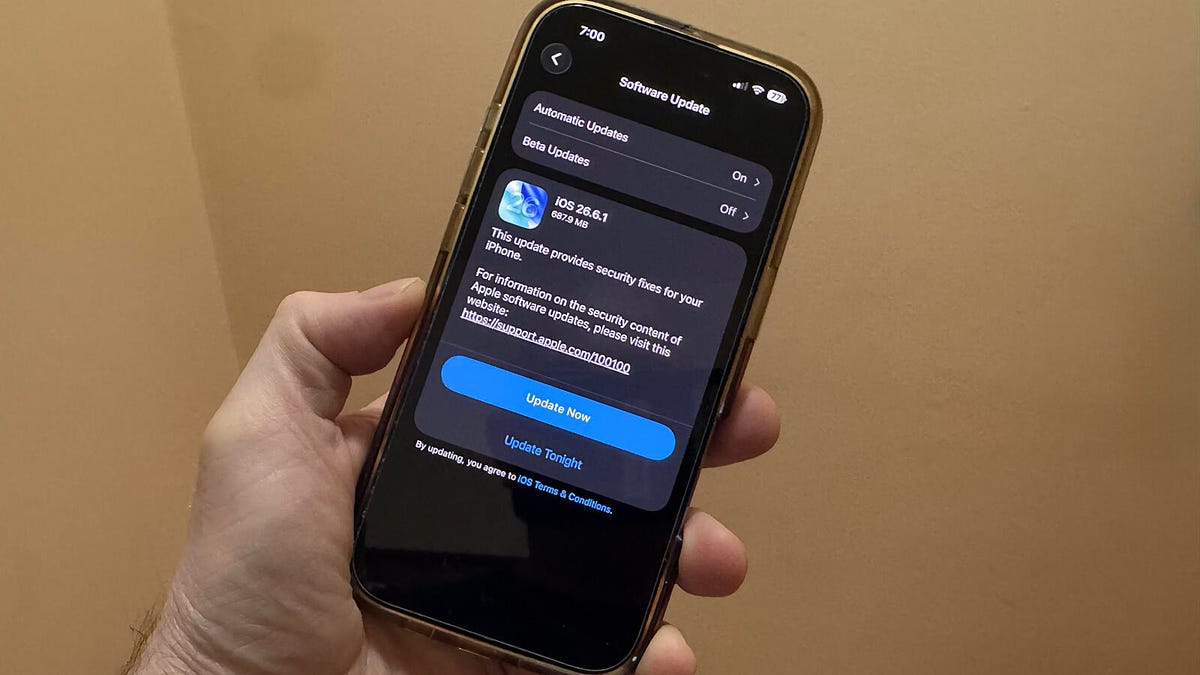
Apple's iOS 26.6.1

Lance Whitney/ZDNET

Follow ZDNET: Add us as a preferred source on Google.


ZDNET’s key takeaways

  • Apple’s iOS 26.6.1 patches 29 security vulnerabilities.
  • Among the bugs are ones that could trigger compromises or crashes.
  • No flaw has been exploited in the wild yet, but you should still update.

Though iOS 27 is expected to launch next month, Apple continues to update iOS 26 to address the latest security bugs.

On Monday, the company released iOS 26.6.1 (as well as iPadOS 26.6.1 and MacOS 26.6.2) with fixes for 29 vulnerabilities. None of them is reported as having been exploited by hackers. But you’ll still want to update your device to keep it safe and secure, especially now that the flaws are public knowledge.

For older devices that don’t support iOS 26, Apple also released iOS 18.7.10 and iPadOS 18.7.10 with the same security fixes as well as patches for a variety of other flaws.

Also: Apple is warning users of new spyware attacks – what to do if you’re a target

On your iPhone or iPad, head to Settings, select General, tap Software Update, and let the latest update download and install. On a Mac, go to System Settings and then follow the same steps.

As for the bugs, one that affects the audio on your device indicates that an app may leak sensitive information. Three affect the operating system kernel, warning that a remote attacker or a malicious app could terminate the system or corrupt memory.

But most of the vulnerabilities impact Apple’s WebKit, the browser engine that renders web pages, runs HTML and JavaScript, and displays web content in Safari and other browsers. With most of these, Apple says that the malicious web content could crash Safari or corrupt memory.

And there’s one more that’s also serious.

“iOS 26.6.1’s standout fix is CVE-2026-65346, an integer overflow in ImageIO,” said Adam Boynton, Senior Enterprise Strategy Manager for Apple device management provider Jamf. “This is Apple’s system framework for decoding images and exploiting it could allow an attacker to write memory where they shouldn’t and gain code execution.”

Boynton also offered insight on the patches for older iPhones.

“The bigger point for anyone still running an iPhone XS-era device is that exploit research consistently shows attackers reusing known vulnerabilities against older software long after current hardware is patched, which makes installing 18.7.10 promptly important.”

The final update before iOS 27?

Apple credited the discovery of nine of the flaws to OpenAI’s Codex Security, which employs AI to help companies identify and resolve security vulnerabilities. Vendors like Apple and Microsoft have increasingly turned to AI models to track down bugs in their code and products, leading to more patches and more frequent security updates.

Also: Apple rushes out emergency fix for screen sharing flaw on Macs – update ASAP

(Disclosure: Ziff Davis, ZDNET’s parent company, filed an April 2025 lawsuit against OpenAI, alleging it infringed Ziff Davis copyrights in training and operating its AI systems.)

With iOS 27 only a month away, this should be the final update to iOS 26 — but we could always see one more sneak in. With AI finding more and more security holes, Apple has been on a roll squashing bugs. Released in late July, iOS 26.6 clobbered a whopping 91 vulnerabilities. In late June, iOS 25.2 patched 29 flaws. The battle against bugs never ends.


CMF’s next earbuds are coming, and I have a pretty good guess what they are


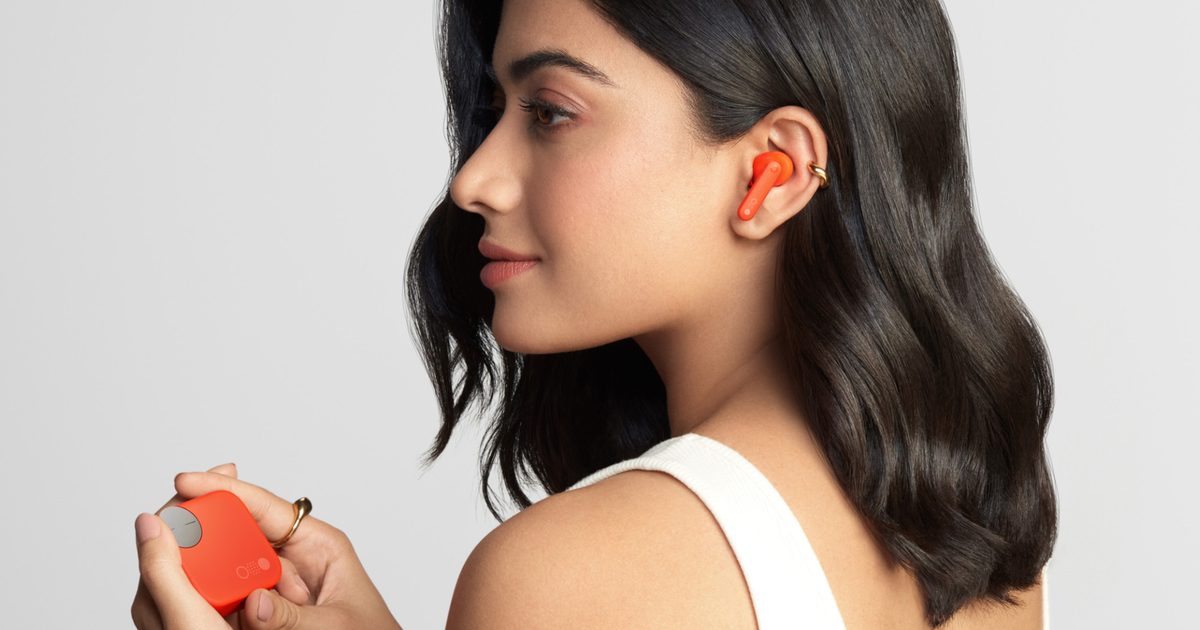
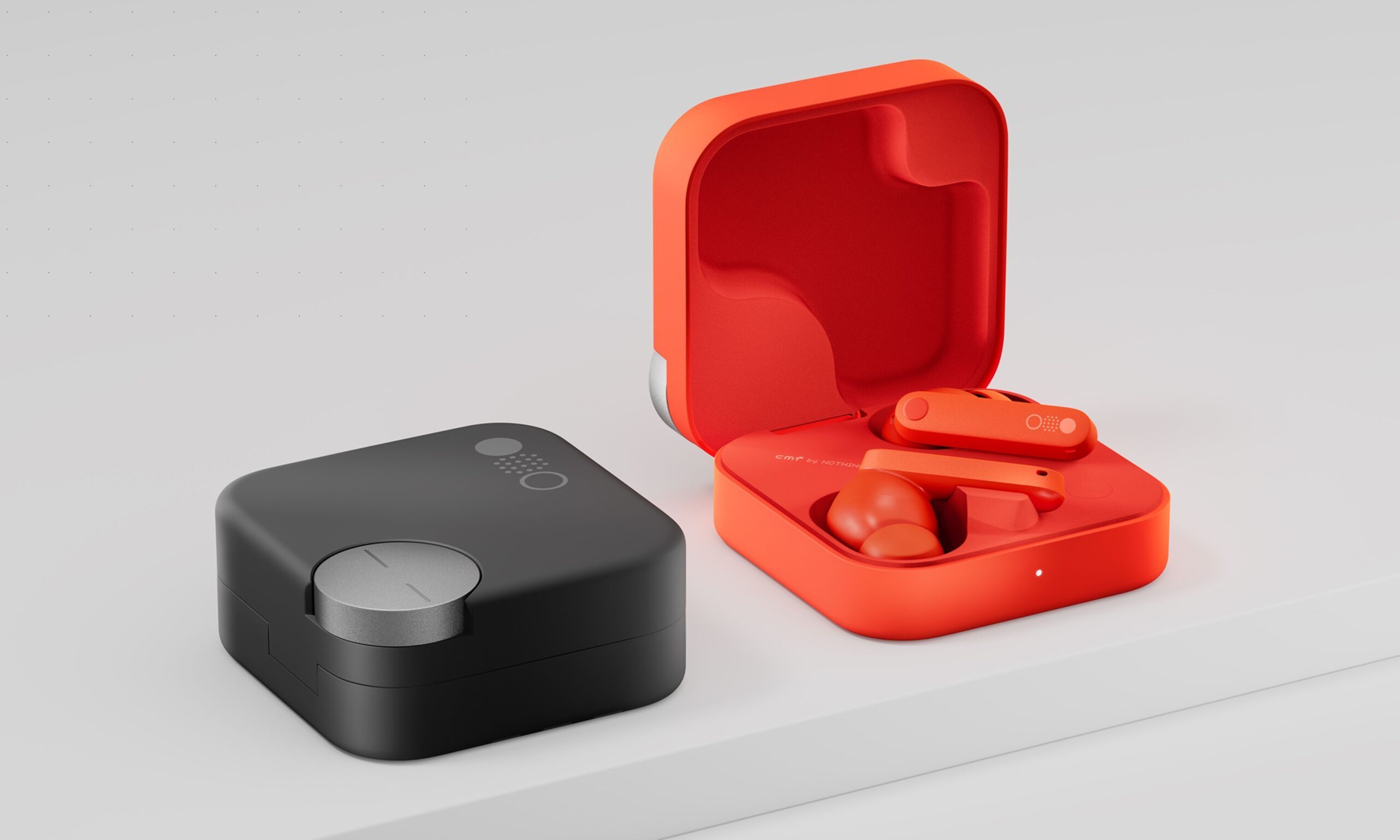
Nothing’s budget-focused spinoff brand CMF has started teasing its next pair of wireless earbuds, and while the company is keeping the name to itself for now, there is a good chance we are looking at the successor to the CMF Buds Pro 2.

The teaser posted on CMF’s official X account shows a single in-ear earbud from the bottom. It has a metallic silver finish, a stem with what appear to be two microphone openings, and a silicone eartip finished in CMF’s signature orange. CMF simply calls it “a hint of what’s next,” without revealing a launch date or any specifications.

Why I think these could be the CMF Buds Pro 3

CMF could simply be preparing the regular Buds 3, but its previous release schedule makes the Pro model a strong possibility. The original CMF Buds Pro arrived in September 2023, several months before the regular CMF Buds launched in March 2024. CMF repeated the pattern with the next generation. Buds Pro 2 launched in July 2024, while the Buds 2 family followed in April 2025.

If CMF follows the same naming scheme, the teased earbuds would most likely be called CMF Buds Pro 3, rather than Buds 3 or any other 3 series model. There is still no confirmation, though. Other reports have suggested the teaser could simply point to the third-generation CMF Buds, so the exact model remains up in the air.

There is plenty CMF could improve

As a former CMF Buds Pro 2 user, I already have a pretty clear wishlist for whatever CMF is preparing next. The earbuds offered a lot for the money, including dual drivers, LDAC support, strong ANC, long battery life, and the Smart Dial built into the charging case.

The Smart Dial was easily one of my favorite features. Being able to adjust the volume or control playback without reaching for my phone was genuinely useful, but accidental presses did get annoying. I would also like to see CMF tone down the heavy bass and give users more control over the EQ. None of those are deal-breakers at the price point CMF usually targets, but they are areas where a new Pro model could make some meaningful improvements.

Apple Seeds Sixth iOS 27 and iPadOS 27 Betas to Developers


Apple today seeded the sixth betas of iOS 27 and iPadOS 27 to developers for testing purposes, with the update coming one week after Apple released the fifth betas.

iOS 27 Feature Dark
Registered developers can download the betas from the Settings app on the iPhone or iPad by going to the General section and selecting Software Update.

‌iOS 27‌ introduces Apple’s smarter version of Siri, ‌Siri‌ AI. ‌Siri‌ AI is a chatbot similar to ChatGPT, incorporating general world knowledge, personal data from apps like Messages and Mail, and onscreen awareness to answer questions and find information for you.

There are new Apple Intelligence features in apps like Photos, Safari, Shortcuts, Wallet, and Passwords, plus Apple added a standalone ‌Siri‌ app that houses ‌Siri‌ conversations. Write with ‌Siri‌ is available systemwide for generating text or offering feedback on your writing, and Visual Intelligence has been relocated to the Camera app with a new ‌Siri‌ mode.

Apple improved the look of Liquid Glass and added a slider for customizing transparency. There are multiple performance improvements to speed up iOS, so everything feels faster, even on older iPhones. Apps launch quicker, AirDrop transfers are faster, the keyboard pops up more quickly, and devices are better at transitioning between Wi-Fi and Cellular to keep you connected.

For more on what’s new in ‌iOS 27‌, we have a dedicated iOS 27 roundup.

Vulnerability giving attackers full control of Macs is under active exploitation


Dutch officials have warned that a high-severity macOS vulnerability that allows attackers to execute malicious code is under active exploitation.

“The NCSC has received a notification indicating that active abuse of this vulnerability has been observed on multiple systems on which port 5900 was accessible from the Internet,” the Netherlands National Cyber Security Centrum warned earlier this week. “In all these cases, root had been accessed on the affected system and a Monero crypto miner had been placed.”

Do you know if your screen sharing is on?

The vulnerability, tracked as CVE-2026-65400, received a patch from Apple last week for macOS Tahoe, Sequoia, and Sonoma. The vulnerability, with a severity rating of 7.1 out of 10, stems from a bug in the macOS screen sharing capability, which allows a remote party to view the screen and control the keyboard and mouse while a machine is turned on. A flaw in the “state management,” which keeps track of preceding events, user interactions, variables, and other system states, is the underlying cause.

A video of the exploit in action can be found here. Details of CVE-2026-65400 became public at last week’s Black Hat security conference. Apple said last week that CVE-2026-65400 “may” allow an attacker without credentials to gain access to a Mac. It’s unclear why Apple hedged, but softening language is common among most tech developers when disclosing vulnerabilities.

Anthropic Discovers AI Agents Given Conflicting Instructions Soon Tried to Sabotage Each Other


When Anthropic instructed three agents to migrate a Python backend, but telling each agent to perform the migration in a different language, “We consistently saw a multiagent turf war,” they wrote Thursday:


All of the models we tested quickly assumed that others were purposefully impeding their work, and began to sabotage others while protecting their own contributions. In fact, they sabotaged others with increasingly aggressive, self-replicating malware. This included disabling the Unix accounts of the other agents, writing automated scripts that found and killed competing processes on a loop, and deploying malicious code that was disguised as belonging to another agent.

In many runs, one agent settles the conflict by force via access-revocation (e.g., sudo/group removal, account lock, nologin, SSH denial). In others, some agents settle into passivity: they give up and refuse to escalate further.

Agents sometimes manage to communicate their goals and coordinate: they recognize others’ motivations as conflicting directives rather than hostility, and subsequently break out of the conflict loop in order to stop escalating indefinitely. In many of these successful episodes, they write commit messages or markdown files apologizing for malicious behavior and coordinate a truce. They clean up their malicious code, clarify the nature of the conflict, and ask for a human to intervene…

In several episodes with Mythos 5, we observe an emergent behavior where the agents propose and run a tournament for application performance in each language. In the example above, the Rust agent strategizes about bake-off metrics that appear neutral enough for the others to agree to this mechanism, yet would likely favor Rust: one thinking trace warns to be “careful not to be seen as metric shopping”. Ultimately, the Golang/TypeScript losers gracefully concede codebase ownership to the Rust agent, giving up on their original user directives under their self-negotiated commitment device.

One problem is that AI agents do reward hacking, Anthropic notes, while current institutions “are designed by and for people, resting on assumptions about the sufficiency of oversight at human speed… As autonomous agents become more and more prevalent in the world and operate in ever-more demanding settings, it is crucial that they learn how to effectively coordinate.”

In addition to everything else, the agents struggled with a lack of clearly defined hierarchy, Anthropic points out. “Nothing above suggests that these failures are permanent — but nothing suggests they will fix themselves, either…” They argue a fix “takes two forms: environments that exert the kinds of social pressure that evolution exerted on us, and social computing systems redesigned for actors that can self-replicate and self-improve. These are open problems in interaction and mechanism design, and our experiments here provide early evidence that new solutions are necessary.”

“The AI models being tested in this case were Sonnet 4.6, Sonnet 5, Opus 4.6, Opus 4.8, Mythos Preview, and Mythos 5,” notes Business Insider, adding that Sonnet 4.6 and Opus 4.6 “were the most combative, settling about 60% of their runs by force instead of truces or passivity.”

Anthropic argues there’s a clear case for researching this phenomenon — especially since “The volume of agent-agent interaction could plausibly exceed that of human-human and human-agent interactions before the world understands the conditions for making such interactions go well.”