Inclusive Design for Corporate Offices and Creating Accessible Workspaces with Engineering Firms


A corporate office of the modern age is not all about glass walls polished to a mirror finish, slim lighting, or the latest gadgets installed. It’s about who can be effective in that space. Forward-looking companies today understand that an accessible workplace isn’t complete until everyone—be they of ability, age, neurodiversity, or with sensory needs—is welcome there. Inclusive design is not just a catch-all term; it’s a root change in the way we construct spaces for real people with actual differences.

The test? Too many organizations still settle for de minimis compliance instead of real accessibility. But architects and engineering firms from Cad Crowd who grasp inclusive design can lead businesses to design offices that are not just ADA-compliant, but truly inviting, usable, and empowering for every worker. So, how does that happen? And how do engineering and architecture firms help facilitate this shift?

Let’s explore how inclusive design revolutionizes office culture—and how to find the right partners to make it happen.

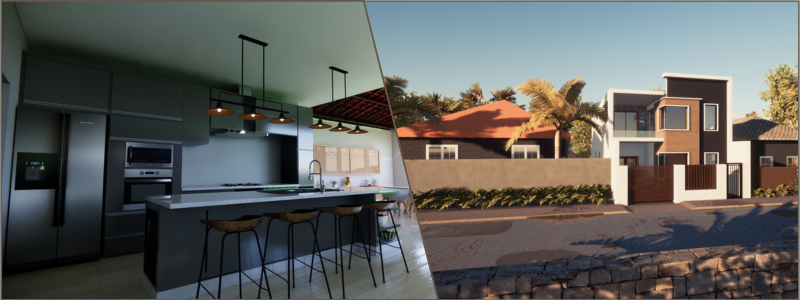
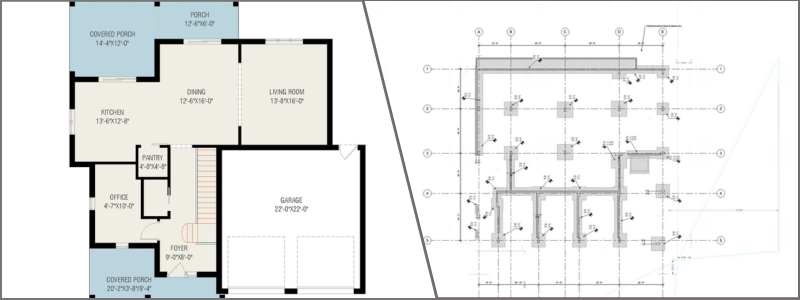
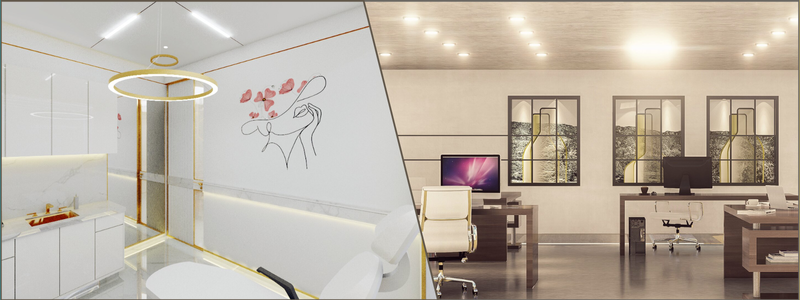
inclusive design of a dental clinic and office space

RELATED: Ten questions to ask a structural engineer before hiring an architectural design firm

Inclusive design vs. accessibility: Why the difference matters

Accessibility is usually perceived in terms of legal compliance—putting in ramps, having doorways that are wide enough for wheelchairs, and having elevators in buildings that are more than one story high. While these elements are unquestionably important, they are only the building blocks of making a space accessible.

Inclusive design transcends compliance and enters the human, thoughtful experience space. It starts with a set of broader questions that acknowledge the entire range of human diversity. For instance, can a neurodivergent worker have access to a quiet area to concentrate undisturbed? Can signs and visual symbols be read by a person with dyslexia or low vision? Can a person with arthritis easily work doors or change their desk without exacerbating the condition? Do restrooms reflect the dignity and needs of non-binary people? Is navigating an area intuitive to a person who has cognitive limitations?

Inclusive design is proactive, not reactive. It plans for a range of needs at the planning stage, not rushing to make changes afterwards. This creates spaces that are not just functional but also empowering, respectful, and inclusive to all—irrespective of ability, identity, or situation. Simply put, inclusive design is not merely about compliance; it’s about setting higher standards for all.

The role of engineering and architecture firms

When businesses plan to construct or rebuild their office buildings, they tend to seek firms with stunning portfolios, celebrity clients, or revolutionary designs. Aesthetics and innovation are important, but inclusive design demands a firm that puts function, empathy, and teamwork first.

This is where bringing in the right firm truly makes a dramatic impact. Architecture and engineering teams are not simply constructors—they’re translators of human need. Their decisions in layout, material, lighting, acoustics, HVAC systems, and digital infrastructure determine how individuals experience the space on a daily basis.

Here’s how they can incorporate inclusive design from the ground up:

Collaborative discovery and visioning

Rather than jumping into design specs, seasoned companies start by learning how individuals occupy the space. Inclusive companies will hold discovery sessions with employees from different departments and abilities. They may bring in HR, DEI teams, neurodivergent staff, and facilities managers into these initial workshops.

These sessions not only chart technical requirements. They also assist the company in getting to know company culture, workflow tastes, areas of pain, and aspirations for the future. A finance department may require more quiet pods, whereas a creative team might ask for dynamic, mobile furniture. An inclusive design spirit soaks up all this input and starts to interpret it as spatial solutions.

Design for a spectrum of needs

Engineering companies using inclusive concepts look beyond dichotomies such as “able-bodied” or “disabled.” They see spectrums—mobility, sensory processing, mental well-being, eyesight, hearing, and even introversion or extroversion.

Take, for example, open offices that were formerly admired for their cooperation. Nowadays, they’re synonymous with distraction. Inclusive workplaces find middle ground by providing varying workspaces: private focus pods, communal lounges, variable standing desks, and peaceful, dimmed rooms for unwinding.

Designers would advise:

  • Employee-controllable tunable lighting systems
  • Tactile navigation features for low-vision users
  • Acoustic stress-reducing sound-absorbing materials
  • Armrested and height-variable seating for physical access
  • Height-adjustable conference room tables for wheelchair access
  • Flooring and sign color contrast to support visual clarity

RELATED: The impact of photorealistic rendering on design services: 10 key benefits for firms & 3D freelancers

Smart tech meets human-centered design

Inclusive design is not low-tech; it’s smart and flexible. Engineering companies can incorporate assistive technologies that seamlessly integrate into the workplace.

Consider sensor-controlled doors, real-time captioning in remote meetings, voice-recognized smart elevators, or indoor navigation apps for individuals with visual impairments.

Notably, inclusive design is not only good for people with disabilities. Flexible lighting, clear wayfinding, and quiet spaces enhance productivity and well-being for all.

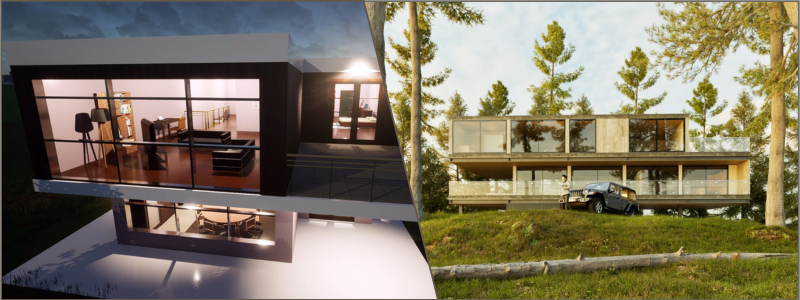
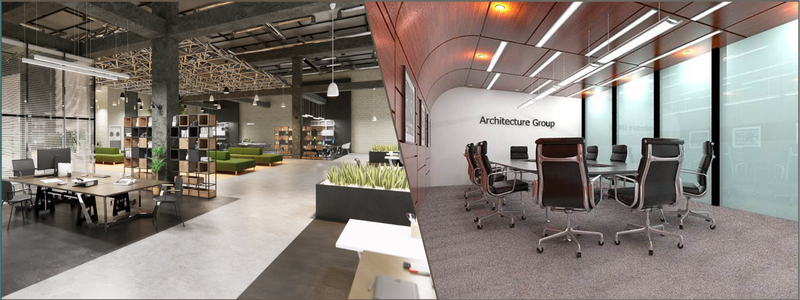
3D rendering of an office space and studio

How to select an inclusive design company: More than the portfolio

Let’s say you’re a workplace leader ready to take action. You’ve got the budget and the vision. Now what?

Finding a firm aligned with inclusive values means digging beyond their website.

Step 1: Look for evidence of empathy, not just expertise

Sure, a firm can dazzle with gorgeous renders. But do they highlight inclusive projects? Do they mention collaborating with accessibility consultants or universal design experts?

Inquire about inclusive project experiences in the past. A good firm should describe how it addressed complex issues, such as inclusive bathroom design or sensory-sensitive areas.

Step 2: Prioritize firms with strong listening cultures

Engineering and architecture is not just about drawing—it’s about listening. During your initial consultation, take note of how much they ask you. Are they really interested in your company culture and employees’ needs? Or are they leaping into their own concepts right away?

You need a team that doesn’t view inclusive design as a to-do list but as a conversation.

Step 3: Inspect their process for co-design

The top companies integrate users into the design. That could be regular employee input sessions at each design stage or physical mock-ups to test out layouts. Co-design means the final users—you, your employees—are not simply consulted once but actively involved at all stages.

RELATED: Why architects outsource 3D modeling services and the benefits for your design company

Real-world design features: What inclusive offices get right

Let’s talk specifics. These are some of the design features commonly included in well-considered inclusive corporate offices:

Entrances and navigation

  • Automatic, wide doors with push-button or sensor opening
  • Non-slip, low-pile carpet or flooring with contrasting colors
  • Clearly marked paths with braille and large, high-contrast signage
  • Adequate turning radius for mobility aids

Workstations and meeting areas

  • Adjustable desks (height and tilt)
  • Multiple types of seating (stools, task chairs, lounge)
  • Rooms with voice-activated tech for those with limited mobility
  • Smartboards with tactile controls

Lighting and acoustics

  • Daylight-optimized layouts that reduce glare
  • Circadian lighting systems
  • Acoustic panels and carpet tiles to absorb sound
  • White noise machines in high-traffic areas

Restrooms and wellness areas

  • Family-accessible and all-gender restrooms
  • Private areas for prayer or nursing with adjustable lighting
  • Mental health breaks in wellness rooms
  • Quiet decompression areas for sensory regulation

Digital access and remote inclusivity

  • Real-time captioning conference rooms that are hybrid-friendly
  • Infrastructure to support work-from-home
  • Screen readers and multilingual interfaces on digital kiosks
Blog post images Elize 2 24

RELATED: How 3D product modeling helps furniture companies cut marketing costs with design firms

The ROI of inclusive office design

Here’s the bottom line—accessible workspaces aren’t a cost center. They’re a talent magnet.

A 2020 Accenture study discovered that disability-inclusive leaders experienced 28% higher revenue, 30% greater economic profit margins, and twice the net income of their competitors.

Why? Because diverse, high-performing talent is drawn to inclusive environments. They decrease turnover, enhance morale, and improve productivity. They demonstrate to your customers and partners that you practice what you preach.

And the best organizations in this field don’t wait for a law—they set the example.

Partnering for change: Your next steps

Building an inclusive corporate office isn’t a solo flight. It’s a collaboration between your leadership, employees, and an engineering or architecture firm that believes good design belongs to all.

Here’s where to begin:

  • Measure your current space. What’s effective? What isn’t? Are there complaints or covert barriers?
  • Engage with your people. Particularly those with disabilities, caregiving needs, or mental health concerns. Their feedback is gold.
  • Have a diverse shortlist committee. Include HR, DEI leaders, and employees representing various departments to assist in choosing your company.
  • Shortlist inclusive design companies. Find those with a track record of accessibility expertise and human-centric core values.
  • Invest in continuous feedback. Design is never complete. Establish mechanisms for assessing and improving your space regularly.

Conclusion: Designing for all isn’t just good—It’s brilliant

One-third of our lives are spent working. That building should make us better, not push out or wear us down. A building designed with inclusive values doesn’t just comply with codes—it encourages teamwork, creativity, and relaxation.

Engineering and architecture firms who belong to the esteemed Cad Crowd platform have the power to help companies transform not just their spaces, but their culture. And as the demand for inclusive work environments grows, it’s the businesses that prioritize people-first design that will lead the charge.

So, next time you’re planning that office renovation or new HQ build-out, don’t just ask: “How will it look?”

Ask: “Who will thrive here?”

Because when everyone can thrive, everything changes.

Get a free quote for your design today.

author avatar

MacKenzie Brown is the founder and CEO of Cad Crowd. With over 18 years of experience in launching and scaling platforms specializing in CAD services, product design, manufacturing, hardware, and software development, MacKenzie is a recognized authority in the engineering industry. Under his leadership, Cad Crowd serves esteemed clients like NASA, JPL, the U.S. Navy, and Fortune 500 companies, empowering innovators with access to high-quality design and engineering talent.

Connect with me: LinkedInXCad Crowd

How 3D Pool Design Rendering Helps You Visualize Your Company’s New Backyard Pool Project


You’re standing in your yard, eyes shut, dreaming of crystal-clear water shimmering under the sun. A couple of deck chairs are scattered fashionably, there is a water feature gently bubbling, and there’s a BBQ simmering just a few feet away. But then—boom—you wake up. It’s only your dog, the mottled grass, and that rusty old lawn chair you’ve vowed to replace since 2019.

Ring a bell?

For most homeowners who work with pool builders, closing the gap between the imagined and the possible can be a little like playing Marco Polo—with a blindfold. That’s where 3D pool design rendering services by the professionals at Cad Crowd step in and convert wishful thinking into crystal-clear images that you can almost cannonball into.

Let’s jump—headfirst—into the way 3D rendering is making backyard fantasies come true in awe-inspiring, splash-worthy detail.

From scribbles to stunning: The evolution of pool design

There used to be a time when having a pool involved the review of a blueprint or sketch on paper. Perhaps you might receive a bird’s-eye map with some kind of blue shading, and that was meant to indicate where your spa would be placed. The issue? Those ancient drawings did not allow for depth, landscaping, lighting, or even such basic questions as “How is this going to look with my patio furniture?”

Now, 3D pool rendering has revolutionized the game.

It’s not about attempting to decipher construction terminology or imagining what a 15×30 pool with a tanning ledge and a spillover spa would “kind of” look like. Now, with realistic 3D modeling software, homeowners can walk through their new backyard virtually before a single shovel ever touches the ground.

RELATED: How to choose the right BIM services provider for your architectural firm

3D swimming design rendering in a house and a top down view

So, what exactly is 3D pool rendering?

3D pool design rendering is the digital visualization procedure that generates photo-realistic photos (and, in some cases, walkthrough animation) of your new pool area. It’s done through special software that takes into account every detail, from the size, depth, and shape of the pool to landscaping, decking, lighting, and even the very sun angle in your region and season. In short, it’s your very own Backyard Preview Show, and it’s very detailed indeed. Photorealistic rendering services aim to get as close to life as possible.

Want to see how your travertine tile will appear next to a fire pit? Done. Curious if a pergola will conflict with your palm trees? Render it. Want to choose between turquoise or ocean-blue pool plaster? Render them both side-by-side and choose your favorite.

It’s not design—it’s decision-making on steroids.

Why pool companies love it (And why you should too)

Let’s discuss the actual magic: 3D rendering services don’t just create graphics for graphics’ sake—they’re solutions to problems, time savers, and relationship builders between homeowners and pool companies.

Better communication = Fewer surprises

How many home renovation nightmares begin with “That’s not what I thought it would look like!”? Loads. But if you can see the end result before it starts, you’re less likely to be let down. Pool builders can get expectations in alignment, display design possibilities in rich detail, and eliminate those awful in-the-middle-of-the-project change orders.

Quicker approvals & less revisions

Ever attempted to describe a pool design via phone or with general emails? It’s a headache. With 3D images, customers are able to quickly approve a design or propose alterations because they comprehend the vision totally. That is less back-and-forth, fewer delays in design, and quicker construction timelines.

Upselling comes naturally

Want to add a Baja shelf? A raised spa with LED lighting? Perhaps an infinity edge that blends with the view? Once a homeowner glimpses the difference in a superior rendering, the value is clear—and pool companies can more effectively promote premium add-ons without coming across as overly pushy.

Site-specific accuracy

Current 3D software will usually enable pool designers to add real-world elevations, slopes, and property layouts. In other words, the rendering isn’t only nice to look at—it’s correct. Want to know how your pool will sit on top of the existing patio or garden bed? Not an issue. That kind of accuracy prevents expensive on-site surprises for you and architectural site plans services.

What’s included in a high-quality 3D pool design rendering?

Not all pool renderings are equal. The top renderings are so realistic, you can swear you hear the splash. Here’s what goes into a high-end 3D pool rendering that really brings your vision to life:

Realistic materials

From tile texture to stone finish and even water flow, materials are depicted with realistic accuracy. This lets homeowners test how various combinations look together before they commit.

Lighting effects

Pool lighting is more than for ambience—describing the nighttime appearance of a pool. Terrific 3D rendering captures not just day visuals, but nighttime settings including accent lights, pool lighting, and lighting a garden. Lighting design services are a game-changer in this aspect.

Landscaping & furniture

A pool doesn’t exist in a bubble. Their great renderings involve trees, plants, lounges, umbrellas, outdoor kitchens—the whole shebang that makes your backyard a destination. Want a tiki bar? They can add it in with a few clicks.

Animations and virtual walkthroughs

Others go a step further with animated flyovers or VR-capable walkthroughs. You can literally “walk” through your new pool, glance back at your house, and see how it all fits together spatially.

RELATED: Revit modeling benefits for furniture manufacturers when hiring CAD design firms

Real pool, rendered first: A client scenario

Suppose the Johnsons would like a backyard oasis in their sloping yard. They believe they desire a rectangular pool with an attached hot tub, and perhaps some side landscaping.

This is the way a 3D rendering process might go with their pool company of choice:

  • Initial consultation: The designer photographs the yard, takes elevation measurements, and hears what the Johnsons desire.
  • Concept rendering: A preliminary 3D rendering is done, depicting a general pool layout with substitute materials and landscaping.
  • Refinement: The Johnsons adjust the depth, relocate the spa to the opposite side, and prefer a beach entry over stairs. The designer refines the 3D visuals for 3D CAD design services.
  • Material selection in context: They see various tile and deck combinations in side-by-side illustrations, selecting based upon how they all appear together, rather than samples in a showroom.
  • Final approval: After being satisfied, the last illustration has lighting scenes for daytime and nighttime, and even indicates where the family’s existing furniture might be placed.
  • Construction begins: The contractors now have a clear vision, with detailed reference images to direct execution—no second-guessing.

Competitive advantage for pool businesses

In the extremely competitive market of custom pool construction, 3D renderings aren’t a nice-to-have—they’re a competitive advantage.

Let’s face it: if a customer is shopping around between two pool businesses and only one of them is showing a mouth-dropping 3D tour of their future backyard utopia, who do you think gets the call back?

Offering professional 3D design services makes a pool company look modern, trustworthy, and highly detail-oriented. It tells homeowners: “We’ve got this down to a science.”

Even more importantly, it reflects a commitment to collaboration, something homeowners genuinely appreciate when making a major investment in their property.

Pool design for a hotel swimming pool and garden-view pool

RELATED: Redefining existing buildings with interior fit-outs & architectural design companies

Mistakes that 3D rendering can prevent

Pool construction can be chaotic without a crystal-clear plan. Here’s how 3D rendering prevents common design mishaps:

  • Wrong size or shape: That “small spa” might look fine on paper, but in a rendering, you’ll see it’s awkwardly sized next to your 6-person dining area.
  • Awkward placement: A rendering shows that your fire pit is right where the sun scorches in July—or that your water feature faces the back fence instead of the patio.
  • Unrealistic expectations: Perhaps the infinity edge just won’t truly “vanish” from sight like you envisioned. Having it seen through a rendering avoids disappointment.
  • Lighting faux pas: That underwater lighting design might be groovy in concept, but a rendering could expose it as producing glare just where you swim laps.

Future-proofing with 3D pool design

3D renderings also allow you the option to phase your dream project. Perhaps you can’t stretch the budget for the pergola-shaded bar this year—but a rendering can indicate how it would blend seamlessly in Phase 2 of your backyard masterplan.

This forward-looking vision planning is worth it, and it empowers homeowners to invest with confidence and clarity.

A glimpse behind the curtain: The software tools

The professionals behind these eye-catching visuals often employ state-of-the-art software such as:

  • Pool Studio
  • SketchUp
  • Lumion
  • Revit
  • 3ds Max with V-Ray
  • Blender (with architectural plug-ins)

These software enable the rendering artists and pool designers to not just sketch and model, but also simulate light, materials, and landscape with utmost accuracy.

It’s not just a pool—It’s a story

Here’s the good news: 3D pool rendering doesn’t merely present you with a pool—it presents you with a lifestyle.

You’re not just buying a body of water. You’re investing in future Saturday cannonballs, nighttime swims under string lights, and backyard parties with neighbors clinking glasses poolside.

The rendering tells that story. It visualizes the feeling of the space, not just the layout.

The final splash

Selecting to put in a pool is a significant choice—one that’s personal, visual, and monetary. 3D pool design rendering simplifies that process, makes it more imaginative, and much more enjoyable. It gives homeowners and pool companies a tool that eliminates doubt and substitutes it with clarity.

So the next time you’re dreaming of your backyard oasis, remember this: you no longer have to dream about it. Call Cad Crowd for your complimentary quote.

You can visualize it, modify it, fall in love with it—and then construct it.

Cannonball, anyone?

author avatar

MacKenzie Brown is the founder and CEO of Cad Crowd. With over 18 years of experience in launching and scaling platforms specializing in CAD services, product design, manufacturing, hardware, and software development, MacKenzie is a recognized authority in the engineering industry. Under his leadership, Cad Crowd serves esteemed clients like NASA, JPL, the U.S. Navy, and Fortune 500 companies, empowering innovators with access to high-quality design and engineering talent.

Connect with me: LinkedInXCad Crowd

6 Reasons To Hire CAD Drafting Companies & Design Services Firms


Not all ideas begin with a sweeping architectural scheme or a well-refined engineering drawing. It begins sometimes with a crude sketch on a napkin or with a head full of ideas. But making that vision into a tangible, usable blueprint—now that is where CAD (Computer-Aided Design) drafting businesses from industry giant Cad Crowd enter like unheralded heroes.

Whether you’re introducing a new product, renovating a commercial facility, or implementing technical manuals for a factory installation, hiring CAD drafting professionals can be the best, most strategic decision you ever make. Why? Because these individuals don’t merely draw. They think, they optimize, and they bring clarity to complexity.

Let’s take a stroll through six ways that partnering with a CAD drafting service firm or design services business is not only a convenience—it’s a competitive advantage.

Accuracy, clarity, and no guesswork

Let’s admit it—inaccurate drawings mean costly errors.

Consider a structural detail that’s a few millimeters short. Now extend that discrepancy to the entire floor plan. The outcome? Squandered materials, rework nightmares, irritated contractors, and skyrocketing costs. CAD drafting companies eliminate this type of nightmare entirely.

These companies specialize in crafting precise, standards-based, and extremely detailed drawings. 2D floor plan services, mechanical assemblies, electrical schematics, or piping diagrams—whatever the drawing, it’s never fuzzy. The ambiguity margin? Zero.

More significantly, these drawings are communicated to all contractors, engineers, manufacturers, and stakeholders alike—eliminating errors in communication on all fronts. Clean layers, accurate scales, and industry-standard formats all mean everybody understands. Literally.

RELATED: Ten questions to ask a structural engineer before hiring an architectural design firm

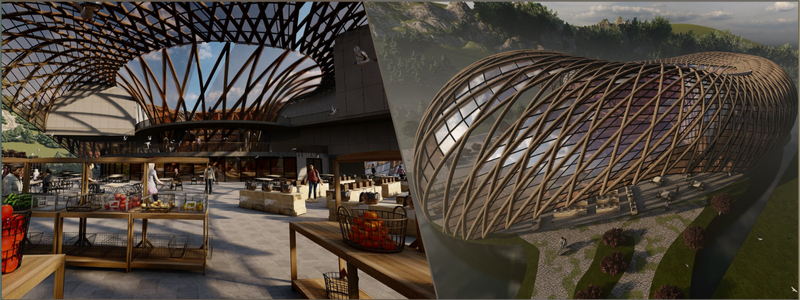
3D design of an amphitheatre and mall

Time is money—And CAD firms save you both

A full-time in-house drafter might sound sensible to hire—until projects fall behind deadline and project scopes are adjusted.

One of the greatest benefits of contracting with a CAD design company is flexibility. You need a group to work on several revisions in a hurry? No problem. Do you need to ramp up for a large development phase and then back down again? Not an issue. You have talented professionals without the commitment to payroll.

Most businesses now outsource CAD drafting for exactly this reason. A specialized drafting company can finish the same project in half the time—without compromising quality. They have tried-and-true workflows, seasoned drafters, and state-of-the-art software at their disposal, and they’re designed for speed.

You don’t need to train anyone. You don’t need to install software. You simply give them your idea, and they produce.

Plus, most reputable CAD companies work around the clock with global teams—so while you sleep, your drawings get done. Talk about a time zone advantage.

Access to top talent and high-end tools (Without the overhead)

CAD design software isn’t cheap. AutoCAD, Revit, SolidWorks, Inventor, MicroStation—the list goes on. Not to mention the powerful workstations required to run them effectively.

When you hire a drafting service company, you’re not simply paying someone to click a mouse. You’re accessing sophisticated software, expert operators, and maybe years of expertise in many different fields—architecture, civil engineering, MEP, aerospace, furniture design services, manufacturing, and many more.

And they don’t simply know how to operate software—they know which tool is best for your particular project. That makes all the difference.

Even better, you have the advantage of a team approach. CAD companies will typically have several professionals work on a project—drafters, design engineers, quality checkers—all coordinated together. This multi-layered system guarantees that each drawing is reviewed and matched to your specifications.

So, rather than have a single generalist who is competent in some areas, you have an entire group of specialists.

RELATED: Wearable product development: 6 key challenges for product development companies

Ability to scale for projects of any size or complexity

Startups, builders, product designers, architects—whether your business or project is large or small, a CAD drafting company can grow with you.

Need a single part drawing done? They can do it. Need a whole hospital floor plan BIM modeled? They can handle that.

What’s more astonishing is that these firms integrate seamlessly with your workflow. Want to collaborate with your engineers in real-time? Most 3D rendering firms are compatible with cloud-based CAD programs and can implement shared drives or project dashboards. Want PDF markups translated into fully editable DWGs? No issues.

And when the situation becomes critical—as it tends to in manufacturing and construction—you’ll value that these companies can call in additional personnel, get jobs done quickly, and remain committed to quality. You can scale up or down without having to hire, fire, or reorganize staff.

Cost savings that extend beyond labor

Let’s analyze a popular myth: hiring someone externally is more expensive. Reality? Hiring a CAD firm generally costs much less than maintaining an internal staff, particularly in the long term.

Here’s why:

  • You don’t pay for software licenses and hardware upgrades.
  • You don’t pay for benefits, training, sick days, or startup time.
  • You pay only for completed work—nothing more.
  • You remove the cost of rework due to inexperience or hurried drawings.

Most CAD companies also offer package pricing or long-term contract discounts. With either hourly or flat-rate billing, predictability is useful for budgeting. And because you’re working with experts who do it right the first time, you eliminate the expense of delays for your construction or manufacturing company.

The outcome? A slimmer project pipeline, improved financial control, and fewer unexpected expenses in the future.

RELATED: How to Improve product development for your company with engineering firms & design consultants

Future-proofing through digital transformation

You may assume that CAD drafting is all about drawings. But more and more, it’s about data, collaboration, and intelligent documentation.

Forward-thinking companies today offer such services as:

  • 3D modeling and visualization, so stakeholders can “see” the completed project prior to its start.
  • As-built documentation for facility management and retrofitting.
  • Scan-to-CAD conversion from 3D laser scans of existing structures.
  • BIM (Building Information Modeling) services well beyond lines and layers—ones that mimic actual in-place performance.
  • File standardization and cloud documentation so you can have a virtual library of editable assets to reuse for successive projects.

Employing a CAD company places you on the road to digital integration. Your blueprints are living documents, simply updated and easily shared. And when your business or your team grows, you won’t be saddled with a paper-filled drawer or a stack of illegible files.

This is where CAD drafting services begin to feel like a part of your digital strategy, not just your drawing staff.

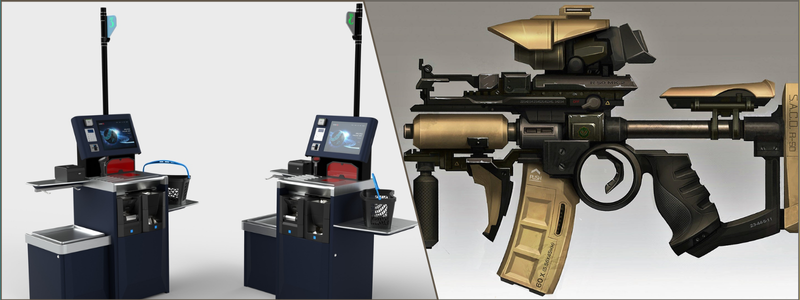
Self-service counter and AR 15 for an in-game weapon

RELATED: The impact of photorealistic rendering on design services: 10 key benefits for firms & 3D freelancers

When should you actually hire a CAD drafting firm?

You may be wondering: “Do I really need to hire a CAD drafting company? Is that only for huge corporations or massive construction projects?” Not so.

In fact, CAD drafting experts are not only for the skyscraper builders or multinational product manufacturers. Small companies, solo architects, and local contractors can benefit—and frequently in ways that save time and money.

Consider this: you’re a startup entrepreneur with an excellent product concept, perhaps you’ve even doodled it on a napkin. That’s a great beginning, but it won’t take you to production. A CAD drafting company can translate those rough drawings into accurate, professional technical drawings that manufacturers can work with.

Or suppose you’re a contractor who does kitchen remodels or home additions. You may be flying along with your hand-drawn drawings, but when permit plans need to be submitted or you need to work with structural engineers, the amateur hour drawings may not be adequate. That’s where CAD experts enter the picture.

So how do you know that it’s the time to hire one? Here are some obvious signs:

  • You’ve got the vision but need official construction or permit-ready drawings.
  • You’re tired of juggling between engineers, contractors, and vendors without clear communication—CAD files help everyone stay on the same page.
  • You’re spending more time editing drawings than actually designing or building. That’s not efficient.
  • You’re ready to move to 3D modeling or BIM but have no idea where to begin.
  • Your team’s CAD standards are in disarray, and you need to get everyone on the same page.

If any of these resonate, you’re likely ready to get some professional drafting assistance. It’s not about relinquishing control—it’s about equipping yourself with the tools and support you need to work smarter, not harder.

Whether you’re building a prototype or breaking ground on a house, having clean, consistent, and accurate drawings isn’t a luxury. It’s a necessity.

Need help turning ideas into action? That’s exactly what CAD drafting firms are built for.

A final word: Your vision deserves better than “good enough”

Your vision counts. Whether you’re building a multi-level business building, designing ergonomic office equipment, or creating a specialty component for a drone for your engineering company, you should have drawings that honor your vision.

It’s not about outsourcing for the sake of outsourcing when you hire a CAD drafting firm. It’s about getting the right tools, teams, and strategies to create work that’s more precise, more efficient, and more flexible to your changing needs.

The bottom line? When your business is at stake, you require more than a minimum set of plans. You require the assurance that each line, each angle, and each annotation stands in favor of your success.

So why compromise on guesswork or mediocrity when you can have excellence—at your beck and call?

Considering hiring a CAD drafting firm or design services business? Ask yourself this: What would be different if your next project debuted with accurate documentation, expert knowledge, and scalable resources at your fingertips?

That’s not a drafting improvement—it’s a strategic jump ahead. Get in touch with Cad Crowd and get your quote for free!

author avatar

MacKenzie Brown is the founder and CEO of Cad Crowd. With over 18 years of experience in launching and scaling platforms specializing in CAD services, product design, manufacturing, hardware, and software development, MacKenzie is a recognized authority in the engineering industry. Under his leadership, Cad Crowd serves esteemed clients like NASA, JPL, the U.S. Navy, and Fortune 500 companies, empowering innovators with access to high-quality design and engineering talent.

Connect with me: LinkedInXCad Crowd

Common Structural Design Mistakes to Avoid When Hiring Engineering Design Firms


You’re finally embarking on that building project—perhaps it’s an apartment complex, a bespoke house, a warehouse, or a gleaming office tower. You’ve got architects on deck, timelines set, and renderings that take your breath away. But wait a minute—before you go live with an engineering design firm from industry giant Cad Crowd, there’s something that warrants a double-take: structural design mistakes.

These aren’t just technical footnotes. They’re the kinds of mistakes that can blow your budget, wreck your schedule, and in worst-case scenarios, compromise safety. Even best-of-class firms aren’t immune to missteps, particularly when the project complexity increases or communication falls apart. So, what are these prevalent pitfalls—and how can you avoid them? Can you even stay away from them in the first place?

Let’s take it all apart, with examples, advice, and some cautionary anecdotes to keep your project firmly on the ground.

Failing to consider site-specific factors

It’s easy to think of every project as a generic template. You might even go as far as assuming that all projects are pretty much the same inside and out. Alas, structural soundness doesn’t function like that. Weather, soil types, earthquakes, wind pressures, snow loads—all of these environmental factors directly dictate the manner in which a building must be built.

RELATED: How to choose the right BIM services provider for your architectural firm

What goes wrong What you’ll see later How to avoid it
Certain architectural design companies leap to a structural design without performing an entire geotechnical analysis. Others apply canned loads from the building code and overlook the particular characteristics of the project site. • Should your estimates appear drastically higher compared to similar endeavors, ask why.
• If the firm promises “cost-cutting design,” ask what corners they’re cutting.
Has a site-specific geotechnical survey been done?
Were wind and seismic loads computed based on your precise location?

Overengineering or underengineering

This one’s the good old Goldilocks issue. A few companies go too cautiously, and others cut corners and gamble.

What goes wrong What you’ll see later How to avoid it
Overengineering may be the perceived safer option, but it has a way of driving material prices up unnecessarily. Over-adding steel, concrete, or rebar might double your expenditure—without enhancing safety. Underengineering, conversely, is a time bomb. It may pass the inspection test in the initial stages, but light loads or environmental conditions can reveal weakness in no time. • Should your estimates appear drastically higher compared to similar endeavors, ask why.
• If the firm promises “cost-cutting design,” ask what corners they’re cutting.
Ask for a value engineering review. A good firm should be balancing strength, code compliance, and cost optimization—not swinging wildly in one direction or another.

Inadequate coordination with architects and MEP designers

If the structural engineering experts are working in a vacuum, you’re in for a coordination nightmare.

3D structural detailing examples
What goes wrong What you’ll see later How to avoid it
Structural elements might clash with HVAC ducts, electrical conduit, or plumbing lines. Beams might interfere with ceiling heights. Columns might land in the middle of a hallway or window. Field fixes, redesigns, change orders, or even tearing down sections to rebuild. Seek out engineering design companies with excellent BIM (Building Information Modeling) skills. Coordinating 3D with architects and MEP (mechanical, electrical, plumbing) drafting services prevents these errors prior to construction commencement.

Communication skills also count. If the engineering team is not active in meetings or misses coordination calls, that’s a warning sign.

Insufficient load path consideration

Load paths are how forces travel through a structure—from the roof, down the walls, through the foundation, and into the ground. Mess this up, and even the most beautiful building could behave like Jenga under stress.

What goes wrong What you’ll see later How to avoid it
• Missing lateral load paths
• Unclear vertical load transfer
• Oversimplified assumptions about load distribution
Construction delays, mounting labor costs, and on-the-fly design changes. Don’t simply query, “Is this design to code?” Instead, request a quick walk-through of the load path logic. A self-assured engineer should be able to describe, in plain language, how the structure resists gravity and lateral forces.

RELATED: How structural engineers improve custom home design when you hire architects & design firms

Disregarding constructability

    A structure can be theoretically sound on paper but not feasible to construct economically on the job site. This is where theoretical thinking collides with job site realities.

    What goes wrong What you’ll see later How to avoid it
    Designs call for custom steel members that are hard to fabricate or specify complicated assemblies that delay construction. Poor detailing may confuse contractors, leading to errors or improvisation on-site. Construction delays, mounting labor costs, and on-the-fly design changes. Select an architectural planning and design company that brings in contractors or construction managers early. Better still, inquire if they’ve worked on similar projects from design to build. Construction experience makes engineers more pragmatic in their detailing and design choices.

    Lack of adequate attention to structural detailing

    Here’s where the devil resides: the details.

    What goes wrong What you’ll see later How to avoid it
    Missing or unclear connection details, incorrect rebar layouts, and ambiguous annotations. These details may seem small, but they are crucial for safety and execution. Contractors calling for clarification, misinterpretations, incorrect installations, or—worst of all—safety hazards during use. Review a set of completed structural drawings from a past project. Are the details clear, complete, and well-notated? If they look rushed or vague, think twice before proceeding.

    Overreliance on software without manual checks

    Structural analysis software has revolutionized the field. But it’s only as good as the inputs. If an engineer doesn’t question the output—or skips manual calculations to cross-check—you could be heading toward a digital disaster.

    What goes wrong What you’ll see later How to avoid it
    Wrong load assumptions entered into the software, misapplied boundary conditions, or incorrect element properties. The design passes validation on the screen—but fails in reality. Expensive redesigns, structural weakness, or collapse under actual conditions. Ask if the company performs hand calculations to check important structural features. It’s not about being traditional—it’s about redundantly designing and catching errors before they hit the site.

    Not keeping current with local codes and standards

    Structural codes change. They adapt to new science, new materials, and even shifting environmental conditions. Old ways, even if well-known, are risky or even against the law. This is where you can use services like structural analysis experts.

    What goes wrong What you’ll see later How to avoid it
    Drawings using outdated seismic charts or expired wind loads may not pass current safety requirements. Worse, you could get red-flagged in the permitting process. Permitting holdups, redesign expenses, or liabilities to litigation. Ask: Which version of the building code are you designing to?
    steel detailing and structural analysis example

    A reputable firm will not hesitate to specify the exact code year and local amendments.

    RELATED: How 3D commercial rendering services help present commercial architectural projects

    Inexperience with the project type

    A design team that specializes in bridges may not be ideal for a wood-framed multifamily housing project. Structural engineering is a specialty, and although most firms are generalists, it’s dangerous to take a one-size-fits-all approach.

    What goes wrong What you’ll see later How to avoid it
    The team overlooks key architectural needs, uses inefficient framing systems, or simply isn’t familiar with the construction techniques typically used for your project type. Frustration on both sides—plus redesign costs and wasted time. Ask to see portfolio examples that closely match your project. If they haven’t done similar work, you’re paying for their learning curve.

    Lack of quality control and peer review

    Even the most seasoned design engineering expert can miss something. That’s why peer reviews exist. Without them, small oversights snowball into major issues.

    What goes wrong: What you’ll see later How to avoid it
    Undetected calculation errors, flawed assumptions, or missed detailing steps. Expensive late-stage corrections, safety concerns, or structural inefficiencies. Ask the company about their in-house quality control process. Is a second engineer checking over every project? Do they work from checklists? A proper peer review is one of the cheapest methods of finding errors before they make you pay through your nose.

    Final thoughts: Let the firm prove you trust them

    Engaging a structural engineering design company isn’t merely checking off an item on your development to-do list. It’s a collaboration. A quality company will plan ahead, work cooperatively, and design responsibly. An exceptional one will challenge assumptions, clarify doubts, and stand behind their work from design to construction.

    So how do you identify the great ones? What are the things you need to look for before anything else? Here are some pointers to consider to ensure that you don’t make a mistake that you might regret in the end.

    • Ask difficult questions. Yes, don’t just inquire merely about timelines and deliverables, but about engineering principles.
    • Ask for samples of their work and the clarity with which they can communicate.
    • Verify credentials and interview for relevant experience on projects.
    • Seek out curiosity—those engineers who query your project constructively are many times more personally invested in success.

    Ultimately, structural design is not all about physics and mathematics. It’s about judgment, vision, and accountability. And when you discover a firm that places as much importance on those as you do, you’re already a winner. Browse Cad Crowd to search for that ideal firm for your requirements and ask for a quote for free today!

    author avatar

    MacKenzie Brown is the founder and CEO of Cad Crowd. With over 18 years of experience in launching and scaling platforms specializing in CAD services, product design, manufacturing, hardware, and software development, MacKenzie is a recognized authority in the engineering industry. Under his leadership, Cad Crowd serves esteemed clients like NASA, JPL, the U.S. Navy, and Fortune 500 companies, empowering innovators with access to high-quality design and engineering talent.

    Connect with me: LinkedInXCad Crowd

From Concept to Client: The Power of Architectural Visualization Software for 3D Services


Imagine yourself as an astute architect creating the plans for a gorgeous modern home situated on a hill. Your design sheets dance with crisp lines, roomy spaces, and striking views. Now, imagine presenting the same concept to a client utilizing solely verbal explanations and 2D technical drawing services. Crickets.

This is where 3D architectural visualization experts take center stage like the star protagonist in a design play. Industry biggie Cad Crowd professionals make the best use of such software tools.

That used to be the time when clients would have to squint their eyes over floor plans and imagine with their own minds to fill up the spaces behind us. Professional designers, using 3D visualization software, can take clients on tours of buildings that don’t yet exist. Want to feel the sunbeam streaming through your open-plan kitchen in the morning? Or that cozy rustic stone feature wall radiating warmly in the evenings with ambient lighting? No worries. Click here and click there, and voilà—your dream comes alive.

So, just how accurately does architectural visualisation software actually grasp an idea and make it so realistic that clients not only understand it— Clients love it? Let us find out.

The design translator you never knew you needed

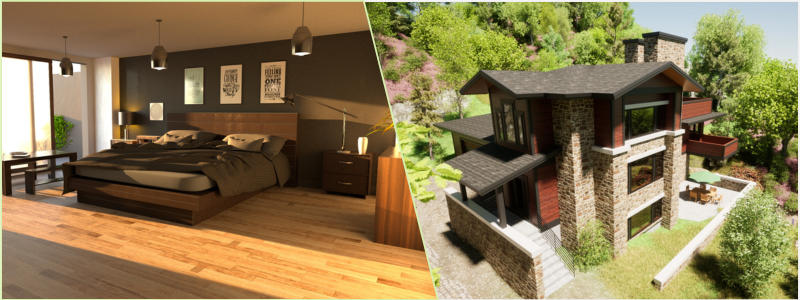
architectural visualization of a bedroom and cabin home

RELATED: How structural engineers improve custom home design when you hire architects & design firms

Architects are visualizers. They live in a realm of spatial geometry, scale, and structure. But come on—most clients aren’t blueprint literate. A 2D elevation will satisfy your design nerd inside, but to a client? It’s lines on paper.

3D visualization software is the translator of the architect’s vision and client comprehension that assists architectural design companies. In a way, it fills the communication gap and facilitates collaboration by translating floor plans into images or animation.

Visualizing being able to rotate a model 360°, zoom in to the master bathroom tile detail, or show what the kitchen island will be like with quartz versus butcher block. Customers never see it—it moves them. That emotional investment is invaluable.

Selling the invisible: Win clients before you break ground

Let’s discuss business for a moment. You can be the next Zaha Hadid, but if you can’t sell your vision to the people writing checks, your ideas remain in the sketchbook.

Architectural visualization software doesn’t just communicate ideas—it sells them.

Fly-throughs and good quality renders are today the norm in design pitches, proposals, and contests. Way before the first brick goes down, they help clients see the space. The gap between “let’s move forward” and “we’ll get back to you” can be based on that immersive experience.

When you’re pitching, do you want your client to get the feeling of walking into their perfect home? It is made possible because of visualization.

The toolbox: What the top 3D services are using

If you believe that 3D architectural visualization is a question of clicking on the “render” button and getting yourself a cup of coffee, then you’d better re-think that! The contemporary-day toolkit is so much more advanced, with technology breaking limits in ways that make your design come alive. What follows is an overview of the top tools that leading 3D rendering services are using:

Modeling tools (SketchUp, Rhino, Revit)

Any good design depends on good modeling tools. Models such as SketchUp, Rhino, and Revit are used to make exact, accurate, and scalable models. These help architects and designers draw from the structural plan level down to the material specification level. Right from skyscraper planning to cozy house planning, these models make the design correct and sensitive to change.

Rendering engines (V-Ray, Lumion, Enscape, Twinmotion)

After your model is complete, it’s time for some magic to occur. Rendering engines such as V-Ray, Lumion, Enscape, and Twinmotion bring your digital creation to life. These engines bring life to your design with dynamic lighting, real reflections, and even weather conditions such as fog or haze. It is this that turns a mundane model into a scene that’s alive and emotionally stimulating.

Post-processing (Photoshop, After Effects)

Even the best render is slightly incomplete. Final software like After Effects and Photoshop is applied in trying to get the final work on the finishing line. Color balancing, people filling up, or greens would be achieved, and this software allows you to reach the point where the render actually gives you a feeling of being within the environment. That is where you would make the infinitesimal fine adjustments and put on the finishing touches to the environment.

Animation & VR (Unreal Engine, Unity)

Static images are okay, but interactive experiences are where it’s really at. Programs such as Unreal Engine and Unity enable interior design experts to make animated walkthroughs or even virtual reality (VR) experiences, wherein clients can truly experience a space. It’s one thing to look at a static image of a room, but with VR, you’re able to move around the room, touch the space, and live through the entire thing before it’s ever constructed.

Ultimately, all these resources are brought together to form a responsive environment where technical precision and innovation exist side by side, allowing designers to take their ideas and turn them into interactive, immersive realities. With this powerful toolset, anything is possible!

architectural visualization of a pastry cafe and bungalow home

RELATED: How 3D rendering helps collaboration between clients and design services companies

Complete design control: From mood boards to material textures

Mood boards used to be standard before the extensive use of architectural visualization experts. You may show samples to a client, such as color palettes, wood textures, and even a Pinterest board.

Today? Of course, you can replicate those colors and textures in hyper-realistic settings. That warm oak floor? Now customers get to experience what it looks and feels like in a real rendered space. Of course, experiment with different finishes, lighting, or even furniture layouts? Piece of cake. Just adjust the model.

This instant ability to iterate and provide “before and after” possibilities creates a sense of control and agency in customers. They are co-creators, not witnesses.

The psychological advantage: Seeing is believing

There’s something irresistibly compelling about a well-crafted 3D image. It stops traffic, begs to be touched, and, most importantly, generates trust.

Why?

Because it removes doubt, clients understand that they don’t need to guess or take their word for it—they can see what they’re getting. And that openness creates smoother approvals, quicker buy-in, and fewer edits down the line.

Good photos just mean good relationships.

Beyond pretty pictures: Visualizations as project management tools

This is the clincher: architectural visualization is not merely a gimmick marketing ploy. It is also an operational giant.

Visualization software can be linked to BIM (Building Information Modeling), which brings together information from various disciplines—architecture, MEP (Mechanical, Electrical, Plumbing), and structural engineering services. That is, your stunning pictures are also full of hard construction data.

You’re not just showing a wall; you’re showing its insulation values, the load-bearing calculations, and how it connects with HVAC. It’s form and function.

Even during construction, workers can refer to the 3D model to describe details and reduce on-site misunderstandings. That saves time. That saves money. That saves headaches.

Marketing marvel: Differentiate from the rest

In a competitive market, first impressions count. When you can present prospective customers with a scroll-stopping 3D walk-through of a concept instead of a groaning old set of blueprints, you instantly raise your game.

All architectural practices and freelance 3D artists now employ high-impact shots on all their marketing channels—sites, social media, brochures, even property websites. Not only is this beautiful, it’s clever, too.

For instance:

  • A condo project can pre-sell 80% of its units prior to even breaking ground due to photorealistic rendering services and virtual reality tours.
  • A small boutique architecture firm can enter high-end markets by offering its conceptual greatness in museum-standard imagery.

Your customers are overwhelmed with options and brilliant 3D content is your differentiator.

The feedback loop: Real-time collaboration and client feedback

Those are “design it, then send it out to approve” days. Computer visualization technology now allows remote collaboration.

Clients and architects may work together—remotely. It’s design charrette, steroids, too. Reposition the middle window height at the meeting. Alter the pitch of the roof while debating curb appeal. View ideas change at once on the screen.

This real-time feedback loop not only makes the process more efficient but also eliminates miscommunication. It’s design collaboration without the death by email thread.

Looking ahead: Automation, AI, and the next phase

Visualization of architecture is great, but what’s next? Buckle up.

AI is beginning to impact design today in the form of predictive modeling, generative design tools, and auto-layout suggestions. Would you like a building plot to get as much sunlight as possible? AI can do it for you. Would you like a dozen tea-themed façade options? It can be done automatically by rendering queues especially for CAD design services.

In a matter of seconds, visualization will not only represent your designs—but shape them.

We are talking about software that analyzes user likes, generates personalized choices, and even offers sustainable design options. Visualization is less documentation and more decision-making.

architectural visualization of a garden and lighting design

RELATED: Pros and cons of outsourcing 3D rendering services and visualization for your company

Who’s using it? Startups to global giants

Not just big players with well-known brand names are leveraging visualization tools. Freelance architects, boutique design firms, real estate developers, and even landscape design experts are hopping on the bandwagon.

And platforms like Cad Crowd, Fiverr, and Upwork are filled with capable 3D designers willing to make anything from a one-house abode to a complete resort complex.

It is never cheaper to get into the game, and the reward? Enormous.

Last word: Visualization is the new language of architecture

If architecture as a form is defined by storytelling in space, then 3D visualization is its most eloquent, most evocative language. It enables architects to express their vision, persuades clients to invest in it, and allows teams to implement it back to them with success and flourish.

Throughout the process from the first napkin sketch to the last walk-through, visualization is at hand every step of the way—describing, enriching, and astounding.

And in a culture where creativity is on the market, the ability to demonstrate—not explain—can be the ultimate design asset in your toolbox.

Struggling to produce amazing 3D visuals for your next endeavor? From solo acts to multibillion-dollar companies, hiring architectural visualization services from Cad Crowd might just be the catalyst that ignites your ideas off and chugging from idea to icon. Contact us today for your free quote!

author avatar

MacKenzie Brown is the founder and CEO of Cad Crowd. With over 18 years of experience in launching and scaling platforms specializing in CAD services, product design, manufacturing, hardware, and software development, MacKenzie is a recognized authority in the engineering industry. Under his leadership, Cad Crowd serves esteemed clients like NASA, JPL, the U.S. Navy, and Fortune 500 companies, empowering innovators with access to high-quality design and engineering talent.

Connect with me: LinkedInXCad Crowd

People in 3D Renderings: 4 Options for Architectural CGI Projects When Hiring 3D Modeling Experts


You’re looking at a stunning architectural rendering — sharp shadows, well-balanced light, golden hour perfection. But it’s not quite right. It’s too sterile. Too sterile. It’s like nobody actually lives in, works in, or even exists in the building. What’s missing? People.

Whether it’s a shiny rendering of a residential project or a commercial walkthrough, humans in 3D renderings bring life to static images. They convey scale, function, and emotion. But though they’re as powerful as adding a character, placing humans in a rendering isn’t quite as easy as dragging and dropping a stock image. There are decisions to make — and each one has its own creative and technical implications.

If you’re hiring 3D modeling experts from the leading platform Cad Crowd or working with a CGI studio, understanding your options for adding people to your renderings can save time, elevate realism, and avoid common pitfalls. Let’s explore the four main approaches used by architectural visualization pros — along with when to use them, what to expect, and how to choose the right one for your project.

Option 1: 2D cutout people — Classic, quick, and cost-effective

You’ve probably seen this before: a stylish couple walking past a glass storefront, or kids playing in a courtyard — all seemingly pasted into a realistic scene. That’s the work of 2D cutout people — flat images composited into a 3D environment during post-production.

Why use 2D cutouts?

  • Speed: They’re fast to add. Most 3D artists have extensive libraries of pre-made cutouts.
  • Affordability: Because it doesn’t require complex modeling or rendering, this method is cost-effective.
  • Stylistic flexibility: From photorealistic to stylized (think watercolor or sketch style), 2D cutouts can match almost any visual tone.

The catch?

They’re flat. That means they don’t cast accurate shadows or respond naturally to lighting changes. The illusion works best from fixed camera angles — especially for still images.

This technique is best suited for rapid 3D architectural visualization services, initial design presentations, and stylized work where photorealism is not the top concern.

Best for: Competition renders, marketing images with tight deadlines, and concept renders.

RELATED: How 3D rendering helps collaboration between clients and design services companies

examples of architectural design featuring people

Option 2: 3D scanned people — Hyperrealism at a price

If you’re going for ultra-realistic CGI — the kind that makes people double-check if it’s a photo — you’ll want 3D-scanned people. These are high-resolution models created using photogrammetry or laser scanning, capturing realistic skin textures, clothing folds, and even facial expressions.

What makes 3D-scanned people stand out?

  • Lighting accuracy: Since they’re actual 3D geometry, they interact naturally with the scene’s lighting and cast realistic shadows.
  • High fidelity: Ideal for close-up scenes or VR walk-throughs where accuracy is critical.
  • Depth & scale: They have a genuine feeling of scale within the building context.

What to look out for:

  • Performance heavy: Such models are gigantic in file size and computation requirements. Best avoided in real-time rendering unless they have been optimized.
  • Limited poses: Until you spend extra for extra scans or a rigged character, pose variations are limited to what was scanned in.

Communicate with 3D rendering professionals, whether you desire scanned individuals rigged for animation purposes or just as static high-resolution models.

Ideal for: Photorealistic renders, film-quality animations, and high-reward presentations (consider investor pitches or developer showcases).

Option 3: CGI-modeled characters — Custom, versatile, and fully controllable

This is where it gets really bespoke. With completely modeled CGI characters, you or your rendering guru constructs humans from scratch — or employs rigged 3D assets that can be posed, animated, or customized to match a particular demographic, dress style, or activity.

Why use modeled people?

  • Total control: Alter poses, clothing, facial expressions, and animations at will.
  • Interactivity: Perfect for animated sequences, walkthroughs, or AR/VR experiences.
  • Brand alignment: You can ensure the individuals in your renderings match your actual target market — business professionals within a coworking environment or suburban families within a neighborhood.

Downside?

  • Time & budget: Building and animating characters from scratch is time-consuming and costly.
  • Skill requirements: Not all 3D CAD design professionals possess excellent character modeling experience. It’s a specialized skill set.

This option excels when you must convey something highly specific — a branded experience, special user behavior, or a day-in-the-life series.

Best for: Branded work, immersive marketing campaigns, interactive digital models, or when storytelling takes center stage.

RELATED: A guide to 3D environment design & concepts with freelance 3D modeling companies

Option 4: Silhouetted or abstract people — Minimalism with maximum impact

Less can be more. Abstracted human forms — silhouettes, white mannequins, or line drawings — may imply human presence without diverting focus from the architecture.

What’s the benefit?

  • Tidy look: Not cluttering the image or vying with architectural features.
  • Conceptual style: Ideal for early-stage schemes or projects where the emphasis is upon form, arrangement, or lighting.
  • Universal appeal: Abstract individuals eschew ethnic, gender, or fashion-based renderings — which can be useful in public or civic designs.

And the drawback?

It’s not photorealistic. It’s also not going to enable viewers to imagine themselves emotionally connecting with the space — which could be a lost sales or marketing image opportunity for architectural design firms.

That being said, abstract figures are often great in architectural competition entries, city planning images, or minimalist illustrations.

Best for: Schematic designs, public spaces, cultural venues, and architectural competitions where form trumps lifestyle.

3D enviroments featuring people

RELATED: How 3D rendering enhances virtual furniture showrooms & shopping with company services

So which one should you choose?

Choosing the right style of people to use in your architectural planning and design services can make or break how your project is received. Here’s a quick cheat sheet to guide you in the right direction:

Each of these choices has a purpose. 2D cutouts are perfect when speed is the most important factor and you require fast visual impact for listings or marketing materials. For high-end, jaw-dropping realism, particularly for luxury properties, 3D-scanned individuals assist in adding that last touch of believability.

For animations or virtual reality experiences, CGI-modeled characters are the way to go because they can move and interact within the environment. Meanwhile, competition entries or early-stage designs tend to thrive on abstract or silhouetted people to imply human presence without dominating the architecture.

But don’t forget—it’s not only about where you put which people. It’s also about whom you bring on board to make your vision a reality. A good visualizer will be able to seamlessly integrate people into the narrative your space is creating.

What to ask when hiring 3D modeling experts

If you’re outsourcing, screening your modelers isn’t just a matter of glancing over a sparkly portfolio. Here’s what to ask in particular about people in renderings:

What types of people have you previously worked on?

Check the past work to observe the scope — photorealistic, stylized, animated? This is how you judge whether their level of experience meets your requirements.

Do you maintain an asset library, or will we have to buy assets?

Some freelancers or businesses have existing libraries. Others may require you to license third-party models, which increases your expense.

Can we view a draft with and without people?

This is important for iteration. Occasionally, what appears appealing on paper isn’t exactly the case in practice.

How do you address diversity and representation?

If the project is public or community-oriented, it’s crucial to achieve the correct cultural or demographic balance in the individuals represented. Make sure to communicate every piece of detail to the 3D modeling design services with which you are partnered.

Red flags to avoid

Not all 3D experts are character design experts — and that’s fine. But watch out for:

  • Generic or out-of-place stock people that don’t fit the situation.
  • Inconsistent lighting between characters and the scene.
  • Clumsy scaling or perspective — who yells “amateur” more than someone the size of a doorframe?
  • “Floating” characters — lack of grounding or absent shadows shatter immersion in a moment.

The good news is that experienced visualization pros will have processes in place to prevent these problems — and can suggest the optimal method on your timeline, budget, and intended use.

RELATED: Best 50 sites to hire freelance architects and architectural designers for remote services experts

Bonus tip: Think mixed methods

When designing architectural visualizations or 3D renderings, the best strategy is to hybridize. Rather than be bound by one strategy, think about layering various techniques in an effort to balance realism, efficiency, and cost. For instance, inserting 3D-scanned individuals in the foreground gives your scene realistic presence and scale, drawing the viewer’s eye and creating a sense of immersion.

These high-resolution models provide realistic shadows and lighting, which greatly enhance overall rendering quality. In the background, at the same time, you may employ 2D silhouettes, cutouts, or even lower-res 3D models to imply activity and depth without burdening your system or your budget. You may even include 3D character modeling services in your partner list to take your visualizations to the next level.

Such a layered approach provides your visuals with a natural sense of depth without compromising rendering times or costs. Whether you’re working under a tight deadline or optimizing for performance, blending methods is an intelligent approach to creating professional, visually appealing results without compromise.

Final thought: People are the soul of a space

A stunningly rendered architectural view without people is like a movie set in need of actors. It can be technically flawless, but emotionally barren.

The trick is to align the human touch with the aims of the project. Are you marketing a high-end lifestyle? Asking investors to imagine a thriving development? Or designing an urban masterplan?

Whatever, there’s a correct way — and a correct person — to realize your architectural dream.

When you are recruiting 3D modeling specialists at Cad Crowd, don’t be a one-trick pony when it comes to structure and lighting. Make certain to also inquire: “Who are the people in the picture?”

Because ultimately, architecture is all about people — and your renderings should be too, from the very first pixel.

Get a quote today for free!

author avatar

MacKenzie Brown is the founder and CEO of Cad Crowd. With over 18 years of experience in launching and scaling platforms specializing in CAD services, product design, manufacturing, hardware, and software development, MacKenzie is a recognized authority in the engineering industry. Under his leadership, Cad Crowd serves esteemed clients like NASA, JPL, the U.S. Navy, and Fortune 500 companies, empowering innovators with access to high-quality design and engineering talent.

Connect with me: LinkedInXCad Crowd

How Structural Engineers Improve Custom Home Design When You Hire Architects & Design Firms


It begins with a dream. A hillside retreat overlooking the horizon. A minimalist gem that exudes space and light. Or perhaps a quaint lakeside cottage constructed with eco-friendly materials. Whatever the dream, custom home design is never merely about what is attractive. It’s about what functions—and what endures. That’s where expert structural engineers from industry leader Cad Crowd quietly emerge as the champions of the tale.

Most individuals consider the services of hiring an architect or design firm to make their perfect home a reality. That’s a wonderful start. But when the vision is taking shape, you need someone to ensure that lovely glass wall doesn’t buckle under stress, or that the stairs floating in mid-air actually float safely. That’s where the structural engineer comes in—the individual who brings artistic vision into actual, tangible reality.

Let’s see how these behind-the-scenes professionals make personalized home designs stronger, better, and often, even more gorgeous.

The quiet collaboration that changes everything

When you hire an architecture or design company, you’re entering into a creative collaboration. The architect hears what you need, researches your style, and creates a concept. Floor plans, elevations, and renderings come next, providing you with a glimpse of what’s to be. But no matter how intriguing the design, it’s still in theory until a structural engineer enters the picture.

Now here’s the magic ingredient: the greatest architectural design companies don’t merely hire engineers at the eleventh hour. They hire them ahead of time. Why? A fantastic custom home design depends upon the intimate coordination of the creative and technical minds.

Consider the architect to be a composer, and the structural engineer to be the conductor, ensuring every section of music plays together in harmony without one note being flat. The engineer does not suppress creativity—rather, they expand it.

RELATED: Commercial 3D rendering rates for buildings, services costs, and pricing for architectural firms

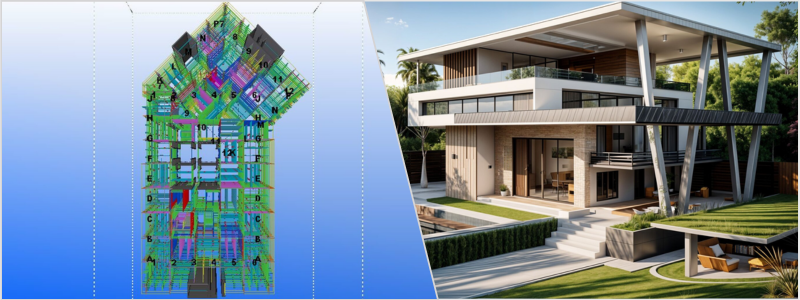
structurally sound modern custom home design examples

Bringing vision to viability

So what does a structural engineer do on a custom home project, exactly?

Simply put, they ensure your house stands.

They examine loads, stresses, and forces—stuff you can’t see on a floor plan. They wonder: Can that cantilevered deck really hold guests? Will this house weather high winds or earthquakes? Is the ground solid enough to bear that foundation?

And maybe most critically: Can we make this incredible design work within your budget?

Let’s get down to business with some real-world examples.

  • Making the impossible… possible (And safe)

Picture your architect showing you a mind-blowing design—huge open areas, minimalistic beams, cantilevering roofs, and floor-to-ceiling windows. You adore it. But then you ask: is it doable? Of course it is, through expert custom home design services.

A structural engineer sees the design and begins to make calculations. What is the span of those beams? Steel, engineered wood, or perhaps something more esoteric? How will these components act with time?

Their recommendations may also enhance energy performance or minimize material waste. They’re not only thinking about what holds—it’s also how it holds, how long, and how efficiently.

  • Bridging form and function

Great design isn’t merely pretty—it’s about function. That seeming defiance of gravity that’s floating up there? An engineer makes sure every tread is properly anchored and can withstand loads. That monolithic glass wall? They analyze wind loads and suggest materials that won’t buckle or crack when pressed.

Architects are visionaries, and engineers keep those visions from becoming nightmares.

But here’s where the synergy gets interesting: occasionally, engineering firms take designs even further than architects envisioned. For example, with post-tensioned concrete, they can achieve longer spans and more slender slabs—allowing the architect to go back and tweak the design with yet more streamlined lines.

It’s an exchange that’s more jazz than solo act. And the payoff is sensational.

  • Coping with site-specific issues

Each piece of land has its own characteristics. Sitting on a slope? A floodplain? In a region of wildfire risk? These are not merely aesthetic considerations—they’re engineering problems.

A structural engineer conducts soil analysis, slope stability computations, and foundation design specific to your property. They assist in making certain your personalized house isn’t simply an attractive form—it’s anchored down, integrated into its environment.

This is particularly worth it when constructing in buildings with strict building regulations or environmental restrictions. Engineers are familiar with decoding these regulations and creating novel loopholes that do not compromise the design.

RELATED: Benefits of outsourcing steel detailing services for engineering firms and CAD design companies

  • Saving you money and avoiding headaches

Here’s a myth: hiring a structural engineer will break your bank.

In fact, a good structural engineer can save you money—both during construction and many years down the road.

By optimizing the materials and structure, structural engineering services can reduce overbuilding, eliminate unnecessary redundancies, and help avoid costly errors. They spot potential problems on paper, so you’re not stuck with expensive fixes during construction.

Think of them as your custom home’s insurance policy against costly surprises.

They’ll also work with your contractor to make sure the design is functional for construction. That equals less delay, fewer change orders, and a less stressful process overall.

  • Future-proofing your home

Custom homes aren’t just constructed for today—they’re constructed for tomorrow. If you’re considering installing solar panels down the road, constructing an ADU, or adding attic space conversion, structural engineers design with flexibility in mind.

They’ll be asking: Can the roof support the extra load of solar? Can we retrofit this wall now for future expansions? Will this design support aging in place?

Top structural engineers have long-term vision, just as you do.

structural designs and 3d renders for custom simple homes

RELATED: What are costs for floor plan design blueprints, CAD designer rates, and company services pricing?

How to ensure your architect and engineer operate harmoniously

When you’re having a custom home or any large building project designed, the working relationship between your architect and structural engineer can make or break the ultimate product. While architects provide creativity and vision, engineers bring a sense of reality and safety to the table. So, how do you guarantee a smooth working relationship between your architect, structural engineer, and the balance of your design team?

It starts with hiring the right firm

First and foremost, select a structural design company that values collaboration. High-end firms realize that wonderful architecture is not merely about how beautiful it looks—it has to be structurally stable and viable to construct. A lot of established companies have long-standing working relationships with structural engineers they have faith in, or they hire consultants early in the design process. Some even have internal engineering departments, which makes communication easier and quicker to adapt during the design process.

When you interview potential companies, don’t hesitate to press them about how they manage this part of the project. Ask questions that get at their workflow and level of commitment to integration between engineering and design.

Ask the right questions early on

One of the best indicators of whether or not a company has strong architect-engineer relationships is to ask pointed questions, such as:

  • “At what point in the process do you involve a structural engineer?”
  • “Do you use a preferred engineering firm or have resident staff?”
  • “How do you approach design revisions based on feedback from engineers?”

These questions aren’t only about logistics—these questions show you how committed the firm is to structural soundness and if they see the value in using engineering as an integral part of the creative process. If the answers sound ambiguous or seem to be an afterthought for the engineer once the design is finished, that’s your warning sign. Engineering design experts will always seek to cover all bases to ensure safety and efficiency.

Review their past projects

Actions speak louder than words. Reviewing a firm’s portfolio can reveal how well they integrate design and structure. Look at their completed custom homes or commercial buildings. Do the designs feel bold, yet realistic? Are there any examples of creative solutions to engineering challenges?

Designs that blend creative design with unambiguous structural sense are a healthy indication that the architect and engineer collaborated in harmony throughout. Extra credit if the company can take you through how the team collaborated on particular recent projects.

Know the workflow

Lastly, inquire about their workflow. The most effective firms will have a straightforward process established that defines phases such as conceptual design, structural input, revisions, engineering sign-off, and permitting. An open workflow ensures everyone is on the same team and prevents expensive delays or surprises after construction has started.

You want a team that welcomes back-and-forth dialogue and understands the importance of early coordination. When architectural design professionals and engineers work as a cohesive unit rather than in silos, the result is a well-balanced design that’s both beautiful and buildable.

In short, the key to a successful project lies in communication, mutual respect, and aligned goals—so make sure your team has all three from day one.

RELATED: How 3D architectural visualization helps companies advertise unfinished projects

Structurally sound custom home designs

The emotional benefit: Peace of mind and confidence

Yes, structural engineers work with physics, math, and materials. But their actual contribution? Peace of mind.

When you understand your custom home isn’t only stunning, but safe, solid, and smartly designed, you breathe easy into the process. You savor the experience more. You know your investment is in good hands.

There’s something incredibly reassuring about knowing your open-concept living space won’t sag, your foundation won’t crack, and your roof can weather the storm. That’s the emotional ROI of structural engineering.

Final thoughts: The hidden star of your custom home

Most homeowners never encounter their structural engineer. You will not have their name over the front door or their visage in the portfolio. But do not doubt for a minute—she’s a key character in every bespoke home’s happy ending.

By bringing a superb architect or design company from Cad Crowd on board and engaging them early to introduce structural engineering to the mix, you maximize the potential of your dream home. Your design may be more assertive, your build more effortless, and your result all the more rewarding.

So when you’re ready to construct your signature home, don’t simply inquire about how it appears. Inquire: What makes it durable? What makes it endure?

That’s where the magic starts. Get a free quote today.

author avatar

MacKenzie Brown is the founder and CEO of Cad Crowd. With over 18 years of experience in launching and scaling platforms specializing in CAD services, product design, manufacturing, hardware, and software development, MacKenzie is a recognized authority in the engineering industry. Under his leadership, Cad Crowd serves esteemed clients like NASA, JPL, the U.S. Navy, and Fortune 500 companies, empowering innovators with access to high-quality design and engineering talent.

Connect with me: LinkedInXCad Crowd

Living Room 3D Rendering: 10 Benefits for Creating Inviting Spaces with House Design Services


Picture this: you walk into a house, and the living room is warm the second you lay eyes on it. The layout moves well, the colors work well together, and the lighting accentuates every aspect. What if we were to inform you that this was not left up to chance—and that it started on a screen?

Welcome to 3D rendering land, living room territory where your fantasy interiors begin coming together without one piece of furniture being moved or a drop of paint being swished. From working with house design services to architect hiring or simply imagining the ideal visualization of your future home, 3D rendering services offered by industry leader platform Cad Crowd have been nothing short of game-changing. It’s not pretty pictures alone—it’s a smart, strategic tool that fills fuzzy ideas with rich texture.

Here’s how 3D rendering services for homes are transforming the way we create warm, efficient rooms—with 10 valuable benefits you’ll want to know.

See the big picture—before breaking ground

One of the greatest advantages of 3D rendering is that it’s transparent. Instead of attempting to read confusing blueprints or having to use your own imagination to fill in the gaps, you are able to view a photorealistic image of your future living room.

You’ll see how the furniture interacts with the room, how daylight flows in the windows throughout the day, and how colors manifest in real life. This visual sensitivity allows clients and architects to speak the same language—and avoid miscommunication.

living room 3D rendering examples

RELATED: How 3D rendering helps collaboration between clients and design services companies

Test without risk

Love the idea of a minimalist Scandinavian look, but still interested in a moody, art-deco? With 3D rendering, there is no need to make an uneducated decision.

You can try out a range of styles, types, and finishes without ever spending money on actual materials. A designer or home design service can easily swap out different wall colors, flooring, ornaments, and even the lighting fixtures. The result? You design an appearance that’s truly “you” without regrets.

Better communication with designers and architects

If you’ve ever ordered a “warm gray” to view a cold, sterile one splattered on your wall, you know the aggravation. Verbal descriptions can’t cut it. 3D images can.

When your design group can view precisely what you have in mind with a “cozy,” “open-concept,” or “inviting,” collaboration becomes easier and faster decisions are made, since everyone’s on board day one.

Steer clear of costly mistakes

It’s simple to have second thoughts once building breaks ground. Moving a wall, redrawing electrical blueprints, or buying new flooring because the original peeled away—these changes are costly, even through cheaper interior design services.

3D rendering helps you catch design issues in the early days. Maybe your L-shaped sofa obstructs your window light, or that black ceiling paint makes it cave-like. You will notice these things in advance and change them, saving money and headaches down the road.

Spatial planning accuracy

Living rooms are multi-purposed—movie nights, family gatherings, hosting visitors. You want to get the floor plan correct.

With 3D rendering, you can try out different arrangements of seating, storage, and accessories to optimize flow. Where is the TV optimally placed to avoid glare? Will the new sectional give us enough room to move around? These spatial puzzles are easier to solve when you can “walk through” the space virtually.

Lighting simulation for real-life ambiance

Lighting is what will save or destroy a space. Too much overhead lighting is debilitating. Not enough? Your hip living room is now a cave. This is where lighting design services come in.

Rendering software allows design groups to simulate natural and artificial light at different times of day and night. You can experiment with pendant lights, wall sconces, dimmers and see exactly how they impact mood and visibility. It’s not aesthetics—it’s atmosphere, and it matters more than most people think.

Personalized customization

Maybe you’d like to showcase travel souvenirs or innovate based on your favorite piece of art. Prepackaged plans rarely permit individualization.

3D rendering lets your personality shine. Whether it’s incorporating a reading nook, a statement fireplace, or built-in shelves for your vinyl collection, you’ll get a visual of how these custom elements integrate with the rest of the space. House design services love this flexibility because it creates homes that reflect real lifestyles, not just showroom styles.

Easy approvals and permits

This one’s more behind the scenes, but hugely important if you’re doing major renovations. 3D renderings, especially when paired with architectural drawing services, can help speed up planning approvals, permits, and HOA reviews.

Officials love having a clear, accurate picture of what’s proposed. A well-rendered visual often answers more questions than pages of paperwork ever could.

luxury living room design service examples

RELATED: CAD services: Transforming hotel furniture designs for hospitality companies

Elevated marketing for property sales

If you’re building or renovating a home with the goal of selling, 3D rendering is your new best friend.

Real estate developers and agents increasingly use photorealistic visuals to attract buyers even before the home is built. A beautifully rendered living room tells a story—it invites people to imagine their life in that space. And it works. Listings with high-quality visuals get more clicks, more engagement, and more offers.

Confidence in every decision

Let’s be honest—designing a living room can feel overwhelming. There are so many choices: furniture styles, flooring types, lighting fixtures, paint colors, tech integration… it’s a lot.

3D rendering takes the guesswork out of it. You’re not just hoping something will look good—you know it will, because you’ve already seen it. That kind of confidence turns the design process from stressful to exciting.

How to begin with a living room rendering project

Okay, you’re sold on the idea of a 3D interior rendering. Whether your dream is for a cozy refresh, a clean rebuild, or a dramatic overhaul, a well-designed rendering can take you through all the details before making any costly alterations. Now, though, what? Step two is taking that vision and turning it into an actual plan—and that starts with finding the right design partner to help you make it happen.

Here’s a closer examination of the way the process usually works:

Get clear about your intentions

Take some time to become clear about what you’re after prior to contacting any professionals. Are you simply doing a cosmetic makeover with new paint, furniture, and trim, or are you considering more extensive renovations—such as removing a wall, adding built-in storage, or relocating lighting fixtures?

Also, think about whether you’re starting from a blank slate or working off what already is. Do you need help with furniture layout, lighting design, material specification, or all four? The better your goals are defined, the better you’ll be able to choose the perfect professional and see if your rendering reflects your vision.

Choose a design partner

You don’t have to pay for a high-end architecture firm to obtain a top-notch rendering. In reality, there are plenty of boutique design studios and freelance CAD designers who specialize in photorealistic visualizations and can provide a more personalized and cost-effective experience. The most important thing is to find someone who fits your project and your communication style.

Here’s what to search for:

  • A strong portfolio with interior renderings, ideally of living rooms or similar residential spaces.
  • A good sense of your style, be it Scandinavian minimalism, mid-century modern, or something else entirely eclectic.
  • A willingness to offer revisions, because let’s be honest—you’ll probably want to make a few tweaks once you see the first draft.
  • Good and prompt communication, so you’re always in the know about what’s happening with your project.

Take the time to browse their work, read reviews, and ask questions. Don’t be afraid to set up a consultation before committing.

Share inspiration and details

Once you’ve chosen your CAD design partner, it’s time to get collaborative. This is your opportunity to share everything that defines your vision. Pinterest boards, Houzz idea books, magazine clippings, fabric swatches, color palettes, and even selfies in your current living room—all of it helps.

You’ll also want to provide practical details, like room dimensions, existing architectural elements, furniture that’s staying, and any functional priorities (like accommodating a home office corner or maximizing seating).

The more context your designer has, the more accurate—and exciting—your rendering will be. Think of it as setting the stage for creativity to flourish.

Starting a living room rendering project can be a rewarding and fun process if one approaches it with clarity, the right partner, and a willing mind. With some foresight and some old-fashioned honesty, you’ll be staring at an amazing 3D image of your new room in no time.

living room examples with decoration and fixtures such as bookshelves and artwork

RELATED: How to hire the best freelance CAD designers: A services guide for companies

3D rendering vs. traditional sketches: Why it matters

There is nothing necessarily wrong with hand-drawn sketches or floor plan design services. But in the living room—the hub of your home—rendering does more. It delivers emotional impact. You don’t merely see dimensions; you feel the space.

Traditional plans tell you where to put stuff. 3D renderings instruct you about what it’s like to live there. That is powerful, especially when the task is designing a place that people gather, relax, and bond.

Wrapping up: Your living room, reimagined

At its best, a living room is like a warm welcome—a place that reveals who you are and welcomes all who come in. With 3D rendering, that vision becomes clearer, wiser, and more within reach.

Whether you are renovating your ideal house, constructing a vacation home, or just shopping for a better space, working with a house design firm that offers living room 3D rendering can save you money, time, and headaches—while enjoying joy, style, and personalization.

Ready to turn your dream living room into a reality? A great rendering is more than a computer image. It’s your future, in images. Contact Cad Crowd and receive a complimentary quote for your living room 3D rendering!

author avatar

MacKenzie Brown is the founder and CEO of Cad Crowd. With over 18 years of experience in launching and scaling platforms specializing in CAD services, product design, manufacturing, hardware, and software development, MacKenzie is a recognized authority in the engineering industry. Under his leadership, Cad Crowd serves esteemed clients like NASA, JPL, the U.S. Navy, and Fortune 500 companies, empowering innovators with access to high-quality design and engineering talent.

Connect with me: LinkedInXCad Crowd

Benefits of Outsourcing Architectural CGI Services for Real Estate Marketing Agencies


The competitive real estate market requires the ability to differentiate a property using very appealing yet accurately represented images. Architectural Computer-Generated Imagery has now become an essential tool for such efforts because of its ability to produce realistic and high-quality visuals that will get the attention of target buyers or investors.

For these reasons, the market for real estate marketing has changed, with even more firms and agencies now choosing to outsource architectural CGI services. This post looks at what makes people now outsource to CGI in the architecture and property sectors and other criteria that companies should consider to make a solid choice for such an outsourcing agency.


🚀 Table of contents


Need for crisp imagery

Real estate has always been a visual industry, but with the advent of modern digital technology, high-quality visuals have been pushed into a higher dimension. The potential buyer of yesteryear relied on printed brochures or simple photographs to get an idea of what a property might look like. However, today’s buyers expect immersive, photo-realistic images that will give them a clear understanding of exactly how a property will look when completed or in its current state.

Architectural CGI is a vital tool in meeting this expectation. Whether marketing new developments, illustrating renovation projects, or showcasing interior design concepts, these highly detailed digital renderings allow real estate professionals to communicate their vision in a way that traditional photography simply cannot match. From exterior shots to interior spaces, CGI provides the flexibility to create precise visualizations that showcase a property’s best features while allowing for enhancements or adjustments to suit various market segments.

As demand increases for such high-quality images, the needed workforce also increases the number of highly skilled CGI artists as well as renderers. Estate agents and architectural design firms without this resource increasingly turn toward outsourcing because these help cut back costs.

RELATED: Product rendering and 3D visualization – A full overview

archjitectural CGI 3D examnples of an indian temple and a glass house

Outsourcing as an alternative form of savings

One of the most compelling reasons to outsource architectural CGI is that it saves the firm a significant amount of money. Hiring and maintaining an in-house team of CGI artists and specialists can be expensive, especially for firms that may not require these services on a full-time basis. Outsourcing, on the other hand, provides a cost-effective alternative, as firms can pay only for the services they need without the overhead costs associated with full-time employees.

Besides saving on labor, outsourcing also helps to eliminate the need for investment in expensive software, hardware, and infrastructure. Advanced CGI software and powerful rendering machines are costly to purchase and maintain, and ensuring they are regularly updated can be a further financial burden. Outsourcing firms can, therefore, utilize the latest technology without the associated costs, tapping into the expertise of third-party vendors who already have the necessary resources.

It also provides scale flexibility. Real estate projects require CGI services that vary in relation to timelines and scope of work. Outsourcing allows scaling up or down depending on the situation; therefore, it helps ensure that firms do not overcommit or waste resources on projects that do not require full-time attention.

Access to specialized expertise

The creation of CGI is a very complex process that requires expertise in 3D modeling design services, rendering, lighting, and post-production. Outsourcing allows firms to tap into a pool of highly skilled professionals who are experts in these areas, thereby gaining access to knowledge and techniques that may not be available in-house.

Many outsourcing firms specialize only in architectural CGI, which can bring on board a level of expertise and experience that generalist design teams or photographers may miss. This goes a long way in ensuring the final output can be of such high standards that can meet standards of realism, details, and quality, hence rendering a more efficient marketing tool to real estate agencies.

Also, outsourcing companies hire various skill teams to work on a particular project, which opens the scope of work in the CGI production process. This can include photorealistic renders, 3D walkthrough animations, or even augmented reality visuals, which may not be possible for a general design firm to produce.

Faster turnarounds

The best part about real estate marketing is time. Be it launching a new development or closing a deal, having quality visuals on hand quickly makes all the difference. The outsourcing of architectural CGI can drastically reduce the amount of time required to produce quality visual content.

Outsourcing providers normally work with streamlined processes that allow them to deliver visualizations faster than in-house teams would. Agencies can often receive their CGI deliverables faster by working with an entire dedicated team of professionals, which would take a fraction of the time to do compared to working with them internally.

Additionally, the production companies can execute deadlines so tight. They could speed up production without devaluing quality. This is attributed to the dedication of artists to one project; hence, their work can come out fast; multiple people performing various tasks parallel, thus dividing and fine-tuning their production, hence high turnaround times.

More focus on core business

CGI architectural visualization services can also be outsourced. That would help real estate professionals and architects focus on their best business practices, managing developments, and serving clients. The time involved in building such precise 3D services and accurate visualizations is considerable, and it can be considered a technically intensive activity. Resources for concentrating on firm strategic activities include the acquisition of new clients, research in the marketplace, and creation of new businesses, thus becoming free.

This implies more time on the non-core business of the architectural firm and less on design and project management. Instead of wasting time on learning new tools or managing the technical aspects of the actual CGI production, architects will be able to work very closely with their outsourcing partner so that they can adequately communicate their vision to achieve the desired output.

This increased focus on the core business leads to improved overall productivity and enhances output in the areas that directly affect revenue generation.

RELATED: Mastering 3D product modeling: Company techniques and tips for stunning visuals

CGI rendering of a glass house interior

Scalability and global access

This is a chance to collaborate with companies and talent from around the world. Geographical boundaries are not as significant in the contemporary world, and companies can access a global talent pool to get the best CGI 3D artists and experts for the job. It increases the potential talent pool, offering real estate companies an immense variety of styles, techniques, and perspectives.

Further, it is also scalable. Different real estate projects vary in their size and complexity. Therefore, one significant benefit of outsourcing production is that it can scale the process up or down according to the requirements of the project. A company could need just some high-quality still images or all the animations and interactive experiences in its suite. It is easier for outsourcing to vary resources according to what the project might demand.

As discussed, working in external teams makes it easier to reduce potential complications, such as the lack of access to resources for producing CGI elements. In all this, whether the project being involved is a smaller apartment complex or even a high commercial development, outsourced architectural design companies are easily incorporated and adjusted based on the current project’s specifications.

RELATED: What is architectural visualization and why architectural rendering services use it

Risk handling and quality assurance

Although outsourcing has several advantages, there are also several risks associated with it, which include quality control and communication. However, proper selection of a visualization expert may reduce these risks. Firms must select partners who have experience working with architectural visualization, understand all the details related to the project, and clearly communicate with their partners.

In terms of quality, real estate agencies and architecture firms should ensure clear expectations at the beginning of the project. Such expectations include project goals, timelines, and desired outcomes. The regular checkpoints of the production process will help avoid miscommunication and ensure that the final product meets the standards required. The use of detailed contracts and agreements can help protect both parties and reduce the potential for misunderstandings.

By partnering with experienced and reliable outsourcing firms, companies can manage risks while maintaining high levels of quality assurance throughout the CGI creation process.

Conclusion

This strategy has proven crucial for real estate agencies and architectural firms as it enables them to remain competitive in the very visually orientated world of real estate marketing. The advantages that make outsourcing such an attractive choice include reduced financial burdens, direct access to highly specialized skills, quicker turn-around times, and the capacity to focus on core business activities by firms of any size.

How Cad Crowd can help

Whether it is creating stunning visuals for new development, creating interactive virtual tours, or generating high-quality renderings for brochures and websites, outsourcing allows real estate professionals to leverage the latest technology and skills without the financial burden of maintaining an in-house CGI team.

Cad Crowd has worked with numerous architectural and design firms to find the best designers and 3D experts for their projects. Find the best ones through Cad Crowd with a free quote today.
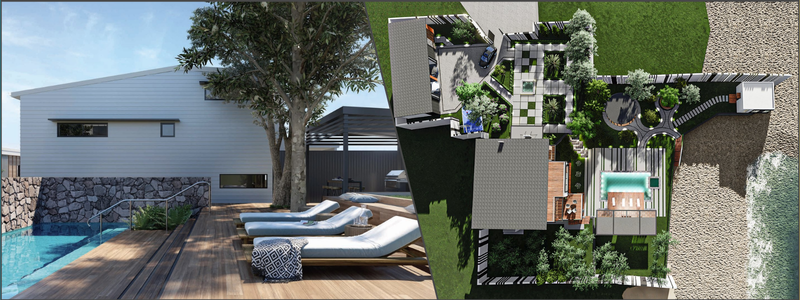
author avatar

MacKenzie Brown is the founder and CEO of Cad Crowd. With over 18 years of experience in launching and scaling platforms specializing in CAD services, product design, manufacturing, hardware, and software development, MacKenzie is a recognized authority in the engineering industry. Under his leadership, Cad Crowd serves esteemed clients like NASA, JPL, the U.S. Navy, and Fortune 500 companies, empowering innovators with access to high-quality design and engineering talent.

Connect with me: LinkedInXCad Crowd

Best 50+ Freelance Jobs Sites for Architects and Finding Remote Work for Architectural Designers


It will not be much of a stretch to say that nearly everyone is familiar with architects working in traditional offices or construction sites. However, during these days of change and transformation, revolutionary breakthroughs have been seen in processes and methods, as well as in architects’ daily practices.

Today’s paradigm has brought exciting perks not only for the architects and architectural designers but also for their clients and the construction firms they belong to. With the ease of online communication and the rise of technological advancements, it is possible for architects to stay connected and function remotely as creative professionals.

If you’re planning to work with a remote architect or expert architectural designer, it is imperative for clients or firms to acknowledge the fact that these professionals often focus on working on one project at a time to deliver exceptional results. This approach allows them to unleash their creativity and roll out more successful designs.

Cad Crowd is among the best platforms on which you can find the right expert for your project. In today’s article, learn more about the rest of the best 50+ freelance job sites for architects and how to find remote work for architectural designers.


Cad Crowd

Cadcrowd-2

Cad Crowd is an excellent freelancing website for architects and designers. The portal links a client with high-level professionals in architectural design, CAD drafting, and 3D modeling design services. This freelancing website allows the workers to show off their portfolios. Such portals give them maximum exposure to harvesting varied kinds of clients. The competitive bidding system lets in on a fair deal to the professionals as well as to companies.

Cad Crowd is more specific to architecture and engineering work, which is very beneficial for architects and engineers because open ongoing projects and freelance assignments are available with flexible work arrangements; therefore, it is especially good for short-term and long-term architectural freelance employment.

cadcrowd.com

Dribbble

dribbble.com-logo

Dribbble is a widely known design community. Architectural designers can use it to display their portfolios, which will attract interested potential clients for designing services. It helps architects grow networks, project concepts, and interact with the creative individuals’ community.

The hiring section is very valuable, especially for architecture and urban design specialists, when companies publish openings with specifications. The website is great for freelancing as it offers the architectural designer a space to seek remote opportunities to collaborate with clients all over the world.

Dribbble.com

RELATED: How architects and companies leverage 3D CAD technology to develop architectural models

SideHusl

SideHuslcom logo

SideHusl is a well-rounded freelance platform meant for all professional types, including even professionals in the architecture trade. It allows one access to a wide range of job opportunities as a freelancer: it ranges from drafting to design and project management. It is providing a list of top freelancing websites that will be sure to make the profession land remote work appropriate for a professional’s skill.

Architects can find flexible jobs with companies that require architectural design, 3D modeling, and CAD services. Such a platform is SideHusl, with an easy-to-use interface and job board, which even easier makes finding short- or long-term freelance opportunities in architecture. Such a resource is invaluable for growing one’s freelance career.

SideHusl.com

Saasworthy

SaasWorthy logo

Saasworthy is an informational website that elaborately gives detailed information on numerous SaaS products, including freelance platforms for architects, along with reviews, comparisons, and alternatives that are presented towards popular freelancing websites. For architects, this is a useful tool in the selection of the best platforms based on their skills and preferences.

The site recognizes freelance job sites that align best with the work of architectural professionals in a remote or temporary arrangement. The list of Upwork alternatives by Saasworthy features those sites centered specifically around design, drafting, and engineering services, which usually are necessary for architects.

https://www.saasworthy.com

PowerUs

PowerUS logo

PowerUs is a European freelance job opportunity platform that connects skilled professionals with high-quality freelance jobs, especially architects and designers. It specializes in collaboration between freelancers and companies in need of certain design and architectural design services. The platform connects professionals with various potential clients from other industries and offers flexible remote work options.

The architects will find high-paying freelance gigs in building design, CAD drafting, and architectural consulting. In the long term, it also enables freelance professionals to develop relations with businesses looking for professional expert design solutions, an excellent opportunity to grow a freelance architecture career.

https://powerus.de/arbeiter/careers

Forbes – Freelance Marketplaces

Forbes logo

Forbes has identified several emerging freelance marketplaces of potential value to architects seeking to work remotely. Of the platforms mentioned above, opportunities in architectural design, project management, 3D modeling, etc., are there for freelancers. It underlines a platform that has provided increased access to high-quality clients and well-compensated projects.

These are perfect for architects seeking freelance work within a professional network. Some of the ways the site can be used to assist successful freelancers who are able to get steady work on the remote architectural projects listed on the site are explained in more detail by Forbes.

Insolvo

insolvo logo

The online marketplace Insolvo connects freelance workers who wish to help clients hire professionals to perform creative and technical services, including architectural design. It connects remote architects jobs, with architectural drafting all the way to full project design.

This means that Insolvo, because of its search feature, is now offering an opportunity to add job filters through skills, thereby offering skill-based filtering, which thus guides freelancers to relevant gigs in architecture. This ensures that the portfolio has sufficient detailed prior works that present opportunities for getting affluent design clientele. The flexibility, coupled with user-orientated designs, makes Insolvo stand tall as the perfect platform on which architects can find freelance gigs in this life.

https://insolvo.com

FreelanceHunt

freelancehuntcom logo

FreelanceHunt offers distant employment or contract work opportunities to freelancers in diverse industries, such as architecture. Through FreelanceHunt, freelancers can search for distant employment or contract work in architecture design and drafting.

An easy and easy-to-use interface provides the architecture professional with an easy opportunity to bid on the work of a particular expert. A portal through which architectural design-related jobs, such as commercial drafting services, are provided to numerous clients around the globe; the freelancers can make their personalized profiles, set rates, and negotiate with respective clients.

The working of the bidding mechanism on the platform encourages competitive pricing, and a job-seeker can easily find jobs that match his qualification and work preference, whether in terms of being short-term or long-term assignment.

https://freelancehunt.com/en

RELATED: Marketing real estate: top real estate 3D rendering trends for companies and firms

SkillValue

Skillvalue logo

SkillValue is a freelance portal where skilled professionals can find jobs. It provides businesses with high-quality work like architecture and design. Architects can find freelance CAD design, architectural drafting, and 3D rendering jobs on this website.

SkillValue is a freelancing website that specializes in the matchmaking of freelancers with jobs that require specific skill sets, which means that architects can access the right high-paying projects. Focusing on job matching through skill helps the architectural designer target certain kinds of work. This process of searching for remote architectural projects gets streamlined due to the increased career flexibility of the freelance market.

Engineears

engineears logo

Engineears is a relatively new freelance marketplace for connecting engineering and design professionals, including architects, with clients who demand specific services. Opportunities available to architectural designers range from the design of buildings, or structural modeling, down to the planning of a whole city.

The website mainly revolves around technical projects that seek the professional expertise of someone like an architect for freelance work through remote working. Engineears brings about a smooth interface of submitting proposals, bidding upon projects, and showcasing portfolios, thus helping to get access to relevant freelance work for architects in this widely expanding field quickly.

https://engineears.com

Supersourcing.com

supersourcing logo

Supersourcing is a platform that takes businesses directly to the top freelance talents in various industries, such as architecture, design, engineering services, and lots more. The people who work here specialize in doing remote, contract-based work for clients in terms of short-term or long-term projects.

What sets them apart is their user interface, making it easy and simple for businesses to navigate and connect with them. The rigors of vetting in the process allow Supersourcing to give their clients only qualified and experienced candidates who can actually deliver the goods in regard to that specific need.

Supersourcing.com

UrbanCompany.com

Urban Company logo

UrbanCompany is one of the largest home service platforms, providing freelance work to architects and designers on a selective basis. It connects professionals with clients requiring interior design, renovation, or home improvement services. Through its streamlined hiring process, UrbanCompany is working towards making the collaboration process easier for freelancers and clients.

This feature allows flexibility; the architect or designer can work with remote projects. In such a way, they can increase scope and have the freedom of freelancing in the sectors of architecture and design.

UrbanCompany.com

Worksome.com

Worksome logo

Worksome is an online platform that is specifically for freelancers and allows flexible and remote working with different industries, including architecture. This platform helps the architect because it offers work opportunities since contact information is provided between companies seeking expert freelance CAD designers.

The Worksome’s service smoothes the contractual work through its payment and management tools, creating transparent relations. Worksome thus aims to simplify the freelance model, making things easy and straightforward for both the architects and the companies regarding managing the projects and seeking talent, respectively.

Worksome.com

RELATED: The most important considerations when hiring freelancers for real-time rendering services for companies

DignifiedMe.com

DignifiedMecom logo

DignifiedMe is one of the lesser-known freelance professional empowerment websites. It provides remote job opportunities in many fields, including architecture and design, to name a few. It offers excellent, highly skilled architects to equity, diversity, and inclusion-seeking clients.

This is a platform that offers freelancers the opportunity to use their skills for change-orientated projects while simultaneously working with employers who share a concern for social responsibility. DignifiedMe welcomes talented individuals from all walks of life and offers them a chance to work meaningfully while growing their career.

DignifiedMe.com

Lawclerk.legal

Lawclerklegal

Lawclerk is a site for legal professionals, but at the same time, it also opens up opportunities for architects as freelancers dealing with construction law, managing projects, and designing buildings based on contracts.

Architects could use the website to find a remote opportunity that combines architectural knowledge with legal issues, such as drafting construction contracts, managing legal matters involved in any project, and ensuring a project complies with the building regulation.

This unique interface opens opportunities for architects to advance their careers through the legal aspects of projects they undertake as added-value services to both the legal and architectural industries.

Lawclerk.legal

MarketerHire.com

MarketerHire logo

MarketerHire is a platform that connects professional freelancers with businesses that need marketing assistance. The website mainly markets to marketers but sometimes provides some freelance work for architects who may need to market their design services or work on architectural branding projects.

MarketerHire is a site through which architectural design experts can expand their scope of services, engaging in short-term and long-term engagement while tapping into the growing demand for architectural marketing expertise- an ideal means through which professional opportunities can be widened.

MarketerHire.com

ActivatedScale.com

activiatedscalecom logo

ActivatedScale is an online platform for connecting freelancers to technology and design project-based opportunities. Architects and interior design experts can find work designing digital products, user interfaces, and virtual space.

There are special sections on the site intended to connect freelance experts with startups and businesses that need special design solutions for virtual and architectural environments. ActivatedScale provides great opportunities for remote creative work for individual professionals and organisations seeking innovation and enhancing their digital and physical spaces.

ActivatedScale.com

Expertlead.com

expertlead logo

Expertlead is a high-end talent platform that connects top freelance talent with companies seeking specific, one-of-a-kind talent in architecture and design. A seasoned architect now gets access to high-value freelance work that often requires advanced technical acumen.

Expertlead’s vetting process matches the best professionals with clients. This particular straining ensures that companies are receiving the crème de la crème of talent needed to work remotely, thus affording a completely hassle-free hiring experience for both parties involved.

Expertlead.com

Viedit.com

viedit logo

Viedit offers architecture and design freelance opportunities in video editing, motion graphics, and digital content development. Based primarily on editing services, the platform provides a space where architects can showcase their skill sets associated with architectural visualization services, 3D modeling, and the rendering of their work.

It enables them to create creative presentations too, hence aiding them in their contribution towards architectural videos. The architects will have the opportunity to encounter clients who are looking for high-quality content while developing their professional opportunities and portfolios with productive multimedia work.

RELATED: Proven Advantages of contracting architectural CGI services for real estate marketing firms

DevTeam.space

devteamspace logo

DevTeam.space is a multi-faceted freelance platform that caters to the needs of various developers, designers, and 3D design architects. It connects skilled freelancers with businesses seeking project-based support in tech, design, and software.

It is an exclusive opportunity for architects to work on the most prominent, tech-driven projects side by side with peers from different parts of the world. Through this, they will be in a position to share innovative designs and solutions without being limited to the geographical location. It enhances flexibility in the possibility of working on other projects in architectural practice.

https://www.devteam.space

Triplebyte.com

triplebyte logo

Triplebyte is a tech-focused freelance marketplace for architects with a strong technical background in building design, architectural BIM services, and 3D modeling who want to find remote work.

Though the platform is built mainly for software developers and engineers, it caters to architects who are proficient with technology-driven design solutions, CAD software, and so on.

Architects utilize their understanding of recent design technologies to reach clients who look for innovative and tech-savvy professionals for different architectural and design projects all over the world.

Triplebyte.com

WorkMarket.com

WorkMarketcom

WorkMarket is a dynamic marketplace for all diversified kinds of freelancing and job opportunities in any sector. There could be some job types about architects and construction as well that require a bit of an architect’s input as to distant project-based jobs, which involve architectural designing, a task in management, consulting, etc.

Most of the postings are from freelancers; some talk about the level of high expertise, contractual tools, and smoother integration to simplify payment processing and collaboration of freelancers. It thus becomes a highly efficient option for architects seeking flexible and well-managed freelance opportunities.

WorkMarket.com

Pluma.co

plumaco logo

Pluma.co is a fully professional development network connecting freelancers with remote job opportunities in several different industries, including architecture. It offers architect jobs in areas such as project management, interior design services, and client collaboration.

This site offers flexibility: either remote employment or variable hours for working from anywhere, which provides an opportunity to have long-term project engagements in order for professionals to feel assured about having stable work engagements while building a long-lasting relationship with the clients and developing a career in a dynamic remote setting.

ClassaDrivers.com

Class A drivers logo

ClassaDrivers is a parent freelance driving and delivery jobs site applicable to all professions. Maybe it’s not positioned around architectural design, but it could give architectural designers a chance for fieldwork by visiting the site and inspecting the work.

Another kind of job that freelance designers can also look for to support construction and architectural projects is local or remote transport jobs, such as site visits, material delivery, or moving tools and equipment. Flexibility like this increases the efficiency of the design and construction teams working on multiple projects.

https://www.classadrivers.com

SmartRecruiters.com

SmartRecruiterscom

SmartRecruiters is a sophisticated recruitment platform that connects freelancers with businesses in need of specific expertise, such as architecture and design. In this way, architects will be able to create a profile citing their skills, followed by listing applications for remote freelance work according to their needs.

The collaborative work environment and long-term project support are enough reasons to consider the platform a flexible remote job for architectural designers. With an interactive, user-friendly interface and many opportunities, SmartRecruiters is an interactive platform to consider for architects wishing to expand their careers.

SmartRecruiters.com

Contra.com

contracom logo

Contra is a new freelance site for creators and professionals around various industries and architecture. This site offers prospects to architects, such as construction drawing services and CAD modeling, interior designers, and many more architects, to find potential clients.

Remote projects show portfolios, set their rates, negotiate, and even service the relationships with clients without much hassle. The company makes the entire process of sourcing, bidding for, and delivering design work easier by giving architects an allocated space to participate in professional growth through Contra.

Contra.com

Metafy.gg

metafygg logo

Metafy.gg is mostly a freelancing site that is mainly about gaming and esports. Architects may find the site to use their creativity in making virtual designs in 3D modeling and environmental renderings. The opportunities involve creative projects for designers, which involve the designing of the virtual world, buildings, and environment to be used by the gamer.

Architects can find remote work where they can express the tech-driven, creative environment and work on projects that would be a mix of architecture and digital gaming experience with an immersive virtual space.

Metafy.gg

RELATED: How do 2D floor plan drawings help companies, firms, and realtors sell real estate?

Superside.com/twist

supsersidecom logo

Superside is an amazing connecting platform between designers, architects, and remote projects on a different spectrum of industries, such as millwork drafting services. The freelance work provided here is unique and premium and best for professional architects who specialize in designing as well as digital creativity.

Superside brings professional services together with the international client. This brings the architect opportunities to achieve long-term high-paying work from anywhere around the globe. Freelance workers will have this flexible and fulfilling kind of work as they use the platform to present their skills in the global marketplace.

Superside.com/twist

Creatively.life

Creativelylife logo

Creatively.life is an active website that focuses its attention on freelance professionals – mostly creative industries. The website is mainly focused on architecture, where architects can place their portfolios and find remote opportunities to work. Besides that, it opens a possibility for them to cooperate with customers who have certain demands for custom architectural design.

Connecting architects with businesses that are looking for innovative solutions for both the digital and physical space enables professionals to reach a much wider market, take on diverse projects, and push the creative limits of what is possible.30. DesignPickle.com

DesignPickle is one of the freelancing websites that enables designers and architects to develop their user-generated graphic content. Professionals on this site are connected with clients who are looking for the right designer to provide remote services for bulk orders. The most suitable solution is for architects as well as other design professionals who generate and need tons of daily visualizations, 3D interior rendering services, and presentation files.

Through DesignPickle, the architects will tap into a network of people and focus on creative work at the core while being efficient about meeting the demands of quality and timely visual content to support improving client presentations and project proposals with professional on-demand design services.

Microlancer.io

microlancercom logo

Microlancer is a dynamic freelance site targeting digital professionals, mainly architects. The service relates architects to remote work opportunities in the following services: graphic design, 3D modeling, CAD drafting, and architectural design.

This is a site focused on short-term, micro-projects, making it very apt for architects who would want flexibility and the ability to work with clients on specific assignments. With a user-friendly interface, Microlancer allows architects to show off their skills, seek projects that fit their skills, and connect with clients worldwide.

Microlancer.io

Useme.com/en

usemecom logo

Useme.com is an online resource that connects freelancers to those in need of special services. In this case, architecture would get freelance work in matters regarding design and drafting services, construction, and project management, among many other areas. Thus, one can operate even from home.

The website does all the boring work of contracting and making payments, thus creating an efficient workflow for the freelancers. The easy interface of Useme.com helps architectural professionals to receive remote jobs with less hassle, to concentrate on the work, and at the same time deal with administrative issues with fewer hassles.

Useme.com/en

Traba.work

trabacom logo

Transparent in designing a service. In this case, it is possible to work at the workplace from a contract procedure and secure payments to the best instruments for collaboration, making every working process clear and effective. This makes Traba.work the best platform for freelance architects searching for remote long-term projects with smooth workflow.

Traba.work is a constantly evolving marketplace for freelancers. It connects remote workers with companies in any branch – including architecture – for its solutions in design, planning, and construction management.

http://Traba.work

RELATED: Selling vacant land using 3D visualization services for realtors and land development

ServiceScape.com

ServiceScapecom

ServiceScape is an online marketplace connecting freelancers to clients in need of special services. This website has an enormous number of professionals, including architects, who can post their abilities in designing, drafting, and 3D modeling.

Architects can find remote work on projects that include residential and commercial designs, conceptual renderings, and much more. So, with ServiceScape, a professional can work with his client who has a need for architectural or consumer product design solutions, hence great to let an architect grow and grow their client base.

ServiceScape.com

Revelo.com

revelocom logo

This website, Revelo.com, connects the most skilled freelancing professionals with companies requiring their specific services. The company is providing opportunities for work-from-home scenarios in project management, design, and digital architecture.

With a keen interest in Latin American talent, Revelo gives architects from the region the opportunity to work with international clients. The site not only connects the best professionals to projects from other countries but also provides a flexible and dynamic working environment where people grow and innovate.

Revelo.com

GoDaddy.com/hire-an-expert

godaddycom logo

Godaddy’s marketplace opens opportunity avenues for freelancing of remote work in web designing, SEO, and even digital marketing. The organization is largely a tech entity, but architects with exposure to digital design can get their desired job integrating their knowledge of architecture with a little help from technology in that marketplace.

This may be virtual settings, architectural immersion visualizations, or websites of architectural offices, which enable the architects to expand their horizons professionally by accepting the tremendous trend of old design and possibilities in the new digital landscape.

GoDaddy.com

Workrise.com

workrisecom logo

Workrise is a platform where a high-skilled professional in construction and architecture can find remote freelance opportunities, such as for architectural site plan services. Aside from labor and construction project management, it provides roles like architects, taking into consideration project planning, design coordination, and building assessments.

Workrise offers flexible work options that allow architects to manage their schedules and be at remote locations. The scalable solutions the platform presents can be applied for all kinds of needs in the project, giving professionals an opportunity to collaborate on the numerous activities related to building and architecture.

Workrise.com

Clockify.me/freelance-jobs

clockifycom logo

The diversity in time-tracking solutions ensures that Clockify offers remote freelance jobs to architects who could explore such job openings while helping find flexible work related to experience, including design and project management.

Other than showing various postings of work, this application has a set of rich features that easily track billable hours as well as manage timelines on their projects and task organizers. The above one-stop tool improves productivity and allows one to adequately manage time spent on architectural projects.

Clockify.me/freelance-jobs

Maxlancer.com

maxlancercom logo

Maxlancer is an online marketplace that brings freelancers in creative industries to businesses that require project-based services. For architects, it offers a wide range of remote work opportunities, including design, CAD drafting services, 3D modeling, and many more.

It streamlines workflow as the architectural practitioners can run their client relationships to the letter, track payments, and work on design projects with customers remotely. This enables architects to find employment, take care of office work, and produce good designs to offer customers across the world.

Maxlancer.com

Remotehub.com

remotehubcom logo

This site, Remotehub, connects businesses with very experienced remote workers along several lines of business. On this website, architects have the opportunity to seek jobs or post their listings to find freelance professionals. This network provides architects with competent remote workers for areas such as design, 3D modeling, drafting, and project management.

In this respect, the platform assists businesses in sourcing the best talent from anywhere around the world so that the right architects receive quality services across geographical lines. It helps streamline hiring and boosts productivity in a project.

Remotehub.com

Workana.com/en

workanacom logo

Workana is one of the largest freelance websites, and it offers many opportunities for architects to show their skills in architectural design, CAD drafting, and 3D floor plan rendering services. Many job postings relating to residential and commercial projects are available here to find their fit within expertise. Freelancers can offer competitive bids, converse directly with clients, and work on various projects worldwide on this platform.

Flexible in character, Workana offers the option for architects to produce all kinds of designs in professional relationships and career development opportunities- all led from an independent, self-managed perspective toward time and workload.

Workana.com/en

RELATED: From blueprint to reality: 3D printing’s impact on architectural design and visualization for companies and freelancers

Indeed.com/q-Remote-Location-jobs.html

indeedcom logo

Indeed’s remote job search page is a good source of flexible work opportunities for freelance architects in architectural design and drafting. The page can be easily filtered based on location, skill set, and experience level so that architects can identify relevant job opportunities.

Whether you are a residential, commercial, or landscape architect, the page gives many opportunities to connect with employers that have remote jobs on offer. Indeed’s clean interface allows freelance architects to navigate and apply for job postings based on career ambitions and lifestyle choices.

Indeed.com/q-Remote-Location-jobs.html

Easyrender.com

easyrendercom logo 2

EasyRender is the online platform that connects the freelancing architects to their clients with the need for good quality 3D rendering and visualization services. The platform offering freelancing has opened a chance for portraying skill in architectural rendering, CAD modeling, and 3D visualization services. Since they have a chance to work on numerous design projects that create many varying visuals to develop ideas, they put ideas into construction.

EasyRender connects the architect to the client who demands accurate, eye-catching digital representation with respect to both residential and commercial as well as urban development projects. This way, it ensures that the working teams are smooth while bringing out innovative, professional designs.

Easyrender.com

Fieldengineer.com

easyrendercom logo 2

Field Engineer is a dynamic platform that links freelance engineers and architects with thousands of construction and design projects. The web portal gives various job listings concerning architecture services, such as CAD drafting and BIM design and technical consultancy. This way, the experts promote themselves.

The platform offers a chance to work on designs of both residential and commercial buildings, thus allowing flexibility and exposure of works on different types. This, therefore, streamlines the collaboration process between freelance professionals and their clients to ensure there is a top-notch design solution to any construction and architectural project. The process is streamlined for all parties involved; hence,e growth and innovation are promoted.

Fieldengineer.com

BuiltByWp.com

BuiltByWP is a WordPress design and development platform. The website has exceptional freelance opportunities for architects, especially those who specialize in web-based architecture and website design and user interface. It would be particularly excellent for architects seeking remote digital design work, such as structural design services.

The site is excellent because it’s a place where they can work with web projects that require applying architectural principles mixed with aesthetic designs. BuiltByWP connects the right professionals to high-level clients who require web design solutions, which makes it perfect for architects who would want to tap their skills in a very fast-growing digital landscape.

BuiltByWp.com

HireDigital.com

hiredigitalcom logo

The website HireDigital.com houses HiDigital. This company connects the best freelance talent with premium digital work. The company provides access to a wide range of positions, such as digital design, virtual planning, and construction project management, for architects. It promises flexible working arrangements for design and technology specialists in architecture.

From an architecture sector, the service of HiDigital, specializing competencies, will make sure that such a profession gets interesting, rewarding engagement opportunities that happen to be within specific expertise. This affords architects the possibility of innovative work within the proper work-life balance.

HireDigital.com

EPWK.com

EPWKcom logo

EPWK is a freelancing website strictly for architects, and the nature of work is diverse, both in design and architecture. Architects have different clients looking for experience in architectural design, 3D modeling, CAD drafting, and civil drafting services, among other things. This site allows architects to work from home while receiving access to projects from around the world. Architects, through EPWK, can advertise their respective competencies and work with clients on any aspect of architectural work, from conceptual design to technical drawings.

EPWK.com

Bench.co

benchco logo

Bench.co is a multiversatile service where freelance bookkeepers and accountants render their bookkeeping and finance services only for professionals in nearly any field. For architects, it would be some form of remote job as a financial project manager, budgets, accounting, and financial planning.

Architects can find freelance work that requires helping clients with the nitty-gritty financial aspects of their projects, such as proper budget allocation and cost control. In return, they are expected to provide their experience in handling financial processes in architectural practice.

Bench.co

Hoxby.com

hoxbycom logo

Hoxby is a dynamic freelance network consisting of a large range of professionals from various fields, including architects, from a remote and flexible work environment. It allows architects to have the potential to work on a very wide range of projects for clients all over the world, from design, planning, architectural detailing services to construction management.

Hoxby offers the chance for architects to take up contemporary projects with the added benefits of autonomy, work-life balance, and the freedom to choose projects by speciality through a worldwide network of skilled freelancers.

Hoxby.com

RELATED: Architectural 3D animation guide for companies and firms creating high quality drone videos

HireWithNear.com

HireWithNearcom logo

HireWithNear is a business network that connects businesses with highly qualified architectural designers who would be willing to work on several needs of projects, whether in planning, drafting, or digital design.

This online workplace presents architects with the option of working from home and engaging clients from all parts of the world.

Therefore, through this platform, the professionals and organizations are in a position to enjoy a mode of project management that is agile, efficient as well and cost-effective by accessing the best professionals in the world.

HireWithNear.com

Hyyer.com

hyyercom logo

Hyyer is one of the free online social media platforms bringing architects, amongst other professionals within the scope, closer to jobs outside of their countries. It provides contact with architects through remote employment, designing, or managing different project schemes around the globe.

The linkages of professionals to the client worldwide give Hyyer seamless collaboration that may lead to the enlargement of the range of architects’ work and expansion into international projects, such as 3D real estate rendering services. It doesn’t, however, require any kind of physical office presence.

Hyyer.com

Golance.com

golancecom logo

The Golance website represents a creative service because it unites freelance work and remote working opportunities across many industries. For example, in the architecture sphere, there are plenty of jobs: design, CAD drafting, and even some positions for project management – all suitable for experienced specialists and beginners.

It’s the long-term flexible freelance position that will allow architects to work from any place in the world and at any convenient time. Golance provides access to many projects and allows one to grow in their freelance career.

Golance.com

Andela.com

Andelacom logo

Andela focuses on offering highly qualified remote professionals in architecture who have experience in innovative projects powered by technology. More architectural work can be seen in design and project management. The most important asset here is expertise. Such digital design and 3D modeling services work with virtual collaboration in global teams.

Architects will be able to work with breakthrough developments while getting benefits from their skills in a changing digital landscape and getting exposure to different global viewpoints and practices by working remotely on these technology-focused projects.

Andela.com

Pangea.app

pangeaapp logo

Pangea is an application for freelancing job opportunities that enables various professionals from multiple fields to operate remotely; it fits any architecture professional by linking the architectural designer to clients all around the world, who may need drafting services, digital design, or even planning.

This is the best flexible project-based working website, enabling architects to communicate with clients worldwide without any constraint of physical barriers. Pangea is therefore an opportunity for any architect seeking to expand their network, with diversified experience and to work remotely on anything architectural.

Pangea.app

Codementor.io

codementorio logo

Codementor enables tech experts who are architects and have coding and programming skills to freelance, hence being part of innovative digital architecture projects.

Tech-savvy architects can work from home by using their skills in 3D modeling, home design services, and even software development for architectural purposes.

These roles incorporate the design skill of architects into technology to develop advanced digital solutions and design outstanding architectural experiences for clients within industries.

Codementor.io

Mailchimp.com/find-an-expert

mailchimpcom logo

Mailchimp’s “Find an Expert” provides architects with a really unique chance to show their skills in the areas of website design and digital marketing; besides, the platform serves as a means to connect freelancers with customers who need a specific type of digital solution like web-based architecture or design services.

Architects and designers can create profiles with skills and browse remote job opportunities, which will make them expand their services further from traditional architecture. This shall act as a resource for freelancers seeking projects surrounding innovative digital approaches, especially architecture and technology.

HubSpot.com/marketplace/solutions/all

hubspotcom logo

The marketplace of HubSpot is a dynamic platform connecting businesses with freelance experts from various industries, including architecture. Architects can find remote opportunities in a wide range of areas, such as digital design, 3D product modeling services, project management, and other architecture-related services.

It thus allows architects to work with clients on a variety of projects. It is thus suited to offer flexibility and global reach. This platform offers invaluable value for businesses looking for specialized talent as well as freelancers who want to extend their professional networks and seek new opportunities.

RELATED: How to outsource 3D rendering services for your company to visualization studios for 2025

DesignerHire.com

DesignerHire is a web platform where freelance designers and architects are directly connected to their clients who are searching for that particular type of design service. It offers some opportunities such as interior designs, 3D modeling, and remote drafting. The facility has been set up to ensure smooth cooperation, hence making it possible for the professionals to find clients across the world and run the respective projects very efficiently.

The platform equips them with communication streamlining, file-sharing designs, and the ability to track progress so that the client and designer are working together efficiently, irrespective of the location. It is an avenue for professional opportunities.

Conclusion

As the figures grow day by day in the number of architects and architectural designers, it is only normal that the job sites specifically dedicated to them also increase.

Cad Crowd takes the lead on freelance job platforms, which contain the best freelancers who can catapult your projects to the next level and guarantee your success. Contact us for a free quote today.
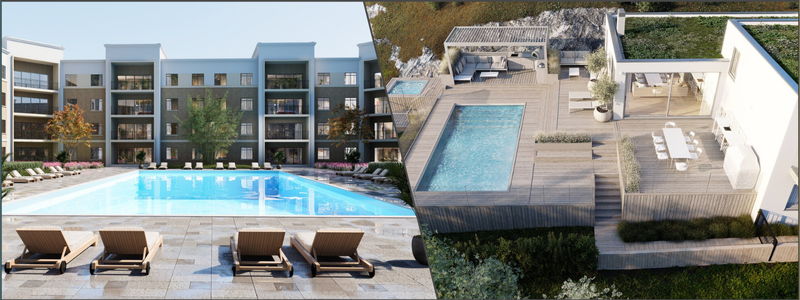
author avatar

MacKenzie Brown is the founder and CEO of Cad Crowd. With over 18 years of experience in launching and scaling platforms specializing in CAD services, product design, manufacturing, hardware, and software development, MacKenzie is a recognized authority in the engineering industry. Under his leadership, Cad Crowd serves esteemed clients like NASA, JPL, the U.S. Navy, and Fortune 500 companies, empowering innovators with access to high-quality design and engineering talent.

Connect with me: LinkedInXCad Crowd