Designing Your Commercial Restaurant Floor Plan: Best Floor Plan Services


Restaurant owners know that running a food establishment often means that something can go wrong at any minute, especially when you least expect it. This is why it’s extremely important to plan things carefully and devise smart design solutions. Reducing the potential safety or health risks will help you keep both your customers and staff safe and, at the same time, enhance overall workflow. 


:rocket: Table of contents


What is a commercial restaurant floor plan?

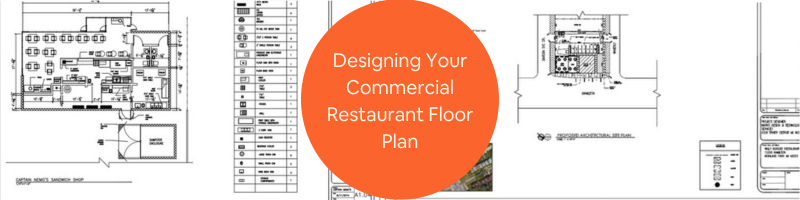
A commercial restaurant floor plan is a map of the entire restaurant’s layout. It highlights the relationship and distance between tables, waiting and service areas, rooms, payment stations, and others. These floor plans also show the location of fixtures such as furnaces, electrical outlets, doors, and water heaters. 

RELATED: Benefits of 3D floor plan rendering and design services for architects and companies

Signs of a faulty commercial restaurant floor plan

The following are the most common signs that your existing floor plan might be hurting your commercial restaurant:

You’re not using wall space

Despite your restaurant’s roomy outdoor patio without walls, every restaurant space needs boundaries to serve as wall space. This is where 3D floor plan design services come in. If you have no idea how to arrange tables correctly to use this space, your floor plan may be lacking. For instance, proper table placement can prevent customers from occupying unnecessary space.

You can arrange the bigger tables towards the center and push the rest against the wall to maximize seating capacity. The tables set against the wall will continue to be useful. But rather than seating three or more, you can use them as two—or three-seaters during slow hours in your restaurant. 

RELATED: 3D floor plan services: how to use a 3D floor plan effectively

There are always empty seats on your tables 

Another obvious sign that your restaurant’s floor plan design doesn’t maximize your potential for more profit is if your tables have empty seats all the time. After seating customers at the tables, most of these tables will have one or more empty chairs. This may indicate that the tables are too large for your customer base and existing space. Switching your bigger tables for smaller ones will let you seat at least two times more people in just the same amount of space. 

Your tables differ in size and shape

Your restaurant may host families or be a favorite destination for date nights among couples. A 2D drawings and floor plan expert can come in handy to give you a clear picture of what you need. Although it’s okay to have more of one size than the other, different varieties of table sizes can give you more choices to maximize your restaurant’s floor plan design. The tables’ shapes also matter. While round ones can seat more people and take up less space than their larger rectangular counterparts, rectangular or square tables can fit more easily in tight corners or alongside walls. 

RELATED: How do architectural design firms use space planning to visualize 3D floor layouts?

Important considerations for commercial restaurant floor plan

The following are the most essential considerations for an effective floor plan for commercial restaurants:

Accessibility

First, it’s crucial to ensure that dining areas and workspaces are easily accessible to people with mobility concerns. For instance, the Accessible Canada Ac aims to identify, prevent, and remove barriers throughout the country by 2040. All types of seating that a restaurant provides for ambulatory people must offer an equivalent experience to those whose mobility is limited. 

The bar counter is one good example of this. Many bars are intended for people to sit on high stools or stand comfortably. The 3D architectural detailing designer must design a part of the bar to meet these accessibility guidelines. All work areas and restrooms must also be accessible. Every area of the restaurant must be readily accessible for employees and customers. 

Building codes and regulations

Professional floor plan services can help ensure that your commercial restaurant’s floor plan will meet the local building codes in your area. Several of these requirements might need to be more intuitive to laypeople. For example, food service facilities must have a hand-washing sink, a three-compartment sink, and drains connected to each one of them. The ice maker must also have a floor drain beside it. Restaurant building codes might also require washable surfaces, including the ceilings.

RELATED: How do 3D interior design rendering services use space planning for floor plans? 

There must be no open insulation above the areas where food is being served. Many things in mechanical and building codes should be factored into the design of your restaurant. Other legal requirements might also apply depending on your local jurisdiction. Quebec’s Charter of the French Language applies to all of the province’s businesses regardless of size. The rules apply to everything, including the name, menus, and signage of your restaurant. 
3d floor plan design services 2

Budget 

Restaurant build-outs aren’t cheap, so budget issues might limit how drastically you can modify the space. Depending on your budget, you might want to limit how many walls you knock out. You can also be more efficient in how the plumbing fixtures are laid out. While you can save money if you arrange a layout around your existing plumbing fixtures, this will limit the possibilities of your layout in general.

Budgets are also affected by permitting requirements. It might take several months to go through the local planning department just to get a change of use. Expert floor plan services might help cut down surprises down the road. 

RELATED: Architectural symbols for 2D drawings and floor plans –  how companies interpret them

Efficiency 

Do your servers bump into each other when serving meals? Do your customers at the cash register block the line of people coming inside your restaurant? Flow is key in any dining establishment. Design your 2D drawings and floor plans to prevent bottlenecks. Consider the trip a plate takes to reach a table from the kitchen. Minimizing the movement it takes for plates to pass back and forth to the kitchen from the service area is always better. The dining space must also be accessible and flexible, with enough space for parties. 

Sizes of restaurant tables differ according to the preferences of the owner and the style of service. The table’s size is usually chosen based on how the chef prefers to present dishes on the table. The allocated square footage for every seated guest is also dependent on the specific type of restaurant you plan to open. The amount of square footage designated for every seated guest will depend on the service type of your restaurant. 

RELATED: Best tips for 3D restaurant rendering and CGI for companies

Sustainability

The past few years have seen significant changes in the restaurant industry. One of the newest emerging trends is the shift towards more sustainable practices that can help lower businesses’ carbon footprint and cut costs. In general, drafting services, building materials, and products must help reduce the destruction of the global environment. Sustainability can change how restaurants are run and how floor plans are designed. Several practices might be involved in adopting a more sustainable approach.

Sustainability in terms of your restaurant’s floor plan can mean using the existing space instead of changing it completely, reusing equipment or furniture when possible, and opting for sustainably sourced materials. You might also want to check if you’re qualified for energy efficiency grants. These can help offset some of the costs required to make your restaurant greener. Customers are looking for commercial restaurant esablishments to be more sustainable.

Aesthetic

After you have nailed down the main non-negotiable requirements, you can proceed to decorations. Once you have identified your service model, it’s time to discuss the style and experience that the interior décor will create. What kind of vibe do you plan for the space? Is it funky or homier? Your restaurant’s aesthetic, menu, and service model must all make sense.

RELATED: 3D visualization for bars, businesses, and restaurants: 3D interior rendering services

A professional floor plan expert designer will have extensive discussions with their clients during the initial planning of a commercial restaurant, café, or bar to better understand their brand, identity, and the kind of experience and image they wish to convey through their restaurant space. What kind of activities do they intend their customers to do in the space? How do they want their customers to engage in the restaurant?

These are essential discussions for floor plan experts to have definitive answers before they begin planning an establishment’s interior design. Some experts recommend that at least a portion of the service area must be visible from the outside. Where other people are, that’s where people go. Driving by a restaurant with only a few diners inside won’t make it appealing.

RELATED: Essential benefits of 3D architectural rendering and design for companies, restaurants & bars

On the other hand, if it is full, it is often seen as a signal of trust, and people will automatically think that it is worth trying to check out that place. For example, the bar and service area might be customer-facing, with passers-by getting a good glimpse of the interior to check out the ambiance, the food, and the clientele. 

How Cad Crowd can help

Connect with some of the most trusted commercial restaurant floor plan services at Cad Crowd and make the most out of the space of your dining establishment to achieve growth and success. Get a free quote today.

author avatar

MacKenzie Brown is the founder and CEO of Cad Crowd. With over 18 years of experience in launching and scaling platforms specializing in CAD services, product design, manufacturing, hardware, and software development, MacKenzie is a recognized authority in the engineering industry. Under his leadership, Cad Crowd serves esteemed clients like NASA, JPL, the U.S. Navy, and Fortune 500 companies, empowering innovators with access to high-quality design and engineering talent.

Connect with me: LinkedInXCad Crowd

3D Floor Plan Services: A Beginner’s Guide to Using a 3D Floor Plan Effectively


Today’s post covers helpful information regarding 3D floor plan services and how to use a 3D floor plan effectively. Have you ever searched for a property to buy or rent? If so, you’ve probably noticed that many online property listings don’t just provide property descriptions and photos; they often include floor plan images. The floor plan typically portrays the size of the different rooms on the property. It may also include measurements of the length and width of each room. Through these depictions, even those who don’t belong or may not be familiar with the images can tell what kind of room it is and how the space can be used to the fullest. 

But despite how handy floor plan images can be, they are not enough on their own. In those instances, 3D floor plan rendering services come in handy. 3D floor plan renderings are provided by 3D floor plan experts who can create detailed visualizations of floor plans that you can’t obtain from traditional floor plans. However, if this is your first time hearing about 3D floor plans, it is only natural that you have some continues. Continue reading this short beginner’s guide to using a 3D floor plan effectively:

RELATED: Benefits of 3D floor plan rendering and design services for architects and companies

What are 3D floor plan renderings?

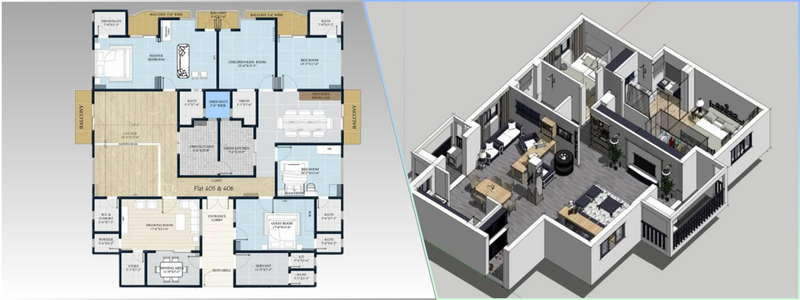
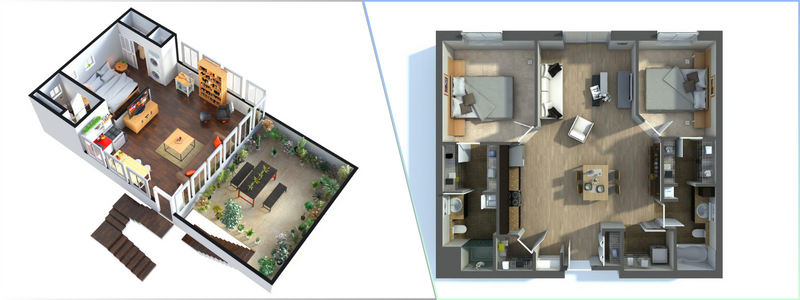
3D floor plan rendering is images that depict the structure (doors, windows, and walls) and the layout (furniture, fixtures, and fittings) of a home, office, building, or property in 3D. A 3D floor plan is often in color and displayed from a birds-eye view. While there are no stringent rules regarding the required angles of an image, top-down and isometric floor plans are the two styles most commonly used right now. 

What makes 3D floor plans different from 2D floor plans?

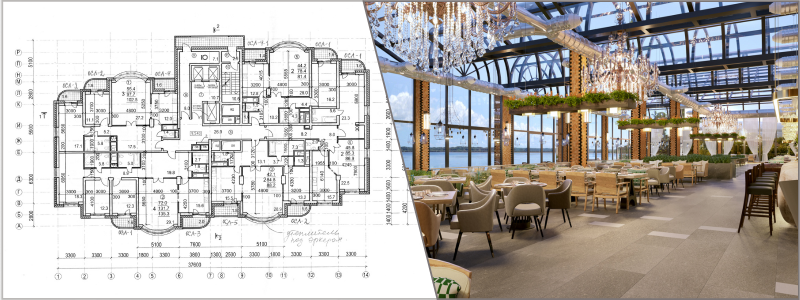
2D floor plans are notably simpler than 3D floor plan renderings, often drawn in white and black, featuring additional details such as areas or dimensions. You may wonder when to use 2D floor plans or opt for 3D floor plans. Speak to a professional 2D drawings and floor plans design company about the appropriate solution. Your choice depends on the specific information you want to communicate and your objectives. A 2D floor plan might be better if your main priorities are facts, detail, and precision. For instance, a 2D drawing and floor plan design may be beneficial when applying for a building permit or providing dimensions to the building contractor.

Thanks to their simplicity, the 2D floor plan drawing process is faster, making them work great as a starting point or first draft for a project. Unfortunately, 2D floor plans can do little to convey a space’s look and feel, so you might need help visualizing the environment and getting a good sense of the atmosphere. 

RELATED: Architectural symbols for 2D drawings and floor plans – how companies interpret them

A 3D floor plan rendering designer can add vibrancy to a property. They provide a quick, comprehensive view of the property’s layout, design, furniture, and colors. They are easy to understand at a glance, making them a valuable tool for selling off-plan properties or visualizing the potential of an empty house.

Who uses 3D floor plan designs? 

Any individual or professional who wishes to convey and present more detailed information regarding a property and its layout can use and take advantage of 3D floor plan design services. These professionals include:

  • Architects
  • Bathroom fitters and designers 
  • Carpet and floor installers
  • Construction contractors
  • Event organizers
  • Fire safety and building security professionals
  • Furniture salespeople
  • Interior designers
  • Kitchen designers
  • Landscapers and garden planners
  • Property photographers
  • Property sales websites
  • Real estate agents
  • Home renovators and builders
  • Window and door installers

RELATED: Why companies are choosing 3D floor plan rendering to design and visualize projects 

2d-drawings-and-floor-plans-design-firm

3D floor plan design elements 

Before you learn why and how to create 3D floor plan designs, you need to know the essential elements of 3D floor plan design. Some of these are the following:

  • Doors
  • Partitions or walls
  • Windows

3D floor plan designs should also include anything in the mood board, such as:

  • Accessories
  • Appliances
  • Carpeting or rugs 
  • Hardware or fixtures
  • Flooring
  • Furniture
  • Lighting

After you have identified the details of the essential floor plan elements above, you can now move forward with the importance of creating 3D floor plan designs. 

RELATED: How do 3D interior design rendering services use space planning for floor plans? 

Why create 3D floor plan design?

As the saying suggests, a picture can convey a wealth of information, and the same applies to 3D floor plan designs and 3D floor plan renderings. With a 3D floor plan design, you can visualize designs and ideas more effectively and quickly than with verbal instructions, written descriptions, or even 2D floor plans.

Below are some of the best reasons why you should create 3D floor plans and take advantage of professional 3D floor plan design services:

Prevent costly mistakes 

That elegant king-sized bed may have seemed magnificent in the showroom, but if it dominates your bedroom to the extent that you must squeeze against the wall to access it, its stylish allure can quickly diminish. With a 3D floor plan design, you will know the exact amount of available space you have and the possible impact of large furniture pieces on the overall aesthetics of a room. 

RELATED: Designing small house floor plans: rules for contractors & companies to follow

Communicate ideas easily 

If you have the most fantastic idea for renovating your kitchen, and your partner needs help grasping the concept, you can help them visualize the design through the help of 3D floor plans and 3D architectural visualization firms. While there might be no guarantee that your partner will agree with what you have in mind, you can be sure that you will be on the same page at least. 

Compare various designs

After you have developed a design template, it is time to unleash your imagination and creativity. Whether you wish to update the color of the wall, mix the layout of the furniture pieces, or check the appearance of an extra large sofa on the corner, a 3D floor plan design will help you quickly assess your options. 

Showcase the property in its best light 

People’s attention spans have become shorter than ever, especially in this modern world of marketing and sales. With the help of 3D AR/VR architectural services (another type of floor plan), you can be sure your message will be delivered efficiently and quickly without making anyone feel bored and sleepy. This makes 3D floor plans ideal for property listing websites and real estate agents, especially those who sell off-plan houses.

RELATED: How AEC companies can leverage VR and AR simulations in architectural design

3d-floor-plan-services

Unleash creativity 

The simple act of using 3D floor plan design services can significantly help during the design process. If you are running out of ideas or need help finding inspiration, a 3D floor plan design will have those ideas flowing quickly. 

How to create effective 3D floor plan designs

Here are the basic steps that 3D floor plan design services follow when preparing 3D floor plans for their clients:

1. Choose a medium for a 3D floor plan design

3D floor plan rendering services begin by selecting software tailored to the client’s needs and project requirements before drawing and measuring the floor plan.

2. 2D drawings and floor plans

Most floor plans start as 2D drawings. Manual drawings can be done by hand depending on the software or 2D drawings and floor plan design services used. These will then be uploaded, or the 2D drawings and floor plans can be made in the software program. The 2D floor plan drawings designer or 3D floor plan designer will also take care of the necessary physical measurements beforehand to ensure the exact dimensions of the space.

They will also add other critical room elements like doors, windows, and walls at this stage for the drawing to accurately reflect the space as much as possible. After all these, the 2D drawings will be ready to be converted into 3D using special software. 

RELATED: How architectural companies design 3D floor plans for residential home design 

3. Include furnishings

Once the 3D floor plan rendering is made, furnishings can be added to bring the design to life. The 3D floor plan can be decorated and furnished similarly in real life. It is also the time to include flooring or lighting, wall paint, and furniture. 

4. Cross-reference the mood board

As the 3D floor plan designer adds final touches and furnishings to the 3D floor plan rendering, they consult the mood board to align with your vision for the space. If elements in the mood board can’t be fully represented in the 3D space, the designer can refer to it when presenting the design to clients to convey its complete potential. For the finest 3D floor plans, choose the best 3D floor plan design services for your projects!

How Cad Crowd can help

Ready to elevate your project design and visualization with 3D floor plan rendering? Cad Crowd offers top-notch 3D rendering services that bring your architectural visions to life. Our experienced team of freelance designers and modelers will help you create stunning, realistic 3D floor plans that captivate clients and streamline your design process.

Contact us today for a free quote and discover how 3D floor plan rendering can transform your projects into visual masterpieces.