These $300 OnePlus smartphones have bigger batteries than the Galaxy S25 and iPhone 17 combined


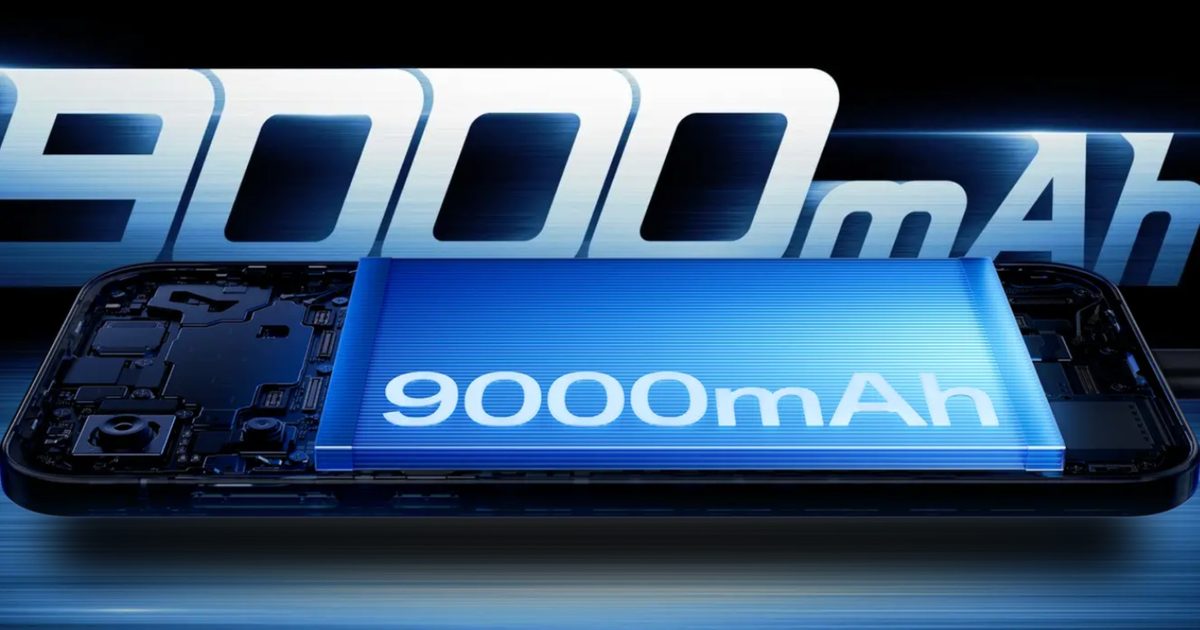
The Chinese smartphone manufacturer has launched two new smartphones in its native market — the OnePlus Turbo 6 and the Turbo 6V — both of which feature a gargantuan 9,000 mAh battery. In a market where phones over $1,000 feature 5,000 mAh batteries, the OnePlus smartphones set new endurance benchmarks.

Let me give you some context. Samsung’s $1,049.99 Galaxy S25 Ultra features a 5,000 mAh battery (and the Galaxy S26 Ultra isn’t expected to have any significant improvements in that area). The $1,199 iPhone 17 Pro Max (eSIM variant) sports a 5,088 mAh cell.

When midrange phones outlast premium flagships

Even the newly launched $899.99 OnePlus 15 and the $699.99 OnePlus 15R, which are among the biggest battery smartphones, feature 7,300 mAh and 7,400 mAh batteries, respectively. However, the OnePlus Turbo 6 and Turbo 6V virtually break all the standards set by these phones.

Both the Turbo 6 and the Turbo 6V, which cost less than $350 when converted from the Chinese price (for the baseline variants), feature a 9,000 mAh battery, almost as big as the combined capacity of the S25 Ultra and the iPhone Pro Max.

With such a massive battery, the Turbo smartphones should easily last over a day between charges, leaving you with around 40-50% battery for the next day (depending on your usage). I consider this a legitimate step toward normalizing two-day battery life on smartphones.

Furthermore, the OnePlus handsets also support 80W wired charging, which might not sound a lot for 9,000 mAh batteries, but should still charge the phone in around an hour and 30 minutes. In retrospect, the charging speed is faster than most non-Chinese flagships available in the United States.

Unfortunately, none of the smartphones is available outside of China yet. There’s a good chance the Turbo 6V makes it to the Nord outside of China, but OnePlus hasn’t confirmed anything yet.

Talking about other specifications, the Turbo 6 and the Turbo 6V sport a 6.78-inch 1.5K AMOLED screen that supports an extremely high refresh rate (165Hz on the former, 144Hz on the latter). Powering the Turbo 6 is the Snapdragon 8s Gen 4 SoC (also found on the Nothing Phone 3), while the Turbo 6V runs on the Snapdragon 7s Gen 4 SoC.

Both phones are available in multiple memory and storage variants: Turbo 6 with up to 16GB of LPDDR5X RAM and 512GB of UFS 4.1 storage, and Turbo 6V with up to 12GB of LPDDR4X RAM and 512GB of UFS 3.1 storage. Cameras, however, are similar on both phones: a 50MP primary camera, a 2MP monochrome sensor, and a 16MP selfie shooter.

The baseline OnePlus Turbo 6 (12GB + 256GB) costs CNY 2299 in China, which is about $328, while the entry-level Turbo 6V (8GB + 256GB) costs CNY 1899, about $271. They’ll be available for purchase in China from January 8, 2026.

While we’re not certain when these handsets will be available in the U.S., they’ll surely help shift buyers’ expectations away from budget smartphones and encourage other manufacturers to up their battery game.
Android 16 QPR1’s source code is nowhere to be found, but Google swears it’s coming


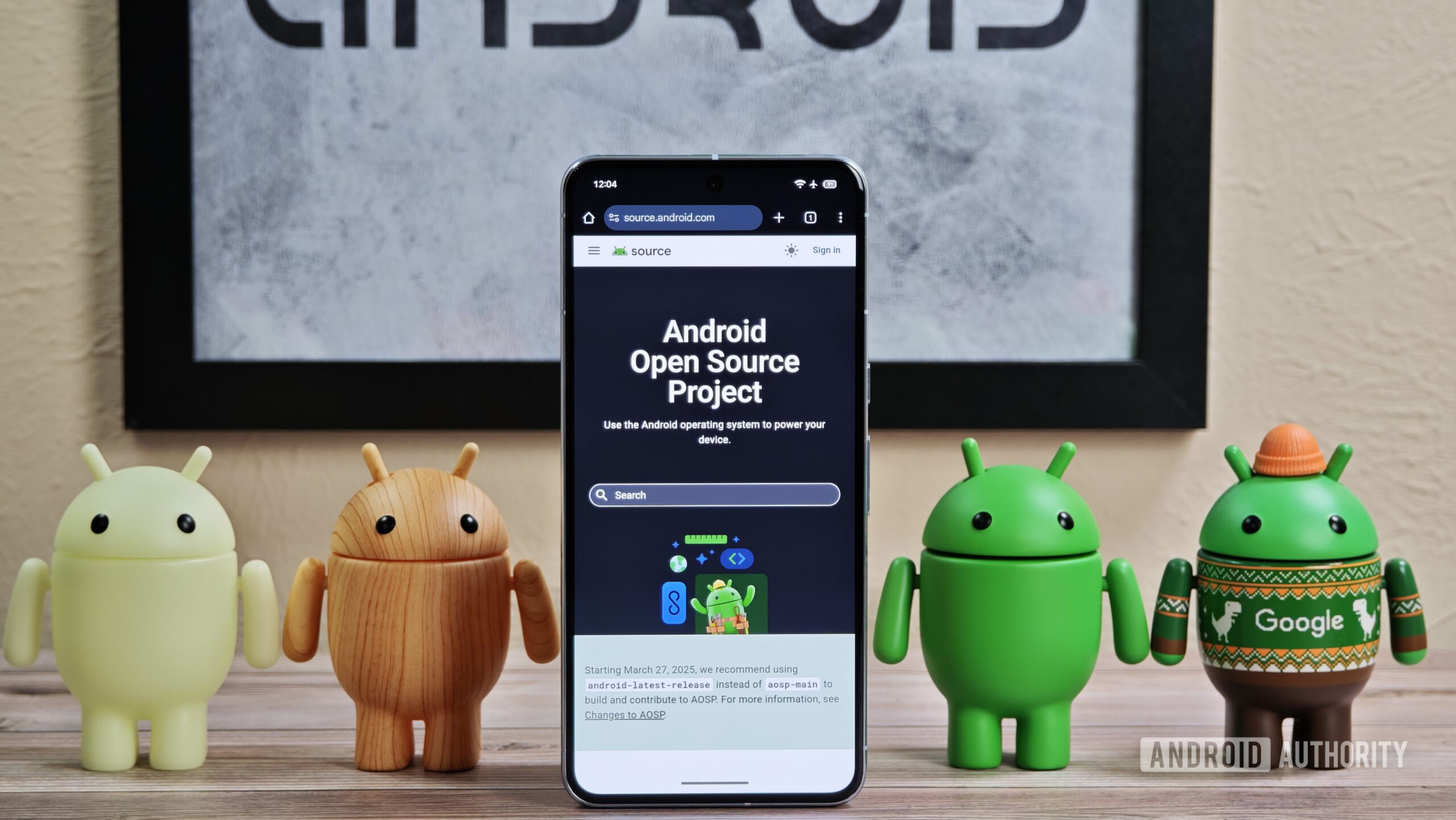
Android figures standing around Pixel phone with AOSP home page showing

Mishaal Rahman / Android Authority

TL;DR

  • Google has delayed releasing the source code for Android 16 QPR1, worrying custom ROM developers who rely on timely AOSP (Android Open Source Project) updates.
  • While Google typically publishes source code within 48 hours of a new release, it has been a week, breaking a long-standing precedent for the community.
  • Google confirmed the code is coming “in the coming weeks,” but the situation has reignited concerns about the company’s commitment to open-sourcing Android.

Last week, Google rolled out the Android 16 QPR1 update, bringing the company’s long-awaited Material 3 Expressive design overhaul and other exciting features to Pixel users. If you want to try new Android features but don’t own a Pixel device, your best option is usually to install a custom ROM based on the open-source version of the operating system. Google typically publishes the source code for new Android versions within 1-2 days of release, allowing independent developers to quickly start porting the new changes to their custom ROMs. That hasn’t happened this time, though, leaving many developers to wonder if Google’s history of timely open source releases is over.

AOSP, short for the Android Open Source Project, is an operating system Google releases under the permissive Apache 2.0 License, which allows anyone to use, modify, and distribute their own AOSP-based operating systems without paying fees or releasing their modified source code. This licensing structure is what allowed Android to become so popular, but it’s also why the OS looks so different across devices. The software experience only feels familiar across most smartphones, tablets, watches, and TVs running Android because companies must follow certain guidelines to get access to Google Mobile Services (GMS) — Google’s suite of proprietary apps that includes the Play Store.

Even if your company doesn’t license GMS, you can still build your own operating system from AOSP. The source code is freely available under the Apache 2.0 license, and Google regularly publishes new code to AOSP shortly after releasing a new Android version. Within hours of rolling out a new quarterly or major release to its Pixel devices, Google typically begins uploading the corresponding source code to AOSP. This process usually takes 24-48 hours due to the codebase’s size and complexity.

It’s been a week since Google released Android 16 QPR1, and there are no signs that the company has even begun to upload its source code. Normally, a minor delay wouldn’t be a cause for concern; perhaps the team responsible for AOSP releases is understaffed, or maybe there’s another complication. However, given recent changes to AOSP, developers are understandably concerned this delay is intentional. They’re worried about the impact these delays could have on their projects, as users have grown accustomed to fast turnarounds following a new Android release.

We reached out to Google a few days ago for comment on whether and when it plans to release the source code for Android 16 QPR1. In a statement to Android Authority, Google confirmed it will release the source code “in the coming weeks.” The company didn’t explain the reason for the delay or offer a more specific timeline, but its statement reassures developers that the code is coming — just later than usual.

Why are developers concerned about AOSP?

LineageOS Logo (2 of 3)

C. Scott Brown / Android Authority

Although AOSP is open source, nearly all of its development happens privately, with Google contributing the bulk of the code. Google used to develop some parts of Android in public, but it fully privatized development earlier this year to simplify its workflow. Aware that this would spark concern, Google told Android Authority that it remained committed to publishing Android’s source code.

This commitment was tested when Google released Android 16 back in June. While the company did publish the operating system’s source code, it dealt a huge blow to the Pixel custom ROM community by omitting code for Pixel-specific hardware features. This omission, while not affecting the core OS, fueled speculation that Google was planning to discontinue AOSP. In response to the outcry, Google’s VP and GM of Android Platform, Seang Chau, posted on X, stating that “AOSP is NOT going away.”

Google denies discontinuing AOSP

Mishaal Rahman / Android Authority

Though some skepticism remained, that statement from Google’s VP quelled most doubts at the time. However, the delayed release of security patch backports, coupled with the lack of source code for Android 16 QPR1, has reignited concerns about the company’s commitment to AOSP. If these delays become the new norm, the custom ROM community will have to adjust its release schedules accordingly. We asked Google whether to expect delays for future releases or if this is a one-time issue, and we’ll update this article when we hear back.

Don’t want to miss the best from Android Authority?

Thank you for being part of our community. Read our Comment Policy before posting.

Google revamps Android’s permission dialogs for a sleeker design


android 16 qpr beta dialog box design refresh

Tushar Mehta / Android Authority

TL;DR

  • Google has redesigned the permissions dialogs that appear in Android.
  • This change appears following the June Google Play system update when applied to the latest Android 16 QPR Beta 2.1.
  • Google has dropped the older design in favor of slimmer buttons and better readability.

Even though Google first released a beta for Android 16 last year, its biggest design change didn’t start rolling out until the final beta, just weeks before the final release. With this, Android received an entirely revamped quick settings menu and updated volume sliders, both of which are now widely available on supported Pixel devices running the stable Android 16 update.

However, with subsequent updates, Google is testing minor tweaks to the interface, and we came across one more. Following the June Google Play system update that rolled out earlier this week, we spotted another minor change: the new permissions dialog box. However, the change only appears on devices running the Android 16 QPR beta 2.1 update that was released last week.

The permissions dialog box now has more widely spaced buttons for various options. Instead of a light background earlier, these buttons now use darker colors with white text, allowing richer contrast and, therefore, better readability.

The buttons in the refreshed permissions dialog also feature more rounded corners to align with the other buttons and widgets in Android that have been redesigned in recent months. Below is a side-by-side comparison between the older and the new designs of the permission dialog:

The change is expected to be triggered by the latest Google Play system update, which may need to be triggered manually. If you are running the latest beta and want it, you can head over to Settings > System > Software updates and tap Google Play system update. Once the latest Play system update is installed, you will be prompted to restart your Pixel device, and doing so should enable the new permissions dialog across the system.

Got a tip? Talk to us! Email our staff at news@androidauthority.com. You can stay anonymous or get credit for the info, it’s your choice.