These $300 OnePlus smartphones have bigger batteries than the Galaxy S25 and iPhone 17 combined


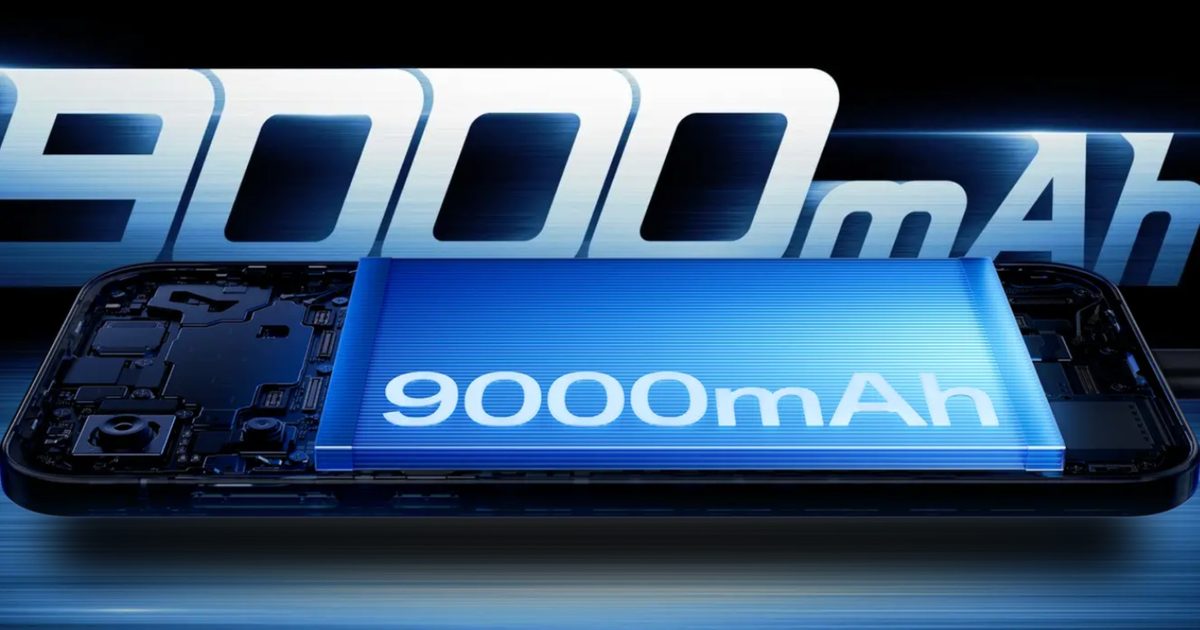
The Chinese smartphone manufacturer has launched two new smartphones in its native market — the OnePlus Turbo 6 and the Turbo 6V — both of which feature a gargantuan 9,000 mAh battery. In a market where phones over $1,000 feature 5,000 mAh batteries, the OnePlus smartphones set new endurance benchmarks.

Let me give you some context. Samsung’s $1,049.99 Galaxy S25 Ultra features a 5,000 mAh battery (and the Galaxy S26 Ultra isn’t expected to have any significant improvements in that area). The $1,199 iPhone 17 Pro Max (eSIM variant) sports a 5,088 mAh cell.

When midrange phones outlast premium flagships

Even the newly launched $899.99 OnePlus 15 and the $699.99 OnePlus 15R, which are among the biggest battery smartphones, feature 7,300 mAh and 7,400 mAh batteries, respectively. However, the OnePlus Turbo 6 and Turbo 6V virtually break all the standards set by these phones.

Both the Turbo 6 and the Turbo 6V, which cost less than $350 when converted from the Chinese price (for the baseline variants), feature a 9,000 mAh battery, almost as big as the combined capacity of the S25 Ultra and the iPhone Pro Max.

With such a massive battery, the Turbo smartphones should easily last over a day between charges, leaving you with around 40-50% battery for the next day (depending on your usage). I consider this a legitimate step toward normalizing two-day battery life on smartphones.

Furthermore, the OnePlus handsets also support 80W wired charging, which might not sound a lot for 9,000 mAh batteries, but should still charge the phone in around an hour and 30 minutes. In retrospect, the charging speed is faster than most non-Chinese flagships available in the United States.

Unfortunately, none of the smartphones is available outside of China yet. There’s a good chance the Turbo 6V makes it to the Nord outside of China, but OnePlus hasn’t confirmed anything yet.

Talking about other specifications, the Turbo 6 and the Turbo 6V sport a 6.78-inch 1.5K AMOLED screen that supports an extremely high refresh rate (165Hz on the former, 144Hz on the latter). Powering the Turbo 6 is the Snapdragon 8s Gen 4 SoC (also found on the Nothing Phone 3), while the Turbo 6V runs on the Snapdragon 7s Gen 4 SoC.

Both phones are available in multiple memory and storage variants: Turbo 6 with up to 16GB of LPDDR5X RAM and 512GB of UFS 4.1 storage, and Turbo 6V with up to 12GB of LPDDR4X RAM and 512GB of UFS 3.1 storage. Cameras, however, are similar on both phones: a 50MP primary camera, a 2MP monochrome sensor, and a 16MP selfie shooter.

The baseline OnePlus Turbo 6 (12GB + 256GB) costs CNY 2299 in China, which is about $328, while the entry-level Turbo 6V (8GB + 256GB) costs CNY 1899, about $271. They’ll be available for purchase in China from January 8, 2026.

While we’re not certain when these handsets will be available in the U.S., they’ll surely help shift buyers’ expectations away from budget smartphones and encourage other manufacturers to up their battery game.

6 features from other skins I want on One UI


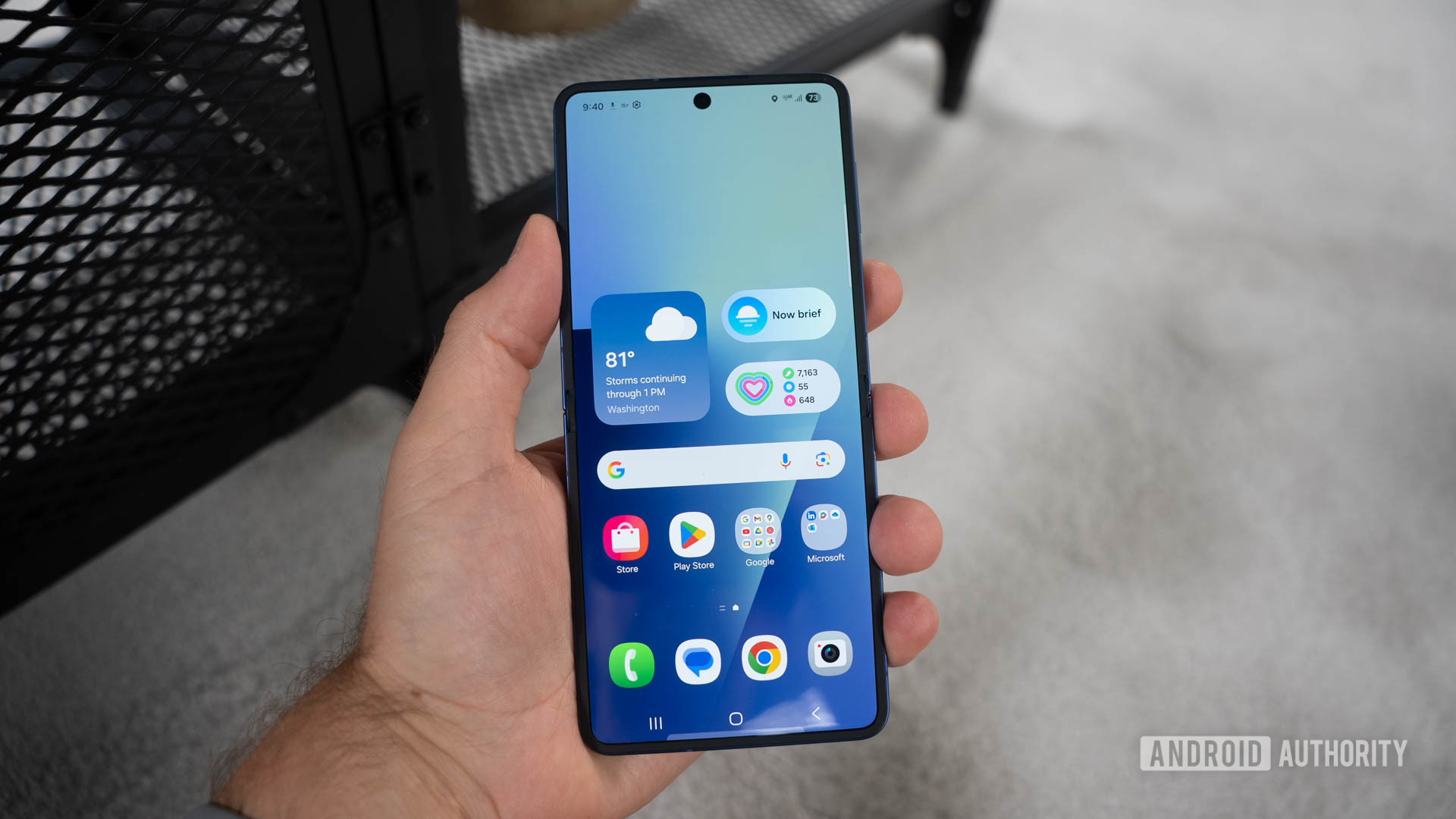
Samsung Galaxy Z Flip 7 home screen One UI 8

C. Scott Brown / Android Authority

One UI has been with us for six years now, and it’s easily the best Android skin Samsung has made. One UI is smoother, more reliable, and easier to use than Samsung Experience or TouchWiz, the skins that preceded it. Aside from a blip with One UI 7, it’s been updated quicker than ever, often beating other Android skins.

The features One UI delivers have made it my favorite flavor of Android since I first used it on my Galaxy S10 Plus, but there are still things I’d like to change. Motorola, OnePlus, and others have added exciting features to their Android skins, and I’d love to see some of them adopted by Samsung in the next version of One UI.

Which of these featurs would you like to see most on Samsung phones?

15 votes

Motorola: Intuitive gestures

It’s hard to believe it’s been twelve years since the original Moto X hit shelves. That phone, along with the Moto G, shaped Motorola’s future over the following decade, and one of the best things it introduced is what the company now calls Kinetic Gestures. The ones I want most are the two that started it all — Fast Torch and Quick Capture.

On a Motorola phone, performing a double karate chop toggles the torch on or off, something that’s incredibly useful when you’re fumbling with keys in the dark and need to add some light to the situation. I use this a lot on my 2023 Razr Plus, where this gesture is much faster than unlocking the phone and swiping through quick settings.

Quick Capture opens the camera or switches between the front and rear lenses if the camera is already open. This gesture requires a double flick of the wrist, and once you get used to it, it’s the easiest way of quickly launching the camera so you don’t miss an important shot.

Motorola: Easy customisation

One UI has plenty of theming options, more than Motorola does, but it’s all split across too many different menus and apps. Theming icons is in Theme Park, fonts are in the settings menu, and the Material You colors are in a menu accessed from the home screen. It’s even worse on Samsung’s Z Flip series, where all of the options for the cover screen are spread across even more menus. It adds too much friction to customising your Samsung phone.

Motorola has gone about things in a simple, thoughtful way. All of the options for themes, icons, fonts, home screen grid sizes, and the cover screen are in a single place. Long-press the home screen, open the personalise menu, and there are all of the options you could ever need. Sure, I miss some of the more advanced tweaks from One UI, but Motorola’s approach of listing everything together is more approachable for users.

Pixel: Now Playing

Google Pixel 9a now playing history

Ryan Haines / Android Authority

Now Playing is one of those small features that you don’t think about until you use a phone that doesn’t have it. I used a Pixel 9 Pro as my daily phone recently, the longest I’d used a Pixel since I owned a 3XL, and it reminded me how many subtle quality of life features you get on Pixels. Knowing what song is playing in the background wherever I am, without having to ask my phone to do it, is more convenient than the alternative.

The Now Playing history is great, too. I’ve planned to listen to a song that I’ve heard and searched for when out and about, only to forget what the song was by the time I get home. Now Playing keeps a history of the songs it hears, so I don’t have to rely on my memory.

Pixel: Call Screening

Google Pixel 8a call screening

Andy Walker / Android Authority

Pixel 8a

Call Screening debuted on the Pixel 3 in 2018, but I never got to experience it as it didn’t come to the UK until 2021. When I used it with the Pixel 9 Pro recently, I couldn’t believe how much better it is than Samsung’s alternative. Samsung’s Call Assist can do the basics of screening calls, transcribing the conversation, and live translation. But it’s the extras that Google has added to Call Screening over the years that Samsung can’t keep up with.

Call Screening on Pixels can wait on hold for you and notify you when the person you’re calling comes back, tell you how long the average wait time is for a call to a business, and even map and label phone tree options. Samsung is off to a good start with Call Assist, but there’s a lot more work to be done.

OnePlus: Screenshot pixelation

One plus image pixel

Zac Kew-Denniss / Android Authority

I take a lot of screenshots in this line of work, and I often need to censor things like my email, address, and other personal information. One UI does have a blur and pixelation tool in the gallery, but it’s a manual process that can be quite messy if you don’t have an S Pen to make things easier. OnePlus and Oppo devices have an AI-powered auto mode that applies a neat blur to what it identifies as sensitive information.

It isn’t perfect. In the example above, I had to censor two elements that it missed manually, but that was much less painful than having to do the whole thing myself, and features like this will only improve with updates.

OnePlus: Open Canvas

OnePlus debuted Open Canvas on the OnePlus Open, and since then, it’s come to many of the company’s devices. It’s a new approach to window management on mobile that is more intuitive and makes the most use out of the space available on a screen. Before OnePlus introduced this, One UI had my favorite multitasking system, but Open Canvas blows it out of the water.

Google has taken some inspiration from Open Canvas, adding a 90:10 split to multi-window that you can try in One UI 8 on the Fold 7, Flip 7, Flip FE, and the S25 series running the beta. It’s an improvement, but still doesn’t come close to what OnePlus is doing, and I’d love to try Open Canvas on a big screen, like my Galaxy Tab S10 Plus.

One UI 9 needs to impress

Galaxy S25 red black background

Zac Kew-Denniss / Android Authority

One UI 8 feels like a stop-gap update. One UI 7 made a lot of big changes to Samsung software, most of which were welcome, but the delayed and fragmented update rollout left a bitter taste. One UI 8 is shaping up to have a much smoother release, but there’s almost nothing new here to be excited about. It feels like One UI 8 received only minimal changes so that Samsung could push it out the door quickly and act as damage control for last year.

One UI 9, whenever we see it, needs to give us something to be excited about, and looking to other OEM skins for inspiration, drawing on what Motorola, Google, and OnePlus users love about their phones, would be a good place to start.

A new OnePlus tablet just cleared the FCC, but it’s not the one we were expecting


OnePlus Pad 2 keyboard case

Ryan Whitwam / Android Authority

The OnePlus Pad 2 with its keyboard cover and stylus

TL;DR

  • A new OnePlus tablet has been spotted in an FCC listing, labeled as the OnePlus Pad 3R.
  • The listing doesn’t reveal much about the tablet’s hardware specs.
  • A new OnePlus Pencil was also filed alongside it, and both products could launch soon.

For the past few weeks, rumors have been swirling about a new high-end OnePlus tablet. Most signs pointed to it being a follow-up to last year’s OnePlus Pad 2 — possibly a “Pad 2 Pro” with flagship-tier specs. But now, a fresh FCC filing suggests OnePlus might be heading in a different direction entirely.

As first reported by Droid Life, a new OnePlus device has appeared in the FCC database under the model number OPD2408. The listing identifies it as a tablet and includes a label that clearly names it the “OnePlus Pad 3R.” Also appearing in the FCC database is a new stylus under model number OPN2405, officially named the “OnePlus Pencil.”

The FCC documents mention support for dual-band Wi-Fi, Bluetooth, and wireless power transfer (WPT) on the tablet, though it’s unclear whether that last bit means we’re getting actual wireless charging. That’s still a rare feature on tablets, so it’s best to stay skeptical for now. The device is described as working in both standalone and keyboard-laptop modes, and the hardware/software builds are listed as OPD2408_11 and OPD2408_15.0.0.61, respectively.

That’s about all the FCC confirms on paper, but it’s what’s missing that makes things interesting. Prior leaks about this device hinted at a powerful tablet, possibly a rebadged version of the OPPO Pad 4 Pro, which was launched in China.

That model features a 13.2-inch 3K+ display, Snapdragon 8 Elite chip, up to 16GB of RAM, and a massive 12,140mAh battery. OnePlus often mirrors OPPO’s hardware under a different name, so expectations were set for something similar, if not identical.

So, where does the “Pad 3R” name come into play? That’s where things get a bit confusing. In the phone lineup, OnePlus typically reserves the “R” moniker for slightly trimmed-down, mid-range versions of its flagship devices, such as the OnePlus 13R compared to the full-fledged OnePlus 13.

But if this is truly the tablet with all those rumored high-end specs, branding it as “3R” instead of “2 Pro” suggests OnePlus might be rethinking how it positions its tablets.

Still, all we know for sure is that a new tablet, possibly called the OnePlus Pad 3R, is on the way. And with both the tablet and stylus now clearing the FCC, it might not be long before we see an official announcement.

Got a tip? Talk to us! Email our staff at news@androidauthority.com. You can stay anonymous or get credit for the info, it’s your choice.

Samsung’s Galaxy S25 phones, OnePlus 13 and Oura Ring 4


We may bit a post-CES news lull some days, but the reviews are coming in hot and heavy as February begins. Samsung has already debuted its latest premium phones and we’ve published a few long-term reviews of devices we’ve been testing for months. In this installment of the reviews roundup, we’ve got phones, a wearable, a robot vacuum and a smart grill. There’s something for everyone this week.

Engadget

For 2025, Samsung’s AI features are a bit more powerful and easier to use. However, aside from a faster chip, a new ultra-wide sensor and a few cosmetic tweaks, it looks and feels very similar to last year’s model, which makes the S25 Ultra a less impressive update than it should be considering it starts at $1,300.

Pros

  • Excellent screen
  • Great performance and battery life
  • Anti-reflective Gorilla Armor 2 panels
  • Slimmer bezels
  • New 50MP ultra-wide sensor
Cons

  • S Pen no longer supports Air actions
  • Same main and telephoto cameras as last year
  • Not fully compatible with magnetic Qi2 accessories
  • Expensive

$1,300 at Samsung

Samsung has given us the first flagship phones of 2025 and they rely heavily on AI features to lure users. Sam notes that the company has improved those tools, but the Galaxy S25 Ultra feels like an iterative update due to the limited hardware upgrades. “This means a lot of what Samsung focused on in this generation feels more like a bonus rather than a must-have feature,” he writes. “And when you can get around 90 percent of the phone’s capabilities from previous models, the most dangerous thing Samsung is asking buyers to consider is why they need to upgrade at all.”

Samsung/Engadget

The Samsung Galaxy S25 has useful AI features and impressive battery life, but the familiar hardware and unchanged price tag make for an unconvincing upgrade.

Pros

  • Solid build quality
  • Incredible battery life
  • Smoother Gemini AI experience
  • Powerful new processor
Cons

  • Same display as the S24
  • Same camera sensors as the S24
  • Same price as the S24

$800 at Samsung

Like the Galaxy S25 Ultra, Samsung leaned heavily into the AI features on the regular S25. However, the company didn’t spend a lot of time updating the design and major components of this model either. As Mat explains, this makes for a boring release for the long-running flagship line. “Unless you’re desperate for a bump in processing power and battery life, it would be wise to see how heavily last year’s models get discounted in the coming months,” he says.

Anker Eufy

The Eufy E20 is the first robot vacuum to turn into a cordless stick vac and a hand vacuum thanks to included accessories. It works best as a robot, but the convenience it provides with its transformers-style design will make this a tempting buy for those who don’t want to rely solely on a robovac to clean their house.

Pros

  • Quickly turns into a cordless stick vacuum and a handheld vacuum
  • Strong performance as a robot vacuum
  • Self-emptying base holds a lot for its compact size
  • Improved Eufy Clean app
  • Decent price for a 3-in-1 machine
Cons

  • Most stick vac cleaning modes have weak suction
  • Stick vac build quality is lackluster
  • Wall mount costs extra

$550 at Eufy

The Eufy E20 is a first-of-its-kind transforming robot vacuum. While it works best in its core function as a robo vac, you do have the option of cordless stick and handheld vac configurations in the same device. “While Eufy isn’t a stranger to making solid robot vacuums, this device is still a first-gen product in my mind — and a solid one at that,” Valentina notes. “But you have to know what you’re buying upfront: an above-average robot vacuum that can turn into a just-average stick and hand vacuum.”

Daniel Cooper for Engadget

Oura’s latest Ring is the best smart ring on the market. But its range of functions remains limited by its size and the fact that it’s a ring.

Pros

  • More comfortable
  • Better data collection
  • Gorgeous, clean app
Cons

  • Requires paid subscription to use basic hardware features
  • I’m not sure why the paint jobs cost extra

$349 at Oura

Smart rings may still be niche, but there’s one company that stands above the rest. With the Ring 4, Oura fixed flaws of the previous model to ensure its crown is safe for the time being. “If there’s a downside, it’s that Oura remains forever constrained by the limitations a smart ring imposes,” Dan explains. “If you want something more comprehensive, then it’s likely a smartwatch is a better option, but for everything else, there’s this.”

Engadget

Instead of focusing on AI, the OnePlus 13 packs a bunch of top-of-the-line components into an attractive chassis for a very reasonable starting price of $900.

Pros

  • Class-leading battery life
  • Super-bright display
  • Great performance
  • Attractive design
Cons

  • Photo quality could be a touch better
  • Only six years of software support instead of seven
  • Needs a case to fully support magnetic Qi2 accessories

$900 at OnePlus

While most phone companies are focused on AI features, OnePlus decided to build a compelling, flagship-level handset that isn’t overloaded with bloat. “Throughout the years, OnePlus has used taglines like ‘flagship killer’ and ‘ultra in every way’ as a means of taking shots at its biggest rivals from Samsung, Google and more,” Sam writes. “But for the OnePlus 13, it feels like the company just went and made a really solid premium handset without a bunch of AI fluff.”

Weber/Engadget

Weber learned from its mistakes with its first smart grill to make the Searwood a complete package.

Pros

  • Reliable cooking performance
  • Open-lid manual mode works great
  • Display is visible from a distance
Cons

  • SmokeBoost only works at 180 degrees
  • Wheels and legs could be sturdier
  • No wireless probe option

$899 at Wayfair

Weber’s first pellet grill, the SmokeFire, was a learning experience for the company. Thankfully, the longstanding brand learned from those missteps when it built the Searwood. The company’s second smart pellet grill offers more reliable performance, excelling at low-and-slow smoking. Weber opted for an all-new design for this model, from the cooking area to the new display. There’s also a manual mode that allows for open-lid griddling and searing. And while there are some caveats, the Searwood is a much-improved grill compared to its predecessor.

According to Bloomberg, Apple will debut a new iPhone SE next week. This will be the first update to that model since 2022, and will reportedly nix the home button. The report also details specifics like a camera notch, USB-C and the use of Apple’s first in-house cellular modem. If the timing holds true, we’ll expect to begin our testing shortly after the news drops.

In that same report, Bloomberg’s Mark Gurman explains that Beats’ PowerBeats Pro 2 earbuds are expected to debut next week as well. The Apple-owned brand first teased an update to its fitness-focused model with a over-the-ear hook design last September. Gurman reports that the new model will have heart rate monitoring, which will be a first for a set of Apple earbuds. If the PowerBeats Pro 2 are indeed announced soon, we’ll expect to have a review ready shortly after.

I’ve got the Technics EAH-AZ100 earbuds in for testing too. These buds won one of Engadget’s Best of CES awards last month and I’ve been eager to get my hands… er, ears… on them ever since. During a brief hands-on in Las Vegas, the company’s newly designed Magnetic Fluid drivers offered impressive sound, but I’m looking forward to seeing how this set holds up during a full gamut of tests.