DFMA for Home Building Design and Construction Companies: Design Affordable Homes


There have been minimal improvements when it comes to construction practices used and enforced in the industry. These techniques, which seem to be the standard since the Jurassic era, have produced houses and buildings that have been criticized as inefficient in terms of cost, design, and overall aesthetic. Many houses even fail to cater to the current market demand.

But of course, if you want to stay ahead of the curve and achieve success in the progressive residential construction industry, you need to think outside the box and explore more modern solutions. Catering to the ever-evolving market, the demand cannot be fulfilled by simply generating more and more houses. The solution should be as innovative and new as the continuously improving technology and practices. One key methodology gaining traction in today’s construction industry is DFMA or design for manufacturing and assembly services.

DFMA is a methodological approach that optimizes the design process to allow a more efficient and seamless assembly and manufacturing. It ultimately leads to standardization, which will give you and your company faster construction timelines and cost savings. This article will share with you how building design and construction companies can take advantage of DFMA to design affordable homes.


🚀 Table of contents


RELATED: Design for manufacturing and assembly tips (DFMA) — cut your product design company’s production costs

DFMA at a glance

DFMA, or Design for Manufacturing and Assembly, is a framework focusing primarily on designing products that can be manufactured and assembled easily. This design process is not something that is new in the industry; it has been used since the 1980s to minimize the overall costs of computer hardware, consumer appliances, automobiles, and even airplanes.

These products are designed and crafted by DFM design professionals using individual components and parts that are aligned to be built and assembled in a factory setting. The buildings that will be worked on are considered products that can be split into several modules that can be built step by step and part by part. These modules which can consist of different parts and workings, are repeatable, interchangeable, and standardized.

Benefits of DFMA homes

Houses built using DFMA aim to lessen a large chunk of lifecycle costs, including build cost, construction and design time, carbon intensity, and household energy consumption while improving construction productivity.

RELATED: 5 Reasons to hire a CAD design specialist to bring your company’s concept to market

Expected economic benefits of DFMA housing projects

  • It allows other registered providers and 3D designers to reproduce the business model in partnership with the rest of the group to achieve a multiplier effect.
  • It reduces labor requirements per house, improving the industry’s resilience to a labor shortage, an existing concern that might only worsen over time.
  • It creates new business opportunities for suppliers.
  • It cuts down regional construction costs and speeds up delivery time to meet the targeted deadlines.
  • It decreases the energy bills of homeowners.
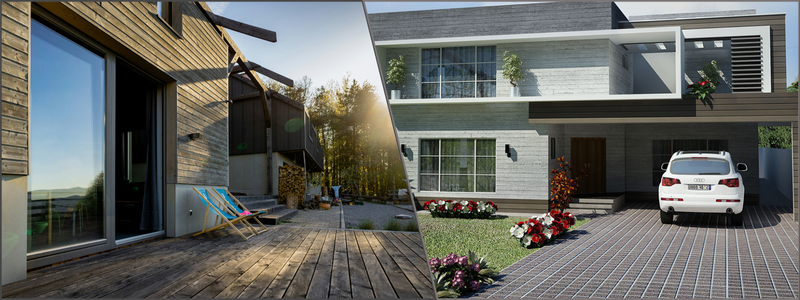
home design services

Other social benefits

  • It creates a safer work environment for the production process compared to traditional onsite production.
  • It creates new skills and roles for future use.
  • It improves quality of life by creating a more comfortable living environment and disposable income.
  • It provides faster access to affordable or social housing.

RELATED: Smart manufacturing using CAD design is the future for OEM’s

Reasons why the modern construction industry moves towards DFMA

  • The ultimate outcome of 3D construction rendering services and design is to create reasonably priced buildings within an accepted timeframe. DFMA or prefabrication is a good example since it uses modular construction drawings and already manufactured construction drawings. Once combined, these techniques and modules simplify the manufacturing part by outsourcing different offsite components which will give you a balanced performance, quality, and a more acceptable cost.
  • In DFMA drawings and models, assembly and manufacturing are elegantly intertwined together to have a simple, efficient, and error-free construction. However, just like other combined processes, DFMA might present complications and challenges at one point. However, the perks of reducing materials, overheads, and labor costs offer the ultimate solution to achieving success with minimal wastage and higher profit margins.
  • During product assembly, DFMA follows a meticulous design review process. It identifies optimal part design of products as well as cost-effective and efficient production methods that cater to the requirements of the designers and the rest of the team members.
  • Entire units or parts of the building’s construction are crafted in a factory setting or an actual factory away from the construction site before being transported to be installed on the site. Prefabricated construction modeling and DFMA encourage seamless collaboration between project design and production, making the products more cost-effective and reliable.

RELATED: DFM For new product design excellence: complete guide for company success 

Other perks of DFMA

Here are other reasons to take advantage of DFMA for designing affordable homes:

Ability to test

It’s possible to consider offsite solutions early on in the planning stage with the help of building information modeling experts or the BIM process. BIM aids in delivering prototype specifications to allow extensive testing. Models can also undergo virtual testing before companies invest finances in their actual prototypes.

Cost

Fewer parts are used in DFMA, which eliminates unique parts and cuts down the labor count for assembly. It also uses standard hardware and parts, reducing the need for assembly tools and thus further decreasing the costs involved. The DFMA process offsite is predictable and not prone to delays and material damage due to weather, helping save overall costs. It’s also possible to use the same parts interchangeably for product manufacturing, decreasing the number of parts and costs.

RELATED: How companies use design for assembly services for product manufacturing

The application of total quality or operational management tools can help fulfill future volume needs. Projects involving repetitive structure elements, such as supermarkets, malls, colleges, schools, hospitals, and hotels, can also significantly benefit from DFMA, as it easily replicates elements in larger quantities after choosing the design.
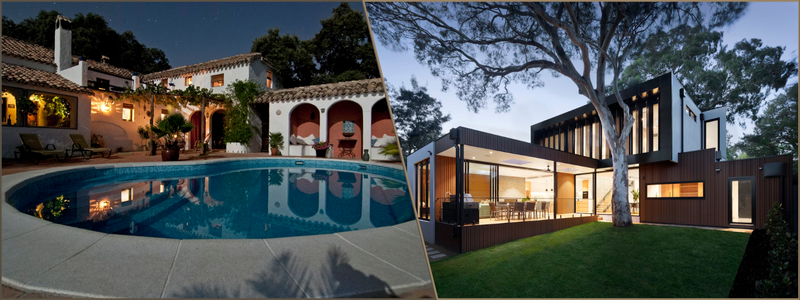
3d house rendering company

Availability of resources

Construction in a different environment requires less onsite labor to relieve shortages in skills. Onsite resources are necessary only for the final installation of assembly instead of the design, manufacture, and complex assembly of parts and components.

Safety

Entire buildings or components can be reconfigured and transferred to different sites to ensure improved safety of future deconstruction of buildings. Prefabrication work in controlled factory settings is done following controlled and safe protocols for health and safety. The site also has more spaces and fewer external factors for various trades taking place within the same space.

RELATED: 8 Tips companies use to simplify design manufacturing or design for manufacturing

Simplified manufacturing activities

DFM experts help optimize and simplify the manufacturing process, particularly through modules. The modules in the product design resulting from prefabrication can simplify testing, inspection, redesign, purchasing, assembly, service, maintenance, and the rest. Assembly is also simplified through self-locating and self-aligning parts, including molded keyways, chamfers, indentations, and projections. DFMA also reduces elements for interconnections.

The interconnected parts are flexible and can be used to connect two more parts. The harnesses guarantee unique connectors prevent misalignment. It also simplifies inventory and improves servicing and maintenance processes. Modules can make the redesign process more versatile to help with testing before the final assembly and allow the use of standard elements to cut down product variations.

DFMA also avoids multiple cleaning and solder steps. Prefabrication also simplifies the identification of problems and the assembly process’s operations. Self-contained and separate modules also require fewer tools with reduced disassembly and overall repair time. Using multifunctional parts also allows the execution of several constructions by just a single part, thus making the procedure less complex.

Site space

DFMA also offers huge benefits to sites with limited access, limited space, and complex logistics ,such as city center locations and airports. Even sites that don’t have house storage and those that can handle the delivery of semi-prepared or raw materials can also benefit from DFMA. Offsite prefabrication also results in less labor and material onsite, thus opening up more onsite space.

RELATED: Leading home design & modeling 3D technology for builders, companies, and firms

Speed

DFMA helps eliminate or reduce interfaces, which decreases assembly time. The use of standard assembly practices like self-aligning parts and vertical assembly cuts down assembly time as well. Products made through DFMA can also smoothly and quickly transition to the production stage. This reduces the time required for the product to travel from the conception phase to its ready-for-market phase.

Stack or vertical assembly also requires less reorientation of parts to speed up the process. Self-aligning parts like roller bearings, ball bearings, and washers don’t require additional reorientation or adjustment to save time. Remedial or snagging works also take less time. It also regulates and controls the reworking and sequencing of trades to cut down some of the more common onsite delays.

The manufacturing process can also be designed to pay close attention to the smooth flow of materials, reduced number of material moves, reduced brazing and welding, use of easy-to-control processes, separation of mechanized and manual operations, and simultaneous performance of similar operations.

How Cad Crowd can help

Needless to say, the use of DFMA for home building design and construction companies offers a long list of benefits. Ultimately, the best DFMA solution will only be possible with the help of experts. Contact Cad Crowd, and we will help you find the right experts for your DFMA projects!

author avatar

MacKenzie Brown is the founder and CEO of Cad Crowd. With over 18 years of experience in launching and scaling platforms specializing in CAD services, product design, manufacturing, hardware, and software development, MacKenzie is a recognized authority in the engineering industry. Under his leadership, Cad Crowd serves esteemed clients like NASA, JPL, the U.S. Navy, and Fortune 500 companies, empowering innovators with access to high-quality design and engineering talent.

Connect with me: LinkedInXCad Crowd

3D Visualization for Bars, Businesses, and Restaurants


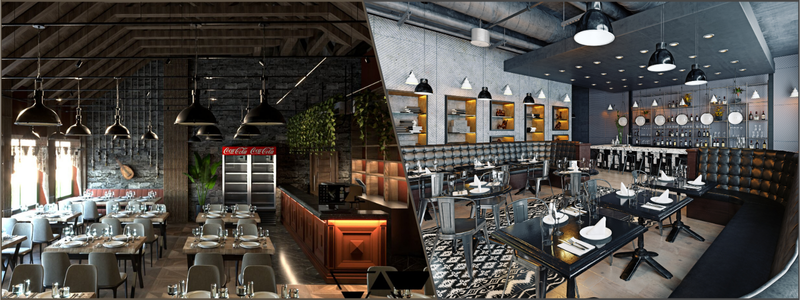
Bars, businesses, and restaurants are everywhere you go. With all the options vying for the attention and interest of customers, how can they stand out from the rest? This is where 3D interior rendering services come in handy. This article talks about 3D visualization for bars, businesses, and restaurants.


🚀 Table of contents


Why use 3D visualization?

3D visualization, 3D renders, 3D animation, and walkthroughs are important to convey architectural details. These tools offer a better presentation of complex and intricate architectural details. 3D visualization services offer a very powerful tool for the most detailed and stunning presentation of interior design ideas. These can also be used to gain approval for bigger dining space concepts from both commercial building owners and local authorities.

Good visualizations not only show how the place will look in the future but they also help establish trust. Getting 3D models of your bar, business, or restaurant will increase your chances of getting approval from the building owners and local authorities because these give them a better understanding and view of the concept. They can also give notes and ask questions that can be implemented before the start of the project to avoid costly errors in the long run. Different colors, materials, furniture, fixtures, and inspirations can be used to get the final 3D models of a restaurant, bar, or business.

RELATED: Types of 3D visualization for architectural design and CGI projects

This lets you explore various colors, textures, spaces, and furniture arrangements to find the most suitable solution for the future space. Today’s bars, restaurants, and businesses need a more personal touch reminiscent of a home. It should also be a place where people can relax and bask in the experience of being in the space. This is determined by the specific arrangement but less by how different the look and feel of the room is. Here are some of the top benefits of hiring 3D interior rendering firms and visualization services for bars, businesses, and restaurants. 

Adapt easily

It’s common to encounter finished designs that don’t captivate both you and your client as far as interior design projects are concerned. Taking on a new design from the ground up be overwhelming without the help of 3D visualization technology. These tools, which are now a staple in interior rendering services, allow effortless design adjustments as they unfold.

For example, real-time 3D visualization makes it a seamless process to transition from roof style to roof style. The dynamic approach makes way for a thorough review and finalization of the design to ensure that you and your client are both content with the lifelike representation before the actual implementation. 

RELATED: 5 Business tips for creating photorealistic interior renderings for your company

Attract more clients

3D visualization plays an important role in establishing a loyal clientele. This significantly simplifies the whole process of gaining more loyal customers who will likely work with you over time on future projects. The secret here lies in online visibility.

When the work quality is superior, it will also draw more attention. 3D visualization not only improves the quality of project presentations but it also showcases you in a more professional light. This level of clarity and detail in visual content entices more viewers while strengthening the relationship with prospective clients at the same time. This just shows the role of high-quality 3D architectural visualization services in establishing your professional reputation in the industry. 

3d interior rendering designers

Improve marketing efforts

The use of more sophisticated strategies is necessary for success in the industry of interior design. The use of modern visualization technology such as 3D rendering is currently among the best approaches right now. This state-of-the-art tool is important to breathe life into any design concept. The use of 3D architectural animation professionals can also add more attractiveness and style to the finished design to streamline the promotion of upcoming bars, restaurants, and businesses.

RELATED: Benefits of 3D architectural rendering and design for companies, restaurants & bars 

Top-notch marketing materials can highlight the value of a business and manage the expectations of customers to boost your marketing strategy. 3D visualization of projects can capture the target audience’s interest to potentially increase revenue. The flawless design will persuade the audience to visit the moment the bar, restaurant, or business opens its doors. Showcasing the completed design projects on websites and social media platforms can also help entice more customers.

Draw interest

3D visualization is one of the most compelling ways of engaging more customers. It is a technique that dramatically sways their decisions by letting them imagine themselves in the space. Adding people into the visualizations can also add an extra layer of realism to make it easier for potential customers to envision themselves using the space. Understanding your target audience’s profile will help you create scenes with people dressed accordingly to further enhance the feel and ambiance of the visualized setting. 

Express unique identity

Effective branding is among the primary strategies to acquire more profits for a business. The branding strategy may differ depending on the specific industry. Exceptional interior designs from expert interior design companies can help establish a solid brand identity. This can help you outperform competitors who are still not taking advantage of the fullest potential of the technology. 

RELATED: Unlocking visual potential: the strategic edge of 3D architectural rendering for businesses, restaurants, and bars

Gain insightful feedback

Gaining feedback is important for the success of a restaurant, bar, or any other business for that matter. Feedback highlights the weaknesses and strengths of the project to help in continuous improvement. As far as 3D interior rendering is concerned, feedback helps determine if the expectations of the customers are met or exceeded. This is important to refine the design solutions. 

Professionally made 3D visualization can improve the overall understanding of the design to make things clearer for customers than traditional 2D designs cannot offer. Gathering feedback on the designs from the customers allows the identification of areas that still need improvement to allow the development of designs that truly speak to them. Feedback combined with the expertise of designers is a strategic benefit in the process of 3D interior rendering. This means that 3D artists must be adaptive and ready to apply the necessary changes to projects.

This kind of collaboration can help developers bring their envisioned spatial plans to life to elevate their design. A reliable 3D rendering software combined with a skilled set of knowledge and abilities is important for the process. Making yourself familiar with state-of-the-art technologies such as CGI, augmented reality, and virtual reality, especially those that 3D visualization studios use can be of big help to the project. It helps you take full advantage of the potential of 3D visualization to create designs that clients will find delightful. 

RELATED: The impact of 3D interior rendering services for boosting hotel and resort bookings

3d interior visualization services

Save resources

Significant time, effort, and money are required to design the interior of a bar, restaurant, and business. Tweaks to the interior design after the implementation has started will have a notable effect on the overall costs. It further highlights the importance of 3D visualization services and 3D rendering designers that are indispensable for owners and designers alike by making room for the development of proposed designs within the budget.

With the help of 3D rendering techniques and optimal camera angles, stakeholders get the chance to explore different configurations of the design. This ensures that the interior space is not only aesthetically pleasing but financially viable as well. The most important step here is to work with the best 3D visualization service that can cater to the modification and creation of 3D models that can improve the design process in general. 

Showcase design ideas

The use of 3D visualization for bars, businesses, and restaurants can simplify the process of design presentation. This is an important step to showcase the design to all stakeholders. This method helps explain the distinct advantages of certain designs in the interior space to help clients understand and envision the anticipated outcome. 3D visualization not only helps gain a competitive edge in the market but is also important to ensure an accurate realization of the proposed design.

RELATED: 5 Tips to get the most out of your interior design service

Traditional 2D designs often render extremely simple design ideas which can lead to more and more people turning to 3D technology. This shift guarantees smoother execution of projects and improves accuracy in the presentation of décor elements and design ideas. This is why outsourcing 3D interior rendering experts can be considered an effective strategy that focuses on core aspects. 

Solve problems

It’s not always easy to achieve the suggested interior design which may soon cause some frustrations. However, this is where 3D visualization steps in to serve as a practical solution. The technology empowers designers with photorealistic previews of the projects through the help of CGI. This allows precise evaluation of important aspects like lighting and spacing. 

This is where 2D designs fall short as they are unable to replicate the meticulous 360-degree view that only CGI images in 3D visualization can offer. The gap usually leads to unresolved problems reaching the final design. This is why the main advantage of 3D interior rendering services is their capacity to provide detailed previews of future projects through CGI before the start of the construction to prevent potential mismatches in the design. 

RELATED: How do interior design companies use 3D printed solutions inside architectural space?

How Cad Crowd can help

Cad Crowd can connect you with the best 3D visualization and 3D interior rendering services that can make bars, restaurants, and businesses stand out from the rest. Contact us for a free quote.

author avatar

MacKenzie Brown is the founder and CEO of Cad Crowd. With over 18 years of experience in launching and scaling platforms specializing in CAD services, product design, manufacturing, hardware, and software development, MacKenzie is a recognized authority in the engineering industry. Under his leadership, Cad Crowd serves esteemed clients like NASA, JPL, the U.S. Navy, and Fortune 500 companies, empowering innovators with access to high-quality design and engineering talent.

Connect with me: LinkedInXCad Crowd

The Ultimate Guide to Architectural Model Making for Companies and Firms


Professional architects, architecture students, and hobbyists alike are all aware of the importance of architectural models to visualize designs and communicate these with other people. Architectural models are also used to experiment with multiple design ideas. They even aid with the planning and construction stages of architectural projects. This article features 3D modeling services and is a comprehensive guide to architectural model making for companies and firms to give you a better idea of the important role they play in the world of architecture. 


🚀 Table of contents


What are architectural models?

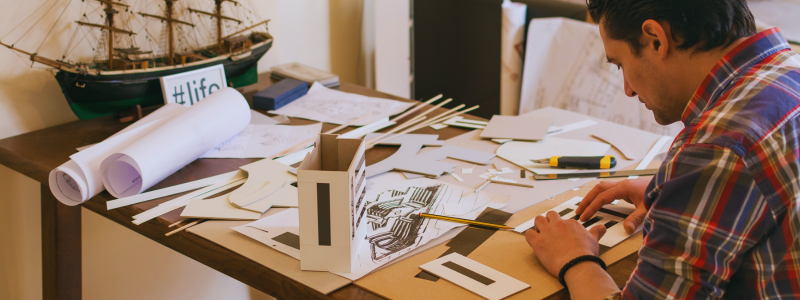
Architectural models are physical representations of architectural designs or ideas. An architectural model can either focus on a particular element, like a key space, or element in architecture, or on an entire design to showcase a proposal in its site context. Architectural models exist at different scales, with the model’s purpose usually determining the suitable scale. A context model, for instance, is often on a smaller scale since its purpose is to present the proposal in block form with its context and with the minimum detail required. 

On the other hand, a detailed model of a complex façade will require a bigger scale to highlight the build-up of all the architectural materials and elements that produce a better architectural feature. Architectural models are traditionally made by hand with the use of materials including foam board, card, hardwood or balsa wood, plaster, and Perspex while utilizing power tools as well. Today’s state-of-the-art technology allows the use of laser cutters, CNC machines, and 3D printers to speed up the process of making models and produce models that are also more accurate. 

RELATED: How do architectural modeling services craft 3D house models for real estate?

Architectural models serve as visual aids throughout the design process. They are also used for presentation purposes during the final proposal. The model making’s physical act allows architects to understand their designs on a deeper level.  Architects also get to explore the different physical qualities of the scale, form, and spaces they are making in a more tactile way. The models are also effective ways of representing the final proposal, with the stakeholders understanding the spatial relationships and architectural qualities of a proposal more easily through studying a miniature replica in 3D. 

Why is the architectural model important for companies and firms?

It is very common to see architects examining architectural models at eye levels because this helps them imagine the design on a 1:1 scale. It doesn’t matter if you intend to make a presentation model or a conceptual model, it is important to have the ability to conjure the design at a 1:1 scale. An architectural model is a powerful tool for architectural design as it lets you explore the designs in a physical form. 

Common uses and applications of architectural models

Architectural model making is used for several purposes and applications, such as the following:

Communication 

3D Architectural modeling services facilitate and promotes communication among clients, contractors, and architects. At the same time, these models also help in conveying the intent of the design more effectively.  

RELATED: How parametric design in CAD is transforming architectural modeling design practices

Evaluation

Architectural model making also gives architects the chance to evaluate the design proposal, pinpoint possible flaws, and improve the design throughout the development phase. 

Presentation 

Architectural models also improve the presentation of the final design by offering a more tangible physical focal point to entice viewers. 

Visualization 

An architectural model is a 3D representation of the designs to allow architects and the rest of the stakeholders to gain a better understanding of the spatial relationships, materiality, scale, and form of the proposal. 

3d model designers

Types of architectural models 

Architectural models come in different types, and these include the following:

Conceptual models

Conceptual architectural models are informal and fast. They help architects investigate and look into different holistic architectural ideas. These models are often made using low-budget materials with only primary tools required. A conceptual model often focuses more on simple forms with minimal detail. 

RELATED: How 3D modeling has impacted the architecture and design industry throughout the last 30 years

Presentation models

Presentation of architectural models is effective in demonstrating final design proposals. These are usually for presentation and display to sell off the scheme to the rest of the stakeholders. Thus, these models are made by architectural presentation designers using quality materials in great detail. 

Working models

Architects come up with working models to help them make informed design decisions throughout the design development phase. These are ready and rough exercises for experimenting in 3D form, scale, and spatial relationships. Mount board or cardboard are some of the common materials used for working models because these are easy to work with, not to mention low-cost as well. 

A crafter will never be able to craft with no tools to help him out. You will need a reliable set of tools that can get the job done to achieve the best results as far as architectural model-making is concerned. The good news is that there are now many companies out there that provide top-of-the-line tools that crafters can use. The best 3D model experts have an arsenal of excellent tools to produce scale models, especially if the models are made using wire or metal structures.

RELATED: Leading home design & modeling 3D technology for builders, companies, and firms

Craft knife 

Sharp craft knives are essential to cut out shapes from the model materials.

Cutting mat

Cutting mats protect the work surface from cuts and scratches.

Glue 

You can find a wide variety of glues in the market right now so make sure you choose the one that best suits the specific materials you are using or planning to use. 

Paint 

You can use paint to add more details and color to the architectural model. 

Ruler 

Rulers are important for accurate cutting and measuring. 

Other tools 

You might also require other tools as part of your architectural model making tool kit, depending on the specific type of model you’re making. These may include soldering iron, laser cutter, and hot wire cutter. 

RELATED: How 3D modeling, rendering, and CAD design helps architects create sustainable construction

The architectural model making process

Now that you know the basics of architectural model making, it’s time to learn the steps involved in the process. 

1. Conceptualize and plan

You have to decide on the purpose of your architectural model before you start building it. You will be able to determine it depending on what stage you are in the design process.

architectural design

2. Collect reference materials

Research and gather architectural photographs, drawings, and examples of other similar architectural models that you can use as reference materials. These references can give you clearer objectives. 

3. Identify measurements and scale

The purpose of the architectural model will dictate the suitable scale for it. A massing model, for example, would be a much smaller scale, like 1:200. This is because it is an exercise in spatial form and relationships. Meanwhile, a section model is on a larger scale like 1:25 because it requires a bigger level of detail. 

RELATED: Exploring pricing models for delivering 3D architectural rendering services to firms

4. Form the base

Start by forming the base of the architectural model. See to it that you have an accurate representation of the topography and landscaping of the site. Your chosen materials should also be supportive enough as the foundation that you will build upon. Corrugated cards and foam boards are preferred here because of their cheaper price. 

5. Build the structure 

The type of architectural model you are making and the specific scale will determine the level of structure or detail required. A series of several smaller test models can serve as your guide in deciding on the modeling techniques and materials to use. 

6. Add details 

Adding fine details like textures, windows, and doors can improve the realism of an architectural model. This kind of detail is often more accurately and effectively modeled with the use of a laser cutter. 

7. Consider the surroundings and landscape 

Search for creative ways of representing your architectural model’s surrounding environment. Try making the trees by yourself using different materials because the worst thing you can do is buy artificial grass and model trees. Doing this will only make your landscape look similar to a train set. 

RELATED: Learn about architectural design fee schedules, rates, and pricing for architect firms’ costs

8. Presentation and lighting

Consider adding subtle elements of lighting to improve the overall impact of the architectural model. You can light up certain interiors or areas through the installation of small LED lights. 

9. Photography and documentation

Capturing your architectural model in high-quality photos is one of the most valuable ways to document your entire design process as well as the final design in your presentation and portfolio references. 

Wrapping It Up

Architectural model making is an excellent way to envision your design concepts, communicate these to the stakeholders, and learn more about the construction phase. But of course, many also find this a rewarding and fun hobby to have. 

During architectural model making, it’s recommended to use a scale and a cutting mat. See to it that the tools are also sharp. Use only the highest quality tools for architectural model making to guarantee a hassle-free and stress-free process.

How Cad Crowd can help

Cad Crowd can connect you with the best architectural model making services that can help your company or firm bring your concepts and ideas to life. 

author avatar

MacKenzie Brown is the founder and CEO of Cad Crowd. With over 18 years of experience in launching and scaling platforms specializing in CAD services, product design, manufacturing, hardware, and software development, MacKenzie is a recognized authority in the engineering industry. Under his leadership, Cad Crowd serves esteemed clients like NASA, JPL, the U.S. Navy, and Fortune 500 companies, empowering innovators with access to high-quality design and engineering talent.

Connect with me: LinkedInXCad Crowd

The Ultimate Comprehensive Guide to Architectural Model Making for Companies and Firms


Professional architects, architecture students, and hobbyists alike are all aware of the importance of architectural models to visualize designs and communicate these with other people. Architectural models are also used to experiment with multiple design ideas. They even aid with the planning and construction stages of architectural projects. This article features 3D modeling services and is a comprehensive guide to architectural model making for companies and firms to give you a better idea of the important role they play in the world of architecture. 

What are architectural models?

Architectural models are physical representations of architectural designs or ideas. An architectural model can either focus on a particular element, like a key space, or element in architecture, or on an entire design to showcase a proposal in its site context. Architectural models exist at different scales, with the model’s purpose usually determining the suitable scale. A context model, for instance, is often on a smaller scale since its purpose is to present the proposal in block form with its context and with the minimum detail required. 

On the other hand, a detailed model of a complex façade will require a bigger scale to highlight the build-up of all the architectural materials and elements that produce a better architectural feature. Architectural models are traditionally made by hand with the use of materials including foam board, card, hardwood or balsa wood, plaster, and Perspex while utilizing power tools as well. Today’s state-of-the-art technology allows the use of laser cutters, CNC machines, and 3D printers to speed up the process of making models and produce models that are also more accurate. 

RELATED: How do architectural modeling services craft 3D house models for real estate?

Architectural models serve as visual aids throughout the design process. They are also used for presentation purposes during the final proposal. The model making’s physical act allows architects to understand their designs on a deeper level.  Architects also get to explore the different physical qualities of the scale, form, and spaces they are making in a more tactile way. The models are also effective ways of representing the final proposal, with the stakeholders understanding the spatial relationships and architectural qualities of a proposal more easily through studying a miniature replica in 3D. 

Why is the architectural model important for companies and firms?

It is very common to see architects examining architectural models at eye levels because this helps them imagine the design on a 1:1 scale. It doesn’t matter if you intend to make a presentation model or a conceptual model, it is important to have the ability to conjure the design at a 1:1 scale. An architectural model is a powerful tool for architectural design as it lets you explore the designs in a physical form. 

Common uses and applications of architectural models

Architectural model making is used for several purposes and applications, such as the following:

Communication 

3D Architectural modeling services facilitate and promotes communication among clients, contractors, and architects. At the same time, these models also help in conveying the intent of the design more effectively.  

RELATED: How parametric design in CAD is transforming architectural modeling design practices

Evaluation

Architectural model making also gives architects the chance to evaluate the design proposal, pinpoint possible flaws, and improve the design throughout the development phase. 

Presentation 

Architectural models also improve the presentation of the final design by offering a more tangible physical focal point to entice viewers. 

Visualization 

An architectural model is a 3D representation of the designs to allow architects and the rest of the stakeholders to gain a better understanding of the spatial relationships, materiality, scale, and form of the proposal. 

3d model designers

Types of architectural models 

Architectural models come in different types, and these include the following:

Conceptual models

Conceptual architectural models are informal and fast. They help architects investigate and look into different holistic architectural ideas. These models are often made using low-budget materials with only primary tools required. A conceptual model often focuses more on simple forms with minimal detail. 

RELATED: How 3D modeling has impacted the architecture and design industry throughout the last 30 years

Presentation models

Presentation of architectural models is effective in demonstrating final design proposals. These are usually for presentation and display to sell off the scheme to the rest of the stakeholders. Thus, these models are made by architectural presentation designers using quality materials in great detail. 

Working models

Architects come up with working models to help them make informed design decisions throughout the design development phase. These are ready and rough exercises for experimenting in 3D form, scale, and spatial relationships. Mount board or cardboard are some of the common materials used for working models because these are easy to work with, not to mention low-cost as well. 

Best tools for architectural model making

A crafter will never be able to craft with no tools to help him out. You will need a reliable set of tools that can get the job done to achieve the best results as far as architectural model-making is concerned. The good news is that there are now many companies out there that provide top-of-the-line tools that crafters can use. The best 3D model experts have an arsenal of excellent tools to produce scale models, especially if the models are made using wire or metal structures.

RELATED: Leading home design & modeling 3D technology for builders, companies, and firms

Craft knife 

Sharp craft knives are essential to cut out shapes from the model materials.

Cutting mat

Cutting mats protect the work surface from cuts and scratches.

Glue 

You can find a wide variety of glues in the market right now so make sure you choose the one that best suits the specific materials you are using or planning to use. 

Paint 

You can use paint to add more details and color to the architectural model. 

Ruler 

Rulers are important for accurate cutting and measuring. 

Other tools 

You might also require other tools as part of your architectural model making tool kit, depending on the specific type of model you’re making. These may include soldering iron, laser cutter, and hot wire cutter. 

RELATED: How 3D modeling, rendering, and CAD design helps architects create sustainable construction

The architectural model making process

Now that you know the basics of architectural model making, it’s time to learn the steps involved in the process. 

1. Conceptualize and plan

You have to decide on the purpose of your architectural model before you start building it. You will be able to determine it depending on what stage you are in the design process.

architectural design

2. Collect reference materials

Research and gather architectural photographs, drawings, and examples of other similar architectural models that you can use as reference materials. These references can give you clearer objectives. 

3. Identify measurements and scale

The purpose of the architectural model will dictate the suitable scale for it. A massing model, for example, would be a much smaller scale, like 1:200. This is because it is an exercise in spatial form and relationships. Meanwhile, a section model is on a larger scale like 1:25 because it requires a bigger level of detail. 

RELATED: Exploring pricing models for delivering 3D architectural rendering services to firms

4. Form the base

Start by forming the base of the architectural model. See to it that you have an accurate representation of the topography and landscaping of the site. Your chosen materials should also be supportive enough as the foundation that you will build upon. Corrugated cards and foam boards are preferred here because of their cheaper price. 

5. Build the structure 

The type of architectural model you are making and the specific scale will determine the level of structure or detail required. A series of several smaller test models can serve as your guide in deciding on the modeling techniques and materials to use. 

6. Add details 

Adding fine details like textures, windows, and doors can improve the realism of an architectural model. This kind of detail is often more accurately and effectively modeled with the use of a laser cutter. 

7. Consider the surroundings and landscape 

Search for creative ways of representing your architectural model’s surrounding environment. Try making the trees by yourself using different materials because the worst thing you can do is buy artificial grass and model trees. Doing this will only make your landscape look similar to a train set. 

RELATED: Learn about architectural design fee schedules, rates, and pricing for architect firms’ costs

8. Presentation and lighting

Consider adding subtle elements of lighting to improve the overall impact of the architectural model. You can light up certain interiors or areas through the installation of small LED lights. 

9. Photography and documentation

Capturing your architectural model in high-quality photos is one of the most valuable ways to document your entire design process as well as the final design in your presentation and portfolio references. 

Wrapping It Up

Architectural model making is an excellent way to envision your design concepts, communicate these to the stakeholders, and learn more about the construction phase. But of course, many also find this a rewarding and fun hobby to have. 

During architectural model making, it’s recommended to use a scale and a cutting mat. See to it that the tools are also sharp. Use only the highest quality tools for architectural model making to guarantee a hassle-free and stress-free process.

How Cad Crowd can help

Cad Crowd can connect you with the best architectural model making services that can help your company or firm bring your concepts and ideas to life. 

author avatar

MacKenzie Brown is the founder and CEO of Cad Crowd. With over 18 years of experience in launching and scaling platforms specializing in CAD services, product design, manufacturing, hardware, and software development, MacKenzie is a recognized authority in the engineering industry. Under his leadership, Cad Crowd serves esteemed clients like NASA, JPL, the U.S. Navy, and Fortune 500 companies, empowering innovators with access to high-quality design and engineering talent.

Connect with me: LinkedInXCad Crowd

3D Visualization for Bars, Businesses, and Restaurants: 3D Interior Rendering Services


Bars, businesses, and restaurants are everywhere you go. With all the options vying for the attention and interest of customers, how can they stand out from the rest? This is where 3D interior rendering services come in handy. This article talks about 3D visualization for bars, businesses, and restaurants.

Why use 3D visualization?

3D visualization, 3D renders, 3D animation, and walkthroughs are important to convey architectural details. These tools offer a better presentation of complex and intricate architectural details. 3D visualization services offer a very powerful tool for the most detailed and stunning presentation of interior design ideas. These can also be used to gain approval for bigger dining space concepts from both commercial building owners and local authorities.

Good visualizations not only show how the place will look in the future but they also help establish trust. Getting 3D models of your bar, business, or restaurant will increase your chances of getting approval from the building owners and local authorities because these give them a better understanding and view of the concept. They can also give notes and ask questions that can be implemented before the start of the project to avoid costly errors in the long run. Different colors, materials, furniture, fixtures, and inspirations can be used to get the final 3D models of a restaurant, bar, or business.

RELATED: Types of 3D visualization for architectural design and CGI projects

This lets you explore various colors, textures, spaces, and furniture arrangements to find the most suitable solution for the future space. Today’s bars, restaurants, and businesses need a more personal touch reminiscent of a home. It should also be a place where people can relax and bask in the experience of being in the space. This is determined by the specific arrangement but less by how different the look and feel of the room is. Here are some of the top benefits of hiring 3D interior rendering firms and visualization services for bars, businesses, and restaurants. 

Adapt easily

It’s common to encounter finished designs that don’t captivate both you and your client as far as interior design projects are concerned. Taking on a new design from the ground up be overwhelming without the help of 3D visualization technology. These tools, which are now a staple in interior rendering services, allow effortless design adjustments as they unfold.

For example, real-time 3D visualization makes it a seamless process to transition from roof style to roof style. The dynamic approach makes way for a thorough review and finalization of the design to ensure that you and your client are both content with the lifelike representation before the actual implementation. 

RELATED: 5 Business tips for creating photorealistic interior renderings for your company

Attract more clients

3D visualization plays an important role in establishing a loyal clientele. This significantly simplifies the whole process of gaining more loyal customers who will likely work with you over time on future projects. The secret here lies in online visibility.

When the work quality is superior, it will also draw more attention. 3D visualization not only improves the quality of project presentations but it also showcases you in a more professional light. This level of clarity and detail in visual content entices more viewers while strengthening the relationship with prospective clients at the same time. This just shows the role of high-quality 3D architectural visualization services in establishing your professional reputation in the industry. 

3d interior rendering designers

Improve marketing efforts

The use of more sophisticated strategies is necessary for success in the industry of interior design. The use of modern visualization technology such as 3D rendering is currently among the best approaches right now. This state-of-the-art tool is important to breathe life into any design concept. The use of 3D architectural animation professionals can also add more attractiveness and style to the finished design to streamline the promotion of upcoming bars, restaurants, and businesses.

RELATED: Benefits of 3D architectural rendering and design for companies, restaurants & bars 

Top-notch marketing materials can highlight the value of a business and manage the expectations of customers to boost your marketing strategy. 3D visualization of projects can capture the target audience’s interest to potentially increase revenue. The flawless design will persuade the audience to visit the moment the bar, restaurant, or business opens its doors. Showcasing the completed design projects on websites and social media platforms can also help entice more customers.

Draw interest

3D visualization is one of the most compelling ways of engaging more customers. It is a technique that dramatically sways their decisions by letting them imagine themselves in the space. Adding people into the visualizations can also add an extra layer of realism to make it easier for potential customers to envision themselves using the space. Understanding your target audience’s profile will help you create scenes with people dressed accordingly to further enhance the feel and ambiance of the visualized setting. 

Express unique identity

Effective branding is among the primary strategies to acquire more profits for a business. The branding strategy may differ depending on the specific industry. Exceptional interior designs from expert interior design companies can help establish a solid brand identity. This can help you outperform competitors who are still not taking advantage of the fullest potential of the technology. 

RELATED: Unlocking visual potential: the strategic edge of 3D architectural rendering for businesses, restaurants, and bars

Gain insightful feedback

Gaining feedback is important for the success of a restaurant, bar, or any other business for that matter. Feedback highlights the weaknesses and strengths of the project to help in continuous improvement. As far as 3D interior rendering is concerned, feedback helps determine if the expectations of the customers are met or exceeded. This is important to refine the design solutions. 

Professionally made 3D visualization can improve the overall understanding of the design to make things clearer for customers than traditional 2D designs cannot offer. Gathering feedback on the designs from the customers allows the identification of areas that still need improvement to allow the development of designs that truly speak to them. Feedback combined with the expertise of designers is a strategic benefit in the process of 3D interior rendering. This means that 3D artists must be adaptive and ready to apply the necessary changes to projects.

This kind of collaboration can help developers bring their envisioned spatial plans to life to elevate their design. A reliable 3D rendering software combined with a skilled set of knowledge and abilities is important for the process. Making yourself familiar with state-of-the-art technologies such as CGI, augmented reality, and virtual reality, especially those that 3D visualization studios use can be of big help to the project. It helps you take full advantage of the potential of 3D visualization to create designs that clients will find delightful. 

RELATED: The impact of 3D interior rendering services for boosting hotel and resort bookings

3d interior visualization services

Save resources

Significant time, effort, and money are required to design the interior of a bar, restaurant, and business. Tweaks to the interior design after the implementation has started will have a notable effect on the overall costs. It further highlights the importance of 3D visualization services and 3D rendering designers that are indispensable for owners and designers alike by making room for the development of proposed designs within the budget.

With the help of 3D rendering techniques and optimal camera angles, stakeholders get the chance to explore different configurations of the design. This ensures that the interior space is not only aesthetically pleasing but financially viable as well. The most important step here is to work with the best 3D visualization service that can cater to the modification and creation of 3D models that can improve the design process in general. 

Showcase design ideas

The use of 3D visualization for bars, businesses, and restaurants can simplify the process of design presentation. This is an important step to showcase the design to all stakeholders. This method helps explain the distinct advantages of certain designs in the interior space to help clients understand and envision the anticipated outcome. 3D visualization not only helps gain a competitive edge in the market but is also important to ensure an accurate realization of the proposed design.

RELATED: 5 Tips to get the most out of your interior design service

Traditional 2D designs often render extremely simple design ideas which can lead to more and more people turning to 3D technology. This shift guarantees smoother execution of projects and improves accuracy in the presentation of décor elements and design ideas. This is why outsourcing 3D interior rendering experts can be considered an effective strategy that focuses on core aspects. 

Solve problems

It’s not always easy to achieve the suggested interior design which may soon cause some frustrations. However, this is where 3D visualization steps in to serve as a practical solution. The technology empowers designers with photorealistic previews of the projects through the help of CGI. This allows precise evaluation of important aspects like lighting and spacing. 

This is where 2D designs fall short as they are unable to replicate the meticulous 360-degree view that only CGI images in 3D visualization can offer. The gap usually leads to unresolved problems reaching the final design. This is why the main advantage of 3D interior rendering services is their capacity to provide detailed previews of future projects through CGI before the start of the construction to prevent potential mismatches in the design. 

RELATED: How do interior design companies use 3D printed solutions inside architectural space?

How Cad Crowd can help

Cad Crowd can connect you with the best 3D visualization and 3D interior rendering services that can make bars, restaurants, and businesses stand out from the rest. Contact us for a free quote.

author avatar

MacKenzie Brown is the founder and CEO of Cad Crowd. With over 18 years of experience in launching and scaling platforms specializing in CAD services, product design, manufacturing, hardware, and software development, MacKenzie is a recognized authority in the engineering industry. Under his leadership, Cad Crowd serves esteemed clients like NASA, JPL, the U.S. Navy, and Fortune 500 companies, empowering innovators with access to high-quality design and engineering talent.

Connect with me: LinkedInXCad Crowd

Using a 3D Rendering and Photography Combination to Bolster Your Architectural Firm


Today’s architectural industry is enjoying a plethora of breakthrough innovations thanks to newly improved technology. Many architectural firms have also started to use numerous marketing tactics to enhance the quality of their campaigns and promotions and tap into a bigger audience and potential clientele. These firms have successfully integrated 3D rendering and photography into their marketing strategies, increasing client engagement and project visibility.

Together with these improvements came the introduction of different types of new rendering software, complete with a suite of complex tools. These tools help make architectural renders look more stunning and realistic than ever. But even with the rise of rendering and modeling programs, there’s no denying that photography continues to reign supreme among architectural companies.

This article explores the transformative potential of 3D rendering and photography when strategically combined, offering a fresh perspective on strengthening an architectural firm.

Photography and its role in architecture

Architecture and photography have this deep-rooted connection that has changed through the years. This connection has strengthened as more advanced technologies, including 3D rendering services, have developed. For a long time, architects have been using photography as an integral tool to document and capture their concepts and designs. This allows them to show and present their work to a bigger audience, helping to promote their architectural skills and prowess.

Photography in architecture plays a crucial role in preserving and archiving iconic landmarks, capturing their essence for future generations to see, admire, and be inspired by. However, architectural photography involves more than just showing the design itself. It also captures the built environment’s atmosphere, emotions, and essence. Skilled architectural photographers use perspective, composition, and lighting to express the intended story behind an architectural creation.

RELATED: Integrating 3D Rendering with Photography for Architectural Development Companies

3D rendering and architectural photography

The rise of 3D rendering has brought architectural visualization to a new level. With the help of 3D modeling services, architects can now create virtual representations of their ideas and designs. This technology is not just about creating realistic images; it also allows architects to offer a more immersive experience to investors, clients, and the general public. 3D rendering will enable architects to experiment easily with different spatial configurations, lighting conditions, and materials before construction starts.

Photography substantially impacts the aesthetic choices for 3D rendering models. Architectural photographers usually capture captivating images of completed buildings that inform and inspire the development of 3D-rendered settings. The perspectives, composition, and play of shadow and light captured in architectural photos guide 3D artists to create visually appealing and realistic renderings.

Combining site photos and 3D renders

traditional-house-exterior-3d-render

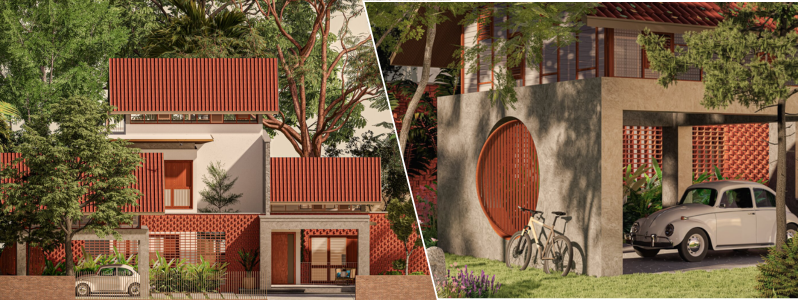
One of the most effective ways to bolster your architectural firm and make its designs captivate a more extensive audience is to use site photos and 3D renders together. This involves integrating digital 3D models with real-world photographic images to create realistic and visually compelling compositions, which, when executed correctly, can help boost your architectural promotion by creating an improved visual summary of your works. Most importantly, it enables you to understand your project’s direction better.

To achieve this, make sure that you capture the best and most appealing angles of your exterior or interior design and use them together with site photos to give your clients a better idea of the expected turnout of the project. You can also use site photos to develop more realistic backgrounds for your 3D renders.

Every time you present your work, it’s highly recommended to use several visual elements as much as possible to achieve the finest visual presentation of the work you can do. High-quality visuals not only captivate and engage your target audience, driving higher conversion rates and boosting brand recall but also enhance your firm’s reputation by showcasing professionalism and attention to detail, thereby facilitating client acquisition and fostering long-term business relationships. Look for the best final visuals of your project so that you can promote your architectural development much better than before.

RELATED: Integrating 3D Rendering with Photography for Architectural Development Companies

Showcase finished photos and 3D renders of your architectural projects

It’s somewhat easy to produce high-quality 3D renders, but it’s an entirely different store when it’s time for you to present them to the general public. Even though rendering and modeling require significant effort and time, it’s equally important to promote them in the best way possible. This is why finding a platform with a more extensive audience reach can be challenging while ensuring that your projects are still appropriately promoted.

Ensure you showcase your prowess and skills when you deliver the final results of every project. Your work’s visual presentation is the one thing that will convince and entice potential clients to choose your architectural firm over others. Always pay close attention to the details, eliminate irregularities, and improve your models.

Ensure your photos and 3D renders are displayed on platforms with a broad audience reach. When choosing a platform, consider factors such as the platform’s user demographics, engagement rates, compatibility with visual content, and industry relevance to ensure that your projects are effectively promoted to the right audience. If you only have a few followers on your Instagram page, look for other sites or platforms to advertise your projects better.

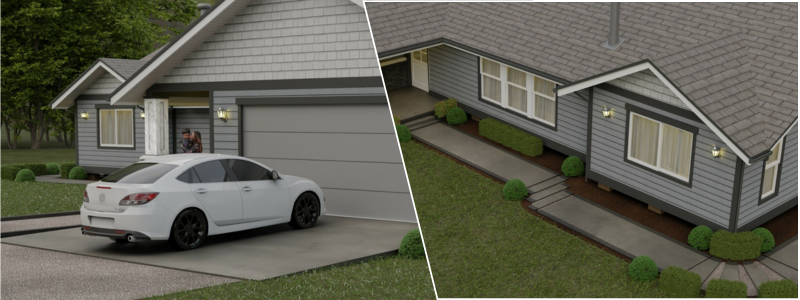
residential-exterior-day-and-night-3d-render

Use before and after images.

A proven marketing technique, using before-and-after images, is a powerful way to showcase the effort and time invested in a project. This demonstrates the transformation, dedication, and skill of the architectural firm.

Remember to take several snaps of the project’s start before you begin. Doing so will also help you understand your project better and set expectations for it. Since there’s always the possibility of hitting a dead end during the design process, you can refer to the before photos to develop an entirely new concept or idea.

These before and after images of the projects you’re working on can also help you capture the attention of prospective clients. They allow you to make your viewers see the reasons why they should pick you and your firm. Be sure to capture as many photos as possible from various angles to showcase the difference in the best possible light.

RELATED: Learn About Architectural Design Fee Schedules, Rates, and Pricing for Architect Firms’ Costs

Come up with stunning visuals using CGI.

modern-cafe-interior-3d-render

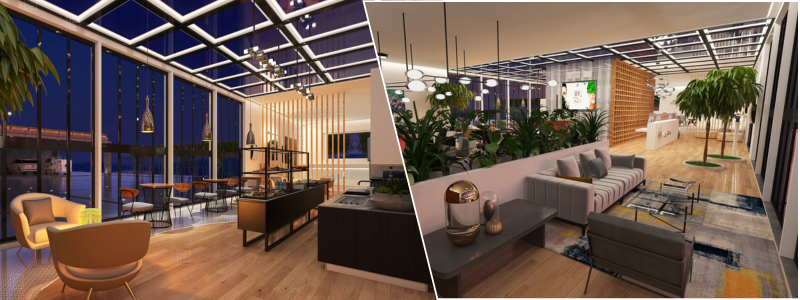
As computer-generated imagery (CGI) became a popular visual tool, it was used exclusively for cinematic purposes. However, CGI has already become a critical aspect of architectural programs. This technique involves creating highly detailed and realistic 3D models and environments through advanced software, enabling architects to visualize complex structures and spaces with incredible accuracy. CGI allows for the simulation of lighting, materials, and textures, providing a lifelike representation of the final build. With these capabilities, more and more designers are taking advantage of CGI to enhance their 3D renders, offering clients an immersive visual experience and a clearer understanding of the proposed architectural designs.

CGI technology can be used to produce various models. It also comes in handy for exterior and interior designs. You can even use CGI to produce stunning environmental elements to bring your renders to life and create a harmonious project presentation.

The only problem is that understanding CGI technology can be extremely tricky. Since there are tons of CGI rendering methods out there, it is recommended that you keep yourself informed as much as you can about this captivating visual tool and use it to promote your firm’s architectural projects and designs.

RELATED: CGI Design Costs, Freelancer Rates, and Designer Service Pricing for Your Company

Use photo-matching

The photo-matching technique involves using site photos with your 3D renders and combining them to make them appear more realistic. This technique is beneficial because [specific benefits of using the photo-matching technique]. But it’s essential to learn how to blend them in the best way possible to achieve a positive result at the end of the day.

People love to see realistic visuals of architectural projects, so incorporate as many organic elements as possible. Combining your models with site photos can help you offer viewers the most realistic visual experiences.

But while you’re at it, avoid using low-quality images on your site. The stark difference between low-quality photos and high-quality renders will only make the renders look sloppy. Be sure to use top-of-the-line equipment only every time you take photos of your building site.

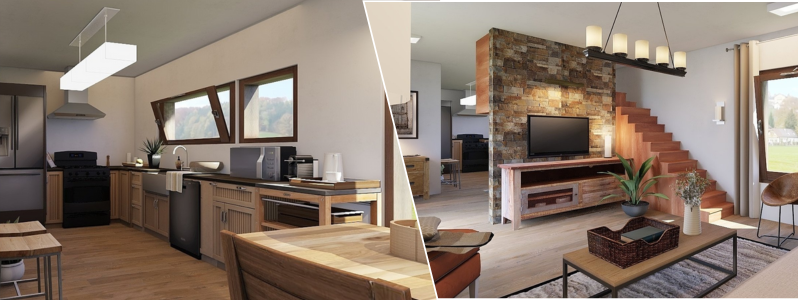
contemporary-living-room-and-kitchen-3d-render

3D rendering, photography, and architecture in the future

As technology improves by the day, the relationship between 3D rendering, photography, and architecture will continue to evolve and improve. Interactive visualizations, real-time rendering, and sophisticated AI algorithms will further enhance the creative and collaborative potential of the three disciplines.

What does the future hold for them, then? The future undoubtedly holds endless possibilities for the groundbreaking integration of 3D rendering, photography, and architecture.

Photography has long been a critical element of architecture, and as 3D rendering improves, their connection becomes more profound.

The synergy between the three disciplines allows architects to present their designs, offer immersive visual experiences, and retain architectural heritage. In the future, the relationship between 3D rendering, photography, and architecture promises to inspire innovations, push boundaries, and redefine how the built environment can be experienced.

RELATED: 3D Rendering Costs & 3D Visualization Prices for Firms

How Cad Crowd can help

Don’t hesitate to contact Cad Crowd if you need the expertise of 3D rendering and photography professionals who can help grow your architectural firm and expand its reach. Contact us today, and let us connect you with the right talents for your projects!