DFMA for Home Building Design and Construction Companies: Design Affordable Homes


There have been minimal improvements when it comes to construction practices used and enforced in the industry. These techniques, which seem to be the standard since the Jurassic era, have produced houses and buildings that have been criticized as inefficient in terms of cost, design, and overall aesthetic. Many houses even fail to cater to the current market demand.

But of course, if you want to stay ahead of the curve and achieve success in the progressive residential construction industry, you need to think outside the box and explore more modern solutions. Catering to the ever-evolving market, the demand cannot be fulfilled by simply generating more and more houses. The solution should be as innovative and new as the continuously improving technology and practices. One key methodology gaining traction in today’s construction industry is DFMA or design for manufacturing and assembly services.

DFMA is a methodological approach that optimizes the design process to allow a more efficient and seamless assembly and manufacturing. It ultimately leads to standardization, which will give you and your company faster construction timelines and cost savings. This article will share with you how building design and construction companies can take advantage of DFMA to design affordable homes.


🚀 Table of contents


RELATED: Design for manufacturing and assembly tips (DFMA) — cut your product design company’s production costs

DFMA at a glance

DFMA, or Design for Manufacturing and Assembly, is a framework focusing primarily on designing products that can be manufactured and assembled easily. This design process is not something that is new in the industry; it has been used since the 1980s to minimize the overall costs of computer hardware, consumer appliances, automobiles, and even airplanes.

These products are designed and crafted by DFM design professionals using individual components and parts that are aligned to be built and assembled in a factory setting. The buildings that will be worked on are considered products that can be split into several modules that can be built step by step and part by part. These modules which can consist of different parts and workings, are repeatable, interchangeable, and standardized.

Benefits of DFMA homes

Houses built using DFMA aim to lessen a large chunk of lifecycle costs, including build cost, construction and design time, carbon intensity, and household energy consumption while improving construction productivity.

RELATED: 5 Reasons to hire a CAD design specialist to bring your company’s concept to market

Expected economic benefits of DFMA housing projects

  • It allows other registered providers and 3D designers to reproduce the business model in partnership with the rest of the group to achieve a multiplier effect.
  • It reduces labor requirements per house, improving the industry’s resilience to a labor shortage, an existing concern that might only worsen over time.
  • It creates new business opportunities for suppliers.
  • It cuts down regional construction costs and speeds up delivery time to meet the targeted deadlines.
  • It decreases the energy bills of homeowners.

home design services

Other social benefits

  • It creates a safer work environment for the production process compared to traditional onsite production.
  • It creates new skills and roles for future use.
  • It improves quality of life by creating a more comfortable living environment and disposable income.
  • It provides faster access to affordable or social housing.

RELATED: Smart manufacturing using CAD design is the future for OEM’s

Reasons why the modern construction industry moves towards DFMA

  • The ultimate outcome of 3D construction rendering services and design is to create reasonably priced buildings within an accepted timeframe. DFMA or prefabrication is a good example since it uses modular construction drawings and already manufactured construction drawings. Once combined, these techniques and modules simplify the manufacturing part by outsourcing different offsite components which will give you a balanced performance, quality, and a more acceptable cost.
  • In DFMA drawings and models, assembly and manufacturing are elegantly intertwined together to have a simple, efficient, and error-free construction. However, just like other combined processes, DFMA might present complications and challenges at one point. However, the perks of reducing materials, overheads, and labor costs offer the ultimate solution to achieving success with minimal wastage and higher profit margins.
  • During product assembly, DFMA follows a meticulous design review process. It identifies optimal part design of products as well as cost-effective and efficient production methods that cater to the requirements of the designers and the rest of the team members.
  • Entire units or parts of the building’s construction are crafted in a factory setting or an actual factory away from the construction site before being transported to be installed on the site. Prefabricated construction modeling and DFMA encourage seamless collaboration between project design and production, making the products more cost-effective and reliable.

RELATED: DFM For new product design excellence: complete guide for company success 

Other perks of DFMA

Here are other reasons to take advantage of DFMA for designing affordable homes:

Ability to test

It’s possible to consider offsite solutions early on in the planning stage with the help of building information modeling experts or the BIM process. BIM aids in delivering prototype specifications to allow extensive testing. Models can also undergo virtual testing before companies invest finances in their actual prototypes.

Cost

Fewer parts are used in DFMA, which eliminates unique parts and cuts down the labor count for assembly. It also uses standard hardware and parts, reducing the need for assembly tools and thus further decreasing the costs involved. The DFMA process offsite is predictable and not prone to delays and material damage due to weather, helping save overall costs. It’s also possible to use the same parts interchangeably for product manufacturing, decreasing the number of parts and costs.

RELATED: How companies use design for assembly services for product manufacturing

The application of total quality or operational management tools can help fulfill future volume needs. Projects involving repetitive structure elements, such as supermarkets, malls, colleges, schools, hospitals, and hotels, can also significantly benefit from DFMA, as it easily replicates elements in larger quantities after choosing the design.

3d house rendering company

Availability of resources

Construction in a different environment requires less onsite labor to relieve shortages in skills. Onsite resources are necessary only for the final installation of assembly instead of the design, manufacture, and complex assembly of parts and components.

Safety

Entire buildings or components can be reconfigured and transferred to different sites to ensure improved safety of future deconstruction of buildings. Prefabrication work in controlled factory settings is done following controlled and safe protocols for health and safety. The site also has more spaces and fewer external factors for various trades taking place within the same space.

RELATED: 8 Tips companies use to simplify design manufacturing or design for manufacturing

Simplified manufacturing activities

DFM experts help optimize and simplify the manufacturing process, particularly through modules. The modules in the product design resulting from prefabrication can simplify testing, inspection, redesign, purchasing, assembly, service, maintenance, and the rest. Assembly is also simplified through self-locating and self-aligning parts, including molded keyways, chamfers, indentations, and projections. DFMA also reduces elements for interconnections.

The interconnected parts are flexible and can be used to connect two more parts. The harnesses guarantee unique connectors prevent misalignment. It also simplifies inventory and improves servicing and maintenance processes. Modules can make the redesign process more versatile to help with testing before the final assembly and allow the use of standard elements to cut down product variations.

DFMA also avoids multiple cleaning and solder steps. Prefabrication also simplifies the identification of problems and the assembly process’s operations. Self-contained and separate modules also require fewer tools with reduced disassembly and overall repair time. Using multifunctional parts also allows the execution of several constructions by just a single part, thus making the procedure less complex.

Site space

DFMA also offers huge benefits to sites with limited access, limited space, and complex logistics ,such as city center locations and airports. Even sites that don’t have house storage and those that can handle the delivery of semi-prepared or raw materials can also benefit from DFMA. Offsite prefabrication also results in less labor and material onsite, thus opening up more onsite space.

RELATED: Leading home design & modeling 3D technology for builders, companies, and firms

Speed

DFMA helps eliminate or reduce interfaces, which decreases assembly time. The use of standard assembly practices like self-aligning parts and vertical assembly cuts down assembly time as well. Products made through DFMA can also smoothly and quickly transition to the production stage. This reduces the time required for the product to travel from the conception phase to its ready-for-market phase.

Stack or vertical assembly also requires less reorientation of parts to speed up the process. Self-aligning parts like roller bearings, ball bearings, and washers don’t require additional reorientation or adjustment to save time. Remedial or snagging works also take less time. It also regulates and controls the reworking and sequencing of trades to cut down some of the more common onsite delays.

The manufacturing process can also be designed to pay close attention to the smooth flow of materials, reduced number of material moves, reduced brazing and welding, use of easy-to-control processes, separation of mechanized and manual operations, and simultaneous performance of similar operations.

How Cad Crowd can help

Needless to say, the use of DFMA for home building design and construction companies offers a long list of benefits. Ultimately, the best DFMA solution will only be possible with the help of experts. Contact Cad Crowd, and we will help you find the right experts for your DFMA projects!

author avatar

MacKenzie Brown is the founder and CEO of Cad Crowd. With over 18 years of experience in launching and scaling platforms specializing in CAD services, product design, manufacturing, hardware, and software development, MacKenzie is a recognized authority in the engineering industry. Under his leadership, Cad Crowd serves esteemed clients like NASA, JPL, the U.S. Navy, and Fortune 500 companies, empowering innovators with access to high-quality design and engineering talent.

Connect with me: LinkedInXCad Crowd

How Companies Use Design for Assembly Services for Product Manufacturing


Methodologies that will allow you to cut costs and optimize your current processes are truly godsend lifesavers, especially in this fast-paced and dynamic manufacturing landscape. This is where Design for Assembly, or simply DFA, comes in and truly enhances the processes in place.

DFA represents a significant change in how companies approach and apply modifications in the process of creating products, from the drawing board to the assembly line. By applying different methods to implement assembly practicalities and design insights, DFA brings about a bunch of benefits to improve both your manufacturing process and final products.


:rocket: Table of contents


PC Fan Assembly

RELATED: How to design effective assembly drawings for consumer products and manufacturing companies

What is design for assembly? 

Design for assembly, or DFA, is an engineering approach that simplifies product design to make the assembly process faster, easier, and more affordable. Its main objective is to reduce the complexity of the assembly process, minimize operation errors, and ensure an accurate and error-free assembly process.

Primary DFA principles

Design for assembly principles are founded on the objective of creating an error-free, cost-effective, and efficient assembly process. The following is a comprehensive breakdown of these DFA principles.

  • Design for ease of access

The main objective of this principle is to ensure easy access to the parts and a seamless assembly of the components. It reduces the risk of errors that may be due to restricted visibility or access to each part and overall view of the whole mechanism. It also minimizes potential damage to adjacent parts during the assembly and thrives on eliminating the need for specialized equipment to have a more customer or client-friendly end product.

  • Define multifunctional parts

Having parts that can serve more than one purpose incredibly enhances even the tiniest aspects and details of your product. Reduced parts can also minimize the size and weight, for example, which can be beneficial for products or projects in industries such as automotive or aerospace, where both factors greatly impact performance. It reduces the number of parts and saves money by removing the need for many specialized parts.

  • Guarantee self-locating parts

The objective is to design parts so that they can all fit together in a single orientation, making the assembly process intuitive. This minimizes the possibility of wrong assembly, which may result in product failures or faults. It also decreases the need for complex fixtures or jigs. Because of the intuitive fitting of parts together, it can also streamline the training process for the assembly workers.

This principle aims to design parts whenever possible that can be joined together without using additional tools, adhesives, or fasteners. Techniques such as interlocking designs and snap-fits are often used.

This eliminates the cost and time often associated with securing and inserting different fasteners. It also lessens the risk of missing or loose fasteners, which helps enhance the product’s reliability. This can also simplify disassembly for recycling or repair.

The purpose is to make parts easy to place, pick up, and orient during assembly. This decreases the odds of damage or errors caused by improper or excessive handling. It also improves the efficiency of the automated assembly process while reducing effort and time.

  • Trim down the number of parts

The main concept here is to minimize the number of different parts in the product. A reduced number of parts can lead to several key benefits:

  1. Faster assembly times because of fewer parts to handle and join
  2. Lesser potential points of faults or failure to improve product reliability
  3. Reduced manufacturing costs because of the lesser need for processing and materials
  4. Simplified process of procurement and inventory

The aim here is to ensure standardization of parts across multiple product ranges or products. It helps achieve economies of scale in the production of parts. It makes production more flexible because standard parts can cater to different product lines. It simplifies inventory management as it reduces the variety of parts that should be stocked.

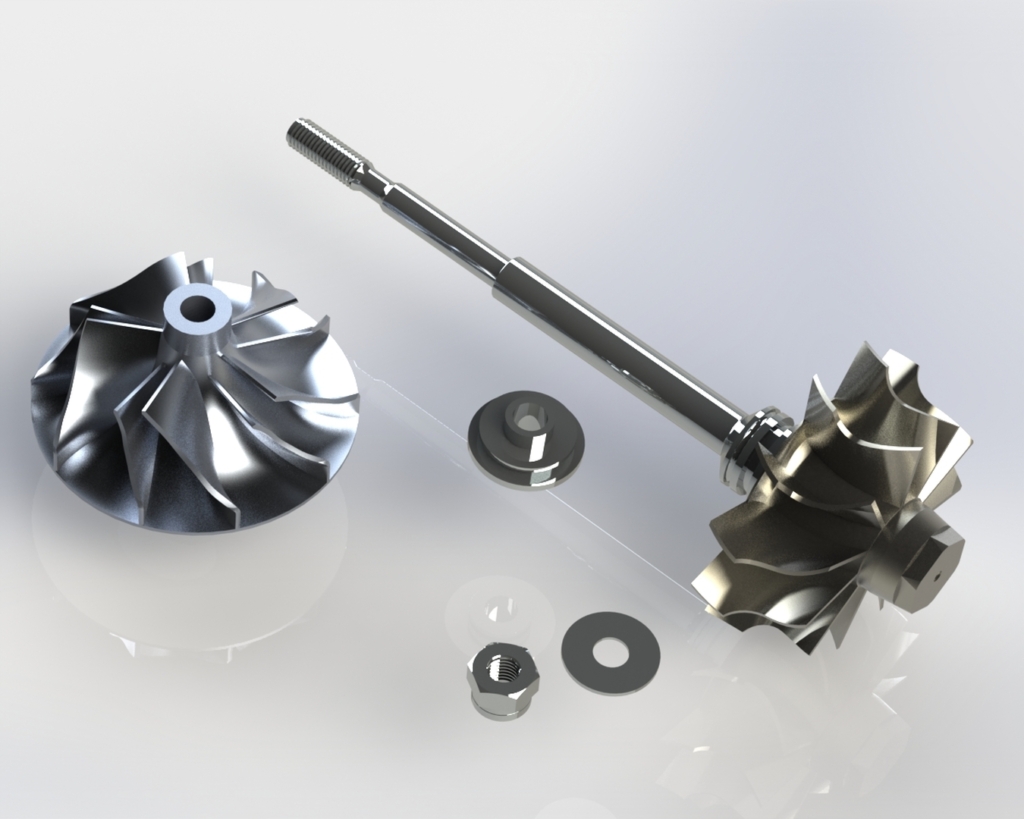
turbocharger shaft wheel assembly

RELATED: Design for Manufacturing and Assembly tips (DFMA) — Cut your product design company’s production costs

Benefits of design for assembly in product manufacturing

There is more to DFA than being a mere set of guidelines. This philosophy profoundly impacts the conceptualization, design, and assembly of products. Proper integration of DFA can offer numerous benefits both to the actual process of manufacturing and the finished product.

Cost savings

There are several areas where DFA can help save on costs during product manufacturing:

Fewer distinct parts mean more streamlined management of inventory, resulting in reduced warehousing and holding costs.

Simplified assembly procedures will result in fewer man-hours required for assembly. Decreased assembly errors can also reduce wastage and rework.

DFA can dramatically reduce the required raw materials by reducing the number of parts and using multifunctional parts.

Eco-friendly manufacturing

  • Simplified disassembly for recycling

Products made using DFA principles are usually easier to disassemble at the end of their lifecycle, which facilitates component reuse or recycling.

Fewer resources such as auxiliary materials or energy are used up during the production process when the design for ease of assembly is optimized.

Lesser quantities of components and reduced assembly errors may result in reduced wastage in terms of defective products or raw materials.

Improved customer satisfaction

The savings made possible by DFA usually allow manufacturers to provide competitive pricing that translates to value for money for consumers.

The benefit for end users of the product is not just a premium look and feel, as it also boasts excellent reliability.

Enhanced reliability and quality of products

Parts designed with assembly in mind often have a more seamless fit, resulting in a refined appearance for the final product.

A product with fewer parts naturally has fewer potential failure points, making it more reliable.

  • Reduced errors in assembly 

Since parts are designed for intuitive and easy assembly, the chances of errors during the assembly process are reduced.

RELATED: Key differences between prototyping and prototype engineering for companies & firms

Faster time-to-market

A faster assembly process means a shorter timeframe for manufacturing products ready for the market.

Decreased assembly errors will result in fewer units sent back for corrections, which can speed up the overall production timeline.

Enhanced training and worker morale

Workers will experience less frustration and a better sense of achievement when products are easier to assemble.

Temporary or new staff members can be quickly onboarded because the intuitive design can simplify the learning curve.

Increased productive flexibility

Most principles of DFA lean towards a modular design to allow easy variations or upgrades of products without the need to revamp the entire assembly process.

With the changing market demands, manufacturers can easily scale production down or up with the help of efficient assembly and standardized parts.

RELATED: Preparing your firm’s product design for manufacturing: how to streamline development and reduce costs

Modern manufacturing and DFA

Modern manufacturing is characterized by shrinking product lifecycles, a pressing need for sustainable practices, and rapid innovation. DFA has emerged as a key strategy to guide the product manufacturing and design processes amidst all these dynamics.

Here are the different ways that DFA can integrate and interact with the landscape of modern manufacturing:

  • Adaptability to changes in the market

Integrating DFA principles with modern methods such as 3D printing and 3D modeling solutions can pave the way for quick prototyping. Rapid iteration can speed up product development and ensure timely entry into the market.

Alignment with Industry 4.0

In today’s Big Data era, DFA allows manufacturers to acquire insights from the assembly data that help optimize the design for predictive maintenance and better assembly outcomes.

Smart integration

With the rise of Industry 4.0, the world of manufacturing is becoming increasingly interwoven with different digital technologies. DFA can complement this trend by streamlining assembly processes, making them more conducive to robotic assembly and automation.

Eco-conscious manufacturing

Since it’s easier to disassemble products designed using DFA principles, they can support the circular economy model by allowing effective components to be reused and recycled.

Today’s consumers have become more eco-conscious than ever, prompting manufacturers to switch to more sustainable practices. Since DFA focuses on the efficient use of resources and reduced wastage, it perfectly aligns with mandates on green manufacturing.

  • Improved consumer experience
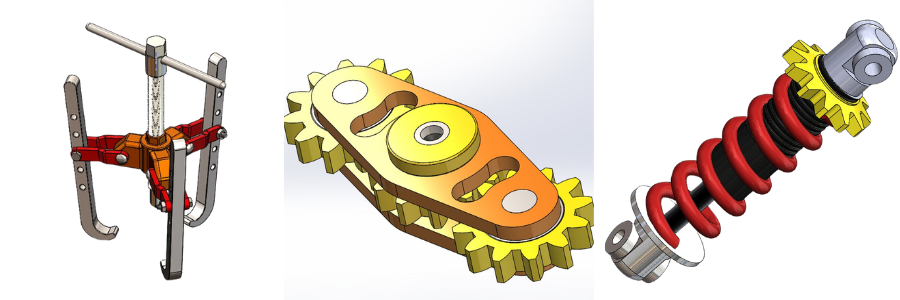
parts for assembly

RELATED: 4 tips to improve cabinet shop drawings for manufacturing efficiency at companies

The Bottom Line

Seeing DFA as just a cost-cutting tool will only undercut its holistic effects on the manufacturing landscape. This reshapes the mindset on design, fosters a balanced relationship between manufacturers and designers, and guarantees a stand-out end product in terms of performance and quality.

With more and more industries dealing with challenges such as rapid technological advancements, sustainability concerns, and changing consumer needs, taking advantage of DFA principles offers a more proactive approach to dealing with these challenges.

How Cad Crowd can help

Embracing design-for-assemblement services for product manufacturing is no longer a mere strategic move; it is a key investment in quality manufacturing in the future. Cad Crowd will connect you with the best services that can turn your products into reality.

author avatar

MacKenzie Brown is the founder and CEO of Cad Crowd. With over 18 years of experience in launching and scaling platforms specializing in CAD services, product design, manufacturing, hardware, and software development, MacKenzie is a recognized authority in the engineering industry. Under his leadership, Cad Crowd serves esteemed clients like NASA, JPL, the U.S. Navy, and Fortune 500 companies, empowering innovators with access to high-quality design and engineering talent.

Connect with me: LinkedInXCad Crowd