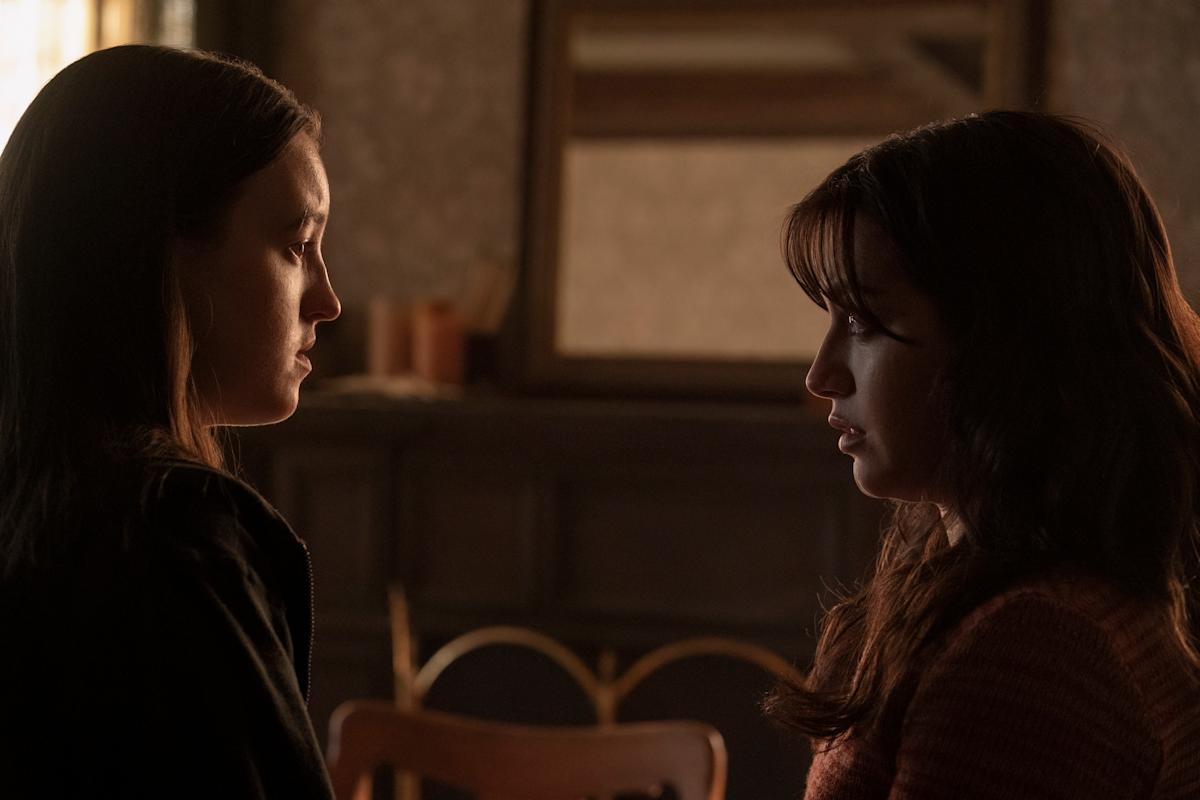
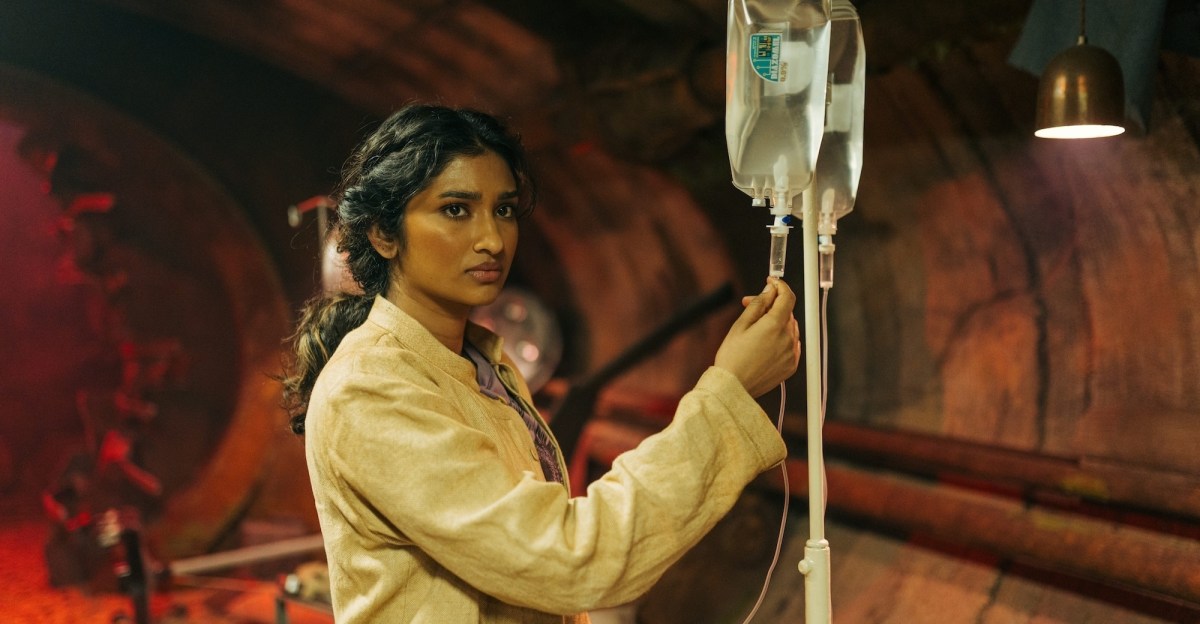
The Old Guard 2 trailer previews Charlize Theron vs. Uma Thurman


How about this heavyweight matchup between two action icons in The Old Guard 2? In one corner sits Charlize Theron, a powerful force who conquered the Wasteland in Mad Max: Fury Road and survived as a secret agent in Atomic Blonde. Facing off against Theron is Uma Thurman, a pioneer in the genre who became an icon for playing The Bride in Kill Bill.

This summer, Theron and Thurman square off in The Old Guard 2, the fantasy sci-fi adventure on Netflix. In the trailer, Andy (Theron) adjusts to life without her immortality. Quynh (Veronica Ngô) has escaped her underwater prison, and Booker (Matthias Schoenaerts) remains in exile after his betrayal.

Andy and her team — including Nile (KiKi Layne), Joe (Marwan Kenzari), Nicky (Luca Marinelli), and James Copley (Chiwetel Ejiofor) — enlist the guidance of Tuah (Henry Golding), an old friend who may have the answers to immortality. The super team needs all the help to defeat Discord (Thurman), the very first immortal and Andy’s former foe.

“I will destroy everything you stand for with a power you can’t even imagine,” Discord says before squaring off against Andy.

Victoria Mahoney directs The Old Guard 2 from a screenplay by Greg Rucka, based on the graphic novels by Rucka and illustrator Leandro Fernandez.

The movie is an action sequel to The Old Guard directed by Gina Prince-Bythewood. Released on Netflix in July 2020, The Old Guard received positive reviews for its action, direction, and lead performances.

Netflix hopes the sequel will be a hit, as the streamer searches to create more franchises. The five-year gap between movies could be an issue in drumming up interest for a sequel. Quality always wins out, and if The Old Guard 2 is well-received, it will attract a strong audience.

The Old Guard 2 has a prime summer release date of July 2 on Netflix. Until then, fans can stream The Old Guard.


Thunderbolts*’ depression story has one painful flaw


The latest Marvel Cinematic Universe movie, Thunderbolts*, is baldly and emphatically about dealing with depression. It opens with state-assassin-turned-mercenary-assassin Yelena​​ Belova (Florence Pugh) in voiceover, musing about the “emptiness” that characterizes her life, how she can’t enjoy or connect to things the way she used to. The story repeatedly touches on different ways people self-medicate to survive the loss of hope, from alcohol and drugs to a variety of forms of emotional suppression. The action climax has the heroes physically battling a powerful, destructive manifestation of one character’s bottomless despair and self-hatred.​​ Trust a superhero movie to find a way to let someone punch depression in the face — a cathartic act for those of us who’ve gone through these particular mental health struggles, though not a practical solution outside of a fantasy setting.

Even in the middle of a long wave of horror movies that turn anxiety and PTSD into literal monsters, though, it’s strange to see Marvel turning mental health crisis management into a punch-’em-up, in a movie that’s as much cinematic therapy (and exploration of complex PTSD, exposure therapy, and cognitive behavioral therapy) as it is action-adventure story. And it’s even odder to get to the end of the film and see what’s missing. The Thunderbolts* writers, with director Jake Schreier, get some things right about this kind of mental illness. But having navigated depression myself, I squirmed at parts of the messaging, particularly at the movie’s climax. As much as the filmmakers want to leave viewers with positive, even actionable messages about mental health, parts of those messages land oddly for those of us who’ve been there.

[Ed. note: Major spoilers ahead for Thunderbolts*, including end spoilers.]

Bucky Barnes (Sebastian Stan) sits on a motorcycle, cool sunglasses and leather jacket on, in Thunderbolts*

Image: Chuck Zlotnick/Marvel Studios

For much of the movie, Yelena is the face of depression in the movie’s central metaphor. A lot of her arc throughout this film involves her analyzing and fighting her own hopelessness and weariness, then trying to connect with other people when she recognizes the same emotions in them. At times, she blows up at anyone trying to connect with her in return. One of the movie’s most purposefully painful scenes features her railing at her dad figure Red Guardian (David Harbour) about how guilt, grief, and isolation have taken over her life, and eventually turning on all the other heroes she’s been tentatively connecting with, doing everything she can to tear them down emotionally as well.

But the movie’s real conflict involves Bob (Lewis Pullman), an experimental test subject who Yelena and three other mercenaries — John Walker from The Falcon and the Winter Soldier, Ghost from Ant Man and The Wasp, and the ill-fated Taskmaster from Black Widow — meet in a bunker where they’ve all been set up to die. As the merc team tries to figure out how to escape the bunker alive, Bob says he has no value to them, and it would be better for everyone if he just remained locked up down below. Yelena immediately recognizes this as a self-destructive impulse akin to her own, and tries to counsel and comfort Bob, and help him see his own worth. In the process, she’s talking herself through her own depression as much as she’s trying to help him fight his.

Later, though, Bob gets a bigger jolt of self esteem from the movie’s villain, Valentina Allegra de Fontaine (Julia Louis-Dreyfus), who tries to set him up as Sentry, a hero completely under her control. That plan falls apart, unleashing the Void, a powerful force that drags everything around it into shadow. It’s about as literal a depiction of depression as you’re likely to see on screen — especially since the whole time the Void is blanketing Manhattan in darkness and blasting its inhabitants into dark smudges, it’s whispering bleak messages about the futility of struggle, the pointlessness of everything, and especially how laughable he considers Bob’s fleeting attempts at self worth.

The Void (Lewis Pullman) in Thunderbolts*, an all-black outline of a man, one arm raised with his fingers splayed

Image: Marvel Studios

Anyone who’s fought depression — clinical and ongoing, short-term and conditional, or anything in between — will recognize some of the Void’s toxic messaging, and will see it as a metaphor for that inner voice that whispers, You’ve messed everything up or Your friends don’t really care about you or You have no value or just Give up, there’s no point in trying. It’s easy to sympathize with Bob’s frustration with that voice, and his desire to pound it into submission. Thunderbolts*’ smartest insight is that his rage and frustration aren’t much use in fighting the Void: They give him the nerve and impetus to resist it, but they aren’t a solution on their own. The usual dynamics of superhero films aside,​​ violence isn’t the answer here.

Instead, the answer turns out to be a group hero-hug, a verbal reminder that Bob isn’t alone, and an admission that sometimes, the best we can hope for is company in misery. That can be a powerful idea: One of the worst parts of chronic depression is the feeling of being exiled, distanced from everyone else, locked into a poisonous little world where your thoughts run in circles, and every self-defeating impulse and thought feeds the next one. The group hug breaks the cycle for Bob, and lets him see outside the hallucinatory world he’s built for himself — a place where he both relives and hides from his most traumatizing memories. The Thunderbolts/New Avengers team hauls him back into the real world, where he can start healing.

That’s a solid metaphor, and an effective cinematic way of externalizing a largely internal conflict. (It works similarly well in Laika’s ParaNorman, another movie where a hero has to dive into a villain’s fantasy headspace, navigate their trauma, and break their cycle of misery with a simple “I understand your suffering and you aren’t alone.”) But it misses one big issue with depression, the aspect of the movie that most made me shrink in my seat in the theater: the sense of shame that comes with needing this kind of help, and with putting this much weight and demand on other people.

Yelena Belova (Florence Pugh) and Bob (Lewis Pullman) stand together in the dark, with her holding up a flashlight, in Thunderbolts*

Image: Chuck Zlotnick/Marvel Studios

There’s a comforting fantasy in the idea that even though everyone in Thunderbolts* is navigating major traumas of their own, they’re all capable of temporarily setting their personal issues aside to focus on comforting and supporting Bob. Granted, they don’t have much choice, given that he’s encompassing the world in nightmarish darkness. Still, the film frames that group hug as an act of caring and empathy, not desperation or grudging heroic obligation. His easy ability to absorb that comfort when it comes, though, to take on Yelena’s message of companionship as a real fix for his loneliness, and to do it without embarrassment — to me, that felt harder to believe than MCU multiverses or magic, and almost toxic itself in its lack of weight or complexity.

I’ve been through this kind of crisis myself, facing my own mental health struggles or trying to help friends navigate theirs. And shame is often a major factor, both as an ongoing part of the larger weight of depression and, in moments like these, where long-simmering melancholy reaches a boiling point. It’s hard to accept help. It’s hard to admit to problems. The societal view of depression holds that everyone should be strong, independent, and self-contained, and that it should be embarrassing to demand other people’s time, attention, or love.

More personally, when everyone around you is in crisis, it feels selfish to demand special attention or to compound the demands other people are facing. It makes sense that the Thunderbolts* filmmakers didn’t want to send Bob down a shame spiral when he returns to the real world, complicating the movie’s feel-good beat with a second breakdown. But their solution is to make him cheerfully oblivious about the trials he’s put the rest of the world through. That lack of self-awareness becomes even more awkward and unpleasant when his condition is played for comedy.

Hannah John-Kamen as Ghost, Lewis Pullman as Bob, Florence Pugh as Yelena, and Wyatt Russell as John Walker in Thunderbolts* leaning around a corner while in their superhero costumes

Photo: Chuck Zlotnick/Marvel Studios

By the end of the climactic battle in Thunderbolts*, the Void has been temporarily vanquished, and Bob is back in the real world as a mostly normal human. But he has no memory of anything he just went through, or any of the havoc his friends suffered because of him. Standing in the wreckage of the Manhattan block he destroyed minutes earlier, almost killing dozens of people with falling wreckage before almost obliterating millions with his powers, he’s blithely unaware of the trouble he’s caused. His memory lapse is treated like a gag, but it’s a horrific story beat. He hasn’t learned anything from his experiences. He isn’t capable of gratitude for what his friends just went through to help him. And he isn’t capable of returning their care, or offering support in return.

Some aspects of the final Bob confrontation felt entirely authentic to me — the specific undermining whispers the Void has for him, say, or Bob’s confused veering between anger and despair. There’s certainly wisdom in the admission that while no one can fill the gaping hole inside someone else, we can at least share our experiences, commiserate with other people, and work around that feeling of being alone.

Even so, I was shocked how uncomfortable I felt with the idea of him making his problem into everyone else’s problem, forcing all the other characters to drop everything to take care of him. The problem isn’t just that he needs help, because we all need help from time to time. It’s the way his need eclipses everyone else’s — and then the way that once his needs are met, he’s breezily happy and disengaged from the struggles all his friends are facing. It’s a bizarrely lighthearted transition away from the film’s heavier look at depression. And it’s certainly a harsh way to portray caretaking, as a crucial yet hilariously thankless and kind of unfulfilling job.

The obvious implication here is that Bob might return to being the Void at some point, and that in the meantime, the other members of his team will have to navigate their own crises without any meaningful input from him. They’re learning how to form a community and support each other, but he’s set up as an endless drag on their empathy and energy and resources, with nothing to contribute and no sense of self-awareness about it. For someone who’s had to ask others for help, this version of Bob is humiliating all on its own — a portrayal of depression as a kind of bottomless, oblivious selfishness.

The Thunderbolts stand together in a group, all looking various forms of alarmed and concerned, except Bob, who looks blank

Image: Chuck Zlotnick/Marvel Studios

For me, that image is more frightening than the Void itself. Possibly the only good things that come from navigating a mental health crisis are the ability to recognize the symptoms and navigate them more effectively the next time whenever they surface again, and the ability to see the signs in other people and connect with them. Maybe Bob’s value to the group is in serving as an example, training the team to trust each other more, showing them how to selflessly respond to and support each other through their various crises. Maybe it’s fine that he’s the guy who showed up at the potluck with an opened package of napkins, while everyone else spent hours whipping up homemade food, because it’s not his fault he doesn’t know how to feed himself, and there’s still enough food to go around.

Certainly I appreciate that Bob is able to hear and accept the message that he isn’t alone. In the real world, that kind of connection can be difficult to internalize, and difficult to believe or accept as help in the midst of a depressive episode. And I appreciate that the Thunderbolts* writers (original writer Eric Pearson and a rewrite team including Beef writer Lee Sung Jin and The Bear’s showrunner/co-creator Joanna Calo) have the sense to not portray the big hug-it-out moment as a permanent, magical fix to Bob’s problems: At best, it’s an interruption in the pattern, and a suggestion of a path forward for his friends, who are all facing their own mental health battles. It’s a sensible reminder that every depression episode is its own unique challenge, and sometimes just surviving the moment is enough.

But leaving Bob as a permanent broken stair in his friend group, the amiable, adorkable, hapless dude who just might explode at any moment, feels like a horror. Bob isn’t completely oblivious by the end of the movie — presumably his friends have filled him in on what they went through with him. He isn’t fixed, and he knows it. But he’s doing the work: reading a self-help book (Rick Rubin’s The Creative Act: A Way of Being), avoiding behavior he knows triggers his depression, expressing his needs to other people. (Not shown: therapy, medication, or learned therapeutic techniques like CBT.) He’s stable, for the moment, and he’s consciously practicing self-care. Certainly that’s more of a kindness than leaving him wallowing in shame and guilt over everything the Void nearly did.

Still, in a movie that’s so much about positive messaging — whispered counterarguments to the Void, parallel messages that say, You aren’t alone in this, other people have been here too and Your friends really do care about you, you just need to let them in — I don’t know what Bob’s shameless, comfortable complacency at the end really gets us, except a sense that it’s kind of funny to be needy, damaged, and destructive. Some of this response, I recognize, is my own Void still whispering back at me, identifying with the villainous parts of Bob instead of the human ones.

But I’ll stand by this as long as I’m fighting my own mental health fight: I’d rather be part of the team, fighting through my own embarrassment and pain to try to hug people and help them, than to be Bob, causing problems I don’t even see, and then walking away smiling afterward. I’ve known a lot of people fighting this kind of inner war, and I’ve fought it myself, for most of my life. None of us are as complacent about it as Bob, or as willing to let other people do all the work on our behalf. And it feels a wee bit cavalier to put him through this titanic battle — to go through the thoughtful work of humanizing mental health struggles and portraying them as a heroic battle against evil — and then robbing Bob of the chance to really process anything he’s experienced, or take a meaningful role in his own recovery.

This overlooked Florence Pugh Netflix horror movie is a must-watch


It can sometimes feel like Florence Pugh emerged into the world a full-formed movie star. One day, she was getting some light awards buzz for roles in indie roles on the festival circuit; the next, she was headlining major films and strutting down red carpets in designer fashion. Now, for another career milestone: As the top-billed star of Marvel’s Thunderbolts*, Pugh continues to solidify her place as one of the most successful actors of her generation.

If you’ve been paying attention, Pugh’s rise to A-lister status was painstakingly earned. Before her career-making role in the cult thriller Midsommar — which led to parts in major projects like Little Women and multiple MCU installments — she paid her dues with a series of lesser-known movies. Of the bunch, one of the most overlooked and underrated is the horror flick Malevolent, a Netflix original that landed quietly in 2018 but is worth revisiting as Pugh leads a ragtag team to save the Marvel universe on movie screens across the world this weekend.

In Malevolent, Pugh plays Angela, part of a team of phony ghost hunters whose scam runs its course when they’re lured to an actual haunted house. While the group’s scheme mostly relies on technological trickery, Angela appears to have some actual, latent psychic powers. Director Olaf de Fleur reveals these within its first few minutes, showing the world through her eyes as objects mysteriously move and ghosts jump out at her from the shadows (the first of many jump scares Malevolent has in store).

Pugh plays all this with surprising coolness, even as the horror amps up in the film’s final act. There’s an impressive stoicism to her performance: she’s calm and collected, with a clear hint of sadness just below the surface. She doesn’t shriek once, at the most letting out a gasp when she comes face to face with one of Malevolent’s many deformed ghosts.

This type of subtle performance has become a cornerstone of Pugh’s career. You can see the same approach in movies like Midsommar and Dune: Part Two, where she’s able to establish complex characters with just a few sparse lines of dialogue and a soulful look into the camera. It’s a talent that dates at least back to Malevolent, where Pugh conveys more with a simple facial expression than most actors can with an entire monologue. During the movie’s few happy moments, the camera will sometimes linger on Pugh’s smile for one second too long as it falls away to reveal the despair underneath.

That’s also a stylistic choice for Malevolent, as de Fleur makes a habit of holding each shot for an extra second or two, imbuing the movie with a sense of dread that never breaks. He also constructs some impressive shots, including an opening scene in which the camera is framed through the perspective of a young girl. Her father has hired the group to communicate with his dead wife, but as the scene plays out, you can’t see anyone’s faces until they crouch down to speak to the girl directly.

While there are plenty of reasons to praise Malevolent — the synthy soundtrack is eerie without sounding like a Stranger Things imitation, and some of the practical effects are downright terrifying — it’s also far from a perfect movie. Not all the characters get quite enough development for their eventual deaths to resonate, and as the film reaches a somewhat hectic climax, it can be hard to follow the action. De Fleur’s insistence on building mood over noisy jump scares also limits Malevolent’s effectiveness as a horror film. Because sometimes, you really do need the main character to scream bloody murder when the moment calls for it.

At this point in Pugh’s career, it seems unlikely she’ll ever wind up in another low-budget Netflix horror movie, and that makes Malevolent’s existence all the more special. She may not approach the role in typical scream queen fashion, but her skills as an actor more than make up for it. All the building blocks of a remarkable career are on display here, from her subtle, inward performance to a tangible coolness under pressure she is able to evoke. In the years since, Pugh’s added a few more tricks to her repertoire (you wouldn’t know it from Malevolent, but she’s also hilarious). And yet, even in this imperfect, scary horror flick from 2018, there’s no doubt that Florence Pugh was a movie star in the making.

New to Netflix May 2024: Every movie and TV show


Even with Netflix’s recommendation algorithm serving you new movies, new TV shows, and original programming tailored to your viewing habits, the streaming service’s fire hose of content makes what’s coming difficult to parse. We’re here to help.

This month has some exciting back catalogue picks, like the whole Twilight saga, the Ocean’s Eleven movies, horror flicks like Heart Eyes, Train to Busan, and Smile; and The Wild Robot. There’s also a new volume of Love, Death & Robots out, along with more Blood of Zeus. Netflix’s first original Korean animated movie, Lost in Starlight, also arrives sometime this month.

Editor’s Pick: Past Lives

Greta Lee and Teo Yoo look at each other longingly in front of a carousel in Past Lives

Image: A24

Director: Celine Song
Cast:
Greta Lee, Teo Yoo, John Magaro

Director Celine Song’s debut theatrical film is an achingly poignant story about one woman and the two great loves of her life. A semi-autobiographical movie, Past Lives follows Nora, who moves from Korea to Canada in her youth, leaving behind a childhood sweetheart. Though they reconnect in their 20s, the relationship fizzles out due to distance and other life opportunities. Ten years later, the two reconnect one last time and reflect on where life has taken them.

Black Mirror: Thronglets (Netflix Games)

From Netflix: Oh, look! A Thronglet! Enter the world of “Black Mirror” with this curiously cute simulation from the episode “Plaything.” Play at your own risk.

Single’s Inferno: Choices (Netflix Games)

From Netflix: Take a romantic beach walk, send a sweet note and… win a “chicken fight”? Do whatever it takes to get quality time with your crush in this story game.

Street Fighter IV CE (Netflix Games)

From Netflix: Go blow for blow against warriors around the world. Rule the ring with your favorite fighters in this hard-hitting version of the classic arcade game.

Available sometime in May

Losmen Bu Broto: The Series (Netflix Series)

From Netflix: For the Broto family, managing their beloved Yogyakarta inn is no easy feat — especially when their youngest son falls in love with a married guest.

Lost in Starlight (Netflix Film)

A woman in a space suit on the verge of tears. From Lost in Starlight.

Image: Netflix

From Netflix: When an astronaut leaves Earth for Mars, the vast infinite space divides star-crossed lovers in this animated romance that crosses the cosmos.

Mad Unicorn (Netflix Series)

From Netflix: An aspiring entrepreneur breaks new ground with the launch of a startup courier service that brings new opportunities – and powerful enemies.

Rhythm + Flow: Poland (Netflix Series)
From Netflix: Aspiring Polish rappers drop bars, battle, and craft tracks to impress judges Bedoes 2115, DZIARMA, and Sokół — vying for fame and a 500,000 złoty prize.

Angi: Fake Life, True Crime (Netflix Documentary)

From Netflix: Sentenced for the murder and impersonation of her friend, this documentary sheds new light on Angi — and the death of her husband years before.

The Biggest Fan (Netflix Film)

From Netflix: Facing online cancellation, an actress travels to Mexico to revive her career. But when she meets her biggest fan, her life turns upside down.

The Four Seasons
(Netflix Series)

From Netflix: The decades-long friendship between three married couples is tested when one divorces, complicating their tradition of quarterly weekend getaways

Airport
Airport ‘77
Airport 1975
Ali
American Gangster
American Graffiti
Burn After Reading
Constantine
Crazy, Stupid, Love.
Dawn of the Dead
Eat Pray Love
The Equalizer 2
Hanna
Home
The Jerk
The Lego Movie

A group of anthropomorphic lego characters stand together in astonishment in The Lego Movie.

Image: Warner Home Video

Mid90s
The Mule
Ocean’s Eleven
Ocean’s Thirteen
Ocean’s Twelve
The Paper Tigers
Past Lives
Sisters

Starship Troopers
The Sugarland Express
Trainwreck
Trolls
Twilight
The Twilight Saga: New Moon
The Twilight Saga: Eclipse
The Twilight Saga: Breaking Dawn: Part 1
The Twilight Saga: Breaking Dawn: Part 2

Edward Cullen (Robert Pattinson) confronts Bella Swan (Kristen Stewart) about his identity

Image: Summit Entertainment

Wallace & Gromit: The Curse of the Were-Rabbit

Ma Dong-Seok wearing a bloody t-shirt and holding his fists on a train in Train to Busan

Image: Well Go USA Entertainment via Everett Collection

Unseen: Season 2 (Netflix Series)

From Netflix: In the wake of tragedy, Zenzi is forced to trust those who put her behind bars. Will her newfound desire for freedom finally put her grief to rest?

Conan O’Brien: The Kennedy Center Mark Twain Prize for American Humor (Netflix Comedy Special)

From Netflix: Comedy’s biggest stars gather to toast and celebrate late-night legend Conan O’Brien as he accepts the Mark Twain Prize for American Humor.

Britain and The Blitz (Netflix Documentary)

From Netflix: This immersive documentary brings history to life through vividly restored archival footage and firsthand accounts of WWII Britain during the Blitz.

Mighty Monsterwheelies: Season 2 (Netflix Family)

From Netflix: Bolts, Sweeps, Axyl and the gang are back on patrol in Motorvania, keeping everyone safe from avalanches, storms — and even a runaway Ferris wheel!

The Devil’s Plan: Season 2 (Netflix Series)

From Netflix: Brilliant contenders gather for a new battle of minds. From a Go legend to a poker pro, Hollywood actor, news anchor, and lawyer — who will triumph?

Untold: Shooting Guards (Netflix Sports Film)

From Netflix: What really went down between Gilbert Arenas and Javaris Crittenton? This exposé unpacks how a gambling dispute led to guns drawn in an NBA locker room.

Full Speed: Season 2 (Netflix Sports Series)

From Netflix: Tales of triumph and tenacity fuel this high-octane sports docuseries following NASCAR Cup Series drivers on and off the track during the playoffs.

Last Bullet (Netflix Film)

From Netflix: Car genius Lino returns to conclude his vendetta against Areski and the corrupt commander who ruined their lives in this turbo-charged trilogy finale.

Blood of Zeus: Season 3 (Netflix Anime)

From Netflix: Set loose from captivity and burning for revenge, the king of the Titans swears to crush the Olympian gods and reclaim the power they stole from him.

FOREVER (Netflix Series)

From Netflix: Reunited as teens, two childhood friends fall deeply in love, experiencing the joy and heartache of a first romance that will change their lives forever.

Heart Eyes

A masked figure with glowing heart-shaped eyes in Heart Eyes.

Image: Sony Pictures Releasing/Everett Collection

Karol G: Tomorrow was Beautiful (Netflix Documentary)

From Netflix: Karol G pulls back the curtain of her career in this intimate look at her life as she navigates a stadium tour, love, health and chasing greatness.

A Deadly American Marriage (Netflix Documentary)

From Netflix: A chilling 911 call. A gruesome scene. What is the real story behind Jason Corbett’s brutal death? In this documentary, Jason’s wife and children reflect on the elusive truths behind their seemingly fairytale life.

Bad Influence
(Netflix Film)

From Netflix: An ex-con gets a fresh start when hired to protect a wealthy heiress from a stalker — but their chemistry is hard to resist as they grow closer.

Nonnas (Netflix Film)

From Netflix: After the loss of his mother, a man risks everything to honor her by opening an Italian restaurant with a group of local grandmothers as the chefs.

The Royals (Netflix Series)

From Netflix:When charming Prince Aviraaj meets Sophia, a self-made girl boss, the worlds of royalty and startups collide in a whirlwind of romance and ambition.

Tastefully Yours (Netflix Series)

All American: Season 7

Bad Thoughts (Netflix Series)

From Netflix: In this six-episode dark comedic series, Tom Segura navigates unthinkable situations and fantasies within a cinematic world.

Untold: The Liver King (Netflix Sports Film)

From Netflix: He built a supplement empire by devouring raw meat on social media. And he had the muscles to prove it. But, really, how did the Liver King get so huge?

American Manhunt: Osama bin Laden (Netflix Documentary)

From Netflix: Featuring rare footage and interviews with CIA insiders, this edge-of-your-seat documentary series traces the epic hunt for Osama bin Laden.

Fred and Rose West: A British Horror Story
(Netflix Documentary)

From Netflix: Recently discovered police recordings and first-person accounts tell the story of Fred and Rose West, two of the UK’s most prolific murderers.

Married at First Sight: Season 17

Smile

A woman smiles with devilish glee in Smile

Image: Paramount Pictures

Snakes and Ladders (Netflix Series)

From Netflix: An ambitious but overlooked teacher wants to be head of a prestigious school, but must climb a slippery ladder of lies and corruption to reach the top.

From Netflix: At a private school where gambling determines social status, a skillful new student with a mysterious past is shaking things up — and betting on revenge.

Love, Death & Robots: Volume 4 (Netflix Series)

A warrior woman attacks with a spear. Her hair is pulled up in a high ponytail. Everything around her is orange and red. From Love, Death & Robots

Image: Netflix

From Netflix: Dinosaur gladiators, messianic cats, string-puppet rock stars — it can only be Love, Death + Robots. The fourth volume, presented by Tim Miller (Deadpool, Terminator: Dark Fate) and David Fincher (Mindhunter, The Killer), sees Jennifer Yuh Nelson (Kung Fu Panda 2, Season 3’s “Kill Team Kill” return as supervising director for ten startling shorts showcasing the series’ signature, award-winning style of bleeding-edge animation, horror, sci-fi, and humor. Buckle up.

Franklin (Netflix Series)

From Netflix: A counterfeit artist, also a single father, is forced to work with his ex-lover to craft the perfect $100 bill — all to save his dying daughter.

Pernille: Season 5 (Netflix Series)

From Netflix: With Ole Johan’s wedding planning soaking up all the attention, Pørni struggles to balance the demands of her job with her family — and her own heart.

Secrets We Keep (Netflix Series)

From Netflix: When a neighbor’s au pair vanishes from her wealthy suburb, Cecilie seeks answers — and unravels secrets that shatter her seemingly perfect world.

Thank You, Next: Season 2 (Netflix Series)

From Netflix: Leyla is finally about to get her happy ending with Cem, but will she allow herself to trust his mysterious nature and fall in love all over again?

Vini Jr. (Netflix Documentary)

From Netflix: Vini Jr. has it all: talent, resilience and boldness. Follow his dancing, unpredictable feet on his inspiring journey to becoming a global soccer star.

Dear Hongrang (Netflix Series)

From Netflix: When a long-missing heir returns with lost memories, love and suspicion entwine. Is he truly Hongrang, or a stranger disturbing hearts and family ties?

Football Parents (Netflix Series)

From Netflix: When it comes to their children’s amateur football careers, this group of parents has no shame, no chill — and a peculiar sense of team spirit.

The Quilters (Netflix Documentary)

From Netflix: In this award-winning short documentary, men in a Missouri maximum-security prison design and sew beautiful, personalized quilts for foster children.

Rotten Legacy (Netflix Series)

From Netflix: After a grave illness, a media mogul discovers his children’s tactics threaten the empire he carefully built — and he’ll do whatever it takes to save it.

Sarah Silverman: Postmortem (Netflix Documentary)

From Netflix: Following the recent death of both of her parents, comedian Sarah Silverman finds comedy in the darkest corners of life. She hilariously navigates the absurdities of death with her signature wit, from unexpectedly finding the “deal of a lifetime” while planning their funerals to cherishing the bittersweet experience of hearing her mother’s last words.

Untold: The Fall of Favre (Netflix Sports Film)

From Netflix: This eye-opening documentary delves into Brett Favre’s controversial career, the dark side of sports stardom and the scandals that marred his legacy.

Newly Rich, Newly Poor (Netflix Series)

From Netflix: A wealthy businessman and a working-class dreamer discover they were switched at birth. Now, they must swap lives to learn what truly matters.

Real Men (Netflix Series)

From Netflix: Mattia, Massimo, Riccardo, and Luigi, four friends in their forties, confront their prejudices in a world evolving towards gender equality. They must rediscover their place in society and relationships amid hilarious situations and unexpected challenges.

Sneaky Links: Dating After Dark (Netflix Series)

From Netflix: Six sexy singles check into a motel in pursuit of true love, only to discover their longtime booty calls, or “sneaky links,” are there as well. Facing desires old and new, and many hard truths, guests must decide whether to strengthen their sneaky link, or explore new connections. Will they stay sneaky, or is love worth “checking out”?

The UnXplained with William Shatner: Season 6

A blonde girl in a pink dress standing next to a chic woman in white. From Sirens.

Image: Netflix

From Netflix: Devon thinks her sister Simone has a really creepy relationship with her new boss, the enigmatic socialite Michaela Kell. Michaela’s cult-ish life of luxury is like a drug to Simone, and Devon has decided it’s time for an intervention, but she has no idea what a formidable opponent Michaela will be. Told over the course of one explosive weekend at The Kells’ lavish beach estate, Sirens is an incisive, sexy, and darkly funny exploration of women, power, and class.

Tyler Perry’s She The People (Netflix Series)

From Netflix: Lieutenant Governor candidate Antoinette Dunkerson runs a successful campaign and now must figure out how to thrive under a sexist and condescending governor while attempting to keep her family in line now that they’re all in the public eye.

Air Force Elite: Thunderbirds (Netflix Documentary)

From Netflix: For the first time ever, go inside the cockpit with the U.S. Air Force’s legendary flight squadron, The Thunderbirds, and witness the unprecedented training, peril, and personal sacrifice it takes to push the limits of aviation as a member of one America’s most revered demonstration teams.

Big Mouth: Season 8 (Netflix Series)

From Netflix: Nothing brings out the hormones — or the heartbreak — quite like high school. These longtime friends are growing up, and it’s the ultimate happy ending.

Fear Street: Prom Queen
(Netflix Film)

From Netflix: Who will be voted queen at Shadyside High’s 1988 prom? For underdog Lori, competition is cutthroat even before someone starts killing off the candidates.

Forget You Not (Netflix Series)

From Netflix: An aspiring stand-up comedian turns her struggles into heartfelt humor as she balances work and relationships while caring for her aging father.

Off Track 2
(Netflix Film)

From Netflix: Siblings Lisa and Daniel gear up for the Vätternrundan cycling race, where unexpected detours, old flames and marriage problems test their resolve.

Our Unwritten Seoul (Netflix Series)

From Netflix: Twin sisters— one living in Seoul, the other from the countryside— switch lives.

The Wild Robot

Image: DreamWorks Animation/Universal Pictures

CoComelon: Season 13 (Netflix Family)

From Netflix: Ready to move? Get up and groove! Join JJ and his friends as they dance to fun, familiar songs like “Twist and Shout,” “The Locomotion” and more.

Cold Case: The Tylenol Murders (Netflix Documentary)

From Netflix: Who really laced Tylenol with cyanide? This true-crime series examines alarming theories behind the unsolved killings — and tracks down a key suspect.

Mike Birbiglia: The Good Life
(Netflix Documentary)

From Netflix: In his latest hour, Mike Birbiglia—who merges storytelling, theater, and comedy in a way that The New York Times has called “Birbiglian”—opens up about his father’s recent stroke and discusses how it has prompted him to reevaluate his own approach to fatherhood. Birbiglia says of the new special: “Over the years I’ve done a lot of personal shows but somehow this one is the most personal because it’s not in my past. It’s my life right now. So there’s really no filter. At certain points during the tour I literally thought on stage: ‘Whoa. Am I really gonna tell this story?’ But that’s sort of the idea behind these shows. I try to probe into what’s most painful in order to figure out what’s most funny.”

F1: The Academy (Netflix Sports Series)

From Netflix: Follow fifteen of the world’s best female drivers as they take to the tough tracks of F1 Academy in this high-octane documentary from Hello Sunshine.

From Netflix: A brash but brilliant detective (Matthew Goode) leads a cold case unit in this Edinburgh-based drama by the writer and director of “The Queen’s Gambit”.

A Widow’s Game (Netflix Film)

From Netflix: When a man is found dead, the investigation shatters his widow’s perfect facade and exposes a hidden double life in this thriller based on real events.

The Heart Knows (Netflix Film)

From Netflix: After a heart transplant, Manuel feels a personality shift and explores his donor’s life, leading him to meet the widowed Vale and her community.

Netflix Tudum 2025: The Live Event (Netflix Live Event)

From Netflix: Netflix Tudum 2025 is a must-watch LIVE event celebrating the global fandom of Netflix’s beloved series and movies. This high-energy show will be streamed LIVE on Netflix May 31st at 5:00 PM PT / 8:00 PM ET from the Kia Forum in Los Angeles. The show will be packed with huge stars, exclusive reveals, and dynamic live performances sure to delight fans around the world.

The calm after the storm before the storm


There’s an understandable and undeniable pall hanging over The Last of Us after last week’s shocker. And it’s the calm before the storm that’ll make up the rest of the season: Ellie and Dina’s trip to Seattle to track down Joel’s killers. But amid the sadness of that loss and the frustration of Ellie not getting the support of the town in her revenge plan is the absolute delight of seeing more of Ellie and Dina together.

They were probably the highlight of the first episode — their chemistry didn’t immediately hit Joel and Ellie levels, but Bella Ramsey and Isabela Merced were doing great work together right off the bat. Here, we get to see a lot more of them together, and Dina’s combination of playfulness and planning is a solid counter to Ellie’s dry humor and impulsive nature.

A great example is their trip to Seattle on horseback, as Dina challenges Ellie to name the best band she can think of for every letter of the alphabet, something Ellie eventually has quite enough of. Dina says she can come up with another game, and Ellie immediately quips they could just travel in silence, something Dina ignores and makes Ellie tell her about the first person she had to kill. Just the kind of lighthearted road trip companion Ellie needs right now.

Isabela Merced in The Last of Us season twoIsabela Merced in The Last of Us season two

Photograph by Liane Hentscher/HBO

Dina is at her best in this episode when she barges in on Ellie planning for a midnight escape from the city to bring Abby to justice on her own. Earlier in the episode, the Jackson town council votes down her proposal to assemble a large crew to go after the WLF group — primarily because the town was so ravaged by the Infected horde the same day Joel was killed that they can’t spare the people. Naturally, Ellie is ready to go rogue and go on her own, but she’s not really ready. Dina shows up at her place, teases her for not planning to bring anything but guns, and lays out exactly what they need and what they don’t. Oh, and she already has it all ready to go. It’s a little too mean to say Ellie is not the brains of the operation, but she’d almost certainly be in trouble without Dina.

Beyond her practical skills, Dina flirts with Ellie constantly throughout the episode, asking Ellie to rate their kiss at the New Year’s Eve dance, teasing her about wanting to wear her Converse on a lengthy journey, whispering in Ellie’s ear that she is a badass after Ellie makes a dorky, action movie-style proclamation. But perhaps the most telling comment she makes is after they very briefly discuss that NYE kiss — Ellie says Dina was high, Dina says Ellie was drunk, and they both agree it didn’t really mean anything. They then turn off the light in their tent, and Dina can’t help but say she wasn’t that high. Ramsey and Merced’s version of “will they, won’t they” brings some much-needed levity to their situation.

Bella Ramsey in The Last of Us season twoBella Ramsey in The Last of Us season two

Photograph by Liane Hentscher/HBO

And to be clear, levity is much needed. Even though there isn’t much real action, the fallout from Joel’s death and the Infected siege is all over this episode. It starts with Tommy slowly cleaning Joel’s body before the camera pulls out and shows a whole room of bodies covered with sheets. That’s followed by Ellie awakening in a hospital with a tube coming out of her chest; she then screams bloody murder at remembering what happened to her. That’s not to mention the sunrise visit to Joel’s grave where Ellie briefly smiles as she puts some coffee beans by his side, or her walk through his empty house where she finds his signature watch, revolver and jacket. Keep the tissues handy.

While Ramsey’s Ellie is at her best when partnered with Dina, she also does some great work on her own — the aforementioned hospital scene is chilling, but my favorite Ellie moments in this episode are when she’s trying (and failing) to convince people she’s okay. Her speech to the town assembly encouraging them to go after the WLF is not the off-the-cuff anger that Jesse encouraged her to avoid, but you can tell Ellie is just trying to placate the masses instead of saying what she really wants. The same goes for her conversation with Gail the therapist when she leaves the hospital, though Ellie doesn’t even try to hide her therapy platitudes behind a veneer of belief.

The Last of Us season twoThe Last of Us season two

Photograph by Liane Hentscher/HBO

Oddly enough, it’s Seth (the bigot who got bowled over by Joel in episode one) who says what Ellie is really feeling, interrupting the meeting when someone objects to the plan to go to Seattle. Seth is enraged by what happened to a member of his community and thinks they should pursue justice at any cost. It’s far from the most measured take, but it certainly feels like the most honest.

Thus it’s not a huge surprise when he’s ready to help Ellie and Dina as they slip out of town, offering them a load of supplies and insisting Ellie take his better rifle. He says he’d go with them except for catching some friendly fire during the Infected battle, to which Ellie replies “are you sure it was friendly?” She’s clearly not ready to forgive him for his words, but a better gun, some supplies and a shared desire for revenge gets her close enough. She shakes his offered hand as they ride out of town.

The showrunners say season two will have more Infected than season one — let’s see if they’re sticking to their word.

No Infected to be seen here, aside from some charred corpses around Jackson. That’s just fine with me after last week’s showdown.

This lesser-known Twilight Zone episode inspired Ryan Coogler’s Sinners


Ryan Coogler, the Academy Award-nominated director of Creed and Black Panther, hasn’t been shy at all about citing the various inspirations behind his new horror thriller Sinners. In the weeks leading up to the film’s premiere, Coogler has been making the rounds along the press circuit, drumming up excitement and talking at length about the creative process behind his latest original feature. “It’s a genre-fluid film,” Coogler told SciFiNow in January. “There are vampires in the film, okay, but it’s really about a lot more than just that. It’s one of many elements and I think we’re gonna surprise people with it.”

Coogler’s right; there’s a lot more to Sinners than first meets the eye, and that’s especially apparent from the breadth of influences Coogler has pulled from while writing the film’s script. He’s cited From Dusk Till Dawn, The Faculty, the oeuvre of the Coen brothers, and even Puss in Boots: The Last Wish as inspirations behind Sinners, though the most intriguing reference he’s nodded to might be a lesser-known episode of Rod Serling’s The Twilight Zone.

Black twins Smoke and Stack (both played by Michael B. Jordan) stand blocking the doorway to their juke joint alongside their bouncer Cornbread (Omar Benson Miller) in Ryan Coogler’s Sinners

Image: Warner Bros./Everett Collection

“Truthfully, the biggest influences are not in cinema,” Coogler told SciFiNow. “The novel Salem’s Lot is a massive influence on the film. Then there’s a real deep-cut influence. My favorite thing ever made is The Twilight Zone, and my favorite episode is called ‘The Last Rites of Jeff Myrtlebank’ – probably Salem’s Lot and ‘The Last Rites of Jeff Myrtlebank’ are probably the biggest influences.”

Premiering in the third season of The Twilight Zone, the episode centers on Jeff Myrtlebank, a young man living in a small town in the southernmost section of the Midwest who mysteriously returns to life at his own funeral, much to the shock of his loved ones and pastor. Despite their reasonable trepidation, the townspeople declare it a miracle — that is, until rumors begin to swirl regarding minor yet noticeable shifts in Jeff’s behavior following his unexpected resurrection.

“I’m real concerned,” Jeff’s mother tells her husband over breakfast. “He only ate two eggs again; why, ever since he’s sprouted teeth he’s been having three eggs at breakfast.” Jeff’s father notices a change in Jeff as well. “I recollect worrying many times that he leaned just a shade towards the side of shiftlessness,” he says. “And since his sickness, he’s been fighting in that work just like he was a year behind.”

A woman staring in astonishment at a man lighting his pipe with a lit match in The Last Rites of Jeff Myrtlebank, an episode of The Twilight Zone.

Image: Paramount Global

Eventually, these idle rumors become fodder for suspicion and outright hatred of Jeff’s newfound character and candor. It gets so bad that even Comfort Gatewood, Jeff’s own fiancée, begins to doubt that Jeff is who he says he is. “I expect it from the others, but not from you, Comfort,” Jeff tells her in frustration. “I’m getting sick and tired the way everybody treats me like a vampire.”

The conclusion of the episode leaves the question of Jeff’s true nature, as well as that of his resurrection, tantalizingly unanswered, but the most intriguing connection between “The Last Rites of Jeff Myrtlebank” and Coogler’s Sinners is evident in its penultimate moment. When Jeff is surrounded by a group of angry neighbors, Comfort’s brother Orgram accuses him of being a “haint,” a ghostly presence believed to possess the bodies of mortal men for its own nefarious purposes. This same term appears in Sinners, when Wunmi Mosaku’s character, Annie, speaks about the power of music to rend asunder the veil dividing the world of the living and the dead.

Even apart from its connection to Coogler’s latest film, however, “The Last Rites of Jeff Myrtlebank” is a terrific Twilight Zone episode that knows that the most interesting questions are often best left unanswered. It may not be as iconic as “Nightmare at 20000 Feet” or “Five Characters in Search of an Exit,” but it’s nevertheless a great episode to watch whether or not you plan on venturing out to the theater to see Sinners.

The Twilight Zone is available to stream on Pluto TV and Paramount Plus.

The Pacific Rim prequel series has reportedly found a home at Amazon


A live-action Pacific Rim TV series is in-development at Amazon, according to Variety. News of the project was first shared in 2024, when Variety reported that Arrival screenwriter Eric Heisserer was attached to develop and write the show.

The new series will apparently be a prequel to Guillermo Del Toro’s original Pacific Rim, a movie about Kaiju-fighting giant mechs and the humans that pilot them. Legendary, which produced Pacific Rim, is also backing the series alongside Amazon MGM. The studio appears to be using the same strategy with Pacific Rim that worked with its Godzilla-and-King-Kong-starring “MonsterVerse” franchise. Monarch: Legacy of Monsters streamed on Apple TV+ in 2023, and acted as both a prequel and sequel to the “MonsterVerse” films.

Heisserer has plenty of experience adapting existing material. His Arrival script converted an experimental second-person short story into a (relatively) thoughtful blockbuster, and his work on Netflix’s Shadow and Bone found a clever way to interweave the first book in Leigh Bardugo’s series with characters from a later duology. Pacific Rim seems a lot more straightforward in comparison.

There’s yet to be an official announcement from Amazon, or any dates for when we can expect the series to be available, but there has been quite a bit of new Pacific Rim material since the first film came out in 2013. The live-action sequel Pacific Rim Uprising was released in 2018 and Netflix put out its anime sequel, Pacific Rim: The Black, in 2021.

Marvel’s Daredevil: Born Again season 2 will premiere sometime in 2026


Worried about the uncertain ending of Daredevil: Born Again, and wondering when, if ever, the show will return for a second season? With seven years between the final installment of Netflix’s Daredevil and this year’s Daredevil: Born Again, nobody would blame you for assuming the wait will be a long one.

Fortunately, Disney Plus’ more MCU-integrated Daredevil series will return almost unbelievably soon, as far as the realm of comic book TV shows goes. And… there’s maybe even a season 3 on the way?

Daredevil: Born Again season 2: When will it come out?

Daredevil/Matt Murdock stands in a dark and grimy room where the walls are covered in drawings of screaming an mutilated faces in Daredevil: Born Again.

Photo: Giovanni Rufino/Marvel Studios

Marvel Studios announced they were already planning a Daredevil: Born Again season 2 in August 2024 — not particularly surprising, as the show was initially conceived as a finite 18-episode series. While production was paused for the 2023 Hollywood strikes, Marvel execs made the decision to overhaul the show and rewrite and reshoot some of what had already been shot.

Speaking to The Reel Roundup in February, Marvel Studios head of streaming Brad Winderbaum said that shooting for Born Again season 2’s eight episodes would begin in the first week of March, with a plan to release the season in a year — placing the season premiere in early 2026.

“Hopefully,” Winderbaum concluded, “we’ll be able to expect a new Daredevil season annually.” Marvel Studios hasn’t made any official announcements about a Born Again season 3, however. Though it has announced that it’s working on a solo TV special for Jon Bernthal’s Punisher, also set to air in 2026, at least according to The Hollywood Reporter.

What will Daredevil: Born Again season 2 be about?

We can’t say for certain, but Charlie Cox (Daredevil), Vincent D’Onofrio (Kingpin), Deborah Ann Woll (Karen), Wilson Bethel (Bullseye), Clark Johnson (Cherry), Genneya Walton (BB Urich), and Michael Gandolfini (Fisk’s smarmy little Yes Man, Daniel) are all confirmed to return, so expect their plotlines to continue.

Also confirmed to return? Elden Henson (Foggy), despite his character’s death, curiously enough. Could be a flashback, could be a Catholic-guilt-laden dream or hallucination — heck, in the wide world of Marvel Comics Daredevil stories, it wouldn’t be unheard of for Matt to make a trip to literal hell to get Foggy back. We’ll have to wait and see.

[Ed. note: The rest of this piece contains spoilers for the end of Daredevil: Born Again season 1.]

How does Fisk leave office in the comics?

Vincent D’Onofrio as Kingpin/Wilson Fisk standing in his mayoral office in a gray suit in Daredevil: Born Again

Photo: Giovanni Rufino/Disney Plus

That’s the million-dollar question asked at the end of Daredevil: Born Again: How can Matt Murdock prevail against a man with criminal and institutional power? Not alone, the finale episode implies, but with the united front of all his allies, vigilantes and civilians alike.

But it’s likely left you wondering how this all turned out in the comics. Daredevil: Born Again is heavily influenced by writer Charles Soule’s 2015 run on Daredevil, in which Wilson Fisk became mayor and a mysterious serial killer/graffiti artist called Muse went on a killing spree. But when Soule left the book in 2018, Fisk was still in power!

In the comics, Wilson Fisk didn’t actually lose the mayoral seat until the Devil’s Reign story arc, from writer Chip Zdarsky and artist Marco Checchetto, in which a city attorney witnesses him beating Matt Murdock to death (it wasn’t actually Matt, it was a guy who looked just like him, but don’t worry about that). It doesn’t seem like Born Again is headed in exactly that direction, but a reputable and righteous witness to one of his acts of brutality would be one way Born Again could get him out of Gracie Mansion.

But if we go back to Soule’s Daredevil, there may be another answer. Fisk does not leave office during Soule’s work, but Matt is still able to use his resources as a district attorney and as Daredevil to dissuade Fisk from enacting his anti-superhuman registration act, eking out at least that win. That could be one direction that Born Again’s writers choose to go in, with Daredevil torpedoing Fisk’s plans to make Red Hook a haven from the law but in a way that leaves the Kingpin’s mayoralty intact.

We’ll find out in 2026!

Doctor Who ‘The Robot Revolution’ review: Meet Belinda Chandra


Spoilers for “The Robot Revolution.”

The start of any season of Doctor Who is important, doubly so when there’s a new co-star to introduce. “The Robot Revolution” has to get us to fall in love with Belinda Chandra (Varada Sethu), ensnare new fans and keep existing ones hooked. Especially since it’s the second of two series that Disney paid for, meaning it’s got to do well enough to keep the money flowing.

We open “17 years ago” with Belinda Chandra staring at the stars next to her boyfriend, Alan Budd (Jonny Green). It’s an awkward teenage date, with Alan clearly trying to win the heart of his beau by buying her one of those star adoption certificates. In 2025, Belinda is now a nurse at a busy London hospital where, in the background, the Doctor is searching for her.

Belinda goes home to bed, and we see that she’s got the star ownership certificate framed on her wall. But she’s rudely awoken by a squad of retro-futuristic ‘50s robots in a Tintin rocket who have come to abduct both her and the certificate. The Doctor reaches her home just in time to see the rocket take off, and cue the opening credits.

The certificate wasn’t a gag present, and she is actually queen of the planet BelindaChandra, populated by BelindaChandrians (I’m calling them humans from now on). The Doctor gives chase in the TARDIS but both the rocket and TARDIS get caught in a vaguely-defined time fissure. When Belinda arrives, she’s greeted by the human Sasha55, who tells her the robots are in charge, having overthrown and subjugated the people in a bloody uprising a decade prior.

“Oh, this is a bit like Jupiter Ascending,” I wrote in my notes.

Belinda is taken to a throne room where she’s told that she must merge with the planet’s evil ruling supercomputer, the AI Generator. AI Generator, all skull shapes and Tesla coils, intends to bond with Belinda. She is shown an animated demonstration of her fate, as she is wrapped in machine parts and made into an unthinking cyborg.

“Oh, that’s like the scary bit from Superman III,” I wrote in my notes.

Who’s been lurking in the background of the scene all along? The Doctor, who has adopted the title of Planetary Historian. (Thanks to the time fissure, he arrived here six months ahead of the rocket, the Robots seized the TARDIS and he’s been working with the rebellion. He’s even got a new companion, Sasha55, who he’s promised to take to the stars when this is all over.) He tells Belinda the robots can’t, for some reason, hear every ninth word spoken, and gives her a coded message telling her he, and the rebellion, are here to rescue her. In the ensuing fight, Sasha55 is vaporized, much to the Doctor’s admittedly brief horror and grief.

The surviving rebels, along with a little Roomba bot assigned to clean Queen Belinda’s pathway…

“Oh, like the floor-cleaning robot M-O from Wall-E,” I wrote in my notes.

… escape to a teleporter, after which the Doctor disables the Roomba to ensure the robots can’t track them down, then kisses the ‘bot by way of apology. Then comes time for the episode to stop while we see the Doctor and Belinda interact properly for the first time. The Doctor was told about Belinda’s plight by someone from their future, and he can’t say more lest he muddle the timelines.

Belinda Chandra and a(nother) robot.Belinda Chandra and a(nother) robot.

Alistair Heap / BBC Studios / Disney / Bad Wolf

The time fracture both vessels passed through has caused plenty of time-bending issues, like the fact the robots have their own copy of Belinda’s star certificate. But it’s not a copy, it’s the same object from another point in time, and nobody knows how or why they have it. Belinda, like Ruby Sunday before her, is trope-aware enough to know that two of the same object from different points in time cannot occupy the same space, lest it cause an explosion.

“Oh, like in Timecop!,” I wrote in my notes.

There are wounded at the base, and Belinda instantly kicks into nurse mode, grabbing IVs and treating patients. She’s quick to take charge and has no patience for nonsense, quick to defend herself from any hint of condescension when the Doctor suggests something “timey-wimey” is going on. She refuses to allow anyone to fight her battles for her and is determined to grab the narrative and shape it her way, no matter the cost. So, she sneaks off, reactivates the Roomba and offers herself to the robots in exchange for them sparing the lives of the rebels.

Belinda and the Doctor are taken to meet the AI Generator which turns out to be… the AL Generator. When Belinda was kidnapped by the robots, she mentioned her ex Alan had bought the certificate, and so they went to kidnap him as well. But the time fracture meant Alan arrived a decade earlier, fused with the machine (becoming a creepy cyborg) and started the robot uprising.

Even so, Belinda’s happy to sacrifice herself to him until she spots Alan holding his copy of the star certificate. She opts to Timecop the two pieces of paper together, causing a big timey-wimey explosion that only the Doctor can pull her out of. Belinda is safe, but the Doctor mentions that he’s now intertwined with Belinda’s timestream. Alan, meanwhile, has been regressed to a sperm on the floor that the Roomba bot quickly mops away.

Reunited with the TARDIS, the Doctor scans Belinda and reveals he’s already met her descendant — Mundy Flynn (also Varada Sethu) from last season’s “Boom.” Belinda may be curious as to how someone that far removed from her may be identical, but she’s not embracing the mystery. She’s angry with the Doctor for scanning her without consent and that he’s treating her like a puzzle to be solved.

Having seen Sasha55 die, she knows trekking around with the Doctor is dangerous, and wants to get back to May 24, 2025. But the TARDIS won’t land on present-day Earth, and even the Cloister Bell begins ringing a warning. They open the TARDIS doors to see empty space before the Doctor decides to take her back home “the long way round.”

Once the ship disappears, a series of objects start to float in front of the camera: A smashed up black cab, the twisted wreckage of the Eiffel Tower, Belinda’s star adoption certificate and a calendar with all the days in May but the 25th ticked off. Uh-oh.

Belinda Chandra and a RobotBelinda Chandra and a Robot

Alistair Heap / BBC Studios / Bad Wolf

Like a lot of Disney-era Who, “The Robot Revolution” feels overstuffed to the point of bursting. On one hand, nothing overstays its welcome. On the other, it feels like the show is burning through a movie’s worth of plot on fast-forward. It’s hard to get a tangible sense of the stakes given how rushed everything is, and there’s a lot of telling, rather than showing. We’re told the planet is under the brutal thumb of an evil overlord but it plays out as little red ships firing at buildings in the digital matte paintings. We’re told Alan is a creep but we never really get any sense of that until after he’s revealed as the villain. We’re told the Doctor is operating on instructions from a figure from his own future, but it’d be nice if some of this was depicted.

Davies was pivotal in reviving Doctor Who and building the cultural juggernaut it became under his leadership. His role in the show’s history is secure but, even so, his Disney-era series seem to be in thrall to the work of his own successor, Steven Moffat. “The Robot Revolution” features a macguffin found inside a mundane trinket, a split narrative and time-bending shenanigans. It’s not that Moffat owns these ideas but you can almost feel Davies trying to bend his less formal, more character-driven style into something else. A cynic might suggest Davies is reacting to the slight of not having a single credited episode in Doctor Who Magazine’s most recent poll of the series’ greatest, while Moffat has five.

In fact, I wouldn’t be surprised if the slightly frantic, gappy nature of this script is a deliberate ploy to lay the framework for the rest of the season. But, even so, you can feel a degree of straining for a storytelling model that doesn’t quite work.

If the script is the weakest part of the episode, then the production design has to take the crown for strongest. The retro-futuristic robots call to mind a bright red Ford Thunderbird or Chevy Bel Air while the cleaning robot is clearly styled on a VW Beetle. It’s a rather humanistic design I wish the robovac makers of today would emulate.

Image of Belinda Chandra peering through some blinds.Image of Belinda Chandra peering through some blinds.

James Pardon / BBC Studios / Disney / Bad Wolf

Doctor Who is a regular source of gossip, especially given the permanently tenuous nature of the star role. It’s easy to say the lead is about to quit and for that to sound true, given they leave after three or four years in the role anyway. There are a number of recent reports suggesting Ncuti Gatwa has already quit the show, or is about to. Many of them also suggest the BBC and Disney are refusing to greenlight new episodes until they see how successful this season is. In addition, the BBC says funding cuts and inflation has seen its budget fall by £1 billion (around $1.3 billion) in real terms since 2010. It doesn’t help that, when asked directly about the future of the series in an interview with (the BBC’s youth-orientated news show) Newsround, Russell T. Davies opted to equivocate in a way that suggests the show is about to back on ice.

I mention this because of the sequence where Belinda defeats Alan with the certificate, and the Doctor pulls her out. He says she needed a Time Lord to absorb the enormous amount of energy kicked out when she touched the paper together. The Doctor then clutched at his back as if he was in a lot of pain, but shrugged it off and was fine for the rest of the episode. Fans with long memories, however, know that absorbing a lot of energy from the time vortex is what killed Christopher Eccleston’s Doctor back in 2005. Well, that and Eccleston’s decision to leave.

Mrs Flood (Anita Dobson)Mrs Flood (Anita Dobson)

Lara Cornell / BBC Studios / Disney / Bad Wolf

It seems Mrs. Flood enjoys moving in next door to whoever is winding up as this year’s companion. While being abducted, she calls to her neighbor to call the police and tell her parents she loves them. As the rocket lifts off, she tells the audience that we haven’t seen her, and goes back indoors to avoid encountering the Doctor, who sprints out in pursuit.

Doctor Who’s stars and showrunner think Belinda’s right to want out


There are more Doctor Who companions than there have ever been Doctors, and while they’re all unique in their own ways, there’s still a familiar pattern: The Doctor as the mysterious alien with the keys to all of time and space, and the companion as the eager adventurer, ready to be whisked away to a life of glorious discovery and thrilling peril.

But this weekend’s premiere episode of the show’s newest season gives the usual formula a deliberate flip. To showrunner Russell T. Davies, it’s all about expanding the emotional range of Doctor Who. And for the actors playing the Doctor and his new companion Belinda Chandra, it was about partnership on screen and off.

[Ed. Note: This piece contains mild spoilers for the first episode of Doctor Who season 2 on Disney Plus, also known as Doctor Who series 15.]

In “The Robot Revolution,” Belinda is kidnapped by robots, wrapped up in an alien revolution, and between her own smarts and the Doctor’s, saves the day — and makes her position on it all very clear at the end of the episode. She’d like the Doctor to take her home. Now, please. She is not about this very dangerous life, and she has responsibilities at home.

That’s a surprising enough swerve on the usual Doctor/companion dynamic that we decided to ask Doctor Who’s stars and showrunner about it. Speaking Polygon via video chat, Davies said that the idea behind Belinda was absolutely to present a different kind of companion.

Varada Sethu on the set of the TARDIS as Belinda Chandra. She’s standing at the console, wearing a dark teal velvet jumpsuit.

Image: BBC/Disney Plus

“I think Belinda simply has an awful lot of common sense,” he said. “That’s why she’s older than Ruby. I wanted to extend the range of the show; in extending the range of the show, you extend the range of the Doctor as well, which is always crucial.” Davies raised the example of last season’s companion character (who will return for season 2 in a smaller role), Ruby Sunday, a 18-year-old foster child played by then-18-year-old actress Millie Gibson, who was very much on board with the adventure of it all.

“It’s great to swing the program around and say, ‘What if you’re not so enchanted? What if you’re Belinda?’ Belinda is right in looking at this man and sort of saying, You live a mad life, and a dangerous life.” Davies cited several of the dangers Belinda and the Doctor faced in “The Robot Revolution” and will face soon in the new season.

“I think Belinda’s right,” he said, to want to go home right away. “And I think the more you acknowledge that, the more you open the emotional range of the show, and then the more people can join in. There must be people at home sitting, going, ‘That man’s mad! I wouldn’t join up with him!’ I’d like to think I’d be Ruby Sunday. I suspect I’d actually be Belinda Chandra Going ‘Get me home right now!’”

Ncuti Gatwa and Varada Sethu on set in the Doctor Who TARDIS. He’s perched on a railing, wearing a pinstriped denim jeans, jumper, and skirt combination, while she’s standing in jeans and a white t-shirt.

Image: BBC/Disney Plus

In a separate video interview, Belinda’s actress, Varada Sethu, told Polygon that she found Belinda and the Doctor’s dynamic to be “really, really interesting,” because “it puts this friction that enriched the evolution of [their] whole relationship. There was this equal push element, back to the Doctor. The Doctor saying, ‘No, come on this adventure.’ She’s like, ‘No, I have my adventure. I want to go back to mine, not yours.’ The whole season is their relationship, basically, and the love and the trust and the deep friendship that they have, in learning to love and respect each other and wanting to get her home because that’s what she wants. It lends itself really easily to a good story and a good team when there’s just as much… What am I trying to say?”

“Power, I feel,” the Doctor actor Ncuti Gatwa supplied, with Sethu agreeing: “They’re real equals.”

Sethu said that she and Gatwa discovered that dynamic in last season’s episode, “Boom,” in which she guest starred as the futuristic Anglican Marine soldier Mundy Flynn.

“Even just in the three weeks that we were filming on ‘Boom,’” Sethu told Polygon, “I felt like we found our rhythm. Because Mundy and the Doctor have a similar kind of… antagonist…”

“Trajectory,” Gatwa suggested.

“Push pull kind of thing,” she agreed. “We found that rhythm. We had had that already.”

Gatwa said that the Doctor and Belinda’s equal narrative footing in the season was very reflective of he and Sethu’s working relationship and vice versa. “Everything bleeds into one another,” he said. “What happens on set bleeds into life, in life bleeds into the set. And so it just felt like we were partners throughout the whole thing, which was very cool.”

Doctor Who series 15 is currently airing on BBC One and, as season 2, on Disney Plus.