How to watch the Chiefs vs. Eagles on Sunday, February 9


NEW ORLEANS, LOUISIANA - JANUARY 16: The Caesars Superdome is being prepared for Super Bowl LIX at the Caesars Superdome on January 16, 2025 in New Orleans, Louisiana. (Photo by Chris Graythen/Getty Images)

The Caesars Superdome will host Super Bowl LXI on Sunday, February 9. Here’s how to tune in to the big game! (Photo by Chris Graythen/Getty Images) (Chris Graythen via Getty Images)

It’s been almost a full week since the Super Bowl LIX lineup was set: AFC champions the Kansas City Chiefs will face NFC champs the Philadelphia Eagles. If that roster sounds familiar, it’s because it’s a rematch of the 2023 Super Bowl, where the Chiefs edged out the Eagles 38-35. Will the Eagles get their revenge this year, or will the Chiefs go where no NFL team has gone before: an unprecedented three straight Super Bowl wins.

Super Bowl LIX will be played at Caesars Superdome in New Orleans, LA on Sunday, Feb. 9 with a 6:30 p.m. ET kickoff. The 2025 Super Bowl Halftime Show will feature Kendrick Lamar, who recently confirmed that SZA will be joining him. The championship game will be broadcast nationally on Fox this year and will be available on platforms like DirecTV and Fubo. Looking for a free way to tune in? The Super Bowl will also be livestreamed on Tubi — in 4K, no less!

Here’s everything you need to know about how to watch the Super Bowl.

The 2025 Super Bowl will be held on Sunday, Feb. 9.

Super Bowl LIX kicks off at 6:30 p.m. ET/3:30 p.m. PT.

Super Bowl LIX will air nationally on Fox and stream live on Tubi.

Tubi will be livestreaming Fox’s coverage of the Super Bowl this year — the first time the free platform has done so. It will also be available in the Fox Sports app on mobile platforms. Beyond that, you can also sign up for free trials of DirecTV Stream, Fubo, YouTube TV and Hulu + Live TV, each of which carry Fox in most locations. Two important caveats: Verify that your locality includes a Fox stream by inputting your ZIP code on their respective sites. And if you don’t want to pay, make sure you cancel before the trial subscription ends — they can be as short as three days, so plan ahead.

Tubi will host a free livestream of Fox’s game day coverage of the 2025 Super Bowl. If you don’t have cable and aren’t looking to spend a dime to watch the big game, Tubi is a great free option to tune in. And with its pledge to stream the game in 4K, it could also provide the best video quality of the game — assuming your internet provider has the requisite bandwidth.

For sports fans looking to catch every moment of the game, it should be noted that this will be Tubi’s first big live event — the Fox-owned platform sees most its views from content in its on-demand library. 

Beyond the Super Bowl, Tubi has a range of ad-supported on-demand content available totally free. They also have Tubi original programming including last year’s streaming standout: Sidelined: The QB and Me.

Watch free at Tubi

The Tubi option above is the easiest go-to starting point for free Super Bowl streaming — but no one knows how the service will hold up under what’s certain to be its most intensive influx of concurrent users. There are plenty of worthwhile backups, each of which offer more comprehensive options for cordcutters beyond the game itself — say, watching SportsCenter on ESPN before or after the game. And most of our picks for best live TV streaming services offer free trials, so you can check them out risk-free. If you time it right, your free trial can include the Super Bowl broadcast, too.

DirecTV Stream is Engadget’s pick for “best cable without a contract.” And while we haven’t yet fully tested the service’s new MySports package yet, we’re highlighting it here for obvious reasons. It gets you access to all the usual football suspects: NFL Network, ESPN, ABC, NBC, CBS and, of course, Fox. (Important: Verify your ZIP code before signing up to confirm that the local network affiliates, including Fox, are available in your area.)

Right now, you can try all this out free, and then get your first three months for just $50/month. After that, the cost of this sports streaming package rises to $70/month (still cheaper than its competitors). So if you’re interested in trying out a live TV streaming service for watching football (next season), but aren’t ready to commit or drop a ton of money, DirecTV Stream and its MySports tier is worth checking out.

You’ll also get unlimited Cloud DVR storage included in whatever DirecTV package you choose. 

Try free at DirecTV

Prior to the debut of the MySports package, we named Fubo TV the best live TV streaming service for sports. It gives you access to ESPN, NFL Network, NBC, Fox, ABC, CBS and 100+ more live channels. (Important: Verify your ZIP code before signing up to confirm that the local network affiliates, including Fox, are available in your area.) At $80/month, the live TV streaming service is definitely a big investment for football fans. But it offers nearly every channel you’ll need to watch the NFL, and still leaves you with major savings compared to a traditional cable package. Fubo subscribers also get unlimited cloud DVR storage. You can try Fubo free right now. 

Try free at Fubo

YouTube TV

YouTube TV is our top overall choice for best live TV streaming service. Most locales will have Fox to watch the Super Bowl (again, check your ZIP code). YouTube TV offers sports-friendly stats and “fantasy football” views (at least during the regular season). It also offers tight integration with NFL Sunday Ticket. Just note that service requires an additional hefty fee — and is also available as a standalone. 

Try free at YouTube TV

Hulu + Live TV offers a wide array of sports options (including Fox, in most localities, for the Super Bowl). It’s got fewer regional sports networks than some rivals, but this is the only one that bundles in on-demand services Hulu, Disney+ and ESPN+ as part of the base fee, which is why it’s number three on our list of top overall streaming TV recommendations.

Try for free at Hulu + Live TV

The 2025 Super Bowl will be held at Caesars Superdome in New Orleans, Louisiana. The venue has been host to seven previous Super Bowl games.

Kendrick Lamar is headlining Super Bowl LIX, with a guest appearance by SZA.

AFC champions the Kansas City Chiefs will play NFC champs the Philadelphia Eagles.

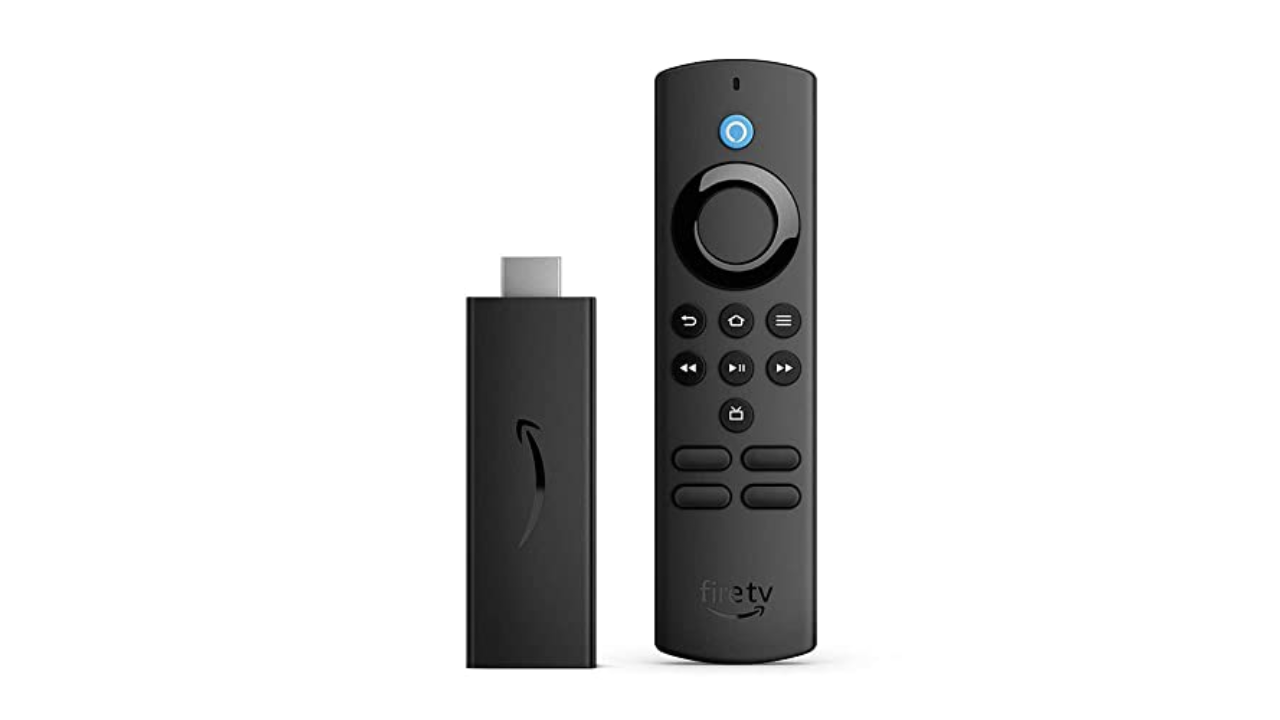
Thanks to the wide array of streaming options detailed above, you’ll be able to watch the Super Bowl on nearly any current device with a screen. There are plenty of Super Bowl TV deals ahead of the game if you need to upgrade that aging 40-inch screen with the dead pixels in the corner. And for as little as $40 or less, a new Roku or Fire TV device will ensure that you have all of these apps (including Tubi) if they’re not already built-in to your screen. See our list of best streaming devices for the full range of options.

The filmmaker behind Barbarian is leading a new Resident Evil reboot


A new Resident Evil reboot from Barbarian writer and director Zach Cregger is in the works, according to The Hollywood Reporter. The publication reports that Cregger is on board to write and direct the movie, which will be produced by Constantin Film and PlayStation Productions, with Shay Hatten (John Wick: Chapter 4 ) as co-writer. I’m probably not the only one questioning whether we really need another Resident Evil movie after half a dozen titles in the Milla Jovovich-led series and 2021’s Welcome to Raccoon City, but as someone who loved Barbarian, I can’t say I’m not intrigued.

Per The Hollywood Reporter, “Cregger’s take is described by sources as a revamp that will take the title to its horror roots and be more faithful to the initial games.” There aren’t any details about the upcoming movie beyond that, but Warner Bros., Netflix and two other studios are reportedly in a bidding war for it.

The best streaming devices for 2025


Nearly every TV on the market today is a smart TV, but not every operating system is a winner. A media streaming device lets you pair whichever user interface you prefer with just about any screen that has an HDMI port. In some cases, such as with older or less expensive smart TVs, a streaming stick or dongle could even be speedier and less glitchy than your TV’s built-in system.

At home, these handy gadgets make it easier for cord cutters to watch the millions of hours of content streaming services provide without cable. And while traveling, a streaming player lets you watch your preferred content on hotel sets (without painstakingly typing in a bunch of passwords or activation codes). We tested out streaming players from Roku, Google, Apple, Amazon and more, gauging the usability and the performance of each to come up with our list of the best streaming devices you can buy.

Google’s TV Streamer, the Apple TV 4K, Amazon’s Fire TV Sticks and Roku devices are the most popular players in the space. Three of those brands also come built into TVs, such as Fire, Google and Roku TVs, but the Apple TV 4K doesn’t come pre-loaded on any set. Each one has a unique operating system and interface. This may be the biggest deciding factor for many people, as it determines how the content you want to watch is arranged and presented. We go into detail for each platform below, but all of them come with home screens that, to varying degrees, gather your apps in one place, present the movies and TV shows you’re currently watching and give you suggestions of other media streaming options.

Nearly all streaming devices come with a remote that lets you search and do other operations using your voice, eliminating the need to hunt and peck at on-screen keyboards. They all offer “universal search,” in which searching for a title takes you to whichever app has it available. If you want to watch Barbie but don’t know where it’s playing, just push the voice button on the remote and say “Barbie.” (We found simply saying the title or the genre you want sometimes works better than saying “Show me…” or “Search for…”) From the search results, hit the play button and the correct app will open and start playing — assuming you’ve previously logged into that app and, in most cases, have an active subscription.

Most streaming sticks connect to the internet via Wi-Fi, with the majority of them supporting Wi-Fi 5 or 6 protocols. Set-top boxes can also have Ethernet ports, so you can hardwire your internet connection to the device, which is always faster than wireless. Streaming media players connect to your TV through an HDMI port, and most sticks hide behind the screen, while set-top boxes sit on a surface nearby. Nearly all units also plug into an AC outlet for power. Some sticks used to work by pulling power from a USB port on the TV, but increasingly, these devices are designed to plug into the wall.

If you have a screen that can display 4K content with Dolby Vision and HDR10, you’ll want a streaming device that supports those high-end formats. Of course, even the most top-shelf streamer can’t make a 1080p TV display content in 4K. The series or movie also has to be transmitted in 4K and, increasingly, companies restrict higher-quality streaming to more expensive subscription plans. In short, every element needs to support the video or audio feature, otherwise the highest quality you’ll get will be the lowest of any component in the chain.

In addition to helping you find stuff to watch, streaming devices from Apple, Google and Amazon can answer questions about the weather, sports scores and general facts using built-in voice assistants. They can also act as smart home controllers to turn off connected smart bulbs or plugs and show feeds from smart cameras. Just remember, as with all smart home devices, compatibility is key. Fire TV devices work with Alexa-enabled smart home equipment; the Google TV Streamer lets you control Google Home devices; Apple TV 4Ks play nice with HomeKit; and Rokus grant power over Roku’s smart home products.

Below are some recommendations for the best streaming sticks and other budget-friendly options. We also included suggestions for set-top boxes and devices geared toward gamers.

Photo by Amy Skorheim / Engadget

Read our full Google TV streamer review

Google replaced the Chromecast product line with the release of the Google TV Streamer in September of 2024. There’s no HD model, only 4K this time around and the going price is $100, which is double the price of the most recent 4K Chromecast. Instead of a dongle that hides behind your TV, it’s now a set-top wedge.

Inside, there’s a faster processor, which kept up with my scattered testing methods — opening and closing apps then reloading them immediately — with no trouble. The Apple TV 4K is still the fastest of the streamers I’ve tried, but I don’t think the speed here will disappoint most people. The storage has jumped up to 32GB from a skimpy 8GB on the Chromecast and the memory is doubled at 4GB. It supports up to 4K/60fps video with HDR, HDR10, HDR10+ and Dolby Vision. Audio formats include Dolby Digital and Dolby Atmos along with spatial audio if you’re wearing the Pixel Buds Pro.

The remote is compact and streamlined; the D-pad handles navigation, play, pause and rewind. Of course there’s also a back button (as you’d find on any good Android device). And if you ever lose the pill-shaped remote, you can push a button on the back of the set-top wedge to make it ring.

Google has made its Home app an integral part of the streamer. Not only will you use it to set up your device, but you can also use the streamer to view a slideout home panel on your TV screen (that looks a lot like the Favorites tab in the app). The panel lets you control your compatible smart home devices so you can set temperatures, turn off lights, view feeds and so on. You can even do so while you’re watching something if you program the star button on the remote to pull up the Home panel.

What really makes the Google TV Streamer the best for all-in-one steaming is the interface. It’s basically the same as what you’ll find on any TV set or screen that comes with Google TV built in. I find Google’s presentation to be the best at pulling together content from different streaming apps into one useful and intuitive menu. It’ll track what you’ve been watching across different platforms so you can easily dive back in, and the recommendations are pulled fairly equitably from across your subscribed services.

Of course, no big tech company can release a product today without some AI contrivance and it comes here in the form of computer-generated plot and audience review summaries for titles. It’ll also generate screensaver images based on your prompts. Those are fine and all, though probably not worth it. The real reason to go for the Google TV Streamer is the helpful interface combined with performance that’s faster than most of the sticks on the market. And if you’re someone who uses Google Home for your smart home control, you’ll get even more out of this device.

Pros

  • Excellent interface combines all streaming content equally
  • Useful smart home control with a slide-out paneluseful
  • Attractive device with a great remote
Cons

  • Required HDMI cable issold separately
  • Double the price of its predecessor

$100 at Verizon

Will Lipman Photography for Engadget

Operating system: Roku OS | Remote: Yes | Connectivity: Wi-Fi, Bluetooth | Display: No | Voice control: Yes

Believe it or not, the streaming world has enough free content to keep even the most voracious watchers entertained — and the Roku Streaming Stick 4K is probably the best way to access it. Roku’s interface is uncluttered, with a simple list at the left and an app grid on the right. Two of those list items, Live TV and Featured Free, are stuffed with free content, both on linear channels and video-on-demand (VOD) services. The Roku Channel app adds thousands more series, films, Roku Originals and live channels to watch without subscribing to a dang thing.

Roku makes seven different streaming devices, including sticks, set-top boxes and a few Streambars — all will get you that free content. The $50 Streaming Stick 4K is the best mix of price and features. It hides behind your TV, supports 4K, HDR10+ and Dolby Vision and has a longer range Wi-Fi. If you don’t need the longer range or Dolby Vision, and don’t mind a slightly bulkier device, you can save $10 and get the Roku Express 4K+. Both players support Apple AirPlay 2 and can control your set’s power and volume.

I found the universal search function to be accurate when looking for specific titles; pushing the Voice button and saying “Poker Face” brings up results for the Peacock show, the Russell Crowe movie and a poker documentary from a free channel. Saying “Succession” gets you the show from Max as well as listings for other series and films with “success” in the title. It was pretty good at finding suggestions for more general searches, like “police procedural shows” and “Idris Elba,” though it had issues with recommendations for kids movies (not enough Disney+ results, in my opinion).

Navigation is speedy with minimal load times between apps. The remote has a nice layout with a large back button and the volume rocker on the side. The handy Instant Replay button jumps back 10 to 20 seconds and can even show subtitles for the replayed portion, if the app supports it. The only thing I didn’t love was the What to Watch menu, which was overwhelmingly populated with free content and had a minimal amount of titles sprinkled in from my paid apps. But since free content is where Roku really shines, I can’t be too miffed. — A.S. 

Pros

  • Built-in access to tons of free content
  • Accurate universal search
  • Supports 4K, HDR10+ and Dolby Vision content
Cons

  • What to Watch menu ignores content from other streamers

$39 at Amazon

Amazon

Operating system: Fire TV OS | Remote: Yes | Connectivity: Wi-Fi, Bluetooth | Display: No | Voice control: Yes

If price is of the utmost importance and you don’t need 4K, Amazon’s Fire TV Stick Lite is a decent alternative. At $30, it’s one of the cheapest streaming sticks on the market and it’s also frequently discounted, too. It supports FHD streaming with HDR and, just like its higher-end siblings, comes with an Alexa voice remote.

One of the reasons this is considered “Lite” is that this particular Fire TV Stick can’t control your TV; you still have to use your television remote to power it on and off or to adjust its volume. That’s not that big a deal, especially if it helps save you a few bucks. In comparison, the standard Fire TV Stick typically retails for $40, while the Fire TV Stick 4K costs $50.

Amazon’s Fire TV supports nearly all of the major streaming services, including Netflix, Hulu, Max, YouTube, YouTube TV and Hulu, among others. The Live page features Twitch out of the box as well. While you can’t use Alexa to control the TV, the Fire TV Stick Lite does let you use Alexa to search for shows and ask general questions like the weather forecast or the latest scores for your favorite sports team.

Despite its low price, the Fire TV Stick Lite is a decent streaming dongle. It comes with the updated Fire TV interface that adds features such as user profiles, a new main menu navigation bar with show recommendations, plus a scrolling list of your favorite streaming apps. The layout isn’t as unified as Google TV’s and is more complicated than Roku’s, but it’s still easy enough to figure out. That said, the interface prioritizes Amazon Prime Video content, and there are a lot more ads than on other streaming platforms. — Nicole Lee, Senior Editor

If you do want the ability to control your TV with the remote and are also looking for something that supports improved picture quality, you may want to upgrade to one of the more advanced Fire TV Sticks. At $60 (and often on sale for $45) the Amazon Fire TV Stick 4K Max not only handles Dolby Vision, Dolby Atmos, 4K and HDR10+, but it also supports Wi-Fi 6E. That means if you have a router that also carries the protocol, you could see better and faster connectivity. The 4K Max has the fastest processor of any Fire TV Stick, and we found it plenty zippy. It’s also the only Fire TV Stick that supports the new Ambient Experience: when enabled, or after the pause timeout kicks in, the dongle will display art (and widgets, if you want) on your TV, giving any screen the look of something like Samsung’s The Frame. — A.S.

Pros

  • Affordable
  • Supports all major streaming services
Cons

  • No 4K content support
  • Can’t control TV’s power and volume
  • UI heavily favors Amazon Prime Video content

$49 at Macy’s

Roku

Operating system: Roku OS | Remote: Yes | Connectivity: Wi-Fi, Bluetooth | Display: No | Voice control: No

The Roku Express has the same user interface as the Streaming Stick+, but it’s housed in a compact set-top box instead. It doesn’t support 4K or HDR and the remote control lacks a voice command button. But if all you want is a capable HD streaming device, the Express fits the bill. If you insist on having 4K, however, consider the Roku Express 4K+, which retails for $40. It’s very similar to the Express, except it carries support for 4K, HDR and AirPlay, and it comes with a voice remote as well. That could well make it worth the extra money. —N.L.

Pros

  • Affordable
  • Lots of free and live content
Cons

  • No 4K streaming support
  • No voice remote

$28 at Macy’s

Amy Skorheim for Engadget

Roku updated its most advanced streamer, the Roku Ultra, in 2024, giving it a faster processor, Wi-Fi 6 compatibility and a brand new remote. Like the previous generation, it supports 4K HDR10/10+ streaming, 100 Mbps Ethernet connection, Bluetooth streaming, AirPlay2 connectivity and voice commands with Alexa, Google Home and Roku Smart Home. The previous model had a microSD slot for external media, now there’s a USB port for local playback.

I used the Ultra for about a month and was impressed with the speed, image quality and the new remote — plus a couple of perks I hadn’t expected. The 4K TV I used for testing was new to me and whoever had watched it before had set it to 1080p. During setup, the Ultra prompted me to head to the TVs settings to adjust the video quality. It was a nice touch and not something all players do.

Flipping from app to app was nearly instantaneous. Changing my mind with the back button immediately returned to the home screen. I experienced no buffering issues or audio synching troubles and pairing up Bluetooth headphones was fast with glitch-free performance.

I really liked the new remote. Pick it up and the backlight kicks in, making it easy to control in a darkened room. Since it’s equipped with an always-on mic (which you have the option of turning off right on the remote) you can say, “Hey Roku, where’s the remote?” and it’ll start ringing. Even with the Roku and TV off, you can just say “Hey Roku, open Netflix” to turn on your TV and start up the app. A backlight and always-on feature will obviously drain the battery quicker, but in a month of using the remote, I only had to recharge it once, which is easy to do via USB-C.

The voice control function didn’t perform more complicated functions as easily, though. With the TV off, I asked it to continue playing a show I’d been watching and it turned on my PS5. While on the Roku home screen, I asked it to continue playing Gravity Falls, and was told there was no content to continue playing, even though my kid had been watching the show the day before. I often had better luck just holding down the mic button and speaking a search request as I’m used to doing with other players. The search function was accurate most of the time, presenting the correct movie or show and taking me to the app when I clicked on what I wanted.

Of course, as we said about the other Roku device on our list, the OS here is best at finding and presenting free and live content, with a live TV channel guide, a Featured Free content tab, a What to Watch section packed with stuff from no-cost providers like Tubi, plus the brand’s own Roku Channel. If you’re a fan of the Roku experience and want to get the most out of a higher-end TV, the Ultra is the set-top box to get. — A.S.

Pros

  • Excellent remote
  • High-quality video and audio
  • Lots of access to free and live content
  • USB port for playing local media
  • HDMI cable is included
Cons

  • Voice control struggles with complex requests
  • Interface is better at free content than organizing your paid apps

$72 at Amazon

Photo by Devindra Hardawar / Engadget

Operating system: tvOS | Remote: Yes | Connectivity: Wi-Fi, Bluetooth, Ethernet (optional) | Display: No | Voice control: Yes

When my colleague Devindra Hardawar reviewed the latest gen of the Apple TV 4K upon its debut in 2022, he called it “the best streaming box by a long shot.” In terms of picture quality, speed, longevity and Apple-engineered extras, that remains accurate. The set-top box supports 4K Dolby Vision and HDR10+, which makes compatible content look, to borrow Devindra’s term, glorious.

The A15 Bionic chip inside enables near-instantaneous loading of and switching between apps. Zooming from the beginning of an episode to the end or anywhere in between is not only quick, but also quite easy to do once you get the hang of the touch-sensitive directional pad on the Siri remote. Apple improved the box hardware over the previous generation, too, with a smaller, fan-less design.

You don’t have to be an Apple devotee to appreciate the streaming box, but having an iPhone makes setup easier, letting you hold your phone near the device to transfer credentials. If you use the Fitness+ app with an Apple Watch, not only can you watch workouts on a big screen, you’ll see live heart rate stats splashed in the corner as well. The app library is extensive, covering all of the most popular streaming services, plus countless Apple Arcade and other games. The remote’s Siri button lets you easily search for stuff to watch with voice commands, and typically gets you to the right app immediately. I found it nearly as good as other devices in suggesting content for more general queries like “sci-fi space movies.”

If you were waiting for the “but,” here it is: the Apple TV 4K is expensive. The base model is $129, which comes with 32GB of storage. The 128GB model goes for $149 and adds an Ethernet port and acts as a Thread-enabled home hub, a requirement for certain smart home devices. Also, if you’re looking for lots of free channels and live programming with an all-in-one home page to unify your disparate streaming subscriptions, this isn’t quite it.

The Apple TV app incorporates recently watched series into the Up Next section and your most-used apps appear in the Channels and Apps row. But the homepage is mostly a showcase for Apple TV+ series and movies. And don’t expect to see much in the way of Netflix content in the app either. Possibly due to a continuing grudge match between the two companies, Siri even has trouble finding Netflix shows at all — searching for Lupin only came back with results from the anime franchise and when I asked for All the Light We Cannot See, the AI turned off my smart lights. Finally, this premium streaming device doesn’t come with the HDMI cable required to hook it up to your TV. That’s a minor detail in the grand scheme of things, but it did cause me to fling grownup words in Cupertino’s general direction. — A.S.

Pros

  • Extremely fast operation
  • Apple Fitness+ and Arcade on a big screen
  • Support for 4K, HDR and Dolby Vision content
Cons

  • Expensive
  • Apple TV app heavily favors Apple TV+ content
  • Sub-par Netflix searches

$125 at Amazon

NVIDIA

Operating system: Android TV | Remote: Yes | Connectivity: Wi-Fi, Bluetooth, Ethernet, microSD card slot | Display: No | Voice control: Yes

For those who want an all-in-one device that lets you stream movies, run a PLEX media server and play games, consider NVIDIA’s Shield TV Pro. It currently runs Android TV, which is a little outdated at this point, but there’s a possibility that it could be upgraded to Google TV in the future.

Thanks to its capable Tegra X1+ processor, the NVIDIA Shield TV Pro can stream in native 4K and it can also upscale 720p and 1080p video to 4K with the company’s AI neural network. It also supports Dolby Vision and HDR10, has 3GB of RAM, 16GB of storage and two USB-C ports. Additionally, there’s a gigabit Ethernet port, an HDMI socket and a microSD card slot. Since it runs on Android, you can use it to play most games from the Google Play Store.

The main reason you’d choose the NVIDIA Shield TV Pro over other machines is that it gives you access to NVIDIA’s GeForce Now cloud gaming service. As long as you have a relatively speedy internet connection, you can play top-tier PC games that are streamed online to your Shield TV Pro. —N.L.

Pros

  • Supports 4K, HDR10 and Dolby Vision content
  • Provides access to NVIDIA’s GeForce Now cloud gaming service
  • Built-in Google Assistant support

$197 at Amazon

Microsoft

Operating system: Xbox OS | Remote: Yes | Connectivity: Wi-Fi, Bluetooth, Ethernet | Display: No | Voice control: Yes

Even though both Sony’s PlayStation 5 and the Xbox Series X can stream video, it’s the Xbox that we think is the best gaming console for the job. It can play 4K Blu-Rays and supports all of the usual streaming video apps including Apple TV+ and Disney+. However, the PS5 can’t stream Disney+ in 4K or Dolby Atmos, which is disappointing if you ever want to watch The Mandalorian in all its cinematic glory.

Fortunately, that’s not the case with the Xbox Series X. On top of that, the Xbox Series X (and S) also support Dolby Vision for streaming video, which is especially great for people with newer TVs. Of course, the Xbox is also a pretty great gaming machine, and it offers access to Game Pass, Microsoft’s subscription service that has a large library of titles. —N.L.

Pros

  • Provides access to all major streaming services
  • Plays 4K Blu-Rays

$550 at Adorama

Amazon

Our budget pick from Amazon doesn’t allow you to control your TV with the remote, nor does it support 4K image quality or Dolby Atmos. Amazon’s higher-end not only handles Dolby Vision, Dolby Atmos, 4K and HDR10+, but it also supports Wi-Fi 6E. The processor is pretty zippy and it even supports a fairly pleasant Ambient Experience, displaying art (and widgets) when the screen is idle, like on . It also lets Xbox Game Pass Ultimate subscribers via the app without an Xbox Series X or S console. And Engadget’s Jeff Dunn has gotten a lot of use from the stick as a . That’s a decent amount of utility from a $60 device (that’s often on sale for around $45).

That said, Amazon’s Fire TV interface is less elegant (and less democratic) than other UIs, highly prioritizing Prime Video content. It’s also notably ad-stuffed — promoting not just Amazon’s content, but products as well. — A.S.

Pros

  • Affordable 4K streaming
  • Additional gaming access
Cons

  • Ad-stuffed interface
  • Prioritizes Prime Video content

$45 at Amazon

Red Rooms, Netflix’s Back in Action, and every new movie this week


Each week on Polygon, we round up the most notable new releases to streaming and VOD, highlighting the biggest and best new movies for you to watch at home.

This week, Queer, the new romance drama from director Luca Guadagnino (Call Me by Your Name, Challengers) and starring Daniel Craig, comes to VOD following its theatrical premiere. There’s even more new releases available to purchase and rent this week as well, including the new superhero action film Kraven the Hunter and the anime drama Ghost Cat Anzu. If you’re looking for the best movies new to streaming services this week, we’ve got you there too. Back in Action, the new action comedy starring Cameron Diaz and Jamie Foxx, is available to stream on Netflix this weekend, along with a few of the best movies of 2024: A Different Man on Max, A Real Pain on Hulu, Red Rooms on Shudder, and more.

Here’s everything new that’s available to watch this weekend!

Where to watch: Available to stream on Netflix

Cameron Diaz and Jamie Foxx driving a car with two children in the backseat in Back in Action.

Back In Action. (L to R) Cameron Diaz as Emily, Rylan Jackson as Leo, McKenna Roberts as Alice and Jamie Foxx as Matt in Back In Action. Cr. Courtesy of Netflix © 2024.
Image: Netflix

Genre: Action comedy
Run time:
1h 54m
Director:
Seth Gordon
Cast:
Cameron Diaz, Jamie Foxx, Glenn Close

Cameron Diaz and Jamie Foxx star in this new action comedy from Baywatch director Seth Gordon (and action director extraordinaire J.J. Perry) as Emily and Matt, two former CIA spies who walk away from their life of espionage to start a family together. When their covers are blown, the family must enlist the aid of Ginny (Glenn Close), Emily’s mother, in order to track down their pursuers and stop them before it’s too late.

Where to watch: Available to stream on Netflix

In The Rifle Club, a man wearing beige inspects a rifle in an office

Image: Netflix

Genre: Action comedy
Run time:
1h 53m
Director:
Aashiq Abu
Cast:
Vijayaraghavan, Dileesh Pothan, Anurag Kashyap

After a couple accidentally kills the rebellious son of a notorious crime boss, they’re forced to seek refuge and protection among the members of a historic rifle club in the Western Ghats. As if that weren’t enough, the rifle club happens to be hosting a famous actor visiting in order to research an upcoming role in this Malayalam action comedy.

Where to watch: Available to stream on Hulu

Kieran Culkin and Jesse Eisenberg stand outside looking up at something in A Real Pain

Image: Topic Studios/The Sundance Institute

Genre: Comedy drama
Run time:
1h 30m
Director:
Jesse Eisenberg
Cast:
Kieran Culkin, Jesse Eisenberg

Jesse Eisenberg directs and stars in this awards contender in which he and Kieran Culkin (Succession) play David and Benji, two estranged cousins who embark on a tour across Poland in an attempt to bond and honor the memory of their late grandmother. As their trip wears on, the two are forced to confront the ways they’ve grown apart from one another and remember their respective importance in each other’s lives.

The movie’s comparatively low stakes mostly keep it grounded to a story of two disconnected cousins who both so clearly miss the friendship they had when they were kids, and want to get back to it. David can’t understand why Benji isn’t growing up in all the ways that David has. Benji can’t admit that he feels left behind. All this is set against the backdrop of an effective and delicately handled Holocaust tour that causes everyone in the tour group to react in different, profound, and difficult ways.

Where to watch: Available to stream on Max

Adam Pearson and Sebastian Stan seated across from one another at a booth in a restaurant in A Different Man.

Image: A24

Genre: Psychological thriller
Run time:
1h 52m
Director: Aaron Schimberg
Cast: Sebastian Stan, Adam Pearson, Renate Reinsve

Sebastian Stan (Captain America: The Winter Soldier) stars in A Different Man as Edward, an aspiring actor wracked with insecurity over his neurofibromatosis. After undergoing a radical medical procedure to transform his appearance, Edward’s life appears to be looking up — that is, until a man with neurofibromatosis named Oswald (Adam Pearson) comes into the picture. Will Edward be able to find peace with Oswald and his own past?

Where to watch: Available to stream on Prime Video

A man doing push-ups in a sleeveless white t-shirt in Unstoppable.

Image: Amazon Prime Video

Genre: Biographical sports drama
Run time:
1h 56m
Director:
William Goldenberg
Cast:
Jharrel Jerome, Bobby Cannavale, Michael Peña

Unstoppable is a biographical sports drama based on the life of Anthony Robles, an NCAA Division I wrestling champion who was born with one leg. The film dives into his life leading up to his college years, with a particular focus on his relationship with his single mother (played in this movie by Jennifer Lopez). Unstoppable is the directorial debut of National Treasure, Argo, and Zero Dark Thirty film editor William Goldenberg.

Where to watch: Available to stream on AMC Plus

Two claymation figures sitting on a couch in a crowded living room in Memoir of a Snail.

Image: IFC Films

Genre: Stop-motion animation
Run time:
1h 35m
Director:
Adam Elliot
Cast:
Sarah Snook, Kodi Smit-McPhee, Eric Bana

This stop-motion animated film is narrated by a snail-obsessed woman (played by Sarah Snook) who looks back on her life. She recounts her poor but blissful childhood with her father and beloved twin brother and recalls how she and her brother were separated after their father died. While her current situation is pretty dreary and she certainly has regrets, she slowly begins to find the courage to live again.

Where to watch: Available to stream on Shudder

Two women stare at a computer screen, lit by the red glow, in Red Rooms

Photo: Utopia

Genre: Psychological thriller
Run time:
1h 58m
Director:
Pascal Plante
Cast:
Juliette Gariépy, Laurie Babin, Elisabeth Locas

Red Rooms centers on Kelly-Anne (Juliette Gariépy), an aloof fashion model with an inexplicable obsession with the murder trial of Ludovic Chevalier (Maxwell McCabe-Lokos), a man accused of murdering three women and disseminating snuff films through the dark web. After befriending Clémentine (Laurie Babin), an overzealous “fan” of Chevalier who wholly believes in his innocence, Kelly-Anne’s own fascination with the case takes an exceedingly darker and more sinister turn.

As Polygon’s Tasha Robinson writes,

What’s fascinating about Kelly-Anne throughout the trial, and her increasingly calm but unnerving behavior whenever she leaves the courthouse, is how little she fits into any of the expected tropes or profiles for a character in her position. Red Rooms’ biggest mystery isn’t whether Ludovic is guilty (though Plante keeps that question for the end as well), it’s who Kelly-Anne really is and what she wants. Does she have a personal connection to one of the victims, or to Ludovic? Is she just one of those unfortunate groupies who flock to serial killers? Given her clear technological prowess, is she planning (or has she already committed) similar crimes herself? The deliberate, clinical procedural aspects of Red Rooms leaves conscious space for viewers to speculate about where it’s all going, right up to a moment of mesmerizing shock.

Where to watch: Available to rent on Amazon, Apple, and Vudu

In Queer, Daniel Craig, wearing a nice summer suit, sits at a coffee table outside a restaurant and reads the newspaper

Image: A24/Courtesy Everett Collection

Genre: Period romantic drama
Run time:
2h 16m
Director:
Luca Guadagnino
Cast:
Daniel Craig, Drew Starkey, Jason Schwartzman

Based on William S. Burroughs’ 1985 novella, Queer stars Daniel Craig as American expatriate William Lee — a pen name for Burroughs — living in Mexico City. After meeting Eugene Allerton (Drew Starkey), a GI turned expatriate, William becomes infatuated with his new acquaintance, sparking a relationship that proves exhilarating, beautiful, and ultimately destructive.

Where to watch: Available to rent on Amazon, Apple, and Vudu

Kraven (Aaron Taylor-Johnson) stands with his hands on a railing, wearing a sleeveless, open leather vest and showing off more abs than seems humanly possible in Kraven the Hunter

Photo: Jay Maidment / Columbia Pictures, Marvel Entertainment / Everett Collection

Genre: Superhero action
Run time: 2h 7m
Director:
J.C. Chandor
Cast:
Aaron Taylor-Johnson, Ariana DeBose, Fred Hechinger

Following in the footsteps of Morbius and Madame Web, Kraven the Hunter is yet another Sony Spider-Man movie without Spider-Man in it. (And who knows? This might actually be the last one!) Aaron Taylor-Johnson stars as Kraven, who in this version gets some animal-like powers after being injected with a serum. He’s also a conservationist and animal lover, instead of a poacher who just wants to go after the most dangerous game. An antihero!

It’s a largely joyless affair, and Chandor can’t seem to decide on a dramatic or comedic tone, let alone a blend of the two. Taylor-Johnson often stands around delivering lines that seem intended to be catchphrases, but he does so with all the determination of someone who loathes the material. A quipper-hero Kraven is not, and neither is Taylor-Johnson. But then, practically every actor in the cast is entirely checked out. Rarely has a superhero movie featured this many talented performers phoning it in. But with such bland material, can you blame them?

Where to watch: Available to rent on Amazon, Apple, and Vudu

Genre: Horror comedy
Run time:
1h 23m
Director:
Matthew John Lawrence
Cast:
Molly Brown, Jeffrey Dean Morgan, Billy Burke

This irreverent horror comedy centers on Abbie Bladecut (Molly Brown), the daughter of an infamous serial killer who is tasked with completing her first kill as a rite of passage into adulthood. Things become complicated when Abbie befriends her intended target, eventually forcing her to choose between her father’s way of life and her own.

Where to watch: Available to rent on Amazon, Apple, and Vudu

Image: GKIDS

Genre: Drama
Run time:
1h 37m
Directors:
Yōko Kuno, Nobuhiro Yamashita
Cast:
Munetaka Aoki, Mirai Moriyama, Noa Gotō

If Totoro was a massage therapist with a gambling problem, you’d get Anzu. The 37-year-old ghost cat was once a regular house cat who just continued to age and somehow transformed into an anthropomorphic cat. Anzu finds himself in charge of 11-year-old Karin, a surly preteen who does not want to be spending the summer with her grandfather and his weird adult human cat. The two clash, but eventually embark on an adventure into the underworld to break out Karin’s mother. Ghost Cat Anzu sparkles with wonderful animation, particularly when it comes to the character expression and design.

Ghost Cat Anzu works best when the mix of the mundane and the mythical is balanced. For instance, Anzu inviting a host of forest spirits to his temple for a party is a hilarious setup that gives Karin a chance to relate her feelings to the ragtag group. But the eventual journey to the land of the dead ends up dragging and muddling the movie’s message.

Sci-fi fans: Watch Foundation’s excellent season 2 while it’s free


Oh, you think that’s hyperbolic? Well I’m just getting started. Foundation (season 2) has one of Lee Pace’s best performances, has the best space ship designs this side of Villeneuve’s Dune, has the best romantic scoundrel Han Solo-type since Empire Strikes Back, and has the most bombastic television finale since the Red Wedding. It’s all backed up with an inexplicably lush costume, set, and CGI budget that can’t be explained as anything other than a nine figure tax write off. And you don’t need to have seen a single episode of the first season or read a page of the book to enjoy any of it!

Here’s the thing about Isaac Asimov’s Foundation: it’s a strange choice for a television series, one that requires a lot of modifications to function as episodic storytelling. There were clearly some kinks to work out, and it seems to have taken one mediocre season to iron out all those wrinkles. Luckily, the series also sort of functions like an anthology, with a cast of mostly new characters for the second (and upcoming third) season. All you need to know from the first season is that (spoiler warning) immortal clone emperor Lee Pace is big mad about a group of nerds (led by Ed Harris and his protege Lou Llobell) who keep saying his galactic empire is going to collapse (and they’re totally right, because math). There, I summarized the mediocre first season and now you’re ready for a prestige sci fi drama full of pulpy adventures, palace intrigue, steamy love stories (gay and not), and some really good explosions.

Still not convinced? Well there is that naked Lee Pace ninja fight in the season 2 premiere.

Now hurry up, you’ve got 10 incredible episodes to watch, you can thank me later!

This mini documentary about the coldest town on Earth is stunning


Kiun B’s YouTube videos are mini documentaries about her life and the lives of the 800 people who live in her hometown of Yakutia, Siberia, aka the coldest town on Earth. The creator, who narrates the videos, says she and her community are native to the region. The enchanting mini docs showcase their customs, culture, and day-to-day life — which looks quite different when it’s 95 degrees Fahrenheit below zero outside.

This installment follows a family through their day, including waking up before the sun to feed the furnace fire and melt ice for drinking water. They don layers and layers of insulated clothing just to walk short distances outside — or long distances, in the case of the schoolkids who bundle up each day to commute to class. The stories are humbling, especially as you sit in your cozy home and watch the Yakutians do such hard, backbreaking work just to keep their homes running through the winter. (Don’t worry, it gets warm in the summer — and there’s a video about that, too!)

This documentary has that easy, informative Nat Geo vibe that makes it an unchallenging watch with family over the holidays, for instance. But the creator and narrator being from Yakutia herself gives it a more grounded tone and, of course, better insight about life in the town.

While it’s never a good idea to chalk an entire culture up to one YouTube channel, I didn’t know anything about Yakutia or the contemporary lives of the Indigenous people of Siberia before watching these videos, and they exposed me to something I might’ve never learned about otherwise. And who hasn’t wondered how the people who live in the harsh climate of Siberia make it all work? To have that question answered — and to learn how those people thrive in a cold I can’t even conceive of — is a great way to spend 20 minutes.

Street Fighter at 30: Why we love this hilariously bad video game movie


Video game movies didn’t have a great track record in the ’90s, as exemplified by 1993’s live-action Super Mario Bros. movie and the ill-fated Double Dragon film. Those two projects were followed in December 1994 by Street Fighter, an adaptation of Capcom’s hit fighting game franchise. The Street Fighter 2 game had revitalized arcades three years earlier, which made this film the second-most prominent video game adaptation to that point. It was also far more successful at the box office than either Double Dragon or Super Mario Bros., with $35 million domestically and $99.4 million worldwide.

Although Street Fighter did well compared to its predecessors, it’s also a terrible film that was savaged by critics upon its release. But unlike some other awful movies, Street Fighter is still oddly enjoyable to watch despite its shortcomings… and also because of them. For Street Fighter‘s 30th anniversary, I’m going to explain why I’ve come to love this hilariously bad movie before touching upon the future of the franchise.

A real American hero

The cast of Street Fighter.
Universal Pictures

Writer and director Steven E. de Souza was the screenwriter for Die Hard, Die Hard 2, 48 Hrs., Commando, and The Running Man, all of which were seminal action films in the ’80s. De Souza was also a self-professed fan of Street Fighter 2, which is why it’s so mystifying that his idea to bring it to the big screen was to transform it into a G.I. Joe movie. Instead of featuring fighters in an underground martial arts tournament, the story became something unrecognizable about international peacekeepers attempting to overthrow a would-be dictator in a made-up country called Shadaloo.

Almost every character in the game was re-imagined through the lens of this premise, and it’s the biggest reason why some Street Fighter fans hate the movie. This isn’t a real Street Fighter film, it just has characters that share names and superficial traits with their video game counterparts. There’s only one actual street fight in the movie — between Ryu and Vega — and it’s interrupted before it even gets started. De Souza may have had the best of intentions, but his instincts about how to adapt this property were way off.

Van Dammed if you do…

Jean-Claude Van Damme in Street Fighter.
Universal Pictures

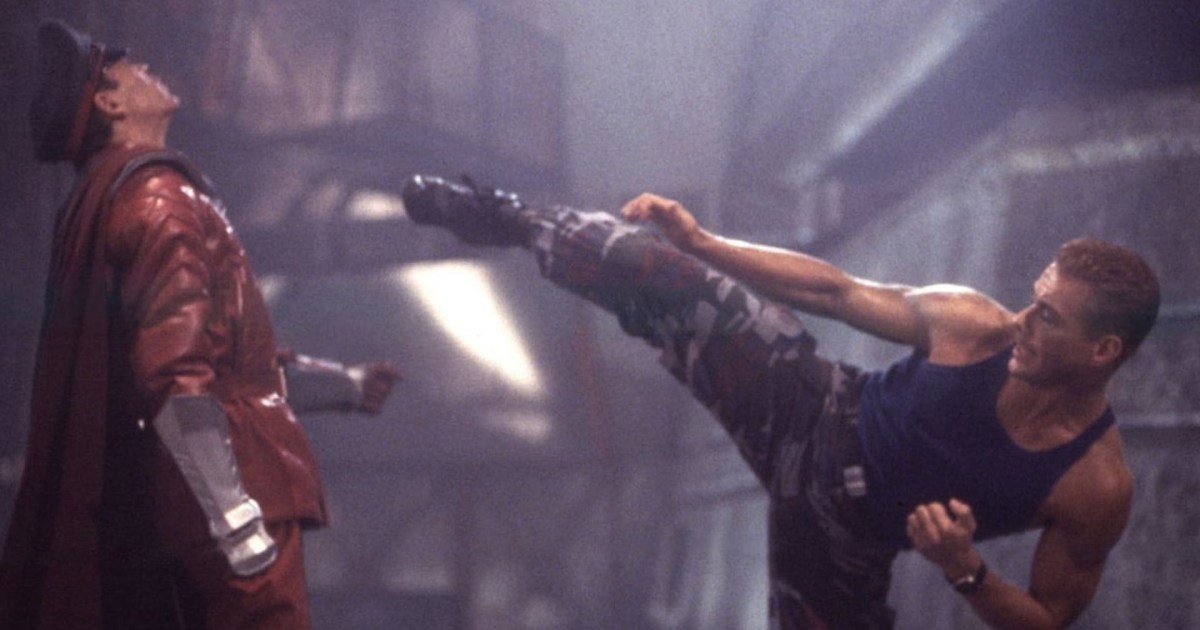
Jean-Claude Van Damme was still near the peak of his stardom when he was cast in the lead as Colonel William F. Guile. In fact, the majority of the movie revolves around Guile in some way, as he was refocused from a supporting character into a leading man. Guile has a personal grudge against General M. Bison (Raul Julia), and he’s so careless about it that he outs one of his closest friends — and Bison’s hostage — Carlos “Charlie” Blanka (Robert Mammone)… which only leads to a lot of pain and suffering for his pal.

Van Damme did lend the film some star power and credibility as an action hero, but he actually makes the movie a lot funnier because of his inept delivery. Guile gets a lot of lines that were meant as cheesy one-liners, including “I’m the repo man” and “Luckily, Bison has driven me crazy.” The jokes don’t land as intended, but it’s almost impossible not to laugh at how the actor says them. Van Damme made the entire film even more campy that way, and it’s one of Street Fighter‘s saving graces.

For Raul Julia, “It was Tuesday”

Raul Julia as M. Bison in Street Fighter.
Universal Pictures

This movie was Raul Julia’s final role before his death in 1994. He was battling stomach cancer and other health problems during filming, but you can’t tell how much pain Julia was in from anything he does on-screen. Instead, Julia’s M. Bison lights up the entire movie every time he appears, and the actor looked like he was having the time of his life.

Bison is gloriously out of his mind throughout the story as he explains his plans to create Bisonopolis, establish a Pax Bisonica, and casually kidnap the queen of England to establish good exchange rate for his Bison bucks. As written, none of that material should have worked as well as it did in Julia’s hands.

Street Fighter (1994) – It Was Tuesday Scene (4/10) | Movieclips

Take, for example, Bison’s most famous line in the film — “For you, the day Bison graced your village was the most important day of your life. But for me… it was Tuesday.” Somehow, Julia turned that into cinema gold, and it’s been a popular meme for a long time.

Select your fighter

Ming-Na Wen and Kylie Minogue in Street Fighter.
Universal Pictures

Among the supporting cast, The Mandalorian‘s Ming-Na Wen comes off well as Chun-Li, even though the film nonsensically turns her into a news anchor instead of an Interpol officer. Edmond Honda (Peter Tuiasosopo) and Gerard Balrog (Grand L. Bush), were inserted as her camera and support crew. Balrog was never a hero in the games, which is why he seems so out of place as a co-conspirator with Chun-Li and Honda in their plot to take down Bison.

However, the film’s biggest mistake is that it takes the games’ two leading men — Ken Masters (Damian Chapa) and Ryu (Byron Mann) — and shifts them into supporting roles at best. Instead of martial arts warriors on the Street Fighter circuit, Ryu and Ken were con-men who pretended to be gunrunners. It’s ludicrous that de Souza saw their prominence in the games and still decided that they’d be better used as comedic foils. Ken and Ryu can still fight in the movie, it’s just not their story, and they don’t have a personal stake in the battle against Bison.

The script is unintentionally funny

The cast of Street Fighter.
Universal Pictures

As noted above, a lot of Van Damme’s lines are only humorous because he didn’t say them the right way. There’s a lot of that in this movie, which somehow manages to combine unintended humor with some jokes that are actually funny. Andrew Bryniarski gets a lot of the movie’s best laughs as Zangief, Bison’s dim-witted henchman. His fight with Honda is also a really amusing callback to Japanese monster flicks.

Miguel A. Núñez Jr. provided some good moments when portraying Dee Jay’s reactions to Zangief’s lines. They were a good comic duo that way. Some of the other gags were also effective, including the visual of Bison’s majestic painting of himself and the previously mentioned Bison bucks that had his face all over them. But when it came time for the rousing speech near the end, Van Damme couldn’t have been this funny if he tried.

Street Fighter (1994) – Who Wants to Go With Me? Scene (3/10) | Movieclips

Assuming the following speech by Bison was meant to be funny, it’s once again reliant on Julia’s immense talent.

Greatest Speech In Cinematic History (HD)

There’s too much humor in this movie to ever take it seriously as an action flick. But for anyone who’s willing to go along with its unique blend of humor and some stupidly funny jokes, it’s actually a blast to revisit.

The other Street Fighter 2 movie

Ryu and Ken face their foe in Street Fighter 2: The Animated Movie.
Toei Company

A few months prior to Street Fighter‘s theatrical premiere, fans in Japan were treated to Street Fighter II: The Animated Movie, an anime film that did almost everything this movie didn’t. The animated flick put Ken and Ryu at the forefront, with Chun-Li and Guile in supporting roles. It also outshined the live-action film with incredible action and fight scenes, as well as a legitimately intimidating take on Bison himself.

Unlike the American live-action film, Street Fighter II: The Animated Movie, is still readily available to stream in this country. It’s also the movie that was more commonly embraced by Street Fighter fans. There have been a handful of anime follow-up projects, but none have managed to recapture what this one pulled off.

Street Fighter: The Movie — The Video Game

Street Fighter: The Movie (PlayStation) Street Battle as Guile

Just to bring things full circle, Capcom released an arcade game called Street Fighter: The Movie that used most of the performers from the film to re-create their characters. Because of his health issues, Julia’s role was filled by Darko Tuscan, while stuntman Mark Stefanich did most of the heavy lifting for Van Damme’s Guile.

Even Kylie Minogue tagged out for Emma Kearney to play Cammy White in this game, while Ming-Na Wen and others reprised their roles. Visually, Street Fighter: The Movie looked a lot like the original Mortal Kombat, which had become the franchise’s chief arcade rival by 1994. However, fan response to this title was unenthusiastic, and it’s been largely unavailable to legally play for nearly three decades.

The Legend of Chun Li

The cast of Street Fighter: The Legend of Chun-Li.
20th Century Studios

In 2009, Hollywood tried again with Street Fighter: The Legend of Chun-Li. This time, Smallville‘s Kristin Kreuk stepped into the title role as Chun-Li attempted to avenge her father’s death at the hands of M. Bison (Neal McDonough). There were some other standouts in the cast as well, including Michael Clarke Duncan as Balrog, Chris Klein as Charlie Nash, and Mortal Kombat‘s Robin Shou as Gen. Regardless, this movie bombed with only $12.8 million worldwide.

Because Hollywood never learns its lesson for long, there’s another reboot on the horizon. Legendary Entertainment is developing a Street Fighter film, which already has a March 20, 2026, release date. There are plenty of takeaways from the previous Street Fighter movies, but we’d be surprised if the third film will finally get it right.

Rent or buy Street Fighter on Prime Video.


Carry-On may be a Netflix thriller, but it’s perfect for cable


A great thriller lives and dies by its complexity. Movies like All the President’s Men or Blow Out create intricate, detailed worlds of mystery that pull you in before leaving you at the center of the labyrinth to unwind yourself in the days that follow. A solid B-tier thriller, however, is all about simplicity. These are movies like Taken and Phone Booth that you might not necessarily choose to put on, but never say no to if you find them on cable. What makes these movies so fun, and so endlessly rewatchable, is how effectively they wring every last drop of mystery and tension out of a deceptively simple premise. And Carry-On, the new holiday airport thriller from Netflix, is about as solid a B-tier thriller as you’re ever going to find.

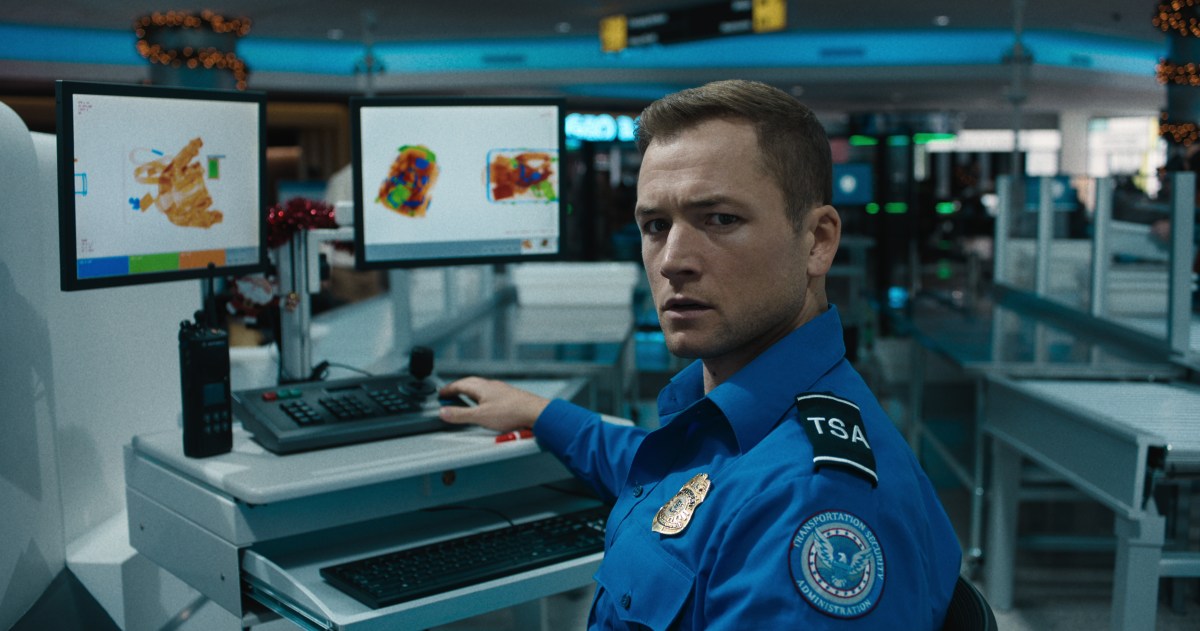
The movie follows Ethan (Taron Egerton), a bored TSA agent with dreams of being a police officer. But as long as he’s stuck working at LAX, he’s determined to put as little thought into his work as possible, much to the dismay of his newly pregnant girlfriend (Sofia Carson), who would love to see him get a promotion or finally join the LAPD. Unfortunately for Ethan’s minimal effort streak, during a Christmas Eve shift on the X-ray machine, he receives an earpiece with which a terrorist (Jason Bateman) tells him his girlfriend’s going to die unless he lets a certain bag through the machine.

Taron Egerton puts in an earpiece as a TSA agent in Carry-On

Carry-On. Taron Egerton as Ethan Kopek in Carry-On. Cr: Sam Lothridge/Netflix ©2024
Image: Netflix

All this setup takes less than 10 minutes to communicate, and now we’re off on a duel of wits between Ethan and a terrorist with a massive head start and an eye on every security camera in LAX. Director Jaume Collet-Serra is a master of these cable thrillers — with his Blake Lively shark survival movie The Shallows being a particular standout — but it’s these earliest moments where he’s at his very best.

While the plots of some movies unfold, revealing themselves gradually to the audience, Collet-Serra’s thrillers feel like watching someone make origami, where every fold of the plot is crucial, precise, and surprisingly intricate. His protagonists start with the easy, obvious moves: Ethan tries calling the cops on his cellphone under the table, and sending a text with his Apple Watch, but each gets stopped instantly; now the folds have to get more delicate and complicated. Suddenly, we’re knee-deep in secret messages, nerve agents, airport codes, and TSA tricks, and Collet-Serra strings us along beautifully for each new reveal or twist in the story.

But for all the talents of Collet-Serra in this particular subgenre, Carry-On’s real strength lies in the performances of its two leads. Egerton and Bateman are either on screen or talking for nearly every moment of the movie’s two-hour run time, and still each delivery and airport-based chess move crackles with energy until their inevitable, climactic showdown.

Taron Egerton points a plastic gun at Jason Bateman in Carry-On

Carry-On. (L-R) Taron Egerton as Ethan Kopek and Jason Bateman as Traveler in Carry-On. Cr. Netflix © 2024.
Image: Netflix

Egerton has proven himself as a leading man a few times before, between being a spy in Matthew Vaughn’s Kingsman movies and rocking the piano as Elton John in Rocketman, but Carry-On is the first time the 35-year-old actor has really shown his age and proven he can play an older character doing a slower, less suave kind of action. He gives a quietly determined performance here that can’t help but to make you hope he’ll return for similar roles in all fields of seemingly boring service — maybe he and Collet-Serra can team up for a Notary Public thriller next, since Ben Affleck has the Accountant lane covered already?

The real treat here, though, is Jason Bateman, who gets to play sinister in a way he’s never really been allowed — though Ozark lets him dip his toe in the villain pond every now and again. It’s a straightforward, uncomplicatedly evil kind of character that we’ve rarely seen in thrillers over the last decade or so: He’s just a guy who’s here to get paid and kills lots of people. But Bateman plays the character with a panache that cleverly hides just how much this guy relishes in his evil work, and being good at it. His terrorist is always a step ahead and more than content to watch people like Ethan play games that Bateman’s character is already positive he’s won.

Jason Bateman walks through a dark plane in Carry-On

Carry-On. Jason Bateman as Traveler in Carry-On. Cr. Netflix © 2024.
Image: Netflix

Given how great both leads are, it shouldn’t be a surprise that the only real turbulent interruption to Carry-On’s otherwise excellent tension comes when the movie breaks from its central duel to introduce a police detective (Danielle Deadwyler) who finds herself accidentally thrust into the middle of the action. As with so many of these thrillers, the cop character both feels like an unwelcome distraction from the movie’s main event, and is completely integral to tying together a plot that was more interested in creating a fun premise than a mystery that makes sense. But it’s hard to blame the movie for a so-so conclusion when the journey to get there was as fun as Carry-On’s.

In another era, this is the kind of movie that when you come home for the holidays, you’d find out your parents have watched six or seven times, simply because it’s playing on TNT and they stop channel surfing every time they see it. And who could blame them? Carry-On is tremendous fun. It won’t blow you away, it won’t replace Die Hard as your dad’s favorite winking answer to what’s your favorite Christmas movie, but it will entertain you and whoever else is watching every single time you turn it on. It’s just a shame you’ll never be able to catch it on cable halfway through.

Carry-On is now streaming on Netflix.

Wicked director’s first movies, now streaming, have even better musical sequences


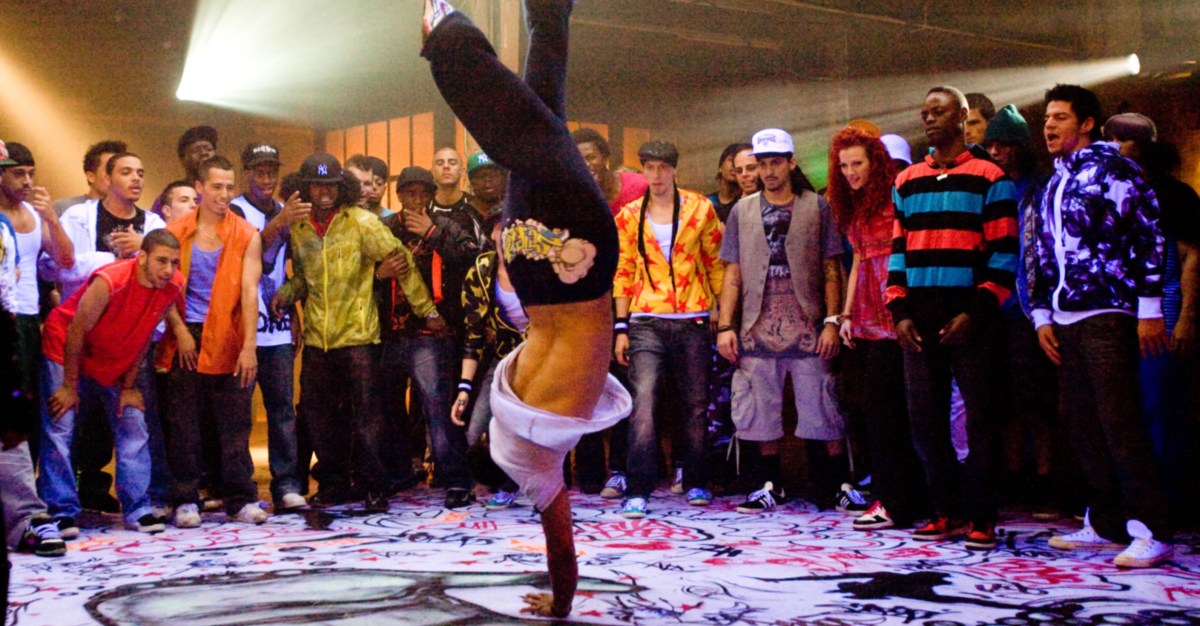
Step Up 2: The Streets was Chu’s first directed feature, and he’d return to the franchise with Step Up 3D. And despite his later, grander musical work, it’s the Step Up franchise that has some of my favorite Chu-directed musical sequences.

If you have seen one Step Up movie — or any dance movie in general, to be honest — you are familiar with the plot. And neither Step Up 2: The Streets nor Step Up 3D will move the dial much; as the critical consensus (topping out on Rotten Tomatoes at 46% with the third movie) can attest, if you’ve seen one, you’ve likely seen them all. A dancer caught between two worlds, forced to conform but dreaming of something they feel deeper. Ultimately they find the fusion of two forms, and (gasp!) win the competition/showcase/emotional battle they’ve been fighting. But that’s all to say: We’re not watching for the plot. We’re here for the dance, the grind, the titular stepping up (to the streets or otherwise).

And on this front, Chu more than delivers. His latest musical offerings are big and flashy — examples of what movies can do to truly adapt musical theater, translating the stage’s energy into the filmic language. For Chu, this often means swirling cameras, fast cuts, and ambitiously staged numbers. By contrast, Step Up 2 and 3 are more in line with older Hollywood dance sequence traditions: long takes, to better emphasize the skill and keep the flow going. All focus on the fancy footwork.

If his newer musicals have sequences that feel like music videos, then the Step Up offerings are the meat-and-potatoes showcases that allow you to just genuinely appreciate the artistry. While the story of dance movies can be stiff, the narrative bursts of passion in a final dance showdown or purely as a demonstration of stakes and personality are where they snap into their groove (both halves reminding you that we come here to watch dancers perform, even if that also means watching them perform acting).

Personally, I’m most partial to Step Up 3D, with dance sequences driven by little bites of character, charm, and more than a little impracticality. Whether it’s a Fred Astaire-remixed oner down a New York street taking advantage of props, a sharp tango, or just another unattainable cinematic loft providing a practice space, Chu lets 3D find its footing by loosening the fabric of reality entirely in those moments and finding something truer. As he holds the camera’s gaze on the performance, we get to see something really special — and that’s before we even get to the final dance battle.

Step Up 2: The Streets and Step Up 3D are now streaming on Hulu.

Wicked vs. every other modern Broadway musical turned movie, ranked


In the 2002 movie Chicago, Catherine Zeta-Jones steps into the spotlight to belt out “All That Jazz” with a defiant kind of joy that takes on new meaning once it becomes clear that her character, Velma Kelly, has just murdered her husband. Zeta-Jones’ rendition of the song was irresistible: On a wave of critical and commercial success, Chicago picked up the Best Picture Oscar (the first movie musical to win the award since 1968’s Oliver!), and studio executives started hunting for movies that could replicate the magic. In their minds, screen adaptations of stage musicals were suddenly bankable again.

Many tried to mimic Chicago’s success, but few did. Some subsequent movie adaptations of Broadway productions tried to retain the original stage casts, with shaky results. Others muted the genre’s excesses with realism, a head-scratcher in a setting where people are suddenly bursting into song and dance. Good, bad, or ugly, there have been dozens of major stage-to-film adaptations since the start of the 21st century. That includes three appearances by Meryl Streep, three films by Rob Marshall, two entries in the Mamma Mia Cinematic Universe, and one perfect shot of Dame Judi Dench in a cat basket, lifting her leg like a horny queen. But not all Broadway shows turned movies are created equal. Here, we sit down to compare them, from the razzle-dazzle-iest to, as the French might say, the miserables.

This list is periodically updated as new musicals are added. The latest: Mean Girls (2024) and Wicked.

Renee Rapp as Regina walking through the halls of the school, phones taking pictures of her, in Mean Girls (2024)

Photo: Jojo Whilden/Paramount Pictures

The marketing was right: “This isn’t your mother’s Mean Girls.” Instead, this “intended for Paramount Plus” curiosity is a strangely faithful but remarkably sauceless retread of the iconic original film, with a few songs thrown in just because. It’s a head-scratcher of a thought experiment akin to Gus Van Sant’s shot-for-shot Psycho remake, this time with TikTok dances. It’s not like the stage musical was ever hailed as one of the great works of the canon, but Tina Fey’s book for the Broadway show suggested she was genuinely interested in shaking up her now-sacred screenplay for the 2004 movie, and the original Broadway cast was so winning that it was difficult to not get at least a little bit of a contact high.

On screen, the buzz is nonexistent, as we’re shuffled through pale imitation after pale imitation of scenes that have been playing just fine on screen for the past 20 years. These musical numbers shun Broadway pizzazz in favor of Gen Z Cool, and still wind up the lamest things this side of Kidz Bop. Moana’s Auli‘i Cravalho and Tony Award nominee Jaquel Spivey are up to the task for a fun new take on this material, and Reneé Rapp does have a certain je ne sais quoi. But she so thoroughly blows Angourie Rice’s wispy take on Cady Heron out of the water that the film becomes a glorified Regina George stan account. Rice’s casting is at odds with the material, yet in perfect lockstep with a film that feels bafflingly miscalculated at every turn.

30. Dear Evan Hansen (2021)

There’s something so deeply unsettling about this film, and it goes far beyond the “Ben Platt is too old” jokes. It’s frankly fascinating how a universally lauded (and truly phenomenal) star turn onstage gave its performer an almost Icarus-level sense of confidence that resulted in perhaps the single most destructive piece of film casting in recent memory. Platt’s on-screen performance, with his withered frame and grasping claws, robs the piece of any charitable interpretation that was left for it, refashioning it completely into an F.W. Murnau-esque horror show, the closest musical theater has come to a snuff film. Every tear-stricken close-up only serves to further reveal the creators’ morbid fascination with this story’s Richard III-esque softboy villain. 2021’s scariest film.

I don’t want to bury the lede: Three-quarters of the way through this adaptation of Michael John LaChiusa’s 1993 off-Broadway musical, itself a riff on Arthur Schnitzler’s La Ronde, there’s a totally-serious-but-feels-like-it’s-from-30 Rock music video for a gloriously tacky dance-pop banger called “Beyond the Moon,” performed by Audra McDonald in full-on Space Drag, intercut with her getting absolutely railed by Cheyenne Jackson (she legit calls him “my pig”). The fact that we are not talking about this every single second of every single day can most likely be blamed on the simple fact that to reach this buried treasure one would have to watch the rest of the movie.

Hello, Again is composed of a series of 10 vignettes, each set in a different decade of the 20th century and focusing on some horny tryst that then dovetails into the next sequence. “The Whore and the Soldier” becomes “The Soldier and the Nurse” becomes “The Nurse and the College Boy,” and so on and so forth. If that sounds like a sexy good time, just wait till you’ve heard the score, in which lyrics meander aimlessly from one bizarre non sequitur (“Look, I’m really pooped and I gotta leave tomorrow to fight a war, I need a beer”) to another (“What do you think about the U.S. involvement in Southeast Asia?”). At one point, there’s a scene where a closeted first-class passenger on the Titanic withholds the information that the ship is sinking from his lover in steerage so he can get some action. But we digress. Audra McDonald. “My pig.” Space Drag.

In 2007, a musical about kids coming of age in a small Indiana town, exclusively starring teenagers and with a score by Parade and The Last Five Years composer Jason Robert Brown, quietly ran for 105 performances on Broadway. As hellish as that sounds, the stage version of 13: The Musical isn’t half bad. Brown’s pop-pastiche score lends an air of sophistication to the story, and the expected treacly coming-of-age stuff is consistently undercut by a welcome sense of subversion.

There’s a horny ballad set in a movie theater called “Any Minute,” which juxtaposes the gory events of a horror flick with the youngsters’ desires to smooch their dates. There’s a vaudevillian turn, sung by a kid with muscular dystrophy, with the lyric “No one says no to a boy with a terminal illness.” How that all would’ve played on stage in 2022 is an open guess, but we’ll never know, since Netflix’s screen adaptation sands any rough edges down to a smooth, shiny veneer.

13: The Musical the movie still has some bops, but without any real sense of angst or edge. Without any new observations on the acne-ridden, hormonal rat race of middle school, this mostly just feels like an after-school special. There’s too much gentle earnestness, too much Preachy Rabbi Josh Peck and Sad Divorced Debra Messing Singing on a Porch. Things liven up whenever choreographer Jamal Sims gets the kids dancing, and king-in-the-making Ramon Reed nearly tears the house down with his performance of the blues showstopper “Bad News.” Alas, the bangers are few and far between, and they cut “It Can’t Be True” — an omission that feels like a hate crime.

Ryan Murphy’s gaudy Netflix adaptation of the 2018 musical comedy hits its high point relatively early. Meryl Streep, patron saint of the 21st-century movie musical, struts into a small-town school board meeting and fights for the right of a lesbian to go to prom with her girlfriend — while simultaneously making it all about her — in a showstopping belter appropriately titled “It’s Not About Me.” It’s musical theater bliss, and Streep has a ball tearing into such shameless lyrics as “How do you silence a woman who’s known for her belt?” It also delivers on the initial promise of the musical, to ruthlessly mock performative wokeness in the face of actual injustice.

Alas, the source material shies away from the theme, settling for generic feel-goodery where the self-righteous characters get let off the hook and actually do save the day. It doesn’t help matters that Murphy often mistakes pastels for direction, drowning his all-star cast in blues and pinks whenever a song kicks in. At one point, Nicole Kidman sings an entire number about a nonsense word while it looks like aliens are landing outside. In space, no one can hear you zazz.

Clint Eastwood appeared in a movie musical once — 1969’s Paint Your Wagon — and that should’ve been the end of it. But for some still-unknown reason, in between J. Edgar and American Sniper, he directed this Broadway adaptation. While Jersey Boys is almost certainly the movie musical featuring the most Sopranos cast members per capita (we stan), it mostly plays like the shell of a Clint movie inside the shell of a Scorsese movie inside the shell of a musical. Marshall Brickman and Rick Elice’s broad screenplay clashes with the film’s gray palette, which also seems to stand in firm defiance of the fact that a lot of people have to burst into song in this thing. There’s certainly good moments, most of them related to Christopher Walken’s predictably endearing performance as mobster-with-a-heart-of-gold Angelo “Gyp” DeCarlo. But this is mostly a baffling entry both for the genre and in Clint’s filmography. YouTube the megamix end-credits sequence, skip the rest.

A24’s first movie musical is a crudely made song-and-dance extravaganza featuring graphic incest, Megan Mullally’s disembodied vagina, and two little gremlins called Sewer Boys who live in a cage and are fed ham directly from Nathan Lane’s mouth, like baby birds. Based on an off-Broadway musical first performed in a supermarket basement, and helmed by Borat director Larry Charles, the plot is basically an acid-brained, NSFW riff on The Parent Trap. Newcomers Josh Sharp and Aaron Jackson play flamingly gay spoofs of Straight Business Bros, a pair of separated-at-birth twins whose fateful meeting encourages them to try and get their agoraphobic parents (Lane and Mullally) re-hitched.

What could be a gloriously queer, subversively witty riff on musicals as a whole winds up more hit-or-miss, with Lane and Mullally providing most of the former, and nearly everything else the latter. The songs all suffer from the mistaken belief that crudeness equals funny (“Life’s a fucking handjob, and I only play to win / So stroke my fucking cock until I bust all on your chin”), and combined with Sharp and Jackson’s grating performances, the whole thing quickly devolves into tedium, even as it strives for a Freddy Got Fingered sort of Dada chaos. Love those Sewer Boys, though!

24. The Last Five Years (2014)

Speaking from experience, The Last Five Years works best in one-song installments at New York City cabarets on drunken evenings. And even then, perhaps we’re better off without. Its narrative, about a couple whose relationship crashes and burns, has never been particularly compelling, mostly because the guy, Jamie, has always felt like such an insurmountable douchebag, and the girl, Cathy, rarely feels like more than a collection of in-jokes about doing summer stock and auditioning for musical theater. The material’s chief appeal has always been its score, which is indeed brimming with wonderfully sophisticated character songs with substantial melodic staying power. They’re great to listen to, and less fun to watch performed back-to-back for two hours.

Still, there are a few things to like (I suppose) about the film adaptation. It’s small in scale for a movie musical, which feels refreshing, and it’s clearly made with love by director Richard LaGravenese. It also has a very good performance by Anna Kendrick. Other than that, its failings are the same as the stage version; it’s just exhausting to sit through wall-to-wall singing by two insufferable human beings. A mid-movie song about a tailor named Schmuel will have you praying for the end.

23. Everybody’s Talking About Jamie (2021)

It’d be great to report that a candy-coated movie musical about a high school-aged wannabe drag queen, featuring Richard E. Grant as his mentor, was a feel-good romp. Alas, most of this West End hit’s transfer to screen never rises above a cavity-inducing level of twee. There are bops to be heard, and Max Harwood acquits himself well in a debut performance, but the material’s Kinky Boots-esque juxtaposition of “drag queen strut meets working class streets” feels half-baked.

Jamie honestly seems like a bit of a pill, especially when everyone around him (all things considered) is pretty “Yaaas queen” about his drag ambitions. Even the bully isn’t so bad! Still, there are some good tunes, in particular the mom-rock future karaoke standard “He’s My Boy,” and a Boy George-esque original entry called “This Was Me.” It’s that number, with its VHS-tinged walk through the London streets of an AIDS-ravaged past, which gives the film its lone moment of genuine grit and pathos.

22. Les Misérables (2012)

The central experiment at the core of Tom Hooper’s film adaptation of Les Misérables is to have the actors sing live on set, beholden to no playback or tempo restrictions but their own. And it works… once. Anne Hathaway’s performance of “I Dreamed a Dream” is movie magic, still as shattering as it was before she won every award possible for it. For the rest of the film’s two-and-a-half-hour running time, the A-list cast whisper-sings their way through ballad after ballad, while an exceptionally nosy camera gets all up in their grill, giving the film a claustrophobic feel and denying audiences the distance needed for such epic melodrama as this.

At the time of its release, Russell Crowe received the brunt of the criticism, but the truth is that not many people come off well in this thing, not even Hugh Jackman. In Tom Hooper’s hands, everything is so incredibly important that nothing matters. Tedium sets in long before the halfway point, and the source material’s emotional climax is rendered inert. When a cast sobs and cries so much, there are no tears left for the audience.

21. Into the Woods (2014)

There was always going to be a movie of Into the Woods, and it was never going to completely work, even before Disney got their hands on Stephen Sondheim’s acclaimed fairy-tale musical. The first act is one story, the second another, and to combine them into one requires a false ending and a tonal shift that just doesn’t lend itself to a traditional cinematic three-act structure.

Of course, it would help if the film was more fun in its first act portion and darker in its second. Instead, the whole thing just feels as glossy and safe as the rest of Disney’s 21st-century live-action output. Director Rob Marshall may be an easy target for criticism, but he does have good instincts as far as movie musicals are concerned. (Perhaps my hottest take concerns a certain Mary Poppins sequel and how it’s secretly fantastic.)

Here, however, his inspiration feels dwindling, his direction a workmanlike ticking of the boxes through the songs, with none of the imagination that might justify their need to be filmed. As such, the main appeal is the performances, the best of which include Emily Blunt as the Baker’s Wife, Billy Magnussen and Chris Pine performing a very wet “Agony,” and (of course) Meryl Streep as the Witch. No, she probably didn’t need that Oscar nomination, but let’s not pretend her “Last Midnight” isn’t a high point in a film in desperate need of one.

20. The Phantom of the Opera (2004)

The second Hal Prince’s iconic staging is removed from Andrew Lloyd Webber’s flagship show, you’re left with a melodramatic mishmash somewhere at the cross-section of ’80s music video, L’Oréal ad, and porno. So it seems fitting that the film version is brought to us by the man who put nipples on Batman. The late Joel Schumacher directs the film around stars Gerard Butler and Emmy Rossum with all the subtlety of a gay sledgehammer, which, in theory, is the right fit for the material. The camera swoops, the chandelier falls, and there’s enough sconce-lighting to put Yankee Candle out of business for a decade.

Minnie Driver runs around in big pink dresses screaming “I ’ate-a my ’at!” like Super Mario in drag. It’s all very bombastic, but in a way, charmingly so; Phantom is the rare movie musical where it feels bizarre when they’re not singing. Still, this has never been the most compelling stuff, and its central love triangle is rendered even more dramatically inert when the Phantom’s disfiguring just looks like a mild sunburn.

Joe Wright (Anna Karenina, Atonement) has been directing musicals without singing for years now. The National, with their spare, introspective compositions, feels like a band tailor-made to express character through song. But I’m not sure a movie musical of their stage adaptation of Cyrano de Bergerac was the ideal collaboration between these vastly different artists. The songs keep wanting to get down and dirty with the characters, while Wright would much rather spend his energy swirling capes around and pumping up the fog machines.

That disconnect only serves to underscore the flailing but flaccid maximalism Wright can often be guilty of perpetrating in his films, as well as the droning sameness of this material’s score. Even Peter Dinklage’s soulful performance is victim of an almost-fatal flaw: sans his character’s iconic nose, this Cyrano’s combination of dashing good looks, swashbuckling swordplay, and elegant letter-writing makes it impossible to imagine a Roxanne who wouldn’t be throwing herself all over him. Still, the performances are solid, and an eleventh-hour ballad in an army barracks (featuring Once’s Glen Hansard) elevates the film, however fleetingly, into something achingly beautiful.

The thing nobody wants to admit is that this movie kinda slaps, and it’s mostly for one reason: Quvenzhané Wallis. Following up her Oscar-nominated, compelling-beyond-her-years performance in Beasts of the Southern Wild, she’s a radiant burst of sunshine capable of turning a potentially contemptible movie into a wash of dumb-but-warm fuzzies.

In many ways, it’s a bummer this film isn’t just a faithful remake of the musical with her in the lead role. Instead, every moment seems riddled with an anxiety that it won’t be cool enough, so the score is augmented with a slew of new Sia songs (“Now look at me and this opportunity”) and bizarro revamps of the original numbers. (Cameron Diaz’s “Little Girls” is either a camp classic or the worst thing you’ve ever seen, depending on how much you’ve had to drink.)

There’s also an absolutely insane sequence where Annie uses social media to rescue herself from being kidnapped. OK, so maybe it does suck, but when Wallis opens her mouth to sing “Tomorrow,” it’s good vibes only, the type of performance that stops cynicism dead in its tracks and drags a shitty movie kicking and screaming into something at least inoffensively charming. If that’s not in the spirit of Annie, I don’t know what is.

17. The Color Purple (2023)

This adaptation of the 2005 stage musical based on Alice Walker’s seminal 1982 novel, directed by Black Is King’s Blitz Bazawule, lies at an uneasy crossroads between remake and stage-to-screen transfer. Fans of the stage show will find the score cut to ribbons and augmented with hit-or-miss additions: It’s nearly an hour into the movie before we hear a complete version of a song from the original show. And the numbers that remain have been reconceptualized as a wide array of magical realism set-pieces.

At varying points, the protagonist, Celie (Fantasia Barrino) conjures up a chain-gang chorus to accompany her in song, rhapsodizes while standing in the grooves of a giant record on a gargantuan turntable, and transports herself into a movie screen for an Old Hollywood style pas de deux with her crush object, singer Shug Avery (Taraji P. Henson). The visual language is so scattershot, and the numbers so few and far between, that they don’t play like windows into Celie’s mind so much as flashy ways for Bazawule to stage a song. This hectic quality carries over into the film’s dance numbers, where Fatima Robinson’s lively choreography continually drowns out the principal characters, until it can be hard to remember why they’re singing at all.

Bazawule seems far less interested in the stage-musical aspect of the film than in fashioning a surprisingly faithful remake of Steven Spielberg’s 1985 film adaptation of Walker’s novel, already somewhat of a directorial mismatch, given the book’s grounded nature and Spielberg’s gauzy romanticism. But without the Quincy Jones score from the 1985 movie, or Allen Daviau’s sumptuous cinematography, this “reimagining” swerves dangerously into TV-movie territory, although through no fault of its sterling cast.

Barrino makes a remarkably assured debut, charting a course for Celie even as the film’s de-emphasis on her relationship with God leaves the character without a center. And while Bazawule seems completely at a loss for how to stage her five-course-meal showstopper “I’m Here,” she sings the absolute hell out of it. Henson brings her singular combination of spikiness and warmth to Shug Avery, and Colman Domingo justifies the redemption arc of Celie’s abusive husband Mister in a way I’m not sure has been as clear or compelling in any other version. And then there’s Danielle Brooks as Celie’s in-law Sofia, handily stealing every scene she’s in. A late-game dinner scene is completely galvanized by her titanic performance, jolting the film to life and conjuring the image of what a fireball of energy and emotion this could have been.

Glinda and Elphaba arm in arm, while walking through the Emerald City in Wicked.

Image: Universal Pictures

The film adaptation of one of the most successful musicals in history arrived on a wave of critical and commercial success, not to mention escalating awards buzz. The hype is real, yet so are the flaws: namely, the film’s washed-out, homogenous cinematography and a padded-to-the-gills run time that had me feeling, though I cannot prove it scientifically, that this is in fact The Longest Movie Ever Made. The film’s overall look is disappointing, particularly for a film in conversation with The Wizard of Oz, one of the most iconically colorful and sumptuously designed films of all time. But the run time proves the bigger problem, especially when 160 minutes only gets us through the first act of the stage musical.

Cleaving the show into two movies isn’t necessarily the worst idea in the world, particularly considering that its source material is a 450-page novel that’s simultaneously a Wicked Witch of the West origin story, a political drama, and an animal-rights manifesto, complete with interspecies orgy. But bafflingly, the film doesn’t add anything particularly new to the story while bloating each beat of the musical to maximum capacity and sacrificing any sense of momentum or narrative thrust.

There are some strong moments from Cynthia Erivo and Ariana Grande, mostly vocally, but even these performances feel miscalibrated. Erivo’s Elphaba isn’t really the Wednesday Addams-esque misfit presented both in the book and in the original Broadway show, nor is Grande’s Glinda the confident, pampered princess who would make their initial clash and subsequent blossoming friendship compelling on screen. Step Up director Jon M. Chu has essentially delivered a cinematic souvenir program of the musical: It’s high on fan service, low on imaginative adaptation, almost damagingly obsessed with not shaking things up or doing anything to incur the show’s fans’ ire. It’s frustratingly earthbound when it should be… ahem… defying gravity.

Somehow, The Producers is still the musical with the most Tony wins in history. With that kind of pedigree, it’s understandable so many people went to see the film adaptation and wondered what the hell all the fuss was about. Susan Stroman, one of the best director-choreographers in the theater biz, sadly seems at a loss when faced with translating her work to the screen. And Nathan Lane and Matthew Broderick, who gave the sort of Broadway performances legends are made of, compete unsuccessfully with the film ghosts of Zero Mostel and Gene Wilder.

At the same time, Stroman summons the charm of the Stanley Donen-style movie musicals of old. What was a Mel Brooks-laced love letter to the golden age of musicals on stage becomes a sort-of loving spoof of films like Singin’ in the Rain and On the Town. In many ways, “I Wanna Be a Producer” and “Springtime for Hitler” conjure that old-school Hollywood musical vibe more successfully than anything in La La Land, which aped the aesthetic but without impressive singing or dancing.

Many could rightfully complain about much of the not-PC nature of the source material, even though I’d wager Roger De Bris and Carmen Ghia rank as some of the most in love and out-and-proud show queens in cinema history. But maybe I’ve always had a hard time being mad with Mel, who really did become a lot cuddlier in his old age. As a document of his last great work, The Producers is a testament to his belief that laughing at Hitler was the best way to piss off a Nazi.

Nine, a movie of a musical based on Federico Fellini’s legendary 8 ½, isn’t very good. The plot’s pretty boring, and Daniel Day-Lewis spends most of the movie skulking around sounding like the Count from Sesame Street. But here’s the thing nobody else wants to say: It’s also a fun watch.

The supporting cast of women plays like Gay Avengers, and while hiring the likes of Marion Cotillard, Kate Hudson, Nicole Kidman, Fergie, Judi Dench, Penélope Cruz, and Sophia Loren to sing such lyrically clunky songs as “My Husband Makes Movies” and “Be Italian” feels kind of insulting, it’s also pretty fierce! Penélope Cruz slides down a giant pink curtain while singing about having sex with Daniel Day-Lewis! Judi Dench struts across the stage trailing a giant boa! Fergie waves around a tambourine filled with sand! Rob Marshall could’ve chosen any musical in the world to adapt for the screen after the success of Chicago, but he chose this one. That’s really fucking weird and kinda cool.

Based on the last sort-of generation-defining musical theater event before Hamilton, Rent is also one of the few 21st-century movie musicals to feature most of the original Broadway cast. The good news about that is that everyone sounds great; this movie soundtrack fucks hard. The bad news is that while everybody still looks immaculate, their age makes the whole “Why don’t they just pay their rent” aspect of this show even more questionable.

Youthful energy is in short supply here, save for Rosario Dawson’s criminally overlooked performance as Mimi; for such a cutting-edge show, its film version is disappointingly vanilla. Martin Scorsese and Spike Lee were each attached at one point to direct, and either of them would’ve made something infinitely more interesting than what Chris Columbus does here. Nothing feels real or lived-in; Mimi’s dive-y strip joint, the Catscratch Club, looks like a black-tie-only Vegas establishment, the Life Cafe like a TGI Friday’s. The PG-13 rating causes an inordinate amount of skirting around key issues to the source material, and several of the songs are given music video editing-style treatment, reaching an unhinged peak when Adam Pascal’s Roger struts around the mountains of Santa Fe with wind in his hair like Britney Spears in the “I’m Not a Girl, Not Yet a Woman” music video.

Still, this is Rent, which means its score consists of a never-ending succession of straight bops, and that it will always possess at least some element of raw emotional power. Whether watching for a drunken singalong with friends or ugly crying through “Without You,” there’s still plenty worthwhile here.

If Les Mis, Rent, and Wicked are musicals that needed to be cemented into culture with great movie adaptations, Rock of Ages is one that didn’t need an adaptation at all — but still turned out pretty fun. Directed by Hairspray’s Adam Shankman, the film sets its tone right from the get-go with an inspired bus singalong to “Sister Christian.” Not long after that, Alec Baldwin warbles his way through the lyric “Raise a toast to all of us” and Russell Brand belts out “Nothin’ But a Good Time.” Mileage with the material depends entirely on one’s enjoyment of A-list movie stars hamming it up to ’80s covers, but the cast is completely committed to the bit.

None more so than Tom Cruise, who in some bizarre alternate universe finagled an Oscar nomination for wearing assless chaps belting “I Wanna Know What Love Is” straight at Malin ?kerman’s vagina. The plot, such as it is, is hardly the attraction here, though Shankman often spends more time with it than necessary. But the moments when it embraces pure ridiculousness, like Baldwin and Brand falling in love to REO Speedwagon, or Catherine Zeta-Jones serving “Hit Me With Your Best Shot” a la Tipper Gore with a chorus of church ladies, come fast and furious enough to make this more fun than it probably should be.

Cats is not the movie Tom Hooper thought he made. His self-proclaimed screed about the “perils of tribalism” is filled with the worst trappings of the director’s filmography: an all-pervading self-seriousness, broad and unfunny attempts at comedy, and a willful refusal to just let a song be a song. It also looks fucking crazy.

But Cats transcends its maker to become one of the most utterly bizarre and joyous pieces of fuckery to grace the silver screen in a long, long time. It’s not only no fun to say the Cats movie is bad; it’s also wrong. It’s too strange, too out there, too bursting with an oddly endearing Theater Kid energy to completely write off. To watch Cats in a theater with an amped-up audience is to enter a cabal of communal joy, a Jellicle Ball, if you will, that goes right past hate-watching and hits something unmistakably pure. It’s a singalong audience participation fest where you can roll your eyes at James Corden and Rebel Wilson, take a bathroom break during that new song Taylor Swift wrote lyrics for, boo Idris Elba’s Macavity like an old panto villain, and cheer like Tinker Bell’s been resurrected when Mr. Mistoffelees magics Old Deuteronomy back from Ray Winstone’s murder barge in the middle of the Thames.

And that’s to say nothing of the fact that Sir Ian McKellen is actually really good in it, nor that Dame Judi Dench somehow sat on that set in her green leotard with dots all over it and galaxy brained the gonzo clusterfuck this film would eventually become, distilling it all into one deeply strange, wildly horny, and bizarrely regal performance. Of course, the unmistakable king of the entire thing is Skimbleshanks the Railway Cat, whose entrance during the last screening I attended (yes, I’ve gone to many) caused one woman behind me to scream uncontrollably, “FUCK IT UP, SKIMBLE!” Cats rules. Fuck it up, Skimble, indeed.

10. Roald Dahl’s Matilda: The Musical

In 2022, one of the most deliriously inventive and winning stage musicals of the 21st century was quietly adapted into a live-action film and promptly dumped onto Netflix. Tim Minchin and Dennis Kelly’s take on Roald Dahl’s classic story of youthful, principled defiance in the face of oppression felt on stage like the perfect cocktail of Dahlian cheekiness, warmth, terror, and anarchy. Happily, the film adaptation retains most of the show’s distinctly calibrated charm, with a rare success story in Matthew Warchus’ seamless transition from directing the original stage production to bringing it to life on screen.

In spite of the typically flat digital sheen of the Netflix house style, this movie version is largely inventively shot, dynamic, and brimming with life. That’s particularly true whenever its ensemble of kids is on screen singing and dancing, such as in the Busby Berkeley-style centerpiece “Bruce” or the achingly bittersweet “When I Grow Up.” “Revolting Children,” Minchin’s 11-o’clock anthem to well-placed anarchy, is catharsis incarnate, and its showstopping presentation here is the cherry on top of a film that strives to capture all the bruises and blessings of childhood. This is to say nothing of a radiant supporting performance from Lashana Lynch as Miss Honey, and another from a certain Red Beret Girl.

Dreamgirls is probably the purest descendant of Chicago’s success, a distinction partially due to that Oscar-winning film’s writer, Bill Condon, taking writer-director duties here. But mostly, Dreamgirls feels like one of the last times one of these things was stacked with a celebrity cast that didn’t feel hackneyed, not to mention one that could actually sing and dance. The confluence of talent in this ensemble is nothing short of dynamite. Eddie Murphy’s turn as James “Thunder” Early is such a barnstorming marriage of character and career that it will forever be a bummer he didn’t take home the Oscar. Jamie Foxx is solid as ever, Anika Noni Rose is so radiant one wishes she was in more movies, and Beyoncé’s casting as the Diana Ross-esque Deena only grows more and more inspired as her legend increases.

It’s unfortunate, then, that these performances often get lost in the shuffle of a movie that sometimes feels like an endless montage set to music. It seems a silly complaint when the songs are this good, but Condon’s frantic cutting through the ’60s and ’70s, from Motown to doo-wop to disco, eventually starts to feel like a museum tour gone haywire. The film is still a good time, but it only ever really soars twice, when the director finally decides to chill out and hand over the reins to his performers.

That’s in Beyonce’s late-film original song “Listen,” where she grabs the movie by the balls and says, “I will be around for a long, long time, thank you very much.” And of course, it’s in the film’s centerpiece, Jennifer Hudson’s thunderous and instantly-iconic performance of “And I Am Telling You I’m Not Going.” So what if nothing after it can top it? Every movie dreams of having a moment as powerful as that.

So many modern-day movie musicals have made a habit of apologizing for bursting into song, timidly bridging the gap between speech and singing in a way that makes you wonder what the fuck the point even is. That’s refreshingly not the case with In the Heights, which dives joyously and effortlessly into all that is excessive and extraordinary about the genre.

“The streets were made of music,” says Dominican immigrant Usnavi of his Washington Heights block, and director Jon M. Chu takes the line endearingly literally. In the film version of Lin-Manuel Miranda’s debut musical, manhole covers spin like records, bewigged mannequin heads bop to salon shop gossip, and stars are born as frequently as the fireworks that pop off in the film’s mid-movie blackout sequence. There’s Daphne Rubin-Vega, reaping rich revenge for being left out of the Rent film; Gregory Diaz IV, spitting fire and sweetness as Sonny; Corey Hawkins, practically combusting with showbiz gusto; Olga Merediz, giving a prime rebuttal to the myth that original Broadway cast members can’t also give phenomenal screen performances; and Anthony Ramos, giving one of the most confident, sexy, and undeniable movie star debuts in years.

Not to mention the joy-bomb that is Mr. Jimmy Smits entering a bodega while singing “Good morning, Usnavi,” or Miranda himself defying the haters in a walking-on-air cameo as what I can only hope will become the next Marvel superhero, Piragua Man. In the Heights feels entirely of the moment, even as it stretches back through film history to pay homage to everyone from Busby Berkeley to Esther Williams to Fred Astaire to Spike Lee.

That’s not to say it’s perfect; Quiara Alegría Hudes repeals, replaces, and improves virtually all of her book in the screenplay adaptation, but still can’t account for the fact that plot just isn’t the strong suit of this show, nor that its second act is severely lacking in the story department and in its songs. Still, for much of its lengthy running time, In the Heights is as blazingly hot as a scorching summer day, as cool and refreshing as a cup of shaved ice, the type of party that goes on far too long but you still don’t really want to end.

7. Sweeney Todd: The Demon Barber of Fleet Street (2007)

Of all the film adaptations of traditional musicals to hit the screen since Chicago, very few feel like a perfect marriage of director and material. Tim Burton’s film of Sweeney Todd is such a match made in heaven, such a wonderful mashup of Hammer horror film, black comedy, and slasher movie, that he exhausted all his imagination and creativity on it and never made another great movie again. Purists may complain about the lackluster singing (it’s fine) or the judicious cuts in the score (au revoir, “Ballad of Sweeney Todd”), but the film is its own unique thing, separate from its source material on the stage, as good a movie musical as it is just a plain old movie.

In fact, paring it down to its revenger’s tragedy essence, colored only by gloriously gory geysers of crimson blood, brings out the inherent cinematic quality of the source material. Aside from boasting one of the most masterful scores ever written for a musical, Sweeney has always been just a damn good yarn. During the film’s final stretch, when the tension has ratcheted up for all the principal characters and the body count rises to an insane peak, Burton and his sublime cast (particular shoutouts to Helena Bonham Carter and Alan Rickman) have managed to do what few other recent movie musicals have done: make you forget everyone’s singing, and surrender completely to the story. It’s so good that even the late Stephen Sondheim, who notoriously hated films of his work, loved it.

Chicago’s breezy, “razzle dazzle” vibe can make it feel like one of the more lightweight Best Picture winners of the 21st century. But as much as director Rob Marshall does ape the shooting and editing style of Bob Fosse’s far superior Cabaret and All That Jazz, and as much as its thin satire on murder and showbiz becomes a bit tired in the film’s back half, Chicago is still an extremely entertaining movie.

This is particularly true of the first 30 minutes, which trots out its all-star cast one by one (first Catherine, then Renée, then Queen Latifah herself) as if they were some of the most formidable showbiz warhorses ever, culminating in the positively orgasmic “Cell Block Tango,” one of the best musical numbers ever committed to film.

The rest of the movie often plays like a greatest hits reel, but what hits! Richard Gere does a striptease! The Press Conference Rag! And in maybe the best moment in the whole film, John C. Reilly brings the house down in one of the finest numbers Kander and Ebb ever wrote, “Mister Cellophane.” Chicago may be slight, but the one that reignited the genre is still pretty hard to beat.

The most successful movie adaptations of musicals take the spirit of what was onstage and transform it into something fresh and new that works on its own terms on screen. Chicago did it, and Hairspray does it, too. What makes Hairspray more impressive than its forebear, though, is that it makes no excuse for its singing. The numbers aren’t happening in Tracy’s head, and they aren’t stage-bound. Director Adam Shankman, with a fabulous cast, manages to make a full-blown, unapologetic musical comedy thrive on screen, and its spirit is infectious.

Much fuss was made at the time about John Travolta’s casting, but while he’s no Harvey Fierstein (or Divine, for that matter), and while he does look like a nightmarishly overgrown Cabbage Patch Kid, there’s something just so sweet about his Edna Turnblad. “Sweet” is the operative word for this whole movie, actually, because from the moment Nikki Blonsky (from the movie Hairspray) belts out “Good Morning, Baltimore,” the film slaps a smile on your face and doesn’t let up, from Michelle Pfeiffer’s icy “Miss Baltimore Crabs” to Elijah Kelley’s roof-raising “Run and Tell That” all the way through to “You Can’t Stop the Beat,” forever and always one of the most joyous finales in musical theater.

Hairspray’s rose-colored-glasses ending, where the fat girl gets the hot guy and kills racism in one fell swoop, may be simplistic to a fault. But it’s also exactly the kind of utopian dream that nothing can sell better than a musical.

Critics slammed this thing upon release, and I get it; it’s a star-studded adaptation of an ABBA jukebox musical. But watching it now, you can’t help but wonder what had everyone so grouchy in 2008. This is a film that knows exactly what it is from top to bottom, a wonderfully high-spirited, utterly joyous romp about a reunion of childhood girlfriends and the bond between a mother and her daughter.

It’s also about watching Meryl Streep fully blossom into the “I give no fucks” era of her career. The Devil Wears Prada kicked open the door, but it’s hard to resist just how much of a blast she’s having here, whether it’s treating the title song like Hamlet’s “To be or not to be” soliloquy, jumping into splits up and down on a bed, or running up a massive winding hill waving a red scarf in despair while Pierce Brosnan bellows out, “DONNAAAAAAAAA!”

Her thoroughly committed, effervescent performance gives the rest of the cast permission to let their hair down, and together with director Phyllida Lloyd they manage to effortlessly glide from the complete camp of Christine Baranski and Julie Walters thrusting on Jet Skis to a rather touching sequence where a mother gets her daughter ready for her wedding, all with a mastery of tone that honestly puts lesser adaptations of better musicals to shame.

A final note: While the sequel is itself its own kind of fun, it’s time to correct the narrative that it in any way surpasses the high-flying joy of the original. That said, I would be remiss not to mention that Cher singing “Fernando” is one of the greatest things to have ever happened in a movie.

3. West Side Story (2021)

It seemed an impossible task, bordering on the unnecessary. But this remake of our great American musical, by one of our great American filmmakers, makes the case for its existence, and its necessity, almost instantly. It’s not just that Steven Spielberg corrects the casting sins of the 1961 original, ceding power to the Latino performers in order to bring an exhaustive authenticity to the piece’s Puerto Rican characters. It’s that he also schools virtually every movie musical director of the century with a breathlessly entertaining film that also ranks as one of his best in recent years.

In West Side Story, his old collaborators seem reinvigorated; Tony Kushner’s screenplay gives a complete recontextualization to the piece, strengthening characters and bolstering beats while still letting Leonard Bernstein’s all-timer of a score sing in ways both familiar and surprising. Janusz Kamiński’s cinematography, enlivened by Bernstein’s propulsive rhythms, ducks and dives around Adam Stockhausen’s purgatorial sets, popping with color in his most exciting work since Saving Private Ryan.

And the cast is killer, from a crooning Ansel Elgort and movie star in the making Rachel Zegler to Ariana DeBose’s shattering Anita and Mike Faist’s scrappy, Mulaney-meets-Pesci take on Riff. Sure, there are plenty of highs from the original that this new incarnation could never hope to hit. But along the way, it creates plenty of new ones.

2. Tick, Tick… Boom! (2021)

Lin-Manuel Miranda has long teased his infatuation, and frustration, with the challenges of bringing a musical from the stage to the screen. With his directorial debut, he reveals that nearly all of his impulses for that tricky transition were ultimately correct. tick, tick… BOOM! is refreshingly alive, as eager to please and make the most of its limited time as its creator, Jonathan Larson, lovingly embodied in a career-high performance by Andrew Garfield. Not only that, but Miranda’s passionate involvement magically transforms a somewhat minor, navel-gazing stage show with some good songs into a full-bodied tribute to creators everywhere, to any dreamer who keeps throwing stuff at the wall, moving constantly to the next and the next, and on and on, as well as to the shitty apartments, grinding jobs, and loving friends who give them lives worth living, and worth writing about. It’s Fosse’s All That Jazz by way of our most Professional Earnest Theater Kid.

1. Hedwig and the Angry Inch (2001)

Ladies and Gentleminions, this is the best movie musical the new millennium has gifted us thus far. A hysterically funny, poignant, and ultimately cathartic show onstage, Hedwig was reinvented and given a wonderful screen treatment by its creator and star, John Cameron Mitchell. It’s a tricky adaptation, given that onstage it plays out as a rock concert with stand-up patter interludes. Yet somehow Mitchell finds new and inventive visual ways to maintain the bitchily sardonic humor that came from Hedwig’s musings onstage.

It helps that Stephen Trask’s songs make up one of the most underrated scores in the entire musical theater canon, but it’s Mitchell (and DP Frank DeMarco) who give each and every one deliriously imaginative staging. Hedwig soars above a sloppy food fight, her POV shuttered by the periphery of her iconic locks; there’s gorgeous cave-painting style animation by Emily Hubley that accompanies “The Origin of Love,” one of the most beautiful songs perhaps ever written; and in a magnificent coup de theatre, the wall of a mobile home opens to the ground, transforming the trailer into a full-on proscenium stage for Hedwig to rock out on.

The whole thing is pure funhouse filmmaking on a shoestring budget, and every scene is treated with care, humor, and an unshakably honest humanity. Hedwig is a film that marches defiantly to the beat of its own drummer, all the while filling you up with all the empowerment and self-love you’ve ever wanted from a movie musical.

Next: Disney’s forgotten Geppetto musical is a Joker origin story for Pinocchio

Starring Drew Carey as the world’s worst father

Read this