Some people say old legends never die. We fully agree with them, as we’re willing to give a helping hand to those that wish to rise again.
X-Out Resurfaced is a full-blown, high-definition remake of the old Commodore 64 classic X-Out. Featuring gorgeous visuals and a reworked control scheme, this new version is the perfect way to experience this incredible shoot’em up in all its glory.
The game starts with a unique loadout screen, revolutionary for its time, allowing you to choose your craft, weaponry and option types, before submersing yourself in frantic, underwater shmup action.
The challenge will be tough and the enemies numerous, but Captain Granger and his faithful craft Trilobite are definitely up to the task. He is after all the last line of defense against the alien horrors that are trying to invade Earth through the ocean depths.
These cosmic horrors sound like they might be too much for you to handle alone? Nothing to worry about, as X-Out Resurfaced features a brand new two-player mode. Sharing the underwater terror is caring after all.
Last but not least, the banger of a soundtrack got a complete makeover by the original composer himself, the great Chris Huelsbeck. Worth a good listen or two if you’re an enjoyer of fantastic retro tunes.
X-Out Resurfaced is still currently available for pre-order, with a full release on February 20, 2025.
We’re counting on you captain. Good luck!
X-Out: Resurfaced
ININ Games
☆☆☆☆☆
★★★★★
$19.99
You thought they’d come from space? Wrong!
It’s up to you alone to stop an alien invasion from the depths of the ocean in this legendary, home computer era shoot ‘em up, dredged up and faithfully rebuilt for modern platforms – X-Out: Resurfaced!
Resurfaced:
In 1990, the year of X-Out’s initial release on Amiga, it stood out as a breath of fresh seaside air in the stale shoot ’em-up space.
It didn’t take place in “space” as so many games of its genre did (and still do) but instead went for a dive through underwater worlds.
But what really pushed it further than its side-scrolling competitors was its shop system, allowing players to mix and match from a wide variety of ships, weapons, and other accessories to build their fleet. This made every playthrough (attempt) feel different and unique.
In 2024 the highly challenging underwater shoot ‘em up from the game development legends at Rainbow Arts is finally returning.
ININ and Ziggurat have collaborated to bring you a faithful remake completely rebuilt from the ground up and greatly improved.
Redrawn:
The impressive sprite work of yesteryear has not only been remade into even more impressive modern high-resolution sprites but also greatly expanded upon with particle and lighting effects. 8 varied stages, the enemies, the bosses, the ships, the projectiles—everything shines in a brand-new light!
Remixed:
Apart from the visual journey of each playthrough, you’ll embark on a musical one as well: epic synth soundscapes that drive you forward by the magnificent Chris Hülsbeck. In addition to him remastering his original works, we have created three entirely new tracks as well.
Remembered:
And it’s not just Chris Hülsbeck who has returned for this remake: Ogan Kandemiroglu, the brother and co-artist of Celal Kandemiroglu who created the original iconic key art of X-Out, took on that task for the remake as a tribute.
Re-equipped:
The shop system is back and thoroughly improved as well: new preconfigured load-outs allow you to jump straight into the action, added item descriptions help new cadets configure and build their fleet, and we’ve FINALLY marked the available slots for your weaponry.
Reinforced:
Should you still feel overwhelmed by X-Out’s challenge, then maybe it’s time for a co-captain. Enlist a friend and face the terrors from the ocean deep together in the local 2-player co-op mode!
Reversed:
If you think you’ve seen everything there is to the game already, then prepare to have your bearing changed and your gyro twisted in the Mirror Mode with its reverse-scrolling levels!
Recapped:
• Experience a fresh but faithful take on a real shoot-’em-up classic!
• Get dazzled by the new and beautiful sprite work mixed with shiny particle and lighting effects!
• Take a journey through new and old synth soundscapes courtesy of composer legend Chris Hülsbeck!
• Choose one of three load-outs or build your own fleet in the improved shop system!
• Grab a trusty ally and face the depths together in a 2-player couch co-op dive!
• Get your world flipped, turned upside down in the Mirror Mode!
• Too challenging? Don’t fret we got some cheats for you to breeze through the game with ease!
function spinStart() {
  console.log("Starting message");
  var target = document.getElementById('spin');
  var spinner = new Spinner(opts).spin(target);
}

function spinStop() {
   console.log("Done With sucess");
// does some stuff
}
spinStop is never called and I don’t have any message “Done With sucess” in the console but spinStart is called and the “Starting message” appears on the console.
A recent Google Home update appears to have prevented some users from accessing their security camera feeds.
Some users have had partial success using voice commands as a workaround.
Google support acknowledged to one user that the issue was global, although not all users were affected.
Google’s smart home ecosystem is supposed to make life more convenient, but a recent Google Home update seems to have done the opposite for some users — leaving them unable to access their security camera feeds.
Reports of the issue surfaced on Reddit, with multiple users saying their devices currently fail to load feeds when prompted. Some have managed to get around the problem by using voice commands instead of pressing the live button on the screen, but others report that even this workaround is inconsistent.
The problem doesn’t appear to be universal.
One affected user on the thread contacted Google support and was told the issue is a known problem affecting users globally. The support agent confirmed that it had been reported multiple times and that Google’s engineering team had been informed.
The issue was also reported on Google community forum threads, although some users say their feeds have started working again. The problem doesn’t appear to be universal, and two members of the Android Authority staff with a Google smart home setup have not experienced any issues.
For now, those facing issues might have luck trying voice commands or resetting their devices. We have reached out to Google for a statement.
Got a tip? Talk to us! Email our staff at news@androidauthority.com. You can stay anonymous or get credit for the info, it’s your choice.
Smooth, responsive and strategic combat mechanics. Think critically and make tactical decisions to ensure your success. Learn your enemies attack patterns and know when to dodge out of the way, when to parry, when to use your ultimate ability and when to strike back. Create your build as you play according to your playstyle: be a master of the elements or go all-in on pure physical damage. Be a speed demon dodging and evading enemies poking them from range with spears, or a slow berserker delivering devastating blows with massive axes and hammers. City of Springs
Almost limitless combinations of weapons in terms of looks and stats. Choose from a wide variety of two-handed swords, fast spears to keep your enemies at range or slow but devastating axes and hammers. Each run is unique and you never know what upgrades or weapons you will get as drops from monsters and for completing stages. Adapt and strategize to playthroughs that are never the same. Unlock new classes as you progress, each with its unique talent trees and game-changing effects. Choose carefully, as you can only pick one upgrade each stage from a selection of 3 randomly presented options. Be a fire mage destroying everything in your path with massive AOEs, burning damage and multiple projectiles.
Features and System Requirements:
Create your build as you play according to your playstyle.
Unlock new classes as you progress, each with its unique talent trees and game-changing effects.
Choose from a wide variety of two-handed swords.
Screenshots
System Requirements
Recommended
Requires a 64-bit processor and operating system
OS: Windows 10 64 bit
Processor: Intel Core i5-7500 / AMD Ryzen 5 1400
Memory: 12 GB RAM
Graphics: GTX 1060 / R9 390
DirectX: Version 12
Storage: 11 GB available space
Support the game developers by purchasing the game on Steam
Installation Guide
Turn Off Your Antivirus Before Installing Any Game
1 :: Download Game 2 :: Extract Game 3 :: Launch The Game 4 :: Have Fun 🙂
In 2025, AI language models are no wonder the epitome of a new era. Understanding the core of each AI tool is crucial to arrive at any solution. AI-driven support is no wonder the equivalent of a personal assistant. It has become a lifesaver in both professional and personal realms. It reshapes our lives with technology and transforms human interactions.
Unlike many AI tools, Claude and ChatGPT have gained the utmost welcome from worldwide users. These two tools are at their best during their tasks in hand.
It is the user who decides the authenticity of the AI based on its functionality. But no wonder both these tools bring flavors to the table.
As of 2025, every AI tool has a unique potential. Let’s dig deeper between Claude vs ChatGPT.
Overview and Background
Claude (Anthropic)
Claude is an innovation developed by Anthropic. Anthropic is a firm established by former researchers from Open AI and Google Brain.
It focuses on alignment with human intentions and ethical considerations. It follows guidelines to ensure harmony for Mankind while ensuring technological advancements.
Design philosophy lies in safety and interpretability. It guarantees safety measures that prevent misuse and assures responsible deployment.
ChatGPT (OpenAI)
ChatGPT is a byproduct of Open AI. It is a research team that builds AI tools to ensure Human welfare. ChatGPT is the testimony of Open AI’s expertise in Science and Tech. It plays a role in the Generative Pre-trained Transformer (GPT) family.
It is versatile and known for extensive use cases. From simple conversations to complex problems, it provides valid solutions. Being known for its expertise in various fields, it has become a valuable tool for daily use.
It focuses on continuous development leveraging user feedback. ChatGPT stays up to date by having an eye on user interactions and feedback. It is pertinent, efficient, and in tune with user requirements.
Features Comparison: ChatGPT vs Claude AI
Sr No.
Features
ChatGPT
Claude Ai
1.
PRICE
ChatGPT Plus: $20/month for premium access. ChatGPT Pro Team: $200/month for team plans.
Claude Pro: $20/month. Enterprise Plans: Flexible pricing based on requirement.
2.
PERFORMANCE
Context Window: 128,000 tokens. Multimodal Support: Yes Creative Versatility: High Internet Access: Yes
200,000 tokens
Yes
Moderate
No
3.
CUSTOMIZATION
A User can create and share custom GPTs. Have managing features for shared custom GPTs.
A User can create a custom model based on any specific need. Offers coding assistance with real-time visualization through Artifacts.
4.
ACCESSIBILITY
Ease of Use: Intuitive and user-friendly. Integration: Use Zapier as the connector to connect other web applications.
Technical tasks made easy Use Zapier as the connector to connect other web applications
5.
INTEGRATION
Offers API access to integrate with other applications.
Provides API access and integrates into other applications.
Technical Capabilities (2025 Update)
Model Architecture
ChatGPT
Claude
GPT-4o: The newest iteration of ChatGPT, known as GPT-4o, has got its new upgrade. Now it can better interpret spatial relationships and intricate diagrams.
Claude 3.5 Sonnet: This is the most advanced model in the Claude series. It is capable of processing both text and image inputs.
o3-mini: A new affordable model tailored for coding, mathematics, and science. It facilitates structured outputs, function calling, developer messages, and streaming.
Claude 3.5 Haiku: The quickest model in the Claude series, also featuring a 200k context window. It is fine-tuned for near-instant responsiveness
ChatGPT – GPT-4o’s training data provides more relevant and accurate data. Improvisation in multilingual support to analyze various uploads. Example: Images. o3-mini provides strong reasoning efforts for specific optimization.
Claude – Claude 3.5 Sonnet and Haiku models provide advancements in reasoning. It gives accurate solutions. It offers multilingual support. Claude 3.5 Sonnet supports vision capabilities to analyze images.
Both of these models do not mention their model size. But both can handle a massive number of texts and codes. Claude can take around 150000 words. ChatGPT can handle less than 150000 words.
ChatGPT – GPT-4o: works best for Maths, Science, and coding languages. o3 mini is best for STEM.
Claude – Claude 3.5 Sonnet is Best for processing complex tasks. Claude 3.5 Haiku is fast and accurate.
Performance Metrics
ChatGPT offers accurate results. Though it is prompt, it may not reach the instantaneous speeds of Claude’s quickest models. We can style our ChatGPT prompts without delay.
Claude models are fast, especially the Claude 3.5 Haiku. It gives instant and accurate responses. It is best for Customer support.
Claude 3.5 Sonnet shows higher response precision. It goes well with complicated inquiries and nuanced comprehension. This is due to its enhanced training data and design.
The Claude models, such as Claude 3.5 Sonnet and Claude 3.5 Haiku, feature a context window of 200,000 tokens. This enables them to sustain coherence during extended interactions. It can manage large amounts of input. In contrast, ChatGPT has a context window of 128,000 tokens. It is smaller than that of Claude’s models.
The Claude models are efficient in managing extensive context windows. It enables them to recall past messages. It sustains context throughout prolonged conversations. Memory Management of ChatGPT is less due to the small context window.
Claude vs ChatGPT: Key Features Comparison
Language processing
Multilingual Capabilities
ChatGPT accommodates over 95 languages. It excels in spoken languages. Its performance is not consistent across the languages.
Claude exhibits strong cross-lingual performance. Claude shows impressive capabilities in zero-shot tasks. Claude delivers consistent performance.
ChatGPT offers a wide range of writing styles. Users can prefer writing style in their requests, enabling customized replies. Number of ChatGPT users are increasing day by day.
Claude shows a strong ability to produce suitable content in many languages. It performs translation tasks in various languages.
The tone of ChatGPT can align with the user’s preferences. It can perceive and respond to the emotional tone of the user’s demand.
Claude ensures a steady tone across different languages. It enhances the relatability and appropriateness of its responses for various audiences.
Specialized functions
Code Generation and Debugging
ChatGPT supports various programming languages. It is a go-to resource for developers. It can produce code snippets, troubleshoot existing code, and offer explanations. Users can develop custom GPTs designed for particular coding tasks.
Claude assists with code generation and debugging but emphasizes logical explanations. It offers coding support with real-time visualization.
Mathematical Problem-Solving
Both ChatGPT and Claude are capable of solving mathematical problems. The efficiency of the former lies in aptitude and the latter lies in Reasoning. ChatGPT offers step-by-step solutions. Claude offers Advanced reasoning skills.
Both ChatGPT and Claude are capable of producing creative content. These tools are valuable assets for authors. Claude guarantees creative content with ethical standards.
ChatGPT analyses data based on trends along with API access. Claude analyses data with precision and ethical standards. The former provides the graphical representations of data. The latter offers relevant insights with accuracy.
Claude vs ChatGPT: Use Cases and Applications
Business Applications
ChatGPT offers round-the-clock support. It addresses common problems and improves customer satisfaction. Claude Delivers ethical responses. It is valuable in sensitive sectors like healthcare and finance.
ChatGPT provides creative content in different styles. Claude offers the same with ethics and harmless themes. Claude AI has more male users than female users.
ChatGPT examines business data, produces insights, and compiles reports. Claude Offers relevant insights derived from extensive datasets.
Academic Use
ChatGPT aids in conducting literature reviews and condenses academic articles and research subjects. Claude emphasizes precision and ethical considerations. It deals with complex academic inquiries.
ChatGPT Offers tutoring in many subjects and delivers explanations. It assists with assignments. It can create practice questions and quizzes. Claude supports advanced subjects and theoretical ideas.
ChatGPT aids with citations, formatting, and enhancing writing style. Claude facilitates academic writing with ethical standards and avoids plagiarism.
Personal Use
ChatGPT Assists with organizing schedules, setting reminders, and keeping track of to-do lists. Claude Provides support with everyday tasks while prioritizing ethical considerations.
ChatGPT helps to enhance creative writing, including stories, poems, and scripts. It can also aid in generating ideas for various projects. Claude facilitates creative endeavors by supplying thoughtful and nuanced content.
ChatGPT Offers solutions to difficult tasks. Claude Delivers solutions in areas that need advanced reasoning and ethical considerations.
User Experience
Interface Design
Both these tools have user-friendly designs and interfaces. ChatGPT offers straightforward navigation. Claude offers simple navigation with utmost clarity.
ChatGPT provides screen readers and keyboard shortcuts to support users with disabilities. Claude offers the same but for all users. ChatGPT provides options to change display settings. Claude offers customization features for users.
Both ChatGPT and Claude have a mobile application for iOS and Android. ChatGPT assures a smooth experience across various devices. Claude maintains a consistent user experience on a variety of devices.
Interaction Quality
ChatGPT ensures interactions with coherence and accuracy. It retains context from prior interactions. It is more personalized and relevant.
Claude emphasizes logical and coherent replies. It keeps context consistent throughout discussions.
ChatGPT maintains context within a session. It manages multi-turn conversations. The context is reset once the session concludes.
Claude shines in retaining context over longer interactions. Claude’s context retention is also confined to each session.
Personality and Engagement
ChatGPT is engaging and approachable. Claude ensures enjoyable interactions. A user can prefer the tone of response with ChatGPT. Claude upholds a steady tone throughout the interaction.
Integration and API
Development Options
ChatGPT offers a powerful API that accommodates a broad array of applications. The API implements usage limits based on the subscription plan.
Claude delivers a flexible API that supports many tasks. Claude’s API includes rate limits to the enterprise plan.
Both ChatGPT and Claude are compatible with well-known programming languages and frameworks. Claude is ideal for Specialized applications. Developers can effortlessly create bespoke GPTs using ChatGPT.
Custom GPTs enable users to design and distribute custom GPTs. It integrates with applications like Zapier to connect with other software.
Claude complies with particular ethical standards and regulatory requirements. It delivers customized solutions for enterprises. It is affordable and relevant.
Third-party Support
ChatGPT offers a wide array of extensions. It provides tools for creating content, programming, and analyzing data.
Claude also provides extensions that enhance its features. It excels in ethical decision-making and regulatory compliance.
ChatGPT works well across many platforms. Claude is compatible with a broad range of platforms. Both are compatible with iOS and Android.
ChatGPT owns a large and engaged developer community. It contributes to extensions, tools, and resources. It promotes innovation and collaboration.
The Claude developer community emphasizes ethical AI and responsible development practices. It Supports enterprise-level customer service.
Pricing and Plans (2025 Rates)
Cost Structure
ChatGPT:
Free Version: ChatGPT Provides basic access to GPT-3.5. It offers limited messaging capabilities and standard features. Suitable for those looking to understand AI functionalities without any financial obligation.
Paid Versions:
Plus Plan: Priced at $20 per month. It grants access to GPT-4. It has increased message limits and gives priority access to new features.
Pro Plan: Costs $200 per month. It allows unlimited usage of GPT-4. It offers advanced functionalities and higher limits for video calls and screen sharing.
Team Plan: $25 per user per month (billed annually). This plan features increased message limits and administrative tools for team collaboration.
Claude:
Free Version: Offers free access to Claude via web, iOS, and Android platforms. It offers limited usage and basic features.
Paid Versions:
Pro Plan: Available for $18 per month with an annual subscription. This plan provides greater usage, access to advanced models, and early feature releases.
Team Plan: Priced at $25 per user per month with an annual subscription. it delivers more usage, shared billing, and collaboration tools.
Enterprise Plan:
ChatGPT: Price varies based on requirements. It provides rapid access and improved support.
Claude: Custom pricing available. It offers an expanded context window, single sign-on capabilities, and role-based access.
API Pricing
ChatGPT: Charges $0.002 for every 1,000 tokens utilized, equating to 0.2 cents for each 1,000 tokens.
Claude: It generally aligns with typical AI APIs, where costs depend on usage and token quantity.
Value Proposition
ChatGPT: The Plus Plan priced at $20/month delivers great value. It is best for those who need access to GPT-4 and premium features.
Claude: The Pro Plan available at $18/month offers a wide range of features and usage. It is an affordable choice for advanced users.
ChatGPT: High ROI for companies and individuals. It has advanced AI capabilities. It boosts productivity, generates content, and enhances customer service.
Claude: Strong ROI for organizations and teams. It employs Claude for complex AI tasks, ethical decision-making, and teamwork.
ChatGPT: Subscription plans grant access to a wealth of features. It includes increased message limits, advanced tools, and personalized GPTs.
Claude: Subscription plans offer access to sophisticated models, greater usage limits, and collaborative tools.
Pros and Cons Analysis
Strengths and Weakness of Claude
It is well-suited for sectors with high compliance requirements. Claude’s models showcase outstanding reasoning skills. Claude can sustain context throughout lengthy interactions. It delivers coherent and context-aware replies. Claude 3.5 Haiku provides instantaneous response times. It is very efficient for real-time use.
It lacks creative flexibility, especially in imaginative or artistic endeavors.
Strengths and Weakness of ChatGPT
ChatGPT supports many modalities such as text, video, image, and audio. ChatGPT shines in creative applications. Users have the ability to create and share customized GPTs.
The token context window of ChatGPT is smaller than that of Claude. It restricts its capability to maintain context during very lengthy conversations. It may not reach the near-instantaneous speeds offered by Claude’s fastest models.
Future Outlook: ChatGPT vs Claude
Upcoming Features
ChatGPT:
A new capability aimed at automating intricate, multi-step research tasks. It uses OpenAI’s latest o3-mini model to derive information from diverse sources. It will feature enhanced security and compliance attributes.
GPT-5: Anticipated to deliver notable improvements in AI functionalities. It includes enhanced multimodal abilities and greater accuracy.
Thinking Token: Thinking token: This new feature of ChatGPT helps the model think logically. Instead of giving an immediate response, it provides step-by-step reasoning. It enhances the performance of Complex problem-solving and High-order thinking. It gives a human-like reflection.
Computer-using Agent: This innovation enables ChatGPT to browse live access data. It runs code and interacts with the code interpreter.
Claude
Claude 3.5 Sonnet: The most recent upgraded model with greater functionality.
Users can now submit up to 100K tokens in each input. It facilitates longer documents and more comprehensive replies.
Planned Improvements
ChatGPT:
Plans are underway to implement DeepSeek on both mobile and desktop platforms.
Ongoing enhancements to guarantee that the AI generates safe and harmless content.
Claude:
Global Availability: Aiming to expand Claude’s accessibility to more regions.
Safety Techniques: Introducing various safety measures to mitigate harmful outputs.
Industry Trends
AI Integration in Various Sectors like Customer Service, EdTech, etc.
The creation of AI models with ethical standards and transparency will be on our plates soon.
New updates give us the fervor of efficiency and transparency.
Conclusion
Our landscape is changing and so is the evolution of technology. You can use powerful Gen AI models in Weam AI. However, which AI platform is the best depends on you and your area of work. By 2025, 80% of customer service will be using generative AI technology to improve the overall customer experience (CX).
In a word, ChatGPT is a versatile AI tool and Claude AI is a safe tool. ChatGPT shines during a real-time interaction. Claude excels at ethical conversations. Both tools are unique and competitive in their functionality. However, you can try these Powerful Gen AI models in Weam and can also Start for free! Who knows? User insights can brighten the next phase of AI.
Frequently Asked Questions
What are the primary functions of ChatGPT and Claude AI?
ChatGPT: ChatGPT can do multiple tasks. It includes customer service, creative writing, and general information queries. It maintains flexibility and adaptability.
Claude AI: Claude AI emphasizes ethical AI principles, safety, and reliability. It offers AI systems that align with human values while minimizing risks.
Which AI model gives more importance to safety?
Claude AI prioritizes safety protocols, ethical usage, and the prevention of harmful outputs. It is suitable for settings where risk reduction is a top concern.
ChatGPT also includes safety features. It balances these with its expansive capabilities, making it versatile.
Can I prefer ChatGPT over Claude AI? When?
ChatGPT is preferable when adaptability and versatility are the concern.
How do ChatGPT and Claude AI approach ethical issues?
Claude AI focuses on ethical issues. It strives to align AI responses with human values and mitigate risks.
ChatGPT also follows ethical guidelines. But the main advantage lies in its adaptability.
Which AI model is more suitable for creative endeavors?
ChatGPT has the potential to do creative tasks due to its versatility. It can produce imaginative and diverse content. Claude is more suitable when the same content requires ethical output.
As Visual Studio transitions its core packages and services to an async loading/retrieval model, we’ve identified bugs in both the initial async implementation and the existing synchronous package loading mechanism.
While most of these bug fixes have been transparent to extenders, one requires attention due to changed constraints. This post highlights that change. Note that this is only applicable to VSSDK based extensions and does not apply to VisualStudio.Extensiblity. For more information on the differences between extensibility models in Visual Studio, please refer to this documentation: Choose the right Visual Studio extensibility model for you – Visual Studio (Windows) | Microsoft Learn
Summary
The change prevents cyclical package load requests to avoid a race condition where service requests, which should never return null, may occasionally do so. Cyclical package loads were never recommended, and any previous success was due to design decisions made over 25 years ago when Visual Studio was primarily single-threaded, and package loads had to occur on the UI thread.
If you trigger a cyclical package load request it will fail with an HRESULT of 0x80049283 (VS_E_CYCLICPACKAGELOAD). For managed callers this would surface as a COMException with that HRESULT, for native callers the HRESULT would be returned directly.
The change occurred in 17.12 Preview 2 (version 17.12.35309.182) and is present in all subsequent previews and releases.
Background Context
Service Discovery 101
In Visual Studio, a service is tied to a package. When the service is requested, the package loads (if not already loaded) and registers a service factory (IServiceProvider) to retrieve the service instance.
Typically, service factories are registered in the package’s Initialize(Async) method (or SetSite for native packages).
The service retrieval path in Visual Studio works as follows:
Caller A asks for Service B
The service manager checks if a service factory for Service B is already registered. If so, it invokes the factory and returns the result.
If no factory is registered, it checks if the package providing the service factory is loaded. If loaded, the request fails, as the service cannot be acquired.
If the package is not loaded, it loads the package, expecting it to register the service factory, and checks again for registration.
If no factory is registered, the request fails.
If a factory is registered, it is invoked to retrieve the service instance.
The Problem
The issue arises when a recursive package load is required.
So, for example, if Package A is currently loading and it calls GetService to get a service it itself provides. This creates a loop in the package load request chain as A is loading and has entered a code path, that to complete, must wait for A to finish loading.
Another example would be if Package A is currently loading and calls GetService on a service that comes from Package B. If Package B, during its load, calls GetService on a service that comes from package A we again have a loop in the package load request chain.
These loops can be arbitrarily long (i.e. Package A triggers Package B to load, which triggers package C to load, which triggers package D to load …. which triggers Package A to load).
If a service being requested during a package load from a package that is currently loading then:
If the package has registered the service factory before the request is made, the service manager invokes the factory and returns the service—this is the ideal path.
If the package has not registered the service factory before the request is made, a problem occurs. When the service manager checks if the package is loaded, it detects the package is still loading (not fully loaded). If it blocks waiting for the package to finish loading, a deadlock occurs, as the package load waits for the service return, but that requires the package load to complete. If it ignores the loading state, it returns null, since the service factory hasn’t been registered yet.
To make this work, the original design marked a package as “loaded” right before its Initialize/SetSite was called.
This was a reasonable compromise in the context of the time, as all package loads were synchronous and occurred on the UI thread, eliminating concerns about concurrent load requests. It also allowed cycles to “work” if the service-providing package registered all its services before attempting to retrieve any services that could lead to a cycle.
So Why the Change?
The term “work” was used in quotes because, while it sometimes worked, it was unreliable. For it to work, all packages had to register their service factories before making requests that could introduce a cycle. This was unenforceable, error-prone, and led to issues where internal packages would re-query for services if the initial request returned null. It was also susceptible to failure from minor changes, like refactoring initialization code or altering the load order of packages, which could invert the request chain and break the cycle (or introduce another).
Additionally, this approach only worked in a single-threaded loading model, which Visual Studio no longer uses.
In a multi-threaded loading model, the likelihood of race conditions increases. If a package is marked as loaded before its SetSite/Initialize method is called, a request from another thread may consider the package already loaded and attempt to retrieve the service, racing with the original package’s service factory registration.
To prevent null services from being returned due to this race condition, we must ensure that all loads, except the original request, block until the package initialization completes (until Initialize(Async)/SetSite returns). However, blocking on in-progress loads should only occur if the calling thread is independent of the original thread that initiated the load; otherwise, it could deadlock the entire process.
The Fix
To solve this problem, we rely on AsyncLazy to manage package loads. AsyncLazy uses AsyncLocal to detect re-entrant invocations. It can determine, from the context of any thread, if the caller is related to the original thread that invoked AsyncLazy’s value factory. If so, it throws an exception; if not, it blocks the caller until the original invocation completes.
This behavior is exactly what we need, but it means cyclic load requests will now throw an exception, causing a failure. While this is unavoidable (and actually desirable), it represents a change in behavior. This approach ensures a package isn’t considered loaded until its Initialize(Async)/SetSite completes, eliminating the registration race condition, and properly handles concurrent load requests—blocking if unrelated to the original load, or failing otherwise.
Call to Action
This change is necessary to prevent a race condition, which arises from how Visual Studio services are discovered.
Ways to avoid cycles
Since cycles are no longer allowed, it’s important to avoid creating them. The good news is that changes made to address these issues will also work in older versions, as cycles were never a good idea. While race conditions still exist in older versions, these cannot be avoided without applying this fix more broadly, which would impact a larger user base.
The most common mistake we observed was developers being too eager in Initialize(Async)/SetSite, often leading to cycles. Specifically, people would:
Eagerly create service instances, which often required fetching other services.
Eagerly create tool windows, which also required fetching services.
Eagerly fetch services to store in backing fields, even if they weren’t used in Initialize(Async)/SetSite.
Your Initialize(Async)/SetSite should do minimal work. You won’t know why your package was loaded, but if it was to retrieve a service or load a tool window, those actions will occur by a follow-up call after Initialize(Async)/SetSite completes.
To avoid cycles, services can be retrieved “just in time” using Lazy<T> or AsyncLazy<T> outside of Initialize(Async)/SetSite. Similarly, while service factories should be registered eagerly, the actual service creation (which can involve fetching other services) happens only after the package is fully loaded, eliminating the cycle risk.
Tool windows should also be created outside Initialize(Async)/SetSite, and any required services can be fetched at that point. An example of this pattern can be seen here: Upgrading to Visual Studio 2022 17.12.1 displays error Exception from HRESULT: 0x80049283 – Developer Community In this case the extension is eagerly creating its toolwindow inside its InitializeAsync, this is unnecessary. A separate call will be made by the environment when your toolwindow is needed.
Customer Value
This change was made to reduce instances of services returning null when they should never do so. Such failures are problematic because if the caller doesn’t null-check the result, it could crash Visual Studio. If they do check for null, they must handle the missing service appropriately. Most users opted to disable functionality that depended on the missing service, leading to inconsistent behavior—where Visual Studio sometimes appeared to lack features that worked in previous sessions, even though the code hadn’t changed.
For extenders, this change adds some extra work, but it also eliminates the uncertainty around services occasionally returning null. They can now consistently treat null as either a fatal error or an indication that a feature is unavailable, rather than a strange, self-correcting issue that might resolve with a retry.
Conclusion + Thanks
We understand that changes to “working” code are generally undesirable. Initially, we didn’t expect many people to be affected, but after issues were reported by two internal teams and one external team, we realized a fix we anticipated would be non-disruptive was, in fact, impacting extenders.
This post was directly motivated by user feedback, which alerted us to the issue, rather than users silently adjusting their code without fully understanding the cause, for that we are grateful.
We appreciate the time you’ve spent reporting issues/suggestions and hope you continue to give us feedback when using Visual Studio on what you like and what we can improve. Your feedback is critical to help us make Visual Studio the best tool it can be! You can share feedback with us via Developer Community: report any bugs or issues via report a problem and share your suggestions for new features or improvements to existing ones.
Samsung is reportedly prepping its first tri-fold smartphone with a unique design and advanced display tech. Leaks say it’ll have a 9.96-inch screen when fully unfolded, as reported by Android Headlines. So basically, it could be turned into a tablet.
The tri-fold phone will include a 6.49-inch external cover screen, making it a traditional smartphone experience when folded. Unlike Huawei’s Z-shaped design, Samsung’s device will fold inward in a G-shape, protecting the main display when not in use.
Samsung’s tri-fold smartphone is rumored to debut in Q3 2025, potentially alongside the Galaxy Z Fold 7 and Galaxy Z Flip 7. Production will be limited, with reports suggesting fewer than 200,000 units will be manufactured due to the complexity of the design.
While pricing and additional specifications remain unconfirmed, Samsung will likely target premium consumers with the device’s advanced features and exclusivity.
Apple and Google on Thursday evening restored TikTok to their respective app stores in the U.S. on Thursday, several weeks after they removed the short video platform following a national security law that banned it in the country.
The companies has also removed other apps owned by TikTok’s parent company ByteDance — video editor CapCut and social media app Lemon8 — and on Thursday restored them as well.
Former U.S. President Joe Biden had passed the law last year, calling on ByteDance to sell TikTok to a company that wasn’t owned by a Chinese entity by January 19. The law was spurred by concerns that the company’s ties to Beijing threatened national security, and would have imposed severe financial penalties on app store operators if they didn’t comply. The Supreme Court had upheld the law on January 17.
But right after he assumed office, current U.S. President Donald Trump on January 20 signed an executive order aimed at delaying the law, and gave a 75-day extension to ByteDance to find a seller.
TikTok promptly restored services in the country, but Apple and Google kept the app out of their stores since there was some confusion regarding the penalties that would be imposed since the law had only been deferred.
For users in the U.S., those who had uninstalled TikTok were not able to reinstall it, but those who didn’t have been able to use it. Earlier this month, TikTok urged Android smartphone users to sideload the app.
Since then, Trump has said that he would like the U.S. to own a 50% share in TikTok through a joint venture with other tech companies. He also inaugurated a sovereign fund that could participate in TikTok’s dealmaking.
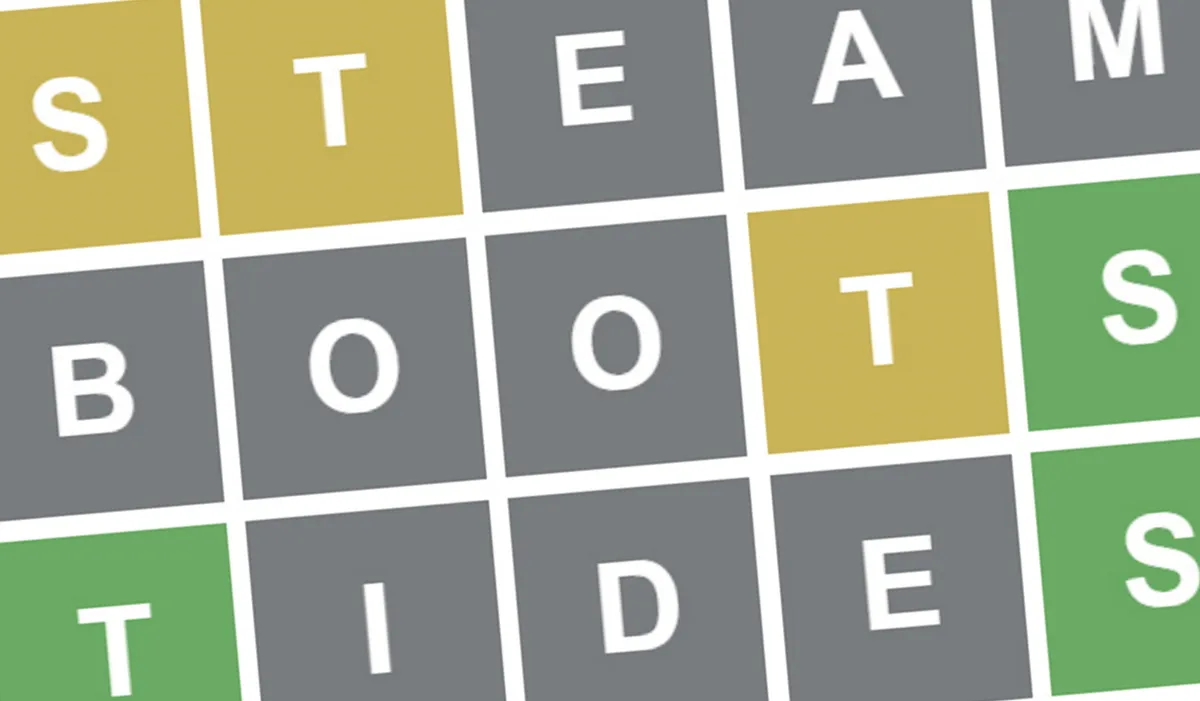
Breeze through the Wordle of the day with our help. In a hurry? Skip straight to today’s answer and enjoy a guaranteed win. Just need a little help? Then take a look at our hint for the February 14 (1336) puzzle, written so it’ll point you towards today’s winning word, while still leaving all the fun bits for you, or use our evergreen tips to polish up your general guesses.
Fine. Fine. If Wordle was going to be like that, lumbering me with some unhelpful yellows and nothing more, then I was going to take them, make some wild guesses I normally wouldn’t, and see what happened after. Which in this case meant immediately revealing four green letters which led me straight to today’s answer. Nice. Unexpected, but I wasn’t going to complain.
Today’s Wordle hint
(Image credit: Josh Wardle)
Wordle today: A hint for Friday, February 14
A simple song or a short tune. Some piece of music that’s straightforward and easily forgotten, but not necessarily unpleasant.
Is there a double letter in Wordle today?
Yes, there is a double letter in today’s puzzle.
Wordle help: 3 tips for beating Wordle every day
A good starting word can be the difference between victory and defeat with the daily puzzle, but once you’ve got the basics, it’s much easier to nail down those Wordle wins. And as there’s nothing quite like a small victory to set you up for the rest of the day, here are a few tips to help set you on the right path:
A good opening guess should contain a mix of unique consonants and vowels.
Narrow down the pool of letters quickly with a tactical second guess.
Watch out for letters appearing more than once in the answer.
There’s no racing against the clock with Wordle so you don’t need to rush for the answer. Treating the game like a casual newspaper crossword can be a good tactic; that way, you can come back to it later if you’re coming up blank. Stepping away for a while might mean the difference between a win and a line of grey squares.
Today’s Wordle answer
(Image credit: Future)
What is today’s Wordle answer?
You might need this. The answer to the February 14 (1336) Wordle is DITTY.
Keep up to date with the most important stories and the best deals, as picked by the PC Gamer team.
Previous Wordle answers
The last 10 Wordle answers
Past Wordle answers can give you some excellent ideas for fun starting words that keep your daily puzzle-solving fresh. They are also a good way to eliminate guesses for today’s Wordle, as the answer is unlikely to be repeated.
Here are some recent Wordle answers:
February 13: RUMBA
February 12: RAPID
February 11: SCORE
February 10: GOODY
February 9: BONUS
February 8: STEEP
February 7: SWATH
February 6: PUPIL
February 5: PEDAL
February 4: TOOTH
Learn more about Wordle
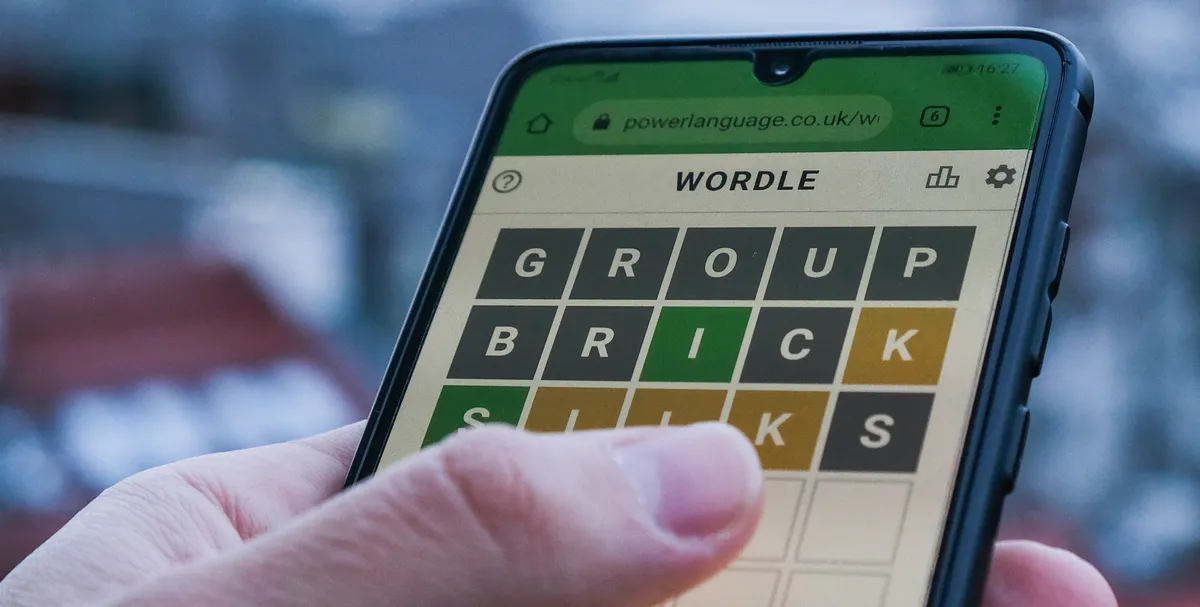
(Image credit: Nurphoto via Getty)
Wordle gives you six rows of five boxes each day, and you’ll need to work out which secret five-letter word is hiding inside them to keep up your winning streak.
You should start with a strong word like ARISE, or any other word that contains a good mix of common consonants and multiple vowels. You’ll also want to avoid starting words with repeating letters, as you’re wasting the chance to potentially eliminate or confirm an extra letter. Once you hit Enter, you’ll see which ones you’ve got right or wrong. If a box turns ⬛️, it means that letter isn’t in the secret word at all. 🟨 means the letter is in the word, but not in that position. 🟩 means you’ve got the right letter in the right spot.
Your second guess should compliment the starting word, using another “good” word to cover any common letters you missed last time while also trying to avoid any letter you now know for a fact isn’t present in today’s answer. With a bit of luck, you should have some coloured squares to work with and set you on the right path.
After that, it’s just a case of using what you’ve learned to narrow your guesses down to the right word. You have six tries in total and can only use real words (so no filling the boxes with EEEEE to see if there’s an E). Don’t forget letters can repeat too (ex: BOOKS).
If you need any further advice feel free to check out our Wordle tips, and if you’d like to find out which words have already been used you can scroll to the relevant section above.
Originally, Wordle was dreamed up by software engineer Josh Wardle, as a surprise for his partner who loves word games. From there it spread to his family, and finally got released to the public. The word puzzle game has since inspired tons of games like Wordle, refocusing the daily gimmick around music or math or geography. It wasn’t long before Wordle became so popular it was sold to the New York Times for seven figures. Surely it’s only a matter of time before we all solely communicate in tricolor boxes.
In the rapidly evolving field of artificial intelligence, the ability to accurately interpret and analyze visual data is becoming increasingly crucial. From autonomous vehicles to medical imaging, the applications of image classification are vast and impactful. However, as the complexity of tasks grows, so does the need for models that can seamlessly integrate multiple modalities, such as vision and language, to achieve more robust and nuanced understanding.
This is where Vision Language Models (VLMs) come into play, offering a powerful approach to multimodal learning by combining image and text inputs to generate meaningful outputs. But with so many models available, how do we determine which one performs best for a given task? This is the problem we aim to address in this blog.
The primary goal of this blog is to benchmark Top Vision Language Models on an image classification task using a basic dataset and compare its performance to our general-image-recognition model. Additionally, we will demonstrate how to use the model-benchmark tool to evaluate these models, providing insights into their strengths and weaknesses. By doing so, we hope to shed light on the current state of VLMs and guide practitioners in selecting the most suitable model for their specific needs.
What are Vision Language Models (VLMs)
A Vision Language Model (VLM) is a type of multimodal generative model that can process both image and text inputs to generate text outputs. These models are highly versatile and can be applied to a variety of tasks, including but not limited to:
Visual Document Question Answering (QA): Answering questions based on visual documents.
Image Captioning: Generating descriptive text for images.
Image Classification: Identifying and categorizing objects within images.
Detection: Locating objects within an image.
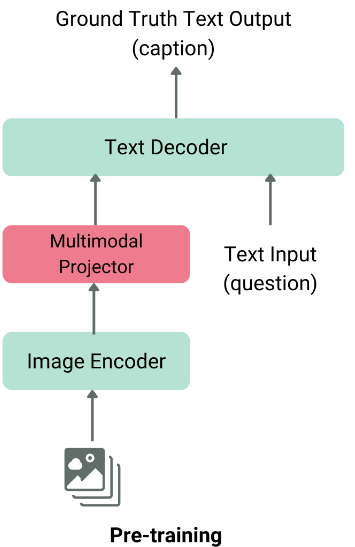
The architecture of a typical VLM consists of two main components:
Image Feature Extractor: This is usually a pre-trained vision model like Vision Transformer (ViT) or CLIP, which extracts features from the input image.
Text Decoder: This is typically a Large Language Model (LLM) such as LLaMA or Qwen, which generates text based on the extracted image features
These two components are fused together using a modality fusion layer before being fed into the language decoder, which produces the final text output.
General architecture of vlm, image taken from hf blog.
There are many Vision Language Models available on the Clarifai Platform, including GPT-4o, Claude 3.5 Sonnet, Florence-2, Gemini, Qwen2-VL-7B, LLaVA, and MiniCPM-V. Try them out here!
Current State of VLMs
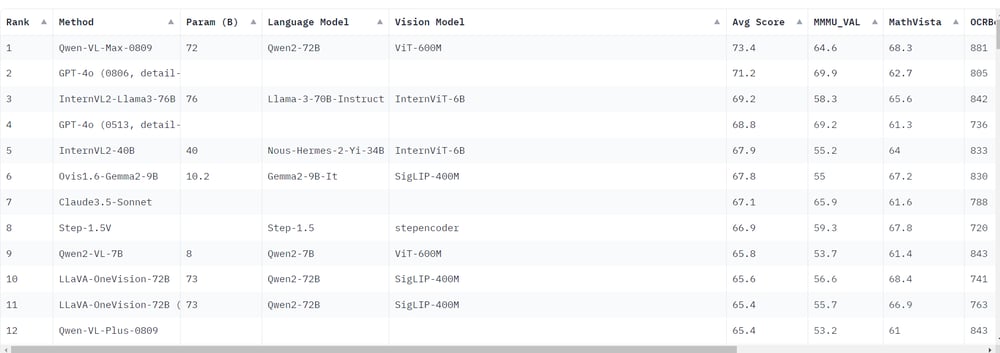
Recent rankings indicate that Qwen-VL-Max-0809 has outperformed GPT-4o in terms of average benchmark scores. This is significant because GPT-4o was previously considered the top multimodal model. The rise of large open-source models like Qwen2-VL-7B suggests that open-source models are beginning to surpass their closed-source counterparts, including GPT-4o. Notably, Qwen2-VL-7B, despite its smaller size, achieves results that are close to those of commercial models.
Experiment setup
Hardware
The experiments were conducted on Lambda Labs hardware with the following specifications:
CPU
RAM (GB)
GPU
VRAM (GB)
AMD EPYC 7J13 64-Core Processor
216
A100
40
Models of Interest
We focused on smaller models (less than 20B parameters) and included GPT-4o as a reference. The models evaluated include:
model
MMMU
Qwen/Qwen2-VL-7B-Instruct
54.1
openbmb/MiniCPM-V-2_6
49.8
meta-llama/Llama-3.2-11B-Vision-Instruct
50.7 (CoT)
llava-hf/llava-v1.6-mistral-7b-hf
33.4
microsoft/Phi-3-vision-128k-instruct
40.4
llava-hf/llama3-llava-next-8b-hf
41.7
OpenGVLab/InternVL2-2B
36.3
GPT4o
69.9
Inference Strategies
We employed two main inference strategies:
Closed-Set Strategy: We utilized standard metrics to benchmark these frameworks, including:
The model is provided with a list of class names in the prompt.
To avoid positional bias, the model is asked the same question multiple times with the class names shuffled.
The final answer is determined by the most frequently occurring class in the model’s responses.
Prompt Example:
“Question: Answer this question in one word: What type of object is in this photo? Choose one from {class1, class_n}. Answer: <model answer>“
Binary-Based Question Strategy:
The model is asked a series of yes/no questions for each class (excluding the background class).
The process stops after the first ‘yes’ answer, with a maximum of (number of classes – 1) questions.
Prompt Example:
“Answer the question in one word: yes or no. Is the {class} in this photo?“
Results
Dataset: Caltech256
The Caltech256 dataset consists of 30,607 images across 256 classes, plus one background clutter class. Each class contains between 80 and 827 images, with image sizes ranging from 80 to 800 pixels. A subset of 21 classes (including background) was randomly selected for evaluation.
model
macro avg
weighted avg
accuracy
GPU (GB) (batch infer)
Speed (it/s)
gpt4
0.93
0.93
0.94
N/A
2
Qwen/Qwen2-VL-7B-Instruct
0.92
0.92
0.93
29
3.5
openbmb/MiniCPM-V-2_6
0.90
0.89
0.91
29
2.9
llava-hf/llava-v1.6-mistral-7b-hf
0.90
0.89
0.90
llava-hf/llama3-llava-next-8b-hf
0.89
0.88
0.90
meta-llama/Llama3.2-11B-vision-instruct
0.84
0.80
0.83
33
1.2
OpenGVLab/InternVL2-2B
0.81
0.78
0.80
27
1.47
openbmb/MiniCPM-V-2_6_bin
0.75
0.77
0.78
microsoft/Phi-3-vision-128k-instruct
0.81
0.75
0.76
29
1
Qwen/Qwen2-VL-7B-Instruct_bin
0.73
0.74
0.75
llava-hf/llava-v1.6-mistral-7b-hf_bin
0.67
0.71
0.72
meta-llama/Llama3.2-11B-vision-instruct_bin
0.72
0.70
0.71
general-image-recognition
0.73
0.70
0.70
N/A
57.47
OpenGVLab/InternVL2-2B_bin
0.70
0.63
0.65
llava-f/llama3-llava-next-8b-hf_bin
0.58
0.62
0.63
microsoft/Phi-3-vision-128k-instruct_bin
0.27
0.22
0.21
Key Observations:
Impact of Number of Classes on Closed-Set Strategy
We also investigated how the number of classes affects the performance of the closed-set strategy. The results are as follows:
model | Number of classes
10
25
50
75
100
150
200
Qwen/Qwen2-VL-7B-Instruct
0.874
0.921
0.918
0.936
0.928
0.931
0.917
meta-llama/Llama-3.2-11B-Vision-Instruct
0.713
0.875
0.917
0.924
0.912
0.737
0.222
Key Observations:
The performance of both models generally improves as the number of classes increases up to 100.
Beyond 100 classes, the performance starts to decline, with a more significant drop observed in meta-llama/Llama-3.2-11B-Vision-Instruct.
Conclusion
GPT-4o remains a strong contender in the realm of vision-language models, but open-source models like Qwen2-VL-7B are closing the gap. Our general-image-recognition model, while fast, lags behind in performance, highlighting the need for further optimization or adoption of newer architectures. The impact of the number of classes on model performance also underscores the importance of carefully selecting the right model for tasks involving large class sets.