This blog post focuses on new features and improvements. For a comprehensive list, including bug fixes, please see the release notes.
Control Center – Public Preview
We are excited to announce the Public Preview of Clarifai’s Control Center, a unified dashboard and a single pane of glass to monitor AI operations within your Clarifai account. It serves as the ultimate source of truth, aggregating data from multiple dimensions so you can make informed decisions with confidence.
With the Control Center, you can transform raw data such as model predictions, search operations, stored inputs, and model training hours into actionable insights. You can track team activities, analyze operational impact and spending, and audit any user-initiated event to trace its origin.
Key functionalities include interactive charts, tables, flexible date ranges, and powerful filtering and sorting options to help you uncover meaningful patterns in your data.
Ready to gain deeper insights and streamline your account management? Explore more about the Control Center here.
Distilled DeepSeek-R1 models on the Platform
DeepSeek-R1 sets a new standard for open-source reasoning, rivaling OpenAI-o1 in performance while being faster and more cost-effective.
We’re excited to share that the DeepSeek-R1 Distilled Models are now available on Clarifai, and you can try them out for free!
Derived from DeepSeek-R1 and based on Qwen, these distilled models deliver top-tier results in math, coding, and reasoning tasks, all while being optimized for efficiency.
Key Highlights:
We have added four variations of these distilled models: 1.5B, 7B, 14B, and 32B, tailored to different use cases and resource needs.
DeepSeek-R1-Distill-Qwen-32B outperforms OpenAI-o1-mini across various benchmarks, achieving new state-of-the-art results for dense models.
These models are built for speed and cost-efficiency.
For a limited time, we’ve made these models free for community users. Try them out! 👇
Released Data Utils as an open source Python library
We have made Data Utils library open-source, designed to streamline multimedia data management and processing. This powerful toolset is now available for the community, providing a range of utilities to simplify data ingestion, transformation, and annotation, whether you’re working with images, text, or multimodal datasets.
Key Features:
Image annotation loader— A comprehensive framework for loading, exporting, and analyzing different annotated datasets.
Data ingestion pipelines— Load text files (PDF, DOC, etc.), transform and chunk the content, and upload it to the Clarifai platform.
Platform Improvements
We’ve enhanced several elements of the top navigation bar for a more seamless experience. Notably, the drop-down menu for switching between an organization workspace and a personal workspace has moved from the upper right to the upper left.
We’ve also introduced the ability to automatically generate a cover image for a resource based on its short description. This capability is available only for users onpaid plans.
Additional changes
Python SDK Improvements: We have enhanced the model upload experience with a more streamlined process, introduced model upload tests to ensure reliability, and updated the Torch version in images. Additionally, the .tar file is now automatically deleted after every upload. Find all the other SDK updates here.
Changed the default base workflow for apps created via the API: Previously, when an application was created via the API without specifying a base workflow, theUniversalworkflow was used by default. Now, the default has been updated to theGeneralworkflow for better performance.
Architecture and neuroscience are two completely different disciplines you don’t usually find used in the same topic. That being said, it’s hard to argue with the idea t hat the human brain, or specifically the part that controls emotion, is somehow affected and constantly adapting to the living environment. For example, a well-built house design with an emphasis on nature, greenery, and natural lighting can help induce the sensations of calmness and tranquility in the occupants. Such an approach is often observed in medical facility design in the hope of encouraging inpatients to have a general peace of mind during treatment and recovery.
Unfortunately, the opposite is also true. While you can’t exactly define the character of a building, or whether it has any at all, some architectural designs can be harmful in the sense that it increases stress level and encourages some sort of self-isolation. When a design is crafted without any intention to invoke positive emotions, both the occupants and the passerby have little incentive to relate to their built environment in any way, let alone care for it. And this is where emotion design should come to the rescue.
The notion of emotional design revolves around the idea that a design can bring positive emotions to people and result in a much better user experience. And this principle also applies to all sorts of designs, from tiny jewelries to gargantuan jumbo jets; but that’s a discussion for another time. We’re here to discuss emotional design as it relates to architectural studies and architectural design services, more precisely about how it affects or enhances mood.
You probably think that “emotional architecture” is a relatively new concept that has recently emerged somewhere along the line of sustainable and environment-friendly design discussions that keep popping-up everywhere you look these days. The term “emotional architecture” itself actually dates back to 1959 as the brainchild of Mexican sculptor/painter Mathias Goeritz and architect/engineer Luis Barragán. One of the main ideas behind their vision was to come up with spiritually uplifting buildings. They figured that with the right combination of light, shadows, and colors, a building might just encourage people or visitors to reflect and meditate. That vision turns out today as prophetic.
Keep in mind that 1959 was way before today’s digital era where people seem to simply lock on to their screens everywhere. Whether you’re at home, at work, on a train, or in the streets, it’s difficult not to see how everyone couldn’t care less about their surroundings. Laptops and smartphones are great and all, but sometimes technology makes the users oblivious to their own nature as social creatures who need to appreciate, if not cherish, the neighborhood and everything else in it. To an extent, it’s also a strong criticism towards contemporary architectural style.
Architects and engineers put a lot of science into their craft, but the glaring omission of emotional approach makes modern buildings somewhat boring; they’re mostly rectangular, flat, shiny, and monotonous. The lack of liveliness in the designs makes them dull and characterless. Only a handful of them, especially in big cities, offer a view of nature. Most buildings have glass windows indeed, but the only things you can see through them are just other buildings, and such a thing doesn’t exactly encourage real, meaningful interactions. With an emotional design approach, architects are expected to create buildings that infuse intimate relationships between the occupants and their immediate vicinity.
Refreshing change to architectural services
The newly rejuvenated spirit of emotional design will, without a shred of a doubt, affect how 3D modeling & architectural services firms do their work. It’s technically still the same-old practice of using CAD software to design a building; however, the end goal is not just to create a new building for the sake of architectural exercise but to reintroduce emotional connection between the people and the infrastructure.
It’s projected that seven out of 10 people will live in a city by 2050. We’re only a few decades away from that, and yet the architectural industry at large still refuses to stop creating characterless spaces believed to evoke emotional indifference in people. Whether you’re in downtown Paris, Tokyo, Hong Kong, Toronto, or basically any major city across the world, you can’t help but notice how the urban designs seem to be devoid of human touch. Social isolation is growing, and the people appear as if they’re overwhelmed – rather than pleased – by their surroundings.
Every skyscraper, residential area, neighborhood, and commercial establishment does bear their own names above the front doors, although this doesn’t take away the impression of the city being flooded with monotonous buildings. According to designer Thomas Lutherwick (whose projects include the Lantern House in New York City, the Paternoster Vents in London, and the Pacific Place in Hong Kong), monotonous buildings have created some kind of epidemic of boringness.
You can argue that functionality could be a major driving force behind the design decision; tall and square buildings are everywhere, because they work well to provide shelter and optimize the otherwise limited land area. They offer great space for business activities and provide good privacy for the occupants. At the same time, they’re terrible if you want them to be parts of active urban life, and even worse at provoking emotional responses from passersby. In other words, cities with monotonous buildings are bad examples of emotional design.
But changes are coming.
Emotional architecture aims to mean something to occupants and visitors. It’s supposed to yearn to connect with people and intend to make it easy for them to do so. The main objective is for the building to encourage social interactions among people, infuse mutual integration between the city and the environment, promote a strong sense of identity, and eventually make positive contributions to the quality of life and mental well-being of the occupants.
It won’t take much longer until major cities start realizing the value of emotional design. Architectural services will be presented with the exciting development of diverse designs that deliver a mixture of good functionality and aesthetic quality to bring about social cohesion. Focusing solely on functionality is not exactly bad, but the boredom that comes out of the approach isn’t going to be competitive in the near future. Forward-thinking developers, business owners, CEOs, lawmakers, architects, engineers, and designers are rapidly embracing architectural designs that may engage, inspire, and entice people.
Also, there are already advanced tools for it. All the reputable architectural services firms worth their cents no longer rely “only” on 3D CAD software to model their designs, run simulations to check the structural integrity of a construction, and manage items BOM. Over the last few years, big design firms have been making the switch from CAD-only approach to BIM or Building Information Modeling services. Among the most welcome features of BIM software include the ability to generate environmental data as it relates to the materials, green energy feasibility, natural lighting, and more.
Now, this might not look like much at first glance, until you realize that architecture never happens without the context of culture. Every work of architecture is a reflection of culture, and that’s why you see how different societies have produced distinctive architectural styles. Another thing you should know is that big parts of those distinctive styles are the selection of materials and fabrication methods.
Take the Gothic architecture as an example; the masonry style, the massive stained-glass windows, the exposed steel beams, and the extensive use of natural stones weren’t there simply because they just happened to be around. Gothic architectures used those materials because they represented the tradition and spirituality of the people during the time period of 12th – 16th century Europe. Back then, architects and designers wanted their buildings to be celebrated by the people. It’s an example of how an architectural design worked wonders to bring everyone together.
On a smaller scale, have you seen a Japanese tea house? Every single piece of the architectural elements of a Japanese tea house emphasizes connection to nature, simplicity, subtle complexity, and harmony between the people and the environment. Again, the house is meant to reflect the cultural values of the people.
With ingenuity and a little bit of help from BIM software, an architectural design can boast a strong identity – instead of anonymity as often seen in modern yet monotonous city’s skyscrapers – by selecting the right materials that reflect the location’s socio-cultural nuance, the landscape, the site’s specific conditions, and the general characters of the area. Let’s not forget that creating connections with nature, or sustainability if you’d like, is one of the things that BIM does best. It can help you choose from a range of renewable materials, simulate how natural lights can save power consumption, and showcase the potential for solar panel installation, and so on.
Of course, BIM can only do what it is programmed to do. The bigger part of the equation is how willing architectural services firms are to walk the path of emotional design. Since provoking positive emotions is the eventual objective, there are some effective ways to achieve it. Selecting locally-sourced materials can help strengthen the building’s cultural identity and using tradition-approved fabrication methods will give it a proper place in a social context. Architects and designers also have to take into account local knowledge and adapt to the site-specific circumstances. Finally, a proper selection of textures and colors that represent the local values can add cultural richness and engage the visual sense, and by extension emotion, in a positive fashion.
Emotional design with Cad Crowd professionals
It’s bewildering to think that people walk down the city street and not feel moved at all by all the imposing buildings in their sight. Emotional design brings hope that the architectural industry may once again bring liveliness and a positive vibe to urban settings. Buildings are not just places where people take care of their business and rest, but monuments to be celebrated and safe shelters where we can gather to engage in colorful social life. Here at Cad Crowd, you can find hundreds of experienced design consultants, architects, engineers, and BIM professionals to materialize your ideas for emotional design.
MacKenzie Brown is the founder and CEO of Cad Crowd. With over 18 years of experience in launching and scaling platforms specializing in CAD services, product design, manufacturing, hardware, and software development, MacKenzie is a recognized authority in the engineering industry. Under his leadership, Cad Crowd serves esteemed clients like NASA, JPL, the U.S. Navy, and Fortune 500 companies, empowering innovators with access to high-quality design and engineering talent.
Whether you’re celebrating Valentine’s Day with a weekend of gaming togetherness or just somebody with a gaming pal looking for a great deal, Steam’s Couch Co-Op Fest — running through Feb. 18 — has a ton of amazing cooperative games marked down significantly. The list of included games is long, but several of them stuck out to me as they’re personal favorites I wouldn’t want anybody to miss.
Plus, this first game I’m going to shout out is a whopping 90% off its original price of $10 — surely you can convince yourself to get Portal 2 when it costs less than three eggs.
But that’s not all — there are tons of other co-op games on sale until Feb. 18, from NBA 2k25 to Black Ops 3 to Stardew Valley. Check out the full list here.
Windows Forms support auto-scaling so if the user increases “font size” in Windows preferences, the form will automatically rescale. Now, when you create a window, add a button and this button has some predefined location, eg. x=100 y=200 this location will be represented in pixels on the system where the window was initially created. We can call it “Dialog Units”. On the initial project 1 dialog unit = 1 pixel. No longer holds when you change “font size”.
You can create controls dynamically and specify location to be eg. x=100 y=300 to put something else below that button. This will work only as long as the font size is the same as on the system of the user who created the form.
Now when you change your font size settings, the layout will break as controls added via Forms.Controls.Add(...) are not rescaled. How to force rescaling for dynamically added controls, so they’re not landing on “random” position which depends on windows font scaling preference?
Is there some method to convert Dialog Units to pixels?
Ride-share giant Uber filed a lawsuit Friday against DoorDash, accusing the delivery outfit of stifling competition by intimidating restaurant owners into exclusive deals.
Uber alleges in the lawsuit, filed in Superior Court of California, that its chief rival bullied restaurants into only working with DoorDash. Uber claims that DoorDash, which holds the largest share of the food delivery market in the U.S., threatens restaurants with multimillion-dollar penalties or the removal or demotion of the businesses’ position on the DoorDash app.
Specifically, Uber claims DoorDash pressures restaurants to strike exclusive or near-exclusive agreements for first-party delivery services, meaning that DoorDash insists on solely handling orders placed through restaurants’ own websites, says Uber.
“Uber’s case has no merit,” said a DoorDash spokesperson in an email to TechCrunch on Friday. “Their claims are unfounded and based on their inability to offer merchants, consumers, or couriers a quality alternative.”
DoorDash and Uber Eats are best known for their respective apps to connect restaurant, consumers and gig economy workers. Consumers use the apps to find and order food like pizza, egg rolls, or pad thai from restaurants. A gig economy worker then picks up and delivers the food to the consumer.
But the two companies also compete with their own white-label delivery services – called Uber Direct and DoorDash Drive on-Demand – which both launched in 2020. These services are cheaper for restaurants, allowing patrons to order directly from the restaurants’ own apps and websites, while Uber and DoorDash manage the couriers behind the scenes.
Uber claims in its suit that DoorDash handles first-party deliveries for more than 90% of the largest enterprise restaurants in America, and it alleges DoorDash used anticompetitive practices to win the market.
“More than 1 million merchants partner with Uber Eats because we’ve helped them to reach more customers and provided them the freedom to decide how they want to grow their businesses with delivery,” Sarfraz Maredia, head of the Americas for delivery at Uber, said in an emailed statement. “We’ve increasingly heard complaints from restaurants that DoorDash’s tactics are limiting that freedom and punishing them for seeking better options. We hope this filing puts an end to those unfair practices so that restaurants can choose what’s best for them without fear of penalty or retribution.”
In one example from the lawsuit, Uber says that an unnamed “significant restaurant company” told the company it would not move forward with a long-planned rollout of Uber Direct across several of its restaurant brands. The reason, Uber claims, is because DoorDash allegedly threatened to increase the rates it charges the restaurant company to use DoorDash’s third-party delivery services if it continued to use Uber Direct.
Uber says this was not a one-off event, but rather that multiple customer have told the company they feel “like they have a ‘gun to their head,’ that DoorDash is a ‘monopolist,’ and that they are being bullied by DoorDash.”
Uber has requested a jury trial; the company did not specify the amount of damages in the complaint. However, Uber claims these anticompetitive practices have cost the company “millions of dollars in revenue” and also restricted the growth of Uber Direct.
You’ve finally hit that milestone – retirement age. You’ve been planning for it, saving for it, and looking forward to losing the commute, the stress, and the workload. Time to relax.
Wow, that’s a lot of relaxing. After about a month, you’re bored. Who knew you’d miss working?
Actually, we did. Any number of surveys of new retirees has shown some surprising results – that a sizable majority of retirees are going back to work. One study by Investopedia reveals that 44% of retirees who were asked say they’ve chosen to return to the workforce. A Federal Reserve Board study finds that a full one-third of their study respondents are doing the same thing.
The reason? Surprisingly, it isn’t about money. Plenty of these retirees are seeking intellectual stimulation.
We at WAHVE work directly with retired professionals who have chosen to work again. The reasons we’ve heard include:
Missing the work they love
Supplementing retirement income
Needing to engage intellectually
Wanting to financially support parents or adult children
Needing additional income
Wanting to work, but not commute
If any of these reasons, or any other reason, sound like you, you may be perfect for a work-from-home position.
That begs the question: How can you make work-from-home work for you?
Here are our suggestions:
Decide your role. Why return to work that caused you so much stress? There are plenty of support roles that you would qualify for. Imagine lending your decades of expertise to a small insurance agency or handling back-office paperwork for a claims department. These roles are just as critical to the success of the organization and you can handle them easily, lightening the workload for producers or claims adjusters.
Define your schedule. Full time or part time? Flexible or 9-to-5? Only you know when you are at your most productive. Decide what works for you.
Carve out your space. Whether you’re working from an RV or from a study, having a dedicated work area is important to help you feel more comfortable and productive. Even if it’s the kitchen table with a laptop will work if it’s your space for your work hours.
Build a routine. I know a remote worker who leaves the house every day to get coffee, then “commutes” back home, mentally switching into office mode. Stick as closely as possible to your work hours. Creating work habits can help you focus on work even in a home setting.
Check in daily with your employer. It is far too easy to be out of sight, out of mind when working remotely. Engage your manager every day to update them on your projects, progress, issues, and deliverables. It’s a great way to stay on track and improve your work outcomes.
Amp up communication. In fact, you should be talking with coworkers as often, if not more, as you do your employer. Keep multiple channels of communication open and set up email, instant message, and text alerts so that you can collaborate more easily. If you use video conferencing, keep your camera on. It helps connect you and your colleagues to be able to see each other.
Make a to-do list. Before you finish your workday, jot down what you’ll be doing the next day. Especially when you’re working on large projects or multiple projects, keeping a list can keep you on track. Share your list with your employer and any team members who are collaborating with you. This builds in accountability and also helps keep you focused on deadlines.
Returning to work after retirement doesn’t always mean going back to the commute, the office, and the stress. It can be a rewarding second career that you define.
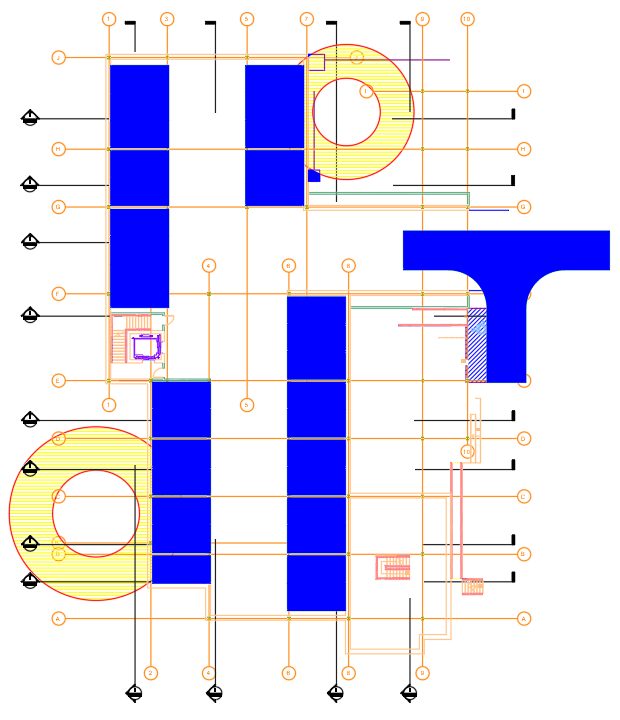
Have you ever referenced a drawing into another drawing, but the content isn’t showing the correct color, line weight, or line type based on the layer state in your current viewport/drawing? In this article, take a deep dive on how to resolve this issue using the AutoCAD SETBYLAYER command.
The Situation
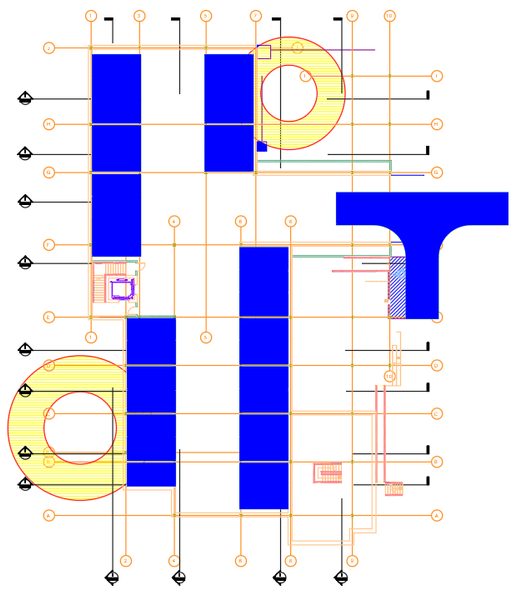
You receive a drawing from another user/department, such as an exported CAD file from Revit. You download the drawing and then set the layer colors and visibility based on the CAD standards for your project. Unfortunately, some content does not show the correct colors, linetypes, etc.
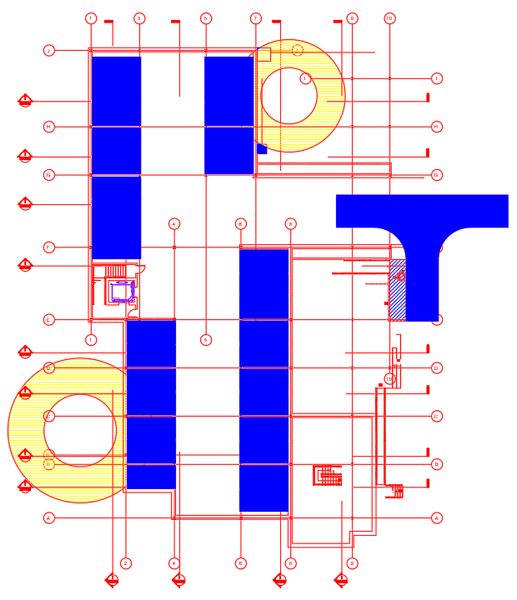
This image shows the received drawing with no layer color changes.
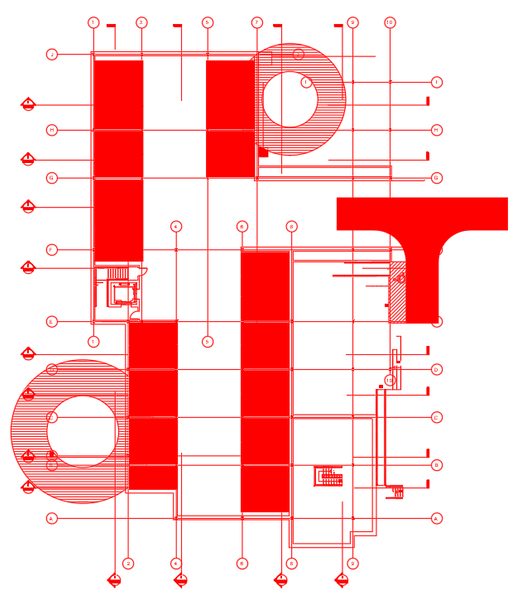
This next image shows how the drawing looks after changing all layer colors to color 1 (red). Compare this image with the previous image. Notice that the hatch objects and elevator still show their original color (yellow, blue, and purple) despite the layer color change. This is because the objects have forced colors set in their properties.
The Resolution
Use the SETBYLAYER command to reset the properties of objects in the drawing to ByLayer.
The Workflow
1. Open your copy of the AutoCAD drawing that you received.
2. Thaw, turn layers on, and unlock all layers in the drawing.
3. With no objects selected, type SETBYLAYER and then press Enter.
4. Review the active settings at the command line. See the Instructions for Changing Settings section below if you want to change the active settings.
5. Select the objects you want to modify or type ALL and press Enter.
6. After selecting the objects, confirm the number of objects selected and press Enter.
7. You will then be asked if you want to change the ByBlock properties to ByLayer. The default response if you press Enter is Yes.
8. You will then be asked if you want to include blocks. The default response if you press Enter is Yes.
9. Confirm that the content in the drawing is now correctly showing the properties based on the current layer state.
10. Use the Layer Previous command (LAYERP) to reset the layer state to the CAD Standards for your project and save the drawing.
Instructions for Changing Settings
A. Before selecting the objects for this command, type S and press Enter.
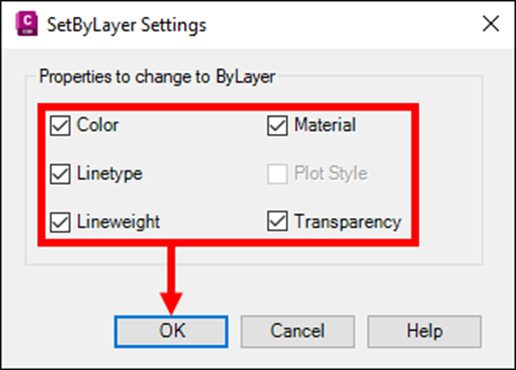
B. In the SetByLayer Settings dialog, uncheck any properties you do not want to change to ByLayer and click OK. The options available to change are Color, Linetype, Lineweight, Material, Plot Style (if available), and Transparency.
C. Continue using the command by selecting objects, as noted in Step 5 above.
Learn More
Enjoyed this article? Then check out the Autodesk Community for even more great content from talented users across Design and Make industries.
Afterlove EP is the new visual novel and/or broken hearts album from Indonesian developers Pikselnesia. It’s the sad, sleepy tale of a musician, Rama, who is trying to put his life back together and reconnect with his old bandmates in Jakarta a year after the death of his girlfriend, Cinta. The complicating factor is that Cinta isn’t entirely gone: she is a voice in Rama’s head, chatting to him throughout the game’s 28-day storyline as though sitting next to the player on the other side of the screen.
Google is rolling out an update for the Google TV Streamer with bug fixes.
The update also brings the Google TV Streamer up to the January 2025 security patch in the Android Security Bulletin.
It removes Dolby TrueHD and DTS-HD Master Audio as detected audio codecs for the Google TV Streamer.
Google is rolling out the second Google TV Streamer patch update, and the first one of the year, with a few bug fixes and tweaks. The company doesn’t explicitly say what is changed in each Google TV Streamer update, but rather lists “bug fixes and performance improvements” in the update’s official release notes. However, a few Reddit users have figured out that the latest Google TV Streamer update nixes advanced Dolby audio formats, possibly for good.
The update carries build number UTTK.241210.003, and comes with an update size of 329 MB (via 9to5Google). It also includes bug fixes and security improvements up to the January 2025 patches in the Android Security Bulletin. Interestingly, the official support document lists the current production firmware version for the Google TV Streamer as UTT3.240625.001, but it’ll likely be updated soon.
In the meantime, users on the Android TV subreddit have identified a few changes introduced with the latest Google TV Streamer update (via Android Authority). It appears to have fixed an issue that caused certain Dolby Atmos outputs to freeze, preventing Dolby Surround from working properly. Additionally, it solves a problem with HDMI-CEC affecting volume control, per user reports. As part of the update, the TV Streamer’s Voice Remote was updated to version 1.02.
Crucially, the update removes Dolby TrueHD and DTS-HD Master Audio as detected audio codecs for the Google TV Streamer. It appears to have ended a saga concerning high-fidelity audio on the TV Streamer. While the two Dolby audio formats were originally detectable on the Google TV Streamer, they were never available or functional. However, it was rumored that their mere existence could mean future support was possible.
With the latest Google TV Streamer update, the Dolby TrueHD and DTS-HD Master Audio codecs have been axed entirely. As such, it looks like these formats were never coming to the Google TV Streamer, now that they’re no longer showing up as detectable outputs.
While it may be a bummer for audio fans, the Google TV Streamer still supports Dolby Atmos, Dolby Digital, and Dolby Digital Plus.
Get the latest news from Android Central, your trusted companion in the world of Android
Most virtual meeting platforms these days include AI-powered notetaking tools or bots that join meetings as guests, transcribe discussions, and/or summarize key points. “The tech companies behind them might frame it as a step forward in efficiency, but the technology raises troubling questions around etiquette and privacy and risks undercutting the very communication it’s meant to improve(paywalled; alternative source),” writes Chris Stokel-Walker in a Weekend Essay for Bloomberg. From the article: […] The push to document every workplace interaction and utterance is not new. Having a paper trail has long been seen as a useful thing, and a record of decisions and action points is arguably what makes a meeting meaningful. The difference now is the inclusion of new technology that lacks the nuance and depth of understanding inherent to human interaction in a meeting room. In some ways, the prior generation of communication tools, such as instant messaging service Slack, created its own set of problems. Messaging that previously passed in private via email became much more transparent, creating a minefield where one wrong word or badly chosen emoji can explode into a dispute between colleagues. There is a similar risk with notetaking tools. Each utterance documented and analyzed by AI includes the potential for missteps and misunderstandings.
Anyone thinking of bringing an AI notetaker to a meeting must consider how other attendees will respond, says Andrew Brodsky, assistant professor of management at the McCombs School of Business, part of the University of Texas at Austin. Colleagues might think you want to better focus on what is said without missing out on a definitive record of the discussion. Or they might think, “You can’t be bothered to take notes yourself or remember what was being talked about,” he says. For the companies that sell these AI interlopers, the upside is clear. They recognize we’re easily nudged into different behaviors and can quickly become reliant on tools that we survived without for years. […] There’s another benefit for tech companies getting us hooked on AI notetakers: Training data for AI systems is increasingly hard to come by. Research group Epoch AI forecasts there will be a drought of usable text possibly by next year. And with publishers unleashing lawsuits against AI companies for hoovering up their content, the tech firms are on the hunt for other sources of data. Notes from millions of meetings around the world could be an ideal option.
For those of us who are the source of such data, however, the situation is more nuanced. The key question is whether AI notetakers make office meetings more useless than so many already are. There’s an argument that meetings are an important excuse for workers to come together and talk as human beings. All that small talk is where good ideas often germinate — that’s ostensibly why so many companies are demanding staff return to the office. But if workers trade in-person engagement for AI readbacks, and colleagues curb their words and ideas for fear of being exposed by bots, what’s left? If the humans step back, all that remains is a series of data points and more AI slop polluting our lives.