I have a small application with multiple forms (Form1..Form5).
Form1 is the main one.
Every time I go from Form1 to another Form I do it with the command (Foe ex. from Form1 to Form2):
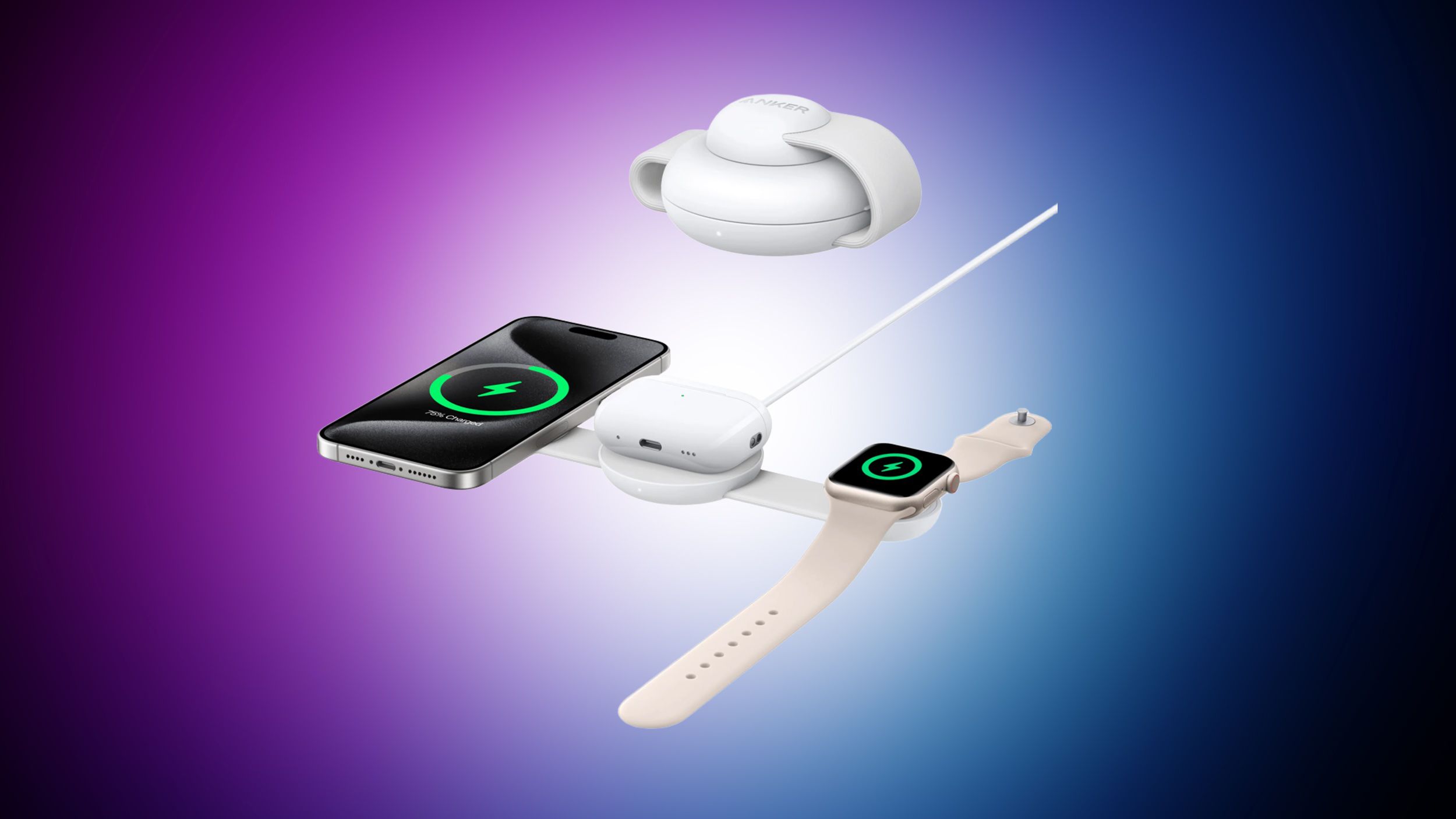
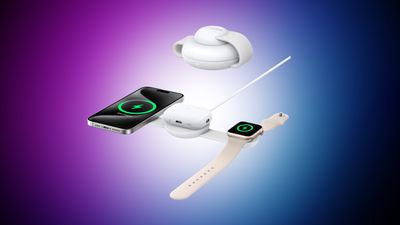
MacRumors readers have a chance to get 20 percent off a collection of Anker’s best chargers, power banks, cables, hubs, and docks this weekend. In order to get this deal, head to Anker’s website and add an accessory to your cart, then enter the code Ankermacrumors2025 at checkout to see the discount.
Note: MacRumors is an affiliate partner with Anker. When you click a link and make a purchase, we may receive a small payment, which helps us keep the site running.
Our exclusive 20 percent off code works on most accessories sitewide, including Anker’s new “high power” charging accessories. This exclusive discount code does not stack with existing discounts on Anker’s website, but it can be used on multiple items in the same cart.
In the lists below, we’ve collected a few examples of the best products available at a discount with our exclusive promo code, but remember that it works sitewide. You have until April 30 to take advantage of this promotion, so be sure to browse Anker’s best products on its website before the end of the month.
It’s also worth noting that Anker is still hosting its Earth Day sale, and some of the discounts in that event are steeper than our 20 percent sitewide discount. Be sure to check and compare both discounts in your cart before you place your order to ensure you have the best deal.
Portable Chargers
Wall Chargers
Charging Stations
Hubs
If you’re on the hunt for more discounts, be sure to visit our Apple Deals roundup where we recap the best Apple-related bargains of the past week.
Deals Newsletter
Interested in hearing more about the best deals you can find in 2025? Sign up for our Deals Newsletter and we’ll keep you updated so you don’t miss the biggest deals of the season!
While the iPhone 17 Pro and iPhone 17 Pro Max are not expected to launch until September, there are already plenty of rumors about the devices.
Below, we recap key changes rumored for the iPhone 17 Pro models as of April 2025:
Aluminum frame: iPhone 17 Pro models are rumored to have an aluminum frame, whereas the iPhone 15 Pro and iPhone 16 Pro models have a titanium frame, and the iPhone …
If you missed the video showing dummy models of Apple’s all-new super thin iPhone 17 Air that’s expected later this year, Sonny Dickson this morning shared some further images of the device in close alignment with the other dummy models in the iPhone 17 lineup, indicating just how thin it is likely to be in comparison.
The iPhone 17 Air is expected to be around 5.5mm thick – with a thicker …
While the so-called “iPhone 17 Air” is not expected to launch until September, there are already plenty of rumors about the ultra-thin device.
Overall, the iPhone 17 Air sounds like a mixed bag. While the device is expected to have an impressively thin and light design, rumors indicate it will have some compromises compared to iPhone 17 Pro models, including only a single rear camera, a…
Starting today, April 24, Apple Stores around the world are giving away a special pin for free to customers who request one, while supplies last.
Photo Credit: Filip Chudzinski
The enamel pin’s design is inspired by the Global Close Your Rings Day award in the Activity app, which Apple Watch users can receive by closing all three Activity rings today. The limited-edition pin is the physical…
This week marks the 10th anniversary of the Apple Watch, which launched on April 24, 2015. Yesterday, we recapped features rumored for the Apple Watch Series 11, but since 2015, the Apple Watch has also branched out into the Apple Watch Ultra and the Apple Watch SE, so we thought we’d take a look at what’s next for those product lines, too.
2025 Apple Watch Ultra 3
Apple didn’t update the…
Despite being more than two years old, Apple’s AirPods Pro 2 still dominate the premium wireless‑earbud space, thanks to a potent mix of top‑tier audio, class‑leading noise cancellation, and Apple’s habit of delivering major new features through software updates. With AirPods Pro 3 widely expected to arrive in 2025, prospective buyers now face a familiar dilemma: snap up the proven…
Apple’s $570 million fine from the EU has triggered a sharp rebuke from the White House, which called the fine a form of economic extortion, Reuters reports.
The fine was announced on Wednesday by the European Commission, following a formal investigation into Apple’s compliance with the bloc’s Digital Markets Act (DMA), a landmark piece of legislation aimed at curbing the market dominance of …
When an iPad running iPadOS 19 is connected to a Magic Keyboard, a macOS-like menu bar will appear on the screen, according to the leaker Majin Bu.
This change would further blur the lines between the iPad and the Mac. Bloomberg’s Mark Gurman previously claimed that iPadOS 19 will be “more like macOS,” with unspecified improvements to productivity, multitasking, and app window management,…
There isn’t a huge list of things that’ll immediately sell me on your game, but there is one that’ll draw me in without fail pretty much every single time: you can drive around in a kei truck. Now, admittedly, there are very few games where you can actually do this, the delightful Promise Mascot Agency being the most recent one. There’s the yet to be released Honcho from the devs behind Landlord’s Super and Jalopy, you can bet your bottom dollar I’ll be playing that one. And now, there’s Easy Delivery Co., a game with a kei truck that isn’t exactly what it says on the tin.
Julie Wainwright has taken two companies public, a pretty incredible feat by any standard. Yet in her new memoir, Time to Get Real, she offers readers something even more valuable: a blunt look at the messy realities of leadership. Wainwright shares the kinds of tough truths that many high-achieving CEOs can relate to but rarely discuss publicly, including the aftermath of what many would consider her first major setback, which was shutting down Pets.com during the 2000 market crash.
If you’re of a certain age, you definitely remember it. The online pet supplies startup had become instantly recognizable thanks to its memorable sock puppet mascot and catchy slogan, “Because pets can’t drive.” But what seemed like just a fleeting moment in the dot-com bubble’s burst would cast a shadow over Wainwright’s career for nearly a decade. “When I would talk to recruiters, it was like, ‘No one’s going to hire you anymore,’” Wainwright said in an interview with this editor earlier this week.
It came as a shock, given that Wainwright’s career trajectory initially seemed unstoppable. After cutting her teeth at Clorox, she rose through tech companies in the ‘90s when female leadership in the sector was exceedingly rare. As CEO of Berkeley Systems and later the online video store Reel.com, she worked “tons of hours” but was happy and, by her telling, succeeding, including growing Reel.com’s revenue from $3 million to $25 million — a time during which the company was sold to Hollywood Video. “I just operated better without a boss,” she said.
Then came the collapse that would have permanently derailed many careers. In 2000, Wainwright took Pets.com public, only to shut it down later that same year during the dot-com bubble burst. The professional blow was exacerbated by a personal one: she says that on the very same day she informed employees of the company’s closure, her husband asked for a divorce.
“My work is gone, I’m getting a divorce, and I don’t have children,” Wainwright, then 42, recalls thinking as she faced what felt like total life collapse. Making matters worse, the media coverage was “incredibly negative and intrusive,” to the point that she says days after the company’s closure, reporters showed up at her doorstep.
Wainwright describes what followed as a kind of long winter, where she was only offered roles leading turnaround efforts at failing companies. But that crossroads led to a remarkable second act. In 2010, she founded The RealReal, helping in the process to pioneer the luxury consignment market online. Like a lot of founders, Wainwright first set up the company out of her own home, but it soon outgrew her living room, and today, it processes many hundreds of thousands of different luxury items each month that it aims to sell within 90 days out of its more than 1.2 million square feet of warehouse space and operations centers. It’s also a publicly traded company; in her second trip to Wall Street, in 2019, Wainwright took the outfit through the traditional IPO process.
Unfortunately, this triumphant comeback has its own harsh chapter. In 2022, Wainwright was abruptly pushed out of The RealReal by board members she had recommended – another twist she doesn’t shy away from sharing. Instead, she names names in the book, and earlier this week, she described the move as a “power play” by an investor who “didn’t get his money out of the company and thought he could run the company better.”
Wainwright — who fully supports the company’s current CEO (she was the company’s first hire) — is still pissed off. She noted in conversation that “no founder is ever going to say they need to be shot and removed,” and it’s that honestly that makes the book – and Wainwright herself — so refreshing. In the corporate world, where people often spin narratives to make themselves look bulletproof, Wainwright is a straight shooter; if she doesn’t like something, she isn’t going to hold back her punches. If someone spins the story differently than she sees it, she’ll call it out. Where she messes up, she says so.
Even better about this memoir — in this reader’s opinion — is Wainwright’s ability to offer not just personal revelations but practical wisdom. She walks readers through her decision to bonus her sales staff a certain way, and shares her learnings about a leadership-evaluation quadrant she gleaned from McKinsey executives, including the realization she had hired one of the worst types: a “dumb aggressive” exec, meaning, in her words, someone whose “need to bully and coerce and to be on top supersede their abilities.”
There’s also an interesting new chapter unfolding. Wainwright is continuing her entrepreneurial journey with Ahara, a nutrition company that’s developing personalized dietary recommendations based on genetics and individual needs.
You can find our full conversation here, via TechCrunch’s StrictlyVC Download podcast. In the meantime, if you’re interested in a compelling read that’s both memoir and manual, offering founders something far more valuable than idealized success stories, you can pick up the book here.
Said Wainwright when we spoke, “I personally wrote it for entrepreneurs to give them a realistic view and hopefully inspire them and, you know, maybe they’ll think twice and not make the mistakes I made.”
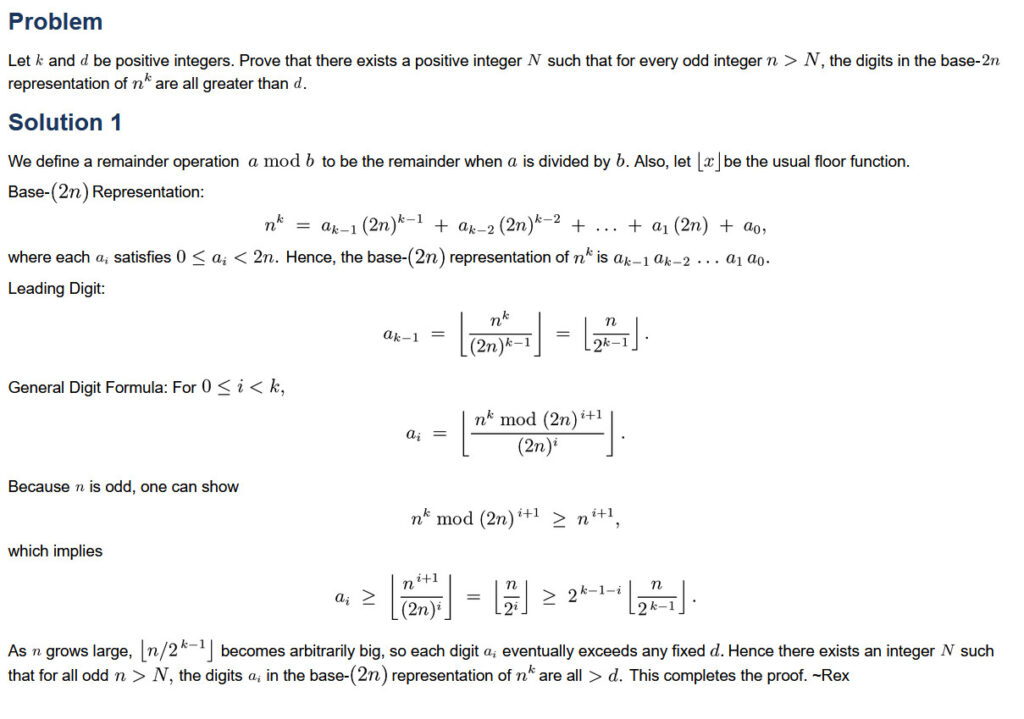
A screenshot of the 2025 USAMO Problem #1 and a solution, shown on the AoPSOnline website.
Credit:
AoPSOnline
The US Math Olympiad (USAMO) serves as a qualifier for the International Math Olympiad and presents a much higher bar than tests like the American Invitational Mathematics Examination (AIME). While AIME problems are difficult, they require integer answers. USAMO demands contestants write out complete mathematical proofs, scored for correctness, completeness, and clarity over nine hours and two days.
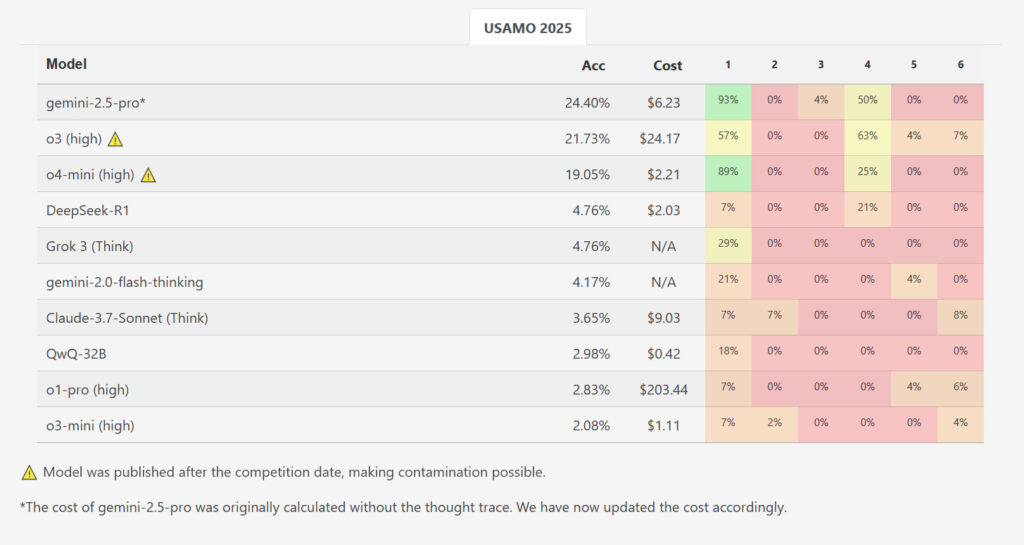
An April 25, 2025, screenshot of the researchers’ MathArena website showing accuracy scores for SR models on each problem in the USAMO.
Credit:
MathArena
While one model, Google’s Gemini 2.5 Pro, achieved a higher average score of 10.1 out of 42 points (~24 percent), the results otherwise showed a massive performance drop compared to AIME-level benchmarks. The other evaluated models lagged considerably further behind: DeepSeek R1 and Grok 3 averaged 2.0 points each, Google’s Flash-Thinking scored 1.8, Anthropic’s Claude 3.7 managed 1.5, while Qwen’s QwQ and OpenAI’s o1-pro both averaged 1.2 points. OpenAI’s o3-mini had the lowest average score at just 0.9 points (~2.1 percent). Out of nearly 200 generated solutions across all tested models and runs, not a single one received a perfect score for any problem.
While OpenAI’s newly released 03 and o4-mini-high were not examined for this study, benchmarks at the researchers’ MathArena website show o3-high scoring 21.73 percent overall and o4-mini-high scoring 19.05 percent overall on USAMO. However, those results are potentially contaminated because they were measured after the contest took place, meaning that the newer OpenAI models could potentially have included the solutions in the training data.
How the models failed
In the paper, the researchers identified several key recurring failure patterns. The AI outputs contained logical gaps where mathematical justification was lacking, included arguments based on unproven assumptions, and continued producing incorrect approaches despite generating contradictory results.
A specific example involved USAMO 2025 Problem 5. This problem asked models to find all positive whole numbers “k,” such that a specific calculation involving sums of binomial coefficients raised to the power of “k” would always result in an integer, no matter which positive integer “n” was used. On this problem, Qwen’s QwQ model made a notable error: It incorrectly excluded non-integer possibilities at a stage where the problem statement allowed them. This mistake led the model to an incorrect final answer despite having correctly identified the necessary conditions earlier in its reasoning process.
In today’s fast-paced and more digital world, businesses are always looking for innovative approaches to differentiating themselves from the competition and reaching their target audience. One of the most capable tools available to accomplish this is 3D product design, rendering, and animation. These technologies enable businesses to create visual representations of products, simulate functionality, and bring them to life in ways that other forms of photography and design cannot.
From product development enhancement to improved marketing strategy, 3D rendering and animation services have had a significant hand in boosting sales and the engagement of customers. From this perspective, it would be important to explore how 3D product design and rendering and animation services can benefit any company involved in almost any form of business across different forms of industries for more sales.
🚀 Table of contents
The power of 3D product design and rendering
In the modern consumer experience, product design and rendering serve as the core. Companies can now produce high-definition digital models of products using 3D design, allowing for easy changes and improvement during the development process. This accuracy and flexibility in development accelerates not only the creation of prototyped products but also the final designs shared with stakeholders, partners, or potential clients.
Physical models for almost every iteration of a product are sometimes tedious and expensive to produce. 3D rendering of products allows a company to see the full details of a product before production, which thereby reduces the reliance on physical models. This low-cost approach not only shortens the development cycle but also enables companies to manage their resources in a more efficient way.
Faster design iterations
3D rendering is an iterative process. Thus, it allows business people to carry out the design of a new product and to see what modifications will be forthcoming from those changes. Iterations are usually quicker and cheaper than the traditional way of prototyping with physical mock-ups or hand-drawn sketches. This makes iterative 3D design quite handy for product development expert teams, whereby they can refine ideas without the costly and time-consuming protocols associated with traditional prototyping.
Product visualization
A key benefit of 3D product design and rendering services is the ability to visualize the product before it has been created into a physical state. For companies, therefore, it offers an opportunity to test concepts, change colors, textures, and materials, and even see how a product would look in a real environment without costly investments in actual prototypes. With high-quality 3D rendering, companies can represent their products to potential customers in photorealistic detail, thus helping them envision how the product will fit into their lives or business operations.
Role of 3D animation in product marketing
While 3D product rendering focuses on the creation of static images, 3D animation takes the whole process a level higher with its movement and interactivity. The world of marketing is rapidly finding product animation as an essential tool for engaging customers and showcasing products in action. Whether it is related to a product’s functionality, features, or just an immersive brand experience, 3D product animation has the power to convey complex ideas in an easy-to-understand and visually engaging manner.
Interactive presentations
Static product images through conventional photography have few but static ways of relating the vastness of the features. This is contrary to 3D animation, where products come alive in an active manner and are shown from every angle, with key functions demonstrated. Animated product videos allow customers to interact with a product virtually by showing how a product can move, change, or act. This is particularly useful for products that cannot be described with static images alone, like intricate machinery, gadgets associated with the world of technology, or new consumer product companies.
For example, an animated product video could explain the inner machinery of an industrial machine or illustrate step by-step how a consumer electronic device was assembled. These animations offer a clear, visually rich way to communicate value and functionality that may prove much more compelling than some traditional images or written descriptions.
The visual nature of 3D animation services makes it an ideal tool in simplifying complex concepts of a product. It shows customers how a product actually works through easily digestible visual elements made possible by animating the breaking down of a product’s features and functionalities. This is especially relevant to sectors such as technology, manufacturing, and engineering, where products often come with many complex features that confuse potential buyers.
As a matter of fact, research has demonstrated that consumers are more likely to buy after seeing an animated demonstration because it facilitates better understanding and increases confidence in the quality and usability of the product. When presenting products in motion, 3D animation eliminates any ambiguity, allowing the customer to visualise how the product will actually work in their daily life.
Product customisation and interactivity
Interactivity in a product animation adds another dimension of engagement. For example, an animated 3D model of a car or furniture piece may allow users to customize the product by changing colors and materials or even viewing it from different angles. Such an interactive experience reproduces what kind of personalization customers are seeking in today’s marketplace – easier for them to vividly imagine owning the product. Customization also creates a sense of intimacy with the product and, consequently, a higher possibility of actually making a purchase.
Benefits to different fields
There are various ways through which different fields can benefit from the use of 3D product designing, rendering, and animation. These are particularly useful for the development, marketing, and sales processes.
Consumer electronics and technology
In the case of tech companies, 3D product rendering and modeling services and animation have become a good way to show people how gadgets and devices work and what they are able to do. Animated videos can better demonstrate how features work in a product, for example, how a smartphone camera works, the quality of the computer’s gaming, or how easy it is to use a wearable device. Such visual demonstrations are particularly effective in marketing tech products and converting leads into sales.
Furniture and home goods
For companies in the furniture or home goods sector, 3D rendering and animation is an important marketing tools when it comes to showing products to customers. Furniture designs can be visualized in different rooms under various lighting conditions and color schemes. Consumers will get a good view of how the product will look in their homes and also have an option to “place” furniture inside their own space using the use of augmented reality (AR). This type of engagement empowers customers to be more confident about the decisions they are making on their purchases.
In mass manufacturing in the automotive or aerospace industries, where products are large, complex, and expensive to prototype, 3D animation is ideal for demonstrating product performance under various conditions, testing functionality, and demonstrating key features. For instance, in industrial equipment, animations can illustrate how different parts of the machine work, how they interact, and then, finally, how the product will perform in real environments. This could help engineering firms identify any flaws before the beginning of production, making the process more time- and cost-effective.
Increasing sales and enhancing customer experience
The most compelling reason companies opt for 3D product design, rendering, and animation is to increase sales. Here is how these technologies can directly impact a company’s bottom line:
More effective marketing campaigns
Now, commercial rendering experts can create material that can be put across marketing channels, running from the website to social media, print ads, and email marketing. More so, product videos can be published on social media, where visual content does better than text, thereby assisting businesses in enlarging the customer circle more rapidly. In this case, businesses can create different marketing assets by using one product model, taking full advantage of the ROI.
Improved customer retention
3D product design and animation also enhance firms’ ability to secure enduring relationships with customers. Since the experience of viewing a 3D model is highly engaging and interactive, companies are able to make an enduring impression. Customers who feel familiar with a product will likely buy it again or pass it along, so sales and brand loyalty increase.
Improved conversion rates
The chances of conversion become high when a business provides its customers with detailed and interesting visual content. If a customer has a clear and realistic impression of the product or service, then he would buy it. Now, 3D animations and renders offer customers an immersive, interesting experience, making them believe in the product, hence increasing the chances of high conversion rates.
Wrap up
Companies that use 3D product design, rendering, and animation services have a decisive advantage in today’s competitive marketplace. It is not only increased development and customization opportunities but also the ability to interact with customers in innovative ways.
Companies can make customers better understand their products, increase sales, and increase brand loyalty by offering transparent and well-detailed visualizations and interactive demonstrations.
How Cad Crowd can help
3D rendering and animation have become a necessity for contemporary business corporations that are seeking to cope with the dynamically changing market. If you’re having a hard time increasing sales, now might be the perfect time to take advantage of this tool and exploit its potential. Cad Crowd is here to help. Request a quote today.
MacKenzie Brown is the founder and CEO of Cad Crowd. With over 18 years of experience in launching and scaling platforms specializing in CAD services, product design, manufacturing, hardware, and software development, MacKenzie is a recognized authority in the engineering industry. Under his leadership, Cad Crowd serves esteemed clients like NASA, JPL, the U.S. Navy, and Fortune 500 companies, empowering innovators with access to high-quality design and engineering talent.
After some time I eventually came across XmlPoke (thanks StackOverflow…) and so combined with using a MSBuild property function and a Target task – we can rock the version automagically
Android Central’s Editor’s Desk is a weekly column discussing the latest news, trends, and happenings in the Android and mobile tech space.
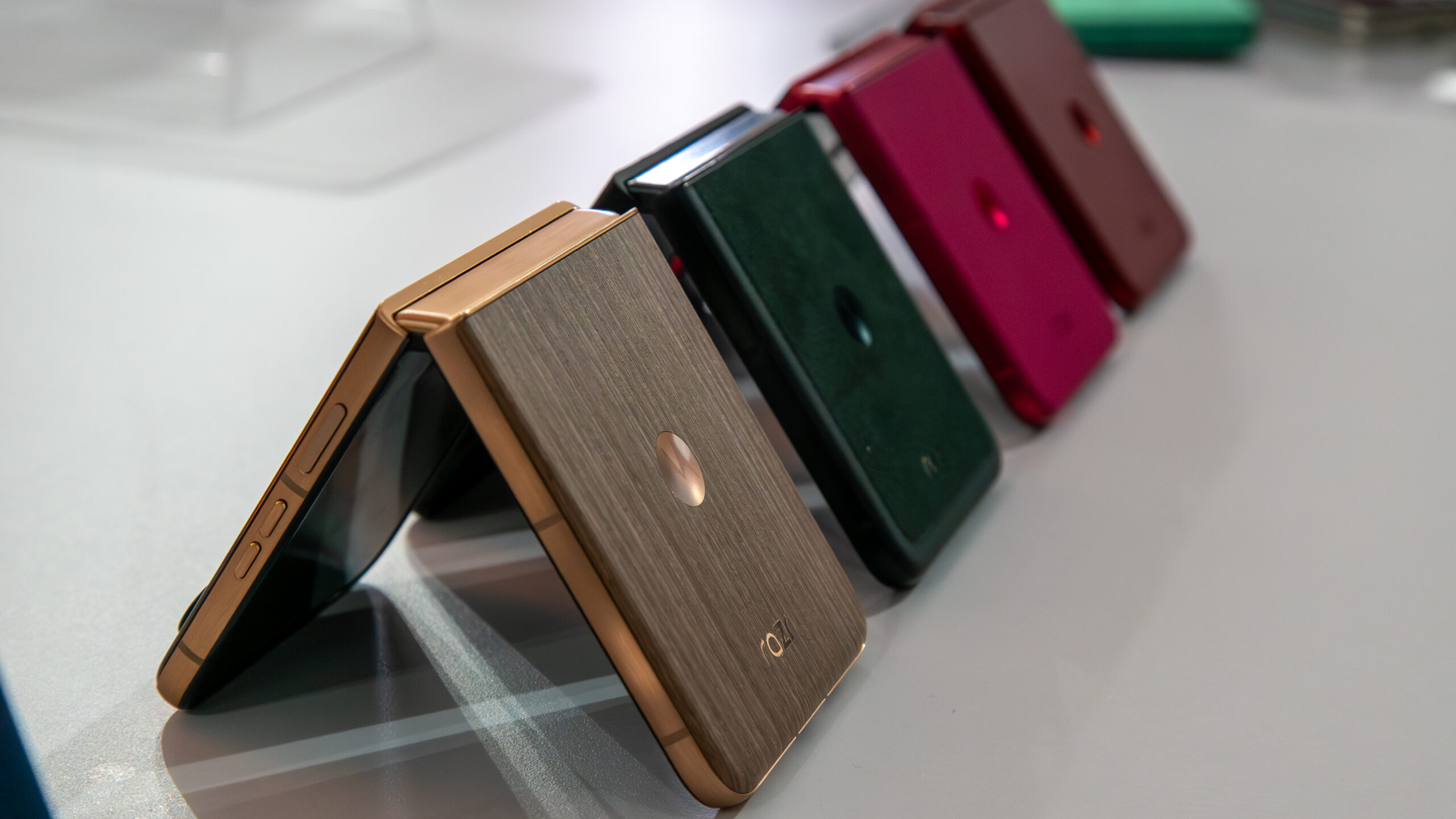
Motorola just unveiled its new Razr 2025 series, and the company is taking a page out of Samsung’s book in North America by launching a trio of devices. After the previous two generations only came with two phones, I think Motorola was smart to tweak its lineup for a more aggressive strategy, and Samsung may want to take note.
The Razr 2025 series comprises the base Razr 2025, the Razr Plus 2025, and the Razr Ultra 2025. The latter is the newest addition to the lineup, offering premium specs with a premium price tag. The entire lineup spans a wide range of prices, starting at $699 and ranging up to $ 1,299. By contrast, Samsung’s Galaxy S25 series, which comprises a base S25, S25 Plus, and S25 Ultra, ranges from $799 to $1,299 as the starting prices for each model.
When I asked Motorola why it decided on three Razr devices for 2025, it said that it’s “expanding the family to provide consumers with more options at various price points.”
This makes sense as Motorola is known for offering devices with plenty of value at a lower price point (Razr 2025) while the company is also trying to better establish itself in the premium Android market (Razr Ultra 2025). This gives Motorola a broad reach with consumers, something Samsung has capitalized on with its flagship series.
Three’s company
(Image credit: Derrek Lee / Android Central)
By now, we’re accustomed to Samsung offering three flagship models (excluding the upcoming Edge), a trend it has maintained for several generations. Apparently, it works out well for the company; otherwise, it would have ditched the strategy long ago. In fact, including the Galaxy S25 Edge, Samsung appears poised to double down on this strategy, highlighting how more choice is indeed better.
Yet, despite the similar naming strategy, Motorola isn’t copying Samsung completely. The Razr 2025 phones offer different specs, from the chipset to the camera setup, which is how Motorola has been able to bring the price lower than the Galaxy S25. After all, we are dealing with foldable phones here, which often cost more than traditional candybar phones.
Motorola updated the Razr 2025 chip with the AI-ready Dimensity 7400X, which isn’t an expensive flagship chip, but a more cost-effective midrange chip that should be more than capable for a $700 phone.
Get the latest news from Android Central, your trusted companion in the world of Android
The Razr 2025 next to the Razr 2024. (Image credit: Derrek Lee / Android Central)
Anshel Sag, principal analyst at Moor Insights & Strategy, agrees, noting that Motorola now has the sales volume to support a three-product lineup.
“They are also moving up market with a true flagship model that beats the competition in every spec while still offering more affordable alternatives, creating the halo effect,” Sag tells me in an email.
That “true flagship model” costs a whopping $1,299, which is a $300 premium over last year’s Razr Plus 2024 and $200 more than the already-expensive Galaxy Z Flip 6. It also costs the same as the Galaxy S25 Ultra, despite offering significantly better specs, including more RAM, increased base storage, and faster charging, among other advantages.
That’s a pretty penny that could give some consumers pause. However, this may not be as much of a deterrent as I initially thought it would be.
(Image credit: Derrek Lee / Android Central)
“I don’t think it will be much of a problem since the company is offering a sliding scale of capabilities and for those who care for the specs, the Ultra is the perfect model,” Sag explains. “The Ultra is very competitive as a flagship, and I think [it] will get the brand a lot of attention.”
Like Samsung, Motorola clearly wants you to buy its premium offering, while still making it easy for you to get a similar experience with two cheaper models based on what you can afford and what you want out of your phone. Even if that means making meager changes with the Razr and Razr Plus.
Middle child syndrome
(Image credit: Future)
The Razr 2025 introduced a few notable changes, including a larger battery and an updated chipset. However, the Razr Plus 2025 is largely the same as last year’s Plus model in terms of specs. Just by looking at it, you’d think they were the same phone (because they almost are).
This was the biggest question mark for me with Razr’s new strategy. We’ve definitely complained about companies making very few changes with their new phones, and this kinda takes the cake. That’s not to say it isn’t a good phone; I still love my Razr Plus 2024.
(Image credit: Motorola)
Motorola made sure to point out to me how this 2025 model is still an upgrade from its predecessor.
“The key improvements include the suite of new Moto AI experiences, the redesigned titanium-reinforced hinge, the first flip phones with Pantone validated color and skin tones, and robust IP48 dust and underwater protection.”
That’s not nothing, and the Pantone-enhanced display and cameras actually sound pretty good to me. However, like Samsung’s Galaxy S Plus devices, I worry that the new Razr Plus will fall into that same awkward middle child situation.
Sag says that while this is true to a lesser extent, “the Razr Plus is far more differentiated from the Ultra than the Samsung models are.” Basically, for anyone who still want a flagship-esque experience without paying more than $1,000, this is the phone for you.
On the other hand, Sag notes that Galaxy Plus phones, such as the Galaxy S24 Plus, are probably a better deal, as they typically utilize the same chipset as their Ultra counterparts, rather than a less powerful version, which allows for price reductions in other areas.
Now it’s Samsung’s turn
(Image credit: SammyGuru)
Sag believes that Motorola’s new Razr 2025 series still offers great value in regions like China, and “especially in the US market where foldable competition is weak.”
This gives me hope that Motorola may execute this three-product strategy successfully, leveraging its strengths as a company that still knows how to undercut the competition while also proving it can truly compete with the big boys.
This is something I think Samsung needs to emulate with its foldable phones. Every year, the company launches one large-screened foldable and a smaller flip phone, and both have done well for the company. However, with last year’s Galaxy Z Flip 6 price hike and the expected price increase for the Galaxy Z Fold 7, Samsung will need to continue to offer options that are within reach for consumers.
(Image credit: Derrek Lee / Android Central)
We’ve written about how Samsung needs to launch a Galaxy Z Flip FE, and we may finally get one this year, with Samsung rumored to use a less powerful chipset (among other changes) to achieve a cheaper price tag.
That’s definitely a start, and we would love to see something similar with the Fold series, with an option that costs a few hundred dollars less to help drive adoption. And just like last year’s Galaxy Z Fold Special Edition, the company could offer some type of ultra-premium model for both Flip and Fold devices for the people who are willing to spend more on the latest and greatest.
With foldables becoming more mainstream, offering consumers more choices feels like the best option for companies, especially in the U.S., where there are already so few when compared to other regions. So, where Motorola is doing the smart thing by emulating Samsung, Samsung and others need to follow suit and give us more, and not limit us to just one foldable model a year.
Hydroponics Farm And Store Simulator Direct Download:
Choose various hydroponics systems with various grow bed styles, including Raft model and PVC pipe model. Customize your setup to suit your specific needs and preferences, ensuring an efficient and productive system. Whether you’re aiming for a small-scale home setup or a larger commercial operation, the flexibility in grow bed styles allows you to create a hydroponics system that perfectly fits your goals and space requirements. Experiment with different species of plants and fish, each offering unique growth rates and profitability. Regularly care for your hydroponics setup to ensure the healthy growth of both plants and fish. By staying vigilant and proactive, you can maintain a thriving hydroponics environment that consistently produces high-quality produce and fish. Boxing School 2
When your commodities are ready, harvest and sell them in your store. Develop efficient harvesting techniques to minimize waste and maximize yield. Transport your products to the in-game store, where you control the sales process. Arrange your fresh goods strategically to attract customers. Step into the role of a cashier, assisting customers as they purchase your carefully harvested goods. Ensure correct pricing and smooth transactions, handle payments, provide change, and keep the line moving with friendly, efficient service. Whether you’re a beginner or an expert, Hydroponics Farm & Store Simulator provides the tools and knowledge to turn your hydroponics dreams into reality. Create a sustainable and profitable venture by nurturing plants and fish, managing your store, and processing groceries.
Features and System Requirements:
Design and build your own hydroponics layout with shelves, lights, nutrient tanks, and water pumps.
Choose from dozens of plant types, experiment with crossbreeding, and optimize for yield or speed.
Unlock new farming tech, expand your greenhouse, and automate tasks as your business grows.
Manage resources sustainably with energy-efficient systems and water recycling mechanics.
Screenshots
System Requirements
Recommended
Requires a 64-bit processor and operating system
OS: Windows 10/Windows 11
Processor: Intel Core i5 or AMD equivalent or above
Memory: 4 GB RAM
DirectX: Version 11
Storage: 10 GB available space
Support the game developers by purchasing the game on Steam
Installation Guide
Turn Off Your Antivirus Before Installing Any Game
1 :: Download Game 2 :: Extract Game 3 :: Launch The Game 4 :: Have Fun 🙂

 Note: MacRumors is an affiliate partner with Anker. When you click a link and make a purchase, we may receive a small payment, which helps us keep the site running.