CES has long felt like a full-on auto show, but the car-centric energy seems somewhat muted at CES 2026. Sure, the Afeela electric vehicle from the Sony-Honda joint venture is returning to the show floor, but with the Trump administration yanking most EV incentives from the market, the industry isn’t offering a full-court press of new vehicles in Las Vegas this year. That said, there’s no shortage of in-cabin car tech on display, including Hyundai’s Holographic Windshield Display.
Indeed, the company’s Mobis subsidiary will present “more than 30 mobility convergence technologies” during CES. And we’ll also get to see Hyundai’s AI Robotics Strategy, which will showcase its new Atlas robot fresh out of the lab.
How to watch Hyundai’s presentation at CES 2026
Hyundai’s presentation takes place on January 5 at 4PM ET, and you can livestream it on either its HyundaiUSA YouTube channel or its global YouTube channel. We’ll embed the stream here once it’s available.
What to expect
As mentioned above, Hyundai will have its Holographic Windshield Display for viewing. It’s essentially a next-gen heads-up display that projects key data from the vehicle’s dash on the windshield for less distraction, and without obstructing the driver’s view. It’s a vertically expandable 18.1-inch large display, and passengers can even watch videos without being visible to the driver.
Hyundai Mobis collaborated with German optics specialist Zeiss to develop the “world’s first system to utilize holographic film to transform the entire front windshield into an ultra-large display surface.” It says it will begin mass production in 2029, so don’t expect to see this on the market anytime soon.
Beyond automotive, though, we’ll also get a first-ever look at the company’s new Atlas robot. In the teaser image shown in the press release, Atlas looks rather dog-like, which makes sense when you remember that Boston Dynamics was purchased by the Korean multinational back in 2020.
“This next-generation Atlas represents a tangible step toward the commercialization of AI Robotics, highlighting the Group’s commitment to building safe and adaptable robotic co-workers,” the company said in the same press release.
Hyundai said it will also discuss its other tech areas, including electronics and chassis system safety, as well as an AR head-up display, low-power display solutions and EV drive systems.
I am using Azurite for local storage for my azure functions (While developing locally). It doesn’t seem to be working on one of my machines.
local setttings.json
There doesn’t seem to be much wrong with that…
When I run my Azure Function code, I am getting this :
This doesn’t look healthy.
Also in my Service dependencies in Visual Studio I am getting this :
I know it cannot re-run Azurite if it is already running but the error is different that case. I cannot seem to get any of my functions running.
Although if I use another machine then it works fine and everything is good – so it’s machine dependent I think. Is there any command line in Windows to check what’s on these ports to see if there is anything already there ? I have done that earlier though and I cannot see anything.
Also got this error when I first tried to start my function
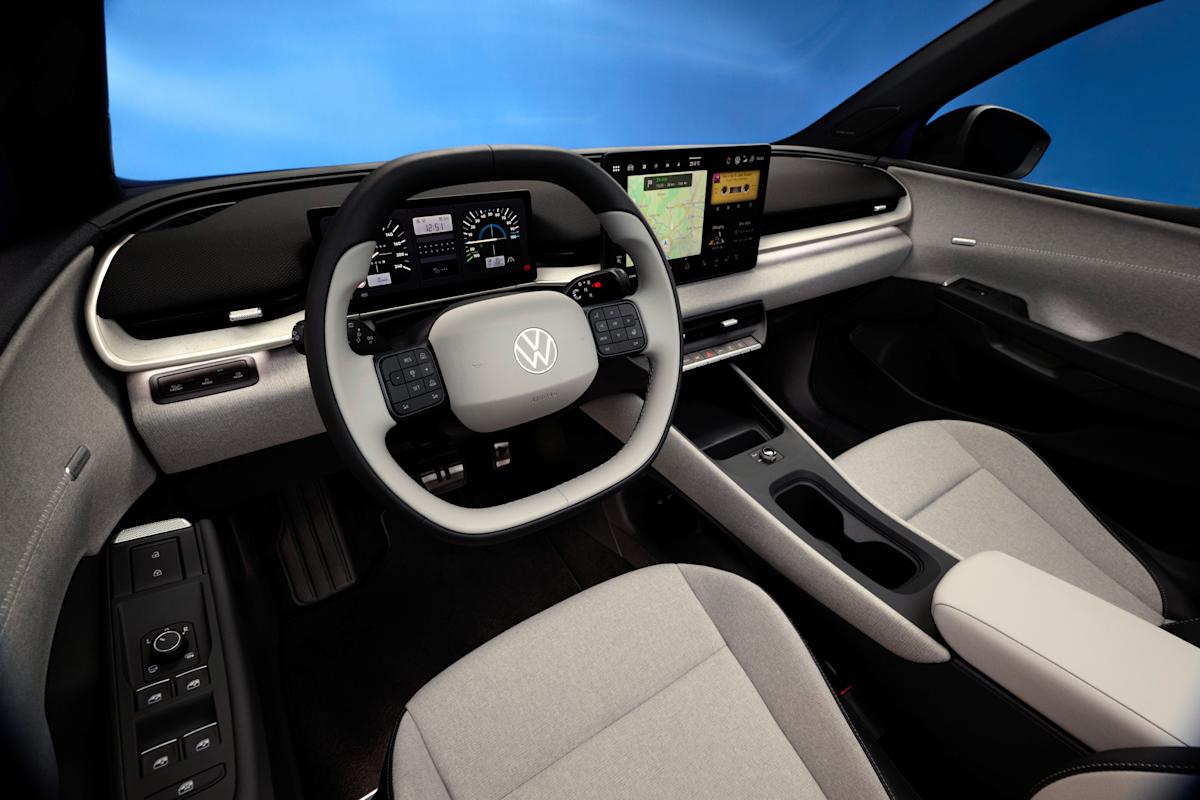
We could be witnessing the start of the renaissance for real buttons in cars, courtesy of Volkswagen’s ID. Polo. The German automaker unveiled the interior of its upcoming compact EV, which features real buttons, switches and even a knob for audio controls.
“We have created an interior that feels like a friend from the very first contact,” Volkswagen’s chief designer, Andreas Mindt, said in a press release. “Clear physical buttons provide stability and trust, warm materials make it appealing, and charming details such as the new retro views of the instruments show the typical Volkswagen wink.”
Volkswagen
Last year, Mindt told Autocar that Volkswagen would commit to reintroducing physical buttons for the most important functions “in every car we make from now on,” starting with the ID. 2all concept car that has since evolved to become the ID. Polo. The EV maker backed up those claims since the ID. Polo will feature tangible buttons underneath the infotainment display, along with a steering wheel that’s packed with even more clear buttons. Between the driver and passenger, Volkswagen even included a knob that can adjust audio volume or shuffle between tracks and radio stations.
Volkswagen
Besides the renewed emphasis on physical controls, Volkswagen still included a 10.25-inch digital cockpit behind the steering wheel. In the center, there’s a nearly 13-inch touchscreen that serves as the infotainment system. For a retro throwback, the ID. Polo can swap its cockpit display to one that’s inspired by the classic Golf I from the 1980s through a button on its steering wheel or with the infotainment touchscreen.
The ID. Polo is expected to be the first of four new EVs in Volkswagen’s small and compact car segment, which will see releases in European markets starting this year. However, it’s not all good news, since Volkswagen has no plans to release the compact EV in the US.
It’s not uncommon for Resident Evil games to open with a combat-free intro level—Resident Evil Village has two of them back to back. You play through a domestic scene at home and then walk through the night to the village where all the monster-murder finally kicks in. They’re characterful ways to begin a horror game, though they do put you off replays given all that slow-paced atmosphere-building only really works once.
Resident Evil 4’s remake would have had one of these intros, a Chapter 0 where you play Ashley in the moments leading up to her capture. You can see moments from it in the trailer, but it was cut at some point in development—perhaps due to complaints about how similar prologues messed with the pacing of other Residents Evil. (Capcom seems averse to giving players the option to skip stuff in replays, which you’d think would be an easy fix to the problem.)
Thanks to modder and YouTuber Michael Kemp, we can see what this mini Episode Ashley would have looked like. Well, sort of. The leftovers found among RE4R’s files don’t include the cutscenes, the enemies, or whatever Ashley would have used to light her way through the dark, though they do include a couple of different running animations including a more frantic version for chicken-flapping her arms around while being chased by a ganado.
I don’t know if I’m really disappointed about the lack of another stealth sequence where you play a girl that people on the internet would have complained about—fans of Resident Evil 4 are here for Leon doing roundhouse kicks and tend to talk about Ashley like she murdered their puppies and also grandparents, so it’s probably for the best this bit was cut.
Keep up to date with the most important stories and the best deals, as picked by the PC Gamer team.
Netflix and Ubisoft are making an Assassin’s Creed TV series, and the cast is coming together ahead of the start of production in 2026. The director for the series has also been announced.
So far, three stars for the Assassin’s Creed TV show have been confirmed, but as of yet, no roles have been announced. For now, here’s who we know will appear on the show:
Toby Wallace
Zachary Hart
Lola Petticrew
Laura Marcus
Tanzyn Crawford
Wallace is known for his roles in the movies The Bikeriders and Babyteeth, while Hart is perhaps best known for the Apple TV show Slow Horses. Petticrew, meanwhile, starred on the TV series Say Nothing. Marcus previously appeared in Death by Lightning and will be in next year’s Hunger Games movie, Sunrise on the Reaping. Crawford will appear in the upcoming Game of Thrones TV show A Knight of the Seven Kingdoms.
Who is directing the Assassin’s Creed TV show?
Johan Renck, best known for directing HBO’s Chernobyl series and winning an Emmy for his work, will direct the Assassin’s Creed show, according to Variety. The Swedish filmmaker also directed episodes of Breaking Bad and Bloodline, as well as one episode of The Walking Dead. He was going to direct the pilot for HBO’s The Last of Us before he dropped out due to a scheduling conflict.
Renck is also known for directing music videos, and for his own music. His 1993 song, “Here We Go,” was a chart-topper.
Filming for the untitled Assassin’s Creed show is expected to begin this year in Italy, which will also be a setting for the show. However, the time period for the series is unknown. The games jump throughout history and the modern day.
Before this, 20th Century Fox produced 2016’s live-action Assassin’s Creed movie starring Michael Fassbender, and it made more than $240 million worldwide. It reportedly had a budget of $120 million.
AI business growth is changing everything for solo entrepreneurs like us!
In this video, I share exactly how I use AI and automation to save time, stay human, and build a thriving video brand.
I’ll walk you through GEO (generative engine optimization), custom GPTs, and the tools I use daily like MindPal and Buffer.
If you want to grow your business with AI without losing your personal touch, let’s dive in!
VIDEO: How I’m Growing my Business with AI Agents and GPTs | Ep. 61
Some product links in this post are affiliate links, and I will be compensated when you purchase by clicking our links. Read my disclosure policy here.
Why AI Matters for Solo Business Owners Right Now
I’m at the point where I use AI every single day, and honestly, all day because I’ve built systems and automations that work for me. But getting here didn’t happen overnight.
I’ve been fascinated with AI since ChatGPT first launched, but it took me months to truly understand what’s possible when you stop thinking inside the box and start looking outside of it. I genuinely believe that for many online businesses, embracing AI isn’t optional if you want longevity.
By offloading repetitive tasks, repurposing content efficiently, and automating internal workflows, I get more bandwidth to show up as myself, inside my community, on my content, and with the people I serve.
Here’s the reality: if other businesses in your space are embracing AI and you’re not, they’re going to become more efficient, more visible, and more scalable. That doesn’t mean they’re better; it just means they have more leverage. And as solo business owners, leverage is everything.
For me, AI isn’t about cutting corners. It’s about preserving a lean business model while expanding my reach, strengthening my authority, and staying deeply human in how I show up.
AI doesn’t replace human connection. It creates space for it.
The Five Ways I’m Using AI to Grow My Business
When I think about AI right now as it relates to business and marketing, everything falls into five core areas.
1. Discoverability, SEO, and the Shift to GEO
Discoverability is the first area where AI has completely changed how I think about growth. For years, I’ve relied heavily on SEO, especially on YouTube. That’s actually how I grew my channel in the first place: by applying traditional SEO principles to video content.
Now we’re seeing the rise of GEO — Generative Engine Optimization. Instead of people only searching on Google, they’re going straight to tools like ChatGPT to get answers. And yes, that’s caused real problems in the blogging world.
What’s fascinating is that my YouTube channel is benefiting from this shift. When I look at my analytics, Google is still my top external traffic source, but ChatGPT is now the second. That means AI isn’t just answering questions; it’s actively sending people into my ecosystem.
That tells me something important: AI tools are sending people to creators they recognize as experts.
Google has also been clear that it’s no longer just looking at on-page SEO. It’s evaluating your entire body of work across platforms using the same EEAT framework they’ve talked about for years: experience, expertise, authority, and trustworthiness.
That’s why I’ve never been more grateful to have a YouTube channel tied directly to my name and my core topics. Every long-form video contributes to a growing library of expertise connected to me. Every video adds to a growing library of proof that I know what I’m talking about — and AI tools are using that same signal when deciding what content to surface.
This isn’t just about YouTube growth it’s about ensuring your content shows up wherever people are searching for answers.
Repurposing Long-Form Content Without Creating AI Slop
One of the most powerful ways I use AI is to repurpose my long-form content across platforms.
I’ve always been a long-form content creator. Video podcasts are the foundation of my content strategy, and AI helps me extend the life of that work across other platforms.
After I publish a video podcast episode, I take the transcript and use AI to turn my thoughts into platform-specific content, especially for Threads and LinkedIn.
Here’s what that looks like in practice:
I take my video podcast transcripts and use AI to generate Threads content
I repurpose those same transcripts into LinkedIn posts
I review, edit, and queue everything inside Buffer
I use ChatGPT, Claude, and Gemini, sometimes all three because they each interpret prompts differently. I’ve built custom GPTs and projects specifically designed to write in my voice, using my thoughts.
The content doesn’t start with AI. It starts with me hitting record. AI simply helps me adapt those ideas for platforms I wouldn’t otherwise have the energy to show up on consistently.
This allows me to stay active on platforms I wouldn’t otherwise prioritize without forcing myself to create from scratch.
The content still comes from me. AI simply helps shape it so it fits the platform.
That’s the difference between helpful augmentation and content that feels lifeless.
Turning Every Video Into a Blog Post
Since day one, every video I’ve created has been turned into a blog post.
AI has made this process faster and easier over time, but it’s still human-led. A draft is created using AI, then refined by a real person so it’s readable, helpful, and aligned with my voice.
This strategy builds my body of work across platforms and strengthens discoverability both for traditional SEO and generative engines.
If you’re creating long-form video content and not turning it into blogs, you’re leaving a massive opportunity on the table.
2. Internal Automation That Protects My Time
AI isn’t just helping me market, it’s running large parts of my internal operations.
I use automations connecting tools like Kajabi andThriveCart so members are added to the right programs and receive the right emails automatically.
Inside Video Brand Academy, I’ve created multiple custom AI tools using MindPal. These tools help summarize calls, generate insights from my ideas, and support my team without extra manual work.
For example:
A tool that turns my “what’s working now” ideas into structured posts
AI workflows trained specifically on how I think and teach
These aren’t generic GPTs—they’re trained and structured intentionally so the output actually reflects how I think and teach.
Because these tools are programmed by me, the output stays aligned with my voice and values. This isn’t generic automation, it’s personalized infrastructure.
I’m also paying close attention to tools like Relay, which are pushing automation even further for small teams and solo business owners. This is where things get really exciting.
3. Integrating AI Into Digital Products and Memberships
One of the biggest opportunities I see right now is integrating AI directly into courses, programs, and memberships.
This is where things get really exciting.
InsideVideo Brand Academy, I’ve built AI-powered tools that help members get results faster without needing ten years of experience.
Achannel analyzer built with MindPal that reviews YouTube channels using screenshots
Instead of relying on third-party tools, members can use systems I’ve built specifically for their stage of business. These tools don’t replace learning; they accelerate it.
This is how I think about AI as a growth tool, not a gimmick, but a way to deepen transformation for the people I serve.
Real Example: The Thumbnail Masterclass
For my membership Video Brand Academy, I recorded a “Ultimate Thumbnail Masterclass,” which has everything I know about thumbnails. You could watch it and learn a lot, but you have to create thumbnails and do experiments to truly learn.
Or, I could create an AI tool where you input your title and topic, and it makes a thumbnail for you. I’ve seen AI-generated thumbnails that are pretty good. At the very least, we can use AI to sketch ideas for thumbnails for someone who doesn’t have ten years of experience making thumbnails.
How much more effective is that for my clients than watching a 90-minute training on how to make a thumbnail?
I’m teaching people how to write effective titles, but I created a tool where you tell me your topic, and it gives you 50 different title options. Yes, you should learn how to write an effective YouTube title, but you can also just use my tools inside Video Brand Academy.
Building a Dozen AI Tools
Once I realized how easy it was to use MindPalto create chatbots and workflows, I wanted to create more. I have like a dozen insideVideo Brand Academy. They’re in their own Kajabi product along with a community and the core content.
There’s a chatbot trained on everything inside Video Brand Academy, so you can post in the group looking for help or come to a meetup, or anytime you can open that chatbot, pick my brain, and see what the chatbot says.
4. Custom GPTs as Lead Magnets (But Doing It Right)
The Problem with How Most People Use Custom GPTs
If you think this sounds great, but you don’t want to use another tool, you could use custom GPTs. Lots of people are creating custom GPTs, and indeed, it’s a great tool, but if you have a program that has a start date and an end date, you’re just kind of giving those tools away.
I love the idea of using a custom GPT as a lead magnet, but I think people are doing it wrong. Most custom GPT lead magnets I’ve seen work like this: You put in your email address, and I give you a link to my custom GPT; it’s yours for life, take it and run. There’s nothing wrong with that, but what if you create a custom GPT that does something specific that your ideal customer would find extremely valuable, and they keep using it?
Create Ongoing Value, Not One-and-Done
What I see a lot of people doing is creating a custom GPT as a one-and-done deal. Create something that’s so useful they keep returning to it, and that prompts them to download a cheat sheet (my sample) or watch a free training.
I created a custom GPT called “YouTubify Your Business.” You can access it, and you don’t have to give me your email address. When you’re stumped on what to do on your channel next, you can go to my custom GPT. It’s not trained on everything inside Video Brand Academy, but I created it to be so useful that you want to keep using it.
5. The Future: No-Code Tools and AI Agents
The final area I’m watching closely is the rise of no-code tools. People are building entire businesses without writing a single line of code, and while I’m resisting the urge to build another app, I love the idea, but I have my app (the VBA App) already. The potential here is enormous.
AI agents, workflows, and embedded tools are redefining what’s possible for one-person businesses. With the right systems, we can help people achieve real transformation, without burning ourselves out.
As online business owners, we help people achieve transformations through information and tools like no-code apps, MindPal, custom GPTs, and internal automation. I’m amazed at what we can do with one person obsessed with AI.
AI doesn’t replace my creativity. It doesn’t replace my voice. And it definitely doesn’t replace community. Instead, it gives me margin, margin to show up live, to engage in conversations, and to build relationships that actually matter.
My rule is simple:
I create the core ideas
AI helps me extend and support them
Humans stay at the center of everything
Conclusion
The key to growing your business with AI isn’t about replacing yourself or creating content that sounds robotic. It’s about strategically using AI to give yourself the bandwidth to show up more consistently, connect more authentically, and serve your audience better.
AI isn’t here to make us obsolete; it’s here to help solo business owners like us compete with bigger companies, be present on more platforms, and create better tools for our clients without burning out or sacrificing the human connection that makes our businesses special.
If you’re a solo business owner wondering how to grow without losing yourself in the process, my encouragement is this: use AI to protect your energy, amplify your expertise, and create space for deeper human connection.
The future belongs to business owners who can stay authentic and human while leveraging AI to scale their impact. That’s exactly what I’m doing and how I’m growing my business, and I truly believe it’s how we’ll build sustainable, meaningful businesses in the years ahead, and I’m excited to see where this takes us all.
If you have an online business with a course, program, or any other kind of offer, and you’re not currently generating consistent sales on autopilot, I’d like to introduce you to the hands off youtube funnel that has made me over $20k on a $147 course! That way, you too can make consistent sales of your offer, with the beauty and simplicity of organic, evergreen traffic from YouTube! Start here with my free “AIT Method” training.
California is giving residents a new tool that should make it easier for them to limit data brokers’ ability to store and sell their personal information.
While state residents have had the right to demand that a company stop collecting and selling their data since 2020, doing so required a laborious process of opting out with each individual company. The Delete Act, passed in 2023, was supposed to simplify things, allowing residents to make a single request that more than 500 registered data brokers delete their information.
Now the Delete Requests and Opt-Out Platform (DROP) actually gives residents the ability to make that request. Once DROP users verify that they are California residents, they can submit a deletion request that will go to all current and future data brokers registered with the state.
But that doesn’t necessarily mean that all your data will be deleted immediately. Brokers are supposed to start processing requests in August 2026, then they have 90 days to actually process requests and report back. If they don’t delete your data, you’ll have the option to submit additional information that may help them locate your records.
Companies will also be able to keep first-party data that they’ve collected from users. It’s only brokers who seek to buy or sell that data — which can include your social security number, browsing history, email address, phone number, and more — who will be required to delete it.
Some information, such vehicle registration and voter records, is exempt from deletion because it comes from public documents. Other information, such as sensitive medical information, may be covered under other laws like HIPAA.
The California Privacy Protection Agency says that in addition to giving residents more control over their data, the tool could result in fewer “unwanted texts, calls, or emails” and also decrease the “risk of identity theft, fraud, AI impersonations, or that your data is leaked or hacked.”
Techcrunch event
San Francisco | October 13-15, 2026
The penalty for data brokers who fail to register or fail to delete requested consumer data is $200 per day, plus enforcement costs, according to the agency.
We’re officially counting down the days until CES 2026 begins, and a quick glance at this week’s news cycle reveals just how packed the show will be this year.
Ahead of the Las Vegas trade show, which opens its doors to thousands of journalists, analysts, and industry professionals on Tuesday, January 6, we’re already seeing major announcements from the world’s leading consumer electronics brands, including Samsung, LG, and Hisense.
This year’s agenda? Expect more ambitious pitches from companies, small and large, including how AI will assist and enhance our daily lives in various ways, modes of transportation that extend beyond city streets, and TVs that surpass conventional specifications, form factors, and sizes.
If we’re lucky, we’ll discover several notable products that you can actually buy shortly after the curtains close.
How to watch CES 2026
You can tune into CES through various livestreams and keynotes. The full schedule of presentations can be found here; some of them start as soon as this weekend.
For a more comprehensive overview of the biggest announcements this year, refer to ZDNET’s live news tracker below, curated by our ground team of reporters and editors, as well as individuals monitoring the latest announcements from home.
It’s been in the works for years now, but I was met with a surprise this morning when United announced at the gate that my flight from Newark to Las Vegas would support the new Starlink Wi-Fi service — free, faster internet speeds for streaming, work, and more, essentially.
If that’s not a sign for me to get work done these next five hours, then I don’t know what it is.
And, so far, it’s legit. I have multiple tabs open in my Chrome browser, writing articles about news you’ll learn more about in the coming days, and downloading and uploading photos and videos without any issues. Here’s to hoping this holds for the rest of the flight.
Smartphone enthusiasts — particularly those who long for the days of the BlackBerry – are likely familiar with the brand, Clicks. This year, the company is releasing two new accessories, one in the form of a MagSafe keyboard that doubles as a wireless charger, and another that functions like a BlackBerry.
The former, the Clicks Power Keyboard, is launching at a relatively accessible price of $79, and its snap-on nature allows you to operate your phone in both portrait and landscape orientations.
The Clicks Communicator features a similar physical QWERTY keyboard, but also has a display, 3.5mm headphone jack, and microSD card slot, effectively serving as a secondary device for messaging. That will go on sale later this year for $499.
The folks at RayNeo are showcasing two new pairs of smart glasses at CES this year: the Air 4 Pro, which extends off of your phone, computer, or gaming console, and the X3 Pro Project eSIM, which supports a built-in 4G connection, allowing you to browse the web or make phone calls without pairing the glasses to a cellular device.
The latter of the two products is more intriguing to me, as it feels like a natural next step for smart glasses. The Meta Ray-Ban Display has given us a glimpse of what it’s like to compute without having to pick up our phones. What if we didn’t have to even have our phones present to get things done?
Ahead of CES, TCL has unveiled the new Note A1 Nxtpaper tablet, an 11.5-inch digital notepad that competes with the likes of the Kindle Scribe and ReMarkable. There is one unique aspect with the TCL, though: It has both a full-color LCD display and a 120Hz refresh rate, yielding both vivid and smooth visuals as the user browses, sketches, and more.
The Note A1 Nxtpaper is priced at $549, and positions itself as a faster, more versatile hybrid for professionals and students who want a paper-like tablet experience without the traditional imitations of E Ink.
CES is home to many things, including AI vaporware, but Project Luci may change that narrative. It’s a compact, magnetic AI pin designed to act as a searchable digital archive of your daily life.
Like the Meta Ray-Ban glasses, it features a 12MP ultra-wide camera and dual microphones capable of recording continuously for up to four hours.
Using a proprietary AI model called Mavi, the device allows users to perform “semantic searches” to recall specific details, such as what they ate or who they met. To address privacy concerns, it includes a physical camera shutter and a dedicated companion hub for local data processing.
Priced at approximately $99, does a “memory-augmented” experience entice you at all?
Alongside TVs, Samsung has unveiled a new batch of 6K monitors. Sorry, I should specify that they’re both 6K in resolution and 3D in playback, allowing gamers to be more immersed in various titles and professionals to be a better feel for their digital creations.
We’ve seen 3D monitors before, especially at CES, but Samsung’s new Odyssey line may be the most polished, with glasses-free eye-tracking that makes the 3D feel more realistic. However, we’ll have to see these monitors in person before deciding if they’re worth it or not.
“It’s hard not to be skeptical. 3D TVs were all the rage a decade ago, only to fall out of favor due to their propensity to muddy colors, worsen image quality, and cause motion sickness,” says my ZDNET colleague, Cesar Cadenas. Here’s to hoping Samsung overpromises and overdelivers.
There’s never a dull moment with TVs, and I blame manufacturers and their extensive dictionary of tech jargon for that. This year’s hot word is “Micro RGB,” a meticulous arrangement of LEDs that produces enhanced light control and accuracy. Samsung has a version of this, LG has a version of this, Sony has a version of this, and so on.
The big question is how accessible this recent display tech will be, as most TV models in the market currently are both too large and too expensive.
Today’s post covers how you can boost client confidence with 3D architectural animation for real estate presentations. Imagine yourself going into a presentation of a real estate project with colored floor plans, glossy brochures, and maybe a few static 3D renderings. The client is leaning forward, nodding here and there, but you can just about see the question hovering above their head: “What will it really look like?” Is that not the problem? Traditional presentations leave far too much to the imagination. A few 2D drawings and flat renderings can only go so far in helping clients picture a space that does not yet exist. Then comes 3D architectural animation, like a creative superhero.
No capes are required, naturally – only some deft visuals, great use of space, and a bit of digital magic.
Why flat plans fall flat
In reality, even the best-drawn floor plan can be flat. It can show dimensions, proportions, and layout, but doesn’t provide anything that really gets people attached to a place. After all, real estate is not about square footage; it’s about vision, emotion, and that sense of belonging which space can create. No 2D plan will ever replace the visual understanding of how morning light spills across the kitchen counter, how the living room will feel from the second-floor balcony, or how spacious the lobby will look once the furniture is in place. Only one angle can be shown with a static rendering; it cannot tell a story.
But with 3D architectural animation services you can. It whisks clients on a slick, cinema-style journey through a property before a single brick has been laid and allows them to feel what it will be like to walk through the front door and explore the rooms, standing on that terrace with a view that takes their breath away. That is not exaggeration, that is the power of storytelling through motion.
Our brains are wired to understand things visually. About 80 percent of all information that we intake comes through our eyes, so it’s easier for people to respond because they can see it rather than having to imagine it. A 3D architectural animation designer taps into this instinct. It can turn the project from a stack of plans into an experience that feels tangible and real. This would, in turn, let the client visualize in action design details: the flow of natural light, the texture of materials, and realistic motion through each room.
Thus, it would easily bridge the gap from imagination to reality and make the proposed design more comprehensible and far more compelling. It’s only when the client gets to see every nook and corner of the future space that all one’s doubts start going away. Doubts give way to excitement-this is how you build up client confidence, helping them to see their investment.
Imagine the difference
Two developers submit proposals for upscale apartments. He enters the room with some static 3D renders and a few printed brochures. The presentation is informative, yet a little stiff; the audience listens and nods, asking only a few polite questions. Developer B walks in with a 3D architectural animation that flies the viewer through the entire property. The video leads off with an aerial view of the building surrounded by landscaped gardens, then flies the viewer through the entrance lobby past residents who chat in the lounge and onto the penthouse to view a stunning view of the city skyline.
Which of those developers do you think makes the longer-term impression?
The answer should be rather obvious: the second one has used 3D animation in order to make the project come alive. It is not just that the audience understands the concept; they feel it. That emotional connection builds trust and confidence.
Competition in the field of real estate has grown tougher. Everybody wants to be outstanding, and first impressions now mean more than ever. A slick 3D architectural animation from 3D architectural rendering professionals gives your presentation an immediate professional sheen, telling your audience that you care about quality, detail, and clarity. It also shows that you care about them enough to want to take care of their comprehension. You aren’t saying, “Just trust me.” You’re showing them exactly what they can expect. That kind of transparency creates trust. Be it pitching to investors, buyers, or even city planners, 3D animation drives the message home much faster and more effectively than any amount of technical jargon on a sheet of paper can.
Developers of real estate love it- and for good reason
Keeping this in mind, property developers welcome 3D architectural animation as a means of being able to sell quicker, plan better, and avoid misunderstandings. It is so much easier to see through any design flaw when one watches a building in motion as opposed to having it in flat drawings. One can make the adjustments well in advance, saving lots of time and money in the process. Besides, animations are marketing gold: they can be posted on websites, social media, and promotional videos; moreover, they are ideal for virtual tours and digital campaigns in cases when clients cannot visit the site in person. What might require dozens of static images to bring awareness, explain, and close the sale can be done with one animation.
What makes a great 3D architectural animation
Not all animations are created equal, and the best pieces combine technical precision with an artistic touch. A 3D architectural visualization expert can help.
What makes an animation shine is the following:
Realistic lighting and textures: Proper use of natural light and correct material expressions results in a believable atmosphere.
Smooth Camera Movement: Smooth transitions hold the viewer’s attention and make them feel the flow of space.
Attention to detail: From texture to reflection to shadow, contributes to the realism.
Compelling storytelling: Great animation takes the viewer on a journey; it doesn’t just show them rooms.
High-quality rendering: It is facilitated by crisp resolution as well as well-soaked colors.
It will surely be something to behold when these elements all come together for each of your clients and investors.
Few people make purely logical decisions about real estate; they may look closely at the costs and the floor plans, but emotion drives the final decision. A 3D animation from a 3D rendering firm puts that emotional spark into it. It lets the client feel, rather than calculate, the value of a space. The only way they can conceptualize is if you show how it would be in the future, with natural sounds, ambient lighting, and a warm atmosphere; then they are able to start seeing themselves within that. They start building a personal connection with the project.
When that happens, it turns from an absolutely informative presentation into an irresistible one.
The unreal becomes real
Good 3D architectural animation from 3D architectural design experts should not only show buildings; it should give life to them with trees swaying in the wind, reflections on glass, and shadows that change as the day progresses. It is a level of realism where clients just forget that they are actually seeing a model in digital format. Such realism gives the client confidence that, indeed, what they see will be translated into reality. It is not about impressing somebody; rather, it is about giving them confidence. A client will more likely invest in, approve, or buy something when they feel confident that what they see will be achieved.
Seeing the future before it exists
But the most exciting thing with this form of 3D architectural animation is the time-travel capability involved; it’s a look into the future long before even the foundation has been laid. Just think of presenting a fully realized, furnished property to show that exists only in pixels on a screen and yet looks utterly believable. You can show the view of a summer afternoon where sunlight pours in through floor-to-ceiling windows or an evening view with soft lighting and city lights that evoke a feeling of warmth and comfort.
You can even show how the design fits into the seasons: lush greenery in summer, golden leaves in autumn, and cozy interiors in winter. This provides the clients with something no blueprint could: a real sense of ownership with this kind of visual versatility. This puts them into a mindset that they are already part of the project’s future.
A salesperson who never sleeps
Well-crafted 3D architectural animation from a 3D architectural visualizion designer works tirelessly for you: created once, it can be used across a wide range of platforms and audiences, from your website to social media ads, investor decks, and even in a sales office. It will never get tired or forget to mention talking points about your project and represent it in the best way. Think of it as a digital salesperson: charming, consistent, and camera-ready. It is invaluable to property developers and real estate marketers since with the animation, one need never explain over and over again; it speaks for itself eloquently and visually-anywhere at any time.
How 3D animation saves time and prevents misunderstandings
Of the many advantages and benefits associated with architectural animation, one of the most undervalued advantages is that it makes the interactions among teams much easier. Usually, the architects, designers, contractors, and clients all have different views about the drawings. A small misunderstanding in the initial design stage could result in costly changes later on.
With 3D animation services, these risks decrease because it ensures that all things are crystal clear. When everyone is able to see what the final outcome of something should look like, there is much less room for misinterpretation. It saves enormous amounts of time when revisions are in order. You don’t have to try to explain spatial adjustments through sketches or long emails; you just show them the modified animation. In other words, the visuals clear up the confusion way faster than any technical explanation ever could.
Versatility is a great feature of 3D architectural animation. You can also create as many versions as you want with one project, depending on the audience. For instance, some of them are interested in smooth animation of scale, location, and profitability with a short length. Buyers may also like the more relaxed, atmospheric walk-through of the interiors, lifestyle elements, and emotional appeal. Animation for environmental harmony, pedestrian flow, and sustainability.
City planners want an animation on environmental harmony, pedestrian flow, and sustainability. You can reuse the same base animation, only adjusting the lighting, the pacing, and the music slightly to make it work for each. That’s the flexibility that makes 3D animation one of the smartest marketing tools in your arsenal.
The ‘Wow’ factor that clients remember
We are living in a visually-oriented world where people are bombarded by images, videos, and all forms of digital content. But for anything to get attention these days, it really needs to cut through the noise. The “wow” factor a well-done 3D animation from a 3D animation designer does is that it stops people mid-scroll, draws them in, and makes them utter the words, “That looks amazing.” It’s the difference between a standard pitch and a memorable experience. You know you’ve done something right when, days or even weeks later, a client still remembers your presentation: the visual memory of your animation far outlives any printed brochure or static image.
But 3D architectural animation is not all about the visuals. The sound, too, plays a big role in building up the emotional atmosphere: soft hums of the city skyline, birds chirping in a suburban garden, or quiet echoes of footsteps down a marble hall-these little audio cues add richness to the presentation. Music sets a tone, too. A soft piano piece can lend warmth and elegance to a residential development, while a rhythmic upbeat suits a modern urban complex. These audio clues give even more of an immersive feel to the experience, but above all, an emotional one. They let the client feel the project, rather than just see it.
Bringing design philosophy to life
Most architects have a design philosophy-something to guide them through the process. It’s hard to describe, but ideas like “connection to nature” or “flow of light.” Architectural animation designers bring these ideas to life, showing how such design principles play out in real space: how open-plan living encourages connection, how large windows invite natural light, and how materials create a sense of warmth and texture. You don’t tell them about your design philosophy; you show it. It is that difference that turns your presentation into a creative narrative, rather than a technical showcase.
Investor confidence
Investors are always cautious. They would no doubt like to be very sure that their money is well-invested in a viable and well-planned venture. Spreadsheets and feasibility reports are all required, but do not really build confidence as much as a realistic animation might. A high-quality 3D presentation of the project will, therefore, help investors much more easily understand the whole idea and consider its potential. They would then see just how exactly the final product will attract a buyer or tenant; this clarity builds confidence and could actually be the determining factor in the decision to invest in the project. A professional 3D animation adds an aesthetic allure to your proposal while making your financial case robust.
How 3D Animation Supports Virtual Reality Experiences
Virtual Reality has now found its application in architectural fields, changing the way designs are being presented to clients. Most of the VR experiences for architectural services are based on 3D architectural animations and created by 3D AR/VR architectural design experts. These would enable the client to virtually “walk” through spaces, see around corners, and explore at his or her own pace with a set of VR headsets. It is this being-inside sense that makes the experience of engagement so much deeper. Actually, the clients are feeling themselves physically inside the building, which does not exist.
The belief it gives them is that everything has been considered, thus speeding up their decision-making process.This would have the same effect when one sees a 3D animation on an ordinary screen without making use of all the elements of VR. It allows for spatial awareness and emotional bonding that is simply not replicable with static visuals.
Marketing in the digital era
Of course, there is also the marketing potential of 3D architectural animation: well done, shareable, engaging, and versatile-you may feature it on your website, play it in your showroom, or post it on social media where it can be seen by thousands of possible clients. Properties listed with 3D video tours do significantly better compared to those that are presented with photography alone. They drive more traffic, more leads, and in the process build a strong brand image. In today’s video-first world, a video does indeed reign supreme. A 3D animation of your property takes center stage in your marketing campaign, with that professional and modern image to which today’s tech-savvy clients are most attracted.
First-class 3D architectural animation requires both talent and experience, with appropriate software skills. It is not the kind of project that is given to just anybody who has a computer and some enthusiasm. Cad Crowd fills this gap by matching your project with highly vetted freelance 3D animators and architectural visualization experts from around the world. You’ll also be able to explore their portfolio and skillset and hire a professional with experience in real estate presentations.
Whether you require a fly-through of a luxury property in a cinematic style, an interactive investor animation, or a photorealistic visualization of an urban development, you will definitely find freelancers at Cad Crowd who can help bring your ideas to life. Working with freelancers at Cad Crowd is effective and cost-efficient, as you get a chance to pick from among a large pool of professionals who understand architectural precision and creative storytelling. Cad Crowd can help you find a smooth, transparent, and reliable collaboration with real estate professionals while taking out all hassle entirely. Contact us for a free quote.
MacKenzie Brown is the founder and CEO of Cad Crowd. With over 18 years of experience in launching and scaling platforms specializing in CAD services, product design, manufacturing, hardware, and software development, MacKenzie is a recognized authority in the engineering industry. Under his leadership, Cad Crowd serves esteemed clients like NASA, JPL, the U.S. Navy, and Fortune 500 companies, empowering innovators with access to high-quality design and engineering talent.
It’s time to snap out of your eggnog-addled haze, because 2026 is officially upon us. The year is already stacked with dozens of surefire blockbusters, from Marvel’s Wolverineto Grand Theft Auto 6. But there are still a whole lot of gaps to fill on this year’s calendar, and plenty of question marks looming for 2027. If you want to be in the loop on what’s next in gaming throughout 2026 and beyond, these are the major gaming events on the calendar you’ll want to keep in mind.
We’ll update this article periodically throughout the year, as new gaming events are added.
Consumer Electronics Show (CES) 2026
When: Jan. 6-9
Justin Sullivan/Getty Images
The Las Vegas trade show that spawned the now-dead E3 still lives on, and while it isn’t a hotbed for new game announcements anymore, there are generally a lot of reveals of interest to spec-minded PC gamers. Announcements here often include new GPUs, monitors, Steam Deck and Steam Machine alternatives, and more accessories than you can possibly imagine. We can also expect a heaping helping of third-party peripherals, including gadgets for audiophiles and VR/AR/XR enthusiasts.
The New York Game Awards 2026
When: Jan. 17-18
The New York Videogame Critics Circle (NYVGCC) will host a two-day Manhattan event featuring an exclusive Supergiant Games: Unplugged concert and the annual awards ceremony. Critics Circle president Harold Goldberg and former Nintendo of America president Reggie Fils-Aimé will co-host the latter, and we anticipate a more eclectic group of nominees from this jury than The Game Awards crop at the end of last year.
DICE Summit 2026
When: Feb. 10-12
This annual Las Vegas event has grown in prominence in recent years, though it remains a largely inside-baseball affair for industry folks. There are usually some newsworthy interviews and panels coming out of the conference, and its annual awards ceremony is held in particularly high esteem — it’s essentially a jury of game developers honoring their peers. Again, DICE isn’t a huge source for game reveals, but it can offer a peek into the trends and challenges devs are thinking about for the year ahead.
Game Developers Conference (GDC) 2026
When: March 9-13
GDC has traditionally hewed more toward the industry-only side of things in past years, but it’s taking a new approach for 2026, billing itself as a “festival of gaming.” But it’s not becoming a fan event like E3 did in its waning years; one major aim is more approachable pricing for early-career, indie, and startup devs. Back in October, GDC executive director of innovation and growth Mark DeLoura told Polygon the organizers are looking to host more high-profile keynotes and debates. As is the case with DICE, we anticipate some interesting interviews, soundbites, and postmortems from some of the industry’s leading lights, but little on the trailers and teasers front.
PAX East 2026
When: March 26-29
Image: ReedPop
With loads of game demos, musical performances, and plenty of intriguing panels from the industry’s leading creators and innovators, PAX consistently ranks among the best of the fan- and community-focused gaming events out there. Indies have always been a major focus of this Boston convention, though last year’s show also featured major activations from heavy hitters like Elden Ring: Nightreign and Borderlands 4.
BAFTA Games Awards 2026
When: April 17
With 17 categories, these honors from the British Academy of Film and Television Arts are widely regarded to be one of the most prestigious awards in gaming. The jury of 1,700 industry professionals consistently recognizes a broad range of games, prioritizing creative excellence over commercial success. The BAFTAs usually choose a different GOTY winner than The Game Awards, although last year’s win by Astro Botwas a rare exception.
BitSummit 2026
When: May 22-24
Japan’s leading indie-game festival returns to Kyoto for 2026, and two days of the three-day event will be open to the public. Last year’s BitSummit event featured appearances from the inimitable Final Fantasy composer Nobuo Uematsu, Okami and Bayonetta creator Hideki Kamiya, and director of the cult-classic 428: Shibuya Scramble Jiro Ishii.
Summer Game Fest 2026
When: June 5
Yesterday’s stream proved that digital game events struggle to generate atmosphere.Image: Summer Game Fest
Now we’re getting into Big Reveal Season. The heir apparent to E3 returns to Los Angeles in 2026, now with a spiffy new Hollywood venue: the Dolby Theater, which has hosted the Oscars since 2002. The marquee event is the showcase hosted by Geoff Keighley, which will include loads of game reveals and updates. This is usually when publishers and developers fill out the back half of the year’s release calendar, so expect to hear about major fall games as well as titles due out in 2027. Press and influencers will get to play some of the games revealed during the showcase in the days immediately following, so expect a steady trickle of news all week long.
The Summer Game Fest showcase isn’t the only early-June event to get hyped about. In 2025, the show was bookended by a PlayStation State of Play presentation and an Xbox Showcase. There’s also a Day of the Devs event to highlight new indie games around the same time. We’re also likely to see a few third-party publishers and indie publishers hosting their own livestream events, though none of that is confirmed just yet.
Asia’s largest annual gaming and digital entertainment expo will take place in Shanghai, and with the continued rise of China in the AAA space through games like Game Science’s Black Myth: Wukong, the event is growing in prominence internationally. Sony had a significant presence at the 2025 event, and the company’s China Hero Initiative aims to bring Chinese-developed games to a broader audience. Expect a fresh look at Black Myth: Zhong Kuihere, along with other splashy titles getting some shine.