Some subscribers to the Washington Post have been receiving emails that their subscription rates will be going up, according to the Washingtonian. That part isn’t surprising, given the fact that Post owner Jeff Bezos has reportedly been upset that the newspaper is losing money, especially since ditching about half of his workforce. But some folks who scrolled down to the bottom of the email were surprised when they read about how the new price was determined: “This price was set by an algorithm using your personal data.”
It’s a concept called surveillance pricing, and it’s not entirely new. People can often be charged different prices for the same product, depending on any number of factors. If your phone battery is low, rideshare companies like Uber or Lyft might charge more because they know you’re desperate. Instacart was recently caught charging up to 23% more to some shoppers based on unknown criteria.
Many Democrats aren’t happy about it, including Rep. Greg Casar of Texas. On Monday, Casar wrote on Bluesky that surveillance pricing “should be illegal,” adding, “I have a bill to ban it.”
Last year, Casar and Rashida Tlaib of Michigan introduced legislation called the Stop AI Price Gouging and Wage Fixing Act. And last month, two other Democrats in the Senate, Ben Ray Luján from New Mexico and Jeff Merkley from Oregon, introduced very similar legislation called the Stop Price Gouging in Grocery Stores Act of 2026.
The Washington Post hasn’t explained how it determines pricing by using personal data. But there could be a number of factors, including zip code, estimated income, and purchase history. Bezos, the founder of Amazon, presumably has more data on what people buy than just about anyone in the country. And he’s a big supporter of utilizing AI to maximize profits.
The problem is that AI can’t really make up for losses any business might incur by offering a bad product. The newspaper first hemorrhaged subscribers—250,000 in one week alone—after Bezos stopped the Washington Post editorial board from endorsing Kamala Harris in the 2024 presidential election against Donald Trump.
The Washington Post had no reporters at the Academy Awards on Sunday, according to the paper’s former culture writer. And it was the last of the major news outlets to report that the U.S. had started bombing Iran late last month. The paper has purged any writer on the opinion side deemed to be liberal and has instead become a mouthpiece for the Bezos worldview—a worldview that happens to align perfectly with that of the Trump regime.
Bezos has been criticized for buying the distribution rights to First Lady Melania Trump’s “documentary” Melania for a whopping $40 million, but the movie itself helps explain why he’d bother. There are several shots of the Trumps with Big Tech oligarchs like Elon Musk, Tim Cook, and Bezos himself. All of these guys need something from Trump, whether it’s space contracts or just tariff relief.
News of what Bezos has in store for the future of his newspaper doesn’t instill confidence that it can survive much longer as a respected institution. The Washington Post’s news side still breaks major stories, but the New York Times reports Bezos’s big idea was to chop the newsroom’s budget in half and demand twice the productivity through AI. Columnist Dana Milbank and economics correspondent Jeff Stein both announced they were leaving the Post on Monday.
Businesses are increasingly turning to algorithms to set their prices, and it doesn’t look like that’s going to change anytime soon unless legislators get involved. At least a dozen states are considering legislation about surveillance pricing, but so far, only New York has passed a law in this area. Unfortunately, it doesn’t have much teeth since it only requires companies to notify consumers when a price has been set with AI.
On the other hand, New York’s law may be the only reason we know that the Washington Post is using AI for subscription rates. The paper has little other incentive to include the disclaimer: “This price was set by an algorithm using your personal data.” Notifying consumers may not fix the problem of surveillance pricing, but at least people can take it into account when deciding where they want to spend their money.
Success in today’s highly competitive marketplace very directly depends on how well a product meets the needs and expectations of its users. Companies are pinning more hopes on producing products that would give the best experiences to the users, and this is why user-centered design, or UCD, principles have become important components in the development process of business products for product design companies.
Cad Crowd is an industry leader in providing vetted outsourced product design services for businesses around the world.
Integrating UCD principles into the business process can quite significantly contribute to improvements in usability, accessibility, and overall user satisfaction, which translates into higher customer retention and revenue streams. This article analyzes how the use of user-centered design principles can improve your company’s designs for products, with insights from various industry leaders.
🚀 Table of contents
User-centered design definition
User-centered design (UCD) is a philosophy of design that is concerned with putting users at the center of product development services. The idea behind UCD is that design must be based upon a deep and profound understanding of what users are, what users need, how users think, and their goals. UCD is not just about functionality, but also with much emphasis on the emotional connection to the product, ensuring products are intuitive, easy to use, and engaging.
Unlike the traditional design approach, in which the product or technology is at the center of focus, UCD places the user at the center of the design process. This requires research, collection of feedback, and iteration throughout the design process to ensure that the final product satisfies the needs of the intended users.
According to experts, user-centered design is a design process in which the needs, wants, and limitations of the end-user are given extensive attention at every stage of the design process. This can be used even for physical products or digital products like applications and websites.
In order to maximize the potential of user-centered design, consumer product companies need to include guiding principles while they are in the process of creating their products. These will ensure that the users know every step they take in the design phase is based on their liking. Which always results in a more effective product.
Below are the principles that will elevate your product design.
Focus on the user’s needs and goals
The first and most crucial principle of user-centered design is understanding your users’ needs, goals, and pain points. Without this understanding, it is impossible to create a product that will resonate with users.
A user-centric approach would begin by doing extensive research, including some level of interview with the users, a survey, and sometimes usability testing, to understand their behavior, preferences, and problems. This consequently guides the real design considerations so that the final product meets the users’ real-world needs.
For instance, in the case of a fitness tracking mobile app, having an understanding of your target audience’s fitness goals, how they track their progress, and what motivates them will inform features and functionality design aimed directly at addressing these needs. You may also want to consider wearable design services in the case of smart workout apparel. If a product addresses a user’s needs, it will more probably find favor and gain success.
Include users in the design process
One of the most compelling features of user-centered design is the active involvement of users throughout the design process. This involves involving the users at every step of product development, from its earliest idea to initial testing and launch.
Involving users at each stage can deliver feedback so that your product is always going in a direction that would generally meet the expectations of the user. Through usability testing, focus groups, or beta testing, ongoing user input allows you to iterate on your design and make informed adjustments.
One good example is Apple, in which the iterative approach of its design always involved rigorous testing with feedback loops from users. Through an iterative approach, Apple can refine its products to result in a seamless and user-friendly experience for its customers.
Iterative design and testing
Design, therefore, is not one-time; rather, it is iterative, meaning it always requires constant refinement and assessment. Improving designs for products is done most effectively through continuous testing and refinement. An iterative process of design means a cycle in which your product moves through cycles of design, testing, gathering feedback, product engineering services, and subsequent improvement. Through this, a problem with the design is identified as early as possible while allowing designers to experiment with different features and functionalities to see what resonates more with users.
Companies can test these variations with customers using tools like A/B testing, usability testing, or prototypes, and determine which way would best be taken based on the results. This cycle allows repetition to continue, fine-tuning the company’s designs until they reach the most effective version of the product.
Usability is one of the cornerstones of user-centered design. A product will only be as good as its ease of use. If the users can’t navigate it or can’t understand how to use it, frustration and abandonment will be the result. Usability, therefore, refers to making products simple, intuitive, and accessible.
The overall goal is to make it painlessly simple for a user to do anything they want to do within the application with minimal effort and frustration. This would involve such aspects as clear navigation, readable typography, responsive design, and an overall easy-to-use interface. Usability testing involves identifying weaknesses and fixing them to ensure that the design meets users’ needs.
For instance, some product development experts elaborate on how user-centered design impacts the usability of websites and digital products. A clear call-to-action button, a simple layout, and easy navigation-all these factors make your design user-friendly. All these factors will help users interact with the product easily, which increases user satisfaction and retention.
Design for accessibility
Accessibility is yet another critical principle of user-centered design. A usable design should make it possible for people with all abilities and disabilities to use the product. This involves making sure that any product is usable for people with visual, auditory, motor, or cognitive impairments.
Accessibility built into your product design means thinking of how users interact with technology. For example, providing text alternatives for the images (alt text), designing with color contrast in mind, and ensuring your website or app is accessible by a keyboard or screen reader, to name a few, are ways of creating an inclusive product.
Experts emphasize the point that accessibility and inclusive design are not actually about checking compliance, but all about product design experts building a product that everybody can use as much as possible, and gives a meaningful experience to everyone. In essence, your focus on accessibility demonstrates to your users that you really care for them and ensure that everyone has an equal, fair chance.
Consistency across the product
Consistency is a must for managing to make the user experience both harmonious and intuitive. When users are dealing with a product, they must feel that they know how it works from one screen or feature to the next. Consistent design fosters trust and comfort in the system, therefore allowing users to navigate the product without confusion.
Consistency encompasses both visual-design-level elements (color, fonts, and layout) as well as functional elements (button placement, icons, and actions). Maintaining a consistent design language across your product will make it so much easier for users to understand how to interact with your product and predict what will happen when taking particular actions.
Contextual understanding
Contextual design is basically a cornerstone of user-centered design. Context refers to the entire circumstances of a user interacting with any product, which would include their environment, goals, and mindset. By understanding the context, new concept design experts can come up with products that could more relevantly and usefully suit the specific contexts of users.
For instance, an app for drivers would require designing with high-speed, easy-to-read interfaces that do not distract their attention from the activity of driving. A fitness app may be imperative to be very simple and user-friendly when users are working out or in motion. The context in which your product is used means that users can use it with ease in their daily lives.
Benefits of using the user-centered design approach
The use of user-centered design principles in your products and business will highly impact your product and industrial design firm; hence, the following represent some of the key benefits.
Enhanced user satisfaction
When designing products with users in mind, it would most probably meet user expectations and needs for the first time. Such a product would mean that there is very high satisfaction, and users would be more likely to continue using it or recommend it to friends.
Higher conversion rates
A good user experience will have an immediate effect on conversion rates. For digital products, this could mean more people signing up for your service, purchasing a product, or taking the desired action. By reducing user journey friction points and streamlining it, companies see measurable increases in conversions.
Lower support costs
The more intuitive the product is, the less likely users are to experience confusion or frustration. This limits the calls to technical support and complaints and reduces customer support costs; therefore, it enhances customer satisfaction.
Higher customer retention
The loyalty of customers is rooted in their good user experience. Thus, by applying the principles of user-centered design, you as a company are actually ensuring that your products hold the user’s attention for a long period of time, long enough to keep them satisfied. This results in an increased number of customer loyalty.
Conclusion
Applying the principles of user-centered design to your product design and throughout the development cycle, including the use of prototype design services to hone in on user needs, is a type of strategic play to produce products that promote the user’s needs in a saturated market of advertising. Put the need to understand the users’ demands as a priority and let them interact at every point of the design process. Their feedback is an important voice that will give you the basis for reiteration.
Product design continues to evolve every year, and adapting to these changes and embracing user-centered design will definitely help you and your company stay ahead of the competition while still delivering products that delight users.
Whether it is an app, website, or actual product, long-term growth and customer satisfaction can be achieved by considering the user experience in every product design. Here at Cad Crowd, we will make it easier for you through the entire process. Contact us today and request a free quote.
MacKenzie Brown is the founder and CEO of Cad Crowd. With over 18 years of experience in launching and scaling platforms specializing in CAD services, product design, manufacturing, hardware, and software development, MacKenzie is a recognized authority in the engineering industry. Under his leadership, Cad Crowd serves esteemed clients like NASA, JPL, the U.S. Navy, and Fortune 500 companies, empowering innovators with access to high-quality design and engineering talent.
Launched today, NVIDIA Nemotron 3 Super is a 120‑billion‑parameter open model with 12 billion active parameters designed to run complex agentic AI systems at scale.
Available now, the model combines advanced reasoning capabilities to efficiently complete tasks with high accuracy for autonomous agents.
AI-Native Companies: Perplexity offers its users access to Nemotron 3 Super for search and as one of 20 orchestrated models in Computer. Companies offering software development agents like CodeRabbit, Factory and Greptile are integrating the model into their AI agents along with proprietary models to achieve higher accuracy at lower cost. And life sciences and frontier AI organizations like Edison Scientific and Lila Sciences will power their agents for deep literature search, data science and molecular understanding.
Enterprise Software Platforms: Industry leaders such as Amdocs, Palantir, Cadence, Dassault Systèmes and Siemens are deploying and customizing the model to automate workflows in telecom, cybersecurity, semiconductor design and manufacturing.
As companies move beyond chatbots and into multi‑agent applications, they encounter two constraints.
The first is context explosion. Multi‑agent workflows generate up to 15x more tokens than standard chat because each interaction requires resending full histories, including tool outputs and intermediate reasoning.
Over long tasks, this volume of context increases costs and can lead to goal drift, where agents lose alignment with the original objective.
The second is the thinking tax. Complex agents must reason at every step, but using large models for every subtask makes multi-agent applications too expensive and sluggish for practical applications.
Nemotron 3 Super has a 1‑million‑token context window, allowing agents to retain full workflow state in memory and preventing goal drift. Nemotron 3 Super has set new standards, claiming the top spot on Artificial Analysis for efficiency and openness with leading accuracy among models of the same size.
The model also powers the NVIDIA AI-Q research agent to the No. 1 position on DeepResearch Bench and DeepResearch Bench II leaderboards, benchmarks that measure an AI system’s ability to conduct thorough, multistep research across large document sets while maintaining reasoning coherence.
Hybrid Architecture
Nemotron 3 Super uses a hybrid mixture‑of‑experts (MoE) architecture that combines three major innovations to deliver up to 5x higher throughput and up to 2x higher accuracy than the previous Nemotron Super model.
Hybrid Architecture: Mamba layers deliver 4x higher memory and compute efficiency, while transformer layers drive advanced reasoning.
MoE: Only 12 billion of its 120 billion parameters are active at inference.
Latent MoE: A new technique that improves accuracy by activating four expert specialists for the cost of one to generate the next token at inference.
Multi-Token Prediction: Predicts multiple future words simultaneously, resulting in 3x faster inference.
On the NVIDIA Blackwell platform, the model runs in NVFP4 precision. That cuts memory requirements and pushes inference up to 4x faster than FP8 on NVIDIA Hopper, with no loss in accuracy.
Open Weights, Data and Recipes
NVIDIA is releasing Nemotron 3 Super with open weights under a permissive license. Developers can deploy and customize it on workstations, in data centers or in the cloud.
The model was trained on synthetic data generated using frontier reasoning models. NVIDIA is publishing the complete methodology, including over 10 trillion tokens of pre- and post-training datasets, 15 training environments for reinforcement learning and evaluation recipes. Researchers can further use the NVIDIA NeMo platform to fine-tune the model or build their own.
Use in Agentic Systems
Nemotron 3 Super is designed to handle complex subtasks inside a multi-agent system.
A software development agent can load an entire codebase into context at once, enabling end-to-end code generation and debugging without document segmentation.
In financial analysis it can load thousands of pages of reports into memory, eliminating the need to re-reason across long conversations, which improves efficiency.
Nemotron 3 Super has high-accuracy tool calling that ensures autonomous agents reliably navigate massive function libraries to prevent execution errors in high-stakes environments, like autonomous security orchestration in cybersecurity.
Availability
NVIDIA Nemotron 3 Super, part of the Nemotron 3 family, can be accessed at build.nvidia.com, Perplexity, OpenRouterand Hugging Face. Dell Technologies is bringing the model to the Dell Enterprise Hub on Hugging Face, optimized for on-premise deployment on the Dell AI Factory, advancing multi-agent AI workflows. HPE is also bringing NVIDIA Nemotron to its agents hub to help ensure scalable enterprise adoption of agentic AI.
Enterprises and developers can deploy the model through several partners:
Cloud Service Providers: Google Cloud’s Vertex AI and Oracle Cloud Infrastructure, and coming soon to Amazon Web Services through Amazon Bedrock as well as Microsoft Azure.
In 2010, Warren Buffett and Bill Gates launched a disarmingly simple campaign they called the Giving Pledge: a public commitment, open to the world’s wealthiest people, to give away more than half their fortune during their lifetime or upon their death. The moment seemed to call for it. Tech was minting billionaires faster than any industry in history, and the question of how those fortunes would impact society was just beginning to take shape. “We’re talking trillions over time,” Buffett told Charlie Rose that year. The trillions materialized. The giving, less so.
The numbers are no longer shocking to anyone paying attention. The top 1% of American households now hold roughly as much wealth as the bottom 90% combined — the highest concentration the Federal Reserve has recorded since it began tracking wealth distribution in 1989. Globally, billionaire wealth has grown 81% since 2020, reaching a whopping $18.3 trillion, while one in four people worldwide don’t regularly have enough to eat.
This is the world in which a small group of extraordinarily wealthy people are now debating whether to honor — or walk away from — a voluntary and unenforceable promise to give away half of what they have.
The Giving Pledge’s numbers, reported Sunday by the New York Times, trace a steady decline. In its first five years, 113 families signed the Pledge. Then 72 over the next five, 43 in the five after that, and just four in all of 2024. The roster includes Sam Altman, Mark Zuckerberg and Priscilla Chan, and Elon Musk — some of the most powerful people in the world, and yet, in Peter Thiel’s words to the Times, it is a club that’s “really run out of energy . . .I don’t know if the branding is outright negative,” Thiel told the outlet, “but it feels way less important for people to join.”
The language of doing good in Silicon Valley has been wearing thin for years. Back in 2016, the HBO series “Silicon Valley” was so relentless in mocking the industry — its characters forever insisting they were “making the world a better place” while chasing valuations — that it reportedly changed actual corporate behavior. One of the show’s writers, Clay Tarver, told The New Yorker that year: “I’ve been told that, at some of the big companies, the P.R. departments have ordered their employees to stop saying ‘We’re making the world a better place,’ specifically because we have made fun of that phrase so mercilessly.”
It was an hilarious joke. The trouble is the idealism being satirized was also, at least partly, real — and what replaced it isn’t so funny. Veteran tech investor Roger McNamee, in the same piece, recalled asking Silicon Valley creator Mike Judge what he was really going for. Judge’s answer: “I think Silicon Valley is immersed in a titanic battle between the hippie value system of the Steve Jobs generation and the Ayn Randian libertarian values of the Peter Thiel generation.”
McNamee’s own read on things was less diplomatic: “Some of us actually, as naïve as it sounds, came here to make the world a better place. And we did not succeed. We made some things better, we made some things worse, and in the meantime the libertarians took over, and they do not give a damn about right or wrong. They are here to make money.”
Techcrunch event
San Francisco, CA | October 13-15, 2026
A decade later, the libertarians McNamee was describing have moved well beyond Silicon Valley. Some are now in the Cabinet.
Not everyone agrees on what “giving back” even means. To the libertarian wing of tech — and it’s an increasingly significant wing — the entire framework is wrong. Building companies, creating jobs, and driving innovation are the real contributions, and the pressure to layer philanthropy on top of them is, at best, a social convention and, at worst, a shakedown dressed up as virtue.
Few figures captures the current mood quite like Thiel, who, notably, never signed the Pledge himself and is no fan of Bill Gates (among other things, he has reportedly called Gates an “awful, awful person“). In fact, Thiel tells the Times he has privately encouraged around a dozen signers to undo their commitments and has even gently pushed those already wavering to make their exits official. “Most of the ones I’ve talked to have at least expressed regret about signing it,” Thiel said, calling the Giving Pledge an “Epstein-adjacent, fake Boomer club.”
He has urged Musk to unsign, for example, arguing his money would otherwise go “to left-wing nonprofits that will be chosen by” Gates. When Coinbase CEO Brian Armstrong quietly let his letter disappear from the Pledge website in mid-2024 without a word of public explanation, Thiel sent him a congratulatory note.
But Thiel also told the Times something worth a harder look: that those who stay on the Pledge’s public roster feel “sort of blackmailed” — too exposed to public opinion to formally renounce a non-binding promise to give away vast sums of money.
It’s a claim that’s difficult to square with the public behavior of some of the people Thiel has in mind. Musk has shown little interest in managing public perception, and at this point, a majority of Americans already view him unfavorably. Zuckerberg spent nearly a decade facing some of the most sustained regulatory and public hostility any tech exec has endured and came out the other side more sure of himself, not less.
A different picture is meanwhile taking shape on the ground. GoFundMe reported that fundraisers for basic necessities — rent, groceries, housing, fuel — surged 17% last year. “Work,” “home,” “food,” “bill,” and “care” were among the top keywords in campaigns that year. When the 43-day federal shutdown halted food stamp distribution this past fall, related campaigns jumped sixfold. “Life is getting more expensive and folks are struggling,” the company’s CEO told CBS News, “so they are reaching out to friends and family to see if they can help them through.”
Whether these trends are connected to decisions made in philanthropy boardrooms is a matter of debate, but they’re happening at the same time, and the timing is hard to ignore.
It’s worth separating the fate of the Pledge from the fate of philanthropy more broadly. Some of the wealthiest people in tech are still giving; they’re just doing it on their own terms, through their own vehicles, toward their own chosen ends. At the start of 2026, Chan Zuckerberg Initiative (CZI) cut about 70 jobs — 8% of its workforce — as part of a move away from education and social justice causes toward its Biohub network, a group of nonprofit, biology-focused research institutes operating across several cities. “Biohub is going to be the main focus of our philanthropy going forward,” Zuckerberg said last November.
The CZI cuts look, at least on paper, less like the couple is retreating from philanthropy than recalibrating their approach. The Zuckerbergs have, after all, committed through the Pledge to give away 99% of their lifetime wealth.
Not everyone is redefining the terms, either. Gates announced last year that he’d give away virtually all his remaining wealth through the Gates Foundation over the next two decades — more than $200 billion — with the foundation closing permanently on December 31, 2045. Invoking Carnegie’s old line that “the man who dies thus rich dies disgraced,” he wrote that he was determined not to die rich.
It’s happened before, this standoff between concentrated wealth and everyone else. The last time wealth concentrated at anything like these levels — the original Gilded Age, the 1890s through the early 1900s — the correction didn’t come from philanthropists. It came from trust-busting, the federal income tax, the estate tax, and eventually the New Deal. It arrived as policy that was driven by political pressure too powerful to be ignored. The institutions that forced that correction — a functional Congress, a free press, an empowered regulatory state — look considerably different today.
What isn’t in dispute is the pace of change. These fortunes have been built in years, not generations, at the same moment the safety net is being cut. The wealth gained by the world’s billionaires in 2025 alone would have been enough to give every person on earth $250 and still leave billionaires more than $500 billion richer, according to Oxfam’s 2026 global inequality report.
The Giving Pledge was always, as Buffett said from the start, just a “moral pledge” — no enforcement, no consequences, no one to answer to but yourself. That it once carried weight says something about the era that produced it. That Thiel now frames staying on the list as a form of coercion — and that the Times found that argument worth reporting at length — says something about the one we’re in right now.
Looking for the most recent Mini Crossword answer? Click here for today’s Mini Crossword hints, as well as our daily answers and hints for The New York Times Wordle, Strands, Connections and Connections: Sports Edition puzzles.
Need some help with today’s Mini Crossword? I started slow, because 1-Across stumped me, but the rest of the answers came quickly. Read on for all the answers. And if you could use some hints and guidance for daily solving, check out our Mini Crossword tips.
If you’re looking for today’s Wordle, Connections, Connections: Sports Edition and Strands answers, you can visit CNET’s NYT puzzle hints page.
BECOME THE SLAYER IN A MEDIEVAL WAR AGAINST HELL DOOM: The Dark Ages is the prequel to the critically acclaimed DOOM (2016) and DOOM Eternal that tells an epic cinematic story worthy of the DOOM Slayer’s legend. In this third installment of the modern DOOM series, players will step into the blood-stained boots of the DOOM Slayer, in this never-before-seen dark and sinister medieval war against Hell.
DOOM: The Dark Ages is a dark fantasy/sci-fi single-player experience that delivers the searing combat and over-the-top visuals of the incomparable DOOM franchise, powered by the latest idTech engine.
REIGN IN HELL
As the super weapon of gods and kings, shred enemies with devastating favorites like the Super Shotgun while also wielding a variety of new bone-chewing weapons, including the versatile Shield Saw. Players will stand and fight on the demon-infested battlefields in the vicious, grounded combat the original DOOM is famous for.
STAND AND FIGHT
Experience an epic story of the DOOM Slayer’s rage in this cinematic and action-packed story. Bound to serve as the super weapon of gods and kings, the DOOM Slayer fends off demon hordes as their leader seeks to destroy the Slayer and become the only one that is feared. Witness the creation of a legend as the Slayer takes on all of Hell and turns the tide of the war. New Heights: Realistic Climbing and Bouldering
DISCOVER UNKNOWN REALMS
In his quest to crush the legions of Hell, the Slayer must take the fight to never-before-seen realms. Mystery, challenges, and rewards lurk in every shadow of ruined castles, epic battlefields, dark forests, ancient hellscapes, and worlds beyond. Armed with the viciously powerful Shield Saw, cut through a dark world of menace and secrets in id’s largest and most expansive levels to date.
Features and System Requirements:
DOOM: The Dark Ages Premium Edition delivers brutal demon-slaying in a dark medieval hellscape
Experience fast, aggressive combat with new weapons like the Shield Saw
Fight across massive battlefields with epic scale and savage intensity
Premium Edition includes DLC access, cosmetics, and digital extras
A bold reimagining of DOOM with raw power, metal vibes, and chaos
Screenshots
SystemRequirements
Minimum
OS *: Windows 10 64-Bit / Windows 11 64-Bit
Processor: AMD Zen 2 or Intel 10th Generation CPU @3.2Ghz with 8 cores / 16 threads or better (examples: AMD Ryzen 7 3700X or better, or Intel Core i7 10700K or better)
Memory: 16 GB RAM
Graphics: NVIDIA or AMD hardware Raytracing-capable GPU with 8GB dedicated VRAM or better (examples: NVIDIA RTX 2060 SUPER or better, AMD RX 6600 or better)
Storage: 100 GB available space
Support the game developers by purchasing the game on Steam
InstallationGuide
TurnOff Your Antivirus Before Installing Any Game
1 :: Download Game 2 :: Extract Game 3 :: Launch The Game 4 :: Have Fun 🙂
In 2026 AI is no longer a lab novelty; companies deploy models to automate customer service, document analysis and coding. Yet connecting models to tools and data remains messy. The Model Context Protocol (MCP) changes that by introducing a universal interface between language models and external systems, solving the messy NxM integration problem. MCP is open, vendor‑neutral and backed by growing community adoption. Rising cloud costs, outages and privacy laws further drive interest in flexible MCP deployments. This article provides an infrastructure‑oriented overview of MCP: its architecture, deployment options, operational patterns, cost and security considerations, troubleshooting and emerging trends. Along the way you’ll find simple frameworks and checklists to guide decisions, and examples of how Clarifai’s orchestration and Local Runners make it practical.
Why MCP Matters
Solving the integration mess. Before MCP, each AI model needed bespoke connectors to every tool—an N models × M tools explosion. MCP standardises how hosts discover tools, resources and prompts via JSON‑RPC. A host spawns a client for each MCP server; clients list available functions and call them, whether over local STDIO or HTTP. This dramatically reduces maintenance and accelerates integration across on‑prem and cloud. However, MCP doesn’t replace fine‑tuning or prompt engineering; it just makes tool access uniform.
When to use and avoid. MCP shines for agentic or multi‑step workflows where models need to call multiple services. For simple single‑API use cases, the overhead of running a server may not be worth it. MCP complements rather than competes with multi‑agent protocols like Agent‑to‑Agent; it handles vertical tool access while A2A handles horizontal coordination.
Takeaway. MCP solves the integration problem by standardising tool access. It’s open and widely adopted, but success still depends on prompt design and model quality.
Core MCP Architecture
Roles and layers. MCP distinguishes three actors: the host (your AI application), the client (a process that maintains a connection) and the server (which exposes tools, resources and prompts). A single host can connect to multiple servers simultaneously. The protocol has two layers: a data layer defining message types and the primitives, and a transport layer offering local STDIO or remote HTTP+SSE. This separation ensures interoperability across languages and environments.
Lifecycle. On startup, a client sends an initialize call specifying its supported version and capabilities; the server responds with its own capabilities. Once initialised, clients call tools/list to discover available functions. Tools include structured schemas for inputs and outputs, enabling generative engines to assemble calls safely. Notifications allow servers to add or remove tools dynamically.
Key design choices. Using JSON‑RPC keeps implementations language‑agnostic. STDIO transport offers low‑latency offline workflows; HTTP+SSE supports streaming and authentication for distributed systems. Always validate input schemas to prevent misuse and over‑exposure of sensitive data.
Takeaway. MCP’s host–client–server model and its data/transport layers decouple AI logic from tool implementations and allow safe negotiation of capabilities.
Deployment Topologies: SaaS, VPC and On‑Prem
Choosing the right environment. In early 2026, teams juggle cost pressures, latency needs and compliance. Deploying MCP servers and models across SaaS, Virtual Private Cloud (VPC) or on‑prem environments allows you to mix agility with control. Clarifai’s orchestration routes requests across nodepools representing these environments.
Deployment Suitability Matrix. Use this mental model: SaaS is best for prototyping and bursty workloads—pay‑per‑use with zero setup, but cold‑starts and price hikes. VPC suits moderately sensitive, predictable workloads—dedicated isolation and predictable performance with more network management. On‑prem serves highly regulated data or low‑latency needs—full sovereignty and predictable latency, but high capex and maintenance.
Guidance. Start in SaaS to test value, then migrate sensitive workloads to VPC or on‑prem. Use Clarifai’s policy‑based routing instead of hard‑coding environment logic. Monitor egress costs and right‑size on‑prem clusters.
Takeaway. Use the Deployment Suitability Matrix to map workloads to SaaS, VPC or on‑prem. Clarifai’s orchestration makes this transparent, letting you run the same server across multiple environments without code changes.
Hybrid and Multi‑Cloud Strategies
Why hybrid matters. Outages, vendor lock‑in and data‑residency rules push teams toward hybrid (mixing on‑prem and cloud) or multi‑cloud setups. European and Indian regulations require certain data to remain within national borders. Cloud providers raising prices also motivate diversification.
Hybrid MCP Playbook. To design resilient hybrid architectures:
Classify workloads. Bucket tasks by latency and data sensitivity and assign them to suitable environments.
Secure connectivity and residency. Use VPNs or private links to connect on‑prem clusters with cloud VPCs; configure routing and DNS, and shard vector stores so sensitive data stays local.
Plan failover. Set health checks and fallback policies; multi‑armed bandit routing shifts traffic when latency spikes.
Centralise observability. Aggregate logs and metrics across environments.
Cautions. Hybrid adds complexity—more networks and policies to manage. Don’t jump to multi‑cloud without clear value; unify observability to avoid blind spots.
Takeaway. A well‑designed hybrid strategy improves resilience and compliance. Use classification, secure connections, data sharding and failover, and rely on standards and orchestration to avoid fragmentation.
Rolling Out New Models and Tools
Learning from 2025 missteps. Many vendors in 2025 rushed to launch generic models, leading to hallucinations and user churn. Disciplined roll‑outs reduce risk and ensure new models meet expectations.
The Roll‑Out Ladder. Clarifai’s platform supports a progressive ladder: Pilot (fine‑tune a base model on domain data), Shadow (run the new model in parallel and compare outputs), Canary (serve a small slice of traffic and monitor), Bandit (allocate traffic based on performance using multi‑armed bandits) and Promotion (champion‑challenger rotation). Each stage offers an opportunity to detect issues early and adjust.
Guidance. Choose the appropriate rung based on risk: for low‑impact features, you might stop at canary; for regulated tasks, follow the full ladder. Always include human evaluation; automated metrics can’t fully capture user sentiment. Avoid skipping monitoring or pressing deadlines.
Takeaway. A structured roll‑out sequence—fine‑tuning, shadow testing, canaries, bandits and champion‑challenger—reduces failure risk and ensures models are battle‑tested before full release.
Cost and Performance Optimisation
Budget vs experience. Cloud price increases and budget constraints make cost optimisation crucial, but cost‑cutting cannot degrade user experience. Clarifai’s Cost Efficiency Calculator models compute, network and labour costs; techniques like autoscaling and batching can save money without compromising quality.
Levers.
Compute & storage. Track GPU/CPU hours and memory. On‑prem capex amortises over time; SaaS costs scale linearly. Use autoscaling to match capacity to demand and GPU fractioning to share GPUs across smaller models.
Batching and caching. Batch requests to improve throughput but keep latency acceptable. Cache embeddings and intermediate results.
Pruning & quantisation. Reduce model size for on‑prem or edge deployments.
Risks. Don’t over‑batch; added latency can harm adoption. Hidden fees like egress charges can erode savings. Use calculators to decide when to move workloads between environments.
Takeaway. Model total cost of ownership and use autoscaling, GPU fractioning, batching, caching and model compression to optimise cost and performance. Never sacrifice user experience for savings.
Security and Compliance
Threat landscape. Most AI breaches happen in the cloud; many SaaS integrations retain unnecessary privileges. Privacy laws (GDPR, HIPAA, AI Act) require strict controls. MCP orchestrates multiple services, so a single vulnerability can cascade.
Security posture. Apply the MCP Security Posture Checklist:
Enforce RBAC and least privilege using identity providers.
Segment networks with VPCs, subnets and VPNs; deny inbound traffic by default.
Encrypt data at rest and in transit; use Hardware Security Modules for key management.
Log every tool invocation and integrate with SIEMs.
Map workloads to regulations and ensure data residency; practice privacy by design.
Assess upstream providers; avoid tools with excessive privileges.
Pitfalls. Encryption alone doesn’t stop model inversion or prompt injection. Misconfigured VPCs remain a leading risk. On‑prem setups still need physical security and disaster recovery planning.
Takeaway. Enforce RBAC, segment networks, encrypt data, log everything, comply with laws, adopt privacy‑by‑design and vet third‑party tools. Security adds overhead but ignoring it is far costlier.
Diagnosing Failures
Why projects fail. Some MCP deployments underperform due to unrealistic expectations, generic models or cost surprises. A structured diagnostic process prevents random fixes and finger‑pointing.
Troubleshooting Tree. When something goes wrong:
Inaccurate outputs? Improve data quality and fine‑tuning.
Slow responses? Check compute placement, autoscaling and pre‑warming.
Cost overruns? Audit usage patterns and adjust batching or environment.
Compliance lapses? Audit access controls and data residency.
User drop‑off? Refine prompts and user experience.
Before launching, run through a Failure Readiness Checklist: verify data quality, fine‑tuning strategy, prompt design, cost model, scaling plan, compliance requirements, user testing and monitoring instrumentation.
Takeaway. A troubleshooting tree and readiness checklist help diagnose failures and prevent problems before deployment. Focus on data quality and fine‑tuning; don’t scale complexity until value is proven.
Emerging Trends and the Road Ahead
New paradigms. Clarifai’s 2026 MCP Trend Radar identifies three major forces reshaping deployments: agentic AI (multi‑agent workflows with memory and autonomy), retrieval‑augmented generation (integrating vector stores with LLMs) and sovereign clouds (hosting data in regulated jurisdictions). Hardware innovations like custom accelerators and dynamic GPU allocation will also change cost structures.
Preparing.
Prototype agentic workflows using MCP for tool access and protocols like A2A for coordination.
Plan for sovereign clouds by identifying data that must remain local; use Local Runners and on‑prem nodepools.
Monitor hardware trends and evaluate dynamic GPU allocation; Clarifai’s roadmap includes hardware‑agnostic scheduling.
Cautions. Resist chasing every hype cycle; adopt trends when they align with business needs. Agentic systems can increase complexity; sovereign clouds may limit flexibility. Focus on fundamentals first.
Takeaway. The near‑future of MCP involves agentic AI, RAG pipelines, sovereign clouds and custom hardware. Use the Trend Radar to prioritise investments and adopt new paradigms thoughtfully, focusing on core capabilities before chasing hype.
FAQs
Is MCP proprietary? No. It’s an open protocol supported by a community. Clarifai implements it but does not own it.
Can one server run everywhere? Yes. Package your MCP server once and deploy it across SaaS, VPC and on‑prem nodes using Clarifai’s routing policies.
How do retrieval‑augmented pipelines fit? Containerise both the vector store and the LLM as MCP servers; orchestrate them across environments; store sensitive vectors locally and run inference in the cloud.
What if the cloud goes down? Hybrid and multi‑cloud architectures with health‑based routing mitigate outages by shifting traffic to healthy nodepools.
Are there hidden costs? Yes. Data egress fees, idle on‑prem hardware and management overhead can offset savings; model and monitor total cost.
Conclusion
MCP has become the de facto standard for connecting AI models to tools and data, solving the NxM integration problem and enabling scalable agentic systems. Yet adopting MCP is only the start; success hinges on choosing the right deployment topology, designing hybrid architectures, rolling out models carefully, controlling costs and embedding security. Clarifai’s orchestration and Local Runners help deploy across SaaS, VPC and on‑prem with minimal friction. As trends like agentic AI, RAG pipelines and sovereign clouds take hold, these disciplines will be even more important. With sound engineering and thoughtful governance, infra teams can build reliable, compliant and cost‑efficient MCP deployments in 2026 and beyond.
On an average day about a dozen new games are released on Steam. And while we think that’s a good thing, it can be understandably hard to keep up with. Potentially exciting gems are sure to be lost in the deluge of new things to play unless you sort through every single game that is released on Steam. So that’s exactly what we’ve done. If nothing catches your fancy this week, we’ve gathered the best PC games you can play right now and a running list of the 2026 games that are launching this year.
Mama’s Sleeping Angels
Mama’s Sleeping Angels | Official Release Trailer – YouTube
Steam page Release: March 12 Developer: itamu
Mama’s Sleeping Angels is basically Lethal Company by way of Cruelty Squad, though the latter’s distinctive low-grade cyber-surrealism is replaced by a seasick Y2K nostalgia. Either alone or with up to three other players, you navigate an unpredictable dream world, killing threats and collecting “cursed objects” that provide “beneficial or bothersome powers” including, for example, the ability to jump very, very high. As you shoot, explore, and bear witness to countless uncanny atrocities across six maps, you’ll slowly learn why you’re trapped inside a nonsensical dream.
Article continues below
Lucid Blocks
Steam page Release: March 13 Developer: Lucy B. Locks
Lucid Blocks dares to ask: what if Minecraft except extremely odd, with an art style mixing “liminal spaces” with dreamlike misty voxel worlds? Like Minecraft, Lucid Blocks has infinite procedural generation, though it supports infinite vertical procedural generation too. In these worlds you’ll find “cities made of plastic, serene fields of grass, and massive abandoned warehouses”, but you’ll also be free to craft your own structures and expanses as well, all while surviving indescribable beasties. It looks surprisingly fleshed out for $10, and has over a thousand “overwhelmingly positive” reviews.
The State of Nowhere
The State of Nowhere | Latin American Games Showcase TGA 2025 – Trailer – YouTube
Steam page Release: March 12 Developer: Anomaly Works
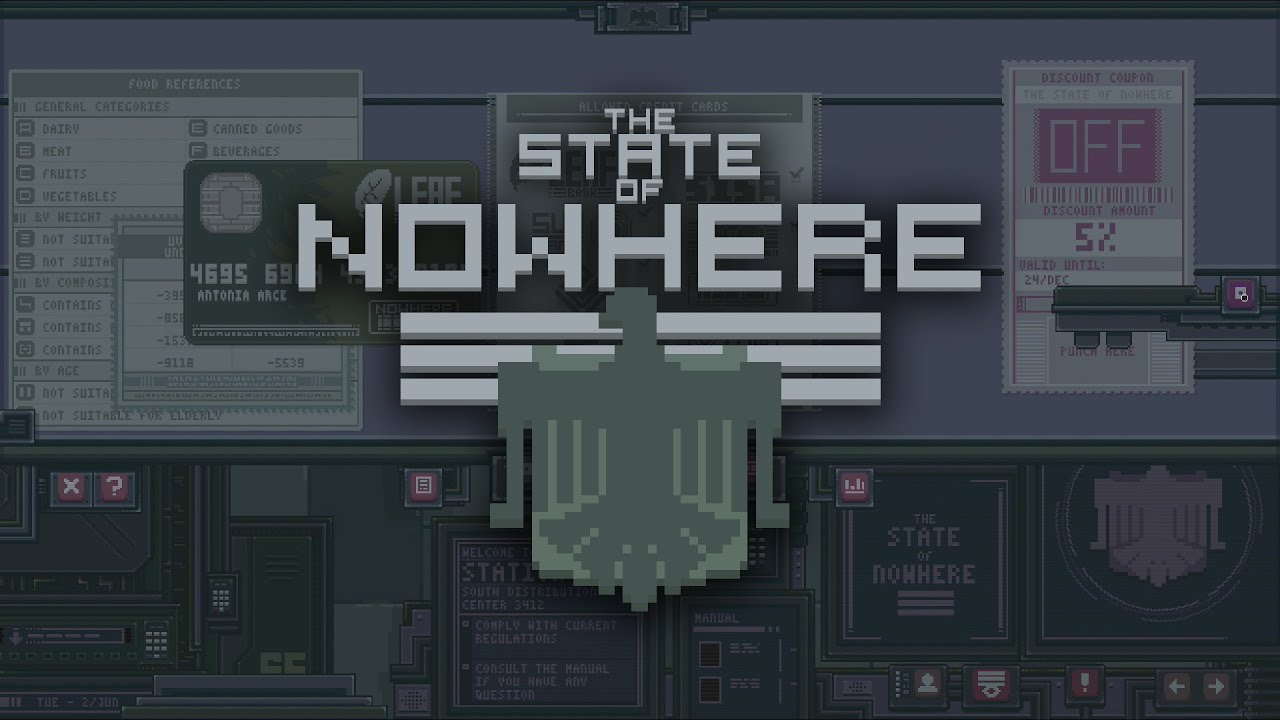
The State of Nowhere is very reminiscent of Papers, Please, but instead of deciding who gets to cross the border into a totalitarian state, you’re deciding who gets access to food in a totalitarian state. In other words, you’re deciding whether people live or die an agonising, hungry death, while also trying to avoid doling out more food to scammers. There are 46 endings to work towards and four distinct game modes, so there’s a fair bit to chew on here aside from debilitating moral uncertainty.
Keep up to date with the most important stories and the best deals, as picked by the PC Gamer team.
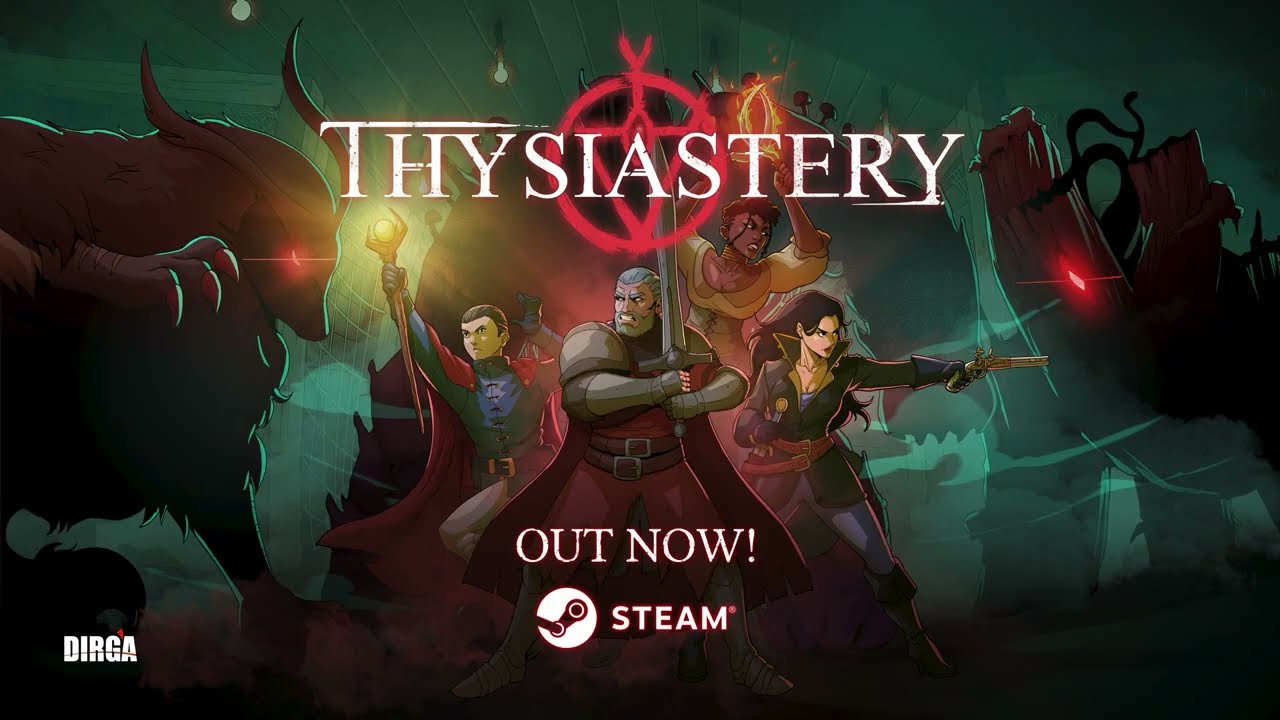
The first of two old school dungeon crawlers in this week’s column, Thysiastery is a very handsome pixel art blobber in a roguelike package. By dint of being branded, you’re fated to life in a huge, mysterious, shapeshifting Labyrinth. The objective is to get out, but naturally there are all manner of puzzles, enemies and obstacles in your path. Combat is turn-based, and there are apparently “a great number of skills” to find, which can be applied to the various party members you’ll find spread throughout the maze. If you’re loving the recent blobber renaissance, this is another one to stick on the wishlist.
Steam page Release: March 10 Developer: Siege Wizard Interactive
Another dungeon crawler, though this one takes the form of a roguelike deckbuilder, which is very much not a genre that excites me but: just look at this thing. It kinda looks like Eye of the Beholder by way of the Garbage Pail Kids, and I mean that as a massive compliment. You play as an imprisoned wizard who must break their shackles and escape a heinous dungeon, all the better to attend their niece’s birthday party. Expect eight playable characters, bizarre elemental synergies, at least one appalling mutant sloth, and lots of cards.
Our expert reviewers spend hours testing and comparing products and services so you can choose the best for you. Find out more about how we test.
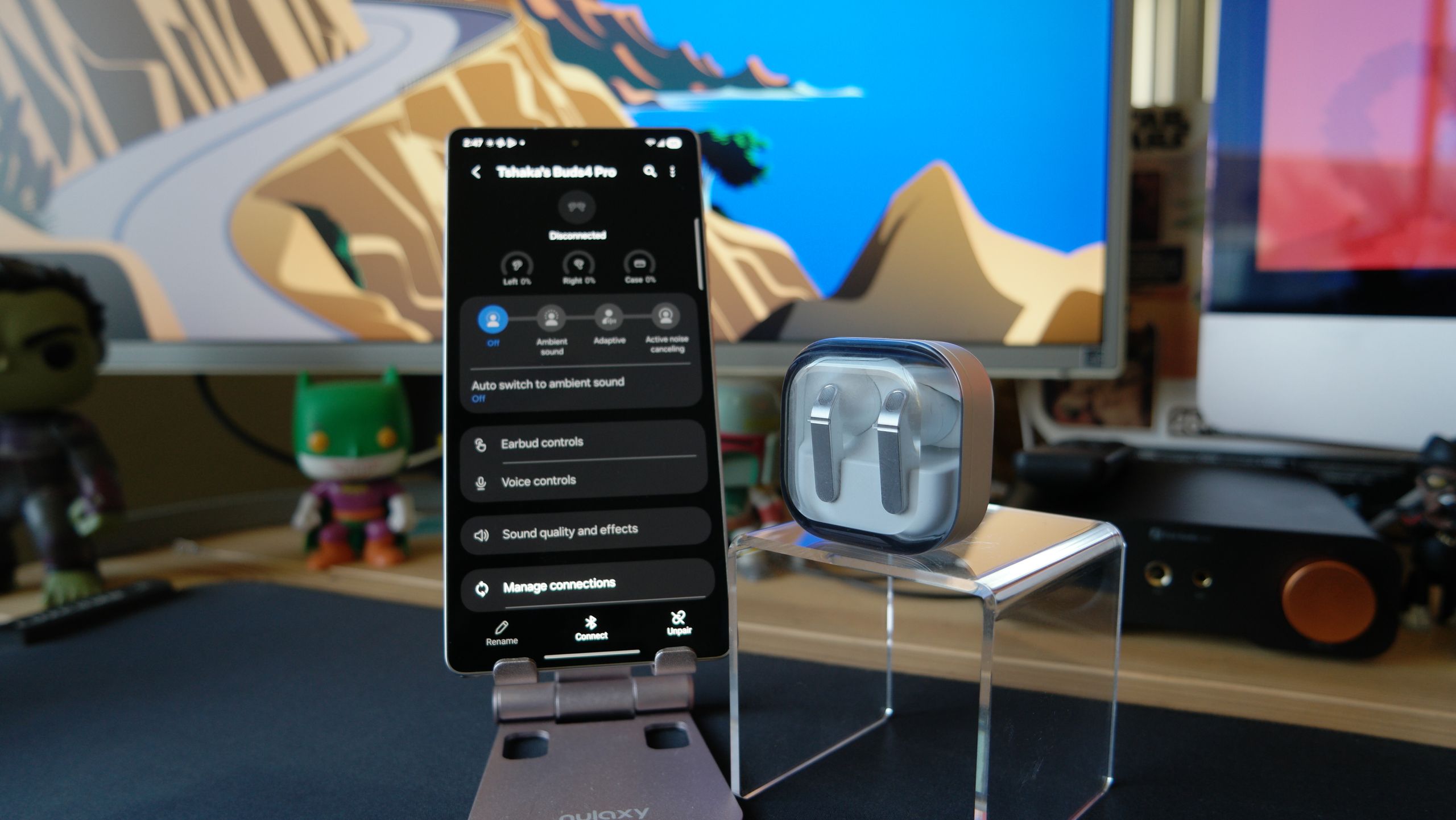
2024’s Galaxy Buds 3 Pro were quite impressive. With their two-driver configuration and the SSC codec, they produced audio with solid clarity and instrumentation, while also offering users some very well-implemented smart features for onboard voice and gesture controls. This year’s Galaxy Buds 4 Pro are, frankly, an iterative upgrade over last year’s, except for three key areas: sound quality, ANC, and durability.
The aesthetic refinements that build on 2024’s design are appreciable. Though I haven’t experienced this issue, some users have reported trouble with the charging contacts at the bottom of the Buds 3 Pro’s stems. This year’s new case design has you placing the buds horizontally in their case, with pogo pins on the stems contacting the charging surface, rather than vertically, with a metallic base on the stem that contacts the charging pins at the bottom of the case.
The case still has a transparent cover, but Samsung has slimmed it down a bit, and it still supports wireless and wired charging via USB-C. The way my jeans’ coin pockets are set up, I actually prefer the Buds 3 Pro’s case dimensions for carry, but I’m being nitpicky because both fit easily in my coin pockets. RIP, pennies.
Image 1 of 5
(Image credit: @tshakaarmstrong)
(Image credit: @tshakaarmstrong)
(Image credit: @tshakaarmstrong)
(Image credit: @tshakaarmstrong)
(Image credit: @tshakaarmstrong)
Swipe to scroll horizontally
Categories
Samsung Galaxy Buds 4 Pro
Conectivity
Bluetooth® 6.1, Auto Switch
Drive units
Enhanced 2-way (11mm Super Wide Woofer + 5.5mm Planar Tweeter)
Removing the buds from their case reveals shorter stems with metallic spines, sans the last generation’s light bar. I loved the light show and the blades, being a lover of edged weapons, so I’ll miss those two elements. That said, the metallic backs, though not as unique, still look great with their large mesh ports at the top. Very industrial-looking.
Galaxy Buds3 Pro on the left, Galaxy Buds 4 Pro on the right (Image credit: @tshakaarmstrong)
I hate the fit of stem-style earbuds in my ears because, no matter whether they’re Apple, Soundcore, or others, they never really fit well. Samsung changed that with the Buds 3 Pro, and the Buds 4 Pro fit just as snugly in my ears. When I’ve worn them during exercise, they’ve stayed locked in, even during dynamic movements like burpees.
The more you sweat, you may find yourself reseating them from time to time, a shortcoming of silicone eartips more than the angle of the earbuds. If I find it to be big enough a problem, I’ll pick up some Comply foam ear tips for the Buds 4 Pro (their website currently says “coming soon”).
(Image credit: @tshakaarmstrong)
One issue I found with workouts is that wet hands may interfere with touch functionality. After wiping sweat from my brow during a particularly sweaty HIIT workout, I’d run my finger over the volume slider (shown above), but it would be unresponsive. For folks who sweat profusely in the gym, that could be problematic.
Get the latest news from Android Central, your trusted companion in the world of Android
Even so, durability has been upgraded from IP53 to IP57, meaning they now have greater protection against dust ingress and can survive being pushed into a pool up to 3 feet deep.
The other controls should be mostly immune to sweaty hindrances and pool-party pranks, as the stems are pressure-sensitive like the Buds 3 Pro, so squeezing and squeeze-and-hold control all the other functions. You can customize many of them in the buds’ settings.
(Image credit: @tshakaarmstrong)
The biggest upgrades for the Buds 4 Pro are the sound and active noise cancelling. They still have two speakers inside, plus a planar tweeter. You get a new, wider woofer with nearly 20% more speaker area, all in a body that doesn’t look any larger than the Buds 3 Pro. That translates to an audibly superior sound this year.
Contributing to that is Samsung’s SSC UHQ codec, which plays back 24-bit/96kHz audio on compatible Samsung devices. If you don’t have that, you’re relegated to SBC, AAC, or LC3, depending on whether your phone supports it.
I thoroughly enjoyed the Boom Bap bass lovers’ listening experiences with KDot’s “Alright,” The Roots’ “Do You Want More?!!!?!?,” and Skrillex’s “Supersonic (My Existence).” Paul Simon’s “Diamonds on the Soles of Her Shoes” has a beautiful soundstage, with all the presence and reverb you’d want to hear with the 360 Audio feature enabled.
Various Rock music genres sound delightful, such as System of a Down’s “Chop Suey!”, which gives you guitars with weight to their sound, and the vocals are rendered beautifully.
Jazz is gloriously rhythmic and is reproduced with solid imaging, although listening to Charles Mingus’ frenetic rendition of the popular Jazz romp, “Moanin’,” is where you get to hear the cracks in the Galaxy Buds 4 Pro’s armor. The imaging is still solid, and while the track will put many headphones and earbuds through their paces, the Buds 4 Pro fares well through most of it, except for the busiest parts. During those moments, some sounds tend to blend rather than hold their space.
Ultimately, with almost any genre, you’re in a good place to customize the sound to your liking, since you have access to a 9-band equalizer in the Settings/Wearables app.
Image 1 of 4
(Image credit: @tshakaarmstrong)
(Image credit: @tshakaarmstrong)
(Image credit: @tshakaarmstrong)
(Image credit: @tshakaarmstrong)
ANC is fairly impressive, too. As I was working my way through my playlists, the active noise cancelling all but muted the gardener with the leaf blower outside my window, but wasn’t able to fully mute the clicks from my mechanical Razer Pro Type keyboard. ANC It won’t beat the Sony WF-1000XM6‘s, but the Buds 4 Pro are $80 cheaper, and this ANC is much better than the previous Buds Pro. It does an admirable job of softening the sounds of airplanes, restaurants, and traffic.
The auto-switch to ambient mode also works convincingly, just like it did on the Buds 3 Pro. When a siren is detected or when you start speaking, the noise cancelling is temporarily deactivated, then turns back on after five seconds of no siren or speech. You can also squeeze the stems to reinitiate ANC instead of waiting.
The six onboard mics do a very good job of keeping voices audible amid significant ambient urban street (70dB) and cafe noise (50dB). My voice was not only audible but also clear and not muddy, though there were times when I sounded like I wasn’t close to the microphones, a bit distant.
(Image credit: @tshakaarmstrong)
After about a week of testing, battery life is very promising, but I have more tests to run to confirm what I’m seeing so far. It looks like Samsung’s claims of seven hours without ANC and six hours with it may hold if you have advanced audio and enhanced ANC features deactivated. With some competitors getting around that much with ANC activated and others seeing closer to 8 hours, the Galaxy Buds 4 Pro are at least in the running on battery life.
Image 1 of 3
(Image credit: @tshakaarmstrong)
(Image credit: @tshakaarmstrong)
(Image credit: @tshakaarmstrong)
Some features aren’t new but are worth mentioning, in case you’re new to the Galaxy Buds Pro line. Neck-stretch reminders are great and help you be more mindful of staring down at your phone for long periods, which is bad for your spine/neck.
The on-board and offline voice controls are an exceptional way to interact with basic features like volume up/down, music play/pause, and track skipping. Head gestures are new this time around and work very reliably for calling functions, making them a great, hands-free way to interact with your earbuds and phone by nodding or shaking your head.
(Image credit: @tshakaarmstrong)
Live translation has also been refined since the Buds 3 Pro, allowing you to customize a pinch-and-hold option to activate Interpreter mode. Once the gesture activates the mode, the app opens on the Galaxy S25 Ultra I’m using. It worked perfectly the first time I tried it, playing an educational Spanish-language conversation on YouTube. When I tried a Russian-language video, it didn’t automatically recognize Russian, so I had to set the source language to Russian in the Interpreter app.
While the Spanish translation was solid, the Russian was mediocre. Not the buds’ problem, but worth noting. Also, it takes a couple of seconds to provide the audible translation, so I wouldn’t rely on it as a mission-critical translation offering.
(Image credit: @tshakaarmstrong)
Samsung wanted the buds to be compatible with other Android devices, so the Galaxy Wearables app provides many of the features even if you don’t have a Galaxy device, such as voice commands. Music sounds better with the LE codec activated, but the buds will disconnect from the Galaxy Wearables app. Otherwise, you’re using the AAC codec by default, and while it still sounds good, you don’t have the dynamic range that you do with LE, or, even more so, when connected to a Samsung phone using the SSC UHQ codec.
Ultimately, at $250, the Galaxy Buds 4 Pro are a considerable upgrade over the Buds 3 Pro, but not enough to justify upgrading if you just bought them. Overall, if you use Samsung devices, they’re tough to beat right now — better sound, better ANC, improved durability, and practical on-device controls make them easy to recommend.
In an unexpected twist, humans have taken some jobs back from AI. Embark Studios’ CEO Patrick Söderlund recently told GamesIndustry.biz that the studio “re-recorded” some of the AI-generated voice lines in Arc Raiders with human voices, only after its successful launch in October.
“There is a quality difference,” Söderlund told GamesIndustry.biz. “A real professional actor is better than AI; that’s just how it is.”
With Arc Raiders’ player count peaking at nearly half a million users on Steam, the game’s breakout success was still marred by its use of text-to-speech AI. While there was no generative AI used for the visuals of the extraction shooter, Embark Studios paid its actors for approval to license their voices for text-to-speech AI, according to Söderlund. Even though Söderlund said that the text-to-speech AI was reserved for lines “that aren’t as essential to the immersion of the experience,” many players weren’t happy with this creative decision.
Responding to the criticism, Embark Studios is seemingly reversing course and relying more on its voice actors. Söderlund said that the studio pays its voice actors for their time in the recording booth and will “continue to bring many of them back as we carry on updating the game.” However, it’s important to note that Söderlund told GamesIndustry.biz that “some” of the AI-generated lines were replaced by voice actors, which could indicate that the studio isn’t looking to completely ditch its text-to-speech AI anytime soon.