Samsung’s Galaxy Tab S12 and S26 FE just showed up referencened in the Google app.
Google compiles a list of future devices set to arrive with a free premium Google AI trial for new owners.
The new models may launch sometime this September — if not sooner.
We are just days — hours, even — away from Samsung’s next Galaxy Unpacked event, when, this Wednesday, we expect to see it introduce the latest Galaxy Fold, Galaxy Flip, and Galaxy Watch models. But for as excited as we are about those launches, they aren’t the only new Samsung products currently on our radar. Looking a little further out, we’re also anticipating some new tablets with the Galaxy Tab S12 series, as well as the next addition to the Galaxy S26 family with the launch of the Galaxy S26 FE. While those will likely have to wait for another Samsung event, we’ve already got some early evidence showing that prep work for their arrival is well underway.
You’re reading an Authority Insights story. Authority Insights brings you all the latest exclusive reports, app teardowns, leaks, and in-depth tech coverage from the Android Authority team that you won’t find anywhere else.
There are lots of places we can expect a new device to pop up and make its presence felt ahead of a formal launch. FCC certification paperwork is a prime example there, or maybe any of the various agencies that certify batteries. But there’s another where we see a certain class of new hardware show up over and over again: an internal list in the Google app of devices set to offer their owners a free trial of a paid Google AI account.
As you’d only expect, the Flip 8 and Fold 8 models are already in there. But we’ve also just spotted a couple new additions:
AssembleDebug / Android Authority
Sure enough, the Tab S12 and S26 FE (both appearing sans Galaxy) now make an appearance. While this doesn’t give us anything approaching a firm ETA for either, it sure supports the idea that we’re very quickly starting to close in on both of them going official.
That said, we can make a few guesses, and if Samsung sticks with anything resembling its past schedule, we’re probably looking at an introduction sometime this September, following last year’s September launches for both the Galaxy S25 FE and Galaxy Tab S11 series.
At least, that feels like the most likely outcome here, but it’s entirely possible we could see them land even earlier — the Fold 8 and Flip 8 only showed up in this list about a week ago, which could conceivably hint at Samsung planning to slide things up to sometime in August. Right now, though, that’s largely just speculation, and we’re probably going to want to wait for something a little more concrete before we start getting ready to place our pre-orders.
⚠️ An APK teardown helps predict features that may arrive on a service in the future based on work-in-progress code. However, it is possible that such predicted features may not make it to a public release.
Thank you for being part of our community. Read our Comment Policy before posting.
Artificial Intelligence (AI) In Cybersecurity: Applications, Future, and Real Examples
AI In Cybersecurity
Cyberattacks are big threats to information systems, organizational infrastructure, and connecting networks. Since the processes and workflows have transformed into digital, Information Technology, banking and financial, healthcare and other industries are often susceptible to data thefts or cyberattacks. Identifying malicious viruses and protecting data assets is the primary task of companies in this virtual world.
Adoption and implementation of Artificial Intelligence in cybersecurity is the perfect solution to overcome the risks like data leaks and network security attacks.
How Is AI Used In Cybersecurity?
Artificial Intelligence in Cybersecurity is not a new topic, it has been used for many years. Cybersecurity is one of the most significant applications of AI. The role of AI in cybersecurity is to reduce data risks and refine the security levels of an organization.
In this digital age, AI-based cybersecurity solutions will help organizations and individuals stay ahead of malware attacks. AI solutions in cybersecurity will analyze enormous data sets, detect irregular patterns, and predict the possibility of data risks. Hence, leveraging the power of intelligent AI software solutions for cybersecurity, the companies can augment the security processes and blocks cyber activities.
The use of AI for cybersecurity, along with Machine Learning (ML), deep learning, and predictive analytics, will add value to your security processes as it determines the probability of attacks and prevents unauthorized access to information systems or networks.
One more interesting thing is that the entire bug detection and insights delivery will be done automatically without once interaction within fraction of minutes. It will drastically reduce response times and improve security levels across the processes.
Though AI technology can be used in many ways, here we have listed the best AI applications in cybersecurity.
5 Best Applications of AI In Cybersecurity
AI In Cybersecurity for Anomaly Detection
Using Artificial Intelligence in cybersecurity, organizations can automatically detect abnormalities, such as undefined network access, suspicious user behavior, multiple systems unlocking attempts, etc.
Leveraging ML and deep learning techniques, AI solutions in cybersecurity will assist organizations in automatically identifying vulnerabilities, analyzing user behaviors, and triggering alerts on malware attacks.
AI For Cybersecurity Network Security
It is one of the popular AI Applications in Cybersecurity. AI-powered cybersecurity solutions will continuously monitor the company’s network infrastructure and block access if they are considered suspicious.
This is why the popularity of AI-powered threat detection and response applications has increased in the IT, FinTech, Banking, and Healthcare industries. They help companies stay safe from sudden network breakdowns and productivity.
AI-based cybersecurity applications will detect spam mail and prevent its reach to your mail inbox. Learning from previous experiences, Artificial Intelligence tools will recognize fraudulent emails and protects users’ accounts from malicious malware.
AI In Cybersecurity For Defense
Here is another significant benefit of using AI for cyber defense. A blend of AI, ML, deep learning, predictive analytics, and data analytics capabilities will ensure incredible performance in forecasting terrorist threats.
AI-powered systems and self-configuring applications will find software bugs and execute an immediate response to vulnerable incidents automatically. This potential application of AI is gaining popularity in the Defense sector for safeguarding systems and applications from opponents.
AI In Cybersecurity For File Protection
Ransomware is risky software that blocks the user’s access to their systems or documents. AI technologies will play a key role in preventing illegal entry into your systems. Hence, AI decision intelligence tools track the patterns of users, predict frauds based on irregular behaviors of users, and protect personal systems from attacks.
These are the top five AI use cases in cybersecurity. AI-based tools, applications, and systems can identify threats, prioritize, and solve complex security issues automatically.
From small to mid-size companies to multinational organizations that serve across government and private must invest in AI technologies to secure their information assets from hackers and firewall their brand value in this virtual environment.
How Will AI Impact Cybersecurity In The Future?
Artificial Intelligence will transforms human lives. The impact of AI in cybersecurity will anticipated to grow with profitable results. AI solutions analyzes patterns and detects malicious hidden threats faster in seconds. Hence, the future of AI in cybersecurity will automate the time-consuming tasks and reduce the need of cybersecurity professionals.
The analysts from one of the global largest technology conglomerates like IBM are estimating that a single data breach will leads to million dollar business loss for companies in the coming years.
However, compared to 2021, the average cost of a data breach has reached to USD 4.35 million in 2022, up by 2.6% from the previous year. Hence, deployment of AI security tools is the best cost-mitigating approach for organizations to ensure security to their systems or assets.
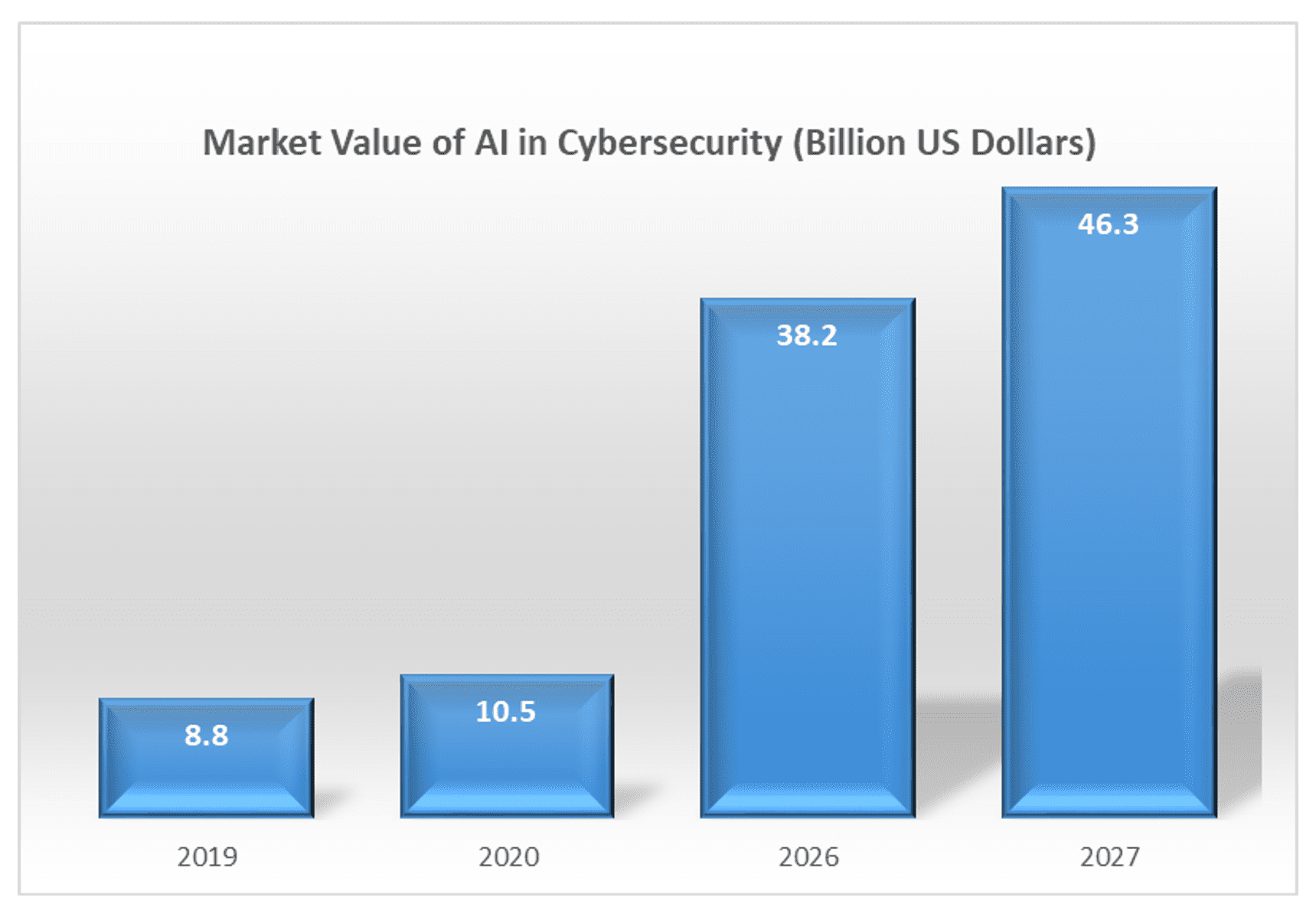
On the other side, Statista-like world’s most popular database companies says that artificial intelligence (AI) will be widely used for protecting sensitive information systems against phishing attacks and ransomware attacks in the future. Such market trend will derive more value to the AI in cybersecurity and anticipated to generate USD 46.3 billion dollar business by 2027. Take a look at the market growth of AI in cybersecurity:
The above figure depicts the market growth of AI in cybersecurity. From USD 10 billion in 2020, the size of AI is forecasted to increase to nearly USD 46 billion by 2027.
Hire #AI app developers and build potential AI-enabled solutions that ensure high-level security and retain your business assets safe from cyber-attacks!
Conclusion
It has been proved that AI tools are the greatest assets for cybersecurity. Data breaches, malware attacks, system or file crashes, network leaks, password hacking bots, everything can be prevented by integrating AI technologies into your systems. Hence, invest in AI developmentand protect before hackers damage systems and triggers security alerts.
I’ve seen a lot of good chatter over on LinkedIn. The topic is about not just teaching students how to use AutoCAD software, but also how to be a professional drafter by adhering to ages-old drafting practices.
One of these practices is the alignment of annotation objects. In this post, I’ll cover three commands, two of which directly apply to my previous statement. The other is just a handy alignment tip (plus a trip down memory lane).
The image below is an example of terrible drafting and is not untypical of a rookie CAD user. Is the information conveyed? Yes. Is it drawn correctly? No. My high school drafting teacher (and first boss out of college) would have had a conniption over this. Please don’t ask me how I know this.
In this simple example, the annotation objects should all be aligned with themselves. Fortunately, AutoCAD provides some easy-to-use tools to quickly fix these problems.
MLEADERALIGN
The first problem we’re going to address are the part number callouts. Since they’re Multileaders, the solution is easy. The actual name of the command to use is MLEADERALIGN. While I’m a big fan of input into the command line, that’s way too much to type, and it’s easier, in this case, to use the Ribbon. In the image below, I’ve floated the Leaders panel of the Annotate tab to show you the icon’s location.
The workflow is easy, and it goes fast. You’ll first select the MLeaders to work with. When selected, press return. Then, you’ll select the Multileader that you want the others to align to. Here, I select part bubble 34. Make sure your Orthomode is turned on, and you’ll be able to define either a vertical or horizontal alignment. Below, I chose horizontal.
That’s just how easy it is. You can also collect multiple MLeaders into a single, grouped object, add a leader line, or remove a leader line. If you want to learn more about the powerful MLeader, I wrote about them many years back, and you can still find it here, and Lee Ambrosius wrote about them at this link.
TEXTALIGN
The next drawing issue was drilled into me from an early age, and, yes, by that same teacher/boss. It’s a typical mistake that a cub drafter might make. Notation, whether attached to a leader or not, should line up.
Again, it’s an easy fix. The tool you want can be found in the Text panel of the Annotate tab of the ribbon. You can also be like me and type it in, as I do in the animation.
Simply select the text you want to align, press enter, then specify the text that you want all to align to, and you’re done. This works for both DTEXT and MTEXT, and even ATTDEFS (if used within the Block Editor, of course.)
This went quickly, as I used the default setting, but there are plenty of options for you. Selecting the Alignment option lets you choose what we now call Justification (think Middle Right, etc.).
Choosing Options will let you set spacing between objects, distribute them along a path, or use the current Vertical or Horizontal values of the selected object.
ALIGNSPACE
This last example didn’t exist for my HS teacher to have a fit over. But it does fit in with the alignment theme of this post. It’s an Express Tool called Align Space, and it can be found in the Layout tab of the Express Tools tab of the ribbon.
Quite simply, it aligns two points in model space with two points in paper space. Let’s consider the images below. In the first, the layout viewport is activated, so you’re in model space. Using the quadrant Osnap, the top and bottom points of the circle are selected.
After the second point is selected, it will return to paper space and prompt for the next two points. In the middle image, the defpoint nodes of the dimension are selected. You’ll then be asked if you want to do the alignment. Since you’ve just spent the time selecting four points, we’ll assume you do and answer Y.
The points specified in model space are aligned with the points specified in paper space. Also, both the zoom factor and the UCS rotation are adjusted to accommodate the specified points. A note of full disclosure here. The images below are taken from the help file. Yes, I could have easily created my own, but I was drawn to the old-fashioned UCS icon shown in the model space views. I grew up with that thing, and I’m a bit fond of it.
Wrapping It Up
If you’re one of those cub drafters I spoke about and these drafting practices are new to you, I’d highly suggest you find a local tech school or community college that offers an introductory drafting class. Preferably on the board. You’ll thank me later in your career.
For the rest of us, don’t get into bad habits just because your software lets you. If you do find your annotations out of alignment, AutoCAD makes it easy to keep your drawing aligned with best drafting practices, thanks to these alignment tools.
More Tuesday Tips
Check out our whole Tuesday Tips series for ideas on how to make AutoCAD work for you.
DC announced a new fighting game on Monday and — nope, calm down. It’s not Injustice 3. I know you want Injustice 3. I too really want Injustice 3. This is not Injustice 3.
Instead, we’re getting Dicko, a mobile game that’s set to arrive in 2027. Wait, did I call it Dicko? Sorry, it’s called DCKO, but you and I both know people are going to call it Dicko because people are already calling it Dicko.
DCKO is a 2v2 tag fighter with both online multiplayer PvP and single-player modes from developer Drop Fake. “It was important to us that DCKO represented a significant leap forward for the fighting game genre on mobile,” creative director Gene Campbell said in a news release. “Live multiplayer games between players are core to the spirit of fighting games, and we are proud of the work we’ve done to bring this feature to mobile comic book fighters for the first time.”
DCKO features plenty of DC heroes you know and a handful of B- and C-listers. You got your Batman, Superman, and Wonder Woman, of course. Zatanna, Constantine, Blue Beetle, and Katana are also joining the roster, which has 19 confirmed fighters at this time. You can check out the full roster at the game’s website, and more characters will be revealed one at a time on a monthly basis.
DC K.O. was a similarly titled event that began in the pages of DC Comics last year. It put three dozen characters in a tournament with the universe on the line, and even featured crossover characters like The Boys’ Homelander and Mortal Kombat’s Sub-Zero. No one called DC K.O. Dicko while the event was going on, which means DCKO probably should have borrowed the comic’s space and periods to not look so much like “Dicko.” Despite essentially sharing a title, it doesn’t seem like DCKO and DC K.O. are related in any way at this time.
You can preregister now for DCKO‘s open beta. The full game will launch sometime in 2027 for iOS and Android.
As for if Injustice 3 will ever happen, well, your guess is as good as mine. NetherRealm Studios released Injustice 2 all the way back in (this can’t be right…) May 2017, or nine years ago. Since then, NetherRealm has put out two Mortal Kombat games. It hasn’t announced what’s next for the studio, but rumors have gotten fans hoping it’s another Injustice game.
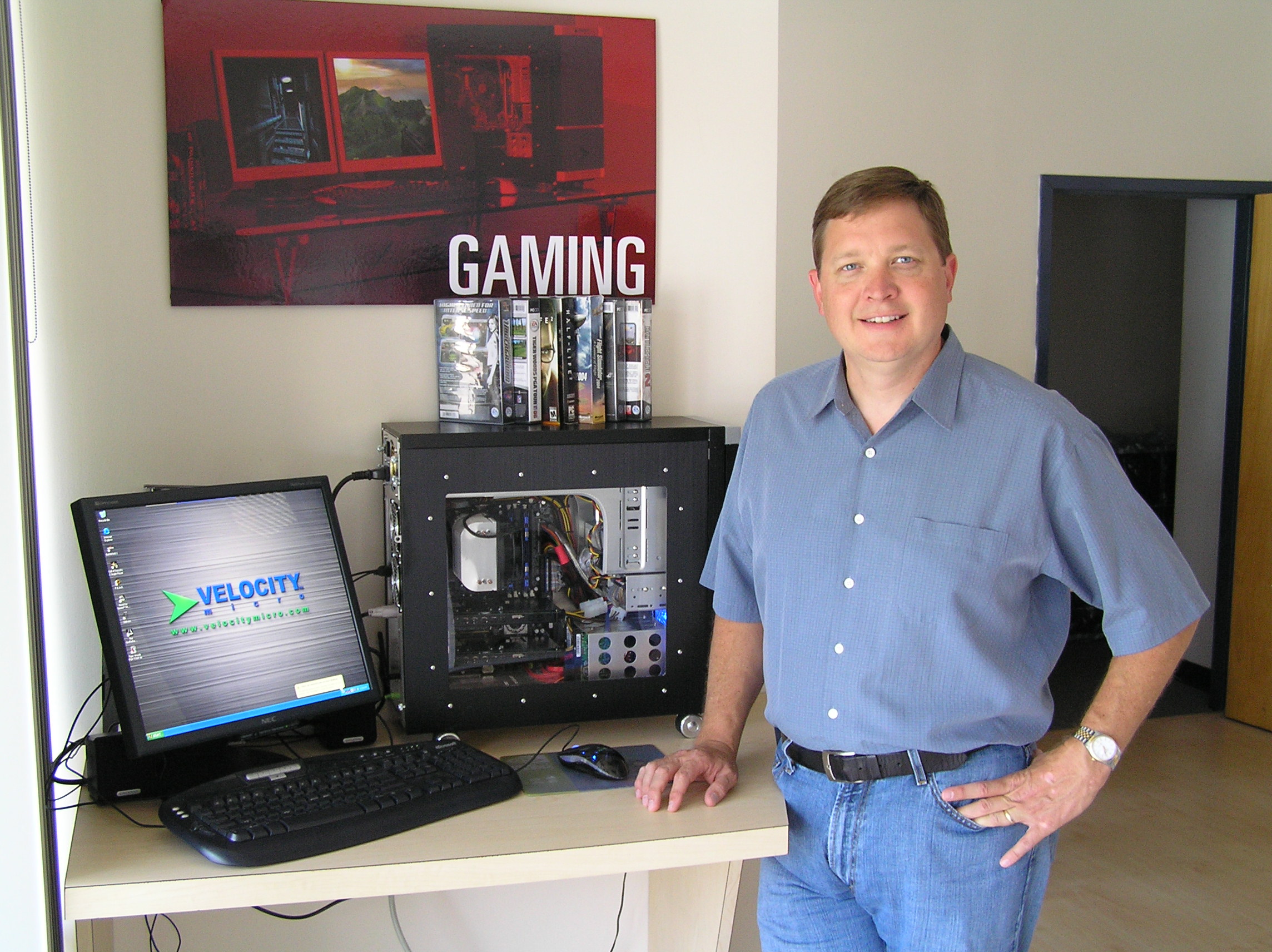
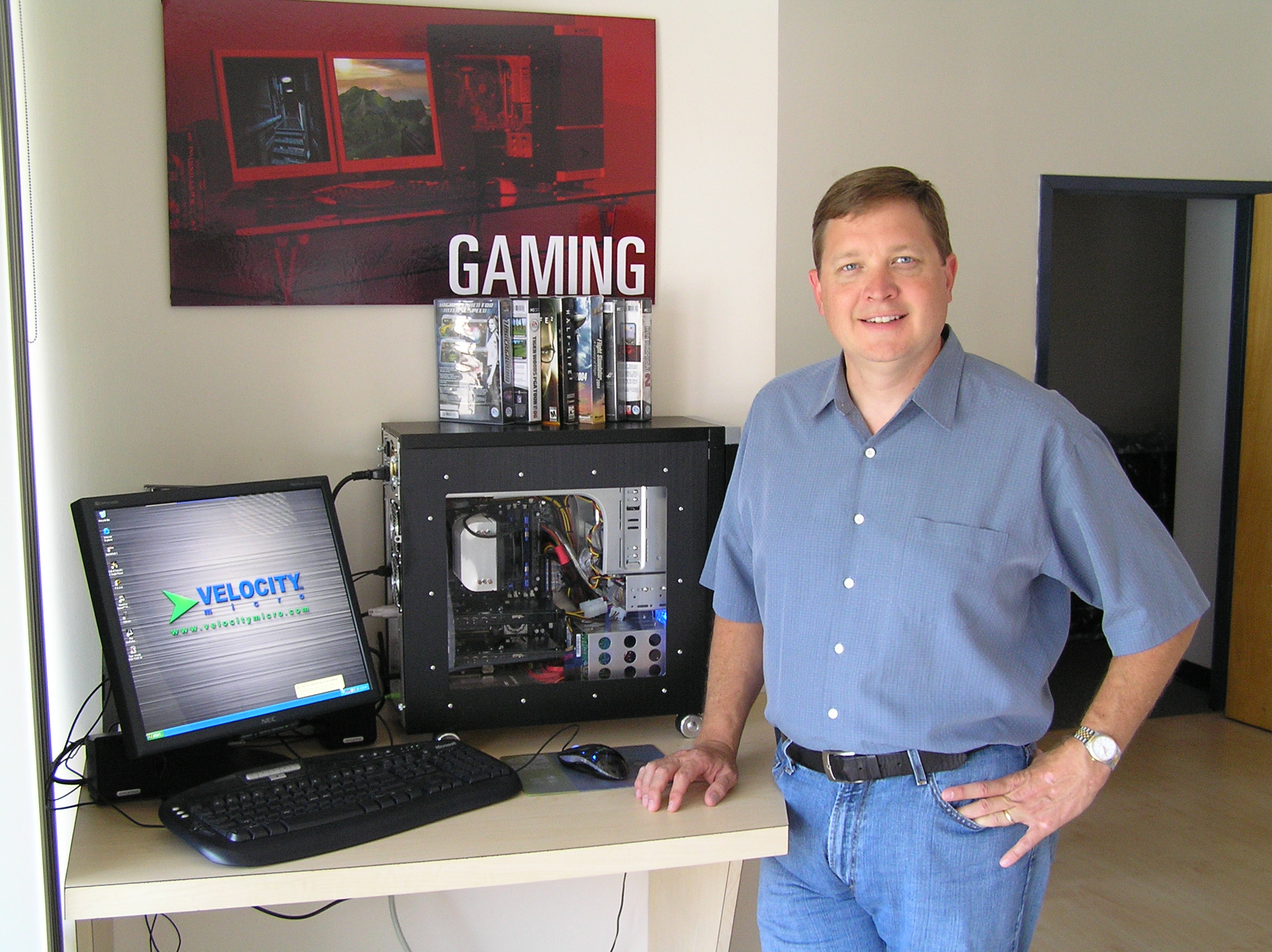
A young(er) Randy Copeland proudly stands in front of a 2005 model Velocity PC.
It’s hard to believe that in just a few months, we’ll be celebrating 30 years of building ultra-performance custom PCs. How the time does fly. And in that time, we’ve seen the industry change in ways that we could never have predicted when the company was officially founded way back in 1997. Things like the rise of GPU computing and evolution of machine learning into a form of Artificial Intelligence that everyone has daily access to. Our gaming graphics card partner NVIDIA leading that charge and eventually becoming the most valuable company in the world. The proliferation of smart phones and tablets and the ways they have changed our lives. And so many more.
But along that way, Velocity Micro has lead innovation in the custom PC business as well, in ways that you may not even know. Here are five PC innovations that Velocity Micro helped pioneer.
1: CAD Specific Hardware
CAD 2000i, a program we built computers for, required a whopping 64MB of RAM to run.
When our founder Randy Copeland began building desktop PCs for friends and family back in 1992, hardware choices were pretty lean. But as a kitchen cabinet designer, Randy knew that there were large portions of the market in need of specialized hardware to run those power-hungry programs. He began designing his PCs with CPU speed and airflow in mind and would later begin to integrate NVIDIA Quadro graphics after they were introduced in 2000. The result was some of the earliest custom PCs built specifically for CAD software, effectively accelerating these workloads and making designers more productive.
2: Glass Side Panels
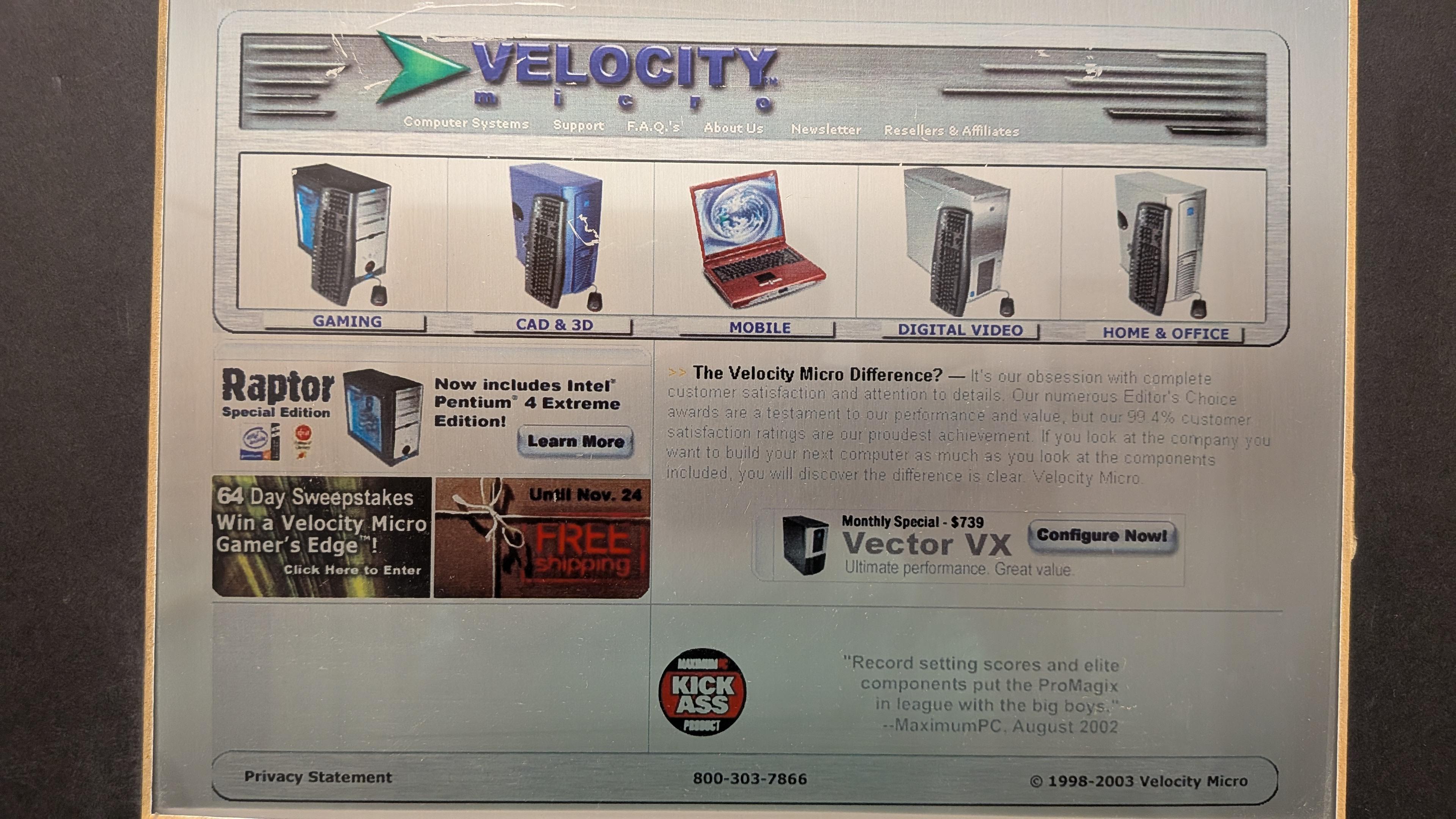
A 2003 version of our website proudly displaying one of the first clear panel PC builds available.
It’s hard to imagine a gaming PC without clear side panel, but they weren’t always as ubiquitous as they are today. In the late 90s, OEM PC builders like Dell and HP hid their components and wiring inside a solid steel box. But Velocity Micro (and yes, a few other OG builders of the time) knew that PC internals had visual appeal, especially when so much time and effort was dedicated to a meticulous hand wiring process. We worked directly with our case partners to begin including plexiglass and later tempered glass side panels as options in our gaming builds in the early 2000s in the effort to show off that craftsmanship. Competitors followed suit and soon the clear side panel was everywhere.
3: Liquid Cooling
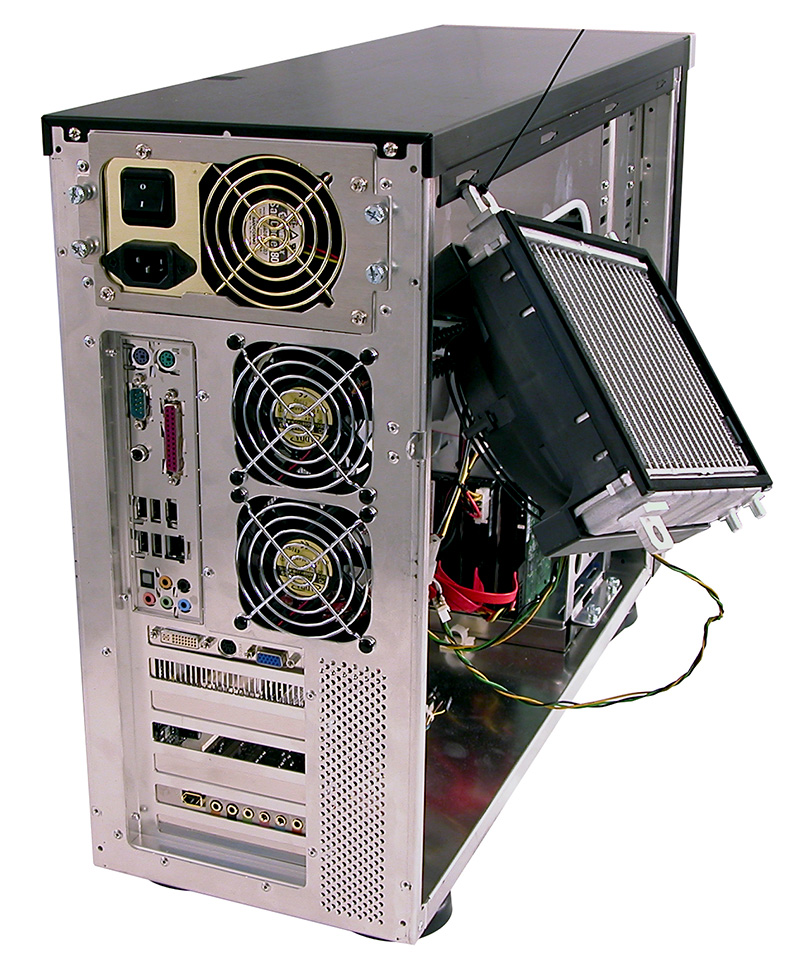
Early liquid AIO designs required creative radiator mounting to test. Circa 2005.
When we first started building PCs, it was air cooling or nothing. But as we began to develop more advanced CPU overclocking techniques, we quickly realized that dissipating heat from those processors was the key to long term stable operation at those speeds. We began experimenting with custom liquid cooling kits with soft tubing in open loops in our lab to manage those increasing thermals. We were able to achieve some incredible benchmarks for the time, but the challenge of shipping an extremely fragile cooling system to a customer across the country was not a small one. We worked independently on our own liquicool solution but then in mid 2000, Asetek brought the first closed loop AIO liquid cooler to market. We quickly tested, validated, and began shipping those coolers on our high-end CPU and overclocked systems that year, finally bringing safe liquid cooling to the masses.
4: Smaller form factors
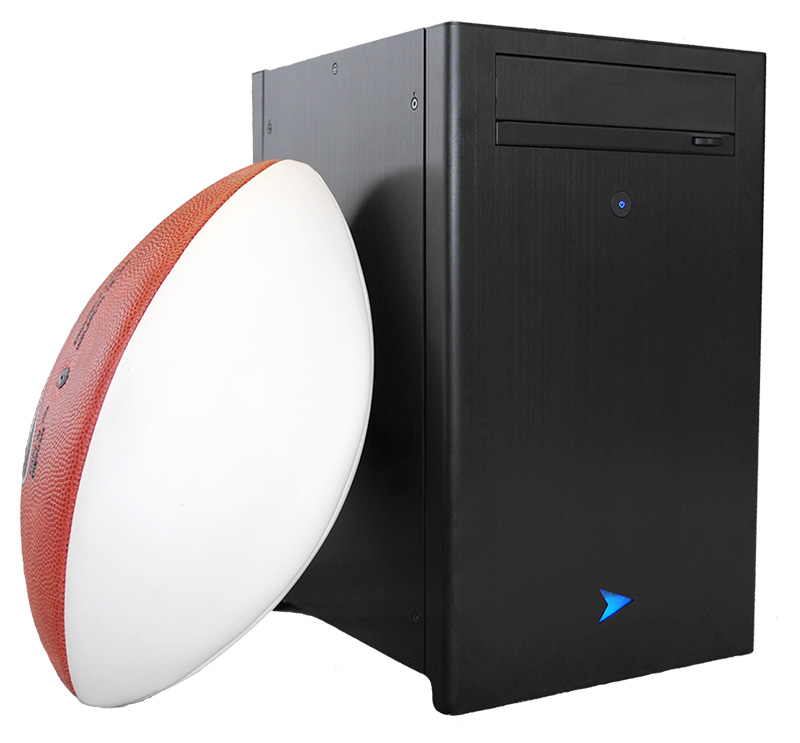
Our SmallBlock SFF chassis, introduced in 2015.
Does bigger mean better? We don’t always think so. But in our early days, those massive, heavy cases were the only way to fit full ATX boards, coolers, and all of the fans necessary to manage those thermals. Then as motherboards began to shrink in size, we too innovated with the market, developing smaller mATX cases like our MX line in 2008 and a true small form factor Smallblock chassis in 2015. But it wasn’t just reducing the size of our PCs that was so innovative, but rather our ability to maintain the extreme level of performance in those pocket sized builds without sacrifice. We continued to win Editors’ Choice awards, even as our PCs got smaller and smaller and haven’t looked back since. Today, our 6th Generation MX6 chassis continues to impress, helping us to bring home PC Magazine’s Best Gaming PC of the Year award for 2025.
5: Multicore processors
Where does the largest processor company in the world go to test one of their most groundbreaking architectures…maybe ever? To Velocity Micro. Back in 2006, Intel’s engineers were hard at work finalizing their first multicore consumer processor, code named Conroe, later renamed Core 2 Duo. But they needed to validate the new CPUs in real world situations and workloads, and that’s where we came in. Intel first sent those early samples to our engineering team for validation, then worked closely with our marketing team to place a launch day review of the new chips with CNET, a huge honor at the time. Since, Velocity Micro has been launch partners on every major new generation of Intel Core processors though Core 2 to the i series to Core Ultra, making new chips available to our customers on launch day.
So there you have it, five major innovations we’ve been in midst of over the course of our 30-year history. What will the next 30 years bring? I can’t wait to find out.
The following two tabs change content below.
Josh has been with Velocity Micro since 2007 in various Marketing, PR, and Sales related roles. As the Director of Sales & Marketing, he is responsible for all Direct and Retail sales as well as Marketing activities. He enjoys Seinfeld reruns, the Atlanta Braves, and Beatles songs written by John, Paul, or George. Sorry, Ringo.
As Oisin reported over the weekend, Steam Machine engineers Yazan Aldehayyat and Pierre-Loup Griffais gave a big Valve thumbs-down to the practice of platform exclusives – a hot topic in the context of Xbox owners Microsoft retreating back into whatever kind of shrivelled, joyless husk Xbox is nowadays. The same interview, with Bloomberg scoopsmith Jason Schreier, also touched on the acutely PC-spoiling subject of RAMnarök and its subsequent, en-masse embiggening of hardware prices. Good news? No! Obviously it’s all terrible!
Every day a rental property sits vacant costs its owner money. I learned that firsthand when a neighbor asked me to coordinate the turnover of a rental home after the previous tenant moved out. What started as a one-time favor quickly turned into a steady home-based business. Instead of doing every repair myself, I focused on organizing vendors, keeping projects on schedule, and making sure each property was ready for its next tenant.
If you’re organized, enjoy solving problems, and can manage multiple moving parts, rental turnover management can be a rewarding side hustle in Alpharetta. Alpharetta’s active rental market, fueled by corporate relocations and steady population growth, creates ongoing opportunities for dependable turnover coordinators.
Key Takeaways
Rental turnover management is a low-overhead business that prepares homes between tenants.
Success depends more on organization and reliable vendors than performing repairs yourself.
Flat project fees and coordination markups create a scalable income model.
Fast communication and consistent results lead to repeat clients and referrals.
What a Rental Turnover Manager Does
My job begins when one tenant moves out and ends when the next tenant receives the keys. I coordinate every step of the process to keep vacancies to a minimum.
Typical responsibilities include:
Conducting move-out inspections with photos
Scheduling cleaners, painters, and repair contractors
Coordinating appliance, plumbing, electrical, and HVAC inspections when needed
Tracking project progress and resolving scheduling conflicts
Completing a final walkthrough to confirm the property is move-in ready
The work isn’t about swinging a hammer. It’s about keeping every contractor moving toward the same deadline.
Why Alpharetta Is a Great Market
Alpharetta attracts professionals, families, and relocating employees throughout the year. Many local landlords own only a few rental properties and don’t need full-service property management. What they do need is someone who can quickly coordinate turnover work and eliminate unnecessary vacancy time.
That creates an excellent niche for independent coordinators working from home.
The System That Keeps Projects on Schedule
One of the biggest lessons I’ve learned is that every turnover should follow the same process. A simple checklist prevents expensive mistakes and keeps vendors accountable.
I start by inspecting the property, photographing every room, and creating a repair list. Next, I schedule cleaners and contractors in the order their work needs to be completed. Before the new tenant arrives, I perform a final walkthrough, testing appliances, plumbing fixtures, lighting, and HVAC systems to catch any last-minute issues.
Following the same workflow every time has helped me complete projects faster while giving landlords confidence that nothing has been overlooked.
As my workload increased, I also started using digital tools to organize schedules, draft client updates, and manage recurring tasks. It’s another example of how generative AI is changing home business operations by helping solo entrepreneurs spend less time on administrative work and more time serving clients.
Build a Vendor Network Before You Need One
Reliable vendors are the foundation of this business. One turnover nearly fell behind schedule when a refrigerator stopped cooling just days before move-in. Fortunately, I already had Appliance EMT on my vendor list for refrigerator repair in Alpharetta. They diagnosed the problem the same day and had the refrigerator running before the new tenant arrived. Experiences like that remind me why dependable vendor relationships are essential in this business.
Experiences like that taught me to build relationships with dependable cleaners, painters, handymen, and appliance technicians long before emergencies happen. Your reputation depends on how quickly you solve unexpected problems.
Most turnover coordinators charge a flat project fee based on the property’s size and condition. Repairs are typically billed separately, with a reasonable coordination markup to cover vendor management and scheduling.
As you develop relationships with landlords and investors, recurring work often replaces one-time projects. Some clients even prefer monthly agreements that cover every vacancy across multiple properties, creating a more predictable income stream.
Finding Your First Clients
My first projects came almost entirely through referrals. After completing one successful turnover, satisfied clients began recommending me to other property owners.
Good places to build relationships include:
Local real estate investors
Landlord associations
Property managers needing overflow assistance
Real estate agents
Existing clients who can provide referrals
Consistent communication and dependable results usually generate more business than paid advertising.
Alpharetta Market Insights
Alpharetta’s neighborhoods, including Avalon, Downtown Alpharetta, Windward, and North Point, experience steady tenant turnover throughout the year. Georgia’s hot summers also increase demand for appliance and HVAC services, making dependable contractors especially valuable during peak moving season.
Some communities also require HOA move-in and move-out procedures, so understanding those requirements helps avoid unnecessary delays.
Frequently Asked Questions
Do I Need a Real Estate License in Georgia?
No. Coordinating rental turnovers in Alpharetta generally doesn’t require a real estate license, although you should register your business and comply with any local licensing requirements for services you perform directly.
How Many Properties Can One Person Manage?
With dependable subcontractors and an organized workflow, many solo coordinators can comfortably manage five to ten active turnovers each month.
How Do I Find Landlord Clients?
Referrals, landlord groups, investor networks, and relationships with local real estate professionals typically produce the best long-term results.
What Happens if an Appliance Fails Before Move-In?
Contact a trusted repair company immediately, update the property owner, and keep the rest of the project moving while repairs are completed. Having reliable service providers already in place can prevent costly delays.
Is Rental Turnover Management Seasonal?
Activity usually peaks from late spring through summer, but Alpharetta’s strong rental market creates opportunities year-round.
Is Rental Turnover Management Right for You?
Rental turnover management in Alpharetta has become one of the most practical home-based businesses I’ve built because it combines organization, communication, and problem-solving without requiring a large upfront investment. Property owners value someone who can keep projects on schedule, coordinate dependable vendors, and prepare homes for new tenants as quickly as possible.
If you enjoy managing projects and building relationships with local service providers, rental turnover management offers a realistic opportunity to earn a consistent income from home. Start with one successful project, develop a reliable process, and let satisfied clients become your best source of future business.
Turns out the Iron Throne isn’t all it’s cracked up to be.
It’s only be a few episodes now since Rhaenyra (Emma D’Arcy) made her big return to King’s Landing, but things only seem to be getting worse and worse for her. In the trailer above for House of the DragonSeason 3, episode 6 the walls are closing in, with the Small Council floundering in the wake of all those Gold Cloaks being murdered and Lord Ormund Hightower (James Norton) saying ominous things like “The patient hunter gets the kill.”
Inside all of us is a child that just wants love and protection.
This is the premise of Blueberry, where you get to communicate with this child, walk in her shoes and help her to finally feel safe.
A Deeply Personal Game
I suppose you could say I had a very difficult childhood. I grew up in a big family, where every moment seemed chaotic and unpredictable. My parents were completely overwhelmed with the task of handling so many children. Who knows if there were preexisting mental health conditions for them or circumstantial difficulties or both that caused it, but it turned me into a person with a lot of mental health troubles – from depression and anxiety to suicidal thoughts and self-harm – I didn’t have a good time. After leaving my parent’s house and starting my own life, lots of self-searching and therapy, I think I managed to become reasonably “normal”, despite all of this. But there is still a lot of baggage to carry around, as you may imagine. It also made me think a lot about what caused all these problems, why my family’s dynamics were so difficult and why my parents were so helpless.
The Story of Blueberry
Blueberry is not about me, but it contains a lot of personal themes and anecdotes, as well as unpacking major questions about hope and dread.
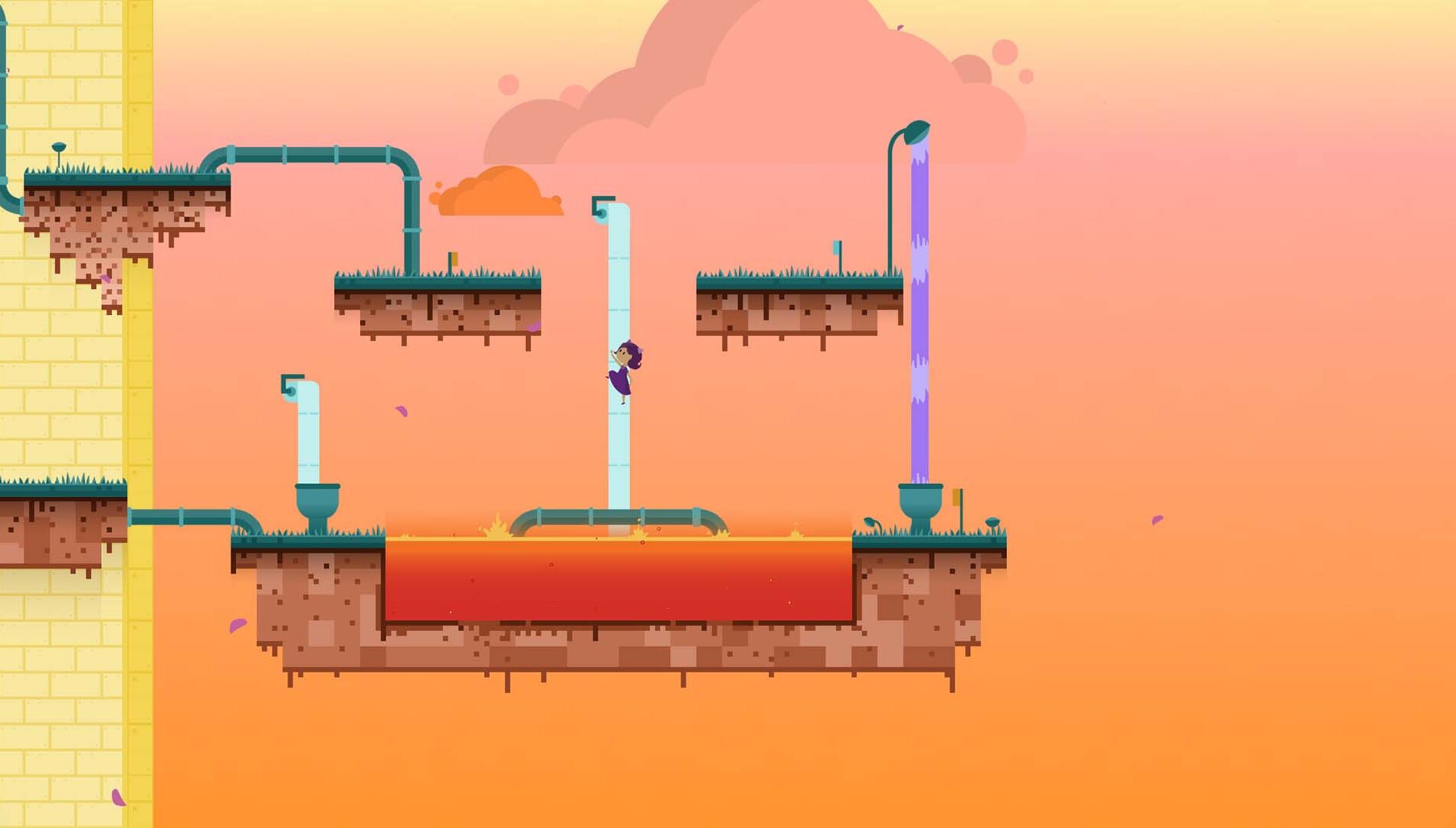
The game starts out with the titular main character as an elderly lady, who is facing estrangement from her son Emilio. She asks herself how she got here and starts wandering down memory lane. This is where the actual game story starts out with Blueberry as a child in a wonderland full of talking toys and fun platforming levels. But it is soon clear that her parents are both having trouble and that little Blueberry is right in the middle of it. She tries to manage her parents’ emotions and while doing so, can get quite overwhelmed with managing her own, depending on your dialog choices.
Managing Emotions and the Everchanging Nature of Memory
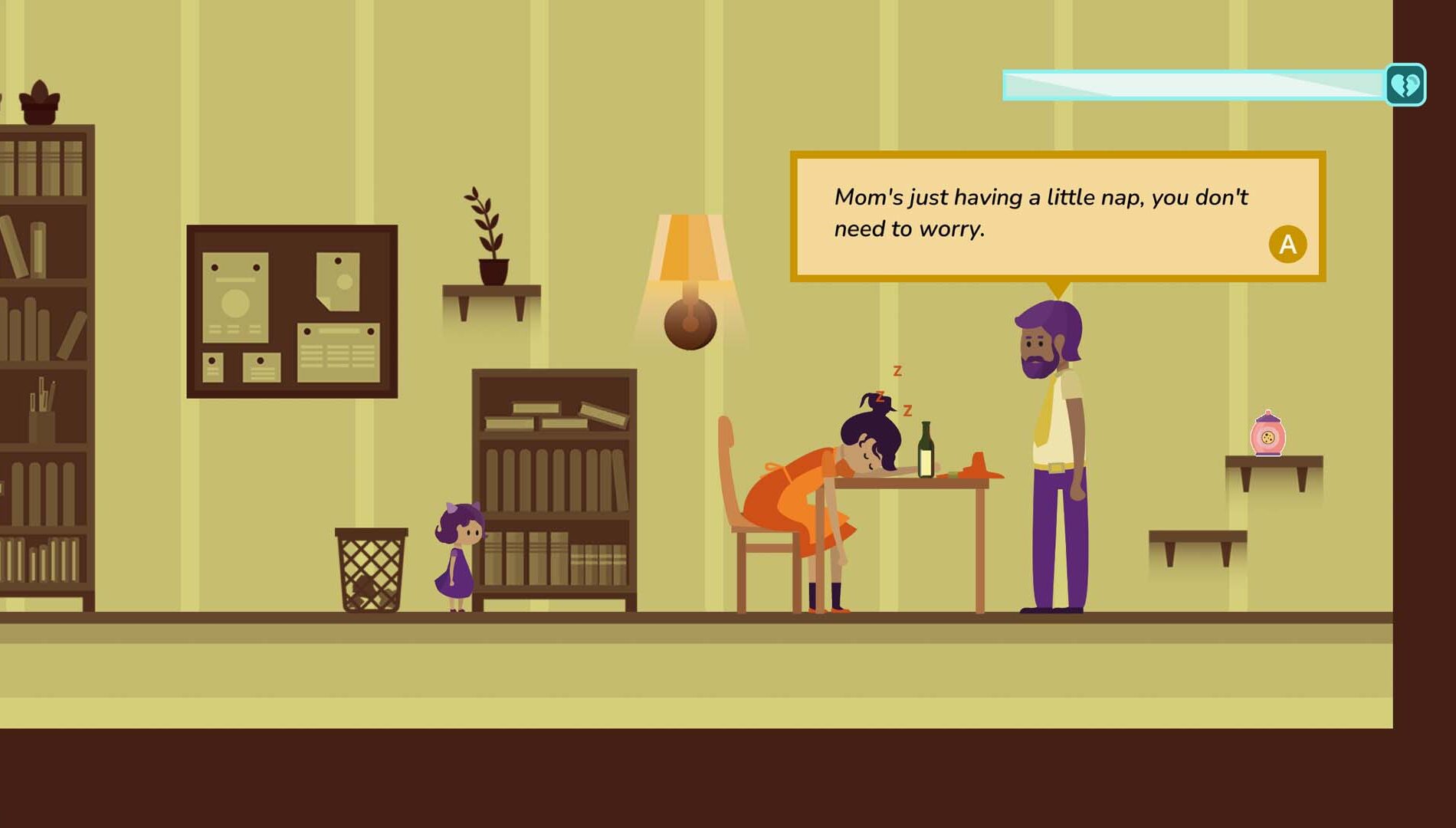
One of the main things you deal with in the game is something I call the “blues bar”. It is a bit like an inverted health bar and your goal is to keep it as low as possible. The higher the blues bar gets, the more the colorful world around Blueberry turns blue, draining it of all other colors. At some points in the game, other characters will also have blues bars, resulting in word battles, which put you in front of difficult decisions of whether to sacrifice your own mental wellbeing in order to keep that of your parents at a healthy level.
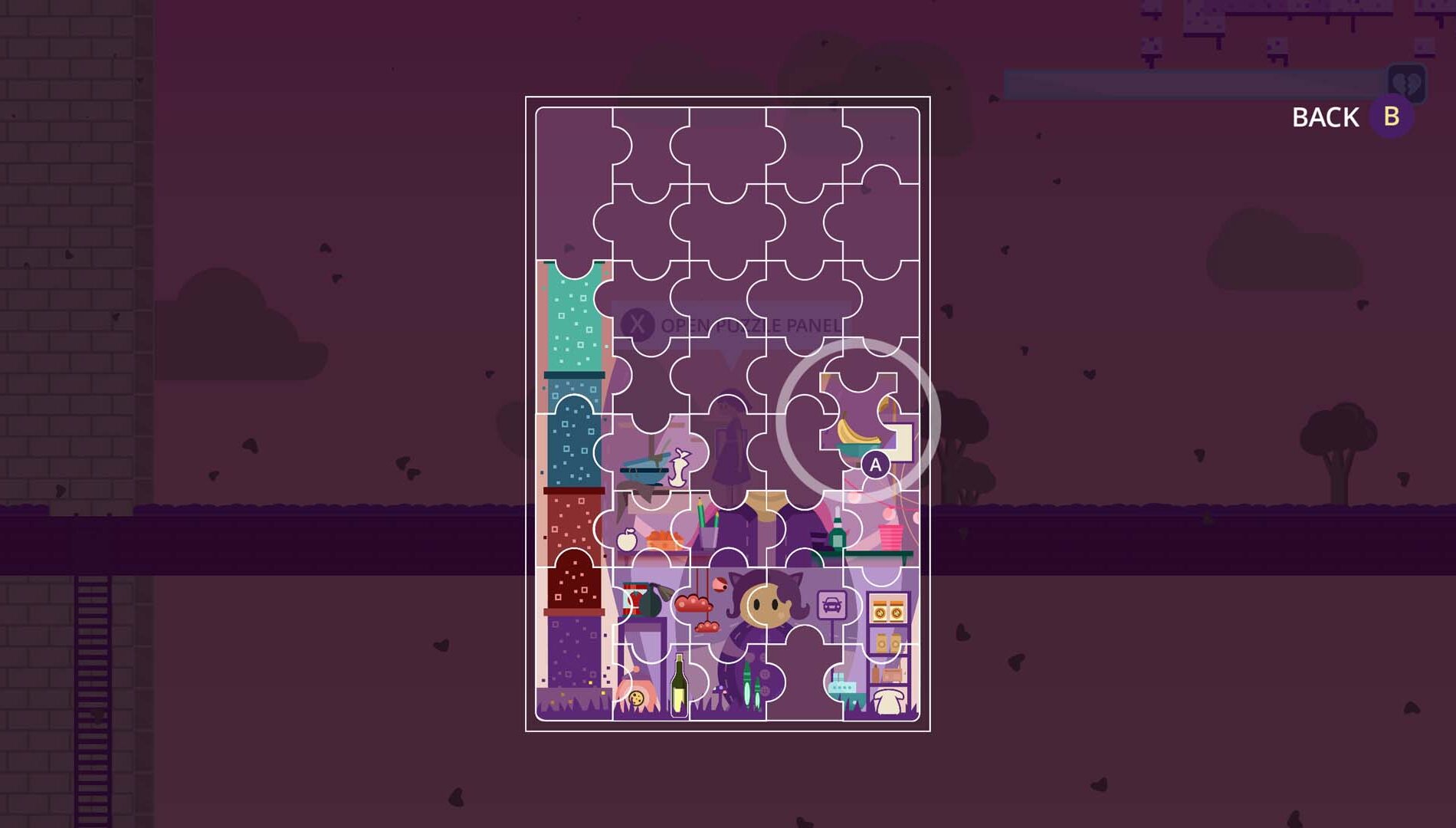
Emotion management is only one of many evocative ways Blueberry shows this conundrum of growing up inside a dysfunctional family. At the heart of the game are the memory scenes, which are minigames showing impactful moments in Blueberry’s life. Putting together the pieces of Blueberry’s memory puzzle, you will receive a new piece for each played memory. But the puzzle will have a lot of gaps at first, which you can only fill by revisiting old memories. These will play out differently as Blueberry ages. When she revisits these parts of her past, she will be reminded of the lost pieces that can then be retrieved.
Using Real Psychology to Design a Deeply Psychological Game
To make this experience as accurate and nuanced as possible, I worked with three psychologists who teamed up as Behind The Screens. Together they do consulting for game developers and give them advice on all things psychology in their games. We worked on the content note, which lets you keep full control over and decide how much you want to learn upfront about triggers in the game. We also refined and improved the mechanics and depiction of depression, trauma and addiction. This was important to me since I have my fair share of experiences with these topics as well. I was also very interested in how memory itself works in the human brain and how especially traumatic memories do not function like others in our minds. I found out that memory is not static, like a file on a computer. Instead, memories actually change every time we think about them. Our imagination is what shapes our memories and in the brain, this has the same mechanics as if you were inventing a story. Meaning it might as well be completely fictional and therefore kind of unreliable.
For traumatic memories, this functionality could be seen as broken. When invoked, they can feel like they are happening right now and your body will respond to this with a strong fear reaction, such as elevated heartbeat, sweating and heavy breathing. This is what flashbacks are. I found this really interesting, which is why Blueberry usually turns into the version of herself from the respective life phase when she finds her missing memories. When she finds the memory of her parents having a big fight right before their divorce for example, Blueberry turns into a little child again, although we are already in the teenager chapter.
All of this nuance and accuracy served two goals. On the one hand, I wanted players to feel less alone with their problems and feel seen and understood. But Blueberry is also meant to show people who have no experience with these kinds of troubles the effects of depression and trauma. The reception of Blueberry so far makes me think that I was able to reach these goals and this alone makes the whole development journey, which itself was marked with lots of ups and downs, completely worth it for me.
If you manage to amend your relationships throughout the game, you will be able to help Blueberry reintegrate the shattered pieces of her mind and make peace with the past. But as it goes in life, she also may not be able to.
Change is very, very hard, but thanks to the neuroplasticity of the brain, healing is possible, even at a later stage in life. Blueberryis available now on XBOX.
Blueberry
Hidden Trap
☆☆☆☆☆ 4
★★★★★
$12.49
Blueberry is an evocative narrative platformer that invites you to climb the Tower of Life, experiencing the life of a woman as she navigates love, loss, and self-discovery.
PIECE TOGETHER MEMORIES
Play as Blueberry and live through key memories from childhood to old age, piecing together fragments of her past in a deeply emotional story about trauma, resilience, and forgiveness.
MAKE MEANINGFUL DECISIONS
Guide Blueberry’s journey by making choices that shape her emotional growth. Help her find peace by managing her “blues” and making decisions that support her healing. Each choice impacts her story, leading to different outcomes in her story.
KEY FEATURES
– Climb the Tower of Life: Journey through Blueberry’s life stages in an interactive platformer that combines exploration, mystery-solving, and memory reconstruction.
– Choices Matter: Face moments of choice that impact Blueberry’s emotional journey, leading to multiple endings based on how you choose to guide her through her past.
– Pivotal Life Moments: Steal cookies and cause kitchen chaos as a child, engage in spirited word battles with your mom as a teenager, and embrace the joys and challenges of motherhood as an adult.
– Emotional and Philosophical Depth: Experience a moving story that explores themes of trauma, motherhood, forgiveness, and the impact of memory on identity.
– Surreal Art and Atmosphere: A colorful yet introspective world that shifts with Blueberry’s emotions and memories, creating a visual journey that mirrors her mental landscape.
The streaming company announced the acquisition in March, with a statement from Affleck saying he wanted to “protect the power of human creativity.” According to Affleck, InterPublic’s AI tools help filmmakers improve their footage in post-production, particularly when it comes to making up for “real-world production challenges such as missing shots, background replacements or incorrect lighting.”
At the time, Netflix announced that the entire InterPositive team would be joining the company, with Affleck joining as a senior advisor, but it didn’t disclose the financial terms of the deal. A subsequent report in Bloomberg suggested that the deal could be worth up to $600 million.