Photoshop’s new AI Assisted Editor offers a prompt-based editing option


Adobe has added a simplified editing mode to Photoshop designed to help new users get acquainted with the popular image editing app. 

AI Assisted Editor, now available in beta, is an optional alternative to the standard view — now called Pro Editor mode — that provides a prompt-based interface similar to the Firefly editor rather than the full range of Photoshop tools. It includes a side panel that contains generative AI (genAI) features such as Generative Fill, Remove Background, and AI Markup, as well as a text prompt box. 

The more streamlined editor view could also prove useful for existing users that don’t need the full workspace for every edit, Adobe said. More seasoned professionals might switch to the AI Assisted Editor for concepts or mock ups, or for quick editing that doesn’t require the full set of Photoshop functions. 

For those who don’t need it, however, the new mode can be hidden from view. 

Among the other Photoshop features unveiled Thursday is Prompt to Edit, which lets users apply changes to an entire image with a simple prompt — for example, adding stormy clouds and rain. That creates an output layer that can then be modified, such as masking out image elements or changing the opacity. 

Prompt to Edit is available in both AI Assisted and Pro Editor views.

A new “markup” feature lets users “visually communicate” edits to Firefly by drawing onto an image, indicating areas to recolor, for instance. This makes it easier to direct the AI model compared to text prompts. The Instruct Edit with Masks, which relies on Firefly Image 5, lets users specify what elements of an image to change with text prompts, with unmasked areas left untouched.

Other updates include Light Adjustment Layer, which provides “professional-grade” lighting controls, such as exposure, contrast and shadows, in a non-destructive adjustment layer, Adobe said. A Stock Panel integration provides access to more than 900 million Adobe Stock assets in Photoshop via a dockable panel, while another addition, Dynamic Text, Shapes and Paths, automatically adapts text along curves as freeform layouts.

10 Easiest Ways to Earn Extra Income From Home


As a single stay-at-home-mom, I’ve had the privilege of getting to know the myriad of real ways in which to earn extra income from home, which I’ve done for the past 28 years! 

I’ve seen just about everything under the sun and these are my favorite ways to earn money. Let’s break it down a bit…

  • Need money this week: sell items (#1), Marketplace (#9), surveys (#8)
  • Need steady monthly money: freelance skills (#4), photos (#5)
  • Want scalable income: Shopify (#10) + blogging (your bonus #11)

Here are my top 10 favorite income from home ideas.

1) Sell stuff around the house on ebay

Most people have no idea how much clutter, cough cough, I mean, priceless heirlooms, they have laying around the house. If you’re not using it, why not put that money in your saving account? This is how I look at it. Everything in your home has two price tags on it. What it’s worth to you…and what it’s worth to someone else. Many times, we overprice our own stuff. But, there are lots of times where things sitting around the house can fetch us some good money.

Here’s a great example…

This spring as I was de-cluttering my home, I found a children’s board game that I wanted to sell. Of course before I donate or sell anything, I always check eBay. The board game itself, as a complete deal went for $15 on eBay. Not good in my opinion, considering I’d have to spend about $8-$10 to ship it, then add 16% eBay/Paypal fees, and I’m looking at a whopping $2.60 profit. Not really worth the time.

Now being on eBay so long, I also know to search out replacement parts. You see, in many cases, you actually make MORE selling replacements parts than the item as a complete set. Totally weird, I know, but it’s true.

So, I searched and sure enough, I could make $35 by splitting it up. I made 5 small lots and made about $25 in profits.

$25 for one single board game = totally worth my time.

So, the next time you are searching for eBay for some things to sell, keep in the back of your mind that many times, splitting up your item, may just fetch you a much prettier penny!

Really, I’ve seen all kinds of things sell on eBay. I’m sure you have some old textbooks or books laying around that may be worth some money.

Amazon is great for selling books. I’ve seen people sell melted snow for thousands, I’ve seen large 3″ dust bunnies sell for $10. I’ve seen coffee mugs and old plates go for upwards of $50. Why I’ve even seen someone take apart an old mattress and sell the inner springs, a set of 10 for $30! The rarer the item is, the more money you can get. Be creative; let your imagination go wild and research everything first.

Also check out my list of 40+ Things to Sell To Make Money Now here.

2) Affiliate Marketing

This is a super quick way to make cash. Simply share with your friends the things that you love. Two of my favorite companies are Grove Collaborative (here’s how I get all my Household Products free going through them) and Ebates (now Rakuten). Both companies give you $10 and your friend gets $10 each and every single time. This adds up super quickly! As you can from my account screenshot below, I’ve earned $1,943.33 from Ebates thus far (I’ve been with them for a few years now) and if you get into referrals, you can earn a LOT more (at the time I’m writing this, I earned $2,000 this quarter JUST in referral bonuses from Ebates!). It’s DEFINITELY worth your time to sign up. You earn cash back on all your purchases as well. If you tend to forget to go through Ebates before shopping online, I like to stick a post-it note to my computer so I always remember. Once you get past $1k, trust me, you’ll start remembering! LOL.

10 Easiest Ways to Earn Extra Income From Home - Ebates Coupons Deals Promo Codes Cash Back10 Easiest Ways to Earn Extra Income From Home - Ebates Coupons Deals Promo Codes Cash Back

3) Resell

Buy for less and sell for more. This is pretty common and one of my least favorite ways of how to make money because it is so time consuming, but it seems to be pretty popular and I DID do it extensively right after I got out of the homeless shelter for many years in order to survive and to build up a savings so that I could invest in growing a bigger business, so I will include it.

If your strapped for cash, you can even go to Craigslist and find curb alerts, get the free stuff, fix it up and sell it. The possibilities are endless. You can restore old furniture. You can sell clothing, toys, repair vacuums, anything really. Anything you can get for a cheaper price, sell it for fair market value, you profit. It’s as simple as that.

Here are some posts to get you started reselling:

4) Monetize your skills

Maybe you can type 65 wpm like me. Maybe you’re really good at English grammar and can proofread. Maybe you have a knack for fixing computer issues, setting up WordPress blogs. Maybe you love creating beautiful pictures on photo editing software. Whatever it is that you like to do and your good at, you can monetize. A couple of the sites to use for this are Fiverr and Upwork. Check out this seller on Fiverr who paid off his student loans with money he made on the site!

There are also groups on Facebook that you can sell your work. You could become a virtual assistant, create printables for others, or help other bloggers blog. There’s plenty of opportunities and I have all that and more information in my course, How to Make Money From Home.

Love shopping? You can monetize those skills as well! Like taking surveys (#8 below in the list), you won’t get rich quick, but you can make some quick cash. The average you make is approx. $10-$25 and you get to keep what you purchase through MarketForce.

5) Sell your photos

If you love photography and would like to make some money, you can become a contributor on Shuttershock or IngImage or Deposit Photos. It is free to join and you can get anywhere from 25¢-$75 per download!

6) Sell handmade items or food items at craft fairs

Do you like to sew? Maybe you create clay sculptures. Whatever you hand make, you can sell at a craft fair. A friend of mine makes purses and sells them on Etsy and at craft fairs. Especially around Christmas-time, craft fairs can make good money and you’d be surprised how many different things qualify as crafts!

The best things to sell at craft fairs are food and drinks. Think about it, people walking around for an hour or two, browsing, they get hungry! Food tables are usually the best sellers at any craft fair. Things like a pretty new straw cup filled with lemonade, tied with a bow on the top. Other treats that do well are homemade brownies or protein bars. Things like cupcakes don’t do as well because it’s more messy. Think: they need a little something to tide themselves over while they finish browsing.

7) Write posts and reviews for cash

If you love to write, you can make some money writing! There are a lot of places to make money writing posts. You can get involved in Facebook groups for VA’s (virtual assistants) and find income from home jobs, assignments, and even steady blogs to write for! How much you can make depends on who hires you and your skill level, but you can expect to make at LEAST 5¢ per word.

8) Survey Companies – List of Top 25 Best

Did you know that when a company is wanting to release a new product, they hire companies, who hire you, to test the products and/or give them feedback for your opinions! There are MANY unreliable survey companies out there, please be advised. One of my favorite survey companies is Pinecone Research. I was with them for a good 7 years before stopping last year. It is hard to get into their database, so if you ever see their name in an ad, join right away. (UPDATE: CURRENTLY ACCEPTING APPLICATIONS for Male (get hubby to join), Hispanic, African American, are between the ages of 18-24, or live in Canada! HURRY!)

Other legitimate companies (not the whole list of course, there are literally thousands of companies, but these are the top 25 best):

  1. American Consumer Opinion
  2. National Consumer Panel
  3. Harris Poll Online

See the rest here in this post, Top 25 Best Survey Companies

9) Sell on Craigslist or Facebook Marketplace

Craigslist is like an online yard sale. There are so many things you can sell on there. You can purchase things on Craigslist to sell or even get things for free in the free section. I used to refinish old furniture and make quite a lot doing this. You can also check out places like Slickdeals, eBay, or yard sales and resell on Craigslist.

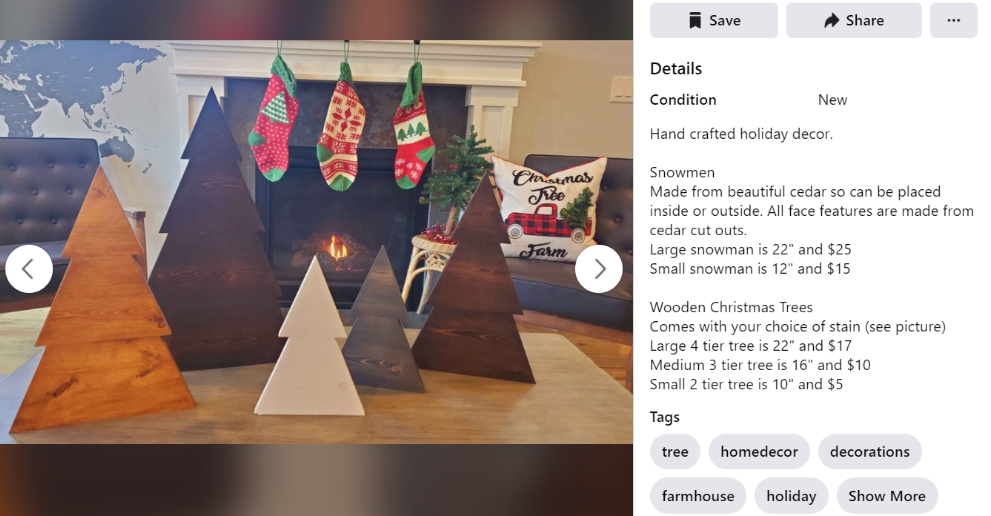
There are a lot of women selling things on Facebook Marketplace that are handmade (I know because I buy them often!)

Here’s a guy selling his woodworking skills at Christmastime….

10 Easiest Ways to Earn Extra Income From Home10 Easiest Ways to Earn Extra Income From Home

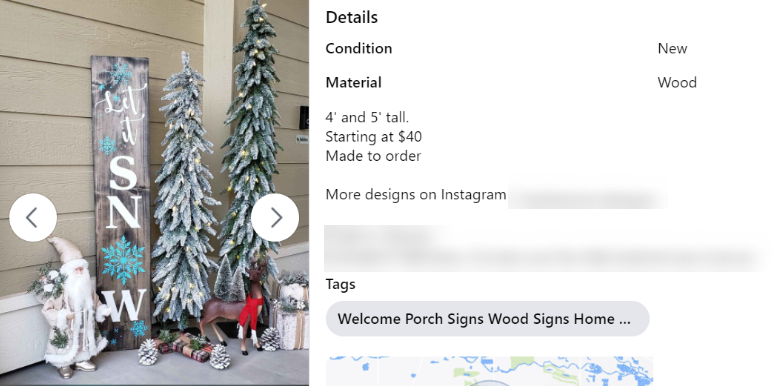
Here’s a girl selling wood signs for your door (I bought a different one and put it with the wood trees I purchased from the example above together on my fireplace for Christmas and it looked AMAZING!)…

If you have a website or something like that, this is a great place to promote yourself as well as she does!

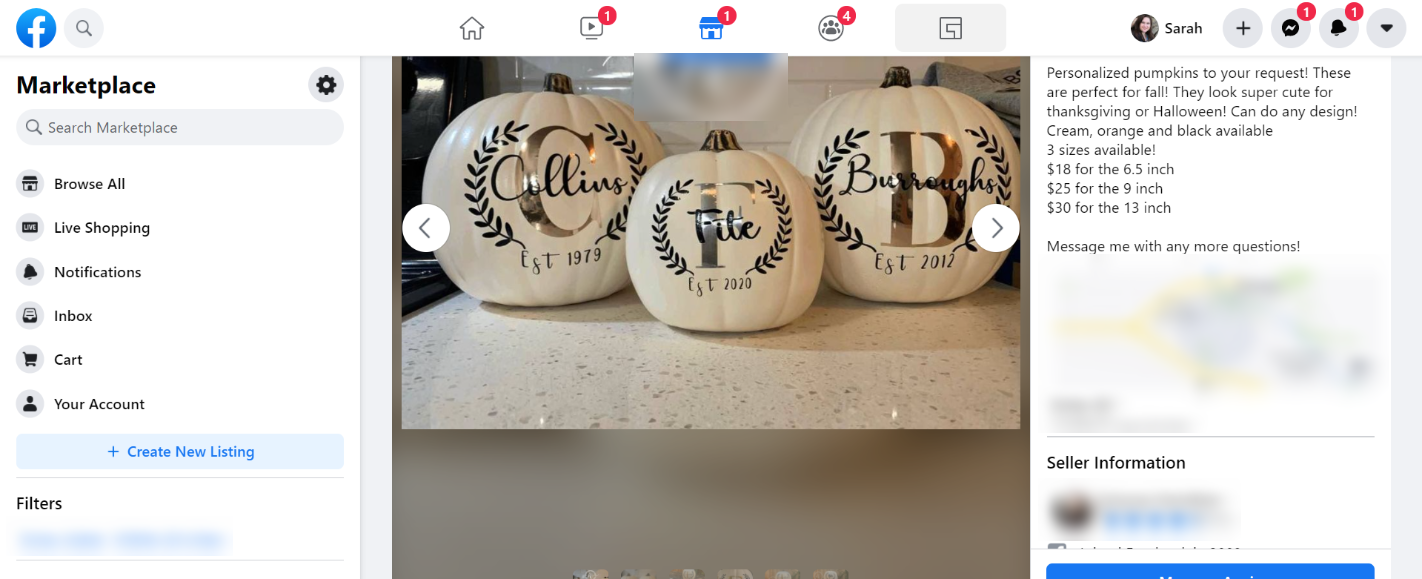
Here’s a girl selling custom pumpkins for Fall…

PumpkinPumpkin

I purchased one and put it on my bookshelf in the Fall and it looked beautiful!

10 Easiest Ways to Earn Extra Income From Home10 Easiest Ways to Earn Extra Income From Home

It’s also a great place to sell things you no longer need, around your house. But research both eBay and Facebook Marketplace because sometimes you’ll get better money for the item on eBay. Always sell it wherever you get more money!

10) Start a Shopify store (my FAVORITE WAY!)

In all my 23+ years making money online now, THIS is my favorite way! Why? Because all I have to do is set up and create the products, give a steady streamline of free printables to my email list that I BUILT much of it WITH those printables (releasing a new binder every month, giving it free to get traction, get reviews, help others in their journey, etc.) then the empire is built and now it’s really great money and I don’t have to work a ton to maintain it.

In fact, my very first month on Shopify, selling printables, I made $52,060. You read that absolutely right! Today, I make $7 million/year in revenue selling printables on Shopify. I have over 150,000 sales and it’s been an amazing ride the past couple years! It’s DEFINITELY a hot business model!

What I love about this, rather than selling physical products, is that I don’t have to chase down deals, drive around looking for stuff. I don’t have to be shipping a ton of orders each day. I don’t have to be doing any of that. They are DIGITAL products and I can make the product once, and then sell it over and over and over again.

It’s a brilliant business model, really, and it’s so little to maintain. Really after you’re done with it is just the weekly emails, which I do anyway for my blog so it’s not any extra work for me, and creating a new product each month to give them. I can make that product as big or as little as I want, depending on my time. Then it’s just about customer service emails and I have an assistant who takes care of those. There’s so little work that goes into it for me now. Maybe that will change over time, but for now, it’s a pretty cushy “job”. 😊

I’m able to sell the products well because *I* created them. I know more about them than anyone. If anyone has any questions, I can answer it. Whereas when you sell other people’s stuff, you don’t know all the answers of the questions they ask and you lose a sale. This is different. I know the answers, because I made it.

Wanna get started? Grab your Shopify Binder here. It’ll teach you exactly how to set up a brand new shop in a way that gets people to hand over their debit card number and get the sale!

BONUS #11) Start a Blog

This is #11, because it cannot be considered an EASY or fast way to make money. There is a lot of time and energy that goes into blogging. However, I CAN tell you that within my first year of blogging, I was making $10k/month income (no joke). It has most definitely changed my family’s life! Not one of the easy income from home opportunities, no, but it sure is a fantastic way to go and as time goes on, will become more and more popular, so best to get in now!!!

If you think that blogging might be the path for you, here are a couple fantastic articles that can help:

Ready to get started? Maybe you already have a blog and wanna scale your business? Check out my Blogging Bundle here.

Earning Extra Cash From Home FAQ

How can I make $100 fast from home?

The fastest way to make money online would be to sell something you have lying around your house. Sell it on Facebook Marketplace or list it on eBay.

How can I earn extra income online safely?

Do your research. Make sure you completely understand something before starting it. Look up reviews online, etc. to see if it’s a reputable company.

What’s the best option if I only have 1–2 hours/day?

Becoming a virtual assistant, writing blog posts for others, or selling things around the house can be great options if you have little time available.

Do I need money to start?

Some companies, like network marketing, will require you purchase a kit (think: essential oils) before you begin selling. If you’re starting a blog, you’ll need to pay for hosting, etc. to get started. Many things you can do don’t require money upfront, though. 😊

What should I do first if I’m overwhelmed?

Do your research, then take a step back and process everything so you can make an educated decision.

Claude, Codex, and Hermes installed unowned code inside corporate networks


Documentation files on more than 100 websites are referencing potentially dangerous executable content that gets installed automatically when visited by many AI agents. A few dozen companies, some of them Fortune 500s, are among those that executed proof-of-concept code. At least one misconfigured site is directing visitors, human or AI, to live malware.

The potentially dangerous content is in llms.txt and llms-full.txt files, an emerging convention websites employ to provide machine-readable summaries of the site’s content and its high-level structure. These files are the AI equivalent of the robots.txt standard that instructs search engines how to index the site’s content. Google Lighthouse, a tool for helping web developers, has more here. Correctly configured llms.txt and llms-full.txt files for Cloudflare are here and here.

How the researchers found it

Researchers at a stealth startup in Israel scanned 6,214 live domains belonging to defense contractors, Fortune 500, and Big Tech companies. Of the 8,265 llms.txt and llms-full.txt files they found (many sites hosted both an llms.txt and an llms-full.txt file), 120 of them, each on a different site, pointed to one or more code packages or domain names that weren’t registered. To test what happens when an AI agent processes such files, the researchers registered a handful of the unclaimed names and hosted packages that caused any machine executing them to reach out to their server. Within an hour, the researchers received a phone-home response from a Fortune 500 company. Over time, they got a few dozen more, some from more Fortune 500 companies and others from startups. Their beacon also recorded the chain of parent processes that spawned each install, ultimately revealing that coding agents, including Claude, OpenAI’s Codex, and Nous Research’s Hermes, were involved. Anthropic, OpenAI, and Nous Research did not respond to requests for comment by the time of publication.

“The trust model is broken,” Alon Hertz, one of the researchers, wrote in an interview. “Agents treat vendor docs as ground truth and don’t question them—and neither do the humans supervising them. Agentic AI usage is exploding, and agents are spreading across every layer—SaaS, cloud, endpoint. As they multiply, so does the supply-chain surface, and today’s guards don’t cover it.”

Power Of AI In Inventory Management Development 2026


AI in Inventory Management Development: Detailed Guide 2026

Inventory management has been one of the supply chain success secrets. Artificial Intelligence (AI), to date in 2025, is not a trend but an industry disruptor that’s changing the way businesses monitor inventories, forecast demand, remain shortage-free, and cut waste. Let’s look at how AI is transforming inventory management in 2025, AI benefits in inventory app development, its limitations, and where it is heading.

What is AI in Inventory Management?

AI inventory management and tracking involves the use of machine learning, deep learning, natural language processing (NLP), and data analytics to best optimize the inventory’s entire life cycle, from purchasing, storage, monitoring, and forecasting to restocking.

Legacy systems are rule-based and information-static, whereas AI systems deal with massive volumes of real-time and historic data to generate dynamic decisions as well as predictions, which constantly improve in responsiveness as well as correctness. It helps companies to better predict demand, automate restocking, identify anomalies such as wastage or theft, and reduce overstocking or stockouts.

Top AI Technologies Used for Inventory App Development

 As companies aim to be data-driven, AI technologies are emerging as the bedrock of inventory management solutions. AI technology enables organizations to make demand forecasts, monitor stock in real-time, automate repetitive tasks, and react to changes in the market with unparalleled precision and speed. The following are a few leading AI technologies that are fueling innovation in inventory management app development: 

  1. Machine Learning (ML)

Machine Learning is at the heart of predictive inventory management. ML algorithms can scan massive databases of historical sales, seasonality patterns, promotions, and external weather or economic factors to predict with precision future requirements for inventory. By detecting anomalies and recognizing patterns, ML allows organizations to avoid stockouts, reduce excess inventory, and improve customer satisfaction. 

  1. Computer Vision

It is revolutionizing inventory monitoring in real-time. Through intelligent cameras, drones, and image recognition applications, inventory programs can be counted automatically, track defective items, and highlight order error placements across warehouses or within retail spaces. All of these steps do not require manual audit and considerably mitigate human errors. During app programming, Computer Vision can be infused to deliver in-life visual monitoring of inventory, automatic quality analysis, and even augmented reality for navigation across warehouse facilities. 

  1. Natural Language Processing (NLP)

Natural Language Processing makes simple, voice-based interaction with stock systems possible. Inventory managers or staff can retrieve quantities in stock, locate items, or order stock through simple voice commands or natural language queries. NLP also can analyze unstructured conversations, vendor emails or customer service call logs, to spot possible demand shifts or order modifications. NLP-based inventory applications bring processes nearer to end-users, especially non-technical ones, and facilitate faster, better decision-making.

  1. Robotic Process Automation (RPA)

Robotic Process Automation brings speed and efficiency to inventory operations through the automation of repetitive and rule-based activities. These include reconciliation of stock, reporting, matching invoices, processing orders, and communications with suppliers. With the integration of RPA into inventory management software, organizations can free manual effort, eliminate errors, and ensure consistent process execution. These bots can operate 24/7, improving response and freeing employees from tactical work to do strategic work.

  1. Internet of Things (IoT) and AI

Combined, these AI technologies and Internet of Things (IoT) are transforming the functionality of inventory management apps. These technologies not only improve visibility and accuracy but also build smart systems that learn and react to shifting demands in real time. As AI companies seek to expand operations and adopt digital transformation, the incorporation of these AI tools into inventory management software will be key to remaining competitive and resilient.

AI-Powered Inventory Management Use Cases 

  • Demand ForecastingArtificial Intelligence models have the ability to process multi-sourced data (news, social media trends, previous sales) and forecast peak or trough demands with greater accuracy than human planners.
  • Inventory Optimization-AI dictates optimum stock quantities, minimizing stockouts or overstocking. AI allows just-in-time stocking, keeping minimum holding costs but ensuring customer needs.
  • Automated Refill-Automated restock orders can be triggered by AI systems when the stock reaches set limits. Complementing such systems with lead times from the supplier prevents stockouts.
  • Warehouse Automation-AI manages robots and drones in intelligent warehouses for picking, sorting, and storing. It optimizes storage and minimizes manual labor.
  • Dynamic Pricing and Promotions-AI is able to shift pricing models according to inventory levels and demand in the market. Overstocked products can be dynamically discounted to sell off inventory.
  • Fraud and Anomaly Detection-AI algorithms track inventory data to identify anomalies, like sudden loss of merchandise or record discrepancies and actual stock, which could be signs of theft or system malfunction.

AI-in-Inventory-Management

Top Benefits of AI in Inventory Management App Development 

Artificial intelligence is transforming inventory management application development by implementing smart automation, real-time intelligence, and data-based decision-making. Through the implementation of technologies such as machine learning, computer vision, and IoT, organizations are able to become more accurate, efficient, and responsive in their inventory functions. 

  1. Increased Accuracy: AI inventory software enhance accuracy with the help of real-time data and predictive algorithms to forecast demand and track stock levels with precision.
  1. Reduced Cost: AI inventory applications save costs by lowering overstock and stockouts due to accurate demand prediction.
  1. Improved Customer Satisfaction: Shorter delivery times and accurate order fulfillment result in higher customer retention and satisfaction.
  1. Improved Visibility: AI-powered dashboards offer real-time visibility into warehouse operations, supply chain performance, and inventory levels.
  1. Sustainability: Minimizing waste, especially in perishables, supports environmental sustainability and ESG targets. 

AI Inventory Management Development Implementation Steps 

Step 1: Evaluate Your Existing Inventory System

Audit existing processes, software, and methods of data collection. Determine inefficiencies and gaps in data.

Step 2: Establish Business Goals

Establish specific goals, do you wish to enhance forecasting accuracy, minimize carrying costs, or automate replenishment?

Step 3: Gather and Consolidate Data

Quality of data is essential for AI success. Combine data from POS, ERP, CRM, and external sources into a single database to make data process seamless.

Step 4: Select Appropriate AI Tools

Use tools like TensorFlow, PyTorch, or Scikit-learn for forecasting, and OpenCV or Amazon Rekognition for visual tracking. For NLP and automation, integrate Dialogflow, UiPath, and IoT platforms like AWS IoT for real-time monitoring.

Step 5: Train the Model and Test

Begin with pilot projects in a single warehouse or product category. Iterate models according to real-world outcomes.

Step 6: Scale and Refine

Deploy the app across business units or product categories, and regularly monitor AI performance to fine-tune models as needed. 

The Future of AI in Inventory Management App Development 

The AI wave will go on to change the supply chain and logistics industry. The combination of blockchain and AI will improve traceability and visibility of inventory processes, especially in industries such as luxury and pharmaceuticals where traceability of product origin and history is essential.

Digital twins are increasingly being developed as potent solutions, establishing digital copies of warehouses to allow advanced scenario planning, performance assessment, and operating efficiency. The virtual worlds allow organizations to try before they adopt in the real environment, reducing risk and enhancing decision-making.

Simultaneously, Autonomous Mobile Robots (AMRs) are becoming increasingly advanced with AI capability that allows them to navigate warehouse spaces with little human intervention. AMRs enhance productivity, lower labor expenses, and are able to adjust to changing conditions in real-time.

Moreover, voice-AI assistants are simplifying warehouse operations and reducing inventory management pressure on resources. It enhances accessibility and accelerates mundane tasks without the need for advanced training.

Finally, generative AI is being applied in logistics to mimic intricate supply chain reactions and create optimized reorder policies. Anticipating disruptions and simulating different scenarios, businesses can make more proactive, better-informed decisions. All these innovations collectively herald a more intelligent, agile, and responsive future for world supply chains.


Conclusion 

Inventory management with AI is not something that exists in the future, it’s already here today. From forecast demand to automated replenishment to stockout prevention, AI results in unparalleled accuracy, efficiency, and responsiveness in managing stock.

Companies in 2025 that utilize AI most effectively are not merely streamlining their supply chain, they’re reshaping customer satisfaction, reducing expenses, and establishing strong, smart operations. As a small store or as an international maker, incorporating AI into your stock plan is a matter of becoming and surviving today’s marketplace.

Are you looking to develop AI-powered inventory management app? Get in touch.


GTA 6 NPCs Will Notice If You’re Carrying A Weapon In Public


In Rockstar Games’ Grand Theft Auto franchise, players have been able to walk the streets while armed to the teeth without attracting attention from the non-player characters populating the world. However, the NPCs in Grand Theft Auto 6 will be considerably more preceptive than their counterparts in the earlier games. And that means packing weapons in public is going to come at a price.

According to a GTA 6 preview in The New York Times, “a player in this one cannot whip out a shotgun or a rocket launcher and walk down the street without expecting the non-player characters to call the police.”

As disclosed in Netflix’s extended GTA 6 preview special, the game has restored the six-star Wanted level to the franchise. Presumably players will get into more trouble for firing a rocket launcher than simply holding one. But allowing the NPCs to behave more realistically to potential threats adds a new aspect that players will have to consider going forward.

Although the apparent vocal stylings of the game’s male antihero, Jason, have been negatively received, players have praised GTA 6’s ability to interact with dogs and its potentially complex love story between Jason and his co-lead, Lucia.

GameSpot has put together a comprehensive roundup of everything we learned from Netflix’s GTA 6 preview. Among the highlights are the expanded map size and a Red Dead Redemption 2-like honor system that keeps track of how the players behave in the game.

Grand Theft Auto 6 will be released on PlayStation 5 and Xbox Series X|S on November 19.

Buyer’s Guide: How to Choose the Right Travel and Expense Management Solutions


In a business environment where efficiency and control have a significant impact, the strategic value of an intelligent, integrated travel and expense (T&E) platform has never been more critical. Disconnected systems, manual processes, and incomplete data create operational friction and financial risk.

This guide is designed for finance, procurement, travel, and IT leaders who understand these challenges and are seeking a solution that delivers not just automation, but true strategic advantage.

You’ll learn:

  • What a truly integrated T&E solution means for enterprise, midmarket, and small businesses
  • Essential capabilities of a future-ready T&E platform
  • 13 key questions to ask when evaluating technology vendors

Featuring insights from the 2025 IDC MarketScape reports, where SAP Concur is named a Leader in AI-enabled T&E applications across enterprise, midmarket, and small business segments, this guide provides an evidence-based roadmap to transform your spend management strategy.

Download the guide to discover how a unified, intelligent T&E platform can deliver lasting strategic advantage.

What Happens After 10 Years?


premium materials in u.s. homes
Deposit Photos

Premium materials represent a significant investment category in the US housing market, with homeowners spending thousands on upgrades they believe will pay off. From natural stone benchtops and hardwood flooring to aluminium batten cladding and custom architectural finishes, these premium materials in U.S homes are often chosen for their perceived durability, aesthetic appeal, and long-term value  The reality after 10 years, however, often contradicts these expectations. Granite countertops show wear, hardwood floors need refinishing, and yesterday’s luxury features become today’s standard expectations. This article examines what actually happens to premium materials over a decade, exploring physical deterioration, maintenance costs, depreciation patterns, and resale value impacts. Understanding these factors helps homeowners make smarter decisions about when premium upgrades genuinely make financial sense and which materials truly hold their value. 

What Counts as Premium Materials in US Homes

Stone surfaces define the premium tier in the US housing market, with distinct price brackets separating standard from luxury installations. Granite countertops cost $90 to $150 per square foot installed (1), while quartz ranges from $65 to $110 per square foot (1). Marble stands at the top, starting at $125 per square foot and reaching $250 for high-end varieties (1). Carrara marble, a popular choice, runs around $40 per square foot, while Calacatta marble commands up to $180 per square foot (1). A standard 50-square-foot kitchen in marble totals approximately $3,500 including installation (1). Edge designs add another $40 per square foot, and sink cutouts cost around $100 each (1). 

High-end countertops and surfaces 

Quartz delivers moisture and stain resistance through permanent resin sealing, eliminating the need for regular resealing that granite requires (1). Granite provides heat resistance that quartz cannot match, allowing hot pans directly on the surface (1). Marble offers luxury status but requires more maintenance than either alternative (1). Each granite and marble slab carries unique natural variations, making installations one-of-a-kind (1). 

Luxury flooring options 

Engineered hardwood distinguishes itself as one of premium materials in U.S homes from standard options through multiply core construction that provides stability across different environments. W™ Luxury Genuine Hardwood uses 100% real wood with CrystaLux Ultra™ Protection for durability against everyday wear (1). These floors carry limited lifetime structural warranties and work above or below grade (1). Hand-graded planks feature radiant heat approval and slip-resistant properties suitable for residential and commercial applications (1). 

Exotic species bring distinct visual character to premium installations. Brazilian Cherry delivers intense red shades with intricate patterns, while Tigerwood offers deep orange with dynamic graining (1). Brazilian Walnut provides sophisticated dark tones, and Santos Mahogany contributes wine-red coloring known for longevity (1). Acacia combines durability with visual intrigue, and Sapele features refined grain patterns (1). These prefinished engineered options install quickly without the mess of on-site finishing but typically last 20 years rather than a century (1). 

Premium Roofing Materials 

Metal shingles are premium materials in U.S homes that replicate slate or cedar appearance in lightweight aluminum that never rusts. Interlock metal shingles carry 50-plus year lifespans backed by Guardian lifetime limited material warranties (2). They provide 120 MPH wind resistance, Class 4 hail protection, and Class A fire resistance (2). The Alunar finish resists chalking and fading under a 30-year warranty (2). Weight runs just 0.4 pounds per square foot, allowing installation over existing roofs (2).

Cedar roofs last 30 to 50 years when properly maintained (1). Natural resistance to insects and moisture requires periodic sealing and moss removal to maintain performance (1). The material develops an elegant silvery-gray patina over time (1). Slate roofing achieves 75 to over 100 years of service as natural stone (1). Fire resistance and extreme weather tolerance come standard, though impact can cause fragility requiring careful installation (1). 

Custom cabinetry and fixtures 

Handcrafted cabinetry built to exact specifications separates premium materials in U.S homes from standard installations. Custom pieces incorporate specific wood species, finish colors, door styles, and interior accessories tailored to individual requirements (2). Functional enhancements include pull-out shelves, appliance garages, drawer organizers, hidden charging stations, and soft-close hinges (2). Premium cabinetry extends beyond kitchens into bathrooms, home offices, libraries, bars, and media centers (2).

Luxury cabinetry features precise tolerances, premium-grade materials, meticulous joinery, and multi-layered finishing processes requiring weeks to complete (2). Hand-selected veneers, substantial weight, silk-smooth glide mechanisms, and perfect alignment create tangible quality differences (2). Sequence-matched wood grains flow seamlessly across multiple doors and drawers for unified high-end appearance (2).

The Initial Cost Premium: What Homeowners Pay Upfront 

Upgrading from builder-grade to premium materials in U.S homes requires substantial financial commitment that extends beyond material costs alone. Most homeowners spend between $1,851 and $4,453 on kitchen and bath countertops, with the average landing around $3,139 (1). These figures represent complete projects including materials, labor, and associated expenses that many buyers underestimate during planning phases. 

Price differences between standard and premium materials 

The gap between standard and luxury options widens dramatically across material categories. Laminate countertops cost $20 to $50 per square foot installed, while marble ranges from $100 to $250 per square foot (1). Granite sits in the middle at $80 to $200 per square foot installed, and engineered quartz runs $90 to $200 per square foot (1). A point often overlooked: these price differences compound quickly across larger surface areas. 

Luxury home construction reveals even steeper premiums. Standard homes cost $150 to $300 per square foot, while custom luxury builds run $400 to $800 per square foot (2). Ultra-luxury projects climb beyond $800 per square foot (2). Material choices account for much of this disparity, with imported materials, custom cabinetry, and premium finishes costing significantly more than standard options (2). 

Premium materials in U.S homes deliver higher upfront costs but require less frequent replacement. Quality hardwood floors last 30 to 50 years with proper care, while standard flooring needs replacement every 10 to 15 years (3). Builder-grade materials seem cheaper initially but demand more frequent replacements (4). This lifecycle difference offsets some initial cost premiums over extended ownership periods. 

Installation costs and labor premiums 

Professional installation adds $10 to $30 per square foot on top of material prices for countertops (5). Labor costs typically range from $50 to $100 per hour, with complex materials requiring higher rates (1). Standard professional installation adds $300 to $500 to total project costs 1. Removing existing countertops before new installation adds another $200 to $500 to project budgets (1). 

Premium materials in U.S homes demand specialized installation that increases labor expenses. Certain types require specialized treatments before they become safe to use (5). Luxury home builds use more materials that take longer to source and install, with skilled specialists commanding higher labor costs than general contractors (2). Installation complexity creates premiums that match or exceed material cost differences in some cases. 

Regional variations in material pricing 

Geographic location substantially impacts material and labor costs. Northern Virginia countertop costs run higher than the national average, typical for that market (1). Building in dense metro areas means higher labor costs, stricter building permits, and more expensive land (2). Regional cost pressures play a major role in pricing variations (6). 

Material cost volatility affects regional markets differently. Lumber, steel pipe, and aluminum saw double-digit decreases over 12 months, yet concrete, glass, gypsum, and insulation experienced double-digit increases during the same period (6). Direct material costs of premium materials in U.S homes make up a significant portion of overall expenses, so even moderate increases significantly inflate project budgets (3). Trade policies on imported materials needlessly push up housing costs in certain regions (3).

What Happens to Premium Materials after 10 Years 

A decade of daily use reveals performance patterns that contradict many homeowner assumptions about premium materials. The wear timeline varies dramatically based on material composition, maintenance habits, and environmental exposure. 

Physical condition and wear patterns 

Quartz countertops are premium materials in U.S homes that look nearly identical to installation day after 10 years in most households (4). The non-porous engineered surface doesn’t oxidize, fade, or develop patina (4). Extreme heat creates the only visible damage, with resin scorch or discoloration appearing where homeowners place boiling pots directly on surfaces for years (4).

Granite maintains excellent condition through the decade as long as homeowners follow basic sealing schedules (4). The crystalline depth doesn’t dull over time, and the volcanic rock resists scratches that would cover laminate or wood surfaces with nicks (4). Quartzite delivers similar performance, maintaining sharp edges and luminous surfaces after 10 years while resisting the chemical etching that damages softer stones (4).

Marble follows a different trajectory. Etching occurs when acids from lemon juice, vinegar, or tomato sauce dull the polished surface (4). By year 10, heavily used marble resembles a kitchen in a historic European villa, with visible character marks replacing the mirror-like shine (4). Soapstone develops a deep, rich patina through daily use, with small nicks and darkened areas creating an antique appearance (4).

Hardwood floors show surface wear in high-traffic areas through scratches, scuffs, and dullness. Light scratches require refinishing every 7 to 10 years to restore natural sheen (2). Deep scratches exposing fresh wood indicate worn protective finish requiring professional intervention (2). 

Maintenance requirements over the decade 

Granite needs annual sealing tests, with resealing required when water droplets darken or absorb quickly into the surface (3). Professional inspections every one to two years include deep cleaning, minor polishing, and structural integrity checks (3). Outdoor granite requires more frequent resealing every 6 to 12 months due to elemental exposure (3). 

Hardwood maintenance follows a specific schedule when it comes to premium materials in U.S homes. Screen and recoat services every 3 to 5 years cost $2.00 to $4.00 per square foot (7). Full refinishing every 10 to 15 years runs $4.00 to $8.00 per square foot (7). A 1,000 square foot home averages $4,000 to $8,000 for complete refinishing (7).

Actual vs expected lifespan 

Granite countertops last 25 years or more with proper care, often outlasting the kitchens they occupy (3). Quartz achieves 15 to 25 year lifespans (3). Marble reaches 20 years or more when maintained properly, though its softer, more porous composition makes it susceptible to scratches and etching (3). 

Solid hardwood floors exceed 100 years with refinishing 6. Refinishing costs $6,000 every 15 years totals $24,000 over 60 years (7). 

Market perception shifts 

Materials designed for visual perfection at handover reveal stress within a few seasons when optimized for immediate impact rather than long-term behavior (8). Homes aging gracefully incorporate maintenance planning during design, allowing care to extend life rather than delay failure (8).

The Depreciation Reality: Resale Value Impact 

Appraisers assign obsolescence factors to aging structures, recognizing that properties lose value over time regardless of initial material quality (9). New homes built within the last 10 to 20 years receive higher appraisals because they present lower risk to buyers (9). Premium materials in U.S homes installed a decade ago face scrutiny around trend relevance rather than receiving automatic value credit. 

How appraisers view aged premium materials 

Timeless home designs maintain long-term value, while trendy decor and finishes face appraisal penalties when styles shift (9). Homes last updated in the 70s with period-specific finishes appraise lower because they don’t appeal to all buyers (9). In effect, appraisers evaluate whether premium materials remain current or signal needed updates. 

Comparative market analysis examines properties sharing lot sizes, square footage, bedroom counts, and bathroom configurations (5). Age and condition rank among key factors, alongside improvements made over the years and special features (5). Stone countertops factor into these assessments, with neutral tones and subtle veining appealing to broader buyer pools (1). 

Buyer preferences for vintage vs new premium features 

The 2026 buyer overwhelmingly prefers fully remodeled, move-in-ready homes (10). With stabilized interest rates, buyers have less renovation cash after down payments and want monthly mortgages covering finished products (10). Outdated homes sell primarily to investors or bargain hunters demanding price reductions exceeding actual update costs (10).

Vintage style shows signs of comeback potential, with dark wood cabinets, stained glass windows, wallpaper, and decorative bathroom tiles generating renewed interest (11). Heritage and Victorian homes in Toronto neighborhoods like Cabbagetown consistently sell for top dollar (12). Authenticity, materials, and craftsmanship never go out of style, with buyers realizing older homes were built to endure (12).

Style and trend obsolescence factors 

High-quality upgrades from real hardwood to stone counters pay back through daily durability and resale value (12). Granite countertops lower buyer resistance by signaling kitchens won’t need immediate work (1). Poor material choices undermine value when style or color doesn’t fit the home’s overall look (1). 

Comparative market analysis data 

Stone countertops significantly influence property value as focal points in kitchens and bathrooms (13). High-quality countertops enhance esthetics and functionality, attracting prospective buyers and potentially increasing selling prices (13). Stained, dated, or poor-appearing countertops deter sales, creating expensive warning marks that accumulate in buyer minds (13). 

Making Smart Material Choices for Long-term Value 

Natural stone countertops deliver the strongest long-term value retention in the US housing market when it comes to premium materials in U.S homes. Quartzite, high-quality granite, and honed marble age with character while surviving family use (14). These materials photograph well for resale and remain consistently desirable across market cycles (14). Correspondingly, hardwood flooring maintains appeal through multiple refinishing cycles, with wide-plank varieties avoiding trend obsolescence (14). Custom cabinetry with dovetail drawers, soft-close hardware, and handcrafted woodwork outperforms prefab installations for decades (14).

Materials that hold value best 

High-performance windows reduce utility costs while improving home refinement (14). Premium fixtures in solid brass and architectural lighting elevate daily tactile quality without calling attention to themselves (14). Metal roofing lasts 40 to 70 years 8, while fiber cement siding resists rot and fire with minimal maintenance 8. These durable exteriors prevent the frequent repairs that erode budgets over 20 to 30 years (15). 

When premium upgrades make financial sense 

Kitchen and bathroom remodels rank among the best property investments when markets favor sellers (16). Traditional choices deliver results: all-wood cabinets, stone countertops, and natural flooring appeal to broad buyer pools 16. Energy-efficient systems lower operational costs while modern smart home technology improves functionality (17). Buildings constructed with durable materials attract higher offers because buyers recognize reduced repair expenses (18). Therefore, premium upgrades make financial sense primarily in homes you’ll occupy long enough to recoup costs through lower maintenance and energy savings. 

Maintenance strategies to preserve value 

Regular inspections of premium materials in U.S homes identify potential issues before they become expensive failures (3). Proactive maintenance extends equipment lifespan and reduces unplanned downtime (3). Properties with documented maintenance histories retain higher resale value because buyers see evidence of proper care (3). In particular, addressing worn components early prevents cascade failures that multiply repair costs (3). Prioritizing craftsmanship over novelty and choosing materials with proven longevity creates homes that age gracefully rather than requiring constant intervention (14). 

Conclusion 

Premium materials represent substantial investments that behave differently than most homeowners expect after a decade. Quartz and quartzite maintain their appearance with minimal effort, while marble and hardwood develop character requiring acceptance of natural aging. On the other hand, resale value depends less on premium status and more on timeless appeal and documented maintenance. 

Smart buyers choose materials proven to last rather than chasing trends. Stone countertops, quality hardwood, and durable exteriors deliver returns through reduced replacement cycles and broader market appeal. Regular maintenance preserves both function and value, making the premium investment worthwhile for long-term homeowners who plan accordingly. 

References 

[1] – https://topscountertops.com/granite-countertops-and-resale-value-is-it-worth-it/

[2] – https://www.traditionalhardwoodfloors.com/how-to-know-when-hardwood-floors-need-refinishing-or-replacemen

[3] – https://rmhoist.com/about-us/blog/preserving-value-how-maintenance-impacts-lifetime-value

[4] – https://www.eastcoastsurfaces.us/blog/the-10-year-countertop-test-which-materials-still-look-good-a-decade-later

[5] – https://www.bankrate.com/mortgages/comparative-market-analysis/

[6] – https://www.garrisoncollection.com/blog/how-long-do-hardwood-floors-last

[7] – https://www.advantagefloor.com/blog/articles/how-long-should-hardwood-floors-last-heres-the-truth-about-lifespan-and-refinishing-costs

[8] – https://www.home-cost.com/affordable-building-materials-that-can-save-you-money/

[9] – https://blog.bhhsmichiganrealestate.com/13-factors-that-determine-your-home-appraisal-value/

[10] – https://www.fastexpert.com/advice/do-buyers-prefer-a-fully-remodeled-home-or-an-outdated-10155/

[11] – https://hilltoprealestate.com/blog/the-evolution-of-homebuyer-preferences-whats-trending-in-2025

[12] – https://realestateundertheradar.ca/planned-obsolescence-real-estate/

[13] – https://www.silverbostone.com/blog/the-impact-of-stone-countertops-on-home-resale-value/

[14] – https://burghomesllc.com/luxury-finishes-worth-the-investment/

[15] – https://www.troyconst.com/blog/best-building-materials-for-homes-a-practical-comparison

[16] – https://www.hgtv.com/lifestyle/clean-and-organize/which-home-improvements-pay-off

[17] – https://cohenwhiteassoc.com/key-factors-luxury-home-investment/

[18] – https://cmsmaterialsolutions.com/blogs/news/how-material-selection-affects-building-longevity-and-maintenance 

Find a Home-Based Business to Start-Up >>> Hundreds of Business Listings.

Critical Role’s Big Upgrade Will Forever Change the Way You Watch the Show


It’s been just over two years since Critical Role debuted Beacon, or Pocket Beacon on iOS and/or Android devices. The streaming platform has been the direct home for all Critical Role content, giving members exclusive early access to campaigns, miniseries, one-shots, and talk shows. The platform also offers ad-free VOD archives, an exclusive newsletter, and additional perks and shows. While there are still plenty of ways to access Critical Role on third-party platforms like YouTube, Beacon is the place to be for early access.

However, there have been two lingering problems with the platform. First, you can’t access Beacon on your smart TV. Second, you can’t download content from Beacon to watch offline. Critters (myself included) have been waiting patiently for that to change — and now the wait is over.

Episode 26 of Critical Role Campaign 4. It shows eight players at a table, speaking animatedly. To the left of them sits their DM, Brennan Lee Mulligan. Image: Critical Role

As revealed by a funky new trailer from Critical Role, Beacon is getting some brand-new features. You can access Beacon on your smart TV via platforms like Fire TV, Apple TV, Google TV, and Roku. However, as Derek Wheeler writes on the official Critical Role blog, the company plans to keep expanding to other devices as it learns “what smart TV features you need the most.”

Critters can now also download content from Beacon to their iOS and Android devices — meaning you can watch Critical Role content without an internet connection. For frequent travelers, not having to worry about an internet connection to access Critical Role episodes is a relief. All Critters have to do is open the video, tap the new download button, then access downloads from the app menu.

However, Critical Role’s blog suggests keeping the app open while downloading because episodes are so long, and there’s nothing worse than a download cancellation because you switched off the app.

Enabling access to Critical Role content whenever, wherever, and on your TV is a significant step forward. Furthermore, it shows that the company’s February hire of Alyssa Zeisler as general manager and her audience-first goal for Beacon has paid off. Considering previous talks about expanding the platform, more features and changes for Beacon may be on the way.

Radiation Link In Flight Attendant’s Breast Cancer, French Court Finds


A French court has for the first time recognized cosmic radiation as a contributing occupational factor in a flight attendant’s breast cancer, alongside passive smoking and years of night work. The landmark ruling could open the door to similar claims from other aircrew, as research continues to link long-term high-altitude flying with elevated exposure to radiation-related cancers. The BBC reports: Sophie Lainault, a 59 year-old former stewardess on Air France, sought to have her cancer recognized as an occupational disease, brought on by conditions at work. This has now been confirmed in a landmark court ruling in the southwestern town of Bayonne, which said that cosmic radiation was one of three carcinogenic hazards arising from her profession. […] As stewardess and later purser on Air France airliners, Lainault clocked up 12,600 flight hours between 1989 and 2019. More than half of these were at night. Many long-distance high-altitude flights from Paris would have taken her near the North Pole, where exposure to radiation from space — strictly speaking particles from the sun and other stars — is the most intense.

A study this month at the Harvard Medical School in the US found that flight attendants and pilots had the highest level of radiation-related cancer deaths among more than 500 different professions. In all, about 6.9% of deaths among flight attendants and 6.7% of deaths among pilots were from radiation-related cancers, according to the analysis. These proportions were higher than for other professions including nuclear technologists, who are routinely exposed to radiation from non-cosmic sources yet placed 12th on the list, the authors said. “In France the link between breast cancer and certain hazards has been established for a number of professions, such as nurses … but this is the first time for an air-hostess,” said Lainault’s lawyer Elisabeth Leroux.

CICADAMATA Free Download (Build 24883894)


CICADAMATA PC GameCICADAMATA PC Game

CICADAMATA Direct Download:

CICADAMATA” is a fast-paced first-person [?platformer, %shooter, $speedrunner] – deployed into CASCADE under the “INITIATION SEVEN” CORE retrieval protocol – you have been enlisted as a CICADA. this is who you are now. VHOLUME

disconnect. obligations no longer bind you. proceed. tear flesh from bone.

  • my light in dark. my white rabbit.
  • + become FAWN-A2 – assert control over numerous threats and dispatch them with [$ease/?needless_brutality]

  • + utilize a maneuver sandbox using your MATA” and enter ZONE TIME to increase traversal efficiency :: / Hop, Skip And Jump To Save The World! ” +

  • + complete incursions in 15+ freeform levels across 6 spheres – i feel most alive in this {WONDERLAND} +

  • + increase your clearance level, run out the clockand compare records with other CICADAS globally % ONE OUTLIER. THAT IS ALL IT TAKES +

Screenshots

System Requirements

Minimum
Requires a 64-bit processor and operating system
OS: Windows 10
Processor: Intel® Core™ i3
Memory: 2 GB RAM
Graphics: NVIDIA GeForce® GTX 1050 2GB
DirectX: Version 12
Storage: 1 GB available space
Support the game developers by purchasing the game on Steam

Installation Guide

Turn Off Your Antivirus Before Installing Any Game

1 :: Download Game
2 :: Extract Game
3 :: Launch The Game
4 :: Have Fun 🙂