Apple’s next high-end laptop is expected to bring the most substantial external changes to the MacBook Pro line since 2021. No renders, case leaks, or dimensions have emerged, but a series of reports have established much of what is set to change.
Bloomberg‘s Mark Gurman has said there is a good chance the model represents a “true overhaul” for the laptop, thanks to the combination of an OLED display and a thinner design, and Apple is reportedly working toward the thinnest and lightest products in their categories across the tech industry. The design is also expected to extend beyond this machine, with the entry-level 14-inch MacBook Pro due in 2027 said to resemble it.
Every 14-inch and 16-inch MacBook Pro released since 2021 measures 0.61 inches (15.5mm) thick, a figure that has remained unchanged across four chip generations. The next model is expected to be noticeably thinner and lighter, though no credible figure has been reported. Replacing the mini-LED backlight with a hybrid OLED panel removes a physical layer from the lid, so the reduction may be most pronounced in the upper half of the machine.
The notch is expected to be replaced by a hole-punch camera, a change first indicated by a roadmap from research firm Omdia and subsequently corroborated by Bloomberg. The cutout is said to be pill-shaped to accommodate an interactive Dynamic Island.
The notch has been the most distinctive feature of the MacBook Pro’s display since 2021, and removing it would leave the menu bar as a continuous strip interrupted by a small island rather than divided in two. Apple appears to be preparing for the change in software, since the “Search or Ask” interface built into Spotlight in macOS 27 adopts a dark, pill-shaped design suited to a cutout of that shape.
The bezels surrounding the display may also shrink. Omdia claims Samsung Display will supply 14.3-inch and 16.3-inch panels, fractionally larger than the 14.2-inch and 16.2-inch displays currently in use, which within a largely unchanged chassis would result in narrower borders.
Apple is also said to be fitting a reinforced hinge so that the display does not wobble when tapped. Whether the lid will also tilt further back than the current model, which stops relatively early for structural reasons, is yet to be seen.
Several elements are expected to carry over. Bloomberg reported in February that the machine would look a lot like the current MacBook Pro, specifying that the keyboard and trackpad would be retained and that the device would remain a conventional clamshell in 14-inch and 16-inch sizes, rather than a detachable or convertible design. HDMI, MagSafe, and the SD card slot were reinstated in the 2021 redesign after an unpopular absence, and no report has suggested they will be removed again.
An new product design project typically involves a number of engineers with different specializations, such as industrial, mechanical, and electrical/electronics. They work as a team alongside designers, marketers, researchers, and a project manager. Depending on their field of expertise and specific roles within the team, they might be responsible for building and testing prototypes, ensuring compliance with standards and regulations, and applying the DFM approach to the project. In general, they act as a bridge linking conceptual design to an optimized product ready for mass production.
So long as you have one or two engineers on your team, creating a new product is going to be easy, right? Wrong. Even for a big development firm that employs dozens of engineers, a New Product Development (NPD) project isn’t always a smooth-sailing process. Lots of product concepts never saw the light of day, and many others tasted failure because they couldn’t live up to consumers’ expectations. Adding more engineers or bringing in a qualified project manager to the project will reinforce the teamwork and at least reduce everybody’s workload to some extent.
But instead of going through the traditional hiring process and causing delays to the project, you definitely want to turn to Cad Crowd, a US-based freelancing platform with a heavy emphasis on design, engineering, and NPD at large. Cad Crowd connects you with some of the most qualified and experienced NPD professionals (of various specializations) in the business to help minimize the chances of mistakes and errors in your project.
We’re not saying that all product development engineers are prone to making these mistakes. The more experienced the engineers are, the less likely they are to struggle with errors of any kind. But then again, every mistake listed below is worth mentioning because of how costly it can be for your company to rectify.
Aesthetic vs. performance disproportion
Every good product from an experienced product designer is designed to strike a nice balance among performance, aesthetics, and cost. An excellent performance is a must, but if the product as a whole looks aesthetically unappealing, buyers might not be interested in even trying it in the first place. This applies to just about every product, but even more so if the product is meant to be plainly visible when in use. For example, a pair of socks can look ugly from all sides, but you don’t mind as long as they work as intended. Also, very few people get to see the socks anyway, so aesthetics don’t really matter. In fact, your ugliest socks in the drawer might be the most comfortable to wear. But you can’t say the same about, let’s say, shoes. Chances are you don’t want to be seen wearing a pair of fish-shaped shoes.
They might be aerodynamic, ergonomic, and all that, but are you sure that’s the aesthetic you want to go for? The worst offender, however, is an aesthetically pleasing product that never seems to work as advertised. Say you’re making a robot vacuum in the shape of R2-D2. It does look great, but the machine gets clogged easily and has to recharge itself every 10 minutes or so. Within even a week has passed, the buyer no longer sees it as a functional appliance but as a novelty item sitting beside the TV. Such a product only shows you care so much about appearance while neglecting functions. It’s form over function, and this rarely goes well unless you’re a jewelry designer or designing other purely decorative products.
You need a good balance between aesthetic and performance. A product that’s aesthetically beautiful but underperforming in any other way isn’t going to win customers. Value for money is still the number one factor people consider when buying a product. At the same time, useful but ugly products won’t attract buyers to begin with. Either way, this balancing-act error can quickly send the product down the path to commercial failure, despite the time and money spent developing it.
Unmanaged expectations
An NPD project is full of great expectations. For now, we’ll focus on just two points: development timeline and test results. Setting a proper timeline is tricky. Every single aspect of the product, from the smallest design details to the internal engineering mechanisms, can change over the course of development. When the 3D designers propose changes, the engineers may have to modify some components to make it work. Or it can happen the other way around, as in the engineers’ decision to use different components requires design revisions. It’s all interconnected, and even minor adjustments can add weeks, if not months, to the finalization process.
Setting a strict development deadline is likely to cause more trouble than it’s worth. For instance, you’ve agreed with the contract manufacturer (CM) to start the first production run on a certain date. And then the inevitable happens. The engineers need more time to assemble some components to fit a new design, or the suppliers can’t send the parts on schedule because of bad weather. Depending on the terms of the agreement, you might be subjected to fines because you can’t fulfill your end of the bargain. Ideally, you agree with a CM once your product has reached a final production version. No engineer should get ahead of themselves and move forward based on nothing but unmanaged expectations around deadlines.
As for the test results, our second point is that unmanaged expectations usually occur when engineers fail to specify the correct metrics for the test. It can be an honest mistake, such as an input error, or they may unknowingly use lower quality standards. What they then get is a set of misleading data in which a bad product appears good on paper. For example, the product material is supposed to withstand heat up to 80°C, but the test metric is set to 60°C. This error goes unnoticed, and the engineers don’t bother to try another material. They proceed to build a prototype and only realize the mistake during the next test run.
It’s a rookie mistake, alright, and completely avoidable indeed, but that doesn’t mean it can’t happen. Keep in mind that the smallest mistakes are the most likely to slip through the cracks because no one cares enough to take a second look at a supposedly trivial matter. Everyone assumes somebody must have done it right, only to realize how wrong they were when the damage is already done.
Pushing it
The NPD project is a race against time and the competitors. Market trends change just as easily as buyers’ preferences. The research you completed last week will be irrelevant next month. Other companies launch new products and flood the market with options more quickly than ever to stay ahead of the race. While you’re still in a workshop prototyping a design, some other companies are probably preparing to release half a dozen similar products. A sense of urgency is always welcome in an NPD project, but don’t fall into the trap of finishing a design just for the sake of it. Quality over quantity is what wins customers in the end.
It takes time to develop a proper product, wherever it might be. You can’t create a robust electronic device in a few months or a pair of shoes in just several weeks. There needs to be detailed market research, experiments with materials, design considerations, iterative prototyping, engineering testing, problem-solving, optimization for manufacturing, and so forth. The problem is that every single one of those steps can fail, meaning you probably won’t always get things right on the first try. As a rule of thumb, the more complex and sophisticated the product, the longer the development time.
Despite feeling like you’re in a race, you shouldn’t simply make a foolish leap, for example, jumping from the ideation phase directly to rapid prototyping, skipping the entire design validation work in the process. There’s nothing wrong with getting overwhelmed with the excitement of a new project. Being overly confident in an idea is what you should take issue with. Some ideas are outright terrible, so you shove them all the way to the bottom drawer, never to be seen again. Good ideas, however, are somewhat trickier. When an idea sounds feasible, it always looks great on paper, and that’s where the impulse to rush the project comes in. There are times when getting things done quickly isn’t the best path to move forward, especially if it involves skipping important development steps.
A design idea must be validated to assess its technical feasibility and its manufacturability at scale. It also offers an insight into DFM (Design for manufacturing services) approaches, which reduces the risk of major revisions during the final stages. Before you get to build the prototype, you will at least need a Proof of Concept, detailed technical drawings using CAD, analysis of usable materials, a review of possible patent issues, regulatory/compliance research, and the lot. Rushing into the prototyping phase usually comes with a muddle-headed “It’s only the first prototype” attitude. It does hold some truth, as the first prototype will most likely need many revisions to improve it. But this “We’ll fix it later” mentality will eventually catch the engineers off guard.
No one expects the prototype to be even remotely perfect in every way, but the right thing to do is to build it based on the data from the design validation phase. While this is a prototype, every good engineer strives to create the best possible iteration using the latest available data. Professional engineers don’t just brute their way into making a prototype. It’s an absurd exercise that leads to nothing but wasted time and materials. And by the time they figure out the prototype is all wrong, they have to do it all over again. So why bother with rushing it in the first place?
Making design changes at a later stage is almost always more expensive than refining in the earlier design phase, when development still mainly revolves around the CAD file rather than a physical prototype. It’s not like reviewing an idea or concept is a particularly challenging phase, either. Of course, you need a cross-functional product concept design team, consisting of people from different disciplines, to offer their takes on the idea. The good thing about a multidisciplinary group is that each member focuses on specific design aspects and likely has a unique viewpoint on why something will and won’t work as a product. Say your new product idea is a fitness tracker.
The designers have drawn raw sketches of the product, in colors for clarity, and everything looks excellent on paper. The mechanical engineers take a glance and rush to the workshop floor to build a quick prototype using readily available materials, including an off-the-shelf PCB. A few weeks after the prototype is ready, the marketers come back to say that the diameter needs to be smaller to attract more buyers, and that the strap should be made of stainless steel rather than plastic, so it’s more durable. Not to mention that a smaller diameter requires a custom PCB with reduced functionality to improve battery life. So what happens to the prototype now? It’s discarded at a moment’s notice. Rushing to prototype isn’t exactly the way to cut development time. If anything, it will send you back to the drawing board after wasting a good portion of the budget on a failed prototype.
Overlooking IP issues
Among the most ridiculous errors design engineers can make in a new product development is when they can’t be bothered with checking the patent database. It might be a direct result of rushing the project as discussed in the previous point, or a downright screw-up on the engineers’ part. Not many new product designs are completely brand-new. Most are at least partly based on previous inventions or on already patented technologies or mechanisms. If you develop a product while being completely oblivious of the matter, there’s a good chance that you’re actually copying someone else’s solution.
Let’s say you’ve finalized the new product after a lot of laborious effort in a workshop. You then set up the first production run for several thousand units and launch it to market. All of these were happening without anyone telling you that one or two technologies in the product are actually registered Intellectual Properties. The patent holder files a complaint, demanding that you either pay a hefty royalty for every sale or recall the product from the market entirely. It’s a costly error that’s otherwise easily avoidable if you’re just willing to do some preliminary IP research.
Let’s be blunt about it. As a 3D product designer, you don’t know your customers that well to think that whatever product you’re building will get them to line up at the door. A lot of people want different things from the same product. They can’t even agree on what the best-looking color for a smartwatch strap is, and they rightfully shouldn’t, because aesthetics is subjective. That’s why you make multiple versions of a product. You might even want to make sure there are different materials available to give customers options. And we’re not talking about the features yet. Some people want a colorful screen, others prefer a monochrome display.
A good percentage of the target market wants a full touchscreen, but the rest expect physical buttons. On the other hand, from a business perspective, it doesn’t seem like you can afford to develop two different products at once. Even with extensive customer research, you’ll still have a difficult time generalizing on what the vast majority of the customers really need. Imagine doing it with minimum data. Engineers are indeed supposed to be making the new product for customers, but it would be a mistake not to experience the product before launch. Have you actually spent some time using the product and making sure everything works as intended?
Does the product do what it promises to do? Is it an effective solution to the problem you’re trying to solve? Have you tried the product in different use cases? Engineering design experts have to experience the product as if they’re users who spend their hard-earned money on it. Think of the process as stress testing for performance, reliability, durability, repairability, and all that. If you find flaws, your customers will too.
Product that just works
Finalizing a design that “just works” sure sounds like a brilliant idea. After all, everything you’ve done so far is aimed at making something that works. So by that logic, you can call your product “ready” just as soon as it is in working order, right? Wrong. Remember that you have competitors and are in a race to be the first to launch a product to the market. Your company probably isn’t the only one with a new product development project. If every company only aims to make a product that works, how would they set themselves apart from each other?
Also, there won’t be real product choices for people to buy because everything is basically the same. Nothing is really better or worse. No matter what they buy, the product just works, and that’s good, right? Wrong again. “A product that works” should be the bare minimum of anything you’re trying to accomplish. And you don’t want to launch a product that only barely meets the requirements. You need to make refinements wherever possible in both functionality and aesthetics through iterative prototyping, giving the product a better chance of outselling competitors. Customers appreciate value-added features.
With 3D printing services and CNC machines, it’s easy to get carried away with the prototyping process and think that every single thing is as manufacturable as the next. Well, no one is going to blame you for saying that advanced additive manufacturing methods can fabricate even the most complex design imaginable. It’s true, but at the moment, the technologies haven’t reached a point where they’re effective for mass production. People think additive manufacturing is affordable only because they use it for very low production volumes, sometimes no more than two or three units at a time.
If the product is to be mass-produced at scale, engineers have to put manufacturability into account right from the beginning of the development. The idea is to make a product or a design that requires minimal tooling investment for a high-volume production run. You want to manufacture the products efficiently and consistently while keeping production costs low. Take our word for it: DFM is easier said than done. Engineers, designers, and the factory partner must work together to determine the most effective way to optimize the product for mass production. Sometimes it involves breaking the product down into multiple parts and assemblies, using custom materials, simplifying the mechanism, and so on.
Reinventing the wheel
One of the most common bottlenecks in an NPD project is the obsession with being innovative in everything. While product engineers naturally are creative people and want to be appreciated for what they do, there’s just no need to try to reinvent the wheel in every project. Companies and engineers can work to their full potential by simply playing to their strengths, rather than focusing on areas where they’re inefficient. They just have to do what they do best, in the best way possible. Never let yourself get bogged down in tasks beyond your field of expertise.
Take, for example, the DFM approach. Mechanical engineers are probably aware of the practice and understand pretty well what it takes to build a product that’s easy to manufacture. That being said, the real experts here are manufacturers, people with years of first-hand experience in mass-production matters. As professional engineers, you’re indeed required to strive to devise creative measures to solve complex problems and make things work, but this isn’t the same as trying to figure everything out, knowing full well that your attempts to reinvent DFM services are going to be unproven at best.
Even if you’re not trying to reinvent the wheel, thinking that you can handle every little detail of the NPD project by yourself is a recipe for disaster. An NPD project is a multifaceted undertaking. It involves not only engineering expertise but also an in-depth understanding of design and detailed consumer research. From a business standpoint, achieving commercial success (whether in the form of profits or greater market share) is the primary driver, which means the project needs a marketer, too. A multifaceted undertaking may also mean you need more than one type of engineer to get the job done. Some engineers specialize in electronics design projects, while others specialize in industrial processes, mechanical systems, chemicals, and more.
Depending on how your product is supposed to work and what your specialization is, you may need other engineers to strengthen the team. As mentioned earlier, a partnership with a contract manufacturer also plays a significant role in NPD. You might think that doing it all yourself can save a sizable amount of money and resources, but often the opposite happens. Instead of lowering development cost, all the mistakes and blunders you make because you don’t have the right team on your side cost you a lot of money.
Running an overall inefficient operation
Just about every NPD project (specifically for physical products) follows more or less the same progression. It starts with research or ideation, followed by concept development, design validation, prototyping design, evaluation, refinement, and finally production. But that’s on paper. In the real world, all the steps are interdependent and can create a jumbled workflow, like an entangled string. You’re doing a lot of reviews that cause delays and engineering refinements that send you straight back to square one. What about a fully-functional prototype that turns out to be a manufacturing nightmare? Do you know how complex it can get when the development budget runs thin, and you have to secure more funding?
You might think it won’t happen to you, but there is always a chance something will go wrong during development, and it takes a restart to fix it. Engineers are supposed to be the smartest, most creative, and most practical people on the team. Don’t be the bottleneck because you can’t keep things in order. Make the effort to detail and document your process, update the workflow with every completed milestone, and avoid making any uninformed decisions. More importantly, never jump the gun and skip to phases the project isn’t ready for, even if it looks like you can make it. By being simply procedural, you can prevent the project from going sideways.
For every engineer, the prospect of bringing mere ideas of a product to life is almost like an instant rush of dopamine. It brings excitement, pleasure, and that oddly satisfying sense of welcoming a good challenge. You live for it, and having the opportunity to prove your innovative and inventive nature is a chance you just can’t miss. But at the same time, an NPD is riddled with likely missteps. Most of the errors listed above probably won’t happen to experienced engineers, although you can’t be too careful with everything you do when it comes to product development. There’s just too much money and time involved in the process to let some otherwise rookie mistakes ruin the whole project.
How Cad Crowd can help
Tap into Cad Crowd to minimize the risk of errors and bolster your team with experienced engineers and NPD professionals. The US-based freelancing platform helps you connect with some of the best-qualified product development specialists from all around the world at affordable rates. Call us today for your free quote!
MacKenzie Brown is the founder and CEO of Cad Crowd. With over 18 years of experience in launching and scaling platforms specializing in CAD services, product design, manufacturing, hardware, and software development, MacKenzie is a recognized authority in the engineering industry. Under his leadership, Cad Crowd serves esteemed clients like NASA, JPL, the U.S. Navy, and Fortune 500 companies, empowering innovators with access to high-quality design and engineering talent.
Like Doctor Strange himself, Marvel Studios has its eyes set on the future with tactically scheduled releases following the highly anticipated events of Avengers: Secret Wars, which is currently set to hit theaters in December 2027. At San Diego Comic-Con, the shape of the MCU’s next era emerged as Marvel Studios unveiled a tantalizing look at what’s in store for 2028 and beyond. Marvel has already locked in several major projects, including Black Panther 3 slated for Dec. 15, 2028, and the Ryan Gosling-starring Ghost Rider, which hits theaters sometime in 2028, while a few claimed slots in the theatrical calnedar remains a mystery.
Marvel’s release calendar is always subject to change, but the studio’s plans after Secret Wars are becoming even easier to read following SDCC. The next era of the MCU won’t be built around the same heroes who carried the Infinity Saga, as X-Men and supernatural characters could be stealing the limelight soon.
Based on Marvel’s announced projects, Kevin Feige’s comments, and the studio’s current direction, here’s what Phase 7 might look like. Keep in mind that while the specific dates have already been booked by Marvel, these movies remain largely speculative.
1
Avengers: Secret Wars (Dec. 17, 2027)
Image: Marvel Comics
In the wake of Doomsday, Marvel’s Secret Wars will drop the heroes into one of their most harrowing situations yet. Although nothing is confirmed yet, the story pulls from two of the most beloved storylines in the comics, which involve a full rewriting of the Marvel multiverse, typically at the hands of Doctor Doom. The multiverse essentially turns into “Battle World,” a massive planet that incorporates most of the Marvel pantheon into smaller kingdoms.
It’s ripe territory to lead into a full timeline reset, as most of the world as we once knew it is forgotten, and all that’s left is a world similar to the Void from Loki, a wastebin of multiverses. Exactly how the entire timeline will be reforged is anyone’s best guess, but it should lead to a clean restart with both new and returning characters for X-Men, Avengers, and the like.
2
X-Men (May 5, 2028)
Image: Alex Ross/Marvel
The safest bet for the first major Phase 7 release is an X-Men film in some capacity. It’s inevitable, but also expected sooner rather than later. Marvel has spent years preparing audiences for the return of mutants, from Ms. Marvel revealing Kamala Khan’s heritage to Deadpool & Wolverine officially bringing the X-Men back into the fold.
Following Avengers: Doomsday and Secret Wars, which are both set to include their own slew of Fox Universe X-Men, the studio has a rare opportunity to launch a completely new status quo, especially in the wake of a “full reset.” Introducing a new X-Men team would be the clearest way to signal that the MCU has entered its next era, and Feige hasn’t been afraid to highlight the future of the MCU being led by the mutants.
A solo X-Men movie has repeatedly been named as one of the most important projects to get out the door following the end of Secret Wars, so it only makes sense to kick Phase 7 off with a mutant-focused blockbuster. A summer release for an X-Men film also makes sense. Marvel has historically used its May slots for major franchise launches and event movies, and a fresh X-Men film is arguably the closest thing the studio has to a new Avengers-level centerpiece.
3
Ghost Rider (July 28, 2028)
Graphic: Polygon | Source images: Focus Features; Sony Pictures
The next major Phase 7 pillar appears to be Shawn Levy’s Ghost Rider, which Marvel has positioned as one of its biggest supernatural swings. Gosling’s involvement has only increased interest in Johnny Blaze’s return to the big screen, especially after Marvel spent years slowly building out its darker corner of the universe with shows like Moon Knight and Werewolf by Night.
Thus far, Marvel Studios has only slated Ghost Rider for a release sometime in 2028, but since the studio already has July 28 booked, that’s most likely when Ryan Gosling will make his debut. There aren’t any major story details available for this project yet, but the actor did approach Marvel with a specific vision for the role, so it could be a promising start for a character in the same way Deadpool was with Ryan Reynolds in the costume.
4
Black Panther 3 (Dec. 15, 2028)
Image: Marvel Studios
Black Panther 3 is already set for Dec. 15, 2028, continuing Marvel’s tradition of placing major Wakanda stories in the holiday season. Ryan Coogler is returning to helm the next installment, which also gives Marvel one of its most reliable creative partnerships moving into the post-Secret Wars era. With the Avengers landscape changing, Wakanda could become one of the MCU’s most important political and technological powers, and it’s hard not to be excited to see Denzel Washington as the antagonist.
The story is supposed to follow a young Prince T’Challa II, played by David Jonsson, in a coming-of-age tale as he eyes the throne of Wakanda. It’s unclear how Washington might fit into the premise, but it’s sure to be exhilarating.
5
Shang-Chi 2 (May 4, 2029)
Image: Marvel Studios
Moving into 2029, it’s tough to chart where Marvel might land next, but the strongest candidate to fit here would have to be Shang-Chi 2. By 2029, it will have been nearly eight years since Shang-Chi and the Legend of the Ten Rings, making its highly sought-after sequel long overdue. Shang-Chi remains one of Marvel’s most successful yet underutilized new heroes, and bringing him back into the MCU would help Phase 7 build out the new status quo of the MCU.
Director Destin Daniel Cretton and star Simu Liu have previously confirmed that the sequel is still in active development, and the recent Doomsday trailer makes it look like Shang-Chi will have a significant role to play in the movie.
6
Fantastic Four 2 (July 13, 2029)
Photo: Marvel Studios/20th Century Studios
Marvel’s First Family is likely to become one of the MCU’s most important franchises after 2025’s The Fantastic Four:First Steps, which managed to rake in roughly $520 million globally. Depending on how these characters fare in Secret Wars, a direct sequel could strike a nice balance as earthbound heroes face cosmic threats. It’s a solid movie to slot in after two relatively grounded heroes like Black Panther and Shang-Chi, but it’s so far out that it can realistically be anything that fits under Marvel’s Phase 7 strategy.
7
Other Possibilities
Image: Firaxis/2K Games/Marvel
There are still plenty of other possibilities for the unclaimed dates, as well. A new Deadpool spinoff, an X-Force project, or even another major solo hero, like Blade (arisen from the dead) or Thor 5, could slot into one of these dates.
Stephen Strange is another option. The Sorcerer Supreme has become one of Marvel’s most important connective characters, and after years of dealing with incursions, alternate realities, and the consequences of the Multiverse Saga, a third movie could finally tell a more focused story with the character — one that actually takes its horror to the extreme. Rumors have been circulating since early 2025 that Doctor Strange 3 is in early development with Benedict Cumberbatch set to return to the titular role, but it all depends on how things shake out in the fallout of Secret Wars.
However, given that Ghost Rider will be released sometime in 2028, Marvel could try a Midnight Sons team-up movie featuring Strange alongside Ghost Rider, Blade, Moon Knight, and other darker heroes. That would give Marvel a new ensemble franchise without immediately needing another Avengers-level threat. Admittedly, though, this kind of film might slot better in September or October, dates that aren’t currently earmarked under Marvel’s plan.
Image: Marvel
With the Guardians of the Galaxy trilogy complete and The Marvels floundering at the box office, the studio needs a new cosmic hero capable of carrying that part of its universe. Thor and Doctor Strange could potentially fit that role, but Marvel needs a hero that can capture all sides of its cosmic pantheon in a new and interesting way without feeling forced. A Nova film, which was just officially announced at the end of SDCC, would allow the studio to rebuild its cosmic mythology from the ground up and potentially set the stage for larger stories like Annihilation or War of Kings, but where exactly it fits in Marvel’s timeline is hard to know.
Those films set a nice balance for Marvel’s Phase 7 slate, offering a good mix of earthbound stories while widening the scope to include mystical and cosmic forces in equal measure. There’s always room for a bit of change, but these films seem the most likely to follow Secret Wars and succeed at the box office.
After the chaos of the Multiverse Saga, Marvel’s Phase 7 slate appears to be moving toward a simpler structure, rebuilding around the strongest corners of its fantastical world, including the mutants, supernatural heroes, Wakanda, and cosmic wanderers. The next era of the MCU might not be about expanding outward, but about finally giving its biggest characters room to breathe.
One of the Russian government’s most elite hacking groups has adopted an attack, known as Clickfix, to compromise devices belonging to sensitive organizations in Ukraine, the latter country’s CERT center is warning.
Clickfix has emerged as an effective attack technique that attackers, primarily financially motivated criminals, began using in the last year or so. Websites under the control of the attackers display a CAPTCHA that requires the visitor to copy a jumble of text and paste it into the terminal. The text contains scripts that, once entered, perform malicious actions, typically by installing malware or exfiltrating sensitive data. Ukraine’s CERT said Wednesday that Sandworm, an advanced hacking unit inside the GRU, Russia’s military intelligence arm, is now using the technique.
“GhettoVibe,” “ScoutCurl,” and many more
The Clickfix attacks began in the spring and have continued through the summer. The campaign has resulted in the network compromise of at least one organization when a connected device was found to be infected by FreakyPoll, the name of one of Sandworm’s custom malware packages. Ukrainian authorities discovered 10 compromised websites that displayed a PowerShell command as part of a fake CAPTCHA that said it had to be passed to ensure a real human was behind the visiting device’s keyboard.
Once the user entered the script, it could install malicious Visual Basic scripts and other malicious wares that went on to install a variety of Sandworm malware. Typically, the first malware to run was a reconnaissance program that gathered information from the infected device. Machines deemed important would then receive follow-on malware that backdoored the system.
“The command, as an example, could be intended to load and save a VBS file in the Startup directory,” a translated version of Tuesday’s advisory stated. “One of the variants of such a program was called GHETTOVIBE. At the next stage, in order to determine the importance of the cyberattack object, the SCOUTCURL software tool can be loaded onto the attacked computer, which is a PowerShell script that performs basic reconnaissance by collecting and exfiltrating information about the computer: basic characteristics, programs, files, Internet browser data, etc.”
Released back in 2018, Crashphalt is a free and eccentric multiplayer game in which players do ground-pounds to send out seismic ripples, striving to punt each other off-screen. It’s got an “overwhelmingly positive” Steam user review reception, as of writing, but that’s not entirely a judgement on its quality. You see, Crashphalt is a hit today partly because you need it to run an online multiplayer mod for Toby Fox’s wonderful RPG Undertale.
Of Crashphalt’s 555 currently existing user reviews, the vast majority were written over five years after release, and either totally disregard or cruelly dunk on Crashphalt. An example: “10/10 Funny Undertale game, will never play this.”
Scraped together mid-escape, this motley crew consists of the Iron Bucket Knight, the Explosive Cutie, the One-Eyed Codger, the Money Whiz, and a mysterious nun picked up by the roadside… Every single one of them is deathly afraid of kicking the bucket, yet they have no choice but to grab their guns and face the fight head-on! Dinoblade
Your mission is to flee the island within 12 hours. But as you reach the coastline,a despair-inducing Storm Wall blocks your path. As the monsters multiply, a dark conspiracy slowly begins to unravel…
Fancy weapons, special Weapon Parts, Relic fusion, Tarot Cards, elemental effects, random events… Every pickup is another experiment in weapon customization.
Stack up Projectiles and become a “Fireworks Master”, or pour everything into a single shot and melt an entire health bar—your weapons, your rules. Mix and match them to create Transmutation chains, endless Ultimates, looping triggers, exponential damage scaling, and more. Every time your build comes together, it turns into a wildly satisfying run you will not want to put down.
As you venture deeper, [Character Talents] and [Team Talents] will help you grow ever stronger. Higher difficulties bring tougher enemies—and better drop rates. They also unlock the unique [Chaos Battle Scar] mode, where every Battle Scar comes with both a boon and a curse. High risk, high reward.
Screenshots
SystemRequirements
Minimum
OS: Windows 10
Processor: Intel I5-12600KF
Memory: 4 GB RAM
Graphics: NVIDIA GTX 1060
Support the game developers by purchasing the game on Steam
InstallationGuide
TurnOff Your Antivirus Before Installing Any Game
1 :: Download Game 2 :: Extract Game 3 :: Launch The Game 4 :: Have Fun 🙂
Flip between 2D and 3D perspectives, discover hidden paths, solve puzzles and more.
The story behind the design, inspiration and challenges leading to launch.
We’ve all experienced a time when we’re surrounded by people yet feel completely out of place. That’s the exact feeling Dodo Duckie starts from: a duckling raised among chickens, convinced something is wrong with him because he just can’t fit in.
A few years ago, we were an unproven team pitching a massive, overly ambitious game to publishers. Getting backing for a project of that scale is incredibly difficult in India’s indie scene, and the passes we got back eventually forced a practical question: What can we actually build and see through to the end completely on our own?
The answer turned out to be a duck.
I’m Samhith, the creative director at BornMonkie, a small indie studio in India that I run alongside my sister and producer, Samveda. This is the story behind our debut puzzle platformer, Dodo Duckie – now available on Xbox Series X|S and PC.
Even though Dodo’s search for belonging comes from a deeply personal place for us, we wanted his adventure to feel like a warm hug. It’s a bright, cozy world where his clumsy attempts to fit in are played for laughs, turning a heavy theme into a light-hearted journey about playful discovery.
Quacking the Code
Back in the day, many of the studios we look up to started their journeys with iconic mascot platformers. Looking back, we realized we had accidentally followed in their exact footsteps with Dodo Duckie.
We built our first prototype back in 2019, but as a busy service studio, the game became a long-term labor of love. For years, we chipped away at it on and off between client jobs and a million other prototypes. Early on, we made a radical design decision: remove the jump mechanic entirely from a 3D space.
We initially assumed this unique switching mechanic would be our main hook. But as players tested the game, they showed us something else: they were falling for DodoDuckie before they even understood the puzzles. That feedback changed how we looked at our own game. We realized Dodo’s personality was the front door, and our puzzle design was the reason to stay once you walked through. Juggling service work meant it took until 2025 to fully realize this vision, but we’ve finally built a home we can’t wait for players to enter.
Getting Dodo Just Right
Getting the game to actually look right was a massive hurdle, we spent two to three months iterating on prototypes we just weren’t happy with. The turning point came when our Art director, Vincent Boichut, joined the team and diagnosed the real problem. Because we were balancing tight resources, we only had the budget to build a single set of assets that had to work perfectly across two perspectives. Everything had to be read clearly, whether players saw it head-on in 3D or flattened into 2D.
That restraint became our superpower. It’s the real reason the world leans toward clean shapes, rounded edges, and vibrant colors. What looks like a purely stylistic choice was actually born out of a need for perfect readability, though we’re thrilled it happens to be extremely cute, too.
Finding Our Wings
Underneath the puzzles is a story we care about deeply. Dodo grows up among chickens, trying desperately to fit in before learning that his differences are exactly what make him special. It’s a struggle our team knows intimately. Growing up in India’s highly competitive culture, pursuing a creative career in game development meant fighting against strict expectations and risking isolation just to do what we love. Dodo’s journey is ours.
Because of that, we chose to tell his story without heavy dialogue, leaning instead on animation, physical comedy, and character expression. We wanted the emotional beats to feel like a Pixar short, landing purely through what you see, making Dodo’s story universal no matter what language you speak.
Our journey has finally come to life. Dodo Duckie is now available on Xbox Series X|S and PC!
If there’s one thing we hope players take away from our little bird’s story, it’s this: a leap doesn’t have to look graceful to count.
Sometimes it just has to happen.
Dodo Duckie
BornMonkie
☆☆☆☆☆ 1
★★★★★
$11.99
You’re a DUCK! with one special cap that gives you the power to switch between 2D and 3D. Use it to explore, switch perspectives, solve puzzles and save your chicken friends.
There’s been a change to NASA’s launch of six satellites for solar storms research. Space.com reports that those satellites “were originally slated to lift off on a United Launch Alliance Vulcan Centaur rocket but have now been assigned a SpaceX Falcon Heavy, according to a NASA mission update.”
[NASA’s Sun Radio Interferometer Space Experiment mision — or SunRISE] will fly to space as part of a rideshare mission sponsored by the U.S. Space Force’s Space Systems Command. Though it’s not stated specifically in the NASA release, that may be a hint as to why the mission’s rocket was changed. On its most recent launch [U.S. Space Force mission USSF-87], Vulcan experienced an anomaly in one of its solid rocket boosters — the second such incident to occur during the rocket’s four launches to date. Vulcan succeeded in delivering the USSF-87 payload to its designated orbit on that launch, but the recurrence of the booster issue during ascent prompted the Space Force to pause national security launches on Vulcan until it could be addressed. Which mission SunRISE will be manifested on has not yet been released, but Space Force’s Space Systems Command [SSC] has already shifted other launches between Vulcan and SpaceX’s Falcon 9…
Falcon Heavy is SpaceX’s heavy-lift launch vehicle… that consists of three modified Falcon 9 first stages, and has launched 12 times since it debuted in 2018. Four of those have delivered national security payloads to orbit, with the most recent of those, USSF-52, launching in December 2023. Falcon Heavy’s most recent flight overall occurred this past April, when it sent the Viasat-3 F3 telecom satellite to orbit. Falcon Heavy’s next mission will lift off with NASA’s Nancy Roman Space Telescope, currently set for no earlier than Aug. 30. SunRISE is scheduled to launch later this year…
Sientists will use data collected by the satellites “to improve prediction models for impending space weather, which in turn could lead to mitigation plans to better thwart the effects of such solar events on orbital infrastructure.”
Thanks to long-time Slashdot reader schwit1 for sharing the article.
New Blood’s comic book golden age noir detective immersive sim shooter, Fallen Aces, just got a beefy new update: Its second episode, Shadow of Death, is playable right now, while the usually $15 game is on sale for $12 until August 8.
Fallen Aces – Episode 2: Shadow of Death – OUT NOW – YouTube
I’m kind of allergic to playing games in early access, so I haven’t touched Fallen Aces since I fell in love with its first few levels back in 2024. Those levels were fun, the stealth tense, the combat beautifully slapstick, and the pulpy story engaging. But I mean it as a compliment when I say that the Episode 2 trailer shows a practically unrecognizable game.
It’s got car chases, sprawling city environments, medieval broadswords, and I lost track of how many new guns. Shout out to the cartoony Mateba Model 6 Unica in there, a.k.a the cyberpunk detective gun. The more games that sport this beautiful Italian oddity, the better.
Latest Videos FromPC Gamer
New Blood’s entire main lineup of the 2020s has been slow to cook, but the three games have justified that time with ambitious increases of scope. Ultrakill’s recent layer of Fraud looks like its most striking and unique yet, while Gloomwood’s development updates with monster serums, armored pig constables, nonlethal takedowns, and Rat Mode give me a “how did we even get here” feeling like looking at my phone and seeing an Uber driver in the ocean or something. In a good way.
New Blood likes to start its games cheap and raise the price as value is added in early access, so it’s long been curtains for Fallen Aces’ launch price of $10. 15 bucks is hardly shabby, though, and you can take advantage of that nice compromise $12 sale for the next two weeks on Steam.
Keep up to date with the most important stories and the best deals, as picked by the PC Gamer team.
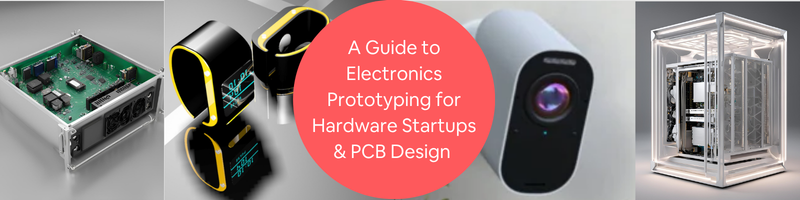
The shift from an idea to a physical product is not as easy as one thinks. It requires a critical and meticulous process. Any hardware company sees this as a high-stakes journey that should be taken seriously. Detailed engineering is important, especially when creating PCB layouts, to ensure everything functions correctly. Since detailed technical expertise is required, most startups opt to collaborate with experienced PCB professionals. Cad Crowd is a reliable platform that helps businesses work with professionals specializing in PCB design to turn a concept into a production-ready unit.
1. The critical role of shop drawings
In product development, shop drawing services serve as the instruction manual for fabrication. Concept sketches and general drawings would just reflect the overall idea of the project. It shows how it looks in real life. But it is the shop drawings that contain the detailed information on how it will be built or constructed. In shop drawings, it contains the methods, materials, finishes, and every bit of detail. It shows a technical guide, comprehensive enough for the fabricators to assemble it. It is important that the shop drawings are accurate and detailed to avoid costly reworks and ensure they will be functionally aligned with design intent. An expert
2. Differentiating schematics from shop drawings
In the production of a prototype, schematic and shop drawings are equally important. But they each serve different purposes and functions. A schematic technical diagram shows the electrical logic of the unit. It consists of how the electrical components are connected and how the current flows in the circuit. On the other hand, shop drawings show how each element is connected to the others. It’s more about the physical build and placement of the components inside the device. Here, dimensions, spacing and mounting are important to be accurate so that the manufacturers don’t have to guess or assume how it fits together.
A production failure does not necessarily mean the idea is weak; it could be due to manufacturing errors. This happens when the production experiences challenges and struggles that look small but are actually critical. Development issues include inaccurate measurements, poorly designed PCB traces, screws not compatible with the holes, and some other misalignments. To avoid this, it is important that there’s technical documentation from an experienced PCB layout designer to ensure every detail is defined. The instructions should be clear enough to be understood correctly, and there should be a set tolerance. Detailing this helps in reducing the risk of costly errors and improves chances of production success.
4. PCB design as the product foundation
For every electronic product, the Printed Circuit Board (PCB) is one of its core parts. It acts as the main body or system that allows the parts to operate and function together. When the PCB is well-designed, it ensures stability in its performance and efficient power distribution. This makes it safe to use when working or in operation. It is important that the PCB design is professionally done since every small error is critical and may affect the reliability of the product. It could lead to system crashes, overheating, or shortened product lifespan. This is why investing in high-quality PCB design is a sound and smart choice to ensure production success and secure future mass production.
5. Bridging the gap with PCB design firms
There is a drastic and dramatic difference in working with PCB design firms. Since they have access to experienced and professional engineers, it becomes easier to handle technical knowledge. Having them on board transforms even complex and rough prototypes into organized and reliable PCD designs. PCB design firms have a deeper understanding of how to balance product performance with manufacturing efficiency. This way, they can optimize the PDC board design to improve its quality. This is why having the PDB design firm handle the technical layout is a sound choice, so the firms can just focus on marketing, product strategy, and testing.
6. Design for manufacturing (DFM) essentials
Design for Manufacturing (DFM) is an important aspect of the manufacturing process since it acts as the guidelines to ensure a product is built at scale. This means that it is manufactured efficiently and consistently. In DFM, technical drawings are used to ensure compliance with manufacturing standards. DFM designers ensures that the prototype can be manufactured seamlessly without delay. It handles proper trace widths, spacing, accessibility, and clearances for manufacturing machines. This helps ensure a smoother transition in prototype development.
Printed Circuit Boards have a standard file format called Gerber files. This contains all the detailed information needed to produce the physical board accurately. This means that it has all the defined layers of the PCB and acts as the blueprint for it. Manufacturers rely on these files since these are the ones that are being sent out to them once the PCB layout is approved. In simple and common terms, it acts like the “PDF”. It is considered the final output to reference and follow during the manufacturing process. Its importance is critical, since it will be the final instruction and the basis for the success of prototype production.
8. Creating an accurate bill of materials (BOM)
One of the important documents in PCB manufacturing and electronics prototyping is the Bill of Materials (BOM). This document is a detailed list of all the components needed to build the unit. It includes even the hardware parts. The BOM includes not only the parts description but also the part number, manufacturer, and specifications. BOM, combined with PCB shop drawings, ensures a smooth production process. BOM experts help the procurement and manufacturing team to lessen the risks of incomplete orders or missing parts. It is critical that the BOM is done accurately to ensure it is a reliable reference to avoid project delays.
9. Thermal management in PCB layouts
It is only natural for electronic components to generate heat during operation. This is why there is thermal management to control the PCB and electronics design. This ensures that the components would not be damaged because of uncontrolled heat. It is critical to clearly define and demonstrate how heat is managed within the unit. Professional PCB designers know how to carefully and accurately design components in a way that heat is managed inside the unit. They can add cooling pads or a ventilation opening to help with heat transfer. A well-prepared design layout improves the overall performance and durability of the device.
10. Signal integrity and high-speed design
Now that electronic devices are faster and more advanced, PCB design must keep pace and maintain strong signal integrity and high-speed performance. Signal integrity determines the way the electrical signals travel across the circuit board without any interference. It is important that the flow is designed properly to prevent issues such as loss or data corruption. PCB assembly designers know how to handle this by carefully planning layout and routes. They have a deeper understanding of how to handle interference and create smooth communication between the components. They ensure that the unit functions better, faster and is reliable enough to match today’s expectations.
Even if the circuit works perfectly, if it does not fit the enclosure, then it won’t be feasible. The mechanical integration ensures that the casing and PCB are aligned properly without issues. Not only that, but it has to be fitted so that there’s no looseness or tightness in space or gaps. To resolve this, engineers use 3D modeling tools to visualize how the elements will fit into the case. This also helps them check for clashes, if any, and fix them before production starts.
12. Component sourcing and lifecycle management
In every electronic prototyping, material components play a crucial role. The prototype engineering designers don’t just choose the component because of its performance but also because of its long-term availability. The production cares about how long it can run in the market, so it’s important to choose materials that are stable in the supply chain to avoid discontinuation. When a component is not available at a certain time, it may affect future production and could lead to a change in PCB design layout. This will be costly and may incur a delay in production since it will be redesigned and tested again. It is important to account for material selection to ensure smoother production continuity.
13. The importance of layer stackups
Layer stackups are used by PCBs to fit complex circuits into a compact space. Instead of just fitting in all connections into one surface, they distribute power, ground, and signal paths on different layers. This improves the overall performance and reduces interference. While it is a more advantageous way of improving signal stability and overall performance, it affects the physical thickness of the board. If the board is too thick, it may not be able to fit properly in the enclosure. It is important that the engineering designer knows how to efficiently stack layers to make it a reliable design.
14. Prototyping for regulatory compliance
In every production, compliance is important. This is one of the most overlooked aspects during the prototyping phase. When this is missed, the startups are generally planning their failure. The design firms have to make sure that their design layout is compliant with safety and interference standards like UL, CE, and FCC. As technical as it sounds, experienced and reliable PCB designers know how to navigate through this and create layouts that are aligned with the standards. They ensure that the boards will pass and lessen the risks of redesign.
The unit design defines the unit cost. It is important to note how each design preference and material selection directly impacts the final cost of the unit. Every adjustment can lead to either savings or loss. There should be a perfect balance between the functionality and durability of the parts to make it cost-efficient. This is why it is important to work with experience electronics design firms since they know what materials and design layouts are suitable for every function. They know what materials can be used as alternatives to cut costs without compromising quality. Optimizing the design early can help the business produce products that are competitive in the market.
16. Solder mask and silkscreen details
In PCB manufacturing, design elements such as solder mask and silkscreen layer may look simple, but actually play important roles. The solder masks are used as the protective layer to prevent oxidation. This coating improves the overall durability of the board. On the other hand, silkscreen contains printed labels and orientation markers. This serves as the guide during assembly. It shows how the parts should be placed. Both are equally important to improve the whole assembly and significantly create smoother communication between the manufacturing and design teams.
17. Use of via stitching and power planes
To ensure that the electronic device has a stable and reliable performance, Layout design expert designers use features such as power planes and via stitching. Power planes help distribute steady voltage across the entire board, ensuring consistent power. Via stitching are small conductive connections that improve electrical grounding. The PCB design ensures that the device will function without experiencing issues such as voltage drops or crashes. To do that, adding features such as via stitching and power planes can help with consistent power delivery. This makes it a reliable design layout.
18. Managing tolerances in physical assemblies
During the manufacturing process, despite being accurate and clear with the shop drawings and instructions, it is still not always a 100% perfect fit. There are instances wherein the machines can’t produce the exact size intended. This is why it’s important for the shop drawings to include tolerances. This allows the hardware to fit together even with slight or a bit of deviation. Tolerances are to be set in a way that they are balanced. It shouldn’t be too tight, not too loose. Having just the right tolerance is an ability only a professional and experienced PCB designer can have. When it is clearly defined, the production would be smooth and seamless.
Exploded views are drawings that show a more detailed look at a certain component or part. It shows how it is separated and how it fits together. This allows the viewers to have an insight into how it will assemble instead of just imagining from a full drawing. This helps the fabricators to understand how the PCB, battery, and casing will interact with each other. It is a step-by-step guide on how to fit correctly. With this, it ensures the smooth production without delay.
20. Version control and engineering changes
Shop drawings do not always get approved on the first try. It goes through numerous revisions and iterations. It is important to have an efficient version control system to document all revisions. This ensures that the right and updated drawings are used and not the superseded ones. Each adjustment, whether a dimension change or a layout change, is to be properly documented. Whenever there is an issue or an improvement identified, an Engineering Change Order (ECO) is issued to update the shop drawings. These records serve as a traceable documentation of the design change.
21. Choosing between rigid and flexible PCBs
In electronics, one of the most important decisions is knowing what type of PCB will be used. Some may use rigid PCBs when it comes to devices such as computers. And when the devices are compact like smartwatches, flexible PCBs are used. While both function well, flexible PCBs require advanced engineering and cost more. And when this is used, the shop drawings should indicate in the drawing the design requirements, bend areas, and allowable bend radii. Professional PCBs know what the most suitable and smart solution is for the device.
22. Designing for testability (DFT)
One of the most important practices to test the functionality of the device or unit is Design for Testability, or DFT. This includes having test points in the unit or device to allow manufacturers to conveniently check if it’s working. To do this, there’s a metal contact pad in the testing points so it can easily verify if the board is functioning. The test points are included in the shop drawings as well, so the manufacturers can easily know where to test. Electrical checks are often done once the unit is fully assembled. DFT is a practical and efficient practice in troubleshooting. It allows the engineers and technicians to do quality control and ensure that the unit is production-ready.
23. Surface mount technology (SMT) vs. through-hole
In PCB manufacturing, electric components are attached using surface-mount technology (SMT). This is typically used in making the products or devices feel smaller, lighter, and easier to assemble. The most common devices that use this are laptops, smartphones, and any other compact units. One mounting practice is a through-hole component. This uses metal pins that pass through drill holes in the PCB. Then, it was soldered on the opposite side. While this type of method is a bit slow and takes a lot of space, it is known for its stronger mechanical support. It is a more suitable choice for unit components that are exposed to physical stress.
24. Environmental protection and potting
There are devices that are more exposed to harsh conditions and environments. These devices would need additional protection to withstand it. This includes exposure to moisture, dust, dirt, and temperature changes. The shop drawings from the CAD drafting expert would have to indicate the protective measures the unit has to keep it safe, durable, and still reliable. There are different ways to protect the unit. It could be the usage of gaskets, sealed enclosures, as well as adding a waterproof coating. Another way is potting. It is the process where the unit is covered fully with liquid resin or protective compound that hardens into a solid. This helps in shielding the device, extending its lifespan.
25. The value of 3D PCB modeling
Now that the world can take advantage of advanced software and technology, modern PCB design has also kept pace. Engineers and 3D modeling design designers use and create 3D models of the electric boards and assemble them before the production even begins. This gives the whole team a glimpse or view of what the model will look like, and from there they can identify potential issues or clashes. Using 3D models helps in reducing reworks and improving the overall coordination among multiple disciplines. It allows them to collaborate and address issues that could impact the production. It can also be used to check adjustments and generate other designs as preferred or recommended before committing to production.
In every production, time is one of the most valuable resources. Whenever there’s a delay in prototyping, there is a cost impact. It affects not only the testing schedules but also investor presentations and product launches. This is why it is important that the PCB design has a quick turnaround for prototyping design services. This can only be achieved when the drawings are complete, detailed, and accurate. Doing this makes it possible to lessen reworks that may arise during the production period. A managed schedule also allows the design team and manufacturing team to work seamlessly.
27. Solder paste stencils and tooling
In assembling PCBs, metal stencils are used to apply solder paste to the board. It is important that this is done with utmost accuracy since it could affect the electricity flow. The shop drawings should indicate where a paste layer has to be applied. This helps manufacturers or stencil makers to know where the opening should be placed. When the stencil is not designed well, it could lead to solder bridges. This is why precision is important to practice, as errors could mean damaged components and failed production.
28. Component orientation and polarity
In electronics, parts orientation is extremely important. One can tell how the batteries only work in a certain direction. This is called polarity. Most of the electrical components, such as diodes, LEDs, capacitors, and other integrated circuits, rely on this to function properly. So, if these parts are misaligned, the device could fail or even be damaged. To avoid this problem, it is important to clearly indicate in the shop drawings the correct orientation of each part. This helps the engineers and the manufacturers not to guess how it should be oriented. This way, they know if there’s a malfunction in the part instead.
29. Managing ground loops and noise
Grounding is considered one of the most complex parts of electronic product design services. It is also technically sensitive as it involves stability in performance by directing electrical noise away. When the grounding layout is not designed well, there is a risk of “ground loops”. This means that electrical currents circulate around unintended pathways. Prevention of this could be done by carefully planning ground planes and connections within the PCB layout. It is important to ensure proper design that lessens electromagnetic interference. This way, it improves the signal integrity and maintains reliable operations.
PCB copper thickness and weight matter in the design. It plays a major role in the overall performance and durability of the board. The higher the copper weight is, the more electrical current it can handle or carry safely without overheating. There is a specific range of thick copper weights that are used. The standard is 10z copper for the low-to-moderate power applications. There are also units that will need thicker copper, and this happens when they handle higher currents. This shows how the copper thickness determines the performance when it comes to electrical current. It is directly related to the suitability of the copper to the unit.
31. Fiducial marks for automated assembly
Fiducial marks are used to automatically align the components during the production or assembly stage. These are the ones that are most of the time located in the PCB corners or near the key component areas. Fiducial marks should be accurately stated in the shop drawings to ensure that the manufacturers can add them to the layout. If these are forgotten or left out, there’s a tendency for the components to misalign and cause connection issues. These markers allow precise alignment, which makes it reliable, especially during mass production.
32. Managing wire harnesses and connectors
Electronic units do not only include one part or component. It has several parts that help it to run and operate. It includes PCBs, batteries, displays, and other modules. These parts are connected using wires and connectors. It has to be ensured that the connections are organized and reliable. The drawings from the technical design engineer must include detailed wire harness documentation, specifying wire lengths, coding, and thickness. This ensures careful assembly and prevents serious problems. Planning wire harness design layout improves the safety and durability of the product.
33. The use of “keep-out” zones
To establish safety, “keep out” zones are used in areas where no components, copper traces, or any electrical features are allowed to be placed. It protects critical areas of the board, such as mounting holes, PCB edges, connectors, and other points where they may be physical contact during the installation process. Doing this prevents accidents during assembly by clearly specifying keep-out zones in the shop drawings, designers or engineers would know areas not to touch. It makes the whole design and production safe and makes the unit more durable and reliable.
The last stage of the prototyping process is ensuring that the product will pass Quality Control. In this, it is checked to ensure that it matches the shop drawings and the defined design specifications. There is an established, detailed checklist of inspections of every aspect of the product. In QC, one way to troubleshoot problems is by referencing documentation. This way, it is easy to diagnose problems and address them early on. Quality control ensures the product can function the way it is intended to. Passing it means it is now ready for production.
35. Scaling to mass production
The next step of an approved prototype is mass production. This stage focuses more on the consistent manufacturing of the units, so detailed documentation is required. To do this, the shop drawings and specifications should be complete and accurate to ensure that there will be no mishaps. They are the technical guide and instructions to build identical units of the same quality and performance. Mass production is an even harder stage since it requires great accuracy and consistency, and definitely costs a lot more resources. Small design errors could impact major issues that may incur delays and additional costs. This is why it is important to be fully organized to build a production-ready design.
How Cad Crowd can help
To make an idea production-ready or market-ready, it is important to master shop drawing and PCB design. Ultimately, the technical expertise this requires could be overwhelming. This is why PCB designers are there to help in simplifying the technical complexity of it and speed up the whole development process, all while reducing costly errors. Cad Crowd is here to make it happen. This platform connects businesses with experienced and reliable PCB designers who are tailored to their project needs. With this, complex ideas can be transformed into production-ready units. Get a quote today!
MacKenzie Brown is the founder and CEO of Cad Crowd. With over 18 years of experience in launching and scaling platforms specializing in CAD services, product design, manufacturing, hardware, and software development, MacKenzie is a recognized authority in the engineering industry. Under his leadership, Cad Crowd serves esteemed clients like NASA, JPL, the U.S. Navy, and Fortune 500 companies, empowering innovators with access to high-quality design and engineering talent.