Cost Comparison for Mechanical Engineering Contractors vs Full-Time Staff for AEC Firms


Architecture, engineering, and construction (AEC) firms depend on technical expertise to create intricate infrastructure projects. Mechanical engineering experts, in particular, play an important role in designing building services that guarantee efficiency, safety, and compliance with regulations. Since AEC firms can’t expect project demands to remain the same all the time, they have to decide whether to hire contractors or full-time staff. 

Understanding the real cost of both staffing models makes it easier for AEC firms to make an informed decision. This blog compares the costs of hiring mechanical engineering contractors versus full-time staff, and how freelance platforms like Cad Crowd can help AEC firms access experts when needed. 


🚀 Table of contents


What is the staffing structure in an AEC firm?

AEC firms often deal with fluctuating timelines, project workloads, and technical requirements. If you have an AEC firm, you should implement staffing strategies that will allow you to complete projects efficiently without facing major financial losses. Choosing the right staffing option is important, as your decision will help you stay competitive in a highly dynamic industry.
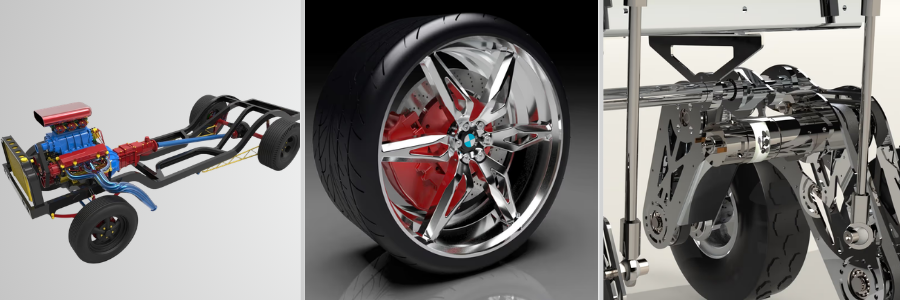
Mechanical engineering designs and examples by Cad Crowd expert mechanical engineers

RELATED: How innovative product design simplicity and honesty help your brand grow

Full-time mechanical engineers

AEC firms usually hire full-time mechanical engineers. They are permanent employees who are given a fixed salary and other employment benefits. Since full-time staff usually take care of several projects for extended periods, they develop a better understanding of your design standards and workflows. 

Over time, they gain an understanding relevant to your past projects, company processes, and expectations of clients. This knowledge can help improve efficiency since they don’t have to learn design standards or workflows multiple times. 

Furthermore, they can work closely with civil engineering experts, construction managers, electrical engineers, architects, and other departments in your company. Having an in-house team of professionals streamlines communication and reduces interruptions due to coordination issues.

Full-time mechanical engineers can also help with the company’s strategic growth. It’s common for companies to invest in training to improve the technical capabilities of their employees. However, having a full-time workplace involves a huge cost. 

You need to consider other expenses like retirement benefits, software licenses, payroll taxes, and health insurance. Additional costs can cause financial problems if you are dealing with fluctuating project workloads. 

Mechanical engineering contractors

Unlike a full-time employee, you can hire a contract mechanical engineer for a specific period of time or on a project basis. Contract engineers may work as freelancers through a staffing agency or engineering design consulting company. They are usually paid a fixed project fee, an hourly rate, or a daily rate. Since they work independently, contract mechanical engineers are in charge of their own professional development, benefits, insurance, and taxes. Thus, you are not required to give employee benefits. 

One of the best things about hiring a contract engineer is their flexibility. It allows you to scale your team up or down depending on the number of projects that you have. Contract engineers have specialized skills that you may not be able to get from your existing workforce. 

Some projects call for advanced technical expertise like energy modeling. Instead of hiring full-time staff with niche expertise that you may only need occasionally, you can find mechanical engineering contractors who already have the skills you need.

Furthermore, hiring contractors can help accelerate project timelines. Since they are used to working with different companies, they can quickly collaborate with your project team and start contributing immediately. This is particularly helpful when you are dealing with an increased workload and tight deadlines. 

However, you also need to keep in mind that hiring contractors has certain limitations. They need to learn about your project management tools, internal processes, or design standards before they can contribute to your projects. Since they’re not full-time employees, the insights they get during the project may not stay with your company after their contract ends. 

Operational and financial considerations for an AEC firm’s staffing structure 

The main challenge for an AEC firm is choosing which staffing structure offers the perfect balance between operational effectiveness and financial efficiency. You have to consider various factors when selecting the right staffing structure for your engineering design company.  

An AEC firm with stable workloads and long-term projects benefits from hiring full-time engineers because they can work on different phases of the project. On the other hand, firms with short-term projects can benefit from hiring mechanical engineering contractors with specialized expertise. Apart from gaining the expertise of the contractors, you don’t need to worry about long-term employment commitments. 

If you have an unpredictable project pipeline, you may find it difficult to maintain a permanent workforce. Hiring contractors allows you to keep up with fluctuating market conditions without substantial financial risk.

If you have a project that requires highly specialized skills, look for a mechanical engineering contractor with niche technical skills. However, if your project requires standard building systems, the best option is to form an in-house team. 

What are the benefits of a hybrid staffing model? 

AEC firms usually implement a hybrid staffing model to maintain a stable engineering team and gain access to external expertise anytime. By adopting a hybrid staffing model, you can hire full-time engineers who will manage the main design tasks, supervise project coordination, and maintain rapport with clients. You can hire mechanical engineering contractors to take care of specialized tasks, provide support for big projects, and add more manpower when you have a lot of projects. 

Adopting a hybrid staffing model offers many benefits. One of the best things about this setup is that it helps preserve knowledge within your mechanical engineering firm. It also allows you to respond to changing project demands accordingly. Furthermore, it helps you save money by hiring only a limited number of permanent staff and gaining access to specialized skills when needed. 

Why is it important to make the right staffing decision?  

Your staffing decision is a strategic consideration with a direct influence on the long-term success of your company. Keep in mind that labor cost is a large part of your project expenses. The wrong staffing model can reduce your competitiveness and profitability. The quality of your work has an effect on client satisfaction, project performance, and safety. Thus, you have to make sure that your strategies and decisions will not have a negative effect on your technical excellence. 

Carefully assessing the pros and cons of contractors and full-time staff allows you to create a workforce strategy that matches your project delivery requirements and financial goals. It also helps you balance technical expertise, operational flexibility, and cost efficiency to meet the needs and demands of the construction industry.

Hiring full-time mechanical engineers might seem easy. You get permanent members of your team and pay them a salary. However, the employment cost is higher than the basic pay. Apart from the wages, you need to consider other additional expenses like onboarding costs, employee benefits, human resource and administrative support, paid leave, payroll taxes, office equipment and infrastructure, vacation and professional development, and training. 

Operational overhead, for instance, may add around 25% to your employees’ salaries. Fringe benefits can contribute an additional 30%, while general and administrative expenses may add 22%. These costs, when combined, are called the cost multiplier. This cost differs for each company and type of service (i.e., civil engineering services). 

In some firms, the cost multiplier reaches 1.7 times the basic pay. So, if you are paying $120,000 annually to one mechanical engineer, it may actually cost you around $200,000 every year when you consider all expenses. Some firms underestimate these hidden costs when assessing staffing strategies.

Factors that affect the cost of full-time mechanical engineers 

There are several factors that can affect the cost of full-time staff. One of these factors is the salary. Mechanical engineers usually receive a competitive salary based on geographic location, experience, and certifications. Employee benefits are also one of the additional costs that you must consider. The usual employee benefits include life insurance, paid leave, health insurance, and a retirement plan. You also need to pay payroll taxes, employment insurance andsocial security contributions. 

Furthermore, you have to consider the costs associated with the recruitment and onboarding process. Costs may include recruitment agency and job advertising fees, interview process, and training. In some companies, the recruitment costs can take up to 20% of the staff’s yearly salary.

Full-time mechanical engineers also need access to office space, computers and workstations, IT support, and engineering software. Simulation software and other engineering tools have licensing fees, which can further increase costs. Management oversight, human resources, legal compliance, and accounting can also add to the cost of creating and hiring a full-time staff. 

Factors that affect the cost of mechanical engineering contractors

When you hire mechanical engineering contractors, you are paying for the services they render instead of a salary and benefits. They are compensated through a fixed project fee, daily rate, or hourly rate. The rates of contractors vary depending on their experience, specializationand location. For instance, a mechanical drawing contractor in Eastern Europe may have an hourly rate of $25-$70. If you hire engineers in North America, you may need to pay $100-$200 per hour. 

Since mechanical engineering contractors manage their own professional development, benefits, and insurance, they include these costs in their hourly rate. Their expenses usually include project management, contractor fees, and agency markup if they use a staffing agency. However, unlike full-time engineers, you are not required to give them long-term employment benefits, and this can help you save on costs. 

RELATED: A comprehensive guide to engineering product development services for companies & startups

Comparing the annual cost of hiring mechanical engineer contractors and full-time staff

Costs can differ depending on project requirements, geographic location, and experience level, but it’s important that you understand the financial implications of each staffing model. Let’s say a mechanical engineer earns $125,000 every year. When you hire this professional as full-time staff, you are also required to provide additional employment-related benefits aside from the basic pay. These indirect costs can increase your expenses by around 70%-100% of the basic salary.

Your cost multiplier will be 1.9. If you multiply $125,000 by 1.9, the total cost of hiring a full-time engineer becomes $237,500 a year. Thus, even if the engineer’s basic pay is $125,000, the actual cost to your company is $237,500 annually when you include all indirect costs. Now, what if you hire a contractor? 

Mechanical contractors usually charge an hourly rate that includes their own operational expenses, taxes, and benefits. If they charge $100 hourly and work 2,080 hours yearly, you will spend around $208,000 annually for hiring a contractor. So, if you want a slightly cheaper option compared to hiring a full-time engineer, you should consider hiring a contractor, even for other tasks like electrical engineering services. However, you must also take note of several factors that can affect the final cost of both staffing models. 

One important variable is the actual hours used for work. Remember that you have to pay full-time engineers regardless of the number of hours they spend working. When you don’t have a lot of projects, your staff may spend more time on administrative tasks, internal meetings, and training. 

On the other hand, mechanical engineering contractors receive payment only for the hours they spend working on a specific project. Thus, you can reduce your labor costs by limiting the number of hours that they spend on a project when your workload increases. 

  • Workload stability and project duration

Apart from the number of hours, you must also consider your workload stability and project duration. When you have a consistent project workload, hiring full-time engineers could be cheaper in the long run. They can work on multiple projects without any interruption, which can help reduce your dependence on contractors with high hourly rates. 

Mechanical engineering contractors are often ideal for short-term projects since you don’t need to worry about recruitment costs and other long-term commitments. For instance, if you need support for just three months, hiring contractors allows you to get the necessary skills and knowledge without maintaining permanent positions once the project is complete for the product design company. 

  • Productivity and retention of knowledge

Productivity and retention of knowledge can also affect your overall cost. Full-time engineers already know the requirements of your clients, your project management systems, and the design standards you implement. This knowledge can help lessen the time needed to complete tasks and enhance workflow efficiency. 

On the other hand, mechanical engineering contractors may need additional onboarding time in order to understand how the company works. This could momentarily lessen productivity at the beginning of the project. 

  • Coordination and management costs

You need to consider coordination and management costs as well. Contractors may need extra supervision and insights to make sure that their work is aligned with your project schedule, standards, and expectations. These efforts might seem small, but they still add to the actual cost of hiring contractors for your consumer product company. 

Due to these variables, you have to evaluate your staffing decision based on a more comprehensive total cost of ownership standpoint that involves both indirect and direct costs. 

At the end of the day, the best staffing decision depends on different factors like the level of expertise required, duration of projects, and predictability of the workplace. Most of the time, hiring both contractors and full-time staff can help you enjoy both operational flexibility and cost efficiency. 

Global trends in engineering outsourcing

The outsourcing market has grown significantly thanks to advances in cloud platforms, remote collaboration, and digital engineering tools. Cloud-based systems and software like CAD allow engineers to collaborate no matter where they are. Due to these technologies, a lot of engineering tasks can be done without compromising quality and accuracy.  

Thus, many AECs have started outsourcing mechanical and structural engineering service tasks to countries with lower labor costs, as it allows them to reduce project costs while gaining access to experts. Rates differ across regions due to several variables like cost of living, labor market, and economic conditions. In North America, the typical hourly rate is $100-$200, while it’s $80-$150 in Western Europe. If you’re in Eastern Europe, expect to pay around $40-$70 per hour. 

These cost differences can help you lower costs without compromising technical capability. Outsourcing poses several challenges as well. For instance, you may need to deal with cultural misunderstandings, communication barriers, and language differences. The difference in time zones can also slow down decision-making, particularly when you need to collaborate in real time. Managing a remote team also calls for a clearer communication process and a better project management system.

Regional cost comparison: Mechanical engineering contractors vs full-time staff

The table shows the usual rates charged by contractors and full-time engineers in various regions. Understanding these differences can help you plan your budget much more effectively. 

Region Staffing model Rate
North America Full-time engineer $95,000-$120,000 annually or around $45-$50hourly
Contractor $100-$200 per hour
Western Europe Full-time engineer €80,000-€110,000 annually or around $40-$50 hourly
Contractor $80-$150 hourly
Eastern Europe Full-time engineer €40,000-€60,000 annually or around $20-$30 hourly
Contractor $40-$70 hourly 
Southeast Asia Full-time engineer $20,000-$40,000 annually or around $10-$20 hourly
Contractor $25-$50 hourly 

RELATED: How to improve product development for your company with engineering firms & design consultants

Mistakes to avoid when hiring mechanical engineers

The right workforce can improve the quality of your designs and boost client satisfaction. Here are some mistakes to avoid when hiring mechanical engineers. 

  • Focusing on the price alone 

Don’t just focus on the salary or hourly rate of your staff. Controlling expenses is crucial, but choosing the cheapest option isn’t always the right choice. Those with low rates may produce designs that require revisions. They may also need more supervision and have a longer delivery time. Assess their technical skills, ability to provide quality work, and experience for your design engineering service. 

Experienced engineers may charge higher rates, but they’re often capable of completing tasks faster and working with less supervision and fewer errors. Most of the time, these advantages help reduce the overall project cost. 

  • Hiring without defining project requirements

Problems usually occur when you start the hiring process without defining your project requirements. Since mechanical engineering tasks require technical skills such as building automation, HVAC system design, and energy analysis, hiring talents who don’t match your needs will definitely affect your budget.

So, before you start hiring, you should create a comprehensive description of your project timeline and scope, expected time of delivery, and required software skills to ensure that you recruit the right engineers. 

  • Failure to consider collaboration and communication skills

Apart from technical skills, you should also consider the communication skills of your staff. Remember that mechanical engineers must work with clients, electrical engineers, architects, project managers, and civil engineers. Some companies focus only on the technical aspect and forget about communication and teamwork. 

Misunderstandings may occur when mechanical engineers can’t coordinate with other team members and communicate their insights. This could slow down the progress of your project and cause losses for the company. You should evaluate their communication skills during the interview so that you can build a team that works more effectively, especially for electronic device companies.

  • Failure to retain technical knowledge within the company

Contractors leave once the project is done. Important project knowledge may also leave with them. You can prevent this problem by implementing processes for proper documentation of project workflows, technical solutions, and design decisions. Having an organized record ensures that valuable information will be accessible for internal teams and future projects.

  • Making decisions based solely on immediate needs

Making your staffing decisions based on your immediate project needs can result in unstable workforce strategies in the long run. It’s good for solving short-term workload problems, but you should also consider both your existing and future projects when making your staffing decisions. 

The ideal approach would be hiring both full-time engineers and contractors. The latter offers flexibility when your workloads increase, while permanent staff maintain continuity and retain insights within the company. 

  • Rushed staffing decisions 

Making a quick decision might be necessary when you have deadlines to meet, but rushing the hiring process can lead to choosing applicants who are not qualified for the job. Take the time to verify their skills, review portfolios, and assess past project experiences to avoid costly mistakes. This will increase your chances of finding mechanical engineers who can effectively and efficiently contribute to your projects for your product engineering firm. 
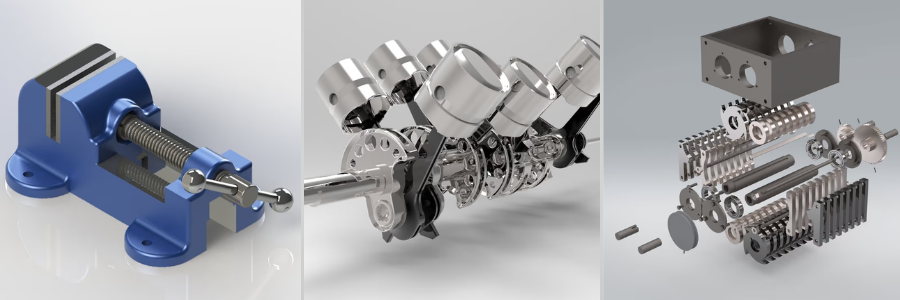
mechanical engineering of parts and hardware by Cad Crowd mechanical engineering and design experts

RELATED: A startup guide to concept design for hardware with product design services companies

Conclusion

The best staffing model depends on various strategic and financial factors. Full-time mechanical engineers provide long-term cost efficiency, stability, and institutional knowledge for companies with stable project workloads. However, aside from the base salary, you also need to consider your administrative and overhead expenses. 

Mechanical engineering contractors offer access to niche expertise, flexibility, and rapid scalability. They may have a higher hourly rate, but they don’t have hidden employment expenses. Moreover, hiring contractors can be a cheaper option if you have short-term projects.

Overall, you must carefully analyze your workload predictability, organizational goals, project duration, and total cost structures before making a decision. If you implement a strategic staffing approach, you will be able to reduce labor costs, enhance operational efficiency, and stay competitive in your industry. 

How Cad Crowd can help

Hiring expert freelance mechanical engineers is a cost-effective option if you are aiming to improve your engineering capabilities without worrying about the costs associated with full-time hires. You will find platforms like Cad Crowd that connect AEC firms with expert mechanical engineers who specialize in CAD modeling, product development, HVAC design, and other technical services. 

Visit Cad Crowd to find experienced mechanical engineers who can help you stay competitive in the engineering industry. Request a quote today.

author avatar

MacKenzie Brown is the founder and CEO of Cad Crowd. With over 18 years of experience in launching and scaling platforms specializing in CAD services, product design, manufacturing, hardware, and software development, MacKenzie is a recognized authority in the engineering industry. Under his leadership, Cad Crowd serves esteemed clients like NASA, JPL, the U.S. Navy, and Fortune 500 companies, empowering innovators with access to high-quality design and engineering talent.

Connect with me: LinkedIn ✦ X ✦ Cad Crowd

The opening mission of 007 First Light leaked online, so IO have fought fire with fire by offering up the game’s first 13 minutes


As is the case with most big name games that people are desperate to get their hands on, over the weekend the opening mission of 007 First Light leaked online due to someone seemingly acquiring a disc copy a touch early. That video has since been taken down, to no one’s surprise, but IO Interactive clearly decided to fight fire with fire, as they’ve shared the first 13 minutes of said opening mission themselves. Spoilers ahead obviously for those who want to go in knowing nothing!


It all quicks off with a bunch of military looking folks in a helicopter off to do some such mission about something (it’s all a bit vague), when, oh no! They get attacked, the copter crashes, and a shaved-headed Bond finds himself in the ocean amongst the wreckage on the coast of Iceland looking worse for wear. At one point his radio goes off and you can press a button to check it. Gameplay!

Watch on YouTube


Mostly it’s a slow, plodding along romp through rocky terrain, incredibly wet weather with the most amount of action being a bit of stealth. Certainly nothing to overly criticise here, and it’s only 13 minutes, I’m sure it gets a bit more exciting once you’re properly in the enemy camp. Just a tad funny to release the opening section of the game that doesn’t quite sell you on the idea of roleplaying as Bond. But hey, from IO’s perspective, better they get the views than some random gaming YouTube channel looking for a few clicks.


It’s not all that long now until First Light launches for everyone, as it’s due out in a couple of days time on May 27th. It also marks the first non-mobile James Bond game in 14 years, the last one being 007 Legends, a 50th anniversary game that features missions for every single incarnation of the character. Unfortunately, this one wasn’t very good, and was the last game developer Eurocom ever made. Fingers crossed that doesn’t happen to IO Interactive!

We Finally Know What the Jony Ive-Designed Ferrari EV Looks Like


After a long wait, and in a rapidly changing electric vehicle climate, the Ferrari Luce has debuted as the company’s first EV. It’s the first Ferrari to to employ a radical new look and new technology—not just under the skin, but in places a driver would see.

The Luce’s exterior was developed with former Apple designer Jony Ive and Marc Newson’s LoveForm creative collective and while there’s a clear attempt to tie it into traditional Ferrari design, it’s a different kind of Ferrari. As a four-door, five-seat vehicle, it’s also different from anything the company has made before, even its Purosangue SUV whose look tries harder to fit in with other Ferraris. There are some curves in the fenders that are reminiscent of what Ferrari’s been doing since the start of the century but also a smooth, almost Apple Magic Mouse, look worked in.

Luce Driveway
© Ferrari

And in a twist on Ferrari’s four round taillight theme, the Luce’s only appear when the car is on. Otherwise, there’s just a black panel. Perhaps it’s color dependent but it looks a little odd in the Azzurro La Plata (Blue-Silver) that Ferrari uses in some photos.

Retractable door handles hide that it’s a four-door vehicle, with the rear doors hinged at the back like the Purosangue’s. In fact, even though the look is far different, the Luce has roughly the same footprint as that SUV despite it looking stubbier thanks to a relatively short front. Either you like it or you don’t.

In February, we got a look at the Luce’s interior, also done with LoveForm. That means there are more screens than typical of a Ferrari, with two Samsung-developed OLED screens, including the center touchscreen infotainment system that can swivel closer to the driver. There’s a lot of aluminum and glass, and even though it looks like there are physical, traditional if you will, Ferrari gauges behind the steering wheel, those are digital.

Luce Interior
© Ferrari

However, Ferrari’s first EV hasn’t gone nearly all-in on screens or touch-capacitive controls the way Tesla, Lucid and even Volvo and BMW have on their recently released electrics. The gear selector is glass and physical, and there are toggles for various functions, plus four window switches and the drive selector switches on the steering wheel, just like in the company’s other recent products.

The performance should be less controversial with four electric motors netting a total of 1,035 horsepower, with the two rear motors capable of up to 831 horsepower each, giving the Luce a traditional rear bias. The automaker claims acceleration from 0-100 km/h (0-62 mph) in 2.5 seconds, and a 193 mph top speed.

The Luce uses an 800-volt electric architecture and a 122-kWh battery pack with the ability to charge at up to 350 kW, which sounds like specs from something like a Porsche Taycan—or Kia EV9. The EPA hasn’t rated it for range, and it’s unclear if U.S. models will work on Tesla’s Supercharger network, but Car and Driver reports Ferrari estimates a 280-mile maximum range.

While fellow supercar brand Lamborghini backed off of its EV goals earlier this year amid an uncertain market for all-electric supercars (and parent company Volkswagen Group’s rather precarious financial situation), Ferrari has persisted. As far back as 2022, Ferrari said EVs would make up 40% of its model line and later said there would be three models, according to Reuters.

Luce Taillights
© Ferrari

However, the automaker said in 2025 that a second EV would be pushed to at least 2028, and Ferrari also delayed the Luce from a 2025 release date, saying EVs would comprise 20% of its model line, with 40% going to hybrids and gas models each. The first Luces will be delivered this fall, although the first U.S. models aren’t expected until Spring 2027. 

The electric supercar market is a small fraction of even the small supercar market. Despite recent claims the second-generation Tesla Roadster was still happening after it was revealed as a prototype and deposits were taken in November 2017, it’s very clearly an afterthought for the company and its CEO. Tesla also recently killed its Model S and X cars and, therefore, the berserk Plaid lineup.

Porsche has been marketing the 1,000 horsepower-plus Taycan Turbo GT since 2024, but it’s a sedan, too, and that company has backed away from going all-electric now that there are expected to be gasoline versions of the previously EV-only 718 sports car and more SUV-like Macan and Cayenne. Mercedes-Benz recently unveiled its new electric AMG GT 4-Door with up to 1,153 horsepower, but that’s much more of a car than the in-between Luce. That leaves the Ferrari Luce in a very small class.

And it’s even more interesting that if Ferrari had not been spun off from the former Fiat Chrysler Automobiles in 2016, it could’ve ended up as part of the American-French-Italian behemoth Stellantis, which, under new management, has made a big push to add more gas and hybrid vehicles and back off full EVs. In a sense, it’s a miracle the Luce is electric at all, no matter what you think of it and what it represents to Ferrari.

Atomos A-Eye PTZ Cameras Buying Guide 2026


The Atomos A-Eye PTZ camera lineup delivers AI-powered autotracking, NDI|HX3, 4K/60 video, and professional multi-output connectivity at one of the most competitive price points in the PTZ camera market. Through May 31st, 2026, all three models are 30% off 

Watch the full breakdown: Video Guys Live — Atomos A-Eye PTZ Camera Review →

What Every A-Eye PTZ Camera Includes

Every model in the Atomos A-Eye range ships with:

  • NDI|HX3 pre-licensed (no extra cost) — low-latency IP video over standard Ethernet
  • HDMI + 3G-SDI + USB 3.0 + IP outputs (RTSP, RTMP, ONVIF, NDI|HX3)
  • AI autotracking for hands-free subject following
  • PoE+ (802.3at) — single cable for power and video
  • H.265, H.264, MJPEG compression support
  • Tally light support

This output stack — SDI, HDMI, USB, and IP simultaneously — is rare at this price point and makes these cameras compatible with virtually any live production, broadcast, or streaming workflow.

A-Eye HD 20X: Best Budget PTZ Camera with 20x Zoom

Best for: Houses of worship, education, budget live production

The A-Eye HD 20X is a 1080p/60 PTZ camera with a 1/2.8″ SIMOS sensor, 20x optical zoom, and 16x digital zoom. At 30% off, it’s priced under $1,000, making it the most affordable 20x optical zoom PTZ camera with NDI|HX3 and SDI output currently available.

A-Eye 4K 12X: Best Mid-Range 4K PTZ Camera

Best for: Classrooms, corporate AV, content creators, hybrid events, Zoom/Teams

The A-Eye 4K 12X delivers UHD 4K/60 from a 1/2.5″ SIMOS sensor with 12x optical zoom. The wider field of view suits smaller spaces like conference rooms and lecture halls. Both 4K models add USB recording direct to external drive — a local ISO backup with zero load on your switcher or production system. On sale at ~$1,329 (reg. $1,899).

A-Eye 4K 20X: Best Professional PTZ Camera for Large Venues

Best for: Large venues, live events, concerts, sports, multi-camera broadcast production

The flagship A-Eye 4K 20X pairs a 1/1.8″ UHD SIMOS sensor (8.42MP) with 20x optical zoom and 4K/60 output. It’s the go-to for any space over 50–75 feet where you need both reach and resolution. On sale at ~$1,600+.

Quick Comparison

HD 20X 4K 12X 4K 20X
Resolution 1080p/60 4K/60 4K/60
Optical zoom 20x 12x 20x
Sensor 1/2.8″ 1/2.5″ 1/1.8″
USB recording — ✓ ✓
NDI|HX3 ✓ ✓ ✓
Sale price <$1,000 ~$1,329 ~$1,600+


All three are in stock and available here. Sale ends May 31st, 2026.

What ClickUp’s mass layoff tells us about the future of work


AI’s biggest champions have argued for some time that the technology will usher in an era of unprecedented productivity gains, richly rewarding workers who harness it while displacing those who don’t.

Zeb Evans, CEO of the collaboration software startup ClickUp, claims that this shift is imminent. Last Thursday, Evans announced on X that the company, which was last valued in 2021 at $4 billion, had laid off 22% of its workforce yet characterized that reduction as not a cost-cutting measure, but rather a radical embrace of AI that will propel the company to the next level.

“Most savings from this change will flow directly back into the people who stay. We’ll be introducing million-dollar salary bands. If you create outsized impact using AI, you’ll be paid outside of traditional bands,” Evans wrote.

ClickUp recently introduced roughly 3,000 internal AI agents to handle a wide range of complex tasks on behalf of its employees, according to a Fortune article published several days ago. Instead of performing the work themselves, staff members are now expected to direct these agents and ultimately review the output to ensure it meets the company’s standards.

Evans’s goal, according to his X post, is for AI to turbocharge ClickUp into a “100x org.”  

ClickUp is not alone in its hope that AI agents will provide massive productivity gains.

In fact, according to a recent Gartner survey, about 80% of companies using autonomous tech have cut jobs. However, the study found that workforce reductions aren’t necessarily translating into meaningful financial returns.

While Gartner’s findings suggest some companies use unproven AI as an excuse to downsize, ClickUp maintains it is not one of them.

Evans told TechCrunch via email that the startup is indeed seeing productivity gains from AI agents. Not only is ClickUp measuring those efficiencies internally, but it’s also apparently gearing up to include them in a forthcoming product for its customers.   

“Instead of gamifying token cost, we gamify value created and time saved,” Evans wrote.

In recent months, a growing number of companies have started monitoring employee token consumption, using it as a metric to see who is actually adopting AI tools. But critics argue that “tokenmaxxing”—as this concept is known—is the wrong metric because it simply racks up AI expenses.

“The people that automate their jobs with AI will always have a job,” Evans claimed in his post. But if AI keeps taking over more tasks, ClickUp will eventually need fewer and fewer people, eliminating those who fail to automate their functions well.

Tech circles have long theorized about this scenario.

One extreme example of a high-profile startup using AI automation to the max already exists. Polsia, a one-year-old startup that claims to handle all software operations for solopreneurs, is run by just one person: its founder and CEO, Ben Broca. That efficiency is apparently paying off: Polsia just raised $30 million at a $250 million valuation.

When you purchase through links in our articles, we may earn a small commission. This doesn’t affect our editorial independence.

Memorial Day Deals: 60+ Sales From Apple, Sonos, Nintendo and More


Two Grill Probes from Chef IO, with an app on a phone for telling you the temp

CNET

I don’t know how much of my life has been spent hovering over a grill, stove, smoker or oven trying to figure out if the thing I’m cooking for family and friends is actually ready, but I can tell you it’s more than it needed to be. Last year, I picked up one of these Chef iQ wireless probes for a big dinner I was hosting, and now I pull these things out to use them at least once a week. Today, you can get them for way less than I did. 

This kit is a pair of Chef iQ probes in a charging case, which, in my experience, will fully charge both probes twice before it needs charging itself. You pop the probes into whatever you’re cooking, and you can either check the temperature in the app on your phone or set an alert when the thing you’re cooking reaches its desired temp. No opening the oven or smoker to let all the heat out, leading to a more efficient and balanced cook. These genuinely improved my cooking, and now I’ve given them to my brothers to improve theirs. 

Memorial Day just dropped this set to $100, and I’ve only ever seen it cheaper once before. Get yourself one of these, or give them as a gift, and we can all end the act of hovering over the grill. 


(For Southeast Asia) Singapore’s Sands Theatre to host first Gran Turismo World Series event in Southeast Asia on Saturday, 3 October


25 May 2026 – Round 3 of the 2026 Gran Turismo World Series will be held at Singapore’s Sands Theatre, located in the iconic Marina Bay Sands complex, on Saturday, 3 October, 2026. Tickets are now on sale for the event that will be held in partnership with the Singapore Tourism Board and form one of the events of Grand Prix™ Season Singapore (2 to 11 October 2026) as the city builds up to its annual Formula 1 race, that takes place from 9 to 11 October 2026.

A Singapore Regional Time Trial Challenge held in-game on Gran Turismo 7 in August, with participants from Singapore, Hong Kong, Taiwan, Thailand, South Korea, Malaysia and Indonesia eligible to take part (Terms and Conditions will be posted on Gran-Turismo.com in due course). The Time Trial will result in competitors from Singapore being joined by the fastest racer from each of the other participating territories, invited to attend the Gran Turismo World Series and compete on stage in a special support race – the Singapore Regional Gran Turismo Cup. 

The Singapore event will be the first time for the Gran Turismo World Series to visit Southeast Asia. Singapore has a strong automotive, motor sport and gaming culture and so an enthusiastic crowd is expected at the Sands Theatre during Grand Prix Season Singapore.

“As an elite sim racing tournament, the highly regarded Gran Turismo World Series reinforces Singapore’s position as a premier destination for world-class sporting and entertainment events. We look forward to the energy and excitement that Round 3 will bring to our city as the penultimate round, adding further vibrancy to this year’s Grand Prix™ Season Singapore,” said Lilian Chee, Director, Sports, Singapore Tourism Board.”

“Singapore is a great place to visit and so we hope that fans of Gran Turismo from across the region will be able to come and watch our top racers in action,” commented Gran Turismo Series Producer Kazunori Yamauchi. “The regional Time Trial is an opportunity for us to discover talented drivers from the region and give them a chance to race on stage in front of a live audience and maybe that experience will give them the confidence to make it into the Gran Turismo World Series in future.”

As well as the Singapore Regional Gran Turismo Cup, fans will have a chance to witness some of the fastest SIM racers in the world in the Manufacturers Cup and Nations Cup with a single ticket covering all three events on the afternoon and evening of Saturday, 3 October. The event is the last points-scoring opportunity before the Gran Turismo World Series moves to Tokyo for the World Finals in early December, and so the competition will be fierce.

Full details of the event and how to purchase tickets can be found at https://www.gran-turismo.com/world/gt7/events/gtws2026/singapore/ticket/

Five reasons the Huawei Watch Fit 5 Pro is my go-to smartwatch


I like what Huawei is doing with its wearable strategy; the brand’s Watch Ultimate 2 is the best high-end smartwatch, and I prefer it to the Galaxy Watch Ultra because of its weeks-long battery life. The Watch GT 6 Pro is a great all-round smartwatch, and Huawei’s latest Watch Fit 5 Pro is aimed towards fitness.

The Watch Fit 5 Pro is aimed at a younger audience, and that’s immediately evident when you look at the choice of colors and the styling of the bands. The smartwatch costs £249 ($335) on Amazon U.K., and it’s available in most countries where Huawei has a presence. I’ve been using it as my daily driver for just over a month now, and here’s why I think it is a better choice than the Apple Watch or Galaxy Watch 8.

The Watch Fit 5 Pro has a stylish design

Huawei Watch Fit 5 Pro review on Android Central

(Image credit: Apoorva Bhardwaj / Android Central)

Huawei has an orange color of the Watch Fit 5 Pro that stands out considerably — as I found out while using it in Thailand ahead of the launch event. This is a smartwatch that’s designed to grab attention, but it isn’t ostentatious.

Latest Videos From

Check Out Meshchera, An Atmospheric Match-Three Game For Playdate Set In A Haunted Marsh


Spiders? Skeletons? Bad omens? My kind of party.

I almost don’t want to call Meshchera a match-three game because I fear that kind of undersells how captivating it is. But, it is a game you play within a six by six grid, in which you have to group matching tiles in clusters of three or more so they may merge and become other, higher value tiles, so that’s the description we’re working with. The atmosphere is off the charts, though, which isn’t something I’m used to finding in these types of games. It has gorgeously detailed artwork and background music that you can get completely lost in.

In Meshchera, you can choose to go for the high score or pick from several challenges that will dictate how you approach the round, like “kill five monsters” or “keep 10 monsters for 10 turns.” The gameboard is a dark marsh that will slowly become overrun with vegetation and creatures, unless you can stay ahead of creep by skillfully matching tiles to condense them into other things. Grasses become flowers, which become trees, campfires, houses, churches, etc. It is a uniquely complex matching game — you’re given next to no information about how the items work or how different elements on the board behave and interact, so you have to figure it out along the way and course-correct as you learn.

I’ve spent quite a bit of time playing Meshchera over the last week, but certain things still elude me. Take the “create and destroy a Monster” challenge. I have absolutely no idea how to create a monster, and that’s not for lack of trying. But, this gives me something to keep working toward even as my high scores nudge higher and higher. The game includes 10 challenges right now, and the developer says more are coming soon. Meshchera is really good, and feels like the kind of game you can revisit ad infinitum. It’s already found itself a home in my folder of “go-to” Playdate games.

Meshchera isn’t available in the Playdate Catalog (yet?), but don’t let that stop you from trying it out. It’s on itch.io at the moment, and sideloading games onto the Playdate is incredibly easy. Once you have the game file, you can just drag and drop it right into your library by signing into your Playdate account and going to the Sideload tab. This can also be done via USB. Panic has a detailed explanation of all the options, if you need some guidance.

The Old Country Free Download (Build 20951841)


Mafia: The Old Country Direct Download

Uncover the origins of organized crime in Mafia: The Old Country, a gritty mob story set in the brutal underworld of 1900s Sicily. Fight to survive as Enzo Favara and prove your worth to the Family in this immersive third-person action-adventure set during a dangerous, unforgiving era. Enzo will do anything for a better life. After a brutal childhood of forced labor, he’s ready to risk everything to become a man of honor in the Torrisi crime family.

His oath to the Mafia, with all the power, temptation, and hardship it entails, is a burning reminder of this simple truth:

Family Takes Sacrifice.

This thrilling narrative is brought to life by stunning visuals, cinematic storytelling, and the authentic realism that the critically acclaimed Mafia series is known for. Enzo’s story unfolds in a time when skill with a stiletto blade was a deadly asset, a lupara sawed-off shotgun was a go-to firearm, murderous vendettas raged for decades, and mafiosi patrolled their protection rackets on foot, horseback, or behind the wheel of turn-of-the-century motorcars.

UNCOVER A MERCILESS WORLD OF ORGANIZED CRIME

The rough-hewn beauty of Sicily’s rugged countryside is a stark contrast to the grime of urban alleyways—but the treachery and violence of this gangland run just as deep. Rival families and their ruthless leaders wage unending turf wars in the shadows, hidden from the public eye. Trust is a fleeting rarity, and loyalties are worth killing for.

PLAY A CLASSIC MOB MOVIE

You’re the antihero of this thrilling 1900s story, living out every tense moment of Enzo’s descent into Sicily’s clandestine criminal underworld. Come face-to-face with a cast of unpredictable allies and cutthroat enemies in this classic crime drama, rich in period-authentic details that will immerse you in this treacherous Mediterranean setting. DOOM: The Dark Ages Premium Edition

FIGHT TO SURVIVE

Engage in life-or-death combat, be it up close with a blade or from afar with a variety of firearms. Ambush enemies for vicious stealth takedowns, or slice them up in close-quarters duels. If you prefer firearms, wield period-authentic handguns, rifles, and shotguns to overcome any odds and doggedly eliminate the Don’s enemies.

Features and System Requirements:

  • Mafia: The Old Country is a gritty crime drama set in early 1900s Sicily
  • Follow the rise of a young man into the brutal world of organized crime
  • Story-driven missions with cinematic presentation and strong narrative focus
  • Use period-authentic weapons, stealth, and close-range gunfights
  • A dark, atmospheric look at the origins of the Mafia legacy

Screenshots

System Requirements

Minimum
OS *: Windows 10 / 11
Processor: AMD Ryzen 7 2700X / Intel Core i7-9700K
Memory: 16 GB RAM
Graphics: AMD Radeon RX 5700 XT / NVIDIA RTX 2070
DirectX: Version 12
Storage: 55 GB available space
Support the game developers by purchasing the game on Steam

Installation Guide

Turn Off Your Antivirus Before Installing Any Game

1 :: Download Game
2 :: Extract Game
3 :: Launch The Game
4 :: Have Fun 🙂