Thursday’s Nintendo Switch 2Partner Showcase kicked off with a bang in the form of Orbitals, an exclusive two-player co-op puzzle adventure game that looks like an episode of a long-lost anime. This is a game with visuals that would wow anyone regardless of platform—and a great example that sometimes power isn’t everything.
As devotees know, the Switch 2 is a more capable machine than its predecessor, but the portable still falls short of the high end of what’s graphically possible on any of its competitors. Most of us have made peace with the fact that, if we’re playing on a Nintendo console, it’s not going to be to play games on ultra settings. But every once in a while, Nintendo fans will be treated to a game that defies visual expectations, and it’s usually a title with strong art direction, like The Legend of Zelda: The Windwaker.
Orbitals is the work of a Tokyo-based studio, Shapefarm, that was announced earlier in 2026. We don’t know much about it, other than it comes out sometime in the summer of 2026. So far, based on footage, Orbitals plays like It Takes Two, Hazelight Studios’ well-regarded 2021 co-op action game, but it looks like something out of Cowboy Bebop. Gameplay shows a young woman and a blue alien cavorting around space, exploring futuristic landscapes and shooting down enemy ships. All of it happens via split-screen, with each player controlling one of the two characters side-by-side.
Seemingly, no one can believe how good Orbitals‘ cel-shading looks. I didn’t even realize I was looking at a game the first time I saw it. The style is so strong, Orbitals was easily the highlight of Nintendo’s entire 30-minute showcase.
“I love the thought of being in control of [an] anime cartoon,” one commenter says on the newly-released trailer.
“The fact they perfectly recreated the old-school anime style with 3D models is phenomenal eye candy,” reads the top comment on the initial YouTube reveal last month.
“Literally buying this to support the art style more than anything,” reads a reply.
Orbitals is a breath of fresh air amid the endless parade of interchangeable Unreal Engine 5 games on other platforms, or modern games that equate visual beauty with the number of particles a game can generate at once. Hopefully, Orbitals will be as fun to play as it is to watch.
These release notes cover the Insiders build of VS Code and continue to evolve as new features are added. To try the latest updates, download Insiders.
To read these release notes online, go to code.visualstudio.com/updates.
These release notes were generated using GitHub Copilot and might contain inaccuracies.
Happy Coding!
February 5, 2026
Add setting to control the scroll behavior in the Settings editor, offering continuous or paginated. Paginated will restrict the settings shown to only those in that category. #291391
February 4, 2026
Improved chat askQuestion carousel now has improved accessibility. ARIA labels have been added, keyboard focus can be moved to the container, and focus no longer automatically moves to the first response. A new command and keybinding is available to focus the first response in screen reader mode. #292917
Add support for the text blink attribute in the integrated terminal. #292550
Add support for color scheme reporting in the integrated terminal, allowing programs to query the terminal’s current color palette. #290919
Populate the Find control input in the integrated browser’s with the currently selected text on the page, matching standard browser behavior. #291378
Show download progress information when downloading a VS Code update. #277330
February 3, 2026
Terminal performance has been improved with updates to xterm.js, including optimizations for rendering and processing. #292572
Respect session list filters in the agent sessions Quick Pick and welcome page. If you have specific agent types filtered out from the session list, they will also be excluded from the Quick Pick when switching sessions. #291603
February 2, 2026
Improved screen reader accessibility for quick input dialogs. ARIA attributes are now dynamically set only when the list is active, preventing redundant announcements. The Go to Line dialog (Ctrl+G) now provides proper screen reader announcements for characters typed and list item navigation. #292353
Selecting Hidden terminal in the terminal dropdown now directly opens the terminal when there is only one hidden terminal, instead of showing a quick pick menu. #291884
Fixed an issue where the terminal output panel in chat would auto-collapse on command success even when manually expanded. The panel now respects the user’s manual expand state and remains expanded after successful command completion. #291120
January 30, 2026
The chat question carousel UI now uses a list-style selection interface similar to QuickPick instead of native radio buttons and checkboxes. This provides better visual consistency with other VS Code selection UIs across platforms. #291328
We really appreciate people trying our new features as soon as they are ready, so check back here often and learn what’s new.
Alexa+ works by voice or through the Alexa app and browser.
The wait to use Alexa+ is over, as Amazon has announced its widespread launch for all US users.
Amazon first announced Alexa+ a year ago as a generative AI-powered version of its popular virtual assistant. Alexa+ is exactly what you may have envisioned when you first heard of virtual assistants like Alexa, Siri, and Google, but without the accompanying disappointment at their shortcomings.
The improved voice assistant can generate responses instead of simply repeating what it’s been programmed to say. With generative AI, Alexa+ engages in more natural conversations with users, rather than simply listening to a prompt and responding with a predetermined action.
It also supports memory to recall preferences and conversations, maintaining context throughout. This allows it to remember what you asked at the beginning of a chat and respond in that context without you having to say, “Alexa,” again.
Kerry Wan/ZDNET
How to get access to Alexa+
Alexa+ is finally widely available to US users. You can sign up here to get access or wait until your existing Echo devices prompt you to upgrade. If you buy a new Echo device, you’ll also get Alexa+ when you set it up.
If you already have or buy one of the Echo devices below, or its Kids variation, you can enjoy access to Alexa+:
Once you have Alexa+ on one Echo device, you can use it on the rest of your compatible Echo speakers and devices, in the Alexa app, on compatible Fire TVs and Fire tablets, and through Alexa.com.
While the new virtual assistant is compatible with most Echo devices, the following don’t support Amazon’s Alexa+, though you’ll still be able to access standard Alexa on them:
Echo Dot 1st Gen
Echo 1st Gen
Echo Plus 1st Gen
Echo Show 2nd Gen and older
Echo Spot 1st Gen
Echo Buds 1st Gen
Amazon Tap
Fire TV Cube 2nd Gen and older
Fire TV Stick 4K Max 1st Gen
Fire TV Stick 4K 1st Gen
Fire TV Stick
Fire HD 8 Tablet 11th Gen and older
Fire HD 10 Tablet 12th Gen and older
Fire Max 11 12th Gen and older
Amazon Astro (planned for the future)
Yes, Alexa+ is available in the US, after Amazon gradually expanded the audience for its generative AI assistant.
To gain access now, you can sign up on the Amazon Alexa+ website, ask your Echo device about it, or purchase a compatible Echo device. If you do, you can set up Alexa+ during the initial setup.
If you’d rather skip the subscription, Alexa+ costs $20 a month and is available as a separate service.
Amazon is also offering a free Alexa+ plan that gives users access to chat with the generative AI virtual assistant through the Alexa app or a browser at Alexa.com.
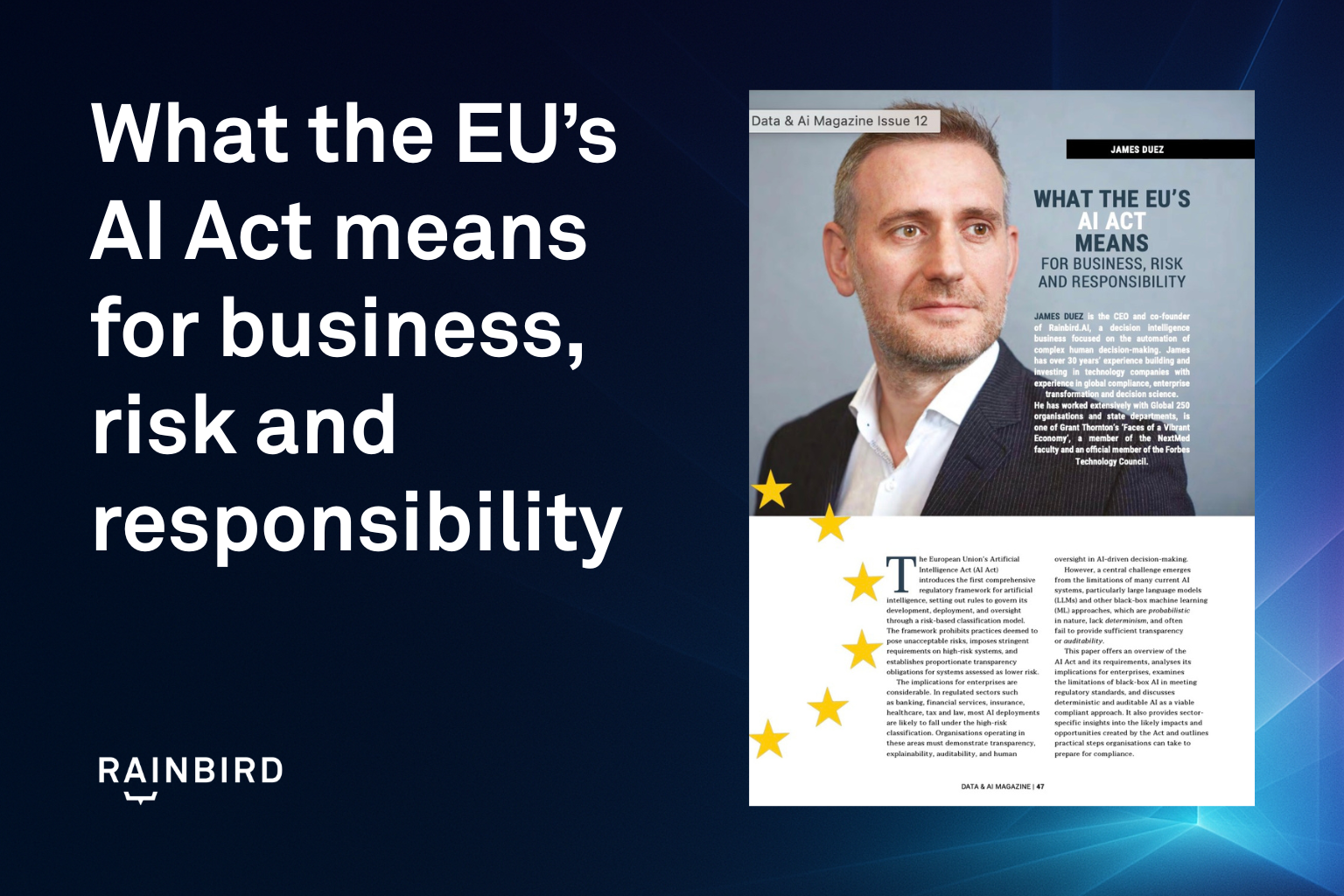
The European Union’s Artificial Intelligence Act (AI Act) introduces the first comprehensive regulatory framework for artificial intelligence, setting out rules to govern its development, deployment, and oversight through a risk-based classification model. The framework prohibits practices deemed to pose unacceptable risks, imposes stringent requirements on high-risk systems, and establishes proportionate transparency obligations for systems assessed as lower risk.
The implications for enterprises are considerable. In regulated sectors such as banking, financial services, insurance, healthcare, tax and law, most AI deployments are likely to fall under the high-risk classification. Organisations operating in these areas must demonstrate transparency, explainability, auditability, and human oversight in AI-driven decision-making.
However, a central challenge emerges from the limitations of many current AI systems, particularly large language models (LLMs) and other black-box machine learning (ML) approaches, which are probabilistic in nature, lack determinism, and often fail to provide sufficient transparency or auditability.
This paper offers an overview of the AI Act and its requirements, analyses its implications for enterprises, examines the limitations of black-box AI in meeting regulatory standards, and discusses deterministic and auditable AI as a viable compliant approach. It also provides sector-specific insights into the likely impacts and opportunities created by the Act and outlines practical steps organisations can take to prepare for compliance.
Introduction
Artificial intelligence is an umbrella term describing a large number of technical approaches that have evolved over time. It never was “one thing”. Thanks to this latest hype cycle around Generative AI (and now Agentic AI), it has evolved from an experimental technology into a foundational component of enterprise transformation. Its applications already span credit underwriting, fraud detection, patient risk assessment, and tax auditing, influencing outcomes with significant legal, financial, and human implications.
As adoption has expanded, so too have concerns about transparency, fairness, bias, and accountability. Regulators across the globe are responding, and the EU AI Act represents the first binding framework to translate these concerns into enforceable standards, while other territories bring forward their own laws.
The Act aims to mitigate risks associated with AI while simultaneously fostering confidence in its use. By codifying obligations related to explainability, oversight, and accountability, the legislation seeks to encourage responsible deployment and establish consistent conditions for market participants. For business leaders, the AI Act presents both obligations and opportunities. Compliance is mandatory, but early alignment may allow organisations to position themselves as trusted operators within numerous regulated environments.
The EU AI Act: An Overview
The Act establishes a tiered framework that classifies AI systems according to their potential risk. At the highest level of concern, systems deemed to present unacceptable risk are prohibited outright. These include applications that engage in manipulative social scoring, exploit vulnerable groups, or deploy biometric surveillance for mass monitoring. Such systems are considered incompatible with European values and human rights.
High-risk systems, by contrast, are those deployed in critical contexts where errors could have serious consequences. This category encompasses credit scoring, KYC and AML checks, and fraud monitoring in financial services; underwriting and claims adjudication in insurance; diagnostics and treatment recommendations in healthcare; suitability assessments in legal and compliance contexts; and recruitment or employee evaluation in the workplace. These systems are subject to the most stringent compliance requirements.
Limited-risk systems are those that could cause harm if misused, though the potential impact is less severe. They are primarily subject to transparency obligations, such as disclosing when users are interacting with AI.
Minimal-risk systems, including consumer applications like spam filters or video games, remain covered by general consumer protection and safety rules without additional obligations.
Obligations for High-Risk AI Systems
The vast majority of use cases in regulated sectors are inherently high risk. These systems must satisfy a range of specific obligations.
Organisations must implement robust risk management processes that identify, assess, and mitigate potential harms.
Data governance requirements mandate that input and training data are relevant, representative, and free from bias.
Comprehensive documentation and record-keeping are essential to demonstrate compliance, supported by detailed technical files.
Transparency and information obligations require that users are clearly informed about the system’s capabilities and limitations.
Human oversight mechanisms must be established to allow for review and, when necessary, the overriding of automated decisions.
Finally, systems must meet rigorous standards for robustness, accuracy, and security, ensuring consistent and reliable performance and resilience against manipulation.
Enforcement
The penalties for non-compliance are substantial. Breaches involving prohibited practices can result in fines of up to €35 million or seven percent of global turnover, while failures to comply with high-risk system obligations may incur fines of up to €15 million or three percent of global turnover. Lesser infringements, including non-compliance with transparency obligations, also carry significant financial penalties.
Legal and Regulatory Exposure
Boards and senior executives will be directly accountable for the decisions made by high-risk AI systems. This accountability includes ensuring that such systems are explainable, auditable, and free from discriminatory bias. Regulatory authorities are expected to demand verifiable evidence of compliance.
Operational and Cost Considerations
Complying with the Act will require organisations to implement new governance frameworks. Enterprises must maintain detailed compliance documentation for each high-risk deployment, introduce monitoring systems capable of producing auditable decision trails (almost impossible with an LLM-approach), train staff in oversight functions, and review procurement processes to ensure alignment with regulatory standards. Although the initial costs of compliance may be high, the financial and reputational costs of non-compliance could prove far greater.
Reputational Considerations
Public and stakeholder trust in AI remains fragile. It’s clear that failure to meet regulatory expectations will result in reputational damage, customer attrition, and/or litigation. Conversely, organisations that can demonstrate compliance and accountability stand to strengthen their reputations and gain competitive advantage.
Why Black-Box AI Falls Short
Generative AI and machine learning systems are predictive technologies that have dramatically expanded enterprise capabilities but face considerable compliance challenges under the AI Act, especially when applied to decisioning. These systems are inherently opaque and unable to clearly explain how outputs are generated, thereby violating a raft of obligations. Their non-deterministic nature means identical inputs can produce variable outputs, undermining accuracy and repeatability. Models trained on internet-scale public datasets inevitably inherit and amplify bias, which can remain undetected until deployment. Auditability is another critical issue, as outputs cannot easily and logically be reconstructed in a format suitable for regulatory scrutiny.
Human oversight, the last bastion of any automated system, is also deeply problematic. Human supervision of opaque systems is inherently difficult because of deep cognitive automation bias and the challenge of validating outputs without visibility into the reasoning process. Even techniques such as Retrieval-Augmented Generation (RAG) or Graph-RAG do not resolve the fundamental issue that probabilistic models cannot deliver the deterministic, rule-based reasoning required by the Act, and are revealing themselves to be susceptible to degradation and scale and easy to poison.
The Case for Precise, Deterministic and Auditable AI
Deterministic neuro-symbolic approaches align much more closely with the legal obligations outlined in the AI Act.
Precise incorporation of knowledge graph-based world models can combine with symbolic inference to ensure that regulation, policy and institutional knowledge is treated as a first-class citizen in the AI tech stack eliminating hallucinations completely.
Deterministic reasoning guarantees that identical inputs will always produce identical outputs, providing repeatability and reliability.
Auditability ensures that every decision is accompanied by a complete evidential trail, enabling immediate regulatory review.
Governance alignment arises when compliance logic is tightly encoded directly within the reasoning process itself, reducing dependence on ad-hoc, after-the-event external observation or guardrail mechanisms.
Collectively, these features make deterministic AI uniquely suitable for deployment in mission-critical, high-risk processes while maintaining compliance with the Act.
Industry Impact and Opportunities
The AI Act will levy its greatest impact on sectors that are deploying AI applications in high-risk domains.
In financial services, areas like credit decisioning, suitability, AML (transaction monitoring and KYC) and fraud prevention will require systems capable of producing consistent, auditable, and non-discriminatory results.
In insurance, underwriting and claims processing will attract increasingly close regulatory attention, but where auditable systems can simultaneously improve both efficiency and trust.
In healthcare, eligibility assessments, prior authorisations, and clinical risk evaluations must meet exacting standards of precision and transparency, aligning with both the AI Act and existing regulations like the GDPR.
In legal and tax contexts, tax assessments, audits, and compliance reporting must depend on deterministic reasoning to ensure outcomes are explainable to auditors, regulators, and ultimately, courts.
While compliance introduces new obligations, it also generates opportunities: organisations that embrace trustworthy AI architectures will be able to strengthen operational resilience, enhance efficiency, and support their digital transformation agendas.
Strategic Opportunity for Enterprises
The AI Act is creating a divide in the market, separating vendors who can demonstrate transparency and determinism from those who cannot. Software vendors reliant on only probabilistic models may increasingly struggle to compete in these regulated sectors, while those offering compliant, explainable, and auditable systems are likely to become the preferred choice for high-stakes applications.
For enterprises, compliant AI will deliver strategic benefits beyond risk management. By deploying inherently auditable systems, organisations increase efficiency and reduce compliance risk. They will get to build stronger relationships with both customers and regulators. This approach will also drive innovation, supporting faster service delivery, new product development (with associated revenues), and improved customer outcomes.
Preparing for Compliance
Enterprises should adopt proactive measures to prepare for the next phase of the AI Act. They should begin by auditing their existing AI systems, cataloguing deployments, classifying them according to the Act’s criteria, and identifying high-risk applications.
Next, they should conduct gap analyses to assess deficiencies in precision, determinism, auditability, bias mitigation, and oversight. Procurement strategies must be refined to prioritise solutions that deliver precise, deterministic and auditable outputs. Organisations should establish governance frameworks that integrate AI risk management policies, assign accountability at board level, and align oversight with enterprise risk structures. Building internal capabilities is equally essential: teams must be trained to validate and manage compliant AI systems.
Finally, proactive engagement with regulators will help organisations align expectations, demonstrate readiness, and avoid the risk of future enforcement.
Conclusion
The EU Artificial Intelligence Act represents a defining moment in the governance of AI, setting a global precedent for transparency, accountability, and safety. Its impact will continue to reshape how enterprises design, deploy, and monitor AI systems in critical applications.
Compliance is not optional, and the limitations of black-box models make them ill-suited to meet its demands.
Deterministic, explainable AI architectures offer a practical and effective path forward, enabling organisations to satisfy regulatory requirements while building lasting trust.
Enterprises that act early to embed compliance-ready AI into their operations will not only minimise risk and regulatory exposure but also secure a meaningful competitive advantage in a world where institutional knowledge (and the ability to scale it to machine levels) plus trust-by-design, have become the ultimate differentiators.
I have tried AutoRest, Nswag, Swagger and Open API Rest API Client Generators.
Nswag is the only one that does not crash and burn.
However it’s output is unusable because the ‘#’ characters end up in the c# names.
Looking at photos of people wearing JLab’s latest headphones, your first thought might be: “Wow, these folks must be tiny.” But no — the headphones are just huge. Absurdly huge. In fact, they’re the kind of huge that’ll turn heads if you wear them walking down the street. And don’t even think about taking them in coach.
Just to confirm, JLab’s latest device is for real. It’s not a joke. I mean, they may look like a joke, but you can buy them. For $100.
Truth be told, they’re not really designed to be worn over your ears, unless you have a massive head, as that’s the only way you’ll get a comfortable fit.
Their official name is the Blue XL Speaker Headphones, so yes, they’re more speaker than headphones. Though they look a lot like headphones.
You could wear them around your neck for portability, though we’ve not been able to find any information about their weight. But it’s safe to say you’ll get a full-body workout every time you put these things on.
You’ll probably be better off plunking them down somewhere in your home and using them as a regular Bluetooth speaker. They’ll certainly be a conversation starter when anyone visits.
You’ll need a huge head for a comfortable fit.JLab
JLab’s unique speaker headphones are powered by dual 2.5″ drivers and passive radiators delivering 30 watts of audio power, and apparently pump out “rich, immersive sound for up to 20 hours on a single charge,” according to the California-based company. They also offer 10W fast charging that refills the battery completely in three hours.
At the other extreme, JLab recently brought out these ANC earbuds that are so small you might end up losing them. No chance of that with these speaker headphones.
Survival is just the beginning. Six years have passed since the biological disaster in Raccoon City. Leon S. Kennedy, one of the survivors, tracks the president’s kidnapped daughter to a secluded European village, where there is something terribly wrong with the locals.
And the curtain rises on this story of daring rescue and grueling horror where life and death, terror and catharsis intersect. Fear The Timeloop
Featuring modernized gameplay, a reimagined storyline, and vividly detailed graphics, Resident Evil 4 marks the rebirth of an industry juggernaut. Relive the nightmare that revolutionized survival horror.
Features and System Requirements:
Modern third-person survival horror combat with improved controls
Knife parry, stealth kills, and durability-based melee system
Smarter enemies with aggressive AI and varied attack patterns
Crafting system with attaché case inventory management
Enhanced graphics, darker atmosphere, and reimagined story content
Screenshots
SystemRequirements
Minimum
OS *:Windows 10 (64 bit)
Processor: AMD Ryzen 3 1200 / Intel Core i5-7500
Memory: 8 GB RAM
Graphics: AMD Radeon RX 560 with 4GB VRAM / NVIDIA GeForce GTX 1050 Ti with 4GB VRAM
DirectX: Version 12
Storage: 60 GB available space
Support the game developers by purchasing the game on Steam
InstallationGuide
TurnOff Your Antivirus Before Installing Any Game
1 :: Download Game 2 :: Extract Game 3 :: Launch The Game 4 :: Have Fun 🙂
Overwatch narrative lead Miranda Moyer tells us more about The Reign of Talon: the first complete, year-long story arc for Overwatch.
The new narrative launches with immediate global conflict as Talon challenges Overwatch, and will introduce 10 new heroes, each woven directly into the unfolding story.
Get ready for an Overwatch story that keeps you at the edge of your seat, with non-stop action, evolving characters, and plot twists.
Today, Blizzard’s Overwatch Spotlight announced the start of an exciting new story‑driven era for Overwatch, highlighted by a year-long narrative arc called The Reign of Talon, all‑new UI/UX design, and much more. Be sure to check out the full video for all of the details. As an extra treat, we’re joined by Lead Narrative Designer Miranda Moyer to dive deeper into what this new story‑driven chapter means for Overwatch.
For the first time in Overwatch’s history, we’re telling a complete story.
I don’t say that lightly. Over the past decade, Overwatch’s narrative has been about possibility – introductions, hints, and setups. We’ve met heroes, discovered conflicts, and learned just enough to know there was something bigger happening beyond the edges of the screen. But this year, we’re doing something we’ve never done before: telling a story with a clear beginning, middle… and yes, an end.
That means things move. When something happens in the world of Overwatch now, it doesn’t sit untouched. Objectives are set, and met. You’ll see outcomes unfold across seasons. We’re finally seeing payoff for parts of the Overwatch world that you’ve maybe wondered about for years. This evolving story will be brought to life through a variety of mediums – including Hero Trailers, motion comics, and more – so you can experience each chapter in unique ways. All these pieces will be available on our dedicated narrative viewer, organized in chapters that guide you through the year’s epic narrative.
At the center of this year’s Overwatch narrative is a global conflict that’s impossible to ignore. Vendetta has seized control of Talon, overthrowing Doomfist and rejecting the clandestine nature in which he operated. Where Talon once skulked in the shadows, Vendetta believes in acting loudly, decisively, and without restraint. Her goal is explicit: she wants the world, and she believes Overwatch is the only force standing in her way. Because of that, we’re not winding up to conflict: we’re starting with it. Talon strikes early, attempting to remove Overwatch from the equation.
What’s fresh about the way we’re telling this story is how deeply our heroes are embedded in it. Every new character plays a direct role in the narrative. Those new faces are also a great vehicle to continue the stories of established ones. We’re touching so many parts of the world of Overwatch, and the more stories we develop, the more opportunities we’ll have to progress the journeys of heroes both new and longstanding.
One of the biggest highlights for Overwatch this year is the introduction of 10 new heroes. In Season 1, which begins February 10, you’ll meet five of them at once: each with their own narrative thread which helps set the tone for what’s to come.
Domina operates on the edges of Talon’s chaos, not publicly aligned with Vendetta (for fear of unsavory headlines), but more than willing to profit from the destruction she causes.
Emre is caught in a far more dangerous position, coerced into cooperation under the threat of catastrophic loss.
Mizuki finds himself torn between old obligations and the people who have become his family.
Anran enters the fight on Overwatch’s side, driven and connected to the story in deeply personal ways.
And then there’s Jetpack Cat, a long-running meme turned mobile support. She’s worth keeping an eye on, both for the future of her curious tale (tail?), as well as to make sure she isn’t knocking anything off counters.
This year’s narrative is about convergence—threads coming together, tensions peaking, and long-running questions colliding in ways that matter. Both established and new heroes will see movement in their stories, evolving amid this conflict. For Overwatch, this is the most ambitious narrative we’ve taken on. Each piece builds on the last, pushing characters and conflicts forward.
Join us on this new journey, and jump into Season 1 on February 10 and see it unfold for yourself.
Overwatch® 2
Blizzard Entertainment
☆☆☆☆☆ 2000
★★★★★
Xbox One X Enhanced
Xbox Game Pass
Overwatch 2 is an always-on and ever-evolving free-to-play, team-based hero shooter game set in an optimistic future, where every match is the ultimate 5v5 or 6v6 battlefield brawl featuring new heroes and maps, different ways to play, and unique cosmetics! Lead the charge, ambush your enemies, or aid your allies as one of Overwatch’s 40+ distinct heroes. Team up with friends, take them into battle across 25+ futuristic maps inspired by real-world locations, and master multiple unique game modes.
Overwatch 2 – Season 20: Vendetta
Give the Gift of Vengeance
Embrace the season in a flurry of festivity with a new DPS Hero, Winter Wonderland modes, holiday event, merry Mythics, and more!
Season 20 carves a cold path with Vendetta, the ruthless new melee DPS villain fueled by ambition and revenge. But it’s not all frosty edges—celebrate the holidays in the return of Winter Wonderland! Make some merry Mischief & Magic on a whimsical new wintery map, with a midway mode twist where the props fight back in Mischief & Magic Wonderland. Earn Winter Tokens through the Winter Wonderland event to unlock festive holiday skins for Tracer, Junkrat, and Torbjörn, then step into Stadium for a fresh map with new Heroes, updates, and prizes. Top it all off with Mythic Divine Desperado Cassidy and Orisa’s Mythic Capsule Cannon packing a cascade of cheer, plus more frosty skins as you jingle all the way through Battle Pass tiers. ‘Tis the season to deck your enemies’ halls, claim your vengeance, and unwrap your rewards!