Have you ever stumbled onto an extremely popular artist that you’ve never heard of before, just to wonder if you’re so out of touch that a global phenomenon could pass you by? Well, in at least one recent case, there was a ‘musician’ with billions of streams that basically all came from bots—and if that wasn’t enough, the music itself was AI-generated.
The case is discussed in detail in a press release on justice.gov; the skinny is that North Carolina man Michael Smith “generated thousands of fake songs using artificial intelligence and then streamed those fake songs billions of times,” according to U.S. attorney for the southern district of New York, Jay Clayton. “Although the songs and listeners were fake, the millions of dollars Smith stole was real.”
Last Thursday, Clayton announced Smith’s guilty plea to one count of conspiracy to commit wire fraud. The scale of Smith’s operation is hard to fathom: “hundreds of thousands of AI-generated songs were streamed by his bot accounts billions of times, which allowed him to fraudulently obtain more than $8 million in royalties,” said the attorney’s office in a press release. Turns out, all those itty-bitty royalty payments add up if you just throw enough bots at the wall.
Article continues below
Smith won’t be sentenced until July, but the crime carries a maximum sentence of five years in prison. He’s also agreed to forfeit more than $8 million of his ill-gotten gains. It’s no secret that AI is already responsible for the RAMpocalypse and other tangible ills, but its potential for bizarre crimes and careless distortions of ethics—like cloning journalists without their consent—is something that we’ll probably be learning about for years to come.
Keep up to date with the most important stories and the best deals, as picked by the PC Gamer team.
Architectural design experts are often big on show. In fact, there is no better way to impress a client with a fluid walk-through animation of what a future lobby might look like, a rendering of what a pool deck might look like with sparkling lights, and a penthouse that might not even exist at least two years from now, from a physical standpoint.
Real-time rendering has now become the party trick that the architecture industry wants, which is poised to spark a full-blown revolution within the entire design process that is now poised to become faster, smarter, and a whole lot of fun. The best part is that architecture practices do not necessarily need a Hollywood-style staff to make this party trick a success. This can be easily accomplished with a whole lot of pizzazz with a freelancing rendering artist who is most aptly procured from the best freelance platform, Cad Crowd.
Real-time rendering is a phrase that means infinitely more than a marketing phrase for a solution—it means a real paradigm shift, full-blown, when it comes to the use and creation of the visualizations themselves. If people know people who know people with known clients who have fallen in love with a design solution because finally they were able to figure out what blueprints were trying to say, then they’ll know exactly what I am talking about.
Designers speak a language that is composed of drawings and computer graphics, which can be translated back to clients, but the client’s language is based on their feelings. And that is the best way to describe what that language is: “feel,” because when that client can walk around in a space as if he already was inside, design is a whole lot clearer, easier, and a heck of a lot more fun.
The best is yet to come, but it is high time that we spoke of what real-time rendering is, has been doing, and has been receiving so readily in architecture practices and 3D rendering services, because it is a renewed friend who went to design school, with skill sets that are mind-boggling, to say the least.
🚀 Table of contents
What real-time rendering truly means
Real-time rendering, of course, is a short way of saying ‘making an image, a misguided expert might continue, because from a purely technical standpoint, that is exactly what it is; but what is not supposed to come before one’s mind, however, is “the magic” that occurs behind the scenes, which is that traditionally, rendering has taken a long time, bogged-down computers, and design teams anxiously pacing around the office like actors waiting for their reviews,”
That is, one can walk around a virtual space, orbit a model, switch textures and lighting, with what is inside the borders of the picture changing in real-time. This is what one is doing, no different than when playing a high-tech video game, when buying a luxury condo unit or a richly landscaped public space, but not when buying a dragon or a starship.
High responsiveness is achieved with the help of intelligent algorithms as well as highly optimized graphics. It is unlike most common solutions, which are used in rendering, that most effects are calculated on almost every single detail with a high degree of cinematic detail, but aim to be faster with the use of solutions that are capable of rendering a picture realistically without consuming the entire eight hours of power. But with the shortcut of going faster, most solutions are highly capable of providing a look that is real.
The real reason real-time rendering runs so smoothly
Real-time rendering is very much linked with the power that has been built with the development of modern graphics processors. This is highly prized. After all, it is the highest form of innovation in silicon because it is linked with power in the sense that it has to do with a lot of detail work at the same time, from a graphic point of view, for HDR rendering design firms. The elements of lights, shadows, reflections, and textures that are moving inside the scene are efficiently handled by the computer so that the user is not distracted during their journey.
Despite all the factors that have been cited earlier, on this particular topic, it is not only a matter of power when it comes to hardware systems. Real-time rendering also uses tricks that make the process less intensive, taking into consideration factors such as fewer computations when it comes to light, pre-calculated shadows, and textures that are perfectly manipulated. This is considered a seamless process where the final environment that is used in rendering blends with a real environment.
Which is to say, from the perspective of the architect, what you’re left with is this incredible computer graphic that is “listening” to your commands the whole time. You’re not sitting there blowing steam for three hours while, for example, the computer is “sweating” the problem when, say, the client wants to see what it might look like with a different treatment of the ceiling, perhaps a different floor finish.
Real-time techniques vs. conventional techniques of visualization
Next came a point when architecture groups would spend nights rendering. The computers ran a hundred miles an hour, bees-at-work style, to crunch the numbers. Then came the morning, and with it two different feelings came into play: the feeling of relief that the rendering is exactly as it should be, but the despair that emerges when, within that rendering, a problem is identified, which indicates that another night with the computer is required.
Real-time rendering: In short, real-time rendering turns all of that on its head. The architectural design companies are not sitting around with bated breath, waiting for that great moment when things are revealed to them. This is a never-ending stream of views. No matter what happens, real-time rendering reflects the aftermath. Blunders are corrected before they become a matter of life and death.
The traditional process still has an existing need for rendering. In fact, it is considered the most demanded process when a photorealistic rendering is required from a cinematic point of view, such as when participating in the end marketing prints. Real-time rendering is considered the most innovative technique that has been introduced in terms of concept development, image rendering for clients, and reviews. The ideal application of real-time rendering is when speed is considered as a fundamental component, but a photorealistic detail is considered as a secondary component. This is because several practices are considered to have been applying real-time rendering efficiently in design development with the detail obtained from the still rendering process.
Real-time rendering is one of the most desired technologies used by architecture firms
The corporations that fall under the architecture practice use real-time rendering because it is a current trend. It is, therefore, a fact that real-time rendering is used by these corporations because it is a solution to a myriad of age-old problems. For instance, it provides clarity on the issue of communication. Every architecture student, as well as a professional, has been on the receiving end of a client who has responded with a statement that he or she has perfectly understood the design, only to be shocked when the structure is erected. Whether this is to be used for real-time rendering within architecture corporations in the future is yet to be seen.
It also aids in faster decision-making. The longer the design, the costlier it is. Real-time software has thus served as a massive support system for the team as well as clients concerning even a micro-level change that includes layouts, color, furniture, and lighting conditions, which are completed in a matter of a couple of minutes, not weeks. This has been a very critical part as far as massive commercial designs are concerned, as waiting even for a short while has been as expensive as a small fortune.
The freedom that is acquired from real-time systems is what meets the satisfaction of the architects. The architects find themselves in a situation where they are able to come up with alternative means of developing variations. This is because, with real-time systems, they are always thinking creatively; hence, making creative alternatives. This is because they are even capable of developing presentations through 3D architectural rendering services that are exciting to clients, as opposed to confusing them.
The second significant advantage is that real-time rendering has brought together a collaborative setting when working from a distance. This is because of the interactive models that are shared with the clients as well as the teams that work from distant locations, which is really useful sometimes. This is because it ensures that the presentations are made attractive enough, thus ensuring that everything is in line.
Customer feedback on real-time rendering performance
What clients want is clarity, simplicity, and anything that is going to make the process of making a decision easier. Real-time rendering certainly fills all of these needs. “The client is going to feel more at ease with his design when he can turn it, take a look at it in a room, see how things are all put together,” says John.
In fact, they find themselves actively involved from the onset once design commences, even though the customers may come later to say they don’t have the skills in that area of imagination. Secondly, they are capable of giving feedback on what is happening in relation to changes, capable of responding to graphic changes that are taking place within a real-time environment, and feel part of what is going to be produced in the end; therefore, they are satisfied with the project.
The cycles that are needed for approval are also reduced. This is because clients are now in a position to know what is going on, hence miscommunication doesn’t occur. This means that fewer emails between 3D visualization services and clients are received with the sentence “After reconsidering, I realized that.”
Real-time rendering: This has proven to be extremely useful for the clients because it gives them the chance to see how they might be able to come together in order to make a decision based on what is being rendered for them within that instance, rather than a full presentation.
Even more interactive presentation-less guesswork
This would mean a huge amount of freedom for the architects if real-time rendering is used for the purposes of rendering when presenting. It is not compulsory that the architects are limited to giving a slide show presentation of pictures; they take the client on a journey. The full setting can be altered by the lights/materials with only a click of a button. It takes a couple of minutes to change the furniture setting when the colors on the facade are changing.
Therefore, within such a process, some uncertainties are cleared. The clients who are watching the entire process taking place before their very eyes are learning what exactly they are setting themselves up for. The openness that has been brought within a process such as this is, in most cases, enough for the clients. The need is what decides whether people need to come up with what it is going to look like.
The presentation is no longer a lecture, but now an experiment that we are all embarked on together. The client wants to learn more, wants to be a part of it. The client begins asking the right questions, making decisions with a whole lot more certainty. This is what keeps a project from going around in circles on a single detail after another.
Free experimentation by architects
The creativity is with the architects, but that is reduced significantly because of reasons such as cost, rendering time, and because they are forced to do things within a certain amount of time. Real-time rendering design experts remove these factors. Experimenting is going to be a lot easier because of that; a rendering update is not going to result in a loss of a whole day.
Where architects might agree on a click of the mouse, with hopes that maybe a wood tone might go with a minimal theme, maybe because it’s a nice contrast, but maybe a graphic marble wall might be a little too bold with a certain theme, that theme is now only a click away, to add another element in seconds, this is design in the modern age that brings boldness, bold design detail, and challenges every single element of design to come up with what might never be thought of within a certain set of guidelines.
The development of creativity in the designers suddenly takes flight because of the availability of instant visual effects. This is because the designers are now capable of judging the effect of lighting, alternative design, and shapes & textures together in a relatively more creative manner. The most amazing part is that now the clients are capable of watching all these things. This is because now the clients are capable of judging the work that is being put in when designing, whereas in the previous situation, the client judged the design when it was displayed, thus giving a chance of acceptance/rejection.
The necessity of real-time technology within architecture
Real-time rendering has also improved due to advances in game engines, rendering software, and graphics card development. The two entirely unrelated fields to each other, within the initial point of consideration, are the gaming industry and the architecture industry. In the high-performance graphics side, these two are interrelated. The architecture industry has been made to realize that the power that is available within the development of the virtual world, which is offered by the gaming industry, can be harnessed.
In the end, cross-pollination brought the most significant improvements to the field of architectural visualization. The growth that game engine development had to make, mostly, even more real, more efficient, and more capable, brought architects on board to use game engines so architectural visualization services can add life to the render. The walkthrough is not complete with a gamelike setting, lighting, detail, and a seamless transition from one point to another.
It is a totally different setting in the sector! The young architects are not finding it a challenge because they have been playing with such equipment since childhood. The seniors are also satisfied with the equipment because it is much better than what is offered by the normal setting, which makes it easy to communicate intentions. The client is also satisfied with such advancements because the matter of visual ambiguity has been solved. It is a win-win situation because it meets a need that really exists.
Speed, efficiency, and fewer costly surprises
Perhaps one of the most underappreciated positive impacts that real-time rendering has on design is that, from a design perspective, architectural design has been made more efficient. The presence of time is essentially the most evident element. It takes what would take hours, even days, to complete, but now it takes only a couple of minutes. This is from a design perspective with a design team that is basically taking a couple of cycles of changes through email in order to accomplish what is now being accomplished in a real-time environment.
This efficiency has been proven to a great extent, especially with regard to the cost of a project. A few changes are experienced toward the end of projects, which bring decisions, thus resulting in fewer surprises that might affect the construction cost. Changes toward the end of projects are, as most people who have managed projects are aware, the sneakiest thieves of project budgets. Real-time rendering eliminates all surprises because problems are thus revealed with respect to spatial conflicts, design, and development, which might be introduced concerning changes in construction.
It also provides a better collaboration process between the architects, designers, engineering design experts, and clients. This is because, when they are all visualizing the models together, there is no way that miscommunication can occur. This is because the whole group is looking at the same thing, interpreting the same things, and in the same way, they refer to the same thing.
Competitive advantage of a modern architecture company
Technology is one of the subtle but very potent differentiators in a competitive environment where clients are weighing the alternatives of a practice. Moving ahead with that, real-time rendering has been one of the most appealing technologies that can be used within an architecture practice. Real-time rendering has an edge when it comes to upgraded thinking, or rather a familiarity with the technology, and most essentially a sense of transparency.
This is also true when the client has never gotten a real-time walkthrough before. They are going to learn that this is one office that provides them with what they never would have gotten from the drawings. The client has the opportunity to see the space that he or she is going to occupy in the future.
This competitive advantage is even more common than the presentations themselves. This increases the efficiency of the business, helps in the completion of projects quickly, and even helps in attaining a high level of overall client satisfaction. Overall client satisfaction is most probable to generate repeat business, referrals, and tell all the people that they know.
In most cases, the software is of less importance owing to overall client satisfaction with the entire process. Architectural planning and design companies with real-time rendering capabilities are setting a high standard by positioning themselves at the forefront of client interactions, rather than merely keeping pace.
The rising need to hire freelance artists
The sophistication that has been entailed in real-time rendering software has brought the situation to a crossroads where there is a need for people who are experts with that software. Architecture firms use rendering artists, freelancers, experts who are highly knowledgeable with the details, and experts who are known in a way that is necessary in creative real-time rendering software. Such people are not only designing a colorful scene.
This may perhaps be attributed to the flexibility that is entailed with freelancers, where organizations resort to freelancers for the visualization process. This is cheaper because, rather than setting up a whole department, the architectural firms are accessing expert skills when the need arises. The freelance artist brings a lot to the table in terms of skills.
For instance, there may be a CAD freelancer who is an expert in photo-realistic exterior, another who is very capable in taking atmospheric interior pictures, while another might still be learning how to develop an interactive environment. The firms would employ several experts, who would charge a pretty penny to the organizations.
This is exactly where a service such as Cad Crowd is necessary. The service, such as a Cad Crowd, connects architecture firms to freelancers who are experts in real-time rendering software, thus providing architecture firms instant access to a freelancer who would develop what is essentially a 3D walkthrough, an interactive marketing tool, as well as a full-blown real-time rendering visualization system.
The part played by Cad Crowd in the architecture visualization job
The service, Cad Crowd, is a tool that is more than just a freelancer directory; it is a tool that has been specifically set up to ensure that businesses are put in a position to find pre-selected freelancers with the capacity to be dependable, with the competence that is adequate to address certain requirements that might arise for a particular job. The tool provides cost transparency to architecture firms, which is directly linked with employment flexibility, along with ensuring that a freelancer can provide architectural consulting services.
The freelancer can be identified for a small assignment, a full-fledged project, or a long-term association partner. All are made extremely easy by the tool. The design teams are therefore capable of sharing, communicating, and tracking developments in all sectors without confusion. The efficiency introduced within the organizational structure, therefore, ensures that there are no hindrances within the development of all projects from the commencement stage itself until completion.
The freelancing community under the realm of the Cad Crowd has experts in real-time rendering, gaming engine visualization, photorealistic rendering services, and even more complicated 3D models. The freelancers are capable of taking care of the entire process, starting from the asset optimization, lighting simulation, and even the interactive presentations, to name a few. Hence, this is highly useful for design communities, who are thereby looking to harness the potential of existing technologies. The designers are now capable of designing, while the technical part of the visualization process is now taken care of by freelance artists. This is one highly profitable association, churning out highly superb production.
Conclusion
All of these, in turn, are resulting in a revolutionary shift within the architecture sector. This is because real-time rendering is highly capable of providing a clearer design, highly convincing, and highly efficient workflow. Real-time rendering, therefore, helps eliminate surprises, besides highly minimizing wastage of precious time, thereby encouraging architects to make uninhibited statements on the design aspect.
The clients are therefore actively taking part in the design process with a high degree of precision, besides an increased level of confidence, thereby enhancing the competitive edge within architectural practices. The highly capable freelance rendering artists are playing a highly significant role here. These are highly talented skills that are thereby used in the creation of interactive spaces, besides highly quality visualizations that are highly amazing to clients.
The most exciting part is that the most opportune location to look for a chance to win is at Cad Crowd. In short, this is a service that brings together architecture firms with highly adept 3D rendering artists who are highly adept with real-time visualizations, apart from how they might be used to realize designs. In this regard, therefore, if you are highly interested in taking your skills in the presentation of architecture designs to the next level, now is the most exciting part of your life to see what is offered by Cad Crowd to your advantage, which is a highly effective way of engaging professional freelance artists who might assist your design in 3D rendering. Request a quote today.
MacKenzie Brown is the founder and CEO of Cad Crowd. With over 18 years of experience in launching and scaling platforms specializing in CAD services, product design, manufacturing, hardware, and software development, MacKenzie is a recognized authority in the engineering industry. Under his leadership, Cad Crowd serves esteemed clients like NASA, JPL, the U.S. Navy, and Fortune 500 companies, empowering innovators with access to high-quality design and engineering talent.
Elon Musk has announced the Terafab project, a joint venture between Tesla, SpaceX and xAI, to build the “largest chip manufacturing facility ever.” In his usual grandiose fashion, Musk claims Terafab is the next step towards harnessing the power of the sun and creating a “galactic civilization.”
Musk, CEO of all three companies, announced plans for the Terafab in a livestream on X. As the name implies, the project’s ultimate goal is to produce a terawatt of computing power each year so that it can match the companies’ growing demand for chips. Musk explained during the livestream that he’s grateful to existing supply chain partners like Samsung, TSMC and Micron, but the current capacity of chip manufacturers only adds up to about two percent to what Tesla and SpaceX needs in terms of future computing power needs.
“We either build the Terafab or we don’t have the chips,” Musk said during the event. “And we need the chips so we’re going to build the Terafab.”
The Terafab project, estimated to cost at least $20 billion, will start with the Advanced Technology Fab in Austin, Texas, where Tesla is already headquartered. Musk said that the two types of chips will be produced in the Terafab: one for terrestrial purposes, like to power Full Self-Driving or Optimus robots, and another more high-powered, durable chip to be used in space. If you’re wondering what Musk has in store for space, the SpaceX CEO filed an application with the Federal Communications Commission to launch a million satellites to create an “orbital data center” earlier this year. As promising as this sounds, it’s worth noting that Musk has previously overpromised and underdelivered on other projects, like the Hyperloop, a $40,000 Cybertruck and fully autonomous driving.
Merino wool is a super fiber. The best merino wool clothing somehow manages to be comfortable in 95-degree heat, and merino base layers keep you warm well below freezing. Unlike synthetic fibers derived from petroleum, merino wool is natural and renewable.
Merino wool’s versatility means there’s a bewildering array of blends and options to choose from. Here are our favorite merino wool products that we’ve tested by wearing and washing (usually in cold water, and hung to dry, although we do machine dry them just to see what happens) over the course of months and even years in some cases. Once you’re done here, don’t forget to check out the rest of our apparel guides, like the Best Merino Wool T-Shirts, Best Base Layers, Best Puffer Jackets, Best Hoodies, and Best Hiking Boots.
Updated April 2026: We’ve changed out top pick boxers to Wool & Prince, added more hoodies, and the Ibex women’s Goat short sleeve. We also updated prices and links throughout.
Table of Contents
Why Is Merino Wool So Great?
Merino wool is great because you’re stealing a sheep’s ability to keep itself warm or cool based on the temperatures it’s in, a process often referred to as thermoregulation. If you’ve only ever worn the sort of itchy wool sweaters your proverbial grandmother supposedly made, you might wonder what all the fuss is. The answer is that Merino sheep have thinner, softer wool, which has evolved to keep them comfortable across a wide range of temperatures and is comfortable to wear next to your skin. Wool is sustainable, too.
One sheep can produce 4 to 5 pounds of wool per year. That’s because the sheep that make merino wool drink only the purest alpine waters and study the art of comfort under the tutelage of those stuck-up Pashmina goats, who, let’s face it, might know a thing or two about wonderfully pillowy softness. Just kidding. Merino sheep do have that softer wool though, and merino wool is a remarkable fabric that’s become the cornerstone of my wardrobe.
Merino wool comes in different weights, which you will frequently see listed as “200 gsm” or something similar. (The “gsm” refers to grams per square meter, sometimes listed as g/m.) What’s important is the scale and where your garment falls on it. At the low end, you have T-shirts and underwear, which are typically 150 gsm, though we have seen some as low as 120 gsm. Generally, anything below 200 gsm will be a good base layer or T-shirt. From 200 to 300 gsm are your mid-layers, and anything above 300 is a heavier garment.
If you’re more familiar with synthetic ratings like those often used on fleece, know that, in my experience, about 120–160 gsm wool corresponds to 100-weight fleece, 160–200 gsm wool roughly matches 200-weight fleece and 200+ wool is like 300-weight fleece. In every instance, the wool is warmer because it’s better at trapping heat, especially in the wind. (That said, there are reasons to go with fleece at times, like how incredibly lightweight it can be.)
Nuyarn is a merino wool/synthetic hybrid weave, wherein merino wool is wrapped around a nylon core for warmth, lightness, and extra durability. The idea is to get the temperature regulation benefits of merino, but to add some of the longevity of nylon. In my experience, Nuyarn mostly works. It’s our top pick for base layers, though I find it less necessary in more casual garments, where I prefer 100 percent wool.
How to Care for Merino Wool
Most merino products will have care instructions. Most likely it will be to wash cold and lay flat to dry. The latter is important, as hanging wool to dry will stretch it out (because of the water weight). While most merino labels say the garment can be machine washed, my experience has been that hand-washing merino will extend its life. This is particularly true of very lightweight (150 gsm) merino base layers and T-shirts. The exception is Minus33’s Microweight Raglan short sleeve T-shirt, which is machine-washable and dryer-friendly. Having done both to mine for over a year, I can vouch that it does indeed hold up.
I’ve never had a problem storing merino in my closet between wears, but for long-term storage, I recommend you take precautions against moths, which are notorious for eating holes in wool. I have lost merino garments to moths.
If you don’t want to smell like mothballs, there are better solutions. I make sure to wash and thoroughly dry whatever I am storing, then I seal it in a compression bag, like this. Another option is to put your merino garment in a cotton bag or otherwise wrap it in cotton and then put it in a plastic bin. It’s very important to make sure that the garment is completely dry before using any of these storage methods, otherwise your wool will smell musty and moldy. Other options include storing your garment in a cedar chest, which is a good natural deterrent for moths, or use moth traps or lavender sachets, which will repel the moths.
100 Percent Merino vs. Blends
Should you buy 100 percent merino or should you go for a blend? The answer is … it depends. On the garment in question, the use case, and your preferences. Probably the best way to find out is to try several and see what you like. One advantage to blends is that they’re stretchy, which makes them better for active pursuits like hiking, rock climbing, and the like. I like 100 percent merino for heavier mid-layers like hoodies or jackets, but I prefer blends for lighter layers. My experience has been that the closer I get to my skin, the more blend I want, with Nuyarn being my top pick for base layers.
There are also some alpaca blends out there that are also wonderfully soft (I love everything I’ve tried from Paka and Arms of Andes). If you’re one of the rare people who do find merino itchy, you might be allergic to lanolin, which is the skin oil produced by sheep. Alpacas don’t make lanolin, and the fibers are thinner and finer than merino. That makes alpaca warmer and softer, but it’s also more expensive.
Merino vs. Synthetic Fibers
Which is better? The answer again is … it depends (sorry). But usually merino. By synthetics, I generally mean polyester, nylon, polypropylene, rayon, or blends of these and other fabrics—everything but cotton, wool, and linen.
Synthetics generally win for wicking away sweat, which means they tend to feel drier. They also tend to dry faster, so when it comes to things like socks and underwear, even most “merino” options are often more than 50 percent synthetic. Synthetics are just better at handling moisture. How much this matters depends on a host of personal factors. For example, I feel weird and almost clammy in anything synthetic, so I don’t really care how much moisture it wicks away.
The downside to that moisture wicking is that synthetics retain odor. There are some chemical treatments that can help, but I’ve never tried anything synthetic that was as odor-resistant as merino wool.
Another difference is breathability. Synthetics are passable in this department, but it’s where merino really excels. If you’re hot and are hiking up an exposed slope toward an open pass and then dropping down into the cool of a forest, merino is your friend, because the breathability means less sweat to cool you when you get out of the sun. Again, how much this matters depends on your body.
The final factor worth thinking about is durability. In some cases, synthetics will last longer than pure merino, particularly in scenarios where abrasion is a major source of wear. To my mind, this is just another reason to choose a merino blend rather than going all the way to synthetics, but it’s something to think about if you do a lot of off-trail hiking or rock climbing—any activity where your clothes are going to take a beating.
Base Layers
To really see how remarkable merino wool is, start at the bottom, with the clothes next to your skin. Merino really shines as a base layer. It’s warmer for the weight, wicks moisture well, and unlike synthetic fabrics, merino stays stink-free for days of wear. Be sure to read our layering guide for more on how to put it all together and stay comfortable in any weather. We also have a separate guide to the best base layers if you want know all your options, but here are our top merino picks from that guide.
Best Lightweight Base Layer
Ibex
Woolies Pro Tech Crew
The Ibex Woolies Pro Tech base layer crew is the best lightweight merino base layer we’ve tested. If you want a hard-wearing shirt, this it it. Woolies are Nuyarn (see above), which is 85 percent merino wool and 15 percent nylon—the merino wool is wrapped around a nylon core, which increases the warmth while being lighter (5 oz for the men’s large) and more durable. This is my top pick for all things technical. It’s what I bring hiking, backpacking, and it’s reviews editor Adrienne So’s pick for running, climbing and other high-aerobic activities when it’s cold. I also love the Woolies Pro Tech Bottoms ($115), which are what I bring backpacking in all but the warmest of weather. There’s also a quarter zip version of the shirt if you prefer.
Aside from comfort and warmth, a bit part of the reason we recommend Woolies is that they last. Ibex is what passes for a heritage company in this space; the company was founded in 1997 and has been cranking out merino garment for a long time. Adrienne’s parents bought her two sets of Ibex base layers in 2001 that she still wears today, in the year of our Lord 2025. Properly cared for, Woolies will keep you comfortable warm for years to come.
Best Heavyweight Base Layer
SmartWool
Merino Classic Long-Sleeve
When I want something a bit warmer than the lightweight Woolies above, I reach for Smartwool’s Classic long sleeve base layer. These may be the most popular merino shirts around, and for good reason: They’re very comfortable, tending to the looser side, feature heavy duty seams that don’t rub, and sit off the shoulder for more comfort when wearing a pack. At 87 percent merino wool (blended with nylon), these are also very durable while remaining lightweight (10.3 oz for a men’s large). This Smartwool shirt, along with the matching pants ($125), are great for chilly winter days.
Courtesy of Unbound Merino
Unbound Merino
Long-Sleeve Merino Crew
The picks above all have what my wife calls “that sporty look,” which the industry refers to as “technical.” This 100 percent merino shirt from Unbound is the opposite: it just looks like a long sleeve shirt. It’s incredibly soft and while it does pill a bit if you run it through the dryer (don’t), it’s proved itself plenty durable—I’ve been wearing it constantly for over a year now and it still looks like it did when I got it. It’s the long-sleeve, base layer twin to our favorite T-shirt (see below). It’s on the thin side for a base layer, which makes it perfect for those cool weather mornings in the shoulder seasons. It’s versatile too; it can be used as a base layer, but it also works as a T-shirt when it’s not too chilly. Fit runs true to size, and if the one you want is sold out, be patient; Unbound frequently updates its stock.
There are so many! Here’s a few more to consider, but really, go read the base layer guide.
Ridge Merino
Aspect High Rise Base Layer Bottoms
These are another great option fro women looking for something that can be worn around town as well as on the trail. My daughter has even worn them under shorts for no-gi juijitsu and they’ve held up great, which is a testament to their durability.
Minus33
Heavyweight Yukon Thermal Long Sleeve
If you’re going to be in extreme cold, New Hampshire-based Minus33 is the company to shop. Where I live winter temps regularly dip below 0F and the Yukon comes into its own. The 400 gsm weave of 100 percent merino is more like a sweatshirt than a base layer, but if you live in the north, you need it.
Turtle Fur
Merino Pipe Dream Neck Gaiter
Don’t forget your neck. I live in this Turtle Fur gaiter during the winter and I also use the lighter, superfine version for hiking at elevation in the summer to keep the sun off my neck without resorting to sunscreen. It’s wonderfully soft, not overly tight, and never smells.
Merino Mid Layers
Fleece has its place, but I rarely wear it these days. I prefer merino for my mid layers. It’s better at helping your body regulate its temperature. The one place fleece still wins for me is backpacking. It’s almost always lighter for comparable warmth, at least in mid layers.
Like the Northern Lights or the McRib, the thickest Ibex wool hoodie appears irregularly and with some fanfare. The Mammoth Hoodie is indeed a big, furry beast of a garment—it’s basically the weight of the classic American Giant hoodie but made of 85 percent wool cut with 15 percent nylon for added warmth and stretch. Ibex says it’s the warmest hoodie they’ve ever made, and in my week of testing, I’ve used it in place of a jacket in mid-30s temps. It has an athletic cut with zippered pockets and thumb holes. I do wear a stocking hat with it in the cold because the scuba hood is meant to fit under a helmet which means it’s too small to provide enough warmth for my large shaved head on its own. —Martin Cizmar
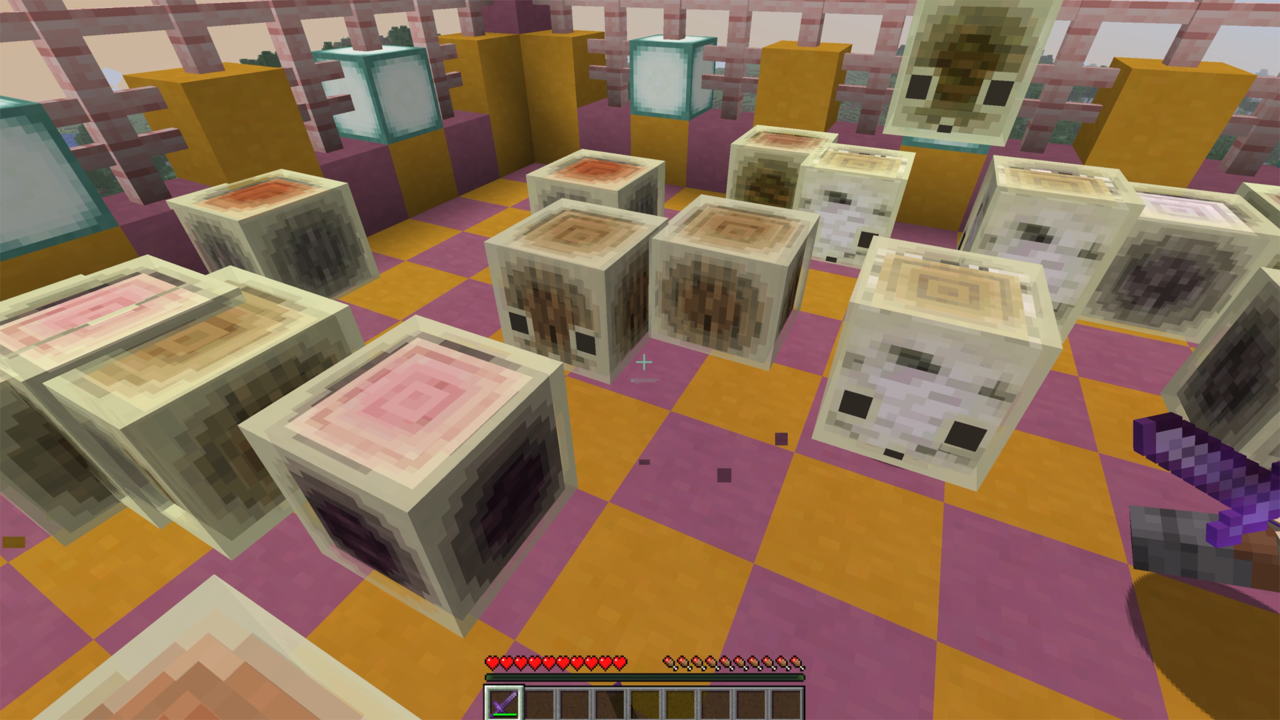
During Minecraft Live, Mojang announced its next drop: Chaos Cubed. While the drop doesn’t have a confirmed release date as of yet, we’re already excited for the chaotic potential it’s sure to unleash. Among the things coming to Minecraft in Chaos Cubed is the brand new Sulfur Cube, which sees its physics and properties change as it absorbs various materials, though how that might work remains a mystery for now. We’re taking the “Chaos” in Chaos Cubed pretty seriously, though.
Based on our first look, we’re imagining that feeding Sulfur Cubes wood will cause them to become sturdy, structural blocks, while perhaps sneaking them a slime ball will turn them into gelatinous, bouncy bundles of fun. While Mojang hasn’t gone into the specifics of the physics that can be affected, that hasn’t stopped us pondering the possibilities. You’ll be able to feed a Sulfur Cube manually, or it can choose to absorb a material of its own accord, as long as it’s in range.
The Sulfur Cube will be found in the new Sulfur Caves environments. These areas can spawn in many of the overworld’s biomes, meaning there should never be one too far away. Digging down should lead you to a cave with sulfur pools and new blocks to mine. Be careful though–sitting near these pools of water for too long will cause you to obtain the noxious effect, which we imagine will cause you damage over time.
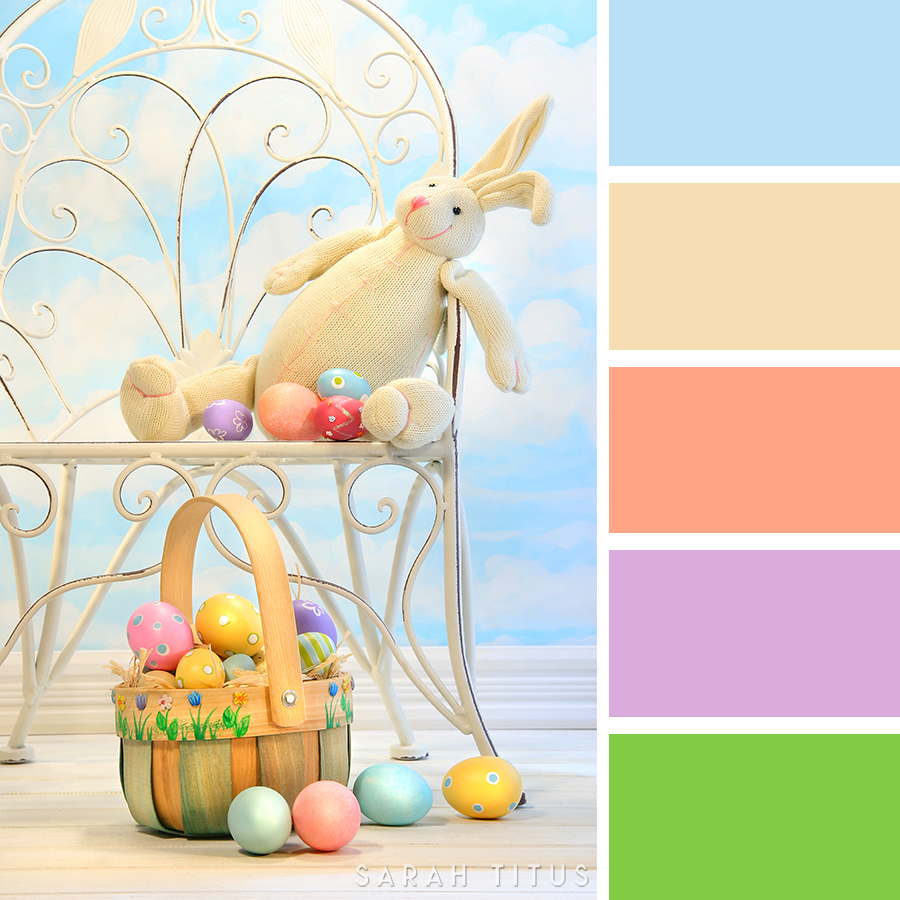
I LOVE color and creating color palettes from pictures/images I love. Bright, vibrant beautiful colors. They make me so happy, cheer me up when I’m sad, make my world a more pleasant place to live. I just love being surrounded by beautiful colors.
But sometimes mixing and matching colors for your projects can be tough.
What shade goes with what?
What colors go together?
How many colors can you really add in together and still look cohesive?
The more I started designing (I design printables) 😊 the more I began to be inspired by ART. Colors are everywhere and they can go together if you’re creative with them.
Lucky for you, if you’re not good at mixing and matching colors, I’ve taken some inspiration right out of some of the pictures I love.
Today’s post is all about color palette ideas inspired by Easter, my favorite holiday of the year! Whether you prefer soft, light and cool pastel colors as your spring color inspiration, neutral tones or bright, warm and deep hues – there is something to suit all tastes and styles! Perfect for home decor ideas, craft designs, fashion and clothes, for weddings and for blogs and printables!
So, scroll down and get-chore color on with these fun and vibrant 25 Easter color palettes with hex codes!!!
Wanna get your creative juices flowing even further? I’ve put together a binder with a TON of color palettes including these Easter design assets in the shop here. It’s a whopping 560 pages with inspiration from 20+ themes like seasons, holidays, travel destinations, abstract art, flowers, the sky, the ocean, sweet treats, and MORE!!!You’ll be buzzing with ideas! Get your color palettes binder here.
Beautiful Easter Color Schemes For Your Seasonal Projects
Picking out the right colors for your website, crafts, designs, or home decor can be quite difficult sometimes!
Get the best inspiration you can get from these spring hex codes. Let me tell you, all of your projects will look awesome with these Easter color palette combinations!
Clair Obscur: Expedition 33was one of 2025’s biggest and best games, and players fell in love with it. For fans of the game’s art style, a book collecting it all will soon hit North America for your viewing pleasure.
Publishers UDON and Pix’n Love have teamed up for a new version of the game’s art book. It’s been adapted into English after previously being just in French, and will come in standard and collector’s editions. Both feature concept art, design notes, and developer insights from Sandfall, but the $100 collector’s edition has some extra add-ons. These goodies include a golden cardboard slipcase in the colors of Alicia’s mask, prints of the game’s cast on textured paper, and a cardboard portfolio with exclusive art.
“This exclusive large-format hardcover volume gathers, across more than 300 pages, hundreds of previously unseen documents and illustrations used in the creation of one of the most fascinating games of recent years,” reads the description. “This making-of artbook takes readers on a journey through an extraordinary human and creative adventure.”
Compared to its combat and narrative, the art of Expedition 33 doesn’t get quite as much attention, but it’s a stunner regardless. It’s also apparently too good to be true: in February, Polygon reported on an incident where one player had small art book included in the game’s collector’s edition held by Iraqi customs because the pages had “drawings of monetary value.” The player, Reddit user Ahmed15252, laughed it off at the time, calling it a “10/10 experience, will definitely accidentally import history again.”
Both versions of the Clair Obscur: Expedition 33 art book will release on November 25. Pre-orders go live this Monday, March 23 on the UDON, IGN, and Pix’n Love stores.
AI Project Cost Estimation: 2026 Pricing Breakdown for Manufacturing Leaders
Between January and April 2025, we analyzed comprehensive industry research from Coherent Solutions, Zylo, CloudZero, BCG, and Standard Bots to understand the cost structures, timelines, and return on investment associated with artificial intelligence implementations across manufacturing, supply chain, healthcare, and financial services sectors. This report provides transparent, data-driven insights into AI project pricing, helping manufacturing executives develop accurate budgets and set realistic expectations for AI initiatives.
Our findings reveal that AI project costs range from $20,000 for basic implementations to over $1,000,000 for complex enterprise systems. However, understanding the specific cost drivers—from model complexity and data requirements to infrastructure and talent—enables manufacturing organizations to make informed investment decisions and achieve measurable business outcomes.
At USM Business Systems, we specialize in helping manufacturing leaders navigate AI project investments with full cost transparency, particularly as they evaluate Agentic AI implementations that promise autonomous operational capabilities. This analysis provides the benchmarks you need to build defensible business cases.
AI Project Cost Ranges by Solution Type — 2026
Project costs vary dramatically based on AI sophistication, customization requirements, integration complexity, and the level of autonomy needed to achieve manufacturing business objectives.
The cost differential between basic and enterprise AI solutions can reach 20-50x, driven primarily by customization depth, data complexity, integration requirements with existing MES/ERP systems, and the sophistication of autonomous decision-making capabilities required for manufacturing environments.
Organizations starting with basic AI pilots often underestimate scaling costs—transitioning from a proof-of-concept ($30K-$60K) to full production deployment typically increases total investment by 250-400% due to infrastructure scaling, data pipeline development, and integration complexity.
Success rates decline as complexity increases (from 75-85% for basic projects to 45-60% for enterprise platforms), highlighting the importance of starting with achievable scope, proving value incrementally, and building organizational AI maturity before attempting transformational deployments.
Cost Distribution by Project Phase — 2026
Understanding how costs distribute across the AI development lifecycle helps manufacturing enterprises budget more accurately, identify optimization opportunities, and avoid the most common causes of budget overruns.
Development Phase
% of Total Cost
Cost Range
Key Activities
Budget Variance
Risk
Common Cost Overruns
Model complexity & design
30-40%
$20K – $180K
Architecture selection, algorithm design, model training
Model complexity consistently represents 30-40% of total costs, with training a 6 billion parameter model costing approximately $23,594 per month in compute resources alone, highlighting why most manufacturing AI projects should leverage pre-trained foundation models rather than training from scratch.
Data preparation accounts for 15-25% of total project costs, with annotation of 100,000 data samples ranging from $10,000-$90,000 depending on complexity and the domain expertise required—particularly expensive for specialized manufacturing quality inspection mobile applications.
Organizations in regulated industries face an additional 5-10% cost premium for compliance frameworks, audit capabilities, explainable AI features, and documentation requirements necessary to satisfy FDA, ISO, or other manufacturing quality standards.
Infrastructure Cost Examples for AI Projects — 2026
Cloud infrastructure represents a significant ongoing expense, with costs varying based on project scale, model size, inference frequency, and uptime requirements critical for manufacturing operations.
Infrastructure Configuration
Monthly Cost
Annual Cost
Budget Variance
Best Suited For
Manufacturing Application
Uptime SLA
Small development (2-4 CPUs, 1 GPU)
$1,500 – $3,000
$18K – $36K
±15%
PoC, basic chatbots, simple analytics
Initial testing, pilot projects
95-98%
Medium production (8-16 CPUs, 2-4 GPUs)
$8,000 – $15,000
$96K – $180K
±20%
Computer vision, recommendation engines
Single-line quality inspection
98-99.5%
Large enterprise (32+ CPUs, 8+ GPUs)
$23,000 – $45,000
$276K – $540K
±25%
LLM training, multi-model systems
Factory-wide predictive maintenance
99.5-99.9%
Model training cluster (16+ high-end GPUs)
$35,000 – $65,000
$420K – $780K
±30%
Custom model development, continuous learning
Advanced agentic AI development
99.9%+
Key Insights:
A typical 12-month AI project utilizing AWS infrastructure for medium-scale deployment costs approximately $283,464 for compute, storage, and networking resources, based on industry benchmarks for continuous manufacturing operations requiring high availability.
Training large language models demands substantial compute investment—organizations training 6+ billion parameter custom models should budget $200,000-$400,000 annually for infrastructure alone, which is why USM typically recommends fine-tuning existing foundation models for manufacturing use cases.
Organizations moving from development to production deployment often experience 2-3x infrastructure cost increases due to scaling for 24/7 operations, implementing redundancy for fault tolerance, adding disaster recovery capabilities, and meeting manufacturing uptime requirements of 99.5%+.
Team Composition and Labor Costs — 2026
Human expertise represents one of the most significant and often underestimated components of AI project costs, with specialized manufacturing AI talent commanding premium salaries due to scarcity.
API development, system integration, cloud platforms
+8-15%
Project Manager (AI)
$100K – $160K
€50K – €90K
$18 – $35
15-25%
Agile, stakeholder management, technical literacy
+5-12%
QA/Testing Specialist
$90K – $140K
€45K – €80K
$15 – $30
15-30%
Test automation, bias detection, validation frameworks
+8-15%
Key Insights:
A typical enterprise AI project team of 6-8 specialists costs $400,000-$600,000 annually in the US, versus $200,000-$330,000 when leveraging offshore development teams in EU regions, representing a 40-50% cost differential that makes hybrid team models attractive.
Manufacturing AI specialization commands 8-25% salary premiums due to the additional domain expertise required to understand production processes, quality systems, supply chain logistics, and the operational constraints unique to industrial environments.
Cloud computing (57% demand) and data engineering (56% demand) are the most in-demand AI skills, with high salary expectations and talent scarcity representing the greatest challenges in AI hiring, particularly for organizations outside major tech hubs.
Requesting a Strategic AI Cost Assessment
This research reflects USM Business Systems‘ commitment to transparent AI cost analysis and strategic implementation guidance for manufacturing enterprises. Unlike generic AI consultants, our team brings deep manufacturing domain expertise developed through dozens of successful implementations in production environments.
We specialize in helping manufacturing executives navigate AI investments—from accurate initial estimates and TCO planning to implementation strategies that maximize ROI while managing risk. Our particular expertise in Agentic AI systems positions us uniquely to help you evaluate next-generation autonomous manufacturing capabilities.
Schedule Your Free AI Cost & ROI Assessment
Our manufacturing AI experts will:
Analyze your specific use case and operational context
Provide a detailed cost estimate with phase breakdowns
Model 5-year TCO and expected ROI timelines
Identify cost optimization opportunities
Recommend optimal project approach (pilot vs. full deployment)
30-minute complimentary strategy call—no sales pitch, just expert guidance.
There’s an understated beauty to immersing yourself in a sprawling anime series. A thousand-episode-plus saga like One Piece might feel daunting, but investing in such an epic character journey is extremely rewarding — especially when the creators of a beloved franchise reinvent their narrative in progress midway, as JoJo’s Bizarre Adventure does with the Netflix adaptation of Steel Ball Run.
That said, committing to a lengthy anime series over multiple seasons demands a significant amount of time, and it can be overwhelming to choose between all the excellent options. Sometimes you just need a one-season anime series, a dozen episodes that can be binged over a weekend, without the need to invest beyond the immediate premise.
One-season titles that tell a complete, self-contained story include classic choices likeCowboy Bebop or Death Note, but there are many under-the-radar stories worth checking out as well. So if you’re in the mood for a one-and-done narrative experience, these 20 one-season anime can help scratch that itch.
20
Nana
Image: Madhouse
Number of episodes: 47
Where to watch: Hulu
Ai Yazawa’s slice-of-life manga Nana has a staggering aesthetic influence. It references everything from game-changing British fashion designer Vivienne Westwood to Harajuku subcultures like Gyaru and Mori to tell a layered, devastating story about Japanese girlhood. These visual fairs come alive in Madhouse’s Nana anime, whose 47-episode run feels much shorter due to the fluid nature of the story. Our protagonists, Nana Komatsu and Nana Osaki (“Hachi”), form a tender friendship once they meet in Tokyo, where they each harbor distinct dreams. While Nana wants to establish a music career with her band, Hachi wants to secure romantic stability while doing some soul-searching.
Their vastly different personalities (expressed through Nana’s edgy alternative clothing and Hachi’s warm pastel costumes) find a way to co-exist in a world that challenges these girls on an intimate level. Yazawa’s manga is currently on indefinite hiatus, but this one-season anime adaptation is the perfect conduit to immerse yourself in Nana and Hachi’s vibrant worlds. This is a story grounded in heartbreaking realism, but it also makes space for the vulnerability that comes with the softer moments in life. —Debopriyaa Dutta
19
Paranoia Agent
Image: Madhouse
Number of episodes: 13
Where to watch: Crunchyroll
Satoshi Kon (Paprika, Perfect Blue, Millennium Actress) is known for his radical approach to animation, for using surreal imagery to challenge established conventions. Kon’s one-season anime Paranoia Agent is no exception. The premise hooks the audience in immediately: Character designer Tsukiko Sagi is suddenly attacked by a roller-skating schoolboy (dubbed Lil’ Slugger) at night, which begins a long string of assault cases revolving around this unlikely perpetrator. In a baffling turn of events, none of the victims can remember the boy’s face, which complicates matters from a legal standpoint.
Kon and Madhouse combine these eccentric elements to cook up a narrative drenched in abject horror, where Lil’ Slugger’s actions unravel dark truths about every character involved. A thematic preoccupation with repressed trauma and its shocking manifestations is at work here, as characters like Tsukiko are tugged toward their darkest impulses without true awareness of their actions. Getting to the root of trauma can be intense and uncomfortable, and Paranoia Agent reminds us that fear can hold greater power in our lives than we think. Kon uses a mix of his signature abstract symbolism and crude animation to highlight the despair that encircles these characters’ lives. —DD
18
Deca-Dence
Image: NUT
Number of episodes: 12
Where to watch: Crunchyroll
Talking about why an anime fan should watch Deca-Dence without spoiling the series’ most ingenious twist is difficult, though not impossible. Directed by Yuzuru Tachikawa (Death Parade, Mob Psycho 100) and written by Hiroshi Seko (Attack on Titan, Vinland Saga), the series takes place in a post-apocalyptic world where the remnants of humanity have taken refuge inside a gigantic fortress city known as Deca-dence and engage in a never-ending battle against alien lifeforms known as the Gadoll.
Natsume, a young girl who lost both her father and her right arm to a Gadoll attack, aspires to become a warrior to avenge her family. To achieve this, Natsume enlists the mentorship of Kaburagi, a veteran armor repairer and former warrior, to train her. Reluctantly agreeing to help her, Kaburagi is driven by his motives and interests, as well as a profound secret that, if revealed, could jeopardize humanity’s survival.
What begins as a standard post-apocalyptic mash-up of Attack on Titan by way of Immortal Engines quickly (and boy, do I mean quickly) morphs into a cerebral post-human sci-fi story about environmentalism, consciousness, and artificial intelligence. If for no other reason, you should at least give the first two episodes of Deca-Dence alone a shot. You’ll know the twist when you see it. —Toussaint Egan
17
Do It Yourself!
Image: Pine Jam
Number of episodes: 12
Where to watch: Crunchyroll
If you’re looking for a breezy slice-of-life anime with a unique premise, Do It Yourself! is an easy recommendation. The series follows Serufu Yua and Miku Suride, two next-door neighbors and childhood friends whose estrangement is further exacerbated when the latter is accepted to an elite magnet high school for technology studies and the former… well, isn’t. While on her way to her first day of classes, Serufu accidentally wrecks her bike and is aided by Rei, a third-year student at her new school and the head of DIY Club.
After spending the day with Rei, Serufu finds her calling: teaching herself how to repair the bench that she and Miku used to sit on as children… and repair their friendship along the way. From there, the anime evolves into a lighthearted ensemble comedy about a group of eccentric, inquisitive girls teaching themselves how to use power tools, find materials, and undertake various do-it-yourself projects around campus.
Do It Yourself! is simply a joy to watch, with cute character designs complemented by a bubbly sense of humor and lovingly detailed animation. The series also fits in a surprisingly thoughtful take on the merits of artisanship over automation, in addition to its themes of friendship and self-reliance — one more reason to give it a watch. If you count yourself as a fan of anime like Bocchi the Rock! and Keep Your Hands Off Eizouken!,Do It Yourself! is a perfect must-see series. —TE
16
Odd Taxi
Image: OLM Team Yoshioka/P.I.C.S.
Number of episodes: 13
Where to watch: Crunchyroll
Odd Taxi tells the story of a 41-year-old walrus taxi driver named Odokawa living in a world of talking anthropomorphic animals. When Odokawa inadvertently becomes the suspect in a young girl’s disappearance, he’s preyed upon by conniving yakuza and crooked cops eager to track the young woman down for their own nefarious ends. On top of that, he has to deal with his begrudging affection for a young alpaca nurse named Miho, as well as elude a vicious masked stalker with a murderous vendetta against him.
Directed by Baku Kinoshita (who also served as the series’ character designer), written by Kazuya Konomoto, and co-produced by creative company P.I.C.S and anime studio OLM, Odd Taxi is a fascinating, well-paced crime thriller that easily earned its place on our best anime of 2021 list. Plus, it’s got a gorgeous opening title sequence. —TE
15
Samurai Champloo
Image: Manglobe
Number of episodes: 26
Where to watch: Crunchyroll
Shinichirō Watanabe’s directorial follow-up to Cowboy Bebop, Samurai Champloo, is a contemporary, hip-hop-infused story set against a historical backdrop. The series follows waitress Fuu and her two hired bodyguards, samurai Mugen and ronin Jin, as they set out to find a mysterious samurai in an alternate Edo-era Japan. Samurai Champloo is a largely episodic series, but it has a charming momentum that makes it perfect for a quick binge. Fans of Cowboy Bebop’s referential storytelling, contemplative themes, and inclusive world-building will also find a lot to love in the series. —Sadie Gennis
14
Steins;Gate
Image: White Fox
Number of episodes: 24
Where to watch: Crunchyroll
[Ed. note: While this is a terrific series overall, there is one instance of poor localization in the English dub that comes across as racially insensitive at best. We recommend the sub for this reason.]
The idea of hooking a cell phone up to a microwave in order to send texts to the past is very silly, but Steins; Gate is definitely not a silly show. A tightly plotted sci-fi drama, Steins; Gate follows Rintaro Okabe, an egotistical “mad scientist” who, along with his two friends and colleagues, unexpectedly discovers a way to send messages — and eventually memories — into the past. It’s an exceptional time travel story with a compelling cast of characters, thrilling mysteries, and edge-of-your-seat action. —SG
13
Terror In Resonance
Image: MAPPA
Number of episodes: 11
Where to watch: Crunchyroll
Shinichirō Watanabe’s series Terror in Resonance isn’t as lengthy as his Cowboy Bebop or Samurai Champloo, but it is a hard-hitting psychological thriller that deserves more popularity than it currently enjoys. This 11-episode anime presents an alternative version of the present, where teenagers Nine and Twelve steal a prototype atomic bomb while orchestrating a terrorist attack. Their goals come off as cryptic, as they upload a video threatening to destroy Tokyo unless someone comes forward to solve a complicated riddle.
Watanabe makes excellent use of the short serialized format to create taut tension, allowing Terror in Resonance’s conspiracy aspectsto shine bright. The prospect of uncovering Nine and Twelve’s true identities and motives is just one aspect of the mystery, as the anime compels us to ponder the helpless, one-sided relationship we have with corrupt systems. These kids aren’t acting on a whim, after all — they’re raging against a world rigged against them while challenging what we know about our governments. That said, Watanabe doesn’t nosedive into bleakness — he paints fleeting moments of human connection as precious and worth fighting for. —DD
12
Scott Pilgrim Takes Off
Image: Science Saru
Number of episodes: 8
Where to watch: Netflix
Science Saru’s anime adaptation of Bryan Lee O’Malley’s hit graphic novel series is full of surprises. The biggest is the true meaning behind the series’ name. Scott Pilgrim Takes Off isn’t a one-to-one adaptation so much as a pseudo-reboot-sequel that exists in conversation with the events of the original comic and Edgar Wright’s 2010 movie, similar to what Evangelion creator Hideaki Anno did with the tetralogy of Rebuild films.
In choosing to treat the comics as more of a launchpad than a verbatim script, Scott Pilgrim Takes Off affords its characters the space to grow and evolve beyond what audiences and fans might have otherwise come to expect. This isn’t a Scott Pilgrim story made for the early aughts, but for the 2020s — a story told from an older, wiser perspective that’s able to parse the elements that made the comic such an enduring phenomenon from the parts that haven’t quite aged as well.
Ramona Flowers, for example, takes on a more central role as the protagonist of the story, and the so-called “League of Evil Exes” is afforded more dimension and backstory. Make no mistake, however: This is the story of Scott Pilgrim, but a version whose ambitions and scope far exceed what its first episode might otherwise suggest. The ending of Scott Pilgrim Takes Off suggests the possibility of more adventures with these characters, but with Netflix opting out of a second season, the series functions as a terrific one-off. —TE
11
Vivy: Fluorite Eye’s Song
Image: Wit Studio
Number of episodes: 13
Where to watch: Crunchyroll
Created and written by Tappei Nagatsuki and Eiji Umehara (Re: Zero-Starting Life in Another World-), directed by Shinpei Ezaki (Banana Fish), and produced by Wit Studio (Ranking of Kings, Spy x Family), the 13-episode original anime Vivy: Fluorite Eye’s Song centers on the story of a young android songstress named Diva. She is recruited by Matsumoto, an AI from a hundred years in the future, to intervene in major historical events and prevent a future where androids annihilate humanity.
Vivy: Fluorite Eye’s Song is the perfect choice for anyone looking for a stellar anime with great music and breathtakingly beautiful fight sequences. It’s a sci-fi drama with an emphasis on the cruel passage of time and the purpose of music and art in a world of artifice, while also being a poignant story about personal growth and defying fate.
The series as a whole is worth watching, but episode 9 is the standout entry, featuring a pulse-pounding sequence between Vivy and Matsumoto in a modular cube-like body fighting against a vengeful android assailant with a powerful arm cannon. Trust me — if you haven’t watched Vivy: Fluorite Eye’s Song, you’ve missed out on one of 2021’s most spectacularly animated fight scenes. —TE
AJA BRIDGE LIVE enables broadcasters and production teams to convert remote SRT contribution feeds into baseband SDI for seamless integration into facility workflows. In a recent walkthrough, AJA Technical Support demonstrated how to configure a BRIDGE LIVE pipeline to receive MPEG-TS over SRT, set appropriate latency buffers for stable public internet delivery, and decode the signal directly to SDI. The process also includes configuring audio mapping and passing through metadata such as closed captions or SCTE-35, making it a complete solution for reliable remote contribution and broadcast integration. Check out the full breakdown:









-Offwhite-Background-SOURCE-Ibex.jpg)

-SOURCE-Unbound.jpg)

-Offwhite-Background-SOURCE-Ibex.jpg)