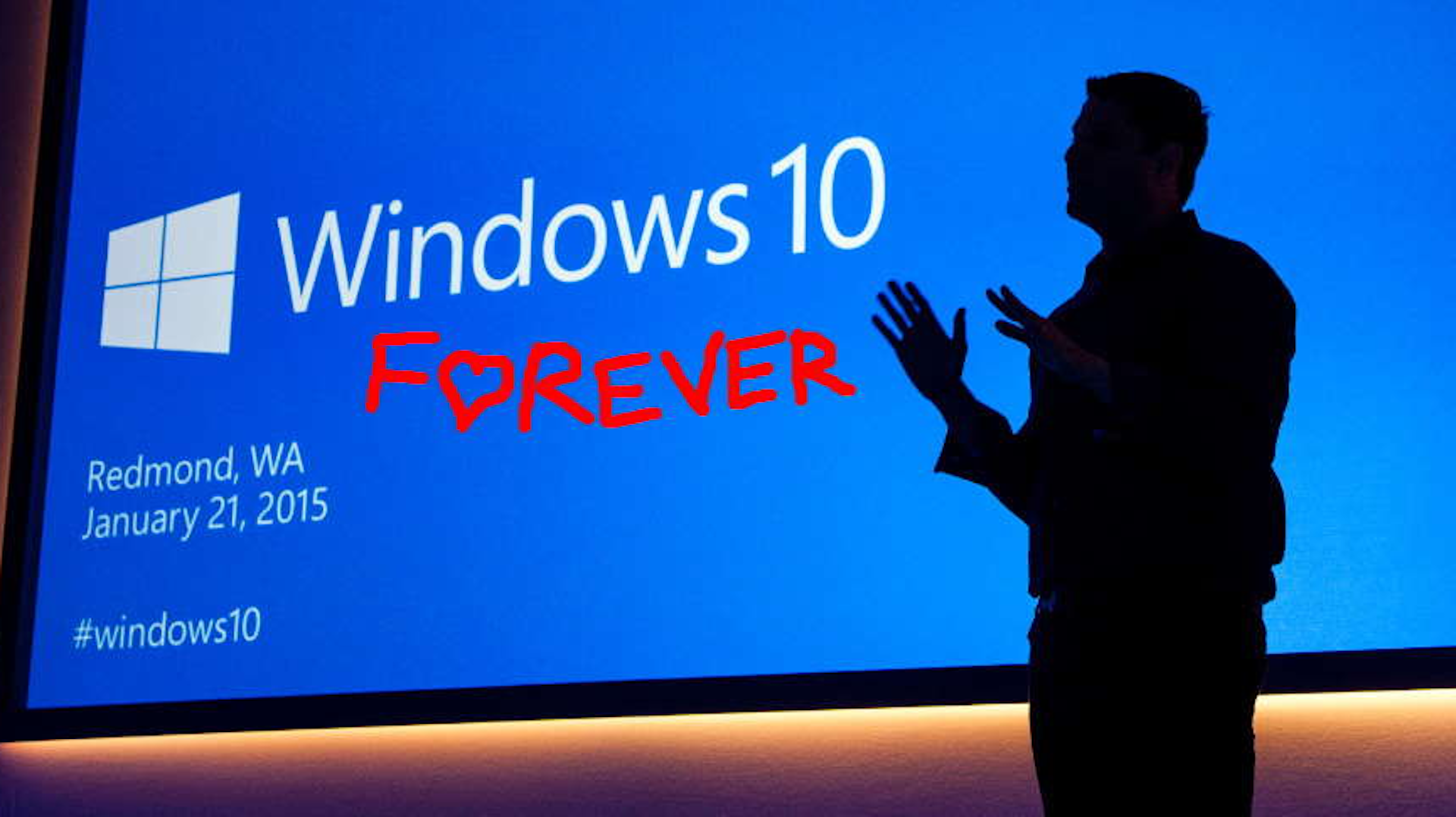
Good news if you’re one of the die-hards still clinging to Windows 10: Microsoft has added another year to its Extended Security Updates, meaning the axe won’t fall until October 2027.
Microsoft announced in 2024 that support for Windows 10 would be wrapped up in October 2025, bringing an effective end to one of the good Windows and not-so-gently nudging us all onto one of the sucky ones.
But then a reprieve was granted: For $30, or free if you’re lucky, those who wanted to stay with a good Windows could purchase “Extended Security Updates,” which keeps security updates from Microsoft flowing for another year. Feature updates are dead and done either way, but the ESU program at least ensures that Windows 10 PCs are protected from malware, ransomware, and other such headaches that exist in the online world.
Latest Videos From
The ESU program was set to last for a year from the end of Windows 10 support—so, October 2026—but as noticed by Windows Central, the ESU page has now been updated and indicates that the program will run until October 2027. Those who are already enrolled in the program will get the by default, and—if you had to pay for the ESU—at no extra charge.
That’s pretty fantastic news. There are still a lot of Windows 10 users out there: The Steam Hardware and Software Survey reports that 24% of respondents are still rocking with Win10 64 bit, and that’s a substantial audience.
Nor are people just being difficult about it: Windows 10 is objectively better than Windows 11, sure, but Win11’s more demanding hardware requirements mean it won’t install on some older hardware, or that owners of said rigs have to rely on external tools like Rufus to make it happen.
The obvious solution to that problem when the 2026 deadline was set was “it’s time for a new PC,” but then the Rampocalypse happened and suddenly we were all left with the grim knowledge that we’re probably gonna be riding this pony for a lot longer than we’d expected. And, rather like motherboard makers deciding it’s time for a DDR3 comeback, Microsoft may have concluded that forcing people into an ultra-expensive upgrade they don’t want to make is trouble it doesn’t need—especially since Microsoft bears no small amount of responsibility for making hardware upgrades so damned expensive in the first place.
Keep up to date with the most important stories and the best deals, as picked by the PC Gamer team.
In the immediate aftermath of Microsoft’s announcement that it was raising prices of the Xbox Series X and S for the third time this generation, a tiny trend broke out on our technology news feed. A smattering of stories appeared encouraging readers to run out and buy an Xbox console before the price hike goes into effect on August 1. Combine this deadline with the allure of active Prime Day deals on Xbox consoles, and the message from these articles is clear: The best and most fiscally responsible time to buy an Xbox is right now, so go do it.
Allow me to play devil’s advocate.
While it often makes sense to plan purchases around known price hikes, it’s a dumb time to buy an Xbox. Yes, even with discounts offering an Xbox Series S for $350 and an Xbox Series X for $573 — hell, especially at these prices. In 2020, the Xbox Series S launched at $300 and the Xbox Series X was $500. Over the past couple of years, I personally picked up a Series X for less than $400 and a Series S for $250. These consoles are now in their sixth year, and normally around this time in the generation, hardware prices would be dropping and we’d be getting cool colorways and bundles. Today’s discounted Xbox prices are obscene for a console entering its sixth year.
It’s worth noting that today’s marketplace is uniquely unmoored, fueled by a memory and storage shortage that’s driving up hardware prices across the tech industry. However, Microsoft is a core part of the problem here. The company is exacerbating the RAM shortage with massive investments in AI data centers, and its feigned ignorance around spiking Xbox console prices is laughable.
Corporate chicanery aside, it’s simply not a great time to buy into the Xbox ecosystem. You could say there’s never been a worse time, in fact. Microsoft is in disarray following years of layoffs and studio closures, falling console profits, and executive-level changes to the Xbox business in 2026. Just this month, news broke that Double Fine, Ninja Theory and Compulsion Games are in imminent danger of being shut down, while new Xbox CEO Asha Sharma and Chief Content Officer Matt Booty set the stage for more layoffs in July.
On the software side of things, Xbox doesn’t have a ton of exclusive games, as its first-party titles are widely available on PC. Its recent hits like Avowed, Indiana Jones and the Great Circle and Keeper are all available on Steam, and Xbox is legally obligated to distribute its largest first-party franchises (i.e., Call of Duty) across platforms. That’s not to mention the push to get its games on PlayStation and Switch, no matter how short-lived that may end up being. One of Microsoft’s loudest marketing points has been the fact that its games will work on subsequent consoles and eventually come to PC, and even if they’re not saying it out loud any more, the company is a leader in platform-agnostic cloud play. When everything is an Xbox and Xbox games are available anywhere, you don’t really need an Xbox at all.
There is zero reason to rush out right now and buy a six-year-old gaming console for more than its launch price, just because it’s going to become even more expensive soon. If you haven’t needed an Xbox before now, chances are, you still don’t need one. This might be rich coming from a consumer tech blog, but there is no real-world achievement for collecting every piece of contemporary gaming hardware — the closest we get is clout, but the returns on social media likes and comments are hollow and diminishing. Unlike Xbox prices, which are only rising. The actual smart move is to wait until the next generation hits — which is apparently very soon — and either pick that up or grab a Series console that will then be priced to clear.
This is nothing against the media outlets that’ve run stories encouraging people to take advantage of Prime Day Xbox console prices. Truthfully, there is a very small market for this advice and it’s fine to show these six people where the best deals are at the moment. But as general-audience advice, it sucks.
Besides, aren’t you saving up for a Steam Machine right now?
Intense Fighting Entertainment is back!! Fan-favorite 3D fighting game DEAD OR ALIVE 6 is back with stylish moves, striking animations, and a cast of colorful characters to go head-to-head in the fighting game world’s most extreme battles! Place, pose, and take picture-perfect screenshots of your favorite characters in the new Photo Mode. Play with the classic DOA6 roster and 5 additional DLC characters from the original version, along with new costumes. Whether you’re a new player or a longtime veteran, DEAD OR ALIVE 6 Last Round has the action you’re looking for. Orb of Creation
Includes five additional characters released in the original version! Play with a lineup of 29 characters, including five characters originally released as bonuses or DLC for the original version: Nyotengu, Phase 4, Momiji, Rachel, and Tamaki.
Stage your own battles in the NEW Photo Mode! Choose your stage and characters, position them freely, change their poses and expressions, and create your own legendary moments in the brand-new Photo Mode.
From simple skirmishes to serious strategy, DOA6LR is THE definitive 3D fighting game! Use Holds at the perfect moment to cripple your opponent. Build your Break Gauge and unleash powerful special moves. Mash through a Fatal Rush for an easy yet highly satisfying combo. Toss your opponent into a Danger Zone to deal extra damage. From first-time players to long-time strategists, DEAD OR ALIVE 6 Last Round has something for everyone.
Note:
This version includes a Character Unlock Keys for 29 characters and Story Unlock Key. Be careful not to accidentally make duplicate purchases.
A free-to-play version is available as DEAD OR ALIVE 6 Last Round Core Fighters. Costumes unlocked or purchased in DEAD OR ALIVE 6 may be transferred to this version. Some costumes may not be transferrable. For more information on transferring data from DEAD OR ALIVE 6, see our official website.
Screenshots
SystemRequirements
Minimum Requires a 64-bit processor and operating system
OS: Windows® 11
Processor: Intel Core i5-8400 or higher, AMD Ryzen3 3100 or higher
Memory: 8 GB RAM
Graphics: GeForce GTX 1060 (VRAM 6GB) or higher, Radeon RX 590 (VRAM 8GB) or higher
DirectX: Version 12
Storage: 80 GB available space
Additional Notes: SSD required
Support the game developers by purchasing the game on Steam
InstallationGuide
TurnOff Your Antivirus Before Installing Any Game
1 :: Download Game 2 :: Extract Game 3 :: Launch The Game 4 :: Have Fun 🙂
GTA 6 and a string of other high-profile games might be forgoing discs altogether, but US physical game sales actually grew ever so slightly for the first time in 17 years.
Curiously though, Piscatella also shares that physical game sales in the United States actually enjoyed a rare glimpse of hope – for the first time since 2009’s feverish peak, dollars spent on physical game releases shot up year-on-year by 3%.
Latest Videos From
US new physical video game software spending. 12 months ending May 2007-2026:
Physical game sales have been on a big decline since 2009’s $11.5 billion record, but now “spending is up by 3% in the 12-month ending May 2026,” according to Piscatella. Don’t be too quick to celebrate now, collectors. This uptick is apparently not a sign of things to come, he says.
“The overwhelming majority of volume is done digitally now,” Piscatella writes on social media. “The second hand market… doesn’t really matter. More than half of all Xbox Series consoles in the US don’t have a physical drive, while over a quarter of PS5s are the same. We likely have less than a decade left of physical software.” Ominous indeed.
GTA 6 ignoring a real physical release is also worrying since the Rockstar Games behemoth is guaranteed to sell consoles, especially since it’s not immediately coming out on PC, but many prospective console buyers might opt for hardware without disc drives thanks to the game’s digital-only launch. I can only imagine that’ll further snowball the death of boxed games, our ability to share them with people in our real lives, the preservation of art, and, you know, our ownership over the things we’ve paid for.
One of Wirecast’s core strengths is that it scales without changing. The same software powers a solo webcam stream and a multi-camera broadcast production — you’re just adding inputs and operators as your production grows. Here’s what each level actually looks like in practice.
The simplest Wirecast workflow. Even with just a webcam, Wirecast adds immediate value: lower thirds, logo overlays, a professional background, and preset streaming to your platform of choice — all things a raw webcam stream can’t do.
Who this is: Creators starting out, business professionals elevating their video call presence, educators recording or streaming solo lessons.
Operator count: 1
Level 2: Two-Camera Podcast
Setup: One camera + two people + two microphones → capture card → Wirecast
A two-person podcast setup with one operator doubling as a participant. One wide camera covers both hosts; switching happens between that wide shot and any close-up framing. Two microphone channels are managed independently for level control and muting.
This is the first setup where Wirecast’s layer system earns its keep — audio on its own layer, lower thirds ready to fire independently of camera cuts, logos persistent throughout.
Who this is: Podcast producers, interview shows, two-person commentary streams.
Operator count: 1 (also participating in the show)
Level 3: PTZ + Audio Mixer — Intermediate Production
Now you have real production flexibility. Two PTZ cameras with saved presets give you wide and tight shots that can be recalled instantly. One person switches; a second monitors audio levels on the physical mixer.
The PTZ cameras multiply your effective shot count: with a wide shot on one camera and preset positions (close-up, medium, over-shoulder) saved on the second, two cameras behave like four or five distinct shots. Wirecast’s built-in PTZ control handles pan, tilt, zoom, and preset recall without a separate hardware controller if needed.
Who this is: Houses of worship, small corporate studios, education productions, sports coverage.
Operator count: 2 — one switching, one on audio and cameras
Level 4: Multi-Producer Broadcast
Setup: Multiple camera operators + director calling shots from a multiviewer + dedicated Wirecast producer for graphics/switching + full audio operator
This is the full broadcast production model. Camera operators cover individual positions. A director reads the multiviewer and calls shots. The Wirecast operator executes graphics, overlays, lower thirds, and transitions. Audio runs independently.
Wirecast didn’t change between Level 1 and Level 4. The software is doing the same things — capture, switch, graphic, stream — just across more sources, more operators, and more complex live events.
Who this is: Sports broadcasts, large venue live events, professional production companies, and universities with broadcast programs.
Operator count: 4+ with defined roles
The Key Insight: Wirecast Grows With You
Starting at Level 1 doesn’t lock you into it. Every workflow addition — a second camera, a PTZ, an audio mixer, a second operator — plugs into the same Wirecast setup you already know. You’re not learning new software as you scale. You’re just expanding what you already understand.
The upgrade from Wirecast Studio to Pro follows the same logic: same interface, more advanced features unlocked when your production needs them.
Ready to build your Wirecast production setup? Call 1-800-323-2325 or visit videoguys.com for bundle packages.
Tonight is your last chance to save up to $190 on your pass to TechCrunch Founder Summit 2026. Early Bird pricing ends today, at 11:59 p.m. PT, after which rates increase.
Founders rarely scale alone. The fastest path to growth comes from learning from founders who’ve already done it, connecting with peers tackling similar challenges, and building relationships with investors who can help accelerate your next stage of growth.
On November 4 in Boston, more than 1,000 founders and investors will gather for a highly curated day of tactical learning, candid conversations, and meaningful networking designed to help founders make smarter decisions and grow faster.
Don’t wait until prices increase. Register before 11:59 p.m. PT tonight to save up to $190. Bringing your team? Groups of four or more can save up to 30%.
Image Credits:Halo Creative
A founder-first event built for growth
Every session, discussion, and networking opportunity is designed around the real challenges founders face as they build, fund, and scale their companies.
You’ll connect with:
Founders navigating similar growth stages
Experienced operators who have scaled teams, products, and revenue
Investors sharing what they’re funding and what they’re looking for
Whether you’re preparing to raise capital, refining your go-to-market strategy, or planning your next growth milestone, Founder Summit creates opportunities for conversations that can change the trajectory of your business.
Actionable insights for every stage
Founder Summit focuses on the decisions that define a startup’s future. Through breakout sessions and roundtable discussions, you’ll gain practical guidance on topics including:
Building pitch decks that resonate with investors
Knowing when to raise Series C and beyond
How and when to sell your startup
Preparing your company to go public
These founder-led conversations deliver practical takeaways you can apply immediately.
Learn from founders and investors who’ve done it
Past speakers have included:
Image Credits:Halo Creative
Additional speakers have represented Sequoia Capital, NFX, Glasswing Ventures, Wing Venture Capital, Construct Capital, Greylock, Precursor Ventures, and more.
The deadline is in less than 24 hours. Early Bird pricing ends tonight at 11:59 p.m. PT. Join the founders, operators, and investors shaping the next generation of startups. Gain practical insights, build valuable relationships, and leave with strategies you can put into action immediately.
Register before 11:59 p.m. PT tonight to save up to $190 on your pass and up to 30% when registering as a group.
Interested in exhibiting at TechCrunch Founder Summit 2026? Reserve your exhibit table and connect directly with founders, investors, and startup decision-makers.
When you purchase through links in our articles, we may earn a small commission. This doesn’t affect our editorial independence.
Amazon Prime Day returns June 23-26 this year — a few weeks earlier than it has usually been scheduled. You can expect deals across all categories, as well as competing deals from retailers like Walmart, Best Buy, and Costco.
Are tablet deals really better during Prime Day?
For some big-name brands, Prime Day is one of the only sales events of the year during which flagship devices go on sale. It’s also the time of year that you’ll see the biggest discounts for popular devices like the iPad, Kindle, and more, so yes, it’s definitely a good time to snag a deal on a tablet.
How did we choose these Amazon Prime Day deals?
ZDNET only writes about deals we want to buy — devices and products we desire, need, or would recommend. Our experts looked for deals that were at least 20% off (or are hardly ever on sale), using established price comparison tools and trackers to determine whether the deal is actually on sale and how frequently it drops.
We also looked over customer reviews to find out what matters to real people who already own and use the deals we’re recommending. Our recommendations may also be based on our own testing — in addition to extensive research and comparison shopping. The goal is to deliver the most accurate advice to help you shop smarter.
What are the best Prime Day deals so far?
ZDNET’s experts are searching through Prime Day sales to find the best discounts by category. These are the best deals we’ve found:
It’s been five years since Eric “ConcernedApe” Barone announced the idea of Haunted Chocolatier, since then we’ve got a few small updates on progress here and there, with the bulk of Barone’s time being spent on making Stardew Valley one of, if not the best indie game available (which is currently 40% off in the Steam Summer sale).
It sounds like work on Haunted Chocolatier has been slow yet very deliberate, something that Barone yet again stresses in this latest update on progress. “I know it’s taking a long time,” Barone says in a blog post. “A big part of that is that I am being very thoughtful about every aspect of the game. The things in the game which the player will be interacting with or using very often need to be ‘perfect’. They need to be seamless, clear, intuitive, satisfying, aesthetic.”
(Image credit: Eric Barone)
Barone has already confirmed that Haunted Chocolatier will be bigger than Stardew Valley, which is fantastic for us as it means we’ll have more to chew on once we get our hands on it, but that does mean way more work for Barone. Whether there’ll be a bigger map, more characters, or more systems (or all of the above), Haunted Chocolatier certainly sounds like a much bigger project than Stardew Valley was at launch.
Latest Videos From
One area which Barone has dedicated a lot of work to, and a lot of reworks, has been in the actual chocolate making: “I’ve been revisiting the recipe book for making chocolates. As with many things in the game, I’ve iterated on this many times, each time bringing it closer to its final form. To me, it’s not a simple task, as I torture myself over every last detail. This is a UI you will be using fairly often, so it has to be perfect. You need to be able to accomplish your goal with the minimal number of clicks.
“There needs to be just the right amount of data presented to the player: not so much as to be overwhelming, but not so little as to be trivial or mundane. And the way that this data is laid out on the page is crucial. If the data is all clustered together, it will be disgusting to look at. The data needs to be grouped into compelling, intuitive and easy to read/understand groupings. It needs to look appealing and intriguing. And this is just the bare minimum, that players will likely take for granted.”
(Image credit: Eric Barone)
I’ve never really thought about just how well-crafted Stardew Valley’s UI is, because it’s just so bloody intuitive. I always end up explaining the systems to my game-averse mates by simply saying “you just know”. Stardew Valley has the right amount of information dispersed in the right ways to make playing feel instinctive. It’s a brilliant template for Haunted Chocolatier.
But even still, Barone doesn’t seem content with just making the whole experience frictionless: “I want to delight the player” and that means a hell of a lot more work needs to go into iterating on systems “several times before I’m satisfied with it.”
Keep up to date with the most important stories and the best deals, as picked by the PC Gamer team.
There is absolutely no part of me that wants Barone to rush Haunted Chocolatier. Sure, I can’t regulate my excitement everytime I read an update on it because it just sounds sick as all hell. But I’d wait many more years to play this game if it’s what’s best for the game and the developer. “It’s a big game, so there are many things for me to fuss over,” Barone explains. “But, this is what it will take to make a game I’m satisfied with.”
AI in Drug Discovery: Why Better Decisions Matter More Than Faster Experiments?
Drug discovery has always been a high-stakes function in pharma, but the pressure on R&D teams has grown significantly. Rising development costs, tighter patent windows, and increasing competition are forcing pharmaceutical leaders to rethink how innovation is delivered.
Improving pipeline productivity is no longer only about scientific progress. It is directly tied to business growth, speed to market, and long-term competitiveness. For many pharmaceutical organizations, the bigger challenge is not failed drugs but the cost of making the wrong decisions too late in the pipeline.
This is where Artificial Intelligence (AI) is creating real momentum. By improving how research teams analyze data, identify targets, evaluate molecules, and manage risk, AI is helping pharmaceutical organizations make faster and better decisions across the drug discovery lifecycle.
McKinsey estimates that generative AI could contribute between $60 billion and $110 billion annually across pharma and medical products, with drug discovery representing one of the highest-value areas. For pharma leaders, the opportunity is becoming increasingly clear: better decisions earlier in the process can significantly improve outcomes across the entire pipeline.
How AI Is Reshaping the Drug Discovery Lifecycle?
AI is changing the way pharmaceutical organizations approach discovery by improving how data is analyzed, decisions are made, and risks are identified earlier in the pipeline. From target identification to clinical readiness, its role is expanding across every critical stage of drug development.
The Discovery Bottleneck Begins with Data
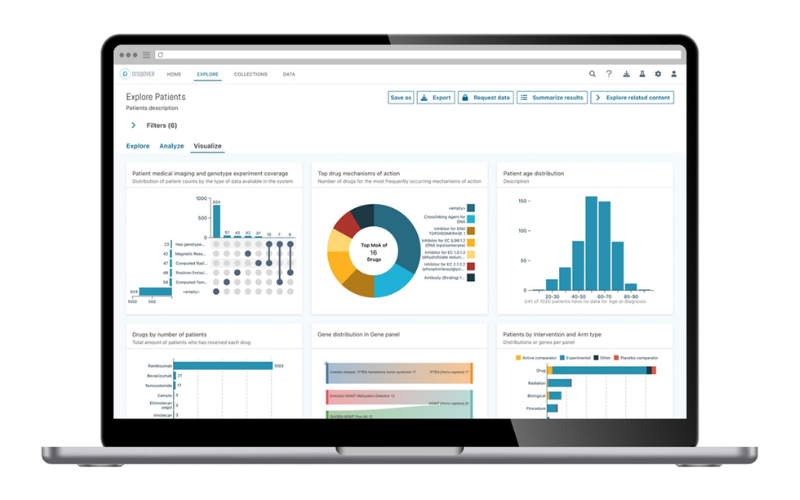
Every stage of pharmaceutical research starts with data. Genomics, biomarkers, molecular libraries, proteomics, and patient records have expanded the amount of information available to R&D teams at an unprecedented scale.
But data volume alone does not improve decision-making.
One of the biggest bottlenecks in modern drug discovery is identifying which data points deserve action. Delays at this stage often affect everything that follows, from target validation to candidate progression.
AI is helping solve this by improving how complex datasets are processed and interpreted. Machine learning models can identify biological patterns, protein interactions, and disease relationships faster than traditional analysis methods.
In practical use cases, this supports faster biomarker discovery, disease pathway mapping, and stronger hypothesis generation.
Once data is structured and understood, the next critical decision is target selection.
Target identification determines where scientific effort, budgets, and resources will be invested. Weak target selection often creates years of downstream inefficiency and unnecessary spend.
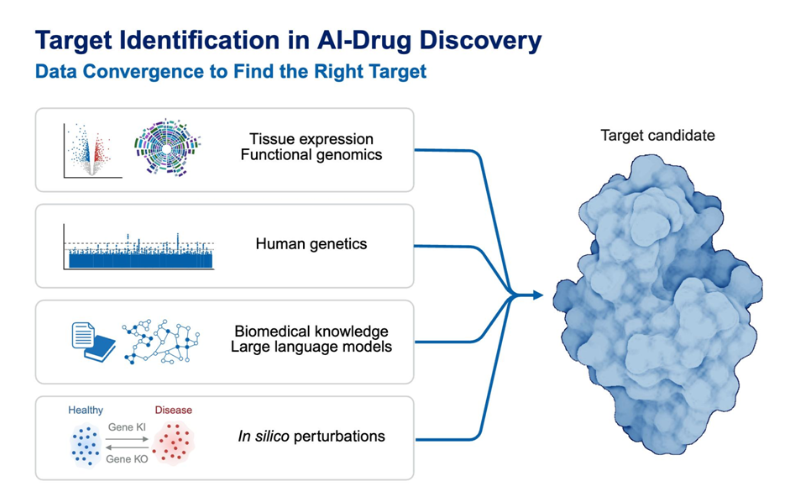
AI is helping improve this process by analyzing biological and historical datasets to identify high-potential targets faster.
Common applications include identifying novel oncology targets, prioritizing rare disease gene mutations, and mapping inflammatory pathway markers for therapeutic development.
For pharmaceutical leaders, stronger target confidence improves portfolio discipline and reduces investment in lower-probability programs.
In many pharma delivery engagements, stronger target quality early has consistently increased the efficiency of the broader pipeline.
Accelerating Molecule Discovery and Lead Optimization
After a target is selected, the next challenge is identifying molecules that can interact effectively with it. This phase has traditionally depended on repeated screening and refinement cycles, making it one of the most time-intensive and expensive parts of R&D.
AI is helping make this process more predictive, especially in therapeutic areas where molecular complexity makes traditional screening slower, more expensive, and harder to scale.
Generative models can evaluate thousands of molecular structures based on efficacy, stability, and binding affinity before physical testing begins.
This supports several important use cases:
Virtual screening of large compound libraries
Lead optimization for efficacy improvement
Drug repurposing analysis
Small molecule generation for complex disease targets
Deloitte has highlighted how AI is improving efficiency in discovery environments where repeated experimentation has historically slowed progress.
For leadership teams, this translates into faster candidate progression and more focused R&D investment.
Reducing Development Risk with Predictive Toxicity
As candidates move deeper into development, the cost of failure increases significantly. Late-stage toxicity remains one of the most expensive risks in pharma. A candidate can progress for years before safety concerns emerge, affecting both budgets and pipeline strategy.
Predictive AI models are helping reduce this risk earlier. By analyzing historical toxicity datasets, AI can identify potential hepatotoxicity, cardiotoxicity, and broader compound safety concerns before preclinical testing begins. This gives pharmaceutical teams earlier visibility into candidate quality.
For business leaders, earlier risk detection improves capital efficiency and strengthens decision-making across active portfolios.
Improving Clinical Trial Readiness
Clinical trials remain one of the longest and most operationally complex stages in pharmaceutical development. Delays in patient recruitment, poor cohort alignment, and protocol inefficiencies can significantly extend development timelines.
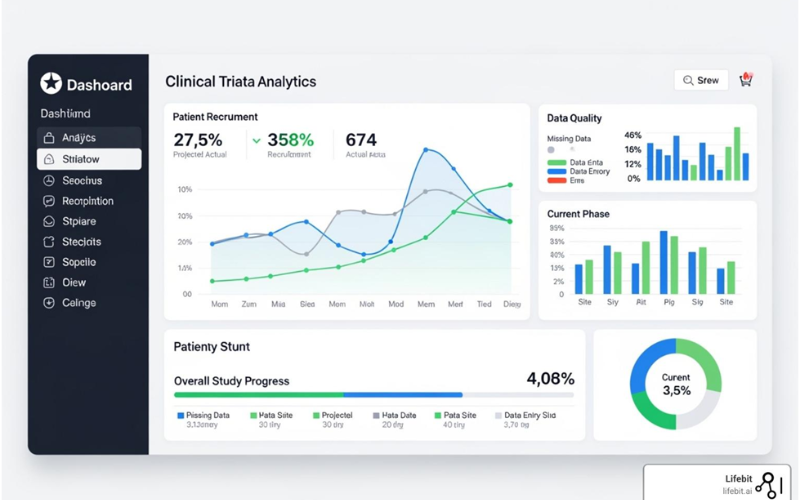
AI is helping improve trial readiness by supporting more data-driven planning. By analyzing patient records, historical trial performance, and disease progression patterns, AI can improve cohort matching, predict enrollment bottlenecks, and optimize site selection.
These use cases improve trial preparation and reduce avoidable delays. For pharmaceutical leaders, stronger trial readiness directly affects time-to-market and the ability to maximize commercial opportunities.
As candidates move closer to commercialization, the focus begins to shift from scientific validation to regulatory readiness, where operational efficiency becomes equally important.
Extending AI into Regulatory Workflows
AI’s role in pharma is expanding beyond discovery and trials. Regulatory workflows involve significant effort across documentation review, compliance checks, and submission preparation. These tasks often create operational slowdowns close to market entry.
AI is helping improve this through intelligent document processing. Key applications include:
Extracting structured data from clinical reports
Classifying regulatory documents
Identifying compliance gaps
Supporting submission readiness workflows
For pharmaceutical organizations, this reduces administrative burden and improves operational efficiency during critical submission stages.
From AI Experimentation to Enterprise Execution
The conversation around AI in pharma has shifted significantly in recent years. What started as isolated innovation projects is now becoming part of broader R&D strategy. Pharmaceutical companies are increasing AI investments because the business value is becoming clearer, from faster research cycles to stronger candidate quality and better risk visibility.
One of the biggest reasons AI initiatives stall in pharma is not model capability. It is fragmented research data and poor integration into scientist workflows.
This is where execution becomes critical.
In many AI-led pharma engagements supported by USM Business Systems, the focus has been on turning AI into practical solutions across drug discovery, from biomedical data intelligence to predictive modeling and workflow automation.
For pharma leaders, that shift from experimentation to execution is where long-term value starts to take shape.
What Pharma Leaders Should Prioritize Next?
The next phase of AI adoption in pharma will be shaped by practical execution. For some organizations, the priority may be improving data intelligence. For others, it may begin with target selection, toxicity prediction, or clinical trial optimization.
What matters most is identifying where inefficiencies exist today and understanding how AI can improve decision quality in those specific areas.
In pharma, speed matters. But better decisions matter more. The organizations combining scientific expertise with AI-driven decision intelligence will be the ones building stronger pipelines, reducing avoidable risk, and bringing therapies to market with greater confidence.
Where can AI create the biggest impact across your drug discovery pipeline today?
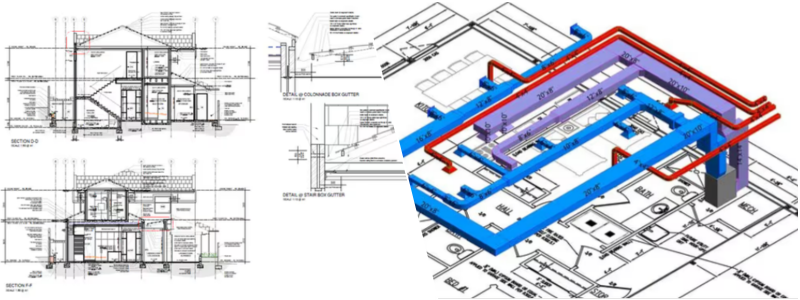
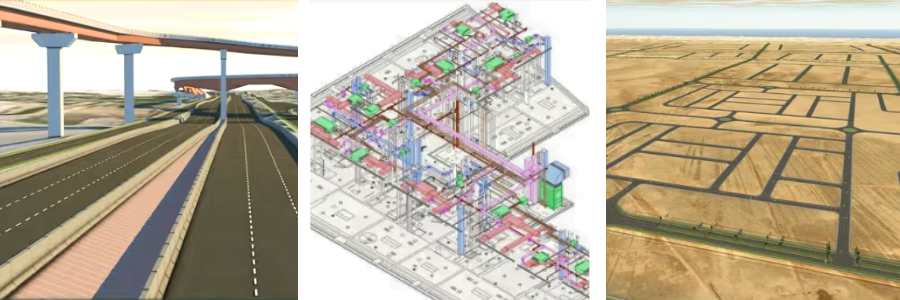
As cities continue to expand to accommodate the growing demand for office and residential spaces, transportation hubs, commercial buildings, large-scale infrastructure, schools, hospitals, and public spaces, urban development is happening everywhere. Behind every successful building project is something many people often overlook: construction drawings. Construction drawings are detailed plans created by architects to document all the technical details of a project, including materials, accurate dimensions, floor plans, HVAC systems, electrical and plumbing layouts, wall elevations, and much more. The more accurate and specific these drawings are, the easier it becomes for engineers, builders, and contractors to execute the project exactly as intended.
Construction drawings are not simply technical requirements. They are essential because they keep everything organized and functioning properly throughout the construction process. Imagine trying to cook a complicated recipe without measurements or proper instructions. You would probably make mistakes. The same thing happens in construction without detailed drawings. Every placement, dimension, and system connection must be clearly defined so that no one has to rely on guesswork. If you are a project developer or contractor in need of construction drawings, Cad Crowd offers access to a wide network of professional architects who provide a full range of construction design, drafting, and 3D construction rendering services. Before hiring an architect, however, it is important to understand what construction drawings are and why they matter.
Construction drawings serve as the instruction manual for a building project. They translate an architect’s design concepts into technical plans that contractors and engineers can understand and build from accurately. An architect may initially envision ideas such as creating an open space or introducing more natural lighting. Construction drawings transform those ideas into measurable and buildable instructions. One project typically includes multiple sets of drawings, such as electrical plans, plumbing plans, and structural plans. Each drawing focuses on a specific system while working together as one coordinated package.
During construction, contractors do not estimate where things should go. They follow the drawings closely to understand dimensions, materials, and installation procedures. Engineers also rely on construction drawings to confirm whether the structure is stable, safe, and realistic to build. Without construction drawings, even simple buildings would be difficult to complete properly. These drawings provide the clarity and consistency needed to turn ideas into functional structures.
Assisting design firms in achieving their concepts
When design firms create concepts, they must ensure those ideas can actually be constructed in the real world. While creative ideas are important, they still need to be translated into technical plans before construction begins.
Construction drawings simplify this process by converting conceptual designs into accurate and measurable plans. This ensures the drawings reflect the intended vision while remaining practical for construction teams to follow.
How do construction drawings work?
Construction drawings can be compared to a detailed blueprint. They contain design concepts alongside exact dimensions, material specifications, layouts, and technical systems that guide builders during construction.
These drawings show how every part of the building should be assembled and connected. Their purpose is to ensure that every stage of the project is carried out correctly and consistently.
Why does urban development need precise construction drawings?
Urban projects may appear simple from the outside, but they involve many interconnected systems and teams. Precision in construction drawings minimizes misunderstandings, improves safety, and ensures compliance with regulations and building standards. Accurate construction drawings also help save time and money. Inaccurate drawings can lead to misinterpretation, delays, material shortages, and expensive revisions. For example, if one team interprets the drawings differently from another, construction errors may occur, causing project setbacks.
Precise placement of systems and components is also essential for structural stability and safety. Every element must be installed correctly to ensure the building performs as intended.
How can construction drawings connect design and actual construction?
People often say architects “turn visions into reality,” but construction drawings are what actually make that possible. Architects are responsible for more than just creating visually appealing designs. They also ensure that spaces function properly, suit the environment, and meet the client’s needs. Through sketches, renderings, and digital 3D models, architects communicate how the final structure should look and function. Construction drawings allow contractors and engineers to transform those concepts into real structures. Even highly complex ideas become achievable when detailed plans guide the process. Construction services play a major role in carrying out these plans successfully. Construction drawings establish the guidelines that contractors, engineers, and builders must follow to reduce risks, prevent errors, and maintain structural stability.
Documentation process is another important aspect of construction drawings. These documents include measurements, material specifications, installation instructions, and structural information that help ensure all teams remain aligned with the original design intent.
Engineers also play a crucial role in reviewing construction drawings. Whether working in structural, electrical, or mechanical engineering, they verify that systems function correctly and comply with regulations and safety standards. In large-scale urban development projects, teamwork becomes essential. Multiple teams with different areas of expertise must collaborate effectively to transform ideas into detailed and buildable plans.
How can construction drawings promote collaboration across all teams in an urban development project?
Construction drawings involve contributions from architects, engineers, contractors, consultants, and many other professionals. These drawings help improve collaboration in several important ways.
Construction drawings function as a visual language that allows all teams to understand the project without relying on lengthy explanations. Instead of describing every detail verbally, professionals can refer directly to the drawings. This reduces confusion and helps ensure that everyone follows the same plan. Architects create the layouts, engineers add technical systems, and contractors execute the plans accurately.
Improves communication among professionals
Urban development projects involve multiple professionals working together toward a common goal. Architects focus on layouts and aesthetics, engineers handle systems and structural integrity, and contractors oversee construction activities. Clear communication between these groups is necessary to avoid misunderstandings and maintain project coordination. Construction drawings support this communication by providing a shared reference point for all teams.
Reduces errors and construction delays
Accurate construction drawings reduce delays and improve efficiency. When drawings contain errors or missing information, projects often stop while revisions are made. Detailed and well-organized drawings minimize confusion and reduce the need for costly rework. For example, if electrical systems conflict with plumbing layouts, revisions become necessary and construction slows down. By avoiding these issues, projects can save both time and resources.
Supports efficient project planning
Construction drawings help organize tasks, manage resources, and coordinate schedules. Because all teams can clearly understand the project requirements, they can work more efficiently and collaboratively. Although each professional specializes in a different area, the drawings help connect all teams into one coordinated workflow.
Makes updates and revisions easier
Large urban projects rarely proceed exactly as originally planned. Revisions and updates are common throughout construction. Construction drawings help track changes and ensure that all teams stay informed about updated plans. Modern CAD software also allows revisions to be made digitally, making updates faster and more efficient.
How can construction drawings ensure compliance with building codes and regulations?
Construction drawings help ensure that projects comply with local and national building codes, regulations, and safety standards. Governments establish these codes to protect public safety and ensure structural reliability. Construction drawings demonstrate that projects meet these requirements before approval is granted.
Accurate measurements and structural details
Service Provider Type
Average Rate Structure
Key Characteristics
Freelance Drafters / Designers
$30 – $120 / hour
Rates scale by expertise; entry-level is $35–$50, lead designers charge $85–$150.
Drafting Companies / Firms
$75 – $200 / hour
Higher rates, but includes project management and corporate quality assurance.
Per-Page / Per-Sheet Rates
$30 – $250 / page
$30 for independent freelancers; up to $250 for structural or shop drawing firms.
Every project must follow accurate measurements and propermaterial specifications. These details help inspectors evaluate whether the structure is safe and compliant.
Supports permit approval
Before construction begins, projects must go through approval processes that require documentation, including construction drawings. Officials review these plans to verify compliance with regulations before issuing permits.
Reduces legal and safety risks
Projects that follow proper codes and standards are less likely to experience legal issues, structural failures, or safety risks. Compliance process protects building owners, workers, and future occupants. Overall, construction drawings are essential because they guide projects safely and responsibly while ensuring compliance with laws and regulations.
How can Cad Crowd help with construction drawings?
Cad Crowd is a platform that connects companies with experienced CAD professionals specializing in construction drawing services.
Cad Crowd offers access to professionals with expertise in architecture, engineering, CAD drafting, and construction documentation. This allows companies to find specialists whose skills align with project requirements.
Fast project completion
Meeting deadlines is critical in large-scale development projects. Through Cad Crowd, firms can outsource work to experienced CAD professionals who can efficiently produce accurate construction drawings while maintaining high-quality standards.
Workforce support for design firms
Instead of hiring large in-house teams, firms can access skilled professionals only when needed. This flexible approach helps companies complete projects efficiently without unnecessary staffing costs.
Cad Crowd plays an important role in construction drawing services, especially in urban development projects where accuracy, efficiency, and collaboration are essential. With access to experienced professionals, firms can reduce errors, improve productivity, and ensure projects meet both safety standards and client expectations. Contact Cad Crowd today for your free quote and transform your ideas into reality; smartly and efficiently.
MacKenzie Brown is the founder and CEO of Cad Crowd. With over 18 years of experience in launching and scaling platforms specializing in CAD services, product design, manufacturing, hardware, and software development, MacKenzie is a recognized authority in the engineering industry. Under his leadership, Cad Crowd serves esteemed clients like NASA, JPL, the U.S. Navy, and Fortune 500 companies, empowering innovators with access to high-quality design and engineering talent.


















 Every stage of