How will work setups change if we spend more and more time talking to our computers? A recent feature in the Wall Street Journal looks at the rising popularity of dictation apps like Wispr, especially now that they can be connected to vibe coding tools, and what that might mean for office etiquette.
One VC said that visiting startup offices now feels like stepping into a high-end call center. And Gusto co-founder Edward Kim is apparently telling his team that in the future, offices will sound “more like a sales floor.” (As someone still scarred from the time his desk was briefly relocated to a sales floor, let me say: Oh no.)
Kim claimed that he only types now when he absolutely has to. But he admitted that constantly dictating in the office can be “just a little awkward.”
Similarly, AI entrepreneur Mollie Amkraut Mueller said her husband became annoyed with her new habit of whispering to her computer, so their late-night work sessions now involve sitting apart, or “one of us will stay in our office.”
But Wispr founder Tanay Kothari insisted that this will all seem “normal” one day, just as it’s become normal to spend hours staring at your phone.
Prokop Jirsa is the lead designer of Kingdom Come Deliverance 2, and now one of Warhorse Studios’ two creative directors. Our Joshua Wolens recently spoke to him about their games’ love of making things difficult for players, but another topic that came up was their systems-driven nature and the role a PC Gamer article played in that.
Discussing the reaction to the first Kingdom Come Deliverance, Jirsa said, “We knew that our systems-driven world works because one of you guys thought that somebody has stolen Henry’s shoes while he was in Talmberg. And we had no system like that in there. The boots just despawned. But he was really searching around the castle, ‘Who actually stole the boots?’ And he was looking at the clothing of the NPCs.”
The article in question was Chris Livingston’s memorable piece, Kingdom Come Deliverance stole my boots, and I’m on a violent mission to get them back. As Chris explained, the saga began because of another system he was unsure of. In a game full of deep simulations of day-to-day medieval life, did he need to take his boots off before going to bed?
Latest Videos From
“Early in the story,” Chris wrote, “I’m told to get some sleep by another character, who also tells me to remove my muddy boots before getting into bed. I happily comply. I don’t know how deep the simulation is in KCD yet: for all I know, if I sleep in my boots the bed could legitimately become muddy, and this character might be annoyed with me for not following his instructions. I aim to please, so I take them off.”
And thus began the delightful Epic Boots Quest, a read I highly recommend. Turns out, the game’s developers were reading, and were delighted. “This is what we aimed for,” Jirsa said. They deliberately layered in so many complex systems “that you suddenly believe that the world is real and anything can happen in the game. And that made us feel like, yeah, OK, that works.”
Stories from other players backed the feeling up. Players would say they came across a confrontation between members of competing factions, and assume it was a bespoke narrative event. “People are thinking, OK, this is some super interesting event that the designers prepared for us,” Jirsa related. “And no, it was just a thing that came up from the systems automatically.
“So all those little stories kinda made us feel that the uniqueness of Kingdom Come is worth it, that it’s worth pursuing further. Because these systems do bring actual value to the players, even though it takes so much time to implement them and make them bug-free.”
Keep up to date with the most important stories and the best deals, as picked by the PC Gamer team.
And that’s how we ended up with a version of Kingdom Come Deliverance 2 where, as Josh wrote in his 90% review, “I once got chased out of a fortress because I’d absent-mindedly equipped a stolen ring and walked past the schmuck I took it from.”
“I still remember that PC Gamer article,” Jirsa said, “and for that reason specifically I pushed for KCD 2 that we actually had that system. So now in KCD 2 the NPCs—if you, for example, pass out drunk—they will steal your shoes. They will steal your cap, and they will start wearing that. So that was you guys.”
We talk with Remedy’s Miika Huttunen, Mikael Kasurinen, and Anne-Marie Grönroos about the game’s diverse gameplay, support for XPA, and working with ID@Xbox.
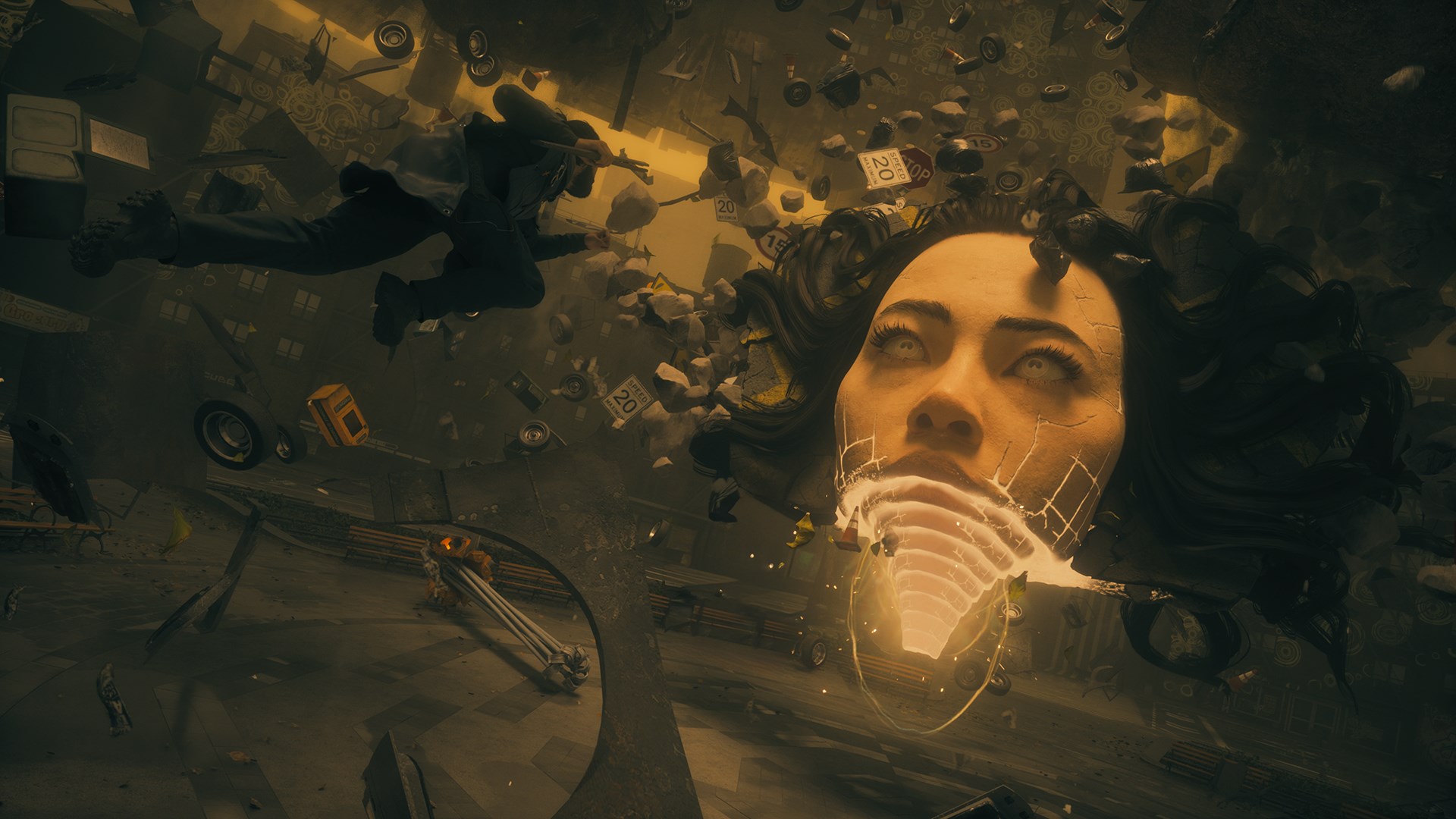
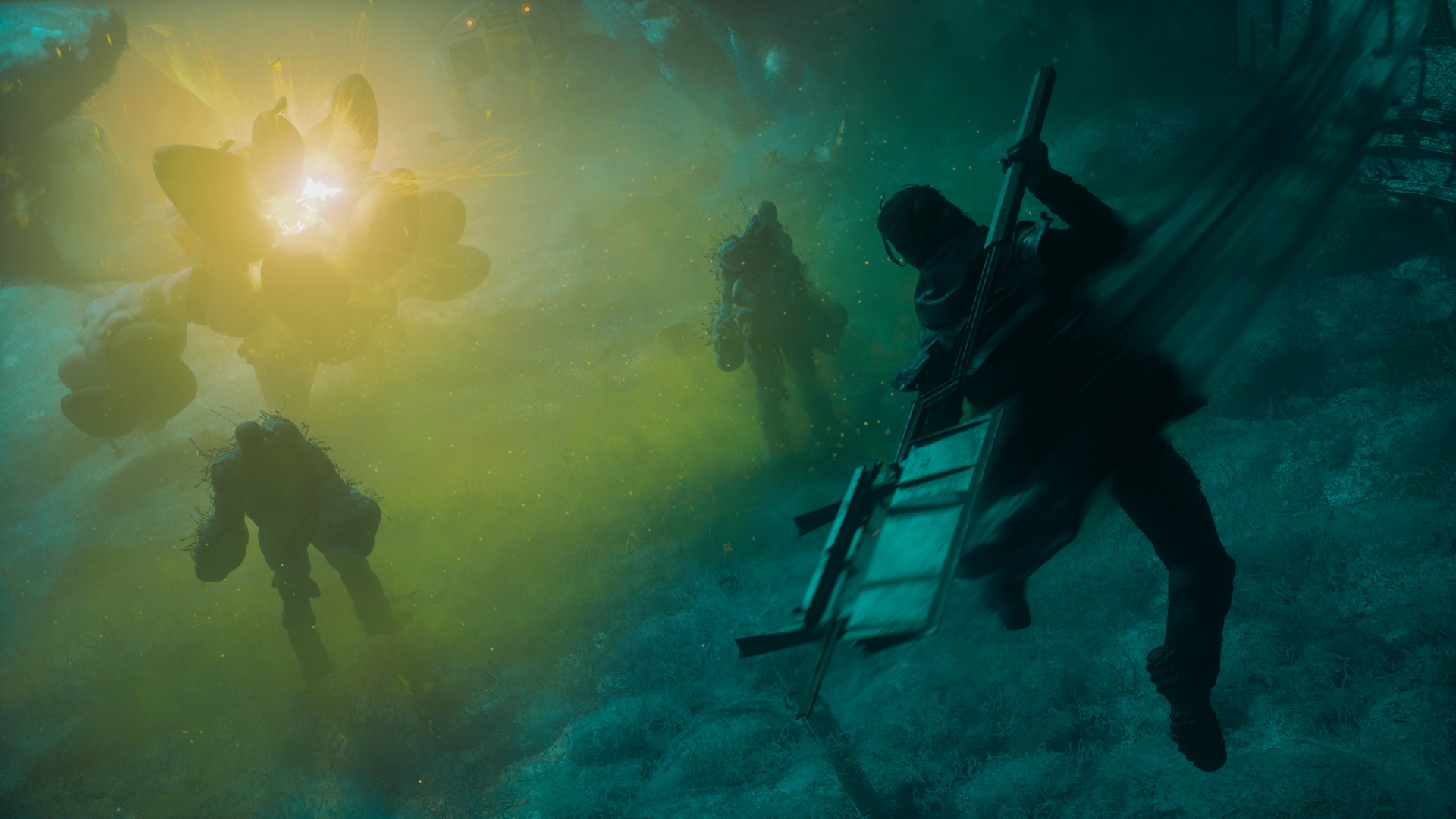
Control Resonant takes the series in a new direction, from evolving combat to a new playable character, with support for a variety of platforms and devices.
Control Resonant launches in 2026 for Xbox Series X|S and Xbox on PC with support for Xbox Play Anywhere.
A highlight for independent developers is having the creative control in the direction of the experience they want to bring to the player. It’s what makes indies such a unique facet of game development today.
Over the years, Remedy Entertainment has staked their claim as one of the most innovative game developers, delivering numerous high-quality games from the likes of Alan Wake, Control, and soon with Control Resonant. It’s here where things get exciting — Remedy will be publishing Control Resonant themselves and the ID@Xbox team has been helping support and guide them through this journey as they bring this game to the Xbox community. Part of that support has been to make sure that the game will support Xbox Play Anywhere at launch for Control Resonant.
Xbox Play Anywhere titles can be played across Xbox console, PC, and supported gaming handhelds at no additional cost, allowing you to pick up where you left off on your preferred device, bringing all your saves, game add-ons, and achievements with you.
To learn more about this journey, ID@Xbox’s Guy Richards spoke with Remedy’s Miika Huttunen, Mikael Kasurinen, and Anne-Marie Grönroos about the game’s diverse gameplay, support for XPA, and more.
You’re bringing Xbox Play Anywhere support to Control Resonant at launch. What does that unlock for players, and how has it shaped your approach to development?
Miika Huttunen, Senior Communications Manager: We want players to feel at home with Control Resonant wherever they choose to play. Our focus has been on making sure the experience feels great across platforms.
You’re self-publishing Control Resonant and working with ID@Xbox on this project. How does that partnership support the way you want to bring the game to players?
Huttunen: Yes, Remedy Entertainment is publishing Control Resonant ourselves, which is incredibly exciting. It’s been amazing to see our company grow over the years and we appreciate all of the support from our fans and partners. Of course, the ID@Xbox team has been a tremendous group to work with as we get closer to the launch of Control Resonant. Their support and guidance has been such a positive aspect of the journey to bring this game to the incredible Xbox community.
We of course have many partners we work with, such as ID@xbox to try to make sure we land well on all platforms. Remedy has a long history with Xbox, so that always helps!
With more players spending time on handheld devices, you’ve worked to make Resonant Handheld Optimized. How have you approached making Control Resonant feel great in that format?
Huttunen: We want to ensure the game is great on all platforms and the best possible experience for players. Many of the moments in AAA games tend to really shine on big displays, but we of course realize that there are players on handheld devices. We take that into account from a performance and controls standpoint to ensure that those players get the best possible experience.
Is this the kind of game that could benefit from playing side-quests on handheld, and switching to the TV for major moments?
Huttunen: That’s an interesting question. I think it’s up to players to decide on what type of device they want to play, but it’s definitely great that you can play on one device and then continue on another.
Control Resonant takes the series in a new direction, from evolving combat to a new playable character. What drove those decisions, and how did you balance these new ideas with what fans loved about the original?
Mikael Kasurinen, Creative Director: I look at these two games as siblings, each standing on their own feet, with their own attitude and approach to the world. But it’s still the same shared world, in the middle of a new crisis. The stories in both games have the Faden siblings at the center; we just shift the perspective depending on which game you play. So, players shouldn’t worry about losing a connection to these characters and who they are. But to truly get to know them, you need to see their respective journeys through their own eyes.
This also lets us bring a fresh take on the world through quests, gameplay, weapons, and abilities. And it’s easier for new players to jump in: there’s no pressure to play the first Control before Resonant. They both work as their own experiences, each with a protagonist who’s a blank slate, ready to discover their fate. And if you want to expand the picture, nothing stops you from seeing the other side of the coin.
The first game effectively took place in a single (albeit very changeable) location – how has creating an entire city changed how you design exploration, combat, and more?
Anne-Marie Grönroos, Lead Level Designer: We have a bigger, more interconnected world. The open areas are bigger and more frequent than in the first game, which means we can show landmarks from further away, creating anticipation between seeing them for the first time and finally reaching them: many of our landmarks are created by paranatural situations that the player needs to deal with, so just seeing them in the distance already starts building up a mystery. Compared to being constrained inside the Oldest House, we can show several interesting things to pursue at once, giving the player more options for where to go and what to focus on next.
There’s a greater variety of environments and a mix of both indoor and outdoor locations, creating a bigger contrast between the two (versus going from a small office space into a bigger office space). We also get the contrast of regular New York against the paranatural. The paranatural feels stranger when it’s grounded by something familiar. The scale of the big events is and feels bigger when you see the city as a point of comparison.
We can show and tell stories of the FBC interacting with the civilian world and see the impact of the paranatural on the lives of the regular people. You can see how FBC operations work outside the Oldest House, before and during the current situation. We also have stories with no FBC connections at all.
The city environments provide a lot of opportunities for vertical gameplay. We had significant verticality in the first game, too, but now you are constantly switching between the rooftops and street level and below, feeling even more like a superhero than in the first game.
Between Control, FBC, and Resonant – and the major ways they all differ – it feels like this setting can support whatever kind of game you want to make. Do you see Control as a place for Remedy to experiment in ways it would feel less appropriate to do with other projects?
Kasurinen: Control is a versatile franchise. It can support a wide variety of experiences, but of course they need to feel like they belong and have a meaningful role to play in the larger scheme of things.
Each entry in the franchise has to push the world’s story forward. For instance, even though FBC: Firebreak was a departure in many ways, it conveyed events that happened during the lockdown of the Oldest House after the events in Control and, in its own way, set the stage for Control Resonant.
So yes, it can and should also be a place for experimentation, as long as we keep our eye on the ball and it has something meaningful to say.
CONTROL Resonant
Remedy Entertainment
☆☆☆☆☆
★★★★★
After years in confinement at the hands of the Federal Bureau of Control (FBC), Dylan Faden’s former captors are deploying him at the peak of a supernatural crisis.
Charged with combating a mysterious cosmic entity as it alters fundamental aspects of our reality, Dylan must harness his new-found powers to take the fight to the myriad threats overwhelming Manhattan.
Join Dylan in this sequel to the multi-award-winning CONTROL to explore the expansive zones of a city overrun by the corrupting influences of the chaotic Hiss and invasive micro-organism, the Mold, and other twisted paranatural threats.
On the path to unlocking the full potential of his supernatural abilities Dylan will also seek out his sister, FBC Director Jesse Faden, as he bids to comprehend and contain the dangers that have spilled beyond the confines of the Oldest House to tear our world apart.
In this eduStreamTV 2026 session, James F. speaks with Judy Zuo from Kiloview about how NDI-powered AV over IP workflows are transforming educational video production, lecture capture, sports streaming, and campus-wide media distribution. The discussion highlights how schools and universities are using Kiloview solutions to create scalable, flexible, and low-latency production environments built around IP-based workflows.
Judy walks through Kiloview’s complete AV-over-IP ecosystem, including NDI encoders, decoders, media gateways, centralized network management tools, and scalable infrastructure solutions designed specifically for educational applications. These technologies allow schools to simplify deployment, improve workflow flexibility, and reduce the complexity often associated with traditional broadcast and AV systems.
The session also explores Kiloview’s cellular bonding technology, including the P3 and P3 Mini wireless bonding encoders. These portable solutions help schools and production teams maintain reliable live streams from remote locations, athletic fields, auditoriums, and campus events by combining multiple network connections for more stable video transmission.
Judy shares real-world education case studies featuring campus studios, auditoriums, and live sports production environments that demonstrate how educational institutions are using Kiloview technology to modernize media workflows while reducing infrastructure costs. By leveraging NDI and IP-based production systems, schools can support a wide range of live production and streaming applications with greater scalability and operational efficiency.
Watch this eduStreamTV 2026 session to learn how Kiloview is helping schools and universities build modern AV-over-IP production environments with NDI workflows, centralized video management, and cellular bonding technology for reliable live streaming and campus media production.
For years, Uber talked about becoming a super app. Then Waymo started picking up passengers in San Francisco, and the conversation grew more urgent. The company has been trying to embed itself inside the AV industry — as a data provider, an investor, and a distribution platform — but the consumer-facing bet may be just as important.
Two weeks ago, Uber held its annual GO-GET product event in New York and announced something its executives had been circling for a long time: users in the U.S. can now book hotels inside the Uber app, through a partnership with Expedia Group, with access to more than 700,000 properties worldwide. Uber One members — the company’s subscription tier at $9.99 a month — get 20% off a rotating list of 10,000 hotels and 10% back in credits. Vacation rentals through Vrbo will follow later this year, along with restaurant reservations via OpenTable. In the meantime, a “Shop for Me” feature lets users order from stores that aren’t even on the platform.
The announcements, taken together, were the most concrete picture yet of something Uber has been trying to conjure since at least 2019: that an app with 199 million monthly active users could become the app they use for nearly everything.
Praveen Neppalli Naga, Uber’s CTO, offered the clearest explanation of the company’s thinking at TechCrunch’s StrictlyVC event late last month in San Francisco. The super app concept has existed for years in India and Southeast Asia, he noted, but U.S. versions have mostly flopped by bolting services onto traffic rather than building toward a reason to stay.
His answer to what fits? Membership. Every new category — food, groceries, now hotels — gives someone another reason to pay for Uber One. “I take Uber, go to the airport, take a flight, take another Uber, go to a hotel, go to a restaurant,” he said. “There is a flow you can actually build into it.”
Flights are not available yet, though Naga didn’t rule them out. Uber tried flight booking in Europe years ago without success. “First let’s get the hotel things done,” he said. Financial services sound like a possibility too — Uber already offers a debit card to drivers in Mexico — though how far that goes, or when, remains unclear. Said Naga: “Never say never.”
Uber isn’t alone in this race. Airbnb, arguably the company most directly threatened by Uber’s hotel push, announced its own transportation ambitions in late March — a partnership with Welcome Pickups to offer airport transfers in 125 cities across Asia, Europe, and Latin America, structured to keep users inside the Airbnb app rather than sending them to Uber. Meanwhile, Elon Musk has spent three years promising to turn X into an “everything app” in the WeChat mold, and is now nearing what he describes as a long-stated goal: X Money, a banking and payments platform built inside the social network, is expected to launch publicly soon. X claims 500 million monthly active users.
Techcrunch event
San Francisco, CA | October 13-15, 2026
The big question is how many super apps the American market will actually support. WeChat works in China partly because the alternative was a patchwork of inferior options. In the U.S., people already have apps they like for most of what Uber wants to do. Getting them to consolidate inside a single platform requires either a compelling reason — Uber One’s discounts, say — or a seamless enough experience that switching feels worth it.
Uber’s bet is that its installed base is the moat. Its users have already handed over a credit card. Convincing them to book a hotel, or order from a store they’d never find on Uber Eats, is an easy lift compared with convincing them to download something new. Its most recent earnings, reported a few days ago, suggest Uber Eats may be the strongest argument for that thesis: delivery revenue grew 34% year over year in the first quarter, to $5.07 billion, making it easily the fastest-growing part of the business and pulling almost even with mobility in gross bookings.
Uber’s stock is still down about 8% from a year ago — suggesting that Wall Street isn’t fully convinced. But the company says that 50 million people are now paying for Uber One, and together they account for roughly half the company’s total bookings.
When you purchase through links in our articles, we may earn a small commission. This doesn’t affect our editorial independence.
A two-year legal battle between General Motors and California prosecutors, led by Attorney General Rob Bonta, over the alleged misuse of customer driving data has concluded, with GM agreeing to pay $12.75 million in penalties.
In a press release announcing the settlement, the AG alleges that GM sold “the names, contact information, geolocation data, and driving behavior data of hundreds of thousands of Californians” to data brokers, including Verisk Analytics and LexisNexis Risk Solutions. And, as the statement points out, “If you know the precise location of a person’s car, then you know an enormous amount of personal, sensitive information about that person — their home, work, children’s school, place of worship.”
The original facts of the case were uncovered by The New York Times back in 2024, where the focus was on whether insurance companies were using this driving data to charge some customers higher insurance rates. But the attorney general’s investigation concluded that “California drivers were not directly impacted by GM’s sales of data,” because under California’s strict insurance laws, “insurers are prohibited from using driving data to set insurance rates.”
In addition to the $12.75 million settlement, GM has agreed to stop selling driving data to any consumer reporting agencies for five years, delete any current driving data within 180 days (unless expressly permitted to keep the data by the driver), and develop and maintain its own privacy program to assess its data collection practices and mitigate the risks of a data breach.
While the settlement is definitely a win for consumer privacy, you shouldn’t feel too bad for GM just yet. According to the attorney general’s own calculations, GM earned roughly $20 million for the sale of its OnStar data, so even with the hefty settlement, they’re still turning a nice profit.
Among the compelling options from Samsung, Google, and OnePlus, I went with the Galaxy Watch 8 as my Wear OS smartwatch of choice. The price was a big reason, since the Samsung Galaxy Watch 8 starts at $350, and discounts and trade-ins further lower the cost. Another factor was the watch’s design, which is much thinner and lower-profile than a Pixel Watch or OnePlus Watch. More than anything else, the Samsung Health suite won me over.
There are a handful of Samsung Health features that genuinely provide insight into your fitness and long-term health using the Galaxy Watch 8’s sensors. I can glance at my watch a few times daily and get instant snapshots of how I’m feeling using underlying sensor data. You can too, using these five Galaxy Watch 8 features. They’re also available on the Galaxy Watch 8 Classic and the Galaxy Watch Ultra.
Energy score
(Image credit: Brady Snyder / Android Central)
The best part of using the Galaxy Watch 8 regularly is getting an Energy score each day. It measures your readiness for the day ahead using the activity and sleep data from the day and night prior. It requires using the Samsung Health app with a Samsung account, but other than that, Energy scores are calculated automatically with no manual setup required. Samsung uses the following metrics to come up with your score, out of 100 possible points:
Latest Videos From
Sleep time average
Sleep time consistency
Sleep regularity
Sleep timing
Previous day activity
Activity consistency
Sleeping heart rate
Sleeping heart rate variability
As you can see, sleep is an important part of your Energy score. If you don’t get good sleep, your score will be lower, and a midday nap may or may not help. That’s because Samsung accounts for the time of day of your nap, knowing that later naps disrupt your circadian rhythm and reduce energy. There are four Energy score tiers: Excellent (85-100), Good (75-84), Fair (60-74), Needs attention (0-59).
So, to get the most insight from the Energy score on your Galaxy Watch 8, be sure to wear it during sleep and throughout daily activities. Then, check into the Samsung Health app on your phone or the smartwatch tile to see your daily score.
Sleep score
(Image credit: Brady Snyder / Android Central)
Since the Energy score takes so much of your sleep data into account, you might be wondering what the Sleep score does differently. Similar to the Energy score, the Sleep score is calculated automatically when your Galaxy Watch 8 is worn to bed. It also uses the same scale, but factors in different metrics to calculate it. Sleep score measures your actual sleep time, deep sleep, REM sleep, restfulness, and sleep latency to calculate the final score.
Samsung also compares your nightly Sleep score to the average scores for your age group. For example, one night I scored a 92, which was in the top 2% of my age group. The company adds that getting a sleep score of 85 or higher equals a healthy night’s sleep. You can also view your blood oxygen levels, sleep stages, snoring, skin temperature, heart rate, and respiratory rate data in the Samsung Health app.
Get the latest news from Android Central, your trusted companion in the world of Android
I never felt like my Apple Watch offered enough detailed sleep data to justify wearing it to bed, and my Garmin is too bulky to wear the entire night. Samsung offers the perfect mix with a data-rich Sleep score experience and slim Galaxy Watch 8 hardware.
Gemini
(Image credit: Brady Snyder / Android Central)
Gemini is a worthy replacement for Google Assistant on your wrist, enabling quicker actions and time-saving automations. I use it on my Galaxy Watch 8 to set a handful of nightly alarms with a single command, avoiding the hassle of having to configure alarms on the small screen. You can also use it to get directions, start workouts, or suggest music. It’ll even read out your live health and fitness stats during a workout for a hands-free experience.
To use it, all you need to do is hold down the side button or say “Hey Gemini.” You can also enable Raise to Talk under Settings > Gestures > Raise To Talk to activate Gemini by lifting the Galaxy Watch 8 up to your mouth.
Running coach
(Image credit: Michael Hicks / Android Central)
Samsung’s Running coach feature might not be replacing personal trainers anytime soon, but it’s a cool Galaxy Watch 8 tool for beginners. The feature works by having the wearer complete a 12-minute lactate threshold test, which tells Samsung Health a lot about the wearer’s running capabilities. Then, it’ll build a training plan to help you reach your goals. Complete a “level test” for each numbered level, and you’ll advance to the next one.
To try it for yourself, open the Samsung Health app on your watch and tap Exercise. Then, find Running coach in the list and tap it. You’ll now complete the aforementioned running test by following the on-screen prompts. After finishing the test, your watch will come up with a personalized training plan based on your needs.
Vascular load
(Image credit: Samsung)
A lot of Samsung’s best health features work in the background, and the same is true of Vascular load. It tries to track your cardiovascular wellness to prevent a picture of your overall health. To see it, swipe left to view the Tiles screen, and tap Add tiles. Find the Vitals tab, and select Vascular load. Next, press Show on phone.
How to use Vascular Load | Galaxy Watch8 Series | Samsung – YouTube
From there, you’ll be able to start tracking your Vascular load after establishing a baseline by wearing your watch to bed for three nights.
Software is only part of the story, and the Galaxy Watch 8’s thin profile seals the deal. It’s only 8.6mm thick (excluding the protruding sensors), and that means it’ll be comfortable enough to wear during tough workouts and nightly sleep. The more you wear a smartwatch, the better the data it provides. That’s why the Galaxy Watch 8’s design deserves credit for how useful these five fitness and health features are.
Best Wear OS fitness watch
The Samsung Galaxy Watch 8 beats options from Google and OnePlus to earn the title of best Wear OS fitness watch in my book. It’s comfortable, accurate, and loaded with features. Use the five on this list to make the most of your Samsung smartwatch.
Earbud-based translators are the next game changer. These are over-ear devices that come in a pair—one for you, one for your conversation partner. Each of you wears one earbud, and the software on your phone handles the translation, both ways, behind the scenes. The best earbud translators make for the most natural way to communicate with someone in a foreign language that I’ve found to date, though handhelds tend to have more capabilities. (Earbud-based designs seem to be the direction the industry is heading.)
When shopping for a handheld translator, watch out for expensive subscription plans. Many devices come with free service, but only for a time, and re-upping after the trial period ends can be pricey. Check the fine print before you buy. Also, make sure the translator you’re considering covers all the languages you need. Note that while some translators support hundreds of languages, they may be limited in the language pairs they can translate between.
Who Really Needs a Handheld Language Translator?
Again, if you only need casual translation for occasional or emergency use, you can definitely get by with a free translation app on your phone. Translation devices are best for frequent users who expect to carry on multiple sustained conversations with speakers of other languages over time.
Those scenarios could include attending a reunion with your Swedish wife’s extended family or a lengthy workshop series with colleagues from other parts of the world. These tools are also often marketed to first responders who need to quickly assess a situation when human translation services aren’t available.
In situations where you may need to communicate with several speakers, each speaking a different language, a portable translator can make even more sense. If you expect your journeys to take you to far-flung areas or off the grid entirely, where internet service may be poor or nonexistent, a translator can be a helpful tool in your travel bag, even if you only expect to use it for emergencies.
Which Handheld Language Translators Are Best?
After testing numerous handheld translators, I recommend this trio. Which one you pick will depend on how you expect to use it—and your budget.
Best Stand-Alone Translator
Timekettle
T1 Handheld Translator Device
The Timekettle T1 is a reasonably affordable and very pocketable device that makes for an easy addition to your travel kit. Built for two users to communicate, each with access to half the screen, the T1 translates each side of a conversation—written or spoken—into that user’s own language. Using it can be a little tricky: a color-coded button on the side of the device or a virtual one on the 4-inch touchscreen must be held down to tell the T1 which language to listen for. But once you get the hang of it, the system works pretty well.
Accuracy is solid, and translations are fast, popping up in well under a second. One challenge I had with the device relates to its small screen. Like most translators, the T1 supports photo-based translations via its 8-megapixel camera, but the 540 x 1080-pixel screen is too small to display much text at once. Also, while the unit includes a global eSIM with two years of free service included ($50/year after that), I encountered plenty of signal gaps, even in my own home. The good news is that if Wi-Fi’s available, that works too. The unit also supports 31 offline language pairs (10 in combination with English), so if you plan ahead, service woes may not be an issue at all.
Best Translator Earbuds
iFLYTEK
iFLYTEK AI Translation Earbuds
If you want to upgrade your translation experience and make it more immersive, you’ll want to invest in a pair of earbuds, which give you a more personal and natural way to communicate. As described above, the iconic way to use these is to pop one on yourself and give the other to your friend. An app on your phone handles two-way translation, back and forth.
These 12-gram on-ear earbuds are the best I’ve tested, primarily because once they’re configured, they work completely hands-free. No clicking buttons or tapping the side of your head every time you’re ready to speak: The earbuds understand who’s talking and when, and they work with remarkable speed, almost like a professional interpreter whispering in your ear.
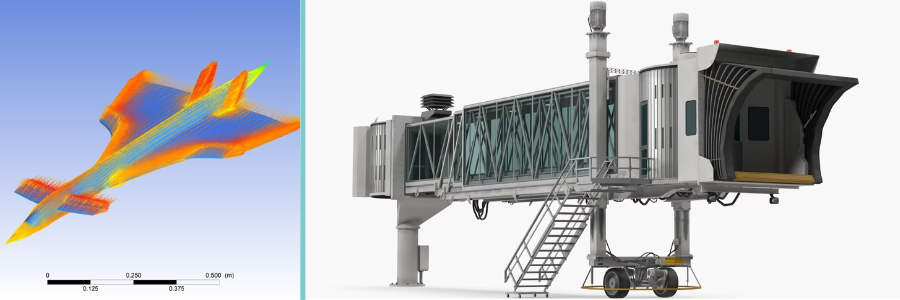
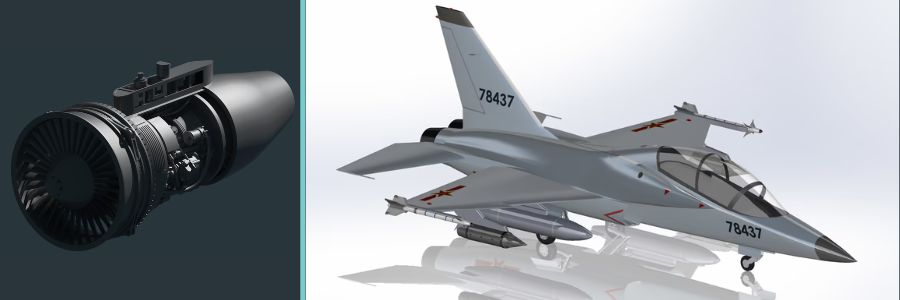
When it comes to Aerospace designs, precision is of great importance and must be complied with. Businesses should utilize technology in the modern era rather than relying solely on files and paper drawings. While this has worked in the past, it is important to adapt and catch up with what has been paving the way, such as the digital drawings that are created using CAD design services.
These digitalized aerospace blueprints are becoming more popular in the industry as they avoid loss of files, which usually happens in past methods. With the use of digital aerospace blueprints, it is much more efficient to spot mistakes, and in a span of time, you can edit and convert the files.
🚀 Table of contents
Role of paper in the aerospace industry
Paper was the backbone of everything. Paper was the most effective means of delivering documents and information back then. It truly fulfills its function in the industry and is utilized in a variety of tasks. However, as time goes on, the aerospace industry’s needs become more demanding and complicated, and paperwork may become a barrier. Even still, actual blueprints and paper will continue to be significant.
The role of paper in the industry acts as an intellectual property. Everything is signed, needs to be checked first, and has to be revised all over again. It is a piece of knowledge where it all started. Everything before digital has risen, such as papers that preserve and secure every piece of information that is available.
Paper to digital: Physical degradation and its limitations
Paper drawings, files, and blueprints are not useless; they are the first step and the longest way of having documents physically. However, it has a lot of factors that can make it useless; it can fade, tear, and be easily fabricated. With the use of digital files, it may be hard at first as everyone is still adjusting, and not everyone has the means of catching up with the latest, but it makes it easier to preserve and store files. It will also reduce costs with the use of digital files, as the use of paper will be less for aerospace engineering firms.
Storage can be hard and takes up space in the office. It is also hard to retrieved needed information and documents in an instant. Using paper blueprints also means that editing and modifying parts are difficult, and errors usually happen. System layouts can be hard, and so transitioning to digital can be a great move. In addition, old drawings and paper files can be limited in sight, which can lead to errors. In the realm of aerospace, precision is a must and makes no room for any errors, as it will cost not just financially but also to the industry that is being built.
Paper documents play a part in the aircraft industry because it frequently takes time to locate the correct file to examine. Working collaboratively is particularly challenging since it involves paperwork, which requires passing it along to others before work can begin. The emergence of digital tools has made it possible for the aerospace sector to avoid slow workflow because time is valuable.
Accuracy and sustainability in support of digital tools
In the report of NASA’s 2025 Aircraft Data Hierarchy, the room for digitalized tools and model-based systems engineering supports sustainability. The use of modern digitalized tools offers quicker repairs to problems, while still providing accuracy and integration to the systems. Yet in the field of aerospace, safety is the number 1 priority, hence the need for specific tools for specific tasks. It is a must to use the suitable tool for work, as it can cause a delay if not. By this, the use of digitalization in the field can enable one to easily track and monitor all the tools and processes being used.
Adopting digitalization is crucial in fields where safety must be ingrained since it increases productivity, which reduces hazards. As a result of these projects’ transformation, engineering systems and layouts may initially be complicated, but each step is necessary to provide precise and sustainable production. Accuracy must be instilled as professionals work efficiently, as it reduces delays in production and so can improve results for manufacturing design services.
Transitioning to digitalization
More than just turning paper files and blueprints into PDFs and images, it means that flexibility can happen. Embracing the world of digital and technology, in the industry of aerospace, it is easy to say that the paper files can be converted into digital files, such as 2D and 3D CAD services, which can be updated with the current tools in the market.
Using paper drawings, or by merely sketching them, is so hard to make adjustments to them, but by digitalizing the blueprints, it is more convenient for the aerospace industry. Having to deal with unlimited information every day, and by securing that in every step being made, the safety and quality are attained. There is a platform that can do the task, as it offers CAD services that convert every paper drawing into formats in CAD that can be edited and modified in a span.
The process from paper to digital doesn’t mean rebuilding the entire blueprint. It does not make use of traced images but of refined, editable 2D or 3D models. While there are still a lot of platforms focusing on different field yet still covering the digitizing blueprints. The use of it can create a part that can make the manufacturing process better, often lighter or stronger than the original.
Virtual testing and communication
Testing designs in a virtual environment has several benefits, including resource savings for engineering design firms. One benefit of digitizing blueprints is that they may be evaluated virtually, indicating their stress resistance. In the field of optimization benefits, Siemens & Rolls-Royce Next-Gen Demonstration allows AI-powered optimization, where some of the parts are used in digital to upgrade the process. Without having to splurge on multiple prototypes, with the use of virtual testing, experts can find flaws and maximize the tools.
Virtual testing is equally important as testing in real-world scenarios; it can improve efficiency and maximize existing knowledge and systems. In addition to saving time and money, communication between teams and partners created an environment that may benefit the aerospace company. The demand for communication in the aerospace field is getting larger and larger every day. But with the use of digital models, there are a lot of tasks that can be conveniently done. Communication can be easier to reach as you can share ideas in real time, or even if you just need a clear instruction on what to do.
As technology happens, the work is being made easier, so the need to ship a pile of papers can be lessened. Collaboratively done with every partner, team, client, and professional, it improves communication in a two-way manner and eliminates any potential misunderstanding that might be in the way.
Efficiency and productivity in the world of digitalization
The use of digitalization in the industry makes it really important, as it can improve the performance of every craft. It is convenient to have communication with different partners, teams, and engineers to improve performance, as they can use virtual meetings. With the use of virtual meetings, time can be saved, and so it will increase the productivity and efficiency of everyone, especially aerospace engineering experts. Utilizing digitalization also means being visible in the competitive business environment and building a reputation that every customer can rely on.
To be one, the aerospace industry makes an effort. There are particular tools used in production that are actually in line with what is required. It uses a variety of tools to provide digital services. Among many other things, this includes CNC machining, digital twin systems, and 5-axis milling. This provides accuracy in this industry, where precise and standardized models are being created. The use of these manufacturing tools bridges the gap between physical and digital models and design.
Reverse engineering
Not all the time can original documents be found, and so with the use of CAD services and experts, it will be easy to reclassify and redesign the document. The use of blueprints in digital form can be useful in a way that documents and files are readily available without the need to archive files in the storage room.
It cannot be denied that one challenge that happens usually when using paper files is that they get old or the original ones are lost; hence, the use of reverse engineering is a significant action, where it goes back to how exactly the paperwork was made. As a result, reverse engineering is a crucial step that relates to the precise way the paperwork was created. It is not always necessary to start a new file when one is lost or cannot be viewed fully and properly.
Risks and challenges of transitioning
Potential hazards can also happen in the use of modern digitalization, such as hacking and viruses, which can pose a risk in the field, yet with a proper platform, this can be avoided. Selecting what the aircraft design experts need is crucial to preventing resource waste. Conflict may arise if the selected tool is unrelated to the client’s needs, which could have a detrimental effect on the platform. Despite digitalization, there is a shortage of skills and talents, given that few people are keeping up with it.
The transition from paper to digital poses a lot of things that could happen, including working collaboratively. However, this transition should happen in the future. Even with the benefits that could happen when still in the format of paper, the change in digital should be made as it is done for the betterment of the industry. It is clear that despite all of the changes, humans still play a crucial role in it. It is hard to give up the process of what has been done, but resistance to change can do no good in the future.
Resistance just indicates that fear is at the forefront of the enterprise. Sometimes people are afraid of change, but that doesn’t imply they’re deleting all of their work. Notwithstanding the modifications, it can be a good notion to complete a challenging activity without feeling rushed. Ensuring that requirements are fulfilled while continuing to align with the objectives of the aerospace sector.
Security and data protection of digital
Digitalization can pose risks, as do paper files and documents. Digital files can be protected in different ways, such as using passkeys, encryption, and access controls. Because only a small number of people may access and alter the designs, tools, and documents using digital tools, platforms that offer digitalization do provide stronger protection than physical ones. The modifications made make it simple to track down. By using digitalization, the aerospace sector can produce and possess intellectual property without having to worry about it being faked or altered.
The greater the technological advancements, the easier it is to replicate. Security is rigorous, making it difficult for everyone to access, despite the experience of all professionals providing CAD digitization services. The aerospace sector faces a dilemma because it is crucial to the area; it is important to address and ensure that all data is protected. There is a special form where CAD files and services are unique from what has been used in the past. It took time before it was developed, yet it is an asset to make sure that none of the factors are compromised.
Viruses and threats might happen in the process. If these attacks can be successfully made, they will corrupt all the files, resulting in a loss of what has been designed, making it hard to recover. Hence, to avoid all of these from happening, it is vital to restrict who has access to it. In this digital age, security is crucial because making it easily accessible to everyone can raise the possibility of unlawful use.
Initiatives run through by programs like Digital Design, Manufacturing & Services, and platforms like Airbus, a digital aerospace company, can produce real-time production and manufacturing, maintenance, while still maintaining the standards and quality. In the field of transitioning to digital is the help of AI tools and systems. AI can be a help by enhancing the blueprints into refined works with the use of CAD flow.
AI can speed up the process of digitization rather than manually doing the task. It can also be a great help to experts and engineers to easily spot errors or features that need improvement. It can offer an improved approach to enhance and speed up the models while maintaining the safety standards that an aerospace company establishes.
It is important to search for alternative options that can put the industry in the forefront while advancements are pursued through prototype design engineering. It’s a smart step that benefits both clients and specialists to use AI-driven solutions to convert files in line with CAD systems. It allows for the pursuit of standardization while providing precision.
Utilizing the past to secure the future and improve the present
With the use of digital models and blueprints, it is more efficient to collaborate with different teams and partners, which also means that every move and change can be traced in real time. Yet, while there may be a lot of opinions on switching from paper to digital, making the switch to digital instead of paper can save time and money, and it also reduces the possibility of errors. It doesn’t mean that transitioning from it means that preservation of resources is not being made. It just means that it is upgrading and so investing in the services that could help flourish the system in the industry.
Using legacy drawing CAD services for the aerospace industry entails that innovation is being attained, and so investing in success. It builds a legacy that adapts to the needs of the emerging competition in the market. By having to invest in the present and future, using the past tools can still be a great help as files from it are being used, and are improved in the present, bringing out the best in the future, and avoiding being outdated in the market.
Quality control and compliance
In the industry where safety and precautions are valued and needed, having to comply with certain rules and standards is a must. Having been in the field where there are always changes as time progresses, it cannot be denied that sometimes it can be tiresome, confusing, and can reduce the quality of the work.
With the use of digitalization and so with CAD services, it is much convenient to handle tasks at once, securing that protocols are being complied. It is vital to keep track of everything, and so transparency and accountability are two of the few that the aerospace industry must attain. Digital tools can streamline processes, identify mistakes automatically, and perform quality checks while maintaining consistency with set standards.
Digital blueprint as a future for the aerospace industry
As time progresses, all things get old, and as we use them, the materials and parts weaken. Over time, it needs to be replaced, and so modern technology is a help. In the aerospace industry, aircraft maintenance can be a pain in the neck, especially when it is no longer being produced. Yet with the help of digitalized blueprints, it allows every expert, especially with the use of different platforms like Cad Crowd, to form the same forms accurately. The process of making the designs using digital tools can save time.
Digitization is more than just turning every file into an editable one. It uses CAD software that creates models, redrafts, and converts 2D into a 3D CAD model through CAD conversion services. It also organizes all the data into a proper arrangement. Digital blueprints can also be used a hundred times if a client wants to, especially in the aerospace industry. Ensuring that everything takes place in order, digital tools in the world of aerospace use a structure that can be accessible to everyone.
To accomplish the transition from paper to digital, Cad Crowd is one of the best platforms that can be used. Cad Crowd has experts in CAD services that can provide services in the aerospace industry, such as converting the drawings into editable CAD formats, including SolidWorks, AutoCAD, and many more in the field.
By using the platform, the aerospace teams will not have to assign their own staff or resources to complete the work because the Cad Crowd freelancers will handle the entire process. Only the Cad Crowd team will use it to make sure it is in line with the requirements of the aerospace industry.
Experts in CAD Services specialize in turning every file into formats. It can be done in a 2D to 3D conversion, where a client can surely see the complete system. It allows the professionals to simulate and perform the tools to be able to dry run and confirm if the product is ready for production. Professionals can be a great help in the aerospace industry, as they can also complete the files, whether the file is incomplete or torn apart. Techniques and services cannot be compared to real-life services, as using digitization also means moving forward toward the goal.
In the platform Cad Crowd, the service starts by making use of the existing file and turning it into a digital, modern file. CAD redrafting services can give a replica that can be edited while still being able to preserve the engineering process that already happened. Editing it means that changes can be made, while still securing the files and aligned with. In the field of aerospace, it is a long, tremendous phase that can take a lot of time and resources, but with the use of platforms like the Cad Crowd, the process, knowledge, and information are stored securely, which can still be used for the future.
The aerospace industry is at the core of improving its service. In this modern world, being able to adapt to it helps in improving its functionality. Digitizing legacy blueprints makes a voice in the engineering expertise, and so with the professionals who make sure that it keeps on being relevant in the realm of digital. The use of CAD services is a great way to make sure that digitizing forms is used properly. As an aerospace company continues to demand service, digital services are part of the solution to this.
Future-proofing designs does not only mean that it is just for technical advancements, but it is also about being a responsible company that cares for its customers and clients. The utilization of it enhances the protection and accountability that any model needs to have. Driven optimization reduces resources and produces the greatest service available in the market by focusing on improving each form. From paper to digital plan, it allows for innovation while meeting requirements and adhering to standards to guarantee quality.
How Cad Crowd can assist
Aerospace companies should not let the past hold back their future. It is something to look forward to, the improvement and the progress. The concept of transformation is made feasible by CAD services, which make it potent and pertinent to advance and safeguard the aerospace future. Future-proofing aerospace design is a change that unlocks every possibility that could help the field grow. Transitioning from the past to what is accessible is a step that helps, making it possible to help customers fly until the sky is the limit. Request a quote today.
MacKenzie Brown is the founder and CEO of Cad Crowd. With over 18 years of experience in launching and scaling platforms specializing in CAD services, product design, manufacturing, hardware, and software development, MacKenzie is a recognized authority in the engineering industry. Under his leadership, Cad Crowd serves esteemed clients like NASA, JPL, the U.S. Navy, and Fortune 500 companies, empowering innovators with access to high-quality design and engineering talent.
That’s the case U.S. Energy Secretary Chris Wright and NVIDIA Vice President of Hyperscale and High-Performance Computing Ian Buck made Thursday morning at the SCSP AI+ Expo. The 30-minute fireside chat, moderated by SCSP president Ylli Bajraktari, was called “Powering the Next American Century.”
Their argument: American leadership in AI runs through American leadership in energy. “Energy is life,” Wright said. “The more energy you have, the more affordable energy you have, the more opportunities you have in your society.”
The Genesis Mission — the U.S. Department of Energy (DOE)’s effort to apply AI to scientific discovery — is where that case meets execution. NVIDIA is among the DOE partners on the mission, building on what Buck called two decades of NVIDIA building supercomputers with the national labs.
“NVIDIA is 100% committed and invested in Genesis,” Buck said. “I’ve never seen more excitement across the lab and industry.”
From left: NVIDIA’s Ian Buck, U.S. Energy Secretary Chris Wright and SCSP president Ylli Bajraktari onstage at the SCSP AI+ Expo.
The session was one of several SCSP panels this week with NVIDIA leaders on stage: Cofounder and NVIDIA Fellow Chris Malachowsky will lead a panel on the AI+ Careers Workforce Task Force; Rev Lebaredian will speak on physical AI and simulation; Dion Harris will discuss AI-accelerated American science and AI infrastructure for Africa; and John Josephakis will join a session on U.S. quantum leadership.
The DOE Partnership
The DOE brings 17 national labs, the scientists, the national problems and the data. NVIDIA brings the full stack — not just chips, Buck said, but algorithms, methods and 20 years of partnership with the labs.
The work is happening at scale. NVIDIA and the DOE are building two AI supercomputers together at Argonne National Laboratory. The first, Equinox, is being stood up now with 10,000 NVIDIA Grace Blackwell GPUs — what Buck called “the same GPU, the same software being used to train and build AI that we’re all enjoying today.” The second, Solstice, will use 100,000 GPUs with NVIDIA Vera Rubin.
“To put that 100,000 in perspective on the next-generation GPU, which is dedicated to science, it’s 5,000 exaflops,” Buck said. “That’s a big number that actually is five times larger than the entire TOP500 supercomputer list combined.”
“We’re creating all the same technology, all the same hardware, all the same software building blocks used by all the major AI labs around the world,” Buck said, “for all of world science to go get access to.”
What that looks like in practice: Buck described an open source NVIDIA AI model trained on 1.5 million physics papers, then fine-tuned on 100,000 papers specifically about fusion. The result is a specialized AI agent DOE researchers can interrogate to advance their work faster.
Energy and the Pace of Building
Over the last 20 years, Wright said, the U.S. has tripled oil production and doubled natural gas production — but barely grown electricity production. That’s a problem because, as Wright put it, the most important source of energy for AI is electricity.
His department is leaning back into all three pillars of the U.S. grid: natural gas, nuclear and coal.
On nuclear, Wright pointed to small modular reactors as a near-term lever — three small modular reactors (SMRs) will go critical by July 4 of this year, he said, with both new large reactors and additional SMRs to follow.
On fusion, his department has stood up a strategic fusion office, and the lab and university programs are being, in his words, “hypercharged” by the computing power and insights AI now provides.
“We have to fix this bureaucratic and complex electricity grid so that it can grow fast, so that it can grow like our primary energy production and it can keep up with AI,” Wright said. “If we don’t do that, we’re going to slow down AI.”
NVIDIA founder and CEO Jensen Huang has described AI as a five-layer cake: energy, chips, infrastructure, models and applications. Wright’s department covers the bottom layer.
Buck took up the next layer. Asked about the intersection of energy and AI, he pointed to per-watt efficiency gains in NVIDIA chips with each generation. “We went from the Hopper generation to Blackwell,” Buck said. “We increased performance by 30x. We actually increased performance per watt by 25 times.”
Wright returned to the grid. AI, he said, can break the bottleneck of grid interconnection studies that today take years.
“With AI, we’re going to take something that was years long and make it weeks or hours,” Wright said.
What Success Looks Like
Asked what success looks like 12 months in, Wright pointed to fusion, materials and grid interconnection — concrete deliverables. “We will have deliverables that we’re going to point to — we couldn’t do that before, and now we can,” Wright said. “That’s the goal of Genesis: drive discovery and bring the benefits to humans.” There’s growing public concern that AI and data centers will drive up electricity costs, he noted. The reality, Wright said, runs the other way: “Building more electrical generation, building data centers, are actually the mechanism to lower the cost of electricity in our country and make our grid stronger.” AI and energy are both key to human progress. “AI doesn’t love, it doesn’t have passion,” Wright said. “It’s just going to make humans more powerful and better at pursuing whatever your passions are. It’s a thing that supercharges humans — it does not replace you.”