Future-Proof Your Aerospace Designs by Digitizing Legacy Blueprints with CAD Services


When it comes to Aerospace designs, precision is of great importance and must be complied with. Businesses should utilize technology in the modern era rather than relying solely on files and paper drawings. While this has worked in the past, it is important to adapt and catch up with what has been paving the way, such as the digital drawings that are created using CAD design services.

These digitalized aerospace blueprints are becoming more popular in the industry as they avoid loss of files, which usually happens in past methods. With the use of digital aerospace blueprints, it is much more efficient to spot mistakes, and in a span of time, you can edit and convert the files.


🚀 Table of contents


Role of paper in the aerospace industry

Paper was the backbone of everything. Paper was the most effective means of delivering documents and information back then. It truly fulfills its function in the industry and is utilized in a variety of tasks. However, as time goes on, the aerospace industry’s needs become more demanding and complicated, and paperwork may become a barrier. Even still, actual blueprints and paper will continue to be significant.

The role of paper in the industry acts as an intellectual property. Everything is signed, needs to be checked first, and has to be revised all over again. It is a piece of knowledge where it all started. Everything before digital has risen, such as papers that preserve and secure every piece of information that is available.
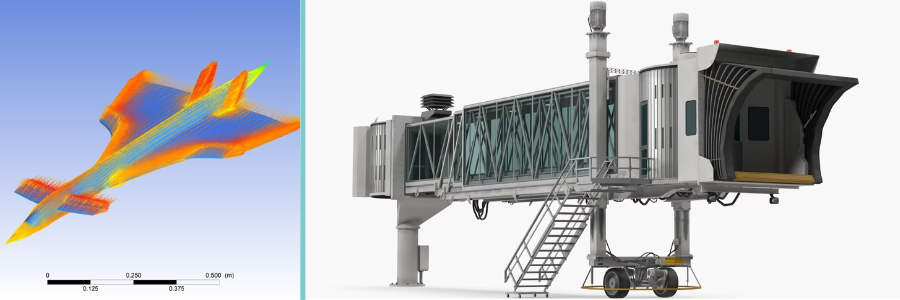
Aerospace design by Cad Crowd design experts

RELATED: Elevating your company’s product designs through user-centered design principles

Paper to digital: Physical degradation and its limitations

Paper drawings, files, and blueprints are not useless; they are the first step and the longest way of having documents physically. However, it has a lot of factors that can make it useless; it can fade, tear, and be easily fabricated. With the use of digital files, it may be hard at first as everyone is still adjusting, and not everyone has the means of catching up with the latest, but it makes it easier to preserve and store files. It will also reduce costs with the use of digital files, as the use of paper will be less for aerospace engineering firms.

Storage can be hard and takes up space in the office. It is also hard to retrieved needed information and documents in an instant. Using paper blueprints also means that editing and modifying parts are difficult, and errors usually happen. System layouts can be hard, and so transitioning to digital can be a great move. In addition, old drawings and paper files can be limited in sight, which can lead to errors. In the realm of aerospace, precision is a must and makes no room for any errors, as it will cost not just financially but also to the industry that is being built.

Paper documents play a part in the aircraft industry because it frequently takes time to locate the correct file to examine. Working collaboratively is particularly challenging since it involves paperwork, which requires passing it along to others before work can begin. The emergence of digital tools has made it possible for the aerospace sector to avoid slow workflow because time is valuable.

Accuracy and sustainability in support of digital tools

In the report of NASA’s 2025 Aircraft Data Hierarchy, the room for digitalized tools and model-based systems engineering supports sustainability. The use of modern digitalized tools offers quicker repairs to problems, while still providing accuracy and integration to the systems. Yet in the field of aerospace, safety is the number 1 priority, hence the need for specific tools for specific tasks. It is a must to use the suitable tool for work, as it can cause a delay if not. By this, the use of digitalization in the field can enable one to easily track and monitor all the tools and processes being used.

Adopting digitalization is crucial in fields where safety must be ingrained since it increases productivity, which reduces hazards. As a result of these projects’ transformation, engineering systems and layouts may initially be complicated, but each step is necessary to provide precise and sustainable production. Accuracy must be instilled as professionals work efficiently, as it reduces delays in production and so can improve results for manufacturing design services.

Transitioning to digitalization

More than just turning paper files and blueprints into PDFs and images, it means that flexibility can happen. Embracing the world of digital and technology, in the industry of aerospace, it is easy to say that the paper files can be converted into digital files, such as 2D and 3D CAD services, which can be updated with the current tools in the market.

Using paper drawings, or by merely sketching them, is so hard to make adjustments to them, but by digitalizing the blueprints, it is more convenient for the aerospace industry.  Having to deal with unlimited information every day, and by securing that in every step being made, the safety and quality are attained. There is a platform that can do the task, as it offers CAD services that convert every paper drawing into formats in CAD that can be edited and modified in a span.

The process from paper to digital doesn’t mean rebuilding the entire blueprint. It does not make use of traced images but of refined, editable 2D or 3D models. While there are still a lot of platforms focusing on different field yet still covering the digitizing blueprints. The use of it can create a part that can make the manufacturing process better, often lighter or stronger than the original. 

Virtual testing and communication

Testing designs in a virtual environment has several benefits, including resource savings for engineering design firms. One benefit of digitizing blueprints is that they may be evaluated virtually, indicating their stress resistance. In the field of optimization benefits, Siemens & Rolls-Royce Next-Gen Demonstration allows AI-powered optimization, where some of the parts are used in digital to upgrade the process. Without having to splurge on multiple prototypes, with the use of virtual testing, experts can find flaws and maximize the tools.

Virtual testing is equally important as testing in real-world scenarios; it can improve efficiency and maximize existing knowledge and systems. In addition to saving time and money, communication between teams and partners created an environment that may benefit the aerospace company. The demand for communication in the aerospace field is getting larger and larger every day. But with the use of digital models, there are a lot of tasks that can be conveniently done. Communication can be easier to reach as you can share ideas in real time, or even if you just need a clear instruction on what to do.

As technology happens, the work is being made easier, so the need to ship a pile of papers can be lessened. Collaboratively done with every partner, team, client, and professional, it improves communication in a two-way manner and eliminates any potential misunderstanding that might be in the way.

RELATED: A startup guide to concept design for hardware with product design services companies

Efficiency and productivity in the world of digitalization

The use of digitalization in the industry makes it really important, as it can improve the performance of every craft.  It is convenient to have communication with different partners, teams, and engineers to improve performance, as they can use virtual meetings. With the use of virtual meetings, time can be saved, and so it will increase the productivity and efficiency of everyone, especially aerospace engineering experts. Utilizing digitalization also means being visible in the competitive business environment and building a reputation that every customer can rely on.

To be one, the aerospace industry makes an effort. There are particular tools used in production that are actually in line with what is required. It uses a variety of tools to provide digital services. Among many other things, this includes CNC machining, digital twin systems, and 5-axis milling. This provides accuracy in this industry, where precise and standardized models are being created. The use of these manufacturing tools bridges the gap between physical and digital models and design.

Reverse engineering

Not all the time can original documents be found, and so with the use of CAD services and experts, it will be easy to reclassify and redesign the document. The use of blueprints in digital form can be useful in a way that documents and files are readily available without the need to archive files in the storage room.

It cannot be denied that one challenge that happens usually when using paper files is that they get old or the original ones are lost; hence, the use of reverse engineering is a significant action, where it goes back to how exactly the paperwork was made. As a result, reverse engineering is a crucial step that relates to the precise way the paperwork was created. It is not always necessary to start a new file when one is lost or cannot be viewed fully and properly.

Risks and challenges of transitioning

Potential hazards can also happen in the use of modern digitalization, such as hacking and viruses, which can pose a risk in the field, yet with a proper platform, this can be avoided. Selecting what the aircraft design experts need is crucial to preventing resource waste. Conflict may arise if the selected tool is unrelated to the client’s needs, which could have a detrimental effect on the platform. Despite digitalization, there is a shortage of skills and talents, given that few people are keeping up with it.

The transition from paper to digital poses a lot of things that could happen, including working collaboratively. However, this transition should happen in the future. Even with the benefits that could happen when still in the format of paper, the change in digital should be made as it is done for the betterment of the industry. It is clear that despite all of the changes, humans still play a crucial role in it. It is hard to give up the process of what has been done, but resistance to change can do no good in the future.

Resistance just indicates that fear is at the forefront of the enterprise. Sometimes people are afraid of change, but that doesn’t imply they’re deleting all of their work. Notwithstanding the modifications, it can be a good notion to complete a challenging activity without feeling rushed. Ensuring that requirements are fulfilled while continuing to align with the objectives of the aerospace sector.

Security and data protection of digital

Digitalization can pose risks, as do paper files and documents. Digital files can be protected in different ways, such as using passkeys, encryption, and access controls. Because only a small number of people may access and alter the designs, tools, and documents using digital tools, platforms that offer digitalization do provide stronger protection than physical ones. The modifications made make it simple to track down. By using digitalization, the aerospace sector can produce and possess intellectual property without having to worry about it being faked or altered.

The greater the technological advancements, the easier it is to replicate. Security is rigorous, making it difficult for everyone to access, despite the experience of all professionals providing CAD digitization services. The aerospace sector faces a dilemma because it is crucial to the area; it is important to address and ensure that all data is protected. There is a special form where CAD files and services are unique from what has been used in the past. It took time before it was developed, yet it is an asset to make sure that none of the factors are compromised.

Viruses and threats might happen in the process. If these attacks can be successfully made, they will corrupt all the files, resulting in a loss of what has been designed, making it hard to recover. Hence, to avoid all of these from happening, it is vital to restrict who has access to it. In this digital age, security is crucial because making it easily accessible to everyone can raise the possibility of unlawful use.

RELATED: Aircraft design services: A complete look at pricing, rates, and costs for companies

AI as the digital future of aerospace

Initiatives run through by programs like Digital Design, Manufacturing & Services, and platforms like Airbus, a digital aerospace company, can produce real-time production and manufacturing, maintenance, while still maintaining the standards and quality. In the field of transitioning to digital is the help of AI tools and systems. AI can be a help by enhancing the blueprints into refined works with the use of CAD flow.

AI can speed up the process of digitization rather than manually doing the task.  It can also be a great help to experts and engineers to easily spot errors or features that need improvement. It can offer an improved approach to enhance and speed up the models while maintaining the safety standards that an aerospace company establishes.

It is important to search for alternative options that can put the industry in the forefront while advancements are pursued through prototype design engineering. It’s a smart step that benefits both clients and specialists to use AI-driven solutions to convert files in line with CAD systems. It allows for the pursuit of standardization while providing precision.

Utilizing the past to secure the future and improve the present

With the use of digital models and blueprints, it is more efficient to collaborate with different teams and partners, which also means that every move and change can be traced in real time. Yet, while there may be a lot of opinions on switching from paper to digital, making the switch to digital instead of paper can save time and money, and it also reduces the possibility of errors. It doesn’t mean that transitioning from it means that preservation of resources is not being made. It just means that it is upgrading and so investing in the services that could help flourish the system in the industry.

Using legacy drawing CAD services for the aerospace industry entails that innovation is being attained, and so investing in success. It builds a legacy that adapts to the needs of the emerging competition in the market. By having to invest in the present and future, using the past tools can still be a great help as files from it are being used, and are improved in the present, bringing out the best in the future, and avoiding being outdated in the market.

Quality control and compliance

In the industry where safety and precautions are valued and needed, having to comply with certain rules and standards is a must. Having been in the field where there are always changes as time progresses, it cannot be denied that sometimes it can be tiresome, confusing, and can reduce the quality of the work.

With the use of digitalization and so with CAD services, it is much convenient to handle tasks at once, securing that protocols are being complied. It is vital to keep track of everything, and so transparency and accountability are two of the few that the aerospace industry must attain. Digital tools can streamline processes, identify mistakes automatically, and perform quality checks while maintaining consistency with set standards.

Digital blueprint as a future for the aerospace industry

As time progresses, all things get old, and as we use them, the materials and parts weaken. Over time, it needs to be replaced, and so modern technology is a help. In the aerospace industry, aircraft maintenance can be a pain in the neck, especially when it is no longer being produced. Yet with the help of digitalized blueprints, it allows every expert, especially with the use of different platforms like Cad Crowd, to form the same forms accurately. The process of making the designs using digital tools can save time.

Digitization is more than just turning every file into an editable one. It uses CAD software that creates models, redrafts, and converts 2D into a 3D CAD model through CAD conversion services. It also organizes all the data into a proper arrangement. Digital blueprints can also be used a hundred times if a client wants to, especially in the aerospace industry. Ensuring that everything takes place in order, digital tools in the world of aerospace use a structure that can be accessible to everyone.
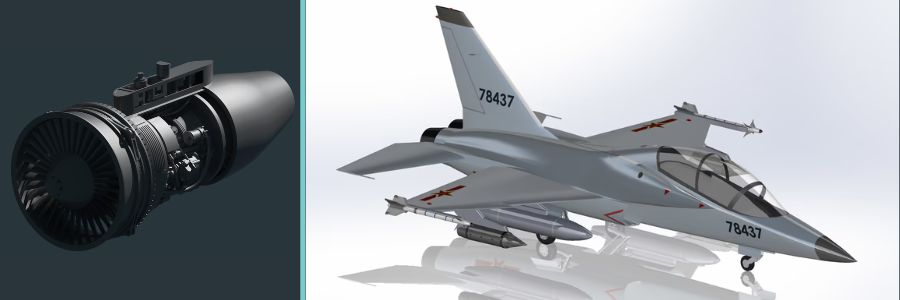
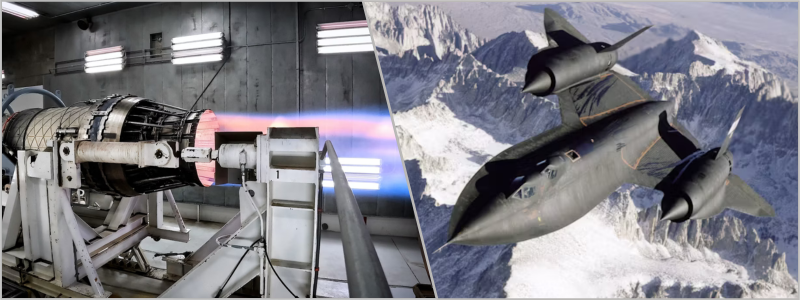
aerospace design of a jet engine and fighter jet by Cad Crowd aerospace design expert freelancers

RELATED: How much do aerospace engineering recruiters cost staffing agencies: Service fees for companies

CAD service platforms’ function and operation

To accomplish the transition from paper to digital, Cad Crowd is one of the best platforms that can be used. Cad Crowd has experts in CAD services that can provide services in the aerospace industry, such as converting the drawings into editable CAD formats, including SolidWorks, AutoCAD, and many more in the field.

By using the platform, the aerospace teams will not have to assign their own staff or resources to complete the work because the Cad Crowd freelancers will handle the entire process. Only the Cad Crowd team will use it to make sure it is in line with the requirements of the aerospace industry.

Experts in CAD Services specialize in turning every file into formats. It can be done in a 2D to 3D conversion, where a client can surely see the complete system. It allows the professionals to simulate and perform the tools to be able to dry run and confirm if the product is ready for production. Professionals can be a great help in the aerospace industry, as they can also complete the files, whether the file is incomplete or torn apart. Techniques and services cannot be compared to real-life services, as using digitization also means moving forward toward the goal.

In the platform Cad Crowd, the service starts by making use of the existing file and turning it into a digital, modern file. CAD redrafting services can give a replica that can be edited while still being able to preserve the engineering process that already happened. Editing it means that changes can be made, while still securing the files and aligned with. In the field of aerospace, it is a long, tremendous phase that can take a lot of time and resources, but with the use of platforms like the Cad Crowd, the process, knowledge, and information are stored securely, which can still be used for the future. 

The aerospace industry is at the core of improving its service. In this modern world, being able to adapt to it helps in improving its functionality. Digitizing legacy blueprints makes a voice in the engineering expertise, and so with the professionals who make sure that it keeps on being relevant in the realm of digital. The use of CAD services is a great way to make sure that digitizing forms is used properly. As an aerospace company continues to demand service, digital services are part of the solution to this.

Future-proofing designs does not only mean that it is just for technical advancements, but it is also about being a responsible company that cares for its customers and clients. The utilization of it enhances the protection and accountability that any model needs to have. Driven optimization reduces resources and produces the greatest service available in the market by focusing on improving each form. From paper to digital plan, it allows for innovation while meeting requirements and adhering to standards to guarantee quality.

How Cad Crowd can assist

Aerospace companies should not let the past hold back their future. It is something to look forward to, the improvement and the progress. The concept of transformation is made feasible by CAD services, which make it potent and pertinent to advance and safeguard the aerospace future. Future-proofing aerospace design is a change that unlocks every possibility that could help the field grow. Transitioning from the past to what is accessible is a step that helps, making it possible to help customers fly until the sky is the limit. Request a quote today.

author avatar

MacKenzie Brown is the founder and CEO of Cad Crowd. With over 18 years of experience in launching and scaling platforms specializing in CAD services, product design, manufacturing, hardware, and software development, MacKenzie is a recognized authority in the engineering industry. Under his leadership, Cad Crowd serves esteemed clients like NASA, JPL, the U.S. Navy, and Fortune 500 companies, empowering innovators with access to high-quality design and engineering talent.

Connect with me: LinkedInXCad Crowd

Top 30 Aerospace Engineering Recruiters & Aviation Agencies Recruiting at US Companies


For most aerospace companies in the United States, recruiting is not part of their core competency. It does not change the fact that they are running a business in which bringing in fresh talents and experienced professionals is key to growth and steady improvement. According to the BLS, the demand for aerospace engineers is expected to see a sizable increase thanks to rapid development in space technologies and the manufacturing of drones for special purposes such as disaster detection and prevention.

Despite the positive outlook, the aerospace industry in certain states like California, Florida, and Texas remain unable to meet the demand in recent years, with an average of only 0.5 employment per thousand jobs available. There are several possible reasons: companies have problems with direct hire, face difficulties finding the right workforce for job openings, or shortage of workforce in the area.

The great news is that the United States has plenty of recruiters specializing in aerospace engineering services. Many of them are located in California, in places like Los Angeles, the San Francisco Bay Area, Long Beach, Sacramento, San Jose, Irvine, and other major cities.

Top 30 aerospace engineering recruiters & aviation agencies recruiting at US companies

Cadcrowd logo

CAD Crowd

Based in Glendale, California, CAD Crowd is a hybrid recruiting agency that offers efficient solutions for businesses’ temporary and permanent staffing requirements. They also provide flexible project-based staffing services and executive search to fill leadership roles in companies. Backed by a pool of more than 100,000 professionals in the aerospace engineering sector, CAD Crowd implements both manual review and a proprietary AI shortlisting system based on talents’ educations, skill sets, past work experiences, certifications, and employment histories, to name a few.

CAD Crowd takes pride in delivering personalized services through an in-depth analysis of the client’s staffing necessities, company culture, job qualifications, and contract-related requirements. Thanks to a broad range of customized solutions, a massive database of potential candidates, and specialized team of headhunters in aerospace engineering sector, CAD Crowd is the outright best recruiter in California, if not the entire United States.

Cadcrowd.com

Alpha Apex Group

Alpha Apex Group

Compared to most recruiters in the aerospace sector, Alpha Apex is a much more specialized option as it places heavy emphasis on finding talents for only a handful of positions, including aircraft design experts, propulsion system specialists, safety engineers, and quality assurance professionals. The recruiting process involves not only initial technical evaluations and competency analysis but also thorough reference checks and long-term support to ensure seamless integration and that the selected talents make positive impacts on the new organizations.

Alphaapexgroup.com

Bobsearch

BOB Search

When looking for talents to fill engineering roles and executive positions, most aerospace companies are more likely to feel comfortable working with a recruiter agency that has extensive experience in the same industry sector. BOB Search has been in the business for more than 40 years and has so far compiled an impressive recruitment portfolio filled with big names like Senior Aerospace, SunSource, Hart & Cooley, and Equipois. It is said that BOB’s proprietary Performance-Based Search System can pinpoint candidates’ specific capabilities and professional backgrounds that precisely conform with clients’ orders.

Bobsearch.com

Davron

DAVRON

A versatile hiring plan and no-cost guarantee before recruitment are only a mere fraction of DAVRON’s capabilities. Based in Tampa, Florida, the recruiter has been delivering ideal candidates for various aerospace companies nationwide since 1998. Many of the companies in its portfolio are government agencies and clients who work with the United States Department of Defense. It specializes in aerospace, mechanical engineering, and manufacturing employment necessities. 

Davron.net

Integress Inc

Integress Inc

Educational background and experiences matter a great deal, but Integress takes special interest in ensuring that the candidates are culturally fit to work in clients’ companies. Integress is an expert in finding candidates to fill various positions, from C-suite leaders to technical specialists in the aerospace engineering field. Its recruiting process is consultative in nature, where clients can freely communicate their staffing specifications and job parameters. Permanent and temporary staffing services are available.

Integressinc.com

CSIcompanies

CSI Executive Search

There is no fit-for-all headhunting method with CSI Executive Search because everything can be tailored in accordance with every client’s requirements. The screening procedures and evaluation techniques are all proprietary, but everything is geared toward providing customized staffing services. CSI only prefers candidates who meet, not only the qualification requirements, but also empirically suitable for retention. Notable clients include Reagan Equipment, Linde Engineering North America, VACCO Industries, and Canal Barge. 

Csicompanies.com

Aviation Recruiting

Aviation Recruiting

Headhunter services from Aviation Recruiting cover many different staffing necessities, whether high-volume recruitment or individual talent acquisition. However, the agency focuses on just a few positions in the aerospace sector, including C-level executives, flight crew, pilots, and aircraft engineers. All services are customizable to cater to clients’ needs for long-term collaboration and immediate hiring priority. Aviation Recruiting is known for its candidate quality guarantee. 

Launchtws.com

180 E ngineering

180 Engineering

Among the most notable clients who worked with 180 Engineering for their staffing needs are Caterpillar, Global Eagle, Rexnord, and Penumbra. The recruiter takes the extra mile with every recruitment process, which may include in-depth consultation with clients’ hiring managers, stringent technical screening, and a thorough review of every candidate’s engineering experience. 

180engineering.com

Keller Executive Search

Keller

An extensive look at a candidate’s personality has become one of Keller’s highlight points. In addition to a complete review of talents’ engineering skills and track record, each must pass a detailed assessment on motivational drivers, work ethics, and preferences for career development paths. Keller also makes sure that every candidate who passes all the initial screening processes has a professional culture that aligns with the new company/position. Another potential advantage of Keller is how it aggressively hunts for industry talents, even those who are not actively seeking new opportunities. 

Kellerexecutivesearch.com

Sigma Aerospace

Sigma Recruitment

While it is true that Sigma Recruitment is based in the United Kingdom, the recruiter runs its operation on an international scale and is experienced in headhunting services all across the United States, Canada, European Union, South Korea, South Africa, Australia, and China. Pre-screening assessments on hard skills and experience are standard practice, but the recruitment process also involves deep analysis to see whether the candidates would feel comfortable with the prepared package and role requirements.

Sigmaaerospace.com

Korn Ferry

Korn Ferry

The basic operational principle of Korn Ferry’s staffing processes is to bridge the gap between talent management and talent recruitment. In addition to finding and selecting candidates to fill specific roles, the recruiter also helps clients nurture young potential clients (who are not yet ideal for the available vacancies at the moment) into capable professionals to fulfill the same or alternative positions in the future. Korn Ferry thrives in an industry landscape that emphasizes DE&I in talent acquisitions. 

Kornferry.com

Stanton Chase

Stanton Chase

Engineer recruitment services from Stanton Chase cover a broad range of sectors in the aerospace industries, including drone manufacturers, navigation system providers, OEMs, and radar parts suppliers. Since the search focuses on finding experienced engineers to fill executive positions, Staton Chase mostly looks for top-tier referrals, who possesses both technical expertise and deep understanding of market demands. Multicultural sensitivity and solid relationships with commercial, as well as government agencies are the basic requirements to pass the evaluation assessment. 

Stantonchase.com

Frank Jay and associates

Frank Jay & Associates

Few recruiters come close to Frank Jay & Associates when it comes to experience, network, and expertise. An impressive track record follows their trail over the course of 30 years in the recruitment business. They are probably not the biggest recruitment agency in the country, but the narrow specialization in the Aerospace, Aviation, and Airline industries allows them to boast a remarkable and consistent 95% success ratio (candidates retained to talents hired) throughout the decades.

As a comparison, the national industry average is only 65%. Furthermore, around 90% of searches were completed within 100 days. The best thing is that nearly all candidates (more than 95%) from the agency stay in their new positions on a long-term basis. In the event the hired candidates move to new opportunities, Frank Jay & Associates are willing to replace them with equally competent alternatives at no additional charge.

Frankjayassoc.net

Zimco expert staffing

Zimco Expert Staffing

The recruitment process by Zimco Expert Staffing is as straightforward as it can possibly get. It starts with an evaluation of the client’s requirements through an initial interview, followed by a screening procedure that involves an assessment of candidates’ qualifications. There will be a pre-employment interview before the clients make the decision to hire selected talents. Zimco Expert Staffing also offers long-term analysis to further discover employees’ interest, references, and competence improvement. 

Zimcousa.com

Avjobs Recruiting

Avjobs Recruiting

Unlike most staffing agencies on the list, Avjobs Recruiting is not necessarily an agency in the traditional sense. Instead, it works by providing a web interface with which employers are presented with a large pool of talents of different qualifications to fill specific job roles. It is, in essence, an aviation recruiting SaaS (software as a service).

Every talent in search of a new job opportunity is required to submit a detailed resume, which may include basic information like skill set, education, location, and experience, as well as specific data such as employment history, past supervisors’ names, award, honors, achievements, certifications, license, specialized training, and verification contacts.

Avjobs.com

Marymont Group

Marymont Group

More than 1,760 job positions in the aerospace and defense sectors have been filled by candidates from Marymont Group. About 94% of the placements remain in the same organizations that hired them. The recruiter focuses mainly on headhunting experienced or senior engineers to fill leadership positions. To pass the selections, candidates must at least possess remarkable technical expertise and a deep understanding of the financial market in related sectors. 

Marymont.com

Precision Personnel Recruitment

Precision Personnel Recruiting

Many staffing agencies are usually filled with HRD professionals. Precision Personnel Recruiting makes the distinction as its team of headhunters includes former aerospace engineers who have first-hand experience and expertise in the industry. The biggest advantage is that the team can rely on a collective understanding of aerospace engineering positions’ requirements, ensuring that every candidate makes for a perfect fit each time. Precision Personnel Recruiting also offers services to employees in need of a guidance to better navigate their careers.

Precisionpersonnel.com

Aviation Recruiting

Aviation Recruiting

A direct-hire staffing firm, Aviation Recruiting promises a candidate-quality guarantee. It boasts a specialized team of headhunters comprised of professionals with extensive aviation-related experience. Similar to many other agencies, it uses a proprietary database of candidates with varied specializations including commercial, defense, and aerospace industries at large. Aviation Recruiting makes sure that every candidate has the chance to review the compensation package before signing the employment agreement.

Launchtws.com

Johnson Service Group

Johnson Service Group

There are 33 offices all across the United States and Canada from which Johnson Service Group runs its recruiting operations. Established in 1984, it now hires around 200 internal staff and works with at least 3,000 contractors across its territories. The recruiter specializes in the aerospace and defense sectors, working with both commercial businesses and the military. JSG is known to provide only quality talents to fill job positions in aircraft engineering design, development, maintenance/repair, and project management. 

Jsginc.com

Murray Resources

Murray Resources

A typical staffing agency’s business operations revolve around transactional services, such as screening and placements, but Murray Resources might be more accurately regarded as workforce consultants rather than recruiters. The focus is not solely on filling job positions with the right candidates because the process is also aimed at decreasing the employment turnover rate in the aerospace sector. The proprietary assessment procedure helps clients reduce labor costs without sacrificing their chances of securing quality candidates.

Murrayresources.com

Aerotek

Aerotek

Many things can be said about how good Aerotek is at what it does. Aerotek is an industrial recruiter and a consistent Best of Staffing Award winner, an honor shared only by a mere 1% of all firms everywhere. The award simply means that the recruiting services from Aerotek receive high praise from both the clients and the candidates involved in the process. A big portion of its business targets in-demand workers such as electricians and plumbers, but it also takes pride in providing recruitment services for FAA-regulated companies, including government contractors. 

Aerotek.com

Aquent

Aquent

Among the few recruiting agencies that have tapped into the power of AI technology, Aquent stands out from the crowd with its extensive line of services for a broad range of industries. When most staffing agencies choose to specialize in specific sectors, Aquent opts to improve their core competency in the actual recruiting business – regardless of the industries – while expanding the coverage/marketplace. In the event clients are not satisfied with the talents delivered to their doorsteps, Aquent promises to refund all the cost plus an additional 10%.

Aquent.com

Aviation Personnel International

Aviation Personnel International

Not only does Aviation Personnel International claim to be the longest-running aviation recruiting firm, but it also has the broadest database of vetted candidates, both active and passive job seekers. Most of the candidates are suitable to fill such roles as leaders, pilots, schedulers, dispatchers, and maintenance professionals. Services are available for the Part 91 flight department, too.

Apiaviation.com

Reaction Search International

RSI

Reaction Search International staffing agency has worked with major names in the aviation industry such as Boeing, Airbus, United Technologies, Rolls Royce, Bombardier, and ATR. However, it offers staffing services for individual clients as well. RSI is known for its extensive portfolio of talents for various positions, from C-suite roles and vice presidents to non-executive staff and field leaders. 

Reactionsearch.com

US Tech Solutions

USTECH Solutions

The staffing services from USTECH Solutions focus on several sectors, including Aerospace, IT, Pharmaceuticals, Retail, and Financial. Each sector has its own separate/specialized team that works solely within the relevant industries. The delivery model is somewhat unique as it promises to reduce the recruiting cost by 15% to 60% on the client’s side, compared to the traditional hiring method. Staffing services are available for both permanent and contractual-based recruitments. 

Ustechsolutions.com

Peak Performance Recruitment

PEAK

The agency handles end-to-end recruitment processes in the highly specialized fields of aerospace engineering and defense systems for clients nationwide while navigating all the necessary security clearances. All candidates from PEAK intended for placements are security-cleared in compliance with the Department of Defense requirements. PEAK also employs security clearance verification in accordance with the Department of Homeland Security regulations. 

Peakperformancerecruitment.com

Butler

Butler

Recruitment process is addressed from two different fronts simultaneously. On the one hand, Butler implements the standard practice of utilizing an extensive database of candidates to meet the current demand for talents. On the other hand, it works by leveraging a proprietary resource development geared toward multi-skill training program for future allocations.

Butler.com

Sterling Engineering

Sterling Engineering

Staffing services from Sterling are employee-owned in its entirety. Sterling also claims to have one of the nation’s largest proprietary databases of engineers and manufacturing companies, compiled since 1969. In the aerospace sector, it offers services mainly for international companies to cover their staffing necessities whether on contract, direct hire, or contract-to-hire basis. Sterling is a Managed Service Provider, which means the agency handles recruitment management and oversees staffing processes on behalf of clients.

Sterling-engineering.com

Gables Search Group

Gables Search Group

Personalized recruitment programs from Gables Search Group are available for both large corporations and small businesses in the aerospace sector. Staffing processes are simplified thanks to the group’s dedicated point of contact, who is tasked with communicating (to the clients) every step of the recruitment program, from the initial screening phase to candidates’ orientation. It does not really specialize in the aerospace sector but claims to have extensive services for every discipline in all industries.

Gablessearch.com

Belcan

Belcan

The staffing services from Belcan are done through a Resource & Workforce delivery model, in which the agency provides customer-specific workforce programs for every client. Belcan focuses on candidates to fill positions in the design, engineering, supply chain, quality control, and manufacturing sectors of the aerospace and defense industries. All solutions and procedures are in compliance with the Department of Defense, NASA, and FAA standards.

Belcan.com

How Cad Crowd can help

While there is no one solution fits all in fulfilling recruitment and staffing necessities for every company, CAD Crowd implements all the standard practices that any aerospace and aviation client may expect from a professional staffing agency and then some. By combining meticulous manual reviews with an advanced AI-powered shortlisting system, we make sure that every candidate is carefully selected from a database of pre-vetted talent. This approach guarantees that each candidate meets even the most demanding client requirements. Contact us today for a free quote.

author avatar

MacKenzie Brown is the founder and CEO of Cad Crowd. With over 18 years of experience in launching and scaling platforms specializing in CAD services, product design, manufacturing, hardware, and software development, MacKenzie is a recognized authority in the engineering industry. Under his leadership, Cad Crowd serves esteemed clients like NASA, JPL, the U.S. Navy, and Fortune 500 companies, empowering innovators with access to high-quality design and engineering talent.

Connect with me: LinkedInXCad Crowd

How Much Do Aerospace Engineering Recruiters Cost Staffing Agencies: Service Fees for Companies


How much do aerospace engineering recruiters cost staffing agencies? The employment market has never been an uneventful place. There are always the transactions of job seekers wanting to get employed and employers needing workers to keep their respective businesses up and running. Even when one party needs the other, they might not have the chance to sit together and properly discuss potential employment opportunities that mutually benefit them. This is where professional recruiters truly shine as they come in to help bridge the communication and fill in the little gaps missing from both sides.

Some recruiters function as vocational and career counselors who provide job-related advice or guidance for workers. In contrast, others are headhunters who help employers find the right talents for open positions in companies or organizations. There isn’t a clear distinction between the two types, as many recruiters offer services to both groups. Large companies are leaning more towards hiring headhunters specializing in talent and job matchmaking practices.

Cad Crowd’s work with veritable aerospace companies such as NASA and Jet Propulsion Laboratories has given us great insight into the inner workings of finding the best talent for aerospace. This article dives into those insights and strategies your company can use.


🚀 Table of contents


RELATED: How 3D modeling technology enhances aviation design services for aerospace companies

Since an established organization usually has its human resource division to handle hiring processes for entry-level positions, recruiters are often assigned the task of finding qualified candidates for mid-to-high-level managerial or executive positions. On the other hand, smaller companies frequently partner with the more generalized staffing agencies that cover a wider range of talent acquisition matters to help discover fresh job seekers or moderately experienced aerospace engineering professionals looking for new opportunities.

Recruiters can work with companies of any size, from startups to international corporations. Most employers find them especially helpful when the open position requires a highly specialized talent with a specific skill set. For example, an aviation company or aircraft manufacturer may have difficulties finding an experienced aerospace engineer to replace a retired one or to join an already established rotorcraft design team. It might take months until the company can produce a small list of potential candidates, but recruiters will be able to present at least several qualified talents within a week or two.

Aerospace engineering recruiters’ rates

While some recruiters charge a flat fee for their services, most are paid a commission from a percentage of the candidate’s first-year salary, assuming the candidate is placed as a permanent staff member. The typical rate for recruiters in the United States is 15% to 35%, but the industry average is closer to 23% of the annual pay.

Permanent hire

According to the BLS’ latest data (May 2022), the median wage for aerospace engineers is $126,880 annually or $61.00 per hour. Therefore, the average commission for every placement is: 

Annual Salary x Commission Percentage
$126,880 23%
Total commission: $29,182.4 per permanent post

Bear in mind that the employee still receives the full salary, as the payment is not deducted from the amount. All charges for the services recruiters provide are billed only to the clients (employers), not the employees. 

design engineering experts

Contract/temporary hire

Things are different for contract/temporary workers. A contracted employee is kept on the recruiters’ internal payroll; in other words, the recruiters hire the employee to work for the client’s company. While the recruiters pay the employee, the wage and service fee are billed to the client. The commission, sometimes called markup, ranges from 25% to 100% of the employee’s hourly wage. If the recruiters and client agree on a 50% markup, the overall rate is: 

Hourly rate + Markup of hourly rate
$61.00 $61.00 x 50%
$30.5
Commission: $91.50 per hour

The client pays the recruiters $91.50 per hour for the contract duration, $61.00 of which goes to the contracted aerospace engineer. Another thing to remember is that the median wage is the salary that splits the workforce right in the middle. Half of the workforce earn more, and the other half earn less. Median wage is merely a practical measure to see the typical (instead of the average) salary for a design engineering professional in general. If you partner with recruiters to find a candidate for a senior position, such as a C-suite executive or key professional, you may end up paying more money to them.

Alternative payment structures

Not every recruiter charges a commission based on a percentage of a candidate’s salary. Some agencies are known to use simpler payment structures such as:

  • Flat fee rates: a one-time payment that covers all services. The rates vary from $15,000 to $50,000 per candidate hired.
  • Retained search fee: The client pays a percentage of the flat fee upfront to secure recruiters’ services. The remainder must be paid when a candidate is hired.
  • Hourly rate fee: This is typically used when the candidate is meant to fill a highly specialized role or executive position. The hourly rate offers more control over the cost regardless of the candidate’s salary. It is different from the commission-based payment structure for contract/temporary candidates.
  • Subscription-based fee: some recruiters also offer a Pay-as-You-Go payment structure in which you pay a certain amount of monthly or annual subscription for staffing services. Rates vary from $150 monthly to $1,700 for the yearly plan. The payment structure may be a good choice if you are hiring for multiple positions quickly.

Although the hourly rate remains the standard payment structure in most professions, it is gradually disappearing from recruiters’ line of work. Scouring the workforce market for an elusive talent does not guarantee a positive result, so many clients avoid hourly rates. There is also a possible conflict of interest if the recruiters are incentivized to prolong the process unnecessarily.

Work environment

Much of recruiters’ work involves discovering and locating qualified engineering design candidates for clients. Recruiters must be able to keep up with the trends in the labor market and understand what types of skills are required for various occupations to improve their chances of finding the right talent each time. Recruiters also most likely maintain a database of active job-seekers nationwide.

The database may even include passive talents; they are probably already employed but might want to consider a better offer, given the opportunity. When a client comes to recruiters’ assistance to fill a job opening, they must be aware of every important detail about the available position. In addition to basic information like qualifications and roles, the employer often has specific requirements such as educational backgrounds, special training, professional certifications, experiences in related fields, and maximum salary expectations.

aerospace engineering design experts

Recruiters usually need help to operate independently and must collaborate with the client’s internal hiring manager to determine every parameter and requirement a candidate should meet. Such planning ideally takes place in advance before there is even any job opening, but that is not always the case. Frequently, headhunting must be completed within a strictly limited period, further complicating an already challenging task of finding a good match. The part of the job that involves the hunt for talent is primarily about establishing communication with the candidates.

Before communication, recruiters must identify which candidates to call because not all can be the ideal match for employment. One of the first things recruiters do is filter through their resume database. For example, a particular project may need an electrical engineering professional with extensive experience in aerospace. They might turn to online job boards or attend job fairs if no potential talent is found. After finding several possible candidates, the recruiters must make plenty of cold calls and discuss the new employment opportunity. The discussion usually requires the recruiters to promote the client’s company and convince the candidates to apply for the job.

Just because recruiters ask those candidates to submit their resumes, it doesn’t mean everyone will be hired. The next step in the process is screening the applicants. Depending on the client’s orders, the screening may involve more than standard reviews and preliminary interviews; it may also involve complete reference and background checks. Candidates who pass the initial screening are presented to the client for another series of reviews by the internal hiring division. However, recruiters remain involved throughout the entire procedure until a candidate is selected. 

Why partner with recruiters?

Good recruiters are not cheap, but their services will pay for themselves when the best possible candidate fills the job opening. While it is true that the main point is to find an ideal match between the talent and the position, third-party recruitment professionals also bring other advantages.

Time-efficient hiring

Over the past several years, great talents have become more challenging to find, especially for a highly specialized profession like aerospace engineering. Also, hiring is not always a quick process. A typical recruitment by an internal human resource division requires a manager to review résumés, make follow-up calls, and conduct interviews, all while keeping up with the day-to-day operations. Partnering with specialized staffing and recruiters like Cad Crowd can help ease the challenge because they handle the preliminary screening part of the job, which may include background checks and cross-references.

Thanks to recruiters, the manager can still focus on role-specific duties and will interview only the candidates considered fit for the role. If the position is meant only for someone with a particular skill set and unique qualifications, recruiters help the client discover the hard-to-find candidate. This means that a large chunk of the headhunting process, at least the early difficult portion, can happen without disrupting the workflow of the company or organization. The hiring process can be more time-efficient because recruiters specialize in finding ideal job candidates.

Solving the “skill gap” problem

One of the main reasons behind organizations’ struggles to fill an open position is the skill gap problem. An open position in a company may attract dozens of candidates, but there is no guarantee that they have the qualifications required for the role. Since you cannot afford a trial-and-error experiment, you may have to wait until the right person comes up, which can take months, if not longer. Recruiters are active talent seekers. Instead of waiting for an ideal candidate to apply for the job, they search for a niche worker.

For example, let’s assume you are looking for an experienced aerospace engineer specializing in parts design of drones. Of all the applicants sending their résumés, only a handful can demonstrate an in-depth understanding of the field, but none have the work history you need. Working with recruiters helps avoid this exact problem. Their search includes active job-seekers and passive candidates likely to welcome better employment benefits. More importantly, the candidates they bring have already passed the preliminary screening procedure, so every single one of them will likely meet the requirements.

End notes

Hiring for a highly specialized position can be time-consuming and costly, considering all the steps you must take to find potential talents and screen through a pile of applicants’ résumés. Professional recruiters can ease the burden so you can focus on your core operational duties within the organization. Their services cost money, but the fee is worth every penny if you partner with reputable recruiters capable of handling the talent acquisition process within a relatively short period and end up getting an ideal match for the position.

Whether or not you decide to work with recruiters should depend on business needs, recruitment objectives, budget, and urgency to fill an open role. If you choose to partner with recruiters, you still have the authority to determine the extent of their involvement. Good recruiters should function as an extension of your hiring division rather than an entirely separate team without input.

They do maintain a degree of independence in doing their tasks, but you always have the oversight to make sure that the collaborative effort is run in accordance with your demands and in a proper professional fashion to optimize efficiency and maximize the outcome.

How Cad Crowd can help

Cad Crowd has a broad network of aerospace and related engineering talent that can set your project apart from the competition. Our extensive work with NASA, JPL, and other aerospace companies has enabled us to curate and vet skilled professionals that can be part of your team today. Contact us for a free quote.
author avatar

MacKenzie Brown is the founder and CEO of Cad Crowd. With over 18 years of experience in launching and scaling platforms specializing in CAD services, product design, manufacturing, hardware, and software development, MacKenzie is a recognized authority in the engineering industry. Under his leadership, Cad Crowd serves esteemed clients like NASA, JPL, the U.S. Navy, and Fortune 500 companies, empowering innovators with access to high-quality design and engineering talent.
Connect with me: LinkedInXCad Crowd

Exploring How 3D Printing Services Have Impacted Aerospace Supply Chain


Like other fields, the aerospace industry needs a competitive edge to overcome challenges. 3D printing is helping aerospace find an advantage and overcome obstacles. 3D printing is now being adopted to develop higher-risk parts. Key industry players feel more confident moving past aerospace components parts into critical systems and secondary structures applications. But how does 3D printing services impact the aerospace supply chain in the first place? The benefits of using 3D printing components for the aerospace industry are plentiful, and some of these are the following:

How 3D printing services have impacted aerospace supply chain

1. 3D printing enables timely manufacturing, production & distribution of parts

One of the critical drivers of faster time to market in the aerospace field is innovations in the supply chain that facilitate quicker production of parts. Time-to-market is crucial for success regardless of the industry in question. On-demand manufacturing is the best way to expedite your production cycles. Whatever qualifications or certifications are required, the manufacturing process can use standard equipment with no need for part-specific tooling just to come up with specialized components no matter where you are. 

3D printing can help accelerate production timelines. With all design files in digital form, aerospace engineering firms can easily customize them according to specific use cases. Since 3D printing doesn’t need mold or tool changes, the process is focused exclusively on updating designs. However, mass customization doesn’t necessarily mean a single size. It allows for reducing production quantity from 10,000 using traditional manufacturing techniques to as low as 100 with 3D printing.  

RELATED: How 3D modeling technology enhances aviation design services for aerospace companies

2. Cut back on supply chain costs

Shrinking a component from 80 individual parts to just one part, for example, has a significant trickle-down effect on the entire supply chain. This reduction of parts will result in a leaner supply chain. Imagine a tighter and more improved supply chain with a more consistent and reliable production level. The aerospace industry, for example, no longer requires a front-end factor to produce metal parts that still need to be sent to the machine shop, where they will be finished before shipping to the destination.

Vertical integration is now possible with self-sustaining machine shops using ordinary and certified powder to deliver components and parts. Vertical integration opens the door to localized production and can help reduce the lead times and shipping costs that traditional manufacturing techniques often require. 

3. Simplify parts through BOM consolidation 

Many design engineering companies have enjoyed more freedom in design with the help of 3D printing. 3D printing can bring so much to the table from a design perspective. However, the secret here is to think beyond the individual parts. For instance, a fan in a cooling system comprises several time-consuming and labor-intensive parts. With the help of 3D printing, you can consolidate the fan down to just one part. However, the benefits can go beyond the design itself. The use of 3D-printed parts can reduce potential failure points and assembly time.

RELATED: Freelance aerospace engineering services, cost, rates, and pricing for companies

Through this, 3D printing technologies simplify the parts and reduce the waste produced by traditional subtractive manufacturing techniques. Even though simplification is the main advantage of 3D printing in the aerospace industry, it also gives the chance to manufacture complicated designs that are impossible to make with traditional methods such as injection molding. It gives engineers the design freedom to develop parts that can render maximum performance. It means you can use more brilliant design geometries from a manufacturing perspective. It can also eliminate fixture and tooling costs and improve the lifecycle and durability of parts. 

aerospace-engineering-services

Certification and qualification for 3D printing in the aerospace supply chain

Industries with the most significant and complex compliance and qualification requirements, such as aerospace, can enjoy the most important benefits of 3D printing design services. For technology to shift from niche to broader industrial use, it must undergo several essential maturity stages. The first stage is the necessary engineering rigor to guarantee repeatability and stability for volume or large-scale manufacturing. The next stage is the characterization and documentation required for qualification efforts; this is where 3D printing is.

RELATED: How the aerospace industry is using CAD design services: drafting, modeling, and prototyping

Generally, 3D printing can provide high-quality production worldwide with the help of distributed manufacturing. However, a few best practices should be in place to cater to the stringent demands of aerospace manufacturing before turning this capability into a reality. Standard processes should also be across several locations to allow true build portability. These include consistent input materials, proper equipment calibration, a secure digital file transfer mechanism, standard equipment, and proper quality certifications.  

3D printing applications in the aerospace industry

The first-ever 3D-printed aircraft parts used worldwide were in an Airbus test aircraft that sped down the airstrip in 2014. It was a tiny titanium bracket part of the tower to secure the engine. Since then, 3D printing has enjoyed a rapid escalation, although new concept design & product development firms continue to learn and master how to adapt to the different 3D printing solutions to gain and leverage its many benefits. These include lowering costs, shortening time to market, and maximizing production output. 

RELATED: What is 3D printing? A beginner’s guide

Commercial airplanes

There is also a skyrocketing demand for new commercial airplanes. The global fleet doubles every 15 years. 3D printing can assist companies with the intimidating mountain of orders to reduce their production time. For instance, in November 2018, Airbus reported a backlog of over 7,000 aircrafts. Considering the existing process, this figure is equivalent to a production time of nine years. Similarly, Boeing’s commercial aircraft backlog was almost 6,000 at the end of September 2018. 

Several internal features in aircraft design often don’t lend themselves by complexity or volume to injection composites and other molding processes. While traditional metalworking can make creating these parts more time-consuming and expensive, 3D printing can simplify the process. This capability can be beneficial in the aerospace industry for producing turbine and engine parts, cabin interior components, and parts with more defined aerodynamic properties. The entire process can also be done at a lower cost within a shorter timeframe. 

Since 3D printing enables easy customization, part consolidation, and on-demand manufacturing, design for manufacturing (DFMA) companies in the aerospace industry can substantially cut down their time to market. 3D printing is at least 2x faster than traditional methods of manufacturing. It can even reduce time to market by more than half in aerospace manufacturing. However, the aviation influx always comes with a price. Twice the number of aircrafts that circle the world means more excellent noise roaring from overboard, heavier carbon emissions, and higher fuel consumption. 

RELATED: 7 Benefits of additive manufacturing for product design & development

Environmental-friendly design

The good news is that 3D printing can also help mitigate the environmental impact of aircrafts. 3D printing can help make an aircraft lighter by up to 55%. For instance, the Boeing 737-800, the average-sized plane that most popular commercial airlines fly, has an average weight of 90,000 pounds, excluding the passengers and fuel. However, a 55% reduction can lower it to just over 40,000 pounds. 

Since an aircraft’s weight directly correlates with the airframe’s helpful life and fuel consumption, it will also reduce its fuel consumption. Simply put, design for additive manufacturing services can help increase the overall sustainability of the present and future aerospace industry. 

design-engineering-services-1

Global possibilities await the aerospace industry with 3D printing 

On-site production is ultimately the most significant benefit of 3D printing in the aerospace industry. Transporting materials and parts can incur costs in terms of money and time. But 3D printing makes it possible to print customized components on location. The potential for an internationally distributed manufacturing network can improve overall efficiency and provide substantial savings.

RELATED: Unlocking the advantages of 3D printing spare parts for your company’s success 

This will product design companies to keep ideal inventory levels to boost productivity and make way for new value chains in the aerospace industry verticals. This capability can enable future companies to do more than act and think globally. It can give them the chance to operate beyond the planet’s boundaries. 3D printing might be the key to exploring space and embarking on planetary and lunar colonization. 

The bottom line 

Whether it is used to print a wrench made from lunar dust for the very first settlers on Mars or help an airline finish its backlog of orders, 3D printing and its many possibilities in the aerospace industry go beyond Earth’s atmosphere. It will be exciting to see and look forward to the new applications that will come to fruition as 3D printing establishes itself as a critical tool in aerospace. But one thing is for sure: the aircraft of the future and beyond will only be able to get off the ground and soar to great heights with the help of 3D printing. 

How Cad Crowd can assist

Cad Crowd offers aerospace engineering and 3D printing services to companies such as NASA. Contact us for a free quote if your organization needs help with aerospace and CAD designs.