AI Profile picture | Best AI Profile Picture generator 2024


ai profile picture

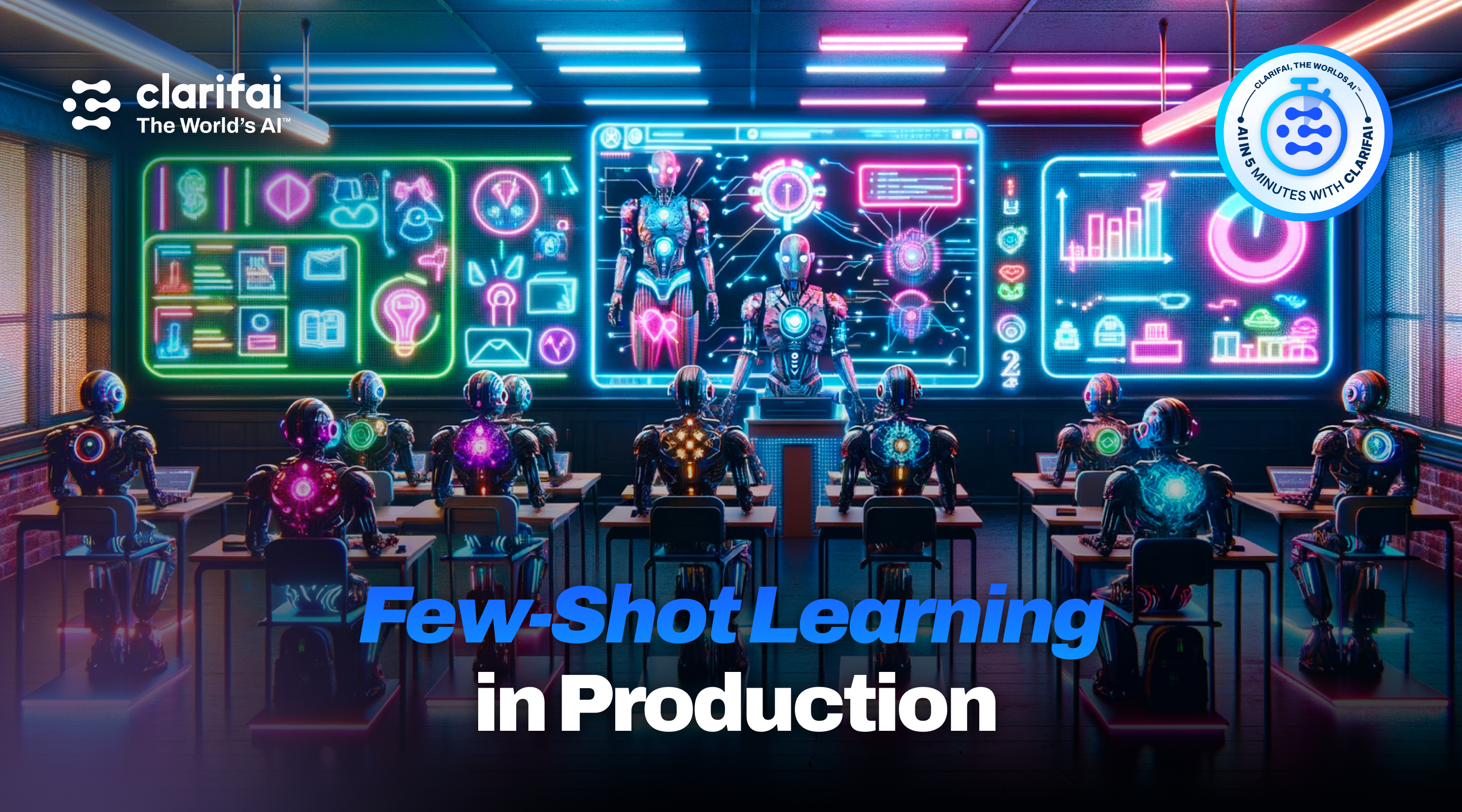
Few-Shot Learning in Production


Few-Shot Learning  in ProductionIntroduction

Given the vast number of models that excel at zero-shot classification, identifying common objects like dogs, cars, and stop signs can be viewed as a mostly solved problem. Identifying less common or rare objects is still an active field of research. This is a scenario where large, manually annotated datasets are unavailable. In these cases, it can be unrealistic to expect people to engage in the laborious task of collecting large datasets of images, so a solution relying on a few annotated examples is imperative. A key example is healthcare, where professionals might need to classify image scans of rare diseases. Here, large datasets are scarce, expensive, and complex to create. 

Before diving in, a few definitions might be helpful. 

Zero-shot, one-shot, and few-shot learning are techniques that allow a machine learning model to make predictions for new classes with limited labeled data. The choice of technique depends on the specific problem and the amount of labeled data available for new categories or labels (classes).

  • Zero-shot learning: There is no labeled data available for new classes. The algorithm makes predictions about new classes by using prior knowledge about the relationships that exist between classes it already knows.
  • One-shot learning: A new class has one labeled example. The algorithm makes predictions based on the single example.
  • Few-shot learning: The goal is to make predictions for new classes based on a few examples of labeled data.

Few-show learning, an approach focused on learning from only a few examples, is designed for situations where labeled data is scarce and hard to create. Training a decent image classifier often requires a large amount of training data, especially for classical convolutional neural networks. You can imagine how hard the problem becomes when there are only a handful of labeled images (usually less than 5) to train with.

With the advent of visual language models (VLMs), large models that connect text and language data, few-shot classification has become more tractable. These models have learned features and invariances from huge quantities of internet data and connections between visual features and textual descriptors. This makes VLMs the ideal basis to finetune or leverage to perform downstream classification tasks when only a small amount of labeled data is provided. Deploying such a system efficiently would make a few-shot classification solution far less costly and more appealing to our customers. 

We’ve paired up with the University of Toronto Engineering Science (Machine Intelligence) students for half of the 2023 Fall semester to take a first step in productionizing a few-shot learning system. 

Adapting to New Examples 

Even though VLMs have very impressive results on standard benchmarks, they usually only perform well in unseen domains with further training. One approach is to finetune the model with the new examples. Full finetuning entails retraining all parameters of a pre-trained model on a new task-specific dataset. While this method can achieve strong performance, it has a few shortcomings. Primarily, it requires substantial computational resources and time and may lead to overfitting if the task-specific dataset is small. This can result in the model failing to generalize well to unseen data.

The adapter method, first popularized by the CLIP-adapter for the CLIP model, has been developed to mitigate these issues. In contrast to full finetuning, the adapter method only adjusts a small number of parameters in the model. This method involves inserting small adapter modules into the model’s architecture, which are then fine-tuned while the original model parameters remain frozen. This approach significantly reduces the computational cost and overfitting risk associated with full finetuning while allowing the model to adapt effectively to new tasks. 

The TIP Adapter is an advanced approach that further improves upon the CLIP-adapter. TIP Adapters provide a training-free framework for a few-shot learning system, which means that no finetuning is needed (there is a version that uses additional fine-tuning and is more efficient than the CLIP-adapter). The system leverages a Key-Value (KV) cache where the CLIP embeddings are keys and the provided converted labels are values. This can be easily extended into a scalable service for a high volume of distinct image classification tasks. 

Scaling to Production

With this, the University of Toronto Engineering Science program team designed a system that can be deployed as a single container using FastAPI, Redis, and Docker. Out of the box, it can support up to 10 million uniquely trained class instances. Not to mention that via the adapter method, the time needed for fine-tuning is reduced to the order of 10s of seconds. 

Their final deliverable can be found in this GitHub repository.

What is next?

The team has identified a few directions:

  1. Different base model: CLIP has a lot of variants and is certainly not the only VLM out there. However, this may be a tradeoff between model size (and thus serving costs) and accuracy.
  2. Data augmentation: Methods like cropping, rotations, and re-coloring may help synthetically increase the number of examples for training. 
  3. Promising possibilities from Large Language Models (LMs): LLMs have decent zero-shot capabilities (no extra training) and emergent few-shot capabilities. Could LLMs be used more widely in few-shot production systems? Time will tell.

The UofT team comprises Arthur Allshire, Chase McDougall, Christopher Mountain, Ritvik Singh, Sameer Bharatia, and Vatsal Bagri. 


AI and Data Literacy: Developing Analytical Skills in School Kids


In an era characterized by rapid technological advancements, the integration of artificial intelligence (AI) and data-driven decision-making has become ubiquitous. As AI technologies continue to reshape industries and societies, it becomes crucial to equip the younger generation with the necessary skills to navigate this data-driven landscape. Data literacy, the ability to understand, analyze, and interpret data, has emerged as a fundamental competency, and introducing it at an early age can be a transformative step in fostering analytical skills among school kids.

Data literacy for students is the gateway to unlocking this world of information and making sense of it. It’s not just about reading charts and graphs; it’s about deciphering patterns, asking questions, and drawing meaningful conclusions. Data literacy equips students with the skills to navigate the data-rich landscape, enabling them to critically evaluate sources, recognize biases, and form well-informed opinions.


The Rise of Data Literacy in the Digital Age

With the explosion of digital information and the proliferation of smart devices, the amount of data being generated has grown exponentially. This data serves as a valuable resource for businesses, governments, and individuals alike, enabling them to make informed decisions. However, making sense of this data requires more than just access; it demands a level of understanding and proficiency commonly referred to as data literacy.


Data literacy encompasses several skills, including the ability to read and interpret data visualizations, critically assess the quality of data, draw insights, and make data-driven conclusions. It also involves an understanding of basic statistical concepts and the ethical considerations surrounding data usage. In the current landscape, where data is hailed as the new oil, data literacy is a key differentiator, enabling individuals to be active participants rather than passive consumers in a data-rich world.


The Role of AI in Data Literacy

Artificial intelligence, with its capacity to analyze vast datasets at unprecedented speeds, plays a pivotal role in enhancing data literacy. AI-driven tools can assist in data processing, pattern recognition, and generating insights from complex data. Moreover, AI-powered platforms often provide interactive and user-friendly interfaces that allow individuals to explore and interact with data in intuitive ways.


In the modern age, the symbiotic relationship between AI and data has revolutionized industries across the board. AI’s prowess lies in its ability to extract meaningful insights from massive datasets, propelling innovation and informed decision-making. The success of AI hinges on the quality and quantity of data it processes, underlining the significance of data as the fuel powering the AI revolution. As AI continues to evolve, the synergy between AI and data is reshaping the landscape of technology, business, and everyday life.


For school kids, integrating AI into their learning experience not only demystifies complex data analysis but also makes it engaging and accessible. AI-driven educational tools can provide personalized learning experiences, adapting to each student’s pace and needs. This fosters a deeper understanding of data concepts and analytical processes, empowering kids to think critically and solve problems systematically.


Benefits of Introducing Data Literacy Early

Critical Thinking Skills: Introducing data literacy at a young age encourages kids to question information, evaluate sources, and form reasoned conclusions. Analyzing data requires them to think critically, enabling them to become discerning consumers of information in a digital world rife with misinformation.


Real-World Relevance: Data literacy connects classroom learning to real-world applications. By working with datasets relevant to their interests or current events, students grasp the practical implications of data analysis. This bridges the gap between theoretical knowledge and practical skills.


Transdisciplinary Learning: Data literacy is not confined to mathematics or science classes alone. It permeates various subjects, including social sciences and even arts. For instance, history students can analyze historical trends, while art students can use data to understand audience preferences and trends.


Preparation for the Future: The job market is evolving, with data-driven roles becoming increasingly prominent. Equipping students with data literacy skills early on provides them with a competitive advantage, regardless of their future career paths.


Ethical Awareness: Data literacy education can also include discussions about data privacy, security, and ethical considerations. This empowers kids to become responsible digital citizens, understanding the implications of data sharing and usage.


Implementing Data Literacy in Schools

Integrating data literacy and AI education into school curricula requires a multifaceted approach:


Teacher Training: Educators must receive training to effectively teach data literacy concepts and AI integration. Professional development programs can equip teachers with the skills and confidence to navigate these evolving educational paradigms.


Interactive Learning Tools: Educational institutions should invest in AI-powered tools that facilitate interactive learning experiences. These tools can include simulations, games, and platforms that enable students to work with real datasets in a controlled environment.


Cross-Disciplinary Collaboration: Data literacy is not limited to a single subject. Collaboration among teachers from various disciplines can lead to innovative ways of incorporating data analysis into different aspects of the curriculum.


Real-World Projects: Engaging students in real-world projects that require data analysis fosters a hands-on learning experience. Whether it’s analyzing local environmental data or studying social trends, such projects make data literacy tangible and exciting.


Ethics and Responsibility: Discussions on data ethics should be an integral part of data literacy education. Students should understand the importance of using data responsibly and respecting privacy.


The Way Forward

As technology continues to reshape society, data literacy and AI competence are becoming essential skills, akin to reading and writing. By introducing these concepts early in a child’s education, we empower them to be active participants in a data-driven world. The benefits are manifold: critical thinking, problem-solving, interdisciplinary learning, and ethical awareness. The next generation will not only consume data but will also understand, analyze, and contribute to shaping the world through data-driven insights.


Educational institutions, policymakers, and parents must collaborate to ensure that school kids are equipped with the necessary analytical skills. By embracing AI and data literacy, we pave the way for a generation that can harness the power of data to make informed decisions, drive innovation, and contribute meaningfully to a rapidly evolving global landscape.

Cost To Develop A Real Estate Crowdfunding App Like Fundrise


How Much Does It Cost To Develop A Real Estate Crowdfunding App Like Fundrise?

Real estate is one of the most emerging sectors which is contributing the highest share of the global economy. Residential, commercial, industrial, and open plots real estate segments have been witnessing tremendous growth across the global markets.

Unlike traditional investing, nowadays, people are crazy about investing in real estate properties, acquiring equity shares, and enjoying returns conveniently through apps. Real estate crowdfunding apps are in high demand and witness a million downloads every year. Real estate investment apps are also helping investors in choosing the right properties.

Driven by the flexibility in selecting properties and secure investment facilities, the users of real estate investment applications are increasing, and the transaction value to going beyond expectations.

According to the market research reports, the global real estate crowdfunding market size was USD 120.7 billion in 2019 and is expected to reach USD 850.3 billion by the next five years.

Hence, developing a property investment app like Fundrise is a good approach to grabbing market attention. Businesses can better engage and grab the attention of recognized and non-accredited investors through Fundrise clone app development.

Are you looking to develop a real-estate crowdfunding mobile app like Fundrise?

This article would help you in all ways. Herein, you can get information related to the features and functionalities that you must add to Fundrise clone app development. You can also get information related to the cost of creating a real estate crowdfunding app.

Let’s get started!

How Much Does It Cost To Build Fundrise Clone App

What Is A Crowdfunding Platform?

Crowdfunding is a revolutionary approach for businesses to raise funds for their business or any further development operations. It will be helpful for businesses to increase the visibility of their business proposal and grab the invest attention with ease.

What Is Real Estate Crowdfunding App and How Does It Work?

Real Estate Crowdfunding apps are applications that allow investors to invest in a wide range of properties. So, investors can buy a portion of properties and get profits based on their equity share. This digital funding process offers a modern way of raising funds for large-scale real estate projects.

The real estate crowdfunding boom has been strongly rooted in the USA, UK, and European countries. Businesses across these nations are widely downloading crowdfunding apps, listing their properties, and raising funds without any hassle.

What Is Fundrise Mobile App?

Fundrise is one of the best real estate crowdfunding apps in the USA. It is founded in 2012 and headquartered in Washington, DC. Fundrise app is recognized as the fastest-growing private company in America. This Washington’s leading real estate investment application has also received the top Forbes Fintech 50 award recently.

Fundrise-like USA’s leading real estate investment app gives users flexibility in choosing assets and creating a strong investment portfolio. Users can put a series of investments in a single asset and get the majority of equity shares.

The app sends updates on their investment options through the newsfeed. Hence, investors can build a portfolio and keep monitoring their funding benefits.

The entire investment process is very transparent and secure with top real estate crowdfunding mobile apps in the USA like Fundrise.

As of today, this leading real estate investment platform in the USA has 371,000+ individual investors and holds $1 billion of equity on their behalf of them. As of Fundrise, the net dividends earned by investors are approximately $226+ million as of September 2022.

Fundrise app has also been recognized as the top Forbes Fintech 50 and Washington’s leading real estate investment application.

Further, Fundrise is the most visited real estate crowdfunding site in the USA and reports nearly 556K visitors per month.

Would you like to build a Fundrise-like crowdfunding platform?

Here is the list of features and functionalities you should never miss to integrate into your new crowdfunding platform. These features are the core reasons behind the success of Fundrise-like the top trending real estate crowdfunding app in the USA.

Must-Add Features In A Real Estate Crowdfunding Platform Like Fundrise

Whether you release a minimum viable product or directly launch full-fledged applications, the features that you add and the functionalities that your application delivers decide its success.

Since many crowdfunding apps are offering seamless investment experiences to individual investors, features will matter in making your application unique.

Must-have Features Of Real Estate Crowdfunding Apps 

  • Hassle-free sign-up and login process
  • User credential verifications through OTP
  • Account details authentication
  • Search Facility to find the properties and other investment details
  • Filters, such as location, property type, size, etc., to select a property to invest
  • Flexible investment options as minimum as you can pay
  • Investor newsfeed for notifying the development works or any other progress in investor’s assets
  • The two-factor authentication process for ensuring high-level security for the investor’s confidential financial information
  • Providing In-app chatbot assistance or direct communication with financial professionals would help your audience get quick-responsive support.
  • The dashboard facility enables users to view their investment portfolio.
  • Development project listings along with details, maximum investment limit, and available equity share
  • Investor profile page where they can link bank accounts and set investment goals
  • A real estate crowdfunding platform with in-app investment and returns calculator improves user personalization and app experiences.
  • A top real estate investment platform similar to Fundrise has designed with a money withdrawal facility. It enhances the app’s reliability and grabs the attention of loyal investors.
  • Simple app design
  • Push notifications and updates on the investment portfolio and financial reports
  • Reviews and ratings

These are a few basic features of Fundrise-like a popular real estate crowdfunding platform development.

How To Begin The Development Of A Real Estate Crowdfunding Platform like Fundrise?

Fundrise is a Washington-based real estate crowdfunding platform that is gaining popularity in the online real estate industry. The development model and approach should be very clear before starting the development of the Fundrise clone app. Here are the steps that you must follow while creating a similar app like Fundrise.

Cost To Develop A Real Estate Crowdfunding App Like Fundrise

  1. Market Research

It is one of the crucial phases where you can find the pros and cons of developing an app like Fundrise. The research will help you gather the features list, set a scope, and measure the success rate of your new real estate crowdfunding application (Android/iOS).

Our team of analyst developers will focus on crowdfunding market trends and add investor-friendly features to your applications.

  1. Requirement Analysis

The next step is requirement analysis. It will help you shortlist the set of primary and user-friendly features. Based on your app requirements and vision, our experienced #custom mobile app developers in USA will analyze and evaluate the best features that increase the value of your new investment app.

  1. Eye-Catchy and Simple Design  

The user interface of popular real estate crowdfunding platforms like Fundrise is one of the reasons behind its popularity. A simple interface will allow users to easily navigate to the pages that they wish.

USM’s best mobile app designers will create simple and easy-to-understand UX/UI designs and turn you app’s design more engaging and user-friendly.

Get a free app quote for a real estate crowdfunding app development!

  1. Develop and Deploy An MVP

The development of a minimum viable product with core features is a good approach to knowing the user experiences. It will also reduce the overall cost of real estate crowdfunding app development.

USM is the Number #1 MVP app development company in the USA. Our team of top app developers and creative graphic designers will design and develop a flawless native mobile app within scheduled timelines.

  1. Update Features As Per User Needs

Based on the user feedback and issues they are facing while accessing your MVP application, you can modify the application and deliver an app with a complete set of features.

Get in Touch!

  1. Aware Of Crowdfunding Policies

Knowing the government rules and regulations that apply to the Real estate crowdfunding industry is a key point for avoiding hefty fines.

Now let’s jump into how much it costs to develop a real estate investment app like Fundrise with the above-listed features.

How Much Does It Cost To Build Fundrise Clone App?

Fundrise-like real estate crowdfunding platform development cost will be around $100,000 to $150,000. However, the cost of crowdfunding mobile apps for real estate will depend on the business model, development approach, features list, app development type, platform, and size and location of native mobile app developers USA.

Moreover, the hourly rate of #Mobile App Development Company USA will also impact the cost of crowdfunding app development. Because the cost of app development per hour will vary based on the geographic locations of mobile app developers.

For instance, the cost to hire mobile app development companies in the USA is high when compared to the cost of hiring Android or iPhone app developers in the UAE or UK.

Let us know your app’s idea and get a free app quote right now!

GitHub Introduces Code Scanning Autofix, Powered by Copilot and CodeQL


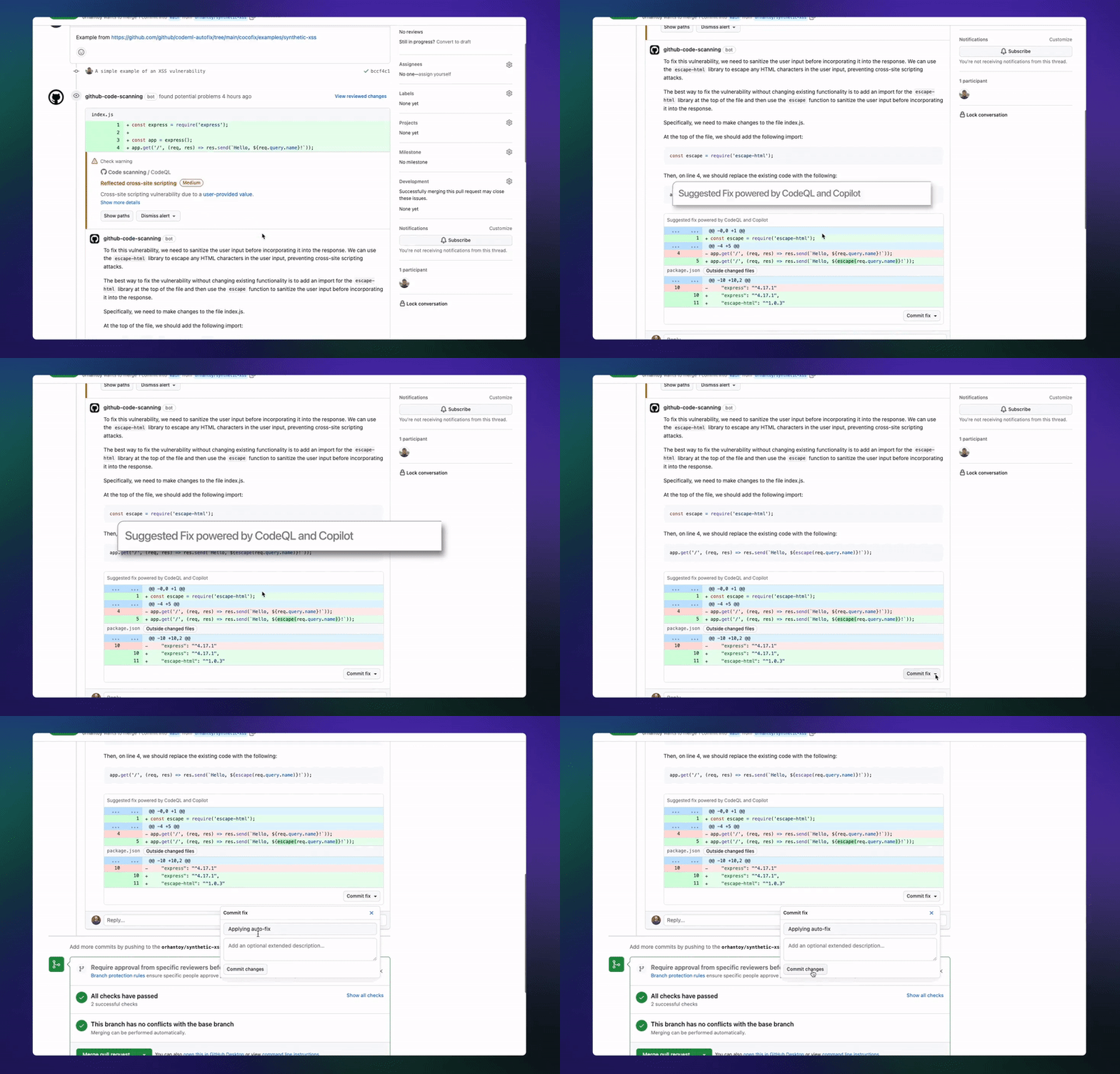
March 21st, 2024: GitHub has launched a new feature called code scanning autofix, which is now available in public beta for all GitHub Advanced Security customers.

The feature, powered by GitHub Copilot and CodeQL, aims to help developers fix vulnerabilities more quickly and easily, reducing the growing problem of “application security debt.”

Code scanning autofix supports more than 90% of alert types in popular programming languages such as JavaScript, TypeScript, Java, and Python.

code scanning autofix

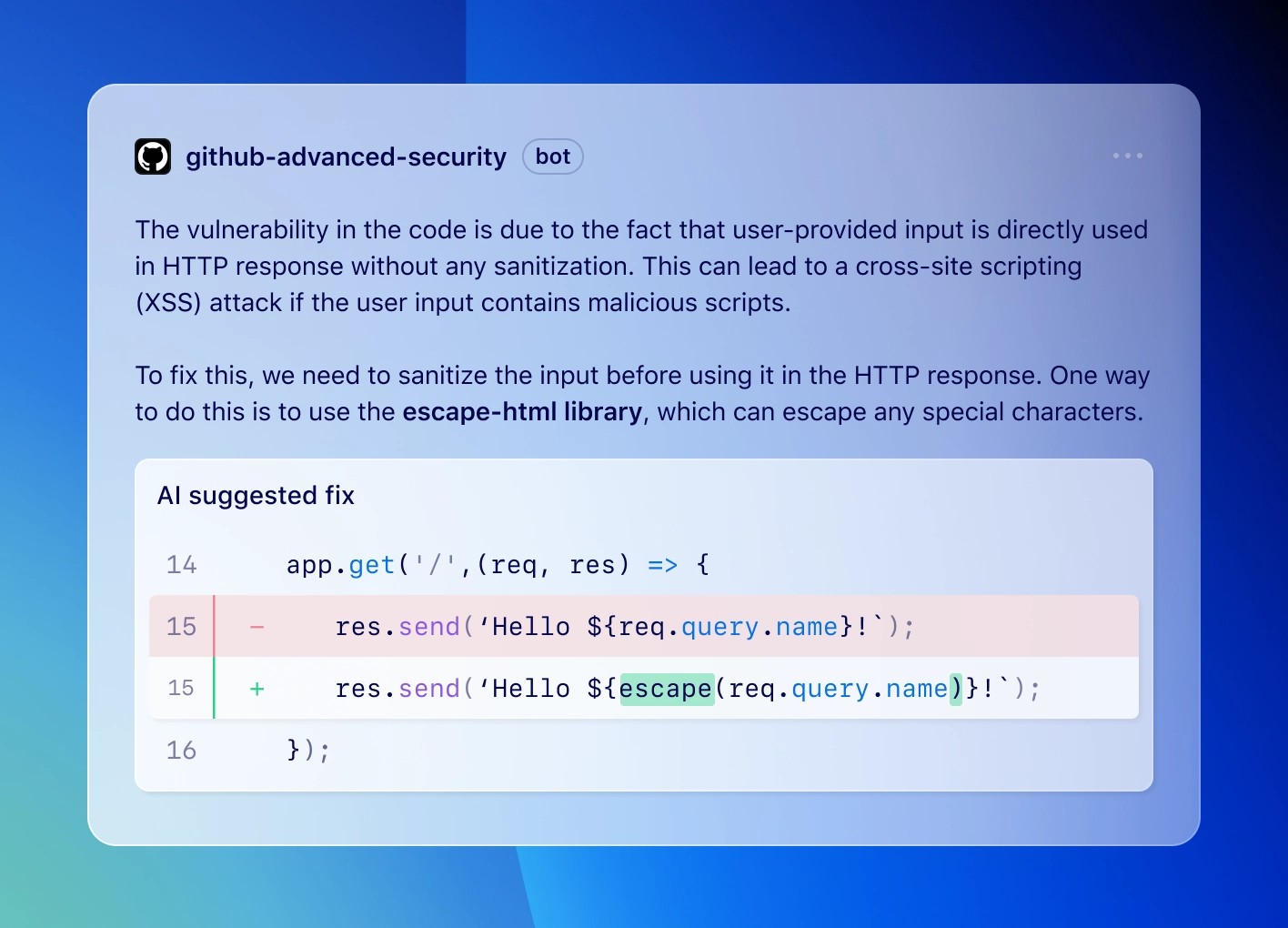
When a vulnerability is discovered in one of these languages, the feature provides developers with a natural language explanation of the suggested fix, along with a preview of the code suggestion.

Developers can then accept, edit, or dismiss the suggestion. Remarkably, these code suggestions have been shown to remediate more than two-thirds of found vulnerabilities with little or no editing required.

Pierre Tempel and Eric Tooley, authors of the blog post announcing the feature, state that code scanning autofix is “the next leap forward” in GitHub’s vision for application security, where “found means fixed.”

code scanning autofix
Code Scanning Autofix

By prioritizing the developer experience, the company aims to help teams remediate vulnerabilities up to seven times faster than traditional security tools.

Behind the scenes, code scanning autofix leverages the CodeQL engine and a combination of heuristics and GitHub Copilot APIs to generate code suggestions.

These suggestions can include changes to multiple files and the dependencies that should be added to the project.

GitHub plans to continue adding support for more languages, with C# and Go coming next.

The company encourages users to join the autofix feedback and resources discussion to share their experiences and help guide further improvements to the feature.

The introduction of code scanning autofix is expected to benefit both development and security teams.

Developers will be able to reclaim time previously spent on remediation, while security teams can focus on protecting the business and keeping up with the accelerated pace of development, as the volume of everyday vulnerabilities is reduced.


Humanized Text Conversion 15 Best And Advance Features


humanized text conversion

Build a Retrieval-Augmented Generation (RAG) system in 4 lines of code


What is Retrieval-Augmented Generation?

Large Language Models are not up-to-date, and they also lack domain-specific knowledge, as they are trained for generalized tasks and cannot be used to ask questions about your own data.

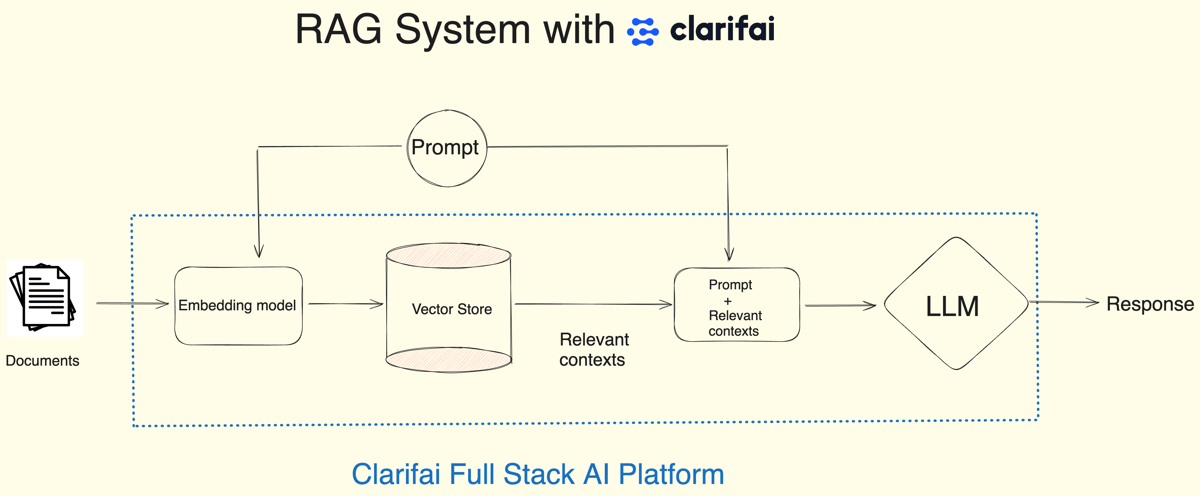
That’s where Retrieval-Augmented Generation (RAG) comes in: an architecture that provides the most relevant and contextually important data to the LLMs when answering questions.

The three key components for building a RAG system are:

  • Embedding Models, which embed the data into vectors.
  • Vector Database to store and retrieve those embeddings, and
  • A Large Language Model, which takes the context from the vector database to answer.

Clarifai provides all three in a single platform, seamlessly allowing you to build RAG applications.

RAG

How to build a Retrieval-Augmented Generation system

As part of our “AI in 5” series, where we teach you how you can create amazing things in just 5 minutes, in this blog, we will see how you can build a RAG system in just 4 lines of code using Clarifai’s Python SDK.

Step 1: Install Clarifai and set your Personal Access Token as an environment variable

First, install the Clarifai Python SDK with a pip command.

Now, you need to set your Clarifai Personal Access Token (PAT) as an environment variable to access the LLMs and vector store. To create a new Personal Access Token, Sign up for Clarifai or if you already have an account, log in to the portal and go to the security option in the settings. Create a new personal access token by providing a token description and selecting the scopes. Copy the Token and set it as an environmental variable.

Once you have installed the Clarifai Python SDK and set your Personal Access Token as an environment variable, you can see that all you need are just these 4 lines of code to build a RAG system. Let’s look at them!

Step 2: Set up the RAG system by passing your Clarifai user ID

First, import the RAG class from Clarifai Python SDK. Now, set up your RAG system by passing your Clarifai user ID.

You can use the setup method and pass the user ID. Since you are already signed up to the platform, you can find your user ID under the account option in the settings here.

Now, once you pass the user ID the setup method will create:

  • A Clarifai app with “Text” as the base workflow. If you are not aware of apps, they are the basic building blocks for creating projects on the Clarifai platform. Your data, annotations, models, predictions, and searches are contained within applications. Apps act as your vector database. Once you upload the data to the Clarifai application, it will embed the data and index the embeddings based on your base workflow. You can then use those embeddings to query for similarity. 
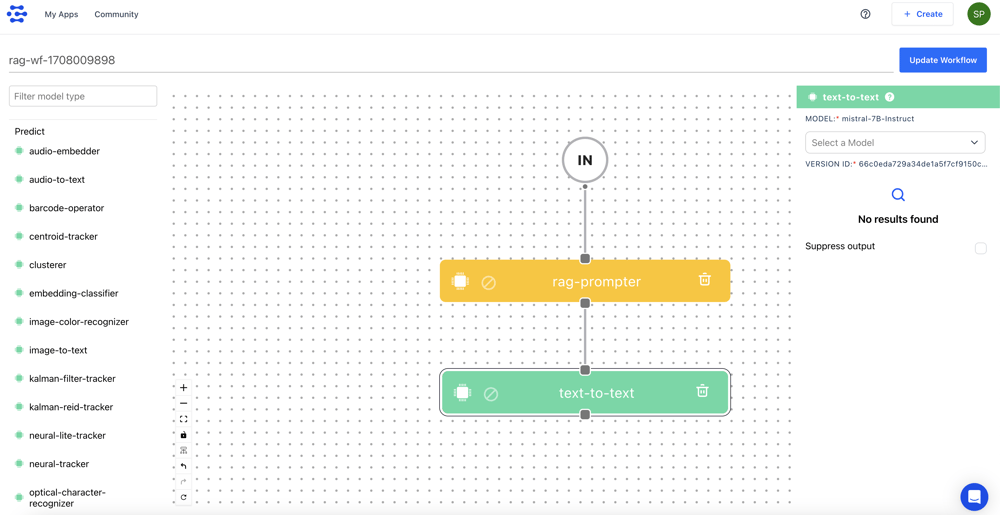
  • Next, it will create a RAG prompter workflow. Workflows in Clarifai allow you to combine multiple models and operators allowing you to build powerful multi-modal systems for various use cases. Within the above created app, it will create this workflow. Let’s look at the RAG prompter workflow and what it does.

Screenshot 2024-02-27 at 4.05.53 PM

We have the input, RAG prompter model type, and text-to-text model types. Let’s understand the flow. Whenever a user sends an input prompt, the RAG prompter will use that prompt to find the relevant context from the Clarifai vector store.

Now, we will pass the context along with the prompt to the text-to-text model type to answer it. By default, this workflow uses the Mistral-7B-Instruct model. Finally, the LLM uses the context and the user query to answer. So that’s the RAG prompter workflow. 

You don’t need to worry about all these things as the setup method will handle these tasks for you. All you need to do is specify your app ID.

There are other parameters available in the setup method:

app_url: If you already have a Clarifai app that contains your data, you can pass the URL of that app instead of creating an app from scratch using the user ID.

llm_url: As we have seen, by default the prompt workflow takes the Mistral 7b instruct model, but there are many open-source and third-party LLMs in the Clarifai community. You can pass your preferred LLM URL.

base_workflow: As mentioned, the data will be embedded in your Clarifai app based on the base workflow. By default, it will be the text workflow, but there are other workflows available as well. You can specify your preferred workflow.

Step 3: Upload your Documents

Next, upload your documents to embed and store them in the Clarifai vector database. You can pass a file path to your document, a folder path to the documents, or a public URL to the document.

In this example, I am passing the path to a PDF file, which is a recent survey paper on multimodal LLMs. Once you upload the document, it will be loaded and parsed into chunks based on the chunk_size and chunk_overlap parameters. By default, the chunk_size is set to 1024, and the chunk_overlap is set to 200. However, you can adjust these parameters.

Once the document is parsed into chunks, it will ingest the chunks into the Clarifai app.

Step 4: Chat with your Documents

Finally, chat with your data using the chat method. Here, I am asking it to summarize the PDF file and research on multimodal large language models.

Conclusion

That’s how easy it is to build a RAG system with the Python SDK in 4 lines of code. Just to summarize, to set up the RAG system, all you need to do is pass your user ID, or if you have your own Clarifai app, pass that app URL. You can also pass your preferred LLM and workflow.

Next, upload the documents, and there is an option to specify the chunk_size and chunk_overlap parameters to help parse and chunk the documents.

Finally, chat with your documents. You can find the link to the Colab Notebook here to implement this.

If you’d prefer to watch this tutorial you can find the YouTube video here.


Top 7 K-12 Education Trends in 2023


The academic world has witnessed a major transformation. The digital revolution has resulted in significant changes in K-12 education. Most schools, colleges, and universities across the globe are resorting to K-12 technology trends. These trends in K-12 education drastically improve the learning experience for students. 


Here are the top 7 K-12 technology trends that schools and other educational institutions must look forward to improve the quality of education given to students.


Individualized learning


  • One of the most important K-12 technology trends is individualized learning.
  • It is a fact that not all students learn at the same speed or in the same way.
  • This necessitates the need for a holistic learning approach for each student.
  • Individualized learning refers to learning experiences in which the speed of learning is adjusted according to the requirements of individual students.
  • The content and pace of learning are two key components of individualized learning.
  • The ability of a student to grasp concepts and topics increases significantly. 
  • It is classroom independent and can be done from anywhere across the globe.
  • Prior to the introduction of individualized learning in schools, it is important to have the relevant student data and knowledge about effective teaching methodologies.
  • This K-12 technology trend creates an active, engaging,  and stimulating learning environment for learners in schools.


Game-based learning


  • Game-based learning is another one of the powerful K-12 technology trends.
  • The international game-based learning market was valued at USD 11.0 billion in 2021 and is expected to grow to more than USD 29.7 billion by the end of 2026, at a CAGR of 21.9% between 2021 and 2026. (Source: Markets and Markets)
  • It leverages the captivating and interactive nature of games to offer immersive and engaging learning experiences to students.
  • It makes use of simulations and virtual games in the classroom to boost retention and enhance overall learning outcomes.
  • As educational content is integrated as a part of games, students are motivated to learn and actively participate in the learning process.
  • Game-based learning promotes hands-on learning experiences in the classroom.
  • This trend in K-12 education fosters a deeper understanding of concepts as students learn to ask questions, develop a problem-solving mindset, and an active approach in the classroom.


Online learning is not going anywhere


  • The power of online learning was witnessed during the COVID-19 pandemic, when the educational institutions across the globe were closed.
  • However, it was more of an emergency response back then since school and universities had no option.
  • Online (virtual) learning fosters the inclusion of all students no matter where they are located.
  • It provides students with the opportunity to learn at the same pace as those students who are a part of the physical classroom.
  • Several schools around the world are offering permanent online learning options for students. 
  • Online learning offers a great option to teachers to provide feedback to students on a regular basis in fun and interactive ways.


Perpetual learning


  • Unlike before, success is not measured by the number of degrees an individual has obtained or high score or grades that a student has obtained.
  • The traditional system of education is slowly being replaced by perpetual learning.
  • Perpetual learning refers to continuous learning for lifetime.
  • With the number of technological advancements and changes happening around, perpetual learning builds an environment of continuous growth and development.
  • Several students are going for perpetual learning through subscription or membership-based models.
  • In the fast-paced world that we are in, everything is continuously evolving.
  • To keep pace with the rapid advancements and development happening in the industries, perpetual learning is a must for students. 
  • Perpetual learning as a K-12 technology trend helps learners enhance their skills and competencies.


AI-powered learning


  • When it comes to K-12 technology trends, artificial intelligence (AI) can not be overlooked.
  • AI-powered learning environments in the classroom can provide students with personalized learning experiences.
  • Through the use of machine learning, natural language processing, learning analytics, and Internet of Things, teachers can make learning more fun, interesting, and engaging for the learners.
  • AI empowers teachers to create specific learning activities for students after knowing their strengths and weaknesses.


Augmented Reality (AR) and Virtual Reality (VR)


  • AR and VR are K-12 technology trends that are becoming a key aspect of the education system.
  • AR enables students to superimpose computer-generated images on what they are actually seeing.
  • On the other hand, VR enables students to step into the virtual world in which learning and classroom activities are delivered in an immersive environment.
  • Many textbook are having AR images which come alive when views through the smartphone camera
  • Both AR and VR allow students to get a deeper and in-depth understanding, whether it is how the human circulatory system functions or how a car moves in uniform circular motion.


Soft skills 


Soft skills form a key part of K-12 technology trends. Education is not just about learning mathematics or science. In the long run, students need to have soft skills that can not be replicated by machines or technology. Some of these soft skills for students include:


  • Communication skills
  • Team work
  • Creative thinking
  • Problem solving
  • Emotional intelligence
  • Active listening
  • Decision making


In the world that we are, education is evolving at a rapid pace. Above and beyond conventional learning and subjects in K-12 education, students need to develop novel skills to solve problems and collaborate effectively with others. By incorporating the latest K-12 technology trends in the classroom, schools can provide learners with holistic education. With K-12 technology trends, students become prepared to tackle future challenges and their career as well.