Tenebris Somnia: Blood, Pixels, and Prosthetics


As I’m typing this, we’re in the final hellish days before the October 16 launch of TENEBRIS SOMNIA – the retro survival horror game with live-action cutscenes – coming at you from Andrés Borghi (The Black Heart) Saibot Studios (Hellbound), and published by New Blood Interactive. (FAITH: The Unholy Trinity, DUSK, Blood West).

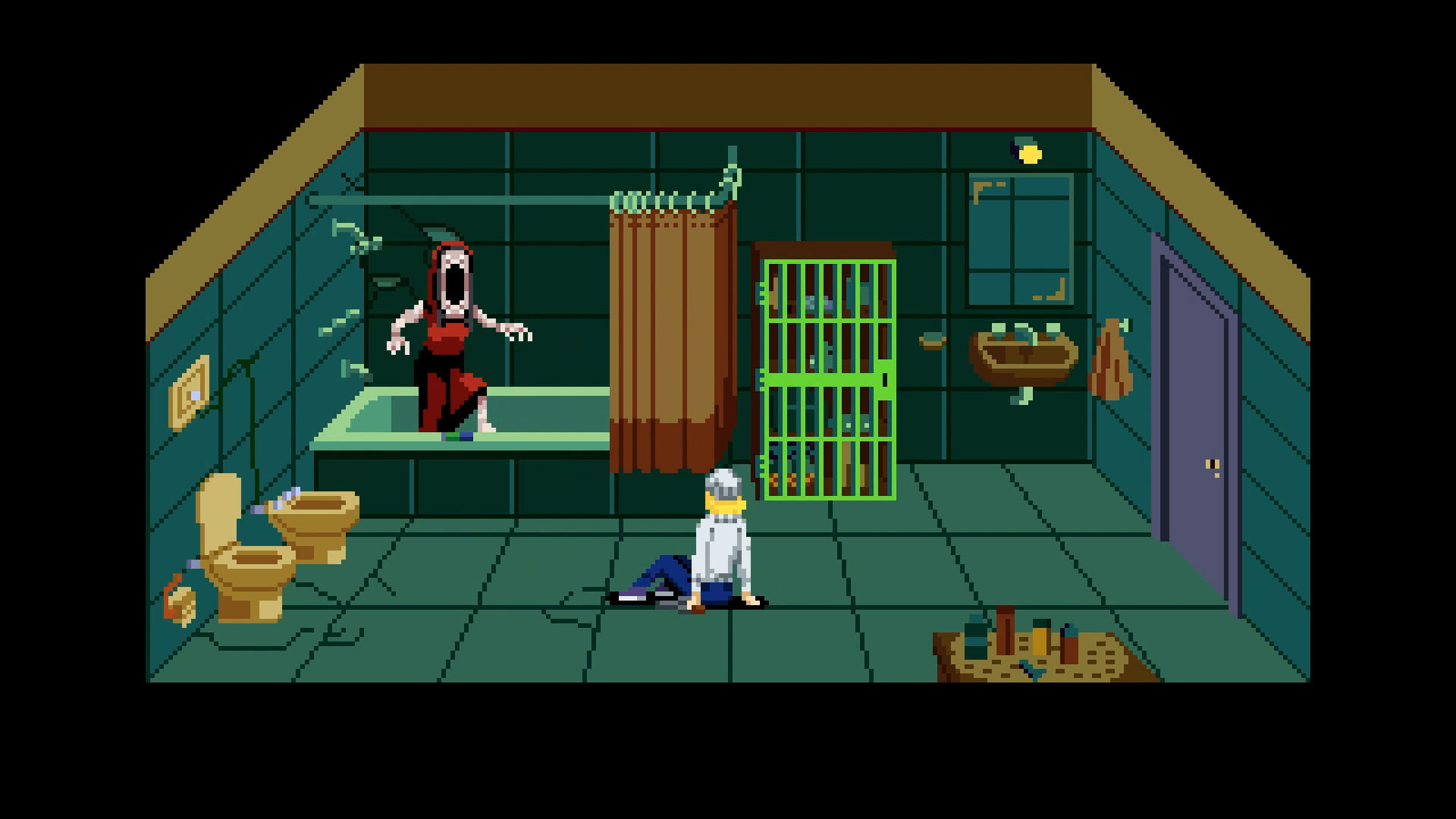
In Tenebris Somnia you play as Julia, a young woman who is having nightmares about her ex-boyfriend being torn apart by horrible monsters. Hoping to find some peace, she goes to his apartment to check on him. What she discovers is a world of horror that descends beyond her darkest dreams. What if the nightmares are real…?

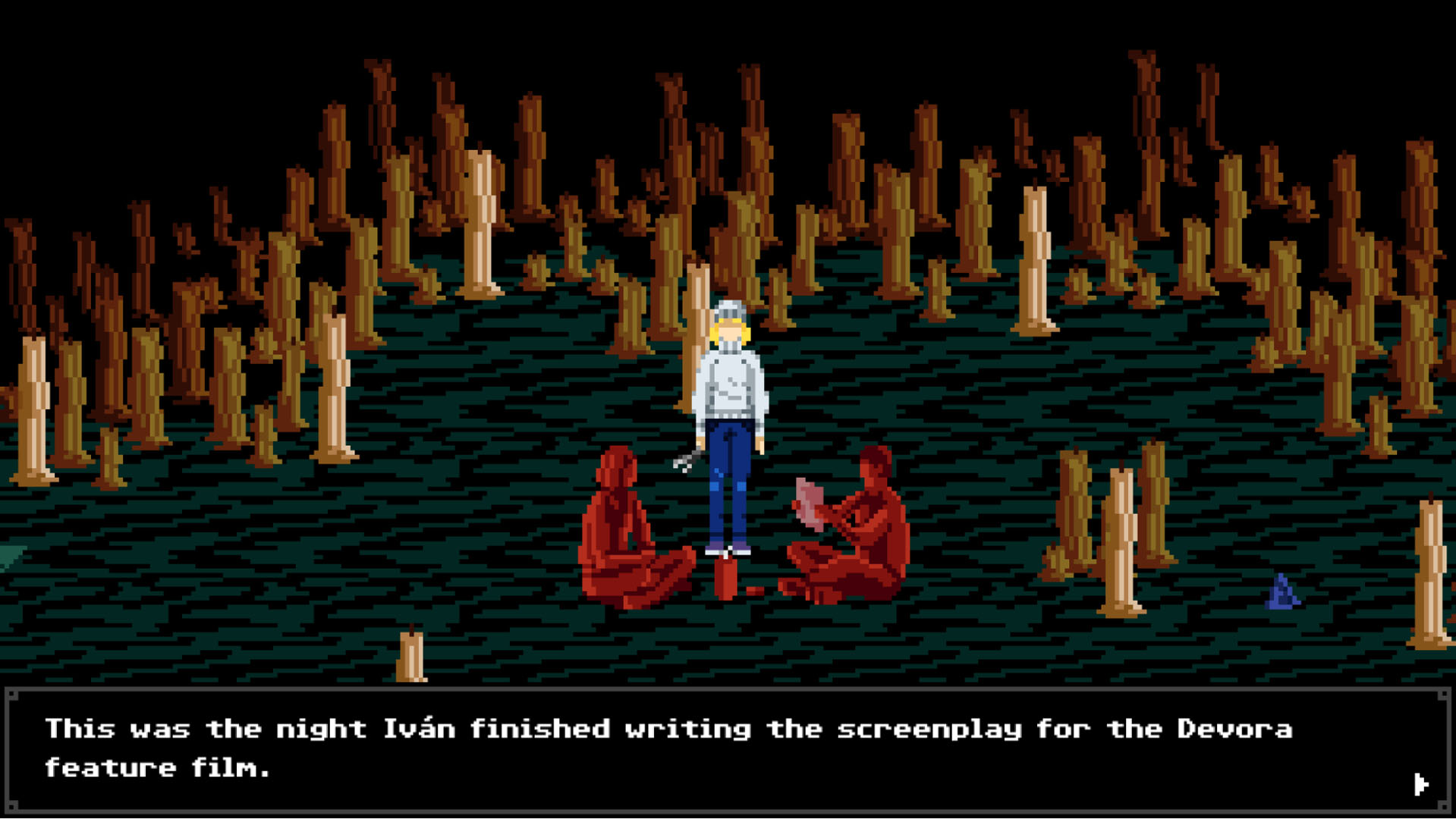
One night while filmmaker and indie game developer Andrés Borghi was streaming our previous horror game FAITH: The Unholy Trinity, he got the idea to make a pixel horror game of his own with a sinister twist: the cutscenes would be live action, with real actors in real locations and real spooky special effects.

So Andrés and Saibot Studios lead Tobías Rusjan got working on a demo. Then they pitched the full game to New Blood, the only studio crazy enough to give a horror filmmaker the budget to make a survival horror game.

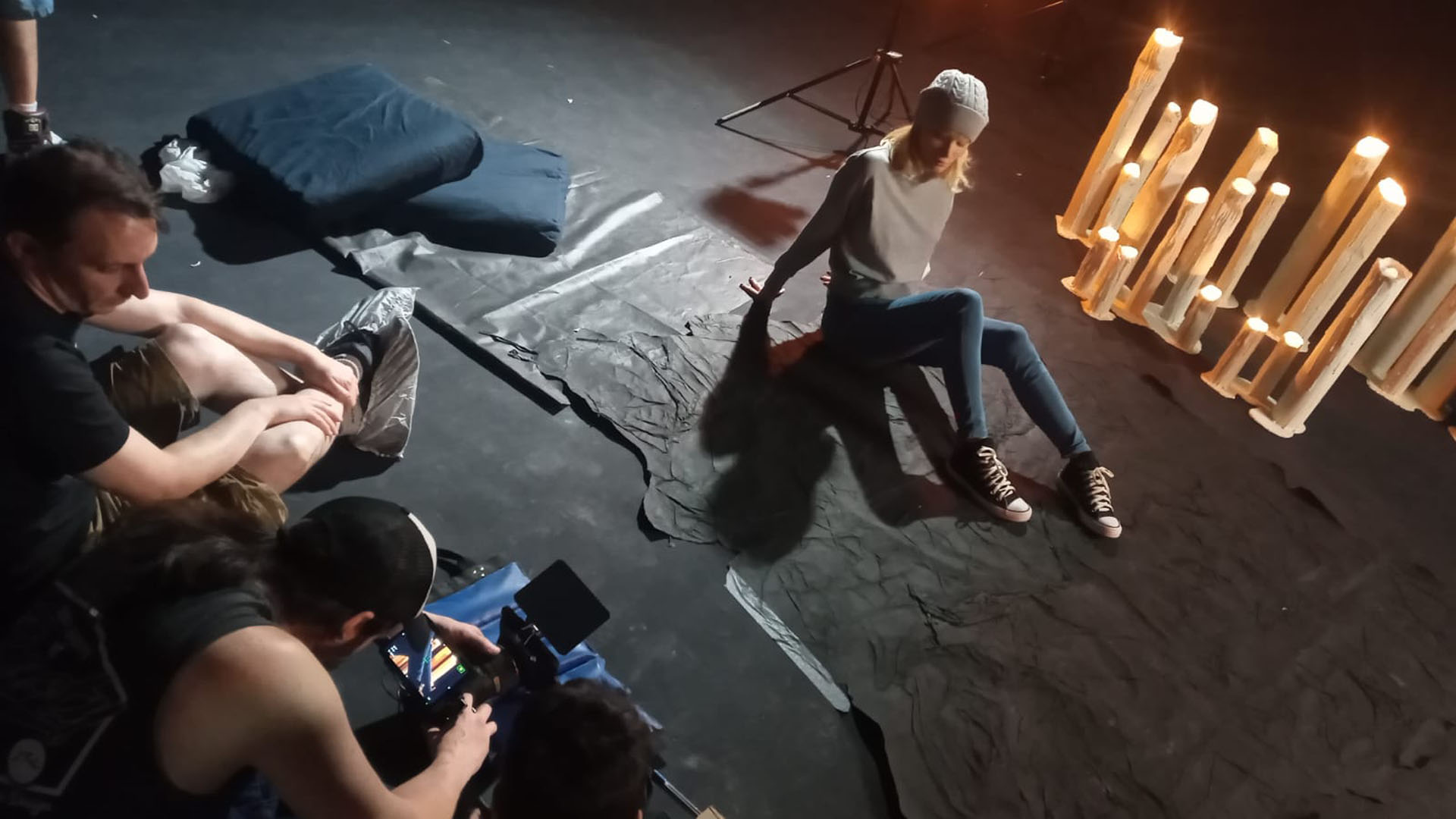
And that’s just what we did! Shortly after inking the publishing deal, we traveled to Buenos Aires to see Andrés and the film crew in action. What we saw amazed us – a legit professional camera and production crew, practical monster effects supervised by the award-winning Marcos Berta (“When Evil Lurks”), the performance by Argentine scream queen Clara Kovacic as the game’s protagonista – all meticulously storyboarded and directed by Andrés.

We witnessed the floor of a 17th-century Argentine cathedral splattered with fake blood. We watched a boom operator sprint 20 meters – and slide on his knees the final 2 meters – to get the perfect lighting effect under an actor at the perfect moment. They even guerilla-filmed several shots on the subway in the middle of the night (but don’t tell anyone). This wasn’t the low-budget FMV approach you remember from classic horror-adventure games. It was high-quality movie magic happening right in front of us. And absolutely no generative AI was used anywhere at any point in production.

That’s right, we did it the old-fashioned way. Good old human slop. Practical special effects and limited CGI. Human produced and directed, human-translated localization into English, Japanese, and Brazilian Portuguese. In-game art and animation drawn by hand, pixel by pixel, frame by frame. Audio and music by an actual human composer. Real-life living breathing human programmers. Even if we had used generative AI to take shortcuts (not that we even know how) we wouldn’t be able to call it a New Blood Interactive game with a clear conscience. Would it have saved us some money? Probably, but we would incur a much steeper cost – the trust of our fans who look to us for sincerity and authenticity. It’s just not our brand. Our players and, quite frankly, games in general, deserve better than gen AI. But enough about that.

Tenebris Somnia screenshot

Back to the game’s incredible cutscenes. These aren’t just cutscenes for cutscenes’ sake. In a lot of retro games, cutscenes were often a reward for making it to the end. In Tenebris Somnia, the cutscenes are directly linked to the gameplay – you never know when a cutscene will begin or end. This not only shocks the player – because now they’re encountering the horrors of the game in gruesome detail – but it keeps them in suspense at all times. You never know if the cutscene will drop you right into an enemy encounter or start right after one!

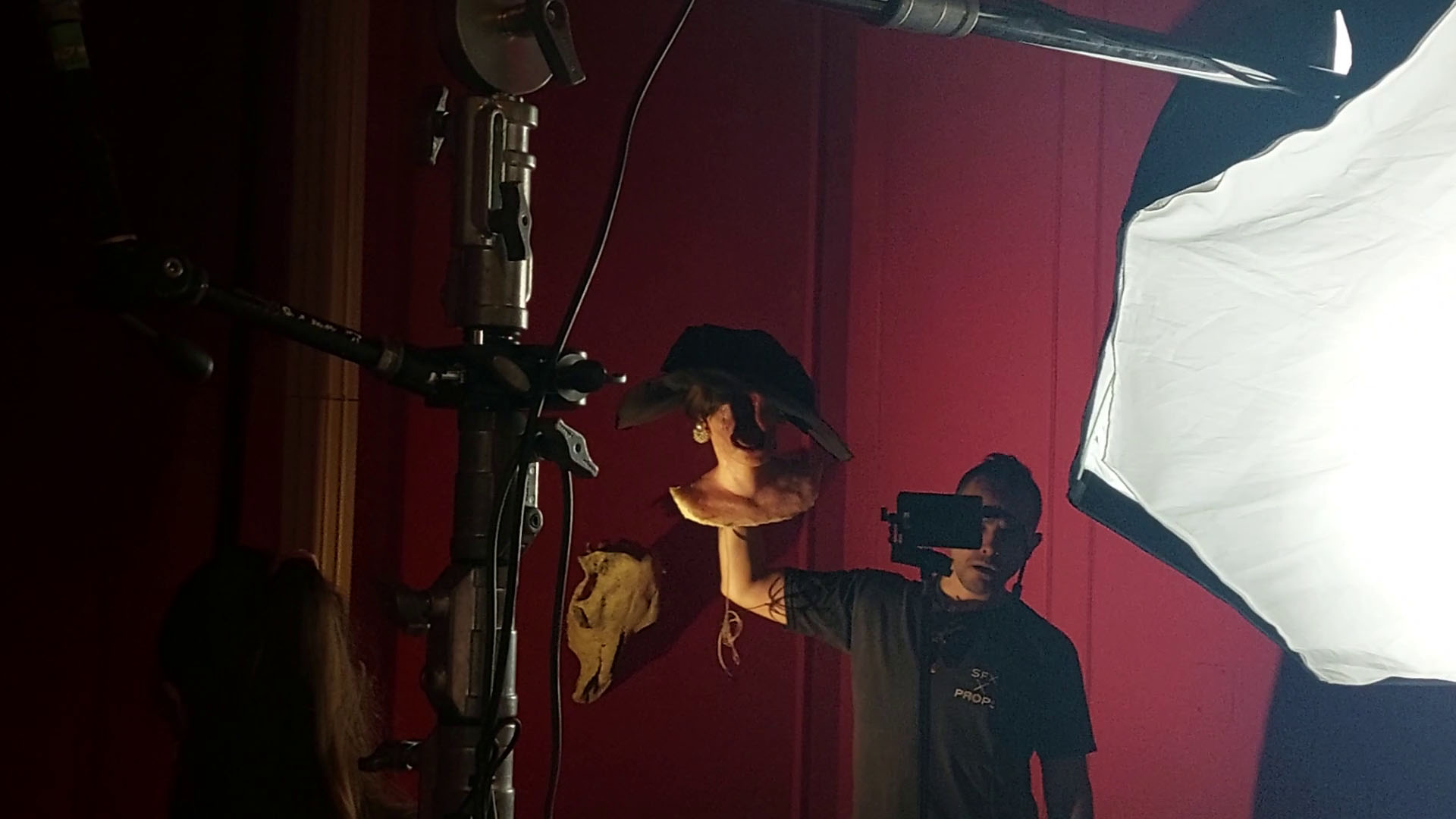
Merging pixel horror gameplay and live-action cinematics didn’t come without its challenges, however. Film sets needed to match the in-game locations, requiring careful planning and a blend of practical set-dressing and seamless CGI. Thankfully Andrés is also a talented film editor and VFX artist! To make the monster effects believable, silicon masks and prosthetics were molded out of performer’s faces and then fitted back on with makeup – a process that took several hours each time just like in a major Hollywood-style production. You can see behind-the-scenes videos on how this was done on our YouTube and Instagram. We hope to release a full making-of documentary after the game is launched!

After nearly 4 years of production we’re extremely proud of this monster we’ve created together. Tenebris Somnia offers a classic survival horror experience – scary monsters, limited resources, brutal boss fights, great sound design, puzzles to solve, and a terrifying plot to uncover. In the words of Andrés, “I hope players will come to see the cutscenes, and stay to experience the story”! It also stands alone as a genuinely scary horror game with a truly unique identity – take it from me – the guy that made FAITH!

Tenebris Somnia is available now on XBOX Series X|S and XBOX on PC. PC. Play it on console and PC at no additional cost with XBOX Play Anywhere.

Tenebris Somnia poster

Xbox Play Anywhere

Tenebris Somnia

New Blood Interactive


☆☆☆☆☆
3


★★★★★


$24.99

$19.99


Tenebris Somnia is a 2D retro survival horror adventure game with live action cutscenes created by an award winning film crew from Argentina. Unveil the depths of a disturbing story by solving puzzles and fighting horrible creatures. …What if they aren’t just nightmares?


Celebrate the Launch of NVIDIA RTX Spark


A new beginning for Windows PCs starts tomorrow with the launch of NVIDIA RTX Spark — one PC built for creators, gamers and AI agents. All are invited to celebrate with NVIDIA and partners at launch events around the world.

Share Your Spark

Every PC has a story. What was your first Windows PC, and what did it spark a love for? Join the celebration online by sharing responses with #ShareYourSpark for a chance to win an ASUS ProArt P14 RTX Spark laptop signed by NVIDIA founder and CEO Jensen Huang. See the campaign and official rules.

See What Reviewers Are Saying

From local AI workflows to creative apps and gaming, see what reviewers are saying about RTX Spark — then experience it at a launch celebration.

“The fact that NVIDIA, Microsoft and their partners have delivered such a capable, compatible and polished platform even in its first at-bat should put the rest of the PC industry on notice.” — Tom’s Hardware

“I tested NVIDIA’s RTX Spark for gaming and local AI – the performance absolutely stunned me.” — TrustedReviews, UK

“I’m very happy to report that performance is actually looking really good when it comes to AI, gaming and creative workflows.” — Microcenter

“[RTX Spark] is a different species of computer that has arrived early. It is a statement of intent from NVIDIA about where computing is going — trading raw benchmarking crowns for the ability to carry a self-rewriting, fully autonomous, CUDA-accelerated digital brain in your backpack.” —  Tom’s Guide

“One of the most impressive parts of the launch is how many apps NVIDIA has worked with to ensure optimisation with the Spark technology.” — Creative Bloq

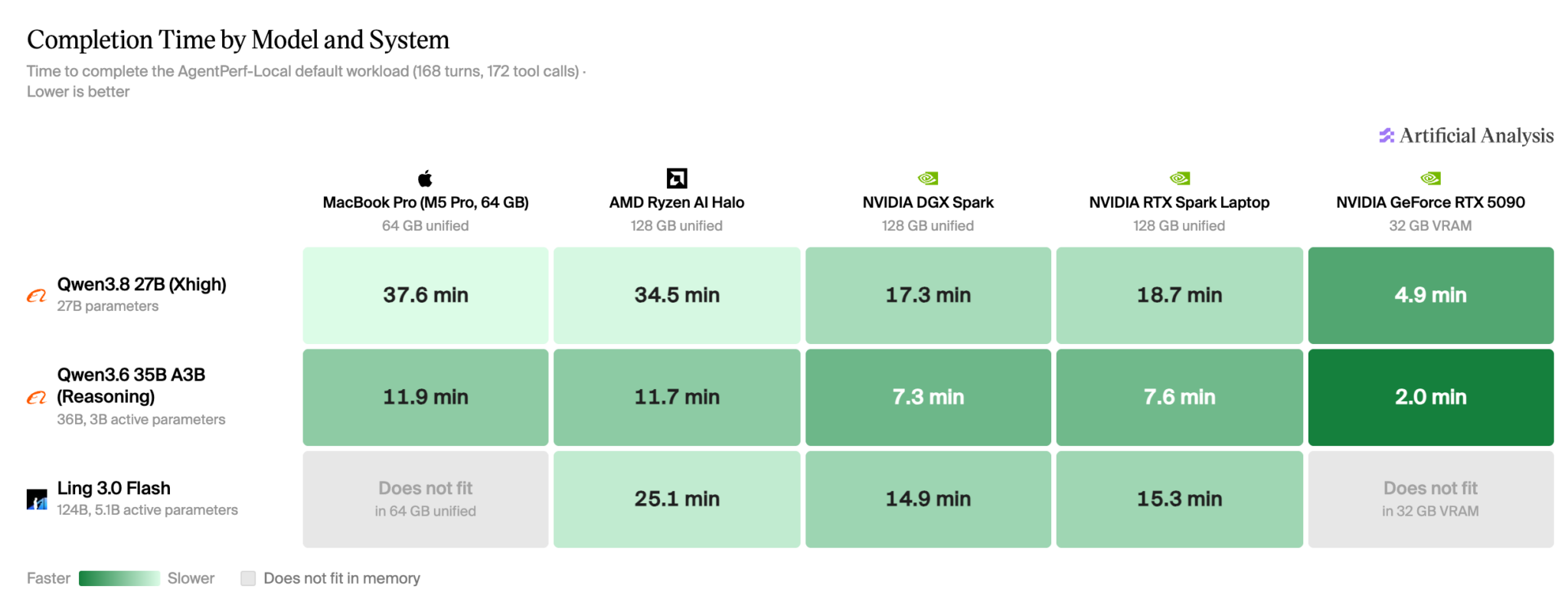
Independent testing from Artificial Analysis offers an early look at the powerful local AI performance RTX Spark brings to a laptop.

Join the Launch Celebrations

On Friday, Oct. 16, get hands on with RTX Spark at launch events around the world. Explore demos for creating, developing and gaming, connect with fellow enthusiasts and discover what local AI can do.

Times below are local. Follow each event’s entry instructions. Space is limited.

  • San Francisco — Best Buy, 1717 Harrison Street, 10 a.m.-12 p.m. Try hands-on demos, meet iJustine and hear fireside conversations with local tech founders. Free, first-come, first-served entry; no ticket required. Event details.
  • Berlin — Xperion at Saturn, Alexanderplatz 3, 7-10:30 p.m. Explore hands-on demos and stage programming with creators and developers. Registration required. RSVP.
  • Taipei — Muse Garden, No. 88 Yanchang Road. Join an evening of demos, music and AI community discussions, with shopping and networking continuing until 10:15 p.m. Registration required.
  • Beijing — JD MALL Beijing Shuangjing Store, No. 31 Guangqu Road. Check in begins at 7 p.m. Launch celebration starts at 8 p.m., followed by hands-on demos. Event concludes at 9:30 p.m. Register through WeChat. 
  • Istanbul — Vatan Bilgisayar Topkapı, Mevlana Caddesi No. 138. Explore hands-on demos and local creator programming. Walk-in entry; no advance registration required.
  • Seoul — COEX East Lobby, 513 Yeongdong-daero. Hands-on demos begin at 7 p.m., with gaming and AI creator programming from 8 p.m. Event concludes at 9:30 p.m. No advance registration required.

US lawmaker calls videogame purchases rentals disguised as sales: ‘When you pay for a game, you should own it’


US Representative Ritchie Torres, a Democrat from New York City, announced today that he will introduce the “Power To The Players Act.”

If it becomes law, the bill will see the US Federal Trade Commission create regulations that protect our “ability to own and play” purchased games, according to Torres’ office.

The 5 best new shows and movies streaming this week on Disney Plus, Netflix, Prime Video, Apple TV and more (October 16-18)


Looking for what to stream this weekend? Then you’ve come to the right place. We’ve searched the most popular streaming services to bring you our bespoke list of the titles worth watching this weekend, so you can kick back and relax with the most exciting new releases.

Below, you’ll find everything from the latest Marvel Phase 6 release to a heart-breaking tale of loss and love. So, whatever you’re in the mood for this weekend, we’ve got you covered. Our recommendations this week cover Disney Plus, Apple TV, Netflix, and more.

Ubisoft Plans To Close Another Studio And Lay Off Up To 122 Workers


Ubisoft is planning even more layoffs in the latest of a string of job cuts this year. It plans to shut down its RedLynx studio and reduce its Germany-based workforce by about 100 workers, while Ubisoft Singapore is losing around a fifth of its 350 or so employees.

“Today, we informed our teams of a proposal to close RedLynx in Finland, subject to the local change negotiation process, which would affect up to 52 positions,” Ubisoft told GamesIndustry.biz. “At Ubisoft Singapore, 70 positions have been impacted to align the studio with upcoming production needs. The studio remains an important part of Ubisoft’s global production organization. We deeply value the contributions of both teams and recognize the impact this may have on our colleagues. We are committed to supporting our teams throughout this process and conducting it with care and respect.”

Both RedLynx and Ubisoft Singapore have been providing support to other Ubisoft studios in recent times. They were placed in the Creative Network division as part of a restructuring the company announced last year.

Ubisoft snapped up RedLynx, the creator of the Trials series, in 2011. The company laid off dozens of the studio’s workers a year ago. The last game of its own that RedLynx developed was a decoration and puzzle title for mobile devices called Gwen’s Getaway. The game had a soft launch in 2023 but Ubisoft canned it just over a year later.

Ubisoft Singapore initially opened as a support studio in 2008. Its work on naval combat in Assassin’s Creed games led it to making the Skull and Bones. That game finally arrived in early 2024 after many delays and, despite its protracted development, it hardly set the world alight.

Separately, Stephen Totilo’s GameFile reports that Ubisoft plans to reduce its workforce in Germany by about 100. The company currently has over 600 employees spread across three studios in the country. Mostly focused on supporting the development of larger games, the German studios have also led development on recent The Settlers and Anno games, with its Mainz studio responsible Anno 117: Pax Romana in 2025. According to Totilo, the company will be offering voluntary buyouts to staff, and hopes to avoid having to directly lay anyone off.

A cost-cutting drive has resulted in Ubisoft cancelling at least half a dozen games and shuttering several other studios this year, such as those in Winnipeg and Belgrade. It also closed Ubisoft Halifax just two weeks after workers there unionized. The company has laid off workers elsewhere this year, including at Star Wars Outlaws developer Massive Entertainment, Ubisoft Stockholm and its Paris headquarters.

Update, October 14, 7PM ET: This story was updated to include details from GameFile on planned cuts to Ubisoft’s German workforce.

A Sentient Snowman Is (Surprisingly) My Favorite Part Of This RPG Remake


At this year’s New York Comic Con, I met with Square Enix to check out two of its upcoming RPG projects. One was Final Fantasy VII Revelation, a game firmly planted in the modern era of video games with top-of-the-line visuals and all the trimmings of a AAA, big-budget game. 

The other was Romancing Saga 3: Destinies United, a remake of a classic turn-based RPG from the mid-1990s. At first glance, the remake’s updated visuals and faster gameplay are easily apparent draws for newer players, but that doesn’t change that this game is built around the core of the original Romancing Saga 3, an RPG that calls back to a bygone era for the genre. Remaking a classic like this is a balancing act, but based on my brief time playing the game, it seems like Square Enix is on track to unite the best aspects of the two wildly different eras of RPGs. 

Flurry the snowman

A Flurry of action

The demo takes place in Gwayne’s Den, the home of a massive dragon terrorizing the nearby Louv Peninsula. I take control of party leader Khalid and head down the mountain path, where I spot an enemy not paying attention to my approach. By sneaking up to the foe and pressing X, I can stealthily swing my sword at it, and, if I connect, I launch a Preemptive Strike–this starts the ensuing battle with every enemy having lost a bit of their hit points. It’s not a massive chunk of health, so I didn’t feel too bad if the enemy proved difficult to sneak up on, but the head start always felt good when I did pull it off. 

Battles play out in classic turn-based style, with a turn-order indicator situated at the top of the screen. Most of my party is ready for battle, with leader Khalid, fairy Peony, fighter Ellen, and masked swordsman Robin sporting a full kit of weapons and abilities. There’s a fifth party member, Flurry the actual snowman, who’s underpowered compared to the rest, but it still packs a wallop with its punches. 

Also, just to make clear what I said just now: Yes, Flurry is an honest-to-goodness snowman, its body made of a small orb of white snow on top of a larger orb of white snow. It can punch, they can cast spells, and it quickly became one of my favorite parts of the demo. I need to learn more about Flurry.

Each party member brought a different battle approach to the table, and it was fun figuring out each character’s nuances. Khalid is a standard swordsman with water-based attacks who fared well against the Draconian enemy, while Ellen’s electric-charged punches and kicks made her the best option for direct damage.

The Glimmer mechanic in action

Always a Glimmer a hope

One of the unique traits to this battle system is the Glimmer mechanic, which sometimes replaces a chosen ability with a similar and more powerful ability. For example, I chose the basic Spear Attack ability for Peony, only for a lightbulb symbol to appear over her head, followed by a new Giant Swing attack. What’s more, I gained access to Giant Swing for the remainder of the demo, and it proved valuable in the later boss fight. 

While the idea of randomly receiving buffed abilities through Glimmers isn’t always convenient, I do like the concept, as a well-timed Glimmer can help turn the tide of a lost battle with the new ability it unlocks. Also, when the light bulb does appear, the jolt of excitement in the discovery of a new ability is pretty cool.

Romancing Saga 3 also uses a formation system, where party members can be positioned in particular ways. Placement on the battlefield matters during a fight, as some attacks can score multiple hits by moving in a straight horizontal or vertical line, while others are area-of-effect attacks that damage everyone standing in the danger zone. 

I like this wrinkle to the turn-based scheme–not only does it deepen the complexity of combat, but it gives me an extra bit of agency in terms of how to position my characters best for battle and rewards me for thinking beyond just how my party can attack or defend. This means that the remake doesn’t follow the traditional “weaker characters in the back, stronger in the front” format seen in a lot of RPGs either, as the vertical-line attacks can reach the back row with no issue. It’s not exactly novel, but it helps the remake stand out against its modern contemporaries. The demo offered a few formation examples, from a straight horizontal line to one resembling the five sides of a six-sided die, and I wonder what other formations the game will have in store. 

Formations

Gwayne Over

Eventually, I get to the bottom of the pit, and I find Gwayne, a black dragon with massive wings laying on top of a pile of gold and treasures. He’s a Smaug … sorry, smug individual, goading my team with insults until it’s time for battle. Gwayne is one tough customer, with attacks that hit multiple party members at a time, along with an energy bolt move that damaged Khalid for one-third of his total HP. 

However, I had one more trick up my sleeve: Overdrives, which pair two of my party members together for a single attack that inflicts big damage. The Overdrive meter at the bottom of the screen charges as I deal damage, and eventually I can activate it to send two of my party members in for an attack at once. 

I saw Khalid pair with Ellen, Ellen with Peony, and Robin with Flurry before the battle was over, and each one added a little more excitement to the fight. Eventually, Gwayne was felled, Khalid picked up what looked like a scale from the ground in front of the treasure cache, and the demo was over.

Romancing Saga 3: Destinies United offers classic turn-based RPG gameplay from a long-gone era, but does so with enough modern tune-ups that it feels like it can fit right in with the current role-playing offerings. Then again, not many of those other games have a fighting snowman, so perhaps standing out from the rest of the RPG pack will be snow problem. 

We’ll find out when Romancing Saga 3: Destinies United launches in February for PlayStation 5, Switch, Switch 2, Xbox Series X|S, and PC.

10 Years Ago, PlayStation Almost Changed Gaming Forever


In the video game industry, 10 years may as well be a lifetime. Entire tech empires can rise and fall in that span given how quickly the medium tends to evolve. If you need a concrete example of that, look to the PlayStation VR, which launched on Oct. 13, 2016. At the time, the bulky headset felt like a mainstream turning point for a niche corner of gaming that was still in its infancy. A decade later, the PSVR instead stands as a monument to a doomed trend that’s on the brink of extinction in 2026.

While there was buzz about VR brewing in the mid-2010s, 2016 was the year that properly kicked off the trend. It began when the Oculus Rift, a device considered to be the first consumer headset of the era, released in March. That was quickly followed up by the HTC Vive in April, starting a rat race in the headset market. While those devices were exciting, they weren’t entirely consumer-friendly, seeing as they required you to own a gaming PC rig capable of running them.

The PlayStation VR looked like the answer to that problem when it launched in October. So long as you owned a PlayStation 4, all you needed to do was plug it in to the headset. Okay, it was a little more complicated than that and required a mess of cables, but it was still an easy setup compared to its competitors. It also looked more inviting; its white design came off as friendly and approachable next to its black rival headsets that looked like serious, complicated pieces of tech.

PlayStation VR hardware (GDC 2016 images) Sony

Despite those strengths, it took a few years for the PSVR to really come into its own. Its launch game lineup wasn’t terribly memorable, with games like PlayStation VR Worlds and Batman: Arkham VR doing little to shake the feeling that VR games were glorified tech demos. A few great games showcased the potential, including Ubisoft’s Eagle Flight and Rez Infinite, but PSVR really didn’t take off for another two years.

2018 was so significant for Sony’s headset that you could almost consider it a relaunch. Its game lineup got a huge infusion of new blood thanks to Tetris Effect, Moss, and Astro Bot: Rescue Mission. All three games were the bonafide killer apps that were needed to convince curious players to give it a shot. I know that for a fact, because that’s when I bought the PSVR. It was a hot item during that year’s Black Friday sales, with reasonably priced bundles that came with heavy hitters like Moss. PSVR had already sold three million units as of August that year, and the number seemed to rise dramatically during a successful holiday season. VR on consoles has arrived.

In retrospect, it’s now clear that 2018 was the peak of the mountain for Sony’s VR experiment. While new games like Blood and Truth continued to push what the tech could do throughout the headset’s life, Sony couldn’t remain on VR’s center stage. In 2020, Oculus regained mainstream attention with its Quest 2 headset. Valve also took the spotlight that year by releasing Half-Life: Alyx, a landmark VR game that you couldn’t play on PSVR. Sony’s headset was starting to feel clumsier and less capable as the tech evolved rapidly around a device that was tethered to a last-gen console come 2020.

Sony’s last shot at making PSVR a viable part of the landscape came in 2023, thanks to the PlayStation VR 2. The revamped headset was a major upgrade in every way. It was more comfortable, more powerful thanks to the PS5, easier to set up, and had a deep backlog of great games on day one. It seemed like Sony was serious about it given that the device launched with Horizon: Call of the Mountain, a true first-party exclusive using one of its biggest franchises.

The triumph was short-lived. PSVR2 was virtually dead on arrival, launching as mainstream interest in the tech had all but faded. Aside from launching a VR mode for Gran Turismo 7 and putting some advertising muscle into promising titles like Synapse, Sony seemed to abandon the headset instantly. In 2024, one year after the launch, Sony released a PC adapter for the device. It was a way to generate a last bit of buzz, but also seemed like an admission that console VR simply wasn’t the future.

And if that was in question in 2024, it’s all but certain in 2026: This September, Sony reportedly transferred several patents related to VR to Meta. On its 10-year anniversary, Sony has all but confirmed the end of an era for its VR ambitions.

PlayStation VR Launches in Stores Nationwide Photo by Noam Galai/Getty Images for Sony Interactive Entertainment

It’s a sensible example of a company reading the room, because the VR gaming industry is on its deathbed in 2026. Many of the superstar developers behind VR’s greatest hits have pivoted to flat-screen games. Others, including Moss studio Polyarc, have shut down entirely. High-profile VR games from major publishers are becoming less frequent, with early adopters like Ubisoft stepping away from the tech entirely. Any hope that Valve would revitalize the space with this year’s Steam Frame faded away when its high price tag and lack of first-party game support came to light. There aren’t many reasons to be optimistic about the tech’s future these days.

While we’ll likely never see console manufacturers getting into VR again, there’s still a little life left in a space that has shrunk down to a dedicated niche. A newly released mod that gives Titanfall 2 VR support is turning heads (literally) at the moment, suggesting that fan projects could gain momentum with official game releases slowing down. There may be a world where VR gaming continues to hang on as an enthusiast hobby for people who like to tinker with old games. (And Nintendo’s surprise Virtual Boy revival this year taught us that sometimes doomed tech can get a nostalgia-tinged second life.) But the tech rat race that gave us the PSVR is firmly over, for better or worse, wrapping up a 10-year journey in a perfectly imperfect bow.

Send in the Clown is a turn-based RPG comedy about fighting one annoying child at a birthday party where there’s only one fight in the whole game


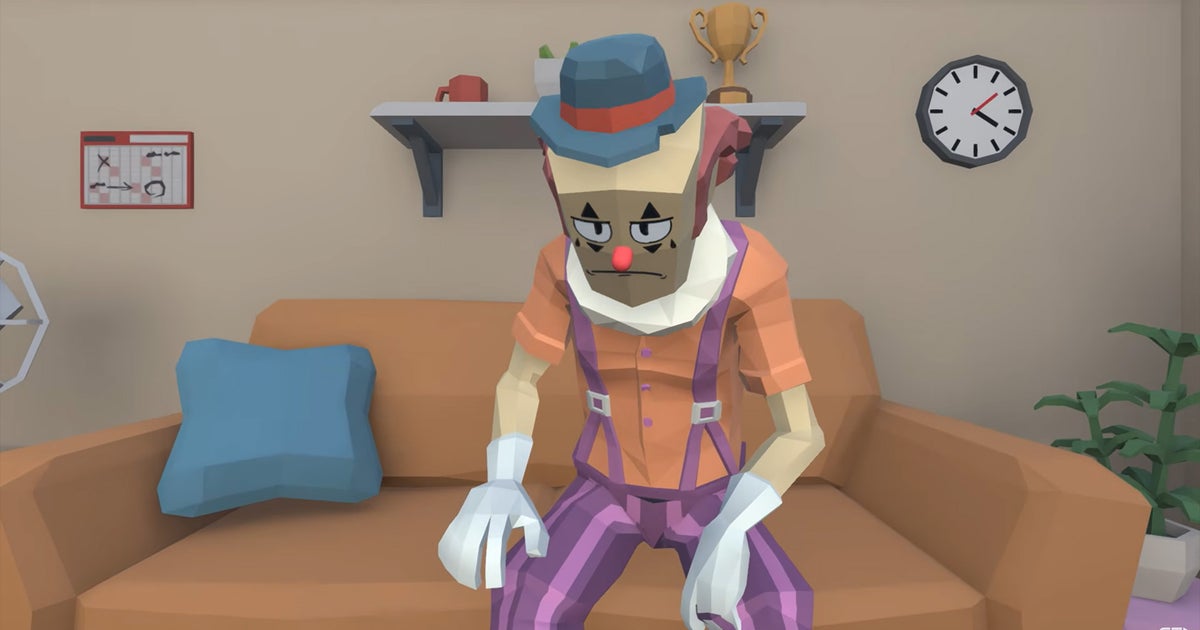
I generally find it quite frustrating how limited the medium of games insists on being when it comes to engaging in a wide breadth of genres. One particular genre that its filmmaking cousin frequently utilises but is rarely seen within games is comedy. Sure, occasionally a game makes an attempt at telling a joke within a cutscene (failing more often than not (comedy’s hard!)), but rarely is it a genre mechanically. So I’m quite pleased to learn of Send in the Clown, a turn-based RPG where you play as a clown that has to save a 12 year old’s birthday party… and it only has one turn.


In Send in the Clown, you play as Pockets, a horrendously sad name for a clown. He has been hired to perform at Miranda’s birthday party, except it’s being ruined by her shitty brother Tad. Your goal, then, is to save the day by saving the party by, uh, fighting a child! That’s Tad, to be clear. The problem is, Tad is a dirty trickster, and despite you being a literal adult, isn’t easy to take down. Your solution to that is by trying to make friends with everyone and anyone at the party.

Watch on YouTube


That involves playing a range of minigames. There’s a single dad who wants to impress with his dance moves but has two left feet, so you teach him through a rhythm game. There’s an exhausted mum who you help give a “much-needed break from parenting with Uncharted-style quick time events.” And there’s an awkward shy kid who you have to hype up a bit to get him involved. After befriending them, they essentially get added to your party (the RPG kind) and can be used to take down Tad; I’m particularly fond of the mum’s incredibly powerful attack where she throws her newborn baby.


It’s not just about making friends, there are a range of secrets to unlock and discover that can aid you in taking down Tad. Eventually all of this culminates in a single battle, and yes, an entire battle system was developed just for this one battle. That’s commitment! It’s just the bulk of the game is in the delightfully silly prep work you have to do. Best of all, it’s not trying to outstay its welcome; the game is only an hour long, so it doesn’t sound like any grinding will be necessary. I also greatly appreciate this note on the Steam page: “No artificial intelligence, or intelligence of any kind, was used in the making of this game.”


If any of this sounds up your alley, you can try out a demo, or just shoot it a wishlist, on its Steam page.

Valor Mortis: Tips and Tricks to Survive the Crimson Plague


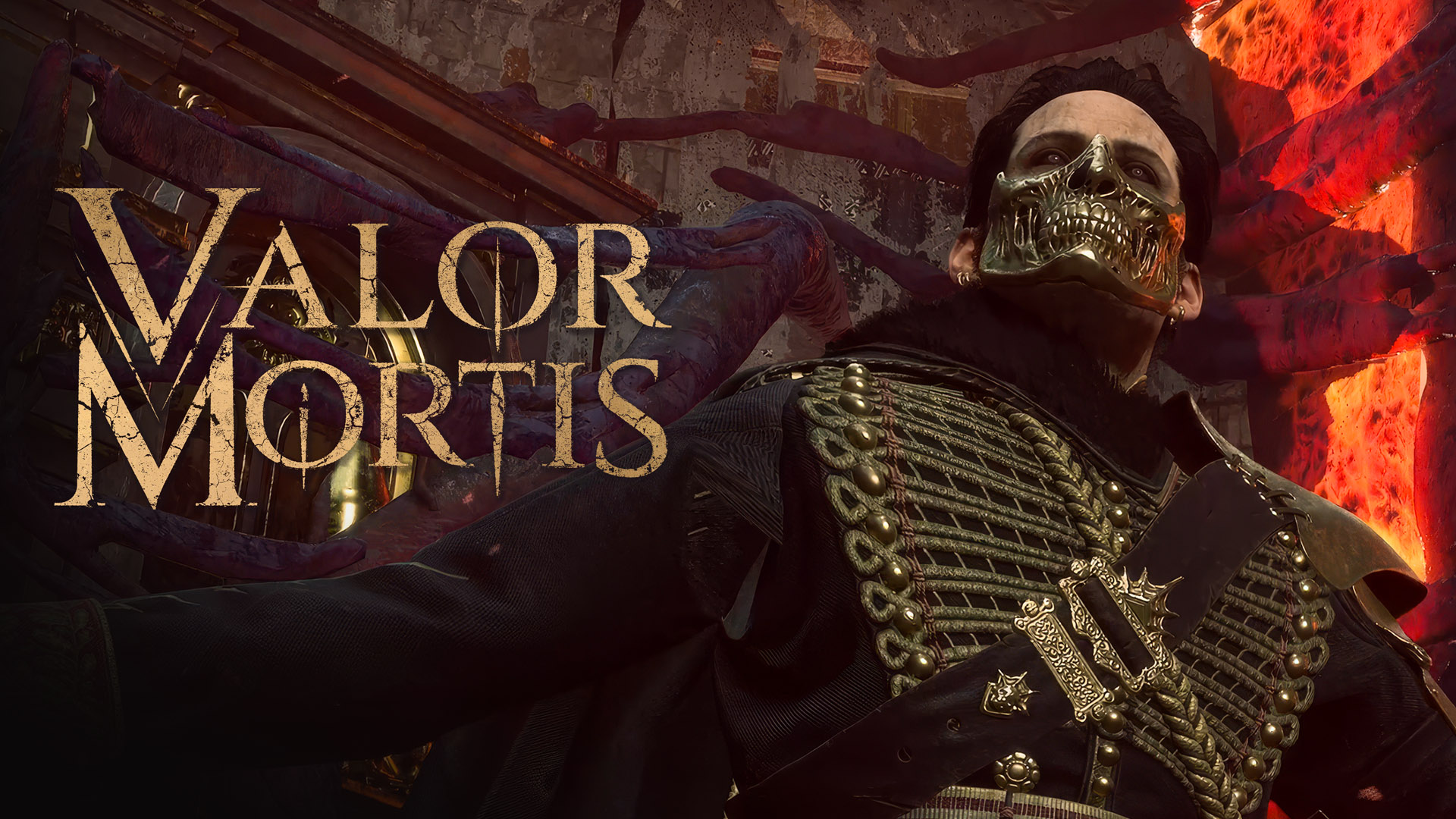
The Crimson Plague is ravaging Europe. Scattered across every level, echoes of the fallen and journal pages reveal the army’s secrets and the horrors of the plague. In Valor Mortis, you play William, a young Englishman disillusioned with the monarchy who joins Napoleon’s cause, drawn by the promise of a unified Europe. He dies for that ideal — and you’ll need every tool at your disposal to survive what follows in Valor Mortis, available today for XBOX Series X|S, XBOX on PC, Game Pass, and with support for XBOX Play Anywhere. Before you lead William into battle, the team at One More Level wants to share how its combat really works, and a few things we hope you will go looking for.

A Few Simple Tips

Valor Mortis Screenshot

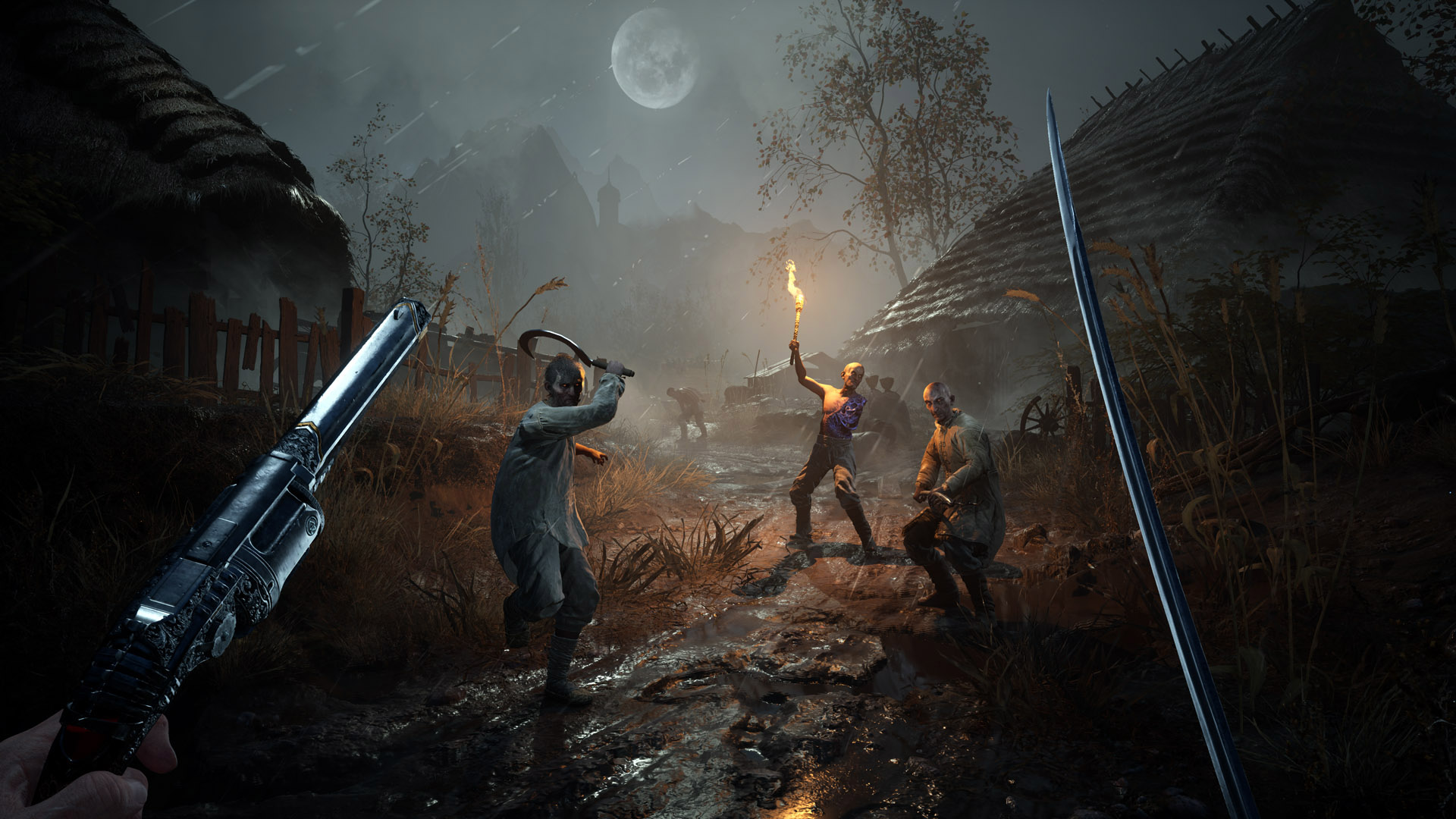
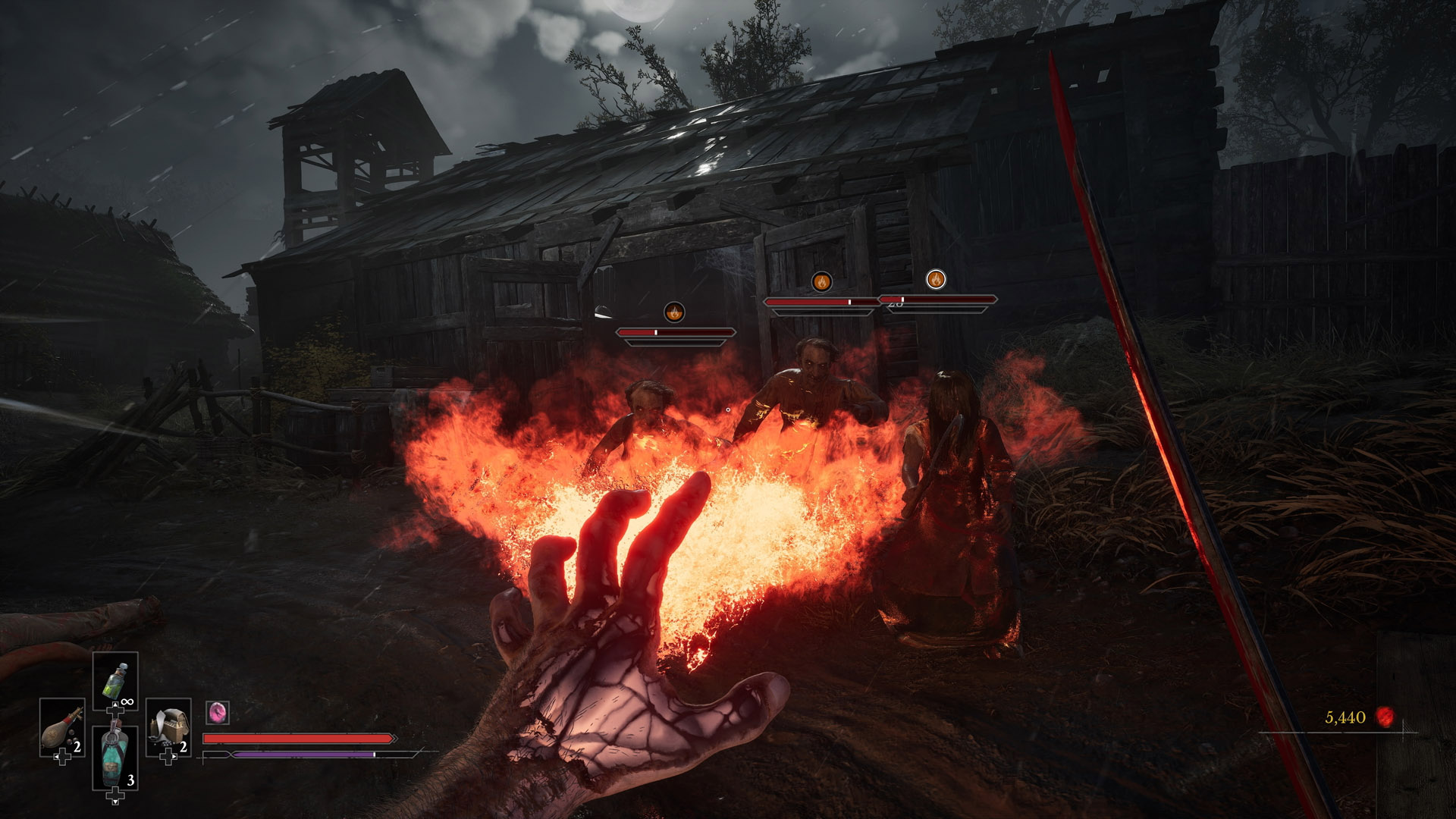
Valor Mortis is a soulslike, but its systems are built to feed each other. Your blade breaks posture. Your firearms hit weak points. Hitting weak points refills your nephtoglobin (nephto), and killing enemies often drops ammo. Once that loop clicks, you are always one move away from your next advantage.

  • Break their posture. Enemies have a posture meter, similar to Sekiro: Shadows Die Twice. Land hits and parries to break it, then follow up with heavy attacks or a powerful finisher.
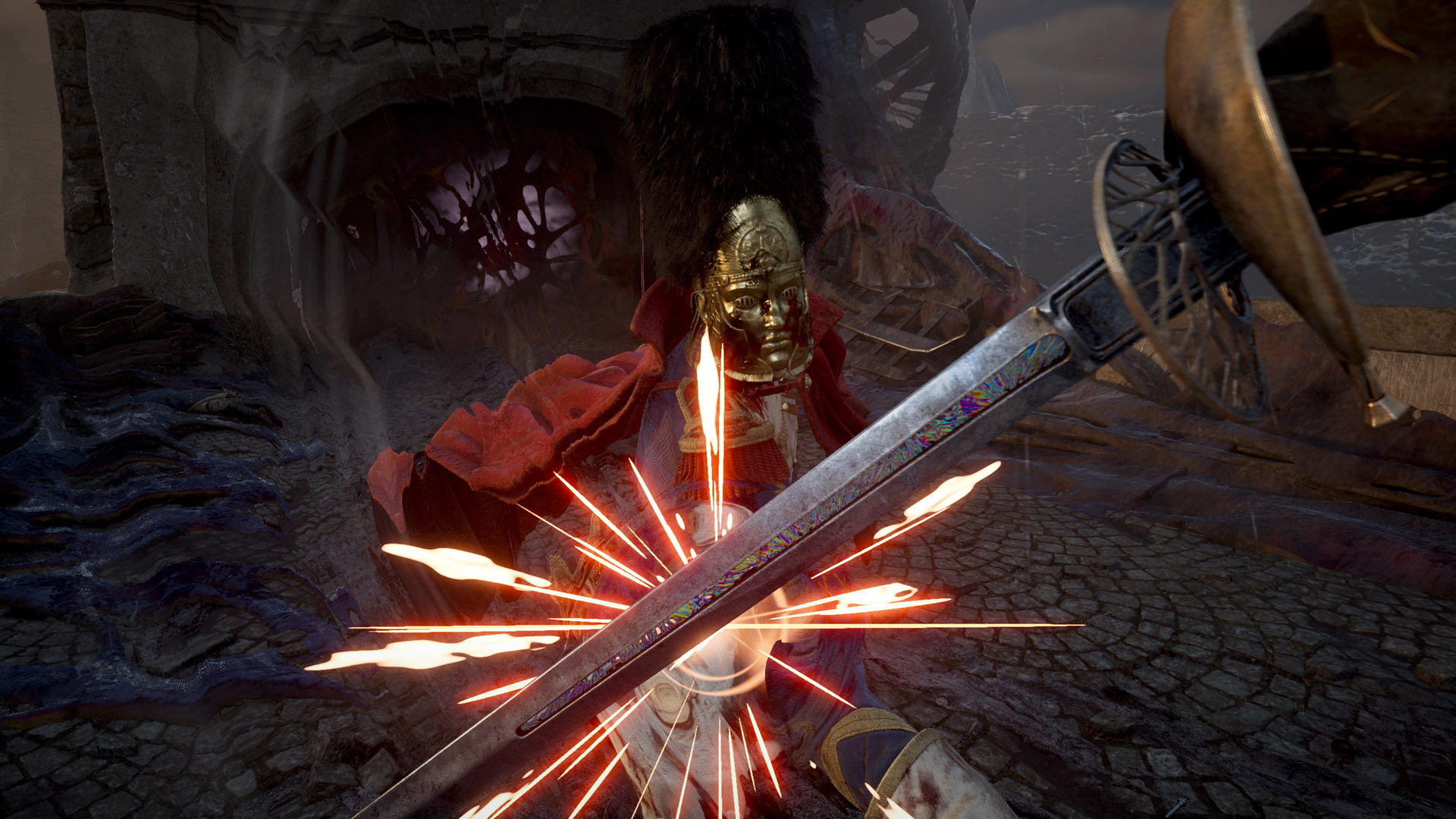
  • Commit, then parry. You can’t cancel an attack animation into a parry, so never start a swing you can’t finish. On weapons that support it, a clean parry lands with a metallic clang and sets up a counter-attack. A perfect dodge gives you a moment of slow motion.
  • Block, then counter. Counter-attacking right after a block restores the health you lost while blocking. In Valor Mortis, defense is also a way to heal.
  • Make every shot count. Ammo is scarce, so aim down sights at glowing weak points (the pustules, or “lambent blisters”). Detonate the explosive barrels some enemies carry, and shoot glowing red-orange nodes to reveal blocked paths.
  • Burn, then finish. The Fire Transmutation sets enemies alight, and burning enemies are open to finishers.

Change Your Playstyle with Ambers

Valor Mortis Screenshot

Ambers are where your build gets personal. Some simply make you stronger, but the best ones change how the game plays. Slot them in when you visit a lantern. The more you level William, the more Ambers you can equip, so use catalyst clots from your inventory to push past the next level threshold.

Here are three that show how far an Amber can take your build:

  • Marksman’s Bane. Lets you parry bullets, and every successful bullet parry gives you a Pistol round. Enemy gunfire becomes a source of ammo.
  • Volatile End. Shooting an enemy’s weak point causes a damaging explosion. Every precise shot now hits even harder.
  • Butcher’s Carnage. Your melee strikes restore health, but you can no longer heal with Ferrofluid Flasks. It rewards staying aggressive and punishes every moment of hesitation.

Every major boss has a strategy that works best against it. If a fight isn’t going your way, try different Transmutations, firearm combinations, and items from your inventory, and come back with a new plan.

Explore Every Corner

Valor Mortis Screenshot

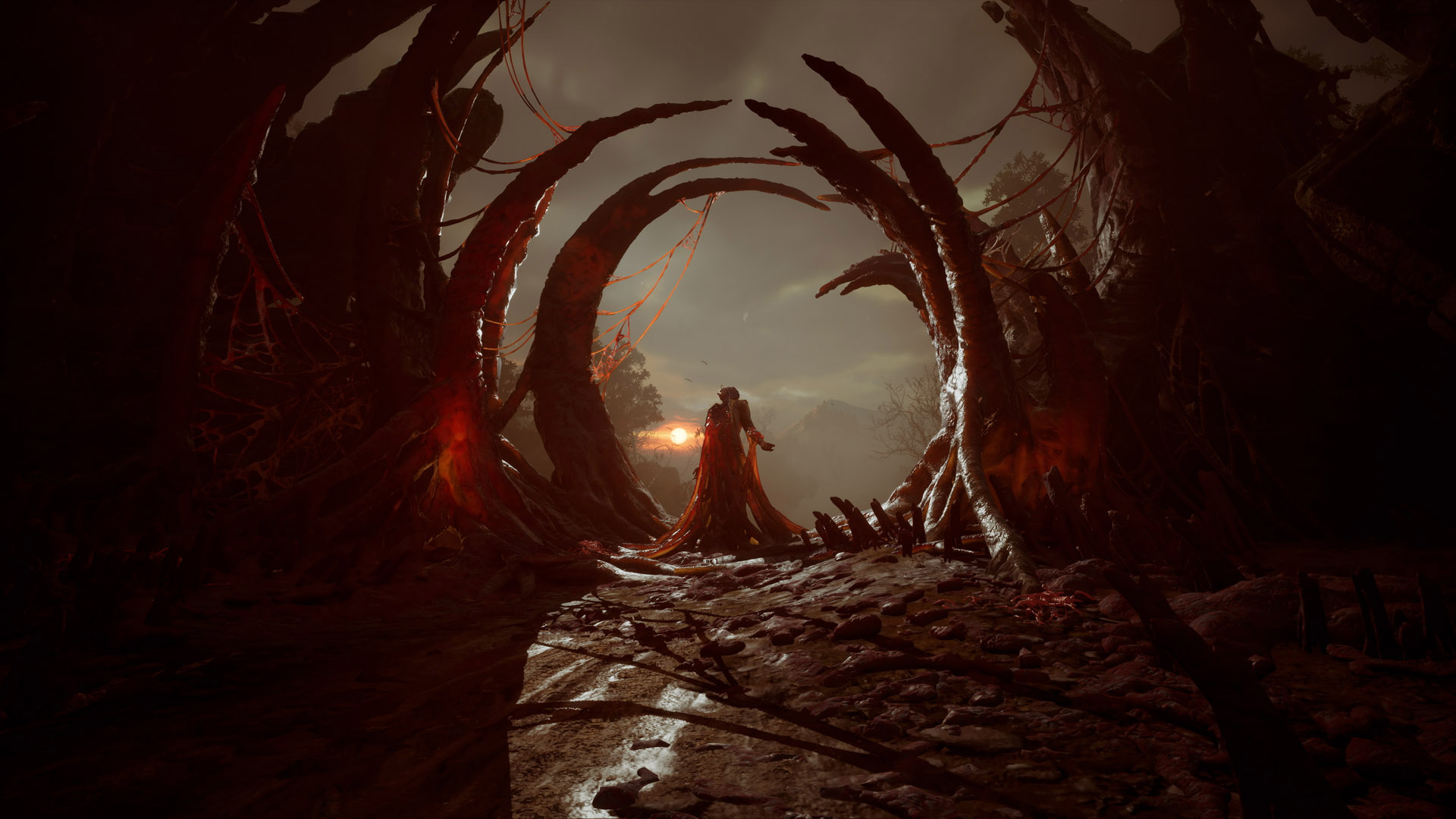
Valor Mortis rewards you for exploring, like a metroidvania. Abilities you unlock later open up areas you have already visited. Later levels open into combat arenas with fights across multiple heights, and villages are full of shortcuts and alternate paths.

The best rewards are off the main path. Echoes of the fallen and journal pages fill in the story of the Crimson Plague. Many Ambers are tucked into optional areas, and you are unlikely to find every one of them in a single playthrough.

Some of the most powerful enemies in Valor Mortis are also the best hidden. Optional mini-bosses wait in the corners of its interconnected levels for players curious enough to look. You never know what you will discover, or what kind of trouble you will find.

Ready to Die for Napoleon?

Valor Mortis Screenshot

Valor Mortis is available today for XBOX Series X|S, XBOX on PC, Game Pass, and with support for XBOX Play Anywhere. We can’t wait to see the builds you create and the secrets you uncover.

Xbox Play Anywhere

Valor Mortis

Lyrical Games


☆☆☆☆☆


★★★★★


You served Napoleon. You died for Napoleon. You have risen for Napoleon.
You are William, a soldier of the Grande Armée brought back from a battlefield grave. But the Europe you awaken to is not the one you sacrificed for. A mysterious plague now sweeps the continent, and you have been reborn with its corrupting power pulsing through your veins.

HARNESS CORRUPTED POWER
Each death is a chance to grow stronger. Master a combat system of parries, dashes, and visceral finishers across a variety of weapons. Channel your power to enhance attacks and unlock new supernatural abilities to inflict upon your enemies.

SECRETS LITTER THE BATTLEFIELD
Navigate a 19th-century alternate history where the costs of endless war have corrupted the landscape. Use your newfound mobility to outmaneuver the plague-ridden abominations of Napoleon’s Eternal Guard and uncover environmental secrets that may increase your chances of survival.

UNCOVER A HORRID CONSPIRACY
Witness a compelling story where historical figures and realities intertwine with elements of horror and the supernatural. Explore beyond the dark corners of the world to discover the truth behind the plague and your unholy resurrection.

Amid Ecosystem Adoption, NVIDIA Opens Vera Rubin Architecture to Help Scale AI Factories Worldwide


As AI factories grow from megawatts to gigawatts, building them takes more than advanced computing. Open standards are helping the industry scale AI infrastructure faster, more efficiently and more reliably.

At the Open Compute Project (OCP) Global Summit, taking place in the San Jose McEnery Convention Center, NVIDIA announced new partnerships and contributions aimed at creating a common foundation for next-generation AI infrastructure. 

NVIDIA contributed key NVIDIA Vera Rubin rack and compute tray designs to OCP through the open NVIDIA MGX architecture, giving system builders a common foundation for developing next-generation AI factory infrastructure.

Together, these efforts span the AI factory itself, the utility grid that powers it and the rack-scale architecture at the heart of modern accelerated computing.

NVIDIA and Partners Announce Open Architecture Advances 

At the OCP event, NVIDIA and partners made a handful of announcements: 

  • NVIDIA and hyperscalers published open standards for next-generation AI factories, including AI factory design standards and grid resilience. 
  • NVIDIA launched new open source software components for NVIDIA DSX AI Factory. 
  • Meta and NVIDIA advanced open AI networking with NVIDIA Spectrum-X Ethernet SuperNIC and Spectrum-6 innovations.
  • Visionbay introduced an 800V DC AI factory design for the Vera Rubin era.
  • NVIDIA and Cisco announced the Ultra-Dense Small Form Factor Pluggable (USFP) standard, the industry’s first module ​for 400Gb/s-based networking fabrics.
  • NVIDIA and Google announced Falcon Transport support on future NVIDIA ConnectX-10 SuperNICs and BlueField DPUs.

Before a packed audience, Ian Buck, vice president of hyperscale and high-performance computing at NVIDIA, discussed how open infrastructure is becoming a critical ingredient for scaling AI factories worldwide. 

The news at OCP spotlights how NVIDIA’s extreme codesign combined with open standards is accelerating deployment, improving power efficiency and driving tokens-per-watt performance.
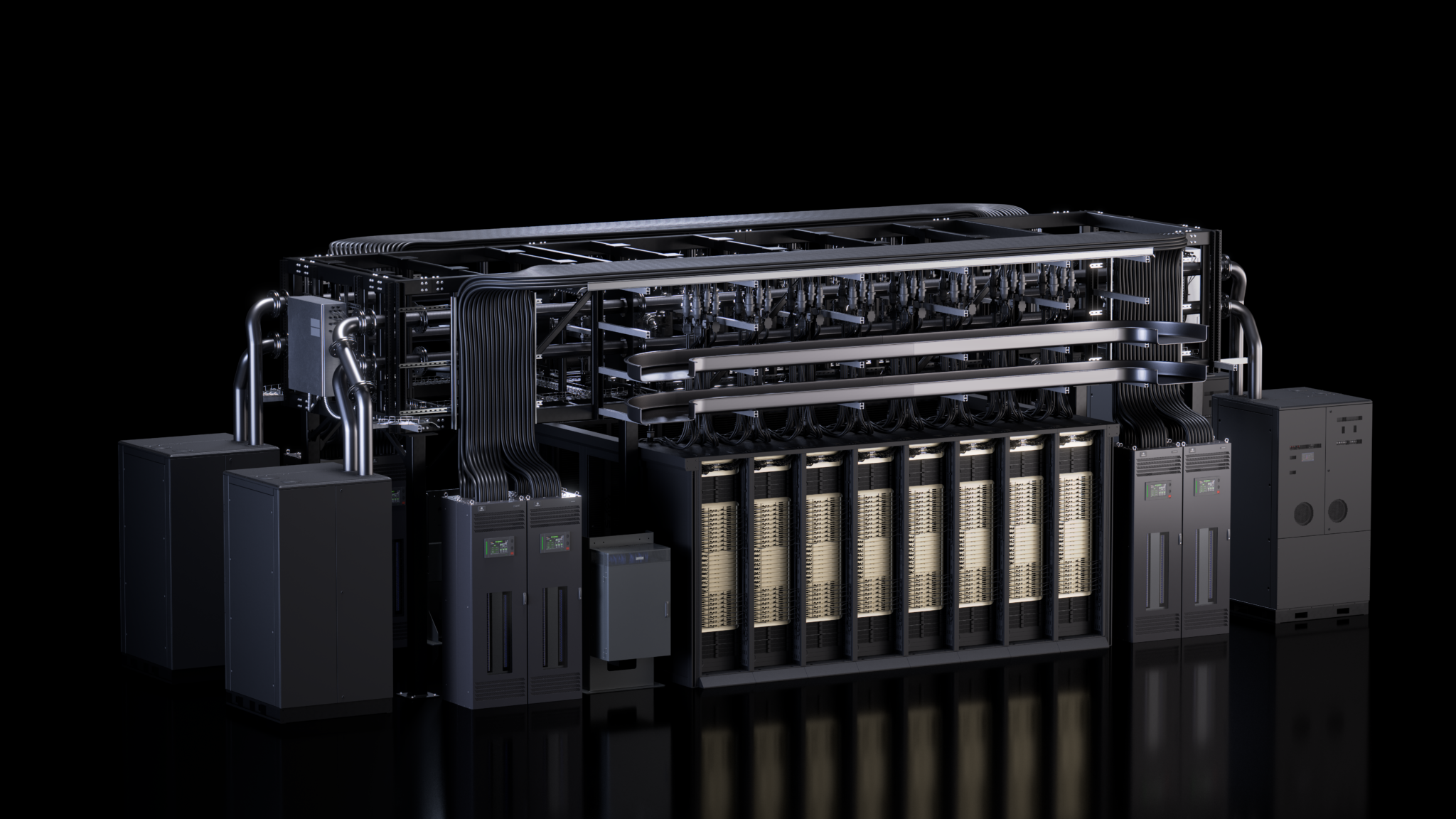


Vera Rubin AI Factories Advance With MGX Rack Contributions at OCP 🔗

NVIDIA joined industry leaders in contributing to the third-generation MGX AI data center reference design through OCP’s Open DC Initiative.

Combined with open liquid-cooling technologies such as MQD and MQDB, the effort helps turn proven AI factory designs into industry standards that others can adopt, manufacture and scale.

For NVIDIA Vera Rubin AI factories, the updated MGX 1.2 specification extends the open architecture for AI factories with rack-scale blind-mate liquid cooling, interoperable rack-scale interconnect infrastructure and a liquid-cooled 5,000A busbar designed for higher-power AI systems. It also adds native 19-inch equipment support and higher-density rack designs.

MGX 1.2 further expands modularity with configurable I/O bays, fanless liquid-cooled compute trays, standardized power and cooling interfaces, and a common infrastructure that helps ecosystem partners build interoperable accelerated computing platforms. It improves assembly, test and service times to streamline manufacturing and field service to enable faster and more efficient infrastructure buildout. The architecture supports rack deployments up to 250kW while simplifying serviceability, deployment and infrastructure reuse.

The Vera CPU rack design specification extends the NVIDIA MGX open architecture beyond accelerated computing, providing a purpose-built platform for the growing agentic AI era. While Vera Rubin NVL72 serves as the foundation for large-scale training and inference, the NVIDIA Vera CPU rack is designed to support tool calling, orchestration and sandboxed execution, helping AI agents interact with applications, data and services in real time.

Built on the third-generation NVIDIA MGX rack architecture, the Vera CPU rack shares the same rack-scale design principles that unite compute, networking, power and cooling into a common modular platform. This approach enables partners to deploy specialized infrastructure while benefiting from a shared ecosystem, simplified integration and a consistent foundation for next-generation AI factories.



NVIDIA Launches New Open Source Software Components for DSX AI Factory 🔗

NVIDIA DSX AI factory platform applies extreme codesign to unify computing, networking, power, cooling, facilities and software, helping AI factories operate as a single optimized system, maximizing AI output within available infrastructure constraints. At the center of this unified system is DSX OS, the open operating layer that turns the DSX architecture into coordinated, repeatable operations at scale.

At OCP, NVIDIA expanded DSX OS with open source components for configuring networks, validating clusters, managing racks and provisioning bare metal: 

  • NVIDIA Config Manager: Automates switch configurations at scale, allowing customers to deploy, validate and maintain consistent AI factory network fabrics with minimal to zero manual intervention/
  • NVIDIA Cluster Readiness Engine: Helps eliminate costly job crashes by stress-testing GPU clusters with real workload simulations to guarantee hardware health before training begins
  • NVIDIA Rack Management Service: Offers a rack hardware abstraction and operations solutions that treats racks as first-class units for improved AI factory scale firmware management.
  • Cluster API Provider for NVIDIA Infrastructure Controller: Accelerates bare-metal deployment and tenant onboarding, turning raw AI hardware into production-ready clusters in hours instead of days.

Developed from NVIDIA’s experience running NVIDIA DGX Cloud, these open source components enable cloud providers and software partners to integrate AI factory capabilities directly into their multi-tenant platforms. 

Developers can visit the DSX AI Factory Github page to explore and contribute to both the new and existing open source software components from NVIDIA DSX AI Factory platform.
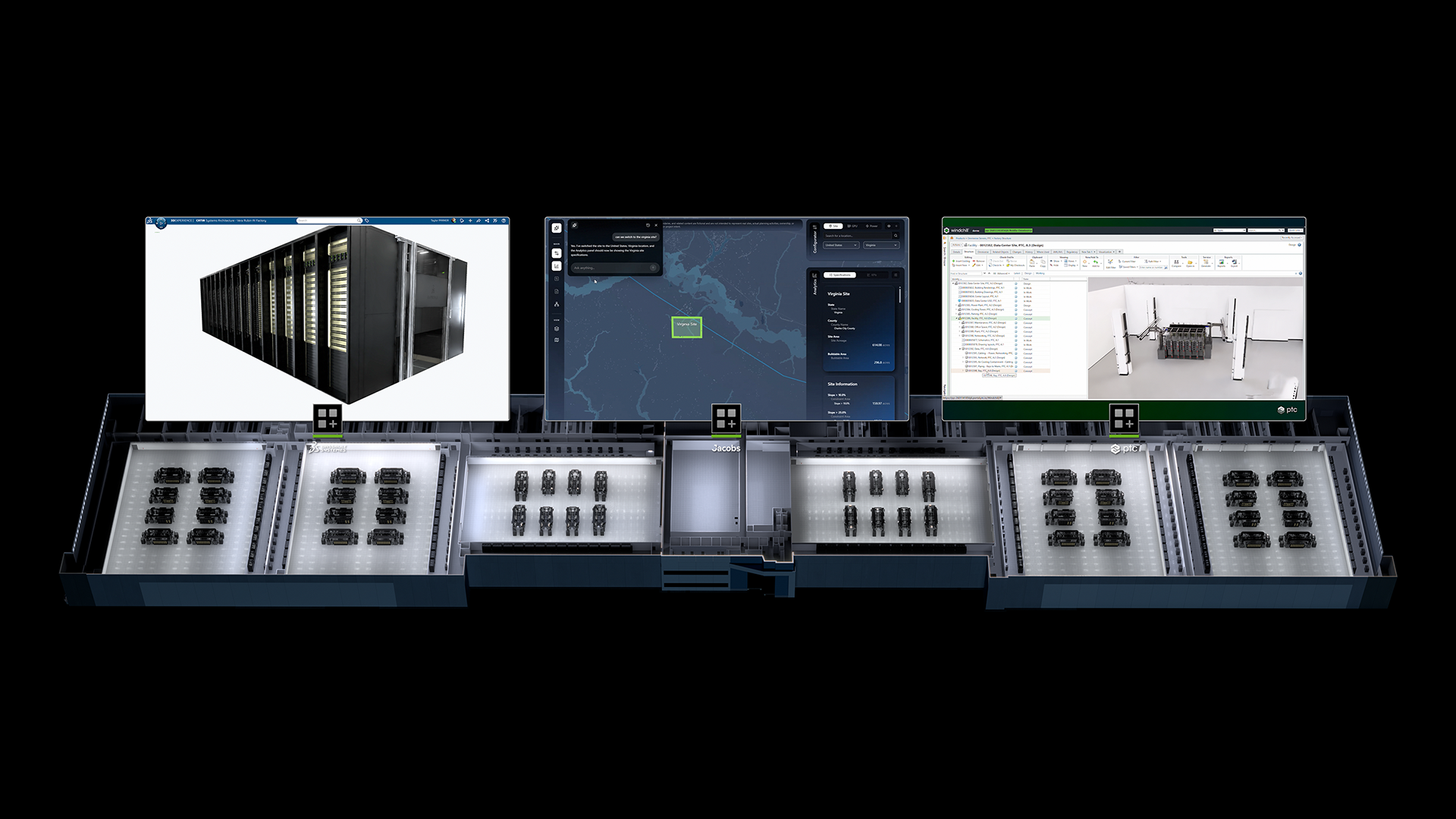


NVIDIA and Hyperscalers Publish Open Standards for Next-Generation AI Factories 🔗

For AI infrastructure to scale globally, it needs more than advanced hardware — it needs a common foundation that the entire industry can build on.

At OCP, NVIDIA joined AMD, Google and Meta to publish a new open specification that establishes that foundation. The Open Data Center Specification v0.7 defines a unified blueprint for next-generation AI factory facility design — from power architecture to cooling infrastructure to physical layout. 

The OCP Grid Resilience Specification, published by Google, Meta, Microsoft and NVIDIA, establishes how large-scale AI infrastructure should behave during utility grid disturbances: staying connected, responding automatically and restoring to near-full load within less than two seconds.

With these standards now open, manufacturers around the world have a common target to build for. Equipment makers, colocation providers and data center operators can begin designing, fabricating and delivering the infrastructure layer that powers AI factories under construction globally — without waiting for proprietary specifications from individual customers.

Being NVIDIA DSX reference design-compatible, these specifications provide a validated, deployable implementation of both specs, from facility layout and power architecture to the software that monitors and responds to grid signals in real time. For operators building Vera Rubin AI factories, there’s now a straight line from open community standard to a running system.
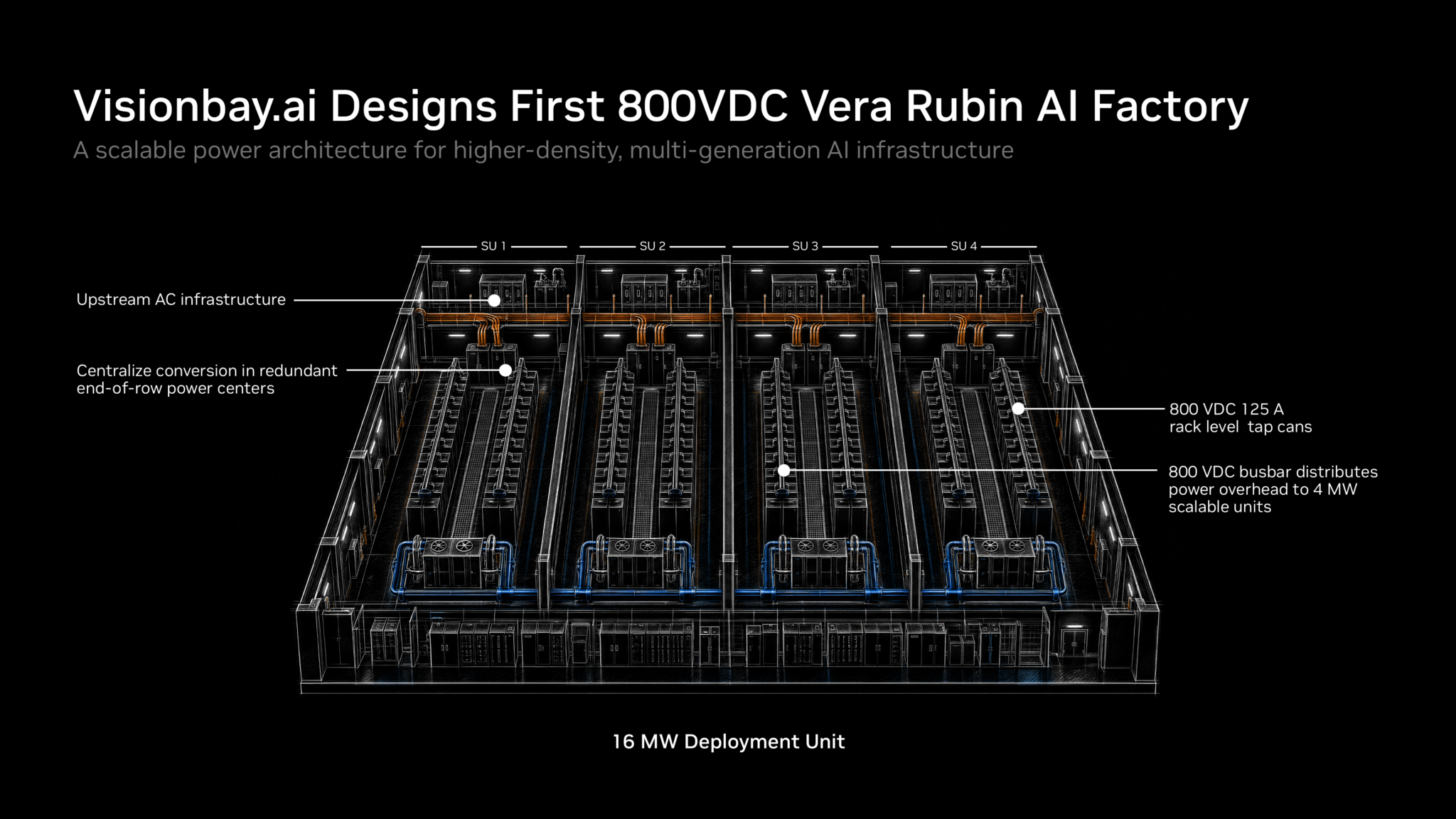


Visionbay.ai Designs 800VDC AI Factory for the Vera Rubin Era 🔗

As AI factories grow larger and more powerful, one challenge looms over them all: delivering enough power to the accelerated computing systems driving the next generation of AI.

At OCP, Visionbay unveiled plans for K-1, a next-generation AI factory platform designed around an 800 VDC architecture and built with future NVIDIA Vera Rubin deployments in mind. The project combines NVIDIA’s 800 VDC reference architecture with power and thermal technologies from Vertiv to create a scalable foundation for high-density AI infrastructure.

The design addresses a growing industry challenge. As AI training, inference and reasoning workloads expand, rack power densities continue to rise. Traditional low-voltage power distribution becomes increasingly difficult to scale, requiring more copper, more cabling and more power-conversion equipment.

By adopting NVIDIA’s 800 VDC architecture, K-1 creates a path toward higher-density AI infrastructure while preserving flexibility for existing deployments. Rather than requiring a complete transition on day one, the platform is designed to phase in 800 VDC distribution where it delivers the greatest benefit, helping operators prepare for future generations of accelerated computing without extensive facility redesign.

The architecture is designed around cluster-level power centers that centralize AC-to-DC conversion and distribute 800 VDC closer to compute resources. The approach simplifies downstream power delivery, supports modular expansion and creates repeatable building blocks for future AI factory growth.

K-1 also reflects the system-level design philosophy behind NVIDIA AI factories, where power, cooling and computing are engineered together. With support for liquid-cooled infrastructure, scalable power distribution and future Vera Rubin-class deployments, the project demonstrates how ecosystem partners are translating NVIDIA’s AI factory architecture into deployable infrastructure designed for the next era of accelerated computing.
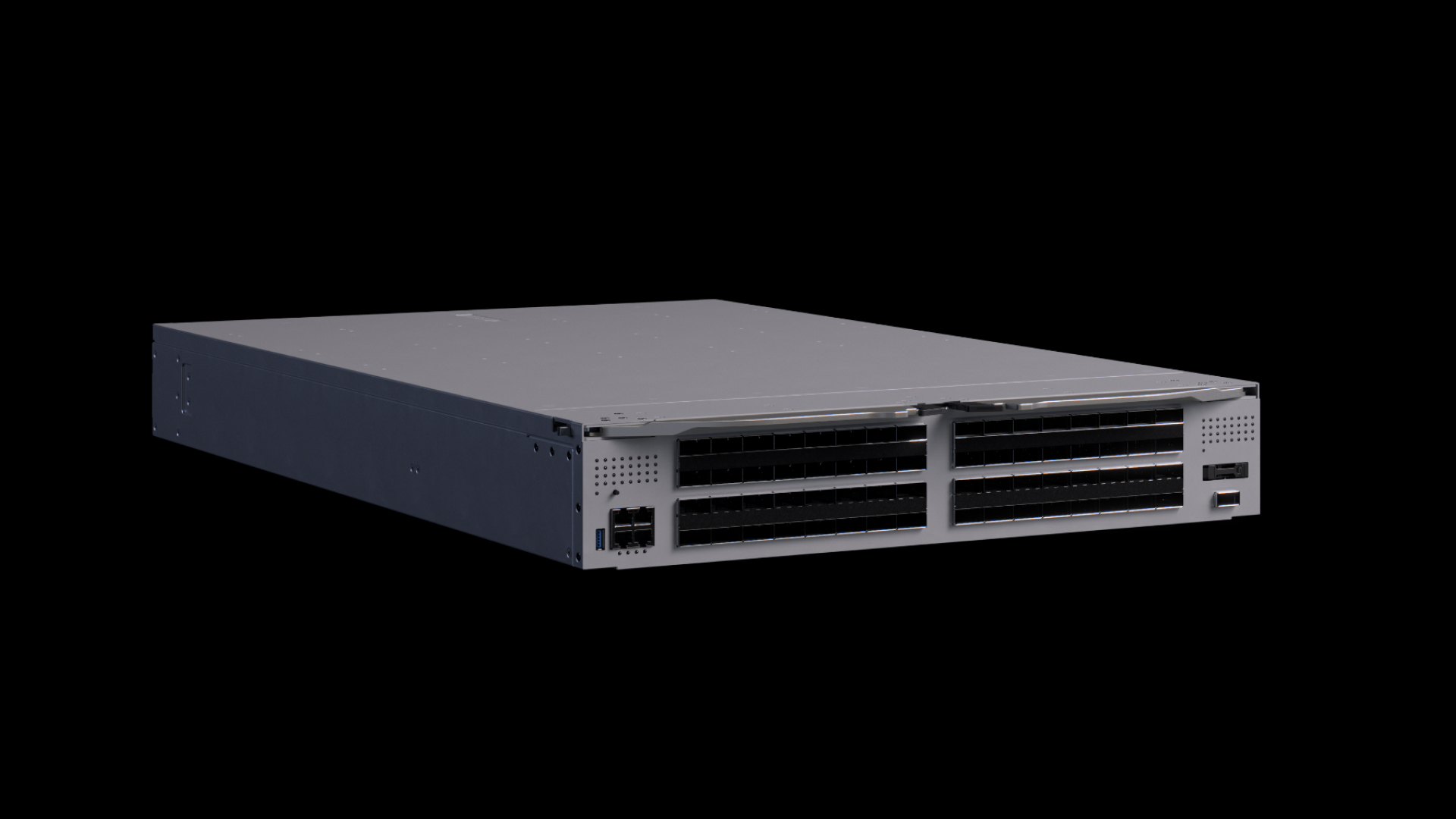


At the event, Meta and NVIDIA announced that Meta is adopting NVIDIA Spectrum-6 102.4Tb/s Ethernet switches to build larger, higher-performance NVIDIA Vera Rubin AI factories on open networking. 

Spectrum-6 delivers twice the switching capacity and per-lane bandwidth of Spectrum-4, and provides a lossless Ethernet AI fabric at 200G per lane, with high effective bandwidth and performance isolation that keeps one job’s traffic from slowing another’s.

Meta’s Spectrum-6-based switch, N-IceCube, slots into IcePack, Meta’s 100T, liquid-cooled rack. N-IceCube runs the Facebook Open Switching System (FBOSS), Meta’s open source network operating system that contributed to OCP to support efficient networking at hyperscale. 

FBOSS is built on the Switch Abstraction Interface, an OCP standard NVIDIA helped develop, providing a vendor-independent way of controlling switch hardware. Together, these technologies support agentic AI factories of more than 100,000 GPUs that train and serve massive mixture-of-experts models.

The announcement marks the next step in a collaboration that combines Meta’s experience operating AI infrastructure at hyperscale with NVIDIA’s networking technology.

At the heart of this collaboration is Spectrum-X Multiplane technology, enabled by Spectrum-6 switches and ConnectX-9 SuperNICs. Multiplane distributes GPU traffic in hardware across up to eight independent network planes, enabling AI factories to scale beyond 100,000 GPUs with fewer switch tiers and lower infrastructure costs. Multiple paths between GPUs improve network utilization and resilience: when a component fails, traffic shifts to the remaining planes, keeping GPUs productive and AI applications running, even at reduced bandwidth.

Meta and NVIDIA worked together to strengthen that resilience through deployment experience and rapid engineering iteration. The teams validated improvements across on-premises and cloud environments. 

“We are excited about our close partnership with NVIDIA in making multiplane fabrics operationally scalable and performant, a critical requirement both for our own infrastructure builds and for our joint cloud partners,” said Omar Baldonado, senior director of data center and AI networking at Meta. “Extending FBOSS to Spectrum ASICs means we can run that same software stack across our fabrics, and Meta’s new Spectrum-based switch, N-IceCube, brings that into Icepack – our liquid-cooled 102.4T network rack for scale-out that connects upcoming generations of accelerators in our fleet.”

Together, Meta and NVIDIA are developing an architecture and operational playbook that other AI infrastructure operators can adopt, turning lessons from demanding production workloads into more scalable, resilient and efficient AI factories.
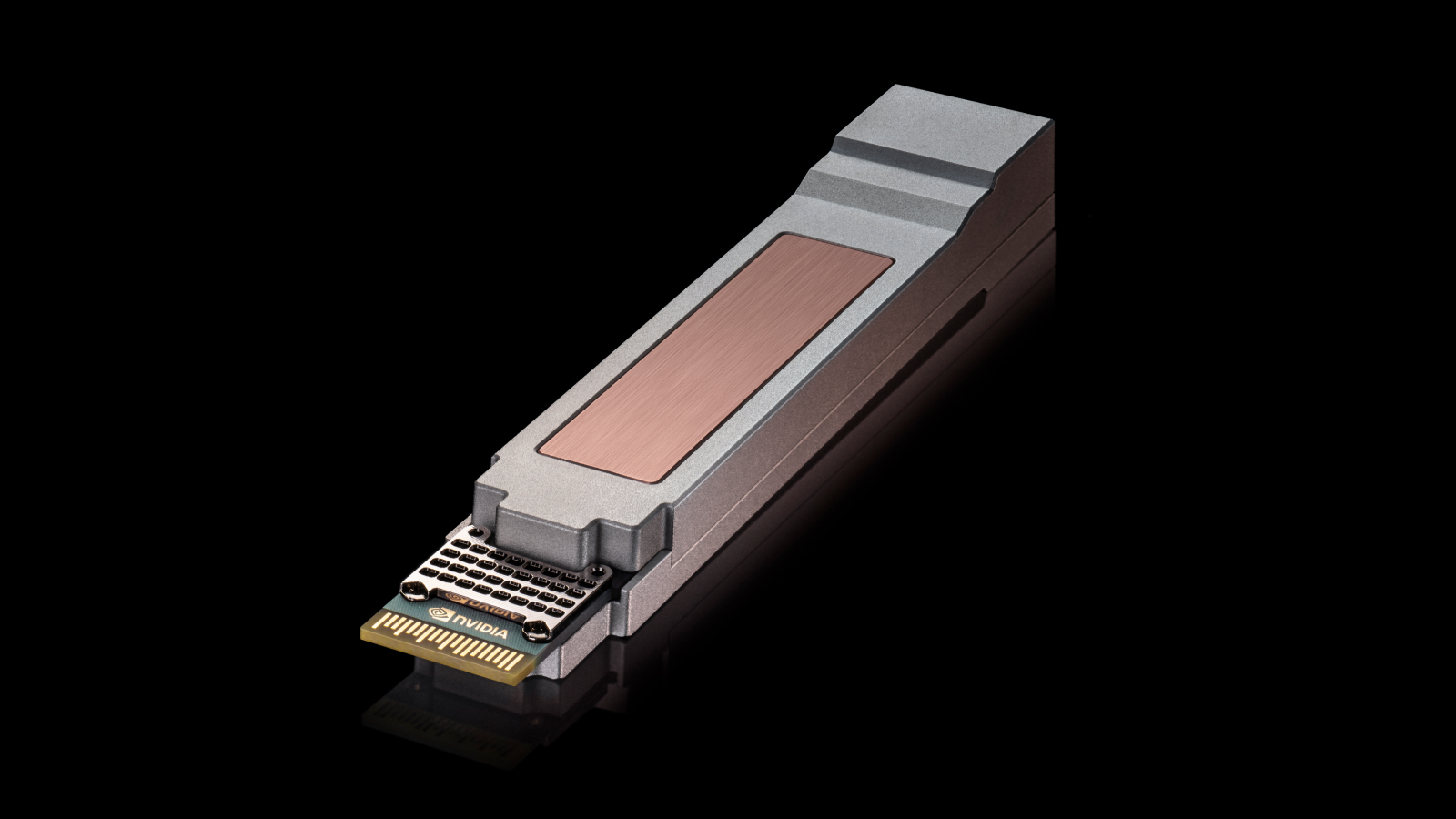


With USFP, NVIDIA and Cisco Reinvent Pluggable Optics for AI Factory Scale 🔗

As AI factories scale to support larger models and surging inference demand, every component of the infrastructure stack must deliver more performance, efficiency and simplicity — right down to the network connection itself. 

At OCP, NVIDIA and Cisco announced plans for USFP, a new optical pluggable transceiver module form factor designed to help AI factory builders scale next-generation AI fabrics while improving bandwidth density and power efficiency.

With approximately the same footprint as the widely adopted 200Gb/s-per-lane OSFP form factor, USFP will provide a path to 400Gb/s-per-lane networking and will extend a transceiver-based deployment model already proven across generations of data center networks. Packing 16 full-duplex lanes with plans to scale up to 32 lanes, USFP will deliver four times the bandwidth density of traditional 200Gb/s-per-lane pluggable optics. 

The result is the ability to connect more compute resources without adding network tiers that can increase latency, power consumption and complexity.

The new form factor is designed for the scale and efficiency demands of next generation AI factories, supporting higher-bandwidth fabrics while preserving the flexibility and serviceability that have made pluggable optics a mainstay of modern data centers. It also will deliver roughly 1.3x greater power efficiency, helping operators move more data with less energy.   

To help drive an open ecosystem, NVIDIA and Cisco are collaborating with TE Connectivity and Amphenol on cages, connectors and modules, with plans to advance USFP through a community-led, multi-source effort. Together, the companies are laying the foundation for more scalable, efficient and interoperable AI factory networking.


Google Falcon Transport Supports NVIDIA ConnectX-10 for Interoperable AI Networking 🔗

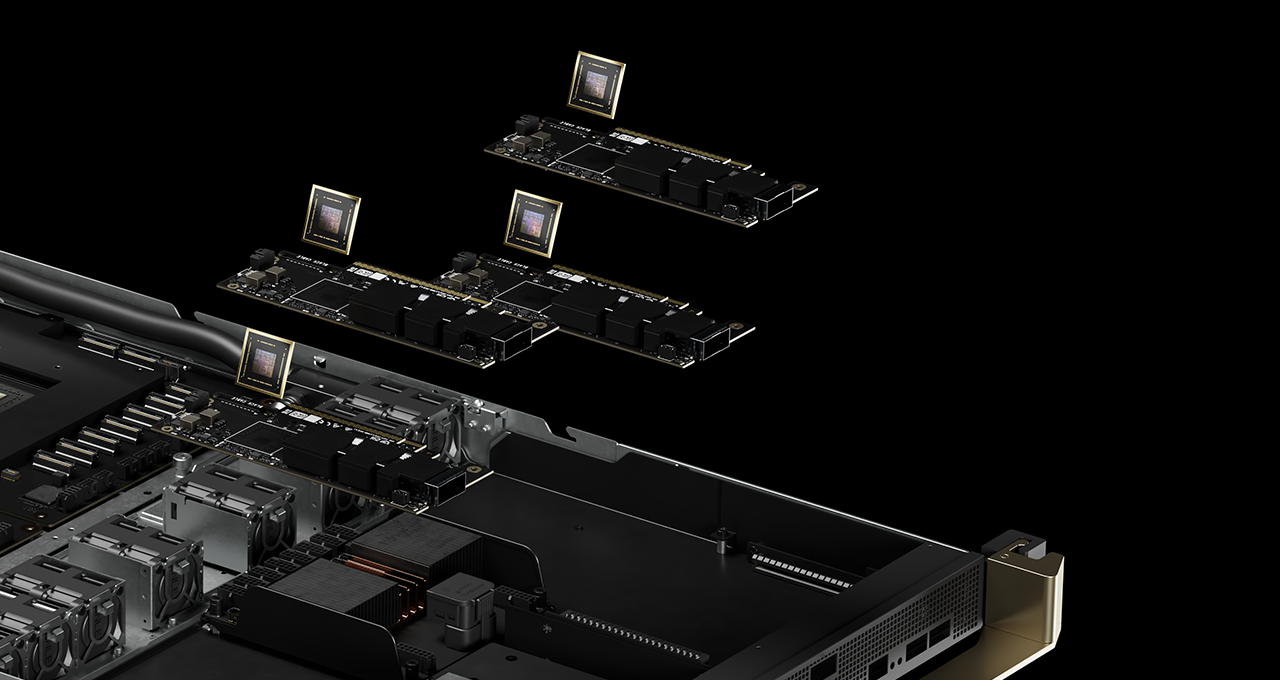
NVIDIA and Google also announced Falcon Transport support on future NVIDIA ConnectX-10 SuperNICs and BlueField DPUs, helping improve network efficiency for large-scale AI infrastructure. 

Falcon is a transport protocol designed to deliver data reliably over Ethernet networks, which can otherwise drop packets under congestion. It supports AI and storage workloads through multipath load balancing, programmable congestion control, hardware loss recovery and per-connection security.

This collaboration combines NVIDIA hardware acceleration with DOCA software to implement Falcon and extend NVIDIA networking to Google’s data center transport. NVIDIA and Google NICs can communicate over a common transport while applications retain standard RDMA programming interfaces.

By distributing traffic across paths, adapting to congestion, recovering dropped packets and protecting connections, Falcon helps workloads make better use of available bandwidth and maintain predictable performance as Ethernet fabrics scale.

Learn more by joining NVIDIA at OCP.