You’ll get a great listening experience with these AirPods, which are powered by Apple’s H2 chip. Both music and calls will sound great quality, and the Voice Isolation feature helps make sure you’re heard nice and clearly too.
The earbuds include Siri support, so they make listening and hands-free tasks easy. You can use voice commands such as playing music or checking schedules, along with Siri Interactions that enable simple head gestures like nodding or shaking to respond. They also feature automatic pairing and in-ear detection for playback control.
They’re also compatible with the Find My app, helping you locate both the earbuds and the case should you misplace them. Plus, the battery life gives you up to five hours of listening time per charge and up to 30 hours total with the case.
Mashable Deals
By signing up, you agree to receive recurring automated SMS marketing messages from Mashable Deals at the number provided. Msg and data rates may apply. Up to 2 messages/day. Reply STOP to opt out, HELP for help. Consent is not a condition of purchase. See our Privacy Policy and Terms of Use.
“It’s exactly the use case that you don’t outsource, and you certainly don’t outsource outside the country,” Laura Gilbert, senior director of AI at the Tony Blair Institute, a think tank founded by the former prime minister, tells WIRED. “We should be learning from that data and building a better health service, not allowing an offshore company to learn and build better products they can sell to someone else.”
Ayub Bhayat, the director of data and analytics at the NHS, tells WIRED that the federated data platform is helping patients “while saving money for NHS teams and taxpayers.”
“There is no requirement for its use,” he says.
In early June, members of Parliament published a report warning that the UK’s growing dependence on Palantir represents “an unacceptable point of weakness.” The company is on track to become highly entangled in the public sector, the parliamentary committee argued, giving it immense leverage over the British state. The report also described a “clear mismatch with UK values.”
After the report was published, the UK technology secretary, Liz Kendall, said that the government is conducting a review of “every single aspect” of the NHS contract with Palantir before deciding whether to carry the deal forward.
Responding to the report in an op-ed published by The Telegraph, Mosley accused the MPs of “putting politics above patients” and fearmongering over the possibility that the company might abuse its access to sensitive health data. “Each NHS trust controls its own data; Palantir cannot use it, sell it, or move it,” he wrote.
Whether or not the government decides to carry the NHS contract forward, Palantir has demonstrated a willingness to resist attempts to oust it from the UK public sector. According to The Times, the company is gearing up to sue the mayor of London, Sadiq Khan, who blocked a $65 million deal with the Metropolitan Police, citing concerns about the procurement process and “values.”
A couple of hours after the demonstrations began, the protesters withdrew to a café at the nearby public library.
The group shared an optimism over a perceived swell in momentum behind calls to eject Palantir from the NHS, particularly in the wake of the parliamentary report. “We have this really big opportunity right now, because of the break clause,” says Lurken, the Pull the Plug cofounder.
But there’s also a world in which renewed public attention to the Palantir question could backfire, some feel, if the government decides to forge ahead with the contract. Another protester, who gave his name as JJ and identified himself as an NHS practitioner, says he worries that Palantir’s notoriety could cause already-skittish patients to think twice before volunteering information to their health care provider, with implications for their care. “We know that people don’t want to tell us everything. People are already distrustful. They’re just going to clam up,” says JJ. “We’re going to get less information, less history to be able to help people.”
It seems to be one of the most pressing questions in the world of AI these days. If artificial intelligence tools cause massive disruptions in the economy and unemployment soars, what should AI companies and the government do about it?
Anthropic released a new economic policy framework on Wednesday that aims to tackle these questions, and the company has pledged $350 million to help work through solutions. But it remains to be seen how the federal government under President Donald Trump will respond.
“We are not seeking job displacement. We are working to prevent or minimize it,” Anthropic explained in releasing the new paper. “Some amount of displacement, though we cannot say how much, may be an intrinsic consequence of the technology, and our responsibility is to prepare for it and respond to it.”
The company has three different proposals, one for a world with 5% unemployment, one with 10% unemployment, and one with so-called “unprecedented unemployment.” The current unemployment rate is 4.3%. The last time unemployment rose about 10% was in 2009, and before that in 1983. And the highest unemployment rate of the 20th century was during the Great Depression, when the unemployment rate hit 25% in 1933.
If unemployment only rises to 5%, Anthropic proposes the expansion of “new capital accounts seeded at birth,” and allowing young adults to benefit from them as well.
“Currently, these accounts can hold only index funds—not a stake in AI companies,” the company continued. “We also propose policies like workforce training grants, occupational licensing reform, and wage insurance, that make it easier for workers to find new roles and enter new industries.” Anthropic also proposes creating incentives for companies that retain and redeploy workers under the 5% plan.
The company explains in its paper that it’s unclear whether job disruptions will be a “temporary shock” or an “enduring restructuring, in which the demand for human labor is significantly and persistently lower.” But either way, Anthropic says something must be done.
“In the 10% scenario, our priority is expanded unemployment insurance, which we propose supplementing with sector-specific transition support and basic-needs relief,” Anthropic explains. “If AI does become a general substitute for human labor, policymakers will also need to consider the pace of its rollout, including by incentivizing firms to manage displacement gradually.”
Under the most dire “unprecedented unemployment” situation, which presumably means higher than 25%, Anthropic believes there will be a need for “income replacement,” as they call it, “for a large share of the workforce.”
“We’ll need new sources of tax revenue, and new ways of sharing this broadly, which might include basic income, sovereign wealth models, and equity-sharing mechanisms,” the company explains. “This scenario is novel economic territory, so we’re less certain about the right answers here.”
Anthropic claims in its paper that it’s not ready to advocate for specific policies in the worst-case scenario, but it says it’s investing in researching different mechanisms, like:
“Potential revenue sources could include increasing the capital gains tax, broad-based consumption taxes, sector-specific levies on AI use (measured by tokens, compute, or revenue), and scalable “digital dividends” funded by taxes on the digital sector.”
“Potential redistribution mechanisms could include universal basic income, AI sovereign wealth funds funded by investment stakes in AI-driven productivity, equity-sharing mechanisms giving workers partial ownership in AI enterprises, and dramatically expanded pre-distributive capital accounts building on existing models.”
Anthropic explains that the framework is U.S.-focused because they’re an American company, but that the principles are global.
“We hope to think through these questions with governments around the world, and to see them on the agenda at the G7 and the upcoming AI Summit in Geneva,” the company said.
From Donald Trump to Bernie Sanders, every elected politician seems concerned with how AI will impact the job landscape. But even the AI companies can’t give you a concrete idea of how many jobs will ultimately be lost. Anthropic admits as much.
You may be asking yourself, as we did, how much Claude may have played a role in coming up with these ideas. We reached out to Anthropic but haven’t heard back. Gizmodo will update this article if we learn the answer. It would be appropriate, if a bit odd, to discover that AI is coming up with the “answers” on how to deal with large-scale unemployment caused by AI.
It’s also something Sam Altman envisioned years ago when he was asked how his company would make money. As he said in 2019: “We’ve made a soft promise to investors that, ‘Once we build a generally intelligent system, that basically we will ask it to figure out a way to make an investment return for you.’”
Looking for the most recent Mini Crossword answer? Click here for today’s Mini Crossword hints, as well as our daily answers and hints for The New York Times Wordle, Strands, Connections and Connections: Sports Edition puzzles.
Need some help with today’s Mini Crossword? It’s not too tough today, but read on for all the answers. And if you could use some hints and guidance for daily solving, check out our Mini Crossword tips.
If you’re looking for today’s Wordle, Connections, Connections: Sports Edition and Strands answers, you can visit CNET’s NYT puzzle hints page.
Ofcom, the UK’s communications regulator, has published an open letter reminding social platforms of their legal obligation to heed the Online Safety Act 2023, which requires platforms to “assess and mitigate the risks of illegal activity” including “content amounting to offenses of stirring up hatred or provoking violence.” Platforms are furthermore asked to “reduce the risk of illegal content appearing,” with Ofcom providing lengthy guidance on what constitutes illegal content.
The letter comes in the wake of civil unrest in Belfast. Monday, a Dublin man was stabbed in the street in an apparent knife attack; the assailant, a Sudanese national, was charged with attempted murder on Tuesday. The race and presumed immigration status on the attacker quickly became fodder for politicization among far-right anti-immigration figures in the UK. Overnight, Belfast became the center of a riot in which several homes in immigrant-heavy neighborhoods were set on fire by masked men, according to the Washington Post.
Content containing hate towards immigrants or misinformation about the attack has spread broadly on social media. Unfortunately, X owner Elon Musk seems to be among those helping it gain traction. Musk retweeted an image from an account named Alice Smith, showing Banksy-style graffiti of a British high court judge violently attacking a White Lives Matter protester with their gavel. He retweeted the far right activist known as Tommy Robinson who said there was a “two-tier” policing and judiciary in the UK favoring immigrants. He retweeted the Restore Britain MP Rupert Lowe, who posted a still image purportedly from the attack with the comment “Millions must go,” a reference to the mass deportations Lowe is in favor of. He retweeted former academic and failed Reform UK candidate Matt Goodwin who said that a “very deliberate policy of mass uncontrolled immigration & open borders” was responsible for inflamed tensions. Goodwin added that the policy in question would “destroy Western nations.”
Musk has around 240.1 million followers on the platform he owns; he has in the past reportedly tweaked the algorithm of the site to increase the reach of his own tweets.
In his fugue state of posting, he also retweeted an account by the name of Visegrád 24, which showed an image from the attack side by side with an image from the arrest of Henry Nowak shortly before his death. Nowak was a student who was fatally stabbed by a Sikh man, Vickrum Digwa, in December, but was arrested after Digwa’s brother called the police accusing Nowak of a racial attack.
None of Musk’s retweets specifically call for violence directly. Musk’s tweets come in the face of a pledge the company made to the UK back in May, where it said it would work to reduce “hate and terror content.”
The letter comes a single day after Ofcom announced new safety measures platforms would need to adopt to tackle “spikes in illegal content during a crisis.” That includes the sort of disinformation that is rapidly propagated in the wake of a real-world tragedy to encourage further violence.
Of course, Ofcom’s ability to address issues like this is already being challenged; in May, Meta sued the agency, saying its regime of penalties was “disproportionate.” But perhaps the platforms will respond to Ofcom’s not-even-sternly-worded letter reminding them of their public duty.
Things that look “too good to be true” invariable are just that.
This example got dangerously hot in a short period of time before dying.
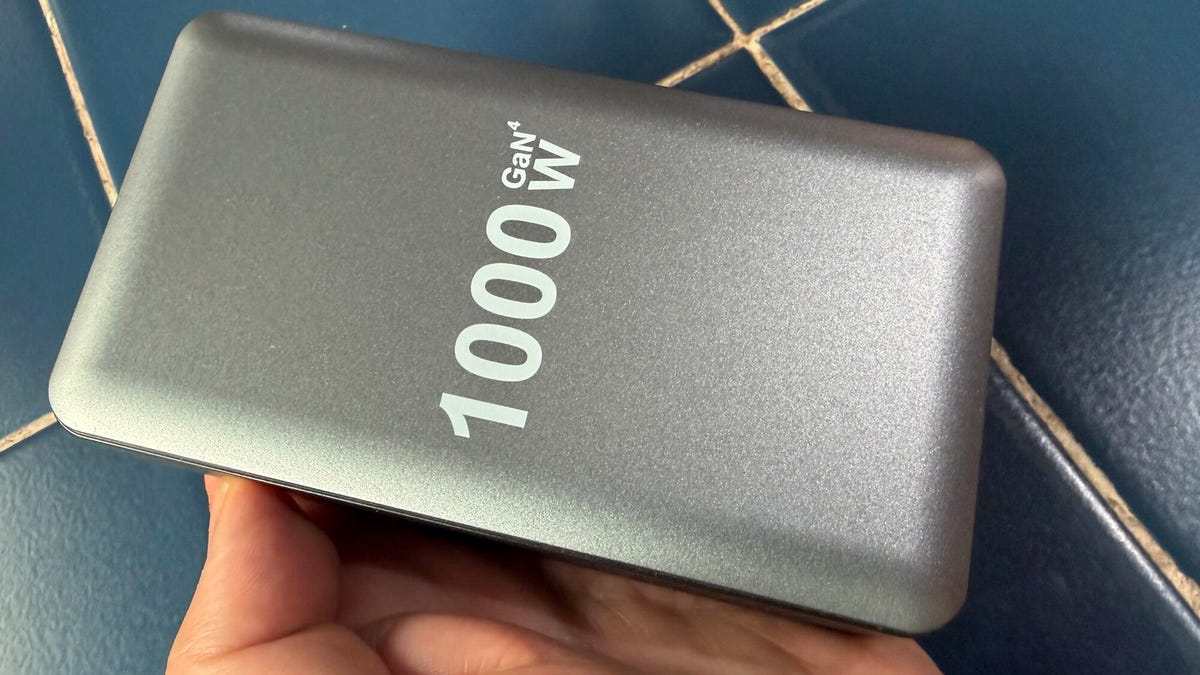
There’s no legitimate charger that comes close to delivering on the 1,000W promise.
Being a tech reviewer for a living means that I get offered some very interesting things. Not interesting as in Bugatti supercars or jewel-encrusted Fabergé eggs, but interesting as in “this thing could easily be a fire hazard — want to take a look?”
Submissively, I often say yes. And I’m glad I did with the most recent pitch, because it was very interesting indeed.
Meet the “interesting” charger
This time around, the thing of interest was a charger that claimed to deliver an incredible 1,000W through its ten ports — four 140W USB-C ports, four 100W USB-C ports, and two 20W USB-A ports.
The person who bought this charger told me that they’d plugged it in, used it to charge their phone for “a few minutes,” got worried when it became “a little hot,” and unplugged it.
That’s a lot of promise… but (spoilers), they don’t deliver!
Adrian Kingsley-Hughes/ZDNET
The unit was suspiciously light and plasticky, especially given its built-in power supply. Compare this to Ugreen’s Nexode 500W charger, which weighs a hair under 5 lb.
There was also a slight whiff of melty plastic, which made me think that this had been a bit more than a little hot.
Color me suspicious, but I had a gut feeling that the only way this charger would be able to push out 1,000W would be if it caught fire.
Turns out I wasn’t far wrong.
How long would it last? Answer: Minutes
Talk is cheap. It was time to test the charger.
So I plugged it in, turned it on, and started using it. Within a couple of minutes of starting to use it, I noticed a few things:
No matter what I tried, I couldn’t persuade the charger to deliver more than about 60W from any of the ports.
As for peak output, I managed to get close to 250W.
The power output was very uneven and noisy, fluctuating wildly. The more ports I used, the worse it got.
The unit got very hot to the touch very quickly, even under light loads.
But… before I could get the thermal camera out to check how hot it got, there was a pop and the unmistakable smell of “Magic Smoke.” The charger had been sent to Silicon Heaven within minutes.
Annnnd… POP! This is the moment the charger gave up the ghost.
Adrian Kingsley-Hughes/ZDNET
Diagnosis time
Time to take it apart and have a look inside. For an item that plugged into the mains power, this unit was shockingly easy to take apart.
A thin sheet of easily removable plastic is a that separates curious hands from live AC power.
Adrian Kingsley-Hughes/ZDNET
And even unplugged and broken, it was capable of delivering zaps! If the case came off while this was plugged into an outlet, it could very easily be deadly.
There’s charge still in some of the capacitors, and these could deliver quite a zap despite the unit being broken and unplugged!
Adrian Kingsley-Hughes/ZDNET
After getting inside, the unit was filled with a grey goo that I’d seen in a previous disappointing charger I’d taken apart. This is a thermal paste that’s used to try to dissipate the heat generated by the components.
It’s not really going to work because it’s sealed in a plastic box with no effective heatsink. It’s a token gesture at best. At worst, it creates a mass that’ll slowly heat up and hold temperature because it’s got no way to get rid of it.
Adrian Kingsley-Hughes/ZDNET
Next to this goo was a bank of capacitors — the black cylinders in the photo — which were the cause of the failure. They’d clearly overheated, with three of them showing signs of bulging.
Adrian Kingsley-Hughes/ZDNET
Well there’s the problem!
I also noticed that two of the components — bridge rectifiers that are used to turn AC mains into DC — have been fixed on an angle to make the touch a metal heatsink. It’s not really an effective way to cool down components.
Moral of the story here is that manufactures are using big number marketing — in this case 1,000W and masses of ports — to scalewash poor quality products.
This might be a half-decent product if it was built to deliver 100W, but there’s no end of competition at that end of the market. Silkscreen “1,000W” on the outside, sprinkle in a few reviews that feel scripted and fake, and all of a sudden it’s interesting and exciting… right up until it blows up.
I know of no 1,000W charger. In fact, the 500W Ugreen Nexode is the highest-power charger that I’ve tested that’s legit. And the price is also legit — $250.
But it’s built to deliver on what it promises and is packed with safety features, including “tip-over protection,” which cuts the output when the unit tips over and prevents it from falling on its side, where it can’t dissipate heat effectively. Now that’s an attention to safety that I like to see in a product that handles that much power.
But if you want 1,000W of output, you’ll have to buy two and duct tape them together.
Sony Electronics is making a massive upgrade to the humble meeting room screen. The company has just unveiled Crystal LED UNIFY, a massive 135-inch all-in-one direct-view LED display designed for boardrooms, meeting rooms, community spaces, and higher education environments.
At a glance, it might look like Sony’s next massive flagship living room TV, but it’s cutting edge display tech arriving to the office space. It is part of Sony’s professional display lineup and sits alongside its existing BRAVIA Professional Displays and Crystal LED portfolio. The model number is ZRL-135SG, and Sony is positioning it as a simpler way for organizations to add a large dvLED display without dealing with the usual complexity of custom LED wall projects.
Sony
An easy to setup up giant wall of screen
One of the biggest selling points for the Crystal LED UNIFY is its convenience. It arrives as a complete package with five pre-assembled display units and a control unit. So installation is a relatively straightforward process that can be completed by two people in about an hour. Since direct-view LED installations can get complicated, Sony’s version of the tech isn’t just promising solid visuals. The appeal is the simplified ordering, installation, maintenance, and day-to-day use.
The display units are mounted on wall brackets and connected to the included control unit, while a slide-out, front-serviceable design should make maintenance easier after installation.
Built for big bright rooms
Coming to the fun part, Crystal LED UNIFY uses a 1.5mm pixel pitch, Full HD resolution, and 800 cd/m² brightness. Sony has also added Anti-Reflection Surface Technology, which should help visibility in brightly lit rooms where projectors often struggle. The display also supports 4K input, works with Sony’s Device Management Platform, and offers a familiar interface for organizations already using Pro BRAVIA displays. In other words, it should also slot into conference rooms or multi-display setups with needing an IT team to learn an entirely new ecosystem.
Sony
Sony has also put effort in making it look clean on a wall. The Crystal LED UNIFY has ultra-slim bezels, a concealed slide-out control unit, and a depth of under 100mm, or less than four inches, when used with the included wall-mount brackets. So it should fit seamlessly in professional spaces.
The company expects Crystal LED UNIFY to be available in early 2027, with plans for an early showcase at the upcoming InfoComm 2026 event in Las Vegas from June 17 to June 19. Pricing has not been announced yet, but this is clearly aimed at businesses, institutions, and premium professional spaces rather than home theater shoppers with unusually large walls.
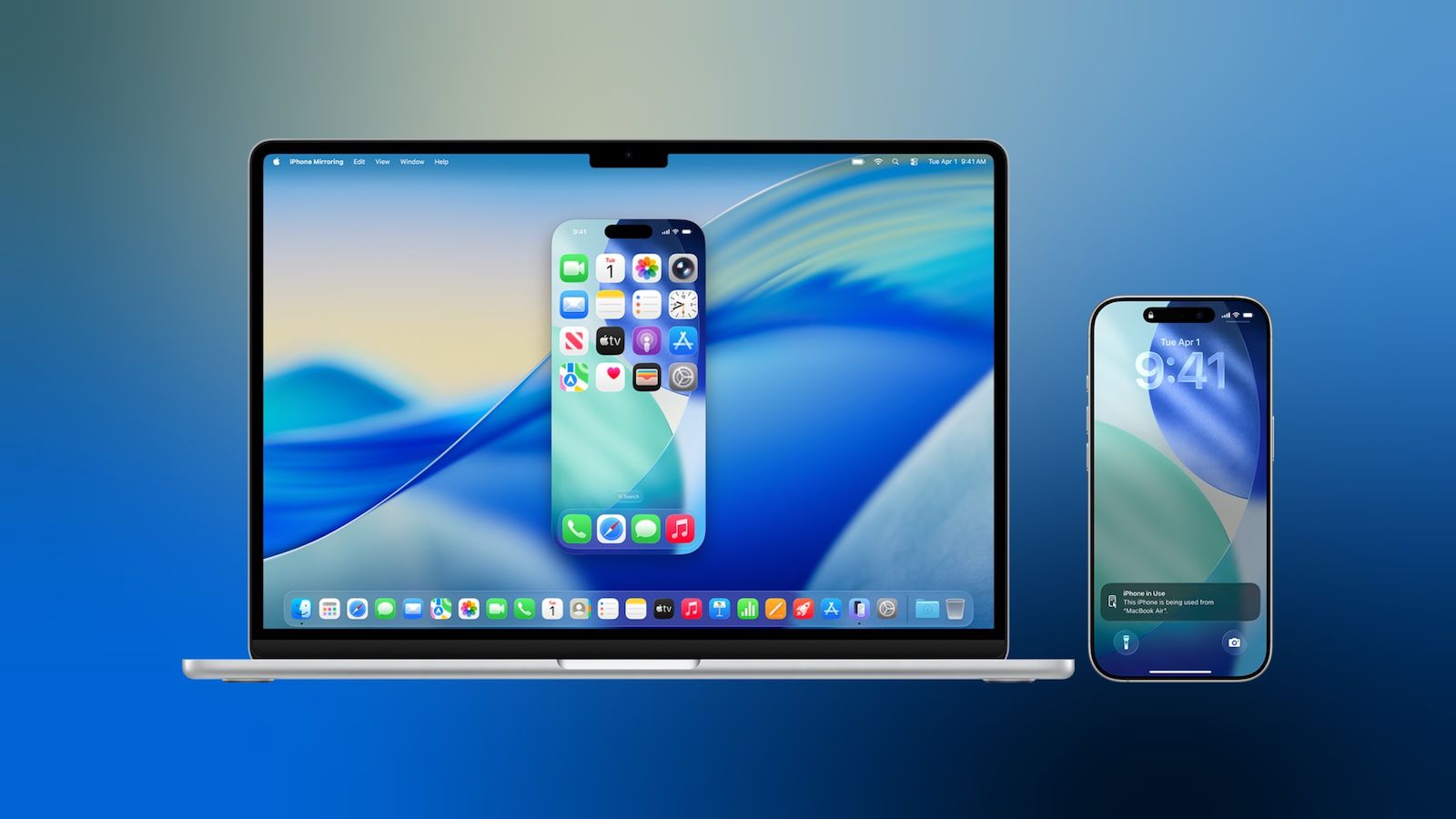
macOS 27 Golden Gate brings a major improvement to iPhone Mirroring, allowing users to resize the window beyond the iPhone’s fixed aspect ratio for the first time.
Until now, iPhone Mirroring has been limited to the iPhone’s native aspect ratio in a small window. Users could adjust the window’s overall size somewhat, but its proportions remained locked. With macOS 27, users can now change the aspect ratio of the iPhone Mirroring window itself, offering dramatically more flexibility for workflows that rely on the feature.
The update was revealed in Apple’s Platforms State of the Union address. Several fixed aspect ratios appear to be available rather than free-form resizing, meaning the system snaps to the nearest supported shape. Depending on the chosen aspect ratio, iPhone Mirroring renders either an adjusted version of the app’s iPhone layout or its iPad layout, when one is available. Aspect ratio adjustments are currently limited to iOS 27-compatible apps, which at present means only native iOS apps.
macOS 27 also adds Control Center to iPhone Mirroring, joining the Home Screen, App Switcher, and Spotlight as iPhone areas accessible directly from the Mac.
The improvements arrive alongside a broader push Apple made at this year’s Platforms State of the Union, where developers were encouraged to move away from designing apps for fixed orientations and specific devices, and instead target what Apple described as “a dynamic range of sizes and aspect ratios.” Apple introduced resizable iOS apps in iPhone Mirroring and on iPad, with developers who rebuild against the latest SDK automatically opted in. A new resizable iOS simulator in Xcode lets developers test layouts across a wide range of screen sizes and aspect ratios.
That guidance appears to have ramifications well beyond iPhone Mirroring, with wide speculation that the feature is essentially a veiled preparation for the upcoming foldable iPhone. Moreover, iOS 27 contains frameworks that point more explicitly toward foldable hardware: “foldState” and “angleDegrees.” A third find, a new key that returns the total count of built-in displays on a device, suggests Apple is also preparing the software stack for a device with more than one integrated screen. Taken together, the strings and the resizability push appear to be laying the groundwork for the foldable iPhone, widely expected to be called the “iPhone Ultra” and anticipated to launch alongside the iPhone 18 Pro in September 2026.
Dozens of cryptographically verified open source packages from Microsoft were compromised late last week to add advanced credential-stealing code that was triggered when developers opened them in AI coding agents.
In all, multiple researchers said, 73 packages were flagged as malicious when automated systems on GitHub blocked them on the platform. Rather than noting they are malicious—and that developers who used AI agents to work with them should assume their systems are compromised—the Microsoft-owned GitHub said it disabled the packages “due to a violation of GitHub’s terms of service.” The text went on to encourage the package owner to contact GitHub.
Devs: Assume compromise and proceed accordingly
It wasn’t until Monday that Microsoft even raised the possibility the packages were infected. In an email, the company stated: “We have temporarily removed some repositories as we investigate potential malicious content.”
The incident is the second supply-chain attack in as many months to breach an official Microsoft repository account. In mid May, the firm StepSecurity documented the compromise of Microsoft’s durabletask Python SDK on PyPI. The package is a framework for building fault-tolerant workflows and orchestrations to automate distributed transactions and other workflows. It receives 400,000 downloads per month.
The compromise packages executed a 28 KB payload that steals credentials from AWS, Azure, GCP, Kubernetes, password managers, and over 90 developer tool configurations. It then spreads laterally through cloud infrastructures to infect other developer machines. The attack, which has been linked to a threat actor tracked as TeamPCP, poisoned the durabletask package after compromising Microsoft credentials for publishing the package. The technique allows attackers to bypass the repository’s build pipeline entirely.
The malware used in the attack is tracked as Miasma. It’s essentially a clone of TeamPCP’s Mini Shai-Hulud toolkit, which the threat actor open-sourced recently. Security firm Cloudsmith said the malware harvests OIDC (OpenID-Connect) token credentials that are used in SLSA (Supply-chain Levels for Software Artifacts) provenance attestation, a method for providing cryptographically signed guarantees of a software’s integrity.
As was the case in the May compromise of Microsoft’s durabletask, the one last week made use of the functionality to steal a legitimate Microsoft OIDC token. It was also used in a separate supply-chain attack poisoning dozens of Red Hat packages.
Reuters reports: Several large data centers and crypto facilities planning to connect to the Texas power grid ahead of peak summer demand have failed key reliability tests, raising the risk of power outages just as electricity use hits its seasonal high, according to the state grid operator… Unlike traditional industrial customers, which tend to draw electricity steadily and predictably, data centers are engineered to cut their connection to the grid at the first sign of trouble to protect their equipment and keep services running. That makes them an unpredictable and potentially destabilizing force on grids already under pressure from rising demand. Four groups of unnamed large electricity users, including data centers, abruptly disconnected from the Texas grid during a test of how they would handle routine voltage disturbances, the Electric Reliability Council of Texas (ERCOT) said in a report dated May 21.
When large customers abruptly cut their power use, it can knock the grid off balance and trigger wider outages. ERCOT, which manages electricity for most of Texas, said it reviewed about 20 gigawatts of large customers seeking to connect to the system, including eight projects totaling roughly 3.9 gigawatts aiming to start up before July 1. It said it identified four groups of large power users that could each trigger more than 5,000 megawatts of demand tripping under certain fault conditions, based on simulations of transmission system disturbances. Those abrupt drops in demand were equivalent to the electricity consumption of a large city such as Boston.